SB 573: Student financial aid: student service programs.
- Session Year: 2017-2018
- House: Senate
- Latest Version Date: 2017-09-05
Under existing law, the 3 segments of public postsecondary education in this state are the University of California, under the administration of the Regents of the University of California, the California State University, under the administration of the Trustees of the California State University, and the California Community Colleges, under the administration of the Board of Governors of the California Community Colleges. Existing law establishes various student financial aid programs, including the California Work-Study Program, which provides eligible college and university students with the opportunity to earn money to help defray their educational costs, while gaining experience in educationally beneficial or career-related employment.
This bill would authorize the trustees, the board of governors, and the regents to develop, for each of their respective campuses, a student service learning program, as specified, for students with financial need who are exempt from paying nonresident tuition under a certain provision of law. The bill would establish that personal information of a student collected or obtained for the student service learning program is confidential, shall not be open to the public for inspection or disclosed without the written consent of the student, and shall only be collected, used, and retained to determine a students eligibility for the program or to administer the program, and would prohibit disclosure of that personal information to any other person, except as provided.
Existing constitutional provisions require that a statute that limits the right of access to the meetings of public bodies or the writings of public officials and agencies be adopted with findings demonstrating the interest protected by the limitation and the need for protecting that interest.
This bill would make legislative findings to that effect.
The California Constitution requires local agencies, for the purpose of ensuring public access to the meetings of public bodies and the writings of public officials and agencies, to comply with a statutory enactment that amends or enacts laws relating to public records or open meetings and contains findings demonstrating that the enactment furthers the constitutional requirements relating to this purpose.
This bill would make legislative findings to that effect.
Under existing law, the 3 segments of public postsecondary education in this state are the University of California, under the administration of the Regents of the University of California, the California State University, under the administration of the Trustees of the California State University, and the California Community Colleges, under the administration of the Board of Governors of the California Community Colleges. Existing law establishes various student financial aid programs, including the California Work-Study Program, which provides eligible college and university students with the opportunity to earn money to help defray their educational costs, while gaining experience in educationally beneficial or career-related employment.
This bill would require the trustees and the board of governors, and would request the regents, to develop and ensure that authorize the trustees, the board of governors, and the regents to develop, for each of their respective campuses implement campuses, a service learning program, as specified, for students with financial need who are exempt from paying nonresident tuition under a certain provision of law. By imposing new duties on community college districts, this bill would impose a state-mandated local program. The bill would establish that personal information of a student collected or obtained for the service learning program is confidential, shall not be open to the public for inspection or disclosed without the written consent of the student, and shall only be collected, used, and retained to determine a students eligibility for the program or to administer the program, and would prohibit disclosure of that personal information to any other person, except as provided.
Existing constitutional provisions require that a statute that limits the right of access to the meetings of public bodies or the writings of public officials and agencies be adopted with findings demonstrating the interest protected by the limitation and the need for protecting that interest.
This bill would make legislative findings to that effect.
The California Constitution requires local agencies, for the purpose of ensuring public access to the meetings of public bodies and the writings of public officials and agencies, to comply with a statutory enactment that amends or enacts laws relating to public records or open meetings and contains findings demonstrating that the enactment furthers the constitutional requirements relating to this purpose.
This bill would make legislative findings to that effect.
The California Constitution requires the state to reimburse local agencies and school districts for certain costs mandated by the state. Statutory provisions establish procedures for making that reimbursement.This bill would provide that, if the Commission on State Mandates determines that the bill contains costs mandated by the state, reimbursement for those costs shall be made pursuant to the statutory provisions noted above.Under existing law, the 3 segments of public postsecondary education in this state are the University of California, under the administration of the Regents of the University of California, the California State University, under the administration of the Trustees of the California State University, and the California Community Colleges, under the administration of the Board of Governors of the California Community Colleges. Existing law establishes various student financial aid programs, including the California Work-Study Program, which provides eligible college and university students with the opportunity to earn money to help defray their educational costs, while gaining experience in educationally beneficial or career-related employment.
This bill would require the trustees and the board of governors, and would request the regents, to develop and ensure that each of their respective campuses implement a service learning program, as specified, for students with financial need who are exempt from paying nonresident tuition under a certain provision of law. By imposing new duties on community college districts, this bill would impose a state-mandated local program. The bill would establish that personal information of a student collected or obtained for the service learning program is not a public record for purposes of the California Public Records Act and confidential, shall not be open to the public for inspection or disclosed without the written consent of the student, and shall only be collected, used, and retained to determine a students eligibility for the program or to administer the program, and would prohibit disclosure of that personal information to any other person, except as provided.
Existing constitutional provisions require that a statute that limits the right of access to the meetings of public bodies or the writings of public officials and agencies be adopted with findings demonstrating the interest protected by the limitation and the need for protecting that interest.
This bill would make legislative findings to that effect.
The California Constitution requires local agencies, for the purpose of ensuring public access to the meetings of public bodies and the writings of public officials and agencies, to comply with a statutory enactment that amends or enacts laws relating to public records or open meetings and contains findings demonstrating that the enactment furthers the constitutional requirements relating to this purpose.
This bill would make legislative findings to that effect.
The California Constitution requires the state to reimburse local agencies and school districts for certain costs mandated by the state. Statutory provisions establish procedures for making that reimbursement.
This bill would provide that, if the Commission on State Mandates determines that the bill contains costs mandated by the state, reimbursement for those costs shall be made pursuant to the statutory provisions noted above.
Under existing law, the 3 segments of public postsecondary education in this state are the University of California, under the administration of the Regents of the University of California, the California State University, under the administration of the Trustees of the California State University, and the California Community Colleges, under the administration of the Board of Governors of the California Community Colleges. Existing law establishes various student financial aid programs, including the California Work-Study Program, which provides eligible college and university students with the opportunity to earn money to help defray their educational costs, while gaining experience in educationally beneficial or career-related employment.
This bill would require the trustees and the board of governors, and would request the regents, to develop and ensure that each of their respective campuses implement a service learning program, as specified, for students with financial need who are exempt from paying nonresident tuition under a certain provision of law. By imposing new duties on community college districts, this bill would impose a state-mandated local program. The bill would establish that personal information of a student collected or obtained for the service learning program is not a public record for purposes of the California Public Records Act and shall only be collected, used, and retained to administer the program, and would prohibit disclosure of that personal information to any other person, except as provided.
Existing constitutional provisions require that a statute that limits the right of access to the meetings of public bodies or the writings of public officials and agencies be adopted with findings demonstrating the interest protected by the limitation and the need for protecting that interest.
This bill would make legislative findings to that effect.
The California Constitution requires local agencies, for the purpose of ensuring public access to the meetings of public bodies and the writings of public officials and agencies, to comply with a statutory enactment that amends or enacts laws relating to public records or open meetings and contains findings demonstrating that the enactment furthers the constitutional requirements relating to this purpose.
This bill would make legislative findings to that effect.
The California Constitution requires the state to reimburse local agencies and school districts for certain costs mandated by the state. Statutory provisions establish procedures for making that reimbursement.
This bill would provide that, if the Commission on State Mandates determines that the bill contains costs mandated by the state, reimbursement for those costs shall be made pursuant to the statutory provisions noted above.
Existing law establishes the California Work-Study Program, administered by the Student Aid Commission, to provide eligible college and university students with the opportunity to earn money to help defray their educational costs, while gaining experience in educationally beneficial or career-related employment.This bill would express the intent of the Legislature to require the University of California, the California State University, and the California Community Colleges to create a service learning program that complements existing state and federal work-study programs and assists students with financial need, as specified.Existing law establishes the California Work-Study Program, administered by the Student Aid Commission, to provide eligible college and university students with the opportunity to earn money to help defray their educational costs, while gaining experience in educationally beneficial or career-related employment.
This bill would express the intent of the Legislature to require the University of California, the California State University, and the California Community Colleges to create a service learning program that complements existing state and federal work-study programs and assists students with financial need, as specified.
(a)For the purposes of this section, the following terms have the following meanings:
(1)Board of Governors means the Board of Governors of the California Community Colleges.
(2)Regents means the Regents of the University of California.
(3)Trustees means the Trustees of the California State University.
(b)The trustees, the board of governors, and the regents may develop, for each of their respective campuses, a student service learning program for students with financial need who are exempt from paying nonresident tuition under Section 68130.5, or who meet equivalent requirements adopted by the regents. Except as provided in subdivision (e) or as otherwise determined by the appropriate segment, the program may be offered to complement existing state and federal financial aid awards.
(c)A student service learning program established at a campus pursuant to this section shall do all of the following:
(1)Identify opportunities for each student participating in the program to provide volunteer service hours while learning new skills and experiences that supplement his or her academic learning.
(2)Be established and administered as part of the campuss existing financial aid structure and services.
(3)Offer, as part of an existing financial aid award of the campus or the segment, grants, fee waivers, or reimbursements to an eligible student for his or her educational expenses.
(d)(1)Only students described in subdivision (b) may participate in the program.
(2)A student described in subdivision (b) who meets any additional requirements adopted by the appropriate segment pursuant to subdivision (f), may participate in the program regardless of his or her immigration status.
(e)A student service learning program established pursuant to this section may supplement or be a component of existing state work-study programs as deemed appropriate by the appropriate segment.
(f)The trustees, the board of governors, and the regents may adopt, as necessary, application procedures, forms, additional application criteria, administrative guidelines, and other requirements for the development and implementation of a student service learning program pursuant to this section.
(g)(1)Notwithstanding Chapter 3.5 (commencing with Section 6250) of Division 7 of Title 1 of the Government Code, information provided by an applicant for, or by a recipient of, a student service learning program established pursuant to this section is confidential and shall not be open to the public for inspection or disclosed without the written consent of the applicant or recipient, or as otherwise required by California law or pursuant to a state or federal court order.
(2)Information that is provided by an applicant for, or by a recipient of, a student service learning program shall be collected, recorded, used, and retained by the appropriate public postsecondary educational institution only for determining the applicants eligibility for the program or for administering the program.
(3)This subdivision does not prohibit disclosure of aggregate data that does not reveal personal identifying information about the student.
SEC. 2.The Legislature finds and declares that Section 1 of this act, which adds Article 24 (commencing with Section 70045) to Chapter 2 of Part 42 of Division 5 of Title 3 of the Education Code, imposes a limitation on the publics right of access to the meetings of public bodies or the writings of public officials and agencies within the meaning of Section 3 of Article I of the California Constitution. Pursuant to that constitutional provision, the Legislature makes the following findings to demonstrate the interest protected by this limitation and the need for protecting that interest:
This act strikes the appropriate balance between the publics right to access information about the conduct of their governmental agencies and the need to protect the personal information of private individuals who participate in student service learning programs established pursuant to Article 24 (commencing with Section 70045) of Chapter 2 of Part 42 of Division 5 of Title 3 of the Education Code.
SEC. 3.The Legislature finds and declares that Section 1 of this act, which adds Article 24 (commencing with Section 70045) to Chapter 2 of Part 42 of Division 5 of the Education Code, furthers, within the meaning of paragraph (7) of subdivision (b) of Section 3 of Article I of the California Constitution, the purposes of that constitutional section as it relates to the right of public access to the meetings of local public bodies or the writings of local public officials and local agencies. Pursuant to paragraph (7) of subdivision (b) of Section 3 of Article I of the California Constitution, the Legislature makes the following findings:
This act strikes the appropriate balance between the publics right to access information about the conduct of their governmental agencies and the need to protect the personal information of private individuals who participate in student service learning programs established pursuant to Article 24 (commencing with Section 70045) of Chapter 2 of Part 42 of Division 5 of Title 3 of the Education Code.
(a)For the purposes of this section, the following terms have the following meanings:
(1)Board of Governors means the Board of Governors of the California Community Colleges.
(2)Regents means the Regents of the University of California.
(3)Trustees means the Trustees of the California State University.
(b)The trustees and the board of governors shall, and the regents are requested to, develop and ensure that trustees, the board of governors, and the regents may develop, for each of their respective campuses implement campuses, a service learning program for students with financial need who are exempt from paying nonresident tuition under Section 68130.5, or who meet equivalent requirements adopted by the regents. Except as provided in subdivision (e) or as otherwise determined by the appropriate segment, the program may be offered to compliment complement existing state and federal financial aid awards.
(c)A service learning program established at a campus pursuant to this section shall do all of the following:
(1)Identify opportunities for each student participating in the program to provide volunteer service hours while learning new skills and experiences that supplement his or her academic learning.
(2)Be established and administered as part of the campuss existing financial aid structure and services.
(3)Offer, as part of an existing financial aid award of the campus or the segment, grants, fee waivers, or reimbursements to an eligible student for his or her educational expenses.
(d)(1)Only students described in subdivision (b) may participate in the program.
(2)A student described in subdivision (b) who meets any additional requirements adopted by the appropriate segment pursuant to subdivision (f), may participate in the program regardless of his or her immigration status.
(e)A service learning program established pursuant to this section may supplement or be a component of existing state work-study programs as deemed appropriate by the appropriate segment.
(f)The trustees and the board of governors shall, and the regents are requested to, trustees, the board of governors, and the regents may adopt, as necessary, application procedures, forms, additional application criteria, administrative guidelines, and other requirements for the development and implementation of a service learning program pursuant to this section.
(g)(1)Notwithstanding Chapter 3.5 (commencing with Section 6250) of Division 7 of Title 1 of the Government Code, information provided by an applicant for, or by a recipient of, a service learning program established pursuant to this section is confidential and shall not be open to the public for inspection or disclosed without the written consent of the applicant or recipient, or as otherwise required by California law or pursuant to a state or federal court order.
(2)Information that is provided by an applicant for, or by a recipient of, a service learning program shall be collected, recorded, used, and retained by the appropriate public postsecondary educational institution only for determining the applicants eligibility for the program or for administering the program.
(3)This subdivision does not prohibit disclosure of aggregate data that does not reveal personal identifying information about the student.
SEC. 2.The Legislature finds and declares that Section 1 of this act, which adds Article 24 (commencing with Section 70045) to Chapter 2 of Part 42 of Division 5 of Title 3 of the Education Code, imposes a limitation on the publics right of access to the meetings of public bodies or the writings of public officials and agencies within the meaning of Section 3 of Article I of the California Constitution. Pursuant to that constitutional provision, the Legislature makes the following findings to demonstrate the interest protected by this limitation and the need for protecting that interest:
This act strikes the appropriate balance between the publics right to access information about the conduct of their governmental agencies and the need to protect the personal information of private individuals who participate in service learning programs established pursuant to Article 24 (commencing with Section 70045) of Chapter 2 of Part 42 of Division 5 of Title 3 of the Education Code.
SEC. 3.The Legislature finds and declares that Section 1 of this act, which adds Article 24 (commencing with Section 70045) to Chapter 2 of Part 42 of Division 5 of the Education Code, furthers, within the meaning of paragraph (7) of subdivision (b) of Section 3 of Article I of the California Constitution, the purposes of that constitutional section as it relates to the right of public access to the meetings of local public bodies or the writings of local public officials and local agencies. Pursuant to paragraph (7) of subdivision (b) of Section 3 of Article I of the California Constitution, the Legislature makes the following findings:
This act strikes the appropriate balance between the publics right to access information about the conduct of their governmental agencies and the need to protect the personal information of private individuals who participate in service learning programs established pursuant to Article 24 (commencing with Section 70045) of Chapter 2 of Part 42 of Division 5 of Title 3 of the Education Code.
SEC. 4.If the Commission on State Mandates determines that this act contains costs mandated by the state, reimbursement to local agencies and school districts for those costs shall be made pursuant to Part 7 (commencing with Section 17500) of Division 4 of Title 2 of the Government Code.(a)For the purposes of this section, the following terms have the following meanings:
(1)Board of Governors means the Board of Governors of the California Community Colleges.
(2)Regents means the Regents of the University of California.
(3)Trustees means the Trustees of the California State University.
(b)The trustees and the board of governors shall, and the regents are requested to, develop and ensure that each of their respective campuses implement a service learning program for students with financial need who are exempt from paying nonresident tuition under Section 68130.5, or who meet equivalent requirements adopted by the regents. Except as provided in subdivision (e) or as otherwise determined by the appropriate segment, the program may be offered to compliment existing state and federal financial aid awards.
(c)A service learning program established at a campus pursuant to this section shall do all of the following:
(1)Identify opportunities for each student participating in the program to provide volunteer service hours while learning new skills and experiences that supplement his or her academic learning.
(2)Be established and administered as part of the campuss existing financial aid structure and services.
(3)Offer, as part of an existing financial aid award of the campus or the segment, grants, fee waivers, or reimbursements to an eligible student for his or her educational expenses.
(d)(1)Only students described in subdivision (b) may participate in the program.
(2)A student described in subdivision (b) who meets any additional requirements adopted by the appropriate segment pursuant to subdivision (f), may participate in the program regardless of his or her immigration status.
(e)A service learning program established pursuant to this section may supplement or be a component of existing state work-study programs as deemed appropriate by the appropriate segment.
(f)The trustees and the board of governors shall, and the regents are requested to, adopt, as necessary, application procedures, forms, additional application criteria, administrative guidelines, and other requirements for the development and implementation of a service learning program pursuant to this section.
(g)(1)Notwithstanding Chapter 3.5 (commencing with Section 6250) of Division 7 of Title 1 of the Government Code, information provided by an applicant for, or by the recipients of, a recipient of, a service learning program established pursuant to this section is not a public record, shall be used only to administer the program, confidential and shall not be open to the public for inspection or disclosed without the written consent of the applicant or recipient, or as otherwise required by California law or pursuant to a state or federal court order. This provision does not prohibit disclosure of aggregate data that does not reveal personal identifying information about the student.
(2)Information that is provided by an applicant for, or by a recipient of, a service learning program shall be collected, recorded, used, and retained by the appropriate public postsecondary educational institution only for determining the applicants eligibility for the program or for administering the program.
(3)This subdivision does not prohibit disclosure of aggregate data that does not reveal personal identifying information about the student.
SEC. 2.The Legislature finds and declares that Section 1 of this act, which adds Article 24 (commencing with Section 70045) to Chapter 2 of Part 42 of Division 5 of Title 3 of the Education Code, imposes a limitation on the publics right of access to the meetings of public bodies or the writings of public officials and agencies within the meaning of Section 3 of Article I of the California Constitution. Pursuant to that constitutional provision, the Legislature makes the following findings to demonstrate the interest protected by this limitation and the need for protecting that interest:
This act strikes the appropriate balance between the publics right to access information about the conduct of their governmental agencies and the need to protect the personal information of private individuals who participate in service learning programs established pursuant to Article 24 (commencing with Section 70045) of Chapter 2 of Part 42 of Division 5 of Title 3 of the Education Code.
SEC. 3.The Legislature finds and declares that Section 1 of this act, which adds Article 24 (commencing with Section 70045) to Chapter 2 of Part 42 of Division 5 of the Education Code, furthers, within the meaning of paragraph (7) of subdivision (b) of Section 3 of Article I of the California Constitution, the purposes of that constitutional section as it relates to the right of public access to the meetings of local public bodies or the writings of local public officials and local agencies. Pursuant to paragraph (7) of subdivision (b) of Section 3 of Article I of the California Constitution, the Legislature makes the following findings:
This act strikes the appropriate balance between the publics right to access information about the conduct of their governmental agencies and the need to protect the personal information of private individuals who participate in service learning programs established pursuant to Article 24 (commencing with Section 70045) of Chapter 2 of Part 42 of Division 5 of Title 3 of the Education Code.
SEC. 4.If the Commission on State Mandates determines that this act contains costs mandated by the state, reimbursement to local agencies and school districts for those costs shall be made pursuant to Part 7 (commencing with Section 17500) of Division 4 of Title 2 of the Government Code.
(a)For the purposes of this section, the following terms have the following meanings:
(1)Board of Governors means the Board of Governors of the California Community Colleges.
(2)Regents means the Regents of the University of California.
(3)Trustees means the Trustees of the California State University.
(b)The trustees and the board of governors shall, and the regents are requested to, develop and ensure that each of their respective campuses implement a service learning program for students with financial need who are exempt from paying nonresident tuition under Section 68130.5, or who meet equivalent requirements adopted by the regents. Except as provided in subdivision (e) or as otherwise determined by the appropriate segment, the program may be offered to compliment existing state and federal financial aid awards.
(c)A service learning program established at a campus pursuant to this section shall do all of the following:
(1)Identify opportunities for each student participating in the program to provide volunteer service hours while learning new skills and experiences that supplement his or her academic learning.
(2)Be established and administered as part of the campuss existing financial aid structure and services.
(3)Offer, as part of an existing financial aid award of the campus or the segment, grants, fee waivers, or reimbursements to an eligible student for his or her educational expenses.
(d)(1)Only students described in subdivision (b) may participate in the program.
(2)A student described in subdivision (b) who meets any additional requirements adopted by the appropriate segment pursuant to subdivision (f), may participate in the program regardless of his or her immigration status.
(e)A service learning program established pursuant to this section may supplement or supplant be a component of existing state work-study programs as deemed appropriate by the appropriate segment.
(f)The trustees and the board of governors shall, and the regents are requested to, adopt, as necessary, application procedures, forms, additional application criteria, administrative guidelines, and other requirements for the development and implementation of a service learning program pursuant to this section.
(g)Notwithstanding Chapter 3.5 (commencing with Section 6250) of Division 7 of Title 1 of the Government Code, information provided by an applicant for, or by the recipients of, a service learning program established pursuant to this section is not a public record, shall be used only to administer the program, or as otherwise required by California law or state or federal court order. This provision does not prohibit disclosure of aggregate data that does not reveal personal identifying information about the student.
SEC. 2.The Legislature finds and declares that Section 1 of this act, which adds Article 24 (commencing with Section 70045) to Chapter 2 of Part 42 of Division 5 of Title 3 of the Education Code, imposes a limitation on the publics right of access to the meetings of public bodies or the writings of public officials and agencies within the meaning of Section 3 of Article I of the California Constitution. Pursuant to that constitutional provision, the Legislature makes the following findings to demonstrate the interest protected by this limitation and the need for protecting that interest:
This act strikes the appropriate balance between the publics right to access information about the conduct of their governmental agencies and the need to protect the personal information of private individuals who participate in service learning programs established pursuant to Article 24 (commencing with Section 70045) of Chapter 2 of Part 42 of Division 5 of Title 3 of the Education Code.
SEC. 3.The Legislature finds and declares that Section 1 of this act, which adds Article 24 (commencing with Section 70045) to Chapter 2 of Part 42 of Division 5 of the Education Code, furthers, within the meaning of paragraph (7) of subdivision (b) of Section 3 of Article I of the California Constitution, the purposes of that constitutional section as it relates to the right of public access to the meetings of local public bodies or the writings of local public officials and local agencies. Pursuant to paragraph (7) of subdivision (b) of Section 3 of Article I of the California Constitution, the Legislature makes the following findings:
This act strikes the appropriate balance between the publics right to access information about the conduct of their governmental agencies and the need to protect the personal information of private individuals who participate in service learning programs established pursuant to Article 24 (commencing with Section 70045) of Chapter 2 of Part 42 of Division 5 of Title 3 of the Education Code.
SEC. 4.If the Commission on State Mandates determines that this act contains costs mandated by the state, reimbursement to local agencies and school districts for those costs shall be made pursuant to Part 7 (commencing with Section 17500) of Division 4 of Title 2 of the Government Code.
(a)For the purposes of this section, the following terms have the following meanings:
(1)Board of Governors means the Board of Governors of the California Community Colleges.
(2)Regents means the Regents of the University of California.
(3)Trustees means the Trustees of the California State University.
(b)The trustees and the board of governors shall, and the regents are requested to, develop and ensure that each of their respective campuses implement a service learning program for students with financial need who are exempt from paying nonresident tuition under Section 68130.5, or who meet equivalent requirements adopted by the regents. Except as provided in subdivision (e) or as otherwise determined by the appropriate segment, the program may be offered to compliment existing state and federal financial aid awards.
(c)A service learning program established at a campus pursuant to this section shall do all of the following:
(1)Identify opportunities for each student participating in the program to provide volunteer service hours while learning new skills and experiences that supplement his or her academic learning.
(2)Be established and administered as part of the campuss existing financial aid structure and services.
(3)Offer, as part of an existing financial aid award of the campus or the segment, grants, fee waivers, or reimbursements to an eligible student for his or her educational expenses.
(d)(1)Only students described in subdivision (b) may participate in the program.
(2)A student described in subdivision (b) who meets any additional requirements adopted by the appropriate segment pursuant to subdivision (f), may participate in the program regardless of his or her immigration status.
(e)A service learning program established pursuant to this section may supplement or supplant existing state work-study programs as deemed appropriate by the appropriate segment.
(f)The trustees and the board of governors shall, and the regents are requested to, adopt, as necessary, application procedures, forms, additional application criteria, administrative guidelines, and other requirements for the development and implementation of a service learning program pursuant to this section.
(g)Notwithstanding Chapter 3.5 (commencing with Section 6250) of Division 7 of Title 1 of the Government Code, information provided by an applicant for, or by the recipients of, a service learning program established pursuant to this section is not a public record, shall be used only to administer the program, or as otherwise required by California law or state or federal court order. This provision does not prohibit disclosure of aggregate data that does not reveal personal identifying information about the student.
SEC. 2.The Legislature finds and declares that Section 1 of this act, which adds Article 24 (commencing with Section 70045) to Chapter 2 of Part 42 of Division 5 of Title 3 of the Education Code, imposes a limitation on the publics right of access to the meetings of public bodies or the writings of public officials and agencies within the meaning of Section 3 of Article I of the California Constitution. Pursuant to that constitutional provision, the Legislature makes the following findings to demonstrate the interest protected by this limitation and the need for protecting that interest:
This act strikes the appropriate balance between the publics right to access information about the conduct of their governmental agencies and the need to protect the personal information of private individuals who participate in service learning programs established pursuant to Article 24 (commencing with Section 70045) of Chapter 2 of Part 42 of Division 5 of Title 3 of the Education Code.
SEC. 3.The Legislature finds and declares that Section 1 of this act, which adds Article 24 (commencing with Section 70045) to Chapter 2 of Part 42 of Division 5 of the Education Code, furthers, within the meaning of paragraph (7) of subdivision (b) of Section 3 of Article I of the California Constitution, the purposes of that constitutional section as it relates to the right of public access to the meetings of local public bodies or the writings of local public officials and local agencies. Pursuant to paragraph (7) of subdivision (b) of Section 3 of Article I of the California Constitution, the Legislature makes the following findings:
This act strikes the appropriate balance between the publics right to access information about the conduct of their governmental agencies and the need to protect the personal information of private individuals who participate in service learning programs established pursuant to Article 24 (commencing with Section 70045) of Chapter 2 of Part 42 of Division 5 of Title 3 of the Education Code.
SEC. 4.If the Commission on State Mandates determines that this act contains costs mandated by the state, reimbursement to local agencies and school districts for those costs shall be made pursuant to Part 7 (commencing with Section 17500) of Division 4 of Title 2 of the Government Code.
SECTION 1.The Legislature finds and declares both of the following:(a)Work-study programs help to ensure that college and university students who are truly in financial need receive paying jobs.(b)Work-study programs provide part-time jobs to undergraduate and graduate students with financial need, thereby allowing them to earn money to help pay for education expenses.SEC. 2.It is the intent of the Legislature to enact legislation to do both of the following:(a)Require the University of California, the California State University, and the California Community Colleges to create a service learning program that complements existing state and federal work-study programs and assists students with financial need.(b)Establish the program to provide grants, scholarships, fee waivers, or reimbursements to students for education expenses and provide that students, regardless of their status, are eligible to participate.The Legislature finds and declares both of the following:
(a)Work-study programs help to ensure that college and university students who are truly in financial need receive paying jobs.
(b)Work-study programs provide part-time jobs to undergraduate and graduate students with financial need, thereby allowing them to earn money to help pay for education expenses.
SEC. 2.It is the intent of the Legislature to enact legislation to do both of the following:
(a)Require the University of California, the California State University, and the California Community Colleges to create a service learning program that complements existing state and federal work-study programs and assists students with financial need.
(b)Establish the program to provide grants, scholarships, fee waivers, or reimbursements to students for education expenses and provide that students, regardless of their status, are eligible to participate.
|
Date
|
Status
|
|---|---|
| Aug 7, 2018 | From inactive file. |
| Aug 6, 2018 | Notice of intention to remove from inactive file given by Assembly Member Calderon. |
| Sep 12, 2017 | Ordered to inactive file on request of Assembly Member Calderon. |
| Sep 6, 2017 | Read second time. Ordered to third reading. |
| Sep 5, 2017 | Read second time and amended. Ordered to second reading. |
| Sep 1, 2017 | From committee: Do pass as amended. (Ayes 11. Noes 5.) (September 1). |
| Aug 23, 2017 | August 23 set for first hearing. Placed on suspense file. |
| Jul 12, 2017 | From committee: Do pass and re-refer to Com. on APPR. (Ayes 10. Noes 3.) (July 11). Re-referred to Com. on APPR. |
| Jul 3, 2017 | From committee with author's amendments. Read second time and amended. Re-referred to Com. on HIGHER ED. |
| Jun 29, 2017 | Read second time and amended. Re-referred to Com. on HIGHER ED. |
| Jun 28, 2017 | From committee: Do pass as amended and re-refer to Com. on HIGHER ED. (Ayes 7. Noes 2.) (June 27). |
| Jun 19, 2017 | Re-referred to Coms. on JUD. and HIGHER ED. pursuant to Assembly Rule 96. |
| Jun 15, 2017 | Referred to Coms. on HIGHER ED. and JUD. |
| Jun 1, 2017 | In Assembly. Read first time. Held at Desk. |
| May 31, 2017 | Read third time. Passed. (Ayes 28. Noes 12. Page 1349.) Ordered to the Assembly. |
| May 26, 2017 | Read second time. Ordered to third reading. |
| May 25, 2017 | From committee: Do pass. (Ayes 5. Noes 2. Page 1187.) (May 25). |
| May 19, 2017 | Set for hearing May 25. |
| May 15, 2017 | May 15 hearing: Placed on APPR. suspense file. |
| May 5, 2017 | Set for hearing May 15. |
| May 3, 2017 | Read second time and amended. Re-referred to Com. on APPR. |
| May 2, 2017 | From committee: Do pass as amended and re-refer to Com. on APPR. (Ayes 5. Noes 2. Page 853.) (April 25). |
| Apr 21, 2017 | Set for hearing April 25. |
| Apr 20, 2017 | From committee: Do pass and re-refer to Com. on JUD. (Ayes 5. Noes 2. Page 783.) (April 19). Re-referred to Com. on JUD. |
| Apr 7, 2017 | Set for hearing April 19. |
| Apr 5, 2017 | Re-referred to Coms. on ED. and JUD. |
| Mar 27, 2017 | From committee with author's amendments. Read second time and amended. Re-referred to Com. on RLS. |
| Mar 2, 2017 | Referred to Com. on RLS. |
| Feb 21, 2017 | From printer. May be acted upon on or after March 23. |
| Feb 17, 2017 | Introduced. Read first time. To Com. on RLS. for assignment. To print. |
|
Date
|
Description
|
Location
|
Votes
|
|
|---|---|---|---|---|
| Sep 1, 2017 | Do pass as amended. | Assembly Standing Committee on Appropriations |
Passed |
|
| Jul 11, 2017 | Do pass and be re-referred to the Committee on [Appropriations] | Assembly Standing Committee on Higher Education |
Passed |
|
| Jun 27, 2017 | Do pass as amended and be re-referred to the Committee on [Higher Education] | Assembly Standing Committee on Judiciary |
Passed |
|
| May 31, 2017 | Senate 3rd Reading SB573 Lara | Senate Floor |
Passed |
|
| May 25, 2017 | Do pass | Senate Standing Committee on Appropriations |
Passed |
|
| May 15, 2017 | Placed on suspense file | Senate Standing Committee on Appropriations |
Passed |
|
| Apr 25, 2017 | Do pass as amended, but first amend, and re-refer to the Committee on [Appropriations] | Senate Standing Committee on Judiciary |
Passed |
|
| Apr 19, 2017 | Do pass, but first be re-referred to the Committee on [Judiciary] | Senate Standing Committee on Education |
Passed |
This list shows positions taken on this bill by organizations on the date displayed, which is linked to the original source.
Positions by individuals are not included.
SENATE THIRD READING
STR Bill Id:
Author:(Lara)
As Amended Ver:September 5, 2017
Majority vote
SENATE VOTE: 28-12
Committee | Votes | Ayes | Noes |
Judiciary | 7-2 | Mark Stone, Chau, Chiu, Cristina Garcia, Kalra, Reyes, Ting | Kiley, Maienschein |
Higher Education | 10-3 | Medina, Arambula, Bloom, Chávez, Irwin, Levine, Low, Quirk-Silva, Santiago, Weber | Baker, Choi, Kiley |
Appropriations | 11-5 | Gonzalez Fletcher, Bloom, Bocanegra, Bonta, Calderon, Chau, Eggman, Friedman, Eduardo Garcia, Jones-Sawyer, Reyes | Bigelow, Brough, Fong, Gallagher, Obernolte |
SUMMARY: Authorizes the University of California (UC) Regents, the California State University (CSU) Trustees, and the California Community Colleges (CCC) Board of Governors (BOG), to develop and implement a student service program; and, imposes limitations on the collection, retention, and disclosure of information about applicants and participants in the program. Specifically, this bill:
- Authorizes the UC Regents, CSU Trustees, and the CCC BOG to develop and ensure that each of their respective campuses implement a student service program for students with financial need who are exempt from paying nonresident tuition under current law, or who meet equivalent requirements adopted by the Regents.
- Specifies that the program may be offered to complement existing state and federal financial aid awards.
- Requires a student service program established at a campus to do all of the following:
- Identify opportunities for each student participating in the program to provide volunteer service hours while learning new skills and experiences that supplement his/her academic learning;
- Be established and administered as part of the campus' existing financial aid structure and services; and,
- Offer, as part of an existing financial aid award of the campus or the segment, grants, fee waivers, or reimbursements to an eligible student for his/her educational expenses.
- Allows only students who are exempt from paying nonresident tuition pursuant to Education Code (EC) Section 68130.5 to participate in the program.
- Allows a qualified student to participate in the program, regardless of his or her immigration status.
- Provides that a student service program established pursuant to this bill may supplement or be a component of existing state work-study programs as deemed appropriate by the appropriate segment.
- Authorizes the UC Regents, CSU Trustees, and the CCC BOG to adopt, as necessary, application procedures, forms, additional application criteria, administrative guidelines, and other requirements for the development and implementation of a student service program.
- Provides that, notwithstanding the California Public Records Act (CPRA), information provided by an applicant for, or by the recipients of, a student service program established pursuant to this bill is confidential and shall not be open to the public for inspection or disclosed without the written consent of the applicant or participant, or as otherwise required by California law or state or federal court order.
- Requires that information that is provided by an applicant for, or by a recipient of, a student service program be collected, recorded, used, and retained by the appropriate public postsecondary educational institution only for determining the applicant's eligibility for the program or for administering the program.
- Clarifies that (8) and (9) above do not prohibit disclosure of aggregate data that does not reveal personal identifying information about the student.
- Makes the following legislative findings and declarations, as required by the state constitution, to justify the limitations on public access proposed by the bill: This act strikes the appropriate balance between the public’s right to access information about the conduct of their governmental agencies and the need to protect the personal information of private individuals who participate in student service programs established pursuant to Article 24 (commencing with Section 70045) of Chapter 2 of Part 42 of Division 5 of Title 3 of the EC).
EXISTING LAW:
Federal law.
- On June 15, 2012, the Secretary of Homeland Security, under the direction of President Obama, announced the Deferred Action for Childhood Arrivals (DACA) policy, authorizing certain people who came to the United States as children and meet several guidelines to request consideration of deferred action for a period of two years, subject to renewal. They are also eligible for work authorization. Deferred action is a use of prosecutorial discretion to defer removal action against an individual for a certain period of time. Deferred action does not provide lawful status.
Individuals may request consideration of DACA if they meet all of the following requirements:
- Were under the age of 31 as of June 15, 2012;
- Came to the United States before their 16th birthday;
- Have continuously resided in the United States since June 15, 2007, up to the present time;
- Were physically present in the United States on June 15, 2012, and at the time of making the request for consideration of deferred action;
- Had no lawful status on June 15, 2012, meaning never had a lawful immigration status on or before June 15, 2012, or any lawful immigration status or parole obtained prior to June 15, 2012, that had expired as of June 15, 2012;
- Currently in school, have graduated or obtained a certificate of completion from high school, have obtained a General Educational Development certificate, or are an honorably discharged veteran of the Coast Guard or Armed Forces of the United States; and,
- Have not been convicted of a felony, a significant misdemeanor, three or more other misdemeanors, and do not otherwise pose a threat to national security or public safety.
To note, undocumented students cannot legally receive any federally funded student financial aid, including loans, grants, scholarships or work-study money.
- Establishes the Federal Work Study (FWS) Program which provides funds for part-time employment to help needy students finance higher education. Students can receive FWS funds at 3,400 participating postsecondary institutions at hourly wages of at least the federal minimum wage. Participating institutions must apply annually to the US Department of Education (USDE) to participate. Using a statutory formula, USDE allocates funds based on prior year funding levels and the aggregate need of prior year eligible students. Generally, the school or employer pays up to 50% share of the student's wages. Institutions must use at least 7% of their FWS allocation to support students working in community service jobs. Students apply for FWS assistance through the Free Application for Federal Student Aid (FAFSA) (Higher Education Act of 1965, Title IV, Part C; 42 United States Code 2751-2756b).
State law.
- Provides that the people have the right of access to information concerning the conduct of the people’s business and, therefore, the writings of public officials and agencies shall be open to public scrutiny. Specifies that any law or rule that limits the public right of access shall be adopted with findings demonstrating the interest protected by the limitation. (California Constitution, Article I, Section 3.)
- Qualifies for lower resident fee/tuition payments at the CCC, CSU, and UC, a student who attended high school in California for three or more years, graduated (or equivalency) from a California high school, enrolled at an accredited institution of higher education in California not earlier than the fall semester or quarter of 2001–02, and files an affidavit with the institution of higher education stating that the student has filed an application to legalize his or her immigration status or will file an application as soon as he or she is eligible. These students are often referred to as "AB 540 students" (EC Section 68130.5).
- Authorizes the Cal Grant program, administered by the California Student Aid Commission (CSAC), to provide grants to financially needy students to attend college. The program consists of the Cal Grant A, Cal Grant B, and Cal Grant C programs, and eligibility is based upon financial need, grade point average, California residency, and other eligibility criteria, as specified (EC Sections 69430 – 69439).
- Establishes the California DREAM Act to provide state, including the Cal Grant Program and the CCC BOG Fee Waiver, and institutional financial aid to students who qualify for the aforementioned exemption from non-resident tuition (as listed in number one above), students must apply by March 2 prior to the academic year; Dream Act recipients receive Cal Grant Entitlement awards, but are not eligible for Competitive Cal Grant awards unless funding remains available after eligible California students have received awards (EC Section 69508.5).
- Establishes a California State Work Study Program to provide financially needy students with the opportunity to earn money to help defray educational costs while gaining experience in educationally beneficial or career-related employment. The program, administered by the CSAC, was initially funded as a pilot program in 1987. However, in 1998, the program was expanded to include the Teaching Intern Program, to make work-study funding available to offer tutoring in various outreach activities for pupils.
To note, the program has not been funded in recent years (EC Sections 69950 – 69969.5).
- Establishes the California DREAM Loan Program intended to provide low-interest loans to Dream Act students who are accessing the Cal Grant program and attending UC and CSU. These students are not eligible for federal student loans, making it difficult for some to cover the total costs of college. The law requires the state, UC and CSU to split the costs of launching the program. The state would need to provide about $4.7 million General Fund to begin the program (EC Sections 70030-70039).
- Establishes the CCC CalWORKs Program which provides funds to the CCC to assist welfare recipient students and those in transition from welfare to achieve long-term economic self-sufficiency. The services provided through the program include child care, academic and personal counseling, work study, and job placement. Funds allocated for work study are required to be used for payments to employers participating in campus-based work study or are providing work experience directly related to the educational programs (EC Sections 79200 – 79209).
- Provides, under the CPRA, that all public records are open to public inspection upon request, unless the records are otherwise exempt from public disclosure (Government Code Sections 6253 - 6254).
FISCAL EFFECT: According to the Assembly Appropriations Committee, General Fund/Proposition 98 cost pressures up to the low tens of millions of dollars annually, depending on the extent to which UC, CSU, and CCC pursue implementation of student service programs to provide financial aid to undocumented students. Any costs arising from this bill would need to be funded from state dollars, as federal funds are unavailable for these purposes.
COMMENTS: Double referral. This measure was heard and passed out of the Assembly Judiciary Committee on June 27, 2017, with a vote of 7 – 2.
Background. With no Social Security number, undocumented students cannot complete the FAFSA; therefore, undocumented students are not eligible for any federally funded financial aid, including loans, grants, scholarships or work-study money.
Committee Staff understands that in academic year 2014-15, seven UC campuses offered institutionally funded work-study awards, typically $2,000 per year, to AB 540 students with DACA status. Some of these programs were established with one-time funding and the on-going availability of the programs is presently uncertain.
To date, work-study programs for AB 540 students are not available on any CSU campuses.
Need for the measure. According to the author, "Students attending public universities in California currently have a variety of financial aid options; unfortunately, not all students with financial need qualify for federal assistance. As a result, undocumented students often face great barriers to finishing their education."
The author contends that this bill would create a mechanism for public universities to utilize student service agreements with students who provide volunteer hours in exchange for grants, fee waivers, or reimbursement for their educational expenses.
The measure does two things: 1) authorizes the public segments (UC, CSU, and CCC) to create and implement a student service program; and, 2) limits the use of information submitted by applicants and participants in the program and makes such information confidential and exempt from public disclosure pursuant to the CPRA, except as allowed under the bill.
Previous and related legislation. SB 244 (Lara) of the current legislative session, which is awaiting action on the Assembly Floor, would, in part, make records about numerous programs, including educational programs available to undocumented students, confidential and exempt from the provisions of the CPRA.
AB 1037 (Limón) of 2017, which was held on the Suspense File in the Assembly Appropriations Committee, would have, in part, established the California Community Service Incentive Grant Program under the administration of the CSAC.
SB 1210 (Lara), Chapter 754, Statutes of 2014, in part, created the DREAM loan program.
AB 130 (Cedillo), Chapter 93, Statutes of 2011, and AB 131 (Cedillo), Chapter 604, Statutes of 2011, in part, via the creation of the DREAM Act, enabled students eligible for in state-tuition to be eligible to apply for any financial aid program administered by the State to the full extent permitted by federal law. The California DREAM Act also enabled said students to receive a scholarship, derived from nonstate funds, received for the purpose of scholarships by the California public postsecondary institution they attend.
AB 540 (Firebaugh), Chapter 814, Statutes of 2001, in part, established the requirements that must be met for a student to qualify for the lower resident tuition costs at the CCC, the CSU, and UC.
Analysis Prepared by: Jeanice Warden / HIGHER ED. / (916) 319-3960 FN: 0001706
Date of Hearing: August 23, 2017
ASSEMBLY COMMITTEE ON APPROPRIATIONS
Lorena Gonzalez Fletcher, Chair
SBPCA Bill Id:SB 573
Author:(Lara) – As Amended Ver:July 3, 2017
Policy Committee: | Judiciary | Vote: | 7 - 2 |
Higher Education | 10 - 3 | ||
|
|
Urgency: No State Mandated Local Program: No Reimbursable: No
SUMMARY:
This bill allows the University of California (UC) Regents, the California State University (CSU) Trustees, and the California Community Colleges (CCC) Board of Governors (BOG), to develop and implement a “service learning program” for “AB 540 students” with Deferred Action for Childhood Arrivals (DACA) status; and, imposes limitations on the collection, retention, and disclosure of information about applicants and participants in the program. Specifically, this bill:
- Authorizes the UC Regents, CSU Trustees, and the CCC BOG to develop and ensure that each of their respective campuses implement a service learning program for AB 540 students, who are exempt from paying nonresident tuition.
- Allows a qualified student to participate in the program, regardless of his or her immigration status and specifies that the program may be offered to complement existing state and federal financial aid awards.
FISCAL EFFECT:
GF/Proposition 98 cost pressures up to the low tens of millions of dollars annually, depending on the extent to which UC, CSU, and CCC pursue implementation of service learning programs to provide financial aid to undocumented students. Any costs arising from this bill would need to be funded from state dollars, as federal funds are unavailable for these purposes. See staff comment below for more details.
COMMENTS:
- Background. Without a Social Security number, undocumented students cannot complete the Free Application for Federal Student Aid (FAFSA). As such, undocumented students are not eligible for any federally funded financial aid, including loans, grants, scholarships or work-study money. According to the Assembly Higher Education Committee analysis, in academic year 2014-15, seven UC campuses offered institutionally funded work-study awards, typically $2,000 per year, to AB 540 students (students that qualify for lower fee/tuition payments at UC, SCU, and CCC because they meet certain requirements in lieu of established in-state residency) with federal Deferred Action for Childhood Arrivals (DACA) status. Some of these programs were established with one-time funding and the ongoing availability of the programs is uncertain.
- Purpose. According to the author, "Students attending public universities in California currently have a variety of financial aid options; unfortunately, not all students with financial need qualify for federal assistance. As a result, undocumented students often face great barriers to finishing their education." The author contends that, this bill would create a mechanism for public universities to utilize service learning agreements with students who provide volunteer hours in exchange for grants, fee waivers, or reimbursement for their educational expenses.
- Staff Comment. An earlier version of this bill required, rather than allowed, UC, CSU, and CCC to offer service learning programs to provide financial aid options to undocumented students. While the bill has since been amended to allow, rather than require, the creation of the programs, the fiscal information available from the prior version provides useful information on the potential magnitude of state GF/Proposition 98 cost pressures to UC, CSU, and CCC. Specifically, UC identified GF costs of about $11.5 million based on its existing programs for AB 540 students. The CCC chancellor identified Proposition 98 costs of $6 million to $7 million for start-up activities, and $3.1 million ongoing. Similarly, CSU identified GF costs in the low millions of dollars. While these costs are not certain under the current version of the bill, they are illustrative of the magnitude of the cost pressures created by this bill.
- Related Legislation. AB 1037 (Limón), which is a two-year bill currently pending in this committee, will establish a similar program as that authorized by this bill. Specifically, AB 1037 would create the California Community Service Incentive Grant Program under the administration of the California Student Aid Commission.
Analysis Prepared by: Jessica Peters / APPR. / (916) 319-2081
Date of Hearing: July 11, 2017
ASSEMBLY COMMITTEE ON HIGHER EDUCATION
Jose Medina, Chair
SBPCA Bill Id:SB 573
Author:(Lara) – As Amended Ver:July 3, 2017
SENATE VOTE: 28-12
SUBJECT: Student financial aid: service learning programs.
SUMMARY: Authorizes the University of California (UC) Regents, the California State University (CSU) Trustees, and the California Community Colleges (CCC) Board of Governors (BOG), to develop and implement a service learning program; and, imposes limitations on the collection, retention, and disclosure of information about applicants and participants in the program. Specifically, this bill:
- Authorizes the UC Regents, CSU Trustees, and the CCC BOG to develop and ensure that each of their respective campuses implement a service learning program for students with financial need who are exempt from paying nonresident tuition under current law, or who meet equivalent requirements adopted by the Regents.
- Specifies that the program may be offered to complement existing state and federal financial aid awards.
- Requires a service learning program established at a campus to do all of the following:
- Identify opportunities for each student participating in the program to provide volunteer service hours while learning new skills and experiences that supplement his/her academic learning;
- Be established and administered as part of the campus’s existing financial aid structure and services; and,
- Offer, as part of an existing financial aid award of the campus or the segment, grants, fee waivers, or reimbursements to an eligible student for his/her educational expenses.
- Allows only students who are exempt from paying nonresident tuition pursuant to Education Code (EC) Section 68130.5 to participate in the program.
- Allows a qualified student to participate in the program, regardless of his or her immigration status.
- Provides that a service learning program established pursuant to this bill may supplement or be a component of existing state work-study programs as deemed appropriate by the appropriate segment.
- Authorizes the UC Regents, CSU Trustees, and the CCC BOG to adopt, as necessary, application procedures, forms, additional application criteria, administrative guidelines, and other requirements for the development and implementation of a service learning program.
- Provides that, notwithstanding the California Public Records Act (CPRA), information provided by an applicant for, or by the recipients of, a service learning program established pursuant to this bill is confidential and shall not be open to the public for inspection or disclosed without the written consent of the applicant or participant, or as otherwise required by California law or state or federal court order.
- Requires that information that is provided by an applicant for, or by a recipient of, a service learning program be collected, recorded, used, and retained by the appropriate public postsecondary educational institution only for determining the applicant's eligibility for the program or for administering the program.
- Clarifies that (8) and (9) above do not prohibit disclosure of aggregate data that does not reveal personal identifying information about the student.
- Makes the following legislative findings and declarations, as required by the state constitution, to justify the limitations on public access proposed by the bill: This act strikes the appropriate balance between the public’s right to access information about the conduct of their governmental agencies and the need to protect the personal information of private individuals who participate in service learning programs established pursuant to Article 24 (commencing with Section 70045) of Chapter 2 of Part 42 of Division 5 of Title 3 of the EC).
EXISTING LAW:
Federal law.
- On June 15, 2012, the Secretary of Homeland Security, under the direction of President Obama, announced the Deferred Action for Childhood Arrivals (DACA) policy, authorizing certain people who came to the United States as children and meet several guidelines to request consideration of deferred action for a period of two years, subject to renewal. They are also eligible for work authorization. Deferred action is a use of prosecutorial discretion to defer removal action against an individual for a certain period of time. Deferred action does not provide lawful status.
Individuals may request consideration of DACA if they meet all of the following requirements:
- Were under the age of 31 as of June 15, 2012;
- Came to the United States before their 16th birthday;
- Have continuously resided in the United States since June 15, 2007, up to the present time;
- Were physically present in the United States on June 15, 2012, and at the time of making the request for consideration of deferred action;
- Had no lawful status on June 15, 2012, meaning never had a lawful immigration status on or before June 15, 2012, or any lawful immigration status or parole obtained prior to June 15, 2012, that had expired as of June 15, 2012;
- Currently in school, have graduated or obtained a certificate of completion from high school, have obtained a General Educational Development certificate, or are an honorably discharged veteran of the Coast Guard or Armed Forces of the United States; and,
- Have not been convicted of a felony, a significant misdemeanor, three or more other misdemeanors, and do not otherwise pose a threat to national security or public safety.
To note, undocumented students cannot legally receive any federally funded student financial aid, including loans, grants, scholarships or work-study money.
- Establishes the Federal Work Study (FWS) Program which provides funds for part-time employment to help needy students finance higher education. Students can receive FWS funds at 3,400 participating postsecondary institutions at hourly wages of at least the federal minimum wage. Participating institutions must apply annually to the US Department of Education (USDE) to participate. Using a statutory formula, USDE allocates funds based on prior year funding levels and the aggregate need of prior year eligible students. Generally, the school or employer pays up to 50 percent share of the student's wages. Institutions must use at least 7 percent of their FWS allocation to support students working in community service jobs. Students apply for FWS assistance through the Free Application for Federal Student Aid (FAFSA) (Higher Education Act of 1965, Title IV, Part C; 42 U. S. C. 2751-2756b).
State law.
- Provides that the people have the right of access to information concerning the conduct of the people’s business and, therefore, the writings of public officials and agencies shall be open to public scrutiny. Specifies that any law or rule that limits the public right of access shall be adopted with findings demonstrating the interest protected by the limitation. (California Constitution, Article I, Section 3.)
- Qualifies for lower resident fee/tuition payments at the CCC, CSU, and UC, a student who attended high school in California for three or more years, graduated (or equivalency) from a California high school, enrolled at an accredited institution of higher education in California not earlier than the fall semester or quarter of 2001–02, and files an affidavit with the institution of higher education stating that the student has filed an application to legalize his or her immigration status or will file an application as soon as he or she is eligible. These students are often referred to as "AB 540 students" (EC Section 68130.5).
- Authorizes the Cal Grant program, administered by the California Student Aid Commission (CSAC), to provide grants to financially needy students to attend college. The program consists of the Cal Grant A, Cal Grant B, and Cal Grant C programs, and eligibility is based upon financial need, grade point average, California residency, and other eligibility criteria, as specified (EC Sections 69430 – 69439).
- Establishes the California DREAM Act to provide state, including the Cal Grant Program and the CCC BOG Fee Waiver, and institutional financial aid to students who qualify for the aforementioned exemption from non-resident tuition (as listed in number one above), students must apply by March 2 prior to the academic year; Dream Act recipients receive Cal Grant Entitlement awards, but are not eligible for Competitive Cal Grant awards unless funding remains available after eligible California students have received awards (EC Section 69508.5).
- Establishes a California State Work Study Program to provide financially needy students with the opportunity to earn money to help defray educational costs while gaining experience in educationally beneficial or career-related employment. The program, administered by the CSAC, was initially funded as a pilot program in 1987. However, in 1998, the program was expanded to include the Teaching Intern Program, to make work-study funding available to offer tutoring in various outreach activities for pupils.
To note, the program has not been funded in recent years (EC Sections 69950 – 69969.5).
- Establishes the California DREAM Loan Program intended to provide low-interest loans to Dream Act students who are accessing the Cal Grant program and attending UC and CSU. These students are not eligible for federal student loans, making it difficult for some to cover the total costs of college. The law requires the state, UC and CSU to split the costs of launching the program. The state would need to provide about $4.7 million General Fund to begin the program (EC Sections 70030-70039).
- Establishes the CCC CalWORKs Program which provides funds to the CCC to assist welfare recipient students and those in transition from welfare to achieve long-term economic self-sufficiency. The services provided through the program include child care, academic and personal counseling, work study, and job placement. Funds allocated for work study are required to be used for payments to employers participating in campus-based work study or are providing work experience directly related to the educational programs (EC Sections 79200 – 79209).
- Provides, under the CPRA, that all public records are open to public inspection upon request, unless the records are otherwise exempt from public disclosure (Government Code Sections 6253 - 6254).
FISCAL EFFECT: According to the Senate Appropriations Committee:
- The Chancellor’s Office indicates one-time Proposition 98 General Fund costs of $6.7 million for start-up activities at each campus, including program outreach and training for staff, setting up payment and disbursement processes, and updating or creating new marketing and publications. Further, the Chancellor’s Office estimates ongoing costs of $3.1 million Proposition 98 General Fund for these local campus activities.
- The Chancellor’s Office also estimates $150,000 General Fund for initial program development and implementation activities during the first year, and $40,000 General Fund for ongoing administrative costs related to the adoption of application procedures, forms, criteria, and guidelines for the program.
- The UC indicates annual General Fund costs of $11.5 million based on its existing work-study earnings and AB 540 student population.
- The CSU indicates a range of $700,000 to $1.3 million General Fund for staff at campuses to develop and manage the new service learning program, and an additional $800,000 in administrative costs for financial aid offices to develop and administer new policies, application procedures, forms, etc. for participating students. There would also be unknown but significant costs for the grants, fee waivers, and reimbursements for participating students in the program.
COMMENTS: Double referral. This measure was heard and passed out of the Assembly Judiciary Committee on June 27, 2017, with a vote of 7 – 2.
Background. With no Social Security number, undocumented students cannot complete the FAFSA; therefore, undocumented students are not eligible for any federally funded financial aid, including loans, grants, scholarships or work-study money.
Committee Staff understands that in academic year 2014-15, seven UC campuses offered institutionally funded work-study awards, typically $2,000 per year, to AB 540 students with DACA status. Some of these programs were established with one-time funding and the on-going availability of the programs is presently uncertain.
To date, work-study programs for AB 540 students are not available on any CSU campuses.
Need for the measure. According to the author, "Students attending public universities in California currently have a variety of financial aid options; unfortunately, not all students with financial need qualify for federal assistance. As a result, undocumented students often face great barriers to finishing their education."
The author contends that, this bill would create a mechanism for public universities to utilize service learning agreements with students who provide volunteer hours in exchange for grants, fee waivers, or reimbursement for their educational expenses.
The measure does two things: 1) authorizes the public segments (UC, CSU, and CCC) to create and implement a service learning program; and, 2) limits the use of information submitted by applicants and participants in the program and makes such information confidential and exempt from public disclosure pursuant to the CPRA, except as allowed under the bill.
Committee comments. As presently drafted, this measure authorizes the segments to develop and implement a service learning program. Committee Staff understands that service learning programs are defined by the segments as courses based and used for academic credit, not payment. The use of service learning programs as called for in this measure may cause confusion for the segments.
Moving forward, the author may wish to consider creating a different name for the created program.
Additionally, the bill does not have an associated funding source, should the segments decide to develop and implement the service learning program.
Moving forward the author may wish to identify a funding source or make the implementation of this measure contingent upon a budget appropriation by the Legislature.
Previous and related legislation. SB 244 (Lara), which is pending a hearing in the Assembly Privacy and Consumer Protection Committee, would, in part, make records about numerous programs, including educational programs available to undocumented students, confidential and exempt from the provisions of the CPRA.
AB 1037 (Limón) of 2017, which was held on the Suspense File in the Assembly Appropriations Committee, would have, in part, established the California Community Service Incentive Grant Program under the administration of the CSAC.
SB 1210 (Lara), Chapter 754, Statutes of 2014, in part, created the DREAM loan program.
AB 130 (Cedillo), Chapter 93, Statutes of 2011, and AB 131 (Cedillo), Chapter 604, Statutes of 2011, in part, via the creation of the DREAM Act, enabled students eligible for in state-tuition to be eligible to apply for any financial aid program administered by the State to the full extent permitted by federal law. The California DREAM Act also enabled said students to receive a scholarship, derived from nonstate funds, received for the purpose of scholarships by the California public postsecondary institution they attend.
AB 540 (Firebaugh), Chapter 814, Statutes of 2001, in part, established the requirements that must be met for a student to qualify for the lower resident tuition costs at the CCC, the CSU, and UC.
REGISTERED SUPPORT / OPPOSITION:
Support
None on file
Opposition
None on file
Analysis Prepared by: Jeanice Warden / HIGHER ED. / (916) 319-3960
Date of Hearing: June 27, 2017
ASSEMBLY COMMITTEE ON JUDICIARY
Mark Stone, Chair
SBPCA Bill Id:SB 573
Author:(Lara) – As Amended Ver:May 3, 2017
As Proposed to be Amended
SENATE VOTE: 28-12
SUBJECT: STUDENT FINANCIAL AID: SERVICE LEARNING PROGRAMS
KEY ISSUES:
- SHOULD THE TRUSTEES OF THE CALIFORNIA STATE UNIVERSITY AND THE BOARD OF GOVERNORS OF THE CALIFORNIA COMMUNITY COLLEGES BE REQUIRED, AND THE REGENTS OF THE UNIVERSITY OF CALIFORNIA BE REQUESTED, TO ENSURE THAT EACH OF THEIR RESPECTIVE CAMPUSES IMPLEMENT A “SERVICE LEARNING PROGRAM” FOR STUDENTS WITH FINANCIAL NEED WHO ARE EXEMPT FROM PAYING NON-RESIDENT TUITION AT THOSE INSTITUTIONS?
- IN ORDER TO PROTECT THE PRIVACY AND SAFETY OF PARTICIPANTS IN SERVICE LEARNING PROGRAMS, SHOULD THE LAW PROVIDE LIMITS FOR THE COLLECTION, USE, RETENTION, AND DISCLOSURE OF INFORMATION ABOUT APPLICANTS AND PARTICIPANTS IN THOSE PROGRAMS?
SYNOPSIS
This worthy bill does two basic things: (1) Creates a service learning program and either requires (in the case of the Trustees of the California State University and the Board of Governors of the California Community Colleges) or encourages (in the case of the Regents of the University of California) the public colleges and universities in California to implement the program; and (2) Limits the use of information submitted by applicants and participants in the program and makes such information confidential and exempt from public disclosure pursuant to the California Public Records Act (CPRA), except as allowed under the bill. The author reasonably states that a service learning program would make financial assistance available to undocumented students who do not qualify for other financial aid programs in order to help them afford and pay for an advanced education at California’s public colleges and universities
Regarding information about program participants, this bill proposes to make certain records exempt from disclosure pursuant to the CPRA, making them confidential, except in limited circumstances, in order to protect the privacy and safety of persons, including those who may lack documentation of their lawful presence in the country, and who could be identified by the disclosure of those records. Specifically, the bill would do two things: (1) make, as an exception to the CPRA, information provided by an applicant for, or by the participant in, a service learning program confidential out of concern for the privacy (and safety) of students participating in the program, and (2) require information provided by an applicant for, or participant in, a service learning program to be collected, recorded, used, and retained by the agency only for the purposes of determining the applicant’s eligibility for the service learning program or administering the program.
Although California law provides strong protections—both statutory (in the CPRA) and constitutional--for the openness of public records, it also provides specific and narrowly tailored exceptions to those rules in the case of legitimate and compelling interests, including the privacy and safety of a person who could be in danger if their personal information were disclosed in public records. This bill’s CPRA exemption is both narrowly tailored and compelling, clearly justified by the evidence supplied by the author and the legislative findings and declarations that are required by law when a legislative proposal, like this one, seeks to limit public access to public records. The author has proposed amendments to ensure that records collected by service learning programs are collected and retained for limited purposes and make other clarifying changes. Those amendments are discussed and incorporated in the analysis. Should this bill pass, it will be referred to the Assembly Committee on Higher Education, the policy committee with primary jurisdiction over the main subject of the bill: the new service learning program proposed to be created by the bill. The bill has no support or opposition on file.
SUMMARY: Creates a “service learning program” to be implemented in the public colleges and universities of the state and imposes limitations on the collection, retention, and disclosure of information about applicants and participants in the program. Specifically, this bill:
- Requires the Trustees of the California State University and the Board of Governors of the California Community Colleges, and requests the Regents of the University of California (the “segments”) to develop and ensure that each of their respective campuses implement a “service learning program” for students with financial need who are exempt from paying nonresident tuition under current law, or who meet equivalent requirements adopted by the regents.
- Requires a service learning program established at a campus pursuant to this bill to do all of the following:
- Identify opportunities for each student participating in the program to provide volunteer service hours while learning new skills and experiences that supplement his or her academic learning.
- Be established and administered as part of the campus’s existing financial aid structure and services.
- Offer, as part of an existing financial aid award of the campus or the segment, grants, fee waivers, or reimbursements to an eligible student for his or her educational expenses.
- Allows only students who are exempt from paying nonresident tuition pursuant to Education Code Section 68130.5 to participate in the program.
- Allows a qualified student to participate in the program, regardless of his or her immigration status.
- Provides that a service learning program established pursuant to this bill may supplement or be a component of existing state work-study programs as deemed appropriate by the appropriate segment.
- Requires the Trustees of the California State University and the Board of Governors of the California Community Colleges, and requests the Regents of the University of California, to adopt, as necessary, application procedures, forms, additional application criteria, administrative guidelines, and other requirements for the development and implementation of a service learning program.
- Provides that, notwithstanding Chapter 3.5 (commencing with Section 6250) of Division 7 of Title 1 of the Government Code [the California Public Records Act], information provided by an applicant for, or by the recipients of, a service learning program established pursuant to this bill is confidential and shall not be open to the public for inspection or disclosed without the written consent of the applicant to or participant in the service learning program, or as otherwise required by California law or state or federal court order, but clarifies that this provision does not prohibit disclosure of aggregate data that does not reveal personal identifying information about the student.
- Requires information that is provided by an applicant for, or by the recipients of, a service learning program shall be collected, recorded, used, and retained by the agency only for the purposes of determining the applicant’s eligibility for the service learning program or for administering the program.
- Makes the following legislative findings and declarations, as required by the state constitution, to justify the limitations on public access proposed by the bill: This act strikes the appropriate balance between the public’s right to access information about the conduct of their governmental agencies and the need to protect the personal information of private individuals who participate in service learning programs established pursuant to Article 24 (commencing with Section 70045) of Chapter 2 of Part 42 of Division 5 of Title 3 of the Education Code.
EXISTING LAW:
- Allows a student to be exempt from paying nonresident tuition at the California State University and the California Community Colleges if the student has done either of the following:
- Attended high school in California for three or more years and attained credits earned in California from a California high school equivalent to three or more years of full-time high school coursework.
- Graduated from a California high school or attained a G.E.D. (Education Code Section 68130.5 (a). All further statutory references are to this code, unless otherwise indicated.)
- Requires, in the case of a person without lawful immigration status seeking to be exempt from paying nonresident tuition, the filing of an affidavit with the institution of higher education stating that the student has filed an application to legalize his or her immigration status, or will file an application as soon as he or she is eligible to do so. (Section 68130.5 (b).)
- Allows persons who are exempt from paying nonresident tuition under 1), above, or who meet equivalent requirements adopted by the regents, to apply for, and participate in, all student aid programs administered by these segments to the full extent permitted by federal law. (Section 66021.6.)
- Allows a student attending the California State University, the California Community Colleges, or the University of California who is exempt from paying nonresident tuition under 1), above, eligible to receive a scholarship that is derived from nonstate funds received, for the purpose of scholarships, by the segment at which he or she is a student. (Section 66021.7.)
- Allows a student who meets the requirements of 1), above, or who meets equivalent requirements adopted by the Regents of the University of California, to apply for, and participate in, any student financial aid program administered by the State of California to the full extent permitted by federal law. (Section 69508.5.)
- Provides that the people have the right of access to information concerning the conduct of the people’s business and, therefore, the writings of public officials and agencies shall be open to public scrutiny. Specifies that any law or rule that limits the public right of access shall be adopted with findings demonstrating the interest protected by the limitation. (California Constitution, Article I, Section 3.)
- Provides, under the California Public Records Act, that all public records are open to public inspection upon request, unless the records are otherwise exempt from public disclosure. (Government Code Sections 6253-6254.)
FISCAL EFFECT: As currently in print this bill is keyed fiscal.
COMMENTS: Students attending public universities in California currently have a variety of financial aid options. Students can receive Board of Governor’s fee waivers and Cal Grants, but for many, this financial assistance is not enough. Furthermore, some students with financial need do not qualify for federal financial assistance. As a result, undocumented students often face great barriers to finishing their education. California has stepped up to fill the gaps left by the federal government by creating programs such as the DREAM loan program established by the Legislature in SB 1210 (Lara), Chapter 754, Statutes of 2013.
Under the Deferred Action for Childhood Arrivals (DACA) Programs created under the Obama Administration in 2012, qualifying students have been able to apply for work permits and work study programs, filling a much needed hole in many students’ financial aid packages. Several UC campuses offer work-study to DACA recipients. However, DACA does not benefit all undocumented students and many are left out.
The author proposes, in this bill, to make another option for financial assistance available to this population of students pursuing an advanced education at California’s public colleges and universities, helping them to afford and pay for such an education. The bill does two basic things: (1) Creates a service learning program and either requires (in the case of the Trustees of the California State University and the Board of Governors of the California Community Colleges) or encourages (in the case of the Regents of the University of California) the public colleges and universities in California to implement the program; and (2) Limits the use of information submitted by applicants and participants in the program and makes such information confidential and exempt from public disclosure pursuant to the California Public Records Act (CPRA), except as allowed under the bill.
Author’s statement and amendments. Explaining the need for the new service learning program proposed by this bill, the author states the following:
The Cal Grant and the Dream Loan program have gone far to create more equitable access to higher education, but undocumented students still face far more barriers to their education than their peers. Additionally, while many DACA recipients have been able to access work-study, the Trump administration may move to end the DACA program altogether, which would leave recipients without a way to backfill their financial aid packages. This bill will give the different education segments a new pathway to offer financial aid to AB 540 students who provide volunteer hours on campus while acquiring new skills and learning opportunities.
Explaining the need for the bill’s confidentiality provisions, the author states the following:
Additionally, SB 573 would establish that personal information of a student collected or obtained for the service learning program is not a public record for purposes of the California Public Records Act and shall only be collected, used, and retained to administer the program, and would prohibit disclosure of that personal information to any other person, except as provided. At this time when the fate of Deferred Action for Childhood Arrivals (DACA) Programs and other immigrant protections are under threat, we believe it is appropriate to protect a student’s private information from being subject to public disclosure.
The bill in print does not place any restrictions on the collection or retention of information regarding service learning programs. Instead, it only refers to “use” of information regarding applicants and participants in the program. In order to facilitate the author’s intent and clarify the intent to make records about the program confidential (rather than “not a public record” which, by definition a record in possession of a public college or university is), the author has proposed the following clarifying amendments:
(g) (1) Notwithstanding Chapter 3.5 (commencing with Section 6250) of Division 7 of Title 1 of the Government Code, information provided by an applicant for, or by the recipients of, a service learning program established pursuant to this section is not a public record, shall be used only to administer the program, confidential and shall not be open to the public for inspection or disclosed without the written consent of the applicant to, or recipient of, the service learning program or as otherwise required by California law or pursuant to a state or federal court order.
(2) Information that is provided by an applicant for, or by the recipients of, a service learning program shall be collected, recorded, used, and retained by the agency only for the purposes of determining the applicant’s eligibility for the service learning program or administering the program.
(3) This provision does not prohibit disclosure of aggregate data that does not reveal personal identifying information about the student.
Statutory and Constitutional Protections for Open Records in California. The California Public Records Act (CPRA) was enacted in 1968 (Chapter 1473, Statutes of 1968) and codified as Sections 6250 through 6276.48. Similar to the federal Freedom of Information Act, the CPRA requires that the documents and "writings" of a public agency be open and available for public inspection, unless they are exempt from disclosure. (Government Code Sections 6250-6270.) The CPRA is premised on the principle that "access to information concerning the conduct of the people’s business is a fundamental and necessary right of every person in this state." It defines a “public record” to mean “any writing containing information relating to the conduct of the public’s business prepared, owned, used, or retained by any state or local agency regardless of physical form or characteristics.” (Government Code Section 6252 (e).)
In 2004, the voters of the state approved Proposition 59, which was placed on the ballot by a unanimous vote of both houses of the Legislature. Proposition 59 amended the California Constitution to specifically protect the right of the public to access and obtain government records: “The people have the right of access to information concerning the conduct of the people’s business, and therefore . . . the writings of public officials and agencies shall be open to public scrutiny.” (Cal. Const., art. 1, sec. 3, subd. (b), par. (1).) In 2014, voters again approved an initiative, Proposition 42, which further increased public access to government records. It was also placed on the ballot after being unanimously approved by the Legislature in SCA 3 (Leno), Chapter 123. Proposition 42 requires local agencies to comply with the PRA and the Brown Act, and with any subsequent statutory enactment amending either act. Proposition 42 also makes the state’s compensation of costs for new or higher levels of service in the CPRA discretionary rather than mandatory.
This bill proposes to make certain records exempt from disclosure pursuant to the CPRA, making them confidential, except in limited circumstances, in order to protect the privacy and safety of persons, including those who may lack documentation of their lawful presence in the country, and who could be identified by the disclosure of those records. Specifically, the bill would make, as an exception to the CPRA, information provided by an applicant for, or by the participant in, a service learning program confidential out of concern for the privacy (and safety) of students participating in the program.
These concerns are certainly valid. As candidate for U.S. President, the current occupant of the White House pledged to “build a wall” between the United States and Mexico; threatened to have his administration engage in “mass deportations and strip “all federal funding to sanctuary cities” and highlighted, at campaign rallies, family members whose loved ones were killed by unauthorized immigrants. On January 25, 2017, the president issued an Executive Order that makes sweeping changes to immigration enforcement in the interior of the United States, significantly broadening the categories of unauthorized immigrants who are priorities for removal, reviving the controversial Secure Communities program, and reinvigorating a federal-local partnership known as 287(g) under which state and local law enforcement agencies can sign agreements and enforce certain aspects of federal immigration law. Whereas prior administrations had authorized immigration authorities to focus on priority groups (such as those with serious criminal histories), the present administration has directed federal authorities to employ “all lawful means” to enforce immigration laws against “all removable aliens.” A February 25, 2017 story in The New York Times reported that government agents report that they are “thrilled” and having “fun” in their jobs since, as press secretary Sean Spicer said, Trump has “taken the shackles off.” Officers told reporters how ecstatic they were to be free to deport any undocumented immigrant they come across:
[F]or those with ICE badges, perhaps the biggest change was the erasing of the Obama administration’s hierarchy of priorities, which forced agents to concentrate on deporting gang members and other violent and serious criminals, and mostly leave everyone else alone. (https://www.nytimes.com/2017/02/25/us/ice-immigrant-deportations-trump.html?hp&action=click&pgtype=Homepage&clickSource=story-heading&module=first-column-region®ion=top-news&WT.nav=top-news&_r=0)
Reports of parents being arrested at their children’s schools; restaurant operators having to bring meals in “to go” containers to customers in the parking lots who are too afraid of arrest to get out of their cars; and ICE agents trolling halls of courthouses have created fear and apprehension among those in the country without legal status, as well as their friends, families, and employers.
Limitation on the collection, use, and recording of application information. Existing state law, the California Information Practices Act (IPA), requires all agencies to maintain in their records only personal information that is relevant and necessary to accomplish the lawful purpose of the agency or authorized by the California Constitution or statute or mandated by the federal government. (Civil Code Section 1798.14.) The IPA also requires an agency to have safeguards to ensure that confidential records remain confidential (Civil Code Section 1798.21) and prohibits an agency from disclosing any personal information in a manner that would link the information disclosed to the person to whom it pertains, subject to several exceptions. (Civil Code Section 1798.24.) One specific exception in the IPA is the CPRA. In other words, current law generally allows personal information to be disclosed pursuant to the California Public Records Act, unless an exemption exists. (Ibid.)
This bill’s provision requiring information provided by an applicant for, or participant in, a service learning program to be collected, recorded, used, and retained by the agency only for the purposes of determining the applicant’s eligibility for the service learning program or administering the program is consistent with the IPA. Furthermore, it is entirely appropriate given the valid concerns about misuse of information about program participants.
SIMILAR PENDING LEGISLATION: SB 244 (Lara) makes records about numerous programs, including educational programs available to undocumented students, confidential and exempt from the provisions of the CPRA. To be heard in this Committee today.
AB 1037 (Limon) would establish the California Community Service Incentive Grant Program under the administration of the Student Aid Commission. The bill would enable a student who completes a minimum of 100 hours of community service or volunteer work each semester, and meets other requirements, as specified, to be eligible for up to $750 a semester or up to $500 a quarter. It would also set requirements for qualifying community service or volunteer work, as well as provide a calculation for determining the amount each recipient would actually receive. This bill was held on the Assembly Appropriations Committee’s suspense file.
PAST SIMILAR LEGISLATION: SB 1210 (Lara, Ch. 754, Stats. 2014) created the DREAM loan program. This program allowed students with financial need, who are eligible for exemption from paying nonresident tuition, to access loans from participating CCC, CSU, and UC campuses.
AB 130 (Cedillo, Ch. 93, Stats. 2011) and AB 131 (Cedillo, Ch. 604, Stats. 2011). In 2011, AB 130 and AB 131, or the California DREAM Act, enabled students eligible for in state-tuition under Section 68130.5 to be eligible to apply for any financial aid program administered by the State to the full extent permitted by federal law. The California DREAM Act also enabled these students to receive a scholarship, derived from nonstate funds, received for the purpose of scholarships by the California public postsecondary institution they are attending.
AB 540 (Firebaugh, Ch. 814, Stats. 2001). In 2001, AB 540 was introduced in an effort to make higher education affordable and accessible to students so they can acquire a college education regardless of their citizenship status. AB 540 set the requirements that must be met for a student to qualify for the lower resident tuition costs at the CCC, the CSU, and UC campuses.
REGISTERED SUPPORT / OPPOSITION:
Support
None on file
Opposition
None on file
Analysis Prepared by: Alison Merrilees / JUD. / (916) 319-2334
Office of Senate Floor Analyses (916) 651-1520 Fax: (916) 327-4478 | SB |
THIRD READING
Bill No: SB 573
:
SENATE EDUCATION COMMITTEE: 5-2, 4/19/17
AYES: Allen, Galgiani, Leyva, Mendoza, Pan
NOES: Wilk, Vidak
SENATE JUDICIARY COMMITTEE: 5-2, 4/25/17
AYES: Jackson, Hertzberg, Monning, Stern, Wieckowski
NOES: Moorlach, Anderson
SENATE APPROPRIATIONS COMMITTEE: 5-2, 5/25/17
AYES: Lara, Beall, Bradford, Hill, Wiener
NOES: Bates, Nielsen
DIGEST: This bill requires the Trustees of the California State University (CSU), the Board of Governors of the California Community Colleges (CCC) and requests the Regents of the University of California (UC) to develop and ensure that each of their respective campuses implements a service learning program for students with financial need who meet the requirements to qualify for the exemption from nonresident tuition established by AB 540 (Firebaugh, Chapter 814, Statutes of 2001).
Existing federal law
- Establishes the Federal Work Study (FWS) Program which provides funds for part-time employment to help needy students finance higher education. Students can receive FWS funds at 3,400 participating postsecondary institutions at hourly wages of at least the federal minimum wage. Participating institutions must apply annually to the US Department of Education (USDE) to participate. Using a statutory formula, USDE allocates funds based on prior year funding levels and the aggregate need of prior year eligible students. Generally, the school or employer pays up to 50 percent share of the student's wages. Institutions must use at least 7 percent of their FWS allocation to support students working in community service jobs. Students apply for FWS assistance through the Free Application for Federal Student Aid (FAFSA). (Higher Education Act of 1965, Title IV, Part C; 42 U. S. C. 2751-2756b)
- Prohibits an undocumented immigrant from being eligible for postsecondary education benefits on the basis of residence within a State if those benefits are not available to citizens or nationals of the United States who are nonresidents of that State. (Illegal Immigration Reform and Immigrant Responsibility Act of 1996, Title 8, Chapter 14, Section 1623(a)).
Existing state law:
- Exempts, by AB 540, (Firebaugh, Chapter 814, Statutes of 2001) and AB 2000 (Gomez, Chapter 675, Statutes of 2014) specified California nonresidents from paying nonresident tuition at the UC, CSU, and the CCC if they meet all of the following:
- Satisfaction of either of the following:
- High school attendance in California for three or more years.
- Attainment of credits earned in California for three or more years high school equivalent to three or more years of full-time high school coursework and a total of three or more years of attendance in California elementary schools, California secondary schools or a combination of those schools.
- Graduated from a California high school or attained an equivalent degree.
- Registered or attended an accredited California higher education institution, not before fall of the 2001-02 academic year.
- Filed an affidavit, if an alien without lawful immigration status, stating that the student has filed an application to legalize their immigration status or will file such an application as soon as they are eligible to so do. (Education Code (EC) § 68130.5)
- Satisfaction of either of the following:
Students who meet the requirements to qualify for the exemption from nonresident tuition are commonly referred to as “AB 540 students”.
- Provides that, beginning January 1, 2013, AB 540 students are eligible to apply for, and participate in, any student financial aid program administered by the State of California to the full extent permitted by federal law. The California Student Aid Commission (CSAC) is required to establish procedures and forms that enable AB 540 students to apply for, and participate in, all student financial aid programs administered by the State of California to the full extent permitted by federal law. Current law prohibits AB 540 students from being eligible for Competitive Cal Grant A and B Awards unless specified conditions are met. (EC § 69508.5)
- Provides that a student attending the CSU, the CCC, or the UC who is exempt from paying nonresident tuition under the provisions of AB 540 is eligible to receive a scholarship derived from non-state funds received, for the purpose of scholarships, by the segment at which he or she is a student. (EC § 66021.7)
- Establishes the California DREAM Loan Program for purposes of extending loans to students who meet the requirements established by AB 540 and have financial need, and authorizes any campus of the UC and the CSU to participate. The law requires the state and UC and CSU to split the costs of launching the program. (EC § 70030-70039)
- Requires the Trustees of the CSU and the Board of Governors of the CCC, and request the UC Regents, to establish procedures and forms that enable AB 540 students to apply for, and participate in, all student aid programs administered by these segments to the full extent permitted by federal law. (EC § 66021.6)
- Establishes a California State Work Study Program to provide financially needy students with the opportunity to earn money to help defray educational costs while gaining experience in educationally beneficial or career-related employment. The program was administered by the CSAC and was funded as a pilot program beginning in 1987. In 1998, the program was expanded to include the Teaching Intern Program, to make work-study funding available to offer tutoring in various outreach activities for pupils. The program has not been funded in recent years. (EC § 69950 – 69969.5)
This bill, requires the Trustees of the CSU, the Board of Governors of the CCC and requests the Regents of the UC to develop and ensure that each of their respective campuses implements a service learning program for students with financial need who meet the requirements to qualify for the exemption from nonresident tuition established by AB 540. Specifically, it:
- Provides that a service learning program may be offered to complement existing federal and state financial aid awards.
- Requires a service learning program to do all of the following:
- Identify opportunities for each student participating in the program to provide volunteer service hours while learning new skills and experiences that supplement his or her academic learning.
- Be established and administered as part of the campus’s existing financial aid structure and services.
- Offered, as part of an existing financial aid award of the campus or the segment, grants, fee waivers, or reimbursements to an eligible student for his or her educational expenses.
- Limits participation to a student with financial need who is exempt from paying nonresident tuition under the provisions established by AB 540 regardless of that student’s immigration status.
- Authorizes a service learning program to supplement or be a component of existing state work-study programs as deemed appropriate by the UC, CSU, or CCC.
- Requires the CSU Trustees, CCC Board of Governors and request the UC Regents to adopt, as necessary, application procedures, forms, additional application criteria, administrative guidelines, and other requirements for the development and implementation of a service learning program.
- Establishes that personal information of a student collected or obtained for the service learning program is not a public record for purposes of the California Public Records Act and can only be collected, used and retained to administer the program and would prohibit disclosure of the personal information to any other person, except as provided. This bill allows disclosure of aggregated data that does not reveal personal identifying information about the student.
- States legislative findings and declarations demonstrating that the interest protected by the limitation described in 6) above and the need for protecting that interest.
- Defines various terms for the purpose of this bill.
Comments
- Need for the bill. According to the author, the state has demonstrated a willingness to invest in undocumented students by qualifying them for Cal Grants and loans. However, many of these students while eligible for state aid are unable to access federal assistance and continue to face barriers to their education. The author asserts, while the Deferred Action for Childhood Arrivals (DACA) program created under the Obama administration in 2012 provided students the ability to apply for work permits, it does not benefit all undocumented students and the future of the DACA program remains uncertain under the current administration.
This bill seeks to establish a new pathway for the delivery of grants, fee waivers or scholarships through service learning agreements with AB 540 students who provide volunteer hours while acquiring new skills to enhance their education.
- How would it work? The bill’s provisions do not require establishment a new grant program, rather it attempts to establish a new opportunity for AB 540 students to receive financial assistance to cover educational expenses. A campus could offer grants, fee waivers, or reimbursements within its existing financial aid resources and in exchange a participating student would volunteer service hours. These services hours are intended to supplement a student’s academic learning. This bill appears to mirror existing work-study programs offered to other students.
Senate Education Committee staff notes that this bill provides institutions with authority to establish application procedures, forms, additional application criteria, administrative guidelines, and other requirements for the development and implementation of a service learning program. Moving forward, the author may wish to consider establishing minimum requirements requiring that; a) students are ineligible for work-study programs; b) students be undergraduate students and making satisfactory academic progress; and, c) make timely application for financial aid using the application established by the CSAC known as the Dream Act Application.
- Difference between DACA and AB 540 students? Depending on the institution, it appears that some students with DACA status do participate in state work-study programs. As noted by in comment #1, not all AB 540 students are eligible for DACA status. State law established by AB 540, exempts certain students who meet the eligibility requirements noted in the background of this analysis from paying nonresident tuition. Students who meet the exemption requirements may apply for state-administered financial aid such as grants and fee waivers. In contrast, DACA is a federal process that defers removal action of an individual for a specified numbers year. Specifically it allows people who came to the United States as children and meet several guidelines to request consideration of deferred action for a period of two years, subject to renewal. It also allows those who are eligible to have work authorization. A person can be eligible for both the exemption established by AB 540 and DACA status or just either one (i.e. AB 540 students with DACA status, AB 540 only or DACA only). Participation in the proposed service learning program, is contingent on AB 540 eligibility and it appears that an AB 540 student with or without DACA status may participate.
FISCAL EFFECT: Appropriation: No Fiscal Com.: Yes Local: Yes
According to the Senate Appropriations Committee:
- The Chancellor’s Office indicates one-time Proposition 98 General Fund costs of $6.7 million for start-up activities at each campus, including program outreach and training for staff, setting up payment and disbursement processes, and updating or creating new marketing and publications. Further, the Chancellor’s Office estimates ongoing costs of $3.1 million Proposition 98 General Fund for these local campus activities.
- The Chancellor’s Office also estimates $150,000 General Fund for initial program development and implementation activities during the first year, and $40,000 General Fund for ongoing administrative costs related to the adoption of application procedures, forms, criteria, and guidelines for the program.
- The UC indicates annual General Fund costs of $11.5 million based on its existing work-study earnings and AB 540 student population.
- The CSU indicates a range of $700,000 to $1.3 million General Fund for staff at campuses to develop and manage the new service learning program, and an additional $800,000 in administrative costs for financial aid offices to develop and administer new policies, application procedures, forms, etc. for participating students. There would also be unknown but significant costs for the grants, fee waivers, and reimbursements for participating students in the program.
None received
OPPOSITION: (Verified 5/25/17)
None received
5/30/17 10:34:24
**** END ****
SENATE COMMITTEE ON APPROPRIATIONS
Senator Ricardo Lara, Chair
2017 - 2018 Regular Session
SB 573 (Lara) - Student financial aid: service learning programs
Version: May 3, 2017 | Policy Vote: ED. 5 - 2, JUD. 5 - 2 |
Urgency: No | Mandate: Yes |
Hearing Date: May 15, 2017 | Consultant: Lenin Del Castillo |
This bill meets the criteria for referral to the Suspense File.
Bill Summary:
This bill requires the Trustees of the California State University (CSU) and the Board of Governors of the California Community Colleges (CCC), and requests the Regents of the University of California (UC), to develop and ensure that each of their respective campuses implements a service learning program for students with financial need who meet the requirements to qualify for the exemption from nonresident tuition established by AB 540 (Firebaugh, Chapter 814, Statutes of 2001).
Fiscal Impact:
- The Chancellor’s Office indicates one-time Proposition 98 General Fund costs of $6.7 million for start-up activities at each campus, including program outreach and training for staff, setting up payment and disbursement processes, and updating or creating new marketing and publications. Further, the Chancellor’s Office estimates ongoing costs of $3.1 million Proposition 98 General Fund for these local campus activities.
- The Chancellor’s Office also estimates $150,000 General Fund for initial program development and implementation activities during the first year, and $40,000 General Fund for ongoing administrative costs related to the adoption of application procedures, forms, criteria, and guidelines for the program.
- The UC indicates annual General Fund costs of $11.5 million based on its existing work-study earnings and AB 540 student population.
- The CSU indicates a range of $700,000 to $1.3 million General Fund for staff at campuses to develop and manage the new service learning program, and an additional $800,000 in administrative costs for financial aid offices to develop and administer new policies, application procedures, forms, etc. for participating students. There would also be unknown but significant costs for the grants, fee waivers, and reimbursements for participating students in the program.
Background:
Established by AB 540 (Firebaugh, Chapter 814, Statutes of 2001) and AB 2000 (Gomez, Chapter 675, Statutes of 2014), existing law exempts specified California nonresidents from paying nonresident tuition at the UC, CSU, and the CCCs if they meet all of the following:
- Satisfaction of either of the following:
- High school attendance in California for three or more years.
- Attainment of credits earned in California for three or more years high school equivalent to three or more years of full-time high school coursework and a total of three or more years of attendance in California elementary schools, California secondary schools or a combination of those schools.
- Graduated from a California high school or attained an equivalent degree.
- Registered or attended an accredited California higher education institution, not before fall of the 2001-02 academic year.
- Filed an affidavit, if an alien without lawful immigration status, stating that the student has filed an application to legalize their immigration status or will file such an application as soon as they are eligible to so do.
Students who meet the requirements to qualify for the exemption from nonresident tuition are commonly referred to as “AB 540 students”. Existing law allows AB 540 students are eligible to apply for, and participate in, any student financial aid program administered by the State of California to the full extent permitted by federal law. However, existing law prohibits AB 540 students from being eligible for Competitive Cal Grant A and B Awards unless specified conditions are met.
Existing law provides that a student attending the UC, CSU, or the CCCs who is exempt from paying nonresident tuition under the provisions of AB 540 is eligible to receive a scholarship derived from non-state funds received, for the purpose of scholarships, by the segment at which he or she is a student.
Further, existing law establishes the California DREAM Loan Program for purposes of extending loans to students who meet the requirements established by AB 540 and have financial need, and authorizes any campus of the UC and the CSU to participate.
Proposed Law:
This bill requires the Trustees of the California State University CSU and the Board of Governors of the CCCs, and requests the Regents of the UC, to develop and ensure that each of their respective campuses implements a service learning program for students with financial need who meet the requirements to qualify for the exemption from nonresident tuition established by AB 540.
This bill provides that a service learning program may be offered to complement existing federal and state financial aid awards and requires a program to do all of the following:
- Identify opportunities for each student participating in the program to provide volunteer service hours while learning new skills and experiences that supplement his or her academic learning.
- Be established and administered as part of the campus’s existing financial aid structure and services.
- Offer as part of an existing financial aid award of the campus or the segment, grants, fee waivers, or reimbursements to an eligible student for his or her educational expenses.
Further, this bill limits participation to a student with financial need who is exempt from paying nonresident tuition under the provisions established by AB 540 regardless of that student’s immigration status.
This bill authorizes a service learning program to supplement or be a component of an existing state work-study programs as deemed appropriate by the UC, CSU, or CCCs, and requires the segments to adopt, as necessary, application procedures, forms, additional application criteria, administrative guidelines, and other requirements for the development and implementation of a service learning program.
This bill establishes that personal information of a student collected or obtained for the service learning program is not a public record for purposes of the California Public Records Act and can only be collected, used and retained to administer the program and would prohibit disclosure of the personal information to any other person, except as provided. This bill also allows disclosure of aggregated data that does not reveal personal identifying information about the student.
-- END --
Senator Hannah-Beth Jackson, Chair
2017-2018 Regular Session
Bill No: SB 573 (Author:Lara)
Version: March 27, 2017
Hearing Date: April 25, 2017
Fiscal: Yes
Urgency: No
Consultant: MS
SUBJECT
Student financial aid: service learning programs
DESCRIPTION
This bill would require the Board of Governors of the California Community Colleges (CCC) and the Trustees of the California State University (CSU), and request the Regents of the University of California (UC), to develop and ensure that each of their campuses implement a service learning program for students with financial need who are eligible for paying resident tuition. This bill would outline what the service learning program should do and what students would be eligible. This bill would request the Regents and require the Board of Governors and Trustees adopt any application forms, criteria, procedures, and guidelines as necessary. The bill would establish that personal information of a student collected or obtained for the service learning program is not a public record for purposes of the California Public Records Act and shall only be collected, used, and retained to administer the program, and would prohibit disclosure of that personal information to any other person, except as provided.
BACKGROUND
In 2001, AB 540 (Firebaugh, Ch. 814, Stats. 2001) was introduced in an effort to make higher education affordable and accessible to students so they can acquire a college education regardless of their citizenship status. AB 540 set the requirements that must be met for a student to qualify for the lower resident tuition costs at the CCC, the CSU, and UC campuses. The requirements to qualify for resident tuition are:
- satisfaction of either of the following:
- high school attendance in California for three or more years; or
- attainment of credits earned in California from a California high school equivalent to three or more years of full-time high school coursework and a total of three or more years of attendance in California elementary schools, California secondary schools, or a combination of those schools;
- graduation from a California high school or attainment of the equivalent thereof; and
- registration as an entering student at, or current enrollment at, an accredited institution of higher education in California not earlier than the fall semester or quarter of the 2001-02 academic year. (Ed. Code Sec. 68130.5.)
Additionally, AB 540 provided for a student without lawful immigration status to qualify for in-state tuition if the above requirements are met and the student files an affidavit with the institution of higher education stating that the student has filed an application to legalize his or her immigration status, or will file an application as soon as he or she is eligible to do so. This has resulted in Education Code Section 68130.5 enabling any student who meets the requirements set out by the code section to be eligible for resident tuition. These requirements include a range of students, from those who may have completed their first three years of high school education in California but then moved out of state before wanting to return for college, to students eligible for the Deferred Action for Childhood Arrivals (DACA) program to California natives who completed high school in California and hope to continue their education at one of the state’s public institutions, among others.
Since AB 540, legislation has been introduced to further increase the accessibility of an affordable college education to California’s students regardless of their immigration status, providing them options similar to those already in existence for students with citizenship. In 2011, AB 130 (Cedillo, Ch. 93, Stats. 2011) and AB 131 (Cedillo, Ch. 604, Stats. 2011), or the California DREAM Act, enabled students eligible for in state-tuition under Section 68130.5 to be eligible to apply for any financial aid program administered by the State to the full extent permitted by federal law. The California DREAM Act also enabled these students to receive a scholarship, derived from nonstate funds, received for the purpose of scholarships by the California public postsecondary institution they are attending. These changes were followed by the California DREAM Program in 2014 (SB 1210, Lara, Ch. 754, Stats. 2014), which created the DREAM loan program. This program allowed students with financial need, who are eligible for exemption from paying nonresident tuition, to access loans from participating CCC, CSU, and UC campuses.
This bill will continue these efforts to make public higher education affordable to all of California’s students, regardless of their immigration status. It does this by requiring the Board of Governors for the CCC and the Trustees of the CSU, and requesting the Regents of the UC, to develop and implement, at each campus, a service learning program for students with financial need, who are exempt from paying nonresident tuition under Section 68130.5 of the Education Code. This bill also sets the base requirements for these programs and provides for the CCC, CSU, and UC to adopt any necessary forms, applications and procedures. This bill states that the information provided by students as applicants for or recipients of this program shall not be public records, and shall be used only to administer the program. This bill does not prohibit disclosure of aggregate data related to the program that does not reveal personal identifying information about the student. Additionally, this bill makes required findings demonstrating the interest protected by this limitation on public information and why this protection is needed.
CHANGES TO EXISTING LAW
Existing law provides for a student, other than a nonimmigrant foreign national within the meaning of paragraph (15) of subsection (a) of Section 1101 of Title 8 of the United States Code, who meets all of the following requirements, shall be exempt from paying nonresident tuition at the CSU and the CCC:
- satisfaction of either of the following:
- high school attendance in California for three or more years; or
- attainment of credits earned in California from a California high school equivalent to three or more years of full-time high school coursework and a total of three or more years of attendance in California elementary schools, California secondary schools, or a combination of those schools;
- graduation from a California high school or attainment of the equivalent thereof;
- registration as an entering student at, or current enrollment at, an accredited institution of higher education in California not earlier than the fall semester or quarter of the 2001-02 academic year; and
- in the case of a person without lawful immigration status, the filing of an affidavit with the institution of higher education stating that the student has filed an application to legalize his or her immigration status, or will file an application as soon as he or she is eligible to do so. (Ed. Code Sec. 68130.5(a).)
Existing law requires the Board of Governors of the CCC and the Trustees of the CSU to prescribe rules and regulations to implement the exemption of paying nonresident tuition for the students who meet the provided requirements. (Ed. Code Sec. 68130.5(c).)
Existing law requires student information obtained for the implementation of determining whether the student is exempt from paying nonresident tuition is to be kept confidential. A community college district is able to report students exempt from nonresident tuition as full-time equivalent students for apportionment purposes. (Ed. Code Sec. 68130.5(b),(d).)
Existing law, the Dream Act Application, requires a student who meets the requirements of subdivision (a) of Section 68130.5, or who meets equivalent requirements adopted by the Regents of the University of California, is eligible to apply for and participate in any student financial aid program administered by the State of California to the full extent permitted by federal law, and requires the Student Aid Commission establish forms and procedures that enable their ability to apply for and participate in these programs. (Ed. Code Sec. 69508.5(a)-(b).)
Existing law provides for a student who is exempt from paying nonresident tutition under Section 68130.5 to be eligible for Competitive Cal Grant A and B Awards only if funding remains available after all California students not exempt have received Competitive Cal Grant A and B Awards for which they are eligible. (Ed. Code Sec. 69508.5(c).)
Existing law provides for a student attending the CSU, CCC, or UC who is exempt from paying nonresident tuition under Section 68130.5 shall be eligible to receive a scholarship that is derived from nonstate funds received, for the purpose of scholarships, by the segment at which he or she is a student on and after January 1, 2012. (Ed. Code Sec. 66021.7.)
Existing law requires the Trustees of the CSU and the Board of Governors of the CCC, and request the UC Regents, to establish procedures and forms that enable persons who are exempt from paying nonresident tuition under Section 68130.5, or who meet equivalent requirements adopted by the regents, to apply for, and participate in, all student aid programs administered by these segments to the full extent permitted by federal law. (Ed. Code Sec. 66021.6.)
Existing law, the California DREAM Program, allows for a student attending a participating institution to receive a loan, commencing with the 2015-16 academic year, if the student satisfies all of the requirements, as provided. (Ed. Code Sec. 70033(a).)
Existing law, the California DREAM Program, requires that the Student Aid Commission, or participating institution, shall certify that the student satisfies all of the requirements of subdivision (a) of Section 70033 of the Education Code eligibility before being issued an award and shall have access to any information pertinent to certify that the student meets those requirements. (Ed. Code Sec. 70033(b)-(c).)
Existing law, the California DREAM Program, states that it is the intent of the Legislature, that each fiscal year, funds should be appropriated in the annual Budget Act to participating institutions for the purposes of the DREAM Program and sets proscribes how participating institutions shall fiscally provide for these loans, as provided. (Ed. Code Sec. 70035.)
Existing law, the California DREAM Program, requires each participating institution be responsible for the following:
- determining a student’s eligibly for a dream loan;
- awarding DREAM loan funds to students;
- providing entrance and exit loan counseling to borrowers that is generally comparable to that required by federal student loan programs;
- servicing DREAM loans, collecting DREAM loan repayments, and performing all of the due diligence required by the federal Fair Credit Reporting Act;
- establishing mechanisms for recording the annual amount of the DREAM loan borrowed by each recipient, and the aggregate amount of dream loans borrowed by each recipient, in order to comply with the annual and aggregate borrowing limits set forth in Section 70034 of the Education Code. (Ed. Code Sec. 70036.)
Existing law, the California Constitution, declares the people’s right to transparency in government. Specifically, the California Constitution provides that “the people have the right of access to information concerning the conduct of the people’s business, and therefore, the meetings of public bodies and the writings of public officials and agencies shall be open to public scrutiny...” (Cal. Const. art. I, Sec. 3.)
Existing law, the California Public Records Act (CPRA), governs the disclosure of information collected and maintained by public agencies. (Gov. Code Sec. 6250 et seq.) Generally, all public records are accessible to the public upon request, unless the record requested is exempt from public disclosure. There are 30 general categories of documents or information that are exempt from disclosure, essentially due to the character of the information, and unless it is shown that the public’s interest in disclosure outweighs the public’s interest in non-disclosure of the information, the exempt information may be withheld by the public agency with custody of the information. (Gov. Code Sec. 6254.)
Existing law, the CPRA, does not require the disclosure of personnel, medical, or similar files, the disclosure of which would constitute an unwarranted invasion of personal privacy. (Gov. Code Sec. 6254(c).)
Existing law defines state agency, for the purposes of the CPRA, to include every state officer, department, division, bureau, board, and commission or other state body or agency, except for the Legislature and the Judiciary. (Gov. Code Sec. 6252.)
This bill would require the Trustees of the CSU and the Board of Governors of the CCC, and request the Regents of the UC, to develop and ensure that each of their respective campuses implement a service learning program for students with financial need who are exempt from paying nonresident tuition under Section 68130.5 of the Education Code, or who meet equivalent requirements adopted by the regents.
This bill would provide for this service learning program to be offered to complement existing state and federal financial aid awards.
This bill would require a service learning program established at a campus pursuant to this section do all of the following:
- identify opportunities for each student participating in the program to provide volunteer service hours while learning new skills and experiences that supplement his or her academic learning;
- be established and administered as part of the campus’s existing financial aid structure and services; and
- offer, as part of an existing financial aid award of the campus or the segment, grants, fee waivers, or reimbursements to an eligible student for his or her education expenses.
This bill would limit eligibility for the program to students who are exempt from paying nonresident tuition under Section 68310.5, or who meet equivalent requirements adopted by the regents, and meets the additional application requirements as set by the CSU, UC, or CCC, regardless of their immigration status.
This bill would allow the service learning program established pursuant to this section to supplement or supplant existing state work-study programs as deemed appropriate by the appropriate segment.
This bill would require the Board of Governors of the CCC and the Trustees of the CSU, and request the Regents of the UC, to adopt any necessary application procedures, forms, additional application criteria, administrative guidelines, and other requirements for the development and implementation of a service learning program pursuant to this section.
This bill would make clear that the information provided by an applicant for, or the recipients of, a service learning program established pursuant to this section is not a public record. Instead, this bill would provide that this information can only be used to administer the program or as otherwise required by California law or state or federal court order.
This bill would not prohibit the disclosure of aggregate data that does not reveal personal identifying information about the student.
This bill would make necessary findings and declarations regarding limiting access to public records.
COMMENT
- Stated need for the bill
According to the author:
Unfortunately not all students with financial need qualify for federal assistance. As a result, undocumented students often face great barriers to finishing their education. California has stepped up to fill the gaps left by the federal government by creating programs like the Dream Loan (SB 1210, Lara, 2013). For many this is not enough.
While Cal Grant and the Dream Loan program have gone far to create more equitable access to higher education, undocumented students still face far more barriers to their education than their peers. Additionally, while many DACA recipients have been able to access work-study, the Trump administration may move to end the DACA program altogether, which would leave recipients without a way to backfill their financial aid packages.
SB 573 would create a new mechanism for college students in California Community Colleges, California State University, or the University of California to receive grants or scholarships in exchange for service to the university and community. This bill will give the different education segments more flexibility to offer financial aid to students who provide volunteer hours on campus while acquiring new skills and learning opportunities.
- Balancing the public’s right to information with student privacy
The California Constitution declares the people’s right to transparency in government. Specifically, the California Constitution provides that “the people have the right of access to information concerning the conduct of the people’s business, and therefore, the meetings of public bodies and the writings of public officials and agencies shall be open to public scrutiny...” (Cal. Const. art. I, Sec. 3.) This right to information is further codified in the California Public Records Act (CPRA). However, it was never meant to be a right without limits. The CPRA provides for 30 general categories of documents or information that are exempt from disclosure, essentially due to the character of the information, and unless it is shown that the public’s interest in disclosure outweighs the public’s interest in non-disclosure of the information, the exempt information may be withheld by the public agency with custody of the information. One of these included categories is the disclosure of personnel, medical, or similar files, the disclosure of which would constitute an unwarranted invasion of personal privacy as provided for in subdivision (c) of Section 6254 of the Government Code.
This bill would prevent the sharing of student’s information that is provided to the CCC, CSU, or UC when they apply for or are the recipients of a service learning program. Though these state institutions of higher education have not yet adopted the application procedures, forms, and administrative guidelines that would be necessary for the implementation of this program, it seems likely that such materials would be similar to the forms and application procedures currently used for work study programs or other financial aid efforts. These applications typically collect the personal information of the student, relating to their specific financial situation, age, residency, social security number, and other personally identifying information. This suggests the information collected would be outside the typical scope of the people’s right to transparency in government, as it is the disclosure of the kind that constitutes an unwarranted invasion in personal privacy.
This bill would make findings and declarations to this effect, in Section 2 and Section 3 the bill states:
This act strikes the appropriate balance between the public’s right to access information about the conduct of their governmental agencies and the need to protect the personal information of private individuals who participate in service learning programs established pursuant to Article 24 (commencing with Section 70045) of Chapter 2 of Part 42 of Division 5 of Title 3 of the Education Code.
At this time when the fate of Deferred Action for Childhood Arrivals (DACA) Programs and other immigrant protections are under threat, it is arguably appropriate to protect a student’s private information from being subject to public disclosure. Committee staff is not aware of a public policy rationale that would outweigh the privacy interests of the students at this time. The bill’s provision allowing for the disclosure of aggregate data would allow participating CCCs, CSUs, and UCs to issue reports regarding the use of these programs. This would enable public access to information on how many students were participating in these programs, the amount of funding attributed to them, and other aggregate data points that may be of interest to the public in terms of the implementation of financial aid from these public institutions of higher education.
- Education committee amendment
When heard by the Senate Education Committee, the Education Committee noted that as currently written this bill authorizes a service learning program to supplement or supplant an existing state work-study program as deemed appropriate by the University of California, California State University, or California Community Colleges. According to the Education Committee, supplanting a program may have the effect of replacing an existing program with a proposed service learning program, thereby making students who are not exempt from paying non-resident tuition ineligible. The author agreed to accept the following amendment to be adopted in this Committee.
Proposed Amendment:
On page 4, on line 4, strike “supplant” and insert:
“be a component of an”
Support: None Known
Opposition: None Known
HISTORY
Source: Author
Related Pending Legislation: AB 1037 (Limon) would establish the California Community Service Incentive Grant Program under the administration of the Student Aid Commission. This bill would enable a student who completes a minimum of 100 hours of community service or volunteer work each semester, and meets other requirements, as specified, to be eligible for up to $750 a semester or up to $500 a quarter. This bill would also set requirements for qualifying community service or volunteer work, as well as provide a calculation for determining the amount each recipient would actually receive. This bill is waiting to be heard in the Assembly Committee on Higher Education.
Prior Legislation:
SB 1210, Lara, Ch. 754, Stats. 2014 See background.
AB 130 (Cedillo, Ch. 93, Stats. 2011) See background.
AB 131 (Cedillo, Ch. 604, Stats. 2011) See background.
AB 540 (Firebaugh, Ch. 814, Stats. 2001) See background.
Prior Vote: Senate Education Committee (Ayes 5, Noes 2)
**************
SENATE COMMITTEE ON EDUCATION
Senator Benjamin Allen, Chair
2017 - 2018 Regular
Bill No: Hearing Date: April 19, 2017
Author: | Lara | ||
Version: |
| ||
Urgency: | Fiscal: | ||
Consultant: | |||
Subject:
NOTE: This bill has been referred to the Committees on Education and Judiciary. A "do pass" motion should include referral to the Committee on Judiciary.
SUMMARY
This bill requires the Trustees of the California State University (CSU), the Board of Governors of the California Community Colleges (CCC) and requests the Regents of the University of California (UC) to develop and ensure that each of their respective campuses implements a service learning program for students with financial need who meet the requirements to qualify for the exemption from nonresident tuition established by AB 540 (Firebaugh, Chapter 814, Statutes of 2001).
BACKGROUND
Existing law:
- Established by AB 540, (Firebaugh, Chapter 814, Statutes of 2001) and AB 2000 (Gomez, Chapter 675, Statutes of 2014) exempts specified California nonresidents from paying nonresident tuition at the University of California (UC), California State University (CSU), and the California Community Colleges (CCC) if they meet all of the following:
- Satisfaction of either of the following:
- High school attendance in California for three or more years.
- Attainment of credits earned in California for three or more years high school equivalent to three or more years of full-time high school coursework and a total of three or more years of attendance in California elementary schools, California secondary schools or a combination of those schools.
- Graduated from a California high school or attained an equivalent degree.
- Registered or attended an accredited California higher education institution, not before fall of the 2001-02 academic year.
- Filed an affidavit, if an alien without lawful immigration status, stating that the student has filed an application to legalize their immigration status or will file such an application as soon as they are eligible to so do. (Education Code (EC) § 68130.5)
- Satisfaction of either of the following:
Students who meet the requirements to qualify for the exemption from nonresident tuition are commonly referred to as “AB 540 students”.
- Provides that, beginning January 1, 2013, AB 540 students are eligible to apply for, and participate in, any student financial aid program administered by the State of California to the full extent permitted by federal law. The California Student Aid Commission (CSAC) is required to establish procedures and forms that enable AB 540 students to apply for, and participate in, all student financial aid programs administered by the State of California to the full extent permitted by federal law. Current law prohibits AB 540 students from being eligible for Competitive Cal Grant A and B Awards unless specified conditions are met. (EC § 69508.5)
- Provides that a student attending the California State University (CSU), the California Community Colleges (CCC), or the University of California (UC) who is exempt from paying nonresident tuition under the provisions of AB 540 is eligible to receive a scholarship derived from non-state funds received, for the purpose of scholarships, by the segment at which he or she is a student. (EC § 66021.7)
- Establishes the California DREAM Loan Program for purposes of extending loans to students who meet the requirements established by AB 540 and have financial need, and authorizes any campus of the UC and the CSU to participate. The law requires the state and UC and CSU to split the costs of launching the program. (EC § 70030-70039)
- Requires the Trustees of the CSU and the Board of Governors of the CCC, and request the UC Regents, to establish procedures and forms that enable AB 540 students to apply for, and participate in, all student aid programs administered by these segments to the full extent permitted by federal law. (EC § 66021.6)
- Establishes a California State Work Study Program to provide financially needy students with the opportunity to earn money to help defray educational costs while gaining experience in educationally beneficial or career-related employment. The program was administered by the California Student Aid Commission and was funded as a pilot program beginning in 1987. In 1998, the program was expanded to include the Teaching Intern Program, to make work-study funding available to offer tutoring in various outreach activities for pupils. The program has not been funded in recent years. (EC § 69950 – 69969.5)
- Establishes the CCC CalWORKs Program which provides funds to CCCs to assist welfare recipient students and those in transition from welfare to achieve long-term economic self-sufficiency. The services provided through the program include child care, academic and personal counseling, work study, and job placement. Funds allocated for work study are required to be used for payments to employers participating in campus-based work study or are providing work experience directly related to the educational programs. (EC § 79200 – 79209)
- Under Federal law, establishes the Federal Work Study (FWS) Program which provides funds for part-time employment to help needy students finance higher education. Students can receive FWS funds at 3,400 participating postsecondary institutions at hourly wages of at least the federal minimum wage. Participating institutions must apply annually to the US Department of Education (USDE) to participate. Using a statutory formula, USDE allocates funds based on prior year funding levels and the aggregate need of prior year eligible students. Generally, the school or employer pays up to 50 percent share of the student's wages. Institutions must use at least 7 percent of their FWS allocation to support students working in community service jobs. Students apply for FWS assistance through the Free Application for Federal Student Aid (FAFSA). (Higher Education Act of 1965, Title IV, Part C; 42 U. S. C. 2751-2756b)
- Federal immigration law prohibits an undocumented immigrant from being eligible for postsecondary education benefits on the basis of residence within a State if those benefits are not available to citizens or nationals of the United States who are nonresidents of that State. (Illegal Immigration Reform and Immigrant Responsibility Act of 1996, Title 8, Chapter 14, Section 1623(a)).
ANALYSIS
This bill requires the Trustees of the California State University (CSU), the Board of Governors of the California Community Colleges (CCC) and requests the Regents of the University of California (UC) to develop and ensure that each of their respective campuses implements a service learning program for students with financial need who meet the requirements to qualify for the exemption from nonresident tuition established by AB 540 (Firebaugh, Chapter 814, Statutes of 2001). Specifically, it:
- Provides that a service learning program may be offered to complement existing federal and state financial aid awards.
- Requires a service learning program to do all of the following:
- Identify opportunities for each student participating in the program to
provide volunteer service hours while learning new skills and experiences that supplement his or her academic learning.
- Be established and administered as part of the campus’s existing financial
aid structure and services.
- Offered, as part of an existing financial aid award of the campus or the
segment, grants, fee waivers, or reimbursements to an eligible student for his or her educational expenses.
- Limits participation to a student with financial need who is exempt from paying nonresident tuition under the provisions established by AB 540 regardless of that student’s immigration status.
- Authorizes a service learning program to supplement or supplant existing state work-study programs as deemed appropriate by the UC, CSU, or CCC.
- Requires the California State University (CSU) Trustees, California Community Colleges (CCC) Board of Governors and request the University of California (UC) Regents to adopt, as necessary, application procedures, forms, additional application criteria, administrative guidelines, and other requirements for the development and implementation of a service learning program.
- Establishes that personal information of a student collected or obtained for the service learning program is not a public record for purposes of the California Public Records Act and can only be collected, used and retained to administer the program and would prohibit disclosure of the personal information to any other person, except as provided. This bill allows disclosure of aggregated data that does not reveal personal identifying information about the student.
- States legislative findings and declarations demonstrating that the interest protected by the limitation described in 6) above and the need for protecting that interest.
- Defines various terms for the purpose of this bill.
STAFF COMMENTS
- Need for the bill. According to the author, the state has demonstrated a willingness to invest in undocumented students by qualifying them for Cal Grants and loans. However, many of these students while eligible for state aid are unable to access federal assistance and continue to face barriers to their education. The author asserts, while the Deferred Action for Childhood Arrivals (DACA) program created under the Obama administration in 2012 provided students the ability to apply for work permits, it does not benefit all undocumented students and the future of the DACA program remains uncertain under the current administration.
This bill seeks to establish a new pathway for the delivery of grants, fee waivers or scholarships through service learning agreements with AB 540 students who provide volunteer hours while acquiring new skills to enhance their education.
- How would it work? The bill’s provisions do not require establishment a new grant program, rather it attempts to establish a new opportunity for AB 540 students to receive financial assistance to cover educational expenses. A campus could offer grants, fee waivers, or reimbursements within its existing financial aid resources and in exchange a participating student would volunteer service hours. These services hours are intended to supplement a student’s academic learning. The bill appears to mirror existing work-study programs offered to other students.
Staff notes that the bill provides institutions with authority to establish application procedures, forms, additional application criteria, administrative guidelines, and other requirements for the development and implementation of a service learning program. Moving forward, the author may wish to consider establishing minimum requirements requiring that; a) students are ineligible for work-study programs; b) students be undergraduate students and making satisfactory academic progress; and, c) make timely application for financial aid using the application established by the California Student Aid Commission known as the Dream Act Application.
- Difference between DACA and AB 540 students? Depending on the institution, it appears that some students with Deferred Action for Childhood Arrivals (DACA) status do participate in state work-study programs. As noted by in comment #1, not all AB 540 students are eligible for DACA status. State law established by AB 540, exempts certain students who meet the eligibility requirements noted in the background of this analysis from paying nonresident tuition. Students who meet the exemption requirements may apply for state-administered financial aid such as grants and fee waivers. In contrast, DACA is a federal process that defers removal action of an individual for a specified numbers year. Specifically it allows people who came to the United States as children and meet several guidelines to request consideration of deferred action for a period of two years, subject to renewal. It also allows those who are eligible to have work authorization. A person can be eligible for both the exemption established by AB 540 and DACA status or just either one (i.e. AB 540 students with DACA status, AB 540 only or DACA only). Participation in the proposed service learning program, is contingent on AB 540 eligibility and it appears that an AB 540 student with or without DACA status may participate.
- Amendment. This bill authorizes a service learning program to supplement or supplant existing state work-study programs as deemed appropriate by the University of California (UC), California State University (CSU), or California Community Colleges (CCC). Supplanting a program may have the effect of replacing an existing program with proposed service learning program thereby making non-AB 540 students ineligible. The author has agreed to accept the following amendment to be adopted when this bill is heard by the Judiciary committee:
- Authorizes a service learning program to supplement or
supplantbe a component of an existing state work-study programs as deemed appropriate by the UC, CSU, or CCC.
SUPPORT
None received.
OPPOSITION
None received.
-- END --
Discussed in Hearing
 1H
Assembly Standing Committee on Appropriations
 3MIN
Assembly Standing Committee on Higher Education
 1MIN
Assembly Standing Committee on Judiciary
 3MIN
Senate Floor
 48MIN
Senate Standing Committee on Appropriations
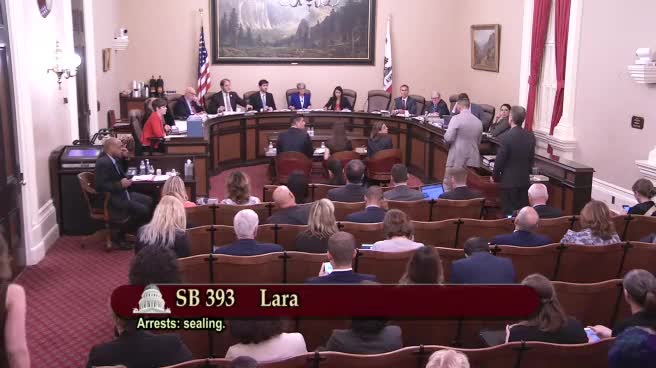 3MIN
Senate Standing Committee on Judiciary
 2MIN
Senate Standing Committee on Education
Bill Author

Bill Co-Author(s):