SB 1032: Housing finance: portfolio restructuring: loan forgiveness.
- Session Year: 2023-2024
- House: Senate
- Latest Version Date: 2024-05-16
Current Status:
Failed
(2024-08-15: August 15 hearing: Held in committee and under submission.)
Introduced
In Committee
First Chamber
In Committee
Second Chamber
Enacted
Existing law establishes various rental housing finance programs administered by the Department of Housing and Community Development. Existing law authorizes the department to monitor and fund various multifamily housing loans. With respect to these programs and loans, existing law authorizes the department to approve an extension of a department loan, the reinstatement of a qualifying unpaid matured loan, the subordination of a department loan to new debt, or an investment of tax credit equity pursuant to specified rental housing finance programs and multifamily housing loans administered, monitored, or funded by the department, subject to specified requirements.
This bill would additionally authorize the department to forgive the full amount of the principal, interest, fees, and other outstanding balances of the above-described loans, including the full amounts of the principal, interests, fees, and any other outstanding balances of specified department loans, loans if the borrower shows that the loan is impeding their ability to maintain and operate the project, as specified. makes specified showings. The bill would require that projects receiving loan forgiveness meet specified requirements, including that the projects maintain the same number of affordable units at the same affordable housing cost as provided in the projects regulatory agreement. agreement, except as specified. The bill would authorize borrowers to appeal a loan forgiveness decision to the Secretary of Business, Consumer Services, and Housing for reconsideration.
This bill would make findings and declarations related to a gift of public funds.
Existing law establishes various rental housing finance programs administered by the Department of Housing and Community Development. Existing law authorizes the department to monitor and fund various multifamily housing loans. With respect to these programs and loans, existing law authorizes the department to approve an extension of a department loan, the reinstatement of a qualifying unpaid matured loan, the subordination of a department loan to new debt, or an investment of tax credit equity pursuant to specified rental housing finance programs and multifamily housing loans administered, monitored, or funded by the department, subject to specified requirements.
This bill would additionally authorize the department to forgive the above-described loans, including the full amounts of the principal, interests, fees, and any other outstanding balances of specified department loans, if the borrower shows that the loan is impeding their ability to maintain and operate the project, as specified. The bill would require that projects receiving loan forgiveness meet specified requirements, including that the projects ensure that 50% of the units are dedicated to lower income households, as specified. maintain the same number of affordable units at the same affordable housing cost as provided in the projects regulatory agreement. The bill would authorize borrowers to appeal a loan forgiveness decision to the Secretary of Business, Consumer Services, and Housing for reconsideration.
This bill would make findings and declarations related to a gift of public funds.
Existing law establishes various rental housing finance programs administered by the Department of Housing and Community Development. Existing law authorizes the department to monitor and fund various multifamily housing loans. With respect to these programs and loans, existing law authorizes the department to approve an extension of a department loan, the reinstatement of a qualifying unpaid matured loan, the subordination of a department loan to new debt, or an investment of tax credit equity pursuant to specified rental housing finance programs and multifamily housing loans administered, monitored, or funded by the department, subject to specified requirements.
This bill would additionally authorize the department to forgive the above-described loans, including the full amounts of the principal, interests, fees, and any other outstanding balances of specified department loans, if the borrower shows that the loan is impeding their ability to maintain and operate the project, as specified. The bill would require that projects receiving loan forgiveness meet specified requirements, including that the projects ensure that 50% of the units are dedicated to lower income households, as specified. The bill would authorize borrowers to appeal a loan forgiveness decision to the Secretary of Business, Consumer Services, and Housing for reconsideration.
This bill would make findings and declarations related to a gift of public funds.
(a)Subject to the requirements of this chapter, the department may approve an extension of a department loan, the reinstatement of a qualifying unpaid matured loan, the subordination of a department loan to new debt, the forgiveness of a department loan, or an investment of tax credit equity under one or more of the following rental housing finance programs: the original Rental Housing Construction Program established by Chapter 9 (commencing with Section 50735), the Special User Housing Rehabilitation Program established by Section 50670, the Deferred Payment Deferred-Payment Rehabilitation Loan Program established by Chapter 6.5 (commencing with Section 50660), the rental component of the California Natural Disaster Assistance Program established by Chapter 6.5 (commencing with Section 50671), the State Earthquake Rehabilitation Assistance Program established by Chapter 6.5 (commencing with Section 50671), the rental component of the California Housing Rehabilitation Program established by Section 50668.5, the component of the Rental Housing Construction Program funded with bond proceeds governed by Section 50771.1, the Family Housing Demonstration Program established by Chapter 15 (commencing with Section 50880), the Families Moving to Work Program established by Chapter 15 (commencing with Section 50880), the Multifamily Housing Program established by Chapter 6.7 (commencing with Section 50675), and any and all other multifamily housing loans funded or monitored by the department.
(b)Once the department has approved a loan extension, reinstatement of a qualifying unpaid matured loan, subordination, forgiveness, or tax credit investment pursuant to this chapter, the statutes enumerated in subdivision (a), and the regulations promulgated pursuant to these statutes, shall no longer apply to developments restructured pursuant to this chapter. These developments shall instead be governed by this chapter and guidelines adopted pursuant to subdivision (h).
(c)All projects restructured pursuant to this chapter shall comply with the affirmative marketing and language accessibility requirements set forth in Section 50736 of this code and Section 65863 of the Government Code.
(d)The department may approve an extension of a loan, the reinstatement of a qualifying unpaid matured loan, the subordination of a department loan to new debt, or an investment of tax credit equity if it determines that the project has, or will have after rehabilitation or repairs, a potential remaining useful life equal to or greater than the term of the restructured loan.
(e)The department may subordinate its loan to refinance existing senior debt only as necessary for project feasibility and to reimburse borrower advances for predevelopment costs, recent capital improvements, and recent operating deficits.
(f)If the extension of a department loan, the reinstatement of a qualifying unpaid matured loan, the subordination of a department loan to new debt, or an investment of tax credit equity will result in a rent increase for tenants of a development, the department may only subordinate a loan to senior debt if necessary to increase the feasibility of a project and to fund reasonable rehabilitation or improvements including soft costs. The application to refinance shall include a third-party analysis that supports the need for refinancing.
(g)The department may approve additional senior debt only as necessary to finance rehabilitation or repairs, including soft costs, that are modest in size, scope, and cost, as determined by the department.
(h)It is the intent of the Legislature in enacting this chapter to provide to the department the flexibility necessary to maintain the quality of the affordable rental housing units for which the state has already made a significant public investment. The department may implement this chapter through guidelines that shall not be subject to Chapter 2.5 (commencing with Section 11340) of Part 1 of Title 2 of the Government Code. These guidelines shall be developed through the following process:
(1)The department shall provide a notice of proposed action as described in Section 11346.5 of the Government Code to the public at least 21 days before the close of the public comment period.
(2)The department shall schedule at least one public hearing as described in Section 11346.8 of the Government Code before the close of the public comment period.
(3)The department shall maintain a rulemaking file as described in Section 11347.3 of the Government Code.
(4)The final version of the guidelines shall be accompanied by a final statement of reason as described in subdivision (a) of Section 11346.9 of the Government Code.
(5)The rules and guidelines shall be effective immediately upon adoption by the department.
SEC. 2.Section 50566 is added to the Health and Safety Code, to read:50566.(a)Upon a showing by the borrower that Subject to subdivision (b), the department may forgive the full amount of the principal, interest, fees, and other outstanding balances of a loan made pursuant to the programs a program listed in subdivision (a) of Section 50560 is impeding the borrowers ability to maintain and operate the project for affordable housing or senior housing, the department shall forgive the full amounts of the principal, interests, fees, and any other outstanding balances of the loan. upon a showing by the borrower of all of the following:
(1)The loan has matured or will mature within 24 months.
(2)Repayment of the outstanding principal, interest, fees, and other outstanding balances of the loan would impede the borrowers ability to maintain and operate the project as affordable housing or senior housing.
(3)Forgiveness of the loan will assist in maintaining the affordability of the project.
(4)The borrower is a nonprofit entity.
(b)Projects that receive loan forgiveness pursuant to this section shall meet all of the following requirements:
(1)The project shall maintain the same number of affordable units at the same affordable housing cost as provided in the projects regulatory agreement. agreement, except that, to the minimum extent necessary, the number of rent- or income-limited units may be adjusted to ensure the ongoing financial feasibility of the project.
(2)The units shall be subject to a recorded deed restriction for a period of 55 years for rental units and 45 years for owner-occupied units. the remaining useful life of the project.
(c)Borrowers may appeal a decision of the department made pursuant to this section to the Secretary of Business, Consumer Services, and Housing for reconsideration.
SEC. 3.The Legislature hereby finds and declares that the loan forgiveness authorized by Section 50566 of the Health and Safety Code, as added by this act, serves the public purpose of promoting affordable housing development where a loan impedes a borrowers ability to maintain and operate a project for affordable housing or senior housing, and does not constitute a gift of public funds within the meaning of Section 6 of Article XVI of the California Constitution.
(a)Subject to the requirements of this chapter, the department may approve an extension of a department loan, the reinstatement of a qualifying unpaid matured loan, the subordination of a department loan to new debt, the forgiveness of a department loan, or an investment of tax credit equity under one or more of the following rental housing finance programs: the original Rental Housing Construction Program established by Chapter 9 (commencing with Section 50735), the Special User Housing Rehabilitation Program established by Section 50670, the Deferred Payment Rehabilitation Loan Program established by Chapter 6.5 (commencing with Section 50660), the rental component of the California Natural Disaster Assistance Program established by Chapter 6.5 (commencing with Section 50671), the State Earthquake Rehabilitation Assistance Program established by Chapter 6.5 (commencing with Section 50671), the rental component of the California Housing Rehabilitation Program established by Section 50668.5, the component of the Rental Housing Construction Program funded with bond proceeds governed by Section 50771.1, the Family Housing Demonstration Program established by Chapter 15 (commencing with Section 50880), the Families Moving to Work Program established by Chapter 15 (commencing with Section 50880), the Multifamily Housing Program established by Chapter 6.7 (commencing with Section 50675), and any and all other multifamily housing loans funded or monitored by the department.
(b)Once the department has approved a loan extension, reinstatement of a qualifying unpaid matured loan, subordination, or tax credit investment pursuant to this chapter, the statutes enumerated in subdivision (a), and the regulations promulgated pursuant to these statutes, shall no longer apply to developments restructured pursuant to this chapter. These developments shall instead be governed by this chapter and guidelines adopted pursuant to subdivision (h).
(c)All projects restructured pursuant to this chapter shall comply with the affirmative marketing and language accessibility requirements set forth in Section 50736 of this code and Section 65863 of the Government Code.
(d)The department may approve an extension of a loan, the reinstatement of a qualifying unpaid matured loan, the subordination of a department loan to new debt, or an investment of tax credit equity if it determines that the project has, or will have after rehabilitation or repairs, a potential remaining useful life equal to or greater than the term of the restructured loan.
(e)The department may subordinate its loan to refinance existing senior debt only as necessary for project feasibility and to reimburse borrower advances for predevelopment costs, recent capital improvements, and recent operating deficits.
(f)If the extension of a department loan, the reinstatement of a qualifying unpaid matured loan, the subordination of a department loan to new debt, or an investment of tax credit equity will result in a rent increase for tenants of a development, the department may only subordinate a loan to senior debt if necessary to increase the feasibility of a project and to fund reasonable rehabilitation or improvements including soft costs. The application to refinance shall include a third-party analysis that supports the need for refinancing.
(g)The department may approve additional senior debt only as necessary to finance rehabilitation or repairs, including soft costs, that are modest in size, scope, and cost, as determined by the department.
(h)It is the intent of the Legislature in enacting this chapter to provide to the department the flexibility necessary to maintain the quality of the affordable rental housing units for which the state has already made a significant public investment. The department may implement this chapter through guidelines that shall not be subject to Chapter 2.5 (commencing with Section 11340) of Part 1 of Title 2 of the Government Code. These guidelines shall be developed through the following process:
(1)The department shall provide a notice of proposed action as described in Section 11346.5 of the Government Code to the public at least 21 days before the close of the public comment period.
(2)The department shall schedule at least one public hearing as described in Section 11346.8 of the Government Code before the close of the public comment period.
(3)The department shall maintain a rulemaking file as described in Section 11347.3 of the Government Code.
(4)The final version of the guidelines shall be accompanied by a final statement of reason as described in subdivision (a) of Section 11346.9 of the Government Code.
(5)The rules and guidelines shall be effective immediately upon adoption by the department.
SEC. 2.Section 50566 is added to the Health and Safety Code, to read:50566.(a)Upon a showing by the borrower that a loan made pursuant to the programs listed in subdivision (a) of Section 50560 is impeding the borrowers ability to maintain and operate the project for affordable housing or senior housing, the department shall forgive the full amounts of the principal, interests, fees, and any other outstanding balances of the loan.
(b)Projects that receive loan forgiveness pursuant to this section shall meet all of the following requirements:
(1)The project shall ensure that 50 percent of the units within the development project, excluding managers units, shall be dedicated to lower income households available at either of the following: maintain the same number of affordable units at the same affordable housing cost as provided in the projects regulatory agreement.
(A)An affordable housing cost, as defined by Section 50052.5.(B)An affordable rent set in an amount consistent with the rent limits established by the California Tax Credit Allocation Committee.(2)The units shall be subject to a recorded deed restriction for a period of 55 years for rental units and 45 years for owner-occupied units.
(c)Borrowers may appeal a decision of the department made pursuant to this section to the Secretary of Business, Consumer Services, and Housing for reconsideration.
SEC. 3.The Legislature hereby finds and declares that the loan forgiveness authorized by Section 50566 of the Health and Safety Code, as added by this act, serves the public purpose of promoting affordable housing development where a loan impedes a borrowers ability to maintain and operate a project for affordable housing or senior housing, and does not constitute a gift of public funds within the meaning of Section 6 of Article XVI of the California Constitution.
(a)Subject to the requirements of this chapter, the department may approve an extension of a department loan, the reinstatement of a qualifying unpaid matured loan, the subordination of a department loan to new debt, the forgiveness of a department loan, or an investment of tax credit equity under one or more of the following rental housing finance programs: the original Rental Housing Construction Program established by Chapter 9 (commencing with Section 50735), the Special User Housing Rehabilitation Program established by Section 50670, the Deferred Payment Rehabilitation Loan Program established by Chapter 6.5 (commencing with Section 50660), the rental component of the California Natural Disaster Assistance Program established by Chapter 6.5 (commencing with Section 50671), the State Earthquake Rehabilitation Assistance Program established by Chapter 6.5 (commencing with Section 50671), the rental component of the California Housing Rehabilitation Program established by Section 50668.5, the component of the Rental Housing Construction Program funded with bond proceeds governed by Section 50771.1, the Family Housing Demonstration Program established by Chapter 15 (commencing with Section 50880), the Families Moving to Work Program established by Chapter 15 (commencing with Section 50880), the Multifamily Housing Program established by Chapter 6.7 (commencing with Section 50675), and any and all other multifamily housing loans funded or monitored by the department.
(b)Once the department has approved a loan extension, reinstatement of a qualifying unpaid matured loan, subordination, or tax credit investment pursuant to this chapter, the statutes enumerated in subdivision (a), and the regulations promulgated pursuant to these statutes, shall no longer apply to developments restructured pursuant to this chapter. These developments shall instead be governed by this chapter and guidelines adopted pursuant to subdivision (h).
(c)All projects restructured pursuant to this chapter shall comply with the affirmative marketing and language accessibility requirements set forth in Section 50736 of this code and Section 65863 of the Government Code.
(d)The department may approve an extension of a loan, the reinstatement of a qualifying unpaid matured loan, the subordination of a department loan to new debt, or an investment of tax credit equity if it determines that the project has, or will have after rehabilitation or repairs, a potential remaining useful life equal to or greater than the term of the restructured loan.
(e)The department may subordinate its loan to refinance existing senior debt only as necessary for project feasibility and to reimburse borrower advances for predevelopment costs, recent capital improvements, and recent operating deficits.
(f)If the extension of a department loan, the reinstatement of a qualifying unpaid matured loan, the subordination of a department loan to new debt, or an investment of tax credit equity will result in a rent increase for tenants of a development, the department may only subordinate a loan to senior debt if necessary to increase the feasibility of a project and to fund reasonable rehabilitation or improvements including soft costs. The application to refinance shall include a third-party analysis that supports the need for refinancing.
(g)The department may approve additional senior debt only as necessary to finance rehabilitation or repairs, including soft costs, that are modest in size, scope, and cost, as determined by the department.
(h)It is the intent of the Legislature in enacting this chapter to provide to the department the flexibility necessary to maintain the quality of the affordable rental housing units for which the state has already made a significant public investment. The department may implement this chapter through guidelines that shall not be subject to Chapter 2.5 (commencing with Section 11340) of Part 1 of Title 2 of the Government Code. These guidelines shall be developed through the following process:
(1)The department shall provide a notice of proposed action as described in Section 11346.5 of the Government Code to the public at least 21 days before the close of the public comment period.
(2)The department shall schedule at least one public hearing as described in Section 11346.8 of the Government Code before the close of the public comment period.
(3)The department shall maintain a rulemaking file as described in Section 11347.3 of the Government Code.
(4)The final version of the guidelines shall be accompanied by a final statement of reason as described in subdivision (a) of Section 11346.9 of the Government Code.
(5)The rules and guidelines shall be effective immediately upon adoption by the department.
SEC. 2.Section 50566 is added to the Health and Safety Code, to read:50566.(a)Upon a showing by the borrower that a loan made pursuant to the programs listed in subdivision (a) of Section 50560 is impeding the borrowers ability to maintain and operate the project for affordable housing or senior housing, the department shall forgive the full amounts of the principal, interests, fees, and any other outstanding balances of the loan.
(b)Projects that receive loan forgiveness pursuant to this section shall meet all of the following requirements:
(1)The project shall ensure that 50 percent of the units within the development project, excluding managers units, shall be dedicated to lower income households available at either of the following:
(A)An affordable housing cost, as defined by Section 50052.5.
(B)An affordable rent set in an amount consistent with the rent limits established by the California Tax Credit Allocation Committee.
(2)The units shall be subject to a recorded deed restriction for a period of 55 years for rental units and 45 years for owner-occupied units.
(c)Borrowers may appeal a decision of the department made pursuant to this section to the Secretary of Business, Consumer Services, and Housing for reconsideration.
SEC. 3.The Legislature hereby finds and declares that the loan forgiveness authorized by Section 50566 of the Health and Safety Code, as added by this act, serves the public purpose of promoting affordable housing development where a loan impedes a borrowers ability to maintain and operate a project for affordable housing or senior housing, and does not constitute a gift of public funds within the meaning of Section 6 of Article XVI of the California Constitution.
|
Date
|
Status
|
|---|---|
| Aug 15, 2024 | August 15 hearing: Held in committee and under submission. |
| Aug 7, 2024 | August 7 set for first hearing. Placed on suspense file. |
| Jun 26, 2024 | From committee: Do pass and re-refer to Com. on APPR. (Ayes 7. Noes 1.) (June 26). Re-referred to Com. on APPR. |
| Jun 3, 2024 | Referred to Com. on H. & C.D. |
| May 22, 2024 | In Assembly. Read first time. Held at Desk. |
| May 21, 2024 | Read third time. Passed. (Ayes 31. Noes 7. Page 4090.) Ordered to the Assembly. |
| May 20, 2024 | Read second time. Ordered to third reading. |
| May 16, 2024 | From committee: Do pass as amended. (Ayes 5. Noes 2. Page 3968.) (May 16). |
| May 16, 2024 | Read second time and amended. Ordered to second reading. |
| May 10, 2024 | Set for hearing May 16. |
| Apr 8, 2024 | April 8 hearing: Placed on APPR suspense file. |
| Mar 28, 2024 | Set for hearing April 8. |
| Mar 21, 2024 | Read second time and amended. Re-referred to Com. on APPR. |
| Mar 20, 2024 | From committee: Do pass as amended and re-refer to Com. on APPR. (Ayes 8. Noes 0. Page 3349.) (March 19). |
| Mar 6, 2024 | Set for hearing March 19. |
| Feb 14, 2024 | Referred to Com. on HOUSING. |
| Feb 7, 2024 | From printer. May be acted upon on or after March 8. |
| Feb 6, 2024 | Introduced. Read first time. To Com. on RLS. for assignment. To print. |
|
Date
|
Description
|
Location
|
Votes
|
|
|---|---|---|---|---|
| Jun 26, 2024 | Do pass and be re-referred to the Committee on [Appropriations] | Assembly Standing Committee on Housing and Community Development |
Passed |
|
| May 21, 2024 | Senate 3rd Reading SB1032 Padilla et al. | Senate Floor |
Passed |
|
| May 16, 2024 | Do pass as amended | Senate Standing Committee on Appropriations |
Passed |
|
| Apr 8, 2024 | Placed on suspense file | Senate Standing Committee on Appropriations |
Passed |
|
| Mar 19, 2024 | Do pass as amended, but first amend, and re-refer to the Committee on [Appropriations] | Senate Standing Committee on Housing |
Passed |
This list shows positions taken on this bill by organizations on the date displayed, which is linked to the original source.
Positions by individuals are not included.
|
Organization
|
Position
|
Date
|
|---|---|---|
| AIDS HealthCare Foundation | * Support | Mar 19, 2024 |
| Bay Area Council | * Support | Jun 26, 2024 |
| Board of Supervisors for Stanislaus | * Support | Mar 19, 2024 |
| Burbank Housing Corporation | * Support | Jun 26, 2024 |
| California Apartment Association | ** Support | |
| California Association Of Local Housing Finance Agencies | * Support | Jun 26, 2024 |
| California Association Of Realtors | ** Against | |
| California Coalition For Rural Housing | * Support | Jun 26, 2024 |
| California Housing Consortium | * Support | Jun 26, 2024 |
| California State Associate of Counties | * Support | Jun 26, 2024 |
| California State Association Of Counties | * Support | Jun 26, 2024 |
| Chispa | * Support | Jun 26, 2024 |
| City of Bishop | ** Support | |
| Colusa County Board of Supervisors | * Support | Mar 19, 2024 |
| County of Colusa | ** Support | |
| County of Imperial | ** Support | |
| County of Inyo | ** Support | |
| County Of Kings | ** Support | |
| County Of Madera | ** Support | |
| County Of Mariposa | ** Support | |
| County of San Benito | ** Support | |
| County of Santa Barbara | ** Support | |
| County of Yuba | ** Support | |
| Eden Housing | ** Support | |
| Fresno County | * Support | Jun 26, 2024 |
| Imperial Valley Housing Authority | ** Support | |
| Inyo County | * Support | Mar 19, 2024 |
| LeadingAge California | ** Support | |
| Marin County | * Support | Jun 26, 2024 |
| Mono County California | ** Support | |
| Nonprofit Housing Association of Northern California | * Support | Jun 26, 2024 |
| Rural Community Assistance Corporation | * Support | Jun 26, 2024 |
| San Luis Obispo County | * Support | Mar 19, 2024 |
| Stanislaus County | * Support | Jun 26, 2024 |
| The Town of Bishop | * Support | Jun 26, 2024 |
| Tulare County | * Support | Jun 26, 2024 |
Date of Hearing: August 7, 2024
ASSEMBLY COMMITTEE ON APPROPRIATIONS
Buffy Wicks, Chair
SBPCA Bill Id:SB 1032
Author:(Padilla) – As Amended Ver:May 16, 2024
Policy Committee: | Housing and Community Development | Vote: | 7 - 1 |
|
| ||
|
|
Urgency: No State Mandated Local Program: No Reimbursable: No
SUMMARY:
This bill authorizes the Department of Housing and Community Development (HCD) to forgive loans funded or monitored by the department under specified affordable rental housing programs, if a borrower makes specified showings.
Specifically, this bill:
- Authorizes HCD to forgive the full amount of principal, interest, fees and other outstanding balances of a loan if the borrower is a nonprofit entity and can show all of the following:
- The loan has matured or will mature within 24 months.
- Repayment of the outstanding principal, interest, fees, and other outstanding balances of the loan would impede the borrower’s ability to maintain and operate the project as affordable housing or senior housing.
- Forgiveness of the loan will assist in maintaining the affordability of the project.
- Requires a project that receives loan forgiveness to meet the following requirements:
- Maintain the same number of affordable units at the same affordable housing cost as provided in the project’s regulatory agreement, except, to the minimum extent necessary, the number of rent- or income-limited units may be adjusted to ensure the ongoing financial feasibility of the project.
- The units must be subject to a recorded deed restriction for a period of the remaining useful life of the project.
- Allows borrowers to appeal a decision of HCD made pursuant to this bill to the Secretary of Business, Consumer Services, and Housing (BCSH) for reconsideration.
FISCAL EFFECT:
- HCD estimates ongoing General Fund (GF) costs of approximately $4.2 million annually for 19.0 legal and program staff positions to implement a loan forgiveness option for borrowers with loans under the affordable housing programs within the purview of the Loan Restructuring Program (LPR Program).
- Ongoing annual program income (revenue) losses of an unknown amount related to the forgiveness of loans, including principal, interest, fees, and other outstanding balances of a loan (various funds). According to HCD, program income generated from project loan payments is typically reallocated to new projects for rehabilitation or construction of additional affordable units. This loss of revenue for affordable housing would need to be backfilled by the GF.
- Ongoing annual GF costs of an unknown amount for legal staff at BCSH Agency to manage appeals to the Secretary of BSCH in the event HCD denies a borrower’s application for loan forgiveness. Actual costs would depend on the number and complexity of the appeals.
According to the Legislative Analyst’s Office, the General Fund faces a structural deficit in the tens of billions of dollars over the next several fiscal years.
COMMENTS:
- Purpose. According to the author:
In a time when so many people are unable to find housing that fits their budget, we should be making it easier for housing agencies to provide affordable options; not more difficult. By allowing for the forgiveness of these loans provided by HCD, this bill would help many affordable housing providers across California continue to fulfill their purpose.
- Background. Existing law, the Loan Portfolio Restructuring Program (LPR Program), authorizes HCD to restructure existing loans administered, monitored, or funded by the department. Specifically, HCD may approve an extension of a department loan, the reinstatement of a qualifying unpaid mature loan, the subordination of a loan to new debt, or an investment of tax credit equity under the following rental housing finance programs:
- The original Rental Housing Construction Program.
- The Special User Housing Rehabilitation Program.
- The Deferred Payment Rehabilitation Loan Program.
- The rental component of the California Natural Disaster Assistance Program.
- The State Earthquake Rehabilitation Assistance Program.
- The rental component of the California Housing Rehabilitation Program.
- The bond-funded component of the Rental Housing Construction Program.
- The Family Housing Demonstration Program.
- The Families Moving to Work Program.
- The Multifamily Housing Program (MHP).
- Any and all other multifamily housing loans funded or monitored by HCD.
Existing law specifies loans may be restructured only if a development is in compliance with the existing regulatory agreement, the development requires a restructuring to continue to operate, and the development has, or will have after rehabilitation and repairs, a potential remaining useful life of at least as long as the new loan term. An extension must be for at least 10 years and up to 55 years, at an interest rate of 3%. Rents may be adjusted upward to the minimum extent necessary to support the new debt to pay for rehabilitation, and subject to specified limits to maintain affordability. Existing law authorizes HCD to charge loan processing and monitoring fees to an applicant to generate sufficient revenue to cover initial and ongoing monitoring requirements of the program.
The restructuring of HCD loans is intended to preserve existing HCD-funded affordable housing units that would otherwise be lost to termination of the regulatory provisions restricting rents and occupancy, to address physical deterioration of the property, to improve project fiscal integrity, or a combination of the three.
This bill additionally authorizes HCD to forgive the full amount of principal, interest, fees and other outstanding balances of a qualified loan if the borrower meets specified requirements. A project that receives loan forgiveness must continue to be subject to an affordability covenant.
- Arguments in Support: According to the sponsor, the California State Association of Counties:
In a high number of cases, housing agencies that would benefit from loan forgiveness serve as the main affordable housing providers in their regions. Without loan forgiveness, these housing agencies will default on these loans, effectively increasing the possibility that a housing agency will need to close affordable housing sites which serve the most vulnerable residents of their communities, which will ultimately lead to more homelessness across the state.
- Arguments in Opposition. According to the California Association of Realtors (C.A.R.):
C.A.R. has significant concerns about providing loan forgiveness to deed restricted affordable rental housing providers that already receive a significant annual allocation of state, local, and federal grants, tax credits, and other resources to fund the acquisition, development, and maintenance of their housing developments. It is further concerning that deed restricted affordable rental housing providers continue to use state resources to acquire single-family homes, which contributes to the year over year increase in the median price of entry level homeownership housing.
- Related Legislation. AB 2638 (Ward), of this legislative session, authorizes HCD to approve the payoff of an HCD loan in whole or part, prior to the end of its term, and withdrawal of equity from a development for purposes approved by HCD. AB 2638 is pending in the Senate Appropriations Committee.
AB 515 (Ward), of this legislative session, was substantially similar to AB 2638. AB 515 was held on the Senate Appropriation Committee’s suspense file.
Analysis Prepared by: Jennifer Swenson / APPR. / (916) 319-2081
Date of Hearing: June 26, 2024
ASSEMBLY COMMITTEE ON HOUSING AND COMMUNITY DEVELOPMENT
Christopher M. Ward, Chair
SBPCA Bill Id:SB 1032
Author:(Padilla) – As Amended Ver:May 16, 2024
SENATE VOTE: 31-7
SUBJECT: Housing finance: portfolio restructuring: loan forgiveness
SUMMARY: Authorizes the Department of Housing and Community Development (HCD) to forgive the full amount of principal, interest, fees and other outstanding balances of a loan, as specified. Specifically, this bill:
- Authorizes HCD to forgive the full amount of principal, interest, fees and other outstanding balances of a loan if the borrower can show the following:
- The loan has matured or will mature within 24 months;
- Repayment of the outstanding principal, interest, fees, and other outstanding balances of the loan would impede the borrower’s ability to maintain and operate the project as affordable housing or senior housing;
- Forgiveness of the loan will assist in maintaining the affordability of the project; and
- The borrower is a nonprofit entity.
- Requires a project that receives loan forgiveness to meet all of the following requirements:
- Maintain the same number of affordable units at the same affordable housing cost as provided in the project’s regulatory agreement, except that, to the minimum extent necessary, the number of rent- or income-limited units may be adjusted to ensure the ongoing financial feasibility of the project;
- The units must be subject to a recorded deed restriction for a period of the remaining useful life of the project; and
- Borrowers may appeal a decision of the department made pursuant to this bill to the Secretary of Business, Consumer Services, and Housing for reconsideration.
States that the Legislature finds and declares that the loan forgiveness authorized by this bill serves the public purpose of promoting affordable housing development where a loan impedes a borrower’s ability to maintain and operate a project for affordable housing or senior housing, and does not constitute a gift of public funds within the meaning of Section 6 of Article XVI of the California Constitution.
EXISTING LAW:
- Allows HCD to approve an extension of a department loan, the reinstatement of a qualifying unpaid matured loan, the subordination of a department loan to new debt, or an investment of tax credit equity under various older HCD rental housing finance programs. (Health and Safety Code (HSC) Section 50560)
- Allows HCD to approve an extension of a loan, the reinstatement of a qualifying unpaid matured loan, or the subordination of an HCD loan to new debt or an investment of tax credit equity if it determines that the project will have after rehabilitation of repairs, a potential remaining useful life equal to or greater than the term of the restructured loan. (HSC 50560)
- Provides that HCD may subordinate its loan to refinance existing senior debt only as necessary for project feasibility and to reimburse borrower advances for predevelopment costs, recent capital improvements, and recent operating deficits. (HSC 50560)
- Multi-family Housing Program (MHP) Regulations include the following prohibitions:
- Prohibits the Sponsor from encumbering, pledging, or hypothecating the Rental Housing Development, or any interest therein or portion thereof, or allow any lien, charge, or assessment against the Rental Housing Development without the prior written approval of HCD. HCD will not permit refinancing of existing liens or additional financing secured by the Rental Housing Development except to the extent necessary to maintain or improve the Fiscal Integrity of the Project, to maintain
Affordable Rents, or to decrease Rents and for no other purpose, including, but not
limited to, cash payments to the Sponsor, repayment of general partner loans or of
limited partner loans, or for limited partner buyouts. Notwithstanding the general
provisions in UMR Section 8308(g), this special condition controls, in that no MHP
reserve balance can fund a limited partner buyout or exit. - No loan may be paid off prior to maturity without the prior written consent of the
Department in its sole discretion, which consent shall be subject to conditions deemed
necessary to ensure compliance with the Program requirements. All of the loan
documents, including the Regulatory Agreement and Deed of Trust, shall continue in
full force and effect notwithstanding any prepayment, in whole or in part, or the loan. (California Code of Regulations (CCR), Title 25, Subchapter 4, MHP Regulations 7322 (d)-(e)) - The Loan Portfolio Restructuring Program (LPRP) includes the following prohibition on cash payments to program sponsors:
- Except as noted in this subsection, Project sales shall not involve a cash payment to the selling party, or to any party related to or affiliated with the selling. The Sponsor may not cash out their equity. The exception to this rule applies to cases where a cash payment to the seller is held in a restricted account, is contributed to the project during the development period, and remains with the project as permanent funding. In addition, any Sponsor loans related to the Restructuring, including carryback financing, shall be payable only out of sponsor distributions. (Loan Portfolio Restructuring Program Guidelines 112 (h))
FISCAL EFFECT: Unknown.
COMMENTS:
Author’s Statement: According to the author, “In a time when so many people are unable to find housing that fits their budget, we should be making it easier for housing agencies to provide affordable options; not more difficult. By allowing for the forgiveness of these loans provided by HCD, this bill would help many affordable housing providers across California continue to fulfill their purpose.”
Affordable Housing Finance: The state finances affordable multifamily rental housing using a combination of loans, tax credits, and private activity bonds. Unlike market rate housing, affordable housing does not have the cash-flow from rents to support traditional financing. Affordable housing is provided to tenants whose household income is below the area median income (AMI). To qualify, very low-income tenants must make 60% or less of the AMI and lower-income tenants must make only 80% or less of AMI. Tenants in affordable housing are only required to pay 30% of their income toward rent, so the state provides enough long term subsidy to reduce the overall debt service on a development. HCD loans serve as the permanent financing that comes in once a development is complete to take out the predevelopment and construction loans a developer took out from private lenders to construct the development. HCD loans are secured with a lien in first position on the property. Developments are also subject to a 55-year recorded regulatory agreement which runs with the project. If a developer pays off an HCD loan before the covenants expire, the regulatory agreement is not extinguished and the developer must continue to provide the units at an affordability rent for the length of the regulatory agreement to lower-income tenants.
Loan Portfolio Restructuring Program (LPRP): In 2012, AB 1699 (Torres, Chapter 780) authorized HCD to restructure existing loans in specified HCD loan programs, including:
- Rental Housing Construction Program Original
- The Special User Housing Rehabilitation Program
- The Deferred Payment Rehabilitation Loan Program
- The rental component of the California Natural Disaster Assistance Program
- The State Earthquake Rehabilitation Assistance Program
- The rental component of the California Housing Rehabilitation Program
- The component of the Rental Housing Construction Program funded with bond proceeds
- The Family Housing Demonstration Program
- The Families Moving to Work Program
HCD administers a LPRP to preserve and rehabilitate existing HCD-funded developments, including those with MHP loans. To qualify, developments must have expired regulatory agreements or the regulatory agreements must be set to expire by 2032. The LPRP does not allow cash payments to the developer or any cash-out of their equity except if the cash payment is held in a restricted account, contributed to the project during the development period, and remains with the project as permanent funding. The restructuring of HCD’s loans is intended to preserve affordable housing units that would have been lost to termination of the regulatory provisions restricting rents and occupancy, to address physical deterioration of the property, or to improve project fiscal integrity, or a combination of the three. Restructuring a loan in this context means extending the original HCD loan term, subordination of the HCD loan or loans to a new senior loan, or a tax credit investment in the project.
This bill would give HCD authority to forgive the full amount of principal, interest, fees and other outstanding balances of a loan if the borrower is a nonprofit entity, the loan will mature within 24 months, repayment of the loan would impede a borrower’s ability to maintain the project as affordable and forgiveness of the loan will maintain the affordability of the project. The project would continue to be subject to an affordability covenant which would allow HCD to prevent the project owner from taking out additional debt on the project without HCD’s approval, and potentially jeopardizing the affordability of the project.
Borrowers are not required to pay debt on an HCD loan if there is no cash-flow and HCD has discretion to restructure loans by subordinating a department loan to new debt or an investment of tax credit equity, so it is somewhat unclear why a loan must be forgiven. The sponsors argue that although restructuring a loan is an option for some developers, they are required to disclose the debt on their financials which makes it hard to qualify for other state and federal programs. The example given was the Headstart program. They contend that the HCD loan may be in excess of the value of the property now or after a new restructured term, making the property appear insolvent and skewing the financial statements of the housing provider that owns the property.
Options exist for developers to pay down an HCD loan when the terms of the loan expire. Typically when the loan term comes to an end a property owner will restructure the project using tax credits or a new HCD loan to reduce the overall debt on the project. If a developer decides to sell the property and get out of the business of providing affordable housing, they are required to first offer it to a buyer who will maintain the affordability of the project.
Policy Considerations:
- Borrowers are not required to pay debt on an HCD loan if there is no cash-flow and HCD has discretion to restructure loans by subordinating a department loan to new debt or an investment of tax credit equity, so it is somewhat unclear why a loan must be forgiven.
- HCD charges monitoring fees on loans that are used to fund the cost of ensuring that rents are provided at the affordability levels required by HCD loan programs. It is unclear if HCD could continue to monitor projects that no longer have secured HCD loans.
Arguments in Support: According to the sponsor, the California State Association of Counties, “housing is an important element of economic development and essential for the health and wellbeing of our communities. SB 1032 would not require HCD to forgive any specific loans, but instead will give them the authority to choose to forgive certain legacy loans that are most at risk, per their discretion. Specifically, SB 1032 will allow housing providers to preserve current affordable housing units without the need to evict low-income residents out of their homes.
Arguments in Opposition: The California Association of Realtors is opposed to the state forgiving loans for “corporate entities” for various reasons. It is important to note that this bill only applies to nonprofit borrowers.
Related Legislation:
AB 2638 (Ward) of the current legislative session would authorize HCD to approve the payoff of an HCD loan in whole or part, prior to the end of its term, and withdrawal of equity from a development for purposes approved by HCD.
REGISTERED SUPPORT / OPPOSITION:
Support
California State Association of Counties (Sponsor)
Bay Area Council
Burbank Housing
California Apartment Association
California Association of Housing Authorities
California Housing Consortium
CHISPA
County of Glenn
County of Marin
County of Monterey
County of Santa Barbara
Eden Housing
LeadingAge California
YIMBY Action
Opposition
California Association of Realtors
Analysis Prepared by: Lisa Engel / H. & C.D. / (916) 319-2085
SENATE RULES COMMITTEE Office of Senate Floor Analyses (916) 651-1520 Fax: (916) 327-4478 | SB 1032 |
THIRD READING
Bill No: SB 1032
Author: Padilla (D), et al.
Amended: 5/16/24
Vote: 21
SENATE HOUSING COMMITTEE: 8-0, 3/19/24
AYES: Skinner, Blakespear, Caballero, Cortese, Menjivar, Padilla, Umberg, Wahab
NO VOTE RECORDED: Ochoa Bogh, Seyarto
SENATE APPROPRIATIONS COMMITTEE: 5-2, 5/16/24
AYES: Caballero, Ashby, Becker, Bradford, Wahab
NOES: Jones, Seyarto
SUBJECT: Housing finance: portfolio restructuring: loan forgiveness
SOURCE: California State Association of Counties
DIGEST:
This bill authorizes the Department of Housing and Community Development (HCD) to approve the forgiveness of a department loan under specified affordable housing programs funded or monitored by HCD.
ANALYSIS:
Existing law:
- Establishes housing programs administered by HCD to address such topics as the construction, preservation, and rehabilitation of affordable housing, homelessness, homeownership, infrastructure, and housing planning.
- Allows HCD to approve an extension of an HCD loan, the reinstatement of a qualifying unpaid matured loan, the subordination of an HCD loan to new debt, or an investment of tax credit equity under various older HCD rental housing finance programs.
- Allows HCD to approve an extension of an HCD loan, the reinstatement of a qualifying unpaid matured loan, or the subordination of an HCD loan to new debt or an investment of tax credit equity if HCD determines that the project will have a potential remaining useful life equal to or greater than the term of the restructured loan.
- Allows HCD to charge a monitoring and transaction fee to cover its costs for loan extensions and transactions, and requires developer fee limitations to be consistent with specified laws and regulations, including those set by the California Tax Credit Allocation Committee (CTCAC).
- Provides that HCD may subordinate its loan to refinance existing senior debt only as necessary for project feasibility and to reimburse borrower advances for predevelopment costs, recent capital improvements, and recent operating deficits.
- Authorizes HCD to restructure existing loans in specified HCD loan programs through the Loan Portfolio Restructuring Program (LPRP).
This bill:
- Allows but does not require HCD to approve the forgiveness of a department loan that has or will mature within 24 months under specified affordable housing programs if the borrower is a nonprofit entity and the project is funded or monitored by HCD.
- Provides that in exchange for loan forgiveness, the borrower must maintain the same number of affordable units at the same affordable housing cost as provided for in the project’s regulatory agreement, and the units must be subject to a recorded deed restriction for the remaining useful life of the project.
Comments
- Affordable Housing Finance. The state finances affordable multifamily rental housing using a combination of loans, tax credits, and private activity bonds. Unlike market rate housing, affordable housing does not have the cash-flow from rents to support traditional financing.
Affordable housing is provided to tenants whose household income is below the area median income (AMI). To qualify, very low-income tenants must make 60% or less of the AMI and lower-income tenants must make only 80% or less of AMI. Tenants in affordable housing are only required to pay 30% of their income toward rent, so the state provides sufficient long term subsidy to reduce the overall debt service on a development. HCD loans serve as the permanent financing that comes in once a development is complete by allowing developers to take out the predevelopment and construction loans taken on prior to construction. HCD loans are secured with a lien in first position on the property. Developments are also subject to a 55-year recorded regulatory agreement which runs with the project. If a developer pays off an HCD loan before the covenants expire, the regulatory agreement is not extinguished and the developer must continue to provide the units at an affordability rent for the length of the regulatory agreement to lower-income tenants.
- HCD Loan Forgiveness. Developers and jurisdictions with older HCD loans would like the option for HCD to approve the forgiveness of those loans to minimize their overall debt, better enabling them apply for funding for future projects. This is particularly important for housing providers that are not utilizing tax credits and do not have the same ability to restructure their loan.
The Multifamily Housing Program (MHP)—HCD’s flagship affordable housing construction program—regulations suggest that HCD does have some discretion to allow for prepayment and refinancing of a loan (i.e., if necessary to maintain or improve the fiscal integrity of a project, to maintain affordable rents, or to decrease rents), but they do not currently allow for loan forgiveness.
- Loan Portfolio Restructuring Program (LPRP). In 2012, AB 1699 (Torres, Chapter 780, Statutes of 2012) authorized HCD to restructure existing loans in specified HCD loan programs, including:
- Rental Housing Construction Program Original. (RHCP-O)
- The Special User Housing Rehabilitation Program. (SUHRP)
- The Deferred Payment Rehabilitation Loan Program. (DPRLP)
- The rental component of the California Natural Disaster Assistance Program. (CALDAP).
- The State Earthquake Rehabilitation Assistance Program. (SERA).
- The rental component of the California Housing Rehabilitation Program. (CHRP-R)
- The component of the Rental Housing Construction Program funded with bond proceeds. (RHCP-B)
- The Family Housing Demonstration Program. (FHDP)
- The Families Moving to Work Program. (FMTW)
The restructuring of HCD’s loans is intended to preserve affordable housing units that would have been lost to termination of the regulatory provisions restricting rents and occupancy, to address physical deterioration of the property, or to improve project fiscal integrity, or a combination of the three.
Restructuring a loan in this context means extending the original HCD loan term, subordination of the HCD loan or loans to a new senior loan, or a tax credit investment in the project.
The LPRP was appropriated $332.5 million to preserve and rehabilitate existing HCD-funded developments, including those with MHP loans. To qualify, developments must have expired regulatory agreements or the regulatory agreements must be set to expire by 2032.
- Preserving public investments. Given the scarcity of funds available for the development of affordable housing, the high demand for funding, and the overall low supply of housing units, it could be argued that anything that jeopardizes existing public investments (i.e., affordable housing) is too great of a risk.
The amended bill language applies to HCD loans specific to non-profit entities, and loans specifically helpful to maintaining affordability and that have or will matured within 24 months. These amendments help narrow the focus of this bill for example to exclude loan forgiveness for a loan in year two of its term.
What remains unclear is how HCD can guarantee the units in a project with a forgiven loan maintain their affordability. Through monitoring protocols in their programs, HCD is able to track compliance with affordability standards over time, safeguarding against potential increases in housing costs that could displace residents. If HCD were to forgive these loans, HCD would lose the ability to monitor the ongoing affordability of the units. Forgiving loans does not absolve the obligation to uphold affordability measures; rather, it underscores HCD's commitment to preserving accessible housing options for all residents. Today, HCD charges 0.42% of the award amount every year to monitor a development. At a minimum, HCD will need to cover the cost of continued monitoring of projects and their affordability.
Moving forward, to address monitoring and affordability compliance concerns, the author has agreed to work on language to maintain HCD’s monitoring responsibilities on projects authorized for loan forgiveness.
Related/Prior Legislation
AB 515 (Ward, 2023) would have authorized HCD to approve the pay off of an HCD loan in whole or part, prior to the end of its term, and the extraction of equity from a development for purposes approved by HCD. This bill was held in the Senate Appropriations Committee.
FISCAL EFFECT: Appropriation: No Fiscal Com.: Yes Local: No
According to the Senate Appropriations Committee:
- HCD estimates costs of approximately $4.81 million and 23.0 PY of staff in the 2025-26 fiscal year, and ongoing costs of approximately $8.61 million and 41.0 PY of staff annually thereafter to implement and expand options to borrowers with loans under the affordable housing programs within the purview of the Loan Restructuring Program (LPR Program) to allow for loan forgiveness under specified circumstances. These estimates assume approximately 118 forgiveness applications in the first year, and 236 applications in the second year. HCD expects workload to increase in the out years. See staff comments for a discussion of specific duties related to these estimated administrative costs. (General Fund)
- Unknown, significant annual ongoing revenue losses related to the forgiveness of loans, including principal, interest, fees, and other outstanding balances of a loan (various funds). HCD notes that there are 1,580 projects in the overall portfolio of loans in the programs specified in this bill, but information on outstanding balances that could be subject to forgiveness is not available at this time. In addition, staff notes that borrowers typically pay annual monitoring fees to cover HCD’s ongoing compliance and monitoring costs related to a project funded through a department loan. As such, this bill would likely result in a shift of HCD’s ongoing project monitoring costs from fees that currently support those functions to the General Fund.
- The Business, Consumer Services, and Housing (BCSH) Agency estimates costs of $286,000 in the 2025-26 fiscal year, and $386,000 annually thereafter for 1.0 PY of legal staff to manage appeals to BSCH in the event that HCD denies a borrower’s application for loan forgiveness, assuming there are less than 100 appeals annually. (General Fund)
SUPPORT: (Verified 5/16/24)
California State Association of Counties (source)
California Apartment Association
California Coalition for Rural Housing
City of Bishop
County of Colusa
County of Fresno
County of Imperial
County of Inyo
County of Kings
County of Madera
County of Mariposa
County of San Benito
County of Santa Barbara
County of Stanislaus
County of Tulare
County of Yuba
Eden Housing
Imperial Valley Housing Authority
LeadingAge California
Mono County California
OPPOSITION: (Verified 5/16/24)
California Association of Realtors
ARGUMENTS IN SUPPORT: According to the author, “In a time when so many people are unable to find housing that fits their budget, we should be making it easier for housing agencies to provide affordable options; not more difficult. By allowing for the forgiveness of these loans provided by HCD, this bill would help many affordable housing providers across California continue to fulfil their purpose.”
ARGUMENTS IN OPPOSITION: The California Association of Realtors wrote in opposition, saying, “Now is the wrong time to advance policies benefiting one type of corporate rental housing as families continue to struggle to build generational wealth through homeownership. HCD estimated the costs of loan forgiveness to these corporations to almost double the initial investment by HCD annually. C.A.R. has significant concerns about providing loan forgiveness to deed restricted affordable rental housing providers that already receive a significant annual allocation of state, local, and federal grants, tax credits, and other resources to fund the acquisition, development, and maintenance of their housing developments. … Forgiving loans made to housing providers sets a bad precedent and may encourage controversial and risky investment decisions by housing providers which inadvertently incentivizes these companies’ default or challenge their repayment requirements for loans serviced by HCD and the state of California.”
Prepared by: Max Ladow / HOUSING / (916) 651-4124
5/20/24 18:52:20
**** END ****
SENATE COMMITTEE ON APPROPRIATIONS
Senator Anna Caballero, Chair
2023 - 2024 Regular Session
SB 1032 (Padilla) - Housing finance: portfolio restructuring: loan forgiveness
Version: March 21, 2024 | Policy Vote: HOUSING 8 - 0 |
Urgency: No | Mandate: No |
Hearing Date: May 16, 2024 | Consultant: Mark McKenzie |
Bill Summary:
SB 1032 would authorize the Department of Housing and Community Development (HCD) to approve the forgiveness of loans funded or monitored by the department under specified affordable housing programs, if a borrower demonstrates that the loan is impeding the ability to maintain and operate the project for affordable housing or senior housing.
*********** ANALYSIS ADDENDUM – SUSPENSE FILE ***********
The following information is revised to reflect amendments
adopted by the committee on May 16, 2024
Fiscal Impact:
- HCD estimates ongoing costs of approximately $4 million annually for 19.0 PY of legal and program staff to implement and expand options to borrowers with loans under the affordable housing programs within the purview of the Loan Restructuring Program (LPR Program) to allow for loan forgiveness under specified circumstances. (General Fund)
- Unknown, potentially significant annual ongoing revenue losses related to the forgiveness of loans, including principal, interest, fees, and other outstanding balances of a loan (various funds). HCD notes that there are 1,580 projects in the overall portfolio of loans in the programs specified in the bill, but information on outstanding balances that could be subject to forgiveness is not available at this time. In addition, staff notes that borrowers typically pay annual monitoring fees to cover HCD’s ongoing compliance and monitoring costs related to a project funded through a department loan. As such, the bill would likely result in a shift of HCD’s ongoing project monitoring costs from fees that currently support those functions to the General Fund.
- Unknown annual costs, potentially exceeding $100,000, for legal staff at the Business, Consumer Services, and Housing (BCSH) Agency to manage appeals to BSCH in the event that HCD denies a borrower’s application for loan forgiveness. (General Fund)
Author Amendments:
- Authorize, rather than require, HCD to forgive a program loan, as specified.
- Limit the authority to forgive a loan to borrowers that can show that:
- The loan has matured or will mature within 24 months.
- Repayment of outstanding principal, interest, fees, and other balances of the loan would impede the borrower’s ability to maintain and operate the project as affordable housing or senior housing.
- Forgiveness of the loan will assist in maintaining the affordability of the project.
- The borrower is a nonprofit entity.
- Authorize, to the minimum extent necessary, the number of rent- or income-limited units to be adjusted to ensure the ongoing financial feasibility of the project.
- Require units to be subject to a recorded deed restriction for a period of the remaining useful life of the project, rather than 55 years for rental units and 45 years for owner-occupied units.
-- END --
SENATE COMMITTEE ON
Senator Anna Caballero, Chair
2023 - 2024 Regular Session
SB 1032 (Padilla) - Housing finance: portfolio restructuring: loan forgiveness
Version: | Policy Vote: |
Urgency: | Mandate: |
Hearing Date: | Consultant: |
Bill Summary:
SB 1032 would authorize the Department of Housing and Community Development (HCD) to approve the forgiveness of loans funded or monitored by the department under specified affordable housing programs, if a borrower demonstrates that the loan is impeding the ability to maintain and operate the project for affordable housing or senior housing.
Fiscal Impact:
- HCD estimates costs of approximately $4.81 million and 23.0 PY of staff in the 2025-26 fiscal year, and ongoing costs of approximately $8.61 million and 41.0 PY of staff annually thereafter to implement and expand options to borrowers with loans under the affordable housing programs within the purview of the Loan Restructuring Program (LPR Program) to allow for loan forgiveness under specified circumstances. These estimates assume approximately 118 forgiveness applications in the first year, and 236 applications in the second year. HCD expects workload to increase in the out years. See staff comments for a discussion of specific duties related to these estimated administrative costs. (General Fund)
- Unknown, significant annual ongoing revenue losses related to the forgiveness of loans, including principal, interest, fees, and other outstanding balances of a loan (various funds). HCD notes that there are 1,580 projects in the overall portfolio of loans in the programs specified in the bill, but information on outstanding balances that could be subject to forgiveness is not available at this time. In addition, staff notes that borrowers typically pay annual monitoring fees to cover HCD’s ongoing compliance and monitoring costs related to a project funded through a department loan. As such, the bill would likely result in a shift of HCD’s ongoing project monitoring costs from fees that currently support those functions to the General Fund.
- The Business, Consumer Services, and Housing (BCSH) Agency estimates costs of $286,000 in the 2025-26 fiscal year, and $386,000 annually thereafter for 1.0 PY of legal staff to manage appeals to BSCH in the event that HCD denies a borrower’s application for loan forgiveness, assuming there are less than 100 appeals annually. (General Fund)
Background:
Existing law, the Loan Portfolio Restructuring Program (LPR Program), authorizes HCD to approve an extension of a department loan, the reinstatement of a qualifying unpaid mature loan, the subordination of a loan to new debt, or an investment of tax credit equity under the following rental housing finance programs:
- The original Rental Housing Construction Program.
- The Special User Housing Rehabilitation Program.
- The Deferred Payment Rehabilitation Loan Program.
- The rental component of the California Natural Disaster Assistance Program.
- The State Earthquake Rehabilitation Assistance Program.
- The rental component of the California Housing Rehabilitation Program.
- The bond-funded component of the Rental Housing Construction Program.
- The Family Housing Demonstration Program.
- The Families Moving to Work Program.
- The Multifamily Housing Program (MHP).
- Any and all other multifamily housing loans funded or monitored by HCD.
Existing law specifies that loans may only be restructured at HCD’s discretion if a development is in compliance with the existing regulatory agreement, the development requires a restructuring in order to continue to operate, and the development has, or will have after rehabilitation and repairs, a potential remaining useful life of at least as long as the new loan term. An extension must be for a period of at least 10 years and up to 55 years, at an interest rate of 3 percent. Rents may be adjusted upward to the minimum extent necessary to support the new debt to pay for rehabilitation, and subject to specified limits to maintain affordability. Existing law authorizes HCD to charge loan processing and monitoring fees to an applicant to generate sufficient revenue to cover initial and ongoing monitoring requirements of the program.
Proposed Law:
SB 1032 would do the following:
- Amend the LPR Program to allow HCD to approve the forgiveness of a department loan under specified programs within the purview of the Program.
- Require HCD to forgive the full amounts of principal, interest, fees, and any other outstanding balances of a loan upon a showing by the borrower that the loan is impeding the borrower’s ability to maintain and operate the project for affordable housing or senior housing.
- Require projects that receive loan forgiveness to meet the following requirements:
- The project must maintain the same number of affordable units at the same affordable housing cost as provided in the project’s regulatory agreement.
- The units must be subject to a recorded deed restriction for a period of 55 years for rental units and 45 years for owner-occupied units.
- Authorize borrowers to appeal an HCD decision to the Secretary of BCSH for reconsideration.
Related Legislation:
AB 515 (Ward), which was held on this Committee’s Suspense File last year, would have amended the LPR Program to authorize HCD to approve the payoff of a department loan prior to the end of its term, and the extraction of equity from a development for purposes approved by the department, as specified.
AB 1699 (Torres), Chap. 780/2012, established the LPR Program and authorized HCD to approve an extension of a department loan, the subordination of a loan to new debt, or an investment of tax credit equity under older rental housing finance programs, as specified.
Staff Comments:
This bill would require HCD to provide loan forgiveness to eligible borrowers with loans issued pursuant to specified programs that are included in the LPR Program. HCD’s first year costs noted above are related to the need to conduct stakeholder outreach, develop tools and processes for determining eligibility for loan forgiveness, and adopt program guidelines. HCD’s ongoing costs, once borrowers submit applications for forgiveness, would include conducting a complete fiscal analysis of each project, determining whether a borrower meets the established threshold for forgiveness, providing an analysis of the legal sufficiency of the decision whether or not to grant forgiveness, reviewing potential legal exposure in the event that litigation occurs from an HCD decision to deny forgiveness, drafting legally-sufficient denial letters, drafting substitution of trustee and reconveyance of the deed of trust and escrow instructions for loan forgiveness, and drafting Deal Point Memos. To the extent that borrowers who are ultimately denied relief seek redress through the courts, HCD legal staff would need to confer with the Department of Justice, collect evidence, respond to discovery requests and coordinate witness interviews and expert testimony. Staff notes that the costs noted above include 8.0 PY of legal staff in year one, and 15.0 PY of legal staff annually ongoing. HCD’s estimates related to these positions is based on potential overall hours of work related to the loan forgiveness program, including workload and analysis related to the borrower application process, such as application review and providing opinions on the likelihood that a borrower could build a court case in the event of a denial, as well as potential hours related to litigation. It is unclear at this time how much of the total legal staff time would be dedicated to each of these duties.
Proposed Author Amendments:
Staff notes that, when this bill was under consideration by the Senate Housing Committee, the author agreed to work towards amending the bill prior to consideration on the Senate Floor, as specified in the policy analysis of this bill. These commitments include amendments related to the following:
- Clarifying parameters regarding eligibility for loan forgiveness with a focus on projects that are at or near the end of the loan terms.
- Ensuring HCD’s continued responsibilities related to affordability compliance and monitoring, including addressing the department’s ongoing costs related to projects subject to loan forgiveness.
-- END --
SENATE COMMITTEE ON HOUSING
Senator Nancy Skinner, Chair
2023 - 2024 Regular
Bill No: SB 1032 Hearing Date: 3/19/2024
Author: | Padilla | ||
Version: | 2/6/2024 Introduced | ||
Urgency: | No | Fiscal: | Yes |
Consultant: | Mehgie Tabar | ||
SUBJECT: Housing finance: portfolio restructuring: loan forgiveness
DIGEST: This bill authorizes the Department of Housing and Community Development (HCD) to approve the forgiveness of a department loan under specified affordable housing programs funded or monitored by HCD.
ANALYSIS:
Existing law:
- Establishes housing programs administered by HCD to address such topics as the construction, preservation, and rehabilitation of affordable housing, homelessness, homeownership, infrastructure, and housing planning.
- Allows HCD to approve an extension of an HCD loan, the reinstatement of a qualifying unpaid matured loan, the subordination of an HCD loan to new debt, or an investment of tax credit equity under various older HCD rental housing finance programs.
- Allows HCD to approve an extension of an HCD loan, the reinstatement of a qualifying unpaid matured loan, or the subordination of an HCD loan to new debt or an investment of tax credit equity if HCD determines that the project will have a potential remaining useful life equal to or greater than the term of the restructured loan.
- Allows HCD to charge a monitoring and transaction fee to cover its costs for loan extensions and transactions, and requires developer fee limitations to be consistent with specified laws and regulations, including those set by the California Tax Credit Allocation Committee (CTCAC).
- Provides that HCD may subordinate its loan to refinance existing senior debt only as necessary for project feasibility and to reimburse borrower advances for predevelopment costs, recent capital improvements, and recent operating deficits.
- Authorizes HCD to restructure existing loans in specified HCD loan programs through the Loan Portfolio Restructuring Program (LPRP).
This bill:
- Allows HCD to approve the forgiveness of a department loan under specified affordable housing programs funded or monitored by HCD.
COMMENTS:
- Author’s Statement. “In a time when so many people are unable to find housing that fits their budget, we should be making it easier for housing agencies to provide affordable options; not more difficult. By allowing for the forgiveness of these loans provided by HCD, this bill would help many affordable housing providers across California continue to fulfil their purpose.”
- Affordable Housing Finance. The state finances affordable multifamily rental housing using a combination of loans, tax credits, and private activity bonds. Unlike market rate housing, affordable housing does not have the cash-flow from rents to support traditional financing.
Affordable housing is provided to tenants whose household income is below the area median income (AMI). To qualify, very low-income tenants must make 60% or less of the AMI and lower-income tenants must make only 80% or less of AMI. Tenants in affordable housing are only required to pay 30% of their income toward rent, so the state provides enough long term subsidy to reduce the overall debt service on a development. HCD loans serve as the permanent financing that comes in once a development is complete to take out the predevelopment and construction loans a developer took on to construct the development. HCD loans are secured with a lien in first position on the property. Developments are also subject to a 55-year recorded regulatory agreement which runs with the project. If a developer pays off an HCD loan before the covenants expire, the regulatory agreement is not extinguished and the developer must continue to provide the units at an affordability rent for the length of the regulatory agreement to lower-income tenants.
- HCD Loan Forgiveness. Developers and jurisdictions with older HCD loans would like the option for HCD to approve the forgiveness of those loans to minimize their overall debt. This is particularly important for housing providers that are not utilizing tax credits and do not have the same ability to restructure their loan.
The Multifamily Housing Program (MHP)—HCD’s flagship affordable housing construction program—regulations suggest that HCD does have some discretion to allow for prepayment and refinance of a loan (i.e., if necessary to maintain or improve the fiscal integrity of a project, to maintain affordable rents, or to decrease rents), but not currently loan forgiveness.
- Loan Portfolio Restructuring Program (LPRP). In 2012, AB 1699 (Torres, Chapter 780) authorized HCD to restructure existing loans in specified HCD loan programs, including:
- Rental Housing Construction Program Original (RHCP-O)
- The Special User Housing Rehabilitation Program (SUHRP)
- The Deferred Payment Rehabilitation Loan Program (DPRLP)
- The rental component of the California Natural Disaster Assistance Program (CALDAP)
- The State Earthquake Rehabilitation Assistance Program (SERA)
- The rental component of the California Housing Rehabilitation Program (CHRP-R)
- The component of the Rental Housing Construction Program funded with bond proceeds (RHCP-B)
- The Family Housing Demonstration Program (FHDP)
- The Families Moving to Work Program (FMTW)
The restructuring of HCD’s loans is intended to preserve affordable housing units that would have been lost to termination of the regulatory provisions restricting rents and occupancy, to address physical deterioration of the property, or to improve project fiscal integrity, or combination of the three.
Restructuring a loan in this context means extending the original HCD loan term, subordination of the HCD loan or loans to a new senior loan, or a tax credit investment in the project.
LPRP was appropriated $332.5 million to preserve and rehabilitate existing HCD-funded developments, including those with MHP loans. To qualify, developments must have expired regulatory agreements or the regulatory agreements must be set to expire by 2032.
- Preserving public investments. Given the scarcity of funds available for the development of affordable housing, the high demand for funding, and the overall low supply of housing units, it could be argued that anything that jeopardizes existing public investments (i.e., affordable housing) is too great of a risk.
The current bill language broadly applies to HCD loans (i.e., loan forgiveness could be utilized beyond the intent of the bill). For example, if the bill were signed into law today, there is nothing stopping the consideration of loan forgiveness for a loan in year two of its term. The potential broad application of this provision could put more recent affordable housing investments at risk when loans are forgiven and/or restructured—which has the potential of increasing or changing the affordability levels of a project.
There are a number of outstanding questions that should be addressed:
- What are the requirements for loan forgiveness? The bill requires that, in exchange for loan forgiveness, the borrower maintain 50% of the units at rents affordable to lower income households (80% of AMI and below). Most of the projects contemplated to be served by this program are 100% affordable and many or all have deeply affordable rents serving extremely low-income households. There is a need for some flexibility to adjust rents, but not beyond the minimum necessary. The tradeoff for loan forgiveness should not be the loss of up to half of the affordable units, the loss of deeply targeted affordable units, or increases in rents for existing tenants.
To preserve the affordability levels, the author will accept an amendment to maintain the same number of affordable units at the same affordable housing cost as provided for in the project’s regulatory agreement.
- When and who is eligible? This bill allows any borrower, at any time, to request forgiveness of a loan if they can demonstrate that the loan is impeding the ability of the borrower to maintain and operate the affordable housing. Nearly any debt on a project will arguably meet that test, so there should be a higher standard that differentiates the projects identified as in need of loan forgiveness from any other project that has an HCD loan. The eligibility for loan forgiveness should also be at or near the end of the loan. The current language could allow the application for forgiveness to be made shortly after the loan was originated, which is not the intent of the bill.
Moving forward, and before the bill reaches the Senate Floor, to address concerns that loan forgiveness would be used for anything other than legacy HCD programs with loans that are near or at the end of their term, the author has agreed to work on narrowing the language and adding guardrails (i.e., who is eligible and when are they eligible) to further align with the bill’s intent.
- How does HCD guarantee the units remain affordable? Through monitoring protocols in their programs, HCD is able to track compliance with affordability standards over time, safeguarding against potential increases in housing costs that could displace residents. If HCD were to consider loan forgiveness, HCD would lose the ability to monitor the ongoing affordability of the units. Forgiving loans does not absolve the obligation to uphold affordability measures; rather, it underscores HCD's commitment to preserving accessible housing options for all residents. Today, HCD charges 0.42% of the award amount every year to monitor a development. At a minimum, HCD will need to cover the cost of continued monitoring of projects and their affordability.
Moving forward, and before the bill reaches the Senate Floor, to address monitoring and affordability compliance concerns, the author has agreed to work on language to maintain HCD’s monitoring responsibilities on projects authorized for loan forgiveness.
Related Legislation:
AB 515 (Ward, 2023) — would have authorized HCD to approve the pay off of an HCD loan in whole or part, prior to the end of its term, and the extraction of equity from a development for purposes approved by HCD. This bill was held in the Senate Appropriations Committee.
FISCAL EFFECT: Appropriation: No Fiscal Com.: Yes Local: No
POSITIONS: (Communicated to the committee before noon on Wednesday,
March 13, 2024.)
SUPPORT:
California State Association of Counties (CSAC) (Sponsor)
California Coalition for Rural Housing
City of Bishop
County of Colusa
County of Imperial
County of Madera
County of Mariposa
County of San Benito
County of Santa Barbara
County of Stanislaus
County of Tulare
County of Yuba
Imperial Valley Housing Authority
Mono County California
OPPOSITION:
None received
-- END --
Discussed in Hearing
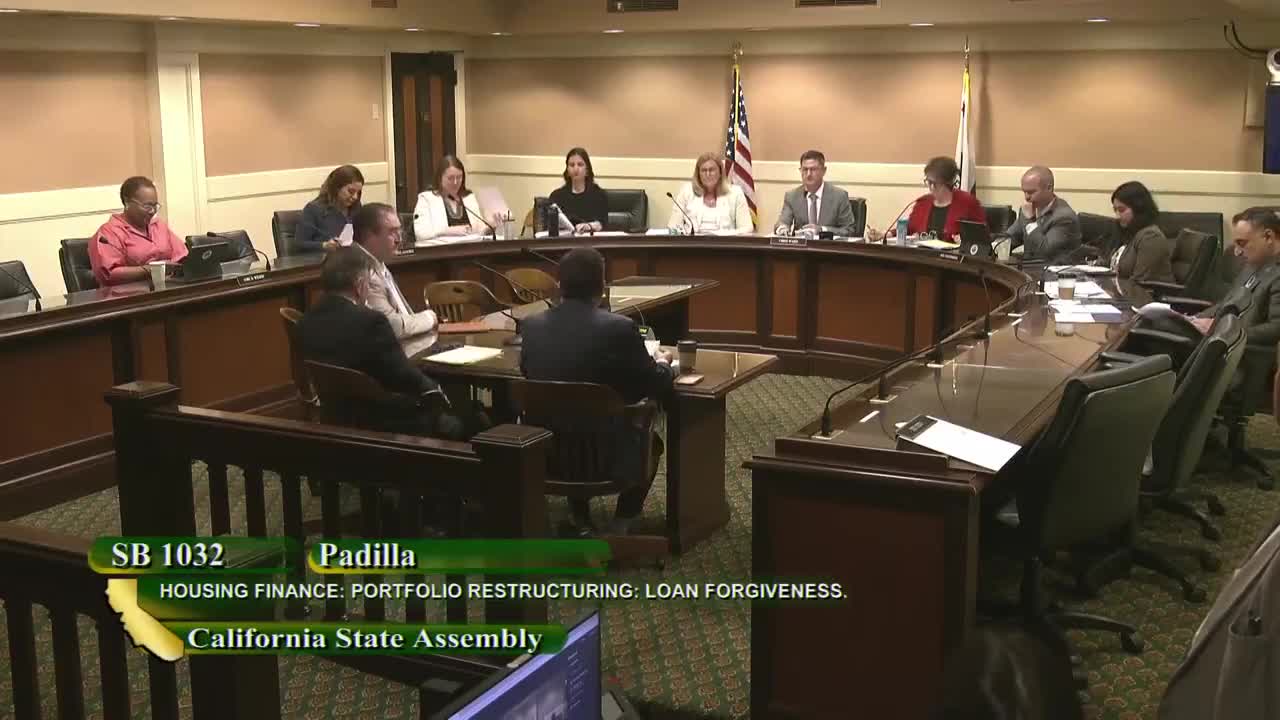 18MIN
Assembly Standing Committee on Housing and Community Development
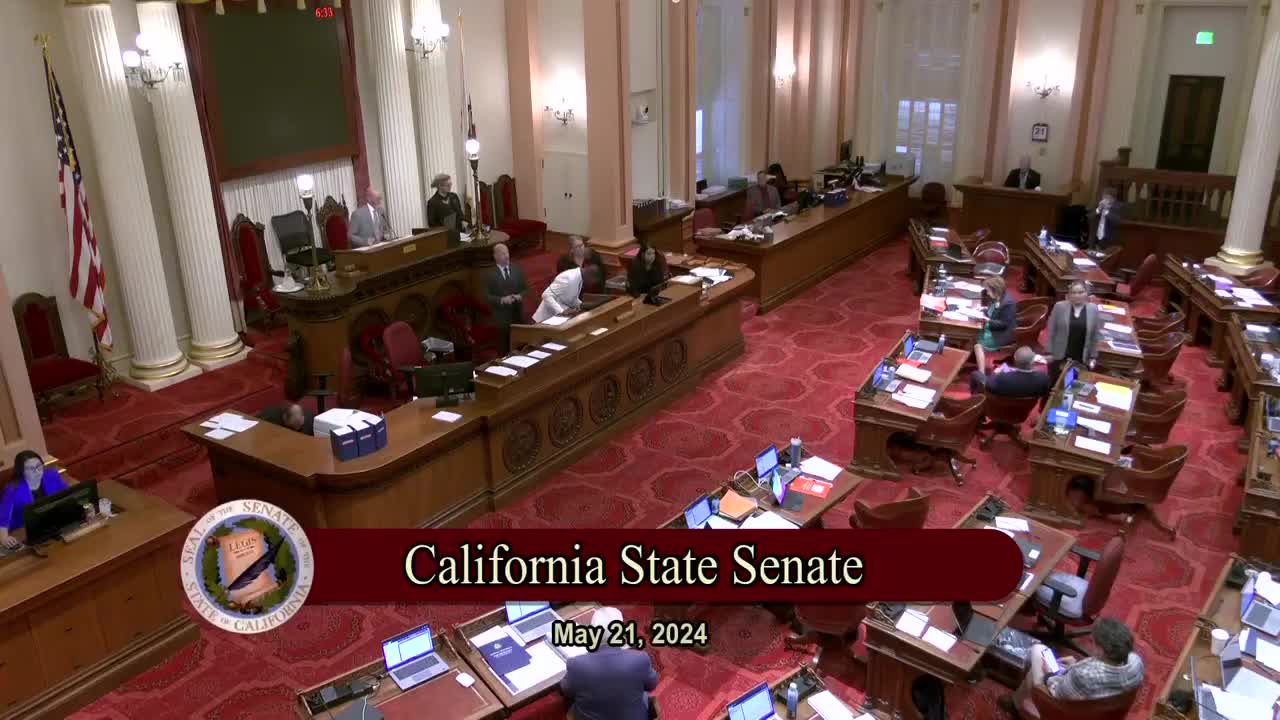 3MIN
Senate Floor
 24MIN
Senate Standing Committee on Housing
Bill Author

Bill Co-Author(s):