AB 1222: Public utilities: judicial review.
- Session Year: 2025-2026
- House: Assembly
- Latest Version Date: 2025-04-21
Current Status:
Failed
(2026-02-02: From committee: Filed with the Chief Clerk pursuant to Joint Rule 56.)
Introduced
In Committee
Awaiting First Chamber Vote
Passed First Chamber
In Committee
Awaiting Second Chamber Vote
Passed Second Chamber
Enacted
Existing law authorizes a party aggrieved by a decision or order of the Public Utilities Commission to file a petition for a writ of review in the court of appeal or the Supreme Court for purposes of reviewing the decision or order within 30 days after the commission issues its decision denying the application for a rehearing, or, if the application was granted, within 30 days after the commission issues its decision on the rehearing, or at least 120 days after the application is granted if no decision on rehearing has been issued.
This bill would extend the 30-day time periods to 90 days. For a petition challenging a final decision of the commission in which on the grounds that the final decision significantly modifies the proposed decision issued in the proceeding, substantially deviated from a proposed decision of a commission administrative law judge, the bill would require the court to presume the proposed final decision to be valid and lawful and to issue the writ arbitrary and unlawful unless the commission rebuts the presumption can demonstrate to the satisfaction of the court in justifying the final decision. that the deviations were necessary to comply with state or federal law.
Existing law authorizes the commission to fix the rates and charges for public utilities, including electrical and gas corporations, and requires those rates to be just and reasonable.
This bill would prohibit the commission from authorizing electrical or gas corporations to recover from their ratepayers the costs associated with seeking judicial review of a commissions commission decision from a federal agency, or by a state or federal court. court or requesting relief from a commission decision at a federal agency. The bill would require the electrical and gas corporation to track those costs.
Under existing law, a violation of the Public Utilities Act or any order, decision, rule, direction, demand, or requirement of the commission is a crime.
Because the above provisions would be part of the act and a violation of a commission action implementing this bills requirements would be a crime, the bill would impose a state-mandated local program.
The California Constitution requires the state to reimburse local agencies and school districts for certain costs mandated by the state. Statutory provisions establish procedures for making that reimbursement.
This bill would provide that no reimbursement is required by this act for a specified reason.
Existing law authorizes a party aggrieved by a decision or order of the Public Utilities Commission to file a petition for a writ of review in the court of appeal or the Supreme Court for purposes of reviewing the decision or order within 30 days after the commission issues its decision denying the application for a rehearing, or, if the application was granted, within 30 days after the commission issues its decision on the rehearing, or at least 120 days after the application is granted if no decision on rehearing has been issued.
This bill would extend the 30-day time periods to 90 days. For a petition challenging a final decision of the commission in which the final decision significantly modifies the proposed decision issued in the proceeding, the bill would require the court to presume the proposed decision to be valid and lawful and to issue the writ unless the commission rebuts the presumption to the satisfaction of the court in justifying the final decision.
Existing law authorizes the commission to fix the rates and charges for public utilities, including electrical corporations, and requires those rates to be just and reasonable.
This bill would prohibit the commission from authorizing electrical corporations to recover from their ratepayers the costs associated with seeking judicial review of a commissions decision from a federal agency, or a state or federal court. The bill would require the electrical corporation to track those costs.
Under existing law, a violation of the Public Utilities Act or any order, decision, rule, direction, demand, or requirement of the commission is a crime.
Because the above provisions would be part of the act and a violation of a commission action implementing this bills requirements would be a crime, the bill would impose a state-mandated local program.
The California Constitution requires the state to reimburse local agencies and school districts for certain costs mandated by the state. Statutory provisions establish procedures for making that reimbursement.
This bill would provide that no reimbursement is required by this act for a specified reason.
(a)The commission shall not authorize an electrical or gas corporation to recover from its ratepayers the costs associated with seeking judicial review of a commissions decision from a federal agency, or commission decision by a state or federal court. court or requesting relief from a commission decision at a federal agency.
(b)Each electrical and gas corporation shall track the costs described in subdivision (a).
(c)The commission shall review an electrical and gas corporations compliance with this section in the electrical or gas corporations general rate case or in another proceeding, as determined appropriate by the commission.
SEC. 2.Section 1756 of the Public Utilities Code is amended to read:1756.(a)Within 90 days after the commission issues its decision denying the application for a rehearing, or, if the application was granted, then within 90 days after the commission issues its decision on rehearing, or at least 120 days after the application is granted if no decision on rehearing has been issued, an aggrieved party may petition for a writ of review in the court of appeal or the Supreme Court for the purpose of having the lawfulness of the original order or decision or of the order or decision on rehearing inquired into and determined. If the writ issues, it shall be made returnable at a time and place specified by court order and shall direct the commission to certify its record in the case to the court within the time specified.
(b)The petition for review shall be served upon the executive director and the general counsel of the commission either personally or by service at the office of the commission.
(c)For purposes of this section, the issuance of a decision or the granting of an application shall be construed to have occurred on the date of issuance, as defined in Section 1731.
(d)The venue of a petition filed in the court of appeal pursuant to this section shall be in the judicial district in which the petitioner resides. If the petitioner is a business, venue shall be in the judicial district in which the petitioner has its principal place of business in California.
(e)A party may seek from the Supreme Court, pursuant to California Rules of Court, an order transferring related actions to a single appellate district.
(f)For purposes of this section, review of decisions pertaining solely to water corporations shall only be by petition for writ of review in the Supreme Court, except that review of complaint or enforcement proceedings may be in the court of appeal or the Supreme Court.
(g)An order or decision arising out of a commission proceeding under Section 854 shall not be reviewable in the court of appeal pursuant to subdivision (a) if the application for commission authority to complete the merger or acquisition was filed on or before December 31, 1998, by two telecommunications-related corporations including at least one which provides local telecommunications service to over 1,000,000 California customers. These orders or decisions shall be reviewed pursuant to the Public Utilities Code in existence on December 31, 1998.
SEC. 3.Section 1757.2 is added to the Public Utilities Code, to read:1757.2.In a petition challenging a final decision of the commission in which on the grounds that the final decision of the commission substantially modifies the substantially deviated from a proposed decision issued in the proceeding, of a commission administrative law judge, the court shall presume the proposed final decision to be valid and lawful and shall issue the writ arbitrary and unlawful unless the commission rebuts can demonstrate to the satisfaction of the court the presumption in justifying the modification made in the final decision. that the deviations were necessary to comply with state or federal law.
SEC. 4.No reimbursement is required by this act pursuant to Section 6 of Article XIIIB of the California Constitution because the only costs that may be incurred by a local agency or school district will be incurred because this act creates a new crime or infraction, eliminates a crime or infraction, or changes the penalty for a crime or infraction, within the meaning of Section 17556 of the Government Code, or changes the definition of a crime within the meaning of Section 6 of Article XIIIB of the California Constitution.
(a)The commission shall not authorize an electrical corporation to recover from its ratepayers the costs associated with seeking judicial review of a commissions decision from a federal agency, or a state or federal court.
(b)Each electrical corporation shall track the costs described in subdivision (a).
(c)The commission shall review an electrical corporations compliance with this section in the electrical corporations general rate case or in another proceeding, as determined appropriate by the commission.
SEC. 2.Section 1756 of the Public Utilities Code is amended to read:1756.(a)Within 30 90 days after the commission issues its decision denying the application for a rehearing, or, if the application was granted, then within 30 90 days after the commission issues its decision on rehearing, or at least 120 days after the application is granted if no decision on rehearing has been issued, any an aggrieved party may petition for a writ of review in the court of appeal or the Supreme Court for the purpose of having the lawfulness of the original order or decision or of the order or decision on rehearing inquired into and determined. If the writ issues, it shall be made returnable at a time and place specified by court order and shall direct the commission to certify its record in the case to the court within the time specified.
(b)The petition for review shall be served upon the executive director and the general counsel of the commission either personally or by service at the office of the commission.
(c)For purposes of this section, the issuance of a decision or the granting of an application shall be construed to have occurred on the date of issuance, as defined in paragraph (4) of subdivision (b) of Section 1731.
(d)The venue of a petition filed in the court of appeal pursuant to this section shall be in the judicial district in which the petitioner resides. If the petitioner is a business, venue shall be in the judicial district in which the petitioner has its principal place of business in California.
(e)Any A party may seek from the Supreme Court, pursuant to California Rules of Court, an order transferring related actions to a single appellate district.
(f)For purposes of this section, review of decisions pertaining solely to water corporations shall only be by petition for writ of review in the Supreme Court, except that review of complaint or enforcement proceedings may be in the court of appeal or the Supreme Court.
(g)No An order or decision arising out of a commission proceeding under Section 854 shall not be reviewable in the court of appeal pursuant to subdivision (a) if the application for commission authority to complete the merger or acquisition was filed on or before December 31, 1998, by two telecommunications-related corporations including at least one which provides local telecommunications service to over one million 1,000,000 California customers. These orders or decisions shall be reviewed pursuant to the Public Utilities Code in existence on December 31, 1998.
SEC. 3.Section 1757.2 is added to the Public Utilities Code, to read:1757.2.In a petition challenging a final decision of the commission in which the final decision of the commission substantially modifies the proposed decision issued in the proceeding, the court shall presume the proposed decision to be valid and lawful and shall issue the writ unless the commission rebuts to the satisfaction of the court the presumption in justifying the modification made in the final decision.
SEC. 4.No reimbursement is required by this act pursuant to Section 6 of Article XIIIB of the California Constitution because the only costs that may be incurred by a local agency or school district will be incurred because this act creates a new crime or infraction, eliminates a crime or infraction, or changes the penalty for a crime or infraction, within the meaning of Section 17556 of the Government Code, or changes the definition of a crime within the meaning of Section 6 of Article XIIIB of the California Constitution.
|
Date
|
Status
|
|---|---|
| Feb 2, 2026 | From committee: Filed with the Chief Clerk pursuant to Joint Rule 56. |
| Jan 31, 2026 | Died pursuant to Art. IV, Sec. 10(c) of the Constitution. |
| May 23, 2025 | In committee: Held under submission. |
| May 14, 2025 | In committee: Set, first hearing. Referred to APPR. suspense file. |
| Apr 30, 2025 | From committee: Do pass and re-refer to Com. on APPR. (Ayes 9. Noes 3.) (April 29). Re-referred to Com. on APPR. |
| Apr 24, 2025 | From committee: Do pass and re-refer to Com. on JUD. (Ayes 12. Noes 3.) (April 23). Re-referred to Com. on JUD. |
| Apr 22, 2025 | Re-referred to Com. on U. & E. |
| Apr 21, 2025 | From committee chair, with author's amendments: Amend, and re-refer to Com. on U. & E. Read second time and amended. |
| Apr 2, 2025 | In committee: Hearing postponed by committee. |
| Mar 13, 2025 | Referred to Coms. on U. & E. and JUD. |
| Feb 24, 2025 | Read first time. |
| Feb 22, 2025 | From printer. May be heard in committee March 24. |
| Feb 21, 2025 | Introduced. To print. |
|
Date
|
Description
|
Location
|
Votes
|
|
|---|---|---|---|---|
| Apr 29, 2025 | Do pass and be re-referred to the Committee on [Appropriations] | Assembly Standing Committee on Judiciary |
Passed |
|
| Apr 23, 2025 | Do pass and be re-referred to the Committee on [Judiciary] | Assembly Standing Committee on Utilities and Energy |
Passed |
This list shows positions taken on this bill by organizations on the date displayed, which is linked to the original source.
Positions by individuals are not included.
|
Organization
|
Position
|
Date
|
|---|---|---|
| California Environmental Voters | ** Support | |
| California Solar & Storage Association | ** Support | |
| Democrats of Rossmoor | ** Support | |
| Edison International and Affiliates | ** Against | |
| Nrg Energy | ** Support | |
| Pacific Gas And Electric Company | ** Against | |
| San Diego Gas & Electric | ** Against | |
| Southern California Gas Company | ** Against | |
| The Utility Reform Network | ** Support |
Date of Hearing: May 14, 2025
ASSEMBLY COMMITTEE ON APPROPRIATIONS
Buffy Wicks, Chair
ABPCA Bill Id:AB 1222
Author:(Bauer-Kahan) – As Amended Ver:April 21, 2025
Policy Committee: | Utilities and Energy | Vote: | 12 - 3 |
Judiciary | 9 - 3 | ||
|
|
Urgency: No State Mandated Local Program: Yes Reimbursable: No
SUMMARY:
This bill makes a number of changes to law governing legal challenges to decisions of the California Public Utilities Commission (CPUC).
Specifically, this bill:
- Prevents an electrical or gas investor-owned utility (IOU) from recovering from its ratepayers costs associated with seeking judicial review of a decision of the CPUC.
- Extends, from 30 days to 90 days, the time within which an aggrieved party may petition for a writ of review in the Court of Appeal or the Supreme Court for the purpose of challenging the lawfulness of an original order or decision of the CPUC, or of an order or decision on rehearing.
- Directs a court, when considering a petition challenging a CPUC final decision on the grounds that the final decision substantially deviated from a proposed decision of a CPUC administrative law judge, to presume the final decision to be arbitrary and unlawful unless the CPUC demonstrates to the satisfaction of the court that the deviations were necessary to comply with state or federal law.
FISCAL EFFECT:
This bill does not explicitly make new work for the CPUC. Nonetheless, the CPUC concludes this bill will create work for it to establish procedures to ensure that electrical and gas corporations do not recover from ratepayers the costs associated with seeking judicial or federal agency review of CPUC decisions. The CPUC also believes the bill may lead to an increase in the number of legal challenges to CPUC decisions, and the new presumption regarding deviations from administrative law judges' proposed decisions could result in more complex legal analyses and justifications in decision-making processes, though these conclusions are speculative. In any case, the CPUC assumes it will need a new administrative law judge, at an annual costs of $300,000 (Public Utilities Commission Utilities Reimbursement Account) to support additional case review and, possibly, rulemaking.
COMMENTS:
- Background. The author asserts this bill “protects ratepayers” and “helps keep the CPUC accountable to California ratepayers.” According to the author:
AB 1222 protects ratepayers by preventing utilities from raising energy rates to pay for the costs of seeking judicial review, and by making it easier for stakeholders to challenge last-minute changes to California Public Utility Commission (CPUC) decisions. California has some of the highest energy rates in the country, with residents paying significantly more per kilowatt-hour than the national average. The CPUC plays a key role in setting these rates. The judicial review process for CPUC decisions is unique compared to other state agencies: aggrieved parties have only 30 days to seek review, compared to 90 days at most other agencies. CPUC commissioners also have significant latitude to amend proposed commission decisions immediately before adopting a final decision. Limited judicial oversight of CPUC rulings makes it difficult for individuals and businesses to contest regulatory decisions that impact their energy rates. As energy costs continue to rise, AB 1222 helps keep the CPUC accountable to California’s ratepayers.
- Background. As described by the author above, statute lays out a unique process for judicial review of CPUC decisions. The law authorizes a party to petition the court for a review of decisions of the CPUC within 30 days of the Commission’s denial of a party’s request for a rehearing and that such petitions must be filed with the Court of Appeal or California Supreme Court. IOUs regulated by the CPUC regularly challenge CPUC decisions in court, and it is up to the CPUC, as the regulator of IOU rates, to determine whether an IOU may recover the cost of that legal challenge from its customers (ratepayers).
This bill, among other things, prohibits an IOU from recovering such court costs from its customers. The IOUs regulated by the CPUC object. For example, Pacific Gas and Electric say the bill “would significantly alter the judicial review process for California Public Utilities Commission (CPUC) decisions to the detriment of customers,” asserting the bill, among other harms:
[disincentives] valid and necessary legal recourse to protect important customer interests. This undermines a long-standing Commission precedent, including the Prudent Manager Standard, which allows for recovery of costs that are shown to be just and reasonable…the bill introduces uncertainty and unnecessary delays in implementing final Commission decisions. This delay could affect PG&E’s ability to move forward with urgent safety upgrades, wildfire mitigation efforts, and grid modernization projects needed to support California’s climate goals. Prolonged decision timelines could also increase project costs…delay in cost recovery and project implementation would create upward pressure on rates and increase rate volatility.
In contrast, The Utility Reform Network (TURN) justifies the goal of the bill as “to limit incentives for Investor-Owned Utilities (IOUs) to challenge CPUC decisions and apply additional scrutiny to last-minute changes to Proposed Decisions made before they are adopted by the CPUC.” TURN continues:
If IOUs want to challenge CPUC decisions, these costs should be paid by shareholders rather than ratepayers. AB 1222 would require these litigation costs to be separately tracked so they can be removed from any GRC forecast and excluded from rate recovery. This treatment is appropriate given ongoing conflicts between shareholder and ratepayer interests….A second notable provision of AB 1222 would address concerns regarding significant last-minute revisions to CPUC Proposed Decisions made prior to final adoption…This requirement is critical to ensuring any late changes that may be the product of lobbying efforts by the IOUs are subjected to enhanced scrutiny by the courts…Since there are no existing statutory provisions or CPUC Rules that prevent significant last-minute changes to Proposed Decisions, parties cannot seek rehearing or judicial review on this basis. Absent direction from the Legislature, the CPUC has no reason to modify this problematic practice.
Analysis Prepared by: Jay Dickenson / APPR. / (916) 319-2081
Date of Hearing: April 29, 2025
ASSEMBLY COMMITTEE ON JUDICIARY
Ash Kalra, Chair
ABPCA Bill Id:AB 1222
Author:(Bauer-Kahan) – As Amended Ver:April 21, 2025
SUBJECT: Public utilities: judicial review
KEY ISSUE: should a final decision of the California public utilities commission that substantially deviates from a proposed decision of an administrative law judge employed by the commission be presumed to be arbitrary and unlawful; and should investor-owned utilities be prohibited from seeking to recover legal expenses from ratepayers?
SYNOPSIS
The California Public Utilities Commission was created in 1911 to begin to regulate the anti-consumer excesses of the railroad industry. Over the last century, the California Public Utilities Commission’s role has expanded so much that the Commission now oversees all investor-owned utilities operating in the state, including natural gas, electric, telephone, and water companies, as well as railroads and marine transportation companies. Unfortunately, for the better part of the past two decades, the Commission has bounced from one controversy or scandal to another. In fact, both the California Public Utilities Commission, as well as individual commissioners have come under investigation by state and federal law enforcement agencies. As a result of these scandals, many Californians view the California Public Utilities Commission as being too closely aligned with the utilities they regulate.
This bill seeks to restore some public confidence in the California Public Utilities Commission. First, this bill adopts a rebuttable presumption that a final decision of the Commission is arbitrary and unlawful if the final decision significantly differs from the proposed decision rendered by one of the Commission’s administrative law judges. Secondly, this measure prohibits utilities from seeking to recover legal fees from California ratepayers.
This bill is sponsored by the Utility Reform Network and is supported by environmental advocates and the solar industry. The proponents highlight the need to restore public confidence in the Commission and to ensure that only reasonable costs are passed onto ratepayers. The bill is opposed by California’s investor owned utilities, who contend the measure makes too many drastic changes to Commission processes, will limit their ability to litigate cases, and would cause undo delay. This bill was previously heard and approved by Committee on Utilities and Energy by a vote of 12 to 3.
SUMMARY: Presumes that a final decision made by the California Public Utilities Commission is arbitrary and unlawful if the final decision substantially deviates from the proposed decision of an administrative law judge; and prohibits investor owned utilities from seeking to recover legal expenses from ratepayers. Specifically, this bill:
- Prohibits an electrical or gas corporation regulated by the California Public Utilities Commission from seeking cost recovery from ratepayers the costs associated with seeking judicial review of a Commission decision by a state or federal court or by a federal regulatory agency.
- Requires an electrical or gas corporation to track the legal costs specified in 1) and to disclose those costs as a part of a general rate case.
- Provides that an aggrieved party may petition for a writ of review in the Court of Appeal or the Supreme Court for the purpose of challenging the lawfulness of an original order or decision of the California Public Utilities Commission, or of an order or decision on rehearing inquired into and determined, within 90 days of the Commission rendering a final order, decision, or determination on rehearing.
- Provides that a petition challenging a final decision of the California Public Utilities Commission on the grounds that the final decision substantially deviated from a proposed decision of a commission administrative law judge, the court shall presume the final decision to be arbitrary and unlawful unless the Commission can demonstrate to the satisfaction of the court that the deviations were necessary to comply with state or federal law.
EXISTING LAW:
- Established the California Public Utilities Commission and grants the Commission jurisdiction over all public utilities and common carriers, subject to control by the Legislature. (Cal. Const. art. 12.)
- Prohibits a public utilities commissioner from holding an official relation to, or having a financial interest in, a person or corporation subject to regulation by the California Public Utilities Commission, and that should a public utilities commissioner obtain such an interest they must vacate their position on the Commission. (Public Utilities Code Section 303 (a).)
- Requires all charges demanded or received by any public utility, or by any two or more public utilities, for any product or commodity furnished or to be furnished or any service rendered or to be rendered to be just and reasonable, and that every unjust or unreasonable charge demanded or received for such product or commodity or service is unlawful. (Public Utilities Code Section 451.)
- Requires the California Public Utilities Commission, when determining an application by an electrical corporation to recover costs and expenses arising from a covered wildfire, the Commission to allow cost recovery if the costs and expenses are just and reasonable. (Public Utilities Code Section 451.1 (b).)
- Provides that whenever the California Public Utilities Commission, after a hearing, finds that the rates or classifications, demanded, observed, charged, or collected by any public utility for any service, product, or commodity, or the rules, practices, or contracts affecting such rates or classifications are insufficient, unlawful, unjust, unreasonable, discriminatory, or preferential, the Commission must then determine and fix, by order, the just, reasonable, or sufficient rates, classifications, rules, practices, or contracts to be thereafter observed and in force. (Public Utilities Code Section 728.)
- Authorizes the right for a party to petition the court for a review of decisions of the California Public Utilities Commission within 30 days of the Commission’s denial of a party’s request for a rehearing and that such petitions must be filed with the Court of Appeal or California Supreme Court. (Public Utilities Code Section 1756.)
- Prohibits, in any court proceeding initiated pursuant to 6), new or additional evidence from being introduced for review by the court. (Public Utilities Code Section 1757 (a).)
- Provides that in any complaint or enforcement proceeding, or in a ratemaking or licensing decision of specific application made by the California Public Utilities Commission that is addressed to particular parties, the review by the court shall not extend further than to determine, on the basis of the entire record which shall be certified by the Commission, whether any of the following occurred:
- The Commission acted without, or in excess of, its powers or jurisdiction;
- The Commission has not proceeded in the manner required by law;
- The decision of the Commission is not supported by the findings;
- The findings in the decision of the Commission are not supported by substantial evidence in light of the whole record;
- The order or decision of the Commission was procured by fraud or was an abuse of discretion; or
- The order or decision of the Commission violates any right of the petitioner under the Constitution of the United States or the California Constitution. (Ibid.)
- Provides that nothing in 7) or 8) permits the court to hold a trial de novo, to take evidence other than as specified by the California Rules of Court, or to exercise its independent judgment on the evidence. (Public Utilities Code Section 1757 (b).)
- Prohibits the court from staying or suspending any order or decision by the California Public Utilities Commission authorizing a change in rates, and that any matter regarding rates must be referred back to the Commission for further action, consistent with court orders, as specified. (Public Utilities Code Section 1766.)
FISCAL EFFECT: As currently in print this bill is keyed fiscal.
COMMENTS: As energy prices skyrocket across California, the California Public Utilities Commission (hereinafter Commission or CPUC) is facing increasing scrutiny surrounding its rate setting process and the Commission’s perceived willingness to acquiesce to the demands of investor owned utility companies. Seeking to ensure that ratepayer interests are at the forefront of CPUC decision making, this bill adopts two consumer friendly modifications to existing law. First, the bill prohibits utility companies from seeking cost recovery from ratepayers for legal expenses. Secondly, the adopts legal presumption for courts examining final decisions rendered by CPUC Commissioners that substantially deviate from proposed decisions by the CPUC’s administrative law judges. In support of this bill, the author states:
AB 1222 protects ratepayers by preventing utilities from raising energy rates to pay for the costs of seeking judicial review, and by making it easier for stakeholders to challenge last-minute changes to California Public Utility Commission (CPUC) decisions. California has some of the highest energy rates in the country, with residents paying significantly more per kilowatt-hour than the national average. The CPUC plays a key role in setting these rates. The judicial review process for CPUC decisions is unique compared to other state agencies: aggrieved parties have only 30 days to seek review, compared to 90 days at most other agencies. CPUC commissioners also have significant latitude to amend proposed commission decisions immediately before adopting a final decision. Limited judicial oversight of CPUC rulings makes it difficult for individuals and businesses to contest regulatory decisions that impact their energy rates. As energy costs continue to rise, AB 1222 helps keep the CPUC accountable to California’s ratepayers.
The CPUC has an unfortunate history of questionable behavior. Originally created in 1911 as the California Railroad Commission, the CPUC now oversees all investor-owned utilities operating in California, including natural gas, electric, telephone, and water companies, as well as railroads and marine transportation companies. Although originally created as a part of a good government reform effort to better regulate railroad monopolies, in recent years, the CPUC is now viewed as being too closely aligned with the very entities it regulates. Indeed, in 2015, then-President of the CPUC, Michael Peevy, was forced to resign after e-mails between Peevy and the Pacific Gas and Electric Company indicated that Peevy was helping advise the company how to navigate CPUC proceedings, following a pipeline explosion in the City of San Bruno. (Chuck McFadden, Michael Peevey’s tale of turmoil, Capitol Weekly (Apr. 14, 2015) available at: https://capitolweekly.net/michael-peevey-tale-turmoil-puc-pge-san-bruno/.) More recently, the CPUC was held liable for failing to comply with the Public Records Act (Seth Rosefeld, How the Public Utilities Commission circumvents the California Public Records Act, LA Times (May 27, 2022) available at: https://www.latimes.com/california/story/2022-05-27/how-the-california-public-utilities-commission-circumvents-the-state-public-records-act.), was caught spending public funds on criminal defense attorneys for commissioners, and was the subject of a criminal investigation regarding the decommissioning of the San Onofre Nuclear Power Plant (Tom Elias, CPUC getting key roles despite scandals, conflicts, VC Star (Nov. 18, 2019) available at: https://www.vcstar.com/story/opinion/columnists/2019/11/18/cpuc-getting-key-roles-despite-scandals-conflicts/4229624002/.)
Beyond the dubious ethical behavior of some commissioners over the past 15 years, the agency is now coming under fire for the use of “interim” rate increases. Opponents of the interim increases, which occur outside of the formal rate case process, contend these new procedures are permitting utilities to avoid providing meaningful details to the public regarding utility spending, executive compensation, and investor dividends. (Loretta Lynch, Over a century later, California may need another revolt against its utility companies Cal Matters (Apr. 23, 2025) available at: https://calmatters.org/commentary/2025/04/california-revolt-public-utilities-commission/.)
In order to boost public confidence in CPUC decision making, this bill seeks to limit last minute changes to CPUC decisions. Typically, when determining utility rates or setting other regulatory policies, the CPUC first directs an administrative law judge to take evidence, weigh competing interests, and make a proposed decision. The commissioners then adopt the proposed decision or issue a modified decision. Existing law authorizes judicial challenges of any CPUC action. However, these challenges are generally limited to whether the Commission, “acted without, or in excess of its power or jurisdiction.” (Public Utilities Code Section 1757.) Courts have further limited the scope of review of CPUC decisions by holding that Commission findings are “not open to an attack for insufficiency if they are supported by any reasonable construction of the evidence.” (Southern California Gas Company v. Public Utilities Commission (2023) 87 Cal.App. 5th 324, 339.) This standard limits court reviews of CPUC decisions, even if the final decision is significantly altered from the proposed decision of the administrative law judge by commissioners.
Seeking to address last minute changes to proposed decisions, this bill would presume that a last minute change to a proposed decision is arbitrary and unlawful if the final decision substantially deviates from the proposed decision. This presumption is based on the notion that the administrative law judge took the time to develop the proposed decision based on the volume of testimony and evidentiary submissions provided on a matter. The bill would permit the CPUC to overcome the presumption if the Commission can demonstrate the changes were legally necessary. By limiting the presumption only to final decisions that substantially deviate from the proposed decision, the bill focuses only on those decisions in which the commissioners wholly revised a decision without meaningful public input.
The bill protects ratepayers by preventing investor owned utilities from billing consumers for legal fees. This measure also prohibits investor owned utilities from seeking to recover legal expenses from ratepayers. Under existing law, utilities are permitted to recover from ratepayers all costs that are just and reasonable. Existing law permits legal fees to be included in the cost recovery.
This bill would prohibit the recovery of legal fees associated with challenging government regulators. This bill prudently prevents ratepayers from having to pay the costs associated with legal challenges that may advance claims that are not in the ratepayer’s best interest. For example, should an investor owned utility seek to challenge an approved rate structure and seek to increase rates, the existing law would require ratepayers to pay the legal fees in an action seeking to increase costs on ratepayers. This bill properly assigns the cost of legal representation to the utility company’s shareholders, those who stand to reap the most financial benefit from successful challenges to regulatory actions.
Despite opposition concerns, this bill does not limit judicial review or create undo delays. California’s investor owned utilities oppose this bill. The opposition raises several issues with the bill. First, the opposition contends the above-described legal fee provisions will serve to disincentive “valid and necessary” legal actions. Given that most corporations, including those that are not regulated monopolies, have the right to recover costs from the public and have little difficulty in challenging government actions in court, it is difficult to believe that California’s utility companies would be deterred from challenging actions that may impact the company’s finances simply because the utility cannot pass the cost of doing so onto ratepayers.
The opposition also contends that the bill’s relatively minor provision extending the time period for challenging CPUC decisions in court from 30 to 90 days will introduce “uncertainty and unnecessary delays” into the CPUC process. Given that most government agency actions must be challenged within 60 to 180 days, this bill appears to better align CPUC review proceedings with existing law, rather than dramatically undermine and destabilize the utility regulatory process.
In totality, this bill presents relatively minor changes to the process of reviewing CPUC decision making in courts. The bill certainly does not appear to dramatically alter or undermine the CPUC process; but rather, it provides needed reforms to enhance the public’s faith in a beleaguered agency. Nonetheless, the author is encouraged to continue discussions with the investor owned utilities to determine if any amendments can be made to improve CPUC processes while providing greater certainty to the utilities.
ARGUMENTS IN SUPPORT: The bill is sponsored by the Utility Reform Network (TURN) and is supported by the solar industry and environmental advocates. In support of the bill TURN writes:
The Utility Reform Network (TURN), a consumer advocacy organization that has fought on behalf of California residents for more than 40 years, supports AB 1222 (Bauer-Kahan) and serves as the sponsor. This bill would modify certain requirements governing the judicial review of decisions adopted by the California Public Utilities Commission (CPUC). The goal of these changes is to limit incentives for Investor-Owned Utilities (IOUs) to challenge CPUC decisions and apply additional scrutiny to last-minute changes to Proposed Decisions made before they are adopted by the CPUC.
Under current practice, IOUs collect their forecasted costs of regulatory and litigation expenses from ratepayers as part of the General Rate Case (GRC). Each forecast is based, in large part, on the recorded costs incurred by the IOU in prior years. In presenting their forecasts, IOUs typically exclude outside legal costs relating to catastrophic wildfire events or bankruptcy.1 However, IOU forecasts include the in-house and outside costs attributable to litigation seeking to overturn CPUC decisions. It is unreasonable for ratepayers to cover costs attributable to IOU efforts to seek advantages for their shareholders through challenges to CPUC decisions. For example, Pacific Gas & Electric (PG&E) recently pursued state court challenges to the CPUC’s 2023 decision to enforce some oversight of the spending of $1.3 billion in ratepayer-funded Volumetric Performance Fees relating to Diablo Canyon authorized by SB 846 (2022 Dodd). All three IOUs have historically challenged various CPUC decisions in both state and federal court.
If IOUs want to challenge CPUC decisions, these costs should be paid by shareholders rather than ratepayers. AB 1222 would require these litigation costs to be separately tracked so they can be removed from any GRC forecast and excluded from rate recovery. This treatment is appropriate given ongoing conflicts between shareholder and ratepayer interests.
ARGUMENTS IN OPPOSITION: This bill is opposed by the investor owned utilities operating in the state. In opposition, the Pacific Gas and Electric Company writes:
Judicial review serves as an essential last-resort tool for investor-owned utilities (IOUs) and other CPUC stakeholders to ensure that CPUC decisions align with legal standards and the Public Utilities Code. AB 1222 would prohibit cost recovery for legal challenges—regardless of merit—disincentivizing valid and necessary legal recourse to protect important customer interests. This undermines a long-standing Commission precedent, including the Prudent Manager Standard, which allows for recovery of costs that are shown to be just and reasonable.
By extending the judicial review filing period from 30 to 90 days, the bill introduces uncertainty and unnecessary delays in implementing final Commission decisions. This delay could affect PG&E’s ability to move forward with urgent safety upgrades, wildfire mitigation efforts, and grid modernization projects needed to support California’s climate goals. Prolonged decision timelines could also increase project costs due to inflation and financing constraints—costs that ultimately impact our customers and hinder our ability to meet state clean energy and reliability goals.
The delay in cost recovery and project implementation would create upward pressure on rates and increase rate volatility, particularly if deferred costs must be recovered over shorter timeframes. Further, AB 1222’s prohibition on recovering litigation expenses—even when pursued in good faith and for the benefit of ratepayers—conflicts with Commission practice and precedent and federal energy policy under the Federal Energy Regulatory Commission (FERC), both of which permit recovery of prudent costs, including legal expenses.
REGISTERED SUPPORT / OPPOSITION:
Support
The Utility Reform Network (sponsor)
California Environmental Voters
California Solar & Storage Association
Democrats of Rossmoor
NRG Energy
Opposition
Edison International and Affiliates
Pacific Gas and Electric Company
San Diego Gas & Electric
Southern California Gas Company
Analysis Prepared by: Nicholas Liedtke / JUD. / (916) 319-2334
Date of Hearing: April 23, 2025
ASSEMBLY COMMITTEE ON UTILITIES AND ENERGY
Cottie Petrie-Norris, Chair
ABPCA Bill Id:AB 1222 (
Author:Bauer-Kahan) – As Amended Ver:April 21, 2025
SUBJECT: Public utilities: judicial review
SUMMARY: Makes a number of changes to the judicial review of actions by the California Public Utilities Commission (CPUC). Specifically, this bill:
- Prohibits the CPUC from authorizing electrical or gas corporations to recover from ratepayers the costs associated with seeking judicial review of a CPUC decision in federal agencies or courts.
- Extends the timeframe for aggrieved parties to file a petition for a writ of review from 30 days to 90 days after the CPUC issues its decision denying a rehearing application or, if granted, after the decision on rehearing is issued.
- Establishes a presumption that a CPUC final decision is arbitrary and unlawful if it significantly deviates from an administrative law judge’s proposed decision, unless the CPUC can justify the deviation as necessary to comply with state or federal law.
EXISTING LAW:
- Establishes the CPUC with jurisdiction over all public utilities and grants the CPUC certain general powers over all public utilities and common carriers, subject to control by the Legislature. (California Constitution, Article 12)
- Requires the CPUC to regulate utilities, establish just and reasonable rates for service, and establishes a division of the CPUC responsible for consumer protection and safety. (Public Utilities Code § 451 and § 309.7)
- Requires the CPUC to determine whether a proceeding requires a hearing and whether it is quasi-legislative, adjudication or ratesetting. Provides rules governing each type of proceeding, including prohibiting any substantive communication between a decision maker and a party in adjudicative cases. (Public Utilities Code §§ 1701.1 and 1701.2)
- Establishes the right to petition for judicial review of CPUC decisions within 30 days of denial of rehearing (or decision on rehearing). Requires petitions to be filed in the Court of Appeal or Supreme Court, depending on the matter. Specifies filing locations based on the petitioner’s residence or principal place of business. (Public Utilities Code § 1756)
- Establishes the standard of review of CPUC decisions, limiting review to legal errors, lack of jurisdiction, unsupported findings, abuse of discretion, fraud, or constitutional violations. (Public Utilities Code § 1757)
- Prohibits courts from hearing new evidence in cases of CPUC judicial review; review is based solely on the record before the CPUC. (Public Utilities Code § 1757.1)
- Provides that CPUC orders and decisions can only be appealed at the California Supreme Court and the courts of appeal. (Public Utilities Code § 1759)
- Prohibits courts from staying or suspending any order or decision by the CPUC authorizing a change in rates. Any matter regarding rates shall be referred back to the CPUC for further action, consistent with court orders. The CPUC is prohibited from authorizing refunds in such circumstances; only prospective rate changes are permitted. (Public Utilities Code § 1766)
FISCAL EFFECT: Unknown. This bill is keyed fiscal, and will be referred to the Assembly Committee on Appropriations for its review.
CONSUMER COST IMPACTS: Unknown, likely negligible. However, many CPUC decisions relate to allocation of costs; this bill would make it easier to challenge those costs and thereby has the potential to lower customer bills.
BACKGROUND:
History of Reforms to Judicial Review of CPUC Actions – California has undertaken several legislative initiatives to reform the judicial review process of decisions made by the CPUC. Prior to 1998, parties aggrieved by CPUC decisions could only seek review directly from the California Supreme Court, which rarely granted such petitions. This limited access prompted concerns about the lack of effective checks on the CPUC’s authority. In response to these concerns, the Legislature passed Senate Bill 779 (Calderon, Chapter 886, Statutes of 1998). This bill expanded judicial review by allowing parties to petition the California Courts of Appeal for review of CPUC decisions. SB 779 marked a significant shift, providing a more accessible avenue for challenging CPUC decisions and promoting greater accountability.
Over a decade later, in September 2010, eight people were killed when a natural gas pipeline exploded in San Bruno, California. This tragedy focused the public’s attention on gas utilities, and the regulators tasked with overseeing them. With this increased public focus came increased legislative action, primarily as a package of reform bills aimed at the CPUC.
SB 48 (Hill, 2015) contained a number of reforms to the governance and operations of the CPUC, including language allowing certain actions of the CPUC to be heard in superior court. The Governor vetoed SB 48 in October 2015. In his signing message for his veto, the Governor stated his support of the intent of the bill but felt additional work was needed.[1]
In response to the Governor’s veto message, a package of bills enacting major CPUC reforms was introduced in 2016,[2] including SB 1017 (Hill, 2016) which sought greater access to judicial review of CPUC decisions; namely, allowing certain actions of the CPUC to be heard in superior, rather than appellate, court. This bill failed passage off the Assembly floor. Subsequent legislative efforts have continued to seek judicial reform of CPUC’s processes, most recently AB 2911 (Muratsuchi, 2022), reflecting a continued legislative focus of ensuring the CPCU operates with transparency and accountability.
COMMENTS:
- Author’s Statement. According to the author, “AB 1222 protects ratepayers by preventing utilities from raising energy rates to pay for the costs of seeking judicial review, and by making it easier for stakeholders to challenge last-minute changes to California Public Utility Commission (CPUC) decisions. California has some of the highest energy rates in the country, with residents paying significantly more per kilowatt-hour than the national average. The CPUC plays a key role in setting these rates. The judicial review process for CPUC decisions is unique compared to other state agencies: aggrieved parties have only 30 days to seek review, compared to 90 days at most other agencies. CPUC commissioners also have significant latitude to amend proposed commission decisions immediately before adopting a final decision. Limited judicial oversight of CPUC rulings makes it difficult for individuals and businesses to contest regulatory decisions that impact their energy rates. As energy costs continue to rise, AB 1222 helps keep the CPUC accountable to California’s ratepayers.”
- Purpose of Bill. Judicial review provides a check on government agencies by allowing courts to determine whether an agency has acted within its legal authority. While most state agency decisions can be reviewed by trial courts within 90 days, the CPUC follows a more restrictive process. For CPUC judicial review, parties must petition the Court of Appeal or Supreme Court within 30 days of a final decision. This unique and narrower pathway limits judicial oversight of CPUC actions, making it more difficult to challenge decisions that directly affect energy costs and services. The limited judicial review of CPUC actions has been a point of continued legislative scrutiny and action over the past decades, as noted above. Most of those efforts have sought to allow legal actions against the CPUC arising from the Public Records Act review to be brought before superior court.
This bill seeks to make three changes to CPUC judicial review: 1) prohibiting electric or gas utilities from charging ratepayers the cost of seeking judicial review of CPUC decisions; 2) extending the timeframe for aggrieved parties to file a petition for a writ of review from 30 days to 90 days, in alignment with other state agencies; and 3) establishes a presumption that a CPUC final decision is arbitrary and unlawful if it significantly deviates from an administrative law judge’s proposed decision.
The author motivates these changes as necessary checks on the CPUC, which has authority to set electric and gas rates significantly affecting the majority of Californians. The author notes the high cost of energy rates in the state, and the desire to have more opportunities for the public to engage and scrutinize CPUC actions. Specifically regarding the provision establishing a presumption related to CPUC final decisions, the author notes examples of “last-minute” amendments to final decisions, sometimes made from the dais during a voting meeting, where the public was afforded little, if any, chance to review or comment upon these changes.[3]
The large electric and gas utilities are opposed to this measure, noting the extension of the judicial review filing period introduces financial uncertainty to needed safety and reliability work, among other stated concerns. It is important to note that some CPUC decisions approve rate recovery for prospective work, such as during the general rate case application, while other decisions approve rate recovery after the work has been completed, for prudency and reasonableness. The delay to safety work seems limited in such after-the-fact rate recovery decisions.
While the changes to judicial review put forward in this measure are likely to increase the volume of filings challenging CPUC decisions, the barrier to filing these challenges is still high compared to other state agencies; namely, only courts of appeal or the state Supreme Court may review CPUC decisions. Moreover, the courts are prohibited from staying or suspending any order or decision by the CPUC authorizing a change in rates. Any matter regarding rates must be referred back to the CPUC for further action, consistent with court orders. The CPUC is prohibited from authorizing refunds in such circumstances; only prospective rate changes are permitted.[4] Given these circumstances, it is unclear the degree or impact this bill may have on delaying needed safety work, as the utilities state. Rather, it is for the committee to weigh whether the increases to public scrutiny of CPUC actions, via enhancements to judicial review, put forward to this bill is on balance beneficial to ratepayers.
- Related Legislation.
AB 1167 (Berman, 2025) prohibits various categories of utility political spending from being recovered in rates, including litigation regarding existing or proposed regulations, legislation, or ordinances. Status: Set for hearing in this committee on April 30, 2025.
- Prior Legislation.
AB 2911 (Muratsuchi, 2022) among its provisions, allows an action against the CPUC for a violation of either Open Meeting rules or Public Records requests to be brought in superior court. Status: Died – Assembly Committee on Appropriations.
SB 19 (Hill) provides a suite of reforms to the operations of CPUC. An earlier version allowed legal actions against the CPUC arising from the CPRA to be brought before superior court. Status: Chapter 421, Statutes of 2017.
SB 1017 (Hill, 2016) would have modified the confidentiality of documents furnished to the CPUC by public utilities and would have stated the jurisdiction of judicial review of CPUC CPRA decisions to be with the superior court. Status: Held on the Assembly Floor.
AB 825 (Rendon, 2015) would have proposed a package of reforms of the CPUC largely directed at increased transparency of the activities of the agency, including requiring the California State Auditor's Office to appoint an Inspector General within its office for the CPUC, expanding the roles and responsibilities of the CPUC public advisor, specifying additional requirements of commissioners, and increased transparency of electric utilities' procurement, among others. Status: Vetoed.
SB 48 (Hill, 2015) would have proposed a suite of reforms of the governance and operations of the CPUC, including, among others, requiring sessions in Sacramento, applying the Code of Ethics from the APA to ALJ, clarifying and augmenting the information the CPUC must provide the Legislature in its annual report, and others. Status: Vetoed.
SB 660 (Leno/Hueso, 2015) would have proposed a suite of reforms of the governance, rules, operations and procedures of the CPUC, including reforming laws and rules related to ex parte communications, criteria and process for disqualification of commissions to a proceeding, and authorizing the CPUC to appoint the chief administrative law judge. Status: Vetoed.
SB 779 (Calderon) among its suite of reforms, expanded judicial review by allowing parties to petition the California Courts of Appeal for review of CPUC decisions. Status: Chapter 886, Statutes of 1998.
- Double Referral. This bill is double referred. Upon passage in this committee, it will be referred to the Assembly Committee on Judiciary for its review.
REGISTERED SUPPORT / OPPOSITION:
Support
California Environmental Voters (formerly CLCV)
California Solar & Storage Association
Democrats of Rossmoor
NRG Energy
Oppose
Edison International and Affiliates, Including Southern California Edison
Pacific Gas and Electric Company and its Affiliated Entities
San Diego Gas & Electric
Southern California Gas Company
Analysis Prepared by: Laura Shybut / U. & E. / (916) 319-2083
Brown, Edmund G., Jr. Governor’s Veto Message for SB 18, SB 48 and AB 825; Oct. 9th 2015. ↑
AB 2168 (Williams), AB 2903 (Gatto), SB 62 (Hill), SB 215 (Leno), SB 512 (Hill), SB 661 (Hill), and SB 1017 (Hill) ↑
Specifically, two proposed decisions related to Diablo Canyon: R. 23-01-007, Issuance of D. 23-12-036 and A. 23-04-018, Issuance of D. 24-12-033. ↑
Public Utilities Code § 1766 ↑
Discussed in Hearing
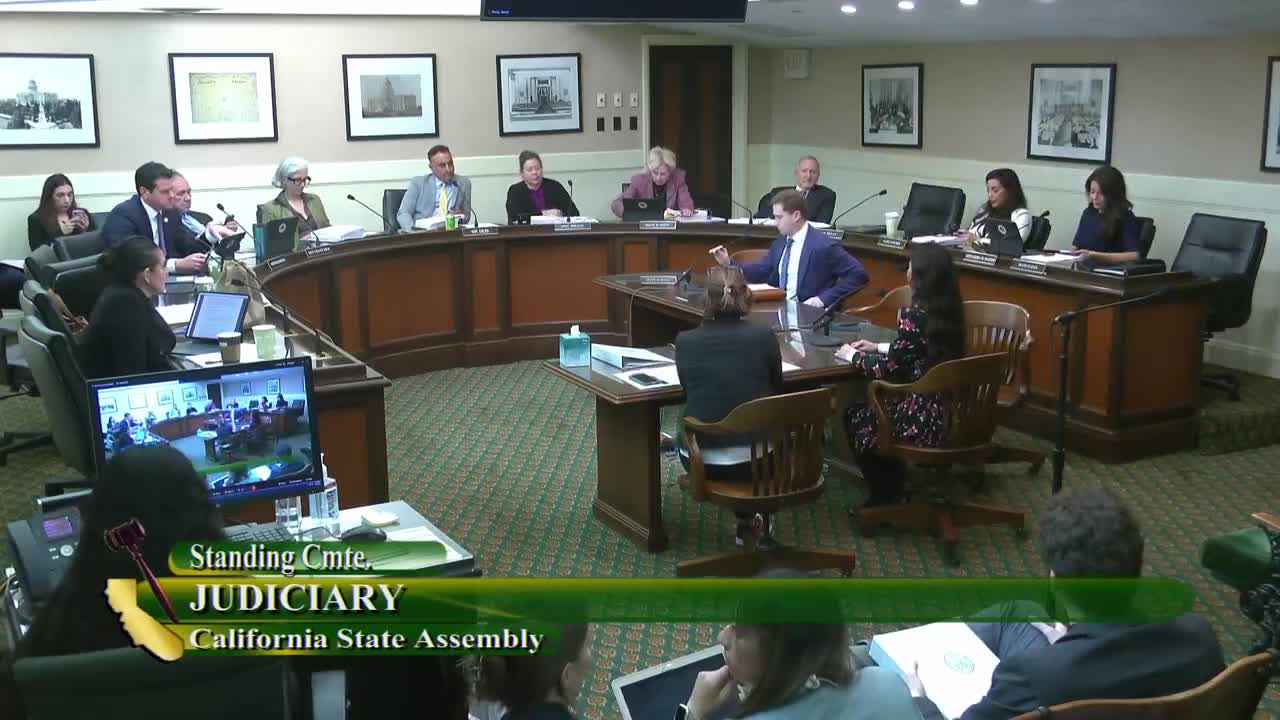 7MIN
Assembly Standing Committee on Judiciary
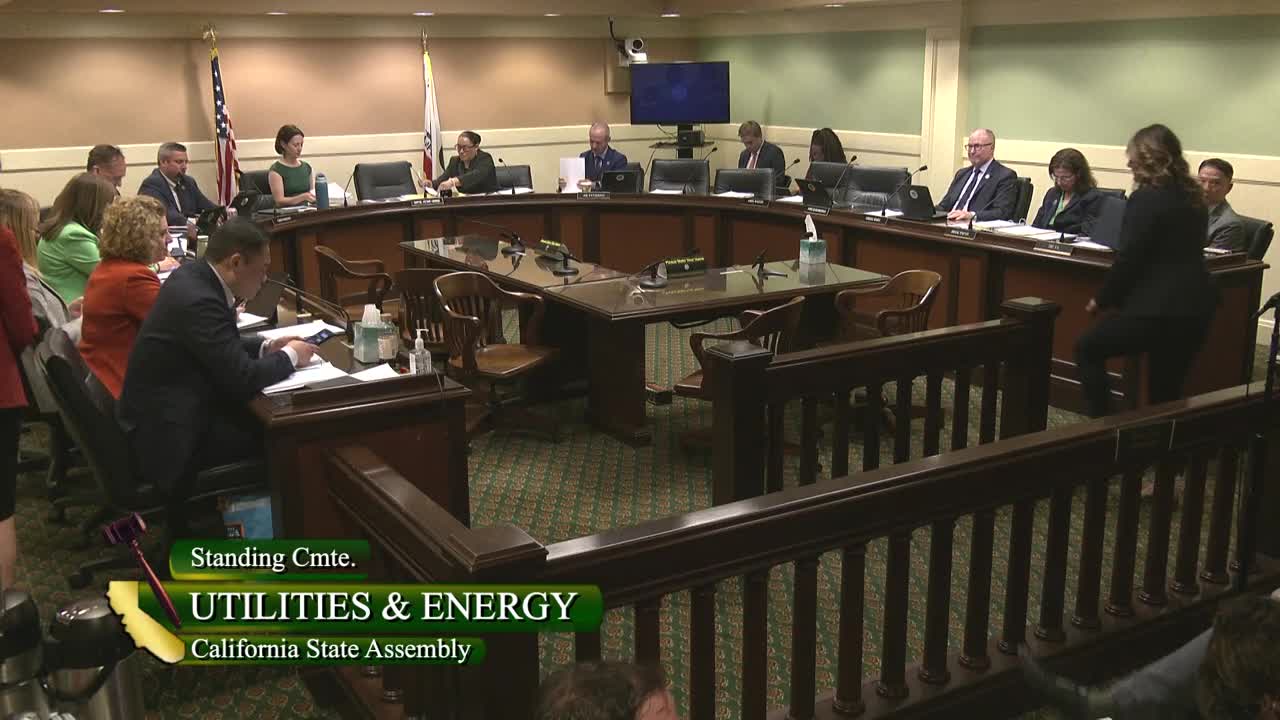 25MIN
Assembly Standing Committee on Utilities and Energy
 42SEC
Assembly Standing Committee on Utilities and Energy
Bill Author

Bill Co-Author(s):