AB 1570: Health care coverage: diagnostic imaging.
- Session Year: 2025-2026
- House: Assembly
- Latest Version Date: 2026-04-09
Current Status:
In Progress
(2026-05-14: In committee: Held under submission.)
Introduced
In Committee
Awaiting First Chamber Vote
Passed First Chamber
In Committee
Awaiting Second Chamber Vote
Passed Second Chamber
Enacted
What does this bill do?
The bill requires health plans, insurance policies, and self‑insured employer health plans to cover without copays, deductibles, or other out‑of‑pocket costs screening mammograms and medically necessary diagnostic or supplemental breast imaging (including diagnostic mammography, breast MRI, and breast ultrasound) after an abnormal result or for people with breast‑cancer risk factors such as family history or a known genetic mutation. High‑deductible plans must follow this rule only after a member meets their deductible, unless the service is considered preventive care under federal law.
The summary is provided by generative AI which can make mistakes. For original language, please view the details in the table below.
Existing law, the Knox-Keene Health Care Service Plan Act of 1975, provides for the licensure and regulation of health care service plans by the Department of Managed Health Care, and makes a willful violation of the act a crime. Existing law provides for the regulation of health insurers by the Department of Insurance. Existing law requires a health care service plan contract issued, amended, delivered, or renewed on or after January 1, 2000, or an individual or group policy of disability insurance or self-insured employee welfare benefit plan to provide coverage for mammography for screening or diagnostic purposes upon referral by specified professionals. Under existing law, mammography performed pursuant to those requirements or that meets the current recommendations of the United States Preventive Services Task Force is provided to an enrollee or an insured without cost sharing.
This bill would require a health care service plan contract, a policy of health insurance that provides hospital, medical, or surgical coverage, health insurance policy, or a self-insured employee welfare benefit plan issued, amended, or renewed on or after January 1, 2028, to provide coverage without imposing cost sharing for, among other things, screening mammography and medically necessary diagnostic breast imaging, including diagnostic breast imaging following an abnormal mammography result and for an enrollee or insured indicated to have a risk factor associated with breast cancer, except as specified.
The California Constitution requires the state to reimburse local agencies and school districts for certain costs mandated by the state. Statutory provisions establish procedures for making that reimbursement.
This bill would provide that no reimbursement is required by this act for a specified reason.
Existing law, the Knox-Keene Health Care Service Plan Act of 1975, provides for the licensure and regulation of health care service plans by the Department of Managed Health Care, and makes a willful violation of the act a crime. Existing law provides for the regulation of health insurers by the Department of Insurance. Existing law requires a health care service plan contract issued, amended, delivered, or renewed on or after January 1, 2000, or an individual or group policy of disability insurance or self-insured employee welfare benefit plan to provide coverage for mammography for screening or diagnostic purposes upon referral by specified professionals. Under existing law, mammography performed pursuant to those requirements or that meets the current recommendations of the United States Preventive Services Task Force is provided to an enrollee or an insured without cost sharing.
This bill would require a health care service plan contract, a policy of health insurance that provides hospital, medical, or surgical coverage, or a self-insured employee welfare benefit plan issued, amended, or renewed on or after January 1, 2028, to provide coverage without imposing cost sharing for, among other things, screening mammography and medically necessary diagnostic breast imaging, including diagnostic breast imaging following an abnormal mammography result and for an enrollee or insured indicated to have a risk factor associated with breast cancer, except as specified.
The California Constitution requires the state to reimburse local agencies and school districts for certain costs mandated by the state. Statutory provisions establish procedures for making that reimbursement.
This bill would provide that no reimbursement is required by this act for a specified reason.
(a)(1)A health care service plan contract issued, amended, or renewed on or after January 1, 2000, excluding a specialized health care service plan contract, shall provide coverage for mammography for screening or diagnostic purposes upon referral by a participating nurse practitioner, participating certified nurse-midwife, participating physician assistant, or participating physician, providing care to the patient and operating within the scope of practice provided under existing law.
(2)This subdivision does not prevent application of copayment or deductible provisions in a plan, nor shall this subdivision be construed to require that a plan be extended to cover any other procedures under an individual or a group health care service plan contract.
(b)(1)A health care service plan contract issued, amended, or renewed on or after January 1, 2028, excluding a specialized health care service plan contract, shall provide coverage without imposing cost sharing for screening mammography, medically necessary diagnostic or supplemental breast examinations, diagnostic mammography, tests for screening or diagnostic purposes, and medically necessary diagnostic breast imaging, including diagnostic breast imaging following an abnormal mammography result and for an enrollee indicated to have a risk factor associated with breast cancer, including family history or known genetic mutation. Diagnostic breast imaging includes breast magnetic resonance imaging, breast ultrasound, and other clinically indicated diagnostic testing. imaging and breast ultrasound. Diagnostic breast imaging, diagnostic mammography, and diagnostic and supplemental breast examinations, or other clinically indicated diagnostic testing examinations are covered under this subdivision to the extent it is consistent with nationally recognized evidence-based clinical guidelines.
(2)(A)Paragraph (1) applies to a health care service plan contract that meets the definition of a high deductible health plan set forth in Section 223(c)(2) of Title 26 of the United States Code only after an enrollees deductible has been satisfied for the year.
(B)Notwithstanding subparagraph (A), paragraph (1) applies to a health care service plan contract that meets the definition of a high deductible health plan set forth in Section 223(c)(2) of Title 26 of the United States Code with respect to items or services that are preventative care pursuant to Section 223(c)(2)(C) of Title 26 of the United States Code regardless of whether an enrollees deductible has been satisfied for the year.
(c)(1)This section does not authorize an enrollee to receive the services required to be covered by this section if those services are furnished by a nonparticipating provider, except as specified in paragraph (2).
(2)A plan shall arrange for the provision of services required by this section from providers outside the plans network if those services are unavailable within the network to ensure timely access to covered health care services consistent with Section 1367.03.
(d)Subdivision (b) does not preclude a health care service plan that provides coverage for out-of-network benefits from imposing cost-sharing requirements for the items or services described in this section that are delivered by an out-of-network provider, except in the situation described in paragraph (2) of subdivision (c) and as otherwise required by law.
(e)For the purposes of this section:
(1)Breast magnetic resonance imaging means a diagnostic tool that uses a powerful magnetic field, radio waves, and a computer to produce detailed pictures of the structures within the breast.
(2)Breast ultrasound means a noninvasive diagnostic tool that uses high-frequency sound.
(3)Cost sharing means a deductible, coinsurance, or copayment, and any maximum limitation on the application of that deductible, coinsurance, or copayment, or a similar out-of-pocket expense.
(4)Diagnostic breast examination means a medically necessary and appropriate, in accordance with the National Comprehensive Cancer Network Guidelines, examination of the breast, including an examination using contrast-enhanced mammography, diagnostic mammography, breast magnetic resonance imaging, breast ultrasound, or molecular breast imaging, that is either of the following:
(A)Used to evaluate an abnormality seen or suspected from a screening examination for breast cancer.
(B)Used to evaluate an abnormality detected by another means of examination.
(5)Diagnostic mammography means a diagnostic tool that uses x-ray and is designed to evaluate an abnormality in the breast.
(6)Supplemental breast examination means a medically necessary and appropriate, in accordance with the National Comprehensive Cancer Network Guidelines, examination of the breast, including an examination using contrast-enhanced mammography, breast magnetic resonance imaging, breast ultrasound, or molecular breast imaging, that is either of the following:
(A)Used to screen for breast cancer when an abnormality is not seen or suspected.
(B)Based on personal or family medical history or additional factors that increase the individuals risk of breast cancer, including heterogeneously or extremely dense breasts.
SEC. 2.Section 10123.81 of the Insurance Code is amended to read:10123.81.(a)(1)A disability insurance policy or self-insured employee welfare benefit plan shall be deemed to provide coverage for mammography for screening or diagnostic purposes upon the referral of a participating nurse practitioner, participating certified nurse-midwife, participating physician assistant, or participating physician, providing care to the patient and operating within the scope of practice provided under existing law.
(2)This subdivision does not prevent the application of copayment or deductible provisions in a policy, nor does this section require that a policy be extended to cover any other procedures under an individual or a group policy.
(b)(1)A health insurance policy that provides hospital, medical, or surgical coverage or a self-insured employee welfare benefit plan issued, amended, or renewed on or after January 1, 2028, shall provide coverage without imposing cost sharing for screening mammography, medically necessary diagnostic or supplemental breast examinations, diagnostic mammography, tests for screening or diagnostic purposes, and medically necessary diagnostic breast imaging, including diagnostic breast imaging following an abnormal mammography result and for an insured indicated to have a risk factor associated with breast cancer, including family history or known genetic mutation. Diagnostic breast imaging includes breast magnetic resonance imaging, breast ultrasound, and other clinically indicated diagnostic testing. imaging and breast ultrasound. Diagnostic breast imaging, diagnostic mammography, and diagnostic and supplemental breast examinations, or other clinically indicated diagnostic testing examinations are covered under this subdivision to the extent it is consistent with nationally recognized evidence-based clinical guidelines.
(2)(A)Paragraph (1) applies to a health insurance policy that meets the definition of a high deductible health plan set forth in Section 223(c)(2) of Title 26 of the United States Code only after an insureds deductible has been satisfied for the year.
(B)Notwithstanding subparagraph (A), paragraph (1) applies to a health insurance policy that meets the definition of a high deductible health plan set forth in Section 223(c)(2) of Title 26 of the United States Code with respect to items or services that are preventative care pursuant to Section 223(c)(2)(C) of Title 26 of the United States Code regardless of whether an insureds deductible has been satisfied for the year.
(c)(1)This section does not authorize an insured to receive the services required to be covered by this section if those services are furnished by a nonparticipating provider, except as specified in paragraph (2).
(2)An insurer shall arrange for the provision of services required by this section from providers outside the insurers contracted network if those services are unavailable within the network to ensure timely access to covered health care services consistent with Sections 10133 and 10133.54.
(d)This section does not apply to specialized health insurance, Medicare supplement insurance, CHAMPUS supplement insurance, or TRI-CARE supplement insurance, or to hospital indemnity, accident-only, or specified disease insurance.
(e)Subdivision (b) does not preclude a disability insurer that provides coverage for out-of-network benefits from imposing cost-sharing requirements for the items or services described in this section that are delivered by an out-of-network provider, except in the situation described in paragraph (2) of subdivision (c) and as otherwise required by law.
(f)For the purposes of this section:
(1)Breast magnetic resonance imaging means a diagnostic tool that uses a powerful magnetic field, radio waves, and a computer to produce detailed pictures of the structures within the breast.
(2)Breast ultrasound means a noninvasive diagnostic tool that uses high-frequency sound.
(3)Cost sharing means a deductible, coinsurance, or copayment, and any maximum limitation on the application of that deductible, coinsurance, or copayment, or a similar out-of-pocket expense.
(4)Diagnostic breast examination means a medically necessary and appropriate, in accordance with the National Comprehensive Cancer Network Guidelines, examination of the breast, including an examination using contrast-enhanced mammography, diagnostic mammography, breast magnetic resonance imaging, breast ultrasound, or molecular breast imaging, that is either of the following:
(A)Used to evaluate an abnormality seen or suspected from a screening examination for breast cancer.
(B)Used to evaluate an abnormality detected by another means of examination.
(5)Diagnostic mammography means a diagnostic tool that uses x-ray and is designed to evaluate an abnormality in the breast.
(6)Supplemental breast examination means a medically necessary and appropriate, in accordance with the National Comprehensive Cancer Network Guidelines, examination of the breast, including an examination using contrast-enhanced mammography, breast magnetic resonance imaging, breast ultrasound, or molecular breast imaging, that is either of the following:
(A)Used to screen for breast cancer when an abnormality is not seen or suspected.
(B)Based on personal or family medical history or additional factors that increase the individuals risk of breast cancer, including heterogeneously or extremely dense breasts.
SEC. 3.No reimbursement is required by this act pursuant to Section 6 of Article XIIIB of the California Constitution because the only costs that may be incurred by a local agency or school district will be incurred because this act creates a new crime or infraction, eliminates a crime or infraction, or changes the penalty for a crime or infraction, within the meaning of Section 17556 of the Government Code, or changes the definition of a crime within the meaning of Section 6 of Article XIIIB of the California Constitution.
REVISIONS: HeadingLine 2.(a)On or after January 1, 2000, each (1)A health care service plan contract, except contract issued, amended, or renewed on or after January 1, 2000, excluding a specialized health care service plan contract, that is issued, amended, delivered, or renewed shall be deemed to shall provide coverage for mammography for screening or diagnostic purposes upon referral by a participating nurse practitioner, participating certified nurse-midwife, participating physician assistant, or participating physician, providing care to the patient and operating within the scope of practice provided under existing law.
(b)(2)This section subdivision does not prevent application of copayment or deductible provisions in a plan, nor shall this section subdivision be construed to require that a plan be extended to cover any other procedures under an individual or a group health care service plan contract. This section does not authorize a plan enrollee to receive the services required to be covered by this section if those services are furnished by a nonparticipating provider, unless the plan enrollee is referred to that provider by a participating physician, nurse practitioner, or certified nurse-midwife providing care.
(b)(1)A health care service plan contract issued, amended, or renewed on or after January 1, 2028, excluding a specialized health care service plan contract, shall provide coverage without imposing cost sharing for screening mammography, medically necessary diagnostic or supplemental breast examinations, diagnostic mammography, tests for screening or diagnostic purposes, and medically necessary diagnostic breast imaging, including diagnostic breast imaging following an abnormal mammography result and for an enrollee indicated to have a risk factor associated with breast cancer, including family history or known genetic mutation. Diagnostic breast imaging includes breast magnetic resonance imaging, breast ultrasound, and other clinically indicated diagnostic testing. Diagnostic breast imaging, diagnostic mammography, and diagnostic and supplemental breast examinations, or other clinically indicated diagnostic testing are covered under this subdivision to the extent it is consistent with nationally recognized evidence-based clinical guidelines.
(2)(A)Paragraph (1) applies to a health care service plan contract that meets the definition of a high deductible health plan set forth in Section 223(c)(2) of Title 26 of the United States Code only after an enrollees deductible has been satisfied for the year.
(B)Notwithstanding subparagraph (A), paragraph (1) applies to a health care service plan contract that meets the definition of a high deductible health plan set forth in Section 223(c)(2) of Title 26 of the United States Code with respect to items or services that are preventative care pursuant to Section 223(c)(2)(C) of Title 26 of the United States Code regardless of whether an enrollees deductible has been satisfied for the year.
(c)(1)This section does not authorize an enrollee to receive the services required to be covered by this section if those services are furnished by a nonparticipating provider, except as specified in paragraph (2).
(2)A plan shall arrange for the provision of services required by this section from providers outside the plans network if those services are unavailable within the network to ensure timely access to covered health care services consistent with Section 1367.03.
(d)Subdivision (b) does not preclude a health care service plan that provides coverage for out-of-network benefits from imposing cost-sharing requirements for the items or services described in this section that are delivered by an out-of-network provider, except in the situation described in paragraph (2) of subdivision (c) and as otherwise required by law.
(e)For the purposes of this section:
(1)Breast magnetic resonance imaging means a diagnostic tool that uses a powerful magnetic field, radio waves, and a computer to produce detailed pictures of the structures within the breast.
(2)Breast ultrasound means a noninvasive diagnostic tool that uses high-frequency sound.
(3)Cost sharing means a deductible, coinsurance, or copayment, and any maximum limitation on the application of that deductible, coinsurance, or copayment, or a similar out-of-pocket expense.
(4)Diagnostic breast examination means a medically necessary and appropriate, in accordance with the National Comprehensive Cancer Network Guidelines, examination of the breast, including an examination using contrast-enhanced mammography, diagnostic mammography, breast magnetic resonance imaging, breast ultrasound, or molecular breast imaging, that is either of the following:
(A)Used to evaluate an abnormality seen or suspected from a screening examination for breast cancer.
(B)Used to evaluate an abnormality detected by another means of examination.
(5)Diagnostic mammography means a diagnostic tool that uses x-ray and is designed to evaluate an abnormality in the breast.
(6)Supplemental breast examination means a medically necessary and appropriate, in accordance with the National Comprehensive Cancer Network Guidelines, examination of the breast, including an examination using contrast-enhanced mammography, breast magnetic resonance imaging, breast ultrasound, or molecular breast imaging, that is either of the following:
(A)Used to screen for breast cancer when an abnormality is not seen or suspected.
(B)Based on personal or family medical history or additional factors that increase the individuals risk of breast cancer, including heterogeneously or extremely dense breasts.
SEC. 2.Section 10123.81 of the Insurance Code is amended to read:10123.81.(a)An individual or group policy of (1)A disability insurance policy or self-insured employee welfare benefit plan shall be deemed to provide coverage for mammography for screening or diagnostic purposes upon the referral of a participating nurse practitioner, participating certified nurse-midwife, participating physician assistant, or participating physician, providing care to the patient and operating within the scope of practice provided under existing law.
(b)(2)This section subdivision does not prevent the application of copayment or deductible provisions in a policy, nor does this section require that a policy be extended to cover any other procedures under an individual or a group policy. This section does not authorize a policyholder to receive the services required to be covered by this section if those services are furnished by a nonparticipating provider, unless the policyholder is referred to that provider by a participating physician, nurse practitioner, or certified nurse-midwife providing care.
(b)(1)A health insurance policy that provides hospital, medical, or surgical coverage or a self-insured employee welfare benefit plan issued, amended, or renewed on or after January 1, 2028, shall provide coverage without imposing cost sharing for screening mammography, medically necessary diagnostic or supplemental breast examinations, diagnostic mammography, tests for screening or diagnostic purposes, and medically necessary diagnostic breast imaging, including diagnostic breast imaging following an abnormal mammography result and for an insured indicated to have a risk factor associated with breast cancer, including family history or known genetic mutation. Diagnostic breast imaging includes breast magnetic resonance imaging, breast ultrasound, and other clinically indicated diagnostic testing. Diagnostic breast imaging, diagnostic mammography, and diagnostic and supplemental breast examinations, or other clinically indicated diagnostic testing are covered under this subdivision to the extent it is consistent with nationally recognized evidence-based clinical guidelines.
(2)(A)Paragraph (1) applies to a health insurance policy that meets the definition of a high deductible health plan set forth in Section 223(c)(2) of Title 26 of the United States Code only after an insureds deductible has been satisfied for the year.
(B)Notwithstanding subparagraph (A), paragraph (1) applies to a health insurance policy that meets the definition of a high deductible health plan set forth in Section 223(c)(2) of Title 26 of the United States Code with respect to items or services that are preventative care pursuant to Section 223(c)(2)(C) of Title 26 of the United States Code regardless of whether an insureds deductible has been satisfied for the year.
(c)(1)This section does not authorize an insured to receive the services required to be covered by this section if those services are furnished by a nonparticipating provider, except as specified in paragraph (2).
(2)An insurer shall arrange for the provision of services required by this section from providers outside the insurers contracted network if those services are unavailable within the network to ensure timely access to covered health care services consistent with Sections 10133 and 10133.54.
(c)(d)This section shall does not apply to specialized health insurance, Medicare supplement insurance, CHAMPUS supplement insurance, or TRI-CARE supplement insurance, or to hospital indemnity, accident-only, or specified disease insurance.
(e)Subdivision (b) does not preclude a disability insurer that provides coverage for out-of-network benefits from imposing cost-sharing requirements for the items or services described in this section that are delivered by an out-of-network provider, except in the situation described in paragraph (2) of subdivision (c) and as otherwise required by law.
(f)For the purposes of this section:
(1)Breast magnetic resonance imaging means a diagnostic tool that uses a powerful magnetic field, radio waves, and a computer to produce detailed pictures of the structures within the breast.
(2)Breast ultrasound means a noninvasive diagnostic tool that uses high-frequency sound.
(3)Cost sharing means a deductible, coinsurance, or copayment, and any maximum limitation on the application of that deductible, coinsurance, or copayment, or a similar out-of-pocket expense.
(4)Diagnostic breast examination means a medically necessary and appropriate, in accordance with the National Comprehensive Cancer Network Guidelines, examination of the breast, including an examination using contrast-enhanced mammography, diagnostic mammography, breast magnetic resonance imaging, breast ultrasound, or molecular breast imaging, that is either of the following:
(A)Used to evaluate an abnormality seen or suspected from a screening examination for breast cancer.
(B)Used to evaluate an abnormality detected by another means of examination.
(5)Diagnostic mammography means a diagnostic tool that uses x-ray and is designed to evaluate an abnormality in the breast.
(6)Supplemental breast examination means a medically necessary and appropriate, in accordance with the National Comprehensive Cancer Network Guidelines, examination of the breast, including an examination using contrast-enhanced mammography, breast magnetic resonance imaging, breast ultrasound, or molecular breast imaging, that is either of the following:
(A)Used to screen for breast cancer when an abnormality is not seen or suspected.
(B)Based on personal or family medical history or additional factors that increase the individuals risk of breast cancer, including heterogeneously or extremely dense breasts.
SEC. 3.No reimbursement is required by this act pursuant to Section 6 of Article XIIIB of the California Constitution because the only costs that may be incurred by a local agency or school district will be incurred because this act creates a new crime or infraction, eliminates a crime or infraction, or changes the penalty for a crime or infraction, within the meaning of Section 17556 of the Government Code, or changes the definition of a crime within the meaning of Section 6 of Article XIIIB of the California Constitution.
|
Date
|
Status
|
|---|---|
| May 14, 2026 | Coauthors revised. |
| May 14, 2026 | In committee: Held under submission. |
| Apr 22, 2026 | In committee: Set, first hearing. Referred to APPR. suspense file. |
| Apr 13, 2026 | Re-referred to Com. on APPR. |
| Apr 9, 2026 | Read second time and amended. |
| Apr 8, 2026 | From committee: Amend, and do pass as amended and re-refer to Com. on APPR. (Ayes 16. Noes 0.) (April 7). |
| Feb 2, 2026 | Referred to Com. on HEALTH. |
| Jan 13, 2026 | From printer. May be heard in committee February 12. |
| Jan 12, 2026 | Read first time. To print. |
|
Date
|
Description
|
Location
|
Votes
|
|
|---|---|---|---|---|
| Apr 7, 2026 | Do pass as amended and be re-referred to the Committee on [Appropriations] | Assembly Standing Committee on Health |
Passed |
This list shows positions taken on this bill by organizations on the date displayed, which is linked to the original source.
Positions by individuals are not included.
|
Organization
|
Position
|
Date
|
|---|---|---|
| Association Of California Life & Health Insurance Companies | ** Against | |
| Association of California Life and Health Insurance Companies (ACLHIC) | ** Against | |
| Biocom California | ** Support | |
| California Association of Health Plans (CAHP) | ** Against | |
| California Retired Teachers Association | ** Support | |
| California Society Of Plastic Surgeons | ** Support | |
| Health Access California | ** Support | |
| Susan G. Komen | ** Support |
Date of Hearing: April 22, 2026
ASSEMBLY COMMITTEE ON APPROPRIATIONS
Buffy Wicks, Chair
ABPCA Bill Id:AB 1570
Author:(Wilson) – As Amended Ver:April 9, 2026
Policy Committee: | Health | Vote: | 16 - 0 |
|
| ||
|
|
Urgency: No State Mandated Local Program: Yes Reimbursable: No
SUMMARY:
This bill requires a health plan contract or health insurance policy (collectively, health plan) to provide coverage without cost-sharing for screening mammography and medically necessary diagnostic breast imaging or examinations.
Specifically, this bill includes the following provisions, among others:
- Requires a health plan or health insurance policy issued, amended, or renewed on or after January 1, 2028, to provide without cost-sharing and in accordance with clinical guidelines, coverage for screening mammography, medically necessary diagnostic or supplemental breast examinations, diagnostic mammography, tests for screening or diagnostic purposes, and medically necessary diagnostic breast imaging, including diagnostic breast imaging following an abnormal mammography result and for an enrollee indicated to have a risk factor associated with breast cancer, including family history or known genetic mutation.
- Specifies that diagnostic breast imaging includes breast magnetic resonance imaging (MRI), breast ultrasound, and other clinically indicated diagnostic testing, and requires diagnostic breast imaging, diagnostic mammography, and diagnostic and supplemental breast examinations, or other clinically indicated diagnostic testing to be covered according to nationally recognized, evidence-based clinical guidelines.
- Applies the provisions of item 1, above, to a high deductible health plan (HDHP) as defined in federal law only after the enrollee’s deductible has been satisfied for the year, and for services defined as preventive care under federal law, applies the provisions of item 1, above, to HDHPs regardless of whether the deductible has been satisfied.
- Requires a health plan or insurer to arrange for the provision of services required by this bill from providers outside the plan’s network if those services are not available within the provider network.
FISCAL EFFECT:
- The California Public Employees Retirement System (CalPERS) anticipates premium increases of $0.60 per member per month (PMPM), or $5.63 million per year in plans regulated by the Department of Managed Health Care (DMHC). There would be additional costs for the 26% of CalPERS members with health insurance policies regulated by the Department of Insurance (CDI). The state’s share of CalPERS costs would be in the low millions of dollars per year (General Fund).
- The California Health Benefits Review Program (CHBRP), estimates a cost of $297,000 (General Fund, federal funds) to the Department of Health Care Services (DHCS) for the Medi-Cal program, based on CHBRP’s assumption that Medi-Cal will impose $5 copayments in response to requirements in House Resolution 1.
- CDI estimates one-time costs of $6,000 in fiscal year (FY) 2026-27 and $18,000 in FY 2027-28 for legal review of insurers’ submissions to assess compliance (Insurance Fund).
- DMHC anticipates minor and absorbable costs.
- According to CHBRP, this bill will increase combined annual spending on premiums by all employers, enrollees, and Medi-Cal by an estimated $94.0 million, as follows: $61.3 million for employer premiums, $16.5 million for individual premiums, $15.9 million for employee premiums, and $297,000 for Medi-Cal. See below for a discussion of assumptions in CHBRP’s cost estimates.
The Legislative Analyst’s Office recently warned of General Fund structural deficits of around $35 billion per year in FY 2027-28 and ongoing.
COMMENTS:
- Purpose. This bill is sponsored by Susan G. Komen. The author states:
I received my breast cancer diagnosis after a routine mammogram revealed abnormalities that required more diagnostic imaging and testing. Thankfully, my cancer was detected early, so I was able to begin treatment right away. I am here today because of it! For most women, a mammogram is just the first step. Follow-up diagnostic imaging is often medically necessary to rule out or confirm cancer. Yet the high out-of-pocket costs for these services place a financial burden on patients, forcing some to delay or forgo critical care. When patients cannot afford follow-up testing, the chance for early detection and better outcomes is lost. I am authoring this bill to ensure no Californian is forced to choose between financial hardship and timely, life-saving breast cancer detection.
- Background. Under federal and state law, all California women have coverage without cost sharing for primary screening for breast cancer, which is a first step in the detection of breast cancer for women at any risk level who do not have symptoms. Each service covered under this bill is recommended in some way by state and federal preventive service mandates for coverage without cost sharing. Existing statutes require a health plan to provide coverage for mammography screening, and, for a woman at average risk of breast cancer, supplemental screening and diagnostic imaging following screening, without cost sharing, based on the federal Health Resources and Services Administration’s (HRSA) recommendation for “Breast Cancer Screening for Women at Average Risk” (HRSA recommendation).
However, for a woman at intermediate or high risk of breast cancer, CHRBP states:
[T]here is not consensus about how to interpret the HRSA recommendation. CHBRP assumes the HRSA recommendation provides women at average risk of breast cancer with baseline coverage without cost sharing for diagnostic services to complete the screening process or to address findings on the initial screening mammography, but that this coverage does not apply to women at intermediate or high risk of breast cancer…
If this assumption is incorrect and women at intermediate or high risk are covered by the HRSA recommendation, the impact of this bill would be smaller by magnitudes.
This bill extends coverage without cost-sharing for supplemental screening as specified, diagnostic breast imaging, biopsy, and pathology evaluation for women at intermediate and high risk of breast cancer.
- Opposition. The California Association of Health Plans (CAHP) and Association of California Life and Health Insurance Companies (ACLHIC) write in opposition that preventive screening mammography is already covered without cost-sharing, ensuring access to early detection services, consistent with U.S. Preventive Services Task Force (USPSTF) recommendations. CAHP and ACLHIC argue this bill goes well beyond preventive services by broadly eliminating cost-sharing for supplemental screening and diagnostic imaging. CAHP and ACLHIC further contend eliminating cost-sharing for one category of diagnostic services while maintaining it for others sets a troubling precedent and raises concerns about consistency and equity across the health care system. CAHP and ACLHIC cite the CHBRP estimate of the costs of this bill and note that added costs increase premiums and shift financial burdens onto other purchasers and enrollees, at a time when health care affordability remains a pressing concern for Californians.
- Prior Legislation.
SB 974 (Portantino), of the 2021-22 Legislative Session, was similar to this bill but also included primary screening mammography. Governor Newsom vetoed SB 974, stating in part:
Breast cancer screenings save lives, which is why health plans must provide coverage for mammograms. However, this bill proposes to implement a standard that is not included by the USPSTF and [HRSA]. The USPSTF is currently in the process of updating their recommendations on breast cancer screening; until those recommendations are released, this bill is premature.
Furthermore, the bill…will result in increased health care costs. According to CHBRP, this bill would increase premiums by $117,550,000...The State must weigh the potential benefits of all mandates with the comprehensive costs to the entire delivery system.
AB 2024 (Friedman), of the 2021-22 Legislative Session, would have required coverage for screening mammography, medically necessary diagnostic or supplemental breast examinations, or tests for screening or diagnostic purposes upon the referral of a provider, as specified, and would have prohibited cost-sharing for screening mammography and medically necessary diagnostic or supplemental breast examinations. AB 2024 was held on the suspense file in the Senate Appropriations Committee.
Analysis Prepared by: Allegra Kim / APPR. / (916) 319-2081
Date of Hearing: April 7, 2026
ASSEMBLY COMMITTEE ON HEALTH
Mia Bonta, Chair
ABPCA Bill Id:AB 1570
Author:(Wilson) – As Introduced Ver:January 12, 2026
SUBJECT: Health care coverage: diagnostic imaging.
SUMMARY: Requires a health plan contract or health insurance policy issued, amended, or renewed on or after January 1, 2028, to provide coverage without imposing cost-sharing for screening mammography and medically necessary diagnostic breast imaging. Specifically, this bill:
- Requires a health plan contract or health insurance policy issued, amended, or renewed on or after January 1, 2028, to provide coverage without imposing cost-sharing for screening mammography, medically necessary diagnostic or supplemental breast examinations, diagnostic mammography, tests for screening or diagnostic purposes, and medically necessary diagnostic breast imaging, including diagnostic breast imaging following an abnormal mammography result and for an enrollee indicated to have a risk factor associated with breast cancer, including family history or known genetic mutation. Specifies that diagnostic breast imaging includes breast magnetic resonance imaging, breast ultrasound, and other clinically indicated diagnostic testing. Requires diagnostic breast imaging, diagnostic mammography, and diagnostic and supplemental breast examinations, or other clinically indicated diagnostic testing to be covered consistent with nationally recognized evidence-based clinical guidelines.
- Applies the provisions of 1) above to “high deductible health plans” (HDHP) as defined in federal law, only after the enrollee’s deductible has been satisfied for the year. With respect to services that are preventive care under federal law, applies the provisions of 1) above to HDHPs regardless of whether the deductible has been satisfied for the year.
- Exempts services provided by a nonparticipating provider from the provisions of this bill, except as provided in paragraph 2) above.
- Clarifies that this bill does not preclude a health plan or insurer that provides coverage for out-of-network benefits from imposing cost-sharing requirements for items or services that are delivered by an out-of-network provider, except as provided in paragraph 2) above or as otherwise required by state law.
- Defines “cost-sharing” as a deductible, coinsurance, or copayment, and any maximum limitation on the application of that deductible, coinsurance, or copayment, or a similar out-of-pocket expense.
- Defines “breast magnetic resonance imaging” as a diagnostic tool that uses a powerful magnetic field, radio waves, and a computer to produce detailed pictures of the structures within the breast.
- Defines “breast ultrasound” as a noninvasive diagnostic tool that uses high-frequency sound.
- Defines “diagnostic breast examination” as a medically necessary and appropriate, in accordance with the National Comprehensive Cancer Network Guidelines, examination of the breast, including an examination using contrast-enhanced mammography, diagnostic mammography, breast magnetic resonance imaging, breast ultrasound, or molecular breast imaging, that is either of the following:
- Used to evaluate an abnormality seen or suspected from a screening examination for breast cancer; or,
- Used to evaluate an abnormality detected by another means of examination.
- Defines “diagnostic mammography” as a diagnostic tool that uses x-ray and is designed to evaluate an abnormality in the breast.
- Defines “supplemental breast examination” as a medically necessary and appropriate, in accordance with the National Comprehensive Cancer Network Guidelines, examination of the breast, including an examination using contrast-enhanced mammography, breast magnetic resonance imaging, breast ultrasound, or molecular breast imaging, that is either of the following:
- Used to screen for breast cancer when an abnormality is not seen or suspected; or,
- Based on personal or family medical history or additional factors that increase the individual’s risk of breast cancer, including heterogeneously or extremely dense breasts.
EXISTING LAW:
- Establishes the Department Managed Health Care (DMHC) to regulate health plans under the Knox-Keene Health Care Service Plan Act of 1975 and California Department of Insurance (CDI) to regulate health insurers. [Health and Safety Code (HSC) § 1340, et seq. and Insurance Code (INS) § 106, et seq.]
- Establishes California's Essential Health Benefit (EHB) benchmark under the federal Patient Protection and Affordable Care Act (ACA) as the Kaiser Small Group Health Maintenance Organization contract. Establishes existing California health insurance mandates and the 10 ACA mandated benefits. [HSC § 1367.005 and INS § 10112.27]
- Specifies EHBs in the following 10 categories: ambulatory patient services; emergency services; hospitalization; maternity and newborn care; mental health and substance use disorder services; prescription drugs; rehabilitative and habilitative services and devices; laboratory services; preventive and wellness services and chronic disease management; and, pediatric services, including oral and vision care. [HSC § 1367.005 and INS § 10112.27]
- Defines “basic health care services” as all of the following:
- Physician services, including consultation and referral;
- Hospital inpatient services and ambulatory care services;
- Diagnostic laboratory and therapeutic radiologic services;
- Home health services;
- Preventive health services;
- Emergency health care services, including ambulance and ambulance transport services and out-of-area coverage. Basic health care services includes ambulance and ambulance transport services provided through the 911 emergency response system; and,
- Hospice care. [HSC § 1345]
- Requires health plans and insurers, as specified, to provide coverage for mammography screening. [HSC § 1367.65 and INS § 10123.81]
- Requires health plans and insurers, at a minimum, to provide coverage for and prohibits any cost-sharing requirements for the following:
- Evidence-based items or services that had in effect on January 1, 2025 a rating of “A” or “B” in the recommendations of the United States Preventive Services Taskforce (USPSTF);
- Immunizations that had a recommendation in effect on January 1, 2025 from the Advisory Committee on Immunization Practices (ACIP) of the Center for Disease Control; and,
- With respect to infants, children, adolescents, and women, additional preventive care and screenings provided for in comprehensive guidelines supported by the United States Health Resources and Services Administration (HRSA) as of January 1, 2025. [HSC § 1367.002 and INS § 10112.2]
- Permits the State Department of Public Health (DPH) to modify or supplement baseline recommendations by the USPSTF, ACIP and HRSA that were in effect on January 1, 2025. Allows DPH to take into consideration guidance and recommendations from additional medical and scientific organizations, including the American Academy of Pediatrics, American College of Obstetricians and Gynecologists, and the American Academy of Family Physicians. [HSC § 120164]
- Establishes the California Health Care Quality and Affordability Act, which creates the Office of Health Care Affordability (OHCA) within the Department of Health Care Access and Information (HCAI). Identifies OHCA’s three primary responsibilities: managing spending targets, monitoring system performance, and assessing market consolidation. Requires OHCA to collect, analyze, and publicly report data on total health care expenditures, and enforce spending targets set by a Health Care Affordability Board (Board). [HSC § 127500, et seq.]
FISCAL EFFECT: Unknown. This bill has not been analyzed by a fiscal committee.
COMMENTS:
- PURPOSE OF THIS BILL. The author states that she received her breast cancer diagnosis after a routine mammogram revealed abnormalities that required more diagnostic imaging and testing. The author continues that thankfully, her cancer was detected early, so she was able to begin treatment right away. The author states that she is here today because of it. The author notes that for most women, a mammogram is just the first step. Follow-up diagnostic imaging is often medically necessary to rule out or confirm cancer. Yet the high out-of-pocket costs for these services place a financial burden on patients, forcing some to delay or forego critical care. The author argues that when patients cannot afford follow-up testing, the chance for early detection and better outcomes is lost. The author concludes that this bill will ensure no Californian is forced to choose between financial hardship and timely, life-saving breast cancer detection.
- BACKGROUND. According to DPH, breast cancer is the most common non-skin cancer diagnosis and the second leading cause of cancer deaths for women in California. Nintey-nine percent of breast cancer occurs in women. Women experience different levels of risk of breast cancer based on factors such as age, personal and familial medical history, and genetics. Under federal and state law, all women have coverage without cost sharing for primary screening for breast cancer. While all the services covered under this bill are recommended in some way by state and federal preventive service mandates for coverage without cost-sharing, they are not recommended for women at all risk levels. Women at average risk of breast cancer have coverage without cost-sharing for supplemental screening and diagnostic imaging following screening. This bill would provide coverage without cost-sharing for supplemental screening, diagnostic imaging, biopsy, and pathology evaluation for women at intermediate and high risk of breast cancer. This bill would further provide coverage without cost-sharing for diagnostic imaging for women at any risk level who receive diagnostic imaging without first receiving a primary screening mammography.
- California Health Benefits Review Program (CHBRP). CHBRP was created in response to AB 1996 (Thomson), Chapter 795, Statutes of 2002, which requests the University of California to assess legislation proposing a mandated benefit or service and prepare a written analysis with relevant data on the medical, economic, and public health impacts of proposed health plan and health insurance benefit mandate legislation. SB 125 (Hernandez), Chapter 9, Statutes of 2015, added an impact assessment on EHBs, and legislation that impacts health insurance benefit designs, cost-sharing, premiums, and other health insurance topics to CHBRP’s purview. CHBRP reviewed this bill and included the following impact estimates in their analysis:
- Premium increases & enrollee out-of-pocket decreases. Premiums paid by employers and enrollees would increase upon enaction of this bill by an estimated $93,957,000 annually. Commercial and individual market enrollees would save an average of $85.17 in enrollee out-of-pocket expenses per year.
- Increased utilization of care. This bill would result in over 66,000 additional screenings, diagnostic images, biopsies, and pathology evaluations without cost-sharing for fewer than 40,263 women if this bill were enacted. CHBRP notes that cost-sharing is reported as a primary, but not exclusive, barrier to obtaining supplemental screening and diagnostic imaging for breast cancer. The removal of this barrier through this bill would lead to this increased utilization.
- Public health impacts. CHRBP determined that this bill would produce an unknown impact on breast cancer morbidity and mortality for an approximate 1,840 enrollees who would avoid a delayed breast cancer diagnosis that might otherwise occur with cost-sharing in place. CHBRP notes that 31 other states have enacted legislation similar to this bill and 12 states are currently considering similar legislation.
- Office of Health Care Affordability (OHCA) cost targets. OHCA was established in 2022 in response to widespread cost-related access challenges across California. According to the California Health Care Foundation (CHCF), over half of Californians say they skip or delay health care due to costs. OHCA collects, analyzes, and publicly reports data on total health care expenditures and enforces spending targets. OHCA’s spending targets are intended to reduce excess spending and slow health care spending growth. In April of 2024, OHCA approved a statewide cost growth target of 3.5% starting in 2025 and phasing down to 3% by 2029. Health care entities, including health plans and insurers, are subject to the statewide spending target and are subject to progressive enforcement if the entity’s costs exceed the target. Some entities have raised concerns that new legislative insurance mandates will make it difficult for them to meet the established cost growth target.
- California Health Benefits Review Program (CHBRP). CHBRP was created in response to AB 1996 (Thomson), Chapter 795, Statutes of 2002, which requests the University of California to assess legislation proposing a mandated benefit or service and prepare a written analysis with relevant data on the medical, economic, and public health impacts of proposed health plan and health insurance benefit mandate legislation. SB 125 (Hernandez), Chapter 9, Statutes of 2015, added an impact assessment on EHBs, and legislation that impacts health insurance benefit designs, cost-sharing, premiums, and other health insurance topics to CHBRP’s purview. CHBRP reviewed this bill and included the following impact estimates in their analysis:
Current law does not explicitly require OHCA to adjust the cost growth targets based on changes to state policy, such as insurance mandates, that may increase spending. However, it does require OHCA to consider state benefit mandates in its development and enforcement of cost growth targets. Specifically, when establishing cost growth target methodology, OHCA is required to review relevant state policy changes impacting covered benefits, provider reimbursement, and costs, among other factors. In addition, in enforcing cost growth targets, OHCA is required to consider factors that contribute to spending in excess of the applicable target, and the extent to which each entity has control over the applicable components of its cost target.
- SUPPORT. Susan G. Komen, sponsor of this bill, states that they often receive calls and emails from patients who are unable to afford the out-of pocket costs for their follow-up diagnostic imaging services. Susan G. Komen continues that without some assistance, many of these patients will simply delay or forego their follow-up screenings, leading to later diagnoses. Susan G. Komen notes that this delay can mean that they will not seek care until their cancer has spread making it much deadlier and much more costly to treat. Susan G. Komen continues that breast cancer can be up to five times more expensive to treat when it has spread beyond the breast to other parts of the body. Susan G. Komen notes that delayed or missed breast imaging can result in later stage diagnosis leading to significantly higher health care costs, extended employment absences, higher disability claims, increased staffing costs and greater retention risks, ultimately straining the workforce. Susan G. Komen concludes that by eliminating burdensome financial barriers to comprehensive preventive care, this bill can drive earlier detection, improve outcomes, reduce the overall costs to the health care system and create a healthier more productive workforce.
- OPPOSITION. The California Association of Health Plans and Association of California Life and Health Insurance Companies are opposed to this bill, stating that preventive screening mammography is already covered without cost-sharing, ensuring access to early detection services, consistent with USPSTF recommendations. While the opposition shares the author’s goal of reducing barriers to care and improving breast cancer outcomes, they argue that this bill goes well beyond preventive services by broadly eliminating cost-sharing for supplemental screening and diagnostic imaging. The opposition cites CHBRP’s analysis, which found that this bill would result in substantial new costs, increasing premiums by nearly $94 million annually. The opposition states that it remains unclear whether this approach would meaningfully improve health outcomes. The opposition continues that eliminating cost-sharing for one category of diagnostic services while maintaining it for others sets a troubling precedent and raises concerns about consistency and equity across the health care system. The opposition concludes that these added costs ultimately increase premiums and shift financial burdens onto other purchasers and enrollees, at a time when health care affordability remains a pressing concern for Californians.
- PREVIOUS LEGISLATION.
- SB 974 (Portantino) of 2022 was substantially similar to this bill. SB 974 was vetoed by Governor Newsom who indicated: “Breast cancer screenings save lives, which is why health plans must provide coverage for mammograms. However, this bill proposes to implement a standard that is not included by the USPSTF and the federal United States HRSA. The USPSTF is currently in the process of updating their recommendations on breast cancer screening; until those recommendations are released, this bill is premature.
Furthermore, the bill prohibits health plans and insurance policies from imposing cost-sharing for these services, which exceed the requirements of the ACA and will result in increased health care costs. According to CHBRP, this bill would increase premiums by $117,550,000, a significant impact that would be felt by many Californians. The State must weigh the potential benefits of all mandates with the comprehensive costs to the entire delivery system.”
- AB 2024 (Friedman) of 2022, would have required coverage screening mammography, medically necessary diagnostic or supplemental breast examinations, or tests for screening or diagnostic purposes upon the referral of a participating providers, as specified, and would have prohibited cost-sharing for screening mammography, medically necessary diagnostic or supplemental breast examinations, or testing. AB 2024 was held on the Senate Appropriations suspense file.
- AB 2342 (Burke) of 2018 would have required health plans, health insurers, and DHCS to cover breast and ovarian cancer susceptibility screening as recommended by the USPSTF but was vetoed by Governor Brown who indicated: “Each of these bills require significant, ongoing general fund commitments. As such, I commend these policies to the budget process where they may be prioritized along with other spending proposals and which begins again on January 3rd.”
- AB 1860 (Limón), Statutes of 2018, Chapter 427, extends the January 1, 2019 sunset in existing law that requires health plans and health insurers that provide coverage for prescribed, orally administered anticancer medications used to kill or slow the growth of cancerous cells from requiring an enrollee or insured to pay, notwithstanding any deductible, a total amount of copayments and coinsurance that exceeds $250 for an individual prescription of up to a 30-day supply of a prescribed orally administered anticancer medication, as specified.
- SB 1034 (Mitchell), Chapter 332, Statutes of 2018, extends the January 1, 2019 sunset in existing law that requires a health facility at which a mammography examination is performed to include a prescribed notice on breast density in the summary of the written report that is sent to a patient, if specified circumstances apply.
- AUTHOR AMENDMENTS. The author has submitted amendments to the committee to delete the terms “tests for screening or diagnostic purposes” and “other clinically indicated diagnostic testing” throughout the bill.
REGISTERED SUPPORT / OPPOSITION:
Support
Susan G. Komen (sponsor)
Biocom California
California Retired Teachers Association
California Society of Plastic Surgeons
Health Access California
Opposition
Association of California Life & Health Insurance Companies
California Association of Health Plans
Analysis Prepared by: Riana King / HEALTH / (916) 319-2097
Discussed in Hearing
 32MIN
Assembly Standing Committee on Appropriations
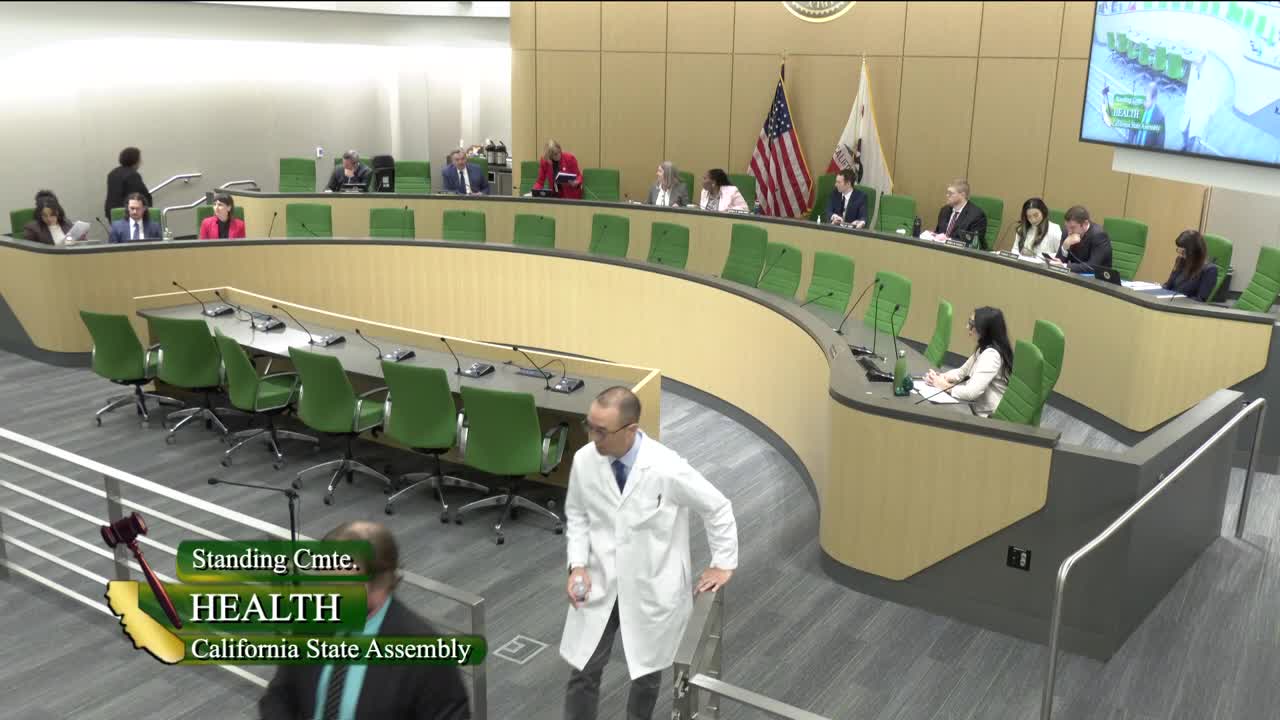 14MIN
Assembly Standing Committee on Health
Bill Author