SB 496: Advanced Clean Fleets Regulation: appeals advisory committee: exemptions.
- Session Year: 2025-2026
- House: Senate
- Latest Version Date: 2025-04-07
Current Status:
Failed
(2026-02-02: Returned to Secretary of Senate pursuant to Joint Rule 56.)
Introduced
In Committee
Awaiting First Chamber Vote
Passed First Chamber
In Committee
Awaiting Second Chamber Vote
Passed Second Chamber
Enacted
What does this bill do?
The bill creates an Advanced Clean Fleets Regulation Appeals Advisory Committee to review appeals when the Air Resources Board denies exemption or time-extension requests under the Advanced Clean Fleets Regulation, and requires the committee to make a recommendation and post meetings and materials publicly within about 60 days. It also treats vehicles expected to respond to emergencies like authorized emergency vehicles for exemption purposes and bars the board from requiring fleet owners to show an executed zero-emission vehicle purchase agreement to obtain a compliance extension.
The summary is provided by generative AI which can make mistakes. For original language, please view the details in the table below.
Existing law requires the State Air Resources Board to adopt and implement motor vehicle emission standards, in-use performance standards, and motor vehicle fuel specifications for the control of air contaminants and sources of air pollution that the state board has found necessary, cost effective, and technologically feasible. The California Global Warming Solutions Act of 2006 establishes the state board as the state agency responsible for monitoring and regulating sources emitting greenhouse gases and requires the state board to adopt rules and regulations to achieve the maximum technologically feasible and cost-effective greenhouse gas emission reductions from those sources.
Pursuant to its authority, the state board has adopted the Advanced Clean Fleets Regulation, which imposes various requirements for transitioning local, state, and federal government fleets of medium- and heavy-duty trucks, other high-priority fleets of medium- and heavy-duty trucks, and drayage trucks to zero-emission vehicles. The Advanced Clean Fleets Regulation authorizes entities subject to the regulation to apply for exemptions from its requirements under certain circumstances.
This bill would require the state board to establish the Advanced Clean Fleets Regulation Appeals Advisory Committee by an unspecified date for purposes of reviewing appeals of denied requests for exemptions from the requirements of the Advanced Clean Fleets Regulation. The bill would require the committee to include representatives of specified governmental and nongovernmental entities. The bill would require the committee to meet monthly and would require recordings of its meetings to be made publicly available on the state boards internet website. The bill would require the committee to consider, and make a recommendation on, an appeal of an exemption request denial no later than 60 days after the appeal is made. The bill would require specified information relating to the committees consideration of an appeal to be made publicly available on the state boards internet website. The bill would require the state board to consider a recommendation of the committee at a public meeting no later than 60 days after the recommendation is made.
This bill would expand the emergency vehicle exemption under exempt from the Advanced Clean Fleets Regulation or any similar regulation, as specified. The bill, with respect to requirements applicable to state and local government fleets under the Advanced Clean Fleets Regulation, would modify the requirements of the daily usage exemption and regulation vehicles reasonably anticipated to respond to emergency situations, or that support those efforts. The bill would prohibit the state board from requiring the a state or local government fleet owner to provide documentation showing the an executed zero-emissions vehicle purchase agreement in order to qualify for a specified extension to comply with certain requirements of the regulation. count an internal combustion engine vehicle as a zero-emissions vehicle purchase for purposes of postponing a zero-emissions vehicle transition mandate in the Advanced Clean Fleets Regulation.
Existing law requires the State Air Resources Board to adopt and implement motor vehicle emission standards, in-use performance standards, and motor vehicle fuel specifications for the control of air contaminants and sources of air pollution that the state board has found necessary, cost effective, and technologically feasible. The California Global Warming Solutions Act of 2006 establishes the state board as the state agency responsible for monitoring and regulating sources emitting greenhouse gases and requires the state board to adopt rules and regulations to achieve the maximum technologically feasible and cost-effective greenhouse gas emission reductions from those sources.
Pursuant to its authority, the state board has adopted the Advanced Clean Fleets Regulation, which imposes various requirements for transitioning local, state, and federal government fleets of medium- and heavy-duty trucks, other high-priority fleets of medium- and heavy-duty trucks, and drayage trucks to zero-emission vehicles. The Advanced Clean Fleets Regulation authorizes entities subject to the regulation to apply for exemptions from its requirements under certain circumstances.
This bill would require the state board to establish the Advanced Clean Fleets Regulation Appeals Advisory Committee by an unspecified date for purposes of reviewing appeals of denied requests for exemptions from the requirements of the Advanced Clean Fleets Regulation. The bill would require the committee to include representatives of specified governmental and nongovernmental entities. The bill would require the committee to meet monthly and would require recordings of its meetings to be made publicly available on the state boards internet website. The bill would require the committee to consider, and make a recommendation on, an appeal of an exemption request denial no later than 60 days after the appeal is made. The bill would require specified information relating to the committees consideration of an appeal to be made publicly available on the state boards internet website. The bill would require the state board to consider a recommendation of the committee at a public meeting no later than 60 days after the recommendation is made.
This bill would expand the emergency vehicle exemption under the Advanced Clean Fleets Regulation or similar regulation, as specified. The bill, with respect to requirements applicable to state and local government fleets under the Advanced Clean Fleets Regulation, would modify the requirements of the daily usage exemption and would prohibit the state board from requiring the fleet owner to provide documentation showing the executed zero-emissions vehicle purchase agreement in order to qualify for a specified extension to comply with certain requirements of the regulation.
For purposes of this article, the following definitions apply:
(a)Advanced Clean Fleets Regulation means Article 3.2 (commencing with Section 2013) of, Article 3.3 (commencing with Section 2014) of, Article 3.4 (commencing with Section 2015) of, and Article 3.5 (commencing with Section 2016) of, Chapter 1 of Division 3 of Title 13 of the California Code of Regulations.
(b)Committee means the Advanced Clean Fleets Regulation Appeals Advisory Committee established pursuant to Section 43851.
(c)Electrical corporation has the same meaning as defined in Section 218 of the Public Utilities Code.
43851.(a)(1)On or before ____, the state board shall establish the Advanced Clean Fleets Regulation Appeals Advisory Committee.
(2)The committee shall review appeals of denied requests for exemptions or time extensions from the requirements of the Advanced Clean Fleets Regulation and make recommendations to the state board with respect to the denial of the exemption or time extension request.
(b)The committee shall be composed of all of the following:
(1)One representative of the state board who is appointed by the state board.
(2)One representative of the Public Utilities Commission who is appointed by the Public Utilities Commission.
(3)One representative of the State Energy Resources Conservation and Development Commission who is appointed by the State Energy Resources Conservation and Development Commission.
(4)One representative of the Department of General Services who is appointed by the Director of General Services.
(5)One representative of the Department of Transportation who is appointed by the Director of Transportation.
(6)One representative of a transit agency who is appointed by the state board.
(7)One representative of a regional transportation agency who is appointed by the state board.
(8)(A)No fewer than 13 and no more than 21 members selected by the state board from any of the following categories:
(i)(I)Private fleet owners.
(II)No less than 25 percent of the members appointed pursuant to this paragraph shall be private fleet owners.
(ii)(I)State and local government representatives with expertise relating to government fleets.
(II)No less than 25 percent of the members appointed pursuant to this paragraph shall be public fleet managers.
(iii)Representatives of electrical corporations.
(iv)Electric vehicle manufacturing industry experts.
(v)Representatives of environmental and environmental justice groups.
(vi)Representatives of labor groups.
(B)Members appointed pursuant to this paragraph shall serve on the committee for a minimum of one year and a maximum of three years.
43852.(a)The committee shall meet monthly on an evenly spaced schedule.
(b)(1)Meetings of the committee shall be open to the public in accordance with the requirements of the Bagley-Keene Open Meeting Act (Article 9 (commencing with Section 11120) of Chapter 1 of Part 1 of Division 3 of Title 2 of the Government Code).
(2)Meetings of the committee shall be recorded and the recording of each meeting shall be made publicly available on the state boards internet website.
(3)It is the intent of the Legislature that members of the committee review materials relating to committee meetings and engage in constructive dialogue in all meetings.
(c)The representative of the state board shall be the nonvoting chair of the committee.
(d)A quorum shall consist of a majority of the voting members appointed to the committee at the time of a meeting. Any action requires a majority vote of the members present at a meeting at which there is a quorum.
43853.(a)If the state board denies an application for an exemption or time extension from any requirement of the Advanced Clean Fleets Regulation, the applicant may appeal the denial to the committee.
(b)No later than 60 days after the applicant appeals the denial of the exemption or time extension request to the committee, the committee shall consider the appeal at a meeting and make a recommendation to the state board regarding whether the exemption or time extension request should have been denied.
(c)The chair of the committee shall serve as the liaison between the committee and the state board, and shall report the actions and recommendations of the committee to the state board.
(d)For each appeal to the committee, all of the following information shall be made publicly available on the state boards internet website:
(1)The applicants original request for an exemption or time extension from any requirement of the Advanced Clean Fleets Regulation and any accompanying information submitted by the applicant.
(2)All materials of the state board relating to the denial of the exemption or time extension request.
(3)The appeal and any accompanying information submitted by the applicant.
(4)The minutes of the meeting during which the appeal was considered.
(e)No later than 60 days after the committee makes a recommendation pursuant to subdivision (b), the state board shall consider the recommendation at a public meeting of the state board.
SEC. 2.Article 6.2 (commencing with Section 43860) is added to Chapter 4 of Part 5 of Division 26 of the Health and Safety Code, to read:6.2.Advanced Clean Fleets Regulation43860.For purposes of this article, Advanced Clean Fleets Regulation means Article 3.2 (commencing with Section 2013) of, Article 3.3 (commencing with Section 2014) of, Article 3.4 (commencing with Section 2015) of, and Article 3.5 (commencing with Section 2016) of, Chapter 1 of Division 3 of Title 13 of the California Code of Regulations.
43861.For purposes of the Advanced Clean Fleets Regulation, or a similar regulation adopted by the state board, vehicles reasonably anticipated to respond to emergency situations, or that support those efforts, and vehicles reasonably anticipated to be used by disaster services workers, as described in Section 3100 of the Government Code, for purposes of responding to the disaster for which they have been activated, are exempt to the same extent as authorized emergency vehicles as defined in Section 165 of the Vehicle Code.
43862.For purposes of the extension authorized in paragraph (3) of subdivision (n) of Section 2013, and subdivision (c) of Section 2013.1, of Title 13 of the California Code of Regulations, the state board shall not require a fleet owner to submit documentation showing the executed zero-emissions vehicle purchase agreement in order to qualify for that extension.
43863.(a)The state board shall not administer the daily usage exemption established pursuant to subdivision (b) of Section 2013.1 of Title 13 of the California Code of Regulations in accordance with the criteria set forth in that subdivision. Instead, the state board shall administer the daily usage exemption established pursuant to that subdivision in accordance with the criteria set forth in subdivision (b).(b)Fleet owners may request an exemption as specified in paragraph (2) of subdivision (n) of Section 2013 of Title 13 of the California Code of Regulations to purchase a new internal combustion engine (ICE) vehicle of the same configuration as an ICE vehicle being replaced as specified in paragraph (1) of subdivision (b) of Section 2013.1 of Title 13 of the California Code of Regulations if no new battery-electric vehicle (BEV) is available to purchase that can meet the demonstrated daily usage needs of any existing vehicles of the same configuration in the fleet, as determined by the criteria specified in paragraphs (2) to (5), inclusive, of subdivision (b) of Section 2013.1 of Title 13 of the California Code of Regulations. If approved, fleet owners shall place their new ICE vehicle orders within one year from the date the exemption is granted. The executive officer of the state board shall not approve exemption requests for a vehicle configuration that is available to purchase as a near-zero-emissions vehicle. The fleet owner shall submit the following information by email to [email protected] to apply:(1)The make, model, weight class, configuration, and a photograph of the ICE vehicle to be replaced.(2)The BEV that is available to purchase in the same weight class and configuration with the highest rated energy capacity available. The fleet owner shall submit the make, model, weight class, configuration, and rated energy capacity of the identified BEV.(3)(A)The BEV manufacturers available full state of charge minimum and maximum range specifications in ideal and less-than-ideal conditions, including when operated in ambient temperatures below 45 and above 90 degrees Fahrenheit and when operated under maximum towing capacity loads and climbing road grades with a minimum 5-percent grade for four miles. If this information is not available from the BEV manufacturer, a 20-percent reduction in maximum range shall be used for a range comparison to an ICE vehicles range data. For vehicles that operate truck-mounted or integrated equipment while stationary, in lieu of supplying the BEV manufacturers range specifications based on vehicle miles traveled, the needed rated energy capacity is the same as the measured BEV energy use specified in subparagraph (B). The fleet owner shall submit the calculation and results.(B)In lieu of providing BEV manufacturer minimum and maximum range specifications as specified in subparagraph (A), fleet owners may instead submit measured fuel burn rate data from ICE vehicles of the same configuration already operated on similar daily assignments to substantiate their exemption request. Information shall include vehicle loading and weight data, route grade, low and high ambient temperatures, and vehicle miles traveled per day, for three consecutive business days. For vehicles that operate truck-mounted or integrated equipment while stationary, the fuel burn rate data shall also include fuel used while stationary truck-mounted or integrated equipment is operated each day.(4)A description of the daily assignments or routes used by existing vehicle configurations with an explanation as to why no new BEVs available to purchase of the same weight class and configuration can be charged or refueled during the workday at the depot, within one mile of the routes, or where ZEV fueling infrastructure is available. The explanation shall include a description of why charging could not be managed during driver rest periods or breaks during the workday.(5)In granting or denying the exemption request, the executive officer of the state board shall rely on the information submitted by the applicant and use their good engineering judgment to determine whether the information meets the criteria specified in this subdivision. The executive officer shall include information regarding their years of related vehicle engineering experience, certifications, and any professional engineering licenses they have with a denied exemption request.For purposes of this article, the following definitions apply:
(a)Advanced Clean Fleets Regulation means Article 3.2 (commencing with Section 2013) of, Article 3.3 (commencing with Section 2014) of, Article 3.4 (commencing with Section 2015) of, and Article 3.5 (commencing with Section 2016) of, Chapter 1 of Division 3 of Title 13 of the California Code of Regulations.
(b)Committee means the Advanced Clean Fleets Regulation Appeals Advisory Committee established pursuant to Section 43851.
(c)Electrical corporation has the same meaning as defined in Section 218 of the Public Utilities Code.
43851.(a)(1)On or before ____, the state board shall establish the Advanced Clean Fleets Regulation Appeals Advisory Committee.
(2)The committee shall review appeals of denied requests for exemptions or time extensions from the requirements of the Advanced Clean Fleets Regulation and make recommendations to the state board with respect to the denial of the exemption or time extension request.
(b)The committee shall be composed of all of the following:
(1)One representative of the state board who is appointed by the state board.
(2)One representative of the Public Utilities Commission who is appointed by the Public Utilities Commission.
(3)One representative of the State Energy Resources Conservation and Development Commission who is appointed by the State Energy Resources Conservation and Development Commission.
(4)One representative of the Department of General Services who is appointed by the Director of General Services.
(5)One representative of the Department of Transportation who is appointed by the Director of Transportation.
(6)One representative of a transit agency who is appointed by the state board.
(7)One representative of a regional transportation agency who is appointed by the state board.
(8)(A)No fewer than 13 and no more than 21 members selected by the state board from any of the following categories:
(i)(I)Private fleet owners.
(II)No less than 25 percent of the members appointed pursuant to this paragraph shall be private fleet owners.
(ii)(I)State and local government representatives with expertise relating to government fleets.
(II)No less than 25 percent of the members appointed pursuant to this paragraph shall be public fleet managers.
(iii)Representatives of electrical corporations.
(iv)Electric vehicle manufacturing industry experts.
(v)Representatives of environmental and environmental justice groups.
(vi)Representatives of labor groups.
(B)Members appointed pursuant to this paragraph shall serve on the committee for a minimum of one year and a maximum of three years.
43852.(a)The committee shall meet monthly on an evenly spaced schedule.
(b)(1)Meetings of the committee shall be open to the public in accordance with the requirements of the Bagley-Keene Open Meeting Act (Article 9 (commencing with Section 11120) of Chapter 1 of Part 1 of Division 3 of Title 2 of the Government Code).
(2)Meetings of the committee shall be recorded and the recording of each meeting shall be made publicly available on the state boards internet website.
(3)It is the intent of the Legislature that members of the committee review materials relating to committee meetings and engage in constructive dialogue in all meetings.
(c)The representative of the state board shall be the nonvoting chair of the committee.
(d)A quorum shall consist of a majority of the voting members appointed to the committee at the time of a meeting. Any action requires a majority vote of the members present at a meeting at which there is a quorum.
43853.(a)If the state board denies an application for an exemption or time extension from any requirement of the Advanced Clean Fleets Regulation, the applicant may appeal the denial to the committee.
(b)No later than 60 days after the applicant appeals the denial of the exemption or time extension request to the committee, the committee shall consider the appeal at a meeting and make a recommendation to the state board regarding whether the exemption or time extension request should have been denied.
(c)The chair of the committee shall serve as the liaison between the committee and the state board, and shall report the actions and recommendations of the committee to the state board.
(d)For each appeal to the committee, all of the following information shall be made publicly available on the state boards internet website:
(1)The applicants original request for an exemption or time extension from any requirement of the Advanced Clean Fleets Regulation and any accompanying information submitted by the applicant.
(2)All materials of the state board relating to the denial of the exemption or time extension request.
(3)The appeal and any accompanying information submitted by the applicant.
(4)The minutes of the meeting during which the appeal was considered.
(e)No later than 60 days after the committee makes a recommendation pursuant to subdivision (b), the state board shall consider the recommendation at a public meeting of the state board.
SEC. 2.Article 6.2 (commencing with Section 43860) is added to Chapter 4 of Part 5 of Division 26 of the Health and Safety Code, to read:6.2.Advanced Clean Fleets Regulation43860.For purposes of this article, Advanced Clean Fleets Regulation means Article 3.2 (commencing with Section 2013) of, Article 3.3 (commencing with Section 2014) of, Article 3.4 (commencing with Section 2015) of, and Article 3.5 (commencing with Section 2016) of, Chapter 1 of Division 3 of Title 13 of the California Code of Regulations.
43861.For purposes of the Advanced Clean Fleets Regulation, or a similar regulation adopted by the state board, vehicles reasonably anticipated to respond to emergency situations, or that support those efforts, and vehicles reasonably anticipated to be used by disaster services workers, as described in Section 3100 of the Government Code, for purposes of responding to the disaster for which they have been activated, are exempt to the same extent as authorized emergency vehicles as defined in Section 165 of the Vehicle Code.
43862.For purposes of the extension authorized in paragraph (3) of subdivision (n) of Section 2013, and subdivision (c) of Section 2013.1, of Title 13 of the California Code of Regulations, the state board shall not require a fleet owner to submit documentation showing the executed zero-emissions vehicle purchase agreement in order to qualify for that extension.
43863.(a)The state board shall not administer the daily usage exemption established pursuant to subdivision (b) of Section 2013.1 of Title 13 of the California Code of Regulations in accordance with the criteria set forth in that subdivision. Instead, the state board shall administer the daily usage exemption established pursuant to that subdivision in accordance with the criteria set forth in subdivision (b).
(b)Fleet owners may request an exemption as specified in paragraph (2) of subdivision (n) of Section 2013 of Title 13 of the California Code of Regulations to purchase a new internal combustion engine (ICE) vehicle of the same configuration as an ICE vehicle being replaced as specified in paragraph (1) of subdivision (b) of Section 2013.1 of Title 13 of the California Code of Regulations if no new battery-electric vehicle (BEV) is available to purchase that can meet the demonstrated daily usage needs of any existing vehicles of the same configuration in the fleet, as determined by the criteria specified in paragraphs (2) to (5), inclusive, of subdivision (b) of Section 2013.1 of Title 13 of the California Code of Regulations. If approved, fleet owners shall place their new ICE vehicle orders within one year from the date the exemption is granted. The executive officer of the state board shall not approve exemption requests for a vehicle configuration that is available to purchase as a near-zero-emissions vehicle. The fleet owner shall submit the following information by email to [email protected] to apply:
(1)The make, model, weight class, configuration, and a photograph of the ICE vehicle to be replaced.
(2)The BEV that is available to purchase in the same weight class and configuration with the highest rated energy capacity available. The fleet owner shall submit the make, model, weight class, configuration, and rated energy capacity of the identified BEV.
(3)(A)The BEV manufacturers available full state of charge minimum and maximum range specifications in ideal and less-than-ideal conditions, including when operated in ambient temperatures below 45 and above 90 degrees Fahrenheit and when operated under maximum towing capacity loads and climbing road grades with a minimum 5-percent grade for four miles. If this information is not available from the BEV manufacturer, a 20-percent reduction in maximum range shall be used for a range comparison to an ICE vehicles range data. For vehicles that operate truck-mounted or integrated equipment while stationary, in lieu of supplying the BEV manufacturers range specifications based on vehicle miles traveled, the needed rated energy capacity is the same as the measured BEV energy use specified in subparagraph (B). The fleet owner shall submit the calculation and results.
(B)In lieu of providing BEV manufacturer minimum and maximum range specifications as specified in subparagraph (A), fleet owners may instead submit measured fuel burn rate data from ICE vehicles of the same configuration already operated on similar daily assignments to substantiate their exemption request. Information shall include vehicle loading and weight data, route grade, low and high ambient temperatures, and vehicle miles traveled per day, for three consecutive business days. For vehicles that operate truck-mounted or integrated equipment while stationary, the fuel burn rate data shall also include fuel used while stationary truck-mounted or integrated equipment is operated each day.
(4)A description of the daily assignments or routes used by existing vehicle configurations with an explanation as to why no new BEVs available to purchase of the same weight class and configuration can be charged or refueled during the workday at the depot, within one mile of the routes, or where ZEV fueling infrastructure is available. The explanation shall include a description of why charging could not be managed during driver rest periods or breaks during the workday.
(5)In granting or denying the exemption request, the executive officer of the state board shall rely on the information submitted by the applicant and use their good engineering judgment to determine whether the information meets the criteria specified in this subdivision. The executive officer shall include information regarding their years of related vehicle engineering experience, certifications, and any professional engineering licenses they have with a denied exemption request.
|
Date
|
Status
|
|---|---|
| Feb 2, 2026 | Returned to Secretary of Senate pursuant to Joint Rule 56. |
| May 23, 2025 | May 23 hearing: Held in committee and under submission. |
| May 16, 2025 | Set for hearing May 23. |
| May 5, 2025 | May 5 hearing: Placed on APPR. suspense file. |
| Apr 25, 2025 | Set for hearing May 5. |
| Apr 23, 2025 | From committee: Do pass and re-refer to Com. on APPR. (Ayes 15. Noes 0. Page 843.) (April 22). Re-referred to Com. on APPR. |
| Apr 8, 2025 | Set for hearing April 22. |
| Apr 7, 2025 | Read second time and amended. Re-referred to Com. on TRANS. |
| Apr 3, 2025 | From committee: Do pass as amended and re-refer to Com. on TRANS. (Ayes 8. Noes 0. Page 634.) (April 2). |
| Mar 11, 2025 | Set for hearing April 2. |
| Feb 26, 2025 | Referred to Coms. on E.Q. and TRANS. |
| Feb 20, 2025 | From printer. May be acted upon on or after March 22. |
| Feb 19, 2025 | Introduced. Read first time. To Com. on RLS. for assignment. To print. |
|
Date
|
Description
|
Location
|
Votes
|
|
|---|---|---|---|---|
| May 5, 2025 | Placed on suspense file | Senate Standing Committee on Appropriations |
Passed |
|
| Apr 22, 2025 | Do pass, but first be re-referred to the Committee on [Appropriations] | Senate Standing Committee on Transportation |
Passed |
|
| Apr 2, 2025 | Do pass as amended, but first amend, and re-refer to the Committee on [Transportation] | Senate Standing Committee on Environmental Quality |
Passed |
This list shows positions taken on this bill by organizations on the date displayed, which is linked to the original source.
Positions by individuals are not included.
|
Organization
|
Position
|
Date
|
|---|---|---|
| Alameda County Mosquito Abatement District | ** Support | |
| American Lung Association | ** Against | |
| Arbuckle Parks and Recreation District | ** Support | |
| Artesia Cemetery District | ** Support | |
| Bear Valley Water District | ** Support | |
| BeaumontCherry Valley Water District | ** Support | |
| Brooktrails Township Community Services District | ** Support | |
| Buena Park City Of | ** Support | |
| Butte County Mosquito and Vector Control District | ** Support | |
| Calcom Association | ** Support | |
| California Association Of Recreation & Park Districts | ** Support | |
| California Delivery Association | ** Support | |
| California Nurses for Environmental Health & Justice | ** Against | |
| California Special Districts Association | ** Support | |
| California State Association Of Counties | ** Support | |
| California Tow Truck Association | ** Support | |
| California Valley Community Services District | ** Support | |
| Calleguas Municipal Water District | ** Support | |
| Camrosa Water District | ** Support | |
| Carpinteria Sanitary District | ** Support | |
| Carpinteria Valley Water District | ** Support | |
| Castroville Community Services District | ** Support | |
| Chico Area Recreation and Park District | ** Support | |
| City of Anderson | ** Support | |
| City of Buena Park | ** Support | |
| City of Corona | ** Support | |
| City of Downey | ** Support | |
| City of Fairfield | ** Support | |
| City Of Garden Grove | ** Support | |
| City Of Lathrop | ** Support | |
| City Of Lemoore | ** Support | |
| City of Los Alamitos | ** Support | |
| City of Manteca | ** Support | |
| City of Moorpark | ** Support | |
| City of Moreno Valley | ** Support | |
| City of Morgan Hill | ** Support | |
| City of Roseville | ** Support | |
| City of Shasta Lake | ** Support | |
| City of Whittier | ** Support | |
| Climate Action California | ** Against | |
| Coachella Valley Mosquito and Vector Control District | ** Support | |
| Coachella Valley Public Cemetery District | ** Support | |
| Coachella Valley Water District | ** Support | |
| Coalition For Clean Air | ** Against | |
| Conejo Recreation and Park District | ** Support | |
| Consolidated Mosquito Abatement District | ** Support | |
| Contra Costa Water District | ** Support | |
| Corning Cemetery District | ** Support | |
| Costa Mesa Sanitary District | ** Support | |
| County of Butte | ** Support | |
| County of Fresno | ** Support | |
| County of Inyo | ** Support | |
| County Of Kern | ** Support | |
| County of Monterey | ** Support | |
| County of Riverside | ** Support | |
| County of San Joaquin | ** Support | |
| County of Santa Clara | ** Support | |
| Crestline Village Water District | ** Support | |
| Crestline-Lake Arrowhead Water Agency | ** Support | |
| CTIA | ** Support | |
| Cucamonga Valley Water District | ** Support | |
| Dairy Institute Of California | ** Support | |
| Davis Cemetery District | ** Support | |
| Desert Recreation District | ** Support | |
| Donner Summit Public Utility District | ** Support | |
| Dublin San Ramon Services District | ** Support | |
| East Valley Water District | ** Support | |
| Eastern Kern County Resource Conservation District | ** Support | |
| Eastern Municipal Water District | ** Support | |
| Eastern Sierra Community Service District | ** Support | |
| El Toro Water District | ** Support | |
| Evergreen Cemetery | ** Support | |
| Fairfield City Of | ** Support | |
| Fall River Resource Conservation District | ** Support | |
| Fallbrook Public Utilities District | ** Support | |
| Fern Valley Water District | ** Support | |
| Foothill Municipal Water District | ** Support | |
| Fresno Irrigation District | ** Support | |
| Fresno Metropolitan Flood Control District | ** Support | |
| Fresno Mosquito And Vector Control District | ** Support | |
| Fullerton City Of | ** Support | |
| Fulton-El Camino Recreation And Park District | ** Support | |
| Galt Arno Cemetery District | ** Support | |
| Goleta Sanitary District | ** Support | |
| Greater Los Angeles County Vector Control District | ** Support | |
| Groveland Community Services District | ** Support | |
| Hayward Area Recreation And Park District | ** Support | |
| Helix Water District | ** Support | |
| Hidden Valley Lake Community Services District | ** Support | |
| Hilmar Cemetery District | ** Support | |
| Hilmar County Water District | ** Support | |
| Humboldt Bay Municipal Water District | ** Support | |
| Imperial Irrigation District | ** Support | |
| Independent Special Districts of Orange County | ** Support | |
| Inland Empire Utilities Agency | ** Support | |
| Inland Empire Utilities Agency- Supervisors Unit | ** Support | |
| Inverness Public Utility District | ** Support | |
| Irvine Ranch Water District | ** Support | |
| Jurupa Community Services District | ** Support | |
| Kern County Of | ** Support | |
| Keyes Community Services District | ** Support | |
| LA Habra Heights County Water District | ** Support | |
| Lake Arrowhead Community Services District | ** Support | |
| Lake County Vector Control District | ** Support | |
| Lake Oroville Area Public Utility District | ** Support | |
| Las Virgenes Municipal Water District | ** Support | |
| League Of California Cities | ** Support | |
| Leucadia Wastewater District | ** Support | |
| Linda County Water District | ** Support | |
| Livermore Area Recreation And Park District | ** Support | |
| McKinleyville Community Services District | ** Support | |
| Mendocino County Russian River Flood Control & Water Conservation | ** Support | |
| Mesa Water District | ** Support | |
| Mid-Peninsula Water District | ** Support | |
| Mission Hills Community Services District | ** Support | |
| Mission Springs Water District | ** Support | |
| Monte Vista Water District | ** Support | |
| Monterey Peninsula Regional Park District | ** Support | |
| Monterey Peninsula Water Management District | ** Support | |
| Mosquito & Vector Management District of Santa Barbara County | ** Support | |
| Mountain Counties Water Resources Association | ** Support | |
| Mountain Gate Community Services District | ** Support | |
| Mountain View Sanitary District | ** Support | |
| Mt. View Sanitary District | ** Support | |
| Municipal Water District Of Orange County | ** Support | |
| Murrieta Valley Cemetery District | ** Support | |
| NAFA Fleet Management Association | ** Support | |
| Natomas Reclemation District 1000 | ** Support | |
| Nevada Irrigation District | ** Support | |
| North County Fire Protection District | ** Support | |
| North Sonoma Coast Fire Protection District | ** Support | |
| Northstar Community Services District | ** Support | |
| Oceano Community Services District | ** Support | |
| Olivenhain Municipal Water District | ** Support | |
| Olympic Valley Public Service District | ** Support | |
| Orange County Cemetery District | ** Support | |
| Orange County Mosquito and Vector Control District | ** Support | |
| Orange County Water District | ** Support | |
| ORANGE; COUNTY OF | ** Support | |
| Orchard Dale Water District | ** Support | |
| Orland Cemetery District | ** Support | |
| Oro Loma Sanitary District | ** Support | |
| Otay Water District | ** Support | |
| Padre Dam Municipal Water District | ** Support | |
| Palmdale Water District | ** Support | |
| phelan pinon hills community services district | ** Support | |
| Physicians for Social Responsibility-San Francisco Bay Area Chapter | ** Against | |
| Pine Grove Community Services District | ** Support | |
| Pinyon Pines County Water District | ** Support | |
| Placentia City Of | ** Support | |
| Placer County Water Agency | ** Support | |
| Pleasant Valley Recreation And Park District | ** Support | |
| Potter Valley Cemetery District | ** Support | |
| rainbow municipal water district | ** Support | |
| Ramona Municipal Water District | ** Support | |
| Rancho Santa Fe Fire Protection District | ** Support | |
| RCRC | ** Support | |
| Resort Improvement District No.1 | ** Support | |
| Rim of The World Recreation and Park District | ** Support | |
| Rincon del Diablo Municipal Water District | ** Support | |
| Rio Linda Elverta Recreation and Park District | ** Support | |
| Rossmoor/los Alamitos | ** Support | |
| Rural County Representatives of California | ** Support | |
| Russian River Cemetery District | ** Support | |
| Sacramento Area Sewer District | ** Support | |
| Sacramento Suburban Water District | ** Support | |
| Sacramento; County Of | ** Support | |
| San Bernardino County | ** Support | |
| SAN BERNARDINO; COUNTY OF | ** Support | |
| San Diego Humane Society And Spca | ** Support | |
| San Francisco Bay Physicians for Social Responsibility | ** Against | |
| San Mateo County Harbor District | ** Support | |
| San Miguel Community Services District | ** Support | |
| San Ramon Valley Fire Protection District | ** Support | |
| Santa Clarita Valley Water Agency | ** Support | |
| Santa Maria Cemetery | ** Support | |
| Saratoga Fire Protection District | ** Support | |
| Sausalito-Marin City Sanitary District | ** Support | |
| School Energy Coalition | ** Support | |
| Scotts Valley Fire Protection District | ** Support | |
| Scotts Valley Water District | ** Support | |
| Shasta County Board of Supervisors | ** Support | |
| Shasta Mosquito and Vector Control District | ** Support | |
| Sierraville Public Utility District | ** Support | |
| Solano County Of | ** Support | |
| Soquel Creek Water District | ** Support | |
| South Placer Municipal Utility District | ** Support | |
| South San Joaquin Irrigation District | ** Support | |
| Southern Cascades Community Services District | ** Support | |
| Stanislaus County Board of Supervisors | ** Support | |
| Stockton East Water District | ** Support | |
| Surprise Valley Health Care District | ** Support | |
| Tahoe City Public Utility District | ** Support | |
| Tahoe-truckee Sanitation Agency | ** Support | |
| Tamalpais Community Services District | ** Support | |
| Templeton Community Services District | ** Support | |
| The Greenlining Institute | ** Against | |
| Three Valleys Municipal Water District | ** Support | |
| Town Of Discovery Bay Community Services District | ** Support | |
| Town of Hillsborough | ** Support | |
| Truckee Sanitary District | ** Support | |
| Tuolumne Utilities District | ** Support | |
| Turlock Mosquito Abatement District | ** Support | |
| Tustin, City Of | ** Support | |
| Twain Harte Community Services District | ** Support | |
| Union Of Concerned Scientists | ** Against | |
| Union Public Utility District | ** Support | |
| Union Sanitary District | ** Support | |
| United States Telecom Association Dba Ustelecom The Broadband Association | ** Support | |
| Vallecitos Water District | ** Support | |
| Valley Center Municipal Water District | ** Support | |
| Valley Sanitary District | ** Support | |
| Valley-Wide Recreation And Park District | ** Support | |
| Ventura River Water District | ** Support | |
| Vista Irrigation District | ** Support | |
| Walnut Valley Water District | ** Support | |
| West Valley Water District | ** Support | |
| Western Municipal Water District | ** Support | |
| Western Shasta Resource Conservation District | ** Support | |
| Western States Trucking Association | ** Support | |
| Willow Creek Community Services District | ** Support | |
| Woodside Fire Protection District | ** Support | |
| Yolo County Flood Control & Water Conservation District | ** Support |
SENATE COMMITTEE ON
Senator Anna Caballero, Chair
2025 - 2026 Regular Session
SB 496 (Hurtado) - Advanced Clean Fleets Regulation: appeals advisory committee: exemptions
Version: | Policy Vote: |
Urgency: | Mandate: |
Hearing Date: | Consultant: |
Bill Summary:
This bill would make various changes to the Advanced Clean Fleets (ACF) program and would establish an ACF appeals advisory committee, as specified.
Fiscal Impact:
- The California Air Resources Board (CARB) estimates ongoing costs of about $1.5 million in 2025-26, $4 million in 2026-27, and $3.9 million annually thereafter (Air Pollution Control Fund [APCF]) and 14 permanent position to amend and update the existing ACF regulations, establish an exemption and extension appeal advisory committee, conduct committee meetings, make recommendations on actions, and provide support and oversight, among other things.
Background:
As of 2022, nearly 40% of California's GHG emissions are generated directly by the transportation sector, which includes both the light-duty (passenger) and medium- and heavy-duty fleets. Heavy-duty diesel trucks also contribute to unhealthy levels of ozone, inhalable particulate matter, carbon monoxide, oxides of nitrogen (NOx), and sulfur dioxide, affecting local air quality. Trucks make up only 6% of the state’s vehicles, but they represent almost 25% of the state's transportation GHG emissions and nearly 50% of the NOx emissions. In the transportation sector, measures to reduce GHG emissions include requiring the use of low-carbon fuels, cleaner vehicles, and strategies to promote sustainable communities and improved transportation choices that reduce growth in number of vehicle miles traveled.
Advanced Clean Fleets. Approved in April 2023, ACF requires a phased-in transition toward zero-emission medium-and-heavy duty vehicles. Specifically, under ACF, fleet owners operating vehicles for private services such as last-mile delivery and federal fleets, such as the US Postal Service, along with state and local government fleets, would begin their transition toward ZEVs in 2024. The rule includes the ability to continue operating existing vehicles through their useful life. Moreover, ACF directed drayage trucks to be fully zero-emission by 2035. All other fleet owners will have the option to transition a percentage of their vehicles to meet expected zero-emission milestones, which gives owners the flexibility to continue operating combustion-powered vehicles as needed. The flexibility is intended to take into consideration the available technology and the need to target the highest-polluting vehicles.
Being that ACF is stricter than FCAA standards, CARB’s ability to enforce the regulations was dependent on a waiver being approved by the US Environmental Protection Agency (US EPA). CARB submitted the waiver request on November 15, 2023. California has a long history of being granted waivers, when requested from the US EPA, as it sought to create its own air quality regime over the years, including a waiver for the ACT rule being granted earlier in 2023.
ACF exemptions. While the CARB regulations broadly address the ZEV transition for medium- and heavy-duty vehicles, not all vehicles are used for the same purpose and have the same operating requirements. Publicly owned utilities operate under unique and often challenging circumstances and their medium- and heavy-duty vehicle fleets are essential to provide communities with services such as water and power. Their specialty vehicles often need to travel long distances and work in remote areas on difficult terrain, and for extended periods of time. These vehicles often are needed for rapid response or emergency situations, and require refueling in the field.
While ACF includes purchase mandates for all fleets, it also provides an alternative flexible compliance option for state and local agencies called the ZEV milestone option. For some vehicles, the ZEV milestone option means they will not actually need to have 100% ZEV fleets until 2042. Additionally, ACF provided vehicle exemptions for authorized emergency vehicles as identified under the Vehicle Code, including fire trucks, forestry vehicles, ambulances, etc.
EPA Waiver. On January 13, 2025, CARB withdrew the FCAA waiver requests pending US EPA approval that were necessary to enforce the majority of the ACF regulations. Accompanying the decision, CARB issued an update that read:
“California has withdrawn its request for a waiver and authorization for the addition of the ACF Regulation to its emissions control program. At this time, CARB is evaluating next steps. CARB is not enforcing the existing portions of the ACF Regulation that require a federal waiver or authorization, such as the portions of the ACF Regulation that apply to high priority and drayage fleets. However, not all elements of the ACF Regulation require a federal waiver or authorization. The state and local government fleets portion of the ACF Regulation remains unaffected. Because CARB is committed to reducing air pollution to protect public health, we encourage affected industries to continue reducing their emissions and we look forward to continued partnership in these efforts.”
However, while the waiver was pulled, ACF remains enforceable to a segment of the market, primarily state and local government fleets.
Modifications to ACF. The provisions specified in this bill aim to modify and remedy several issues brought forth by public agencies pertaining to ACF. First, while ACF does take into consideration the importance of ensuring state, local, and regional governmental entities are able to operate and effectively respond to emergency situations via the emergency vehicle exemptions, the natural disaster impacts from climate change have exacerbated over the last five years with wildfires becoming more intense, atmospheric rivers flooding urban thoroughfares, and / or wind storms leading to significant power outages. As a result, the types and scope of “emergencies” public agencies must combat have expanded and evolved. This measure provides statutory clarifications to ensure vehicles that respond to and support critical operations during emergencies and natural disasters are available, sufficient, and capable of effectively handling those situations.
Second, under ACF, in order for entities to apply for a vehicle charging infrastructure delay extension, entities must demonstrate that they have already purchased and / or ordered the required number of ZEV vehicles in order to be eligible for the requested extension. This measure provides a procedural remedy by eliminating the need to submit vehicle purchasing / order documentation as a means to qualify for the extension; in turn providing public agencies the ability to better manage limited financial resources as they take the steps to achieve ACF compliance.
Proposed Law:
This bill would make various changes to the ACF program and would establish an ACF appeals advisory committee. Specifically, it would:
- Create the ACF Regulation Appeals Advisory Committee (Committee), and stipulate that:
- The Committee be composed of 20-28 members, represented specified groups, agencies, and areas of expertise;
- The Committee meet monthly to hear any appeals from fleets whose requests for ACF exemptions or time extensions were rejected by CARB;
- Each appeal have certain accompanying information posted on CARB’s website; and,
- CARB must, within 60 days after the Committee makes a recommendation regarding an appeal, consider the recommendation at a public CARB board meeting.
- Expand existing ACF emergency vehicle exemptions to include vehicles reasonably anticipated to respond to emergency situations or vehicles supporting those efforts, as specified.
- Provide that a fleet owner filing an ACF extension, pursuant to CARB regulations, is not required to submit a ZEV purchasing agreement in order to be eligible for the requested extension.
Related Legislation:
SB 1393 (Niello, 2024) would have established an ACF appeals advisory committee identical to the one created in this bill. SB 1393 failed passage in Senate Environmental Quality Committee.
AB 1594 (Garcia, Chapter 585, Statutes of 2023) requires any state regulation that seeks to require the procurement of medium- and heavy-duty ZEVs to authorize public agency utilities to purchase replacements for traditional utility-specialized vehicles that are at the end of life, as determined by CARB and in consultation with public agency utilities, when needed to maintain reliable service and respond to major foreseeable events, including severe weather, wildfires, natural disasters, and physical attacks, as specified.
-- END --
SENATE COMMITTEE ON TRANSPORTATION
Senator Dave Cortese, Chair
2025 - 2026 Regular
Bill No: SB 496 Hearing Date: 4/22/2025
Author: | Hurtado | ||
Version: | 4/7/2025 Amended | ||
Urgency: | No | Fiscal: | Yes |
Consultant: | Manny Leon | ||
SUBJECT: Advanced Clean Fleets Regulation: appeals advisory committee: exemptions
DIGEST: This bill makes various changes to the Advanced Clean Fleets (ACF) program and establishes an ACF appeals advisory committee, as specified.
ANALYSIS:
Existing law:
- Establishes California Air Resources Board (CARB) as the air pollution control agency in California and requires CARB, among other things, to control emissions from a wide array of mobile sources and coordinate with local air districts to control emission from stationary sources to implement the Federal Clean Air Act.
- Requires CARB, pursuant to California Global Warming Solutions Act of 2006, AB 32 (Núñez, Chapter 488, Statutes of 2006), to adopt a statewide greenhouse gases (GHG) emissions limit equivalent to 1990 levels by 2020 and to develop a scoping plan for achieving the maximum technologically feasible and cost-effective reductions in GHGs.
- Requires, pursuant to SB 32 (Pavley, Chapter 249, Statutes of 2016), that CARB ensure statewide GHG emissions are reduced to at least 40% below 1990 levels by 2030.
- Provides, pursuant to the California Climate Crisis Act, AB 1279 (Muratsuchi, Chapter 337, Statutes of 2022), that it is the policy of the state to achieve net zero GHG emissions as soon as possible but no later than 2045; and ensure that by 2045, GHG emissions are reduced to at least 85% below 1990 levels.
- At the regulatory level, establishes ACF Regulations, Title 13 California Code of Regulations (CCR), Article 3.2 et seq.
- Defines an “authorized emergency vehicle” as:
- Any publicly owned and operated ambulance, lifeguard, or lifesaving equipment or any privately owned or operated ambulance licensed by the California Highway Patrol (CHP) to operate in response to emergency calls;
- Any publicly owned vehicle operated by any federal, state, or local agency, department, or district employing peace officers for use by those officers in the performance of their duties; or any forestry or fire department of any public agency or fire department;
- Any vehicle owned by the state, or any bridge and highway district, and equipped and used either for fighting fires, towing or servicing other vehicles, caring for injured persons, or repairing damaged lighting or electrical equipment;
- Any state-owned vehicle used in responding to emergency fire, rescue, or communications calls and operated either by the Office of Emergency Services (OES) or by any public agency or industrial fire department to which OES has assigned the vehicle;
- Any vehicle owned or operated by a federally recognized Indian tribe used in responding to emergency, fire, ambulance, or lifesaving calls;
- Any vehicle owned or operated by any department or agency of the United States government when the vehicle is used in responding to emergency fire, ambulance, or lifesaving calls or is actively engaged in law enforcement work; or,
- Any vehicle for which an authorized emergency vehicle permit has been issued by the CHP.
- At the federal level, establishes the Federal Clean Air Act (FCAA) and its implementing regulations, National Ambient Air Quality Standards (NAAQS), on top of other provisions, allows California to set vehicular emissions standards stricter than the federal government, and allows other states to adopt either the federal or California vehicular emissions standards, as specified.
This bill:
- Creates the ACF Regulation Appeals Advisory Committee (Committee), and stipulates:
- The Committee be composed of 20-28 members, represented specified groups, agencies, and areas of expertise;
- The Committee meet monthly to hear any appeals from fleets whose requests for ACF exemptions or time extensions were rejected by CARB;
- Each appeal have certain accompanying information posted on CARB’s website; and,
- CARB must, within 60 days after the Committee makes a recommendation regarding an appeal, consider the recommendation at a public CARB board meeting.
- Expands existing ACF emergency vehicle exemptions to vehicles reasonably anticipated to respond to emergency situations or vehicles supporting those efforts, as specified.
- Provides that a fleet owner filing an ACF extension, pursuant to CARB regulations, is not required to submit a zero-emission vehicle (ZEV) purchasing agreement in order to be eligible for the requested extension.
COMMENTS:
- Purpose of the bill. According to the author, “SB 496 attempts to achieve a fair and reasonable balance between emission requirements and the needs of California communities. Specifically, SB 496 establishes an Appeals Advisory Committee by which local agencies may request a review of exemption request denials. Such a process can be particularly helpful by offering clear and feasible pathways to compliance without diminishing CARB's authority as this Appeals Advisory Committee would only operate in an advisory role. Additionally, SB 496 would update the emergency vehicle exemption, allowing those vehicles that respond to critical operations related to emergencies and disasters, to continue to protect our communities. Given the rising toll of natural disasters in our state, we must prioritize the safety of our communities and the public servants that work around the clock through these unprecedented events.”
- Medium- and heavy-duty ZEV rules. As of 2022, nearly 40% of California's GHG emissions are generated directly by the transportation sector, which includes both the light-duty (passenger) and medium- and heavy-duty fleets.[1] Heavy-duty diesel trucks also contribute to unhealthy levels of ozone, inhalable particulate matter, carbon monoxide, oxides of nitrogen (NOx), and sulfur dioxide, affecting local air quality. Trucks make up only 6% of the state’s vehicles, but they represent almost 25% of the state's transportation GHG emissions and nearly 50% of the NOx emissions. In the transportation sector, measures to reduce GHG emissions include requiring the use of low-carbon fuels, cleaner vehicles, and strategies to promote sustainable communities and improved transportation choices that reduce growth in number of vehicle miles traveled.
In June 2020, CARB finalized the Advanced Clean Truck (ACT) regulation which accelerates a large-scale transition of medium- and heavy-duty vehicles such as diesel trucks and vans to ZEVs. One component of the regulation is a manufacturer sales requirement based on vehicle weight classes, which range from Class 2b to Class 8 for medium- and heavy-duty vehicles. Manufacturers who certify Class 2b-8 chassis or complete vehicles with combustion engines would be required to sell zero-emission trucks as an increasing percentage of their annual California sales from 2024 to 2035. By 2035, zero-emission truck/chassis sales would need to be 55% of Class 2b – 3 truck sales, 75% of Class 4 – 8 straight truck sales, and 40% of truck tractor sales.
At the end of 2020, Governor Newsom issued Executive Order (EO) N-79-20, which requires 100% of medium- and heavy-duty vehicles in the state be zero-emission by 2045, for all operations where feasible, and by 2035 for drayage trucks. EO N-79-20 charges CARB with developing and proposing medium- and heavy-duty vehicle regulations requiring increasing volumes of new zero-emission trucks and buses sold and operated in the state towards that goal. The ultimate result of these directives was CARB developing and adopting ACF regulations. - Advanced Clean Fleets. Approved in April 2023, ACF requires a phased-in transition toward zero-emission medium-and-heavy duty vehicles. Specifically, under ACF, fleet owners operating vehicles for private services such as last-mile delivery and federal fleets, such as the US Postal Service, along with state and local government fleets, would begin their transition toward ZEVs in 2024. The rule includes the ability to continue operating existing vehicles through their useful life. Moreover, ACF directed drayage trucks to be fully zero-emission by 2035. All other fleet owners will have the option to transition a percentage of their vehicles to meet expected zero-emission milestones, which gives owners the flexibility to continue operating combustion-powered vehicles as needed. The flexibility is intended to take into consideration the available technology and the need to target the highest-polluting vehicles.
Being that ACF is stricter than FCAA standards, CARB’s ability to enforce the regulations was dependent on a waiver being approved by the US Environmental Protection Agency (US EPA). CARB submitted the waiver request on November 15, 2023. California has a long history of being granted waivers, when requested from the US EPA, as it sought to create its own air quality regime over the years, including a waiver for the ACT rule being granted earlier in 2023.
- ACF exemptions. While the CARB regulations broadly address the ZEV transition for medium- and heavy-duty vehicles, not all vehicles are used for the same purpose and have the same operating requirements. Publicly owned utilities operate under unique and often challenging circumstances and their medium- and heavy-duty vehicle fleets are essential to provide communities with services such as water and power. Their specialty vehicles often need to travel long distances and work in remote areas on difficult terrain, and for extended periods of time. These vehicles often are needed for rapid response or emergency situations, and require refueling in the field.
While ACF includes purchase mandates for all fleets, it also provides an alternative flexible compliance option for state and local agencies called the ZEV milestone option. For some vehicles, the ZEV milestone option means they will not actually need to have 100% ZEV fleets until 2042. Additionally, ACF provided vehicle exemptions for authorized emergency vehicles as identified under the Vehicle Code, including fire trucks, forestry vehicles, ambulances, etc. - EPA Waiver. On January 13, 2025, CARB withdrew the FCAA waiver requests pending US EPA approval that were necessary to enforce the majority of the ACF regulations.[2] Accompanying the decision, CARB issued an update that read:
“California has withdrawn its request for a waiver and authorization for the addition of the ACF Regulation to its emissions control program. At this time, CARB is evaluating next steps. CARB is not enforcing the existing portions of the ACF Regulation that require a federal waiver or authorization, such as the portions of the ACF Regulation that apply to high priority and drayage fleets. However, not all elements of the ACF Regulation require a federal waiver or authorization. The state and local government fleets portion of the ACF Regulation remains unaffected. Because CARB is committed to reducing air pollution to protect public health, we encourage affected industries to continue reducing their emissions and we look forward to continued partnership in these efforts.”
However, while the waiver was pulled, ACF remains enforceable to a segment of the market, primarily state and local government fleets.
- Modifications to ACF. The provisions specified in this bill aim to modify and remedy several issues brought forth by public agencies pertaining to ACF. First, while ACF does take into consideration the importance of ensuring state, local, and regional governmental entities are able to operate and effectively respond to emergency situations via the emergency vehicle exemptions, the natural disaster impacts from climate change have exacerbated over the last five years with wildfires becoming more intense, atmospheric rivers flooding urban thoroughfares, and / or wind storms leading to significant power outages. As a result, the types and scope of “emergencies” public agencies must combat have expanded and evolved. This measure provides statutory clarifications to ensure vehicles that respond to and support critical operations during emergencies and natural disasters are available, sufficient, and capable of effectively handling those situations.
Second, under ACF, in order for entities to apply for a vehicle charging infrastructure delay extension, entities must demonstrate that they have already purchased and / or ordered the required number of ZEV vehicles in order to be eligible for the requested extension. This measure provides a procedural remedy by eliminating the need to submit vehicle purchasing / order documentation as a means to qualify for the extension; in turn providing public agencies the ability to better manage limited financial resources as they take the steps to achieve ACF compliance.
- Double referral. This bill was double referred to the Senate Environmental Quality Committee where it passed out of that committee on an 8-0 vote at their April 2, 2025 hearing.
Related/Previous Legislation:
SB 1393 (Niello, 2024) -- Would have established an ACF appeals advisory committee identical to the one created in this bill. SB 1393 failed passage in Senate Environmental Quality Committee.
AB 1594 (Garcia, Chapter 585, Statutes of 2023) -- Requires any state regulation that seeks to require the procurement of medium- and heavy-duty ZEVs to authorize public agency utilities to purchase replacements for traditional utility-specialized vehicles that are at the end of life, as determined by CARB and in consultation with public agency utilities, when needed to maintain reliable service and respond to major foreseeable events, including severe weather, wildfires, natural disasters, and physical attacks, as specified.
FISCAL EFFECT: Appropriation: Fiscal Com.: Local:
POSITIONS: (Communicated to the committee before noon on Wednesday,
April 16, 2025.)
SUPPORT:
Alameda County Mosquito Abatement District
Arbuckle Parks and Recreation District
Artesia Cemetery District
Bear Valley Water District
Beaumont-cherry Valley Water District
Brooktrails Township Community Services District
Buena Park; City of
Butte County Mosquito and Vector Control District
Calcom Association
California Association of Recreation & Park Districts
California Delivery Association
California Special Districts Association
California State Association of Counties (CSAC)
California Tow Truck Association
California Valley Community Services District
Calleguas Municipal Water District
Camrosa Water District
Carpinteria Sanitary District
Carpinteria Valley Water District
Castroville Community Services District
Chico Area Recreation and Park District
City of Anderson
City of Buena Park
City of Corona
City of Downey
City of Fairfield
City of Garden Grove
City of Lathrop
City of Lemoore
City of Los Alamitos
City of Manteca
City of Moorpark
City of Moreno Valley
City of Morgan Hill
City of Roseville
City of Shasta Lake
City of Whittier
Coachella Valley Mosquito and Vector Control District
Coachella Valley Public Cemetery District
Coachella Valley Water District
Conejo Recreation and Park District
Consolidated Mosquito Abatement District
Contra Costa Water District
Corning Cemetery District
County of Butte
County of Fresno
County of Inyo
County of Kern
County of Monterey
County of San Joaquin
County of Santa Clara
Crestline Village Water District
Crestline-lake Arrowhead Water Agency
CTIA
Cucamonga Valley Water District
Dairy Institute of California
Davis Cemetery District
Donner Summit Public Utility District
Dublin San Ramon Services District
East Valley Water District
Eastern Kern County Resource Conservation District
Eastern Municipal Water District
Eastern Sierra Community Service District
El Toro Water District
Evergreen Cemetery
Fairfield; City of
Fall River Resource Conservation District
Fallbrook Public Utilities District
Fern Valley Water District
Foothill Municipal Water District
Fresno Irrigation District
Fresno Metropolitan Flood Control District
Fresno Mosquito and Vector Control District
Fullerton; City of
Fulton-el Camino Recreation and Park District
Galt Arno Cemetery District
Goleta Sanitary District
Greater Los Angeles County Vector Control District
Groveland Community Services District
Hayward Area Recreation and Park District
Helix Water District
Hidden Valley Lake Community Services District
Hilmar Cemetery District
Humboldt Bay Municipal Water District
Imperial Irrigation District
Independent Special Districts of Orange County
Inland Empire Utilities Agency
Inland Empire Utilities Agency- Supervisors Unit
Inverness Public Utility District
Irvine Ranch Water District
June Lake Public Utility District
Jurupa Community Services District
Kern; County of
Keyes Community Services District
LA Habra Heights County Water District
Lake Arrowhead Community Services District
Lake County Vector Control District
Lake Oroville Area Public Utility District
Las Virgenes Municipal Water District
League of California Cities
Leucadia Wastewater District
Linda County Water District
Livermore Area Recreation and Park District
Mckinleyville Community Service District
Mendocino County Russian River Flood Control & Water Conservation
Mesa Water District
Mid-peninsula Water District
Mission Hills Community Services District
Mission Springs Water District
Monte Vista Water District
Monterey Peninsula Regional Park District
Monterey Peninsula Water Management District
Mosquito & Vector Management District of Santa Barbara County
Mountain Counties Water Resources Association
Mountain Gate Community Services District
Mountain View Sanitary District
Municipal Water District of Orange County
Murrieta Valley Cemetery District
Nafa Fleet Management Association
Nevada Irrigation District
North Sonoma Coast Fire Protection District
Northstar Community Services District
Oceano Community Services District
Olivenhain Municipal Water District
Olympic Valley Public Service District
Orange County Cemetery District
Orange County Mosquito and Vector Control District
Orange County Water District
Orange; County of
Orchard Dale Water District
Orland Cemetery District
Oro Loma Sanitary District
Otay Water District
Padre Dam Municipal Water District
Palmdale Water District
Phelan Pinon Hills Community Services District
Pine Grove Community Services District
Pinyon Pines County Water District
Placentia; City of
Placer County Water Agency
Pleasant Valley Recreation and Park District
Potter Valley Cemetery District
Rainbow Municipal Water District
Ramona Municipal Water District
Rancho Santa Fe Fire Protection District
Rcrc
Resort Improvement District No.1
Rim of the World Recreation and Park District
Rincon Del Diablo Municipal Water District
Rio Linda Elverta Recreation and Park District
Rossmoor/los Alamitos
Rural County Representatives of California
Rural County Representatives of California (RCRC)
Sacramento Area Sewer District
Sacramento Suburban Water District
Sacramento; County of
San Bernardino County
San Bernardino; County of
San Diego Humane Society and Spca
San Mateo County Habor District
San Miguel Community Services District
Santa Clarita Valley Water Agency
Santa Maria Cemetery
Saratoga Fire Protection District
Sausalito-marin City Sanitary District
Scott Valley Fire Protection District
Scotts Valley Water District
Shasta County Board of Supervisors
Shasta Mosquito and Vector Control District
Sierraville Public Utility District
Solano; County of
Soquel Creek Water District
South Placer Municipal Utility District
South San Joaquin Irrigation District
Southern Cascades Community Services District
Stanislaus County Board of Supervisors
Stockton East Water District
Surprise Valley Health Care District
Tahoe City Public Utility District
Tahoe-truckee Sanitation Agency
Tamalpais Community Services District
Templeton Community Services District
Three Valleys Municipal Water District
Town of Discovery Bay Community Services District
Town of Hillsborough
Truckee Sanitary District
Tuolumne Utilities District
Turlock Mosquito Abatement District
Tustin, City of
Twain Harte Community Services District
Union Public Utility District
Union Sanitary District
United States Telecom Association Dba Ustelecom - the Broadband Association
Vallecitos Water District
Valley Center Municipal Water District
Valley Sanitary District
Valley-wide Recreation and Park District
Ventura River Water District
Vista Irrigation District
Walnut Valley Water District
West Valley Water District
Western Municipal Water District
Western Shasta Resource Conservation District
Western States Trucking Association
Woodside Fire Protection District
Yolo County Flood Control & Water Conservation District
OPPOSITION:
American Lung Association
California Nurses for Environmental Health & Justice
Climate Action California
Coalition for Clean Air
Physicians for Social Responsibility - San Francisco Bay Area Chapter
San Francisco Bay Physicians for Social Responsibility
The Greenlining Institute
Union of Concerned Scientists
-- END --
Current California GHG Emission Inventory Data. CARB. https://ww2.arb.ca.gov/ghg-inventory-data Accessed 3/20/25 ↑
Advanced Clean Fleets. CARB. https://ww2.arb.ca.gov/our-work/programs/advanced-clean-fleets Accessed 3/20/25 ↑
SENATE COMMITTEE ON ENVIRONMENTAL QUALITY
Senator Blakespear, Chair
2025 - 2026 Regular
Bill No: SB 496
Author: | Hurtado | ||
Version: | 2/19/2025 | Hearing Date: | 4/2/2025 |
Urgency: | No | Fiscal: | Yes |
Consultant: | Eric Walters | ||
SUBJECT: Advanced Clean Fleets Regulation: appeals advisory committee: exemptions
DIGEST: This bill makes several changes to how the California Air Resources Board is to administer the Advanced Clean Fleets (ACF) regulations, including establishing an advisory committee to appeal rejected exemption requests; significantly expanding existing emergency vehicle exemptions; and rewriting the daily usage exemption to make it easier for fleets to use.
ANALYSIS:
Existing federal law:
- Sets, through the Federal Clean Air Act (FCAA) and its implementing regulations, National Ambient Air Quality Standards (NAAQS) for six criteria pollutants, designates air basins that do not achieve NAAQS as nonattainment, allows only California to set vehicular emissions standards stricter than the federal government, and allows other states to adopt either the federal or California vehicular emissions standards. (42 U.S.C. §7401 et seq.)
Existing state law:
- Establishes California Air Resources Board (CARB) as the air pollution control agency in California and requires CARB, among other things, to control emissions from a wide array of mobile sources and coordinate with local air districts to control emission from stationary sources to implement the Federal Clean Air Act. (HSC § 39602; HSC § 39602.5)
- Requires CARB, pursuant to California Global Warming Solutions Act of 2006 (AB 32 (Núñez), Chapter 488, Statutes of 2006), to adopt a statewide greenhouse gases (GHG) emissions limit equivalent to 1990 levels by 2020 and to develop a scoping plan for achieving the maximum technologically feasible and cost-effective reductions in GHGs. (HSC § 38500)
- Requires, pursuant to SB 32 (Pavley), Chapter 249, Statutes of 2016 that CARB ensure statewide GHG emissions are reduced to at least 40% below 1990 levels by 2030. (HSC § 38566)
- Provides, pursuant to the California Climate Crisis Act (AB 1279 (Muratsuchi), Chapter 337, Statutes of 2022) that it is the policy of the state to achieve net zero GHG emissions as soon as possible but no later than 2045; and ensure that by 2045, GHG emissions are reduced to at least 85% below 1990 levels.
- Establishes, the Advanced Clean Fleets (ACF) Regulation, Title 13 California Code of Regulations (CCR), Article 3.2 et seq.
- Declares that, “the protection of the health and safety and preservation of the lives and property of the people of the state from the effects of natural, manmade, or war-caused emergencies which result in conditions of disaster or in extreme peril to life, property, and resources is of paramount state importance requiring the responsible efforts of public and private agencies and individual citizens. In furtherance of the exercise of the police power of the state in protection of its citizens and resources, all public employees are hereby declared to be disaster service workers subject to such disaster service activities as may be assigned to them by their superiors or by law.” (Governemnt Code (GOV) § 3100)
- Defines an “authorized emergency vehicle” as:
- Any publicly owned and operated ambulance, lifeguard, or lifesaving equipment or any privately owned or operated ambulance licensed by the California Highway Patrol (CHP) to operate in response to emergency calls;
- Any publicly owned vehicle operated by any federal, state, or local agency, department, or district employing peace officers for use by those officers in the performance of their duties; or any forestry or fire department of any public agency or fire department;
- Any vehicle owned by the state, or any bridge and highway district, and equipped and used either for fighting fires, towing or servicing other vehicles, caring for injured persons, or repairing damaged lighting or electrical equipment;
- Any state-owned vehicle used in responding to emergency fire, rescue, or communications calls and operated either by the Office of Emergency Services (OES) or by any public agency or industrial fire department to which OES has assigned the vehicle;
- Any vehicle owned or operated by a federally recognized Indian tribe used in responding to emergency, fire, ambulance, or lifesaving calls.
- Any vehicle owned or operated by any department or agency of the United States government when the vehicle is used in responding to emergency fire, ambulance, or lifesaving calls or is actively engaged in law enforcement work; or
- Any vehicle for which an authorized emergency vehicle permit has been issued by the CHP. (Vehicle Code § 165)
This bill:
- Creates the ACF Regulation Appeals Advisory Committee (Committee), and stipulates:
- The Committee be composed of 20-28 members, represented specified groups, agencies, and areas of expertise;
- The Committee meet monthly to hear any appeals from fleets whose requests for ACF exemptions or time extensions were rejected by CARB;
- Each appeal have certain accompanying information posted on CARB’s website; and
- CARB must, within 60 days after the Committee makes a recommendation regarding an appeal, consider the recommendation at a public CARB board meeting.
- Expands existing emergency vehicle exemptions to exempt from ACF (or any similar regulation adopted by CARB):
- Vehicles reasonably anticipated to respond to emergency situations or support those efforts; and
- Vehicles reasonably anticipated to be used by disaster services workers for purposes of responding to the disaster for which they have been activated.
- Rewrites the daily usage exemption that is in the ACF regulations in statute and makes numerous specific and technical changes, including:
- Removing the requirement that 10% of a fleet’s vehicles be zero-emission vehicles (ZEVs) to be able to use the exemption;
- Removing specific requirements on the rated energy capacity requirements of certain classes of ZEV heavy-duty vehicles;
- Creating specific temperature, condition, and towing requirements for evaluating listed ZEV range specifications, and applying a 20% range reduction assumption if those specific conditions are not met;
- Changing the calculations used to estimate the range for certain ZEVs;
- Switch requirements related to “state of charge” to instead refer to “fuel burn rate” in the exemption;
- Removing the data collection and reporting requirements for daily usage that were established in the regulation and amended by AB 1596 (E. Garcia, 2023); and
- Requiring CARB’s Executive Officer to, if CARB denies the request, provide, “their years of related vehicle engineering experience, certifications, and any professional engineering licenses they have.”
Background
- Medium- and heavy-duty ZEV rules. As of 2022, nearly 40% of California's GHG emissions are generated directly by the transportation sector, which includes both the light-duty (passenger) and medium- and heavy-duty fleets.[1] Heavy-duty diesel trucks also contribute to unhealthy levels of ozone, inhalable particulate matter, carbon monoxide, NOx, and sulfur dioxide, affecting local air quality. Trucks make up only 6% of the state’s vehicles, but they represent almost 25% of the state's transportation GHG emissions and nearly 50% of the NOx emissions. In the transportation sector, measures to reduce GHG emissions include requiring the use of low-carbon fuels, cleaner vehicles, and strategies to promote sustainable communities and improved transportation choices that reduce growth in number of vehicle miles traveled.
CARB finalized the Advanced Clean Truck (ACT) regulation in June 2020. ACT accelerates a large-scale transition of medium and heavy-duty vehicles such as diesel trucks and vans to ZEVs. One component of the regulation is a manufacturer sales requirement based on vehicle weight classes, which range from Class 2b to Class 8 for medium and heavy-duty vehicles. Manufacturers who certify Class 2b-8 chassis or complete vehicles with combustion engines would be required to sell zero-emission trucks as an increasing percentage of their annual California sales from 2024 to 2035. By 2035, zero-emission truck/chassis sales would need to be 55% of Class 2b – 3 truck sales, 75% of Class 4 – 8 straight truck sales, and 40% of truck tractor sales.
To further the transition to a zero-emission fleet, at the end of 2020, Governor Newsom issued Executive Order (EO) N-79-20, which requires 100% of medium-and heavy-duty vehicles in the state be zero-emission by 2045 for all operations where feasible and by 2035 for drayage trucks. EO N-79-20 charges CARB with developing and proposing medium- and heavy-duty vehicle regulations requiring increasing volumes of new zero-emission trucks and buses sold and operated in the state towards that goal.
To this end, and in furtherance of their mandate to reduce emissions from mobile sources to help reach the state’s climate and air quality goals, CARB developed and adopted the ACF regulations. - Advanced Clean Fleets. Approved unanimously by the CARB Board in April 2023, ACF requires a phased-in transition toward zero-emission medium-and-heavy duty vehicles. The rule was expected to generate $26.6 billion in health savings from reduced asthma attacks, emergency room visits, and respiratory illnesses. Furthermore, CARB projected fleet owners would have saved an estimated $48 billion in their total operating costs from the transition through 2050.
Under the rule, fleet owners operating vehicles for private services such as last-mile delivery and federal fleets such as the US Postal Service, along with state and local government fleets, would begin their transition toward ZEVs in 2024. The rule includes the ability to continue operating existing vehicles through their useful life. Due to the impact that truck traffic has on residents living near heavily trafficked corridors, drayage trucks will need to be zero-emission by 2035. All other fleet owners will have the option to transition a percentage of their vehicles to meet expected zero-emission milestones, which gives owners the flexibility to continue operating combustion-powered vehicles as needed. The flexibility is intended to take into consideration the available technology and the need to target the highest-polluting vehicles. For example, last-mile delivery and yard trucks must transition by 2035, work trucks and day cab tractors must be zero-emission by 2039, and sleeper cab tractors and specialty vehicles must be zero-emission by 2042.
Since ACF is stricter than FCAA standards, CARB’s ability to enforce the regulations was dependent on a waiver being approved by the US Environmental Protection Agency (US EPA). CARB submitted the waiver request on November 15, 2023. California has a long history of being granted waivers when requested from the US EPA as it sought to create its own air quality regime over the years, from vehicles and other sources. Conventional wisdom at the time of the request was that the ACF waiver would be granted, given a similar waiver for the ACT rule had been granted earlier in 2023. - Tailoring ACF: accommodations and exemptions. California’s vehicle fleet is massive, complex, and (in some instances) absolutely vital to a safely functioning society. Similar to how California’s clean energy goals include careful consideration of grid reliability, so too does ACF carefully balance the need to move rapidly towards a ZEV fleet with the need to respond to emergencies and maintain all utility services.
While the CARB regulations broadly address the ZEV transition for medium- and heavy-duty vehicles, not all vehicles are used for the same purpose and have the same operating requirements. Publicly owned utilities operate under unique and often challenging circumstances and their medium-and heavy-duty vehicle fleets are essential to provide communities with services such as water and power. Their specialty vehicles often need to travel long distances and work in remote areas on difficult terrain, and for extended periods of time. These vehicles often are needed for rapid response or emergency situations and require refueling in the field.
While ACF includes purchase mandates for all fleets, it also provides an alternative, flexible compliance option for state and local agencies called the ZEV milestone option. For some vehicles, the ZEV milestone option means they will not actually need to have 100% ZEV fleets until 2042.
Beyond the ZEV milestone option, ACF also includes a number of specifically tailored exemptions and delays. Most of these were proposed and further expanded or refined over CARB’s three-year process to develop ACF. Briefly, there are exemptions from ACF allowing fleets to:- Purchase internal combustion engine (ICE) replacement vehicles if a functionally-comparable ZEV is unavailable in the year of or the year before the compliance date;
- Purchase ICE replacement vehicles if available ZEVs do not meet the fleet’s duty cycle needs;
- Delay implementation if infrastructure installation was delayed for reasons outside a fleet’s control;
- Delay implementation if an ordered vehicle is not delivered in time;
- Completely exempt vehicles operated for under 1,000 miles a year;
- (Only for fleets with mutual aid agreements – i.e. utilities) Reserve up to 25% of the fleet’s vehicles to remain exempt from the regulation’s requirements, once the fleet reaches certain thresholds of ZEVs purchased;
- Calculate their fleet size in ways that accommodate the unique demands on rental fleets;
- Exempt vehicles that are in California for less than five days per year;
- Delay implementation by roughly three years for waste and wastewater fleets that are implementing organic waste diversion programs;
- Purchase new ICE vehicles if the original vehicle was totaled;
- Exempt snow removal vehicles from the regulation until 2030; and
- Exempt maintenance and support vehicles owned by transit agencies until 2030 so they can focus their efforts on moving transit operations to ZEVs.
Through this painstaking process, CARB developed a first-in-the-world regulation to help accelerate the transition of the transportation sector to ZEVs while minimizing disruptions to essential services. After three years of active development, the ACF regulations were adopted unanimously by the CARB Board.
- …But then, everything changed. On January 13th, 2025 (425 days after the request was submitted to the US EPA), CARB withdrew the FCAA waiver requests pending US EPA approval that were necessary to enforce the majority of the ACF regulations.[2] Accompanying the decision, CARB issued an update that read:
“California has withdrawn its request for a waiver and authorization for the addition of the ACF Regulation to its emissions control program. At this time, CARB is evaluating next steps. CARB is not enforcing the existing portions of the ACF Regulation that require a federal waiver or authorization, such as the portions of the ACF Regulation that apply to high priority and drayage fleets. However, not all elements of the ACF Regulation require a federal waiver or authorization. The state and local government fleets portion of the ACF Regulation remains unaffected. Because CARB is committed to reducing air pollution to protect public health, we encourage affected industries to continue reducing their emissions and we look forward to continued partnership in these efforts.”
The remaining segment of the market still covered by ACF—state and local government fleets—includes most of the sponsors and supporters of SB 496.
Comments
- Purpose of Bill. According to the author, “SB 496 attempts to achieve a fair and reasonable balance between emission requirements and the needs of California communities. Specifically, SB 496 establishes an Appeals Advisory Committee by which local agencies may request a review of exemption request denials. Such a process can be particularly helpful by offering clear and feasible pathways to compliance without diminishing CARB's authority as this Appeals Advisory Committee would only operate in an advisory role.
“Additionally, SB 496 would update the emergency vehicle exemption, allowing those vehicles that respond to critical operations related to emergencies and disasters, to continue to protect our communities. Given the rising toll of natural disasters in our state, we must prioritize the safety of our communities and the public servants that work around the clock through these unprecedented events. SB 496 also modifies the requirements of the daily usage exemption, removing barriers for the applicant to comply with the mandate.
“Finally, this measure promotes affordability in the midst of rapidly rising cost pressures on essential local services by averting the costly acquisition of ZEVs before it is possible to install the infrastructure required to use them. These improvements to the Advanced Clean Fleets (ACF) regulation will protect the health and safety of Californians, avoid unnecessary costs detrimental to our shared long-term goals, and ensure that local agencies can continue to work diligently to decarbonize their fleet operations and comply with the ACF without being penalized for factors beyond their control.” - Bad news for breathers. California’s transportation sector (when including the requisite fuel production) accounts for about 50% of the state’s greenhouse gas emissions, nearly 80% of nitrogen oxide pollution, and 90% of diesel particulate matter pollution. Transitioning the transportation sector to low-carbon fuels and zero and near-zero emission technologies is critical if California wants to meet its climate change goals and clean air standards.
Importantly, the costs and benefits of reducing transportation emissions are not evenly distributed. Transportation in California carries a legacy of inequity and damage to disadvantaged communities, which often lack quality public transportation or viable transportation choices. Highways have been built with little concern for the impacts of displacement, and many communities of color have been divided by freeways, perpetuating historic segregation policies like redlining. Who suffers when California fails to clean its air on schedule? - Commitment required. Successfully decarbonizing the state’s vehicle fleet is a delicate dance of supply and demand. Without refueling infrastructure, no one will buy a ZEV; yet without ZEVs on the road, there is no demand for the accompanying refueling infrastructure. Without cost parity, fleets are unlikely to buy more expensive zero-emission alternatives; yet without widespread adoption of ZEVs, market prices of ZEVs are unlikely to decline quickly. Without ZEV purchase mandates in place, manufacturers are hesitant to produce large numbers of ZEVs; yet without sales requirements on manufacturers, there may be no ZEVs to purchase.
Every action taken to make ACF enforced on fewer vehicles does not just affect those fleets, it means the overall ZEV market will mature more slowly due to reduced demand for ZEVs. Even well-intentioned fleets who plan to comply with ZEV purchase requirements may find themselves in a tough spot if the market lags, because either there won’t be vehicles to purchase or those vehicles will be more expensive.
This creates the very real risk of a feedback loop, where fewer ZEV mandates beget lower ZEV sales, which in turn causes fleets to push for even fewer ZEV mandates. There are indications that this is already occurring today.
CARB withdrew the ACF waiver request in January 2025, but several other pending waivers had been approved in December, notably including Advanced Clean Cars II (ACCII). ACCII requires 35% of new cars sold in the state in 2026 be zero-emissions, as well as 68% in 2030 and 100% in 2035. This promptly led to the creation of the “Calibrate campaign” by the California New Car Dealers Association, which contends that stringent ZEV could ravage the state’s economy. This concerted publicity effort has provoked responses from CARB, which issued a five-page “Fact Check” document and asserted the Calibrate campaign promotes inaccurate claims that dismiss California’s longstanding relationship with automakers, the ample flexibility built into CARB’s innovation stimulating rules, and the economic reality of the global vehicle market.
At the same time, an effort is being made in Congress to use the Congressional Review Act to overturn FCAA waivers that were recently granted to California (though whether the Act can be used for this purpose is being hotly debated). This effort has been encouraged by an array of fossil fuel, agriculture, and trucking organizations. A March 17, 2025, letter to the leaders of both houses of Congress led by the American Petroleum Institute stated, “We strongly support Congress’ efforts to protect consumer vehicle choice by using the Congressional Review Act to disapprove these unachievable California vehicle rules, including those that would ban the internal combustion engine, and would harm American economic and national security.”[3] - Does anyone have a better idea? CARB does not adopt vehicle regulations on a lark; it does so to comport and comply with existing, legally binding standards and targets.
Take the FCAA. Under the FCAA, the US EPA developed health-based air quality standards for categories of so-called “criteria air pollutants” (Ozone, particulate matter, oxides of nitrogen, oxides of sulfur, carbon monoxide, and lead) and applied them to all states. States are required to report to the US EPA on whether they meet the standards and to prepare “State Implementation Plans” (SIPs) for the attainment and maintenance of the standards. If a state or an area within it does not meet the standards, the plan must contain provisions for emission limitations and controls, emission reductions pending attainment, and a permit program for new and modified equipment or devices that emit or control the emission of air pollution.
If a state submits an inadequate SIP or fails to attain the standards by the deadlines established by the US EPA, the consequences could be severe, including the imposition of a Federal Implementation Plan, a construction ban on certain new or modified sources, or a citizen's suit to enforce the state plan. Compliance with NOx and PM standards has been out of reach for multiple California air districts for years, and absent strong efforts to reduce NOx from medium- and heavy-duty vehicles, in some air districts there are simply not enough other NOx sources to reduce to achieve the FCAA targets. This fact increases the likelihood of a citizen’s suit or federal action to enforce the law.
Beyond FCAA compliance and reducing criteria for air pollution, the state has multiple applicable GHG emission reduction goals. SB 32 (Pavley, 2016) requires statewide GHG emissions to be 40% below their 1990 level by 2030. AB 1279 (Muratsuchi, 2022) requires the state to be carbon neutral no later than 2045. Given transportation emissions account for roughly half of the state’s emissions, there are limited—if any—credible pathways to compliance when CARB’s flagship transportation emission reduction regulations continue to be stymied. Given the current dynamic between the state and federal governments, California should be thinking about actions that could be taken that do not require an FCAA waiver from the US EPA.
The sponsors of this legislation write that, “…this measure promotes affordability in the midst of rapidly rising cost pressures on essential local services by averting the costly acquisition of ZEVs before it is possible to install the infrastructure required to use them…” What will it cost be to these state and local governments if we do not achieve our air quality and climate goals? What other options exist for reducing the state’s emissions? How might fewer mobile source emission reductions affect the need for stricter regulations on stationary sources?
- Say what you mean and mean what you say. ACF as written was intended to apply to 1) state and local government fleets, 2) “high priority” fleets, 3) federal government fleets, and 4) drayage operations. It is not immediately apparent what share of the estimated benefits of the regulation came from state and local government fleets alone, but it seems safe to say it was not the majority.
As described above, without the technology-forcing, market-moving weight of the regulation in its entirety, the remaining portion becomes harder to achieve. By continuing to narrow the scope of the enforceable regulation by removing broadly defined emergency vehicles as this bill proposes, SB 496 may make it harder still to meet the state’s GHG and air quality standards. At some point, a question arises as to how California’s clean air and climate goals could be met through alternatives to ACF that could replace the regulation entirely, rather than continuing to narrow ACF’s scope, expand access to its exemptions, and create additional work for CARB through an appeals process. - All hands on deck. Through reference to Government Code §3100, SB 496 could expand existing ACF emergency vehicle exemptions significantly. Specifically, ACF exemptions could apply to, “vehicles reasonably anticipated to be used by disaster services workers [i.e. “In furtherance of the exercise of the police power of the state in protection of its citizens and resources, all public employees are hereby declared to be disaster service workers subject to such disaster service activities as may be assigned to them by their superiors or by law”], for purposes of responding to the disaster for which they have been activated, are exempt to the same extent as authorized emergency vehicles, as defined in Vehicle Code §165.”
While it is potentially understandable that all public employees may be called to help respond to a disaster, the scope is worryingly broad for an exemption to vehicle purchase standard. Even when the scope of employees and vehicles affected is potentially narrowed by the subsequent condition in the bill (“for purposes of responding to the disaster for which they have been activated”), the subsequent section of the Government Code (§3101) reads, “The term “public employees” includes all persons employed by the state or any county, city, city and county, state agency, or public district, excluding a person who is legally employed but who is not a citizen or national of the United States.”
How does this broad scope apply when it comes time for a state or local government fleet, subject to ACF, to buy new vehicles? Anyone employed by the city, state, or county is a public employee. Any of them could be a “disaster services worker” should the situation arise. Could that mean any vehicle purchased for the government fleet to be used by those public employees could “reasonably anticipated” be used to respond to a disaster?
Rather than leave this potentially open-ended reference to all public employees potentially being disaster services workers, the committee may wish to strike, “and vehicles reasonably anticipated to be used by disaster services workers, as described in Section 3100 of the Government Code” from the bill. - Crossing lanes. Irrespective of the broader policy questions around the state’s ZEV and climate goals, the new HSC §43863 created by this bill would replace an existing section in the ACF regulations with substantially rewritten version of it. Rather than the “daily usage” exemption created by CARB as part of the three-year, technical process that developed the ACF regulations, this would supersede it with a more accessible and lenient version that could only be subsequently amended through future legislative action.
Regardless of the fate of this bill and any real or perceived technical improvements over the existing language of the regulation, this approach may inappropriately tie the hands of the regulator and set a concerning precedent. The committee may wish to consider striking the entirety of HSC §43863 from the bill. - Committee amendments. Staff recommends committee adopt the bolded amendments described in comment 6 and 7 above.
DOUBLE REFERRAL:
If this measure is approved by the Senate Environmental Quality Committee, the do pass motion must include the action to re-refer the bill to the Senate Transportation Committee.
Related/Prior Legislation
SB 1393 (Niello, 2024) would have established an ACF appeals advisory committee identical to the one created in this bill. SB 1393 failed passage in this committee.
AB 1594 (Garcia, Chapter 585, Statutes of 2023) requires any state regulation that seeks to require the procurement of medium- and heavy-duty ZEVs to authorize public agency utilities to purchase replacements for traditional utility-specialized vehicles that are at the end of life, as determined by CARB in consultation with public agency utilities when needed to maintain reliable service and respond to major foreseeable events, including severe weather, wildfires, natural disasters, and physical attacks, as specified.
SOURCE:
California Special Districts Association
The League of California Cities
California State Association of Counties
Rural County Representatives of California
SUPPORT:
Alameda County Mosquito Abatement District
Arbuckle Parks and Recreation District
Artesia Cemetery District
Bear Valley Water District
Brooktrails Township Community Services District
Buena Park; City of
Butte County Mosquito and Vector Control District
California Association of Recreation & Park Districts
California Special Districts Association
California State Association of Counties (CSAC)
California Tow Truck Association
Calleguas Municipal Water District
Camrosa Water District
Carpinteria Sanitary District
Carpinteria Valley Water District
Castroville Community Services District
Chico Area Recreation and Park District
City of Buena Park
City of Fairfield
City of Lathrop
City of Lemoore
City of Los Alamitos
City of Moorpark
City of Roseville
City of Shasta Lake
Coachella Valley Mosquito and Vector Control District
Coachella Valley Public Cemetery District
Coachella Valley Water District
Conejo Recreation and Park District
Consolidated Mosquito Abatement District
Contra Costa Water District
Corning Cemetery District
Costa Mesa Sanitary District
County of Fresno
County of Monterey
County of Riverside
County of San Joaquin
County of Santa Clara
Crestline Village Water District
Crestline-lake Arrowhead Water Agency
Csac
Cucamonga Valley Water District
Dairy Institute of California
Davis Cemetery District
Desert Recreation District
Donner Summit Public Utility District
Dublin San Ramon Services District
Eastern Kern County Resource Conservation District
Eastern Municipal Water District
El Toro Water District
Evergreen Cemetery
Fall River Resource Conservation District
Fern Valley Water District
Foothill Municipal Water District
Fresno Irrigation District
Fresno Mosquito and Vector Control District
Fulton-el Camino Recreation and Park District
Galt Arno Cemetery District
Goleta Sanitary District
Goleta West Sanitary District
Groveland Community Services District
Hayward Area Recreation and Park District
Hidden Valley Lake Community Services District
Hilmar Cemetery District
Hilmar County Water District
Humboldt Bay Municipal Water District
Inland Empire Utilities Agency
Inverness Public Utility District
June Lake Public Utility District
Keyes Community Services District
LA Habra Heights County Water District
Lake Arrowhead Community Services District
Lake County Vector Control District
Lake Oroville Area Public Utility District
Las Virgenes Municipal Water District
League of California Cities
Leucadia Wastewater District
Linda County Water District
Mckinleyville Community Services District
Mendocino County Russian River Flood Control & Water Conservation
Mesa Water District
Mid-peninsula Water District
Mission Hills Community Services District
Monte Vista Water District
Monterey Peninsula Regional Park District
Monterey Peninsula Water Management District
Mosquito & Vector Management District of Santa Barbara County
Mt. View Sanitary District
Murrieta Valley Cemetery District
Nafa Fleet Management Association
Natomas Reclemation District 1000
Nevada Irrigation District
North County Fire Protection District
North Sonoma Coast Fire Protection District
Northstar Community Services District
Oceano Community Services District
Olivenhain Municipal Water District
Orange County Cemetery District
Orange County Mosquito and Vector Control District
Orchard Dale Water District
Orland Cemetery District
Oro Loma Sanitary District
Padre Dam Municipal Water District
Palmdale Water District
Phelan Pinon Hills Community Services District
Pine Grove Community Services District
Pinyon Pines County Water District
Placentia; City of
Placer County Water Agency
Pleasant Valley Recreation and Park District
Potter Valley Cemetery District
Ramona Municipal Water District
Rancho Santa Fe Fire Protection District
Rcrc
Resort Improvement District No.1
Rim of The World Recreation and Park District
Rio Linda Elverta Recreation and Park District
Rossmoor/los Alamitos
Rural County Representatives of California
Russian River Cemetery District
Sacramento Suburban Water District
Sacramento; County of
San Mateo County Harbor District
San Ramon Valley Fire Protection District
Santa Clarita Valley Water Agency
Santa Maria Cemetery
Saratoga Fire Protection District
Sausalito-marin City Sanitary District
School Energy Coalition
Shasta County Board of Supervisors
Shasta Mosquito and Vector Control District
Sierraville Public Utility District
Soquel Creek Water District
South Placer Municipal Utility District
South San Joaquin Irrigation District
Southern Cascades Community Services District
Stanislaus County Board of Supervisors
Stockton East Water District
Surprise Valley Health Care District
Tahoe City Public Utility District
Tahoe-truckee Sanitation Agency
Tamalpais Community Services District
Templeton Community Services District
Three Valleys Muncipal Water District
Town of Discovery Bay Community Services District
Truckee Sanitary District
Tuolumne Utilities District
Turlock Mosquito Abatement District
Twain Harte Community Services District
Union Public Utility District
Union Sanitary District
Vallecitos Water District
Valley Sanitary District
Valley-wide Recreation and Park District
Ventura River Water District
Vista Irrigation District
Walnut Valley Water District
West Valley Water District
Western Municipal Water District
Western Shasta Resource Conservation District
Western States Trucking Association
Willow Creek Community Services District
Woodside Fire Protection District
Yolo County Flood Control & Water Conservation District
OPPOSITION
American Lung Association
California Nurses for Environmental Health & Justice
Climate Action California
Coalition for Clean Air
San Francisco Bay Physicians for Social Responsibility
The Greenlining Institute
Union of Concerned Scientists
-- END --
Current California GHG Emission Inventory Data. CARB. https://ww2.arb.ca.gov/ghg-inventory-data Accessed 3/20/25 ↑
Advanced Clean Fleets. CARB. https://ww2.arb.ca.gov/our-work/programs/advanced-clean-fleets Accessed 3/20/25 ↑
Letter to Speaker Johnson, Minority Leader Jeffries, Majority Leader Thune, and Minority Leader Schumer. March 17th, 2025. https://www.afpm.org/sites/default/files/issue_resources/Multi-Stakeholder-CRA-Letter-of-Support.pdf ↑
Discussed in Hearing
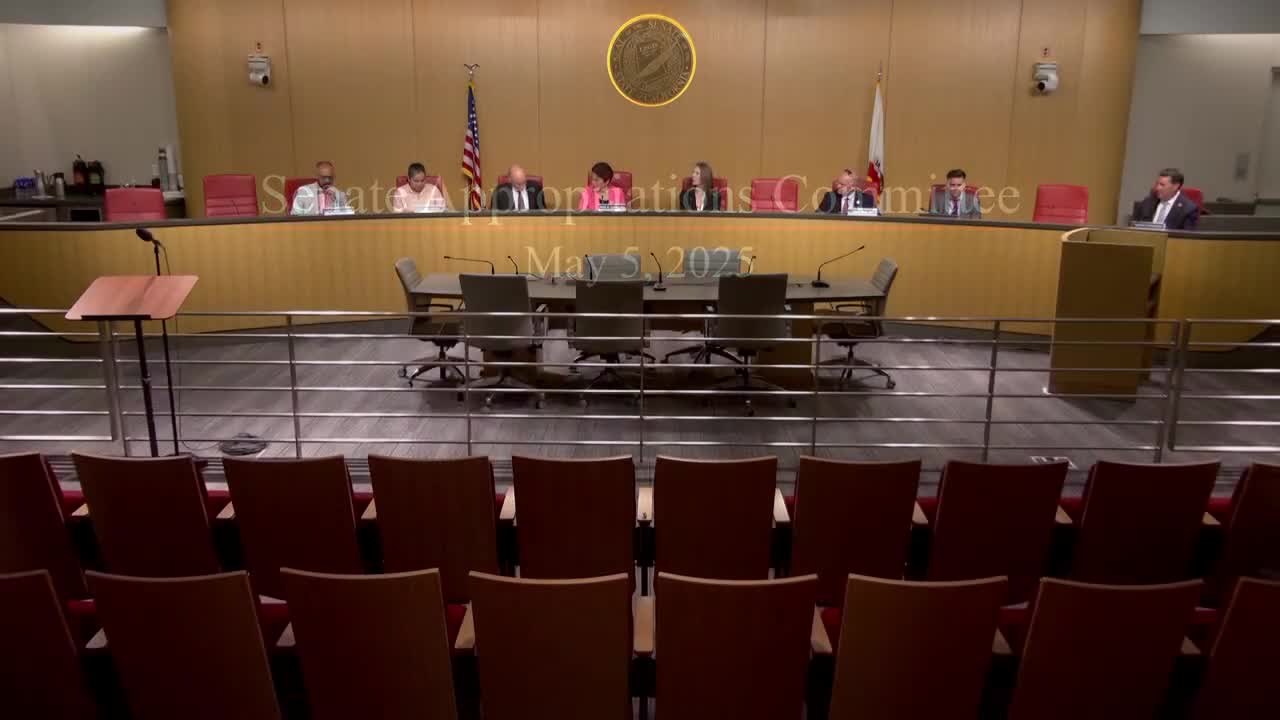 1MIN
Senate Standing Committee on Appropriations
 20MIN
Senate Standing Committee on Transportation
 18MIN
Senate Standing Committee on Environmental Quality
Bill Author