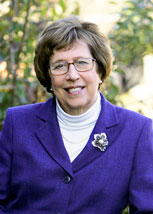
AB 1233: Whistleblower investigation policy: state agencies.
- Session Year: 2015-2016
- House: Assembly
- Latest Version Date: 2016-08-01
The California Whistleblower Protection Act requires the State Auditor to administer the act and to investigate and report on improper governmental activities, as defined. The act requires the State Auditor to establish a means of submitting allegations of improper governmental activity, and generally requires the State Auditor to keep confidential every investigation, including all investigative files and work product.
The product. The act authorizes the State Auditor to issue a public report of an investigation that has substantiated an improper governmental activity, keeping confidential the identity of the employee or employees involved. The act also further authorizes the State Auditor to release any findings or evidence supporting any findings resulting from an investigation whenever the State Auditor determines it necessary to serve the interests of the state.
This bill would require a state agency agency, as defined, that utilizes a whistleblower investigation policy separate from the act to publicly report, in the manner in which the State Auditor is authorized to publicly report, any investigation of a whistleblower complaint that has substantiated improper government activities. The bill would specify that its provisions shall not be deemed to require the disclosure of a public record that is otherwise not required to be disclosed pursuant to any other state law.
The California Whistleblower Protection Act requires the State Auditor to administer the act and to investigate and report on improper governmental activities, as defined. The act requires the State Auditor to establish a means of submitting allegations of improper governmental activity, and generally requires the State Auditor to keep confidential every investigation, including all investigative files and work product.
The act authorizes the State Auditor to issue a public report of an investigation that has substantiated an improper governmental activity, keeping confidential the identity of the employee or employees involved. The act also authorizes the State Auditor to release any findings or evidence supporting any findings resulting from an investigation whenever the State Auditor determines it necessary to serve the interests of the state.
This bill would require a state agency that utilizes a whistleblower investigation policy separate from the act to publicly report, in the manner in which the State Auditor is authorized to publicly report, any investigation of a whistleblower complaint that has substantiated improper government activities.
Existing law requires that, except as specified, not less than the general prevailing rate of per diem wages, determined by the Director of Industrial Relations, be paid to workers employed on public works projects. Existing law defines public works to include, among other things, construction, alteration, demolition, installation, or repair work done under contract and paid for, in whole or in part, out of public funds, but exempts from that definition, among other projects, an otherwise private development project if the state or political subdivision provides, directly or indirectly, a public subsidy to the private development project that is de minimis in the context of the project.
This bill would provide that a public subsidy is de minimis if it is both less than $250,000 and less than 2% of the total project cost. The bill would specify that those provisions do not apply to a project that was advertised for bid, or a contract that was awarded, before July 1, 2017.
Existing law requires that, except as specified, not less than the general prevailing rate of per diem wages, determined by the Director of Industrial Relations, be paid to workers employed on public works projects. Existing law defines public works to include, among other things, construction, alteration, demolition, installation, or repair work done under contract and paid for, in whole or in part, out of public funds, but exempts from that definition, among other projects, an otherwise private development project if the state or political subdivision provides, directly or indirectly, a public subsidy to the private development project that is de minimis in the context of the project.
This bill would provide that a public subsidy is de minimis if it is both less than $250,000 and less than 2% of the total project cost. The bill would specify that those provisions do not apply to a project that was advertised for bid, or a contract that was awarded, before July 1, 2017.
The Alcoholic Beverage Control Act authorizes a licensed distilled spirits manufacturer to conduct tastings of distilled spirits produced or bottled by, or produced or bottled for, the licensee, on the licensed premises, under specified conditions.
This bill additionally would permit the licensee to sell up to 3 bottles of product authorized to be produced or bottled by or for the licensee to each person at a tasting on the licensees premises, as specified.
The Alcoholic Beverage Control Act authorizes a licensed distilled spirits manufacturer to conduct tastings of distilled spirits produced or bottled by, or produced or bottled for, the licensee, on the licensed premises, under specified conditions. The act provides that a violation of its provisions is a misdemeanor, unless otherwise specified.
This bill additionally would permit the licensee to sell up to 3 bottles of product authorized to be produced or bottled by or for the licensee to each person at a tasting on the licensees premises, as specified. By expanding the definition of a crime, this bill would impose a state-mandated local program.
The California Constitution requires the state to reimburse local agencies and school districts for certain costs mandated by the state. Statutory provisions establish procedures for making that reimbursement.
This bill would provide that no reimbursement is required by this act for a specified reason.
The Alcoholic Beverage Control Act authorizes a licensed distilled spirits manufacturer to conduct tastings of distilled spirits produced or bottled by, or produced or bottled for, the licensee, on the licensed premises, under specified conditions. The act provides that a violation of its provisions is a misdemeanor, unless otherwise specified.
This bill additionally would permit the licensee to sell up to 3 bottles of product authorized to be produced or bottled by or for the licensee to each person at a tasting on the licensees premises, as specified. By expanding the definition of a crime, this bill would impose a state-mandated local program.
The California Constitution requires the state to reimburse local agencies and school districts for certain costs mandated by the state. Statutory provisions establish procedures for making that reimbursement.
This bill would provide that no reimbursement is required by this act for a specified reason.
For the purposes of this article, the following terms have the following meanings:
(a)Employee means an individual appointed by the Governor, or employed or holding office in a state agency as defined by Section 11000, including, for purposes of Sections 8547.3 to 8547.7, inclusive, an employee of the California State University, or an individual appointed by the Legislature to a state board or commission and who is not a Member or employee of the Legislature. In addition, employee means a person employed by the Supreme Court, a court of appeal, a superior court, or the Administrative Office of the Courts for the purposes of Sections 8547.3 to 8547.7, inclusive, and Section 8547.13, except for those provisions of Section 8547.4 concerning notice of adverse action and the State Personnel Board. Employee includes a former employee who met the criteria of this subdivision during his or her employment.
(b)Illegal order means a directive to violate or assist in violating a federal, state, or local law, rule, or regulation, or an order to work or cause others to work in conditions outside of their line of duty that would unreasonably threaten the health or safety of employees or the public.
(c)Improper governmental activity means an activity by a state agency or by an employee that is undertaken in the performance of the employees duties, undertaken inside a state office, or, if undertaken outside a state office by the employee, directly relates to state government, whether or not that activity is within the scope of his or her employment, and that (1) is in violation of any state or federal law or regulation, including, but not limited to, corruption, malfeasance, bribery, theft of government property, fraudulent claims, fraud, coercion, conversion, malicious prosecution, misuse of government property, or willful omission to perform duty, (2) is in violation of an Executive order of the Governor, a California Rule of Court, or any policy or procedure mandated by the State Administrative Manual or State Contracting Manual, or (3) is economically wasteful, involves gross misconduct, incompetency, or inefficiency. For purposes of Sections 8547.4, 8547.5, 8547.7, 8547.10, and 8547.11, improper governmental activity includes any activity by the University of California or by an employee, including an officer or faculty member, who otherwise meets the criteria of this subdivision. For purposes of Sections 8547.4, 8547.5, and 8547.13, improper governmental activity includes any activity by the Supreme Court, a court of appeal, a superior court, or the Administrative Office of the Courts, or by an employee thereof, who otherwise meets the criteria of this subdivision.
(d)Person means an individual, corporation, trust, association, a state or local government, or an agency or instrumentality of any of the foregoing.
(e)Protected disclosure means a good faith communication, including a communication based on, or when carrying out, job duties, that discloses or demonstrates an intention to disclose information that may evidence (1) an improper governmental activity, or (2) a condition that may significantly threaten the health or safety of employees or the public if the disclosure or intention to disclose was made for the purpose of remedying that condition. Protected disclosure specifically includes a good faith communication to the California State Auditors Office alleging an improper governmental activity and any evidence delivered to the California State Auditors Office in support of the allegation. Protected disclosure also includes, but is not limited to, a complaint made to the Commission on Judicial Performance.
(f)State agency is defined by Section 11000. State agency includes the University of California for purposes of Sections 8547.5 to 8547.7, inclusive, and Section 8547.16, and the California State University for purposes of Sections 8547.3 to 8547.7, inclusive. inclusive, and Section 8547.16. Sections 8547.3 to 8547.7, inclusive, shall apply to the Supreme Court, the courts of appeal, the superior courts, and the Administrative Office of the Courts in the same manner as they apply to a state agency.
SECTION 1.SEC. 2.Section 8547.16 is added to the Government Code, to read:8547.16.Any (a)A state agency that utilizes a whistleblower investigation policy separate from this article shall publicly report, in the manner in which the State Auditor is authorized to publicly report pursuant to subdivision (c) of Section 8547.7, any investigation of a whistleblower complaint that has substantiated improper governmental activities.
(b)This section shall not be deemed to require the disclosure of a public record that is otherwise not required to be disclosed pursuant to any other state law, including, but not limited to, the California Public Records Act (Chapter 3.5 (commencing with Section 6250) of Division 7 of Title 1).
Any state agency that utilizes a whistleblower investigation policy separate from this article shall publicly report, in the manner in which the State Auditor is authorized to publicly report pursuant to subdivision (c) of Section 8547.7, any investigation of a whistleblower complaint that has substantiated improper governmental activities.
SECTION 1.Section 1720 of the Labor Code is amended to read:1720.(a)As used in this chapter, public works means:
(1)Construction, alteration, demolition, installation, or repair work done under contract and paid for in whole or in part out of public funds, except work done directly by any public utility company pursuant to order of the Public Utilities Commission or other public authority. For purposes of this paragraph, construction includes work performed during the design and preconstruction phases of construction, including, but not limited to, inspection and land surveying work, and work performed during the postconstruction phases of construction, including, but not limited to, all cleanup work at the jobsite. For purposes of this paragraph, installation includes, but is not limited to, the assembly and disassembly of freestanding and affixed modular office systems.
(2)Work done for irrigation, utility, reclamation, and improvement districts, and other districts of this type. Public work does not include the operation of the irrigation or drainage system of any irrigation or reclamation district, except as used in Section 1778 relating to retaining wages.
(3)Street, sewer, or other improvement work done under the direction and supervision or by the authority of any officer or public body of the state, or of any political subdivision or district thereof, whether the political subdivision or district operates under a freeholders charter or not.
(4)The laying of carpet done under a building lease-maintenance contract and paid for out of public funds.
(5)The laying of carpet in a public building done under contract and paid for in whole or in part out of public funds.
(6)Public transportation demonstration projects authorized pursuant to Section 143 of the Streets and Highways Code.
(7)(A)Infrastructure project grants from the California Advanced Services Fund pursuant to Section 281 of the Public Utilities Code.
(B)For purposes of this paragraph, the Public Utilities Commission is not the awarding body or the body awarding the contract, as defined in Section 1722.
(b)For purposes of this section, paid for in whole or in part out of public funds means all of the following:
(1)The payment of money or the equivalent of money by the state or political subdivision directly to or on behalf of the public works contractor, subcontractor, or developer.
(2)Performance of construction work by the state or political subdivision in execution of the project.
(3)Transfer by the state or political subdivision of an asset of value for less than fair market price.
(4)Fees, costs, rents, insurance or bond premiums, loans, interest rates, or other obligations that would normally be required in the execution of the contract, that are paid, reduced, charged at less than fair market value, waived, or forgiven by the state or political subdivision.
(5)Money loaned by the state or political subdivision that is to be repaid on a contingent basis.
(6)Credits that are applied by the state or political subdivision against repayment obligations to the state or political subdivision.
(c)Notwithstanding subdivision (b):
(1)Private residential projects built on private property are not subject to the requirements of this chapter unless the projects are built pursuant to an agreement with a state agency, redevelopment agency, or local public housing authority.
(2)If the state or a political subdivision requires a private developer to perform construction, alteration, demolition, installation, or repair work on a public work of improvement as a condition of regulatory approval of an otherwise private development project, and the state or political subdivision contributes no more money, or the equivalent of money, to the overall project than is required to perform this public improvement work, and the state or political subdivision maintains no proprietary interest in the overall project, then only the public improvement work shall thereby become subject to this chapter.
(3)(A)If the state or a political subdivision reimburses a private developer for costs that would normally be borne by the public, or provides directly or indirectly a public subsidy to a private development project that is de minimis in the context of the project, an otherwise private development project shall not thereby become subject to the requirements of this chapter.
(B)For purposes of subparagraph (A), a public subsidy is de minimis if it is both less than two hundred fifty thousand dollars ($250,000) and less than 2 percent of the total project cost. This subparagraph shall not apply to a project that was advertised for bid, or a contract that was awarded, before July 1, 2017.
(4)The construction or rehabilitation of affordable housing units for low- or moderate-income persons pursuant to paragraph (5) or (7) of subdivision (e) of Section 33334.2 of the Health and Safety Code that are paid for solely with moneys from the Low and Moderate Income Housing Fund established pursuant to Section 33334.3 of the Health and Safety Code or that are paid for by a combination of private funds and funds available pursuant to Section 33334.2 or 33334.3 of the Health and Safety Code do not constitute a project that is paid for in whole or in part out of public funds.
(5)Unless otherwise required by a public funding program, the construction or rehabilitation of privately owned residential projects is not subject to the requirements of this chapter if one or more of the following conditions are met:
(A)The project is a self-help housing project in which no fewer than 500 hours of construction work associated with the homes are to be performed by the home buyers.
(B)The project consists of rehabilitation or expansion work associated with a facility operated on a not-for-profit basis as temporary or transitional housing for homeless persons with a total project cost of less than twenty-five thousand dollars ($25,000).
(C)Assistance is provided to a household as either mortgage assistance, downpayment assistance, or for the rehabilitation of a single-family home.
(D)The project consists of new construction, expansion, or rehabilitation work associated with a facility developed by a nonprofit organization to be operated on a not-for-profit basis to provide emergency or transitional shelter and ancillary services and assistance to homeless adults and children. The nonprofit organization operating the project shall provide, at no profit, not less than 50 percent of the total project cost from nonpublic sources, excluding real property that is transferred or leased. Total project cost includes the value of donated labor, materials, and architectural and engineering services.
(E)The public participation in the project that would otherwise meet the criteria of subdivision (b) is public funding in the form of below-market interest rate loans for a project in which occupancy of at least 40 percent of the units is restricted for at least 20 years, by deed or regulatory agreement, to individuals or families earning no more than 80 percent of the area median income.
(d)Notwithstanding any provision of this section to the contrary, the following projects shall not, solely by reason of this section, be subject to the requirements of this chapter:
(1)Qualified residential rental projects, as defined by Section 142(d) of the Internal Revenue Code, financed in whole or in part through the issuance of bonds that receive allocation of a portion of the state ceiling pursuant to Chapter 11.8 (commencing with Section 8869.80) of Division 1 of Title 2 of the Government Code on or before December 31, 2003.
(2)Single-family residential projects financed in whole or in part through the issuance of qualified mortgage revenue bonds or qualified veterans mortgage bonds, as defined by Section 143 of the Internal Revenue Code, or with mortgage credit certificates under a Qualified Mortgage Credit Certificate Program, as defined by Section 25 of the Internal Revenue Code, that receive allocation of a portion of the state ceiling pursuant to Chapter 11.8 (commencing with Section 8869.80) of Division 1 of Title 2 of the Government Code on or before December 31, 2003.
(3)Low-income housing projects that are allocated federal or state low-income housing tax credits pursuant to Section 42 of the Internal Revenue Code, Chapter 3.6 (commencing with Section 50199.4) of Part 1 of Division 31 of the Health and Safety Code, or Section 12206, 17058, or 23610.5 of the Revenue and Taxation Code, on or before December 31, 2003.
(e)Notwithstanding paragraph (1) of subdivision (a), construction, alteration, demolition, installation, or repair work on the electric transmission system located in California constitutes a public works project for the purposes of this chapter.
(f)If a statute, other than this section, or a regulation, other than a regulation adopted pursuant to this section, or an ordinance or a contract applies this chapter to a project, the exclusions set forth in subdivision (d) do not apply to that project.
(g)For purposes of this section, references to the Internal Revenue Code mean the Internal Revenue Code of 1986, as amended, and include the corresponding predecessor sections of the Internal Revenue Code of 1954, as amended.
(h)The amendments made to this section by either Chapter 938 of the Statutes of 2001 or the act adding this subdivision shall not be construed to preempt local ordinances requiring the payment of prevailing wages on housing projects.
(a)As used in this chapter, public works means:
(1)Construction, alteration, demolition, installation, or repair work done under contract and paid for in whole or in part out of public funds, except work done directly by any public utility company pursuant to order of the Public Utilities Commission or other public authority. For purposes of this paragraph, construction includes work performed during the design and preconstruction phases of construction, including, but not limited to, inspection and land surveying work, and work performed during the postconstruction phases of construction, including, but not limited to, all cleanup work at the jobsite. For purposes of this paragraph, installation includes, but is not limited to, the assembly and disassembly of freestanding and affixed modular office systems.
(2)Work done for irrigation, utility, reclamation, and improvement districts, and other districts of this type. Public work does not include the operation of the irrigation or drainage system of any irrigation or reclamation district, except as used in Section 1778 relating to retaining wages.
(3)Street, sewer, or other improvement work done under the direction and supervision or by the authority of any officer or public body of the state, or of any political subdivision or district thereof, whether the political subdivision or district operates under a freeholders charter or not.
(4)The laying of carpet done under a building lease-maintenance contract and paid for out of public funds.
(5)The laying of carpet in a public building done under contract and paid for in whole or in part out of public funds.
(6)Public transportation demonstration projects authorized pursuant to Section 143 of the Streets and Highways Code.
(7)(A)Infrastructure project grants from the California Advanced Services Fund pursuant to Section 281 of the Public Utilities Code.
(B)For purposes of this paragraph, the Public Utilities Commission is not the awarding body or the body awarding the contract, as defined in Section 1722.
(b)For purposes of this section, paid for in whole or in part out of public funds means all of the following:
(1)The payment of money or the equivalent of money by the state or political subdivision directly to or on behalf of the public works contractor, subcontractor, or developer.
(2)Performance of construction work by the state or political subdivision in execution of the project.
(3)Transfer by the state or political subdivision of an asset of value for less than fair market price.
(4)Fees, costs, rents, insurance or bond premiums, loans, interest rates, or other obligations that would normally be required in the execution of the contract, that are paid, reduced, charged at less than fair market value, waived, or forgiven by the state or political subdivision.
(5)Money loaned by the state or political subdivision that is to be repaid on a contingent basis.
(6)Credits that are applied by the state or political subdivision against repayment obligations to the state or political subdivision.
(c)Notwithstanding subdivision (b):
(1)Private residential projects built on private property are not subject to the requirements of this chapter unless the projects are built pursuant to an agreement with a state agency, redevelopment agency, or local public housing authority.
(2)If the state or a political subdivision requires a private developer to perform construction, alteration, demolition, installation, or repair work on a public work of improvement as a condition of regulatory approval of an otherwise private development project, and the state or political subdivision contributes no more money, or the equivalent of money, to the overall project than is required to perform this public improvement work, and the state or political subdivision maintains no proprietary interest in the overall project, then only the public improvement work shall thereby become subject to this chapter.
(3)(A)If the state or a political subdivision reimburses a private developer for costs that would normally be borne by the public, or provides directly or indirectly a public subsidy to a private development project that is de minimis in the context of the project, an otherwise private development project shall not thereby become subject to the requirements of this chapter.
(B)For purposes of subparagraph (A), a public subsidy is de minimis if it is both less than two hundred fifty thousand dollars ($250,000) and less than 2 percent of the total project cost. This subparagraph shall not apply to a project that was advertised for bid, or a contract that was awarded, before July 1, 2017.
(4)The construction or rehabilitation of affordable housing units for low- or moderate-income persons pursuant to paragraph (5) or (7) of subdivision (e) of Section 33334.2 of the Health and Safety Code that are paid for solely with moneys from the Low and Moderate Income Housing Fund established pursuant to Section 33334.3 of the Health and Safety Code or that are paid for by a combination of private funds and funds available pursuant to Section 33334.2 or 33334.3 of the Health and Safety Code do not constitute a project that is paid for in whole or in part out of public funds.
(5)Unless otherwise required by a public funding program, the construction or rehabilitation of privately owned residential projects is not subject to the requirements of this chapter if one or more of the following conditions are met:
(A)The project is a self-help housing project in which no fewer than 500 hours of construction work associated with the homes are to be performed by the home buyers.
(B)The project consists of rehabilitation or expansion work associated with a facility operated on a not-for-profit basis as temporary or transitional housing for homeless persons with a total project cost of less than twenty-five thousand dollars ($25,000).
(C)Assistance is provided to a household as either mortgage assistance, downpayment assistance, or for the rehabilitation of a single-family home.
(D)The project consists of new construction, expansion, or rehabilitation work associated with a facility developed by a nonprofit organization to be operated on a not-for-profit basis to provide emergency or transitional shelter and ancillary services and assistance to homeless adults and children. The nonprofit organization operating the project shall provide, at no profit, not less than 50 percent of the total project cost from nonpublic sources, excluding real property that is transferred or leased. Total project cost includes the value of donated labor, materials, architectural, and architectural and engineering services.
(E)The public participation in the project that would otherwise meet the criteria of subdivision (b) is public funding in the form of below-market interest rate loans for a project in which occupancy of at least 40 percent of the units is restricted for at least 20 years, by deed or regulatory agreement, to individuals or families earning no more than 80 percent of the area median income.
(d)Notwithstanding any provision of this section to the contrary, the following projects shall not, solely by reason of this section, be subject to the requirements of this chapter:
(1)Qualified residential rental projects, as defined by Section 142(d) of the Internal Revenue Code, financed in whole or in part through the issuance of bonds that receive allocation of a portion of the state ceiling pursuant to Chapter 11.8 (commencing with Section 8869.80) of Division 1 of Title 2 of the Government Code on or before December 31, 2003.
(2)Single-family residential projects financed in whole or in part through the issuance of qualified mortgage revenue bonds or qualified veterans mortgage bonds, as defined by Section 143 of the Internal Revenue Code, or with mortgage credit certificates under a Qualified Mortgage Credit Certificate Program, as defined by Section 25 of the Internal Revenue Code, that receive allocation of a portion of the state ceiling pursuant to Chapter 11.8 (commencing with Section 8869.80) of Division 1 of Title 2 of the Government Code on or before December 31, 2003.
(3)Low-income housing projects that are allocated federal or state low-income housing tax credits pursuant to Section 42 of the Internal Revenue Code, Chapter 3.6 (commencing with Section 50199.4) of Part 1 of Division 31 of the Health and Safety Code, or Section 12206, 17058, or 23610.5 of the Revenue and Taxation Code, on or before December 31, 2003.
(e)Notwithstanding paragraph (1) of subdivision (a), construction, alteration, demolition, installation, or repair work on the electric transmission system located in California constitutes a public works project for the purposes of this chapter.
(f)If a statute, other than this section, or a regulation, other than a regulation adopted pursuant to this section, or an ordinance or a contract applies this chapter to a project, the exclusions set forth in subdivision (d) do not apply to that project.
(g)For purposes of this section, references to the Internal Revenue Code mean the Internal Revenue Code of 1986, as amended, and include the corresponding predecessor sections of the Internal Revenue Code of 1954, as amended.
(h)The amendments made to this section by either Chapter 938 of the Statutes of 2001 or the act adding this subdivision shall not be construed to preempt local ordinances requiring the payment of prevailing wages on housing projects.
SECTION 1.Section 23363.1 of the Business and Professions Code is amended to read:23363.1.(a)A distilled spirits manufacturers license authorizes the licensee to conduct tastings of distilled spirits produced or bottled by, or produced or bottled for, the licensee, on or off the licensees premises.
(b)(1)Distilled spirits tastings may be conducted by the licensee off the licensees premises only for an event sponsored by a nonprofit organization. A distilled spirits manufacturer shall not sell or solicit sales of distilled spirits at such event. The sponsoring organization shall first obtain a permit from the department.
(2)For purposes of this subdivision, nonprofit organization does not include any community college or other institution of higher learning, as defined in the Education Code, nor does it include any officially recognized club, fraternity, or sorority, whether or not that entity is located on or off the institutions campus.
(c)Tastings on the licensees premises shall be subject to the following conditions:
(1)Tastings of distilled spirits shall not exceed one-fourth of one ounce and shall be limited to no more than six tastes per individual per day.
(2)Tastings shall only include the products that are authorized to be produced or bottled by or for the licensee.
(3)A person under 21 years of age shall not serve tastes of distilled spirits.
(4)Tastings of distilled spirits shall not be given in the form of a cocktail or a mixed drink.
(d)Notwithstanding Section 25600, the licensee may provide distilled spirits without charge for any tastings conducted pursuant to this section. The licensee may charge for tastings conducted by the licensee on its licensed premises.
(e)The licensee may sell up to three bottles of product authorized to be produced or bottled by or for the licensee to each person at a tasting conducted on the licensees premises pursuant to subdivision (c).
(f)This section shall not relieve the holder of a distilled spirits manufacturers license of any civil or criminal liability arising out of a violation of Section 25602.
(a)A distilled spirits manufacturers license authorizes the licensee to conduct tastings of distilled spirits produced or bottled by, or produced or bottled for, the licensee, on or off the licensees premises.
(b)(1)Distilled spirits tastings may be conducted by the licensee off the licensees premises only for an event sponsored by a nonprofit organization. A distilled spirits manufacturer shall not sell or solicit sales of distilled spirits at such event. The sponsoring organization shall first obtain a permit from the department.
(2)For purposes of this subdivision, nonprofit organization does not include any community college or other institution of higher learning, as defined in the Education Code, nor does it include any officially recognized club, fraternity, or sorority, whether or not that entity is located on or off the institutions campus.
(c)Tastings on the licensees premises shall be subject to the following conditions:
(1)Tastings of distilled spirits shall not exceed one-fourth of one ounce and shall be limited to no more than six tastes per individual per day.
(2)Tastings shall only include the products that are authorized to be produced or bottled by or for the licensee.
(3)A person under 21 years of age shall not serve tastes of distilled spirits.
(4)Tastings of distilled spirits shall not be given in the form of a cocktail or a mixed drink.
(d)Notwithstanding Section 25600, the licensee may provide distilled spirits without charge for any tastings conducted pursuant to this section. The licensee may charge for tastings conducted by the licensee on its licensed premises.
(e)The licensee may sell up to three bottles of product authorized to be produced or bottled by or for the licensee to each person at a tasting conducted on the licensees premises pursuant to subdivision (c).
(f)This section shall not relieve the holder of a distilled spirits manufacturers license of any civil or criminal liability arising out of a violation of Section 25602.
SEC. 2.No reimbursement is required by this act pursuant to Section 6 of Article XIIIB of the California Constitution because the only costs that may be incurred by a local agency or school district will be incurred because this act creates a new crime or infraction, eliminates a crime or infraction, or changes the penalty for a crime or infraction, within the meaning of Section 17556 of the Government Code, or changes the definition of a crime within the meaning of Section 6 of Article XIIIB of the California Constitution.
(a)A distilled spirits manufacturers license authorizes the licensee to conduct tastings of distilled spirits produced or bottled by, or produced or bottled for, the licensee, on or off the licensees premises.
(b)(1)Distilled spirits tastings may be conducted by the licensee off the licensees premises only for an event sponsored by a nonprofit organization. A distilled spirits manufacturer shall not sell or solicit sales of distilled spirits at such event. The sponsoring organization shall first obtain a permit from the department.
(2)For purposes of this subdivision, nonprofit organization does not include any community college or other institution of higher learning, as defined in the Education Code, nor does it include any officially recognized club, fraternity, or sorority, whether or not that entity is located on or off the institutions campus.
(c)Tastings on the licensees premises shall be subject to the following conditions:
(1)Tastings of distilled spirits shall not exceed one-fourth of one ounce and shall be limited to no more than six tastes per individual per day.
(2)Tastings shall only include the products that are authorized to be produced or bottled by or for the licensee.
(3)A person under 21 years of age shall not serve tastes of distilled spirits.
(4)Tastings of distilled spirits shall not be given in the form of a cocktail or a mixed drink.
(d)Notwithstanding Section 25600, the licensee may provide distilled spirits without charge for any tastings conducted pursuant to this section. The licensee may charge for tastings conducted by the licensee on its licensed premises.
(e)The licensee may sell up to three bottles of product authorized to be produced or bottled by or for the licensee to each person at a tasting conducted on the licensees premises pursuant to subdivision (c).
(e)
(f)This section shall not relieve the holder of a distilled spirits manufacturers license of any civil or criminal liability arising out of a violation of Section 25602.
SEC. 2.No reimbursement is required by this act pursuant to Section 6 of Article XIIIB of the California Constitution because the only costs that may be incurred by a local agency or school district will be incurred because this act creates a new crime or infraction, eliminates a crime or infraction, or changes the penalty for a crime or infraction, within the meaning of Section 17556 of the Government Code, or changes the definition of a crime within the meaning of Section 6 of Article XIIIB of the California Constitution.
|
Date
|
Status
|
|---|---|
| Jan 6, 2016 | From committee: Do pass and re-refer to Com. on APPR. (Ayes 5. Noes 2.) (January 6). Re-referred to Com. on APPR. |
| Aug 11, 2016 | In committee: Held under submission. |
| Aug 8, 2016 | Referred to APPR. suspense file. |
| Aug 1, 2016 | Read second time and amended. Re-referred to Com. on APPR. |
| Jun 30, 2016 | From committee: Amend, and do pass as amended and re-refer to Com. on APPR. (Ayes 13. Noes 0.) (June 28). |
| Jun 16, 2016 | Withdrawn from committee. |
| Jun 16, 2016 | Re-referred to Com. on RLS. |
| Jun 16, 2016 | Re-referred to Com. on G.O. |
| Jun 15, 2016 | From committee chair, with author's amendments: Amend, and re-refer to committee. Read second time, amended, and re-referred to Com. on L. & I.R. |
| Feb 4, 2016 | Referred to Com. on L. & I.R. |
| Jan 27, 2016 | Read third time. Passed. Ordered to the Senate. (Ayes 53. Noes 25. Page 3502.) |
| Jan 27, 2016 | In Senate. Read first time. To Com. on RLS. for assignment. |
| Jan 25, 2016 | Read second time. Ordered to third reading. |
| Jan 21, 2016 | From committee: Do pass. (Ayes 12. Noes 4.) (January 21). |
| Feb 27, 2015 | Introduced. To print. |
| Jan 5, 2016 | From committee: Be re-referred to Com. on L. & E. Re-referred. (Ayes 11. Noes 0.) (January 5). Re-referred to Com. on L. & E. |
| Jan 4, 2016 | Re-referred to Com. on RLS. pursuant to Assembly Rule 96. |
| Jan 4, 2016 | Re-referred to Com. on G.O. |
| Jan 4, 2016 | Joint Rule 62(a), file notice suspended. |
| Jan 4, 2016 | From committee chair, with author's amendments: Amend, and re-refer to Com. on G.O. Read second time and amended. |
| Jan 4, 2016 | Assembly Rule 56 suspended. (Ayes 48. Noes 23. Page 3338.) |
| Jan 4, 2016 | (pending re-referral to Com. on L. & E.) |
| Apr 28, 2015 | From committee: That the measure be retained in committee, and that the subject matter be referred to the Committee on Rules for assignment to the proper committee for study. (Ayes 16. Noes 1.) (April 27). |
| Apr 16, 2015 | Re-referred to Com. on G.O. |
| Apr 15, 2015 | From committee chair, with author's amendments: Amend, and re-refer to Com. on G.O. Read second time and amended. |
| Mar 23, 2015 | Referred to Com. on G.O. |
| Mar 2, 2015 | Read first time. |
| Mar 1, 2015 | From printer. May be heard in committee March 31. |
|
Date
|
Description
|
Location
|
Votes
|
|
|---|---|---|---|---|
| Aug 8, 2016 | Placed on suspense file | Senate Standing Committee on Appropriations |
Passed |
|
| Jun 28, 2016 | Do pass as amended, but first amend, and re-refer to the Committee on [Appropriations] | Senate Standing Committee on Governmental Organization |
Passed |
|
| Jan 27, 2016 | AB 1233 LEVINE Assembly Third Reading | Assembly Floor |
Passed |
|
| Jan 21, 2016 | Do pass. | Assembly Standing Committee on Appropriations |
Passed |
|
| Jan 6, 2016 | Do pass and be re-referred to the Committee on [Appropriations] | Assembly Standing Committee on Labor and Employment |
Passed |
|
| Jan 5, 2016 | Be re-referred to the Committee on [Labor and Employment] | Assembly Standing Committee on Rules |
Passed |
|
| Apr 27, 2015 | Bill measure be retained in committee, and subject matter be referred to Rules Committee for assignment to the proper committee. | Assembly Standing Committee on Governmental Organization |
Passed |
This list shows positions taken on this bill by organizations on the date displayed, which is linked to the original source.
Positions by individuals are not included.
|
Organization
|
Position
|
Date
|
|---|---|---|
| 3 letters from General Public | ** Support | Jan 21, 2016 |
| California Artisanal Distillers Guild | ** Support | Jan 21, 2016 |
| California Council on Alcohol Problems | ** Against | Jan 21, 2016 |
| California Teamsters Public Affairs Council | ** Against | Jan 21, 2016 |
| Charbay Distillery & Winery | ** Support | Jan 21, 2016 |
| Dry Diggins Distillery | ** Support | Jan 21, 2016 |
| El Dorado Hills Chamber of Commerce | ** Support | Jan 21, 2016 |
| Sonoma County Distilling Company | ** Support | Jan 21, 2016 |
| Spirit Works Distillery | ** Support | Jan 21, 2016 |
| State Building and Construction Trades Council of California | ** Support | Jan 21, 2016 |
| Ventura Limoncello Company, LLC. | ** Support | Jan 21, 2016 |
| Venus Spirits | ** Support | Jan 21, 2016 |
SENATE COMMITTEE ON
Senator Ricardo Lara, Chair
2015 - 2016 Regular Session
AB 1233 (Levine) - Whistleblower investigation policy: state agencies
Version: | Policy Vote: |
Urgency: | Mandate: |
Hearing Date: | Consultant: |
This bill meets the criteria for referral to the Suspense File.
Bill Summary:
AB 1233 would require a state agency, as defined, that utilizes a whistleblower policy separate from the California Whistleblower Protection Act (WPA) to publicly report, in the manner in which the State Auditor is authorized to publicly report, any investigation of a whistleblower complaint that has substantiated improper government activities.
Fiscal Impact:
- University of California: Estimated ongoing costs of $780,000 per year for additional staffing at each of their 13 sites for assistance with data-collection, system-wide coordination, and reporting. (GF)
- California State University: Estimated ongoing costs of $140,000 per year for an additional staff position at their Chancellor’s Office for coordination across campuses of provisions in this bill. (GF)
- Other State Agencies: Unknown ongoing costs for any other state agency that utilizes a whistleblower policy other than the WPA. (GF and/or special fund)
Background:
The WPA authorizes the State Auditor to receive complaints from state employees and members of the public who wish to report an improper governmental activity. Complaints received by the State Auditor remain confidential, additionally, the identity of the complainant may not be revealed without the permission of the complainant, except to an appropriate law enforcement agency conducting a criminal investigation. Upon receiving a complaint, the State Auditor may conduct an investigation into the facts alleged in the complaint to determine whether an improper governmental activity has occurred.
If the State Auditor determines that an improper governmental activity has occurred, he or she may issue a public report on the matter, but is not required to do so. When determining if a report will be made public, it is the decision of the State Auditor and is not determined by the state agency involved. State agencies that do not utilize the WPA have the ability to determine whether an investigation involving their own agency can be kept private or made public. According to the author, “when state agencies use internal whistleblower policies to avoid public disclosure, they sidestep the transparency intended under the WPA.”
Both the University of California (UC) and the California State University (CSU) have their own internal whistleblower policies. Neither UC nor CSU publicly reports their own internal substantiated complaints in the manner that the State Auditor does.
Proposed Law:
This bill would require that any state agency, including UC and CSU, that utilizes a whistleblower investigation policy separate from the California Whistleblower Protection Act publicly report, in the manner in which the State Auditor is authorized to publicly report any investigation of a whistleblower complaint that has substantiated improper governmental activities. This bill would also specify that its provisions shall not be deemed to require the disclosure of a public record that is otherwise not required to be disclosed pursuant to any other state law.
Related Legislation:
AB 567 (Villines, Chapter 452, Statutes of 2009) revised the WPA to broaden the class of employees covered by the WPA, expanded the definition of improper governmental activity that could be reported by a whistleblower, and permitted the State Auditor to publicly report on recommendations made to heads of state agencies that have not been fully implemented after one year, among other things.
Staff Comments:
The University of California estimates they would need 0.5 PY analyst positions at each of their 13 sites (10 campuses, the Office of the President, the Division of Agriculture and Natural Resources, and the Lawrence Berkeley Laboratory) to comply with the provisions of this bill. Each of the 13 sites currently has a Locally Designated Official (LDO) who coordinates whistleblower responsibilities at their respective site. An analyst would assist with the data-collection, coordination, and reporting as delegated by the LDO.
California State University has an Equal Opportunity/Whistleblower Compliance Unit at their Chancellor’s Office and a designated person on each campus that receives whistleblower complaints. CSU estimates they would require an extra position in their Chancellor’s Office to coordinate across their 23 campuses to ensure compliance with the reporting requirements included in this bill.
-- END --
SENATE COMMITTEE ON GOVERNMENTAL ORGANIZATION
Senator Isadore Hall, III
Chair
2015 - 2016 Regular
Bill No: 1233 Hearing Date: 6/28/2016
Author: | |||
Version: | 6/15/2016 Amended | ||
Urgency: | No | Fiscal: | Yes |
Consultant: | Felipe Lopez | ||
SUBJECT: Whistleblower investigation policy: state agencies
DIGEST: This bill requires a state agency that utilizes a whistleblower investigation policy separate from the California Whistleblower Protection Act (WPA) to publicly report, in the manner in which the State Auditor is authorized to publicly report, any investigation of a whistleblower complaint that has substantiated improper government activities.
ANALYSIS:
Existing law:
- Requires, under the WPA, the State Auditor to administer the WPA and to investigate and report on improper governmental activities.
- Defines “improper governmental activity” to mean an activity by a state agency or by an employee that is undertaken in the performance of the employee’s duties, undertaken inside a state office, or if undertaken outside a state office by the employee, directly relates to state government, whether or not that activity is within the scope of his or her employment, and that is in violation of any state or federal law or regulation, as specified, or is economically wasteful, involved gross misconduct, incompetency, or inefficiency.
- Requires the State Auditor to establish a means of submitting allegations of improper governmental activity, and generally requires the State Auditor to keep confidential every investigation, including all investigative files and work product.
- Authorizes the State Auditor to issue a public report of an investigation that has substantiated an improper governmental activity, keeping confidential the identity of the employee or employees involved.
- Authorizes the State Auditor to release any findings or evidence supporting any findings resulting from an investigation whenever the State Auditor determines it necessary to serve the interests of the state.
This bill requires any state agency that utilizes a whistleblower investigation policy separate from this article to publicly report, in the manner in which the State Auditor is authorized to publicly report, any investigation of a whistleblower complaint that has substantiated improper governmental activities.
Background
Purpose of the bill. According to the author, “when state agencies use internal whistleblower policies to avoid public disclosure, they sidestep the transparency intended under the WPA. AB 1233 promotes government transparency related to state agency whistleblower investigations by requiring all state agencies to meet the same public disclosure standard set by the State Auditor. This bill protects transparency by ensuring that all state agencies meet a reasonable standard of disclosure for whistleblower complaints.”
University of California Incident. The University of California (UC) and the California State University (CSU) have their own internal whistleblower programs. Under their own policies, when UC and CSU receive a whistleblower complaint, instead of sending the whistleblower complaint to the State Auditor, UC and CSU investigate that complaint pursuant to their own policies. Unlike the State Auditor, which publicly reports most if not all of the most egregious complaints dealing with improper governmental activities, neither the UC nor CSU are required to publicly report their own internal substantiated complaints.
The author argues that the need for public disclosure became evident when, in May 2015, UC investigated a whistleblower complaint and found that a physician on UC’s Board of Regents violated ethics rules by attempting to negotiate a financially beneficial deal between his eye clinic and UCLA. The affiliation would have personally benefitted the physician, who was chair of the Regents’ Health Services Committee.
UC’s whistleblower complaint process concluded that the doctor engaged in improper governmental activity. However, the findings of the investigation were not made public. To the contrary, the results of the investigation were obtained only after the UC responded to a Public Records Act request filed four months earlier. UC since stated that the results of their whistleblower investigations are not disclosed publicly and that the matter had been handled in accordance with UC policy.
California Whistleblower Protection Act. The WPA authorizes the California State Auditor to receive complaints from state employees and members of the public who wish to report an improper governmental activity. An improper governmental activity is defined as any action by a state agency or any action by a state employee directly related to state government that violates the law, violates an Executive Order of the Governor, violates a Rule of Court, violates the State Administrative Manual or State Contracting Manual, is economically wasteful, or involves gross misconduct, incompetency, or inefficiency. The complaints received by the State Auditor shall remain confidential, and the identity of the complainant may not be revealed without the permission of the complainant, except to an appropriate law enforcement agency conducting a criminal investigation.
Upon receiving a complaint, the State Auditor may conduct an investigation into the facts alleged in the complaint to determine whether an improper governmental activity has occurred. Before launching an investigation, the State Auditor's staff will conduct a careful evaluation of the complaint to determine whether it has enough potential merit to warrant the expenditure of state resources to conduct an investigation.
After the State Auditor receives a complaint, any investigation resulting from the complaint is confidential, so the State Auditor cannot provide any updates about what is being done to investigate the complaint or what information has been uncovered.
Information about the investigation will not be released unless the State Auditor determines that an improper activity has occurred and he or she decides to issue a public report of an investigation that has substantiated an improper governmental activity.
Making an Investigation Public. It is important to note that while the State Auditor has the authority to make a public report of an investigation that has substantiated an improper governmental activity, the WPA does not require such reports to be made public. With that said, the State Auditor does make public most of its investigations that have been substantiated, especially those that they find to be most significant and egregious.
However, it is important to note that for state agencies that use the WPA, the decision to make an investigation public is not determined by the state agency involved in the investigation but rather by the State Auditor. By not using the WPA, state agencies have the ability to determine whether an investigation involving their own agency can be kept private. This bill will ensure that if a state agency chooses not to use the WPA that their investigation, if found to be substantiated, shall be publicly reported.
Suggested Amendments. The bill currently does not specify what a state agency is, therefore the author, to satisfy the intended goal of the bill, may wish to amend the bill to specify that a state agency includes both the UC and CSU.
In addition, the author may wish to clarify that nothing in this bill shall be construed to require the disclosure of information that is prohibited from disclosure under any other provision of law or is exempted from disclosure under the California Public Records Act.
Prior/Related Legislation
SB 1395 (Rubio, Chapter 281, Statutes of 2012) renamed the Bureau of State Audits as the State Auditor’s Office and made other minor code maintenance changes.
AB 1102 (Lara, Chapter 328, Statutes of 2011) clarified the authority of the State Auditor to conduct audits of the judiciary, and includes all Bureau of State Audits’ costs under their continuous appropriation authority.
AB 567 (Villines, Chapter 452, Statutes of 2009) revised the WPA to broaden the class of employees covered by the WPA, expanded the definition of improper governmental activity that could be reported by a whistleblower, and permitted the State Auditor to publicly report on recommendations made to heads of state agencies that have not been fully implemented after one year, among others.
SB 951 (Hayden, Chapter 673, Statutes of 1999) renamed the existing statute providing protections to state employees who report improper governmental activities and enhanced those statutory protections. In addition the bill aligned state law with federal whistleblower statutes, and made related legislative findings and declarations.
FISCAL EFFECT: Appropriation: Fiscal Com.: Local:
SUPPORT:
California Newspaper Publishers Association
OPPOSITION:
None received
ARGUMENTS IN SUPPORT: The California Newspaper Publishers Association state that, “while many state agencies have policies consistent with the reporting requirements applicable to the State Auditor’s office, others operate under their own policies, policies that can bury findings of misconduct. Notably, the UC and CSU systems have their own whistleblower policies. Mandating that the UC and all state agencies affirmatively publish findings of confirmed violations of law, court rules, or misconduct, waste and efficiency allows the public to understand where the agencies fail to do their best, and demand improvement.”
ASSEMBLY THIRD READING
ATR Bill Id:AB 1233
Author:(Levine)
As Amended Ver:January 4, 2016
Majority vote
Committee | Votes | Ayes | Noes |
Governmental Organization (vote not relevant) |
|
|
|
Labor | 5-2 | Roger Hernández, Chu, Low, McCarty, Thurmond | Harper, Patterson |
Appropriations | 12-4 | Gomez, Bloom, Bonilla, Bonta, Calderon, Daly, Eggman, Eduardo Garcia, Holden, Quirk, Weber, Wood | Bigelow, Gallagher, Jones, Wagner |
SUMMARY:
Provides a statutory definition for a "de minimis" public subsidy that does not trigger the requirements of prevailing wage law. Specifically, this bill:
- Defines "de minimis" to mean a public subsidy that is both less than $250,000 and less that 2% of the total project cost.
- Specifies that this bill does not apply to a contract that was advertised for bid, or a contract that was awarded, before January 1, 2017.
EXISTING LAW:
- Requires the prevailing wage rate to be paid to all workers on "public works" projects over $1,000.
- Defines "public work" to include, among other things, construction, alteration, demolition, installation or repair work done under contract and paid for in whole or in part out of public funds.
- Establishes a definition for "paid for in whole or in part out of public funds," as specified.
- Provides that if the state or a political subdivision reimburses a private developer for costs that would normally be borne by the public, or provides directly or indirectly a public subsidy to a private development project that is "de minimis" in the context of the project, an otherwise private development project shall not thereby become subject to the requirement to pay prevailing wages.
FISCAL EFFECT:
According to the Assembly Appropriations Committee, this bill would result in minor and absorbable costs to the Department of Industrial Relations (DIR).
COMMENTS:
According to the author, this bill will clearly define when a public subsidy is "de minimis" for the purpose of determining when prevailing wage law applies to certain projects. The sponsor argues that the legal definition of de minimis is "trifling, minimal...so insignificant that a court may overlook it." Unfortunately, in recent years, DIR has strayed from this legal definition of "de minimis", and lacking a definition in statute, has loosely interpreted the definition to apply to subsidies ranging from thousands to millions of dollars. They contend that this bill would create a clear statutory definition by providing that a subsidy is "de minimis" if it is both less than $250,000 and less than 2% of the total project cost.
The sponsor notes that the exception was created in SB 975 (Alarcón), Chapter 938, Statutes of 2001. However, by not specifically defining "de minimis" for the purpose of determining when prevailing wage is applied to projects and given no other guidance as to the appropriate measure of what should be considered de minimis in the legislative history, several projects have moved forward that should have been covered by the prevailing wage law but were not.
As a result, the sponsor argues that there has been uncertainty over the definition of "de minimis" over the last decade. DIR has made determinations of "de minimis" on projects that have had public subsidies given to developers that have ranged from $65,710 to $4.5 million.
The sponsor concludes that a public subsidy as much or more than the definition used in this bill is a notable amount of taxpayer investment in a project and arguably is not "de minimis", so it is reasonable to require payment of prevailing wages if the developer wants a public subsidy over that amount.
Opponents argue that when SB 975 was enacted in 2001, there was extensive debate regarding the "de minimis" exception. Although never codified, opponents contend that there was general agreement among the stakeholders that the trigger for the exception was 2% of the total project cost. This was a level the stakeholders generally agreed was reasonable to ensure that there is a true and substantial public investment in the project before other state mandates come into play.
Opponents contend that this bill further caps that contribution at specific dollar amount, which may be inappropriate on large multi-million dollar projects.
Finally, opponents note that Governor Brown vetoed similar legislation in 2013 and 2015.
Analysis Prepared by: Ben Ebbink / L. & E. / (916) 319-2091 FN: 0002560
Date of Hearing: January 21, 2016
ASSEMBLY COMMITTEE ON APPROPRIATIONS
Jimmy Gomez, Chair
ABPCA Bill Id:AB 1233
Author:(Levine) – As Amended Ver:January 4, 2016
Policy Committee: | Labor | Vote: | 5-2 |
|
| ||
|
|
Urgency: No State Mandated Local Program: No Reimbursable: No
SUMMARY:
This bill statutorily defines when a public subsidy is "de minimis" for the purpose of determining when prevailing wage law applies to certain projects. Specifically, this bill:
- Defines “de minimis” to mean a public subsidy that is both less than $250,000 and less than two percent of the total project cost.
- Specifies that this bill does not apply to a project that was advertised for bid, or a contract that was awarded, before July 1, 2017.
FISCAL EFFECT:
Minor, absorbable costs to the Department of Industrial Relations (DIR). To the extent the definition of "de minimis" leads to the payment of a prevailing wage, private project costs will likely increase.
COMMENTS:
- Purpose. Under current law, if the state or a political subdivision reimburses a private developer for costs that would normally be borne by the public, or provides a public subsidy to a private development project that is "de minimis" in the context of the project, the private development project is not subject to public works requirements, including paying a prevailing wage.
The term "de minimis" is not defined in statute. DIR has made various coverage determinations attempting to define the term "de minimus". The author notes that DIR’s determinations of “de minimus” have ranged from $65,710 to $4.5 million or from .5 percent to 2 percent of a project’s total cost. The State Building Construction and Trades Council of California are sponsoring this bill to clearly define when a public subsidy is "de minimis" for the purpose of determining when prevailing wage law applies to certain projects.
- Prior Legislation. This bill is identical to AB 251 (Levine) of 2015. Governor Brown vetoed AB 251 and provided the following message:
This measure seeks to codify a definition of the term 'de minimis' to determine what level of public subsidy triggers prevailing wage requirements on an otherwise private project.
Longstanding practice has been to view the subsidy in context of the project and use 2% as a general threshold for determinations. There has been no showing that the current practice is unreasonable. While I remain a staunch supporter of prevailing wages I am concerned that this measure is too restrictive and may have unintended consequences. Two years ago, I cited the same concerns when I returned a similar bill without my signature. This measure does not adequately address those concerns.
AB 302 (Chau) of 2013 is the similar bill that was also vetoed by Governor Brown.
Analysis Prepared by: Misty Feusahrens / APPR. / (916) 319-2081
Date of Hearing: January 6, 2016
ASSEMBLY COMMITTEE ON LABOR AND EMPLOYMENT
Roger Hernández, Chair
ABPCA Bill Id:AB 1233 (
Author:Levine) – As Amended Ver:January 4, 2016
SUBJECT: Public works: public subsidies
SUMMARY:
Provides a statutory definition for a "de minimis" public subsidy that does not trigger the requirements of prevailing wage law. Specifically, this bill:
- Defines "de minimis" to mean a public subsidy that is both less than $250,000 and less that 2 percent of the total project cost.
- Specifies that this bill does not apply to a contract that was advertised for bid, or a contract that was awarded, before January 1, 2017.
EXISTING LAW:
- Requires the prevailing wage rate to be paid to all workers on "public works" projects over $1,000.
- Defines "public work" to include, among other things, construction, alteration, demolition, installation or repair work done under contract and paid for in whole or in part out of public funds.
- Establishes a definition for "paid for in whole or in part out of public funds," as specified.
- Provides that if the state or a political subdivision reimburses a private developer for costs that would normally be borne by the public, or provides directly or indirectly a public subsidy to a private development project that is "de minimis" in the context of the project, an otherwise private development project shall not thereby become subject to the requirement to pay prevailing wages.
FISCAL EFFECT:
Unknown
COMMENTS:
According to the author, this bill will clearly define when a public subsidy is "de minimis" for the purpose of determining when prevailing wage law applies to certain projects.
A Brief History of State and Federal Prevailing Wage Law
State prevailing wage laws vary from state to state, but do share a common history that actually predates federal prevailing wage law. Many of these state laws were enacted as part of general reform efforts to improve working conditions at the end of the 19th and the beginning of the 20th centuries. Between 1891 and 1923, seven states adopted prevailing wage laws that required payment of specified hourly wages on government construction projects. The State of Kansas enacted the first prevailing wage law in 1891.
Eighteen additional states and the federal government adopted prevailing wage laws during the Great Depression of the 1930s amidst concern that acceptance of the low bid, a common requirement of government contracting for public projects when government had become the major purchaser of construction, would operate to reduce the wages paid to workers on those projects to a level that would disrupt the local economy.
California's prevailing was law was enacted in 1931.
In general, the proponents of prevailing wage legislation wanted to prevent the government from using its purchasing power to undermine the wages of its citizens. It was believed that the government should set an example, by paying the wages prevailing in a locality for each occupation hired by government contractors to build public projects. Thus, prevailing wage laws are generally meant to ensure that wages commonly paid to construction workers in a particular region will determine the minimum wage paid to the same type of workers employed on publicly funded construction projects.
Most public construction projects contracted for or by the federal government or the District of Columbia are covered by the federal prevailing wage law, the Davis-Bacon Act (Act), while 33 states have prevailing wage laws, often referred to as “little Davis-Bacon Acts,” that encompass projects financed by states and their political subdivisions.
The federal Davis-Bacon Act was enacted by Congress in 1931. The Act requires workers employed under public construction contracts of the federal government in excess of $2,000 to be paid a minimum wage that the United States Department of Labor determines to be prevailing for corresponding classes of workers. In addition, sixty separate federal laws currently specify the payment of Davis- Bacon wages for work prescribed.
The federal government also has two additional prevailing wage laws – the Walsh-Healy Public Contracts Act of 1935 (which covers federal contractors in manufacturing and supply industries), and the O'Hara-McNamara Services Act of 1965 (which covers service contracts).
The United States Supreme Court has stated the public policy underlying the Davis-Bacon Act as one of:
“protecting local wage standards by preventing contractors from basing their bids on wages lower than those prevailing in the area . . . [and] giving local labor and the local contractor a fair opportunity to participate in this building program.” Universities Research Ass'n. v. Coutu (1981) 450 U.S. 754, 773-774).
General Background on "Public Works" Under California Law
In general, "public works" is defined to include construction, alteration, demolition, installation or repair work done under contract and "paid for in whole or in part out of public funds."
Over a decade ago, there was much administrative and legislative action over what constituted the term "paid for in whole or in part out of public funds." This action culminated in the enactment of SB 975 (Alarcón), Chapter # 938, Statutes of 2001, which codified a definition of "paid for in whole or in part out of public funds" that included certain payments, transfers, credits, reductions, waivers and performances of work. At the time, supporters of SB 975 stated that it established a definition that conformed to several precedential coverage decisions made by the Department of Industrial Relations (DIR).
These coverage decisions defined payment by land, reimbursement plans, installation, grants, waiver of fees, and other types of public subsidy as public funds for purposes of prevailing wage law. According to the sponsors, SB 975 was intended to remove ambiguity regarding the definition of public subsidy of development projects.
SB 975 also exempted certain affordable housing, residential and private development projects that met certain criteria.
Follow-up legislation, SB 972 (Costa), Chapter # 1048, Statutes of 2002, was intended to clarify the application of SB 975 and was the result of extensive discussions between the State Building and Construction Trades Council (sponsor of SB 975), affordable housing advocates, and the Davis Administration. Supporters of SB 972 contended that the original legislation had unintended consequences for self-help housing and housing rehabilitation projects. As a result of that compromise, SB 972 exempted from public works requirements the construction or rehabilitation of privately-owned residential projects that met certain criteria.
Why It Matters: "Prevailing Wage"
The determination of whether a project is deemed to constitute a "public work" is important because the Labor Code requires (except for projects of $1,000 or less) that the "prevailing wage" to be paid to all workers employed on public works projects.
"De Minimis" Public Subsidies
SB 975 also provided that if the state or a political subdivision reimburses a private developer for costs that would normally be borne by the public, or provides directly or indirectly a public subsidy to a private development project that is "de minimis" in the context of the project, an otherwise private development project shall not thereby become subject to the requirement to pay prevailing wages. However, SB 975 did not provide a definition for the term "de minimis."
Therefore, since the enactment of SB 975, DIR has issued several coverage determinations attempting to define the term "de minimis."
In 2005, DIR first articulated a standard for "de minimis" in Public Works Case No. 2004-024 (New Mitsubishi Auto Dealership)(March 18, 2005). In that case, DIR noted that nothing in the prevailing wage law or the applicable legislative history of SB 975 provided guidance as to the appropriate measure of what should be considered "de minimis." Therefore, DIR looked to other statutory or regulatory schemes for other state agencies (including Franchise Tax Board and the California Coastal Commission) and articulated a standard for "de minimis" to mean "the public funding was proportionally small enough, in relation to the overall cost of the Project, that the availability of those funds did not significantly affect the economic viability of the Project" (emphasis provided). In that specific case, DIR found that public reimbursement of $65,710 to a project with a total cost of $4,010,010 represented only 1.64 percent of the total project cost, and therefore could reasonably be considered "de minimis."
Since that time, DIR has applied this test to find a "de minimis" public subsidy in the following situations: a $317,330.80 public subsidy on a $22 million project (or 1.4 percent of the total project cost), PW Case No. 2007-012 (May 15, 2008); a $123,300.67 public subsidy on a $29 million project (or 0.4 percent of the total project cost), PW Case No. 2008-010 (August 4, 2008); a public subsidy of $202,337 on a $18 million project (or 1.1 percent of the total project cost), PW Case No. 2008-037 (January 2, 2009); a $23,475 public subsidy on a $2.4 million project (or 0.99 percent of the total project costs), PW Case No. 2008-038 (April 21, 2010); a $96,553.20 public subsidy on a $8 million project (or 1.2 percent of the total project cost), PW Case No. 2009-005 (April 21, 2010), a $500,000 public subsidy on a $25.5 million project (or 1.23 percent of the total project cost), PW Case No. 2008-025 (August 16, 2009); a $1,664,804 public subsidy on a $95 million project (or 1.75 percent of the total project cost), PW Case No. 2011-033 (May 9, 2012); and a $4.5 million public subsidy on a $315 million project (or 1.42 percent of the total project cost, PW Case No. 2013-023 (September 11, 2014).
ARGUMENTS IN SUPPORT
This bill is sponsored by the State Building and Construction Trades Council of California.
They argue that the legal definition of de minimis is "trifling, minimal...so insignificant that a court may overlook it." Unfortunately, in recent years, DIR has strayed from this legal definition of "de minimis", and lacking a definition in statute, has loosely interpreted the definition to apply to subsidies ranging from thousands to millions of dollars. They contend that this bill would create a clear statutory definition by providing that a subsidy is "de minimis" if it is both less than $250,000 and less than two percent of the total project cost.
The sponsor notes that the exception was created in SB 975 in 2001. However, by not specifically defining “de minimis” for the purpose of determining when prevailing wage is applied to projects and given no other guidance as to the appropriate measure of what should be considered de minimis in the legislative history, several projects have moved forward that should have been covered by the prevailing wage law but were not.
As a result, the sponsor argues that there has been uncertainty over the definition of "de minimis" over the last decade. DIR has made determinations of "de minimis" on projects that have had public subsidies given to developers that have ranged from $65,710 to $4.5 million.
The sponsor concludes that a public subsidy as much or more than the definition used in this bill is a notable amount of taxpayer investment in a project and arguably is not "de minimis", so it is reasonable to require payment of prevailing wages if the developer wants a public subsidy over that amount.
ARGUMENTS IN OPPOSITION
Opponents to previous versions of this bill argued that when SB 975 was enacted in 2001, there was extensive debate regarding the "de minimis" exception. Although never codified, opponents contend that there was general agreement among the stakeholders that the trigger for the exception was 2 percent of the total project cost. This was a level the stakeholders generally agreed was reasonable to ensure that there is a true and substantial public investment in the project before other state mandates come into play.
Opponents contend that this bill further caps that contribution at specific dollar amount, which may be inappropriate on large multi-million dollar projects.
Finally, opponents note that Governor Brown vetoed similar legislation in 2013 and 2015 (as discussed below).
PRIOR LEGISLATION:
This bill is identical to AB 251 (Levine) from 2015. That measure was vetoed by Governor Brown, who stated the following in his veto message:
"This measure seeks to codify a definition of the term 'de minimis' to determine what level of public subsidy triggers prevailing wage requirements on an otherwise private project.
Longstanding practice has been to view the subsidy in context of the project and use 2% as a general threshold for determinations. There has been no showing that the current practice is unreasonable.
While I remain a staunch supporter of prevailing wages I am concerned that this measure is too restrictive and may have unintended consequences. Two years ago, I cited the same concerns when I returned a similar bill without my signature. This measure does not adequately address those concerns."
This bill is similar to AB 302 (Chau) from 2013. That measure was vetoed by Governor Brown, who stated the following in his veto message:
"This measure seeks to codify a definition of the term 'de minimus' for purposes of what level of public subsidy triggers prevailing wage requirements on an otherwise private project.
Longstanding practice has been to view the subsidy in context of the project and use 2% as a general threshold for determinations. By codifying a standard that establishes 'de minimus' as less than 1% and less than $25,000 few, if any, projects receiving public subsidies will be found to be exempt from prevailing wage requirements.
While I remain a staunch supporter of prevailing wages and the associated quality work and good paying jobs, I am concerned that this measure is too restrictive. Finally, there has been no showing that the current practice is unreasonable."
REGISTERED SUPPORT / OPPOSITION:
Support
State Building and Construction Trades Council of California (sponsor)
Opposition
None on file.
Analysis Prepared by: Ben Ebbink / L. & E. / (916) 319-2091
AB 1233
Page 7
Date of Hearing: April 27, 2015
ASSEMBLY COMMITTEE ON GOVERNMENTAL ORGANIZATION
Adam Gray, Chair
AB 1233
Levine – As Amended April 15, 2015
SUBJECT: Distilled spirits manufacturers: licenses: sale on premises tastings
SUMMARY: Would allow a licensed distilled spirits manufacturer to sell up to 3 bottles of product authorized to be produced or bottled by or for the licensee to each person at a tasting on the licensee’s premises, as specified.
EXISTING LAW:
1) The enactment of the 21st Amendment to the U.S. Constitution in 1933 repealed the 18th Amendment and ended the era of Prohibition. Accordingly, states were granted the authority to establish alcoholic beverage laws and administrative structures to regulate the sale and distribution of alcoholic beverages.
2) Establishes the Department of Alcohol and Beverage Control (ABC) and grants it exclusive authority to administer the provisions of the Alcoholic Beverage Control Act (ABC Act) in accordance with laws enacted by the Legislature. This involves licensing individuals and businesses associated with the manufacture, importation and sale of alcoholic beverages in this state and the collection of license fees or occupation taxes for this purpose.
3) Grants licensed distilled spirits manufacturers and licensed brandy manufacturers the privilege to conduct consumer tastings on their licensed premises and to charge for those tastings, as defined. Allow distilled spirits manufacturers and brandy manufacturers to charge individuals for up to six tastings, as defined. The single tastings of distilled spirits or brandy shall not be given in the form of a cocktail or a mixed drink. Existing law also makes it explicit that no distilled spirits shall be sold or solicited for sale in that portion of the premises where the distilled tasting is being conducted.
4) Permits an on-sale retail licensee of wine or distilled spirits to conduct "instructional" consumer tastings on the licensed retail premise provided the following conditions are met: a) no more than a quarter ounce of distilled spirits is offered in one tasting; b) no more than one ounce of wine is offered in one tasting; and, c) no more than three tastings are offered to an individual in one day. An instruction may include the history, nature, values and characteristics of the product being offered, and the methods of presenting and serving the product.
5) Permits a licensed winegrower or brandy manufacturer to be issued an off-sale general license. Existing law also permits wineries to sell their products on the premises to consumers and directly to licensed on-sale and off-sale retailers (e.g., restaurants and liquor stores).
6) A licensed beer manufacturer may, at the licensed premises of production, sell to consumers for consumption off the premises beer that is produced and bottled by, or produced and packaged for, that manufacturer. Licensed beer manufacturers may also exercise any of the following privileges: 1) Sell that beer to any person holding a license authorizing the sale of beer; and 2) Sell that beer to consumers for consumption on the manufacturer’s licensed premises or on premises owned by the manufacturer that are contiguous to the licensed premises and which are operated by and for the manufacturer.
7) Provides for a brewpub- restaurant license, issued to a bona fide public eating-place, which authorizes the sale of beer, wine, and distilled spirits for consumption on the premises and the sale of beer produced by the brewpub-restaurant licensee for consumption on the premises. The license also authorizes the sale of beer produced by the licensed brewpub-restaurant licensee to a licensed beer and wine wholesaler.
8) Authorizes ABC to issue to the holder of an "off-sale" retail license an "instructional tasting license" for the purpose of furnishing tastings of alcoholic beverages to consumers, subject to certain limitations.
9) Authorizes licensed winegrowers to conduct wine tastings featuring their products either on or off the winegrower's premises, as provided for in rules and regulations adopted by ABC.
10) Permits, until January 1, 2018, a manufacturer, winegrower, rectifier, or distiller, distilled spirits manufacturer's agent or any authorized agent of that person to provide, free of charge, entertainment, food, and distilled spirits, wine, or nonalcoholic beverages to consumers over 21 years of age at an invitation-only event in connection with the sale or distribution of wine or distilled spirits, as specified.
11) Defines an "on-sale" license as authorizing the sale of all types of alcoholic beverages: namely, beer, wine and distilled spirits, for consumption on the premises (such as at a restaurant or bar).
12) An "off-sale" license authorizes the sale of all types of alcoholic beverages for consumption off the premises in original, sealed containers.
FISCAL EFFECT: Unknown
COMMENTS:
Purpose of the bill: According to the author, this bill will remove the onerous restriction in law that prevents distillers from selling their products to consumers. Wineries and breweries were not allowed to do so under original Prohibition tied-house laws. Over time, the Legislature created various exemptions from the Tied-house law for beer and wine. These exemptions have helped small wineries and craft brewers make some of the finest beer and wine in the world. AB 1233 is a logical continuation of those efforts and changes in law.
The author states, the goal of this bill is to allow modest, limited sales to establish artisanal distiller brands and use tastings to teach the public about small batch, distilled spirits products.
By allowing an initial sale at tasting rooms, the public can take a product with them and share California brands. Once that relationship is established, the brand can travel with tourists, as gifts and at gatherings, allowing the small distilleries to grow. When that next bottle is desired, the consumer will go to a local retailer and ask for it by name.
According to information provided by the author's office, currently, there are nearly 50 small craft distilleries across the state where those of age have the opportunity to sample new products, in modest quantities, in a responsible setting. Tastings are limited to not more than six ¼ of one-ounce taste per individual, per day. However, current law prohibits California distilleries from selling any product other than fruit-based brandies directly to consumers. Current law allows fruit based brandies to be sold at their on-site tasting rooms. AB 1233 would allow limited sales of distilled spirits from all types of fermentable ingredients, such as grains, potatoes, sugarcane, molasses and rice, to enable California distilleries to sell not only brandy but also whiskey, vodka, gin, rum, liqueurs and other specialty spirits.
The author maintains that a stronger three-tier system that links local consumers with local producers will emerge. Today, 40 states allow distillers to sell their products to consumers. By allowing limited direct sales at tasting rooms, California brands will grow and retailers will demand them for their shelves to compete with large, out of state brands.
Background: Existing law, known as the "Tied-house" law, separates the alcoholic beverage industry into three component parts, or tiers, of manufacturer (including breweries, wineries and distilleries), wholesaler, and retailer (both on-sale and off-sale).
Tied-house refers to a practice in this country prior to Prohibition and still occurring in England today where a bar or public house, from whence comes the "house" of tied house, is tied to the products of a particular manufacturer, either because the manufacturer owns the house, or the house is contractually obligated to carry only a particular manufacturer's products.
The original policy rationale for this body of law was to: (a) promote the state's interest in an orderly market; (b) prohibit the vertical integration and dominance by a single producer in the marketplace; (c) prohibit commercial bribery and protect the public from predatory marketing practices; and, (d) discourage and/or prevent the intemperate use of alcoholic beverages. Generally, other than exceptions granted by the Legislature, the holder of one type of license is not permitted to do business as another type of licensee within the "three-tier" system.
Numerous exceptions to these restrictions have been enacted through the years in those specific instances where the Legislature determined that the public's interests were protected. Generally, the business community is interested in removing unnecessary business regulations and creating conditions that facilitate investment and expansion opportunities for companies that have some degree of ownership in multiple segments of the industry. However, the Legislature traditionally does not grant exemptions that favor the products of the entity seeking the exemption, or exemptions that unfairly compromise the role of the distributors.
Distilled spirits production is a growing market: According to the Distilled Spirits Council of the United States, the distilled spirits industry had steady growth in the United States in 2014. The Council reported that supplier sales were up 4% in 2014 and total U.S. volume growth increased 2.2% to 210 million cases. Consumer interest in industry innovations and premium products from distilled spirits producers of all sizes contributed to another year of steady growth in 2014.
According to the American Craft Spirits Association, there are at least 350 craft distilleries in the United States today – a figure projected to pass 500 in 2015. The craft spirits industry holds economic development opportunities in tourism, manufacturing, revitalization, exporting and more. Craft spirits is a $10.2 billion market and growing fast.
Recent legislative action outside of California: In 2008, Washington allowed craft distilleries to conduct on-site tasting and sales. A craft distillery is authorized to sell product of its own production for consumption off the premises, up to 2 liters per customer per day.
In 2008, Oregon allowed craft distillers to offer samples of their products at their distillery or at a separate tasting room. Additionally, distilleries can apply for a license as a retail outlet agent to sell bottled products manufactured at the distillery directly to consumers.
In 2013, Indiana passed legislation that allowed craft distillers to sell a range of products directly to consumers by the drink or bottle.
In 2013, Florida passed legislation that allows distilleries to sell two bottles a year directly to customers. Craft distilleries are defined as any distillery that makes less than 75,000 gallons a year on-site.
In 2014, Arizona established a craft-liquor distillery license, allowing them to sell directly to consumers.
In support: According to the bill's sponsor, California Artisanal Distillers Guild, this bill will repeal the prohibition on small craft distilleries selling products other than fruit based brandies at their on-site tasting rooms. By allowing the sale of up to three bottles per person at a spirits tasting in a licensed distillery, will allow distilleries across California, to sell distilled spirits from all types of fermentable ingredients, such as grains, potatoes, sugarcane, molasses and rice. Similar laws for distilleries exist in 40 other states and California currently allows breweries and wineries to sell all of their beers and wines in closed containers to visitors of their tasting rooms.
Dry Diggings Distillery writes, "Direct sales will help small distilleries create a market for our products and grow our sector of the state’s tourism and local “farm to fork” or “field to bottle” movement. Tasting room sales will increase tax revenue and help create demand for these craft products as we compete against large, out of state distillery products for retail shelf space."
Proponents note that small business need the ability to attract consumers and to be able to sell to them directly at the place of business - not being able to do so does not serve any purpose of the law nor does it interfere with legitimate business interests of others.
Proponents further note "Prohibition-era California liquor laws that hinder small craft distillers from expanding our operations and growing our business should be repealed. It was not until January 2014 that we could even offer paid tastings at distilleries like ours. It’s now time to allow us to sell directly to our customers, even if it is limited to only three bottles."
In opposition: The California Teamsters Public Affairs Council writes, "The so called "Tied-house rules" may seem arcane but they serve the dual purposes of protecting the public and protecting businesses in the alcohol industry from being monopolized. When an alcohol manufacturer is able to control all aspects of the market from the distillery to the consumer, they can squeeze others out of the market and the result is less consumer choice. Of course, this also negatively impacts everyone else in the industry as well. The current regulatory framework also contributes to stability in the marketplace, which means job stability. The Teamsters have thousands of members in the industry and the sort of deregulation that this bill promotes puts those members' jobs in serious jeopardy. These are good middle class jobs with good benefits. Our concern with this bill is that it will ultimately make these jobs disappear. We've seen it over and over again with deregulation."
The Wine and Spirits Wholesalers of California, Inc. writes, "While the bill is intended to assist 'small' craft distillers with promotion of their distilled spirits products, allowing distillers to sell distilled spirts products directly to consumers raises many public concerns which need to be addressed: 1) There is no limit on the size of a distiller that can sell directly to consumers. 2) The bill would change 90 years of post-Prohibition law regulating the direct sale of distilled spirits at a distillery. 3) Distilled spirits generally contain at least 4 times the concentration of alcohol as wine, and 10 times as much as beer. Which is why state policy has always treated distilled spirits differently than wine and beer. 4) Many craft distillers are located in urban areas, unlike most wineries that are located in rural, agricultural areas. The bill provides no controls over consumption of the distilled spirits after the purchase. 5) Current law requires that wholesalers collect the excise taxes due on distilled spirits sold in the state. The bill makes no provision for payment of excise taxes by distillers relating to the direct sale to consumers. 6) The bill would create a number of new “off-sale” alcoholic beverage premises in urban areas without giving the public the ability to comment as they have with other licensees.
The California Council on Alcohol Problems (CCAP) writes "We are uncomfortable with the idea of distilled spirits (up to three bottles) being sold by manufacturers at their manufacturing facility as part of tastings events, opening up new venues for the sale of alcoholic beverages. As is typical with these statutorily created, expanded venues for alcohol marketing and distribution, what begins as a modest new avenue to market alcohol expands into ever-increasing ways to distribute and sell these products. Such is the case with this proposal vis-a-vis tastings events at the manufacturer’s facility, which will -- under AB 1233 -- be accompanied by product sales."
Policy consideration: According to information provided by the author's office, a 2013 Report titled, "Sonoma County Craft Beverage Report, stated "At the beginning of the 20th century, U.S. distilleries numbered around 5,000, twenty years later, barely a dozen remained. The era of Prohibition not only devastated the distillery industry of the early 1900s, it brought about restrictive, federal and local laws that persist today. The regulations regarding in-store sales and tastings is one of the more onerous laws for California craft distilleries. Additionally, unlike beer and wine, spirits may not be made at home for personal use. Distilleries also face a federal tax excise tax regardless of their size. Will the number of distilleries ever return to pre-Prohibition levels? Future growth will be influenced by how governments revise their prohibition laws, and ultimately, the pace of consumer demand."
The above statement summarizes the history and reasoning why distilled spirits and distilled spirits manufacturers have been treated differently both at the federal and state level as it pertains to regulation, taxation, selling privileges, restrictions and general oversight post-Prohibition.
In addition, the Committee might consider the following policy questions: 1) Under the current version of the bill, is the sale of the distilled product conditioned upon a tasting of the product? It certainly ties the sale to attendance “at a tasting”, which suggests that participation and consumption is required. As a practical matter, “tastings” at the distillery are not an “event”, but rather occur on an on-going basis while the tasting room is open, so being “at a tasting” is ambiguous. 2) Should the ABC and local officials have the right to review and place certain conditions upon the exercise of a licensee to conduct the direct sale privilege? 3) Would the licensee be subject to any type of reporting to the ABC due to this expanded privilege? 4) Should the direct sale privilege be limited, like other states to "small craft distillers” based on the amount they produce? 5) Should there be a limit on the amount of product that can be purchased directly by an individual each month? 6) Should the bill include an additional permit and/or license fee to ABC for regulation and enforcement of this new privilege? Requiring an additional license or permit might provide an avenue for utilizing “normal” licensing procedures, which could address concerns, raised in question two. 7) Might the bill be premature considering that just over a year ago, legislation (AB 933, Chapter 366, Statutes of 2013) went into effect that granted licensed distilled spirits and brandy manufacturers an added privilege to conduct consumer tastings on their licensed premises and to charge for those tastings? The author’s office stated that the measure was carefully crafted to give distilled spirits and brandy manufacturers a marketing tool to educate current and future consumers while taking into consideration California's three-tier system.
Prior legislation: AB 933 (Skinner and Hall), Chapter 366, Statutes of 2013. Granted licensed distilled spirits manufacturers and licensed brandy manufacturers the privilege to conduct consumer tastings on their licensed premises and to charge for those tastings, as defined.
AB 2184 (Hall), Chapter 480, Statutes of 2012. Permits, until January 1, 2016, the appearance of a person employed or engaged by an "authorized licensee," as defined, at a promotional event held at the premises of an off-sale retail licensee for the purpose of providing autographs under specified conditions.
SB 1068 (Hancock), 2009-10 Session. Would have added a new provision to the ABC Act authorizing a licensed distiller that distills fewer than 50,000 gallons of spirits annually to self-distribute to consumers and licensed retailers (restaurants, liquor stores). (Held in Senate G.O. Committee at author’s request)
AB 605 (Portantino) Chapter 230, Statutes of 2010. Added provisions to the ABC Act authorizing the department to issue to the holder of an "off-sale" retail license an "instructional tasting license" for the purpose of furnishing tastings of alcoholic beverages to consumers, subject to certain limitations.
SB 1022 (Strickland), Chapter 281, Statutes of 2010. Expands an existing tied-house exception to enable licensed distilled spirits "rectifiers" to donate or sell their products to specified nonprofit entities for the purpose of assisting in fund-raising efforts.
SB 639 (Calderon) 2009-10 Session. Would have created a new on-sale tasting license to allow off-sale retail licensees to furnish tastes of alcoholic beverages to consumers, as specified. (Died on Senate Appropriations Suspense File)
AB 2293 (De Leon), Chapter 638, Statutes of 2008. Added a new provision to the ABC Act authorizing distilled spirits manufacturers and winegrowers to provide their product offerings directly to consumers (free of charge) during invitation-only events on premises for which a caterer’s permit authorization has been issued.
SB 995 (Maldonado), 2007-08 Session. Would have permitted winegrowers, distilled spirits manufacturers, distilled spirits rectifiers general, or distilled spirits importers general, out-of-state distilled spirits shippers, and authorized agents of any of the above to instruct consumers on the premises of an off-sale licensee regarding wine and distilled spirits, respectively, as provided. Also, would have allowed the instruction to include the furnishing of tastings under specified conditions. (Held in Senate G.O. Committee at author’s request.)
AB 2613 (Plescia), 2007-08 Session. Would have authorized winegrowers, distilled spirits manufacturers, as well as rectifiers, importers and shippers of these beverages to offer tastings of wine or distilled spirits at off-sale retail licensed premises (grocery stores and liquor stores) in a segregated area. Also, would have required verification of age at entrance to the segregated area and placed limits on tastings (one-quarter ounce of spirits and one ounce of wine) and limited tastings to three per person each day. (Held in Assembly Appropriations Committee)
SB 1548 (Murray), Chapter 670, Statutes of 2006. Authorized beer manufacturers and wholesalers to offer beer samples (not to exceed 8 ounces per person, per day) to individuals of legal drinking age at on-sale retail licensed premises under specified conditions.
AB 2285 (Valerie Brown), Chapter 248, Statutes of 1998. Allows on-sale retail licensees to offer limited tastings of wine or distilled spirits at the licensed establishment.
SB 993 (Burton), Chapter 544, Statutes of 1997. Among other things, authorized a licensed distilled spirits manufacturer to conduct tastings of distilled spirits on the licensed premises under specified conditions.
SB 113 (Thompson), Chapter 238, Statutes of 1993. Permits a licensed winegrower to sell wine and brandy to consumers for consumption off the premises or for consumption at a restaurant located at the winery or immediately contiguous to it. A winegrower must produce on the licensed premises not less than 50% of the wines sold to consumers.
REGISTERED SUPPORT / OPPOSITION:
Support
California Artisanal Distillers Guild
Charbay Distillery & Winery
Dry Diggins Distillery
El Dorado Hills Chamber of Commerce
Sonoma County Distilling Company
Spirit Works Distillery
Ventura Limoncello Company, LLC.
Venus Spirits
3 letters from General Public
Opposition
California Council on Alcohol Problems
California Teamsters Public Affairs Council
Wine and Spirits Wholesalers of California, Inc.
Analysis Prepared by: Eric Johnson / G.O. / (916) 319-2531
Discussed in Hearing
View Older Hearings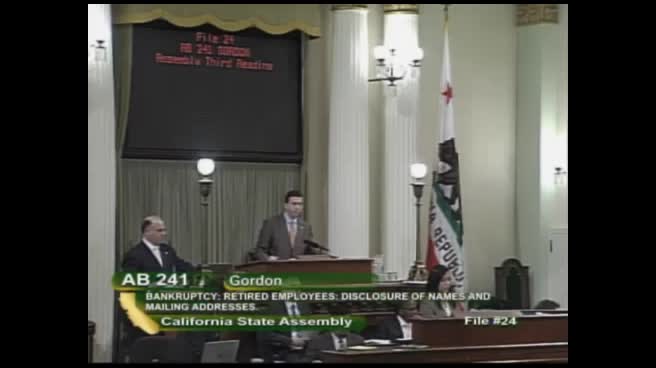
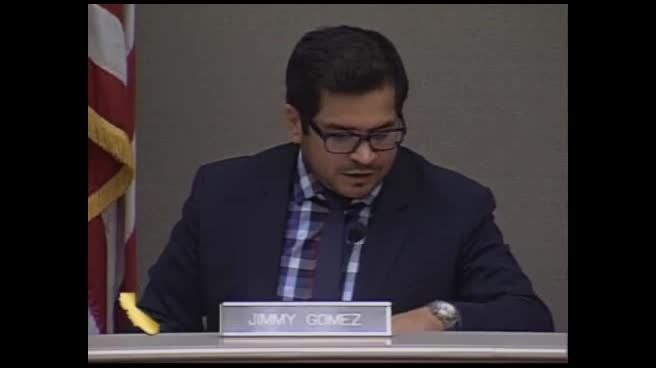
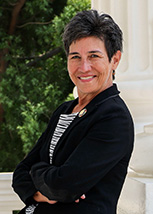

Bill Co-Author(s):