AB 1326: Digital currency.
- Session Year: 2015-2016
- House: Assembly
- Latest Version Date: 2016-08-08
(1)Existing law, the Money Transmission Act, prohibits a person from engaging in the business of money transmission in this state, or advertising, soliciting, or holding itself out as providing money transmission in this state, unless the person is licensed by the Commission of Business Oversight or exempt from licensure under the act. Existing law requires applicants for licensure to pay the commissioner a specified nonrefundable fee and to complete an application form requiring certain information. As security, existing law requires each licensee to deposit and maintain on deposit with the Treasurer cash in an amount not less than, or securities having a market value not less than, such amount as the commissioner may find and order from time to time as necessary to secure the faithful performance of the obligations of the licensee with respect to money transmission in this state. Existing law requires a licensee at all times to own eligible securities, as defined, in a specified aggregate amount not less than the amount of all of its outstanding money received for transmission, as specified.
This bill would enact the Virtual Currency Act. The bill would prohibit a person from engaging in any virtual currency business, as defined, in this state unless the person is licensed by the Commissioner of Business Oversight or is exempt from the licensure requirement, as provided. The bill would require applicants for licensure, including an applicant for licensure and approval to acquire control of a licensee, to pay the commissioner a specified nonrefundable application fee and complete an application form required to include, among other things, information about the applicant, previous virtual currency services provided by the applicant, a sample form of receipt for transactions involving the business of virtual currency, and specified financial statements. The bill would make these licenses subject to annual renewal and would require a renewal fee paid to the commissioner in a specified amount. The bill would require licensees to annually pay the commissioner a specified amount for each licensee branch office. The bill would require applicants and licensees to pay the commissioner a specified hourly amount for the commissioners examination costs, as provided. The bill would also require the commissioner to levy an assessment each fiscal year, on a pro rata basis, on licensees in an amount sufficient to meet the commissioners expenses in administering these provisions and to provide a reasonable reserve for contingencies.
This bill would require each licensee to maintain at all times such capital as the commissioner determines, subject to specified factors, is sufficient to ensure the safety and soundness of the licensee, its ongoing operations, and maintain consumer protection. The bill would require each licensee to maintain a bond or trust account in United States dollars for the benefit of its consumers in the form and amount as specified by the commissioner.
This bill would authorize the commissioner to examine the business and any branch office of any licensee to ascertain whether the business is being conducted in a lawful manner and all virtual currency is properly accounted for. The bill would require a licensee to file a report with the commissioner within a specified period of time after the licensee knows about the occurrence of certain events relating to the virtual currency business and those persons connected to that business, and to also maintain records as required by the commissioner for a specified period of time.
With regard to enforcement, among other things, this bill would, if it appears that a licensee is violating or failing to comply with these provisions or conducting business in an unsafe or injurious manner, authorize the commissioner to order the licensee to comply or discontinue those practices. The bill would also authorize the commissioner to issue an order suspending or revoking a license, or placing a licensee in receivership, if after notice and an opportunity for a hearing, the commissioner makes a specified finding. The bill would provide that every order, decision, or other official act of the commissioner is subject to review.
This bill would authorize the commissioner to impose a civil penalty for a violation of these provisions.
Within a specified period after the fiscal year, the bill would require a licensee to file with the commissioner a specified audit report. Within a specified period after the end of each calendar quarter, the bill would require a licensee to file with the commissioner a report containing financial statements verified by 2 of the licensees principal officers.
By a specified date, the bill would require each licensee to file an annual report with the commissioner providing information regarding the licensees business and operations within the state, as specified. The bill would also require each licensee to make other special reports to the commissioner. The bill would require these reports to be kept confidential. The bill would require the commissioner to prepare a report for publication on his or her Internet Web site summarizing the information from those reports and enforcement action information.
This bill would require a licensee to provide a specified consumer protection disclosure and receipt to its consumers.
This bill would authorize a virtual currency licensee in good standing that plans to engage in activities permitted under the Money Transmission Act to request that the commissioner convert his or her license into a license under the Money Transmission Act, as specified.
This bill would authorize a person or entity conducting virtual currency business with less than $1,000,000 in outstanding obligations, as defined, and whose business model, as determined by the commissioner, represents low or no risk to consumers to pay a $500 application fee to the commissioner and, if approved, receive a provisional license to conduct virtual currency business. The bill would authorize the commissioner to request reports and documents, to examine the provisional licensee, and gather information regarding the business and operations of provisional licensees. The bill would require reports and documents concerning the business and operations of provisional licensees to be kept confidential.
This bill would require a licensee, under the Money Transmission Act, to report to the commissioner its plan to engage in any virtual currency business and request permission to engage in that business subject to specified requirements and conditions, as determined by the commissioner.
This bill would make these aforementioned provisions, including the Virtual Currency Act, operative on July 1, 2016.
This bill, until January 1, 2022, would enact the Digital Currency Business Enrollment Program, to be administrated by the Commissioner of Business Oversight, who would be granted authority to make rules and regulations for this purpose. The bill would prescribe various definitions in this regard and would define digital currency as a digital representation of value that can be digitally traded and is used to facilitate the sale, purchase, and exchange of goods, services, or other digital representations of value, except as specified. The bill would define digital currency business as offering or providing the service of storing, transmitting, exchanging, or issuing digital currency, subject to various exceptions. The bill would define a person to include an individual or other business entities, however organized.
The bill would prohibit a person from engaging in the digital currency business without enrolling in the program and would prohibit the conduct of digital currency business through an unenrolled agent. The bill would require a person seeking enrollment to pay a nonrefundable fee of up to $5,000, not to exceed the reasonable costs of enrolling a person in the program, and would require the person to provide the commissioner specified personal and business information in a form and manner prescribed by the commissioner. The bill would also require the person to provide fingerprints and would authorize the commissioner to deliver the fingerprints to law enforcement agencies. The bill would require the commission to permit enrollment in the program unless it appears to the commissioner that the person, or related parties, are not of good character. The bill would prohibit a person from directly or indirectly acquiring control of an enrollee in the program without approval by the commissioner and would prescribe a process and a fee for applying for approval. The bill would require an application to acquire control of an enrollee to be under oath. By expanding the scope of the crime of perjury the bill would impose a state-mandated local program. The bill would require an enrollee to pay an annual fee of $2,500 to maintain enrollment in the program. The bill would require that all moneys received by the commissioner in connection with its provisions to be placed in the Digital Currency Business Enrollment Program Account, which would be created in the State Corporations Fund, to be available, upon appropriation by the Legislature, to the commissioner for expenditure for the purposes of the program.
The bill would prohibit an enrollee in the program from advertising products, services, and activities without a statement regarding the program and that a government agency has not reviewed the safety or soundness of the business or digital currencies. The bill would require an enrollee to maintain advertising and marketing materials and would prohibit the materials from making false, misleading, or deceptive representations or omissions. The bill would require an enrollee to make a variety of specified disclosures in English and in any other language spoken by a majority of the enrollees customers prior to entering into an initial transaction for, or on behalf of, a customer, when opening an account for a new customer, and prior to each transaction. The bill would also require an enrollee to provide a customer a receipt containing specified information when accepting digital currency or money. The bill would require that the English version of the receipt govern disputes over its terms and would provide that discrepancies between the English version and a translation be construed against the enrollee, as specified. The bill would prescribe a fine of $100 for each violation of the provisions relating to receipts.
The bill would authorize the commissioner to require an enrollee and its agents to submit surveys, investigations, and questionnaires for the purpose of gathering information and to ascertain detailed facts about the enrollees business model, capitalization and net worth, and cybersecurity, among other things. The bill would require an enrollee and its officers, agents, and employees to make the enrollees accounts, books, correspondence, and other records available upon request and to facilitate the commissioners fact-gathering. The bill would provide that these materials are not public records and shall be held in confidence. The bill would require an enrollee to provide an audit report containing specified information and prepared pursuant to prescribed standards and an annual report, the content of which would be determined by the commissioner. The bill would provide that these reports are not public records and shall be held in confidence. The bill would prescribe fines and penalties for the failure to make reports or include required information, which would include disenrollment for repeated failures. The bill would require the commissioner to prepare and make available to the public an annual report on the state of the digital currency business industry by compiling the information received pursuant to these provisions.
The bill would grant the commissioner the authority to issue cease and desist orders when, in the commissioners opinion, an unenrolled person is engaging in the digital currency business or violating provisions of the program. The bill would provide for a hearing after an order is served and a request for hearing is filed in writing within 30 days of service. If a request for a hearing is not filed within this time, the order would be deemed final and would not be subject to any judicial review. The bill would authorize the commissioner to bring actions to enjoin acts or practices in violation of its provisions and to enforce its provisions. The bill would authorize a superior court, upon proper showing, to appoint a receiver, monitor, conservator, or other designated fiduciary or officer of the court for a defendant or the defendants assets. The bill would authorize the commissioner to include in civil actions claims for ancillary relief, including restitution and disgorgement, on behalf of a person injured, as well as attorneys fees and costs, and civil penalties of up to $25,000. The bill would provide a limitations period in this regard of four years after an act constituting a violation occurred. The bill would authorize the commissioner to disenroll an enrollee if, after notice and an opportunity for hearing, the commissioner makes specified findings. The bill would authorize the commissioner to refer evidence regarding violations of the bills provisions to the Attorney General, the Financial Crimes Enforcement Network of the United States Department of the Treasury, or the district attorney of the county in which the violation occurred, who would be authorized, with or without this type of a reference, to institute appropriate proceedings.
(2)Existing law, the General Corporation Law, prohibits a corporation, social purpose corporation, association, or individual from issuing or putting in circulation, as money, anything but the lawful money of the United States.
This bill would delete that prohibition.
(3)Existing constitutional provisions require that a statute that limits the right of access to the meetings of public bodies or the writings of public officials and agencies be adopted with findings demonstrating the interest protected by the limitation and the need for protecting that interest.
This bill would make legislative findings to that effect.
(4)The California Constitution requires the state to reimburse local agencies and school districts for certain costs mandated by the state. Statutory provisions establish procedures for making that reimbursement.
This bill would provide that no reimbursement is required by this act for a specified reason.
Existing
(1)Existing law, the Money Transmission Act, prohibits a person from engaging in the business of money transmission in this state, or advertising, soliciting, or holding itself out as providing money transmission in this state, unless the person is licensed by the Commission of Business Oversight or exempt from licensure under the act. Existing law requires applicants for licensure to pay the commissioner a specified nonrefundable fee and to complete an application form requiring certain information. As security, existing law requires each licensee to deposit and maintain on deposit with the Treasurer cash in an amount not less than, or securities having a market value not less than, such amount as the commissioner may find and order from time to time as necessary to secure the faithful performance of the obligations of the licensee with respect to money transmission in this state. Existing law requires a licensee at all times to own eligible securities, as defined, in a specified aggregate amount not less than the amount of all of its outstanding money received for transmission, as specified.
This bill would enact the Virtual Currency Act. The bill would prohibit a person from engaging in any virtual currency business, as defined, in this state unless the person is licensed by the Commissioner of Business Oversight or is exempt from the licensure requirement, as provided. The bill would require applicants for licensure, including an applicant for licensure and approval to acquire control of a licensee, to pay the commissioner a specified nonrefundable application fee and complete an application form required to include, among other things, information about the applicant, prior previous virtual currency services provided by the applicant, a sample form of receipt for transactions involving the business of virtual currency, and specified financial statements. The bill would make these licenses subject to annual renewal and would require a renewal fee paid to the commissioner in a specified amount. The bill would require licensees to annually pay the commissioner a specified amount for each licensee branch office. The bill would require applicants and licensees to pay the commissioner a specified hourly amount for the commissioners examination costs, as provided. The bill would also require the commissioner to levy an assessment each fiscal year, on a pro rata basis, on licensees in an amount sufficient to meet the commissioners expenses in administering these provisions and to provide a reasonable reserve for contingencies.
This bill would require each licensee to maintain at all times such capital as the commissioner determines, subject to specified factors, is sufficient to ensure the safety and soundness of the licensee, its ongoing operations, and maintain consumer protection. The bill would require each licensee to maintain a bond or trust account in United States dollars for the benefit of its consumers in the form and amount as specified by the commissioner.
This bill would authorize the commissioner to examine the business and any branch office of any licensee to ascertain whether the business is being conducted in a lawful manner and all virtual currency is properly accounted for. The bill would require a licensee to file a report with the commissioner within a specified period of time after the licensee knows about the occurrence of certain events relating to the virtual currency business and those persons connected to that business, and to also maintain records as required by the commissioner for a specified period of time.
With regard to enforcement, among other things, this bill would, if it appears that a licensee is violating or failing to comply with these provisions or conducting business in an unsafe or injurious manner, authorize the commissioner to order the licensee to comply or discontinue those practices. The bill would also authorize the commissioner to issue an order suspending or revoking a license, or placing a licensee in receivership, if after notice and an opportunity for a hearing, the commissioner makes a specified finding. The bill would provide that every order, decision, or other official act of the commissioner is subject to review.
This bill would authorize the commissioner to impose a civil penalty for a violation of these provisions.
Within a specified period after the fiscal year, the bill would require a licensee to file with the commissioner a specified audit report. Within a specified period after the end of each calendar quarter, the bill would require a licensee to file with the commissioner a report containing financial statements verified by 2 of the licensees principal officers.
By a specified date, the bill would require each licensee to file an annual report with the commissioner providing information regarding the licensees business and operations within the state, as specified. The bill would also require each licensee to make other special reports to the commissioner. The bill would require these reports to be kept confidential. The bill would require the commissioner to prepare a report for publication on his or her Internet Web site summarizing the information from those reports and enforcement action information.
This bill would require a licensee to provide a specified consumer protection disclosure and receipt to its consumers.
This bill would authorize a virtual currency licensee in good standing that plans to engage in activities permitted under the Money Transmission Act to request that the commissioner convert his or her license into a license under the Money Transmission Act, as specified. The
This bill would authorize a person or entity conducting virtual currency business with less than $1,000,000 in outstanding obligations obligations, as defined, and whose business model, as determined by the commissioner, represents low or no risk to consumers to register with a $500 license fee pay a $500 application fee to the commissioner and, if approved, receive a provisional license to conduct virtual currency business. The bill would authorize the commissioner to request reports and documents, to examine the provisional licensee, and gather information regarding the business and operations of provisional licensees. The bill would require reports and documents concerning the business and operations of provisional licensees to be kept confidential.
This bill would require a licensee, under the Money Transmission Act, to report to the commissioner its plan to engage in any virtual currency business and request permission to engage in that business subject to specified requirements and conditions, as determined by the commissioner.
This bill would make these provisions aforementioned provisions, including the Virtual Currency Act Act, operative on July 1, 2016.
(2)Existing law, the General Corporation Law, prohibits a corporation, social purpose corporation, association, or individual from issuing or putting in circulation, as money, anything but the lawful money of the United States.
This bill would delete that prohibition.
(3)Existing constitutional provisions require that a statute that limits the right of access to the meetings of public bodies or the writings of public officials and agencies be adopted with findings demonstrating the interest protected by the limitation and the need for protecting that interest.
This bill would make legislative findings to that effect.
Existing law, the Money Transmission Act, prohibits a person from engaging in the business of money transmission in this state, or advertising, soliciting, or holding itself out as providing money transmission in this state, unless the person is licensed by the Commission of Business Oversight or exempt from licensure under the act. Existing law requires applicants for licensure to pay the commissioner a specified nonrefundable fee and to complete an application form requiring certain information. As security, existing law requires each licensee to deposit and maintain on deposit with the Treasurer cash in an amount not less than, or securities having a market value not less than, such amount as the commissioner may find and order from time to time as necessary to secure the faithful performance of the obligations of the licensee with respect to money transmission in this state. Existing law requires a licensee at all times to own eligible securities, as defined, in a specified aggregate amount not less than the amount of all of its outstanding money received for transmission, as specified.
This bill would enact the Virtual Currency Act. The bill would prohibit a person from engaging in any virtual currency business, as defined, in this state unless the person is licensed by the Commissioner of Business Oversight or is exempt from the licensure requirement, as provided. The bill would require applicants for licensure, including an applicant for licensure and approval to acquire control of a licensee, to pay the commissioner a specified nonrefundable application fee and complete an application form required to include, among other things, information about the applicant, prior virtual currency services provided by the applicant, a sample form of receipt for transactions involving the business of virtual currency, and specified financial statements. The bill would make these licenses subject to annual renewal and would require a renewal fee paid to the commissioner in a specified amount. The bill would require licensees to annually pay the commissioner a specified amount for each licensee branch office. The bill would require applicants and licensees to pay the commissioner a specified hourly amount for the commissioners examination costs, as provided. The bill would also require the commissioner to levy an assessment each fiscal year, on a pro rata basis, on licensees in an amount sufficient to meet the commissioners expenses in administering these provisions and to provide a reasonable reserve for contingencies.
This bill would require each licensee to maintain at all times such capital as the commissioner determines, subject to specified factors, is sufficient to ensure the safety and soundness of the licensee, its ongoing operations, and maintain consumer protection. The bill would require each licensee to maintain a bond or trust account in United States dollars for the benefit of its customers consumers in the form and amount as specified by the commissioner.
This bill would authorize the commissioner to examine the business and any branch office of any licensee to ascertain whether the business is being conducted in a lawful manner and all virtual currency is properly accounted for. The bill would require a licensee to file a report with the commissioner within a specified period of time after the licensee knows about the occurrence of certain events relating to the virtual currency business and those persons connected to that business, and to also maintain records as required by the commissioner for a specified period of time.
With regard to enforcement, among other things, this bill would, if it appears that a licensee is violating or failing to comply with these provisions or conducting business in an unsafe or injurious manner, authorize the commissioner to order the licensee to comply or discontinue those practices. The bill would also authorize the commissioner to issue an order suspending or revoking a license, or placing a licensee in receivership, if after notice and an opportunity for a hearing, the commissioner makes a specified finding. The bill would provide that every order, decision, or other official act of the commissioner is subject to review.
This bill would authorize the commissioner to impose a civil penalty for a violation of these provisions. The bill would also make it a felony for a person to intentionally make a false statement, misrepresentation, or false certification in a record filed or required to be maintained or to intentionally make a false entry or omit a material entry in such a record. The bill would also make it a felony for a person to knowingly engage in an activity for which a license is required without being licensed or exempt from licensure, as provided. By creating these new crimes, the bill would impose a state-mandated local program.
This bill would prohibit a licensee from appointing or continuing any person as an agent unless the licensee and the person have made a specified written contract, including a requirement that the agent operate in full compliance with these provisions. The bill would prohibit a licensee from appointing any person as an agent unless it has conducted a review of the proposed agents fitness to act as an agent, as provided. Subject to specified notice, if any agent of a licensee conducts any virtual currency business on behalf of the licensee, where the commissioner has suspended or revoked the license of the licensee or the commissioner has issued a specified order, the bill would make the agent jointly and severally liable.
Within a specified period after the fiscal year, the bill would require a licensee to file with the commissioner a specified audit report. Within a specified period after the end of each calendar quarter, the bill would require a licensee to file with the commissioner a report containing financial statements verified by 2 of the licensees principal officers.
This bill would require a licensee to provide a specified consumer protection disclosure about virtual currency and receipt to its consumers.
The California Constitution requires the state to reimburse local agencies and school districts for certain costs mandated by the state. Statutory provisions establish procedures for making that reimbursement.
This bill would provide that no reimbursement is required by this act for a specified reason.
This bill would authorize a virtual currency licensee in good standing that plans to engage in activities permitted under the Money Transmission Act to request that the commissioner convert his or her license into a license under the Money Transmission Act, as specified. The bill would authorize a person or entity conducting virtual currency business with less than $1,000,000 in outstanding obligations and whose business model, as determined by the commissioner, represents low or no risk to consumers to register with a $500 license fee and, if approved, receive a provisional license to conduct virtual currency business.
This bill would require a licensee, under the Money Transmission Act, to report to the commissioner its plan to engage in any virtual currency business and request permission to engage in that business subject to specified requirements and conditions, as determined by the commissioner.
This bill would make these provisions including the Virtual Currency Act operative on July 1, 2016.
(2)Existing law, the General Corporation Law, prohibits a corporation, social purpose corporation, association, or individual from issuing or putting in circulation, as money, anything but the lawful money of the United States.
This bill would delete that prohibition.
Existing law, the Money Transmission Act, prohibits a person from engaging in the business of money transmission in this state, or advertising, soliciting, or holding itself out as providing money transmission in this state, unless the person is licensed by the Commission of Business Oversight or exempt from licensure under the act. Existing law requires applicants for licensure to pay the commissioner a specified nonrefundable fee and to complete an application form requiring certain information. As security, existing law requires each licensee to deposit and maintain on deposit with the Treasurer cash in an amount not less than, or securities having a market value not less than, such amount as the commissioner may find and order from time to time as necessary to secure the faithful performance of the obligations of the licensee with respect to money transmission in this state. Existing law requires a licensee at all times to own eligible securities, as defined, in a specified aggregate amount not less than the amount of all of its outstanding money received for transmission, as specified.
This bill would prohibit a person from engaging in this state in any virtual currency business, as defined, in this state unless the person is licensed by the Commissioner of Business Oversight or is exempt from the licensure requirement, as provided. The bill would require applicants for licensure, including an applicant for licensure and approval to acquire control of a licensee, to pay the commissioner a specified nonrefundable application fee and complete an application form required to include, among other things, information about the applicant, prior virtual currency services provided by the applicant, a sample form of receipt for transactions involving the business of virtual currency, and specified financial statements. The bill would make these licenses subject to annual renewal and would require a renewal fee paid to the commissioner in a specified amount. The bill would require licensees to annually pay the commissioner a specified amount for each licensee branch office. The bill would require applicants and licensees to pay the commissioner a specified hourly amount for the commissioners examination costs, as provided. The bill would also require the commissioner to levy an assessment each fiscal year, on a pro rata basis, on licensees in an amount sufficient to meet the commissioners expenses in administering these provisions and to provide a reasonable reserve for contingencies.
This bill would require each licensee to maintain at all times such capital as the commissioner determines, subject to specified factors, is sufficient to ensure the safety and soundness of the licensee, its ongoing operations, and maintain consumer protection. The bill would require each licensee to maintain a bond or trust account in United States dollars for the benefit of its customers in the form and amount as specified by the commissioner.
This bill would authorize the commissioner to examine the business and any branch office of any licensee to ascertain whether the business is being conducted in a lawful manner and all virtual currency is properly accounted for. The bill would require a licensee to file a report with the commissioner within a specified period of time after the licensee knows about the occurrence of certain events relating to the virtual currency business and those persons connected to that business, and to also maintain records as required by the commissioner for a specified period of time.
With regard to enforcement, among other things, this bill would, if it appears that a licensee is violating or failing to comply with these provisions or conducting business in an unsafe or injurious manner, authorize the commissioner to order the licensee to comply or discontinue those practices. The bill would also authorize the commissioner to issue an order suspending or revoking a license, or placing a licensee in receivership, if after notice and an opportunity for a hearing, the commissioner makes a specified finding. The bill would provide that every order, decision, or other official act of the commissioner is subject to review.
This bill would authorize the commissioner to impose a civil penalty for a violation of these provisions. The bill would also make it a felony for a person to intentionally make a false statement, misrepresentation, or false certification in a record filed or required to be maintained or to intentionally make a false entry or omit a material entry in such a record. The bill would also make it a felony for a person to knowingly engage in an activity for which a license is required without being licensed or exempt from licensure, as provided. By creating these new crimes, the bill would impose a state-mandated local program.
This bill would prohibit a licensee from appointing or continuing any person as an agent unless the licensee and the person have made a specified written contract, including a requirement that the agent operate in full compliance with these provisions. The bill would prohibit a licensee from appointing any person as an agent unless it has conducted a review of the proposed agents fitness to act as an agent, as provided. Subject to specified notice, if any agent of a licensee conducts any virtual currency business on behalf of the licensee, where the commissioner has suspended or revoked the license of the licensee or the commissioner has issued a specified order, the bill would make the agent jointly and severally liable.
Within a specified period after the fiscal year, the bill would require a licensee to file with the commissioner a specified audit report. Within a specified period after the end of each calendar quarter, the bill would require a licensee to file with the commissioner a report containing financial statements verified by 2 of the licensees principal officers.
This bill would require a licensee to provide a specified consumer protection disclosure about virtual currency to its consumers.
The California Constitution requires the state to reimburse local agencies and school districts for certain costs mandated by the state. Statutory provisions establish procedures for making that reimbursement.
This bill would provide that no reimbursement is required by this act for a specified reason.
Existing law, the Money Transmission Act, prohibits a person from engaging in the business of money transmission in this state, or advertising, soliciting, or holding itself out as providing money transmission in this state, unless the person is licensed by the Commission of Business Oversight or exempt from licensure under the act. Existing law requires applicants for licensure to pay the commissioner a specified nonrefundable fee and to complete an application form requiring certain information. As security, existing law requires each licensee to deposit and maintain on deposit with the Treasurer cash in an amount not less than, or securities having a market value not less than, such amount as the commissioner may find and order from time to time as necessary to secure the faithful performance of the obligations of the licensee with respect to money transmission in this state. Existing law requires a licensee at all times to own eligible securities, as defined, in a specified aggregate amount not less than the amount of all of its outstanding money received for transmission, as specified.
This bill would prohibit a person from engaging in this state in the business of any virtual currency, currency business, as defined, in this state unless the person is licensed by the Commissioner of Business Oversight or is exempt from the licensure requirement, as provided. The bill would require applicants for licensure licensure, including an applicant for licensure and approval to acquire control of a licensee, to pay the commissioner a specified nonrefundable application fee and complete an application form required to include, among other things, information about the applicant, prior virtual currency services provided by the applicant, a sample form of receipt for transactions involving the business of virtual currency, and specified financial statements. The bill would require make these licenses subject to annual renewal and would require a renewal fee paid to the commissioner in a specified amount. The bill would require licensees to annually pay the commissioner a specified amount for each licensee branch office. The bill would require applicants and licensees to pay the commissioner a specified hourly amount for the commissioners examination costs, as provided. The bill would also require the commissioner to levy an assessment each fiscal year, on a pro rata basis, on licensees in an amount sufficient to meet the commissioners expenses in administering these provisions and to provide a reasonable reserve for contingencies.
This bill would require each licensee to maintain at all times such capital as the commissioner determines, subject to specified factors, is sufficient to ensure the safety and soundness of the licensee, its ongoing operations, and maintain consumer protection. To satisfy this capital requirement, the bill would require each licensee to invest an aggregate amount equal to the value of the virtual currency that the licensee has on deposit for its customers in only specified investments. The bill would require each licensee to maintain a bond or trust account in United States dollars for the benefit of its customers in the form and amount as specified by the commissioner.
This bill would authorize the commissioner to examine the business and any branch office of any licensee to ascertain whether the business is being conducted in a lawful manner and all virtual currency is properly accounted for. The bill would require a licensee to file a report with the commissioner within a specified period of time after the licensee knows about the occurrence of certain events relating to the virtual currency business and those persons connected to that business, and to also maintain records as required by the commissioner for a specified period of time.
With regard to enforcement, among other things, this bill would, if it appears that a licensee is violating or failing to comply with these provisions or conducting business in an unsafe or injurious manner, authorize the commissioner to order the licensee to comply or discontinue those practices. The bill would also authorize the commissioner to issue an order suspending or revoking a license, or placing a licensee in receivership, if after notice and an opportunity for a hearing, the commissioner makes a specified finding. The bill would provide that every order, decision, or other official act of the commissioner is subject to review.
This bill would authorize the commissioner to impose a civil penalty for a violation of these provisions. The bill would also make it a felony for a person to intentionally make a false statement, misrepresentation, or false certification in a record filed or required to be maintained or to intentionally make a false entry or omit a material entry in such a record. The bill would also make it a felony for a person to knowingly engage in an activity for which a license is required without being licensed or exempt from licensure, as provided. By creating these new crimes, the bill would impose a state-mandated local program.
This bill would prohibit a licensee from appointing or continuing any person as an agent unless the licensee and the person have made a specified written contract, including a requirement that the agent operate in full compliance with these provisions. The bill would prohibit a licensee from appointing any person as an agent unless it has conducted a review of the proposed agents fitness to act as an agent, as provided. Subject to specified notice, if any agent of a licensee conducts any virtual currency business on behalf of the licensee, where the commissioner has suspended or revoked the license of the licensee or the commissioner has issued a specified order, the bill would make the agent jointly and severally liable.
Within a specified period after the fiscal year, the bill would require a licensee to file with the commissioner a specified audit report. Within a specified period after the end of each calendar quarter, the bill would require a licensee to file with the commissioner a report containing financial statements verified by 2 of the licensees principal officers.
This bill would require a licensee to provide a specified consumer protection disclosure about virtual currency to its consumers.
The California Constitution requires the state to reimburse local agencies and school districts for certain costs mandated by the state. Statutory provisions establish procedures for making that reimbursement.
This bill would provide that no reimbursement is required by this act for a specified reason.
Existing law, the Money Transmission Act, prohibits a person from engaging in the business of money transmission in this state, or advertising, soliciting, or holding itself out as providing money transmission in this state, unless the person is licensed by the Commission of Business Oversight or exempt from licensure under the act. Existing law requires applicants for licensure to pay the commissioner a specified nonrefundable fee and to complete an application form requiring certain information. As security, existing law requires each licensee to deposit and maintain on deposit with the Treasurer cash in an amount not less than, or securities having a market value not less than, such amount as the commissioner may find and order from time to time as necessary to secure the faithful performance of the obligations of the licensee with respect to money transmission in this state. Existing law requires a licensee at all times to own eligible securities, as defined, in a specified aggregate amount not less than the amount of all of its outstanding money received for transmission, as specified.
This bill would prohibit a person from engaging in this state in the business of virtual currency, as defined, in this state unless the person is licensed by the Commissioner of Business Oversight or is exempt from the licensure requirement, as provided. The bill would require applicants for licensure to pay the commissioner a specified nonrefundable fee and complete an application form required to include, among other things, information about the applicant, prior virtual currency services provided by the applicant, a sample form of receipt for transactions involving the business of virtual currency, and specified financial statements. The bill would require each licensee to maintain at all times such capital as the commissioner determines, subject to specified factors, is sufficient to ensure the safety and soundness of the licensee, its ongoing operations, and maintain consumer protection. To satisfy this capital requirement, the bill would require each licensee to invest an aggregate amount equal to the value of the virtual currency that the licensee has on deposit for its customers in only specified investments.
(a)The Legislature finds and declares the following:
(1)Digital currency is a new technology that, some predict, will increase the speed and reduce the costs of payment transmission.
(2)Along with digital currency, a new industry has emerged that specializes in providing digital currency-related services.
(3)Both the digital currency technology and the industry of related services are in their developmental stages and evolving rapidly.
(4)It is appropriate for the state to play a role in the development of the new industry, for example by encouraging compliance with law, preventing illicit finance, and ensuring that users receive appropriate risk disclosures.
(5)At the same time, it is appropriate for the state to nurture, rather than stifle, these ongoing innovations in payment technology.
(b)In light of the findings and declarations above, the Legislature intends for the Digital Currency Business Enrollment Program, created by this act, to do all of the following:
(1)Enable the Department of Business Oversight to identify all of the businesses providing digital currency services in the state.
(2)Enable businesses to provide digital currency services in the state in a lawful and transparent manner.
(3)Enable the Department of Business Oversight to gather from businesses providing digital currency services any information helpful to determining whether and how the industry should be licensed and regulated in the future.
(4)Ensure that consumers receive appropriate risk disclosures and information about digital currency and digital currency-related services.
SECTION 1.SEC. 2.Section 107 of the Corporations Code is repealed.SEC. 2.Section 2178 is added to the Financial Code, to read:2178.(a)Nothwithstanding any other law and consistent with subdivision (e) of Section 26004, a licensee shall report to the commissioner its plan to engage in any virtual currency business as described in Division 11 (commencing with Section 26000) and request, on a form provided by the commissioner, permission to engage in any virtual currency business without the issuance of a virtual currency license issued under Division 11 (commencing with Section 26000). However, the commissioner may require the licensee to increase its surety bond or eligible securities amounts in an amount necessary to ensure the consumer protection of the additional business. The commissioner may also place, as a condition on the authorization to engage in any virtual currency business pursuant to Division 11 (commencing with Section 26000), any condition authorized by Section 2036.
(b)This section shall become operative on July 1, 2016.
SEC. 3.Division 11 (commencing with Section 26000) is added to the Financial Code, to read:11.Virtual Currency1.General Provisions26000.For purposes of this division, the following definitions shall apply:
(a)Commissioner means the Commissioner of Business Oversight.
(b)(1)Virtual currency means any type of digital unit that is used as a medium of exchange or a form of digitally stored value.
(2)Virtual currency does not include the following:
(A)Digital units that are used solely within online gaming platforms with no market or application outside of those gaming platforms.
(B)Digital units that are used exclusively as part of a consumer affinity or rewards program.
(C)Digital units that can be redeemed for goods, services, or for purchases with the issuer or other designated merchants, but cannot be converted into, or redeemed for, fiat currency.
(c)Virtual currency business means maintaining full custody or control of virtual currency in this state on behalf of others.
(d)Fiat currency means government-issued currency that is designated as legal tender through government decree, regulation, or law, that customarily refers to paper money and coin and is circulated, used, and accepted as money.
26001.For the purposes of carrying out the provisions of this division, the commissioner may adopt regulations pursuant to the Administrative Procedure Act (Chapter 3.5 (commencing with Section 11340) of Part 1 of Division 3 of Title 2 of the Government Code).
26001.5.This division shall be known and may be cited as the Virtual Currency Act.
2.Licenses26002.A person shall not engage in any virtual currency business in this state unless the person is licensed or exempt from licensure under this division.
26004.The following are exempt from the licensing requirement described in Section 26002:
(a)The United States or a department, agency, or instrumentality thereof, including any federal reserve bank and any federal home loan bank.
(b)Money transmission by the United States Postal Service or by a contractor on behalf of the United States Postal Service.
(c)A state, city, county, city and county, or any other governmental agency or governmental subdivision of a state.
(d)A commercial bank or industrial bank, the deposits of which are insured by the Federal Deposit Insurance Corporation or its successor, or any foreign (other nation) bank that is licensed under Chapter 20 (commencing with Section 1750) of Division 1.1 or that is authorized under federal law to maintain a federal agency or federal branch office in this state; a trust company licensed pursuant to Section 1042 or a national association authorized under federal law to engage in a trust banking business; an association or federal association, as defined in Section 5102, the deposits of which are insured by the Federal Deposit Insurance Corporation or its successor; and any federally or state chartered credit union, with an office in this state, the member accounts of which are insured or guaranteed as provided in Section 14858.
(e)Subject to Section 2178, an entity licensed as a money transmitter under the Money Transmission Act described in Division 1.2 (commencing with Section 2000).
(f)A merchant or consumer that utilizes virtual currency solely for the purchase or sale of goods or services.
(g)(1)A transaction in which the recipient of virtual currency is an agent of the payee pursuant to a preexisting written contract and delivery of the virtual currency to the agent satisfies the payors obligation to the payee.
(2)For purposes of this subdivision, the following shall apply:
(A)Agent has the same meaning as that term is defined in Section 2295 of the Civil Code.
(B)Payee means the provider of goods or services, who is owed payment of money or other monetary value from the payor for the goods or services.
(C)Payor means the recipient of goods or services, who owes payment of money or monetary value to the payee for the goods or services.
(h)A person or entity developing, distributing, or servicing a virtual currency network software.
(i)A person or entity contributing software, connectivity, or computing power to a virtual currency network.
(j)A person or entity providing data storage or cyber security services for a licensed virtual currency business.
26006.(a)An applicant for licensure under this division shall pay to the commissioner a nonrefundable application fee of five thousand dollars ($5,000).
(b)An applicant for a license shall do so in a form and in a medium prescribed by the commissioner by order or regulation. The application shall state or contain all of the following:
(1)The legal name and residential business address of the applicant and any fictitious or trade name used by the applicant in conducting its business.
(2)A list of any criminal convictions of the applicant and any material litigation in which the applicant has been involved in the 10-year period next preceding the submission of the application.
(3)A description of any virtual currency services previously provided by the applicant and the virtual currency services that the applicant seeks to provide in this state.
(4)A list of other states in which the applicant is licensed to engage in the business of virtual currency and any license revocations, suspensions, or other disciplinary action taken against the applicant in another state.
(5)Information concerning any bankruptcy or receivership proceedings affecting the licensee.
(6)A sample form of receipt for transactions that involve money received for the business of virtual currency.
(7)The name and address of any bank through which the applicants business will be conducted.
(8)A description of the source of money and credit to be used by the applicant to provide virtual currency services.
(9)The date of the applicants incorporation or formation and the state or country of incorporation or formation.
(10)A certificate of good standing from the state or country in which the applicant is incorporated or formed.
(11)A description of the structure or organization of the applicant, including any parent or subsidiary of the applicant, and whether any parent or subsidiary is publicly traded.
(12)The legal name, any fictitious or trade name, all business and residential addresses, and the employment, in the 10-year period next preceding the submission of the application, of each executive officer, manager, director, or person that has control, of the applicant, and the educational background for each person.
(13)A list of any criminal convictions and material litigation in which any executive officer, manager, director, or person in control, of the applicant has been involved in the 10-year period next preceding the submission of the application.
(14)A copy of the applicants audited financial statements for the most recent fiscal year and, if available, for the two-year period next preceding the submission of the application.
(15)A copy of the applicants unconsolidated financial statements for the current fiscal year, whether audited or not, and, if available, for the two-year period next preceding the submission of the application.
(16)If the applicant is publicly traded, a copy of the most recent report filed with the United States Securities and Exchange Commission under Section 13 of the federal Securities Exchange Act of 1934 (15 U.S.C. Sec. 78m).
(17)If the applicant is a wholly owned subsidiary of:
(A)A corporation publicly traded in the United States, a copy of audited financial statements for the parent corporation for the most recent fiscal year or a copy of the parent corporations most recent report filed under Section 13 of the federal Securities Exchange Act of 1934 (15 U.S.C. Sec. 78m) and, if available, for the two-year period next preceding the submission of the application.
(B)A corporation publicly traded outside the United States, a copy of similar documentation filed with the regulator of the parent corporations domicile outside the United States.
(18)The applicants plan for engaging in the business of virtual currency, including without limitation three years of pro forma financial statements.
(19)Any other information the commissioner requires with respect to the applicant.
(c)The commissioner may waive any of the information required under subdivision (b) or permit an applicant to submit other information instead of the required information.
(d)The nonrefundable application fee for filing an application for licensure and approval to acquire control of a licensee is three thousand five hundred dollars ($3,500). An applicant for licensure and approval shall comply with subdivision (b).
(e)A licensee, including a licensee described in subdivision (b), shall pay annually on or before July 1, a license renewal fee of two thousand five hundred dollars ($2,500).
(f)A licensee shall pay annually on or before July 1, one hundred twenty-five dollars ($125) for each licensee branch office in this state.
(g)Whenever the commissioner examines a licensee, the licensee shall pay, within 10 days after receipt of a statement from the commissioner, a fee of seventy-five dollars ($75) per hour for each examiner engaged in the examination plus, if it is necessary for any examiner engaged in the examination to travel outside this state, the travel expenses of the examiner.
(h)Whenever the commissioner examines an applicant, the applicant shall pay, within 10 days after receipt of a statement from the commissioner, a fee of seventy-five dollars ($75) per hour for each examiner engaged in the examination plus, if it is necessary for any examiner engaged in the examination to travel outside this state, the travel expenses of the examiner.
(i)Each fee for filing an application shall be paid at the time the application is filed with the commissioner. No fee for filing an application shall be refundable, regardless of whether the application is approved, denied, or withdrawn.
26008.(a)Each licensee shall maintain at all times such capital as the commissioner determines is sufficient to ensure the safety and soundness of the licensee and maintain consumer protection and its ongoing operations. In determining the minimum amount of capital that must be maintained by a licensee, the commissioner shall consider a variety of factors, including, but not limited to:
(1)The composition of the licensees total assets, including the position, size, liquidity, risk exposure, and price volatility of each type of asset.
(2)The composition of the licensees total liabilities, including the size and repayment timing of each type of liability.
(3)The actual and expected volume of the licensees virtual currency business activity.
(4)Whether the licensee is already licensed or regulated by a state or federal entity, and whether the licensee is in good standing in such capacity.
(5)The amount of leverage employed by the licensee.
(6)The liquidity position of the licensee.
(7)The financial protection that the licensee provides for its consumers through its trust account or bond.
(b)Each licensee shall maintain a bond or trust account in United States dollars for the benefit of its consumers in the form and amount specified by the commissioner.
3.Examinations and Records26009.(a)The commissioner may at any time and from time to time examine the business and any branch office, within or outside this state, of any licensee in order to ascertain whether that business is being conducted in a lawful manner and whether all virtual currency held or exchanged is properly accounted for.
(b)The directors, officers, and employees of any licensee being examined by the commissioner shall exhibit to the commissioner, on request, any or all of the licensees accounts, books, correspondence, memoranda, papers, and other records and shall otherwise facilitate the examination so far as it may be in their power to do so.
26010.The commissioner may consult and cooperate with other state or federal regulators in enforcing and administering this division. They may jointly pursue examinations and take other official action that they are otherwise empowered to take.
26011.A licensee shall file a report with the commissioner within five business days after the licensee has reason to know of the occurrence of any of the following events:
(a)The filing of a petition by or against the licensee under the United States Bankruptcy Code (11 U.S.C. Secs. 101-110, incl.) for bankruptcy or reorganization.
(b)The filing of a petition by or against the licensee for receivership, the commencement of any other judicial or administrative proceeding for its dissolution or reorganization, or the making of a general assignment for the benefit of its creditors.
(c)The commencement of a proceeding to revoke or suspend its virtual currency business license in a state or country in which the licensee engages in such business or is licensed to engage in such business.
(d)The cancellation or other impairment of the licensees bond or trust account as required by subdivision (b) of Section 26008.
(e)A charge or conviction of the licensee or of an executive officer, manager, director, or person in control of the licensee for a felony.
26012.A licensee shall maintain any records as required by the commissioner for determining its compliance with this division for at least three years.
4.Enforcement26013.Any licensee may surrender its license by filing with the commissioner the license and a report with any information as the commissioner requires. The voluntary surrender of the license shall become effective at the time and upon the conditions as the commissioner specifies by order.
26014.(a)The commissioner may prepare written decisions, opinion letters, and other formal written guidance to be issued to persons seeking clarification regarding the requirements of this division.
(b)The commissioner shall make public on the commissioners Internet Web site all written decisions, opinion letters, and other formal written guidance issued to persons seeking clarification regarding the requirements of this division. The commissioner may, at his or her discretion or upon request by an applicant or licensee, redact proprietary or other confidential information regarding an applicant or licensee from any decision, letter, or other written guidance issued in connection with an applicant or licensee.
26015.The commissioner may offer informal guidance to any prospective applicant for a license under this division, regarding the conditions of licensure that may be applied to that person. The commissioner shall inform any applicant that requests that guidance of the licensing requirements that will be required of that applicant, based on the information provided by the applicant concerning its plan to conduct business under this division, and the factors used to make that determination.
26016.At any time, if the commissioner deems it necessary for the general welfare of the public, he or she may exercise any power set forth in this division with respect to a virtual currency business, regardless of whether an application for a license has been filed with the commissioner, a license has been issued, or, if issued, the license has been surrendered, suspended, or revoked.
(a)If it appears to the commissioner that a licensee is violating or failing to comply with this division, the commissioner may direct the licensee to comply with the law by an order issued under the commissioners official seal, or if it appears to the commissioner that any licensee is conducting its business in an unsafe or injurious manner, the commissioner may in like manner direct it to discontinue the unsafe or injurious practices. The order shall require the licensee to show cause before the commissioner, at a time and place to be fixed by the commissioner, as to why the order should not be observed.
(b)If, upon any hearing held pursuant to subdivision (a), the commissioner finds that the licensee is violating or failing to comply with any law of this state or is conducting its business in an unsafe or injurious manner, the commissioner may make a final order directing it to comply with the law or to discontinue the unsafe or injurious practices. A licensee shall comply with the final order unless, within 10 days after the issuance of the order, its enforcement is restrained in a proceeding brought by the licensee.
26017.(a)The commissioner may issue an order suspending or revoking a license, or taking possession of and placing a licensee in receivership, if after notice and an opportunity for hearing, the commissioner finds any of the following:
(1)The licensee is violating this division or a regulation adopted or an order issued under this division, or a condition of approval issued under this division.
(2)The licensee does not cooperate with an examination or investigation by the commissioner.
(3)The licensee engages in fraud, intentional misrepresentation, or gross negligence.
(4)The competence, experience, character, or general fitness of the licensee, or any director, officer, employee, or person in control of a licensee, indicates that it is not in the public interest to permit the person to provide virtual currency services.
(5)The licensee engages in an unsafe or unsound practice.
(6)The licensee is insolvent, suspends payment of its obligations, or makes a general assignment for the benefit of its creditors.
(7)The licensee has applied for an adjudication of bankruptcy, reorganization, arrangement, or other relief under any bankruptcy, reorganization, insolvency, or moratorium law, or any person has applied for any such relief under that law against the licensee and the licensee has by any affirmative act approved of or consented to the action or the relief has been granted.
(8)Any fact or condition exists that, if it had existed at the time the licensee applied for its license, would have been grounds for denying the application.
(b)In determining whether a licensee is engaging in an unsafe or unsound practice, the commissioner may consider the size and condition of the licensees provision of virtual currency services, the magnitude of the loss, the gravity of the violation of this division, and the previous conduct of the person involved.
26018.(a)Every order, decision, or other official act of the commissioner is subject to review in accordance with law.
(b)Whenever the commissioner has taken possession of the property and business of any licensee, the licensee, within 10 days after that taking, if it deems itself aggrieved thereby, may apply to the superior court in the county in which the head office of the licensee is located to enjoin further proceedings. The court, after citing the commissioner to show cause why further proceedings should not be enjoined and after a hearing and a determination of the facts upon the merits, may dismiss the application or enjoin the commissioner from further proceedings and direct the commissioner to surrender the property and business to the licensee.
26019.(a)If the commissioner finds that any of the factors set forth in Section 26017 is true with respect to any licensee and that it is necessary for the protection of the public interest, the commissioner may issue an order immediately suspending or revoking the licensees license.
(b)Within 30 days after the license is suspended or revoked pursuant to subdivision (a), the licensee may file with the commissioner an application for a hearing on the suspension or revocation.
(c)If the commissioner fails to commence a hearing within 15 business days after the application is filed with the commissioner pursuant to subdivision (b) or within a longer period of time agreed to by the licensee, the suspension or revocation shall be deemed rescinded.
(d)Within 30 days after the hearing, the commissioner shall affirm, modify, or rescind the suspension or revocation. Otherwise, the suspension or revocation shall be deemed rescinded.
(e)The right of the licensee to petition for judicial review of the suspension or revocation shall not be affected by the failure of the licensee to apply to the commissioner for a hearing on the suspension or revocation pursuant to subdivision (b).
26020.The commissioner may assess a civil penalty against a person that violates this division or a regulation adopted or an order issued under this division in an amount not to exceed one thousand dollars ($1,000) for each violation or, in the case of a continuing violation, one thousand dollars ($1,000) for each day or part thereof during which the violation continues, plus this states costs and expenses for the investigation and prosecution of the matter, including reasonable attorneys fees.
26022.The enforcement provisions of this division are in addition to any other enforcement powers that the commissioner may have under law.
26023.(a)The commissioner may by order or regulation grant exemptions from this section in cases where the commissioner finds that the requirements of this section are not necessary or may be duplicative.
(b)A licensee shall, within 90 days after the end of each fiscal year, or within any extended time as the commissioner may prescribe, file with the commissioner an audit report for the fiscal year that shall comply with all of the following provisions:
(1)The audit report shall contain audited financial statements of the licensee for or as of the end of the fiscal year prepared in accordance with United States generally accepted accounting principles and any other information as the commissioner may require.
(2)The audit report shall be based upon an audit of the licensee conducted in accordance with United States generally accepted auditing standards and any other requirements as the commissioner may prescribe.
(3)The audit report shall be prepared by an independent certified public accountant or independent public accountant who is not unsatisfactory to the commissioner.
(4)The audit report shall include or be accompanied by a certificate of opinion of the independent certified public accountant or independent public accountant that is satisfactory in form and content to the commissioner. If the certificate or opinion is qualified, the commissioner may order the licensee to take any action as the commissioner may find necessary to enable the independent or certified public accountant or independent public accountant to remove the qualification.
(c)Each licensee shall, not more than 45 days after the end of each calendar year quarter, or within a longer period as the commissioner may by regulation or order specify, file with the commissioner a report containing all of the following:
(1)Financial statements, including balance sheet, income statement, statement of changes in shareholders equity, and statement of cashflows, for, or as of the end of, that calendar year quarter, verified by two of the licensees principal officers. The verification shall state that each of the officers making the verification has personal knowledge of the matters in the report and that each of them believes that each statement in the report is true.
(2)Other information as the commissioner may by regulation or order require.
(d)Each licensee shall file an annual report with the commissioner, on or before the 15th day of March, providing the relevant information that the commissioner reasonably requires concerning the business and operations conducted by the licensee within the state during the preceding calendar year. Each licensee shall also make other special reports to the commissioner that may be required by the commissioner from time to time. The reports required by this subdivision shall be kept confidential pursuant to Chapter 3.5 (commencing with Section 6250) of Division 7 of Title 1 of the Government Code and any regulations adopted thereunder.
(e)The commissioner shall annually prepare a report for publication on his or her Internet Web site, summarizing consolidated information gained from the reports required pursuant to subdivision (d), documenting the number of licenses, including provisional licenses as described in Section 26032, outstanding during the prior calendar year, and summarizing the numbers and types of enforcement actions brought by the commissioner pursuant to this division during the prior calendar year.
26024.In addition to the fees provided in Section 26006, the commissioner shall levy an assessment each fiscal year, on a pro rata basis, on those licensees that at any time during the preceding calendar year engaged in this state in the virtual currency business in an amount that is, in his or her judgment, sufficient to meet the commissioners expenses in administering the provisions of this division and to provide a reasonable reserve for contingencies.
5.Miscellaneous Provisions26025.A licensee shall disclose to consumers the following disclosure in a form and manner prescribed by the commissioner:
Once submitted to the network, a virtual currency transaction will be unconfirmed for a period of time (usually less than one hour, but up to one day or more) pending sufficient confirmation of the transaction by the network. A transaction is not complete while it is in a pending state. Virtual currency associated with transactions that are in a pending state will be designated accordingly, and will not be included in your account balance or be available to conduct transactions.
The risk of loss in trading or holding virtual currency can be substantial. You should therefore carefully consider whether trading or holding virtual currency is suitable for you in light of your financial condition. In considering whether to trade or hold virtual currency, you should be aware that the price or value of virtual currency can change rapidly, decrease, and potentially even fall to zero.
(Insert company name) is licensed by the Department of Business Oversight to do business in California. If you have complaints with respect to any aspect of the virtual currency business conducted by (company name), you may contact the California Department of Business Oversight at its toll-free telephone number, 1-800-622-0620, by email at [email protected], or by mail at the Department of Business Oversight, Consumer Services, 1515 K Street, Suite 200, Sacramento, CA 95814.
26026.(a)Upon completion of a transaction subject to this division, the licensee shall provide to the consumer a receipt containing the following information:
(1)The name and contact information of the licensee including a telephone number of the licensee where consumers can contact the licensee for questions or to register complaints.
(2)The type, value, date, and time of the transaction.
(3)The type and amount of any fees charged.
(4)The exchange rate, if applicable.
(5)A statement of the refund policy of the licensee.
(6)Additional information the commissioner may require.
(b)The receipt required by this section shall be made in English and in the language principally used by that licensee to advertise, solicit, or negotiate, either orally or in writing, if other than English.
(c)The receipt required by this section may be provided electronically for transactions that are initiated electronically or in which a consumer agrees to receive an electronic receipt.
26029.The commissioner may, by regulation or order, either unconditionally or upon specified terms and conditions or for specified periods, exempt from all or part of this division any person or transaction or class of persons or transactions, if the commissioner finds such action to be in the public interest and that the regulation of such persons or transactions is not necessary for the purposes of this division. The commissioner shall post on the commissioners Internet Web site a list of all persons, transactions, or classes of person or transactions exempt pursuant to this section, and the provision or provisions of this division from which they are exempt.
26031.Notwithstanding any other law, a licensee in good standing under this division that plans to engage in activities permitted under the Money Transmission Act (Division 1.2 (commencing with Section 2000)) may request from the commissioner in a form specified by the commissioner to convert their license into a license under Division 1.2 (commencing with Section 2000). A licensee's request to convert its license shall be accompanied by documentation or other evidence as determined by the commissioner that the licensee meets the requirements for licensure under Division 1.2 (commencing with Section 2000). If a licensees request for a converted license is granted, the licensee shall be subject to Section 2178 in order to thereafter engage in any virtual currency business.
26032.(a)(1)In lieu of Section 26006, a person or entity conducting virtual currency business with less than one million dollars ($1,000,000) in outstanding obligations and whose business model, as determined by the commissioner, represents low or no risk to consumers may pay an application fee of five hundred dollars ($500) to the commissioner and, if approved, receive a provisional license to conduct virtual currency business. A person or entity that receives such a license shall also register with FinCEN as a money services business, if applicable.
(2)For the purposes of this section, outstanding obligations means the value under the full custody and control of the person or entity.
(b)In determining whether to issue a provisional license, the commissioner shall consider a variety of factors, including, but not limited to:
(1)The nature and scope of the applicants business.
(2)The anticipated volume of business to be transacted by the applicant in California.
(3)The nature and scope of the risks that the applicants business presents to consumers.
(4)The measures which the applicant has taken to limit or mitigate the risks its business presents.
(5)Whether the applicant is regulated or otherwise authorized by another governmental entity to engage in financial services or other business activities.
(c)Sections 26006, 26008, 26023, 26024, and 26031 shall not apply to a person or entity to which a provisional license has been issued. However, the commissioner may require a provisional licensee to certify adherence to certain risk based performance standards related to safety, soundness, and consumer protection as prescribed by the commissioner.
(d)Based upon the factors identified in subdivision (b) and the provisional licensees history as a holder of a provisional license, the commissioner may at any time renew such license for an additional length of time or remove the provisional status from the license if the licensee meets all the requirements of this division. Unless the commissioner otherwise removes the provisional status of or renews such license, a provisional license shall expire two years after the date of issuance. If the commissioner renews a provisional license, the licensee shall pay a five-hundred-dollar ($500) renewal fee.
(e)The commissioner may request reports and documents and may examine the provisional licensee as needed to further consumer protection, enhance safety and soundness, and gather information regarding the business and operations of provisional licensees. Reports and documents concerning the business and operations of provisional licensees shall be kept confidential pursuant to Chapter 3.5 (commencing with Section 6250) of Division 7 of Title 1 of the Government Code and any regulations adopted thereunder. The commissioner shall include aggregated information about the business and operations of provisional licensees in the report required by and subject to subdivision (e) of Section 26023.
(f)A provisional licensee shall notify the commissioner within 15 days of surpassing the threshold in subdivision (a) and shall, within 30 days from that notice, apply for a license pursuant to Chapter 2 (commencing with Section 26002).
(g)A provisional license may be suspended or revoked pursuant to Section 26017.
6.Operative Date26040.This division shall become operative on July 1, 2016.
SEC. 3.Section 2003 of the Financial Code is amended to read:2003.For purposes of this division, the following definitions shall apply:
(a)Affiliate, when used with respect to a specified person, means any person controlling, controlled by, or under common control with, that specified person, directly or indirectly through one or more intermediaries. For purposes of subdivisions (s) and (x), a specified person is affiliated with another person if that person controls, is controlled by, or under common control through the ownership directly or indirectly of shares or equity securities possessing more than 50 percent of the voting power of that specified person.
(b)Agent means a person that is not itself licensed as a money transmitter in California and provides money transmission in California on behalf of the licensee, provided that the licensee becomes liable for the money transmission from the time money or monetary value is received by that person. However, agent does not include any officer or employee of the licensee when acting as such at an office of a licensee.
(c)Applicant means a person that files an application for a license or for acquisition of control of a licensee under this division.
(d)Average daily outstanding means the amount of outstanding money transmission obligations in California at the end of each day in a given period of time, added together, and divided by the total number of days in that period of time.
(e) Branch office means any office in this state of a licensee or agent at which the licensee receives money or monetary value to provide money transmission, either directly or through an agent.
(f)Business day means one of the following:
(1)When used with respect to any act to be performed in this state, any day other than Saturday, Sunday, or any other day that is provided for as a holiday in the Government Code.
(2)When used with respect to any act to be performed in any jurisdiction other than this state, any day other than a day that is a legal holiday under the laws of that jurisdiction.
(g)Commissioner means the Commissioner of Business Oversight.
(h)Control has the meaning set forth in Section 1250.
(i)Day means calendar day.
(j)E-commerce means any transaction where the payment for goods or services is initiated via a mobile application or an Internet Web site.
(k)In California or in this state means physically located in California, or with, to, or from persons located in California.
(l)Issue and issuer mean, with regard to a payment instrument, the entity that is the maker or drawer of the instrument in accordance with the California Commercial Code and is liable for payment. With regard to stored value, issue and issuer mean the entity that is liable to the holder of stored value and has undertaken or is obligated to pay the stored value. Only a licensee may issue stored value or payment instruments.
(m)Licensee means a corporation or limited liability company licensed under this division.
(n)Material litigation means litigation that according to United States generally accepted accounting principles is significant to an applicants or a licensees financial health and would be required to be disclosed in the applicants or licensees annual audited financial statements, report to shareholders, or similar records.
(o)Monetary value means a medium of exchange, whether or not redeemable in money. Monetary value does not include any form of value that qualifies as a digital currency under Division 11 (commencing with Section 26000).
(p)Money means a medium of exchange that is authorized or adopted by the United States or a foreign government. The term includes a monetary unit of account established by an intergovernmental organization or by agreement between two or more governments.
(q)Money transmission means any of the following:
(1)Selling or issuing payment instruments.
(2)Selling or issuing stored value.
(3)Receiving money for transmission.
(r)Outstanding, with respect to payment instruments and stored value, means issued or sold by the licensee in the United States and not yet paid or refunded by the licensee, or issued or sold on behalf of the licensee in the United States by its agent and reported as sold, but not yet paid or refunded by the licensee. Outstanding, with respect to receiving money for transmission means all money or monetary value received in the United States for transmission by the licensee or its agents but not yet paid to the beneficiaries or refunded to the person from whom the money or monetary value was received. All outstanding money transmission of a licensee is and shall remain a liability of the licensee until it is no longer outstanding.
(s)Payment instrument means a check, draft, money order, travelers check, or other instrument for the transmission or payment of money or monetary value, whether or not negotiable. The term does not include a credit card voucher, letter of credit, or any instrument that is redeemable by the issuer for goods or services provided by the issuer or its affiliate.
(t)Person means an individual, corporation, business trust, estate, trust, partnership, proprietorship, syndicate, limited liability company, association, joint venture, government, governmental subdivision, agency or instrumentality, public corporation or joint stock company, or any other organization or legal or commercial entity, provided, however, that person, when used with respect to acquiring control of or controlling a specified person, includes any combination of two or more persons acting in concert.
(u)Receiving money for transmission or money received for transmission means receiving money or monetary value in the United States for transmission within or outside the United States by electronic or other means. The term does not include sale or issuance of payment instruments and stored value.
(v)Record means information that is inscribed on a tangible medium or that is stored in an electronic or other medium and is retrievable in perceivable form.
(w)State means a state of the United States, the District of Columbia, Puerto Rico, the United States Virgin Islands, or any territory or insular possession subject to the jurisdiction of the United States.
(x)Stored value means monetary value representing a claim against the issuer that is stored on an electronic or digital medium and evidenced by an electronic or digital record, and that is intended and accepted for use as a means of redemption for money or monetary value or payment for goods or services. The term does not include a credit card voucher, letter of credit, or any stored value that is only redeemable by the issuer for goods or services provided by the issuer or its affiliate, except to the extent required by applicable law to be redeemable in cash for its cash value.
(y)Travelers check means an instrument that meets all of the following:
(1)Is designated on its face by the term travelers check or by any substantially similar term or is commonly known and marketed as a travelers check.
(2)Contains a provision for a specimen signature of the purchaser to be completed at the time of purchase.
(3)Contains a provision for a countersignature of the purchaser to be completed at the time of negotiation.
This section shall remain in effect only until January 1, 2022, and as of that date is repealed, unless a later enacted statute, that is enacted before January 1, 2022, deletes or extends that date.
SEC. 4.Section 2003 is added to the Financial Code, to read:2003.For purposes of this division, the following definitions shall apply:
(a) Affiliate, when used with respect to a specified person, means any person controlling, controlled by, or under common control with, that specified person, directly or indirectly through one or more intermediaries. For purposes of subdivisions (s) and (x), a specified person is affiliated with another person if that person controls, is controlled by, or under common control through the ownership directly or indirectly of shares or equity securities possessing more than 50 percent of the voting power of that specified person.
(b)Agent means a person that is not itself licensed as a money transmitter in California and provides money transmission in California on behalf of the licensee, provided that the licensee becomes liable for the money transmission from the time money or monetary value is received by that person. However, agent does not include any officer or employee of the licensee when acting as such at an office of a licensee.
(c)Applicant means a person that files an application for a license or for acquisition of control of a licensee under this division.
(d)Average daily outstanding means the amount of outstanding money transmission obligations in California at the end of each day in a given period of time, added together, and divided by the total number of days in that period of time.
(e)Branch office means any office in this state of a licensee or agent at which the licensee receives money or monetary value to provide money transmission, either directly or through an agent.
(f)Business day means one of the following:
(1)When used with respect to any act to be performed in this state, any day other than Saturday, Sunday, or any other day that is provided for as a holiday in the Government Code.
(2)When used with respect to any act to be performed in any jurisdiction other than this state, any day other than a day that is a legal holiday under the laws of that jurisdiction.
(g)Commissioner means the Commissioner of Business Oversight.
(h)Control has the meaning set forth in Section 1250.
(i)Day means calendar day.
(j)E-commerce means any transaction where the payment for goods or services is initiated via a mobile application or an Internet Web site.
(k)In California or in this state means physically located in California, or with, to, or from persons located in California.
(l)Issue and issuer mean, with regard to a payment instrument, the entity that is the maker or drawer of the instrument in accordance with the California Commercial Code and is liable for payment. With regard to stored value, issue and issuer mean the entity that is liable to the holder of stored value and has undertaken or is obligated to pay the stored value. Only a licensee may issue stored value or payment instruments.
(m)Licensee means a corporation or limited liability company licensed under this division.
(n)Material litigation means litigation that according to United States generally accepted accounting principles is significant to an applicants or a licensees financial health and would be required to be disclosed in the applicants or licensees annual audited financial statements, report to shareholders, or similar records.
(o)Monetary value means a medium of exchange, whether or not redeemable in money.
(p)Money means a medium of exchange that is authorized or adopted by the United States or a foreign government. The term includes a monetary unit of account established by an intergovernmental organization or by agreement between two or more governments.
(q)Money transmission means any of the following:
(1)Selling or issuing payment instruments.
(2)Selling or issuing stored value.
(3)Receiving money for transmission.
(r)Outstanding, with respect to payment instruments and stored value, means issued or sold by the licensee in the United States and not yet paid or refunded by the licensee, or issued or sold on behalf of the licensee in the United States by its agent and reported as sold, but not yet paid or refunded by the licensee. Outstanding, with respect to receiving money for transmission means all money or monetary value received in the United States for transmission by the licensee or its agents but not yet paid to the beneficiaries or refunded to the person from whom the money or monetary value was received. All outstanding money transmission of a licensee is and shall remain a liability of the licensee until it is no longer outstanding.
(s)Payment instrument means a check, draft, money order, travelers check, or other instrument for the transmission or payment of money or monetary value, whether or not negotiable. The term does not include a credit card voucher, letter of credit, or any instrument that is redeemable by the issuer for goods or services provided by the issuer or its affiliate.
(t)Person means an individual, corporation, business trust, estate, trust, partnership, proprietorship, syndicate, limited liability company, association, joint venture, government, governmental subdivision, agency or instrumentality, public corporation or joint stock company, or any other organization or legal or commercial entity, provided, however, that person, when used with respect to acquiring control of or controlling a specified person, includes any combination of two or more persons acting in concert.
(u)Receiving money for transmission or money received for transmission means receiving money or monetary value in the United States for transmission within or outside the United States by electronic or other means. The term does not include sale or issuance of payment instruments and stored value.
(v)Record means information that is inscribed on a tangible medium or that is stored in an electronic or other medium and is retrievable in perceivable form.
(w)State means a state of the United States, the District of Columbia, Puerto Rico, the United States Virgin Islands, or any territory or insular possession subject to the jurisdiction of the United States.
(x)Stored value means monetary value representing a claim against the issuer that is stored on an electronic or digital medium and evidenced by an electronic or digital record, and that is intended and accepted for use as a means of redemption for money or monetary value or payment for goods or services. The term does not include a credit card voucher, letter of credit, or any stored value that is only redeemable by the issuer for goods or services provided by the issuer or its affiliate, except to the extent required by applicable law to be redeemable in cash for its cash value.
(y)Travelers check means an instrument that meets all of the following:
(1)Is designated on its face by the term travelers check or by any substantially similar term or is commonly known and marketed as a travelers check.
(2)Contains a provision for a specimen signature of the purchaser to be completed at the time of purchase.
(3)Contains a provision for a countersignature of the purchaser to be completed at the time of negotiation.
This section shall become operative January 1, 2022.
SEC. 5.Division 11 (commencing with Section 26000) is added to the Financial Code, to read:11.Digital Currency Business Enrollment Program1.General Provisions26000.This division shall be known and may be cited as the Digital Currency Business Enrollment Program.
26002.For purposes of this division, the following definitions shall apply:
(a)Circulation means the capacity for transfer between persons.
(b)Commissioner means the Commissioner of Business Oversight.
(c)Digital currency means any digital representation of value that can be digitally traded and is used to facilitate the sale, purchase, and exchange of goods, services, or other digital representations of value among its users. Digital currency does not include fiat currency, e-money, or currency value of which was fixed by its issuer to the value of a fiat currency.
(d)Digital currency business means the business of offering or providing the service of storing, transmitting, exchanging, or issuing digital currency. Digital currency business does not include the following:
(1)Transmission of digital currency where the transaction is undertaken for nonfinancial purposes and does not involve the transfer of more than a nominal amount of digital currency necessary to complete the transaction.
(2)Online games or gaming platforms that use digital currency that (A) have no market or application outside of those games or gaming platforms, (B) cannot be converted into, or redeemed for, fiat currency or digital currency, and (C) are not redeemable for real-world goods, services, discounts, or purchases.
(3)Customer affinity or rewards programs that use digital currency that can be redeemed for goods, services, or for purchases with the issuer or other designated merchants, but cannot be converted into, or redeemed for, fiat currency or digital currency that is not part of the customer affinity or rewards program.
(4)Issuance of a credit card voucher, letter of credit, or any value that is redeemable only by the issuer for goods and services provided by the issuer or its affiliate, except to the extent required by applicable law to be redeemable in cash for its cash value.
(5)A person or entity developing, distributing, or servicing digital currency network software.
(6)A person or entity contributing software, connectivity, or computing power to a digital currency network.
(7)A person or entity providing data storage or cybersecurity services for an enrolled digital currency business, if the data storage or cybersecurity services do not store digital currency.
(e)E-money means a digital representation of fiat currency used to electronically transfer value denominated in fiat currency.
(f)Exchanging, with reference to digital currency, means converting or exchanging fiat currency into digital currency, converting or exchanging digital currency into fiat currency, or converting or exchanging one form of digital currency into another form of digital currency.
(g)Fiat currency means government-issued currency that is designated as legal tender or lawful money, through government decree, regulation, or law, of a government or intergovernmental organization, or by agreement between two or more governments, and customarily refers to paper money and coin and that is circulated, used, and accepted as money.
(h)In this state or in California means physically located in California, or with, from, and to a person located in California.
(i)Issuing, with reference to digital currency, means creating, introducing into circulation, controlling, and administering digital currency.
(j)Person means an individual, partnership, corporation, association, joint stock association, trust, or other business combination or entity, however organized.
(k)Program means the Digital Currency Business Enrollment Program established by this division.
(l)Storing, with reference to digital currency, means to have custody or control of digital currency on behalf of others. For the purposes of this subdivision, custody or control of digital currency includes having access to a customers digital currency credentials, the ability to execute a digital currency transaction on behalf of a customer, or the ability to prevent a customer from effecting a desired transaction of digital currency.
(m)Transmitting, with reference to digital currency, means the transfer of digital currency, by or through a third party, from one person to another person, or from one storage repository of digital currency to another storage repository of digital currency.
26004.(a)The Digital Currency Business Enrollment Program is hereby established. The commissioner shall administer the program as required by this division.
(b)The commissioner may make general rules and regulations and specific rulings, demands, and findings for the enforcement of this division, in addition to, and within the general purposes of, this division.
2.Enrollment26010.(a)A person shall not engage in any digital currency business in this state or offer to engage in digital currency business in this state unless the person is enrolled in the program. An enrollee shall not conduct any digital currency business through an agent or agency arrangement if the agent is not an enrollee.
(b)A person seeking enrollment in the program shall pay to the commissioner a nonrefundable fee of up to five thousand dollars ($5,000), which shall not exceed the reasonable costs of enrolling a person in the program.
(c)A person seeking enrollment in the program shall provide all of the following information to the commissioner in a form and in a medium prescribed by the commissioner by order or regulation:
(1)Legal name of the subject person.
(2)A description of the structure or organization of the subject person, including any parent or subsidiary, and whether any parent or subsidiary is publicly traded.
(3)Fictitious, trade, or business names of the subject person.
(4)Residential and business address of the subject person.
(5)All other physical addresses and locations of the subject person.
(6)A list of any criminal convictions of the person seeking enrollment and any material litigation in which that person has been involved in the past 10-year period.
(7)Any Internet Web site connected with the subject person
(8)Detailed information about the type of digital currency service to be provided, for example storing, transmitting, exchanging, or issuing.
(9)The legal name, any fictitious or trade name, business and residential addresses, and the employment, in the last 10-year period, of each executive officer, manager, director, or person that has control of the subject person.
(10)A list of any criminal convictions and material litigation in which any executive officer, manager, director, or person in control of the subject person has been involved in the past 10-year period.
(11)The number of employees of the subject person, and their titles and responsibilities.
(12)A contact person and his or her e-mail address and telephone number.
(13)Any other license held by the enrollee in California or any other state.
(14)Whether the subject person is a money services business under the regulations adopted pursuant to the federal Bank Secrecy Act (31 C.F.R. Chapter X) or its successor.
(15)Any other information that the commissioner may require by order or regulation.
(d)A person seeking enrollment in the Enrollment Program shall provide to the commissioner, in a form acceptable to the commissioner, fingerprints of the subject person, and of any executive officer, manager, director, or person in control of the subject person. The commissioner may deliver, or cause to be delivered, these fingerprints to local, state, or federal law enforcement agencies.
(e)The commissioner shall permit enrollment in the program unless it appears to the commissioner that the subject person, the directors and officers of the subject person, any person that controls the subject person, and the directors and officers of any person that controls the subject person, are not of good character.
(f)Following enrollment, the enrollee shall notify the commissioner, as soon as practicable, of any changes to the facts provided to the commissioner prior to enrollment pursuant to subdivision (d). The enrollee shall provide the information identified in paragraphs (8) and (9) of subdivision (c) with respect to any new executive officer, manager, or director of the enrollee. Upon receiving this information, the commissioner may disenroll an enrollee if he or she determines that such person or persons are not of good character.
26012.A person shall not, directly or indirectly, acquire control of an enrollee unless the commissioner has first approved, in writing, the acquisition of control. An application to acquire control of an enrollee shall be in writing, under oath, and in a form prescribed by the commissioner. The application shall contain information about the proposed controlling person identified in paragraphs (8) and (9) of subdivision (c) of Section 26010. The fee for filing an application for approval to acquire control of an enrollee shall be two thousand five hundred dollars ($2,500), which shall not exceed the costs associated with the approval. For purposes of this section, control has the meaning set forth in Section 1250.
26014.Persons seeking to engage in both money transmission, as defined in Section 2003, and digital currency business shall obtain both a license under the Money Transmission Act (Division 1.2 (commencing with Section 2000)) and be enrolled in the program.
26016.An enrollee shall immediately notify the commissioner in writing if it no longer engages in any digital currency business in this state or offers to engage in digital currency business in this state, or if any other circumstances exist that would otherwise make enrollment in the program no longer applicable.
3.Advertising, Disclosures, and Receipts26020.(a)An enrollee engaged in digital currency business shall not advertise its products, services, or activities without including the name of the enrollee and the following statement: Our digital currency business in California is conducted pursuant to the Digital Currency Business Enrollment Program that is administered by the Department of Business Oversight (DBO). However, neither the DBO nor any other government agency has reviewed the safety and soundness of our business or the digital currencies in which we transact. For more information about the Enrollment Program, visit: [www.dbo.ca.gov/dc].
(b)An enrollee shall maintain, for examination by the commissioner, all advertising and marketing materials, including, but not limited to, print media, Internet media, which includes Internet Web sites and podcasts, radio and television advertising, road show materials, presentations, and brochures. An enrollee shall maintain hard copy, Internet Web site captures, and audio and video recordings of its advertising and marketing materials, as applicable.
(c)An enrollees advertising and marketing materials shall comply with all disclosure requirements applicable under federal and state laws, rules, and regulations.
(d)In advertising and marketing materials, an enrollee, and any person or entity acting on an enrollees behalf, shall not make any false, misleading, or deceptive representations or omissions. Any representation or omission that is contrary to any of the disclosures required under this division is presumptively false, misleading, and deceptive.
26022.(a)Prior to entering into an initial transaction for, on behalf of, or with a customer, an enrollee shall disclose clearly and conspicuously in writing in English and in any other language that may be spoken by the majority of the customers of the enrollee, all material risks associated with its products, services, and activities and with digital currency generally. The disclosures shall include, but are not limited to, the following:
(1)A statement that, unlike traditional financial institutions, neither the Department of Business Oversight nor any other government agency has licensed, sanctioned, endorsed, or otherwise reviewed the operations of the enrollee or reviewed the enrollee for safety or soundness.
(2)A statement that, unlike some other financial institutions, accounts and value balances are not covered by Federal Deposit Insurance Corporation guarantees or Securities Investor Protection Corporation protections.
(3)A statement that the customer may not be protected if the enrollee becomes insolvent.
(4)A statement that digital currency is not legal tender and is not backed by the government.
(5)A statement that legislative and regulatory changes or actions at the state, federal, or international level may adversely affect the use, transfer, exchange, or value of digital currency.
(6)A statement that transactions in digital currency generally are irreversible and that, accordingly, losses due to fraudulent or accidental transactions may not be recoverable.
(7)A statement that some digital currency transactions are deemed completed when recorded on a centralized ledger, which is not necessarily the date or time that the customer initiates the transaction.
(8)A statement that the value of digital currency is usually derived from the continued willingness of market participants to exchange fiat currency for digital currency, which may result in the potential for permanent and total loss of value of a particular digital currency should the market for that digital currency disappear.
(9)A statement that there is no assurance that a person who accepts a digital currency as payment today will continue to do so in the future.
(10)A statement that the volatility and unpredictability of the price of digital currency relative to fiat currency may result in significant loss or tax liability over a short period of time.
(11)A statement that the nature of digital currency may lead to an increased risk of fraud or cyberattack.
(12)A statement that any technological difficulties experienced by the enrollee may prevent the access or use of a customers digital currency.
(13)A statement that any bond or trust account for the benefit of customers may not be sufficient to fully cover all losses incurred by customers.
(14)Any other disclosures the commissioner deems are necessary to adequately inform consumers about the risks associated with digital currency.
(b)When opening an account for a new customer, and prior to entering into an initial transaction for, on behalf of, or with the customer, an enrollee shall disclose clearly and conspicuously in writing in English and in any other language that may be spoken by the majority of the customers of the enrollee, all relevant general terms and conditions associated with its products, services, and activities. At minimum, if applicable, the disclosures shall include:
(1)The customers liability for unauthorized digital currency transactions.
(2)The customers right to stop payment of a preauthorized digital currency transfer and the procedure to initiate a stop-payment order.
(3)The enrollees liability to the customer under any applicable federal or state laws, rules, or regulations.
(4)The circumstances under which the enrollee will, absent a court or government order, disclose information concerning the customers account to third parties.
(5)The customers right to receive periodic account statements and valuations from the enrollee.
(6)The customers right to receive a receipt, trade ticket, or other evidence of a transaction.
(7)The customers right to prior notice of a change in the enrollees rules or policies.
(8)Any other disclosures that are customarily given in connection with the opening of a customer account.
(9)A statement of the following: The digital currency business of [Enrollees legal name] in California is conducted pursuant to the Digital Currency Business Enrollment Program that is administered by the Department of Business Oversight (DBO). [Enrollees legal name] conducts digital currency business in California under the name(s) [a listing of all trade names enrollee does business under in California]. If you have complaints with respect to any aspect of the digital currency business conducted by [Enrollees legal name], you may contact the Department of Business Oversight at its toll-free telephone number, 1-800-622-0620, by e-mail at [email protected], or by mail at the Department of Business Oversight, Consumer Services, 1515 K Street, Suite 200, Sacramento, CA 95814. For more information about the Digital Currency Business Enrollment Program visit: [www.dbo.ca.gov/dc].
(c)Prior to each transaction in digital currency, for, on behalf of, or with a customer, an enrollee shall furnish to the customer a written disclosure clearly and conspicuously in writing in English and in any other language that may be spoken by the majority of the customers of the enrollee, containing the terms and conditions of the transaction. At minimum, if applicable, the disclosures shall include:
(1)The amount of the transaction.
(2)Any fees, expenses, and charges borne by the customer, including applicable exchange rates.
(3)The type and nature of the digital currency transaction.
(4)A warning if the transaction, once executed, cannot be reversed.
(5)Any other disclosures that are customarily given in connection with a transaction of this nature.
(d)The disclosures required by this section may be provided to the customer electronically and shall in be in minimum 10-point font.
(e)An enrollee shall ensure that all disclosures required by this section are acknowledged as received by customers.
26024.(a)When an enrollee accepts digital currency or fiat currency from a customer, the enrollee shall provide the customer a receipt containing the following information:
(1)The name and contact information of the enrollee, including a telephone number and California mailing address established by the enrollee to answer questions and register complaints.
(2)The type, value, date, and precise time of the transaction.
(3)The fee charged.
(4)The exchange rate, if applicable.
(5)A statement of the liability of the enrollee for nondelivery or delayed delivery.
(6)A statement of the refund policy of the enrollee.
(7)Any additional information the commissioner may require.
(b)Before a new enrollee issues its first receipt to a customer, it shall file with the commissioner a certified copy of the receipt forms to be used. An enrollee shall not use a receipt form if a certified copy of it has not been filed with the commissioner and approved by it or use a receipt form that the commissioner has deemed not to be in compliance pursuant to subdivision (c).
(c)If the commissioner determines, within 30 business days of the filing date of a receipt, that the receipt does not comply with the requirements of this section, the commissioner shall notify the enrollee in writing that the receipt is not in compliance with these requirements.
(d)If a receipt is required by this division to be in English and another language, the English version of the receipt shall govern any dispute concerning the terms of the receipt. However, any discrepancies between the English version and any other version due to the translation of the receipt from English to another language including errors or ambiguities shall be construed against the enrollee and the enrollee shall be liable for any damages caused by these discrepancies.
(e)An enrollee violating the requirements of this section shall be subject to a fine of one hundred dollars ($100) for each violation. This fine shall be in addition to any other enforcement provisions that may apply to the violation.
(f)The receipt required by subdivision (a) may be transmitted to the customer electronically, including by electronic mail or text message. Disclosures in the receipt required by subdivision (a) shall be in a minimum 8-point font, except for receipts provided via mobile telephone or text message.
26026.The commissioner may by order or regulation modify the content of the notices and disclosures required under Sections 26020, 26022, and 26024.
4.Fact Gathering26030.(a)The commissioner may, at any time, require an enrollee and agents of an enrollee to submit to surveys, investigations, questionnaires, and other items for information-gathering in order to ascertain detailed facts about, without limitation, the enrollees:
(1)Business model.
(2)Revenue.
(3)Volume of business activity.
(4)Capitalization and net worth.
(5)Bonding and insurance.
(6)Liquidity.
(7)Investment activity in connection with digital currency stored or deposited with the digital currency business.
(8)Cybersecurity and breaches of cybersecurity.
(9)Compliance with the federal Bank Secrecy Act and associated regulations.
(10)Operational safety, including, but not limited to, the proper accounting of an enrollees digital currency stored, exchanged, transmitted, or issued by the enrollee.
(11)Advertising materials.
(12)Complaints by the enrollees customers and their resolution.
(b)The directors, officers, and employees of any enrollee or agent of an enrollee shall exhibit to the commissioner, on request, any or all of the enrollees accounts, books, correspondence, memoranda, papers, and other records and shall otherwise facilitate the commissioners fact-gathering so far as it may be in their power to do so. These materials shall be received in confidence by the commissioner and are not public records under the California Public Records Act (Chapter 3.5 (commencing with Section 6250) of Division 7 of Title 1 of the Government Code) and any regulations adopted thereunder.
(c)An enrollee shall file within 90 days after the end of each fiscal year, or within any extended time as the commissioner may prescribe, an audit report with the commissioner for the fiscal year that shall comply with all of the following provisions:
(1)The audit report shall be based upon an audit of the enrollee conducted in accordance with generally accepted auditing standards and any other requirements as the commissioner may prescribe.
(2)The audit report shall contain audited financial statements of the enrollee for, or as of, the end of the fiscal year, prepared in accordance with generally accepted accounting principles and any other information as the commissioner may require.
(3)The audit report shall be prepared by an independent certified public accountant or independent public accountant who is not unsatisfactory to the commissioner.
(4)The audit report shall include, or be accompanied by, a certificate of opinion of the independent certified public accountant or independent public accountant that is satisfactory in form and content to the commissioner. If the certificate or opinion is qualified, the commissioner may order the enrollee to take any action as the commissioner may find necessary to enable the independent certified public accountant or independent public accountant to remove the qualification.
(5)The audit report shall be accompanied by financial statements, including balance sheet, income statement, statement of changes in shareholders equity, and statement of cash flow, for each calendar year quarter, verified by two of the enrollees principal officers. The verification shall state that each of the officers making the verification has a personal knowledge of the matters in the report and that each of them believes that each statement in the report is true.
(d)An enrollee shall file an annual report with the commissioner, on or before March 15, providing the relevant information that the commissioner reasonably requires concerning the business and operations conducted by the enrollee within the state during the preceding calendar year. An enrollee shall also make other special reports to the commissioner that may be required by the commissioner from time to time.
(e)The reports required by this section shall be received in confidence by the Commissioner and are not public records under the California Public Records Act (Chapter 3.5 (commencing with Section 6250) of Division 7 of Title 1 of the Government Code) and any regulations adopted thereunder.
(f)(1)If any enrollee fails to do any of the following, the enrollee shall be liable for a sum of up to one hundred dollars ($100) for every day up to the 10th day:
(A)To make any report required by the commissioner within 10 days from the day designated for the making of the report or within any extension of time granted by the commissioner.
(B)To include in a report any matter required by law or by the commissioner.
(2)Any subsequent failure to perform an act following imposition of a penalty under paragraph (1) shall constitute grounds for immediate disenrollment from the program.
(g)The commissioner shall annually prepare and make available to the public a report on the state of the digital currency business industry compiling the information obtained pursuant to this section.
5.Bank Secrecy Act26036.(a)An enrollee that is a money services business under the regulations adopted pursuant to the federal Bank Secrecy Act (31 C.F.R. Chapter X) or its successor shall comply with those regulations.
(b)The commissioner may, at any time, and from time to time, examine the business and any office, within or outside this state, of any enrollee or any agent of an enrollee in order to ascertain compliance with this rule.
6.Fees26040.Following enrollment in the program, an enrollee shall pay thereafter an annual fee of two thousand five hundred dollars ($2,500) to maintain enrollment in the program.
26042.All moneys received by the commissioner in connection with this division shall be placed in the Digital Currency Business Enrollment Program Account, which is hereby created in the State Corporations Fund, to be available, upon appropriation by the Legislature, to the commissioner for expenditure for the purposes of the program.
7.Enforcement26046.(a)Whenever, in the opinion of the commissioner, any person who is not enrolled in the program engages in any digital currency business in this state or is offering to engage in digital currency business in this state, or is violating any provision of this division or any regulation or order adopted or issued pursuant to the division, the commissioner may issue an order directing the person to desist and refrain from engaging in the act, practice, or course of business, or take other action necessary or appropriate to comply with this division. If, after an order has been served, a request for hearing is filed in writing within 30 days of the date of service of the order, a hearing shall be held. If that person fails to file a written request for a hearing within 30 days from the date of service of the order, the order shall be deemed a final order of the commissioner and is not subject to review by any court or agency, notwithstanding that every official act of the commissioner is subject to judicial review in accordance with law.
(b)Whenever the commissioner believes from the evidence satisfactory to the commissioner that any person who is not enrolled in the program is engaging in any digital currency business in this state or is offering to engage in digital currency business in this state, or is violating any provision of this division or any regulation or order adopted or issued pursuant to the division, the commissioner may, in the commissioners discretion, bring an action in the name of the people of the State of California in superior court to enjoin the act or practice or to enforce compliance with this division or any rule or order hereunder. Upon a proper showing, a permanent or preliminary injunction, restraining order, or writ of mandate shall be granted and a receiver, monitor, conservator, or other designated fiduciary or officer of the court may be appointed for the defendant or the defendants assets, or any other ancillary relief may be granted as appropriate. A receiver, monitor, conservator, or other designated fiduciary or officer of the court appointed by the superior court pursuant to this section may, with the approval of the court, exercise any or all of the powers of the defendants officers, directors, partners, trustees, or persons who exercise similar powers and perform similar duties, including the filing of a petition for bankruptcy. No action at law or in equity may be maintained by any party against the commissioner, or a receiver, monitor, conservator, or other designated fiduciary or officer of the court, by reason of their exercising these powers or performing these duties pursuant to the order of, or with the approval of, the superior court.
(c)(1)If the commissioner determines it is in the public interest, the commissioner may include in any civil action authorized by subdivision (b) a claim for ancillary relief, including, but not limited to, a claim for restitution or disgorgement or damages on behalf of a person injured by the act or practice constituting the subject matter of the action and attorney fees and costs, and the court shall have jurisdiction to award additional relief.
(2)In any civil action taken by the commissioner pursuant to subdivision (b), the commissioner may include a claim for civil penalties not to exceed twenty-five thousand dollars ($25,000) for each violation.
(3)No action shall be maintained to enforce any liability created under subdivision (b) unless brought before the expiration of four years after the act or transaction constituting the violation.
(d)The remedies provided by this section and by other sections of this division are not exclusive and may be sought and employed in any combination to enforce the provisions of this division.
26048.The commissioner may issue an order disenrolling an enrollee if, after notice and an opportunity for hearing, the commissioner finds that:
(a)The enrollee has failed to cooperate with examinations, investigations, surveys, questionnaires, or other fact-gathering efforts by the commissioner, including failing to submit its books, papers, and affairs to the inspection of any examiner.
(b)The enrollee has failed to submit to the commissioner any information, documents, updates, or reports required by this division or by regulation or order of the commissioner.
(c)The enrollee has willfully made or caused to be made in any document submitted to the commissioner under this division, or in any proceeding before the commissioner, or in any communication to the commissioner, any statement that was at the time, and in the light of the circumstances under which it was made, false or misleading with respect to any material fact, or has willfully omitted to state any material fact that was required to be stated therein.
(d)The enrollee has failed to pay to the commissioner any fees, penalties, or other sums required by this division.
(e)The enrollee has failed to provide the disclosures and receipts required by Section 26022 or 26024 or has failed to comply with the prohibitions on advertising set forth in Section 26020.
(f)The enrollee has failed to comply with Section 26036.
(g)The enrollee has been permanently or temporarily enjoined by order, judgment, or decree of any court of competent jurisdiction from engaging in or continuing a digital currency business.
(h)The enrollee is or has been subject to an order, judgment, or decree of any court of competent jurisdiction finding that the enrollee has engaged in fraud, deceit, or other unfair and abusive business practices or finding there to be substantial evidence, a likelihood, or a probability of success on the claim, that the enrollee has engaged in fraud, deceit, or other unfair and abusive business practices.
26049.The commissioner may refer evidence available concerning any violation of this division or of any rule or order hereunder to the Attorney General, the Financial Crimes Enforcement Network of the United States Department of the Treasury, or the district attorney of the county in which the violation occurred, who may, with or without this type of a reference, institute appropriate proceedings under this division. The commissioner and his or her counsel, deputies, or assistants may, upon request of the Attorney General or the district attorney, assist the prosecuting attorney in presenting the law or facts at the trial.
8.Operative Dates26050.This division shall remain in effect only until January 1, 2022, and as of that date is repealed, unless a later enacted statute, that is enacted before January 1, 2022, deletes or extends that date.
SEC. 4.SEC. 6.The Legislature finds and declares that Section 3 4 of this act, which adds Sections 26023 and 26032 Section 26030 to the Financial Code, imposes a limitation on the publics right of access to the meetings of public bodies or the writings of public officials and agencies within the meaning of Section 3 of Article I of the California Constitution. Pursuant to that constitutional provision, the Legislature makes the following findings to demonstrate the interest protected by this limitation and the need for protecting that interest:
In order to allow the Commissioner of Business Oversight of the Department of Business Oversight to fully accomplish his or her goals, it is imperative to protect the interests of those persons submitting information to the department to ensure that any personal or sensitive business information that this act requires those persons to submit is protected as confidential information.
SEC. 7.No reimbursement is required by this act pursuant to Section 6 of Article XIIIB of the California Constitution because the only costs that may be incurred by a local agency or school district will be incurred because this act creates a new crime or infraction, eliminates a crime or infraction, or changes the penalty for a crime or infraction, within the meaning of Section 17556 of the Government Code, or changes the definition of a crime within the meaning of Section 6 of Article XIIIB of the California Constitution.
(a)Nothwithstanding any other law and consistent with subdivision (e) of Section 26004, a licensee shall report to the commissioner its plan to engage in any virtual currency business as described in Division 11 (commencing with Section 26000) and request, on a form provided by the commissioner, permission to engage in any virtual currency business without the issuance of a virtual currency license issued under Division 11 (commencing with Section 26000). However, the commissioner may require the licensee to increase its surety bond or eligible securities amounts in an amount necessary to ensure the consumer protection of the additional business. The commissioner may also place, as a condition on the authorization to engage in any virtual currency business pursuant to Division 11 (commencing with Section 26000), any condition authorized by Section 2036.
(b)This section shall become operative on July 1, 2016.
SEC. 3.Division 11 (commencing with Section 26000) is added to the Financial Code, to read:11.Virtual Currency1.General Provisions26000.For purposes of this division, the following definitions shall apply:
(a)Commissioner means the Commissioner of Business Oversight.
(b)(1)Virtual currency means any type of digital unit that is used as a medium of exchange or a form of digitally stored value.
(2)Virtual currency does not include the following:
(A)Digital units that are used solely within online gaming platforms with no market or application outside of those gaming platforms.
(B)Digital units that are used exclusively as part of a consumer affinity or rewards program.
(C)Digital units that can be redeemed for goods, services, or for purchases with the issuer or other designated merchants, but cannot be converted into, or redeemed for, fiat currency.
(c)Virtual currency business means maintaining full custody or control of virtual currency in this state on behalf of others.
(d)Fiat currency means government-issued currency that is designated as legal tender through government decree, regulation, or law, that customarily refers to paper money and coin and is circulated, used, and accepted as money.
26001.For the purposes of carrying out the provisions of this division, the commissioner may adopt regulations pursuant to the Administrative Procedure Act (Chapter 3.5 (commencing with Section 11340) of Part 1 of Division 3 of Title 2 of the Government Code).
26001.5.This division shall be known and may be cited as the Virtual Currency Act.
2.Licenses26002.A person shall not engage in any virtual currency business in this state unless the person is licensed or exempt from licensure under this division.
26004.The following are exempt from the licensing requirement described in Section 26002:
(a)The United States or a department, agency, or instrumentality thereof, including any federal reserve bank and any federal home loan bank.
(b)Money transmission by the United States Postal Service or by a contractor on behalf of the United States Postal Service.
(c)A state, city, county, city and county, or any other governmental agency or governmental subdivision of a state.
(d)A commercial bank or industrial bank, the deposits of which are insured by the Federal Deposit Insurance Corporation or its successor, or any foreign (other nation) bank that is licensed under Chapter 20 (commencing with Section 1750) of Division 1.1 or that is authorized under federal law to maintain a federal agency or federal branch office in this state; a trust company licensed pursuant to Section 1042 or a national association authorized under federal law to engage in a trust banking business; an association or federal association, as defined in Section 5102, the deposits of which are insured by the Federal Deposit Insurance Corporation or its successor; and any federally or state chartered credit union, with an office in this state, the member accounts of which are insured or guaranteed as provided in Section 14858.
(e)Subject to Section 2178, an entity licensed as a money transmitter under the Money Transmission Act described in Division 1.2 (commencing with Section 2000).
(f)A merchant or consumer that utilizes virtual currency solely for the purchase or sale of goods or services.
(g)(1)A transaction in which the recipient of virtual currency is an agent of the payee pursuant to a preexisting written contract and delivery of the virtual currency to the agent satisfies the payors obligation to the payee.
(2)For purposes of this subdivision, the following shall apply:
(A)Agent has the same meaning as that term is defined in Section 2295 of the Civil Code.
(B)Payee means the provider of goods or services, who is owed payment of money or other monetary value from the payor for the goods or services.
(C)Payor means the recipient of goods or services, who owes payment of money or monetary value to the payee for the goods or services.
(h)A person or entity developing, distributing, or servicing a virtual currency network software.
(i)A person or entity contributing software, connectivity, or computing power to a virtual currency network.
(j)A person or entity providing data storage or cyber security services for a licensed virtual currency business.
26006.(a)An applicant for licensure under this division shall pay to the commissioner a nonrefundable application fee of five thousand dollars ($5,000).
(b)An applicant for a license shall do so in a form and in a medium prescribed by the commissioner by order or regulation. The application shall state or contain all of the following:
(1)The legal name and residential business address of the applicant and any fictitious or trade name used by the applicant in conducting its business.
(2)A list of any criminal convictions of the applicant and any material litigation in which the applicant has been involved in the 10-year period next preceding the submission of the application.
(3)A description of any virtual currency services previously provided by the applicant and the virtual currency services that the applicant seeks to provide in this state.
(4)A list of other states in which the applicant is licensed to engage in the business of virtual currency and any license revocations, suspensions, or other disciplinary action taken against the applicant in another state.
(5)Information concerning any bankruptcy or receivership proceedings affecting the licensee.
(6)A sample form of receipt for transactions that involve money received for the business of virtual currency.
(7)The name and address of any bank through which the applicants business will be conducted.
(8)A description of the source of money and credit to be used by the applicant to provide virtual currency services.
(9)The date of the applicants incorporation or formation and the state or country of incorporation or formation.
(10)A certificate of good standing from the state or country in which the applicant is incorporated or formed.
(11)A description of the structure or organization of the applicant, including any parent or subsidiary of the applicant, and whether any parent or subsidiary is publicly traded.
(12)The legal name, any fictitious or trade name, all business and residential addresses, and the employment, in the 10-year period next preceding the submission of the application, of each executive officer, manager, director, or person that has control, of the applicant, and the educational background for each person.
(13)A list of any criminal convictions and material litigation in which any executive officer, manager, director, or person in control, of the applicant has been involved in the 10-year period next preceding the submission of the application.
(14)A copy of the applicants audited financial statements for the most recent fiscal year and, if available, for the two-year period next preceding the submission of the application.
(15)A copy of the applicants unconsolidated financial statements for the current fiscal year, whether audited or not, and, if available, for the two-year period next preceding the submission of the application.
(16)If the applicant is publicly traded, a copy of the most recent report filed with the United States Securities and Exchange Commission under Section 13 of the federal Securities Exchange Act of 1934 (15 U.S.C. Sec. 78m).
(17)If the applicant is a wholly owned subsidiary of:
(A)A corporation publicly traded in the United States, a copy of audited financial statements for the parent corporation for the most recent fiscal year or a copy of the parent corporations most recent report filed under Section 13 of the federal Securities Exchange Act of 1934 (15 U.S.C. Sec. 78m) and, if available, for the two-year period next preceding the submission of the application.
(B)A corporation publicly traded outside the United States, a copy of similar documentation filed with the regulator of the parent corporations domicile outside the United States.
(18)The applicants plan for engaging in the business of virtual currency, including without limitation three years of pro forma financial statements.
(19)Any other information the commissioner requires with respect to the applicant.
(c)The commissioner may waive any of the information required under subdivision (b) or permit an applicant to submit other information instead of the required information.
(d)The nonrefundable application fee for filing an application for licensure and approval to acquire control of a licensee is three thousand five hundred dollars ($3,500). An applicant for licensure and approval shall comply with subdivision (b).
(e)A licensee, including a licensee described in subdivision (b), shall pay annually on or before July 1, a license renewal fee of two thousand five hundred dollars ($2,500).
(f)A licensee shall pay annually on or before July 1, one hundred twenty-five dollars ($125) for each licensee branch office in this state.
(g)Whenever the commissioner examines a licensee, the licensee shall pay, within 10 days after receipt of a statement from the commissioner, a fee of seventy-five dollars ($75) per hour for each examiner engaged in the examination plus, if it is necessary for any examiner engaged in the examination to travel outside this state, the travel expenses of the examiner.
(h)Whenever the commissioner examines an applicant, the applicant shall pay, within 10 days after receipt of a statement from the commissioner, a fee of seventy-five dollars ($75) per hour for each examiner engaged in the examination plus, if it is necessary for any examiner engaged in the examination to travel outside this state, the travel expenses of the examiner.
(i)Each fee for filing an application shall be paid at the time the application is filed with the commissioner. No fee for filing an application shall be refundable, regardless of whether the application is approved, denied, or withdrawn.
26008.(a)Each licensee shall maintain at all times such capital as the commissioner determines is sufficient to ensure the safety and soundness of the licensee and maintain consumer protection and its ongoing operations. In determining the minimum amount of capital that must be maintained by a licensee, the commissioner shall consider a variety of factors, including, but not limited to:
(1)The composition of the licensees total assets, including the position, size, liquidity, risk exposure, and price volatility of each type of asset.
(2)The composition of the licensees total liabilities, including the size and repayment timing of each type of liability.
(3)The actual and expected volume of the licensees virtual currency business activity.
(4)Whether the licensee is already licensed or regulated by a state or federal entity, and whether the licensee is in good standing in such capacity.
(5)The amount of leverage employed by the licensee.
(6)The liquidity position of the licensee.
(7)The financial protection that the licensee provides for its consumers through its trust account or bond.
(b)Each licensee shall maintain a bond or trust account in United States dollars for the benefit of its consumers in the form and amount specified by the commissioner.
3.Examinations and Records26009.(a)The commissioner may at any time and from time to time examine the business and any branch office, within or outside this state, of any licensee in order to ascertain whether that business is being conducted in a lawful manner and whether all virtual currency held or exchanged is properly accounted for.
(b)The directors, officers, and employees of any licensee being examined by the commissioner shall exhibit to the commissioner, on request, any or all of the licensees accounts, books, correspondence, memoranda, papers, and other records and shall otherwise facilitate the examination so far as it may be in their power to do so.
26010.The commissioner may consult and cooperate with other state or federal regulators in enforcing and administering this division. They may jointly pursue examinations and take other official action that they are otherwise empowered to take.
26011.A licensee shall file a report with the commissioner within five business days after the licensee has reason to know of the occurrence of any of the following events:
(a)The filing of a petition by or against the licensee under the United States Bankruptcy Code (11 U.S.C. Secs. 101-110, incl.) for bankruptcy or reorganization.
(b)The filing of a petition by or against the licensee for receivership, the commencement of any other judicial or administrative proceeding for its dissolution or reorganization, or the making of a general assignment for the benefit of its creditors.
(c)The commencement of a proceeding to revoke or suspend its virtual currency business license in a state or country in which the licensee engages in such business or is licensed to engage in such business.
(d)The cancellation or other impairment of the licensees bond or trust account as required by subdivision (b) of Section 26008.
(e)A charge or conviction of the licensee or of an executive officer, manager, director, or person in control of the licensee for a felony.
26012.A licensee shall maintain any records as required by the commissioner for determining its compliance with this division for at least three years.
4.Enforcement26013.Any licensee may surrender its license by filing with the commissioner the license and a report with any information as the commissioner requires. The voluntary surrender of the license shall become effective at the time and upon the conditions as the commissioner specifies by order.
26014.(a)The commissioner may prepare written decisions, opinion letters, and other formal written guidance to be issued to persons seeking clarification regarding the requirements of this division.
(b)The commissioner shall make public on the commissioners Internet Web site all written decisions, opinion letters, and other formal written guidance issued to persons seeking clarification regarding the requirements of this division. The commissioner may, at his or her discretion or upon request by an applicant or licensee, redact proprietary or other confidential information regarding an applicant or licensee from any decision, letter, or other written guidance issued in connection with an applicant or licensee.
26015.The commissioner may offer informal guidance to any prospective applicant for a license under this division, regarding the conditions of licensure that may be applied to that person. The commissioner shall inform any applicant that requests that guidance of the licensing requirements that will be required of that applicant, based on the information provided by the applicant concerning its plan to conduct business under this division, and the factors used to make that determination.
26016.At any time, if the commissioner deems it necessary for the general welfare of the public, he or she may exercise any power set forth in this division with respect to a virtual currency business, regardless of whether an application for a license has been filed with the commissioner, a license has been issued, or, if issued, the license has been surrendered, suspended, or revoked.
(a)If it appears to the commissioner that a licensee is violating or failing to comply with this division, the commissioner may direct the licensee to comply with the law by an order issued under the commissioners official seal, or if it appears to the commissioner that any licensee is conducting its business in an unsafe or injurious manner, the commissioner may in like manner direct it to discontinue the unsafe or injurious practices. The order shall require the licensee to show cause before the commissioner, at a time and place to be fixed by the commissioner, as to why the order should not be observed.
(b)If, upon any hearing held pursuant to subdivision (a), the commissioner finds that the licensee is violating or failing to comply with any law of this state or is conducting its business in an unsafe or injurious manner, the commissioner may make a final order directing it to comply with the law or to discontinue the unsafe or injurious practices. A licensee shall comply with the final order unless, within 10 days after the issuance of the order, its enforcement is restrained in a proceeding brought by the licensee.
26017.(a)The commissioner may issue an order suspending or revoking a license, or taking possession of and placing a licensee in receivership, if after notice and an opportunity for hearing, the commissioner finds any of the following:
(1)The licensee is violating this division or a regulation adopted or an order issued under this division, or a condition of approval issued under this division.
(2)The licensee does not cooperate with an examination or investigation by the commissioner.
(3)The licensee engages in fraud, intentional misrepresentation, or gross negligence.
(4)The competence, experience, character, or general fitness of the licensee, or any director, officer, employee, or person in control of a licensee, indicates that it is not in the public interest to permit the person to provide virtual currency services.
(5)The licensee engages in an unsafe or unsound practice.
(6)The licensee is insolvent, suspends payment of its obligations, or makes a general assignment for the benefit of its creditors.
(7)The licensee has applied for an adjudication of bankruptcy, reorganization, arrangement, or other relief under any bankruptcy, reorganization, insolvency, or moratorium law, or any person has applied for any such relief under that law against the licensee and the licensee has by any affirmative act approved of or consented to the action or the relief has been granted.
(8)Any fact or condition exists that, if it had existed at the time when the licensee applied for its license, would have been grounds for denying the application.
(b)In determining whether a licensee is engaging in an unsafe or unsound practice, the commissioner may consider the size and condition of the licensees provision of virtual currency services, the magnitude of the loss, the gravity of the violation of this division, and the previous conduct of the person involved.
26018.(a)Every order, decision, or other official act of the commissioner is subject to review in accordance with law.
(b)Whenever the commissioner has taken possession of the property and business of any licensee, the licensee, within 10 days after that taking, if it deems itself aggrieved thereby, may apply to the superior court in the county in which the head office of the licensee is located to enjoin further proceedings. The court, after citing the commissioner to show cause why further proceedings should not be enjoined and after a hearing and a determination of the facts upon the merits, may dismiss the application or enjoin the commissioner from further proceedings and direct the commissioner to surrender the property and business to the licensee.
26019.(a)If the commissioner finds that any of the factors set forth in Section 26017 is true with respect to any licensee and that it is necessary for the protection of the public interest, the commissioner may issue an order immediately suspending or revoking the licensees license.
(b)Within 30 days after the license is suspended or revoked pursuant to subdivision (a), the licensee may file with the commissioner an application for a hearing on the suspension or revocation.
(c)If the commissioner fails to commence a hearing within 15 business days after the application is filed with the commissioner pursuant to subdivision (b) or within a longer period of time agreed to by the licensee, the suspension or revocation shall be deemed rescinded.
(d)Within 30 days after the hearing, the commissioner shall affirm, modify, or rescind the suspension or revocation. Otherwise, the suspension or revocation shall be deemed rescinded.
(e)The right of the licensee to petition for judicial review of the suspension or revocation shall not be affected by the failure of the licensee to apply to the commissioner for a hearing on the suspension or revocation pursuant to subdivision (b).
26020.The commissioner may assess a civil penalty against a person that violates this division or a regulation adopted or an order issued under this division in an amount not to exceed one thousand dollars ($1,000) for each violation or, in the case of a continuing violation, one thousand dollars ($1,000) for each day or part thereof during which the violation continues, plus this states costs and expenses for the investigation and prosecution of the matter, including reasonable attorneys fees.
26022.The enforcement provisions of this division are in addition to any other enforcement powers that the commissioner may have under law.
26023.(a)The commissioner may by order or regulation grant exemptions from this section in cases where the commissioner finds that the requirements of this section are not necessary or may be duplicative.
(b)A licensee shall, within 90 days after the end of each fiscal year, or within any extended time as the commissioner may prescribe, file with the commissioner an audit report for the fiscal year that shall comply with all of the following provisions:
(1)The audit report shall contain audited financial statements of the licensee for or as of the end of the fiscal year prepared in accordance with United States generally accepted accounting principles and any other information as the commissioner may require.
(2)The audit report shall be based upon an audit of the licensee conducted in accordance with United States generally accepted auditing standards and any other requirements as the commissioner may prescribe.
(3)The audit report shall be prepared by an independent certified public accountant or independent public accountant who is not unsatisfactory to the commissioner.
(4)The audit report shall include or be accompanied by a certificate of opinion of the independent certified public accountant or independent public accountant that is satisfactory in form and content to the commissioner. If the certificate or opinion is qualified, the commissioner may order the licensee to take any action as the commissioner may find necessary to enable the independent or certified public accountant or independent public accountant to remove the qualification.
(c)Each licensee shall, not more than 45 days after the end of each calendar year quarter, or within a longer period as the commissioner may by regulation or order specify, file with the commissioner a report containing all of the following:
(1)Financial statements, including balance sheet, income statement, statement of changes in shareholders equity, and statement of cashflows, for, or as of the end of, that calendar year quarter, verified by two of the licensees principal officers. The verification shall state that each of the officers making the verification has a personal knowledge of the matters in the report and that each of them believes that each statement in the report is true.
(2)Other information as the commissioner may by regulation or order require.
(d)Each licensee shall file an annual report with the commissioner, on or before the 15th day of March, providing the relevant information that the commissioner reasonably requires concerning the business and operations conducted by the licensee within the state during the preceding calendar year. Each licensee shall also make other special reports to the commissioner that may be required by the commissioner from time to time. The reports required by this subdivision shall be kept confidential pursuant to Chapter 3.5 (commencing with Section 6250) of Division 7 of Title 1 of the Government Code and any regulations adopted thereunder.
(e)The commissioner shall annually prepare a report for publication on his or her Internet Web site, summarizing consolidated information gained from the reports required pursuant to subdivision (d), documenting the number of licenses, including provisional licenses as described in Section 26032, outstanding during the prior calendar year, and summarizing the numbers and types of enforcement actions brought by the commissioner pursuant to this division during the prior calendar year.
26024.In addition to the fees provided in Section 26006, the commissioner shall levy an assessment each fiscal year, on a pro rata basis, on those licensees that at any time during the preceding calendar year engaged in this state in the virtual currency business in an amount that is, in his or her judgment, sufficient to meet the commissioners expenses in administering the provisions of this division and to provide a reasonable reserve for contingencies.
5.Miscellaneous Provisions26025.A licensee shall disclose to consumers the following disclosure in a form and manner prescribed by the commissioner:
Once submitted to the network, a virtual currency transaction will be unconfirmed for a period of time (usually less than one hour, but up to one day or more) pending sufficient confirmation of the transaction by the network. A transaction is not complete while it is in a pending state. Virtual currency associated with transactions that are in a pending state will be designated accordingly, and will not be included in your account balance or be available to conduct transactions.
The risk of loss in trading or holding virtual currency can be substantial. You should therefore carefully consider whether trading or holding virtual currency is suitable for you in light of your financial condition. In considering whether to trade or hold virtual currency, you should be aware that the price or value of virtual currency can change rapidly, decrease, and potentially even fall to zero.
(Insert company name) is licensed by the Department of Business Oversight to do business in California. If you have complaints with respect to any aspect of the virtual currency business conducted by (company name), you may contact the California Department of Business Oversight at its toll-free telephone number, 1-800-622-0620, by email at [email protected], or by mail at the Department of Business Oversight, Consumer Services, 1515 K Street, Suite 200, Sacramento, CA 95814.
26026.(a)Upon completion of a transaction subject to this division, the licensee shall provide to the consumer a receipt containing the following information:
(1)The name and contact information of the licensee including a telephone number of the licensee where consumers can contact the licensee for questions or to register complaints.
(2)The type, value, date, and time of the transaction.
(3)The type and amount of any fees charged.
(4)The exchange rate, if applicable.
(5)A statement of the refund policy of the licensee.
(6)Additional information the commissioner may require.
(b)The receipt required by this section shall be made in English and in the language principally used by that licensee to advertise, solicit, or negotiate, either orally or in writing, if other than English.
(c)The receipt required by this section may be provided electronically for transactions that are initiated electronically or in which a consumer agrees to receive an electronic receipt.
26029.The commissioner may, by regulation or order, either unconditionally or upon specified terms and conditions or for specified periods, exempt from all or part of this division any person or transaction or class of persons or transactions, if the commissioner finds such action to be in the public interest and that the regulation of such persons or transactions is not necessary for the purposes of this division. The commissioner shall post on the commissioners Internet Web site a list of all persons, transactions, or classes of person or transactions exempt pursuant to this section, and the provision or provisions of this division from which they are exempt.
26031.Notwithstanding any other law, a licensee in good standing under this division that plans to engage in activities permitted under the Money Transmission Act (Division 1.2 (commencing with Section 2000)) may request from the commissioner in a form specified by the commissioner to convert their license into a license under Division 1.2 (commencing with Section 2000). A licensee's request to convert its license shall be accompanied by documentation or other evidence as determined by the commissioner that the licensee meets the requirements for licensure under Division 1.2 (commencing with Section 2000). If a licensees request for a converted license is granted, the licensee shall be subject to Section 2178 in order to thereafter engage in any virtual currency business.
26032.(a)A (1)In lieu of Section 26006, a person or entity conducting virtual currency business with less than one million dollars ($1,000,000) in outstanding obligations and whose business model, as determined by the commissioner, represents low or no risk to consumers may register with a five-hundred-dollar ($500) license fee with the pay an application fee of five hundred dollars ($500) to the commissioner and, if approved, receive a provisional license to conduct virtual currency business. A person or entity that receives such a license shall also register with FinCEN as a money services business, if applicable.
(2)For the purposes of this section, outstanding obligations means the value under the full custody and control of the person or entity.
(b)In determining whether to issue a provisional license, the commissioner shall consider a variety of factors, including, but not limited to:
(1)The nature and scope of the applicants business.
(2)The anticipated volume of business to be transacted by the applicant in California.
(3)The nature and scope of the risks that the applicants business presents to consumers.
(4)The measures which the applicant has taken to limit or mitigate the risks its business presents.
(5)Whether the applicant is regulated or otherwise authorized by another governmental entity to engage in financial services or other business activities.
(c)The Sections 26006, 26008, 26023, 26024, and 26031 shall not apply to a person or entity to which a provisional license has been issued. However, the commissioner may require a provisional licensee to certify adherence to certain risk based performance standards related to safety, soundness, and consumer protection as prescribed by the commissioner.
(d)Based upon the factors identified in subdivision (b) and the provisional licensees history as a holder of a provisional license, the commissioner may at any time renew such license for an additional length of time or remove the provisional status from the license if the licensee meets all the requirements of this division. Unless the commissioner otherwise removes the provisional status of or renews such license, a provisional license shall expire two years after the date of issuance. If the commissioner renews a provisional license, the licensee shall pay a five-hundred-dollar ($500) renewal fee.
(e)The commissioner may request reports and documents and may audit examine the provisional licensee as needed to further consumer protection and protection, enhance safety and soundness. soundness, and gather information regarding the business and operations of provisional licensees. Reports and documents concerning the business and operations of provisional licensees shall be kept confidential pursuant to Chapter 3.5 (commencing with Section 6250) of Division 7 of Title 1 of the Government Code and any regulations adopted thereunder. The commissioner shall include aggregated information about the business and operations of provisional licensees in the report required by and subject to subdivision (e) of Section 26023.
(f)A provisional licensee shall notify the commissioner within 15 days of surpassing the threshold in subdivision (a) and shall, within 30 days from that notice, apply for a license pursuant to Chapter 2 (commencing with Section 26002).
(g)A provisional license may be suspended or revoked pursuant to Section 26017.
6.Operative Date26040.This division shall become operative on July 1, 2016.
SEC. 4.The Legislature finds and declares that Section 3 of this act, which adds Sections 26023 and 26032 to the Financial Code, imposes a limitation on the publics right of access to the meetings of public bodies or the writings of public officials and agencies within the meaning of Section 3 of Article I of the California Constitution. Pursuant to that constitutional provision, the Legislature makes the following findings to demonstrate the interest protected by this limitation and the need for protecting that interest:
In order to allow the Commissioner of Business Oversight of the Department of Business Oversight to fully accomplish his or her goals, it is imperative to protect the interests of those persons submitting information to the department to ensure that any personal or sensitive business information that this act requires those persons to submit is protected as confidential information.
SEC. 2.No reimbursement is required by this act pursuant to Section 6 of Article XIIIB of the California Constitution because the only costs that may be incurred by a local agency or school district will be incurred because this act creates a new crime or infraction, eliminates a crime or infraction, or changes the penalty for a crime or infraction, within the meaning of Section 17556 of the Government Code, or changes the definition of a crime within the meaning of Section 6 of Article XIIIB of the California Constitution.
No corporation, social purpose corporation, association, or individual shall issue or put in circulation, as money, anything but the lawful money of the United States.
SEC. 2.Section 2178 is added to the Financial Code, to read:2178.(a)Nothwithstanding any other law and consistent with subdivision (e) of Section 26004, a licensee shall report to the commissioner its plan to engage in any virtual currency business as described in Division 11 (commencing with Section 26000) and request, on a form provided by the commissioner, permission to engage in any virtual currency business without the issuance of a virtual currency license issued under Division 11 (commencing with Section 26000). However, the commissioner may require the licensee to increase its surety bond or eligible securities amounts in an amount necessary to ensure the consumer protection of the additional business. The commissioner may also place, as a condition on the authorization to engage in any virtual currency business pursuant to Division 11 (commencing with Section 26000), any condition authorized by Section 2036.
(b)This section shall become operative on July 1, 2016.
SECTION 1.SEC. 3.Division 11 (commencing with Section 26000) is added to the Financial Code, to read:11.Virtual Currency1.General Provisions26000.For purposes of this division, the following definitions shall apply:
(a)Commissioner means the Commissioner of Business Oversight.
(b)(1)Virtual currency means any type of digital unit that is used as a medium of exchange or a form of digitally stored value. Virtual
(2)Virtual currency does not include digital units that are used solely within online gaming platforms with no market or application outside of those gaming platforms, nor shall virtual currency be construed to include digital units that are used exclusively as part of a customer affinity or rewards program, and can be redeemed for goods, services, or for purchases with the issuer or other designated merchants, but cannot be converted into, or redeemed for, fiat currency. the following:
(A)Digital units that are used solely within online gaming platforms with no market or application outside of those gaming platforms.
(B)Digital units that are used exclusively as part of a consumer affinity or rewards program.
(C)Digital units that can be redeemed for goods, services, or for purchases with the issuer or other designated merchants, but cannot be converted into, or redeemed for, fiat currency.
(c)Virtual currency business means the conduct of either of the following types of activities involving a California resident:
(1)Maintaining maintaining full custody or control of virtual currency in this state on behalf of others.
(2)Providing conversion or exchange services of fiat currency into virtual currency or the conversion or exchange of virtual currency into fiat currency or other value, or the conversion or exchange of one form of virtual currency into another form of virtual currency.
(d)Fiat currency means government-issued currency that is designated as legal tender through government decree, regulation, or law, that customarily refers to paper money and coin and is circulated, used, and accepted as money.
26001.For the purposes of carrying out the provisions of this division, the commissioner may adopt regulations pursuant to the Administrative Procedure Act (Chapter 3.5 (commencing with Section 11340) of Part 1 of Division 3 of Title 2 of the Government Code).
26001.5.This division shall be known and may be cited as the Virtual Currency Act.
2.Licenses26002.A person shall not engage in any virtual currency business in this state unless the person is licensed or exempt from licensure under this division.
26004.The following are exempt from the licensing requirement described in Section 26002:
(a)The United States or a department, agency, or instrumentality thereof, including any federal reserve bank and any federal home loan bank.
(b)Money transmission by the United States Postal Service or by a contractor on behalf of the United States Postal Service.
(c)A state, city, county, city and county, or any other governmental agency or governmental subdivision of a state.
(d)A commercial bank or industrial bank, the deposits of which are insured by the Federal Deposit Insurance Corporation or its successor, or any foreign (other nation) bank that is licensed under Chapter 20 (commencing with Section 1750) of Division 1.1 or that is authorized under federal law to maintain a federal agency or federal branch office in this state; a trust company licensed pursuant to Section 1042 or a national association authorized under federal law to engage in a trust banking business; an association or federal association, as defined in Section 5102, the deposits of which are insured by the Federal Deposit Insurance Corporation or its successor; and any federally or state chartered credit union, with an office in this state, the member accounts of which are insured or guaranteed as provided in Section 14858.
(e)An Subject to Section 2178, an entity licensed as a money transmitter under the Money Transmission Act described in Division 1.2 (commencing with Section 2000).
(f)A merchant or consumer that utilizes virtual currency solely for the purchase or sale of goods or services.
(g)(1)A transaction in which the recipient of virtual currency is an agent of the payee pursuant to a preexisting written contract and delivery of the virtual currency to the agent satisfies the payors obligation to the payee.
(2)For purposes of this subdivision, the following shall apply:
(A)Agent has the same meaning as that term is defined in Section 2295 of the Civil Code.
(B)Payee means the provider of goods or services, who is owed payment of money or other monetary value from the payor for the goods or services.
(C)Payor means the recipient of goods or services, who owes payment of money or monetary value to the payee for the goods or services.
(h)A person or entity developing, distributing, or servicing a virtual currency network software.
(i)A person or entity contributing software, connectivity, or computing power to a virtual currency network.
(j)A person or entity providing data storage or cyber security services for a licensed virtual currency business.
26006.(a)An applicant for licensure under this division shall pay to the commissioner a nonrefundable application fee of five thousand dollars ($5,000).
(b)An applicant for a license shall do so in a form and in a medium prescribed by the commissioner by order or regulation. The application shall state or contain all of the following:
(1)The legal name and residential business address of the applicant and any fictitious or trade name used by the applicant in conducting its business.
(2)A list of any criminal convictions of the applicant and any material litigation in which the applicant has been involved in the 10-year period next preceding the submission of the application.
(3)A description of any virtual currency services previously provided by the applicant and the virtual currency services that the applicant seeks to provide in this state.
(4)A list of the applicants proposed agents and the locations in this state where the applicant and its agents propose to engage in the business of virtual currency.
(5)
(4)A list of other states in which the applicant is licensed to engage in the business of virtual currency and any license revocations, suspensions, or other disciplinary action taken against the applicant in another state.
(6)
(5)Information concerning any bankruptcy or receivership proceedings affecting the licensee.
(7)
(6)A sample form of receipt for transactions that involve money received for the business of virtual currency.
(8)
(7)The name and address of any bank through which the applicants business will be conducted.
(9)
(8)A description of the source of money and credit to be used by the applicant to provide virtual currency services.
(10)
(9)The date of the applicants incorporation or formation and the state or country of incorporation or formation.
(11)
(10)A certificate of good standing from the state or country in which the applicant is incorporated or formed.
(12)
(11)A description of the structure or organization of the applicant, including any parent or subsidiary of the applicant, and whether any parent or subsidiary is publicly traded.
(13)
(12)The legal name, any fictitious or trade name, all business and residential addresses, and the employment, in the 10-year period next preceding the submission of the application, of each executive officer, manager, director, or person that has control, of the applicant, and the educational background for each person.
(14)
(13)A list of any criminal convictions and material litigation in which any executive officer, manager, director, or person in control, of the applicant has been involved in the 10-year period next preceding the submission of the application.
(15)
(14)A copy of the applicants audited financial statements for the most recent fiscal year and, if available, for the two-year period next preceding the submission of the application.
(16)
(15)A copy of the applicants unconsolidated financial statements for the current fiscal year, whether audited or not, and, if available, for the two-year period next preceding the submission of the application.
(17)
(16)If the applicant is publicly traded, a copy of the most recent report filed with the United States Securities and Exchange Commission under Section 13 of the federal Securities Exchange Act of 1934 (15 U.S.C. Sec. 78m).
(18)
(17)If the applicant is a wholly owned subsidiary of:
(A)A corporation publicly traded in the United States, a copy of audited financial statements for the parent corporation for the most recent fiscal year or a copy of the parent corporations most recent report filed under Section 13 of the federal Securities Exchange Act of 1934 (15 U.S.C. Sec. 78m) and, if available, for the two-year period next preceding the submission of the application.
(B)A corporation publicly traded outside the United States, a copy of similar documentation filed with the regulator of the parent corporations domicile outside the United States.
(19)
(18)The applicants plan for engaging in the business of virtual currency, including without limitation three years of pro forma financial statements.
(20)
(19)Any other information the commissioner requires with respect to the applicant.
(c)The commissioner may waive any of the information required under subdivision (b) or permit an applicant to submit other information instead of the required information.
(d)The nonrefundable application fee for filing an application for licensure and approval to acquire control of a licensee is three thousand five hundred dollars ($3,500). An applicant for licensure and approval shall comply with subdivision (b).
(e)A licensee, including a licensee described in subdivision (b), shall pay annually on or before July 1, a license renewal fee of two thousand five hundred dollars ($2,500).
(f)A licensee shall pay annually on or before July 1, one hundred twenty-five dollars ($125) for each licensee branch office in this state.
(g)Whenever the commissioner examines a licensee, the licensee shall pay, within 10 days after receipt of a statement from the commissioner, a fee of seventy-five dollars ($75) per hour for each examiner engaged in the examination plus, if it is necessary for any examiner engaged in the examination to travel outside this state, the travel expenses of the examiner.
(h)Whenever the commissioner examines an applicant, the applicant shall pay, within 10 days after receipt of a statement from the commissioner, a fee of seventy-five dollars ($75) per hour for each examiner engaged in the examination plus, if it is necessary for any examiner engaged in the examination to travel outside this state, the travel expenses of the examiner.
(i)Each fee for filing an application shall be paid at the time the application is filed with the commissioner. No fee for filing an application shall be refundable, regardless of whether the application is approved, denied, or withdrawn.
26008.(a)Each licensee shall maintain at all times such capital as the commissioner determines is sufficient to ensure the safety and soundness of the licensee and maintain consumer protection and its ongoing operations. In determining the minimum amount of capital that must be maintained by a licensee, the commissioner shall consider a variety of factors, including, but not limited to:
(1)The composition of the licensees total assets, including the position, size, liquidity, risk exposure, and price volatility of each type of asset.
(2)The composition of the licensees total liabilities, including the size and repayment timing of each type of liability.
(3)The actual and expected volume of the licensees virtual currency business activity.
(4)Whether the licensee is already licensed or regulated by a state or federal entity, and whether the licensee is in good standing in such capacity.
(5)The amount of leverage employed by the licensee.
(6)The liquidity position of the licensee.
(7)The financial protection that the licensee provides for its customers consumers through its trust account or bond.
(b)Each licensee shall maintain a bond or trust account in United States dollars for the benefit of its customers consumers in the form and amount specified by the commissioner.
2.5.Agents26008.2.(a)A licensee shall not appoint or continue any person as agent, unless the licensee and the person have made a written contract. A written contract between a licensee and an agent shall require the agent to operate in full compliance with this division.
(b)The written contract shall contain each of the following provisions:
(1)That the licensee appoints the person as its agent with authority to conduct any virtual currency business on behalf of the licensee.
(2)That the agent shall make and keep accounts, correspondence, memoranda, papers, books, and other records as the commissioner by regulation or order requires, and shall preserve the records for the time specified by the commissioner pursuant to a regulation or order.
(3)That all virtual currency, less fees due agents provided for and expressly set forth in the written agreement, received by the agent on behalf of the licensee shall be trust funds owned by and belonging to the licensee.
(4)That the agent is subject to joint and several liability pursuant to Section 26008.8.
(5)Any other provisions that the commissioner may by regulation or order find to be necessary to carry out the provisions and purposes of this division.
(c)An agent shall not provide any virtual currency business outside the scope of activity permissible under the written contract between the agent and the licensee.
(d)An agent shall not use a subagent to conduct any virtual currency business on behalf of a licensee.
(e)Each licensee shall exercise reasonable supervision over its agents to ensure compliance with applicable laws, rules, and regulations with regard to the virtual currency business.
(f)Licensees conducting any virtual currency business subject to this division shall maintain full charge, control, and supervision of any authorized agent and shall be responsible for ensuring any activity undertaken by an authorized agent on behalf of the licensee is in compliance with this division.
26008.4.(a)A licensee shall not appoint any person as an agent unless it has conducted a review of the proposed agents fitness to act as an agent and has determined that the proposed agent and any persons who control the proposed agent are of good character and sound financial standing.
(b)A licensee shall maintain records of this review for each agent while the agent is providing any virtual currency business on behalf of the licensee, and for three years after the relationship with the agent has terminated.
26008.6.A person, including an agent, shall not provide any virtual currency business on behalf of a person not licensed or not exempt from licensure under this division. A person that engages in that activity provides virtual currency business to the same extent as if the person was a licensee and shall be jointly and severally liable with the unlicensed or nonexempt person.
26008.8.(a)No agent of a licensee who has actual notice that the commissioner has suspended or revoked the license of the licensee or that the commissioner has issued an order taking possession of the property and business of the licensee shall conduct any virtual currency business on behalf of the licensee.
(b)If any agent of a licensee, after first having actual notice that the commissioner has suspended or revoked the license of the licensee or that the commissioner has issued an order taking possession of the property and business of the licensee, conducts any virtual currency business on behalf of the licensee, the agent shall be jointly and severally liable with the licensee.
3.Examinations and Records26009.(a)The commissioner may at any time and from time to time examine the business and any branch office, within or outside this state, of any licensee in order to ascertain whether that business is being conducted in a lawful manner and whether all virtual currency held or exchanged is properly accounted for.
(b)The directors, officers, and employees of any licensee being examined by the commissioner shall exhibit to the commissioner, on request, any or all of the licensees accounts, books, correspondence, memoranda, papers, and other records and shall otherwise facilitate the examination so far as it may be in their power to do so.
26010.The commissioner may consult and cooperate with other state or federal regulators in enforcing and administering this division. They may jointly pursue examinations and take other official action that they are otherwise empowered to take.
26011.A licensee shall file a report with the commissioner within five business days after the licensee has reason to know of the occurrence any of the following events:
(a)The filing of a petition by or against the licensee under the United States Bankruptcy Code (11 U.S.C. Secs. 101-110, incl.) for bankruptcy or reorganization.
(b)The filing of a petition by or against the licensee for receivership, the commencement of any other judicial or administrative proceeding for its dissolution or reorganization, or the making of a general assignment for the benefit of its creditors.
(c)The commencement of a proceeding to revoke or suspend its virtual currency business license in a state or country in which the licensee engages in such business or is licensed to engage in such business.
(d)The cancellation or other impairment of the licensees bond or trust account as required by subdivision (b) of Section 26008.
(e)A charge or conviction of the licensee or of an executive officer, manager, director, or person in control of the licensee for a felony.
26012.A licensee shall maintain any records as required by the commissioner for determining its compliance with this division for at least three years.
4.Enforcement26013.Any licensee may surrender its license by filing with the commissioner the license and a report with any information as the commissioner requires. The voluntary surrender of the license shall become effective at the time and upon the conditions as the commissioner specifies by order.
26014.(a)The commissioner may prepare written decisions, opinion letters, and other formal written guidance to be issued to persons seeking clarification regarding the requirements of this division.
(b)The commissioner shall make public on the commissioners Internet Web site all written decisions, opinion letters, and other formal written guidance issued to persons seeking clarification regarding the requirements of this division. The commissioner may, at his or her discretion or upon request by an applicant or licensee, redact proprietary or other confidential information regarding an applicant or licensee from any decision, letter, or other written guidance issued in connection with an applicant or licensee.
26015.The commissioner may offer informal guidance to any prospective applicant for a license under this division, regarding the conditions of licensure that may be applied to that person. The commissioner shall inform any applicant that requests that guidance of the licensing requirements that will be required of that applicant, based on the information provided by the applicant concerning its plan to conduct business under this division, and the factors used to make that determination.
26016.At any time, if the commissioner deems it necessary for the general welfare of the public, he or she may exercise any power set forth in this division with respect to a virtual currency business, regardless of whether an application for a license has been filed with the commissioner, a license has been issued, or, if issued, the license has been surrendered, suspended, or revoked.
(a)If it appears to the commissioner that a licensee is violating or failing to comply with this division, the commissioner may direct the licensee to comply with the law by an order issued under the commissioners official seal, or if it appears to the commissioner that any licensee is conducting its business in an unsafe or injurious manner, the commissioner may in like manner direct it to discontinue the unsafe or injurious practices. The order shall require the licensee to show cause before the commissioner, at a time and place to be fixed by the commissioner, as to why the order should not be observed.
(b)If, upon any hearing held pursuant to subdivision (a), the commissioner finds that the licensee is violating or failing to comply with any law of this state or is conducting its business in an unsafe or injurious manner, the commissioner may make a final order directing it to comply with the law or to discontinue the unsafe or injurious practices. A licensee shall comply with the final order unless, within 10 days after the issuance of the order, its enforcement is restrained in a proceeding brought by the licensee.
26017.(a)The commissioner may issue an order suspending or revoking a license, or taking possession of and placing a licensee in receivership, if after notice and an opportunity for hearing, the commissioner finds any of the following:
(1)The licensee is violating this division or a regulation adopted or an order issued under this division, or a condition of approval issued under this division.
(2)The licensee does not cooperate with an examination or investigation by the commissioner.
(3)The licensee engages in fraud, intentional misrepresentation, or gross negligence.
(4)The competence, experience, character, or general fitness of the licensee, or any director, officer, employee, or person in control of a licensee, indicates that it is not in the public interest to permit the person to provide virtual currency services.
(5)The licensee engages in an unsafe or unsound practice.
(6)The licensee is insolvent, suspends payment of its obligations, or makes a general assignment for the benefit of its creditors.
(7)The licensee has applied for an adjudication of bankruptcy, reorganization, arrangement, or other relief under any bankruptcy, reorganization, insolvency, or moratorium law, or any person has applied for any such relief under that law against the licensee and the licensee has by any affirmative act approved of or consented to the action or the relief has been granted.
(8)Any fact or condition exists that, if it had existed at the time when the licensee applied for its license, would have been grounds for denying the application.
(b)In determining whether a licensee is engaging in an unsafe or unsound practice, the commissioner may consider the size and condition of the licensees provision of virtual currency services, the magnitude of the loss, the gravity of the violation of this division, and the previous conduct of the person involved.
26018.(a)Every order, decision, or other official act of the commissioner is subject to review in accordance with law.
(b)Whenever the commissioner has taken possession of the property and business of any licensee, the licensee, within 10 days after that taking, if it deems itself aggrieved thereby, may apply to the superior court in the county in which the head office of the licensee is located to enjoin further proceedings. The court, after citing the commissioner to show cause why further proceedings should not be enjoined and after a hearing and a determination of the facts upon the merits, may dismiss the application or enjoin the commissioner from further proceedings and direct the commissioner to surrender the property and business to the licensee.
26019.(a)If the commissioner finds that any of the factors set forth in Section 26017 is true with respect to any licensee and that it is necessary for the protection of the public interest, the commissioner may issue an order immediately suspending or revoking the licensees license.
(b)Within 30 days after the license is suspended or revoked pursuant to subdivision (a), the licensee may file with the commissioner an application for a hearing on the suspension or revocation.
(c)If the commissioner fails to commence a hearing within 15 business days after the application is filed with the commissioner pursuant to subdivision (b) or within a longer period of time agreed to by the licensee, the suspension or revocation shall be deemed rescinded.
(d)Within 30 days after the hearing, the commissioner shall affirm, modify, or rescind the suspension or revocation. Otherwise, the suspension or revocation shall be deemed rescinded.
(e)The right of the licensee to petition for judicial review of the suspension or revocation shall not be affected by the failure of the licensee to apply to the commissioner for a hearing on the suspension or revocation pursuant to subdivision (b).
26020.The commissioner may assess a civil penalty against a person that violates this division or a regulation adopted or an order issued under this division in an amount not to exceed one thousand dollars ($1,000) for each violation or, in the case of a continuing violation, one thousand dollars ($1,000) for each day or part thereof during which the violation continues, plus this states costs and expenses for the investigation and prosecution of the matter, including reasonable attorneys fees.
26021.(a)A person that intentionally makes a false statement, misrepresentation, or false certification in a record filed or required to be maintained under this division or that intentionally makes a false entry or omits a material entry in such a record is guilty of a felony.
(b)A person that knowingly engages in an activity for which a license is required under this division without being licensed or exempt from licensure under this division is guilty of a felony.
(c)Nothing in this division limits the power of the state to punish any person for any act that constitutes a crime under any statute.
26022.The enforcement provisions of this division are in addition to any other enforcement powers that the commissioner may have under law.
26023.(a)The commissioner may by order or regulation grant exemptions from this section in cases where the commissioner finds that the requirements of this section are not necessary or may be duplicative.
(b)A licensee shall, within 90 days after the end of each fiscal year, or within any extended time as the commissioner may prescribe, file with the commissioner an audit report for the fiscal year that shall comply with all of the following provisions:
(1)The audit report shall contain audited financial statements of the licensee for or as of the end of the fiscal year prepared in accordance with United States generally accepted accounting principles and any other information as the commissioner may require.
(2)The audit report shall be based upon an audit of the licensee conducted in accordance with United States generally accepted auditing standards and any other requirements as the commissioner may prescribe.
(3)The audit report shall be prepared by an independent certified public accountant or independent public accountant who is not unsatisfactory to the commissioner.
(4)The audit report shall include or be accompanied by a certificate of opinion of the independent certified public accountant or independent public accountant that is satisfactory in form and content to the commissioner. If the certificate or opinion is qualified, the commissioner may order the licensee to take any action as the commissioner may find necessary to enable the independent or certified public accountant or independent public accountant to remove the qualification.
(c)Each licensee shall, not more than 45 days after the end of each calendar year quarter, or within a longer period as the commissioner may by regulation or order specify, file with the commissioner a report containing all of the following:
(1)Financial statements, including balance sheet, income statement, statement of changes in shareholders equity, and statement of cashflows, for, or as of the end of, that calendar year quarter, verified by two of the licensees principal officers. The verification shall state that each of the officers making the verification has a personal knowledge of the matters in the report and that each of them believes that each statement in the report is true.
(2)Other information as the commissioner may by regulation or order require.
26024.In addition to the fees provided in Section 26006, the commissioner shall levy an assessment each fiscal year, on a pro rata basis, on those licensees that at any time during the preceding calendar year engaged in this state in the virtual currency business in an amount that is, in his or her judgment, sufficient to meet the commissioners expenses in administering the provisions of this division and to provide a reasonable reserve for contingencies.
5.Miscellaneous Provisions26025.A licensee shall disclose to consumers the following disclosure in a form and manner prescribed by the commissioner:
Once submitted to the network, a virtual currency transaction will be unconfirmed for a period of time (usually less than one hour, but up to one day or more) pending sufficient confirmation of the transaction by the network. A transaction is not complete while it is in a pending state. Virtual currency associated with transactions that are in a pending state will be designated accordingly, and will not be included in your account balance or be available to conduct transactions.
The risk of loss in trading or holding virtual currency can be substantial. You should therefore carefully consider whether trading or holding virtual currency is suitable for you in light of your financial condition. In considering whether to trade or hold virtual currency, you should be aware that the price or value of virtual currency can change rapidly, decrease, and potentially even fall to zero.
(Insert company name) is licensed by the Department of Business Oversight to do business in California. If you have complaints with respect to any aspect of the virtual currency business conducted by (company name), you may contact the California Department of Business Oversight at its toll-free telephone number, 1-800-622-0620, by email at [email protected], or by mail at the Department of Business Oversight, Consumer Services, 1515 K Street, Suite 200, Sacramento, CA 95814.
26026.(a)Upon completion of a transaction subject to this division, the licensee shall provide to the consumer a receipt containing the following information:
(1)The name and contact information of the licensee including a telephone number of the licensee where consumers can contact the licensee for questions or to register complaints.
(2)The type, value, date, and time of the transaction.
(3)The type and amount of any fees charged.
(4)The exchange rate, if applicable.
(5)A statement of the refund policy of the licensee.
(6)Additional information the commissioner may require.
(b)The receipt required by this section shall be made in English and in the language principally used by that licensee to advertise, solicit, or negotiate, either orally or in writing, if other than English.
(c)The receipt required by this section may be provided electronically for transactions that are initiated electronically or in which a consumer agrees to receive an electronic receipt.
26029.The commissioner may, by regulation or order, either unconditionally or upon specified terms and conditions or for specified periods, exempt from all or part of this division any person or transaction or class of persons or transactions, if the commissioner finds such action to be in the public interest and that the regulation of such persons or transactions is not necessary for the purposes of this division. The commissioner shall post on the commissioners Internet Web site a list of all persons, transactions, or classes of person or transactions exempt pursuant to this section, and the provision or provisions of this division from which they are exempt.
26031.Notwithstanding any other law, a licensee in good standing under this division that plans to engage in activities permitted under the Money Transmission Act (Division 1.2 (commencing with Section 2000)) may request from the commissioner in a form specified by the commissioner to convert their license into a license under Division 1.2 (commencing with Section 2000). A licensee's request to convert its license shall be accompanied by documentation or other evidence as determined by the commissioner that the licensee meets the requirements for licensure under Division 1.2 (commencing with Section 2000). If a licensees request for a converted license is granted, the licensee shall be subject to Section 2178 in order to thereafter engage in any virtual currency business.
26032.(a)A person or entity conducting virtual currency business with less than one million dollars ($1,000,000) in outstanding obligations and whose business model, as determined by the commissioner, represents low or no risk to consumers may register with a five-hundred-dollar ($500) license fee with the commissioner and, if approved, receive a provisional license to conduct virtual currency business. A person or entity that receives such a license shall also register with FinCEN as a money services business, if applicable.
(b)In determining whether to issue a provisional license, the commissioner shall consider a variety of factors, including, but not limited to:
(1)The nature and scope of the applicants business.
(2)The anticipated volume of business to be transacted by the applicant in California.
(3)The nature and scope of the risks that the applicants business presents to consumers.
(4)The measures which the applicant has taken to limit or mitigate the risks its business presents.
(5)Whether the applicant is regulated or otherwise authorized by another governmental entity to engage in financial services or other business activities.
(c)The commissioner may require a provisional licensee to certify adherence to certain risk based performance standards related to safety, soundness, and consumer protection as prescribed by the commissioner.
(d)Based upon the factors identified in subdivision (b) and the provisional licensees history as a holder of a provisional license, the commissioner may at any time renew such license for an additional length of time or remove the provisional status from the license if the licensee meets all the requirements of this division. Unless the commissioner otherwise removes the provisional status of or renews such license, a provisional license shall expire two years after the date of issuance. If the commissioner renews a provisional license, the licensee shall pay a five-hundred-dollar ($500) renewal fee.
(e)The commissioner may request reports and documents and may audit the provisional licensee as needed to further consumer protection and enhance safety and soundness.
(f)A provisional licensee shall notify the commissioner within 15 days of surpassing the threshold in subdivision (a) and shall, within 30 days from that notice, apply for a license pursuant to Chapter 2 (commencing with Section 26002).
(g)A provisional license may be suspended or revoked pursuant to Section 26017.
6.Operative Date26040.This division shall become operative on July 1, 2016.
SEC. 2.No reimbursement is required by this act pursuant to Section 6 of Article XIIIB of the California Constitution because the only costs that may be incurred by a local agency or school district will be incurred because this act creates a new crime or infraction, eliminates a crime or infraction, or changes the penalty for a crime or infraction, within the meaning of Section 17556 of the Government Code, or changes the definition of a crime within the meaning of Section 6 of Article XIIIB of the California Constitution.For purposes of this division, the following definitions shall apply:
(a)Commissioner means the Commissioner of Business Oversight.
(b)Virtual currency means any type of digital unit that is used as a medium of exchange or a form of digitally stored value or that is incorporated into payment system technology. Virtual currency shall be broadly construed to include digital units of exchange that (1) have a centralized repository or administrator, (2) are decentralized and have no centralized repository or administrator, or (3) may be created or obtained by computing or manufacturing effort. value. Virtual currency shall not be construed to does not include digital units that are used solely within online gaming platforms with no market or application outside of those gaming platforms, nor shall virtual currency be construed to include digital units that are used exclusively as part of a customer affinity or rewards program, and can be redeemed for goods, services, or for purchases with the issuer or other designated merchants, but cannot be converted into, or redeemed for, fiat currency.
(c)Virtual currency business means the conduct of either of the following types of activities involving a California resident:
(1)Storing, holding, or maintaining Maintaining full custody or control of virtual currency on behalf of others.
(2)Providing conversion or exchange services of fiat currency into virtual currency or the conversion or exchange of virtual currency into fiat currency or other value, or the conversion or exchange of one form of virtual currency into another form of virtual currency.
(d)Fiat currency means government-issued currency that is designated as legal tender through government decree, regulation, or law, that customarily refers to paper money and coin and is circulated, used, and accepted as money.
26001.For the purposes of carrying out the provisions of this division, the commissioner may adopt regulations pursuant to the Administrative Procedure Act (Chapter 3.5 (commencing with Section 11340) of Part 1 of Division 3 of Title 2 of the Government Code).
2.Licenses26002.A person shall not engage in this state in any virtual currency business in this state unless the person is licensed or exempt from licensure under this division.
26004.The following are exempt from the licensing requirement described in Section 26002:
(a)The United States or a department, agency, or instrumentality thereof, including any federal reserve bank and any federal home loan bank.
(b)Money transmission by the United States Postal Service or by a contractor on behalf of the United States Postal Service.
(c)A state, city, county, city and county, or any other governmental agency or governmental subdivision of a state.
(d)A commercial bank or industrial bank, the deposits of which are insured by the Federal Deposit Insurance Corporation or its successor, or any foreign (other nation) bank that is licensed under Chapter 20 (commencing with Section 1750) of Division 1.1 or that is authorized under federal law to maintain a federal agency or federal branch office in this state; a trust company licensed pursuant to Section 1042 or a national association authorized under federal law to engage in a trust banking business; an association or federal association, as defined in Section 5102, the deposits of which are insured by the Federal Deposit Insurance Corporation or its successor; and any federally or state chartered credit union, with an office in this state, the member accounts of which are insured or guaranteed as provided in Section 14858.
(e)An entity licensed as a money transmitter under the Money Transmission Act described in Division 1.2 (commencing with Section 2000).
(f)A merchant or consumer that utilizes virtual currency solely for the purchase or sale of goods or services.
(g)(1)A transaction in which the recipient of virtual currency is an agent of the payee pursuant to a preexisting written contract and delivery of the virtual currency to the agent satisfies the payors obligation to the payee.
(2)For purposes of this subdivision, the following shall apply:
(A)Agent has the same meaning as that term is defined in Section 2295 of the Civil Code.
(B)Payee means the provider of goods or services, who is owed payment of money or other monetary value from the payor for the goods or services.
(C)Payor means the recipient of goods or services, who owes payment of money or monetary value to the payee for the goods or services.
(h)A person or entity developing, distributing, or servicing a virtual currency network software.
(i)A person or entity contributing software, connectivity, or computing power to a virtual currency network.
(j)A person or entity providing data storage or cyber security services for a licensed virtual currency business.
26006.(a)An applicant for licensure under this division shall pay to the commissioner a nonrefundable application fee of five thousand dollars ($5,000).
(b)An applicant for a license shall do so in a form and in a medium prescribed by the commissioner by order or regulation. The application shall state or contain all of the following:
(1)The legal name and residential business address of the applicant and any fictitious or trade name used by the applicant in conducting its business.
(2)A list of any criminal convictions of the applicant and any material litigation in which the applicant has been involved in the 10-year period next preceding the submission of the application.
(3)A description of any virtual currency services previously provided by the applicant and the virtual currency services that the applicant seeks to provide in this state.
(4)A list of the applicants proposed agents and the locations in this state where the applicant and its agents propose to engage in the business of virtual currency.
(5)A list of other states in which the applicant is licensed to engage in the business of virtual currency and any license revocations, suspensions, or other disciplinary action taken against the applicant in another state.
(6)Information concerning any bankruptcy or receivership proceedings affecting the licensee.
(7)A sample form of receipt for transactions that involve money received for the business of virtual currency.
(8)The name and address of any bank through which the applicants business will be conducted.
(9)A description of the source of money and credit to be used by the applicant to provide virtual currency services.
(10)The date of the applicants incorporation or formation and the state or country of incorporation or formation.
(11)A certificate of good standing from the state or country in which the applicant is incorporated or formed.
(12)A description of the structure or organization of the applicant, including any parent or subsidiary of the applicant, and whether any parent or subsidiary is publicly traded.
(13)The legal name, any fictitious or trade name, all business and residential addresses, and the employment, in the 10-year period next preceding the submission of the application, of each executive officer, manager, director, or person that has control, of the applicant, and the educational background for each person.
(14)A list of any criminal convictions and material litigation in which any executive officer, manager, director, or person in control, of the applicant has been involved in the 10-year period next preceding the submission of the application.
(15)A copy of the applicants audited financial statements for the most recent fiscal year and, if available, for the two-year period next preceding the submission of the application.
(16)A copy of the applicants unconsolidated financial statements for the current fiscal year, whether audited or not, and, if available, for the two-year period next preceding the submission of the application.
(17)If the applicant is publicly traded, a copy of the most recent report filed with the United States Securities and Exchange Commission under Section 13 of the federal Securities Exchange Act of 1934 (15 U.S.C. Sec. 78m).
(18)If the applicant is a wholly owned subsidiary of:
(A)A corporation publicly traded in the United States, a copy of audited financial statements for the parent corporation for the most recent fiscal year or a copy of the parent corporations most recent report filed under Section 13 of the federal Securities Exchange Act of 1934 (15 U.S.C. Sec. 78m) and, if available, for the two-year period next preceding the submission of the application.
(B)A corporation publicly traded outside the United States, a copy of similar documentation filed with the regulator of the parent corporations domicile outside the United States.
(19)The applicants plan for engaging in the business of virtual currency, including without limitation three years of pro forma financial statements.
(20)Any other information the commissioner requires with respect to the applicant.
(c)The commissioner may waive any of the information required under subdivision (b) or permit an applicant to submit other information instead of the required information.
(d)The nonrefundable application fee for filing an application for licensure and approval to acquire control of a licensee is three thousand five hundred dollars ($3,500). An applicant for licensure and approval shall comply with subdivision (b).
(e)A licensee, including a licensee described in subdivision (b), shall pay annually on or before July 1, a license renewal fee of two thousand five hundred dollars ($2,500).
(f)A licensee shall pay annually on or before July 1, one hundred twenty-five dollars ($125) for each licensee branch office in this state.
(g)Whenever the commissioner examines a licensee, the licensee shall pay, within 10 days after receipt of a statement from the commissioner, a fee of seventy-five dollars ($75) per hour for each examiner engaged in the examination plus, if it is necessary for any examiner engaged in the examination to travel outside this state, the travel expenses of the examiner.
(h)Whenever the commissioner examines an applicant, the applicant shall pay, within 10 days after receipt of a statement from the commissioner, a fee of seventy-five dollars ($75) per hour for each examiner engaged in the examination plus, if it is necessary for any examiner engaged in the examination to travel outside this state, the travel expenses of the examiner.
(i)Each fee for filing an application shall be paid at the time the application is filed with the commissioner. No fee for filing an application shall be refundable, regardless of whether the application is approved, denied, or withdrawn.
26008.(a)Each licensee shall maintain at all times such capital as the commissioner determines is sufficient to ensure the safety and soundness of the licensee and maintain consumer protection and its ongoing operations. In determining the minimum amount of capital that must be maintained by a licensee, the commissioner shall consider a variety of factors, including, but not limited to:
(1)The composition of the licensees total assets, including the position, size, liquidity, risk exposure, and price volatility of each type of asset.
(2)The composition of the licensees total liabilities, including the size and repayment timing of each type of liability.
(3)The actual and expected volume of the licensees virtual currency business activity.
(4)Whether the licensee is already licensed or regulated by a state or federal entity, and whether the licensee is in good standing in such capacity.
(5)The amount of leverage employed by the licensee.
(6)The liquidity position of the licensee.
(7)The financial protection that the licensee provides for its customers through its trust account or bond.
(b)Each licensee shall maintain a bond or trust account in United States dollars for the benefit of its customers in the form and amount specified by the commissioner.
2.5.Agents26008.2.(a)A licensee shall not appoint or continue any person as agent, unless the licensee and the person have made a written contract. A written contract between a licensee and an agent shall require the agent to operate in full compliance with this division.
(b)The written contract shall contain each of the following provisions:
(1)That the licensee appoints the person as its agent with authority to conduct any virtual currency business on behalf of the licensee.
(2)That the agent shall make and keep accounts, correspondence, memoranda, papers, books, and other records as the commissioner by regulation or order requires, and shall preserve the records for the time specified by the commissioner pursuant to a regulation or order.
(3)That all virtual currency, less fees due agents provided for and expressly set forth in the written agreement, received by the agent on behalf of the licensee shall be trust funds owned by and belonging to the licensee.
(4)That the agent is subject to joint and several liability pursuant to Section 26008.8.
(5)Any other provisions that the commissioner may by regulation or order find to be necessary to carry out the provisions and purposes of this division.
(c)An agent shall not provide any virtual currency business outside the scope of activity permissible under the written contract between the agent and the licensee.
(d)An agent shall not use a subagent to conduct any virtual currency business on behalf of a licensee.
(e)Each licensee shall exercise reasonable supervision over its agents to ensure compliance with applicable laws, rules, and regulations with regard to the virtual currency business.
(f)Licensees conducting any virtual currency business subject to this division shall maintain full charge, control, and supervision of any authorized agent and shall be responsible for ensuring any activity undertaken by an authorized agent on behalf of the licensee is in compliance with this division.
26008.4.(a)A licensee shall not appoint any person as an agent unless it has conducted a review of the proposed agents fitness to act as an agent and has determined that the proposed agent and any persons who control the proposed agent are of good character and sound financial standing.
(b)A licensee shall maintain records of this review for each agent while the agent is providing any virtual currency business on behalf of the licensee, and for three years after the relationship with the agent has terminated.
26008.6.A person, including an agent, shall not provide any virtual currency business on behalf of a person not licensed or not exempt from licensure under this division. A person that engages in that activity provides virtual currency business to the same extent as if the person was a licensee and shall be jointly and severally liable with the unlicensed or nonexempt person.
26008.8.(a)No agent of a licensee who has actual notice that the commissioner has suspended or revoked the license of the licensee or that the commissioner has issued an order taking possession of the property and business of the licensee shall conduct any virtual currency business on behalf of the licensee.
(b)If any agent of a licensee, after first having actual notice that the commissioner has suspended or revoked the license of the licensee or that the commissioner has issued an order taking possession of the property and business of the licensee, conducts any virtual currency business on behalf of the licensee, the agent shall be jointly and severally liable with the licensee.
3.Examinations and Records26009.(a)The commissioner may at any time and from time to time examine the business and any branch office, within or outside this state, of any licensee in order to ascertain whether that business is being conducted in a lawful manner and whether all virtual currency held or exchanged is properly accounted for.
(b)The directors, officers, and employees of any licensee being examined by the commissioner shall exhibit to the commissioner, on request, any or all of the licensees accounts, books, correspondence, memoranda, papers, and other records and shall otherwise facilitate the examination so far as it may be in their power to do so.
26010.The commissioner may consult and cooperate with other state or federal regulators in enforcing and administering this division. They may jointly pursue examinations and take other official action that they are otherwise empowered to take.
26011.A licensee shall file a report with the commissioner within five business days after the licensee has reason to know of the occurrence any of the following events:
(a)The filing of a petition by or against the licensee under the United States Bankruptcy Code (11 U.S.C. Secs. 101-110, incl.) for bankruptcy or reorganization.
(b)The filing of a petition by or against the licensee for receivership, the commencement of any other judicial or administrative proceeding for its dissolution or reorganization, or the making of a general assignment for the benefit of its creditors.
(c)The commencement of a proceeding to revoke or suspend its virtual currency business license in a state or country in which the licensee engages in such business or is licensed to engage in such business.
(d)The cancellation or other impairment of the licensees bond or trust account as required by subdivision (b) of Section 26008.
(e)A charge or conviction of the licensee or of an executive officer, manager, director, or person in control of the licensee for a felony.
26012.A licensee shall maintain any records as required by the commissioner for determining its compliance with this division for at least three years.
4.Enforcement26013.Any licensee may surrender its license by filing with the commissioner the license and a report with any information as the commissioner requires. The voluntary surrender of the license shall become effective at the time and upon the conditions as the commissioner specifies by order.
26014.(a)The commissioner may prepare written decisions, opinion letters, and other formal written guidance to be issued to persons seeking clarification regarding the requirements of this division.
(b)The commissioner shall make public on the commissioners Internet Web site all written decisions, opinion letters, and other formal written guidance issued to persons seeking clarification regarding the requirements of this division. The commissioner may, at his or her discretion or upon request by an applicant or licensee, redact proprietary or other confidential information regarding an applicant or licensee from any decision, letter, or other written guidance issued in connection with an applicant or licensee.
26015.The commissioner may offer informal guidance to any prospective applicant for a license under this division, regarding the conditions of licensure that may be applied to that person. The commissioner shall inform any applicant that requests that guidance of the licensing requirements that will be required of that applicant, based on the information provided by the applicant concerning its plan to conduct business under this division, and the factors used to make that determination.
26016.At any time, if the commissioner deems it necessary for the general welfare of the public, he or she may exercise any power set forth in this division with respect to a virtual currency business, regardless of whether an application for a license has been filed with the commissioner, a license has been issued, or, if issued, the license has been surrendered, suspended, or revoked.
(a)If it appears to the commissioner that a licensee is violating or failing to comply with this division, the commissioner may direct the licensee to comply with the law by an order issued under the commissioners official seal, or if it appears to the commissioner that any licensee is conducting its business in an unsafe or injurious manner, the commissioner may in like manner direct it to discontinue the unsafe or injurious practices. The order shall require the licensee to show cause before the commissioner, at a time and place to be fixed by the commissioner, as to why the order should not be observed.
(b)If, upon any hearing held pursuant to subdivision (a), the commissioner finds that the licensee is violating or failing to comply with any law of this state or is conducting its business in an unsafe or injurious manner, the commissioner may make a final order directing it to comply with the law or to discontinue the unsafe or injurious practices. A licensee shall comply with the final order unless, within 10 days after the issuance of the order, its enforcement is restrained in a proceeding brought by the licensee.
26017.(a)The commissioner may issue an order suspending or revoking a license, or taking possession of and placing a licensee in receivership, if after notice and an opportunity for hearing, the commissioner finds any of the following:
(1)The licensee is violating this division or a regulation adopted or an order issued under this division, or a condition of approval issued under this division.
(2)The licensee does not cooperate with an examination or investigation by the commissioner.
(3)The licensee engages in fraud, intentional misrepresentation, or gross negligence.
(4)The competence, experience, character, or general fitness of the licensee, or any director, officer, employee, or person in control of a licensee, indicates that it is not in the public interest to permit the person to provide virtual currency services.
(5)The licensee engages in an unsafe or unsound practice.
(6)The licensee is insolvent, suspends payment of its obligations, or makes a general assignment for the benefit of its creditors.
(7)The licensee has applied for an adjudication of bankruptcy, reorganization, arrangement, or other relief under any bankruptcy, reorganization, insolvency, or moratorium law, or any person has applied for any such relief under that law against the licensee and the licensee has by any affirmative act approved of or consented to the action or the relief has been granted.
(8)Any fact or condition exists that, if it had existed at the time when the licensee applied for its license, would have been grounds for denying the application.
(b)In determining whether a licensee is engaging in an unsafe or unsound practice, the commissioner may consider the size and condition of the licensees provision of virtual currency services, the magnitude of the loss, the gravity of the violation of this division, and the previous conduct of the person involved.
26018.(a)Every order, decision, or other official act of the commissioner is subject to review in accordance with law.
(b)Whenever the commissioner has taken possession of the property and business of any licensee, the licensee, within 10 days after that taking, if it deems itself aggrieved thereby, may apply to the superior court in the county in which the head office of the licensee is located to enjoin further proceedings. The court, after citing the commissioner to show cause why further proceedings should not be enjoined and after a hearing and a determination of the facts upon the merits, may dismiss the application or enjoin the commissioner from further proceedings and direct the commissioner to surrender the property and business to the licensee.
26019.(a)If the commissioner finds that any of the factors set forth in Section 26017 is true with respect to any licensee and that it is necessary for the protection of the public interest, the commissioner may issue an order immediately suspending or revoking the licensees license.
(b)Within 30 days after the license is suspended or revoked pursuant to subdivision (a), the licensee may file with the commissioner an application for a hearing on the suspension or revocation.
(c)If the commissioner fails to commence a hearing within 15 business days after the application is filed with the commissioner pursuant to subdivision (b) or within a longer period of time agreed to by the licensee, the suspension or revocation shall be deemed rescinded.
(d)Within 30 days after the hearing, the commissioner shall affirm, modify, or rescind the suspension or revocation. Otherwise, the suspension or revocation shall be deemed rescinded.
(e)The right of the licensee to petition for judicial review of the suspension or revocation shall not be affected by the failure of the licensee to apply to the commissioner for a hearing on the suspension or revocation pursuant to subdivision (b).
26020.The commissioner may assess a civil penalty against a person that violates this division or a regulation adopted or an order issued under this division in an amount not to exceed one thousand dollars ($1,000) for each violation or, in the case of a continuing violation, one thousand dollars ($1,000) for each day or part thereof during which the violation continues, plus this states costs and expenses for the investigation and prosecution of the matter, including reasonable attorneys fees.
26021.(a)A person that intentionally makes a false statement, misrepresentation, or false certification in a record filed or required to be maintained under this division or that intentionally makes a false entry or omits a material entry in such a record is guilty of a felony.
(b)A person that knowingly engages in an activity for which a license is required under this division without being licensed or exempt from licensure under this division is guilty of a felony.
(c)Nothing in this division limits the power of the state to punish any person for any act that constitutes a crime under any statute.
26022.The enforcement provisions of this division are in addition to any other enforcement powers that the commissioner may have under law.
26023.(a)The commissioner may by order or regulation grant exemptions from this section in cases where the commissioner finds that the requirements of this section are not necessary or may be duplicative.
(b)A licensee shall, within 90 days after the end of each fiscal year, or within any extended time as the commissioner may prescribe, file with the commissioner an audit report for the fiscal year that shall comply with all of the following provisions:
(1)The audit report shall contain audited financial statements of the licensee for or as of the end of the fiscal year prepared in accordance with United States generally accepted accounting principles and any other information as the commissioner may require.
(2)The audit report shall be based upon an audit of the licensee conducted in accordance with United States generally accepted auditing standards and any other requirements as the commissioner may prescribe.
(3)The audit report shall be prepared by an independent certified public accountant or independent public accountant who is not unsatisfactory to the commissioner.
(4)The audit report shall include or be accompanied by a certificate of opinion of the independent certified public accountant or independent public accountant that is satisfactory in form and content to the commissioner. If the certificate or opinion is qualified, the commissioner may order the licensee to take any action as the commissioner may find necessary to enable the independent or certified public accountant or independent public accountant to remove the qualification.
(c)Each licensee shall, not more than 45 days after the end of each calendar year quarter, or within a longer period as the commissioner may by regulation or order specify, file with the commissioner a report containing all of the following:
(1)Financial statements, including balance sheet, income statement, statement of changes in shareholders equity, and statement of cashflows, for, or as of the end of, that calendar year quarter, verified by two of the licensees principal officers. The verification shall state that each of the officers making the verification has a personal knowledge of the matters in the report and that each of them believes that each statement in the report is true.
(2)Other information as the commissioner may by regulation or order require.
26024.In addition to the fees provided in Section 26006, the commissioner shall levy an assessment each fiscal year, on a pro rata basis, on those licensees that at any time during the preceding calendar year engaged in this state in the virtual currency business in an amount that is, in his or her judgment, sufficient to meet the commissioners expenses in administering the provisions of this division and to provide a reasonable reserve for contingencies.
5.Miscellaneous Provisions26025.A licensee shall disclose to consumers the following disclosure in a form and manner prescribed by the commissioner:
Once submitted to the network, a virtual currency transaction will be unconfirmed for a period of time (usually less than one hour, but up to one day or more) pending sufficient confirmation of the transaction by the network. A transaction is not complete while it is in a pending state. Virtual currency associated with transactions that are in a pending state will be designated accordingly, and will not be included in your account balance or be available to conduct transactions.
The risk of loss in trading or holding virtual currency can be substantial. You should therefore carefully consider whether trading or holding virtual currency is suitable for you in light of your financial condition. In considering whether to trade or hold virtual currency, you should be aware that the price or value of virtual currency can change rapidly, decrease, and potentially even fall to zero.
(Insert company name) is licensed by the Department of Business Oversight to do business in California. If you have complaints with respect to any aspect of the virtual currency business conducted by (company name), you may contact the California Department of Business Oversight at its toll-free telephone number, 1-800-622-0620, by email at [email protected], or by mail at the Department of Business Oversight, Consumer Services, 1515 K Street, Suite 200, Sacramento, CA 95814.
SEC. 2.No reimbursement is required by this act pursuant to Section 6 of Article XIIIB of the California Constitution because the only costs that may be incurred by a local agency or school district will be incurred because this act creates a new crime or infraction, eliminates a crime or infraction, or changes the penalty for a crime or infraction, within the meaning of Section 17556 of the Government Code, or changes the definition of a crime within the meaning of Section 6 of Article XIIIB of the California Constitution.
For purposes of this division, the following definitions shall apply:
(a)Commissioner means the Commissioner of Business Oversight.
(a)
(b)Virtual currency means any type of digital unit that is used as a medium of exchange or a form of digitally stored value or that is incorporated into payment system technology. Virtual currency shall be broadly construed to include digital units of exchange that (1) have a centralized repository or administrator, (2) are decentralized and have no centralized repository or administrator, or (3) may be created or obtained by computing or manufacturing effort. Virtual currency shall not be construed to include digital units that are used solely within online gaming platforms with no market or application outside of those gaming platforms, nor shall virtual currency be construed to include digital units that are used exclusively as part of a customer affinity or rewards program, and can be applied solely as payment redeemed for goods, services, or for purchases with the issuer or other designated merchants, but cannot be converted into, or redeemed for, fiat currency.
(b)Commissioner means the Commissioner of Business Oversight.
(c)Virtual currency business means the conduct of either of the following types of activities involving a California resident:
(1)Storing, holding, or maintaining custody or control of virtual currency on behalf of others.
(2)Providing conversion or exchange services of fiat currency into virtual currency or the conversion or exchange of virtual currency into fiat currency or other value, or the conversion or exchange of one form of virtual currency into another form of virtual currency.
26001.For the purposes of carrying out the provisions of this division, the commissioner may adopt regulations pursuant to the Administrative Procedure Act (Chapter 3.5 (commencing with Section 11340) of Part 1 of Division 3 of Title 2 of the Government Code).
2.Licenses26002.(a)A person shall not engage in this state in the business of any virtual currency business unless the person is licensed or exempt from licensure under this division.
(b)No licensee may conduct any virtual currency business activity through an agent or agency arrangement if the agent is not a licensee.
26004.The following are exempt from the licensing requirement described in Section 26002:
(1)
(a)The United States or a department, agency, or instrumentality thereof, including any federal reserve bank and any federal home loan bank.
(2)
(b)Money transmission by the United States Postal Service or by a contractor on behalf of the United States Postal Service.
(3)
(c)A state, city, county, city and county, or any other governmental agency or governmental subdivision of a state.
(4)
(d)A commercial bank or industrial bank, the deposits of which are insured by the Federal Deposit Insurance Corporation or its successor, or any foreign (other nation) bank that is licensed under Chapter 20 (commencing with Section 1750) of Division 1.1 or that is authorized under federal law to maintain a federal agency or federal branch office in this state; a trust company licensed pursuant to Section 1042 or a national association authorized under federal law to engage in a trust banking business; an association or federal association, as defined in Section 5102, the deposits of which are insured by the Federal Deposit Insurance Corporation or its successor; and any federally or state chartered credit union, with an office in this state, the member accounts of which are insured or guaranteed as provided in Section 14858.
(5)
(e)An entity licensed as a money transmitter under the Money Transmission Act described in Division 1.2 (commencing with Section 2000).
(6)
(f)A merchant or consumer that utilizes virtual currency solely for the purchase or sale of goods or services.
(g)(1)A transaction in which the recipient of virtual currency is an agent of the payee pursuant to a preexisting written contract and delivery of the virtual currency to the agent satisfies the payors obligation to the payee.
(2)For purposes of this subdivision, the following shall apply:
(A)Agent has the same meaning as that term is defined in Section 2295 of the Civil Code.
(B)Payee means the provider of goods or services, who is owed payment of money or other monetary value from the payor for the goods or services.
(C)Payor means the recipient of goods or services, who owes payment of money or monetary value to the payee for the goods or services.
26006.(a)An applicant for licensure under this division shall pay to the commissioner a nonrefundable application fee of five thousand dollars ($5,000).
(b)An applicant for a license shall do so in a form and in a medium prescribed by the commissioner by order or regulation. The application shall state or contain all of the following:
(1)The legal name and residential business address of the applicant and any fictitious or trade name used by the applicant in conducting its business.
(2)A list of any criminal convictions of the applicant and any material litigation in which the applicant has been involved in the 10-year period next preceding the submission of the application.
(3)A description of any virtual currency services previously provided by the applicant and the virtual currency services that the applicant seeks to provide in this state.
(4)A list of the applicants proposed agents and the locations in this state where the applicant and its agents propose to engage in the business of virtual currency.(5)A list of other states in which the applicant is licensed to engage in the business of virtual currency and any license revocations, suspensions, or other disciplinary action taken against the applicant in another state.(6)Information concerning any bankruptcy or receivership proceedings affecting the licensee.(7)A sample form of payment instrument or instrument upon which stored value is recorded, if applicable.
(8)
(7)A sample form of receipt for transactions that involve money received for the business of virtual currency.
(9)
(8)The name and address of any bank through which the applicants payment instruments and stored value will be paid. business will be conducted.
(10)
(9)A description of the source of money and credit to be used by the applicant to provide virtual currency services.
(11)
(10)The date of the applicants incorporation or formation and the state or country of incorporation or formation.
(12)
(11)A certificate of good standing from the state or country in which the applicant is incorporated or formed.
(13)
(12)A description of the structure or organization of the applicant, including any parent or subsidiary of the applicant, and whether any parent or subsidiary is publicly traded.
(14)
(13)The legal name, any fictitious or trade name, all business and residential addresses, and the employment, in the 10-year period next preceding the submission of the application, of each executive officer, manager, director, or person that has control, of the applicant, and the educational background for each person.
(15)
(14)A list of any criminal convictions and material litigation in which any executive officer, manager, director, or person in control, of the applicant has been involved in the 10-year period next preceding the submission of the application.
(16)
(15)A copy of the applicants audited financial statements for the most recent fiscal year and, if available, for the two-year period next preceding the submission of the application.
(17)
(16)A copy of the applicants unconsolidated financial statements for the current fiscal year, whether audited or not, and, if available, for the two-year period next preceding the submission of the application.
(18)
(17)If the applicant is publicly traded, a copy of the most recent report filed with the United States Securities and Exchange Commission under Section 13 of the federal Securities Exchange Act of 1934 (15 U.S.C. Sec. 78m).
(19)
(18)If the applicant is a wholly owned subsidiary of:
(A)A corporation publicly traded in the United States, a copy of audited financial statements for the parent corporation for the most recent fiscal year or a copy of the parent corporations most recent report filed under Section 13 of the federal Securities Exchange Act of 1934 (15 U.S.C. Sec. 78m) and, if available, for the two-year period next preceding the submission of the application.
(B)A corporation publicly traded outside the United States, a copy of similar documentation filed with the regulator of the parent corporations domicile outside the United States.
(20)The name and address of the applicants registered agent in this state.
(21)
(19)The applicants plan for engaging in the business of virtual currency, including without limitation three years of pro forma financial statements.
(22)
(20)Any other information the commissioner requires with respect to the applicant.
(c)The commissioner may waive any of the information required under subdivision (b) or permit an applicant to submit other information instead of the required information.
(d)The nonrefundable application fee for filing an application for licensure and approval to acquire control of a licensee is three thousand five hundred dollars ($3,500). An applicant for licensure and approval shall comply with subdivision (b).
(e)A licensee, including a licensee described in subdivision (b), shall pay annually on or before July 1, a license renewal fee of two thousand five hundred dollars ($2,500).
(f)A licensee shall pay annually on or before July 1, one hundred twenty-five dollars ($125) for each licensee branch office in this state.
(g)Whenever the commissioner examines a licensee, the licensee shall pay, within 10 days after receipt of a statement from the commissioner, a fee of seventy-five dollars ($75) per hour for each examiner engaged in the examination plus, if it is necessary for any examiner engaged in the examination to travel outside this state, the travel expenses of the examiner.
(h)Whenever the commissioner examines an applicant, the applicant shall pay, within 10 days after receipt of a statement from the commissioner, a fee of seventy-five dollars ($75) per hour for each examiner engaged in the examination plus, if it is necessary for any examiner engaged in the examination to travel outside this state, the travel expenses of the examiner.
(i)Each fee for filing an application shall be paid at the time the application is filed with the commissioner. No fee for filing an application shall be refundable, regardless of whether the application is approved, denied, or withdrawn.
26008.(a)Each licensee shall maintain at all times such capital as the commissioner determines is sufficient to ensure the safety and soundness of the licensee and maintain consumer protection and its ongoing operations. In determining the minimum amount of capital that must be maintained by a licensee, the commissioner shall consider a variety of factors, including, but not limited to:
(1)The composition of the licensees total assets, including the position, size, liquidity, risk exposure, and price volatility of each type of asset.
(2)The composition of the licensees total liabilities, including the size and repayment timing of each type of liability.
(3)The actual and expected volume of the licensees virtual currency business activity.
(4)Whether the licensee is already licensed or regulated by a state or federal entity, and whether the licensee is in good standing in such capacity.
(5)The amount of leverage employed by the licensee.
(6)The liquidity position of the licensee.
(7)The financial protection that the licensee provides for its customers through its trust account or bond.
(b)In order to satisfy subdivision (a), each licensee shall invest an aggregate amount equal to the value of the virtual currency that the licensee has on deposit for its customers in only the following high-quality, investment-grade permissible investments:
(1)Certificates of deposit issued by financial institutions that are regulated by a United States federal or state regulatory agency.
(2)Money market funds.
(3)State or municipal bonds.
(4)United States government securities.
(5)United States government agency securities.
(b)Each licensee shall maintain a bond or trust account in United States dollars for the benefit of its customers in the form and amount specified by the commissioner.
2.5.Agents26008.2.(a)A licensee shall not appoint or continue any person as agent, unless the licensee and the person have made a written contract. A written contract between a licensee and an agent shall require the agent to operate in full compliance with this division.
(b)The written contract shall contain each of the following provisions:
(1)That the licensee appoints the person as its agent with authority to conduct any virtual currency business on behalf of the licensee.
(2)That the agent shall make and keep accounts, correspondence, memoranda, papers, books, and other records as the commissioner by regulation or order requires, and shall preserve the records for the time specified by the commissioner pursuant to a regulation or order.
(3)That all virtual currency, less fees due agents provided for and expressly set forth in the written agreement, received by the agent on behalf of the licensee shall be trust funds owned by and belonging to the licensee.
(4)That the agent is subject to joint and several liability pursuant to Section 26008.8.
(5)Any other provisions that the commissioner may by regulation or order find to be necessary to carry out the provisions and purposes of this division.
(c)An agent shall not provide any virtual currency business outside the scope of activity permissible under the written contract between the agent and the licensee.
(d)An agent shall not use a subagent to conduct any virtual currency business on behalf of a licensee.
(e)Each licensee shall exercise reasonable supervision over its agents to ensure compliance with applicable laws, rules, and regulations with regard to the virtual currency business.
(f)Licensees conducting any virtual currency business subject to this division shall maintain full charge, control, and supervision of any authorized agent and shall be responsible for ensuring any activity undertaken by an authorized agent on behalf of the licensee is in compliance with this division.
26008.4.(a)A licensee shall not appoint any person as an agent unless it has conducted a review of the proposed agents fitness to act as an agent and has determined that the proposed agent and any persons who control the proposed agent are of good character and sound financial standing.
(b)A licensee shall maintain records of this review for each agent while the agent is providing any virtual currency business on behalf of the licensee, and for three years after the relationship with the agent has terminated.
26008.6.A person, including an agent, shall not provide any virtual currency business on behalf of a person not licensed or not exempt from licensure under this division. A person that engages in that activity provides virtual currency business to the same extent as if the person was a licensee and shall be jointly and severally liable with the unlicensed or nonexempt person.
26008.8.(a)No agent of a licensee who has actual notice that the commissioner has suspended or revoked the license of the licensee or that the commissioner has issued an order taking possession of the property and business of the licensee shall conduct any virtual currency business on behalf of the licensee.
(b)If any agent of a licensee, after first having actual notice that the commissioner has suspended or revoked the license of the licensee or that the commissioner has issued an order taking possession of the property and business of the licensee, conducts any virtual currency business on behalf of the licensee, the agent shall be jointly and severally liable with the licensee.
3.Examinations and Records26009.(a)The commissioner may at any time and from time to time examine the business and any branch office, within or outside this state, of any licensee in order to ascertain whether that business is being conducted in a lawful manner and whether all virtual currency held or exchanged is properly accounted for.
(b)The directors, officers, and employees of any licensee being examined by the commissioner shall exhibit to the commissioner, on request, any or all of the licensees accounts, books, correspondence, memoranda, papers, and other records and shall otherwise facilitate the examination so far as it may be in their power to do so.
26010.The commissioner may consult and cooperate with other state or federal regulators in enforcing and administering this division. They may jointly pursue examinations and take other official action that they are otherwise empowered to take.
26011.A licensee shall file a report with the commissioner within five business days after the licensee has reason to know of the occurrence any of the following events:
(a)The filing of a petition by or against the licensee under the United States Bankruptcy Code (11 U.S.C. Secs. 101-110, incl.) for bankruptcy or reorganization.
(b)The filing of a petition by or against the licensee for receivership, the commencement of any other judicial or administrative proceeding for its dissolution or reorganization, or the making of a general assignment for the benefit of its creditors.
(c)The commencement of a proceeding to revoke or suspend its virtual currency business license in a state or country in which the licensee engages in such business or is licensed to engage in such business.
(d)The cancellation or other impairment of the licensees bond or trust account as required by subdivision (b) of Section 26008.
(e)A charge or conviction of the licensee or of an executive officer, manager, director, or person in control of the licensee for a felony.
26012.A licensee shall maintain any records as required by the commissioner for determining its compliance with this division for at least three years.
4.Enforcement26013.Any licensee may surrender its license by filing with the commissioner the license and a report with any information as the commissioner requires. The voluntary surrender of the license shall become effective at the time and upon the conditions as the commissioner specifies by order.
26014.(a)The commissioner may prepare written decisions, opinion letters, and other formal written guidance to be issued to persons seeking clarification regarding the requirements of this division.
(b)The commissioner shall make public on the commissioners Internet Web site all written decisions, opinion letters, and other formal written guidance issued to persons seeking clarification regarding the requirements of this division. The commissioner may, at his or her discretion or upon request by an applicant or licensee, redact proprietary or other confidential information regarding an applicant or licensee from any decision, letter, or other written guidance issued in connection with an applicant or licensee.
26015.The commissioner may offer informal guidance to any prospective applicant for a license under this division, regarding the conditions of licensure that may be applied to that person. The commissioner shall inform any applicant that requests that guidance of the licensing requirements that will be required of that applicant, based on the information provided by the applicant concerning its plan to conduct business under this division, and the factors used to make that determination.
26016.At any time, if the commissioner deems it necessary for the general welfare of the public, he or she may exercise any power set forth in this division with respect to a virtual currency business, regardless of whether an application for a license has been filed with the commissioner, a license has been issued, or, if issued, the license has been surrendered, suspended, or revoked.
(a)If it appears to the commissioner that a licensee is violating or failing to comply with this division, the commissioner may direct the licensee to comply with the law by an order issued under the commissioners official seal, or if it appears to the commissioner that any licensee is conducting its business in an unsafe or injurious manner, the commissioner may in like manner direct it to discontinue the unsafe or injurious practices. The order shall require the licensee to show cause before the commissioner, at a time and place to be fixed by the commissioner, as to why the order should not be observed.
(b)If, upon any hearing held pursuant to subdivision (a), the commissioner finds that the licensee is violating or failing to comply with any law of this state or is conducting its business in an unsafe or injurious manner, the commissioner may make a final order directing it to comply with the law or to discontinue the unsafe or injurious practices. A licensee shall comply with the final order unless, within 10 days after the issuance of the order, its enforcement is restrained in a proceeding brought by the licensee.
26017.(a)The commissioner may issue an order suspending or revoking a license, or taking possession of and placing a licensee in receivership, if after notice and an opportunity for hearing, the commissioner finds any of the following:
(1)The licensee is violating this division or a regulation adopted or an order issued under this division, or a condition of approval issued under this division.
(2)The licensee does not cooperate with an examination or investigation by the commissioner.
(3)The licensee engages in fraud, intentional misrepresentation, or gross negligence.
(4)The competence, experience, character, or general fitness of the licensee, or any director, officer, employee, or person in control of a licensee, indicates that it is not in the public interest to permit the person to provide virtual currency services.
(5)The licensee engages in an unsafe or unsound practice.
(6)The licensee is insolvent, suspends payment of its obligations, or makes a general assignment for the benefit of its creditors.
(7)The licensee has applied for an adjudication of bankruptcy, reorganization, arrangement, or other relief under any bankruptcy, reorganization, insolvency, or moratorium law, or any person has applied for any such relief under that law against the licensee and the licensee has by any affirmative act approved of or consented to the action or the relief has been granted.
(8)Any fact or condition exists that, if it had existed at the time when the licensee applied for its license, would have been grounds for denying the application.
(b)In determining whether a licensee is engaging in an unsafe or unsound practice, the commissioner may consider the size and condition of the licensees provision of virtual currency services, the magnitude of the loss, the gravity of the violation of this division, and the previous conduct of the person involved.
26018.(a)Every order, decision, or other official act of the commissioner is subject to review in accordance with law.
(b)Whenever the commissioner has taken possession of the property and business of any licensee, the licensee, within 10 days after that taking, if it deems itself aggrieved thereby, may apply to the superior court in the county in which the head office of the licensee is located to enjoin further proceedings. The court, after citing the commissioner to show cause why further proceedings should not be enjoined and after a hearing and a determination of the facts upon the merits, may dismiss the application or enjoin the commissioner from further proceedings and direct the commissioner to surrender the property and business to the licensee.
26019.(a)If the commissioner finds that any of the factors set forth in Section 26017 is true with respect to any licensee and that it is necessary for the protection of the public interest, the commissioner may issue an order immediately suspending or revoking the licensees license.
(b)Within 30 days after the license is suspended or revoked pursuant to subdivision (a), the licensee may file with the commissioner an application for a hearing on the suspension or revocation.
(c)If the commissioner fails to commence a hearing within 15 business days after the application is filed with the commissioner pursuant to subdivision (b) or within a longer period of time agreed to by the licensee, the suspension or revocation shall be deemed rescinded.
(d)Within 30 days after the hearing, the commissioner shall affirm, modify, or rescind the suspension or revocation. Otherwise, the suspension or revocation shall be deemed rescinded.
(e)The right of the licensee to petition for judicial review of the suspension or revocation shall not be affected by the failure of the licensee to apply to the commissioner for a hearing on the suspension or revocation pursuant to subdivision (b).
26020.The commissioner may assess a civil penalty against a person that violates this division or a regulation adopted or an order issued under this division in an amount not to exceed one thousand dollars ($1,000) for each violation or, in the case of a continuing violation, one thousand dollars ($1,000) for each day or part thereof during which the violation continues, plus this states costs and expenses for the investigation and prosecution of the matter, including reasonable attorneys fees.
26021.(a)A person that intentionally makes a false statement, misrepresentation, or false certification in a record filed or required to be maintained under this division or that intentionally makes a false entry or omits a material entry in such a record is guilty of a felony.
(b)A person that knowingly engages in an activity for which a license is required under this division without being licensed or exempt from licensure under this division is guilty of a felony.
(c)Nothing in this division limits the power of the state to punish any person for any act that constitutes a crime under any statute.
26022.The enforcement provisions of this division are in addition to any other enforcement powers that the commissioner may have under law.
26023.(a)The commissioner may by order or regulation grant exemptions from this section in cases where the commissioner finds that the requirements of this section are not necessary or may be duplicative.
(b)A licensee shall, within 90 days after the end of each fiscal year, or within any extended time as the commissioner may prescribe, file with the commissioner an audit report for the fiscal year that shall comply with all of the following provisions:
(1)The audit report shall contain audited financial statements of the licensee for or as of the end of the fiscal year prepared in accordance with United States generally accepted accounting principles and any other information as the commissioner may require.
(2)The audit report shall be based upon an audit of the licensee conducted in accordance with United States generally accepted auditing standards and any other requirements as the commissioner may prescribe.
(3)The audit report shall be prepared by an independent certified public accountant or independent public accountant who is not unsatisfactory to the commissioner.
(4)The audit report shall include or be accompanied by a certificate of opinion of the independent certified public accountant or independent public accountant that is satisfactory in form and content to the commissioner. If the certificate or opinion is qualified, the commissioner may order the licensee to take any action as the commissioner may find necessary to enable the independent or certified public accountant or independent public accountant to remove the qualification.
(c)Each licensee shall, not more than 45 days after the end of each calendar year quarter, or within a longer period as the commissioner may by regulation or order specify, file with the commissioner a report containing all of the following:
(1)Financial statements, including balance sheet, income statement, statement of changes in shareholders equity, and statement of cashflows, for, or as of the end of, that calendar year quarter, verified by two of the licensees principal officers. The verification shall state that each of the officers making the verification has a personal knowledge of the matters in the report and that each of them believes that each statement in the report is true.
(2)Other information as the commissioner may by regulation or order require.
26024.In addition to the fees provided in Section 26006, the commissioner shall levy an assessment each fiscal year, on a pro rata basis, on those licensees that at any time during the preceding calendar year engaged in this state in the virtual currency business in an amount that is, in his or her judgment, sufficient to meet the commissioners expenses in administering the provisions of this division and to provide a reasonable reserve for contingencies.
5.Miscellaneous Provisions26025.A licensee shall disclose to consumers the following disclosure in a form and manner prescribed by the commissioner:
Once submitted to the network, a virtual currency transaction will be unconfirmed for a period of time (usually less than one hour, but up to one day or more) pending sufficient confirmation of the transaction by the network. A transaction is not complete while it is in a pending state. Virtual currency associated with transactions that are in a pending state will be designated accordingly, and will not be included in your account balance or be available to conduct transactions.
The risk of loss in trading or holding virtual currency can be substantial. You should therefore carefully consider whether trading or holding virtual currency is suitable for you in light of your financial condition. In considering whether to trade or hold virtual currency, you should be aware that the price or value of virtual currency can change rapidly, decrease, and potentially even fall to zero.
(Insert company name) is licensed by the Department of Business Oversight to do business in California. If you have complaints with respect to any aspect of the virtual currency business conducted by (company name), you may contact the California Department of Business Oversight at its toll-free telephone number, 1-800-622-0620, by email at [email protected], or by mail at the Department of Business Oversight, Consumer Services, 1515 K Street, Suite 200, Sacramento, CA 95814.
SEC. 2.No reimbursement is required by this act pursuant to Section 6 of Article XIIIB of the California Constitution because the only costs that may be incurred by a local agency or school district will be incurred because this act creates a new crime or infraction, eliminates a crime or infraction, or changes the penalty for a crime or infraction, within the meaning of Section 17556 of the Government Code, or changes the definition of a crime within the meaning of Section 6 of Article XIIIB of the California Constitution.
For purposes of this division, the following definitions shall apply:
(a)Virtual currency means any type of digital unit that is used as a medium of exchange or a form of digitally stored value or that is incorporated into payment system technology. Virtual currency shall be broadly construed to include digital units of exchange that (1) have a centralized repository or administrator, (2) are decentralized and have no centralized repository or administrator, or (3) may be created or obtained by computing or manufacturing effort. Virtual currency shall not be construed to include digital units that are used solely within online gaming platforms with no market or application outside of those gaming platforms, nor shall virtual currency be construed to include digital units that are used exclusively as part of a customer affinity or rewards program, and can be applied solely as payment for purchases with the issuer or other designated merchants, but cannot be converted into, or redeemed for, fiat currency.
(b)Commissioner means the Commissioner of Business Oversight.
26002.(a)A person shall not engage in this state in the business of virtual currency unless the person is licensed or exempt from licensure under this division.
(b)No licensee may conduct any virtual currency business activity through an agent or agency arrangement if the agent is not a licensee.
26004.The following are exempt from the licensing requirement described in Section 26002:
(1)The United States or a department, agency, or instrumentality thereof, including any federal reserve bank and any federal home loan bank.
(2)Money transmission by the United States Postal Service or by a contractor on behalf of the United States Postal Service.
(3)A state, city, county, city and county, or any other governmental agency or governmental subdivision of a state.
(4)A commercial bank or industrial bank, the deposits of which are insured by the Federal Deposit Insurance Corporation or its successor, or any foreign (other nation) bank that is licensed under Chapter 20 (commencing with Section 1750) of Division 1.1 or that is authorized under federal law to maintain a federal agency or federal branch office in this state; a trust company licensed pursuant to Section 1042 or a national association authorized under federal law to engage in a trust banking business; an association or federal association, as defined in Section 5102, the deposits of which are insured by the Federal Deposit Insurance Corporation or its successor; and any federally or state chartered credit union, with an office in this state, the member accounts of which are insured or guaranteed as provided in Section 14858.
(5)An entity licensed as a money transmitter under the Money Transmission Act described in Division 1.2 (commencing with Section 2000).
(6)A merchant or consumer that utilizes virtual currency solely for the purchase or sale of goods or services.
26006.(a)An applicant for licensure under this division shall pay to the commissioner a nonrefundable fee of five thousand dollars ($5,000).
(b)An applicant for a license shall do so in a form and in a medium prescribed by the commissioner by order or regulation. The application shall state or contain all of the following:
(1)The legal name and residential business address of the applicant and any fictitious or trade name used by the applicant in conducting its business.
(2)A list of any criminal convictions of the applicant and any material litigation in which the applicant has been involved in the 10-year period next preceding the submission of the application.
(3)A description of any virtual currency services previously provided by the applicant and the virtual currency services that the applicant seeks to provide in this state.
(4)A list of the applicants proposed agents and the locations in this state where the applicant and its agents propose to engage in the business of virtual currency.
(5)A list of other states in which the applicant is licensed to engage in the business of virtual currency and any license revocations, suspensions, or other disciplinary action taken against the applicant in another state.
(6)Information concerning any bankruptcy or receivership proceedings affecting the licensee.
(7)A sample form of payment instrument or instrument upon which stored value is recorded, if applicable.
(8)A sample form of receipt for transactions that involve money received for the business of virtual currency.
(9)The name and address of any bank through which the applicants payment instruments and stored value will be paid.
(10)A description of the source of money and credit to be used by the applicant to provide virtual currency services.
(11)The date of the applicants incorporation or formation and the state or country of incorporation or formation.
(12)A certificate of good standing from the state or country in which the applicant is incorporated or formed.
(13)A description of the structure or organization of the applicant, including any parent or subsidiary of the applicant, and whether any parent or subsidiary is publicly traded.
(14)The legal name, any fictitious or trade name, all business and residential addresses, and the employment, in the 10-year period next preceding the submission of the application, of each executive officer, manager, director, or person that has control, of the applicant, and the educational background for each person.
(15)A list of any criminal convictions and material litigation in which any executive officer, manager, director, or person in control, of the applicant has been involved in the 10-year period next preceding the submission of the application.
(16)A copy of the applicants audited financial statements for the most recent fiscal year and, if available, for the two-year period next preceding the submission of the application.
(17)A copy of the applicants unconsolidated financial statements for the current fiscal year, whether audited or not, and, if available, for the two-year period next preceding the submission of the application.
(18)If the applicant is publicly traded, a copy of the most recent report filed with the United States Securities and Exchange Commission under Section 13 of the federal Securities Exchange Act of 1934 (15 U.S.C. Sec. 78m).
(19)If the applicant is a wholly owned subsidiary of:
(A)A corporation publicly traded in the United States, a copy of audited financial statements for the parent corporation for the most recent fiscal year or a copy of the parent corporations most recent report filed under Section 13 of the federal Securities Exchange Act of 1934 (15 U.S.C. Sec. 78m) and, if available, for the two-year period next preceding the submission of the application.
(B)A corporation publicly traded outside the United States, a copy of similar documentation filed with the regulator of the parent corporations domicile outside the United States.
(20)The name and address of the applicants registered agent in this state.
(21)The applicants plan for engaging in the business of virtual currency, including without limitation three years of pro forma financial statements.
(22)Any other information the commissioner requires with respect to the applicant.
(c)The commissioner may waive any of the information required under subdivision (b) or permit an applicant to submit other information instead of the required information.
26008.(a)Each licensee shall maintain at all times such capital as the commissioner determines is sufficient to ensure the safety and soundness of the licensee and maintain consumer protection and its ongoing operations. In determining the minimum amount of capital that must be maintained by a licensee, the commissioner shall consider a variety of factors, including, but not limited to:
(1)The composition of the licensees total assets, including the position, size, liquidity, risk exposure, and price volatility of each type of asset.
(2)The composition of the licensees total liabilities, including the size and repayment timing of each type of liability.
(3)The actual and expected volume of the licensees virtual currency business activity.
(4)Whether the licensee is already licensed or regulated by a state or federal entity, and whether the licensee is in good standing in such capacity.
(5)The amount of leverage employed by the licensee.
(6)The liquidity position of the licensee.
(7)The financial protection that the licensee provides for its customers through its trust account or bond.
(b)In order to satisfy subdivision (a), each licensee shall invest an aggregate amount equal to the value of the virtual currency that the licensee has on deposit for its customers in only the following high-quality, investment-grade permissible investments:
(1)Certificates of deposit issued by financial institutions that are regulated by a United States federal or state regulatory agency.
(2)Money market funds.
(3)State or municipal bonds.
(4)United States government securities.
(5)United States government agency securities.
|
Date
|
Status
|
|---|---|
| Jul 6, 2015 | From committee chair, with author's amendments: Amend, and re-refer to committee. Read second time, amended, and re-referred to Com. on B. & F.I. |
| Aug 11, 2016 | Re-referred to Com. on RLS. pursuant to Senate Rule 29.10(b). |
| Aug 11, 2016 | Re-referred to Com. on B. & F.I. pursuant to Senate Rule 29.10(b). |
| Aug 11, 2016 | From committee: Be re-referred to Com. on B. & F.I. pursuant to Senate Rule 29.10(b). (Ayes 5. Noes 0.) Re-referred to Com. on B. & F.I. |
| Aug 9, 2016 | Read second time. Ordered to third reading. |
| Aug 8, 2016 | Read second time and amended. Ordered returned to second reading. |
| Aug 8, 2016 | Ordered to second reading. |
| Aug 8, 2016 | From inactive file. |
| Sep 11, 2015 | Ordered to inactive file at the request of Senator Mitchell. |
| Aug 31, 2015 | Read second time. Ordered to third reading. |
| Aug 27, 2015 | From committee: Do pass. (Ayes 6. Noes 1.) (August 27). |
| Aug 24, 2015 | In committee: Referred to APPR. suspense file. |
| Aug 19, 2015 | Withdrawn from committee. |
| Aug 19, 2015 | Re-referred to Com. on APPR. |
| Aug 18, 2015 | Read second time and amended. Re-referred to Com. on PUB. S. |
| Aug 17, 2015 | From committee: Amend, and do pass as amended and re-refer to Com. on PUB. S. (Ayes 7. Noes 0.) (July 15). |
| Feb 27, 2015 | Introduced. To print. |
| Jun 18, 2015 | Referred to Coms. on B. & F.I. and PUB. S. |
| Jun 3, 2015 | Read third time. Passed. Ordered to the Senate. (Ayes 55. Noes 22. Page 1879.) |
| Jun 3, 2015 | Read third time. Passed. Ordered to the Senate. |
| Jun 3, 2015 | In Senate. Read first time. To Com. on RLS. for assignment. |
| Jun 2, 2015 | Read second time. Ordered to third reading. |
| Jun 1, 2015 | Read second time and amended. Ordered returned to second reading. |
| May 28, 2015 | From committee: Amend, and do pass as amended. (Ayes 12. Noes 5.) (May 28). |
| May 13, 2015 | In committee: Set, first hearing. Referred to APPR. suspense file. |
| Apr 28, 2015 | From committee: Do pass and re-refer to Com. on APPR. (Ayes 8. Noes 2.) (April 27). Re-referred to Com. on APPR. |
| Apr 21, 2015 | Re-referred to Com. on B. & F. |
| Apr 20, 2015 | From committee chair, with author's amendments: Amend, and re-refer to Com. on B. & F. Read second time and amended. |
| Mar 23, 2015 | Referred to Com. on B. & F. |
| Mar 2, 2015 | Read first time. |
| Mar 1, 2015 | From printer. May be heard in committee March 31. |
|
Date
|
Description
|
Location
|
Votes
|
|
|---|---|---|---|---|
| Aug 27, 2015 | Do pass | Senate Standing Committee on Appropriations |
Passed |
|
| Aug 24, 2015 | Placed on suspense file | Senate Standing Committee on Appropriations |
Passed |
|
| Jul 15, 2015 | Do pass as amended, but first amend, and re-refer to the Committee on [Public Safety] | Senate Standing Committee on Banking and Financial Institutions |
Passed |
|
| Jun 3, 2015 | AB 1326 DABABNEH Assembly Third Reading | Assembly Floor |
Passed |
|
| May 28, 2015 | Do pass as amended. | Assembly Standing Committee on Appropriations |
Passed |
|
| Apr 27, 2015 | Do pass and be re-referred to the Committee on [Appropriations] | Assembly 1st Extraordinary Session on Finance |
Passed |
This list shows positions taken on this bill by organizations on the date displayed, which is linked to the original source.
Positions by individuals are not included.
|
Organization
|
Position
|
Date
|
|---|---|---|
| Coin Center | ** Support | Aug 24, 2015 |
| Coinbase | ** Support | Aug 24, 2015 |
| Electronic Frontier Foundation | ** Against | Aug 24, 2015 |
| Electronic Transactions Association | ** Support | Aug 24, 2015 |
| The Copia Institute | ** Against | Aug 24, 2015 |
SENATE COMMITTEE ON
BANKING AND FINANCIAL INSTITUTIONS
Senator Steven Glazer, Chair
2015 - 2016 Regular
Bill No: Hearing Date: August 15, 2015
Author: | |||
Version: | 6 Amended | ||
Urgency: | Fiscal: | ||
Consultant: | |||
Subject:
SUMMARY
This bill, until January 1, 2022, creates the Digital Currency Business Enrollment Program (DCBEP; the Program), administered by the Department of Business Oversight (DBO), as specified.
DESCRIPTION
- Deletes the code section that prohibits any corporation, special purpose corporation, association, or individual from putting into circulation, as money, anything but the lawful money of the United States.
- Establishes, until January 1, 2022, the DCBEP, and states the intention of the Legislature that the DCBEP enable DBO to identify all of the businesses providing digital currency services in the state; enable businesses to provide digital currency services in the state in a lawful and transparent manner; enable DBO to gather from businesses providing digital currency services any information helpful to determining whether and how the industry should be licensed and regulated in the future; and ensure that customers receive appropriate risk disclosures and information about digital currency and digital currency-related services.
- Prohibits any person from engaging or offering to engage in any digital currency business in this state unless that person is enrolled in the DBCEP, and prohibits any enrollee from conducting any digital currency business through an agent or agency arrangement, if the agent is not an enrollee.
- Defines “digital currency” as any digital representation of value that can be digitally traded and is used to facilitate the sale, purchase, and exchange of goods, services, or other digital representations of value among its users. Provides that digital currency does not include fiat currency, e-money, or currency, the value of which is fixed by its issuer to the value of a fiat currency. Defines “fiat currency” as government-issued currency that is designated as legal tender or lawful money. Defines “e-money” as a digital representation of fiat currency used to electronically transfer value denominated in fiat currency.
- Defines “digital currency business” as the business of offering or providing the service of storing, transmitting, exchanging, or issuing digital currency. Provides that digital currency business does not include any of the following:
- Transmitting digital currency for nonfinancial purposes, when the amount transferred is no more than a nominal amount.
- Online games or gaming platforms whose digital currency has no market or application outside of those games or gaming platforms, cannot be converted into or redeemed for fiat currency or digital currency, and are not redeemable for real-world goods, services, discounts, or purchases.
- Customer affinity or rewards programs whose digital currency can be redeemed for goods, services, or purchases with the issuer or other designated merchants, but which cannot be converted into or redeemed for fiat currency or digital currency that is not part of the customer affinity or rewards program.
- Issuance of a credit card voucher, letter of credit, or any value that is redeemable only by the issuer for goods or services provided by the issuer or its affiliate, except to the extent required by applicable law to be redeemable in cash for its cash value.
- Developing, distributing, or servicing digital currency network software.
- Contributing software, connectivity, or computing power to a digital currency network.
- Providing data storage or cybersecurity services for an enrolled digital currency business, if the data storage or cybersecurity services do not store digital currency.
- Transmitting digital currency for nonfinancial purposes, when the amount transferred is no more than a nominal amount.
- Requires each person seeking enrollment in the Program to pay to the Commissioner of DBO (commissioner) a nonrefundable fee of up to $5,000; provide specified information about its business, officers, and employees; and subject its executive officer, manager, director, or any other person in control of the applicant to a background check. Requires the commissioner to permit an applicant to enroll in the DBCEP unless it appears to the commissioner that the applicant; the directors or officers of the applicant; any person that controls the applicant; or the directors or officers of any person that controls the applicant are not of good character. Requires enrollees to notify the commissioner, as soon as practicable, when there is a change in any of the information submitted in their applications for enrollment. Enrollees are required to pay a fee of $2,500 annually to the commissioner to maintain enrollment in the DBCEP.
- Requires enrollees to include the following statement on all of their advertising: “Our digital currency business in California is conducted pursuant to the Digital Currency Business Enrollment Program that is administered by the Department of Business Oversight (“DBO”). However, neither the DBO nor any other government agency has reviewed the safety and soundness of our business or the digital currencies in which we transact. For more information about the Enrollment Program, visit [www.dbo.ca.gov/dc].” Enrollees are required to maintain all advertising and marketing material for examination by the commissioner and are prohibited from making any false, misleading, or deceptive representations or omissions in these materials.
- Requires enrollees to provide, at a minimum, all of the following disclosures in writing, in English and in any other language that may be spoken by the majority of the customers of the enrollee, before entering into an initial transaction for, on behalf of, or with a customer:
- Unlike traditional financial institutions, neither DBO nor any other government agency has licensed, sanctioned, endorsed, or otherwise reviewed the operations of the enrollee or reviewed the enrollee for safety or soundness.
- Unlike some other financial institutions, accounts and value balances are not covered by Federal Deposit Insurance Corporation guarantees or Securities Investor Protection Corporation protections.
- The customer may not be protected if the enrollee becomes insolvent.
- Digital currency is not legal tender and is not backed by the government.
- Legislative and regulatory changes or actions at the state, federal, or international level may adversely affect the use, transfer, exchange, or value of digital currency.
- Transactions in digital currency generally are irreversible and, accordingly, losses due to fraudulent or accidental transactions may not be recoverable.
- Some digital currency transactions are deemed completed when recorded on a centralized ledger, which is not necessarily the date or time that the customer initiates the transaction.
- The value of digital currency is usually derived from the continued willingness of market participants to exchange fiat currency for digital currency, which may result in the potential for permanent and total loss of value of a particular digital currency, should the market for that digital currency disappear.
- There is no assurance that a person who accepts a digital currency as payment today will continue to do so in the future.
- The volatility and unpredictability of the price of digital currency relative to fiat currency may result in significant loss or tax liability over a short period of time.
- The nature of digital currency may lead to an increased risk of fraud or cyberattack.
- Any technological difficulties experienced by the enrollee may prevent the access or use of a customer’s digital currency.
- Any bond or trust account for the benefit of customers may not be sufficient to fully cover all losses incurred by customers.
- Unlike traditional financial institutions, neither DBO nor any other government agency has licensed, sanctioned, endorsed, or otherwise reviewed the operations of the enrollee or reviewed the enrollee for safety or soundness.
- Requires enrollees to disclose all relevant general terms and conditions associated with their products, services, and activities, when opening an account for a new customer and before entering into an initial transaction for, on behalf of, or with that customer. This information, which must be provided in writing, in English and in any other language that may be spoken by the majority of the customers of the enrollee, must include all of the following, at a minimum:
- The customer’s liability for unauthorized digital currency transactions.
- The customer’s right to stop payment of a preauthorized digital currency transfer and the procedure to initiate a stop-payment order.
- The enrollee’s liability to the customer under any applicable federal or state laws, rules, or regulations.
- The circumstances under which the enrollee will, absent a court or government order, disclose information concerning the customer’s account to third parties.
- The customer’s right to receive periodic account statements and valuations from the enrollee; right to receive a receipt, trade ticket, or other evidence of a transaction; and right to prior notice of a change in the enrollee’s rules or policies.
- The following statement: “The digital currency business of [Enrollee’s legal name] in California is conducted pursuant to the Digital Currency Business Enrollment Program that is administered by the Department of Business Oversight (“DBO”). [Enrollee’s legal name] conducts digital currency business in California under the names (s) [a listing of all trade names enrollee does business under in California]. If you have complaints with respect to any aspect of the digital currency business conducted by [Enrollee’s legal name], you may contact the Department of Business Oversight at its toll-free telephone number, 1-800-622-0620, by e-mail at [email protected], or by mail at the Department of Business Oversight, Consumer Services, 1515 K Street, Suite 200, Sacramento, CA 95814. For more information about the Digital Currency Business Enrollment Program visit: [www.dbo.ca.gov/dc].”
- The customer’s liability for unauthorized digital currency transactions.
- Requires enrollees to disclose all of the following, at a minimum, prior to each transaction in digital currency for, on behalf of, or with a customer. This information must be provided in writing, in English and in any other language that may be spoken by the majority of the customers of the enrollee:
- The amount of the transaction.
- Any fees, expenses, and charges borne by the customer, including applicable exchange rates.
- The type and nature of the digital currency transaction.
- A warning if the transaction, once executed, cannot be reversed.
- The amount of the transaction.
- Requires enrollees to provide customers a receipt containing, at a minimum, all of the information listed immediately below, when they accept digital currency or fiat currency from a customer. Enrollees must file their receipt forms with the commissioner prior to their first use, and may not use a receipt form that has been found by the commissioner to be out of compliance with the requirements of the DCBEP. Receipts must include all of the following, at a minimum:
- The name and contact information of the enrollee, including a telephone number and California mailing address established by the enrollee to answer questions and register complaints.
- The type, value, date, and precise time of the transaction.
- The fee charged.
- The exchange rate, if applicable.
- A statement of the liability of the enrollee for nondelivery or delayed delivery.
- A statement of the refund policy of the enrollee.
- The name and contact information of the enrollee, including a telephone number and California mailing address established by the enrollee to answer questions and register complaints.
- Provides that all disclosures and receipts may be provided electronically. Disclosures must be provided in a minimum 10-point font, while receipts must be provided in a minimum 8-point font, unless they are provided via text message or mobile phone. Enrollees are required to ensure that all required disclosures are acknowledged as received by customers.
- Requires enrollees to provide to the commissioner any or all of their accounts, books, and records, upon request; file an annual audit report with the commissioner, as specified; and file an annual report with the commissioner, providing the relevant information the commissioner reasonably requires concerning the business and operations conducted by the enrollee during the preceding calendar year. Authorizes the commissioner to require enrollees and their agents to provide additional information through surveys, investigations, questionnaires, and other information-gathering efforts.
- Provides that failure to provide required disclosures subjects an enrollee to a fine of $100 per violation. Failure to make required reports subjects an enrollee to a fine of up to $100 per day for every day up to the tenth day. Beginning on the eleventh day, the commissioner is authorized to disenroll an enrollee that fails to make a required report.
- Requires the commissioner to annually prepare and make available to the public a report on the state of the digital currency business industry, using the information submitted to him or her by enrollees.
- Gives the commissioner the power to disenroll an enrollee for failure to comply with the provisions of the DCBEP, subject to relevant provisions of the Administrative Procedures Act, as specified.
- Gives the commissioner the following enforcement powers, subject to relevant provisions of the Administrative Procedures Act, against entities that are not enrolled, but which are acting in a manner that requires enrollment: desist and refrain authority; ability to bring an action in superior court to enjoin acts or practices or to enforce compliance with the Program; and ability to request that the court appoint a receiver, monitor, conservator, or other designated fiduciary to exercise any or all of the powers of the defendant’s controlling persons, petition a court for ancillary relief; and include in its civil action a claim for civil penalties, not to exceed $25,000 for each violation.
- Clarifies that an enrollee, which is a money services business pursuant to federal Bank Secrecy Act regulations, must comply with those regulations, and grants the commissioner authority to examine enrollees and their agents to ascertain compliance with those federal rules.
- Provides that the Money Transmission Act (MTA) does not apply to any form of value that qualifies as digital currency under the DCBEP.
EXISTING LAW
- Provides for the MTA, administered by DBO (Division 1.2 of the Financial Code), which establishes a framework for the licensing and regulation of money transmitters, as specified (Financial Code Sections 2000 et seq.). The MTA defines money transmission as selling or issuing payment instruments, selling or issuing stored value, or receiving money for transmission (Financial Code Section 2003).
- Prohibits any corporation, special purpose corporation, association, or individual from putting into circulation, as money, anything but the lawful money of the United States (Corporations Code Section 107).
COMMENTS
- Purpose: AB 1326 is sponsored by the author to provide California’s financial regulator with a sense for the size and scope of the digital currency industry in California, use that information to develop a regulatory framework appropriate to the industry, and provide protections for persons who use digital currency service providers. This bill’s author is seeking to strike a balance between consumer protection and innovation by providing for oversight from DBO without requiring enrollees to adhere to the same requirements they would under a full-fledged licensing program.
- Senate Rule 29.10 Hearing: AB 1326 is back before this committee pursuant to Senate Rule 29.10(b), following Senate Floor amendments taken on August 8, 2016. An earlier version of AB 1326 was heard and passed by this committee on a 7-0 vote in July, 2015. However, because DBO was not authorized to provide official input on the measure at the time of that July, 2015 hearing, this committee passed AB 1326 with an expectation that the bill would be returned to the committee, once DBO’s input had been received and amended into the bill. The August 8, 2016 amendments reflect technical assistance provided to this bill’s author by DBO.
Pursuant to Senate Rule 29.10(b), this Committee may take only one of the following three actions on AB 1326: a) hold the bill in committee, b) return the bill to the Senate Floor for consideration, or c) re-refer the bill to the Senate Appropriations Committee. If this committee wishes to ask this bill’s author to accept amendments, it must obtain a commitment from the author to take those amendments in the Senate Appropriations Committee or on the Senate Floor. - Differences Between the Current and Prior Versions of AB 1326: The version of AB 1326 that passed this Committee last July would have created a permanent licensing scheme for virtual currency providers. The current version of AB 1326 creates a registration program, effective for five years, that is intended to provide baseline consumer protections, while allowing DBO to gather information about the digital currency industry that can be used to inform a future digital currency provider licensing scheme. Other key differences: the two bills contain different definitions, different scopes, different consumer protections, and different enforcement mechanisms.
- Recent Hack: As the myriad disclosures required by this bill help illustrate, there are many potential risks of investing in virtual (aka, digital) currency. The most recent, high-profile example of these risks is illustrated by the August 2, 2016 disclosure by bitcoin exchange Bitfinex that hackers stole over $60 million worth of bitcoin from its systems. Although Bitfinex has not yet decided how these losses will be allocated, the exchange is “leaning towards a socialized loss scenario among bitcoin balances and active loans” (i.e., users of its products will likely shoulder at least some of the loss).
The Bitfinex hack not only helps to illustrate some of the dangers of placing one’s trust in virtual currency service providers, but also illustrates the challenges faced by those who seek to regulate virtual currency businesses. Consumer protection is at the core of all regulatory schemes, but, to date, the components of a successful virtual currency regulatory scheme have proven illusory. Not only is it unclear how best to safeguard virtual currency (at the time of the hack, Bitfinex was using a method of security that many view as a gold standard for virtual currency security), but it is also unclear whether regulatory action taken to date is protecting or harming consumers.
For example, some have questioned whether regulatory action taken by the federal Commodity Futures Trading Commission (CFTC) against Bitfinex may have weakened Bitfinex’ security. Last year, Bitfinex moved from cold storage of its bitcoin accounts, where private keys are kept offline, to multisignature security, an online form of security which requires two or more different signatures to release funds from a bitcoin wallet. According to press reports, the move was made in large part to placate the CFTC, which had fined Bitfinex $75,000 for failing to register as a futures commission merchant. According to a recent article in American Banker, “The situation is complex and turns on whether the CFTC inadvertently pushed Bitfinex to adopt a weaker security system than it had been using. If so, the story is a stark reminder of how legacy regulatory models are an awkward fit for emerging technologies. However, several security experts said the way the exchange chose to use the new system was significantly flawed.” (“Did Regulatory Meddling Cause Bitfinex Hack?,” by Lalita Clozel and Tanaya Macheel, August 3, 2016). - Efforts by Other Regulators to Regulate Digital Currency: The CFTC’s involvement in the Bitfinex case is just one example of many actions taken by regulators in the virtual currency arena.
In March, 2013, the federal Financial Crimes Enforcement Network (FinCEN) issued guidance to address the extent to which a person’s conduct related to convertible virtual currency brings them within the Bank Secrecy Act’s (BSA’s) definition of a money transmitter and triggers a requirement to register with FinCEN as a money services business (MSB). Every MSB is required to have an anti money-laundering program in place and has the obligation to file a Suspicious Activity Report with FinCEN whenever a transaction they facilitate is “suspicious,” as defined, and in an amount of $2,000 or more.
According to FinCEN, to the extent a user creates or “mines” a convertible virtual currency solely for a user’s own purposes, the user is not a money transmitter under the BSA. Further, a company purchasing and selling convertible virtual currency as an investment exclusively for the company’s benefit is also not a money transmitter. However, the administrator of a centralized repository of convertible virtual currency is a money transmitter and must register as an MSB to the extent that it allows transfers of value between persons or from one location to another. Additionally, any exchanger that uses its access to the convertible virtual currency services provided by the administrator to accept and transmit the convertible virtual currency on behalf of others, including transfers intended to pay a third party for virtual goods and services, is also a money transmitter and must register as an MSB.
In June, 2015, New York became the first state in the country to finalize rules for the licensure of virtual currency companies. However, because of the expansive definitions and limited exemptions contained in New York’s rules, those rules have been criticized by many virtual currency businesses. Several virtual currency businesses have stopped serving customers based in New York, because they cannot afford to operate under New York’s regulatory regime.
The Conference of State Bank Supervisors, an association of state financial regulators, has also addressed the regulation of virtual currency. In September, 2015, CSBS issued a final version of its state regulatory framework for virtual currency activities (https://www.csbs.org/regulatory/ep/Documents/CSBS-Model-Regulatory-Framework(September%2015%202015).pdf). CSBS’ framework envisions a licensing scheme, rather than the registration scheme contained in this bill. The nine components of CSBS’ regulatory framework include licensing requirements; a mechanism for states to share state licensing and enforcement data with one another; financial strength and stability requirements; consumer protection; cybersecurity; general regulatory compliance, regulatory compliance specific to BSA and anti-money laundering rules; recordkeeping and financial reporting; and regulatory supervision. As of the date this analysis was prepared, CSBS had not responded to a request for information regarding which states, if any, had moved to adopt its regulatory framework.
Finally, the National Conference of Commissioners on Uniform State Laws issued a draft “Regulation of Virtual Currency Business Act” in July, 2016 (http://www.uniformlaws.org/shared/docs/regulation%20of%20virtual%20currencies/2016AM_VirtualCurrencyBusinesses_Draft.pdf). This model law is much more detailed than CSBS’ model framework, but remains in draft form and will likely undergo future revision, before it is finalized. To date, no states have moved to adopt it.
- Summary of Arguments in Support: None received.
- Summary of Arguments in Opposition:
- Consumers Union (CU) and the National Consumer Law Center (NCLC) sent a joint letter of opposition, urging the Legislature to adopt a licensing regime with strong consumer protections, rather than the enrollment program this bill contemplates. The bill “sets a worrying precedent, allowing financial services businesses to operate in California without even the barest safety and soundness requirements. Moreover, the enrollment program envisioned by AB 1326 creates rather than alleviates consumer confusion about the risks of virtual currencies, and compounds the regulatory confusion for businesses.” Many of the businesses that are being built around or on virtual currency protocols are acting as financial intermediaries, accepting consumers’ value with the promise of storing, transmitting, or exchanging it. Whenever businesses come between consumers and their value, businesses must be accountable, and basic consumer protections must be in place, regardless of the technology used. Safety and soundness requirements are fundamental to the financial services ecosystem. The bill’s failure to ensure safety and soundness leaves consumers vulnerable to a loss of value that is unacceptable.
CU and the NCLC are also concerned about the bill’s requirement that consumers be informed that enrollees are participating in a program administered by DBO but told that neither DBO nor any other government agency has reviewed the safety and soundness of their business or the digital currencies in which they transact. These seemingly contradictory statements create the illusion of a government imprimatur where none exists. “The problem that disclosure of ‘enrolled’ status creates is compounded when viewed against the vast differences in state regulation. For example, such a disclosure may lead consumers to believe that enrollment is similar to being licensed in a state such as New York, when exactly the opposite is true.” - Coin Center is an independent nonprofit research and advocacy center focused on public policy issues affecting decentralized digital currencies. Coin Center’s opposition is based on four definitions in the bill, which it believes must be changed. The terms “transmitting,” “issuing,” and “exchanging” should be struck from the definition of digital currency business, in part to remove confusion over what is and is not covered by the bill, and in part to narrow the bill to those entities which pose a potential risk to consumers. For example, the definition of transmitting appears to include the very same network providers that are granted an exemption by the bill. Issuing digital currency is “trivially easy” but does not endanger customers until and unless the issuer holds and secures value on behalf of customers. Exchanging may also cover innovation-critical activities that do not present a risk to California consumers. While custodial exchanges of digital currency may warrant enrollment, automated protocols of exchange, such as sidechains and cross-chain atomic swaps do not.
Coin Center also believes that the definition of “storing” should be modified to provide that custody or control of digital currency means having sufficient access to a customer’s digital currency credentials to execute a digital currency transaction on behalf of the customer or to prevent indefinitely the customer from executing a transaction in the customer’s own digital currencythe ability to execute a digital currency transaction on behalf of a customer, or the ability to prevent a customer from effecting a desired transaction of such digital currency. - The Electronic Frontier Foundation (EFF) is a nonprofit organization with over 25,000 members that works to protect the interests of technology creators and users. EFF opposes AB 1326, out of concern that the bill will harm consumers by limiting Californians’ access to novel digital currencies and discourage innovation in a burgeoning industry. “Further, while the bill purports to have a light regulatory touch – it is portrayed as an enrollment pilot program for digital currency businesses – it places unduly burdensome requirements on businesses and provides DBO with nearly unfettered regulatory discretion to pick winners in the digital currency industry. Neither EFF nor anyone else from the tech or digital currency community was invited to participate in drafting the current language....AB 1326 is ill suited for the industry it seeks to regulate.”
“Government must tolerate some level of consumer risk so that the industry can innovate. The Internet that we all enjoy today would not exist if it had been regulated in the manner of AB 1326. Further, the absence of government regulation does not necessarily mean that consumers are without legal recourse in the event of fraud or financial loss. EFF thus continues to believe that the time is not yet ripe to regulate digital currencies, at least not as aggressively as AB 1326 envisions.”
In its letter of opposition, EFF identifies the following specific concerns:- AB 1326’s vague definitions apply so broadly that the bill will regulate the entire internet industry. For example, the definition of “transmitting” would apply to any digital currency user who transmits currency to another person or third party. The mere transmission of digital currency, by itself, does not pose a risk to consumers. Even if there were legitimate concerns regarding the risks of digital currency transmission, the regulation should be limited to circumstances in which the party transmitting the digital currency has the unilateral ability to prevent the transaction.
AB 1326’s application to issuers of virtual currency will subject anyone that creates a new digital currency to regulation the moment they mint anything, even before anyone uses or exchanges the currency, and thus even when the issuer poses no risk to consumers. “It is trivially easy for anyone to download the open source software behind Bitcoin, modify it, and create an entirely new currency. Hobbyists and innovators do this all the time...This definitional problem is exacerbated by the fact that the bill contains no start-up exemption or provisional license for new businesses”
AB 1326’s definition of storing could subject cloud services to regulation. By defining “storing” as having access to a customer’s digital currency credentials, a host of services such as Google Drive, Amazon Web Services, and any other service that a consumer uses to save his or her digital currency passwords or credentials is covered. - AB 1326’s carve-out for video game digital currencies will not work as intended, because independent markets for many game currencies exist outside the confines of the games. Although these markets are often outside the direct control of the games’ creators, the game makers will be subject to this bill’s provisions.
- AB 1326 contains no start-up exemption or provisional license for new businesses. The bill provides no space for tinkerers and new entrants and will therefore kill digital currency innovation in California. Because the bill requires any entity subject to its broad definitions to register before undertaking those activities, and because of the costly nature of the application fee, renewal fee, background checks, and the auditing and reporting requirements, the bill places unreasonably high demands on start-ups. EFF would like to see an exemption added for start-ups, academics, and hobbyists.
- Finally, AB 1326 gives DBO almost unilateral authority to pick the entities that will be allowed to conduct digital currency business in California. The bill gives DBO authority to deny enrollment to any person DBO determines is “not of good character;” discretion to dis-enroll an entity for, among other things, failing to respond to an inquiry to DBO’s liking; and unreviewable authority to find that an entity was engaged in a digital currency business without enrolling, if that entity does not respond to a DBO order within 30 days. Because DBO’s decision to deny enrollment or dis-enroll an entity would effectively shut down the business in the state, DBO has a veto over the types of digital currencies developed.
- AB 1326’s vague definitions apply so broadly that the bill will regulate the entire internet industry. For example, the definition of “transmitting” would apply to any digital currency user who transmits currency to another person or third party. The mere transmission of digital currency, by itself, does not pose a risk to consumers. Even if there were legitimate concerns regarding the risks of digital currency transmission, the regulation should be limited to circumstances in which the party transmitting the digital currency has the unilateral ability to prevent the transaction.
- Consumers Union (CU) and the National Consumer Law Center (NCLC) sent a joint letter of opposition, urging the Legislature to adopt a licensing regime with strong consumer protections, rather than the enrollment program this bill contemplates. The bill “sets a worrying precedent, allowing financial services businesses to operate in California without even the barest safety and soundness requirements. Moreover, the enrollment program envisioned by AB 1326 creates rather than alleviates consumer confusion about the risks of virtual currencies, and compounds the regulatory confusion for businesses.” Many of the businesses that are being built around or on virtual currency protocols are acting as financial intermediaries, accepting consumers’ value with the promise of storing, transmitting, or exchanging it. Whenever businesses come between consumers and their value, businesses must be accountable, and basic consumer protections must be in place, regardless of the technology used. Safety and soundness requirements are fundamental to the financial services ecosystem. The bill’s failure to ensure safety and soundness leaves consumers vulnerable to a loss of value that is unacceptable.
- Amendments: Because of the very short time between the August 8, 2015 amendments to this bill and this committee hearing, there was insufficient time for the author to address all of the outstanding concerns raised about the bill. The amendments listed below represent a subset of those that will likely be necessary. Because this Committee is precluded from amending the bill, the amendments below will need to be taken either in the Senate Appropriations Committee or on the Senate Floor. The author may opt to augment those changes with additional amendments, once he concludes his negotiations with interested parties regarding their concerns.
- The author is proposing to revise the definition of digital currency business to exclude entities that issue digital currency. The inclusion of issuers in the definition has been criticized as thwarting research and innovation into new digital currencies by requiring enrollment before someone develops a new digital currency.
- The author is also proposing to exclude federally-insured depository institutions from the list of entities that may be subject to this bill and to strike one of the required disclosures (the one informing customers that the nature of digital currency may lead to an increased risk of fraud or cyberattack).
- This bill requires all disclosures and receipts to be provided “in writing in English and in any other language that may be spoken by the majority of the customers of the enrollee.” It is unclear how enrollees will be expected to ascertain which language(s) are spoken by their customers, particularly when nearly all of the interactions between enrollees and their customers will occur online.
The author has agreed to amend his bill to require enrollees to provide their disclosures and receipts in English; additionally provide translated versions of these disclosures and receipts in one of the five foreign languages listed in Civil Code Section 1632, upon request by a customer; and inform customers of their right to request translated disclosures and receipts. - As drafted, this bill includes a considerable amount of detail regarding the information that applicants must include in their applications for enrollment. The bill also requires every enrollee to notify DBO whenever any of the information in its application for enrollment changes. From both an administrative flexibility and a regulatory compliance standpoint, it may be preferable to reduce the amount of detail in the bill regarding what must be submitted with one’s application, and instead provide DBO with greater discretion to clarify the contents of its enrollee application form through regulation.
As just one example of why this may be preferable: The bill currently requires each applicant for enrollment to provide DBO with the number of people it employs, and to list each employee’s title and work responsibilities. DBO staff expects that each enrollee will notify the department each time it hires or fires an employee, changes an employee’s title, or modifies an employee’s work responsibilities. If, after this bill is enacted, DBO determines that requiring such detailed employment information is unnecessary, it will require future legislation to scale back the level of required reporting. If, instead, this level of detail is required through regulation, it becomes a relatively straightforward exercise to modify the regulations to eliminate it. - As summarized above in “This bill” numbers 8, 9, and 10, this bill requires enrollees to provide customers and prospective customers with a significant number of disclosures – so many disclosures, in fact, that the impact of the individual warnings contained in those disclosures may be lost due to their sheer volume. Because virtually all of the disclosures required to be provided by enrollees to customers prior to each transaction (see This bill number 10) is virtually identical to the information required to be provided to customers in their receipts, an amendment is suggested to delete the requirement to provide certain, specified disclosures prior to each transaction, and, instead require that information to be provided in customer receipts. This amendment is intended to help consumers by eliminating duplicative notifications and avoiding disclosure overload.
- This bill provides DBO with far greater enforcement authority over entities that are not enrolled in the DCBEP than it does over entities that are enrolled. The disparate enforcement power is intended to act as an incentive to encourage entities to enroll. However, it may deprive some enrollees’ customers of valuable consumer protections. Although steep monetary penalties may be appropriate for entities that knowingly operate in California without seeking enrollment, amendments are suggested to provide DBO with the same level of enforcement authority against enrollees that this bill provides it against entities that are not enrolled, but should be.
- This bill’s requirements related to disclosures and receipts would benefit from clarification and additional consumer protections. For example, a requirement should be added to ensure that all disclosures and receipts are made available to customers in a format that allows them to be printed. It would also be helpful to clarify whether required disclosures may be provided via text message or mobile phone, as is allowed for receipts. Finally, unless there is clear rationale allowing a smaller minimum type size on receipts than on disclosures, both documents should be provided to customers in minimum 10-point type to ensure their readability.
- This bill requires enrollees to maintain all advertising and marketing materials, but fails to specify for how long this material must be maintained. The bill also requires enrollees to make their books, records, correspondence, and related documents available to the commissioner upon request, but does not expressly require enrollees to maintain these documents, nor does it specify for how long these documents must be maintained. The author is proposing a three-year records retention requirement.
- A delayed operative date of at least six months, and possibly up to one year, would be useful to allow DBO to develop application forms and promulgate necessary regulations, before digital currency businesses are required to register with the department.
- There are a handful of typographical errors that require correction, as follows:
Page 30, line 19, after “currency,” add a comma and the word “the”
Page 32, line 39, after site, insert: address
Page 33, line 33, strike “and” and insert: or
- The author is proposing to revise the definition of digital currency business to exclude entities that issue digital currency. The inclusion of issuers in the definition has been criticized as thwarting research and innovation into new digital currencies by requiring enrollment before someone develops a new digital currency.
- Prior and Related Legislation:
- AB 129 (Dababneh), Chapter 74, Statues of 2014: Deleted the provision which prohibited any individual or entity from issuing or putting into circulation, as money, anything but the lawful money of the United States.
- SB 1301 (DeSaulnier), Chapter 694, Statutes of 2014: Enacted the Social Purpose Corporations Act, and mistakenly re-added the provision of law that prohibits any individual or entity from issuing or putting into circulation, as money, anything but the lawful money of the United States.
- AB 129 (Dababneh), Chapter 74, Statues of 2014: Deleted the provision which prohibited any individual or entity from issuing or putting into circulation, as money, anything but the lawful money of the United States.
LIST OF REGISTERED SUPPORT/OPPOSITION
Support
None received
Opposition
Coin Center
Consumers Union
Electronic Frontier Foundation
National Consumer Law Center
-- END --
AB 1326
Page 9
|
Office of Senate Floor Analyses (916) 651-1520 Fax: (916) 327-4478 |
THIRD READING
Bill No: AB 1326
Amended: 8/18/15 in Senate
SENATE BANKING & F.I. COMMITTEE: 7-0, 7/15/15
AYES: Block, Vidak, Galgiani, Hall, Hueso, Lara, Morrell
SENATE APPROPRIATIONS COMMITTEE: 6-1, 8/27/15
AYES: Lara, Bates, Beall, Hill, Leyva, Mendoza
NOES: Nielsen
ASSEMBLY FLOOR: 55-22, 6/3/15 - See last page for vote
DIGEST: This bill establishes a framework for the licensing and regulation of virtual currency businesses by the Department of Business Oversight (DBO), effective July 1, 2016.
ANALYSIS: Existing law provides for the Money Transmission Act (MTA), administered by DBO (Division 1.2 of the Financial Code), which establishes a framework for the licensing and regulation of money transmitters, as specified (Financial Code Sections 2000 et seq.). The MTA defines money transmission as selling or issuing payment instruments, selling or issuing stored value, or receiving money for transmission (Financial Code Section 2003).
This bill:
Creates a new division under the Financial Code to regulate virtual currency businesses, effective July 1, 2016 (Division 11), as follows:
Defines virtual currency as any type of digital unit that is used as a medium of exchange or a form of digitally stored value.
Provides that virtual currency does not include any of the following:
Digital units that are used solely within online gaming platforms, with no market or application outside of those gaming platforms.
Digital units that are used exclusively as part of a consumer affinity or rewards program.
Digital units that can be redeemed for goods, services, or for purchases with the issuer or other designated merchants, but cannot be converted into, or redeemed for fiat currency. Fiat currency is defined as government-issued currency that is designated as legal tender through government decree, regulation, or law, that customarily refers to paper money and coin and is circulated, used, and accepted as money.
Defines virtual currency business as maintaining full custody or control of virtual currency in California on behalf of others.
Prohibits a person from engaging in any virtual currency business in California unless that person is licensed under Division 11 of the Financial Code or is exempt from licensure under that division, as specified.
Requires virtual currency business licensees to provide a specified disclosure to consumers informing them of the potential risks of virtual currency and instructing them on how to file complaints with DBO. Additionally requires licensees to provide receipts to consumers upon completion of virtual currency transactions, as specified.
Requires licensees to maintain levels of capital that the Commissioner of DBO (commissioner) determines are sufficient to ensure the safety and soundness of the licensees, and to maintain consumer protection and their ongoing operations. Additionally requires licensees to maintain bonds or trust accounts in United States dollars for the benefit of their consumers, in forms and amounts specified by the commissioner.
Authorizes the commissioner to examine the business and branch office of each licensee, whether in California or outside the state, to ascertain whether the business is being conducted in a lawful manner and whether all virtual currency held or exchanged is properly accounted for. Provides the commissioner with broad authority to bring enforcement action against a licensee or a person required to be licensed, who does not hold such a license.
Requires each licensee to submit an annual report regarding its business and operations, as specified, and to submit an annual audit report to the commissioner, prepared by an independent certified public accountant or independent public accountant, as specified.
Authorizes the commissioner to levy fees and assessments on licensees sufficient to cover the commissioner’s costs to administer the virtual currency law and provide a reasonable reserve for contingencies.
Authorizes, in lieu of many of the aforementioned requirements, a person or entity conducting virtual currency business with less than $1 million in outstanding obligations, whose business model represents no or low risk to consumers, as determined by the commissioner, to apply for and be granted a provisional virtual currency license. Grants the commissioner full discretion to prescribe the terms and conditions applicable to a provisional licensee and to suspend or revoke a provisional license, as specified. Provides that a provisional license is effective for two years and may be renewed by the commissioner. Requires a provisional licensee to notify the commissioner within 15 days after it surpasses the $1 million threshold and to apply for a virtual currency license within 30 days following that notice.
Provides that an MTA licensee who wishes to engage in a virtual currency business without a virtual currency license must seek permission to do so from the commissioner. Authorizes the commissioner to approve such requests, as specified, and clarifies that the commissioner may require a licensee granted such approval to increase its surety bond or amount of eligible securities above those required under the MTA, or impose any additional conditions on the authorization, as specified.
Authorizes a licensee in good standing under the virtual currency law to apply to the commissioner to convert its license into a MTA license, as specified.
Background
Definition.
Virtual currency, also called digital currency, has been defined by
several different financial authorities. One of the most
comprehensive definitions was developed by the European Banking
Authority (EBA) in 2014. In its Opinion on Virtual Currencies,
issued July 4, 2014, the EBA defined virtual currency as “a digital
representation of value that is neither issued by a central bank or a
public authority, nor necessarily attached to a fiat currency,
but is accepted by natural or legal persons as a
means of payment and can be transferred, stored or traded
electronically"
(http://www.eba.europa.eu/documents/10180/657547/EBA-Op-2014-08+Opinion+on+Virtual+Currencies.pdf).
Bitcoin is perhaps the most well-known among virtual
currencies, but other virtual currencies exist, including Ripple,
Stellar, Litecoin, Darkcoin, Peercoin, Primecoin, Dogecoin, and
others. Increasing numbers of companies are offering services that
support the use of virtual currencies (e.g., Coinbase, Circle, BitGo,
Bitnet, Blockstream, Chain.com, Gem, Mirror, Xapo, and others). This
bill establishes a regulatory framework intended to cover certain
companies that offer services which support the use of virtual
currencies; it does not purport to regulate the developers of
existing or new virtual currencies.
Other
state regulations. In June, 2015, New York became the first
state in the country to finalize rules for virtual currency
companies. New York defines virtual currency as “any type of
digital unit that is used as a medium of exchange or a form of
digitally stored value” and states that the term should be broadly
construed to include digital units of exchange that have a
centralized repository or administrator, are decentralized and have
no centralized repository or administrator, or may be created or
obtained by computing or manufacturing effort.
New York
defines “virtual currency business activity” as the conduct of
any one of the following types of activities involving New York or a
New York resident: 1) receiving virtual currency for transmission or
transmitting virtual currency, except where the transaction is
undertaken for non-financial purposes and does not involve the
transfer of more than a nominal amount of virtual currency; 2)
storing, holding, or maintaining custody or control of virtual
currency on behalf of others; 3) buying and selling virtual currency
as a customer business; 4) performing exchange services as a customer
business; or 5) controlling, administering, or issuing a virtual
currency. All entities that engage in virtual currency business
activity and are not covered by an exemption from New York’s
virtual currency rules are required to obtain a BitLicense from the
New York Department of Financial Services.
Because of
the expansive definitions and limited exemptions contained in New
York’s rules, those rules have been criticized by many virtual
currency businesses. Several virtual currency businesses have
indicated they will be forced to suspend business to customers based
in New York, because they cannot afford to operate under New York’s
regulatory regime.
Comments
Regulation of an emerging industry. AB 1326 is intended to ensure that entities which store virtual currency or offer consumers the opportunity to exchange their virtual currency for fiat currency are operated in a safe and sound manner. It is also intended to provide regulatory certainty to companies who are engaging in or planning to engage in virtual currency businesses.
Many
within the virtual currency industry want California to lead the
nation in enacting a law which encourages innovation and allows
startups to be established and grown without undue regulatory
interference. They point to New York’s rules as problematic for
their industry and want California to enact an alternative regulatory
framework to which other states can look when crafting their own
laws. Others would prefer that California give the virtual currency
industry more time to evolve before deciding whether to regulate it.
Unresolved issues. A variety of interested
parties have expressed strong opinions regarding a variety of issues
addressed by this bill. Two issues remain extremely contentious.
First, there is no consensus to date regarding the way in
which “virtual currency business” should be defined. At present,
this bill defines virtual currency business as “maintaining full
custody or control of virtual currency in California on behalf of
others.” While most industry participants believe that this bill’s
definition is vastly superior to the very broad definition used by
New York, some have criticized this bill’s definition as being too
vague. For example, the term “full custody and control” can be a
challenging concept to interpret when applied to a virtual currency
business that offers a virtual currency wallet which requires
multiple parties to independently approve a withdrawal before it can
be authorized. Some suggest that no single entity has full control
over the wallet in this situation, because multiple parties must
independently agree to a withdrawal before it can be made. Others
counter that all of the entities in this situation have full
control, because each can independently prevent a withdrawal by
failing to authorize it. Clarification of this bill’s definition
of virtual currency business, either in statute or through
regulation, will be critical if this bill becomes law.
Another
issue of great importance to the regulated community, whose details
remain the subject of controversy, is the availability and nature of
a regulatory framework specifically directed toward start-ups.
Colloquially, industry members argue that two programmers tinkering
with code in a basement should not be regulated in the same manner as
a multi-million dollar company with thousands of customers. To
address this concern, the July 6th amendments added language
authorizing the commissioner to award provisional licenses to small
businesses determined by the commissioner to pose low or no risk to
consumers. The July 6th amendments give the commissioner sole
control to determine which rules will apply to each provisional
license holder. The expectation is that businesses awarded
provisional licenses will be able to operate under a less expensive
and less restrictive regulatory scheme than larger or riskier
businesses, although the details of the regulatory scheme(s)
applicable to provisional licensees will be left to the commissioner
to decide.
Although one might suspect that most industry
participants would welcome the availability of a less costly, less
restrictive license for certain start-ups, several small businesses
reached out to the author’s office, requesting an even less
restrictive regulatory scheme than the one added to this bill on July
6th. These businesses would prefer registration to licensure and
would prefer to substitute a set of best practices applicable to all
registrants for the business-specific rules that AB 1326 authorizes
the commissioner to apply.
FISCAL EFFECT: Appropriation: No Fiscal Com.: Yes Local: No
According to the Senate Appropriations Committee, first-year and ongoing costs of $3.5 million (Special Fund*) to establish, manage, and enforce the licensing and regulatory regime, estimated to be offset in whole or in part by application renewal, and location fees as well as pro rata assessments to offset administrative costs. First-year costs are potentially not fully covered by licensing fees given the estimated number of applications, and could be borne by the General Fund. The DBO anticipates ongoing costs will be fully offset by the application, renewal, and location fees, as well as the pro rata assessment authority provided for in this measure.
*Financial Institutions Fund
Coinbase
Coin Center
Electronic Transactions Association
OPPOSITION: (Verified 8/27/15)
Electronic Frontier Foundation
The Copia Institute
ARGUMENTS
IN SUPPORT: Coin Center is a nonprofit research and advocacy
center focused on public policy issues affecting decentralized
digital currencies, such as Bitcoin. The organization supports AB
1326, because this bill acknowledges that virtual currency businesses
may have business models that do not involve money transmission and
should not be required to hold money transmission licenses.
“Decentralized digital currencies, such as Bitcoin, are an exciting
new innovation with a great many potential uses – from simple value
transfer, to property title and copyright ownership recordation,
identity management, and even the creation of self-executing
contracts. Some uses of digital currency technology look exactly
like money transmission, an activity that requires licensing in
California as in almost every other state. However, many other
possible uses of the technology have little or nothing to do with
money transmission and pose little or no risk to consumers. A smart
approach to regulating digital currency businesses would distinguish
between these possible uses and only require licensing for those who
engage in activities that are truly like traditional money
transmission. AB 1326 – better than any other legislative proposal
we have seen – accomplishes this. As a result, it preserves
important consumer protections while not saddling cutting-edge
innovation with unjustified regulatory burdens.”
Coinbase
is the world’s leading Bitcoin service provider. “We believe AB
1326 brings greater regulatory certainty for digital currency
businesses, provides necessary protections for consumers, and creates
a nurturing environment for small startups to build their businesses
in the Golden State. Moreover, it eliminates a regulatory ‘grey
zone’ that currently exists for our industry and gives businesses
greater clarity. As a California based company, we are happy to see
the state leading the nation in creating policy that will foster
technological innovation and economic growth.”
Coinbase
is particularly supportive of the provisional licensing that AB 1326
authorizes. Provisional licensing “provides small digital currency
startups or those with limited consumer exposure the ability to start
and operate their businesses with an unencumbered runway. This
section provides these businesses a low barrier to entry by means of
registration, self-certified compliance with risk based performance
standards, and a low fee. From there, they can focus on building and
growing solutions for consumers and not worry about overly burdensome
regulations and related expenses. While Coinbase would not be
eligible for this licensing due to our relative size, we strongly
support the inclusion and believe it’s extremely important to the
overall health of the ecosystem. This provision will help seed the
next round of the nation’s most groundbreaking and innovative
technologies companies, and make California one of the nation’s
most attractive places for digital currency businesses to grow and
thrive.”
ARGUMENTS IN OPPOSITION: The Copia Institute, a Silicon Valley-based think tank, writes, “At this stage of the game, creating licensing regimes and putting permission barriers on innovation is very, very premature. Everyone is still figuring out just what the blockchain is good for, and it’s a long and varied list... We should be very wary about deciding to put layers of government bureaucracy on things that can be accomplished in the code itself....Silicon Valley was built on permissionless innovation, especially on the internet. Saddling new core infrastructure like Bitcoin and the blockchain with a permission-based framework sets the wrong tone entirely, and virtually ensures that Silicon Valley won’t be home to the leading innovators in this new and exciting space.”
The Electronic Frontier Foundation opposes AB 1326 on the grounds that this bill is premature, technically inaccurate in spots, and will do more harm than good. “Virtual currencies are still developing, and this bill threatens to both stunt the growth of this innovative industry and hamper the enthusiasm driving consumer interest. Also, privacy and free speech are central issues in the virtual currency space, which the bill fails to adequately consider.”
ASSEMBLY FLOOR: 55-22, 6/3/15
AYES: Alejo, Bloom, Bonilla, Bonta, Brown, Burke, Calderon, Campos, Chau, Chiu, Chu, Cooley, Cooper, Dababneh, Daly, Dodd, Eggman, Frazier, Cristina Garcia, Eduardo Garcia, Gatto, Gipson, Gomez, Gonzalez, Gordon, Gray, Roger Hernández, Holden, Irwin, Jones-Sawyer, Lackey, Levine, Linder, Lopez, Low, Mathis, McCarty, Medina, Mullin, Nazarian, O'Donnell, Perea, Quirk, Rendon, Ridley-Thomas, Rodriguez, Salas, Santiago, Mark Stone, Ting, Weber, Wilk, Williams, Wood, Atkins
NOES: Achadjian, Baker, Bigelow, Brough, Chang, Chávez, Dahle, Beth Gaines, Gallagher, Grove, Hadley, Harper, Jones, Kim, Maienschein, Mayes, Melendez, Obernolte, Olsen, Patterson, Steinorth, Wagner
NO VOTE RECORDED: Travis Allen, Thurmond, Waldron
Prepared by: Eileen Newhall / B. & F.I. / (916) 651-4102
8/30/15 19:27:49
**** END ****
AB 1326 (Dababneh) Page 4 of 4
SENATE COMMITTEE ON APPROPRIATIONS
Senator Ricardo Lara, Chair
2015 - 2016 Regular Session
AB 1326 (Dababneh) - Virtual currency
|
|
Version: August 18, 2015 |
Policy Vote: B. & F.I. 7 - 0 |
Urgency: No |
Mandate: No |
Hearing Date: August 24, 2015 |
Consultant: Jolie Onodera |
This bill meets the criteria for referral to the Suspense File.
Bill Summary:
AB 1326 would establish a framework for the licensing and regulation of virtual currency businesses, as defined, by the Department of Business Oversight (DBO), effective July 1, 2016.
Fiscal Impact:
First-year and ongoing costs of $3.5 million (Special Fund*) to establish, manage, and enforce the licensing and regulatory regime, estimated to be offset in whole or in part by application renewal, and location fees as well as pro rata assessments to offset administrative costs. First-year costs are potentially not fully covered by licensing fees given the estimated number of applications, and could be borne by the General Fund. The DBO anticipates ongoing costs will be fully offset by the application, renewal, and location fees, as well as the pro rata assessment authority provided for in this measure.
*Financial Institutions Fund
Background:
Existing law pursuant to the Money Transmission Act (MTA) prohibits a person from engaging in the business of money transmission in this state, or advertising, soliciting, or holding itself out as providing money transmission in this state, unless the person is licensed by the Commission of Business Oversight or exempt from licensure under the Act. (Financial Code §§ 2000-2176.)
As explained in
the Senate Committee on Banking and Financial Institutions analysis
dated July 15, 2015: “Virtual currency, also called digital
currency, has been defined by several different financial
authorities. One of the most comprehensive definitions was developed
by the European Banking Authority (EBA) in 2014. In its Opinion on
Virtual Currencies, issued July 4, 2014, the EBA defined virtual
currency as a digital representation of value that is neither issued
by a central bank or a public authority, nor necessarily attached to
a fiat
currency, but is accepted by natural or legal
persons as a means of payment and can be transferred, stored
or traded electronically."
Bitcoin is perhaps the most
well-known among virtual currencies, but other virtual currencies
exist, including Ripple, Stellar, Litecoin, Darkcoin, Peercoin,
Primecoin, Dogecoin, and others. Increasing numbers of companies are
offering services that support the use of virtual currencies (e.g.,
Coinbase, Circle, BitGo, Bitnet, Blockstream, Chain.com, Gem, Mirror,
Xapo, and others). This bill establishes a regulatory framework
intended to cover certain companies that offer services which support
the use of virtual currencies; it does not purport to regulate the
developers of existing or new virtual currencies.
Proposed Law:
This bill would establish the Virtual Currency Act, a framework for the licensing and regulation of virtual currency businesses, as defined, by the DBO, effective July 1, 2016. In summary, this bill:
Provides that a licensee under the MTA, who wishes to engage in a virtual currency business without a virtual currency license, must seek permission to do so from the Commissioner of Business Oversight (commissioner). Authorizes the commissioner to approve such requests, as specified, and clarifies that the commissioner may require a licensee granted such approval to increase its surety bond or amount of eligible securities above those required under the MTA, or impose any additional conditions on the authorization, as specified.
Authorizes a licensee in good standing under the Virtual Currency Act to apply to the commissioner to convert its license into a MTA license, as specified.
Creates a new division under the Financial Code to regulate virtual currency businesses, effective July 1, 2016, as follows:
Defines “virtual currency” as any type of digital unit that is used as a medium of exchange or a form of digitally stored value.
Provides that digital units used or redeemed for specified purposes are not considered virtual currency.
Defines “virtual currency business” as maintaining full custody or control of virtual currency in California on behalf of others.
Prohibits a person from engaging in any virtual currency business in California unless that person is licensed or otherwise exempt under the bill’s provisions.
Establishes specified exemptions from licensure including any federal department or agency, state and local governments, depository institutions, and licensed money transmitters.
Authorizes the commissioner to approve additional exemptions, as specified, and requires DBO to post on its website a list of all persons or transactions exempted by the commissioner, and the provisions from which they are exempt.
Requires a non-refundable application fee for licensure of $5,000.
Requires a non-refundable application fee of $3,500 for licensure and approval to acquire control of a licensee.
Requires an annual licensure renewal fee of $2,500, and an additional $125 for each licensee branch office in this state.
Requires licensees to pay $75 per hour for each DBO examiner engaged in an examination of a licensee, as specified.
Authorizes the commissioner to examine the business and branch office of each licensee at any time and from time to time, to ascertain whether the business is being conducted in a lawful manner and whether all virtual currency held or exchanged is properly accounted for. Provides the commissioner with broad authority to bring enforcement action against a licensee or a person required to be licensed, who does not hold such a license.
Authorizes the commissioner to assess a civil penalty for violations of the virtual currency law of up to $1,000 per violation, or in the case of a continuing violation, $1000 per day while the violation continues.
Requires each licensee to annually submit an audit report to the commissioner, as specified.
Requires each licensee to file an annual report with the commissioner, as specified, and requires the DBO to annually prepare a report consolidating the annual reports from licensees for publication on the DBO website.
Authorizes the commissioner to levy fees and assessments on licensees sufficient to cover the commissioner’s costs to administer the virtual currency law and provide a reasonable reserve for contingencies.
In lieu of the $5,000 non-refundable application fee, authorizes a person or entity conducting virtual currency business with less than $1 million in outstanding obligations, as specified, to pay an application fee of $500 to apply for and be granted a provisional virtual currency license. Grants the commissioner full discretion to prescribe the terms and conditions applicable to a provisional licensee and to suspend or revoke a provisional license, as specified. Exempts a provisions licensee from various requirements of the Virtual Currency Act, and provides that a provisional license is effective for two years and may be renewed for a $500 renewal fee.
Repeals Section 107 of the Corporations Code, which was enacted under AB 129 (2014), but was inadvertently chaptered out by the subsequent enactment of SB 1301 (2014).
Related Legislation:
AB 129 (Dababneh) Chapter 74/2014 repealed Corporations Code § 107, which prohibited a corporation, flexible purpose corporation, association, or individual from issuing or placing into circulation, as money, anything other than the lawful money of the United States.
SB 1301 (DeSaulnier) Chapter 694/2014, among its provisions, renamed “flexible purpose corporations” as “social purpose corporations ,” thereby chaptering out the provisions of AB 129.
Staff Comments:
The DBO has indicated estimated first-year and ongoing costs of $3.5 million to fulfill the obligations associated with licensing and examining virtual currency businesses. This cost estimate includes 22 positions, including one Deputy Commissioner of Virtual Currency, three Financial Institutions Managers, eight Senior Financial Institutions Examiners, eight Financial Institutions Examiners, one Associate Government Program Analyst, and one staff services analyst, as well as the associated operating expenses for these positions.
It is anticipated that approximately 75 virtual currency companies will seek licensure with the Department, with 40 applications in the first year and 35 the next, with far fewer applicants in subsequent years. Initial workload of the DBO will focus on processing the applications of prospective licensees (typically a six-month process), followed by licensee examinations.
The DBO anticipates the cost of oversight of these companies will be fully offset by the application, renewal, and location fees, as well as the pro rata assessment authority (to offset costs of overseeing virtual currency licensees) provided by the bill.
-- END --
AB 1326 (Dababneh) Page 12 of 12
SENATE COMMITTEE ON
BANKING AND FINANCIAL INSTITUTIONS
Senator Marty Block, Chair
2015 - 2016 Regular
Bill No: AB 1326 Hearing Date: July 15, 2015
Author: |
Dababneh |
||
Version: |
July 6, 2015 Amended |
||
Urgency: |
No |
Fiscal: |
Yes |
Consultant: |
Eileen Newhall |
||
Subject: Virtual currency.
SUMMARY
Establishes a framework for the licensing and regulation of virtual currency businesses by the Department of Business Oversight (DBO), effective July 1, 2016.
DESCRIPTION
Provides that a licensee under the Money Transmission Act (MTA), who wishes to engage in a virtual currency business without a virtual currency license, must seek permission to do so from the Commissioner of Business Oversight (commissioner). Authorizes the commissioner to approve such requests, as specified, and clarifies that the commissioner may require a licensee granted such approval to increase its surety bond or amount of eligible securities above those required under the MTA, or impose any additional conditions on the authorization, as specified.
Authorizes a licensee in good standing under the virtual currency law to apply to the commissioner to convert its license into a MTA license, as specified.
Creates a new division under the Financial Code to regulate virtual currency businesses, effective July 1, 2016 (Division 11), as follows:
Defines virtual currency as any type of digital unit that is used as a medium of exchange or a form of digitally stored value.
Provides that virtual currency does not include any of the following:
Digital units that are used solely within online gaming platforms, with no market or application outside of those gaming platforms.
Digital units that are used exclusively as part of a consumer affinity or rewards program.
Digital units that can be redeemed for goods, services, or for purchases with the issuer or other designated merchants, but cannot be converted into, or redeemed for fiat currency. Fiat currency is defined as government-issued currency that is designated as legal tender through government decree, regulation, or law, that customarily refers to paper money and coin and is circulated, used, and accepted as money.
Defines virtual currency business as maintaining full custody or control of virtual currency in California on behalf of others.
Prohibits a person from engaging in any virtual currency business in California unless that person is licensed under Division 11 of the Financial Code or is exempt from licensure under that division.
Establishes exemptions from licensure under the division for the United States or any federal department, agency, or instrumentality; state and local governments; depository institutions, as specified; licensed money transmitters; merchants or consumers that utilize virtual currency solely for the purchase or sale of goods or services; and transactions in which the recipient of virtual currency is an agent of the payee pursuant to a preexisting written contract, and delivery of the virtual currency to the agent satisfies the payor’s obligation to the payee.
Authorizes the commissioner to approve additional exemptions, either partial or full, to persons, transactions, or both, by regulation or order, either unconditionally or upon specified terms and conditions, or for specified periods. Requires the commissioner to post on DBO’s web site a list of all persons, transactions, or classes of persons or transactions exempted by the commissioner, and the provision or provisions of the division from which they are exempt.
Requires virtual currency business licensees to provide the following disclosure to consumers in a form and manner prescribed by the commissioner: “Once submitted to the network, a virtual currency transaction will be unconfirmed for a period of time (usually less than one hour, but up to one day or more) pending sufficient confirmation of the transaction by the network. A transaction is not complete while it is in a pending state. Virtual currency associated with transactions that are in a pending state will be designated accordingly, and will not be included in your account balance or be available to conduct transactions.
“The risk of loss in trading or holding virtual currency can be substantial. You should therefore carefully consider whether trading or holding virtual currency is suitable for you in light of your financial condition. In considering whether to trade or hold virtual currency, you should be aware that the price or value of virtual currency can change rapidly, decrease, and potentially even fall to zero.
“(insert company name) is licensed by the Department of Business Oversight to do business in California. If you have complaints with respect to any aspect of the virtual currency business conducted by (company name), you may contact the California Department of Business Oversight at its toll-free telephone number, 1-800-622-0620, by email at [email protected], or by mail at the Department of Business Oversight, Consumer Services, 1515 K Street, Suite 200, Sacramento, CA 95814.”
Requires licensees to provide receipts to consumers upon completion of virtual currency transactions. Receipts must include the name and contact information for the licensee; the type, value, date, and time of the transaction; the type and amount of any fees charged; the exchange rate, if applicable; a statement of the licensee’s refund policy; and any additional information required by the commissioner. Receipts must be provided in English and in the language principally used by the licensee to advertise, solicit, or negotiate, if other than English.
Requires licensees to maintain levels of capital that the commissioner determines are sufficient to ensure the safety and soundness of the licensees, and to maintain consumer protection and their ongoing operations. Additionally requires licensees to maintain bonds or trust accounts in United States dollars for the benefit of their consumers, in forms and amounts specified by the commissioner.
Authorizes the commissioner to examine the business and branch office of each licensee, whether in California or outside the state, to ascertain whether the business is being conducted in a lawful manner and whether all virtual currency held or exchanged is properly accounted for. Provides the commissioner with broad authority to bring enforcement action against a licensee or a person required to be licensed, who does not hold such a license.
Requires each licensee to annually submit an audit report to the commissioner, prepared by an independent certified public accountant or independent public accountant, as specified. Additionally requires each licensee to submit specified financial statements to the commissioner on an annual basis, verified by two of the licensee’s principal officers.
Authorizes the commissioner to levy fees and assessments on licensees sufficient to cover the commissioner’s costs to administer the virtual currency law and provide a reasonable reserve for contingencies.
In lieu of many of the aforementioned requirements, authorizes a person or entity conducting virtual currency business with less than $1 million in outstanding obligations, whose business model represents no or low risk to consumers, as determined by the commissioner, to apply for and be granted a provisional virtual currency license. Grants the commissioner full discretion to prescribe the terms and conditions applicable to a provisional licensee and to suspend or revoke a provisional license, as specified. Provides that a provisional license is effective for two years and may be renewed by the commissioner. Requires a provisional licensee to notify the commissioner within 15 days after it surpasses the $1 million threshold and to apply for a virtual currency license within 30 days following that notice.
EXISTING LAW
Provides for the Money Transmission Act (MTA), administered by DBO (Division 1.2 of the Financial Code), which establishes a framework for the licensing and regulation of money transmitters, as specified (Financial Code Sections 2000 et seq.). The MTA defines money transmission as selling or issuing payment instruments, selling or issuing stored value, or receiving money for transmission (Financial Code Section 2003).
COMMENTS
Purpose: AB 1326 is intended to ensure that entities which store virtual currency or offer consumers the opportunity to exchange their virtual currency for fiat currency are operated in a safe and sound manner. It is also intended to provide regulatory certainty to companies who are engaging in or planning to engage in virtual currency businesses.
Background: Virtual currency, also called digital currency, has been defined by several different financial authorities. One of the most comprehensive definitions was developed by the European Banking Authority in 2014. In its Opinion on Virtual Currencies, issued July 4, 2014, the EBA defined virtual currency as “a digital representation of value that is neither issued by a central bank or a public authority, nor necessarily attached to a fiat currency, but is accepted by natural or legal persons as a means of payment and can be transferred, stored or traded electronically" (http://www.eba.europa.eu/documents/10180/657547/EBA-Op-2014-08+Opinion+on+Virtual+Currencies.pdf).
Bitcoin is perhaps the most well-known among virtual currencies, but other virtual currencies exist, including Ripple, Stellar, Litecoin, Darkcoin, Peercoin, Primecoin, Dogecoin, and others. Increasing numbers of companies are offering services that support the use of virtual currencies (e.g., Coinbase, Circle, BitGo, Bitnet, Blockstream, Chain.com, Gem, Mirror, Xapo, and others). This bill establishes a regulatory framework intended to cover certain companies that offer services which support the use of virtual currencies; it does not purport to regulate the developers of existing or new virtual currencies.
Efforts by Other Regulators to Regulate Virtual Currency: Because of the increasing exposure of and interest in virtual currencies and their related businesses, federal and other state regulators have begun to issue guidance and enact rules in this area. In March, 2013, the federal Financial Crimes Enforcement Network (FinCEN) issued guidance to address the extent to which a person’s conduct related to convertible virtual currency brings them within the Bank Secrecy Act’s (BSA’s) definition of a money transmitter and triggers a requirement to register with FinCEN as a money services business (MSB). Every MSB is required to have an anti money-laundering program in place and has the obligation to file a Suspicious Activity Report with FinCEN whenever a transaction they facilitate is “suspicious,” as defined, and in an amount of $2,000 or more.
According to FinCEN, to the extent a user creates or “mines” a convertible virtual currency solely for a user’s own purposes, the user is not a money transmitter under the BSA. Further, a company purchasing and selling convertible virtual currency as an investment exclusively for the company’s benefit is also not a money transmitter. However, the administrator of a centralized repository of convertible virtual currency is a money transmitter to the extent that it allows transfers of value between persons or from one location to another. Additionally, any exchanger that uses its access to the convertible virtual currency services provided by the administrator to accept and transmit the convertible virtual currency on behalf of others, including transfers intended to pay a third party for virtual goods and services, is also a money transmitter.
The Conference of State Bank Supervisors, an association of state financial regulators, has also addressed the regulation of virtual currency. In December 2014, CSBS issued a draft model state regulatory framework for virtual currency activities (http://www.csbs.org/regulatory/ep/Documents/CSBS%20Draft%20Model%20Regulatory%20Framework%20for%20Virtual%20Currency%20Proposal%20--%20Dec.%2016%202014.pdf). The eight components in CSBS’ draft framework include licensing requirements; a mechanism for states to share state licensing and enforcement data; financial strength and stability requirements; consumer protection; cybersecurity; compliance with BSA and anti-money laundering rules; recordkeeping and financial reporting; and regulatory supervision. Most of the eight components are addressed by AB 1326.
In
June, 2015, New York became the first state in the country to
finalize rules for virtual currency companies. New York defines
virtual currency as “any type of digital unit that is used as a
medium of exchange or a form of digitally stored value” and states
that the term should be broadly construed to include digital units of
exchange that have a centralized repository or administrator, are
decentralized and have no centralized repository or administrator, or
may be created or obtained by computing or manufacturing effort.
New York defines “virtual currency business activity”
as the conduct of any one of the following types of activities
involving New York or a New York resident: a) receiving virtual
currency for transmission or transmitting virtual currency, except
where the transaction is undertaken for non-financial purposes and
does not involve the transfer of more than a nominal amount of
virtual currency; b) storing, holding, or maintaining custody or
control of virtual currency on behalf of others; c) buying and
selling virtual currency as a customer business; d) performing
exchange services as a customer business; or e) controlling,
administering, or issuing a virtual currency. All entities that
engage in virtual currency business activity and are not covered by
an exemption from New York’s virtual currency rules are required to
obtain a BitLicense from the New York Department of Financial
Services.
Because of the expansive definitions and
limited exemptions contained in New York’s rules, those rules have
been criticized by many virtual currency businesses. Several virtual
currency businesses contacted by Committee staff have indicated they
will be forced to suspend business to customers based in New York,
because they cannot afford to operate under New York’s regulatory
regime.
AB 1326 is structured in ways that attempt to
avoid some of the criticism virtual currency businesses have voiced
about New York’s rules. For example, New York requires virtual
currency businesses to hold both BitLicenses and money transmission
licenses. AB 1326 recognizes that some virtual currency businesses
may not be engaged in activities which require an MTA license in
California; for that reason, the bill does not require all virtual
currency businesses to hold MTA licenses. Second, New York regulates
network administrators, software providers, and exchange services,
all of which are exempted from California’s virtual currency law.
Regulation of An Emerging Industry: This bill and the other regulatory efforts summarized above illustrate a tension common to the regulation of emerging industries. Those who craft rules regulating emerging industries must balance the importance of protecting consumers against the risk of stunting the growth of a young industry through over-regulation. They must balance the importance of avoiding barriers to entry among startups against the danger of establishing an unlevel playing field among industry participants, which favors certain business models over others. Finally, they must balance industry participants’ desire to minimize litigation risk through the establishment of clear rules of conduct against regulatory compliance costs.
Many within the virtual currency industry want California to lead the nation in enacting a law which encourages innovation and allows startups to be established and grown without undue regulatory interference. They point to New York’s rules as problematic for their industry and want California to enact an alternative regulatory framework to which other states can look when crafting their own laws. Others would prefer that California give the virtual currency industry more time to evolve before deciding whether to regulate it.
AB 1326 attempts to provide balance the myriad competing interests cited above. However, the extent to which the bill will succeed in protecting consumers, without discouraging innovation among virtual currency businesses or creating an insurmountable barrier to entry among new applicants will only be known once the bill has been operative for a few years. If this bill is enacted, it will be important for the Legislature to track the progress of the regulatory regime the bill creates, and be willing to modify it as needed, to ensure that the correct balance is achieved.
Unresolved Issues: A variety of interested parties have expressed strong opinions regarding a variety of issues addressed by this bill. Two issues remain extremely contentious.
First, there is no consensus to date regarding the way in which “virtual currency business” should be defined. At present, the bill defines virtual currency business as “maintaining full custody or control of virtual currency in California on behalf of others.” While most industry participants believe that this bill’s definition is vastly superior to the very broad definition used by New York, some have criticized this bill’s definition as being too vague. For example, the term “full custody and control” can be a challenging concept to interpret when applied to a virtual currency business that offers a virtual currency wallet which requires multiple parties to independently approve a withdrawal before it can be authorized. Some suggest that no single entity has full control over the wallet in this situation, because multiple parties must independently agree to a withdrawal before it can be made. Others counter that all of the entities in this situation have full control, because each can independently prevent a withdrawal by failing to authorize it. Clarification of this bill’s definition of virtual currency business, either in statute or through regulation, will be critical if this bill becomes law.
Another issue of great importance to the regulated community,
whose details remain the subject of controversy, is the availability
and nature of a regulatory framework specifically directed toward
start-ups. Colloquially, industry members argue that two programmers
tinkering with code in a basement should not be regulated in the same
manner as a multi-million dollar company with thousands of customers.
To address this concern, the July 6th amendments added
language authorizing the commissioner to award provisional licenses
to small businesses determined by the commissioner to pose low or no
risk to consumers. The July 6th amendments give the
commissioner sole control to determine which rules will apply to each
provisional license holder. The expectation is that businesses
awarded provisional licenses will be able to operate under a less
expensive and less restrictive regulatory scheme than larger or
riskier businesses, although the details of the regulatory scheme(s)
applicable to provisional licensees will be left to the commissioner
to decide.
Although one might suspect that most industry
participants would welcome the availability of a less costly, less
restrictive license for certain start-ups, several small businesses
reached out to the author’s office and Committee staff, requesting
an even less restrictive regulatory scheme than the one added to the
bill on July 6th. These businesses would prefer
registration to licensure and would prefer to substitute a set of
best practices applicable to all registrants for the
business-specific rules that AB 1326 authorizes the commissioner to
apply.
Input from DBO: Numerous issues in AB 1326 would benefit from input by the regulator who will be responsible for administering the new law. However, as of the date this analysis was prepared, DBO was not authorized by the Governor’s Office to offer official input regarding the bill. Informal conversations with DBO staff suggest that the Department expects to propose several amendments to the author, but the content and timing of those amendments are unknown at the present time. If this Committee chooses to pass AB 1326, it may wish to reserve its ability to call the measure back for a re-hearing, once the content of DBO’s amendments is known and the status of the unresolved issues summarized above is clearer.
Summary of Arguments in Support:
Coin Center is a nonprofit research and advocacy center focused on public policy issues affecting decentralized digital currencies, such as Bitcoin. The organization supports AB 1326, because the bill acknowledges that virtual currency businesses may have business models that do not involve money transmission and should not be required to hold money transmission licenses. “Decentralized digital currencies, such as Bitcoin, are an exciting new innovation with a great many potential uses – from simple value transfer, to property title and copyright ownership recordation, identity management, and even the creation of self-executing contracts. Some uses of digital currency technology look exactly like money transmission, an activity that requires licensing in California as in almost every other state. However, many other possible uses of the technology have little or nothing to do with money transmission and pose little or no risk to consumers. A smart approach to regulating digital currency businesses would distinguish between these possible uses and only require licensing for those who engage in activities that are truly like traditional money transmission. AB 1326 – better than any other legislative proposal we have seen – accomplishes this. As a result, it preserves important consumer protections while not saddling cutting-edge innovation with unjustified regulatory burdens.”
Coin Center believes that AB 1326’s definition of a virtual currency business as one that maintains full custody or control of virtual currency on behalf of others makes a very important distinction. “The specific use of the words ‘full custody’ is very important because decentralized digital currency technology allows for divided control of assets. Such divided control for the first time makes possible financial services in which consumers do not give up control of their funds. By removing the need to completely trust a service provider, this innovation is a potential boon to cybersecurity and consumer protection.”
Coin Center also believes that the exemptions from licensing contained in AB 1326 are well-crafted. “These exemptions, along with the bill’s definition of ‘virtual currency business,’ if enacted, will provide the kind of regulatory clarity and certainty that will encourage investment in, and development of, these innovative technologies while at the same time ensuring that consumers have access to safe and reliable cutting-edge services.”
Coinbase is the world’s leading Bitcoin service provider; its mission is to make Bitcoin as easy as possible for the average person to understand and use. “We believe AB 1326 brings greater regulatory certainty for digital currency businesses, provides necessary protections for consumers, and creates a nurturing environment for small startups to build their businesses in the Golden State. Moreover, it eliminates a regulatory ‘grey zone’ that currently exists for our industry and gives businesses greater clarity. As a California based company, we are happy to see the state leading the nation in creating policy that will foster technological innovation and economic growth.”
Coinbase is particularly supportive of the provisional licensing that AB 1326 would authorize. Provisional licensing “provides small digital currency startups or those with limited consumer exposure the ability to start and operate their businesses with an unencumbered runway. This section provides these businesses a low barrier to entry by means of registration, self-certified compliance with risk based performance standards, and a low fee. From there, they can focus on building and growing solutions for consumers and not worry about overly burdensome regulations and related expenses. While Coinbase would not be eligible for this licensing due to our relative size, we strongly support the inclusion and believe it’s extremely important to the overall health of the ecosystem. This provision will help seed the next round of the nation’s most groundbreaking and innovative technologies companies, and make California one of the nation’s most attractive places for digital currency businesses to grow and thrive.”
The Electronic Transactions Association supports the bill, because it will “help create regulatory and legal certainty for digital currency companies in California and encourage them to call California home. By enacting this legislation, California would join a handful of states throughout the country, including North Carolina, Connecticut, New Jersey, and others which are also working on legislation to provide greater regulatory certainty for virtual currency businesses, important guardrails for consumers, and flexibility for financial innovators.”
Summary of Arguments in Opposition:
The Electronic Frontier Foundation (EFF) opposes AB 1326 on the grounds that the bill is premature, technically inaccurate in spots, and will do more harm than good. “Virtual currencies are still developing, and this bill threatens to both stunt the growth of this innovative industry and hamper the enthusiasm driving consumer interest. Also, privacy and free speech are central issues in the virtual currency space, which the bill fails to adequately consider.”
Among EFF’s concerns: “AB 1326’s definition of ‘virtual currency business,’ while much improved, remains both vague and overbroad. For instance, the question of who maintains ‘full custody and control’ of virtual currencies will likely prove to be complicated and will implicate multiple parties specified in a ‘smart contract.’ The vague language of the bill will leave those in the virtual currency space unclear about their obligations and may also deter those who are thinking about getting involved in the nascent industry.”
“Although the bill attempts to exempt video game currencies from regulation, we believe it fails to do so. Any game currency that can be shared, traded, or gifted among users may result in market value outside the game, whether or not the company’s terms allow for these transactions. Because the definition of ‘virtual currency business’ includes maintaining full custody of the currency, this bill could require any video game company that offers an in-game currency feature to submit to this regulatory scheme.”
Finally, “the statutorily prescribed disclosure statement is wrong in its description of how Bitcoin works. For example, there is no fixed amount of time after which a transaction is ‘confirmed;’ six confirmation blocks (roughly one hour) is simply a popular choice. In addition, for many other virtual currencies (such as Stellar, Ripple, or Tendermint), the notion of confirmation time is completely different and transactions are confirmed within seconds. More generally, it is a mistake to mandate this kind of technical description given the large variety of possible technical designs.”
The Copia Institute, a Silicon Valley-based think tank, writes, “Innovation only exists when those who have ideas can go out and try to execute them, quickly, with as few barriers as possible. Each hurdle weeds out more and more innovators before they have a chance to breathe the open air of the marketplace, and find out whether or not they’ve truly created something useful. So we should be concerned when governments create unnecessary ‘permission’ requirements without clear benefit...We should be exceptionally careful when implementing rules that have the potential to shape – or strangle – the very roots of innovation. New York, for instance, has already established BitLicense regulation, chilling Bitcoin innovation in the state that is the financial center of the world.”
“At this stage of the game, creating licensing regimes and putting permission barriers on innovation is very, very premature. Everyone is still figuring out just what the blockchain is good for, and it’s a long and varied list. Blockchain technology was crafted to solve a difficult currency problem, but it has enabled all sorts of powerful new apps and services that are often much more secure and useful than the alternatives...On top of that, because Bitcoin is programmable, many of the biggest concerns that regulators are expressing can be dealt with in the code itself. Rules can be built into the code without having to rely on a centralized bureaucracy.”
“We should be very wary about deciding to put layers of government bureaucracy on things that can be accomplished in the code itself....Silicon Valley was built on permissionless innovation, especially on the internet. Saddling new core infrastructure like Bitcoin and the blockchain with a permission-based framework sets the wrong tone entirely, and virtually ensures that Silicon Valley won’t be home to the leading innovators in this new and exciting space.”
Amendments:
Although the licensing framework contained in AB 1326 is quite comprehensive, it does not include an annual reporting requirement, as is common among DBO licensees. An amendment is recommended to require licensees to submit information to DBO on an annual basis regarding their virtual currency activities, and to require DBO to annually summarize that information, along with information regarding the numbers and types of businesses to which licenses and provisional licenses have been issued and the types of enforcement actions brought by the commissioner against virtual currency licensees.
Page 18, between lines 32 and 33, insert: (d) Each licensee shall file an annual report with the commissioner, on or before the 15th day of March, giving the relevant information that the commissioner reasonably requires concerning the business and operations conducted by the licensee within the state during the preceding calendar year. Each licensee shall also make other special reports to the commissioner that may be required by the commissioner from time to time. The reports required by this subdivision shall be kept confidential pursuant to Chapter 3.5 (commencing with Section 6250) of Division 7 of Title 1 of the Government Code and any regulations adopted thereunder.
(e) The commissioner shall annually prepare a report for publication on his or her internet Web site, summarizing consolidated information gained from the reports required pursuant to subdivision (d), documenting the number of regular and provisional licenses outstanding during the prior calendar year, and summarizing the numbers and types of enforcement actions brought by the commissioner pursuant to this division during the prior calendar year.
Language applicable to the provisional license requires amendment to clarify that the provisional license is in lieu of a regular license, define the term “outstanding obligations,” and make other technical and clarifying changes.
Page 20, lines 30 through 38, amend as follows: (a) In lieu of Section 26006, aAperson or entity conducting virtual currency business with less than one million dollars ($1,000,000) in outstanding obligations and whose business model, as determined by the commissioner, represents low or no risk to consumers, may pay an application fee of five hundred dollars ($500)register with a five-hundred-dollar ($500) licensee feeto the commissioner and, if approved, receive a provisional license to conduct virtual currency business. For purposes of this section, outstanding obligations mean value under the full custody and control of the person or entity. A person or entity that receives such a license shall also register with FinCEN as a money services business, if applicable.
Page 21, after “(c)”, insert: Sections 26006, 26008, 26023, 26024, and 26031 shall not apply to a person or entity to which a provisional license has been issued.
Page 21, line 29, strike “audit” and insert: examine
Page 21, line 30, after “protection” strike “and enhance safety and soundness”, and insert the following: , enhance safety and soundness, and gather information regarding the business and operations of provisional licensees. Reports concerning the business and operations of provisional licensees shall be kept confidential pursuant to Chapter 3.5 (commencing with Section 6250) of Division 7 of Title 1 of the Government Code and any regulations adopted thereunder. The commissioner shall include information about the business and operations of provisional licensees in the report required pursuant to subdivision (d) of Section 26023.
Prior and Related Legislation:
AB 129 (Dababneh), Chapter 74, Statues of 2014: Deleted the provision which prohibited any individual or entity from issuing or putting into circulation, as money, anything but the lawful money of the United States.
LIST OF REGISTERED SUPPORT/OPPOSITION
Support
Coinbase
Coin Center
Electronic Transactions Association
Opposition
Electronic Frontier Foundation
The Copia Institute
-- END --
AB 1326
Page 7
ASSEMBLY THIRD READING
AB 1326
(Dababneh)
As Amended June 1, 2015
Majority vote
Committee |
Votes |
Ayes |
Noes |
Banking |
8-2 |
Dababneh, Achadjian, Brown, Chau, Gatto, Low, Ridley-Thomas, Mark Stone |
Hadley, Kim |
Appropriations |
12-5 |
Gomez, Bonta, Calderon, Daly, Eggman, Eduardo Garcia, Gordon, Holden, Quirk, Rendon, Weber, Wood |
Bigelow, Chang, Gallagher, Jones, Wagner |
SUMMARY: Requires the licensing of entities engaged in the business of virtual currency by the Department of Business Oversight (DBO). Specifically, this bill:
Defines "virtual currency" as any type of digital unit that is used as a medium of exchange or a form of digitally stored value. Virtual currency does not include digital units that are used solely within online gaming platforms with no market or application outside of those gaming platforms, nor shall virtual currency be construed to include digital units that are used exclusively as part of a customer affinity or rewards program, and can be applied solely as payment redeemed for goods, services, or for purchases with the issuer or other designated merchants, but cannot be converted into, or redeemed for, fiat currency.
Defines "virtual currency business" as the conduct of either of the following types of activities involving a California resident:
Maintaining full custody or control of virtual currency on behalf of others; or
Providing conversion or exchange services of fiat currency into virtual currency or the conversion or exchange of virtual currency into fiat currency or other value, or the conversion or exchange of one form of virtual currency into another form of virtual currency.
Defines "fiat currency" as government-issued currency that is designated as legal tender through government decree, regulation, or law that customarily refers to paper money and coin that is circulated and used and accepted as money.
Provides for the following exemptions:
The United States or a department, agency, or instrumentality thereof, including any federal reserve bank and any federal home loan bank;
Money transmission by the United States Postal Service or by a contractor on behalf of the United States Postal Service;
A state, city, county, city and county, or any other governmental agency or governmental subdivision of a state;
A commercial bank or industrial bank, the deposits of which are insured by the Federal Deposit Insurance Corporation (FDIC) or its successor, or any foreign (other nation) bank that is licensed under state law or that is authorized under federal law to maintain a federal agency or federal branch office in this state; a trust company licensed pursuant to Financial Code Section 1042 or a national association authorized under federal law to engage in a trust banking business; an association or federal association, as defined in Financial Code Section 5102, the deposits of which are insured by the FDIC or its successor; and any federally or state chartered credit union, with an office in this state, the member accounts of which are insured or guaranteed as provided in Financial Code Section 14858;
An entity licensed as a money transmitter under the Money Transmission Act;
A merchant or consumer that utilizes virtual currency solely for the purchase or sale of goods or services;
A transaction in which the recipient of virtual currency is an agent of the payee pursuant to a preexisting written contract and delivery of the virtual currency to the agent satisfies the payor's obligation to the payee. "Agent" has the same meaning as that term as defined in Civil Code Section 2295. "Payee" means the provider of goods or services, who is owed payment of money or other monetary value from the payor for the goods or services. "Payor" means the recipient of goods or services, who owes payment of money or monetary value to the payee for the goods or services;
A person or entity developing, distributing, or servicing a virtual currency network software;
A person or entity contributing software, connectivity, or computing power to a virtual currency network; or,
A person or entity providing data storage or cyber security services for a licensed virtual currency business.
Requires an applicant for a license to pay the commissioner of DBO (commissioner) a nonrefundable application fee of $5,000.
Provides that an applicant for a license shall do so in a form and in a medium prescribed by the commissioner by order or regulation.
Allows for the following licensing fees:
A nonrefundable application fee for filing an application for licensure and approval to acquire control of a licensee is $3,500;
A license renewal fee of $2,500; and
A licensee shall pay annually on or before July 1, $125 for each licensee branch office in this state.
Requires that each licensee shall maintain at all times such capital as the commissioner determines is sufficient to ensure the safety and soundness of the licensee and maintain consumer protection and its ongoing operations.
Specifies that a licensee shall not appoint or continue any person as agent, unless the licensee and the person have made a written contract that requires the agent to operate in full compliance with this division.
Provides that an agent shall not provide any virtual currency business outside the scope of activity permissible under the written contract between the agent and the licensee.
Requires each licensee to exercise reasonable supervision over its agents to ensure compliance with applicable laws, rules, and regulations with regard to the virtual currency business.
Prohibits a licensee from appointing any person as an agent unless it has conducted a review of the proposed agent’s fitness to act as an agent and has determined that the proposed agent and any persons who control the proposed agent are of good character and sound financial standing.
Requires a licensee to maintain records of this review for each agent while the agent is providing any virtual currency business on behalf of the licensee, and for three years after the relationship with the agent has terminated.
Prohibits a person, including an agent, from providing any virtual currency business on behalf of a person not licensed or not exempt from licensure under this division.
Specifies that a person that engages in that activity provides virtual currency business to the same extent as if the person was a licensee and shall be jointly and severally liable with the unlicensed or nonexempt person.
Allows the commissioner at any time and from time to time examine the business and any branch office, within or outside this state, of any licensee in order to ascertain whether that business is being conducted in a lawful manner and whether all virtual currency held or exchanged is properly accounted for.
Requires the directors, officers, and employees of any licensee being examined by the commissioner shall exhibit to the commissioner, on request, any or all of the licensee's accounts, books, correspondence, memoranda, papers, and other records and shall otherwise facilitate the examination so far as it may be in their power to do so.
Requires a licensee to file a report with the commissioner within five business days after the licensee has reason to know of any occurrence of the following events:
The filing of a petition by or against the licensee under the United States Bankruptcy Code (11 United States Code Sections 101 to 110, inclusive) for bankruptcy or reorganization;
The filing of a petition by or against the licensee for receivership, the commencement of any other judicial or administrative proceeding for its dissolution or reorganization, or the making of a general assignment for the benefit of its creditors;
The commencement of a proceeding to revoke or suspend its virtual currency business license in a state or country in which the licensee engages in such business or is licensed to engage in such business;
The cancellation or other impairment of the licensee’s bond or trust account as required by Financial Code Section 26008(b); or
A charge or conviction of the licensee or of an executive officer, manager, director, or person in control of the licensee for a felony.
Requires a licensee to maintain any records as required by the commissioner for determining its compliance with this division for at least three years.
Allows a licensee to surrender its license by filing with the commissioner the license and a report with any information as the commissioner requires. The voluntary surrender of the license shall become effective at the time and upon the conditions as the commissioner specifies by order.
Gives authority to the commissioner to prepare written decisions, opinion letters, and other formal written guidance to be issued to persons seeking clarification regarding the requirements of this division.
Requires the commissioner to make public on the commissioner's Internet Web site all written decisions, opinion letters, and other formal written guidance issued to persons seeking clarification regarding the requirements of this division. The commissioner may, at his or her discretion or upon request by an applicant or licensee, redact proprietary or other confidential information regarding an applicant or licensee from any decision, letter, or other written guidance issued in connection with an applicant or licensee.
Allows the commissioner to offer informal guidance to any prospective applicant for a license under this division, regarding the conditions of licensure that may be applied to that person. The commissioner shall inform any applicant that requests that guidance of the licensing requirements that will be required of that applicant, based on the information provided by the applicant concerning its plan to conduct business under this division, and the factors used to make that determination.
Gives the commissioner authority, if the commissioner deems it necessary for the general welfare of the public, to exercise any power set forth in this division with respect to a virtual currency business, regardless of whether an application for a license has been filed with the commissioner, a license has been issued, or, if issued, the license has been surrendered, suspended, or revoked.
States that if it appears to the commissioner that a licensee is violating or failing to comply with this division, the commissioner may direct the licensee to comply with the law by an order issued under the commissioner's official seal, or if it appears to the commissioner that any licensee is conducting its business in an unsafe or injurious manner, the commissioner may in like manner direct it to discontinue the unsafe or injurious practices. The order shall require the licensee to show cause before the commissioner, at a time and place to be fixed by the commissioner, as to why the order should not be observed.
Provides that if, upon any hearing the commissioner finds that the licensee is violating or failing to comply with any law of this state or is conducting its business in an unsafe or injurious manner, the commissioner may make a final order directing it to comply with the law or to discontinue the unsafe or injurious practices. A licensee shall comply with the final order unless, within 10 days after the issuance of the order, its enforcement is restrained in a proceeding brought by the licensee.
Allows the commissioner to issue an order suspending or revoking a license, or taking possession of and placing a licensee in receivership, if after notice and an opportunity for hearing, the commissioner finds any of the following:
The licensee does not cooperate with an examination or investigation by the commissioner;
The licensee engages in fraud, intentional misrepresentation, or gross negligence;
The competence, experience, character, or general fitness of the licensee, or any director, officer, employee, or person in control of a licensee, indicates that it is not in the public interest to permit the person to provide virtual currency services;
The licensee engages in an unsafe or unsound practice;
The licensee is insolvent, suspends payment of its obligations, or makes a general assignment for the benefit of its creditors;
The licensee has applied for an adjudication of bankruptcy, reorganization, arrangement, or other relief under any bankruptcy, reorganization, insolvency, or moratorium law, or any person has applied for any such relief under that law against the licensee and the licensee has by any affirmative act approved of or consented to the action or the relief has been granted; or,
Any fact or condition exists that, if it had existed at the time when the licensee applied for its license, would have been grounds for denying the application;
In determining whether a licensee is engaging in an unsafe or unsound practice, the commissioner may consider the size and condition of the licensee’s provision of virtual currency services, the magnitude of the loss, the gravity of the violation, and the previous conduct of the person involved.
Allows the commissioner to assess a civil penalty against a person that violates this division or a regulation adopted or an order issued under this division in an amount not to exceed $1,000 for each violation or, in the case of a continuing violation, $1,000 for each day or part thereof during which the violation continues, plus this state's costs and expenses for the investigation and prosecution of the matter, including reasonable attorney's fees.
Specifies that a person that engages in unlicensed activity or intentionally makes a false statement, misrepresentation, or false certification in a record filed or required to be maintained under this division or that intentionally makes a false entry or omits a material entry in such a record is guilty of a felony.
Allows the commissioner, by order or regulation grant exemptions from this section in cases where the commissioner finds that the requirements of this section are not necessary or may be duplicative.
Requires a licensee, within 90 days after the end of each fiscal year, or within any extended time as the commissioner may prescribe, file with the commissioner an audit report for the fiscal year.
Specifies that each licensee shall, not more than 45 days after the end of each calendar year quarter, or within a longer period as the commissioner may by regulation or order specify, file with the commissioner a report containing all of the following:
Financial statements, including balance sheet, income statement, statement of changes in shareholders' equity, and statement of cashflows, for, or as of the end of, that calendar year quarter, verified by two of the licensee's principal officers. The verification shall state that each of the officers making the verification has a personal knowledge of the matters in the report and that each of them believes that each statement in the report is true; and,
Other information as the commissioner may by regulation or order require.
Allows the commissioner to levy an assessment each fiscal year, on a pro rata basis, on those licensees that at any time during the preceding calendar year engaged in this state in the virtual currency business in an amount that is, in his or her judgment, sufficient to meet the commissioner's expenses in administering the provisions of this division and to provide a reasonable reserve for contingencies.
Requires a licensee to disclose to consumers the following disclosure in a form and manner prescribed by the commissioner:
Once submitted to the network, a virtual currency transaction will be unconfirmed for a period of time (usually less than one hour, but up to one day or more) pending sufficient confirmation of the transaction by the network. A transaction is not complete while it is in a pending state. Virtual currency associated with transactions that are in a pending state will be designated accordingly, and will not be included in your account balance or be available to conduct transactions.
The risk of loss in trading or holding virtual currency can be substantial. You should therefore carefully consider whether trading or holding virtual currency is suitable for you in light of your financial condition. In considering whether to trade or hold virtual currency, you should be aware that the price or value of virtual currency can change rapidly, decrease, and potentially even fall to zero.
(Insert company name) is licensed by the Department of Business Oversight to do business in California. If you have complaints with respect to any aspect of the virtual currency business conducted by (company name), you may contact the California Department of Business Oversight at its toll-free telephone number, 1-800-622-0620, by email at [email protected], or by mail at the Department of Business Oversight, Consumer Services, 1515 K Street, Suite 200, Sacramento, CA 95814.
EXISTING LAW: Regulates the transmission of money under the money transmission act (Financial Code Sections 2000 to 2175)
FISCAL EFFECT: According to the Assembly Appropriations Committee, estimated annual General Fund administrative costs to DBO of approximately $3.3 million to establish, manage, and enforce the licensing regime, eventually offset by application, renewal, and location fees as well as pro rata assessments to offset administrative costs.
COMMENTS:
The author has introduced this bill to ensure that entities that store virtual currency or offer the exchange of virtual currency with consumers are operated in a safe and sound manner. This bill will protect consumers that utilize virtual currency services by ensuring that these businesses are able to protect consumer's virtual currency from potential loss. Many companies operating in the virtual currency space have sought out regulatory and statutory certainty regard their operations. This bill will provide this certainty by establishing a clear regulatory framework that mirrors other types of financial services regulation.
The New York State Department of Banking was the first regulatory agency to issue regulations concerning virtual currency. This launched nationwide efforts to look at whether the virtual currency business should be regulated. The Conference of State Banking Supervisors (CSBS) formed the CSBS Emerging Payments Task Force (Task Force) to examine the intersection between state supervision and payments developments, and to identify areas for consistent regulatory approaches among states. This effort includes an assessment of virtual currency activities and outreach with a broad range of stakeholders. After engaging with industry participants, state and federal regulators, and other stakeholders, CSBS recommended that activities involving third party control of virtual currency, including for the purposes of transmitting, exchanging, holding, or otherwise controlling virtual currency, should be subject to state licensure and supervision.
Recently amendments provide greater clarity and attempt to ensure continued innovation. These amendments address questions raised in the Assembly Banking and Finance Committee on April 27, 2015, and clarify the following:
Revise definition of "virtual currency" to remove ambiguous and redundant terms.
Revise definition of "virtual currency business" as having full custody and control of virtual currency on behalf of others.
Exempt from licensing a person or entity that develops, distributes virtual currency network software, provides computer power or provides data storage of cyber security services..
Previous Legislation.
AB 129 (Dickinson), Chapter 74, Statutes of 2014 clarified California law to ensure that alternative currency, including virtual currency would not be potentially deemed illegal tender.
Analysis Prepared by: Mark Farouk / B. & F. / (916) 319-3081 FN: 0000797
AB 1326
Page 3
Date of Hearing: May 13, 2015
ASSEMBLY COMMITTEE ON APPROPRIATIONS
Jimmy Gomez, Chair
AB 1326
(Dababneh) – As Amended April 20, 2015
Policy Committee: |
Banking and Finance |
Vote: |
8 - 2 |
Urgency: No State Mandated Local Program: Yes Reimbursable: No
SUMMARY:
This bill creates a licensing and regulatory regime for entities engaged in the business of virtual or digital currency with the Department of Business Oversight (DBO). In summary, this bill:
1) Broadly defines "virtual currency" to include any digital unit used as a medium of exchange or a form of digitally stored value, or is incorporated into payment system technology, whether traded through a centralized administrator or fully decentralized. The bill exempts virtual currencies used exclusively within online gaming platforms or customer rewards programs that cannot be redeemed or converted into fiat currency.
2) Defines "virtual currency business" as storing, holding, maintaining custody, or controlling virtual currency on behalf of others, or providing version or exchange services into other currency, whether fiat or virtual, or other value. The bill exempts federal, state, and municipal government entities; certain state, federal, and foreign banks and credit unions; licensed money transmitters; and merchants and consumers in the ordinary course of purchases and sales of goods and services, and their agents.
3) Requires an applicant to pay the Commissioner of DBO (Commissioner) the following nonrefundable fees: $5,000 initial application fee; $3,500 application fee for licensure and approval to acquire control of a licensee; $2,500 annual renewal license fee; and $125 annual license fee for each branch office.
4) Allows the Commissioner to levy assessments each fiscal year, on a pro rata basis, against licensees in an amount sufficient to meet the Commissioner's expenses in administering this section and provide a reasonable reserve for contingencies.
5) Authorizes the Commissioner to establish capital requirements for licensees; requires licensees to exercise reasonable oversight of its agents, keep records of agent reviews, and include contractual compliance requirements for any authorized agents.
6) Requires licensees to file annual audit reports with the Commissioner within 90 days of the end of each fiscal year, and quarterly financial statements, verified by 2 principal officers, within 45 days of the end of each fiscal quarter.
7) Authorizes the Commissioner to examine the business and any branch office of any licensee to ascertain compliance, requires licensees to furnish to the Commissioner, upon request, any or all accounts, books, and other records; and requires licensees to maintain any records as required by the Commissioner for a minimum of 3 years.
8) Requires licensees to report to the Commissioner within 5 days: any bankruptcy petition or other proceeding for insolvency, dissolution, or reorganization; any proceeding to revoke or suspend its virtual currency business license in another jurisdiction; any cancellation or impairment of bond or trust accounts; or any felony charges against a director or executive.
9) Authorizes the Commissioner to issue formal and informal guidance on compliance with the licensing regime, and make that advice publicly accessible online.
10) Provides the Commissioner with broad authority to issue orders and enforce virtual currency rules against licensees and nonlicensees, including revocation of licenses under specified circumstances and assessing civil penalties against violators; and creates felonies for certain unlicensed activities and intentional misrepresentation of activities.
11) Requires licensees to make certain disclosures to consumers; establishes regulatory rule-making authority with the Commissioner to implement the requirements of the licensing regime.
FISCAL EFFECT:
Estimated annual GF administrative costs to DBO of approximately $3.3 million to establish, manage, and enforce the licensing regime, eventually offset by application, renewal, and location fees as well as pro rata assessments to offset administrative costs.
COMMENTS:
1) Purpose. According to the author, this bill is designed to ensure entities that manage virtual currency or offer virtual currency exchange are operated in a sound manner and protect consumers' virtual currency from potential loss. This bill also provides regulatory certainty for virtual currency businesses, especially those that have applied for money transmission licenses or remain unsure where their business model fits into existing regulatory regimes.
2) Bitcoin, Briefly. The best known virtual currency is Bitcoin, though it is neither the first nor the only example. Bitcoins is a decentralized, digital currency that allows users to transact directly, without an intermediary. Transactions are encrypted to preserve integrity and pseudonymous, and all transactions are recorded and verified in a public ledger known as the block chain. The block chain and its integrity are maintained by thousands of independent users known as miners, who offer computational power to verify and record transactions. Miners are rewarded for this effort with newly-created bitcoins. This core system has proven robust during its six years of operation, with no successful hacking attempts to date.
A number of companies offer bitcoin management and credential storage applications for consumers, merchants, and traders, the most consumer-facing of which are known as digital or bitcoin wallets. Digital wallets hold the cryptographic key credentials needed to transact in bitcoins, and are essential intermediaries in any bitcoin transaction. Bitcoin managers may also offer currency exchange services with a number of different fiat currencies. A number of high-profile attacks on bitcoin intermediaries have recently drawn the attention of regulators with respect to the overall security of transacting in digital currencies. While these attacks have not compromised the integrity of the bitcoin system itself, they have resulted in a number of bitcoin thefts (accomplished by accessing the cryptographic keys) and disruptions to intermediary activity.
3) Other Regulation Efforts. Following the first issue of regulations by the New York State Department of Banking on virtual currencies, the Conference of State Banking Supervisors formed a task force to examine state regulation of payment systems and seek consistent regulation among states for certain areas. The task force engaged with a number of industry participants, state and federal regulators, and other stakeholders, and recommended that activities involving third party control of virtual currency, including transmitting, exchanging, holding, or otherwise controlling virtual currency, should be subject to state licensure and supervision. Some industry participants believe AB 1326 could serve as a model for regulation in other states.
The US Department of the Treasury's Financial Crimes Enforcement Network (FinCEN) also issued interpretive guidance on the application of the federal Bank Secrecy Act to users, administrators, and exchangers of virtual currencies. As part of the guidance, FinCEN concluded virtual currencies do not have legal tender status in any jurisdiction, and are not "real currencies" for purposes of the Act, meaning that pure exchangers of virtual currency for fiat currency are not subject to foreign exchange dealer regulations. However, the FinCEN guidance did clarify that businesses engaged in accepting and transmitting virtual currency and/or buying and selling virtual currency may be "money transmitters" under current regulations, and subject to the reporting and recordkeeping rules that apply to money services businesses.
4) Of Silk and Coin. The Silk Road case drew international attention to bitcoin and its potential to facilitate illicit activity. Silk Road was an online black market for trading in illegal drugs that utilized the anonymizing software Tor in conjunction with bitcoin to facilitate anonymous sales and purchases. Bitcoin transactions are pseudonymous in that transactions are not recorded by name. Transactions are recorded in a distributed, public ledger, however, and can be traced to individuals and computers, unlike traditional cash. Use of anonymizing software, which disguises the identity of a computer and/or user, allows a person to transact with effective anonymity.
It is the combination of Tor and bitcoin that made Silk Road possible. Cash remains a far more common means of transacting in illicit activity than digital or virtual currencies. As noted above, standard bitcoin transactions can ultimately be traced to individuals and computers, and bitcoin's protection against duplication arguably makes it more stable than traditional cash. However, certain intermediaries that manage and facilitate digital currency transactions may have significant vulnerabilities, and this bill is intended to form a regulatory framework to mitigate those problems.
Analysis Prepared by: Joel Tashjian / APPR. / (916) 319-2081
AB 1326
Page 10
Date of Hearing: April 27, 2015
ASSEMBLY COMMITTEE ON BANKING AND FINANCE
Matthew Dababneh, Chair
AB 1326
(Dababneh) – As Amended April 20, 2015
SUBJECT: Virtual currency
SUMMARY: Requires the licensing of entities engaged in the business of virtual currency by the Department of Business Oversight (DBO). Specifically, this bill:
Defines “virtual currency” as any type of digital unit that is used as a medium of exchange or a form of digitally stored value or that is incorporated into payment system technology. Virtual currency shall be broadly construed to include digital units of exchange that (1) have a centralized repository or administrator, (2) are decentralized and have no centralized repository or administrator, or (3) may be created or obtained by computing or manufacturing effort. Virtual currency shall not be construed to include digital units that are used solely within online gaming platforms with no market or application outside of those gaming platforms, nor shall virtual currency be construed to include digital units that are used exclusively as part of a customer affinity or rewards program, and can be applied solely as payment redeemed for goods, services, or for purchases with the issuer or other designated merchants, but cannot be converted into, or redeemed for, fiat currency.
Defines “virtual currency business” as the conduct of either of the following types of activities involving a California resident:
Storing, holding, or maintaining custody or control of virtual currency on behalf of others; or
Providing conversion or exchange services of fiat currency into virtual currency or the conversion or exchange of virtual currency into fiat currency or other value, or the conversion or exchange of one form of virtual currency into another form of virtual currency.
Provides for the following exemptions:
The United States or a department, agency, or instrumentality thereof, including any federal reserve bank and any federal home loan bank;
Money transmission by the United States Postal Service or by a contractor on behalf of the United States Postal Service;
A state, city, county, city and county, or any other governmental agency or governmental subdivision of a state;
A commercial bank or industrial bank, the deposits of which are insured by the Federal Deposit Insurance Corporation (FDIC) or its successor, or any foreign (other nation) bank that is licensed under state law or that is authorized under federal law to maintain a federal agency or federal branch office in this state; a trust company licensed pursuant to Section 1042 or a national association authorized under federal law to engage in a trust banking business; an association or federal association, as defined in Section 5102, the deposits of which are insured by the FDIC or its successor; and any federally or state chartered credit union, with an office in this state, the member accounts of which are insured or guaranteed as provided in Section 14858;
An entity licensed as a money transmitter under the Money Transmission Act;
A merchant or consumer that utilizes virtual currency solely for the purchase or sale of goods or services; or
A transaction in which the recipient of virtual currency is an agent of the payee pursuant to a preexisting written contract and delivery of the virtual currency to the agent satisfies the payor’s obligation to the payee. “Agent” has the same meaning as that term as defined in Section 2295 of the Civil Code. “Payee” means the provider of goods or services, who is owed payment of money or other monetary value from the payor for the goods or services. “Payor” means the recipient of goods or services, who owes payment of money or monetary value to the payee for the goods or services.
Requires an applicant for a license to pay the commissioner of DBO (commissioner) a nonrefundable application fee of five thousand dollars ($5,000).
Provides that an applicant for a license shall do so in a form and in a medium prescribed by the commissioner by order or regulation.
Allows for the following licensing fees:
A nonrefundable application fee for filing an application for licensure and approval to acquire control of a licensee is three thousand five hundred dollars ($3,500);
A license renewal fee of two thousand five hundred dollars ($2,500); and
A licensee shall pay annually on or before July 1, one hundred twenty-five dollars ($125) for each licensee branch office in this state.
Requires that each licensee shall maintain at all times such capital as the commissioner determines is sufficient to ensure the safety and soundness of the licensee and maintain consumer protection and its ongoing operations.
Specifies that a licensee shall not appoint or continue any person as agent, unless the licensee and the person have made a written contract that requires the agent to operate in full compliance with this division.
Provides that an agent shall not provide any virtual currency business outside the scope of activity permissible under the written contract between the agent and the licensee.
Requires each licensee to exercise reasonable supervision over its agents to ensure compliance with applicable laws, rules, and regulations with regard to the virtual currency business.
Prohibits a licensee from appointing any person as an agent unless it has conducted a review of the proposed agent’s fitness to act as an agent and has determined that the proposed agent and any persons who control the proposed agent are of good character and sound financial standing.
Requires a licensee to maintain records of this review for each agent while the agent is providing any virtual currency business on behalf of the licensee, and for three years after the relationship with the agent has terminated.
Prohibits a person, including an agent, from providing any virtual currency business on behalf of a person not licensed or not exempt from licensure under this division.
Specifies that a person that engages in that activity provides virtual currency business to the same extent as if the person was a licensee and shall be jointly and severally liable with the unlicensed or nonexempt person.
Allows the commissioner at any time and from time to time examine the business and any branch office, within or outside this state, of any licensee in order to ascertain whether that business is being conducted in a lawful manner and whether all virtual currency held or exchanged is properly accounted for.
Requires the directors, officers, and employees of any licensee being examined by the commissioner shall exhibit to the commissioner, on request, any or all of the licensee’s accounts, books, correspondence, memoranda, papers, and other records and shall otherwise facilitate the examination so far as it may be in their power to do so.
Requires a licensee to file a report with the commissioner within five business days after the licensee has reason to know of any occurrence of the following events:
The filing of a petition by or against the licensee under the United States Bankruptcy Code (11 U.S.C. Secs. 101-110, incl.) for bankruptcy or reorganization;
The filing of a petition by or against the licensee for receivership, the commencement of any other judicial or administrative proceeding for its dissolution or reorganization, or the making of a general assignment for the benefit of its creditors;
The commencement of a proceeding to revoke or suspend its virtual currency business license in a state or country in which the licensee engages in such business or is licensed to engage in such business;
The cancellation or other impairment of the licensee’s bond or trust account as required by subdivision (b) of Section 26008; or
A charge or conviction of the licensee or of an executive officer, manager, director, or person in control of the licensee for a felony.
Requires a licensee to maintain any records as required by the commissioner for determining its compliance with this division for at least three years.
Allows a licensee to surrender its license by filing with the commissioner the license and a report with any information as the commissioner requires. The voluntary surrender of the license shall become effective at the time and upon the conditions as the commissioner specifies by order.
Gives authority to the commissioner to prepare written decisions, opinion letters, and other formal written guidance to be issued to persons seeking clarification regarding the requirements of this division.
Requires the commissioner to make public on the commissioner’s Internet Web site all written decisions, opinion letters, and other formal written guidance issued to persons seeking clarification regarding the requirements of this division. The commissioner may, at his or her discretion or upon request by an applicant or licensee, redact proprietary or other confidential information regarding an applicant or licensee from any decision, letter, or other written guidance issued in connection with an applicant or licensee.
Allows the commissioner to offer informal guidance to any prospective applicant for a license under this division, regarding the conditions of licensure that may be applied to that person. The commissioner shall inform any applicant that requests that guidance of the licensing requirements that will be required of that applicant, based on the information provided by the applicant concerning its plan to conduct business under this division, and the factors used to make that determination.
Gives the commissioner authority, if the commissioner deems it necessary for the general welfare of the public, to exercise any power set forth in this division with respect to a virtual currency business, regardless of whether an application for a license has been filed with the commissioner, a license has been issued, or, if issued, the license has been surrendered, suspended, or revoked.
States that if it appears to the commissioner that a licensee is violating or failing to comply with this division, the commissioner may direct the licensee to comply with the law by an order issued under the commissioner’s official seal, or if it appears to the commissioner that any licensee is conducting its business in an unsafe or injurious manner, the commissioner may in like manner direct it to discontinue the unsafe or injurious practices. The order shall require the licensee to show cause before the commissioner, at a time and place to be fixed by the commissioner, as to why the order should not be observed.
Provides that if, upon any hearing the commissioner finds that the licensee is violating or failing to comply with any law of this state or is conducting its business in an unsafe or injurious manner, the commissioner may make a final order directing it to comply with the law or to discontinue the unsafe or injurious practices. A licensee shall comply with the final order unless, within 10 days after the issuance of the order, its enforcement is restrained in a proceeding brought by the licensee.
Allows the commissioner to issue an order suspending or revoking a license, or taking possession of and placing a licensee in receivership, if after notice and an opportunity for hearing, the commissioner finds any of the following:
The licensee does not cooperate with an examination or investigation by the commissioner;
The licensee engages in fraud, intentional misrepresentation, or gross negligence;
The competence, experience, character, or general fitness of the licensee, or any director, officer, employee, or person in control of a licensee, indicates that it is not in the public interest to permit the person to provide virtual currency services;
The licensee engages in an unsafe or unsound practice;
The licensee is insolvent, suspends payment of its obligations, or makes a general assignment for the benefit of its creditors;
The licensee has applied for an adjudication of bankruptcy, reorganization, arrangement, or other relief under any bankruptcy, reorganization, insolvency, or moratorium law, or any person has applied for any such relief under that law against the licensee and the licensee has by any affirmative act approved of or consented to the action or the relief has been granted; or,
Any fact or condition exists that, if it had existed at the time when the licensee applied for its license, would have been grounds for denying the application;
In determining whether a licensee is engaging in an unsafe or unsound practice, the commissioner may consider the size and condition of the licensee’s provision of virtual currency services, the magnitude of the loss, the gravity of the violation, and the previous conduct of the person involved.
Allows the commissioner to assess a civil penalty against a person that violates this division or a regulation adopted or an order issued under this division in an amount not to exceed one thousand dollars ($1,000) for each violation or, in the case of a continuing violation, one thousand dollars ($1,000) for each day or part thereof during which the violation continues, plus this state’s costs and expenses for the investigation and prosecution of the matter, including reasonable attorney’s fees.
Specifies that a person that engages in unlicensed activity or intentionally makes a false statement, misrepresentation, or false certification in a record filed or required to be maintained under this division or that intentionally makes a false entry or omits a material entry in such a record is guilty of a felony.
Allows the commissioner, by order or regulation grant exemptions from this section in cases where the commissioner finds that the requirements of this section are not necessary or may be duplicative.
Requires a licensee, within 90 days after the end of each fiscal year, or within any extended time as the commissioner may prescribe, file with the commissioner an audit report for the fiscal year.
Specifies that each licensee shall, not more than 45 days after the end of each calendar year quarter, or within a longer period as the commissioner may by regulation or order specify, file with the commissioner a report containing all of the following:
Financial statements, including balance sheet, income statement, statement of changes in shareholders’ equity, and statement of cashflows, for, or as of the end of, that calendar year quarter, verified by two of the licensee’s principal officers. The verification shall state that each of the officers making the verification has a personal knowledge of the matters in the report and that each of them believes that each statement in the report is true; and,
Other information as the commissioner may by regulation or order require.
Allows the commissioner to levy an assessment each fiscal year, on a pro rata basis, on those licensees that at any time during the preceding calendar year engaged in this state in the virtual currency business in an amount that is, in his or her judgment, sufficient to meet the commissioner’s expenses in administering the provisions of this division and to provide a reasonable reserve for contingencies.
Requires a licensee to disclose to consumers the following disclosure in a form and manner prescribed by the commissioner:
“Once submitted to the network, a virtual currency transaction will be unconfirmed for a period of time (usually less than one hour, but up to one day or more) pending sufficient confirmation of the transaction by the network. A transaction is not complete while it is in a pending state. Virtual currency associated with transactions that are in a pending state will be designated accordingly, and will not be included in your account balance or be available to conduct transactions.
The risk of loss in trading or holding virtual currency can be substantial. You should therefore carefully consider whether trading or holding virtual currency is suitable for you in light of your financial condition. In considering whether to trade or hold virtual currency, you should be aware that the price or value of virtual currency can change rapidly, decrease, and potentially even fall to zero.
(Insert company name) is licensed by the Department of Business Oversight to do business in California. If you have complaints with respect to any aspect of the virtual currency business conducted by (company name), you may contact the California Department of Business Oversight at its toll-free telephone number, 1-800-622-0620, by email at [email protected], or by mail at the Department of Business Oversight, Consumer Services, 1515 K Street, Suite 200, Sacramento, CA 95814.”
EXISTING LAW: Regulates the transmission of money under the money transmission act (Financial Code, Section 2000-2175)
FISCAL EFFECT: Unknown
COMMENTS:
The author has introduced this bill to ensure that entities that store virtual currency or offer the exchange of virtual currency with consumers are operated in a safe and sound manner. AB 1326 will protect consumers that utilize virtual currency services by ensuring that these businesses are able to protect consumer's virtual currency from potential loss. Additionally, this bill will provide regulatory certainty as many companies try to engage in the virtual currency business have sought out money transmission licenses only to be denied, or are even unsure if their business model fits into existing licensing structures for other financial services entities.
The New York State Department of Banking was the first regulatory agency to issue regulations concerning virtual currency. This launched nationwide efforts to look at whether the virtual currency business should be regulated. The Conference of State Banking Supervisors (CSBS) formed the CSBS Emerging Payments Task Force (“Task Force”) to examine the intersection between state supervision and payments developments, and to identify areas for consistent regulatory approaches among states. This effort includes an assessment of virtual currency activities and outreach with a broad range of stakeholders. After engaging with industry participants, state and federal regulators, and other stakeholders, CSBS recommended that activities involving third party control of virtual currency, including for the purposes of transmitting, exchanging, holding, or otherwise controlling virtual currency, should be subject to state licensure and supervision.
Headlines concerning virtual currency have been dominated by Bitcoin with some of this attention resulting from negative publicity. The high profile Silk Road case in which federal law enforcement officials arrested the operator of an online illegal drug market place that facilitated the sale of drugs and other illegal goods through acceptance of Bitcoins. Bitcoins were used because it is a decentralized currency allowing users to be pseudonymous to some extent, even though every Bitcoin transaction is logged. Bitcoin is not the first, nor the only virtual currency. Numerous models of virtual currency have sprouted up over the last decade, and this growth has inspired additional questions by government officials and policy makers.
Bitcoin has received its share of negative attention from its wild price fluctuations, awareness against Bitcoin “Wallets” (as the individual software applications that manage bitcoin holdings) to being credited with being the currency of choice for criminal activity. As to the latter attribution, cash money is still the dominant and preferred source of anonymous payment for illegal activities. Some of the attention, specifically in relation to the risk associated with storing virtual currency has raised the attention of state regulators across the country.
Even though the core program that runs bitcoin has resisted six years of hacking attempts, the successful attacks on associated businesses have created the impression that bitcoin isn’t a safe way to store money. Bitcoins exist purely as entries in an accounting system—a transparent public ledger known as the “blockchain” that records balances and transfers among special bitcoin “addresses.” With bitcoin, the balances held by every user of the monetary system are instead recorded on a widely distributed, publicly displayed ledger that is kept up-to-date by thousands of independently owned, competing computers known as “miners.”
What does a real world transaction look like such as buying a cup of coffee at your local coffee shop? If you pay with a credit card, the transaction seems simple enough: You swipe your card, you grab your cup, and you leave. The financial system is just getting started with you and the coffee shop. Before the store actually gets paid and your bank balance falls, more than a half-dozen institutions—such as a billing processor, the card association your bank, the coffee shop’s bank, a payment processor, the clearinghouse network managed by the regional Federal Reserve Banks—will have shared part of your account information or otherwise intervened in the flow of money. If all goes well, your bank will confirm your identity and good credit and send payment to the coffee shop’s bank two or three days later. For this privilege, the coffee shop pays a fee of between 2% and 3%.
Now let’s pay in Bitcoin. If you don’t already have bitcoins, you will need to buy some from one of a host of online exchanges and brokerages, using a simple transfer from your regular bank account. You will then assign the bitcoins to a wallet, which functions like an online account. Once inside the coffee shop, you will open your wallet’s smartphone app and hold its QR code reader up to the coffee shop’s device. This allows your embedded secret password to unlock a bitcoin address and publicly informs the bitcoin computer network that you are transferring $1.75 worth of bitcoin (currently about 0.0075 bitcoin) to the coffee shop’s address. This takes just seconds, and then you walk off with your coffee. Next, in contrast to the pay with credit/debit system, your transaction is immediately broadcast to the world (in alphanumeric data that can’t be traced to you personally). Your information is then gathered up by bitcoin “miners,” the computers that maintain the system and are compensated, roughly every 10 minutes, for their work confirming transactions. The computer that competes successfully to package the data from your coffee purchase adds that information to the blockchain ledger, which prompts all the other miners to investigate the underlying transaction. Once your bona fides are verified, the updated blockchain is considered legitimate, and the miners update their records accordingly. It takes from 10 minutes to an hour for this software-driven network of computers to formally confirm a transfer from your blockchain address to that of the coffee shop—compared with a two- to three-day wait for the settlement of a credit-card transaction. Some new digital currencies are able to finalize transactions within seconds. There are almost zero fees, and the personal information of users isn’t divulged. This bitcoin feature especially appeals to privacy advocates: Nobody learns where you buy coffee. The advantages of digital currency are far more visible in emerging markets. It allows migrant workers, for example, to bypass fees that often run to 10% or more for the international payment services that they use to send money home to their families. Although many companies now accept bitcoin (the latest and biggest being Microsoft Corp.), global usage of the digital currency averaged just $50 million a day in 2014. Over that same period, Visa and MasterCard processed some $32 billion a day. The market capitalization for BitCoin is almost at $4 billion with virtual currency Ripple the next largest at over $340 million.
FinCEN Guidance on Virtual Currencies
FinCEN issued interpretive guidance earlier this year to clarify how the Bank Secrecy Act (BSA) and FinCEN regulations apply to users, administrators and exchangers of virtual currencies. Under the regulatory framework, virtual currency is defined as having some but not all of the attributes of “real currency” and therefore, virtual currency does not have legal tender status in any jurisdiction. Specifically, the FinCEN guidance addresses convertible virtual currency which either has a real currency equivalent value or serves as a substitute for real currency.
The roles of persons (including legal entities) involved in virtual currency transactions are defined by FinCEN as follows:
User: A person who obtains virtual currency to purchase goods or services
Exchanger: A person engaged as a business in the exchange of virtual currency for real currency, funds or other virtual currency
Administrator: A person engaged as a business in issuing into circulation a virtual currency and who has the authority to redeem and withdraw from circulation such virtual currency
A person, or legal entity, may act in more than one of these capacities. Further, it is important to note that “obtaining” virtual currency covers much more than the scenario of a “user” who merely purchases virtual currency. Depending on the model of the particular currency, a party could “obtain” virtual currency through various acts including earning, harvesting, mining, creating, auto-generating, manufacturing or purchasing.
The threshold issue is whether actions will subject a person or legal entity to BSA’s registration, reporting and recordkeeping regulations that apply to money services businesses (MSBs). A user who obtains convertible virtual currency and uses it to purchase real or virtual goods or services is not subject to MSB compliance because such activity does not meet the definition of “money transmission services” and the user would not be a “money transmitter.”
However, an administrator or exchanger engages in money transmission services and, as a result, is a “money transmitter” under FinCEN definitions by (1) accepting and transmitting convertible virtual currency or (2) buying or selling convertible virtual currency. As a money transmitter, the administrator or exchanger would generally be subject to MSB reporting and recordkeeping.
Further, the FinCEN guidance expressly addresses the category of de-centralized virtual currency – the Bitcoin model – and states that “a person is an exchanger and a money transmitter if the person accepts such de-centralized convertible virtual currency from one person and transmits it to another person as part of the acceptance and transfer of currency, funds, or other value that substitutes for currency.”
In the area of foreign exchange, accepting real currency in exchange for virtual currency is not subject to FinCEN regulations applicable to “dealers in foreign exchange” since a forex transaction involves exchanging the currency of two countries and virtual currency does not constitute legal tender as a currency of a country.
The author's office has been meeting with various stakeholders and will continue to work out the various details of this legislation as it moves forward. Some key issues that still need to be resolved:
Further strengthen and clarify definition of "virtual currency business."
Clarify the factors that will be used to determine capitalization requirements.
Specify clear bonding and security amounts and factors used to make that determination.
Examine issues relating to start-up companies.
Previous Legislation.
AB 129 (Dickinson), chapter 74, statutes of 2014 clarified California law to ensure that alternative currency, including virtual currency would not be potentially deemed illegal tender.
REGISTERED SUPPORT / OPPOSITION:
Support
None on file.
Opposition
None on file.
Analysis Prepared by: Mark Farouk / B. & F. / (916) 319-3081
Discussed in Hearing
View Older Hearings
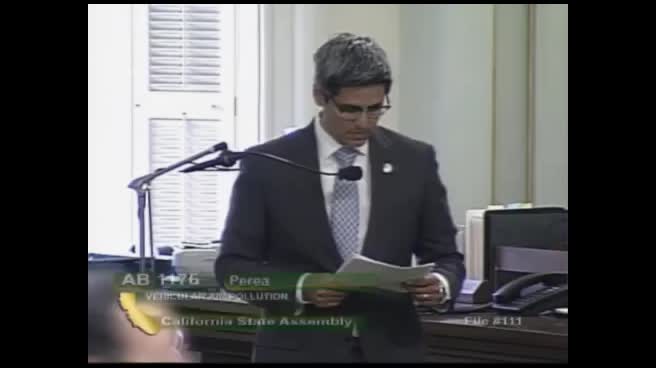
Bill Author

Bill Co-Author(s):