AB 1370: Public postsecondary education: student residency.
- Session Year: 2015-2016
- House: Assembly
- Latest Version Date: 2015-06-01
Existing law expresses the intent of the Legislature that the University of California and the California State University establish nonresident student tuition policies that are consistent with their resident student fee policies. Existing law provides that nonresident student tuition shall be determined by each of these public postsecondary segments through the adoption of a methodology that annually establishes the nonresident student tuition rate. These provisions are applicable to the University of California only if the Regents of the University of California act, by resolution, to make them applicable.
Existing law expresses the intent of the Legislature that the California Postsecondary Education Commission annually review specified data with respect to making comparisons between the California postsecondary educational segments and the postsecondary educational systems of 7 specified major industrial states. The commission has not been funded in recent fiscal years.
This bill would delete the expression of legislative intent relating to the establishment of nonresident student tuition policies at the University of California and the California State University that are consistent with resident student fee policies. The bill would instead require that nonresident student tuition be determined by each of these segments through the adoption of a methodology that annually establishes the nonresident student tuition at each campus of the segment.
The bill would require that under no circumstances shall the level of nonresident tuition plus required student fees charged by a campus fall below the marginal cost of instruction for that campus. The
This bill would also require that that, on or before the 201819 academic year, and each academic year thereafter, not less than 50% of the revenues, revenues in excess of the marginal cost of instruction, instruction generated from undergraduate nonresident enrollment be directed to fund increased enrollment for undergraduate resident students at all campuses of the university with undergraduate students.
The bill would prohibit the total number of undergraduate nonresident students enrolled at any campus all of the campuses of the University of California from exceeding 10% of the total number of undergraduate student enrollment. The bill would further prohibit, from March 1, 2016, to July 1, 2021, inclusive, any campus of the University of California at which undergraduate nonresident enrollment exceeds 10% of total undergraduate student enrollment as of March 1, 2016, from increasing the enrollment of undergraduate nonresident students from the percentage of those students enrolled at that campus on March 1, 2016. nonresident students enrolled in the 201516 academic year. The bill would require the University of California to annually publish a report including specified data about the revenues generated by undergraduate nonresident student enrollment, and to provide for equitable distribution of those revenues among the campuses enrollment.
This bill, notwithstanding the existing provision that would make this bill applicable to the University of California only upon the action of the regents, and notwithstanding any other law, would prohibit the regents from allocating any state funds appropriated to the University of California in the annual Budget Act or another statute to a campus of the University of California unless the campus is in compliance with this bill.
Existing law expresses the intent of the Legislature that the University of California and the California State University establish nonresident student tuition policies that are consistent with their resident student fee policies. Existing law provides that nonresident student tuition shall be determined by each of these public postsecondary segments through the adoption of a methodology that annually establishes the nonresident student tuition rate. These provisions are applicable to the University of California only if the Regents of the University of California act, by resolution, to make them applicable.
Existing law expresses the intent of the Legislature that the California Postsecondary Education Commission annually review specified data with respect to making comparisons between the California postsecondary educational segments and the postsecondary educational systems of 7 specified major industrial states. The commission has not been funded in recent fiscal years.
This bill would delete the expression of legislative intent relating to the establishment of nonresident student tuition policies at the University of California and the California State University that are consistent with resident student fee policies. The bill would instead require that nonresident student tuition be determined by each of these segments through the adoption of a methodology that annually establishes the nonresident student tuition at each campus of the segment.
The bill would require that under no circumstances shall the level of nonresident tuition plus required student fees charged by a campus fall below the total nonresident charges imposed by each of their comparison institutions, as identified by the California Postsecondary Education Commission or a successor agency. marginal cost of instruction for that campus. The bill would also require that an unspecified percentage not less than 50% of the revenues revenues, in excess of the marginal cost of instruction, generated from undergraduate nonresident enrollment be directed to financial aid programs for fund increased enrollment for undergraduate resident students.
The bill would prohibit the number of undergraduate nonresident students enrolled at any campus of the University of California from exceeding 10% of total undergraduate student enrollment. The bill would further prohibit, from March 1, 2016, to July 1, 2021, inclusive, any campus of the University of California at which undergraduate nonresident enrollment exceeds 10% of total undergraduate student enrollment as of the operative date of the bill March 1, 2016, from increasing the enrollment of undergraduate nonresident students from the amount percentage of those students enrolled at that campus on that date. March 1, 2016. The bill would require the University of California to annually publish a report including specified data about the revenues generated by undergraduate nonresident student enrollment, and to provide for equitable distribution of those revenues among the campuses.
The bill would declare that,
This bill, notwithstanding the existing provision that would make this bill applicable to the University of California only upon the action of the regents, and notwithstanding any other law, would prohibit the regents from allocating any state funds appropriated to the University of California in the annual Budget Act or another statute to a campus of the University of California would not be deemed to be authorized by the State of California for purposes of its students receiving federal financial aid unless the campus is in compliance with this bill.
Existing law expresses the intent of the Legislature that the University of California and the California State University establish nonresident student tuition policies that are consistent with their resident student fee policies. Existing law provides that nonresident student tuition shall be determined by each of these public postsecondary segments through the adoption of a methodology that annually establishes the nonresident student tuition rate. These provisions are applicable to the University of California only if the Regents of the University of California act, by resolution, to make them applicable.
Existing law expresses the intent of the Legislature that the California Postsecondary Education Commission annually review specified data with respect to making comparisons between the California postsecondary educational segments and the postsecondary educational systems of 7 specified major industrial states. The commission has not been funded in recent fiscal years.
This bill would delete the expression of legislative intent relating to the establishment of nonresident student tuition policies at the University of California and the California State University that are consistent with resident student fee policies. The bill would instead require that nonresident student tuition be determined by each of these segments through the adoption of a methodology that annually establishes the nonresident student tuition at each campus of the segment.
The bill would require that under no circumstances shall the level of nonresident tuition plus required student fees charged by a campus fall below the total nonresident charges imposed by each of their comparison institutions, as identified by the California Postsecondary Education Commission or a successor agency. The bill would also require that an unspecified percentage of the revenues generated from nonresident enrollment be directed to financial aid programs for resident students.
The bill would prohibit the number of nonresident students enrolled at any campus of the University of California from exceeding 10% of total student enrollment. The bill would further prohibit any campus of the University of California at which nonresident enrollment exceeds 10% of total student enrollment as of the operative date of the bill from increasing the enrollment of nonresident students from the amount of those students enrolled at that campus on that date. The bill would require the University of California to annually publish a report including specified data about the revenues generated by nonresident student enrollment, and to provide for equitable distribution of those revenues among the campuses.
The bill would declare that, notwithstanding the existing provision that would make this bill applicable to the University of California only upon the action of the regents, a campus of the University of California would not be deemed to be authorized by the State of California for purposes of its students receiving federal financial aid unless the campus is in compliance with this bill.
In accordance with Section 68052, the governing board or district governing board shall calculate the amount of nonresident tuition, the method of payment, and the method and amount of refund.
SEC. 2.Section 68052 of the Education Code is amended to read:68052.(a)Nonresident student tuition shall be determined by each of the public postsecondary segments through the adoption of a methodology that annually establishes the nonresident student tuition rate at each campus of that segment.
(b)The following state policies regarding nonresident student tuition are hereby established:
(1)Unless otherwise prescribed by statute, an admission fee and rate of tuition for each campus, fixed by each public postsecondary governing board, shall be required of each nonresident student. Each public postsecondary education governing body shall develop its own methodology for establishing the nonresident tuition level and its annual adjustment of nonresident student tuition at each campus, unless otherwise prescribed by statute.
(2)As Californias public postsecondary education segments annually adjust the level of nonresident tuition they charge out-of-state students, the nonresident tuition methodologies they develop and use shall take into consideration both of the following factors:
(A)For each campus of the University of California and the California State University, the total nonresident charges imposed by each of their comparison institutions, as identified by the California Postsecondary Education Commission or a successor agency.
(B)The full average cost of instruction for that segment.
(3)Under no circumstances shall the level of nonresident tuition plus required student fees charged by a campus fall below the marginal cost of instruction for that campus.
(4)The University of California, the California State University, the Hastings College of the Law, and the California Maritime Academy should endeavor to ensure that increases in the level of nonresident tuition are predictable by providing nonresident students with an appropriate notice of tuition increases.
(5)An amount not less than 50 percent of the revenues in excess of the marginal cost of instruction, generated from undergraduate nonresident enrollment, shall be directed to fund increased enrollment of undergraduate resident students.
(c)No provision of this section shall be applicable to the California Community Colleges.
SEC. 3.SECTION 1.Section 68052.1 is added to the Education Code, to read:68052.1.(a)(1)Except as provided in paragraph (2), theThe total number of undergraduate nonresident students enrolled at any campus all of the campuses of the University of California shall not exceed 10 percent of the total number of undergraduate student enrollment. nonresident students enrolled in the 201516 academic year.
(2)From March 1, 2016, to July 1, 2021, inclusive, any campus of the University of California at which undergraduate nonresident enrollment exceeds 10 percent of total student enrollment as of March 1, 2016, is prohibited from increasing the enrollment of undergraduate nonresident students from the percentage of those students enrolled at that campus on March 1, 2016.
(b)The University of California shall establish a revenue sharing agreement pursuant to which revenues generated by undergraduate nonresident student enrollment are distributed equitably to each campus of the university.
(b)On or before the 201819 academic year, and each academic year thereafter, an amount not less than 50 percent of the revenues in excess of the marginal cost of instruction, generated from undergraduate nonresident enrollment, shall be directed to fund increased enrollment of undergraduate resident students at all campuses of the university with undergraduate students.
(c)The University of California shall annually publish a report, including, report that includes, but is not necessarily limited to, all of the following information:
(1)The undergraduate nonresident tuition and fee level established at each campus.
(2)
(1)The amount of revenues generated by undergraduate nonresident enrollment at each campus.
(3)
(2)The method by which these revenues were distributed among the various campuses of the university.
(4)
(3)For each campus, the purposes for which these revenues were expended, including, but not limited to, the number of California resident undergraduate students admitted pursuant to paragraph (5) of subdivision (b) of Section 68052. subdivision (b).
SEC. 4.Section 68052.2 is added to the Education Code, to read:68052.2.Notwithstanding Section 68134 or any other law, the Regents of the University of California shall not allocate any state funds appropriated to the University of California in the annual Budget Act or another statute to a campus of the University of California unless the campus is in compliance with this article.
In accordance with Section 68052, the governing board or district governing board shall calculate the amount of nonresident tuition, the method of payment, and the method and amount of refund.
SEC. 2.Section 68052 of the Education Code is amended to read:68052.(a)Nonresident student tuition shall be determined by each of the public postsecondary segments through the adoption of a methodology that annually establishes the nonresident student tuition rate at each campus of that segment.
(b)The following state policies regarding nonresident student tuition are hereby established:
(1)Unless otherwise prescribed by statute, an admission fee and rate of tuition for each campus, fixed by each public postsecondary governing board, shall be required of each nonresident student. Each public postsecondary education governing body shall develop its own methodology for establishing the nonresident tuition level and its annual adjustment level of nonresident student tuition at each campus, unless otherwise prescribed by statute.
(2)As Californias public postsecondary education segments annually adjust the level of nonresident tuition they charge out-of-state students, the nonresident tuition methodologies they develop and use shall be based, at a minimum, on the total nonresident charges imposed by each of their comparison institutions, as identified by the California Postsecondary Education Commission or a successor agency. use shall take into consideration both of the following factors:
(A)For each campus of the University of California and the California State University, the total nonresident charges imposed by each of their comparison institutions, as identified by the California Postsecondary Education Commission or a successor agency.
(B)The full average cost of instruction for that segment.
(3)Under no circumstances shall the level of nonresident tuition plus required student fees charged by a campus fall below the total nonresident charges imposed by its comparison institutions, as identified by the California Postsecondary Education Commission or a successor agency. the marginal cost of instruction for that campus.
(4)The University of California, the California State University, the Hastings College of the Law, and the California Maritime Academy should endeavor to ensure that increases in the level of nonresident tuition are predictable by providing nonresident students with an appropriate notice of tuition increases.
(5)__ percent of the revenues generated from An amount not less than 50 percent of the revenues in excess of the marginal cost of instruction, generated from undergraduate nonresident enrollment, shall be directed to financial aid programs for fund increased enrollment of undergraduate resident students.
(c)No provision of this section shall be applicable to the California Community Colleges.
SEC. 3.Section 68052.1 is added to the Education Code, to read:68052.1.(a)The (1)Except as provided in paragraph (2), the number of undergraduate nonresident students enrolled at any campus of the University of California shall not exceed 10 percent of total undergraduate student enrollment. Any
(2)From March 1, 2016, to July 1, 2021, inclusive, any campus of the University of California at which undergraduate nonresident enrollment exceeds 10 percent of total student enrollment as of the operative date of the act that adds this section March 1, 2016, is prohibited from increasing the enrollment of undergraduate nonresident students from the amount percentage of those students enrolled at that campus on that date. March 1, 2016.
(b)The University of California shall establish a revenue sharing agreement pursuant to which revenues generated by undergraduate nonresident student enrollment are distributed equitably to each campus of the university.
(c)The University of California shall annually publish a report, including, but not necessarily limited to, all of the following information:
(1)The undergraduate nonresident tuition and fee level established at each campus.
(1)
(2)The amount of revenues generated by undergraduate nonresident enrollment at each campus.
(2)
(3)The method by which these revenues were distributed among the various campuses of the university.
(3)
(4)For each campus, the purposes for which these revenues were expended. expended, including, but not limited to, the number of California resident undergraduate students admitted pursuant to paragraph (5) of subdivision (b) of Section 68052.
SEC. 4.Section 68052.2 is added to the Education Code, to read:68052.2.Notwithstanding Section 68134, 68134 or any other law, the Regents of the University of California shall not allocate any state funds appropriated to the University of California in the annual Budget Act or another statute to a campus of the University of California shall not be deemed to be authorized by the State of California for purposes of Title IV of the federal Higher Education Act unless the campus is in compliance with this article.
Unless otherwise provided by law, In accordance with Section 68052, the governing board or district governing board shall adopt rules and regulations relating to the method of calculation of calculate the amount of nonresident tuition, the method of payment, and the method and amount of refund.
SEC. 2.Section 68052 of the Education Code is amended to read:68052.(a)It is the intent of the Legislature that Californias public institutions of higher education shall establish nonresident student tuition policies that are consistent with their resident student fee policies. Nonresident student tuition shall be determined by each of the public postsecondary segments through the adoption of a methodology that annually establishes the nonresident student tuition rate. It is further the intent of the Legislature that, while the public institutions are to be provided flexibility in establishing their nonresident tuition, under no circumstances shall the level of nonresident tuition plus required fees fall below the marginal cost of instruction for that segment. rate at each campus of that segment.
(b)The following state policies regarding nonresident student tuition are hereby established:
(1)Unless otherwise prescribed by statute, an admission fee and rate of tuition for each campus, fixed by each public postsecondary governing board, shall be required of each nonresident student. Each public postsecondary education governing body shall develop its own methodology for establishing the nonresident tuition level and its annual adjustment level of nonresident student tuition at each campus, unless otherwise prescribed by statute.
(2)As Californias public postsecondary education segments annually adjust the level of nonresident tuition they charge out-of-state students, the nonresident tuition methodologies they develop and use should take into consideration, at minimum, the following two factors: shall be based, at a minimum, on the total nonresident charges imposed by each of their comparison institutions, as identified by the California Postsecondary Education Commission or a successor agency.
(A)For the University of California and the California State University, the total nonresident charges imposed by each of their public comparison institutions, as identified by the California Postsecondary Education Commission.
(B)The full average cost of instruction of their segment.
(3)It is the intent of the Legislature that under Under no circumstances shall an institutions the level of nonresident tuition plus required student fees charged by a campus fall below the marginal cost of instruction for that segment. total nonresident charges imposed by its comparison institutions, as identified by the California Postsecondary Education Commission or a successor agency.
(4)The University of California, the California State University, the Hastings College of the Law, and the California Maritime Academy should endeavor to ensure that increases in the level of nonresident tuition are gradual, moderate, and predictable by providing nonresident students with a minimum of a 10-month an appropriate notice of tuition increases.
(5)__ percent of the revenues generated from nonresident enrollment shall be directed to financial aid programs for resident students.
(c)No provision of this section shall be applicable to the California Community Colleges.
(d)In the event that state revenues and expenditures are substantially imbalanced due to factors unforeseen by the Governor and the Legislature, including, but not limited to, initiative measures, natural disasters, or sudden deviations from expected economic trends, the nonresident student tuition at the University of California, the California State University, the Hastings College of the Law, and the California Maritime Academy, shall not be subject to this section.
SEC. 3.Section 68052.1 is added to the Education Code, to read:68052.1.(a)The number of nonresident students enrolled at any campus of the University of California shall not exceed 10 percent of total student enrollment. Any campus of the University of California at which nonresident enrollment exceeds 10 percent of total student enrollment as of the operative date of the act that adds this section is prohibited from increasing the enrollment of nonresident students from the amount of those students enrolled at that campus on that date.
(b)The University of California shall establish a revenue sharing agreement pursuant to which revenues generated by nonresident student enrollment are distributed equitably to each campus of the university.
(c)The University of California shall annually publish a report, including, but not necessarily limited to, all of the following information:
(1)The amount of revenues generated by nonresident enrollment at each campus.
(2)The method by which these revenues were distributed among the various campuses of the university.
(3)For each campus, the purposes for which these revenues were expended.
SEC. 4.Section 68052.2 is added to the Education Code, to read:68052.2.Notwithstanding Section 68134, a campus of the University of California shall not be deemed to be authorized by the State of California for purposes of Title IV of the federal Higher Education Act unless the campus is in compliance with this article.
|
Date
|
Status
|
|---|---|
| Feb 27, 2015 | Introduced. To print. |
| Mar 1, 2015 | From printer. May be heard in committee March 31. |
| Mar 2, 2015 | Read first time. |
| Mar 23, 2015 | Referred to Com. on HIGHER ED. |
| Apr 21, 2015 | In committee: Set, first hearing. Hearing canceled at the request of author. |
| Apr 22, 2015 | From committee chair, with author's amendments: Amend, and re-refer to Com. on HIGHER ED. Read second time and amended. |
| Apr 23, 2015 | Re-referred to Com. on HIGHER ED. |
| Apr 29, 2015 | From committee: Do pass and re-refer to Com. on APPR. (Ayes 11. Noes 0.) (April 28). Re-referred to Com. on APPR. |
| May 13, 2015 | In committee: Set, first hearing. Referred to APPR. suspense file. |
| May 28, 2015 | From committee: Amend, and do pass as amended. (Ayes 12. Noes 0.) (May 28). |
| Jun 1, 2015 | Read second time and amended. Ordered returned to second reading. |
| Jun 2, 2015 | Read second time. Ordered to third reading. |
| Jun 3, 2015 | In Senate. Read first time. To Com. on RLS. for assignment. |
| Jun 3, 2015 | Read third time. Passed. Ordered to the Senate. |
| Jun 3, 2015 | Read third time. Passed. Ordered to the Senate. (Ayes 78. Noes 0. Page 1882.) |
| Jun 18, 2015 | Referred to Com. on ED. |
|
Date
|
Description
|
Location
|
Votes
|
|
|---|---|---|---|---|
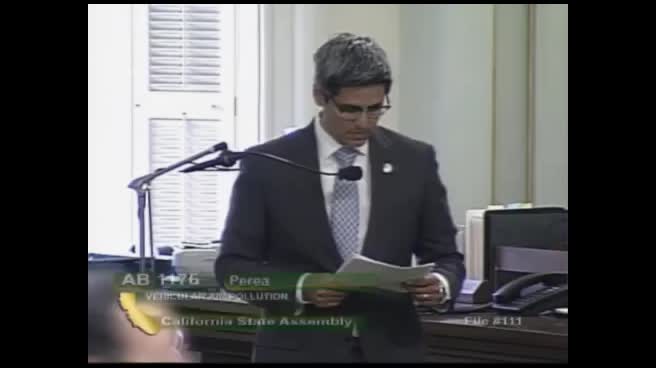
| Jun 3, 2015 | AB 1370 MEDINA Assembly Third Reading | Assembly Floor |
Passed |
|
| May 28, 2015 | Do pass as amended. | Assembly Standing Committee on Appropriations |
Passed |
|
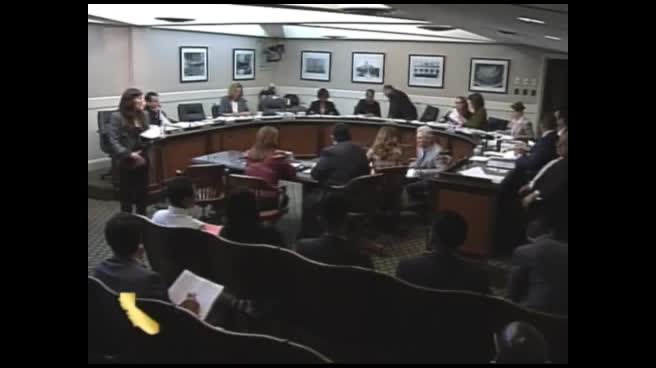
| Apr 28, 2015 | Do pass and be re-referred to the Committee on [Appropriations] | Assembly Standing Committee on Higher Education |
Passed |
This list shows positions taken on this bill by organizations on the date displayed, which is linked to the original source.
Positions by individuals are not included.
|
Organization
|
Position
|
Date
|
|---|---|---|
| California Federation Of Teachers | * Support | May 13, 2015 |
AB 1370
Page 3
ASSEMBLY THIRD READING
AB 1370
(Medina and Beth Gaines)
As Amended June 1, 2015
Majority vote
Committee |
Votes |
Ayes |
Noes |
Higher Education |
11-0 |
Medina, Baker, Bloom, Chávez, Harper, Levine, Linder, Low, Santiago, Weber, Williams |
|
Appropriations |
12-0 |
Gomez, Bonta, Calderon, Daly, Eggman, Eduardo Garcia, Gordon, Holden, Quirk, Rendon, Weber, Wood |
|
SUMMARY: Revises provisions governing the nonresident tuition at the University of California (UC). Specifically, this bill:
Prohibits the number of undergraduate nonresident students enrolled at any UC campus from exceeding the number enrolled in the 2015-16 academic year.
Requires UC, by the 2018-19 academic year and each academic year thereafter, not less than 50% of the revenues in excess of the marginal cost of instruction, generated from undergraduate nonresident enrollment, be directed to fund increased enrollment of undergraduate resident students across all campuses with undergraduate students.
Requires UC to annually publish an annual report that includes the amount of revenues generated by undergraduate nonresident enrollment at each campus, the method by which the revenues were distributed among the campuses of the university, and, for each campus, the purposes for which these revenues were expended, including the number of California resident undergraduate students admitted.
EXISTING LAW:
Requires that a student classified as a nonresident pay nonresident tuition. Current law authorizes both the UC and the California State University to establish nonresident student tuition policies and methodologies to be developed by each institution's governing body. The annual fee rate is prohibited from falling below the marginal cost of instruction and the rates at comparison institutions, as identified by the California Postsecondary Education Commission, must be considered. (Education Code Sections 68050-68052)
Establishes UC as a public trust and confers the full powers of the UC upon the UC Regents. The Constitution establishes that the UC is subject to legislative control only to the degree necessary to ensure the security of its funds and compliance with the terms of its endowments. Judicial decisions have held that there are three additional areas in which there may be limited legislative intrusion into university operations: authority over the appropriation of state moneys; exercise of the general police power to provide for the public health, safety and welfare; and, legislation on matters of general statewide concern not involving internal university affairs. (Constitution of California Article IX, Section 9)
FISCAL EFFECT: According to the Assembly Appropriations Committee, based on the current enrollment of 25,000 nonresident undergraduates, the requirement to reallocate 50% of revenue generated from these students above the marginal cost of instruction (assumed as $6,500 per student) would result in a redirection of $160 million, within UC's core funding of almost $6.3 billion, to fund resident undergraduate enrollment growth beginning by 2018-19. Assuming a marginal state cost of $10,000 per student, this would fund enrollment of an additional 16,000 resident undergraduates, for an almost 9% increase in undergraduate enrollment by 2018-19.
COMMENTS: Purpose of this bill. According to the author, the California Constitution establishes UC as a public institution; annually, over $3 billion in California taxpayer funds are provided to support UC's teaching, research, and public service mission. However, evidence suggests that the way in which UC enrolls and uses funds generated by nonresident students could be undermining the UC's public mission.
The author notes that during California's recession and resulting state budget cuts, UC increasingly relied on tuition (and nonresident students, in particular, who pay an additional $23,000 in tuition) to meet revenue needs. From 2007-08 to 2013-14 the number of nonresident undergraduates grew from 7,103 to 20,073. In 2000, 90% of freshman at UC Berkeley came from California. By 2012, the proportion dropped to 71%. At UC Los Angeles (UCLA), the percentage of California residents dropped 23%, to 72% in 2012.
According to the author, UC argues that admitting nonresident students has allowed the system to enroll about 7,500 California students for which the state has not provided funding. However, UC allows tuition revenues generated by nonresident students to be kept by the campus in which the student enrolls. As the author points out, according to UC's own records, the majority of "unfunded students" are attending campuses with very low nonresident enrollment. In fact, in 2013, UCLA, with 19.2% nonresidents, was only serving 191 California residents for which it was not funded. UC Berkeley, with 21.2% nonresidents, was serving 332 fewer California students than it was funded to serve. UC Riverside, on the other hand, served 1,871 unfunded Californians, but enrolled only 448 nonresidents.
The author points to UC's recent indication that, for the 2015-16 academic year, it will be capping the number of in-state enrollments at current levels pending the outcome of budget negotiations. While UC has indicated it will cap nonresidents at UCLA and UC Berkeley, it will continue to enroll nonresident students at other campuses during this time. According to the author, this means that UC-qualified California students will be wait-listed and potentially turned away, while nonresident students are provided access to the system.
Funding directed toward California resident access. This bill would require at least 50% of the revenue generated from undergraduate nonresident enrollment, in excess of the cost of instruction, to be used to support enrollment of resident students. According to the Subcommittee, which heard issues surrounding UC enrollment at a hearing on April 21, 2015, the data reveal that rising admission and enrollment of nonresident students has coincided with decreasing admission and enrollment of Californians at many UC, particularly flagship, campuses. The Subcommittee analysis notes that, in a paper published in October 2014 called "Tuition Rich, Mission Poor: Nonresident enrollment and the changing proportions of low-income and underrepresented minority students and public research universities," professors at the University of Arizona, University of Missouri, and University of Michigan studied enrollment trends at public research universities across the country – including UC – and reported that "nonresident enrollment growth may have negative consequences for access" to low-income and underrepresented students. The intent of the author is to ensure that campuses enrolling additional California students benefit from revenues generated by nonresident enrollment.
Analysis Prepared by: Laura Metune / HIGHER ED. / (916) 319-3960 FN: 0000765
AB 1370
Page 3
Date of Hearing: May 13, 2015
ASSEMBLY COMMITTEE ON APPROPRIATIONS
Jimmy Gomez, Chair
AB 1370
(Medina) – As Amended April 22, 2015
Policy Committee: |
Higher Education |
Vote: |
11 - 0 |
|
|
|
|
|
|
|
|
Urgency: No State Mandated Local Program: No Reimbursable: No
SUMMARY:
This bill modifies provisions for imposing and allocating nonresident undergraduate tuition at the University of California (UC) and the California State University (CSU). Specifically, this bill:
Requires the governing boards of UC and CSU to establish nonresident tuition rates for each campus of their respective segment, considering the nonresident charges imposed by their comparison institutions and the cost of instruction.
Requires that at least 50% of the revenue generated above the cost of instruction from undergraduate nonresident enrollment be directed toward enrollment of resident undergraduates.
Prohibits the number of undergraduate nonresident students enrolled at any UC campus from exceeding 10% of total student enrollment, and until July 1, 2021, any UC campus exceeding the 10% limit on the operative date of this bill is prohibited from increasing undergraduate nonresident enrollment above the amount on that campus as of March 1, 2016.
Requires UC to establish a revenue sharing agreement pursuant to which revenues generated by undergraduate nonresident student enrollment are distributed equitably to each UC campus.
Requires the UC report annually regarding undergraduate nonresident tuition by campus, revenues generated from the tuition by campus, the method by which the revenues were distributed among the campuses, and, for each campus, the purposes for which these revenues were expended.
Prohibits the UC Regents from allocated state appropriations for UC to any campus not in compliance with the above.
FISCAL EFFECT:
UC. Based on the current enrollment of 25,000 nonresident undergraduates, the requirement to reallocate 50% of revenue generated from these students above the marginal cost of instruction (assumed as $6,500 per student) would result in a redirection of $160 million, within UC's core funding of almost $6.3 billion, to fund resident undergraduate enrollment growth. Assuming a marginal state cost of $10,000 per student, this would fund enrollment of an additional 16,000 resident undergraduates, for an almost 9% increase in undergraduate enrollment, which UC indicates it could not immediately absorb. According to UC, this redirection of nonresident tuition revenue will also impact those areas for which it is currently expended, such as improving student-faculty ratios, providing enhanced financial aid for resident students, improving academic support services, and addressing critical deferred maintenance issues. The requirement for equitable distribution of nonresident tuition revenue will also result in a reallocation of these revenues to the benefit of some campuses and the detriment of others.
CSU. Based on the current enrollment of 13,600 full-time equivalent nonresident undergraduates, the requirement to reallocate 50% of revenue generated from these students above the marginal cost of instruction (assumed as $3,500 per student) would result in a redirection of almost $50 million within CSU's core funding of almost $5.4 billion, to fund resident undergraduate enrollment growth. (CSU indicates that it currently uses nonresident tuition mainly for one-time expenses.) Assuming a marginal state cost of $5,500 per student, this would fund enrollment of an additional 8,600 resident undergraduates.
COMMENTS:
Background. Out-of-state and international students (nonresidents) are recognized in higher education as enhancing the college experience by bringing a diversity of backgrounds and perspectives to campuses. However, the state has traditionally considered only resident students when determining enrollment for CSU and UC because the state does not provide funding for nonresident students. Current law allows each segment to set nonresident enrollment levels and fees, requiring that nonresident fees, at minimum, cover marginal costs. At UC, approximately 13% of all students systemwide are nonresidents, and undergraduate nonresidents pay about $23,000 more than California students in tuition. At CSU, about 5% of all students are nonresidents, and undergraduate nonresidents pay an additional $11,160. Both UC and CSU indicate that monies generated from nonresident enrollment are used to support and enhance educational access and quality for all students (residents and nonresidents).
The author notes that during California's recession and resulting state budget cuts, UC increasingly relied on tuition (and from nonresident students, in particular) to meet revenue needs. From 2007-08 to 2013-14, the number of nonresident undergraduates grew from 7,103 to 20,073. While in 2000, 90% of freshman at UC Berkeley came from California, by 2012, the proportion dropped to 71%. At UCLA, the percentage of California residents dropped 23%, to 72% in 2012.
Formerly, UC required supplemental nonresident tuition to be collected centrally and redistributed back to all campuses based on systemwide priorities. Since 2007-08, UC has allowed individual campuses to retain the revenue associated with nonresident supplemental tuition.
Purpose. In an attempt to re-prioritize enrollment of California residents throughout UC, this bill limits the share of nonresident undergraduate enrollment at any UC campus to 10%, requires 50% of the revenue generated by nonresident undergraduates to fund resident undergraduate enrollment, and requires the revenue from nonresident undergraduates to be allocated equitably among the campuses.
In response to concerns over nonresident enrollment, current-UC President Napolitano recently announced capping nonresident enrollment at UC Berkeley and UCLA, and limiting growth at UC San Diego. UC has expressed concern that instituting the cap proposed in this bill could disadvantage campuses seeking to increase nonresident enrollment in order to fund resident enrollments and operational needs not met by the state.
Analysis Prepared by: Chuck Nicol / APPR. / (916) 319-2081
AB 1370
Page 5
Date of Hearing: April 28, 2015
ASSEMBLY COMMITTEE ON HIGHER EDUCATION
Jose Medina, Chair
AB 1370
(Medina) – As Amended April 22, 2015
SUBJECT: Public postsecondary education: student residency
SUMMARY: Revises provisions governing the nonresident tuition at the University of California (UC) and the California State University (CSU). Specifically, this bill:
Requires UC and CSU to establish nonresident tuition rates at each campus of their respective segment based on the total nonresident charges imposed by comparison institutions, as identified by the California Postsecondary Education Commission or a successor agency, and the cost of instruction.
Removes requirements that nonresident tuition increases be gradual and moderate with a minimum of a 10-month notice, and instead requires nonresident students have predictable increases that ensure an appropriate notice of the increase to students.
Requires, at minimum, 50% of revenues generated, above the cost of instruction, from undergraduate nonresident enrollment to be directed to enrollment of resident students.
Removes language that sets aside the provisions of the law in the event that state revenues and expenditures are substantially imbalanced due to unforeseen factors.
Prohibits the number of undergraduate nonresident students enrolled at any UC campus from exceeding 10% of total student enrollment. Provides, until July 1, 2021, any campus of UC at which undergraduate nonresident enrollment exceeds 10% on the operative date of this bill is prohibited from increasing the enrollment of undergraduate nonresident students above that amount.
Requires UC to establish a revenue sharing agreement pursuant to which revenues generated by undergraduate nonresident student enrollment are distributed equitably to each campus of the UC.
Requires the UC to annually publish an annual report that includes the undergraduate nonresident tuition and fee level established at each campus, the amount of revenues generated by undergraduate nonresident enrollment at each campus, the method by which the revenues were distributed among the campuses of the university, and, for each campus, the purposes for which these revenues were expended.
Provides that the Regents of the UC shall not allocate any state funds appropriated to the UC in the annual Budget Act or another statute to a campus of the UC unless the campus is in compliance with this article.
EXISTING LAW:
Requires that a student classified as a nonresident pay nonresident tuition. Current law authorizes both the UC and the CSU to establish nonresident student tuition policies and methodologies to be developed by each institution's governing body. The annual fee rate is prohibited from falling below the marginal cost of instruction and the rates at comparison institutions, as identified by the California Postsecondary Education Commission, must be considered. (Education Code Sections 68050-68052)
Establishes UC as a public trust and confers the full powers of the UC upon the UC Regents. The Constitution establishes that the UC is subject to legislative control only to the degree necessary to ensure the security of its funds and compliance with the terms of its endowments. Judicial decisions have held that there are three additional areas in which there may be limited legislative intrusion into university operations: authority over the appropriation of state moneys; exercise of the general police power to provide for the public health, safety and welfare; and, legislation on matters of general statewide concern not involving internal university affairs. (Constitution of California, Article IX, Section 9)
FISCAL EFFECT: Unknown
COMMENTS: Purpose of this bill. According to the author, the California Constitution establishes UC as a public institution; annually, over $3 billion in California taxpayer funds are provided to support UC's teaching, research, and public service mission. However, evidence suggests that the way in which UC enrolls and uses funds generated by nonresident students could be undermining the UC's public mission.
The author notes that during California's recession and resulting state budget cuts, UC increasingly relied on tuition (and nonresident students, in particular, who pay an additional $23,000 in tuition) to meet revenue needs. From 2007-08 to 2013-14 the number of nonresident undergraduates grew from 7,103 to 20,073. In 2000 90% of freshman at UC Berkeley came from California. By 2012, the proportion dropped to 71%. At UCLA, the percentage of California residents dropped 23%, to 72% in 2012.
According to the author, UC argues that admitting nonresident students has allowed the system to enroll about 7,500 California students for which the state has not provided funding. However, UC allows tuition revenues generated by nonresident students to be kept by the campus in which the student enrolls. As the author points out, according to UC's own records, the majority of "unfunded students" are attending campuses with very low nonresident enrollment. In fact, in 2013, UCLA, with 19.2% nonresidents, was only serving 191 California residents for which it was not funded. UC Berkeley, with 21.2% nonresidents, was serving 332 fewer California students than it was funded to serve. UC Riverside, on the other hand, served 1,871 unfunded Californians, but enrolled only 448 nonresidents.
The author points to UC's recent indication that, for the 2015-16 academic year, it will be capping the number of in-state enrollments at current levels pending the outcome of budget negotiations. While UC has indicated it will cap nonresidents at UCLA and Berkeley, it will continue to enroll nonresident students at other campuses during this time. According to the author, this means that UC-qualified California students will be wait-listed and potentially turned away, while nonresident students are provided access to the system.
Nonresident enrollment. Out-of-state and international students (nonresidents) are recognized in higher education as enhancing the college experience by bringing a diversity of backgrounds and perspectives to campuses. However, the state has traditionally considered only resident students when determining enrollment for CSU and UC because the state does not provide funding for nonresident students. Current law allows each segment to set nonresident enrollment levels and fees, requiring that nonresident fees, at minimum, cover marginal costs. At UC, approximately 13% of all students systemwide are nonresidents, and undergraduate nonresidents pay about $23,000 more than California students in tuition. At CSU, about 5% of all students are nonresidents, and undergraduate nonresidents pay an additional $11,160. Both UC and CSU indicate that monies generated from nonresident enrollment are used to support and enhance educational access and quality for all students (residents and nonresidents) at that campus.
Resident enrollment targets. According to the LAO, while it appears that some campuses, like UC Berkeley, are substituting nonresidents for residents, it is difficult to hold these campuses accountable for resident displacement without a clear indication from the state on what it expects in terms of resident enrollment systemwide and at each campus. Governor Brown's budget proposal requires UC and CSU to not increase student fees and requires UC to not increase nonresident enrollment above 2014-15 levels in order for each segment to receive the proposed $119 million augmentation. As noted by the LAO, if the intent of this proposal is to prioritize access to UC for California residents, in the absence of enrollment targets and associated funding, restricting nonresident enrollment alone might not achieve this objective. Reestablishing resident enrollment targets in the Budget Act is an item under discussion by the Assembly Budget Subcommittee No. 2 on Education Finance (subcommittee).
Funding directed toward California resident access. This bill would require at least 50% of the revenue generated from undergraduate nonresident enrollment, in excess of the cost of instruction, to be used to support enrollment of resident students. According to the Subcommittee, which heard issues surrounding UC enrollment at a hearing on April 21, 2015, the data reveal that rising admission and enrollment of nonresident students has coincided with decreasing admission and enrollment of Californians at many UC, particularly flagship, campuses. The Subcommittee analysis notes that, in a paper published in October 2014 called "Tuition Rich, Mission Poor: Nonresident enrollment and the changing proportions of low-income and underrepresented minority students and public research universities," professors at the University of Arizona, University of Missouri, and University of Michigan studied enrollment trends at public research universities across the country – including UC – and reported that "nonresident enrollment growth may have negative consequences for access" to low-income and underrepresented students.
Campus-based nonresident tuition. Currently nonresident tuition rates are established on a segment-wide basis. The bill would allow UC and CSU to establish nonresident tuition rates at each campus based on nonresident tuition rates of that campus's comparison institutions. This requirement would potentially allow UC and CSU to charge different nonresident tuition rates for each campus, based on the amount the market allows. Depending on the rates established, this provision could increase the ability of some campuses to increase nonresident enrollment and revenue from that enrollment.
UC nonresident enrollment limitations. In 2009, former-UC President Yudof announced the creation of the UC Commission on the Future, charged with developing a vision for the future of the UC that would reaffirm its role in sustaining California's economy and cultural life while recognizing that limited state resources required the UC to be creative and strategic in meeting that mission. The final report of the Commission was adopted in November 2010.
Among other things, the Commission recommended that the UC allow campuses to increase the number and proportion of undergraduate nonresident students to generate additional resources to sustain current instructional capacity and quality. The Commission requested:
Campuses establish targets that did not displace funded California residents eligible for UC admission.
The President of the UC monitor enrollments to ensure that these students were fairly apportioned among campuses.
The President to ensure that the proportion of nonresidents systemwide did not exceed 10% and annually report on the systemwide proportion to the Regents.
Governor Brown's January budget proposal prohibits UC from increasing nonresident enrollment above 2014-15 levels in order for each segment to receive the proposed $119 million augmentation.
This bill would prohibit the number of nonresident students enrolled at any campus of the UC from exceeding 10% of total student enrollment and would, until July 1, 2021, prohibit any campus at which nonresident enrollment currently exceeds 10% of total student enrollment from increasing the enrollment of nonresident students above current levels. Currently, UC Berkeley, UC Los Angeles and UC San Diego are above the 10% threshold. This bill would provide until 2021 for these campuses to reach the 10% limitation.
In response to concerns over nonresident enrollment, current-UC President Napolitano recently announced capping nonresident enrollment at UC Berkeley and UCLA, and limiting growth at UC San Diego. UC has expressed concern that by instituting the cap proposed in this bill, this bill could disadvantage campuses seeking to increase nonresident enrollment to fund resident enrollments and operational needs not met by the state.
As previously noted, nonresident tuition provides a source of revenue to UC that is particularly important in budget years where General Fund support is not provided to the system. Moving forward, the author may wish to consider whether it would be appropriate to set aside the nonresident student cap when necessary to address fiscal imbalance.
Sharing nonresident revenues among UC campuses. Formerly, UC required supplemental nonresident tuition to be collected centrally and redistributed back to all campuses based on systemwide priorities. Since 2007-08, UC has allowed individual campuses to retain the revenue associated with nonresident supplemental tuition. UC argues that excess funding generated by nonresident enrollment is used to improve services and access for California students. Nonresident enrollment is managed at the campus level, and campuses have taken different approaches in recent years.
As shown by the 2013 undergraduate enrollment numbers outlined below, UC campuses have taken different approaches to resident and nonresident enrollment:
UC Campus |
Undergraduate Nonresidents |
% Nonresident |
Undergraduate Residents |
Budgeted Residents |
"Unfunded" Residents |
Berkeley |
5,418 |
21.2% |
20,147 |
20,479 |
0 (-332) |
Davis |
1,748 |
7.1% |
22,822 |
20,780 |
2,042 |
Irvine |
2,138 |
9.3% |
20,733 |
20,348 |
385 |
Los Angeles |
5,185 |
19.2% |
21,877 |
21,686 |
191 |
Merced |
21 |
0.4% |
5,517 |
3,935 |
1,582 |
Riverside |
448 |
2.7% |
16,180 |
14,309 |
1,871 |
San Diego |
3,375 |
14.7% |
19,625 |
20,315 |
690 |
Santa Barbara |
1,362 |
7.6% |
16,662 |
16,365 |
297 |
Santa Cruz |
378 |
2.5% |
14,742 |
13,670 |
1,072 |
Under the current UC nonresident tuition structure, only those campuses that enroll nonresidents benefit from the revenue generated by those nonresident enrollments. This bill would require UC to establish an equitable revenue sharing agreement. The intent of the author is to ensure that all campuses, and particularly those enrolling additional California students, benefit from revenues generated by nonresident enrollment.
UC has expressed concern that requiring redistribution of nonresident tuition could take away campuses' incentive to invest the resources necessary to attract out-of-state students and thereby generate nonresident tuition revenues. The author may wish to consider this concern moving forward.
REGISTERED SUPPORT / OPPOSITION:
Support
None on File
Opposition
None on File
Analysis Prepared by: Laura Metune / HIGHER ED. / (916) 319-3960
Discussed in Hearing
 1MIN
Assembly Floor
 2MIN
Assembly Standing Committee on Appropriations
 6MIN
Assembly Standing Committee on Higher Education


Bill Co-Author(s):