AB 1430: California family owned businesses.
- Session Year: 2015-2016
- House: Assembly
- Latest Version Date: 2015-03-26
Existing law authorizes state and local entities to regulate businesses within their jurisdiction.
This bill would provide Legislative findings and declarations regarding California family owned businesses.
The Legislature finds and declares the following:
(a)In 2007, California was home to 1.4 million family owned businesses, which employed nearly 7 million people.
(b)Both large and small family owned businesses have been recognized through numerous academic studies as having unique characteristics. Those studies verify that family owned businesses invest more in their employees in terms of training and benefits, promote more women to high-level management positions, and are less likely to lay off employees or downsize in tough economic times.
(c)California family owned businesses continually demonstrate extraordinary commitment to the communities in which they operate because they are headquartered in the state. California family owned businesses have been shown to engage in high levels of local, community-based philanthropic giving, and are strong stewards of the environment by virtue of their long-term perspective and sense of duty to past, present, and future generations within the state.
SEC. 2.Section 27 is added to the Government Code, to read:27.(a)For the purposes of this code, California family owned business means a business that meets all of the following requirements:
(1)Is organized as a privately held business by one individual or two or more related persons, or is a partnership of business entities owned by related persons.
(2)Maintains its principal executive office in California.
(3)Has been in business for more than 10 continuous years.
(4)One of the following apply:
(A)Is owned by a sole proprietorship.
(B)Is a business entity owned by one individual or two or more related persons domiciled in California who hold a majority of the equity interests.
(C)Is a partnership of business entities owned by related persons domiciled in California who hold a majority of the equity interests.
(5)The business is controlled by one individual or two or more related persons who exhibit strategic influence and control of the business by holding the business as a sole proprietorship or by holding a majority of the voting interest.
(6)Demonstrates an intent to continuously operate as a family owned business in the future through any of the following:
(A)Present ownership by two or more related persons.
(B)A previous transfer of ownership or equity interests between related persons.
(C)Is subject to a written agreement providing for a future transfer between related persons provided that the agreement was executed in good faith.
(b)For the purpose of this section, related person includes a person who is related by a common ancestor, pursuant to state or federal law up to four generations. Any person related by greater than four generations is included if his or her ownership or operational involvement arose from an exercise of continuity across generations as described in paragraph (6). Related persons also includes a parent, stepparent, brother, sister, stepbrother, stepsister, half brother, half sister, adopted person, person born out of wedlock, stepchild, foster child, uncle, aunt, niece, nephew, first cousin, and any person denoted by the prefix grand or great. A spouse, domestic partner, and the spouse or domestic partner of any person that qualifies as a person related by a common ancestor, pursuant to state or federal law up to four generations, is also included within the definition of related persons and shall continue to be included in the event of the legal relationship being terminated by death or dissolution.
(c)The definition for California family owned business provided in this section shall only apply to provisions in which this section is explicitly cross-referenced.
The Legislature finds and declares the following:
(a)In 2007, California was home to 1.4 million family owned businesses, which employed nearly 7 million people.
(b)Both large and small family owned businesses have been recognized through numerous academic studies as having unique characteristics. Those studies verify that family owned businesses invest more in their employees in terms of training and benefits, promote more women to high-level management positions, and are less likely to lay off employees or downsize in tough economic times.
(c)California family owned businesses continually demonstrate extraordinary commitment to the communities in which they operate because they are headquartered in the state. California family owned businesses have been shown to engage in high levels of local, community-based philanthropic giving, and are strong stewards of the environment by virtue of their long-term perspective and sense of duty to past, present, and future generations within the state.
|
Date
|
Status
|
|---|---|
| Feb 27, 2015 | Introduced. To print. |
| Mar 1, 2015 | From printer. May be heard in committee March 31. |
| Mar 2, 2015 | Read first time. |
| Mar 26, 2015 | From committee chair, with author's amendments: Amend, and re-refer to Com. on B. & P. Read second time and amended. |
| Mar 26, 2015 | Referred to Com. on B. & P. |
| Apr 6, 2015 | Re-referred to Com. on B. & P. |
| May 5, 2015 | From committee: Do pass. (Ayes 14. Noes 0.) (May 5). |
| May 6, 2015 | Read second time. Ordered to third reading. |
| May 7, 2015 | In Senate. Read first time. To Com. on RLS. for assignment. |
| May 7, 2015 | Read third time. Passed. Ordered to the Senate. |
| May 7, 2015 | Read third time. Passed. Ordered to the Senate. (Ayes 76. Noes 0. Page 1343.) |
| May 21, 2015 | Referred to Com. on B., P. & E.D. |
| Jun 8, 2015 | In committee: Set, first hearing. Hearing canceled at the request of author. |
| Jun 6, 2016 | From committee: Do pass. (Ayes 8. Noes 0.) (June 6). |
| Jun 8, 2016 | Read second time. Ordered to third reading. |
| Jun 23, 2016 | Ordered to inactive file at the request of Senator Mendoza. |
|
Date
|
Description
|
Location
|
Votes
|
|
|---|---|---|---|---|
| Jun 6, 2016 | Do pass | Senate Standing Committee on Business, Professions and Economic Development |
Passed |
|
| May 7, 2015 | AB 1430 COOPER Assembly Third Reading | Assembly Floor |
Passed |
|
| May 5, 2015 | Do pass. | Assembly Standing Committee on Business and Professions |
Passed |
This list shows positions taken on this bill by organizations on the date displayed, which is linked to the original source.
Positions by individuals are not included.
|
Organization
|
Position
|
Date
|
|---|---|---|
| California Asian Pacific Chamber Of Commerce | ** Support | Jun 6, 2016 |
| California Family Business Association | * Support | Jun 6, 2016 |
Office of Senate Floor Analyses (916) 651-1520 Fax: (916) 327-4478 | AB |
THIRD READING
Bill No: AB 1430
:
SENATE BUS., PROF. & ECON. DEV. COMMITTEE: 8-0, 6/6/16
AYES: Hill, Bates, Block, Gaines, Galgiani, Hernandez, Mendoza, Wieckowski
NO VOTE RECORDED: Jackson
ASSEMBLY FLOOR: 76-0, 5/7/15 - See last page for vote
SOURCE: Family Business Association
DIGEST: This bill creates a definition for California family owned business in the Government Code.
Existing law:
- Defines a small business as "an independently owned and operated business that is not dominant in the field of operation, the principal office of which is located in California, the officers of which are domiciled in California, and which, together with affiliates, has 100 or fewer employees, and average annual gross receipts of ten million dollars or less over the previous three years, or is a manufacturer as specified." (Government Code (GC) § 14837)
- Defines a microbusiness as "a small business which, together with affiliates, has average annual gross receipts of two million, five hundred thousand dollars or less over the previous three years or is a manufacturer as specified."
(GC § 14837) - Defines a disabled veteran's business enterprise as "an enterprise that has been certified as meeting the qualifications established by Section 999 of the Military Code." (GC § 14837)
This bill:
- Makes various findings and declarations about California family owned businesses, including recognition that these businesses invest more in their employees in terms of training and benefits, promote more women to high-level management positions, and are less likely to lay off employees or downsize in tough economic times while also outlining the engagement in and commitment to local California communities made by these businesses.
- Defines a “California family owned business” (CFOB) as a business that meets certain requirements. A CFOB must be organized as a privately held business by one individual or two or more related persons or is a partnership of business entities owned by related persons and must maintain its principal executive office in California and have been in business continuously for more than 10 years.
- Requires the business, in order to be defined as a CFOB, to also either be owned by a sole proprietorship, be a business entity owned by one individual or two or more related persons domiciled in California who hold a majority of the equity interests, or be a partnership of business entities owned by related persons domiciled in California who hold a majority of the equity interests.
- Requires the business, in order to be defined as a CFOB, to be controlled by one individual or two or more related persons who exhibit strategic influence and control of the business by holding it as a sole proprietorship or by holding a majority of the voting interest.
- Requires that the business, in order to be defined as a CFOB, demonstrates an intent to continuously operate as a family business in the future by either present ownership by two or more related persons, a previous transfer of ownership of equity interests between related persons, or being subject to a written agreement providing for a future transfer between related persons provided that the agreement was executed in good faith.
- Defines “related person” as a person who is related by a common ancestor, pursuant to state or federal law up to four generations. Provides that any person related by greater than four generations is included if his or her ownership or operational involvement arose from an exercise of continuity across generations. Provides that “related person” also includes a parent, stepparent, brother, sister, stepbrother, stepsister, half-brother, half-sister, adopted person, person born out of wedlock, stepchild, foster child, uncle, aunt, niece, nephew, first cousin, and any person denoted by the prefix “grand” or “great.” A spouse, domestic partner, and the spouse or domestic partner of any person that qualifies as a person related by a common ancestor, pursuant to state or federal law up to four generations, is also included within the definition of “related persons” and shall continue to be included in the event of the legal relationship being terminated by death or dissolution.
Background
The sponsor of this bill is the Family Business Association. According to the author, research has shown that family-owned businesses have unique characteristics that distinguish them from other businesses; however, there is currently no standardized definition for family owned business. The author states that a standardized definition is needed in order to recognize the needs and contributions of family owned businesses.
An almost identical bill, AB 1260 (Medina, 2013-14 Session), was vetoed in 2014. In his veto message, Governor Brown wrote, “Family-owned businesses have an important role in our state and local economies and I am supportive of efforts that recognize their vital contributions. I am concerned, however, that adding a definition of ‘California Family Owned Business’ in statute with no legal or programmatic purpose will not achieve the bill’s intended purpose.” It remains unclear how adding a definition of California family owned business to the statute will provide any benefit to the state or those businesses that fall under the definition.
FISCAL EFFECT: Appropriation: Fiscal Com.: Local:
Family Business Association (source)
California Asian Pacific Chamber of Commerce
None received
ARGUMENTS IN SUPPORT: Supporters write that that establishing a statutory definition of a family owned business for the first time is important, in that it more clearly identifies the unique and distinct differences between family-owned enterprises from other businesses and allows decision makers to consider the special aspects of operating these businesses when considering future action.
ASSEMBLY FLOOR: 76-0, 5/7/15
AYES: Achadjian, Alejo, Travis Allen, Baker, Bigelow, Bloom, Bonilla, Bonta, Brough, Brown, Burke, Calderon, Chang, Chau, Chávez, Chiu, Chu, Cooley, Cooper, Dababneh, Dahle, Daly, Dodd, Eggman, Frazier, Beth Gaines, Gallagher, Cristina Garcia, Eduardo Garcia, Gatto, Gipson, Gomez, Gonzalez, Gray, Grove, Hadley, Harper, Holden, Irwin, Jones, Jones-Sawyer, Kim, Lackey, Levine, Linder, Lopez, Low, Maienschein, Mathis, Mayes, McCarty, Medina, Melendez, Mullin, Nazarian, Obernolte, O'Donnell, Olsen, Patterson, Perea, Quirk, Rendon, Ridley-Thomas, Rodriguez, Salas, Santiago, Mark Stone, Thurmond, Ting, Wagner, Waldron, Weber, Wilk, Williams, Wood, Atkins
NO VOTE RECORDED: Campos, Gordon, Roger Hernández, Steinorth
6/8/16 16:12:01
**** END ****
SENATE COMMITTEE ON
BUSINESS, PROFESSIONS AND ECONOMIC DEVELOPMENT
Senator Jerry Hill, Chair
2015 - 2016 Regular
Bill No: AB 1430 Hearing Date: June 6, 2016
Author: | Cooper | ||
Version: |
| ||
Urgency: | Fiscal: | ||
Consultant: | |||
Subject: California family owned businesses
SUMMARY:
Creates a definition for California family owned business in the Government Code.
Existing law:
- Defines a small business as "an independently owned and operated business that is not dominant in the field of operation, the principal office of which is located in California, the officers of which are domiciled in California, and which, together with affiliates, has 100 or fewer employees, and average annual gross receipts of ten million dollars or less over the previous three years, or is a manufacturer as specified." (Government Code (GC) § 14837)
- Defines a microbusiness as "a small business which, together with affiliates, has average annual gross receipts of two million, five hundred thousand dollars or less over the previous three years or is a manufacturer as specified." (GC § 14837)
- Defines a disabled veteran's business enterprise as "an enterprise that has been certified as meeting the qualifications established by Section 999 of the Military Code." (GC § 14837)
This bill:
- Makes various findings and declarations about California family owned businesses, including recognition that these businesses invest more in their employees in terms of training and benefits, promote more women to high-level management positions, and are less likely to lay off employees or downsize in tough economic times while also outlining the engagement in and commitment to local California communities made by these businesses.
- Defines a “California family owned business” (CFOB) as a business that meets certain requirements. A CFOB must be organized as a privately held business by one individual or two or more related persons or is a partnership of business entities owned by related persons and must maintain its principal executive office in California and have been in business continuously for more than ten years.
- Requires the business, in order to be defined as a CFOB, to also either be owned by a sole proprietorship, be a business entity owned by one individual or two or more related persons domiciled in California who hold a majority of the equity interests, or be a partnership of business entities owned by related persons domiciled in California who hold a majority of the equity interests.
- Requires the business, in order to be defined as a CFOB, to be controlled by one individual or two or more related persons who exhibit strategic influence and control of the business by holding it as a sole proprietorship or by holding a majority of the voting interest.
- Requires that the business, in order to be defined as a CFOB, demonstrates an intent to continuously operate as a family business in the future by either present ownership by two or more related persons, a previous transfer of ownership of equity interests between related persons, or being subject to a written agreement providing for a future transfer between related persons provided that the agreement was executed in good faith.
- Defines “related person” as a person who is related by a common ancestor, pursuant to state or federal law up to four generations. Provides that any person related by greater than four generation is included if his or her ownership or operational involvement arose from an exercise of continuity across generations. Provides that related person also includes a parent, stepparent, brother, sister, stepbrother, stepsister, half-brother, half-sister, adopted person, person born out of wedlock, stepchild, foster child, uncle, aunt, niece, nephew, first cousin, and any person denoted by the prefix “grand” or “great.” A spouse, domestic partner, and the spouse or domestic partner of any person that qualifies as a person related by a common ancestor, pursuant to state or federal law up to four generations, is also included within the definition of “related persons” and shall continue to be included in the event of the legal relationship being terminated by death or dissolution.
FISCAL EFFECT:
None. This bill is not keyed fiscal by Legislative Counsel.
COMMENTS:
- Purpose. The Family Business Association (FBA) is the sponsor of this bill. According to the Author, research has shown that family-owned businesses have unique characteristics that distinguish them from other businesses; however, there is currently no standardized definition for family-owned business. The Author states that a standardized definition is needed in order to recognize the needs and contributions of family owned businesses.
- Background. According to the March 2011 Annual Family Business Survey conducted by Family Enterprise USA, “Family businesses have a dramatically positive impact on their communities, and together they are a driving force of the American economy. Family-owned businesses generate 57% of the [Gross Domestic Product (GDP)] in the United States, employ 63% of our nation's workforce and are the societal stabilizers in most communities in the country.”
According to a 2012 report prepared for FBA and provided by the Author, Family Business and Their Impact on the California Economy, “in terms of their impact on the economy, family businesses represent a considerable share of economic activity at both the state and national level. While the exact measure of their contribution varies significantly depending upon the definition used…[there are] estimates that family businesses account for approximately 20 to 35 percent of all California businesses, contribute 20 to 40 percent of the state's GDP, and provide between 20 percent and 40 percent of the state's jobs.” The report also found that definitional problems around the term “family-owned business” provide measurement challenges when trying to assess the full economic benefit of these businesses. As the report states, "While much research has been conducted in the past few decades on family businesses and their impact on the economy, no commonly accepted definition has emerged as to what exactly constitutes a family business.”
- Arguments in Support. Supporters write that this is a necessary bill; that establishing a statutory definition of a family owned business for the first time is important, in that it more clearly identifies the unique and distinct differences between family-owned enterprises from other businesses and allows decision makers to consider the special aspects of operating these businesses when considering future action.
- Prior Related Legislation. AB 1260 (Medina of 2014) was almost identical to this bill. (Status: The bill was vetoed by Governor Brown whose veto message is discussed below.)
- Policy Questions. Last year, an almost identical bill, AB 1260, was vetoed. In his veto message, Governor Brown wrote, “Family-owned businesses have an important role in our state and local economies and I am supportive of efforts that recognize their vital contributions. I am concerned, however, that adding a definition of ‘California Family Owned Business’ in statute with no legal or programmatic purpose will not achieve the bill’s intended purpose.”
It remains unclear how adding a definition of California family owned business to the statute will provide any benefit to the state or those businesses that fall under the definition. Is it the Author’s intention for this definition to serve as a precursor to these entities, defined in statute, receiving preference in government such as prioritization in government contracts and procurement? Does the Author intend for this definition to serve as a starting point for additional changes to the law intended to assist, benefit or recognize these entities?
SUPPORT AND OPPOSITION:
Support:
Family Business Association (Sponsor)
California Asian Pacific Chamber of Commerce
Opposition:
None on file as of May 31, 2016.
-- END --
AB 1430 (Cooper) Page 3 of 3
SENATE COMMITTEE ON
BUSINESS, PROFESSIONS AND ECONOMIC DEVELOPMENT
Senator Jerry Hill, Chair
2015 - 2016 Regular
Bill No: AB 1430 Hearing Date: June 8, 2015
Author: |
Cooper |
||
Version: |
March 26, 2015 |
||
Urgency: |
No |
Fiscal: |
No |
Consultant: |
Sarah Mason |
||
Subject: California family owned businesses.
SUMMARY:
Creates a definition for California family owned business in the Government Code.
Existing law:
Defines a small business to mean "an independently owned and operated business that is not dominant in the field of operation, the principal office of which is located in California, the officers of which are domiciled in California, and which, together with affiliates, has 100 or fewer employees, and average annual gross receipts of ten million dollars or less over the previous three years, or is a manufacturer as specified." (Government Code Section (GC) § 14837)
Defines a microbusiness to mean "a small business which together with affiliates has average annual gross receipts of two million, five hundred thousand dollars or less over the previous three years or is a manufacturer as specified." (GC § 14837)
Defines a disabled veteran's business enterprise to mean "an enterprise that has been certified as meeting the qualifications established by Section 999 of the Military Code." (GC § 14837)
This
bill:
Makes various findings and declarations about California family owned businesses, including recognition that these businesses invest more in their employees in terms of training and benefits, promote more women to high-level management positions, and are less likely to lay off employees or downsize in tough economic times while also outlining the engagement in and commitment to local California communities made by these businesses.
Defines a “California family owned business” (CFOB) as a business that meets certain requirements. A CFOB must be organized as a privately held business by one individual or two or more related persons, or is a partnership of business entities owned by related persons and must maintain its principal executive office in California and have been in business continuously for more than 10 years.
In order to be defined as a CFOB, requires the business to also either be owned by a sole proprietorship, be a business entity owned by one individual or two or more related persons domiciled in California who hold a majority of the equity interests or be a partnership of business entities owned by related persons domiciled in California who hold a majority of the equity interests.
In order to be defined as a CFOB, requires the business to be controlled by one individual or two or more related persons who exhibit strategic influence and control of the business by holding it as a sole proprietorship or by holding a majority of the voting interest.
In order to be defined as a CFOB, requires that the business demonstrates an intent to continuously operate as a family business in the future by either present ownership by two or more related persons, a previous transfer of ownership of equity interests between related persons, or is subject to a written agreement providing for a future transfer between related persons provided that the agreement was executed in good faith.
Defines “related person” as a person who is related by a common ancestor, pursuant to state or federal law up to four generations. Provides that if any person related by greater than four generation is included if his or her ownership or operational involvement arose from an exercise of continuity across generations. Provides that related person also includes a parent, stepparent, brother, sister, stepbrother, stepsister, half-brother, half-sister, adopted person, person born out of wedlock, stepchild, foster child, uncle, aunt, niece, nephew, first cousin, and any person denoted by the prefix “grand” or “great.” A spouse, domestic partner, and the spouse or domestic partner of any person that qualifies as a person related by a common ancestor, pursuant to state or federal law up to four generations, is also included within the definition of “related persons” and shall continue to be included in the event of the legal relationship being terminated by death or dissolution.
FISCAL EFFECT:
None. This bill is keyed “nonfiscal” by Legislative Counsel.
COMMENTS:
Purpose. The Family Business Association (FBA) is the Sponsor of this bill. According to the Author, research has shown that family-owned businesses have unique characteristics that distinguish them from other businesses; however, there is currently no standardized definition for family-owned business. The Author states that a standardized definition is needed in order to recognize the needs and contributions of family owned businesses.
Background. According to the March 2011 Annual Family Business Survey conducted by Family Enterprise USA, “Family businesses have a dramatically positive impact on their communities, and together they are a driving force of the American economy. Family-owned businesses generate 57% of the [Gross Domestic Product (GDP)] in the United States, employ 63% of our nation's workforce and are the societal stabilizers in most communities in the country.”
According to a 2012 report prepared for FBA and provided by the Author, Family Business and Their Impact on the California Economy, “in terms of their impact on the economy, family businesses represent a considerable share of economic activity at both the state and national level. While the exact measure of their contribution varies significantly depending upon the definition used…[there are] estimates that family businesses account for approximately 20 to 35 percent of all California businesses, contribute 20 to 40 percent of the state's GDP, and provide between 20 percent and 40 percent of the state's jobs.” The report also found that definitional problems around the term “family-owned business” provide measurement challenges when trying to assess the full economic benefit of these businesses. As the report states, "While much research has been conducted in the past few decades on family businesses and their impact on the economy, no commonly accepted definition has emerged as to what exactly constitutes a family business.”
Prior Related Legislation. AB 1260 (Medina of 2014) was almost identical to this bill. (Status: The bill was vetoed by Governor Brown who wrote that “Family-owned businesses have an important role in our state and local economies and I am supportive of efforts that recognize their vital contributions. I am concerned, however, that adding a definition of "California Family Owned Business" in statute with no legal or programmatic purpose will not achieve the bill's intended purpose.)
Arguments in Support. Supporters write that this is a necessary bill; that establishing a statutory definition of a family owned business for the first time is important, in that it more clearly identifies the unique and distinct differences between family-owned enterprises from other businesses and allows decision makers to consider the special aspects of operating these businesses when considering future action.
SUPPORT AND OPPOSITION:
Support:
Family Business Association (Sponsor)
California Asian Pacific Chamber of Commerce (CalAsian)
Opposition:
None on file as of June 2, 2015.
-- END --
AB 1430
Page 3
ASSEMBLY THIRD READING
AB 1430
(Cooper)
As Amended March 26, 2015
Majority vote
Committee |
Votes |
Ayes |
Noes |
Business & Professions |
14-0 |
Bonilla, Jones, Baker, Bloom, Burke, Chang, Dodd, Eggman, Gatto, Holden, Mullin, Ting, Wilk, Wood |
|
SUMMARY: Provides a definition for a "California family owned business." Specifically, this bill:
Defines a "California family owned business" as a business that meets all of the following requirements:
Is organized as a privately held business by one individual or two or more related persons, or is a partnership of business entities owned by related persons;
Maintains its principal executive office in California;
Has been in business for more than 10 continuous years;
One of the following apply:
Is owned by a sole proprietorship;
Is a business entity owned by one individual or two or more related persons domiciled in California who hold a majority of the equity interests; or,
Is a partnership of business entities owned by related persons domiciled in California who hold a majority of the equity interests;
The business is controlled by one individual or two or more related persons who exhibit strategic influence and control of the business by holding the business as a sole proprietorship or by holding a majority of the voting interest;
Demonstrates an intent to continuously operate as a family owned business in the future through any of the following:
Present ownership by two or more related persons;
A previous transfer of ownership or equity interests between related persons; or,
Is subject to a written agreement providing for a future transfer between related persons provided that the agreement was executed in good faith.
Defines "related person" for the purpose of this law as "including a person who is related by a common ancestor, pursuant to state and federal law up to four generations. Any person related by greater than four generations is included if his or her ownership or operational involvement arose from an exercise of continuity of generations, as specified. "Related persons" also includes a parent, stepparent, brother, sister, stepbrother, stepsister, half-brother, half-sister, adopted person, person born out of wedlock, stepchild, foster child, uncle, aunt, niece, nephew, first cousin, and any person denoted by the prefix "grand" or "great." A spouse, domestic partner, and the spouse or domestic partner of any person that qualifies as a person related by a common ancestor, pursuant to state or federal law up to four generations, is also included within the definition of "related persons" and will continue to be included in the event of the legal relationship being terminated by death or dissolution.
Specifies that the definition of "California family owned business," as specified above, only applies to provisions in which the definition is explicitly cross-referenced.
Makes findings and declarations relative to the unique and valuable characteristics of California family owned businesses.
EXISTING LAW:
Defines a "small business" to mean an independently owned and operated business that is not dominant in the field of operation, the principal office of which is located in California, the officers of which are domiciled in California, and which, together with affiliates, has 100 or fewer employees, and average annual gross receipts of $10 million or less over the previous three years, or is a manufacturer, as specified. (Government Code (GC) Section 14837)
Defines a "microbusiness" to mean a small business which together with affiliates has average annual gross receipts of $2.5 million or less over the previous three years or is a manufacturer, as specified. (GC Section 14837)
Defines a "disabled veteran's business enterprise" to mean an enterprise that has been certified as meeting the qualifications established by Military and Veterans Code Section 999. (GC Section 14837)
FISCAL EFFECT: None. This bill is keyed non-fiscal by the Legislative Counsel.
COMMENTS:
Purpose. This bill is sponsored by the Family Business Association. According to the author, "Research has shown that family-owned businesses have unique characteristics that distinguish them from other businesses; however, there is currently no standardized definition for family-owned business. A standardized definition is needed in order to recognize the needs and contributions of family owned businesses."
Background. According to the Family Business Association, "Family businesses generate 57% of the nation's Gross Domestic Product (GDP), employ 63% of the workforce and create 75% of all new jobs. California’s 1.4 million family businesses employ 7 million Californians." However, as noted by the author, there is not a standard, uniform definition to describe a family-owned business. According to the study released by the Blue Sky Consulting Group titled Family Business and Their Impact of the California Economy, it was reported that "in terms of their impact on the economy, family businesses represent a considerable share of economic activity at both the state and national level. While the exact measure of their contribution varies significantly depending upon the definition used, a targeted definition that includes only those businesses most commonly understood to represent family businesses results in estimates that family businesses account for approximately 20% to 35% of all California businesses, contribute 20% to 40% of the state's GDP, and provide between 20% and 40% of the state’s jobs."
In addition, that study found that definitional problems around the term "family-owned business" provide measurement challenges when trying to assess the full economic benefit of these businesses. As noted in the report, "While much research has been conducted in the past few decades on family businesses and their impact on the economy, no commonly accepted definition has emerged as to what exactly constitutes a family business." An article titled Family Businesses' Contribution to the U.S. Economy: A Closer Look in the Family Business Review also noted, "…the even greater challenge in quantifying family businesses' collective impact is there is no concise, measureable, agreed-upon definition for a family business. Experts in the field use many different criteria to distinguish these businesses, such as percentage of ownership, strategic control, involvement of multiple generations, and the intention for the business to remain in the family." Because there is no common definition, researches outcomes about the significance of these businesses may vary because of different interpretations of the term. Currently, a single standard definition for a "California family owned business" is not available, nor is there a consistent definition used across all states or at the federal level for a family owned business. This bill seeks to codify a definition for "California family-owned business" in statute; however it does not specify the use for the definition.
Arguments in Support
The Family Business Association writes in support, "[This bill] is a necessary bill that sets out, for the first time in state statute, a definition of a family owned business. Having one standardized definition will assist policy makers to determine the effect and impact of policies if they have already agreed on the definition of Family Owned Business. Additionally, it will assist in better quantifying the impact of these businesses on the economy.
"Importantly, [this bill] will again let California lead the nation statutorily defining a family owned business so that decision makers will be able to consider the special challenges of operating these businesses when considering future actions. Specifically, having one uniform definition of Family Owned Business will assist policy makers when implementing specific policy issues such as tax and estate succession. It will also be helpful in local jurisdictions who may consider including 'California Family Owned Businesses' in a 'buy local' promotion or procurement program."
Arguments in Opposition
None on file.
Analysis Prepared by: Elissa Silva / B. & P. / (916) 319-3301 FN: 0000283
AB 1430
Page 4
Date of Hearing: May 5, 2015
ASSEMBLY COMMITTEE ON BUSINESS AND PROFESSIONS
Susan Bonilla, Chair
AB 1430
(Cooper) – As Amended March 26, 2015
SUBJECT: California family owned businesses.
SUMMARY: Provides a definition for a "California family owned business."
EXISTING LAW:
Defines a "small business" to mean an independently owned and operated business that is not dominant in the field of operation, the principal office of which is located in California, the officers of which are domiciled in California, and which, together with affiliates, has 100 or fewer employees, and average annual gross receipts of ten million dollars or less over the previous three years, or is a manufacturer, as specified. (Government Code Section (GC) 14837)
Defines a "microbusiness" to mean a small business which together with affiliates has average annual gross receipts of two million five hundred thousand dollars or less over the previous three years or is a manufacturer, as specified. (GC 14837)
Defines a "disabled veteran's business enterprise" to mean an enterprise that has been certified as meeting the qualifications established by Section 999 of the Military and Veterans Code. (GC 14837)
THIS BILL:
Defines a "California family owned business" as a business that meets all of the following requirements:
Is organized as a privately held business by one individual or two or more related persons, or is a partnership of business entities owned by related persons;
Maintains its principal executive office in California;
Has been in business for more than ten continuous years;
One of the following apply:
Is owned by a sole proprietorship;
Is a business entity owned by one individual or two or more related persons domiciled in California who hold a majority of the equity interests; or,
Is a partnership of business entities owned by related persons domiciled in California who hold a majority of the equity interests;
The business is controlled by one individual or two or more related persons who exhibit strategic influence and control of the business by holding the business as a sole proprietorship or by holding a majority of the voting interest;
Demonstrates an intent to continuously operate as a family owned business in the future through any of the following:
Present ownership by two or more related persons;
A previous transfer of ownership or equity interests between related persons; or,
Is subject to a written agreement providing for a future transfer between related persons provided that the agreement was executed in good faith.
Defines "related person" for the purpose of this law as "including a person who is related by a common ancestor, pursuant to state and federal law up to four generations. Any person related by greater than four generations is included if his or her ownership or operational involvement arose from an exercise of continuity of generations, as specified. "Related persons" also includes a parent, stepparent, brother, sister, stepbrother, stepsister, half-brother, half-sister, adopted person, person born out of wedlock, stepchild, foster child, uncle, aunt, niece, nephew, first cousin, and any person denoted by the prefix "grand" or "great." A spouse, domestic partner, and the spouse or domestic partner of any person that qualifies as a person related by a common ancestor, pursuant to state or federal law up to four generations, is also included within the definition of "related persons" and will continue to be included in the event of the legal relationship being terminated by death or dissolution.
Specifies that the definition of "California family owned business," as specified above, only applies to provisions in which the definition is explicitly cross-referenced.
Makes findings and declarations relative to the unique and valuable characteristics of California family owned businesses.
FISCAL EFFECT: None. This bill is keyed non-fiscal by the Legislative Counsel.
COMMENTS:
Purpose. This bill is sponsored by the Family Business Association. According to the author, "Research has shown that family-owned businesses have unique characteristics that distinguish them from other businesses; however, there is currently no standardized definition for family-owned business. A standardized definition is needed in order to recognize the needs and contributions of family owned businesses."
Background. According to the Family Business Association, "Family businesses generate 57% of the nation’s GDP, employ 63% of the workforce and create 75% of all new jobs. California’s 1.4 million family businesses employ 7 million Californians." However, as noted by the author, there is not a standard, uniform definition to describe a family-owned business. According to the study released by the Blue Sky Consulting Group titled Family Business and Their Impact of the California Economy, it was reported that "in terms of their impact on the economy, family businesses represent a considerable share of economic activity at both the state and national level. While the exact measure of their contribution varies significantly depending upon the definition used, a targeted definition that includes only those businesses most commonly understood to represent family businesses results in estimates that family businesses account for approximately 20 to 35% of all California businesses, contribute 20 to 40% of the state’s GDP, and provide between 20% and 40% of the state’s jobs."
In addition, that
study found that definitional problems around the term "family-owned
business" provide measurement challenges when trying to assess
the full economic benefit of these businesses. As noted in the
report, "While much research has been conducted in the past few
decades on family businesses and their impact on the economy, no
commonly accepted definition has emerged as to what exactly
constitutes a family business." An article titled Family
Businesses' Contribution to the U.S. Economy: A Closer Look in
the Family Business Review also noted, "…the even greater
challenge in quantifying family businesses' collective impact is
there is no concise, measureable, agreed-upon definition for a family
business. Experts in the field use many different criteria to
distinguish these businesses, such as percentage of ownership,
strategic control, involvement of multiple generations, and the
intention for the business to remain in the family." Because
there is no common definition, researches outcomes about the
significance of these businesses may vary because of different
interpretations of the term. Currently, a single standard definition
for a "California family owned business" is not available,
nor is there a consistent definition used across all states or at the
federal level for a family owned business. This bill seeks to codify
a definition for "California family-owned business" in
statute; however it does not specify the use for the definition.
Business Designations in California. Current California law recognizes small businesses, microbusinesses, disabled veteran-owned business enterprises, and disadvantaged business entities. These designations may also come with tangible benefits, such as contracting preferences. This bill does not, by itself, provide such benefits.
Previous Related Legislation. AB 1260 (Medina) of 2013, would have established a definition of a "California family owned business." Note: This bill was vetoed by Governor Brown for the reason discussed below.
ACR 42 (Daly), Chapter 25, Statutes of 2012, declares April 11, 2013, as Family Business Day in California and would encourage the growth and prosperity of family-owned businesses within the state.
ARGUMENTS IN SUPPORT:
The Family Business Association writes in support, [This bill] is a necessary bill that sets out, for the first time in state statute, a definition of a family owned business. Having one standardized definition will assist policy makers to determine the effect and impact of policies if they have already agreed on the definition of Family Owned Business. Additionally, it will assist in better quantifying the impact of these businesses on the economy.
Importantly, [this bill] will again let California lead the nation statutorily defining a family owned business so that decision makers will be able to consider the special challenges of operating these businesses when considering future actions. Specifically, having one uniform definition of Family Owned Business will assist policy makers when implementing specific policy issues such as tax and estate succession. It will also be helpful in local jurisdictions who may consider including “California Family Owned Businesses” in a “buy local” promotion or procurement program."
ARGUMENTS IN OPPOSITION:
None on file.
POLICY ISSUE FOR CONSIDERATION:
AB 1260 (Medina) of the 2012 legislative session, would have established a definition for "California family owned business" and was passed by this Committee on January 14, 2014 on a 12-0 vote. The provisions of AB 1260 were substantially similar to those contained in this bill; however, the Governor ultimately vetoed that bill and cited concerns in his veto message about the necessity of the bill. According to the Governor's veto message, "Family-owned businesses have an important role in our state and local economies and I am supportive of efforts that recognize their vital contributions. I am concerned, however, that adding a definition of 'California Family Owned Business' in statute with no legal or programmatic purpose will not achieve the bill's intended purpose."
Because this bill is substantially similar to AB 1260, the Committee may wish to inquire of the author what steps have been taken to alleviate the Governor's concerns as presented in his veto message.
This bill attempts to define a family-owned business in California in statute without any specification for its intended purpose. Because there is nothing attached to the use of this definition, it may be difficult to assess whether or not the definition, as proposed by this bill, will be appropriate for any future use. The Committee may wish to inquire of the author any intended purpose for this definition in the future.
REGISTERED SUPPORT:
The Family Business Association (sponsor)
California Asian Pacific Chamber of Commerce
REGISTERED OPPOSITION:
None on file.
Analysis Prepared by: Elissa Silva / B. & P. / (916) 319-3301
Discussed in Hearing
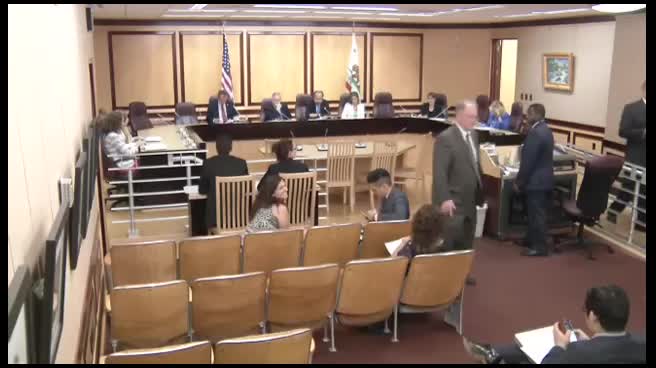 8MIN
Senate Standing Committee on Business, Professions and Economic Development
 57SEC
Assembly Floor
Bill Author

Bill Co-Author(s):