AB 1463: Student financial aid: California Covenants Program: tuition certificates: gross income exclusion.
- Session Year: 2015-2016
- House: Assembly
- Latest Version Date: 2016-06-30
(1)Existing law establishes the California State University, under the administration of the Trustees of the California State University, and the University of California, under the administration of the Regents of the University of California, as 2 of the segments of public postsecondary education in this state.
(1)Under existing law, the segments of postsecondary education in this state include the University of California, the California State University, the California Community Colleges, independent institutions of higher education, and private postsecondary educational institutions.
This bill would establish the California Covenants Program, under the administration of the Treasurer. The program would be a prepaid college tuition program, under which an individual could purchase a fixed percentage of the tuition and mandatory systemwide fees for an academic year of full-time enrollment as an undergraduate at a campus of the California State University, the University of California, or an independent institution of higher education, as specified, for a beneficiary who meets specified criteria.
The bill would establish the California Covenants Program Fund. The bill would require that the moneys received by the Treasurer from the individuals who purchase tuition certificates under the program, as well as the proceeds from the sale of certain bonds authorized by the bill, be deposited in the fund. The bill would authorize the Treasurer, upon appropriation in the annual Budget Act, to allocate moneys deposited in the fund to the California State University, the University of California, or an independent institution of higher education to pay the tuition and mandatory systemwide fees of beneficiaries of the program during that fiscal year. The bill would require the Director of Finance to determine, at the commencement of each fiscal year, whether there are sufficient funds to implement the program in that fiscal year, and to communicate this determination to the Treasurer in a timely manner each fiscal year. The bill would specify that the California State University is required, and the University of California and independent institutions of higher education are requested to, requested, to comply with the bills provisions.
These provisions would become operative on January 1, 2018.
(2)The Personal Income Tax Law provides for various exclusions from gross income, including moneys received pursuant to specified grant programs.
This bill would, for taxable years beginning on or after January 1, 2018, also exclude from gross income amounts invested in, and disbursed from, the California Covenants Program, as provided.
(3)This bill would declare that it is to take effect immediately as an urgency statute.
(1)Existing law establishes the California State University, under the administration of the Trustees of the California State University, and the University of California, under the administration of the Regents of the University of California, as 2 of the segments of public postsecondary education in this state.
This bill would establish the California Covenants Program, under the administration of the Treasurer. The program would be a prepaid college tuition program, under which an individual could purchase a fixed percentage of the tuition and mandatory systemwide fees for an academic year of full-time enrollment as an undergraduate at a campus of the California State University, the University of California, or an independent institution of higher education, as specified, for a beneficiary who meets specified criteria.
The bill would establish the California Covenants Program Fund. The bill would require that the moneys received by the Treasurer from the individuals who purchase tuition certificates under the program, as well as the proceeds from the sale of certain bonds authorized by the bill, be deposited in the fund. The bill would authorize the Treasurer, upon appropriation in the annual Budget Act, to allocate moneys deposited in the fund to the California State University, the University of California, or an independent institution of higher education to pay the tuition and mandatory systemwide fees of beneficiaries of the program during that fiscal year. The bill would require the Director of Finance to determine, at the commencement of each fiscal year, whether there are sufficient funds to implement the program in that fiscal year, and to communicate this determination to the Treasurer in a timely manner each fiscal year. The bill would specify that the California State University is required, and the University of California and independent institutions of higher education are requested to, comply with the bills provisions.
These provisions would become operative on January 1, 2018.
(2)The Personal Income Tax Law provides for various exclusions from gross income, including moneys received pursuant to specified grant programs.
This bill would, for taxable years beginning on or after January 1, 2018, also exclude from gross income amounts invested in, and disbursed from, the California Covenants Program, as provided.
Existing law requires the State Water Resources Control Board to establish uniform statewide recycling criteria for each varying type of use of recycled water where the use involves the protection of public health.
This bill would authorize onsite treated water from a graywater or rainwater source, as prescribed, to be used for nonpotable uses in residential, commercial, or industrial buildings. The bill would require the state board, in consultation with the State Department of Public Health, the Department of Housing and Community Development, the California Building Standards Commission, and stakeholders, to establish monitoring and reporting requirements for the nonpotable use of onsite treated water from certain other sources prior to its use in the internal plumbing of multifamily residential, commercial, or industrial buildings. The bill would prohibit water from a toilet, sewer, or onsite wastewater treatment system or septic tank from being treated and used onsite in a single-family occupied building.
Existing law requires the State Water Resources Control Board to establish uniform statewide recycling criteria for each varying type of use of recycled water where the use involves the protection of public health.
This bill would authorize onsite treated water from a graywater or rainwater source, as prescribed, to be used for nonpotable uses in residential, commercial, or industrial buildings. The bill would require the state board, in consultation with the State Department of Public Health, the Department of Housing and Community Development, the California Building Standards Commission, and stakeholders, to establish water quality standards and distribution, monitoring, monitoring and reporting requirements for the nonpotable use of onsite treated water recycling systems from certain other sources prior to authorizing the its use of onsite treated water in the internal plumbing of residential and commercial multifamily residential, commercial, or industrial buildings. This bill would require onsite treated water to be considered the same as recycled water that is produced on site. The bill would prohibit water from a toilet, sewer, or onsite wastewater treatment system or septic tank from being treated and used onsite in a single-family occupied building.
Existing law requires the State Water Resources Control Board to establish uniform statewide recycling criteria for each varying type of use of recycled water where the use involves the protection of public health.
This bill would require the state board, in consultation with the State Department of Public Health, the California Building Standards Commission, the Department of Housing and Community Development, and stakeholders, to establish water quality standards and ongoing monitoring distribution, monitoring, and reporting requirements for onsite water recycling systems using blackwater. This bill would authorize the Department of Housing and Community Development and the California Building Standards Commission to authorize the use of blackwater in onsite water recycling systems only if prescribed conditions are met. prior to authorizing the use of onsite treated water in internal plumbing of residential and commercial buildings. This bill would require onsite treated water to be considered the same as recycled water that is produced on site.
The California Building Standards Law provides for the adoption of building standards by state agencies by requiring all state agencies that adopt or propose adoption of any building standard to submit the building standard to the California Building Standards Commission for approval and adoption.
This bill would require the Department of Housing and Community Development to adopt building standards for all categories of residential and commercial onsite recycled water.
Existing law requires the State Water Resources Control Board to establish uniform statewide recycling criteria for each varying type of use of recycled water where the use involves the protection of public health.
This bill would require the state board, in consultation with the State Department of Public Health, the California Building Standards Commission, the Department of Housing and Community Development, and stakeholders, to establish water quality standards and distribution, monitoring, ongoing monitoring and reporting requirements for onsite water recycling systems prior to authorizing the use of onsite recycled water in internal plumbing of residential and commercial buildings. systems using blackwater. This bill would authorize the Department of Housing and Community Development and the California Building Standards Commission to authorize the use of blackwater in onsite water recycling systems only if prescribed conditions are met.
The California Building Standards Law provides for the adoption of building standards by state agencies by requiring all state agencies that adopt or propose adoption of any building standard to submit the building standard to the California Building Standards Commission for approval and adoption.
This bill would require the Department of Housing and Community Development to adopt building standards for all categories of residential and commercial onsite recycled water.
Existing law requires the State Water Resources Control Board to establish uniform statewide recycling criteria for each varying type of use of recycled water where the use involves the protection of public health.
This bill would require the state board, in consultation with the State Department of Public Health, the California Building Standards Commission, and stakeholders, to establish water quality standards and distribution, monitoring, and reporting requirements for onsite water recycling systems prior to authorizing the use of onsite recycled water in internal plumbing of residential and commercial buildings.
(a)The California Covenants Program is hereby established under the administration of the Treasurer. The California Covenants Program shall be a prepaid college tuition program established to help families plan, save, and pay for the undergraduate college education of family members at campuses of the California State University, the University of California, and independent institutions of higher education, as defined in Section 66010.
(b)Under the program, the Treasurer shall issue tuition certificates in accordance with all of the following requirements:
(1)(A)The tuition certificate shall be issued by the Treasurer for the prepaid purchase of a fixed percentage of the tuition and mandatory systemwide fees for an academic year of full-time enrollment as an undergraduate at a campus of the California State University, the University of California, or an independent institution of higher education, as defined in Section 66010. The tuition certificate shall specify the percentage of tuition and mandatory fees that have been purchased thereby. The certificate covers annual tuition and fee increases of 7.5 percent or less.
(B)The Treasurer is authorized to determine the cost of the fixed percentage of tuition and mandatory systemwide fees for the participating institutions at the commencement of this program in 2018. The Treasurer shall have the discretion to periodically adjust the cost of the tuition certificates in light of changes in the cost of living, the economy of the state, and the levels of tuition and mandatory systemwide fees charged by the participating segments.
(2)The purchaser of a tuition certificate shall specify its intended beneficiary. The intended beneficiary may be any person who has not yet commenced grade 11 or its equivalent. A tuition certificate shall be valid for up to 30 years from the date that it is purchased.
(3)At the time the tuition certificate is used, the beneficiary shall either be a California resident or a student who is exempt from nonresident tuition pursuant to Section 68130.5.
(4)An individual may purchase an initial tuition certificate, or additional tuition certificates, for a beneficiary only between May 1 and June 30 of calendar years commencing in 2018. The minimum amount of tuition certificates that an individual may purchase in a calendar year shall be three hundred dollars ($300).
(5)A tuition certificate shall be used only to cover the cost of undergraduate tuition and mandatory systemwide fees at the California State University, the University of California, or independent institutions of higher education, as defined in Section 66010. A tuition certificate shall not be used to cover the cost of textbooks, supplies, or living expenses, including, but not necessarily limited to, food, housing, and transportation.
(6)If the intended beneficiary of a tuition certificate is unable to, or chooses not to, attend the institution issuing the certificate, the initial investment shall be returned to the individual who purchased the certificate, with interest equal to that earned by the Pooled Money Investment Fund, and shall not be subject to a tax penalty pursuant to Section 17131.12 of the Revenue and Taxation Code.
(c)The Treasurer, in collaboration with the Trustees of the California State University and the Regents of the University of California, may establish administrative guidelines and other requirements for purposes of implementing this article.
69996.3.(a)The California Covenants Program Fund is hereby established. The moneys received by the Treasurer from the individuals who purchase tuition certificates under the program, and from the sale of bonds as authorized under subdivision (b), shall be deposited in the fund. Upon appropriation by the Legislature in the annual Budget Act, the moneys in the fund may be allocated by the Treasurer to the California State University, the University of California, and participating independent institutions of higher education, as defined in Section 66010, to pay the tuition and mandatory systemwide fees of beneficiaries of the program during that fiscal year.
(b)The Treasurer is authorized to issue bonds backed by the tuition certificate revenues. The proceeds of any bonds sold pursuant to this subdivision shall be deposited in the California Covenants Program Fund established by subdivision (a).
(c)The Director of Finance shall determine, at the commencement of each fiscal year, whether there are sufficient funds to implement the program in that fiscal year. The Director of Finance shall communicate this determination to the Treasurer in a timely manner each fiscal year.
(d)The California State University shall, and the University of California and independent institutions of higher education, as defined in Section 66010, are requested to, comply with the requirements of this article.
69996.5.This article shall become operative on January 1, 2018.
SEC. 2.Section 17131.12 is added to the Revenue and Taxation Code, to read:17131.12.For taxable years beginning on or after January 1, 2018, gross income does not include:
(a)Moneys invested by the taxpayer, including interest accrued by that investment, in the California Covenants Program established pursuant to Article 20.2 (commencing with Section 69996) of Chapter 2 of Part 42 of Division 5 of Title 3 of the Education Code.
(b)(1)Disbursements to the taxpayer from the California Covenants Program for use by a beneficiary at an educational institution that participates in the program.
(2)Tax, additions to tax, and penalties shall not apply to an amount disbursed to a taxpayer where the beneficiary does not attend an educational institution that participates in the California Covenants Program if the full amount, including interest, is returned to the taxpayer.
SEC. 3.This act is an urgency statute necessary for the immediate preservation of the public peace, health, or safety within the meaning of Article IV of the Constitution and shall go into immediate effect. The facts constituting the necessity are:
In order to immediately address heightened concerns about the rising costs of obtaining a postsecondary degree in this state, it is necessary for this bill to take effect immediately.
(a)The California Covenants Program is hereby established under the administration of the Treasurer. The California Covenants Program shall be a prepaid college tuition program established to help families plan, save, and pay for the undergraduate college education of family members at campuses of the California State University, the University of California, and independent institutions of higher education, as defined in Section 66010.
(b)Under the program, the Treasurer shall issue tuition certificates in accordance with all of the following requirements:
(1)(A)The tuition certificate shall be issued by the Treasurer for the prepaid purchase of a fixed percentage of the tuition and mandatory systemwide fees for an academic year of full-time enrollment as an undergraduate at a campus of the California State University, the University of California, or an independent institution of higher education, as defined in Section 66010. The tuition certificate shall specify the percentage of tuition and mandatory fees that have been purchased thereby. The certificate covers annual tuition and fee increases of 7.5 percent or less.
(B)The Treasurer is authorized to determine the cost of the fixed percentage of tuition and mandatory systemwide fees for the participating institutions at the commencement of this program in 2018. The Treasurer shall have the discretion to periodically adjust the cost of the tuition certificates in light of changes in the cost of living, the economy of the state, and the levels of tuition and mandatory systemwide fees charged by the participating segments.
(2)The purchaser of a tuition certificate shall specify its intended beneficiary. The intended beneficiary may be any person who has not yet commenced grade 11 or its equivalent. A tuition certificate shall be valid for up to 30 years from the date that it is purchased.
(3)At the time the tuition certificate is used, the beneficiary shall either be a California resident or a student who is exempt from nonresident tuition pursuant to Section 68130.5.
(4)An individual may purchase an initial tuition certificate, or additional tuition certificates, for a beneficiary only between May 1 and June 30 of calendar years commencing in 2018. The minimum amount of tuition certificates that an individual may purchase in a calendar year shall be three hundred dollars ($300).
(5)A tuition certificate shall be used only to cover the cost of undergraduate tuition and mandatory systemwide fees at the California State University, the University of California, or independent institutions of higher education, as defined in Section 66010. A tuition certificate shall not be used to cover the cost of textbooks, supplies, or living expenses, including, but not necessarily limited to, food, housing, and transportation.
(6)If the intended beneficiary of a tuition certificate is unable to, or chooses not to, attend the institution issuing the certificate, the initial investment shall be returned to the individual who purchased the certificate, with interest equal to that earned by the Pooled Money Investment Fund, and shall not be subject to a tax penalty pursuant to Section 17131.12 of the Revenue and Taxation Code.
(c)The Treasurer, in collaboration with the Trustees of the California State University and the Regents of the University of California, may establish administrative guidelines and other requirements for purposes of implementing this article.
69996.3.(a)The California Covenants Program Fund is hereby established. The moneys received by the Treasurer from the individuals who purchase tuition certificates under the program, and from the sale of bonds as authorized under subdivision (b), shall be deposited in the fund. Upon appropriation by the Legislature in the annual Budget Act, the moneys in the fund may be allocated by the Treasurer to the California State University, the University of California, and participating independent institutions of higher education, as defined in Section 66010, to pay the tuition and mandatory systemwide fees of beneficiaries of the program during that fiscal year.
(b)The Treasurer is authorized to issue bonds backed by the tuition certificate revenues. The proceeds of any bonds sold pursuant to this subdivision shall be deposited in the California Covenants Program Fund established by subdivision (a).
(c)The Director of Finance shall determine, at the commencement of each fiscal year, whether there are sufficient funds to implement the program in that fiscal year. The Director of Finance shall communicate this determination to the Treasurer in a timely manner each fiscal year.
(d)The California State University shall, and the University of California and independent institutions of higher education, as defined in Section 66010, are requested to, comply with the requirements of this article.
69996.5.This article shall become operative on January 1, 2018.
SEC. 2.Section 17131.12 is added to the Revenue and Taxation Code, to read:17131.12.For taxable years beginning on or after January 1, 2018, gross income does not include:
(a)Moneys invested by the taxpayer, including interest accrued by that investment, in the California Covenants Program established pursuant to Article 20.2 (commencing with Section 69996) of Chapter 2 of Part 42 of Division 5 of Title 3 of the Education Code.
(b)(1)Disbursements to the taxpayer from the California Covenants Program for use by a beneficiary at an educational institution that participates in the program.
(2)Tax, additions to tax, and penalties shall not apply to an amount disbursed to a taxpayer where the beneficiary does not attend an educational institution that participates in the California Covenants Program if the full amount, including interest, is returned to the taxpayer.
SECTION 1.Article 8 (commencing with Section 13558) is added to Chapter 7 of Division 7 of the Water Code, to read:8.Onsite Treated Water13558.For the purposes of this article, onsite treated water means water, including graywater, rainwater, and other water captured onsite, that has been sourced, used, and treated as needed onsite in a building.
13559.(a)(1)Onsite treated water from a graywater or rainwater source, as defined in and meeting the requirements of Chapters 16 and 17 of the California Plumbing Code, may be used for nonpotable uses in residential, commercial, or industrial buildings.
(2)A local government may prescribe additional monitoring and reporting requirements for the use of onsite treated water from a graywater or rainwater source by ordinance.
(b)The state board, in consultation with the State Department of Public Health, the Department of Housing and Community Development, the California Building Standards Commission, and stakeholders, shall establish monitoring and reporting requirements for the nonpotable use of onsite treated water sourced from a toilet, sewer, onsite wastewater treatment system or septic tank, stormwater capture, or industrial wastewater that otherwise meets the water quality standards defined in Section 60301.230 of Title 22 of the California Code of Regulations prior to its use in the internal plumbing of multifamily residential, commercial, or industrial buildings.
(c)Water from a toilet, sewer, or onsite wastewater treatment system or septic tank shall not be treated and used onsite in a single-family occupied building.
(a)For the purposes of this article, onsite treated water means water, including graywater, rainwater, and other water captured or recycled onsite, that has been sourced, treated, and used onsite in a building in a manner that is protective of public health, safety, and the environment. Onsite treated water does not include any wastewater that includes any water from a toilet, sewer, or septic tank unless the state board has established additional standards, monitoring, and reporting requirements for that water necessary to protect public health and safety and the environment. used, and treated as needed onsite in a building.
(b)Notwithstanding any other law, onsite treated water shall be considered the same as recycled water that is produced on site.
13559.The
13559.(a)(1)Onsite treated water from a graywater or rainwater source, as defined in and meeting the requirements of Chapters 16 and 17 of the California Plumbing Code, may be used for nonpotable uses in residential, commercial, or industrial buildings.
(2)A local government may prescribe additional monitoring and reporting requirements for the use of onsite treated water from a graywater or rainwater source by ordinance.
(b)The state board, in consultation with the State Department of Public Health, the Department of Housing and Community Development, the California Building Standards Commission, and stakeholders, shall establish water quality standards and distribution, monitoring, monitoring and reporting requirements for onsite water recycling systems prior to authorizing the use of onsite treated water in the nonpotable use of onsite treated water sourced from a toilet, sewer, onsite wastewater treatment system or septic tank, stormwater capture, or industrial wastewater that otherwise meets the water quality standards defined in Section 60301.230 of Title 22 of the California Code of Regulations prior to its use in the internal plumbing of residential and commercial multifamily residential, commercial, or industrial buildings.
(c)Water from a toilet, sewer, or onsite wastewater treatment system or septic tank shall not be treated and used onsite in a single-family occupied building.
(a)For the purposes of this article, onsite recycled treated water means water, including graywater, rainwater, and other water captured or recycled onsite, that has been sourced, treated, and used onsite in a building in a manner that is protective of public health, safety, and the environment. Onsite recycled treated water does not include any blackwater except as provided in Section 13559. wastewater that includes any water from a toilet, sewer, or septic tank unless the state board has established additional standards, monitoring, and reporting requirements for that water necessary to protect public health and safety and the environment.
(b)Notwithstanding any other law, onsite treated water shall be considered the same as recycled water that is produced on site.
13559.(a)(1)The state board, in consultation with the State Department of Public Health, the California Building Standards Commission, the Department of Housing and Community Development, and stakeholders, shall establish water quality standards and ongoing monitoring distribution, monitoring, and reporting requirements for onsite water recycling systems using blackwater. prior to authorizing the use of onsite treated water in internal plumbing of residential and commercial buildings.
(2)A local health department may set its own monitoring and reporting standards for onsite recycled water using blackwater until the state board has established standards pursuant to this subdivision.
(b)The Department of Housing and Community Development shall adopt building standards for all categories of residential and commercial onsite recycled water.
(c)The Department of Housing and Community Development and the California Building Standards Commission may authorize the use of blackwater in onsite water recycling systems only if both of the following conditions have been met:
(1)Building standards for the use of blackwater for all categories of residential and commercial onsite blackwater recycling systems have been adopted.
(2)The state board has developed water quality standards and ongoing monitoring and reporting requirements for the use of blackwater in onsite water recycling systems.
(d)Until the standards described in subdivisions (a) and (b) have been established, a city, county, or city and county may authorize the use of onsite recycled water in internal plumbing of residential and commercial buildings to the extent allowed by law prior to the addition of this section.
For the purposes of this article, onsite recycled water means water, including graywater, rainwater, and other water captured onsite, that has been sourced, treated, and used onsite in a building in a manner that is protective of public health, safety, and the environment. Onsite recycled water does not include any blackwater except as provided in Section 13559.
13559.(a)(1)The state board, in consultation with the State Department of Public Health, the California Building Standards Commission, the Department of Housing and Community Development, and stakeholders, shall establish water quality standards and ongoing monitoring and reporting requirements for onsite water recycling systems using blackwater.
(2)A local health department may set its own monitoring and reporting standards for onsite recycled water using blackwater until the state board has established standards pursuant to this subdivision.
(b)The Department of Housing and Community Development shall adopt building standards for all categories of residential and commercial onsite recycled water.
(c)The Department of Housing and Community Development and the California Building Standards Commission may authorize the use of blackwater in onsite water recycling systems only if both of the following conditions have been met:
(1)Building standards for the use of blackwater for all categories of residential and commercial onsite blackwater recycling systems have been adopted.
(2)The state board has developed water quality standards and ongoing monitoring and reporting requirements for the use of blackwater in onsite water recycling systems.
(d)Until the standards described in subdivisions (a) and (b) have been established, a city, county, or city and county may authorize the use of onsite recycled water in internal plumbing of residential and commercial buildings to the extent allowed by law prior to the addition of this section.
SECTION 1.Article 8 (commencing with Section 13558) is added to Chapter 7 of Division 7 of the Water Code, to read:8.Onsite Recycled Water13558.For the purpose of this article, onsite recycled water means water, including graywater, rainwater, and other water captured onsite, that has been sourced, treated, and used onsite in a building in a manner that is protective of public health, safety, and the environment. Onsite recycled water does not include any water from a toilet, sewer, or onsite wastewater treatment system or septic tank unless the state board has established additional standards, monitoring, and reporting requirements for that water necessary to protect public health, safety, and the environment.
13559.The state board, in consultation with the State Department of Public Health, the California Building Standards Commission, and stakeholders, shall establish water quality standards and distribution, monitoring, and reporting requirements for onsite water recycling systems prior to authorizing the use of onsite recycled water in internal plumbing of residential and commercial buildings.
For the purpose of this article, onsite recycled water means water, including graywater, rainwater, and other water captured onsite, that has been sourced, treated, and used onsite in a building in a manner that is protective of public health, safety, and the environment. Onsite recycled water does not include any water from a toilet, sewer, or onsite wastewater treatment system or septic tank unless the state board has established additional standards, monitoring, and reporting requirements for that water necessary to protect public health, safety, and the environment.
13559.The state board, in consultation with the State Department of Public Health, the California Building Standards Commission, and stakeholders, shall establish water quality standards and distribution, monitoring, and reporting requirements for onsite water recycling systems prior to authorizing the use of onsite recycled water in internal plumbing of residential and commercial buildings.
|
Date
|
Status
|
|---|---|
| Jun 11, 2015 | Referred to Com. on E.Q. |
| Aug 3, 2016 | In committee: Set, first hearing. Further hearing to be set. |
| Jun 30, 2016 | Re-referred to Coms. on ED. and GOV. & F. |
| Jun 30, 2016 | From committee chair, with author's amendments: Amend, and re-refer to committee. Read second time, amended, and re-referred to Com. on ED. |
| Jun 27, 2016 | Withdrawn from committee. |
| Jun 27, 2016 | Re-referred to Com. on RLS. |
| Jun 23, 2016 | From committee chair, with author's amendments: Amend, and re-refer to committee. Read second time, amended, and re-referred to Com. on E.Q. |
| Jun 13, 2016 | In committee: Hearing postponed by committee. |
| Jun 6, 2016 | From committee chair, with author's amendments: Amend, and re-refer to committee. Read second time, amended, and re-referred to Com. on E.Q. |
| Sep 4, 2015 | From committee chair, with author's amendments: Amend, and re-refer to committee. Read second time, amended, and re-referred to Com. on E.Q. |
| Jul 8, 2015 | In committee: Set, second hearing. Hearing canceled at the request of author. |
| Jun 22, 2015 | In committee: Set, first hearing. Hearing canceled at the request of author. |
| Jun 18, 2015 | From committee chair, with author's amendments: Amend, and re-refer to committee. Read second time, amended, and re-referred to Com. on E.Q. |
| Feb 27, 2015 | Introduced. To print. |
| Jun 1, 2015 | Read third time. Passed. Ordered to the Senate. (Ayes 79. Noes 0. Page 1732.) |
| Jun 1, 2015 | Read third time. Passed. Ordered to the Senate. |
| Jun 1, 2015 | In Senate. Read first time. To Com. on RLS. for assignment. |
| May 28, 2015 | Read second time. Ordered to third reading. |
| May 28, 2015 | From committee: Do pass. (Ayes 17. Noes 0.) (May 28). |
| May 20, 2015 | In committee: Set, first hearing. Referred to APPR. suspense file. |
| May 20, 2015 | In committee: Set, first hearing. Referred to suspense file. |
| Apr 29, 2015 | From committee: Do pass and re-refer to Com. on APPR. with recommendation: To Consent Calendar. (Ayes 14. Noes 0.) (April 28). Re-referred to Com. on APPR. |
| Apr 14, 2015 | From committee: Do pass and re-refer to Com. on B. & P. with recommendation: To Consent Calendar. (Ayes 15. Noes 0.) (April 14). Re-referred to Com. on B. & P. |
| Mar 26, 2015 | Referred to Coms. on W., P., & W. and B. & P. |
| Mar 2, 2015 | Read first time. |
| Mar 1, 2015 | From printer. May be heard in committee March 31. |
|
Date
|
Description
|
Location
|
Votes
|
|
|---|---|---|---|---|
| Jun 1, 2015 | AB 1463 GATTO Assembly Third Reading | Assembly Floor |
Passed |
|
| May 28, 2015 | Do pass. | Assembly Standing Committee on Appropriations |
Passed |
|
| Apr 28, 2015 | Do pass and be re-referred to the Committee on [Appropriations] with recommendation: To Consent Calendar | Assembly Standing Committee on Business and Professions |
Passed |
|
| Apr 14, 2015 | Do pass and be re-referred to the Committee on [Business and Professions] with recommendation: To Consent Calendar | Assembly Standing Committee on Water, Parks, and Wildlife |
Passed |
This list shows positions taken on this bill by organizations on the date displayed, which is linked to the original source.
Positions by individuals are not included.
|
Organization
|
Position
|
Date
|
|---|---|---|
| California Coastal Protection Network | ** Support | Jun 1, 2015 |
| California League Of Conservation Voters | ** Support | Jun 1, 2015 |
| Sierra Club California | ** Support | Jun 1, 2015 |
| Surfrider Foundation | ** Support | Jun 1, 2015 |
| Tree People | ** Support | Jun 1, 2015 |
| U.S. Green Building Council California | ** Support | Jun 1, 2015 |
| West Marin Environmental Action Committee | ** Support | Jun 1, 2015 |
| Wholly H2O | ** Support | Jun 1, 2015 |
SENATE COMMITTEE ON EDUCATION
Senator Carol Liu, Chair
2015 - 2016 Regular
Bill No: AB 1463
Author: | Gatto | ||
Version: | June 23, 2016 Hearing Date: August 3, 2016 | ||
Urgency: | No | Fiscal: | Yes |
Consultant: | Olgalilia Ramirez | ||
Subject: Student financial aid: California Covenants Program: tuition certificates: gross income exclusion
NOTE: This bill has been referred to the Committees on Education and Governance and Finance. A "do pass" motion should include referral to the Committee on Governance and Finance.
NOTE: This bill has been amended to replace its contents and this is the first time the bill is being heard in its current form.
SUMMARY
This bill, an urgency measure, establishes, under the administration of the Treasurer, a prepaid college tuition program by which an individual may purchase a fixed percentage of the tuition for an academic year of full-time enrollment at the California State University (CSU), University of California (UC), or an independent institution of higher education. This bill requires the CSU, and requests UC and an independent institution of higher education in California to participate in the program.
BACKGROUND
- Existing law establishes the CSU, under the administration of the Trustees of the CSU, as one of the segments of public postsecondary education in this state. The CSU comprises 23 institutions of higher education, each of which is headed by a president who is appointed by the trustees. (Education Code § 66600)
- The California Constitution establishes the UC, a public trust to be administered by the Regents of the UC and grants the Regents full powers of organization and government, subject only to such legislative control as may be necessary to insure security of its funds, compliance with the terms of its endowments, statutory requirements around competitive bidding and contracts, sales of property and the purchase of materials, goods and services.
(Article IX, Section (9)(a) of the California Constitution)
- Existing law defines independent institutions of higher education as those nonpublic higher education institutions that grant undergraduate degrees, graduate degrees, or both, and that are formed as nonprofit corporations in this state and are accredited by an agency recognized by the United States Department of Education. (EC § 66010 (b))
- Existing law establishes the Golden State ScholarShare Trust Program, administered by the State Treasurer's Office, which offers California families a tax-advantaged college tuition savings plan of investment and savings for a college education with state tax-deferred and federal tax-free benefits. Under this program, a participant opens an account on behalf of a designated named beneficiary. The money contributed by the participant to the account is placed in a trust, and invested in special investment portfolios designed to meet the needs of beneficiaries based on age, and different kinds of investments. The program offers federal and California income tax-free treatment for qualified withdrawals from a ScholarShare account. A qualified withdrawal is one that is used to pay for qualified higher education expenses at any eligible postsecondary educational institution throughout the U.S. (and even some outside the U.S.) including many vocational schools. (EC § 69980, et seq.)
ANALYSIS
This bill:
- Establishes the California Covenants program under the administration of the Treasurer for the purpose of creating a prepaid college tuition program for undergraduate education at California State University (CSU), University of California (UC) and independent institutions of higher education.
- Requires the Treasurer to issue tuition certificates for a prepaid purchase of a
fixed percentage of tuition and mandatory systemwide fees (fees) for an academic year of full-time enrollment as an undergraduate at a campus of the CSU, the UC, or an independent institution of higher education and:
- Authorizes the Treasurer to determine the cost of the fixed percent of
tuition and fees for participating institutions and to periodically adjust that cost as a result of changes in the economy of the state, cost of living, and tuition and fees charged by the participating segments.
- Requires that the tuition certificate specify the percentage of tuition and
fees that have been purchased.
- Specifies that the tuition certificate cover annual tuition and fee increases
of 7.5 percent or less.
- Sets the minimum amount of tuition certificates that an individual may
purchase to $300 in a calendar year and limits the window of time for purchase to May 1st through June 30th commencing in 2018.
- Requires the beneficiary to be either a California resident or a student who
is exempt from nonresident tuition, as defined, at the time a tuition certificate is used.
- Requires the purchaser of a tuition certificate to specify its intended
beneficiary who may be anyone who has not yet commenced grade 11.
- Requires that the tuition certificate be valid for up to 30 years from the
purchased date.
- Limits the use of tuition certificates to undergraduate tuition and fees at the California State University (CSU), the University of California (UC), or independent institutions of higher education.
- Prohibits tuition certificates from being used to cover the cost of textbook,
supplies, or living expenses, including, but not necessarily limited to, food, housing, and transportation.
- Provides for the initial investment to be returned to the individual who
purchased the certificate, with interest and prohibits the returned investment from being subject to a tax penalty, if the intended beneficiary of a tuition certificate is unable to, or chooses not to, attend the institution issuing the certificate.
- Establishes a separate fund within the State Treasury for the California Covenants Program and:
- Specifies that moneys received by the Treasurer from the sale of tuition
certificates and bonds be deposited into that fund.
- Authorizes the Treasurer to issue bonds backed by the tuition certificate
revenues and specifies that bond proceeds be deposited in the program fund.
- Authorizes the Treasurer, upon appropriation in the
Annual Budget Act, to allocate moneys in the fund to CSU, UC and
participating independent institutions of higher education to cover tuition
and fees of beneficiaries of the program during that fiscal year.
- Requires the Director of Finance to determine each fiscal year whether there are sufficient funds to implement the program in that year and communicate this determination to the Treasurer in a timely manner.
- Specifies that for taxable years beginning on or after January 1, 2018, gross income does not include:
- Moneys invested by the taxpayer, including interest accrued by that investment, in the California Covenants Program.
- Disbursements to the taxpayer from the California Covenants Program for
use by a beneficiary at an educational institution that participates in the
program.
- Tax, additions to tax, and penalties shall not apply to an amount disbursed
to a taxpayer where the beneficiary does not attend an educational
institution that participates in the California Covenants Program if the full
amount, including interest, is returned to the taxpayer.
- Requires the California State University (CSU), and requests the University of California (UC) and independent institutions to comply with the provisions of the bill.
- Authorizes the Treasurer, in collaboration with the CSU Trustees and UC Regents to establish administrative guidelines and other requirements for purposes of implementing the provisions of the bill.
- Makes the bill an urgency measure in order to immediately address heightened concerns about the rising costs of obtaining a postsecondary degree in this state.
STAFF COMMENTS
- Rationale for the bill. This bill emerges out of a concern regarding the cost of college tuition. According to the author from 2004 to 2013, the average tuition at UC and CSU more than doubled and tuition increases have heightened concerns about the affordability of a college education. The author asserts that this bill would help families save for college by allowing the purchase of tuition certificates at today’s rates which then could be redeemed in future years at participating colleges.
- Recent gut and amend. This bill was recently gutted and amended to address a topic that has not been heard by any previous policy committee. This bill establishes a program that could effectively create a tax shelter for those purchasers who have their initial investment returned. The invested amount will not be subject to any tax treatment at the time of investment nor at the time that the initial investment is returned. Further, the Treasurer would be required to return the initial investment with interest. The bill raises a number of complex policy questions regarding tax treatment and administration of financial aid. The Committee may wish to consider whether a bill that raises such a multitude of serious policy questions would be better addressed through the regular legislative timelines. This bill was gutted and amended on June 23; the Legislature was subsequently in recess from July 1 to August 1.
- Is another tuition assistance program necessary? This bill limits the use of tuition certificates to the cost of tuition while the existing ScholarShare program allows savings to be used for numerous educationally-related expenses. Further, between existing state, federal and institutional aid programs, many families with financial need pay no tuition at CSU and UC. These programs include all of the following:
- Cal Grant program. The Cal Grant program provides grants to financially needy students to attend college at the California Community Colleges, CSU and UC, Private Non-Profit Independent Colleges and Universities, and eligible Private For-Profit Colleges. Cal Grants cover up to $12,240 annually for up to four years of assistance with tuition and system-wide fees and eligibility is based upon financial need. Under the Cal Grant program a student who is exempt from nonresident tuition as referenced in the bill qualify for California Dream Act Aid.
- Middle Class Scholarship Program. The Middle Class Scholarship will provide up to 40% of statewide fees and tuition at the University of California (UC) and the California State University (CSU) campuses for families with assets and income up to $150,000 that do not qualify for other financial aid programs.
- Federal Pell Grant program. Currently, the Pell Grant covers up to $5,775 annually depending on financial need. The grant can be used toward the cost of attendance including tuition and fees; room and board; and books, supplies and transportation.
- Institutional aid. Institutional aid policies at each campus of the CSU and UC and independent institutions offer tuition assistance directly to students.
- Savings program. The Golden State ScholarShare Trust Program, administered by the State Treasurer's Office, which offers California families a tax-advantaged college tuition savings plan of investment and savings for a college education with state tax-deferred and federal tax-free benefits. The money contributed by the participant to the account is placed in a trust, and invested in special investment portfolios. The program offers federal and California income tax-free treatment for qualified withdrawals from a ScholarShare account. A qualified withdrawal is one that is used to pay for higher education expenses including but not limited tuition, fees, books or supplies at public and private institutions and certain proprietary schools throughout the country.
- Who pays the difference between the value of a tuition certificate and actual cost of tuition? The tuition certificate appears to work like a voucher where an individual can purchase a certificate at $300 increments that would go towards a percentage of tuition. For example, $300 would purchase a certain percentage of tuition at 2018-19 rates. The certificate would cover annual tuition and fee increases of 7.5% or less. The tuition certificate is valid for up to 30 years from the purchased date and the gap between the actual cost of tuition and the value of the certificate could grow exponentially. As tuition fluctuates over time, it is unclear whether institutions, the state, tax payers or the purchaser would make up the difference, should tuition increase beyond the 7.5%.
How would funds be invested to produce the returns needed to cover the 7.5% annual increases?
Could the state be responsible for the investment risk if tuition growth out paces the 7.5% growth that is required of the tuition certificate?
Would the state reimburse institutions based on tuition increases of 7.5% or less?
- What has been the experience in other states? There are 17 states currently operating prepaid tuition plans, four structured by unit price and 13 by tuition contracts which resemble the model represented by this bill. Several of these programs have experienced some fiscal difficulty leading to closure for new purchasers, limitations on purchases, and/or significantly increased premiums. Of the four structured by unit purchase, three are closed to new purchases (Ohio, Washington and Texas). Of the 13 structured by contract, six are closed to new purchases (Alabama, Kentucky, Mississippi, South Carolina, Texas and West Virginia). It is unclear when or if any of the 17 states will reopen their program as many of the programs have been closed since 2004. In addition, at least two other states (New Mexico and Tennessee) previously operated prepaid tuition plans but recently terminated their programs. Tennessee for example, shut down the program due to weak investment earnings and steep tuition increases. Staff notes that California has never offered a prepaid college savings plan.
- Could this program create a false sense of security for certificate beneficiaries? Investment in a prepaid tuition program can provide families with peace of mind regarding their ability to meet future fee increases and enroll in an institution of their choice, to the extent the student is hoping to attend a California State University (CSU), University of California (UC) or an independent institution. However, this may not be the case since CSU is required to comply but participation for UC and independent institutions is voluntary under the provisions of the bill. In addition, the actual price of attendance at any of these institutions is greater than the amount of fees and includes books, supplies and other living expenses not covered by the tuition certificate proposed by this bill.
Funding for this program is based on participation and requires the Director of Finance to each fiscal year determine whether there are sufficient funds to implement the program in that year. What assurances do families have that the program will be funded every year?
- Cart before the horse. Since the 1996 sunset of the Maddy-Dills Act, the state has lacked a clear policy on higher education fees. The Maddy-Dills Act previously required fees to be (1) gradual, moderate and predictable, (2) limited fee increases to not more than 10 percent a year, and (3) fixed at least ten months prior to the fall term in which they were to become effective. The policy also required sufficient financial aid to offset fee increases. However, flexibility was provided when the state faced serious budgetary challenges in order to provide relief to institutions suffering from a lack of state General Fund support.
Historically, fees have fluctuated in response to the State's fiscal condition and the stated needs of UC and CSU, as negotiated in the budget deliberations. The charts below illustrate the fluctuation in fees at the UC and the CSU over the last several years.
CSU Mandatory Systemwide Student Fees Resident Undergraduates | ||
Year | Fee Amount | Percent Change from Prior year |
1997-98 | $1584 | N/A |
1998-99 | $1,506 | -4.9% |
1999-00 | $1,428 | -5.2 % |
2000-01 | $1,428 | 0.0% |
2001-02 | $1,428 | 0.0% |
2002-03 | $1,500 | 5.0% |
2003-04 | $2,046 | 36.4% |
2004-05 | $2,334 | 14.1% |
2005-06 | $2,520 | 8.0% |
2006-07 | $2,520 | 0.0% |
2007-08 | $2,772 | 10.0% |
2008-09 | $3,048 | 10.0% |
2009-10 | $4,026 | 32.1% |
2010-11 | $4,429 | 10.0% |
2011-12 | $5,472 | 23.5% |
2012-13 | $5,472 | 0% |
2013-14 | $5,472 | 0% |
2014-15 | $5,472 | 0% |
2015-16 | $5,472 | 0% |
UC Mandatory Systemwide Student Fees Resident Undergraduates | ||
Year | Fee Amount | Percent Change from Prior year |
1997-98 | $3,799 | N/A |
1998-99 | $3,609 | -5.0% |
1999-00 | $3,429 | -5.0% |
2000-01 | $3,429 | 0.0% |
2001-02 | $3,429 | 0.0% |
2002-03 | $3,834 | 11.8% |
2003-04 | $4,984 | 30.0% |
2004-05 | $5,684 | 14.0% |
2005-06 | $6,141 | 8.0% |
2006-07 | $6,141 | 0.0% |
2007-08 | $6,636 | 8.1% |
2008-09 | $7,126 | 7.4% |
2009-10 | $8,958 | 25.7% |
2010-11 | $10,302 | 15.0% |
2011-12 | $12,192 | 18.3% |
2012-13 | $12,192 | 0% |
2013-14 | $12,192 | 0% |
2014-15 | $12,192 | 0% |
2015-16 | $12,240 | 5% |
To date, the state has no long-term policy regarding the way in which mandatory student fees are determined. In the absence of such a policy, should the state adopt a prepaid tuition program when the cost of tuition going into the future cannot be predicted?
- Other policy alternatives. The Committee may wish to consider whether families would be better served through enhanced state aid programs or the ScholarShare 529 savings plan rather than establishing a new program that could pass investment risks to public institutions or the state. Additionally, the Committee may want to consider:
- If state and federal assistance programs currently cover tuition for needy families and because the certificate solely covers tuition, who would benefit from this program?
- Would this program primarily benefit upper income individuals who have the ability to purchase tuition certificates?
- If the intent is to serve financially needy students, is a new tuition program necessary or could students be better served by enhancing existing aid programs to cover the total cost of attendance such as increasing the Cal Grant B access award?
- Could this bill result in transferring investment risk to a public institution or to the state to cover the difference between the amount invested and the cost of tuition at the time of attendance for individuals who may not be financially needy?
- Should public funds be used to subsidize tax liability for individuals who have their initial investment returned?
- Double referral. This bill contains provisions that allow purchasers to recover their initial investment including interest accrued without tax penalty. Without a penalty for not using funds for tuition (intended purpose), is there potential for abuse? Should they be exempted from tax penalties? This bill has been double referred where these questions can be better assessed by the Committee on Governance and Finance.
SUPPORT
None received.
OPPOSITION
None received.
-- END --
AB 1463
Page 3
ASSEMBLY THIRD READING
AB 1463
(Gatto)
As Introduced February 27, 2015
Majority vote
Committee |
Votes |
Ayes |
Noes |
Water |
15-0 |
Levine, Bigelow, Dahle, Dodd, Beth Gaines, Cristina Garcia, Gomez, Gray, Harper, Lopez, Mathis, Medina, Rendon, Ridley-Thomas, Williams |
|
Business & Professions |
14-0 |
Bonilla, Jones, Baker, Bloom, Burke, Chang, Dodd, Eggman, Gatto, Holden, Mullin, Ting, Wilk, Wood |
|
Appropriations |
17-0 |
Gomez, Bigelow, Bonta, Calderon, Chang, Daly, Eggman, Gallagher, Eduardo Garcia, Gordon, Holden, Jones, Quirk, Rendon, Wagner, Weber, Wood |
|
SUMMARY: Requires that the State Water Resources Control Board (State Water Board), in consultation with the State Department of Public Health (DPH), the California Building Standards Commission (BSC), and stakeholders, develop standards that are protective of public health, safety, and the environment for reusing graywater, rainwater, and other water at the same location that it is captured, also called onsite water reuse.
EXISTING LAW:
Establishes the Porter-Cologne Water Quality Control Act giving authority to the State Water Board over state water rights and water quality policy.
Designates the State Water Board with the primacy to enforce federal and state safe drinking-water acts and regulatory responsibility for oversight of 8,000 public water systems throughout the state.
Defines "recycled water" as "water which, as a result of treatment of waste, is suitable for a direct beneficial use or a controlled use that would not otherwise occur and is therefore considered a valuable resource."
Establishes the Water Recycling Act of 1991, creating a statewide goal to recycle a total of 700,000 acre-feet of water per year by the year 2000 and 1 million acre-feet of water per year by the year 2010. The State Water Board updated these goals to 1 million acre feet per year above 2002 levels by 2020 and by at least 2 million acre feet per year by 2030.
Required DPH to establish uniform statewide recycling criteria for each type of use of recycled water use, as specified. These duties transitioned to the State Water Board on July 1, 2014.
Required DPH to: a) adopt regulations regarding groundwater replenishment with recycled water; b) adopt regulations regarding surface water augmentation with recycled water; and, c) report to the Legislature on the feasibility of developing uniform water recycling criteria for direct potable reuse. These duties transitioned to the State Water Board on July 1, 2014.
Required the State Water Board adopt a general permit for landscape irrigation use of recycled water.
Requires each urban water supplier to prepare, and update every five years, an urban water management plan with specified components, including information on recycled water and its potential for use as a water source in the service area of the urban water supplier.
Authorizes the BSC to approve and adopt building standards. Every three years building standards rulemaking is undertaken to revise and update the California Building Standards Code. (California Code of Regulations Title 24).
Allows the use of recycled water in condominium projects subject to specified conditions, including a requirement that the agency delivering the recycled water to the condominium project file a report with the appropriate regional water quality control board, etc.
Allows a public agency to require the use of recycled water in floor trap priming, cooling towers and air-conditioning devices when public health is adequately protected as specified.
Establishes, in the California Plumbing Code, design standards for plumbing buildings with both potable and recycled water systems. These statewide standards apply for installing both potable and recycled water plumbing systems in commercial, retail, and office buildings, theaters, auditoriums, condominiums, schools, hotels, apartments, barracks, dormitories, jails, prisons, and reformatories.
FISCAL EFFECT: According to the Assembly Appropriations Committee:
Increased first year costs of $615,000 (General Fund (GF)) and ongoing annual costs of $420,000 for State Water Board to establish, monitor and enforce the standards.
Increased costs for DPH to consult in the development of the program of $150,000 (GF).
Increased costs for BSC to consult in the development of the program of $150,000 (GF).
COMMENTS: This bill requires the State Water Board to spearhead a process for the development of standards that will encourage the safe use of onsite water.
California is now experiencing its fourth consecutive year of drought. On April 1, 2015, Governor Jerry Brown issued Executive Order B-29-15 with 31 directives intended to help California respond to a drought State of Emergency. Directive 17 is for the California Energy Commission, the Department of Water Resources, and the State Water Board to deploy an innovative Water Energy Technology (WET) program for businesses, residents, industries and agriculture by accelerating the use of cutting-edge technologies. The Governor includes integrated on-site reuse systems among those technologies.
The author states that this bill is needed because water conservation and water-use efficiency cannot be overstated as California faces the fourth year of the worst drought in 1000 years. The author adds that despite incredibly dire conditions, water continues to be wasted through the state and there are existing opportunities to conserve water and use it more efficiently, including increasing the use of recycled water.
Supporters add that this bill is a worthy successor to last year's AB 2282 (Gatto) Chapter 606, Statutes of 2014, which required the Department of Housing and Community Development, in consultation with other designated entities, to conduct research to assist in the development, and submission for adoption, of mandatory building standards for the installation of recycled water systems for newly-constructed single-family and multifamily residential buildings. Supporters state that this bill seeks to clear barriers to responsible onsite water recycling and that this bill will help California to make a new normal that is better and more sustainable by putting fresh, potable water to its best use and employing near potable recycled water for other uses. Supporters maintain that this bill will spark a transformation in how well buildings use water, and will literally create the basic plumbing for a new generation of innovative filtration and storage projects.
There is no known opposition to this bill.
Analysis Prepared by: Tina Leahy / W., P., & W. / (916) 319-2096 FN: 0000774
AB 1463
Page 2
Date of Hearing: May 20, 2015
ASSEMBLY COMMITTEE ON APPROPRIATIONS
Jimmy Gomez, Chair
AB 1463
(Gatto) – As Introduced February 27, 2015
Policy Committee: |
Water, Parks and Wildlife |
Vote: |
15 - 0 |
|
Business and Professions |
|
14 - 0 |
|
|
|
|
Urgency: No State Mandated Local Program: No Reimbursable: No
SUMMARY:
This bill requires the State Water Resources Control Board (SWRCB), in consultation with the Department of Public Health (DPH), the California Building Standards Commission (BSC), and stakeholders to develop standards for reusing graywater, rainwater, and other water at the same location (onsite water reuse).
FISCAL EFFECT:
Increased first year costs of $615,000 (GF) and ongoing annual costs of $420,000 for SWRCB to develop monitor and enforce the standards.
Increased costs of $150.000 (GF), for DPH to provide consultation in the development of the program.
Increased costs, of $150,000 (GF), for BSC to provide consultation in the development of the program.
COMMENTS:
Purpose. According to the author, the importance of water conservations and water-use efficiency cannot be overstated as California faces its fourth year of its worst drought in recorded history. Despite incredibly dire conditions, water continues to be wasted throughout the state and there are existing opportunities to conserve water and use water more efficiently. According to the author, this bill will facilitate the use off on-sight recycled water by establishing standards and testing and monitoring requirements while protecting the health and safety of the consumers.
Background. California is now experiencing its fourth consecutive year of drought. On April 1, 2015, Governor Brown issued Executive Order B-29-15 with 31 directives intended to help California respond to the drought State of Emergency. Directive 17 is for the California Energy Commission, the Department of Water Resources, and the SWRCB to deploy an innovative Water Energy Technology (WET) program for businesses, residents, industries and agriculture by accelerating the use of cutting-edge technologies. The Governor includes among those technologies "integrated on-site reuse systems. This bill is consistent with that order.
Governor's May Revision. The recently released May Revision includes a proposal for $475 million for Proposition to SWRCB for water recycling and advanced treatment projects to enhance local water supply resilency. Although the details are not completely known, this bill appears to be consistent with that appropriation.
Analysis Prepared by: Jennifer Galehouse / APPR. / (916) 319-2081
AB 1463
Page 5
Date of Hearing: April 28, 2015
ASSEMBLY COMMITTEE ON BUSINESS AND PROFESSIONS
Susan Bonilla, Chair
AB 1463
(Gatto) – As Introduced February 27, 2015
NOTE: This bill is double-referred, having been previously heard by the Assembly Water, Parks, and Wildlife Committee on and approved on a 15-0 vote.
SUBJECT: Onsite recycled water.
SUMMARY: Requires the State Water Resources Control Board (State Water Board), in consultation with the California Department of Public Health (DPH), the California Building Standards Commission (BSC), and stakeholders, to establish water quality standards and distribution, monitoring, and reporting requirements for onsite water recycling systems.
EXISTING LAW:
Establishes the BSC, within the Department of General Services, under the California Building Standards Law, and requires any building standard adopted or proposed by state agencies to be submitted to, and approved by, the BSC prior to codification into the California Building Standards Code. (Health and Safety Code (HSC) Sections 18920 and 18930)
Requires the BSC, if no state agency has the authority or expertise to propose green building standards applicable to a particular occupancy, to adopt, approve, codify, update, and publish green building standards for those occupancies, and to allow for input by other state agencies that have expertise in green building subject areas. (HSC Section 18930.5)
Requires the BSC to publish the California Building Standards Code in its entirety once every three years, and its supplements in intervening years. (HSC Section 18942)
Establishes the Porter-Cologne Water Quality Control Act giving authority to the State Water Board over state water rights and water quality policy, and requires that policy to consist of water quality principles and guidelines for long-range resource planning, including ground water and surface water management programs and control and use of recycled water. (Water Code (WC) Section 13000 et seq., 13142)
Defines "recycled water" as water which, as a result of treatment of waste, is suitable for a direct beneficial use or a controlled use that would not otherwise occur, and is therefore considered a valuable resource. (WC Section 13050)
Establishes the Water Recycling Act of 1991, creating statewide goals for the amount of water recycled, as specified. (WC Section13575 et seq.)
Requires the DPH to establish uniform statewide recycling criteria for each type of use of recycled water use where the use involves the protection of public health. (WC Section 13521)
Transferred the administration of the Drinking Water Program (DWP) from the DPH to the State Water Board. (SB 861 (Committee on Budget and Fiscal Review) Chapter 35, Statutes of 2014)
THIS BILL:
Defines "onsite recycled water" as water, including graywater, rainwater, and other water captured onsite, that has been sourced, treated, and used onsite in a building in a manner that is protective of public health, safety, and the environment.
Provides that "onsite recycled water" does not include any water from a toilet, sewer, or onsite wastewater treatment system or septic tank unless the State Water Board has established additional standards, monitoring, and reporting requirements for that water necessary to protect public health, safety, and the environment.
Requires the State Water Board, in consultation with the DPH, the BSC, and stakeholders, to establish water quality standards and distribution, monitoring, and reporting requirements for onsite water recycling systems prior to authorizing the use of onsite recycled water in internal plumbing of residential and commercial buildings.
FISCAL EFFECT: Unknown. This bill is keyed fiscal by the Legislative Counsel.
COMMENTS:
Purpose. This bill is author-sponsored. According to the author, "The importance of water conservations and water-use efficiency cannot be overstated as California faces its fourth year of its worst drought in recorded history. Despite incredibly dire conditions, water continues to be wasted throughout the state and there are existing opportunities to conserve water and use water more efficiently. One such opportunity is increasing the use of recycled water…. While most recycled water in California is sourced from municipal-level wastewater treatment plants, on-site water recycling systems are an alternative option for those who do not have easy access to municipally-sourced recycled water. At the moment, there are no standards or testing and monitoring requirements that are specifically tailored to onsite recycled water systems. The existing standards, while manageable for municipal wastewater treatment plants, are burdensome for onsite systems and create a barrier to the use of those systems in California. In light of California’s water conservation goals as well as existing barriers to the use of water-saving technologies, it is necessary to create standards and testing/monitoring protocols that facilitate recycled-water use while preserving health and safety standards."
Background. On April 1, 2015, Governor Brown issued Executive Order B-29-15 with 31 directives to help California respond to the drought. Among other things, the State Water Board is required to impose restrictions to achieve a statewide 25% reduction in potable urban water usage, and requires water suppliers to California's cities and towns to reduce usage as compared to the amount used in 2013. In addition, the Executive Order directed the State Water Board to impose restrictions to require that commercial, industrial, and institutional properties, such as campuses and golf courses, immediately implement water efficiency measures to reduce potable water usage, as specified. The order also directed the California Energy Commission with the Department of Water Resources and the State Water Board to deploy an innovative Water Energy Technology program for businesses, residents, industries, and agriculture by accelerating the use of cutting-edge technologies, including integrated onsite reuse systems, recognizing the need to promote new approaches to conserving water. In addition, the order requires state permitting agencies to prioritize review and approval of water infrastructure projects and programs that increase local water supplies, including water recycling facilities and stormwater capture and graywater systems.
Recycled Water Policy. Water recycling is emphasized in California laws and policies as a way to alleviate water scarcity concerns. The recent order affirms the state's commitment to promoting water recycling. The 2009 California Water Plan, developed by the Department of Water Resources, promotes the use and reuse of water as one of its water management strategies. The State Water Board's Recycled Water Policy also seeks to increase the use of recycled water from municipal wastewater sources and adopted as one of its goals the use of recycled water over 2002 levels by at least one million acre-feet per year by 2020 and by at least two million by 2030, and the substitution of as much recycled water for potable water as possible by 2030. In addition, the policy provides direction to the Regional Water Quality Control Boards on monitoring requirements for constituents of emergency concern (CECs) in recycled municipal wastewater, which are based on recommendations from a Science Advisory Panel convened pursuant to the policy. CECs are defined to be chemicals in personal care products, pharmaceuticals including antibiotics, antimicrobials; industrial, agricultural, and household chemicals; hormones; food additives; transformation products, inorganic constituents; and nanomaterials. According to the State Water Board, when used in compliance with the Recycled Water Policy, water recycling criteria in Title 22 of the California Code of Regulations, and all applicable state and federal water quality laws, recycled water is safe for the approved uses. The State Water Board strongly supports recycled water as a safe alternative to potable water for such approved uses.
According to the author, potable water is used throughout California for non-potable purposes which could safely be met using non-potable recycled water, depending on the level of treatment of the wastewater. Many applications currently use potable water for non-potable uses, such as industrial cooling processes, landscapes, golf courses, food crop irrigation, and toilet flushing. According to a study by the California Sustainability Alliance (Alliance), more than 60% of urban water in southern California is used for non-potable applications, such as outdoor irrigation, toilet flushing, and cooling. As a result, potable water in these applications can be substituted with the appropriate quality of recycled water.
California's Water Recycling Criteria. Most applications of recycled water are sourced from municipal-level wastewater treatment plants; however, onsite water recycling systems can complement these larger plants in cases in which developing recycled water distribution is expensive. Under Chapter 3 of Division 4 of Title 22 of the California Code of Regulations, recycled water must be treated at appropriate levels of disinfection including, for example, daily testing for certain bacteria. These requirements create on-going expense and building operation considerations that reduce the attractiveness of onsite water recycling. These standards do not take into account graywater (e.g. water from showers, sinks, and laundry) and water that is treated and managed on a single site, as opposed to blackwater, or water that may contain raw sewage and that is transported from a treatment plant to the point of use. As a result, there are no standards or testing and monitoring requirements that are specifically tailored to onsite recycled water systems for graywater and other water captured onsite.
This bill would promote the use of onsite recycled water by requiring the State Water Board, to establish water quality standards and distribution, monitoring, and reporting requirements for onsite water recycling systems for the use of onsite recycled water in internal plumbing of residential and commercial buildings.
Prior Related Legislation. AB 2282 (Gatto), Chapter 606, Statutes of 2014, required the Department of Housing and Community Development to research, develop and propose to the BSC mandatory building standards for the installation of recycled water infrastructure in single-family and multi-family dwellings, and required the BSC to research, develop and adopt mandatory green building standards for the installation of recycled water infrastructure in commercial and public buildings.
SB 1391 (Padilla) of 2008, sought to require the State Water Board to adopt a statewide recycled water policy by January 31, 2009, and to make related recommendations. NOTE: This bill was vetoed by Governor Schwarzenegger who believed the bill was unnecessary because " The SWRCB has already prepared a draft Recycled Water Policy and is currently working with stakeholders to reach consensus on the details of that policy, which is expected to be approved in early 2009". The State Water Board has since adopted a statewide recycled water policy.
ARGUMENTS IN SUPPORT:
Sierra Club California writes in support, "Water recycling within buildings can create real savings of water and energy as water can be used for multiple purposes before needing to be discharged. For example, water from a shower can be subsequently used for outdoor landscaping, preventing the need for water suppliers to treat that much water to potable standards. [This bill] works to increase water recycling capabilities by creating a multi-agency stakeholder process to facilitate the development of standards to make water recycling possible. This will help save water and energy in California and should be encouraged."
Nexus eWater writes in support, "[This bill] will help clarify the regulatory climate and create clarity for those manufacturers who would like to manufacture and market products that could reduce water use by recycling treated graywater produced from showers and laundry and reuse it for landscape or toilet flushing….Current California standards reference Title 22 as appropriate for all types of treated water. It does not take into account graywater particularly when treated and managed on a single site. Instead, it is a standard set for waste water treated off-site that may contain raw sewage or blackwater…However, water derived from the laundry, shower, baths or sinks should not be subject to these testing and treatment protocols….California absolutely needs to establish standards that are supported and enforced by local regulators in order to promote the use of alternate water sources. However, these standards must recognize both the source of the water and whether it is treated for reuse on or off site."
ARGUMENTS IN OPPOSITION:
None on file.
REGISTERED SUPPORT:
California Building Industry Association
California Business Properties Association
Sierra Club California
Nexus eWater
REGISTERED OPPOSITION:
None on file.
Analysis Prepared by: Eunie Linden / B. & P. / (916) 319-3301
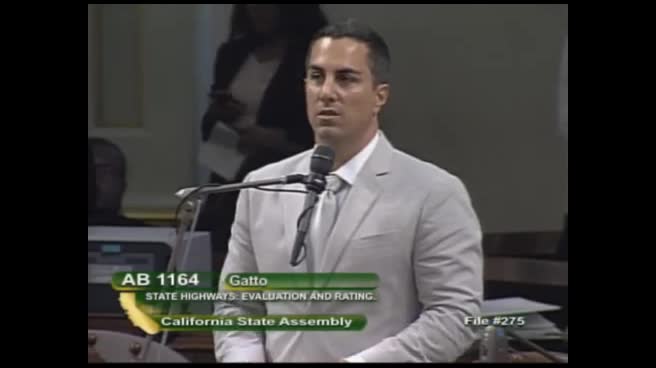
Bill Author

Bill Co-Author(s):