AB 1746: Transit buses.
- Session Year: 2015-2016
- House: Assembly
- Latest Version Date: 2016-05-24
Existing law authorizes the Monterey-Salinas Transit District and the Santa Cruz Metropolitan Transit District to conduct a transit bus-only program using the shoulders of certain state highways as transit bus-only traffic corridors, subject to approval by the Department of Transportation and the Department of the California Highway Patrol. Existing law requires that the highway segments to be used for the program are to be jointly determined by the districts, the department, and the Department of the California Highway Patrol, and imposes other conditions and requirements.
Existing law creates the Alameda-Contra Costa Transit District, the Central Contra Costa Transit Authority, the Livermore Amador Valley Transit Authority, the Los Angeles Metropolitan Transit Authority, the North County Transit District, the San Diego Association of Governments, the San Diego Metropolitan Transit System, and the Santa Clara Valley Transportation Authority with various powers and duties relative to the operation of public transit.
This bill would additionally authorize the operation of transit buses on the shoulder of a segment of a state highway designated under the program within the areas served by the transit services of the 7 8 entities described above, subject to the same conditions and requirements. Two years after commencing the operation of the program, the bill would require a participating entity, in conjunction with the department and the Department of the California Highway Patrol, to submit a report to the Legislature that includes specified information about the program. The bill would also require the participating entity to post the report on its Internet Web site to enable the public to access the report.
Existing law authorizes the Monterey-Salinas Transit District and the Santa Cruz Metropolitan Transit District to conduct a transit bus-only program using the shoulders of certain state highways as transit bus-only traffic corridors, subject to approval by the Department of Transportation and the Department of the California Highway Patrol. Existing law requires that the highway segments to be used for the program are to be jointly determined by the districts, the department, and the Department of the California Highway Patrol, and imposes other conditions and requirements.
Existing law creates the Alameda-Contra Costa Transit District, the Central Contra Costa Transit Authority, the Livermore Amador Valley Transit Authority, the North County Transit District, the San Diego Association of Governments, the San Diego Metropolitan Transit System, and the Santa Clara Valley Transportation Authority with various powers and duties relative to the operation of public transit.
This bill would additionally authorize the operation of transit buses on the shoulder of a segment of a state highway designated under the program within the areas served by the transit services of the 6 7 entities described above, subject to the same conditions and requirements. Two years after commencing the operation of the program, the bill would require a participating entity, in conjunction with the department and the Department of the California Highway Patrol, to submit a report to the Legislature that includes specified information about the program. The bill would also require the participating entity to post the report on its Internet Web site to enable the public to access the report.
Existing law authorizes the Monterey-Salinas Transit District and the Santa Cruz Metropolitan Transit District to conduct a transit bus-only program using the shoulders of certain state highways as transit bus-only traffic corridors, subject to approval by the Department of Transportation and the Department of the California Highway Patrol. Existing law requires that the highway segments to be used for the program are to be jointly determined by the districts, the department, and the Department of the California Highway Patrol, and imposes other conditions and requirements.
Existing law creates the Alameda-Contra Costa Transit District, the Central Contra Costa Transit Authority, the North County Transit District, the San Diego Association of Governments, the San Diego Metropolitan Transit System, and the Santa Clara Valley Transportation Authority with various powers and duties relative to the operation of public transit.
This bill would additionally authorize the operation of transit buses on the shoulder of a segment of a state highway designated under the program within the areas served by the transit services of the 6 entities described above, subject to the same conditions and requirements. Two years after commencing the operation of the program, the bill would require a participating entity, in conjunction with the department and the Department of the California Highway Patrol, to submit a report to the Legislature that includes specified information about the program. The bill would also require the participating entity to post the report on its Internet Web site to enable the public to access the report.
Existing law authorizes the Monterey-Salinas Transit District and the Santa Cruz Metropolitan Transit District to conduct a transit bus-only program using the shoulders of certain state highways as transit bus-only traffic corridors, subject to approval by the Department of Transportation and the Department of the California Highway Patrol. Existing law requires that the highway segments to be used for the program are to be jointly determined by the districts, the department, and the Department of the California Highway Patrol, and imposes other conditions and requirements.
Existing law creates the Alameda-Contra Costa Transit District, the Central Contra Costa Transit Authority, the North County Transit District, the San Diego Association of Governments, the San Diego Metropolitan Transit System, and the Santa Clara Valley Transportation Authority with various powers and duties relative to the operation of public transit.
This bill would additionally authorize the operation of transit buses on the shoulder of a segment of a state highway designated under the program within the areas served by the transit services of the 6 entities described above, subject to the same conditions and requirements.
(a)Notwithstanding any other law, the Alameda-Contra Costa Transit District, the Central Contra Costa Transit Authority, the Livermore Amador Valley Transit Authority, the Los Angeles Metropolitan Transit Authority, the Monterey-Salinas Transit District, the North County Transit District, the San Diego Association of Governments, the San Diego Metropolitan Transit System, the Santa Clara Valley Transportation Authority, and the Santa Cruz Metropolitan Transit District may conduct a transit bus-only program using the shoulders of certain highways in the state highway system within the areas served by the transit services of each entity, with the approval of the department and the Department of the California Highway Patrol. The department, the Department of the California Highway Patrol, and each participating transit entity shall jointly determine the segments of each highway where it is appropriate to designate the shoulders as transit bus-only traffic corridors, based upon factors that shall include, but are not limited to, right-of-way availability and capacity, peak congestion hours, and the most heavily congested areas. Under the program, the participating transit entities shall actively work with the department and the Department of the California Highway Patrol to develop guidelines that ensure driver and vehicle safety and the integrity of the infrastructure.
(b)The development of the guidelines shall be done with transparency, including the opportunity for public comment.
(c)The department and the participating transit entities shall monitor the state of repair of highway shoulders used in the program, including repairs attributable to the operation of transit buses on the shoulders.
(d)The participating transit entities shall be responsible for all costs attributable to this program, including costs related to repairs attributable to the operation of transit buses on shoulders.
(e)The program may commence operation as soon as guidelines are agreed to by the participating transit entities, the department, and the Department of the California Highway Patrol.
(f)(1)Two years after commencing the operation of the program, a participating transit entity, in conjunction with the department and the Department of the California Highway Patrol, shall submit a report to the Legislature that includes all of the following:
(A)Information regarding the geographic scope of the program.
(B)A copy of the guidelines agreed to by the participating entity, the department, and the Department of the California Highway Patrol.
(C)Information about any highway modifications.
(D)Information regarding the costs associated with the program.
(E)Performance measures used to evaluate the success of the program, such as safety, freeway operations, and transit travel time reliability and savings.
(2)The participating entity shall post the report required by this subdivision on its Internet Web site to enable the public to access the report.
(3)The report submitted pursuant to paragraph (1) shall be submitted in compliance with Section 9795 of the Government Code.
(g)As used in this section, highway includes freeway.
SEC. 2.Section 21650 of the Vehicle Code is amended to read:21650.Upon all highways, a vehicle shall be driven upon the right half of the roadway, except as follows:
(a)When overtaking and passing another vehicle proceeding in the same direction under the rules governing that movement.
(b)When placing a vehicle in a lawful position for, and when the vehicle is lawfully making, a left turn.
(c)When the right half of a roadway is closed to traffic under construction or repair.
(d)Upon a roadway restricted to one-way traffic.
(e)When the roadway is not of sufficient width.
(f)When the vehicle is necessarily traveling so slowly as to impede the normal movement of traffic, that portion of the highway adjacent to the right edge of the roadway may be utilized temporarily when in a condition permitting safe operation.
(g)This section does not prohibit the operation of bicycles on any shoulder of a highway, on any sidewalk, on any bicycle path within a highway, or along any crosswalk or bicycle path crossing, where the operation is not otherwise prohibited by this code or local ordinance.
(h)This section does not prohibit the operation of a transit bus on the shoulder of a state highway in conjunction with the implementation of a program authorized pursuant to Section 148.1 of the Streets and Highways Code.
(a)Notwithstanding any other law, the Alameda-Contra Costa Transit District, the Central Contra Costa Transit Authority, the Livermore Amador Valley Transit Authority, the Monterey-Salinas Transit District, the North County Transit District, the San Diego Association of Governments, the San Diego Metropolitan Transit System, the Santa Clara Valley Transportation Authority, and the Santa Cruz Metropolitan Transit District may conduct a transit bus-only program using the shoulders of certain highways in the state highway system within the areas served by the transit services of each entity, with the approval of the department and the Department of the California Highway Patrol. The department, the Department of the California Highway Patrol, and each participating transit entity shall jointly determine the segments of each highway where it is appropriate to designate the shoulders as transit bus-only traffic corridors, based upon factors that shall include, but are not limited to, right-of-way availability and capacity, peak congestion hours, and the most heavily congested areas. Under the program, the participating transit entities shall actively work with the department and the Department of the California Highway Patrol to develop guidelines that ensure driver and vehicle safety and the integrity of the infrastructure.
(b)The development of the guidelines shall be done with transparency, including the opportunity for public comment.
(c)The department and the participating transit entities shall monitor the state of repair of highway shoulders used in the program, including repairs attributable to the operation of transit buses on the shoulders.
(d)The participating transit entities shall be responsible for all costs attributable to this program, including costs related to repairs attributable to the operation of transit buses on shoulders.
(e)The program may commence operation as soon as guidelines are agreed to by the participating transit entities, the department, and the Department of the California Highway Patrol.
(f)(1)Two years after commencing the operation of the program, a participating transit entity, in conjunction with the department and the Department of the California Highway Patrol, shall submit a report to the Legislature that includes all of the following:
(A)Information regarding the geographic scope of the program.
(B)A copy of the guidelines agreed to by the participating entity, the department, and the Department of the California Highway Patrol.
(C)Information about any highway modifications.
(D)Information regarding the costs associated with the program.
(E)Performance measures used to evaluate the success of the program, such as safety, freeway operations, and transit travel time reliability and savings.
(2)The participating entity shall post the report required by this subdivision on its Internet Web site to enable the public to access the report.
(3)The report submitted pursuant to paragraph (1) shall be submitted in compliance with Section 9795 of the Government Code.
(g)As used in this section, highway includes freeway.
SEC. 2.Section 21650 of the Vehicle Code is amended to read:21650.Upon all highways, a vehicle shall be driven upon the right half of the roadway, except as follows:
(a)When overtaking and passing another vehicle proceeding in the same direction under the rules governing that movement.
(b)When placing a vehicle in a lawful position for, and when the vehicle is lawfully making, a left turn.
(c)When the right half of a roadway is closed to traffic under construction or repair.
(d)Upon a roadway restricted to one-way traffic.
(e)When the roadway is not of sufficient width.
(f)When the vehicle is necessarily traveling so slowly as to impede the normal movement of traffic, that portion of the highway adjacent to the right edge of the roadway may be utilized temporarily when in a condition permitting safe operation.
(g)This section does not prohibit the operation of bicycles on any shoulder of a highway, on any sidewalk, on any bicycle path within a highway, or along any crosswalk or bicycle path crossing, where the operation is not otherwise prohibited by this code or local ordinance.
(h)This section does not prohibit the operation of a transit bus on the shoulder of a state highway in conjunction with the implementation of a program authorized pursuant to Section 148.1 of the Streets and Highways Code on state highways within the areas served by the transit services of the Alameda-Contra Costa Transit District, the Central Contra Costa Transit Authority, the Monterey-Salinas Transit District, the North County Transit District, the San Diego Association of Governments, the San Diego Metropolitan Transit System, the Santa Clara Valley Transportation Authority, or the Santa Cruz Metropolitan Transit District. Code.
(a)Notwithstanding any other law, the Alameda-Contra Costa Transit District, the Central Contra Costa Transit Authority, the Monterey-Salinas Transit District, the North County Transit District, the San Diego Association of Governments, the San Diego Metropolitan Transit System, the Santa Clara Valley Transportation Authority, and the Santa Cruz Metropolitan Transit District may conduct a transit bus-only program using the shoulders of certain highways in the state highway system within the areas served by the transit services of each entity, with the approval of the department and the Department of the California Highway Patrol. The department, the Department of the California Highway Patrol, and each participating transit entity shall jointly determine the segments of each highway where it is appropriate to designate the shoulders as transit bus-only traffic corridors, based upon factors that shall include, but are not limited to, right-of-way availability and capacity, peak congestion hours, and the most heavily congested areas. Under the program, the participating transit entities shall actively work with the department and the Department of the California Highway Patrol to develop guidelines that ensure driver and vehicle safety and the integrity of the infrastructure.
(b)The development of the guidelines shall be done with transparency, including the opportunity for public comment.
(c)The department and the participating transit entities shall monitor the state of repair of highway shoulders used in the program, including repairs attributable to the operation of transit buses on the shoulders.
(d)The participating transit entities shall be responsible for all costs attributable to this program, including costs related to repairs attributable to the operation of transit buses on shoulders.
(e)The program may commence operation as soon as guidelines are agreed to by the participating transit entities, the department, and the Department of the California Highway Patrol.
(f)(1)Two years after commencing the operation of the program, a participating transit entity, in conjunction with the department and the Department of the California Highway Patrol, shall submit a report to the Legislature that includes all of the following:
(A)Information regarding the geographic scope of the program.
(B)A copy of the guidelines agreed to by the participating entity, the department, and the Department of the California Highway Patrol.
(C)Information about any highway modifications.
(D)Information regarding the costs associated with the program.
(E)Performance measures used to evaluate the success of the program, such as safety, freeway operations, and transit travel time reliability and savings.
(2)The participating entity shall post the report required by this subdivision on its Internet Web site to enable the public to access the report.
(3)The report submitted pursuant to paragraph (1) shall be submitted in compliance with Section 9795 of the Government Code.
(f)
(g)As used in this section, highway includes freeway.
SEC. 2.Section 21650 of the Vehicle Code is amended to read:21650.Upon all highways, a vehicle shall be driven upon the right half of the roadway, except as follows:
(a)When overtaking and passing another vehicle proceeding in the same direction under the rules governing that movement.
(b)When placing a vehicle in a lawful position for, and when the vehicle is lawfully making, a left turn.
(c)When the right half of a roadway is closed to traffic under construction or repair.
(d)Upon a roadway restricted to one-way traffic.
(e)When the roadway is not of sufficient width.
(f)When the vehicle is necessarily traveling so slowly as to impede the normal movement of traffic, that portion of the highway adjacent to the right edge of the roadway may be utilized temporarily when in a condition permitting safe operation.
(g)This section does not prohibit the operation of bicycles on any shoulder of a highway, on any sidewalk, on any bicycle path within a highway, or along any crosswalk or bicycle path crossing, where the operation is not otherwise prohibited by this code or local ordinance.
(h)This section does not prohibit the operation of a transit bus on the shoulder of a state highway in conjunction with the implementation of a program authorized pursuant to Section 148.1 of the Streets and Highways Code on state highways within the areas served by the transit services of the Alameda-Contra Costa Transit District, the Central Contra Costa Transit Authority, the Monterey-Salinas Transit District, the North County Transit District, the San Diego Association of Governments, the San Diego Metropolitan Transit System, the Santa Clara Valley Transportation Authority, or the Santa Cruz Metropolitan Transit District.
(a)Notwithstanding any other provision of law, the Alameda-Contra Costa Transit District, the Central Contra Costa Transit Authority, the Monterey-Salinas Transit District and District, the North County Transit District, the San Diego Association of Governments, the San Diego Metropolitan Transit System, the Santa Clara Valley Transportation Authority, and the Santa Cruz Metropolitan Transit District may conduct a transit bus-only program using the shoulders of certain highways in the state highway system within the areas served by the transit services of the districts, each entity, with the approval of the department and the Department of the California Highway Patrol. The department, the Department of the California Highway Patrol, and each participating transit districts entity shall jointly determine the segments of each highway where it is appropriate to designate the shoulders as transit bus-only traffic corridors, based upon factors that shall include, but not be are not limited to, right-of-way availability and capacity, peak congestion hours, and the most heavily congested areas. Under the program, the participating transit districts entities shall actively work with the department and the Department of the California Highway Patrol to develop guidelines that ensure driver and vehicle safety and the integrity of the infrastructure.
(b)The development of the guidelines shall be done with transparency, including the opportunity for public comment.
(c)The department and the participating transit districts entities shall monitor the state of repair of highway shoulders used in the program, including repairs attributable to the operation of transit buses on the shoulders.
(d)The participating transit districts entities shall be responsible for all costs attributable to this program, including costs related to repairs attributable to the operation of transit buses on shoulders.
(e)The program may commence operation as soon as guidelines are agreed to by the participating transit districts, entities, the department, and the Department of the California Highway Patrol.
(f)As used in this section, highway includes freeway.
SEC. 2.Section 21650 of the Vehicle Code is amended to read:21650.Upon all highways, a vehicle shall be driven upon the right half of the roadway, except as follows:
(a)When overtaking and passing another vehicle proceeding in the same direction under the rules governing that movement.
(b)When placing a vehicle in a lawful position for, and when the vehicle is lawfully making, a left turn.
(c)When the right half of a roadway is closed to traffic under construction or repair.
(d)Upon a roadway restricted to one-way traffic.
(e)When the roadway is not of sufficient width.
(f)When the vehicle is necessarily traveling so slowly as to impede the normal movement of traffic, that portion of the highway adjacent to the right edge of the roadway may be utilized temporarily when in a condition permitting safe operation.
(g)This section does not prohibit the operation of bicycles on any shoulder of a highway, on any sidewalk, on any bicycle path within a highway, or along any crosswalk or bicycle path crossing, where the operation is not otherwise prohibited by this code or local ordinance.
(h)This section does not prohibit the operation of a transit bus on the shoulder of a state highway in conjunction with the implementation of a program authorized pursuant to Section 148.1 of the Streets and Highways Code on state highways within the areas served by the transit services of the Alameda-Contra Costa Transit District, the Central Contra Costa Transit Authority, the Monterey-Salinas Transit District or District, the North County Transit District, the San Diego Association of Governments, the San Diego Metropolitan Transit System, the Santa Clara Valley Transportation Authority, or the Santa Cruz Metropolitan Transit District.
|
Date
|
Status
|
|---|---|
| Apr 6, 2016 | From committee: Do pass. To Consent Calendar. (Ayes 18. Noes 0.) (April 6). |
| Jun 28, 2016 | In committee: Set, first hearing. Hearing canceled at the request of author. |
| May 24, 2016 | From committee chair, with author's amendments: Amend, and re-refer to committee. Read second time, amended, and re-referred to Com. on T. & H. |
| Apr 28, 2016 | Referred to Com. on T. & H. |
| Apr 14, 2016 | Read third time. Passed. Ordered to the Senate. (Ayes 76. Noes 0.) |
| Apr 14, 2016 | Read third time. Passed. Ordered to the Senate. (Ayes 76. Noes 0. Page 4361.) |
| Apr 14, 2016 | Read third time. Passed. Ordered to the Senate. |
| Apr 14, 2016 | In Senate. Read first time. To Com. on RLS. for assignment. |
| Apr 7, 2016 | Read second time. Ordered to Consent Calendar. |
| Feb 2, 2016 | Read first time. To print. |
| Mar 31, 2016 | Re-referred to Com. on APPR. |
| Mar 30, 2016 | From committee chair, with author's amendments: Amend, and re-refer to Com. on APPR. Read second time and amended. |
| Mar 15, 2016 | From committee: Do pass and re-refer to Com. on APPR. (Ayes 16. Noes 0.) (March 14). Re-referred to Com. on APPR. |
| Mar 10, 2016 | Re-referred to Com. on TRANS. |
| Mar 9, 2016 | From committee chair, with author's amendments: Amend, and re-refer to Com. on TRANS. Read second time and amended. |
| Feb 18, 2016 | Referred to Com. on TRANS. |
| Feb 3, 2016 | From printer. May be heard in committee March 4. |
|
Date
|
Description
|
Location
|
Votes
|
|
|---|---|---|---|---|
| Apr 14, 2016 | AB 1746 STONE Consent Calendar Second Day Regular Session | Assembly Floor |
Passed |
|
| Apr 6, 2016 | Do pass. To Consent Calendar. | Assembly Standing Committee on Appropriations |
Passed |
|
| Mar 14, 2016 | Do pass and be re-referred to the Committee on [Appropriations] | Assembly Standing Committee on Transportation |
Passed |
This list shows positions taken on this bill by organizations on the date displayed, which is linked to the original source.
Positions by individuals are not included.
|
Organization
|
Position
|
Date
|
|---|---|---|
| Alameda-Contra Contra Transit District | ** Support | Mar 14, 2016 |
| California Transit Association | * Support | Mar 14, 2016 |
| Central Contra Costa Transit Authority | ** Support | Mar 14, 2016 |
| Monterey-Salinas Transit | ** Support | Mar 14, 2016 |
| North County Transit District | ** Support | Mar 14, 2016 |
| Santa Clara Valley Transportation Authority | ** Support | Mar 14, 2016 |
SENATE COMMITTEE ON TRANSPORTATION AND HOUSING
Senator Jim Beall, Chair
2015 - 2016 Regular
Bill No: AB 1746 Hearing Date: 6/28/2016
Author: | Mark Stone | ||
Version: | 5/24/2016 | ||
Urgency: | No | Fiscal: | Yes |
Consultant: | Sarah Carvill | ||
SUBJECT: Transit buses
DIGEST: This bill expands the authority to operate transit buses on highway shoulders to eight additional transit operators.
ANALYSIS:
Existing law:
- Establishes numerous distinct transit districts, transportation authorities, and associations of governments, and enumerates the specific powers of each.
- Authorizes the state Department of Transportation (Caltrans) to construct exclusive or preferential lanes for buses only, or for buses and other high-occupancy vehicles, or to permit exclusive or preferential use of designated lanes on existing highways that are part of the state highway system.
- Requires motorists to drive on the right side of the roadway, with specified exceptions such as when the motorist is legally passing another vehicle.
- Prohibits motorists from passing on the right, except in specified circumstances if conditions enable the motorist to pass safely, such as when the vehicle overtaken is about to make a left turn.
- Prohibits a motorist from passing on the right if it requires driving off the paved or main-traveled portion of the roadway.
- Allows a bicycle to travel on a shoulder of a roadway.
- Authorizes the Monterey-Salinas Transit (MST) and the Santa Cruz Metropolitan Transit District (SCMTD), subject to approval by Caltrans and the California Highway Patrol (CHP), to designate shoulders of certain highways and freeways within those transit districts as transit bus-only corridors (commonly referred to as bus-on-shoulder [BOS] programs).
- Requires MST and SCMTD to each determine jointly with Caltrans and the CHP appropriate segments for BOS programs based on criteria including but not limited to right-of-way availability and capacity, peak congestion hours, and the most heavily congested areas.
- Requires MST and SCMTD to each work with Caltrans and CHP, in a transparent manner that includes opportunity for public comment, to develop guidelines to ensure driver and vehicle safety, as well as integrity of the infrastructure.
- Requires Caltrans, MST, and SCMTD to monitor the state of repair of highway shoulders used in the program, including repairs attributable to the operation of transit buses on the shoulders.
- Provides that MST and SCMTD shall be responsible for all costs attributable to this program.
- Authorizes the program to commence operation as soon as MST, SCMTD, Caltrans, and CHP have agreed upon guidelines.
- Authorizes operation of a transit bus on the shoulder of a state highway in conjunction with a BOS program within the areas served by MST and SCMTD.
This bill:
- Authorizes the Alameda-Contra Costa Transit District, the Central Contra Costa Transit Authority, the Livermore Amador Valley Transit Authority, the Los Angeles Metropolitan Transit Authority, the North County Transit District, the San Diego Association of Governments, the San Diego Metropolitan Transit System, and the Santa Clara Valley Transportation Authority to operate their own bus-on-shoulder programs, subject to the same requirements MST and SCMTD must meet to operate BOS programs under current law.
- Requires that each of the above entities, in conjunction with Caltrans and the CHP, must submit a report to the legislature two years after initiating a bus-on-shoulder program. Reports must be posted on the entity’s website and include the following:
- The geographic scope of the program
- A copy of the guidelines agreed to by the entity, Caltrans, and the CHP
- Information about any highway modifications made in relation to the program
- The costs associated with the program
- Performance measures used to evaluate the success of the program, such as safety, freeway operations, and changes in the reliability of transit and travel time savings
COMMENTS:
- Purpose. The author states that traffic congestion is a critical issue for transit programs throughout the state, and many districts are trying to find low-cost, safe, and reliable ways of making their transit programs more appealing to riders. The author notes that many transit agencies and districts are aware that schedule reliability is a main concern for their ridership, but do not have the funds to drastically expand infrastructure. The author argues that this bill will allow the specified districts to pursue, with the approval of Caltrans and the CHP, BOS programs that would allow for reliable service without significant infrastructure costs.
- Scope. This bill applies to transit buses operated by specified transit districts only. No other buses would be allowed to drive on the shoulder. There is no sunset on the BOS authority conferred in existing law or by this bill.
- BOS programs: the benefits. As noted by the author, the primary benefit of BOS programs is that they allow transit buses to bypass congestion using existing infrastructure. This reduces delays in bus service and increases the overall reliability of transit, which in turn increases transit’s appeal to the public. BOS programs are also believed to be an effective method of recruiting new transit riders, since drivers creeping along in regular traffic lanes actually see buses cruising by them uninhibited. One Illinois transit district reported that bus ridership on a heavily-traveled corridor more than tripled in the two years following the initiation of a BOS demonstration project there. On-time performance, which had averaged less than 70%, reportedly increased to over 90%.
- BOS in other states. Several jurisdictions across the country and in Canada have implemented BOS programs, including major metropolitan areas such as Atlanta, Columbus, Miami, and the Twin Cities. These programs have been successful in shortening commute times and increasing transit ridership without increasing the number of collisions. In 2012, the Transit Cooperative Research Program (TCRP) released a guide for implementing BOS programs based in part on an earlier study of seven BOS initiatives. These case studies provide detailed information on how existing programs have established signage and road marking requirements, set minimum lane widths and speed limits, trained drivers, minimized conflicts between buses and merging traffic, and otherwise improved infrastructure to accommodate buses on highway shoulders. This resource provides a starting point for transit agencies contemplating new BOS programs.
- The California experience. Previous legislation, AB 946 (Stone, Chapter 426, Statutes of 2013), authorized a BOS program specifically for MST and SCMTD. To date, these agencies have not initiated programs due to a lack of resources for planning and evaluating potential projects. MST anticipates initiating a feasibility study this summer, so actual bus use of shoulders is still not imminent in Monterey.
California does have direct experience with BOS, however. In 2005, the San Diego Association of Governments (SANDAG) conducted a demonstration program in partnership with the San Diego Metropolitan Transit System, Caltrans, and the CHP. An October 2007 Technical Report issued jointly by Caltrans and SANDAG noted that the program achieved a time savings of one minute per mile over a four-mile section of highway, which is equivalent to approximately $13,000 in annual savings for the transit operator. Overall, the report concluded that the project yielded strong benefits for transit operations, was perceived positively by transit drivers and transit passengers, and maintained safety on the highway.
- Competing shoulder uses: a possible safety hazard. While the potential benefits of BOS programs are considerable, it is important to bear in mind that shoulders already serve important functions in maintaining traffic movement and highway safety. Law enforcement officers and highway maintenance workers use them regularly to perform critical job functions, and representatives of these organizations emphasize that the shoulder is a dangerous place to work even without transit buses in the mix. According to the California Association of Highway Patrolmen, nearly 30 CHP officers have died after being struck by cars on the shoulder. Caltrans workers are also often the victims of collisions that occur when regular traffic strays too close to the edge of the right lane. Opponents of this bill are concerned that it will be difficult for fast-moving buses to avoid emergency response and law enforcement personnel, road maintenance workers, and disabled vehicles on the shoulder — especially considering that buses are heavy vehicles and require longer stopping distances than the average passenger car. Additionally, congestion in regular traffic lanes may make it difficult for buses to merge back into the right lane when necessary.
- Weight and wear and tear. In addition to the possible safety hazards described above, this bill raises questions about inherent, design-related incompatibilities between shoulders and buses. While there is no single design standard for shoulders in the state of California, generally they are not built to the standard of regular traffic lanes and are less able to withstand the wear and tear of traffic. As mentioned above, the kind of traffic that this bill would impose upon shoulders is particularly heavy. The average transit bus weighs nearly 40,000 pounds — about 10 times the mass of the average car
- — and the low emissions buses that are increasingly used by California transit agencies are even heavier. This bill places the cost burden of additional wear and tear due to BOS operations on transit agencies exclusively. It also requires transit agencies to work with Caltrans and CHP to collect and publish data on maintenance costs and roadway modifications associated with BOS programs.
- A tight squeeze. Another difficulty with putting buses on shoulders stems from their respective widths. According to the TCRP, most regular traffic lanes are 11 to 12 feet wide, but many shoulders can be less than 10 feet in width, particularly on older roads. The TCRP suggests 10 feet as a reasonable minimum shoulder width for BOS, but this is exactly the width of a standard, 8.5-foot-wide transit bus once its side mirrors are factored in.
- Driver behavior. BOS programs may also pose problems related to the habits and behavior of other drivers. Opponents of this bill argue that the sight of buses traveling on shoulders may inspire drivers in regular traffic to follow them, illegally, into what is intended to be a bus-only lane. Unlike professional drivers, these individuals would not be trained to use the shoulder safely, or to adhere to relative and absolute speed limits specific to BOS travel. Another concern arises from the fact that the public is accustomed to seeing the shoulder as a safe place for disabled vehicles. Drivers experiencing mechanical problems may not exercise appropriate caution when pulling into a shoulder that is also designated for bus travel.
- Balancing the risks and the benefits. Experiences in other states provide evidence that BOS programs can be a useful tool for increasing transit reliability and, by extension, increasing transit use. It is also important to note that as of 2012, TCRP knew of no BOS programs that had been discontinued due to safety issues. As an additional safeguard, this bill retains the provisions from AB 946 (see Related Legislation below), requiring Caltrans and CHP to review and approve any new bus on shoulder programs. Still, there are many reasons to approach BOS programs with caution. As it is currently written, this bill would expand an existing law that has yet to result in the implementation of a single BOS program to authorize such programs in eight additional transit districts. While it is clear that additional data on BOS in California would be useful, such a dramatic enlargement of BOS authority may not be warranted, given the potential risks of such programs and the limited experience of state government and transit agencies in this area. The author and committee may wish to consider amendments limiting the scope of this bill to the original sponsoring transit agency and the two transit agencies authorized to implement programs under existing law.
Related Legislation:
AB 946 (Stone, Chapter 426, Statutes of 2013) — authorized MST and SCMTD to operate a BOS program with approval from Caltrans and CHP.
Assembly Votes:
Floor: 76-0
Appr: 18-0
Trans: 16-0
FISCAL EFFECT: Appropriation: Fiscal Com.: Local:
POSITIONS: (Communicated to the committee before noon on Wednesday,
June 22, 2016.)
SUPPORT:
Santa Clara Valley Transportation Authority (sponsor)
Alameda-Contra Contra Transit District
California Transit Association
Central Contra Costa Transit Authority
Environmental Health Coalition
Monterey-Salinas Transit
North County Transit District
San Diego Association of Governments
OPPOSITION:
California Association of Highway Patrolmen
International Union of Operating Engineers
-- END --
Date of Hearing: April 6, 2016
ASSEMBLY COMMITTEE ON APPROPRIATIONS
Lorena Gonzalez, Chair
ABPCA Bill Id:AB 1746
Author:(Mark Stone) – As Amended Ver:March 9, 2016
Policy Committee: | Transportation | Vote: | 16 - 0 |
|
| ||
|
|
Urgency: No State Mandated Local Program: No Reimbursable: No
SUMMARY:
This bill extends to additional transit operators the authority to operate transit buses on state highway shoulders. Specifically, this bill:
- Extends the above authority to the following transit agencies, subject to approval of Caltrans and the CHP: Alameda-Contra Costa Transit District, the Central Contra Costa Transit Authority, the North County Transit District, the San Diego Association of Governments, the San Diego Metropolitan Transit System, and the Santa Clara Valley Transportation Authority.
- Requires any transit agency, within two years of exercising this authority, to report to the Legislature, in conjunction with Caltrans and the CHP, specified information regarding program costs and impacts and to post this report on the transit agency's website.
FISCAL EFFECT:
- Any costs to Caltrans and the CHP would be minor and absorbable.
- Any costs to transit agencies that elect to exercise their authority under this bill would not be state reimbursable.
COMMENTS:
Background and Purpose. AB 946 (Stone), Chapter 426, Statutes of 2013, authorized a bus-on-shoulder program specifically for Monterey-Salinas Transit District and Santa Cruz Metropolitan Transit District. To date, neither of agencies have not initiated a bus on shoulder program due to a lack of resources for planning and evaluating potential projects. Expanding the number of transit agencies that, with the approval of Caltrans and CHP, can utilize a bus on shoulder option is intended to help demonstrate the concept in different metropolitan regions of California.
A number of bus-on-shoulder programs have been implemented throughout the country and have been successful in shortening commute times and increasing transit ridership, without increasing the number of collisions. In 2006, the Transit Cooperative Research Program (TCRP) studied such programs and concluded their success has largely resulted from being tailored to the specific highway corridors where they are used. The study pointed out that transit, highway, and safety agencies must partner together to produce safe and effective programs.
Analysis Prepared by: Chuck Nicol / APPR. / (916) 319-2081
Date of Hearing: March 14, 2016
ASSEMBLY COMMITTEE ON TRANSPORTATION
Jim Frazier, Chair
ABPCA Bill Id:AB 1746 (
Author:Mark Stone) – As Amended Ver:March 9, 2016
SUBJECT: Transit buses
SUMMARY: Extends the authority to operate transit buses on highway shoulders to additional transit operators. Specifically, this bill:
- Authorizes Alameda-Contra Costa Transit District, the Central Contra Costa Transit Authority, the North County Transit District, the San Diego Association of Governments, the San Diego Metropolitan Transit System, and the Santa Clara Valley Transportation Authority to conduct a transit bus-only program using the shoulders of certain highways.
- Requires the transit entities to issue a report after two years of bus on shoulder service to the Legislature and publish on their agency website for the public. The report shall include geographic scope of the program, guidelines and requirements adopted, any highway modifications made, the costs associated with the program, and performance measures used to evaluate success of the project, such as safety, freeway operations and transit travel time reliability and savings.
EXISTING LAW:
- Creates the Alameda-Contra Costa Transit District, Central Contra Costa Transit Authority, the North County Transit District, San Diego Association of Governments (SANDAG), San Diego Metropolitan Transit System, and Santa Clara Valley Transportation Authority with various powers and duties relative to the planning and operation of public transit systems in those counties.
- Authorizes the Monterey-Salinas Transit District and the Santa Cruz Metropolitan Transit District, with the approval of the California Department of Transportation (Caltrans) and the California Highway Patrol (CHP), to designate highway shoulders that may be used as bus-only traffic corridors during peak congestion hours.
- Requires that the participating transit districts actively work with Caltrans and CHP to develop guidelines that ensure driver and vehicle safety and infrastructure integrity for the bus on shoulder program.
- Requires that the guidelines for the bus on shoulder program be developed with transparency which includes the opportunity for public comment.
- Requires Caltrans and participating transit districts to monitor the state of repair of the highway shoulders including needed repairs that may be attributable to the bus on shoulder program.
- Requires participating transit districts to be responsible for all costs attributable to the bus on shoulder program, including repairs attributable to the operation of transit buses on the shoulders.
- Specifies that the bus on shoulder program may commence as soon as guidelines are agreed to by the participating transit districts, Caltrans, and CHP.
- Defines a "highway" for the purposes of this bill as including a "freeway."
- Authorizes the operation of a transit bus on the shoulder of a state highway in conjunction with the implementation of the bus on shoulder program within the areas served by Monterey-Salinas Transit District and Santa Cruz Metropolitan Transit District.
FISCAL EFFECT: Unknown
COMMENTS: This bill would expand the number of transit entities authorized to operate a bus on shoulder program in California. Previous legislation, AB 946 (Stone), Chapter 426, Statutes of 2013, authorized a bus on shoulder program specifically for Monterey-Salinas Transit District and Santa Cruz Metropolitan Transit District. To date, these agencies have not initiated a bus on shoulder program due to a lack of resources for planning and evaluating potential projects. According to Monterey-Salinas Transit District, they anticipate initiating a feasibility study this summer. Expanding the amount of transit agencies that, with the approval of Caltrans and CHP, can utilize a bus on shoulder option will help demonstrate the concept in different metropolitan regions of California. In fact, the Central Contra Costa Transit Authority, in writing in support of the bill, noted that the Contra Costa Transportation Authority completed an I-680 Transit Investment and Congestion Relief Study and one of the recommendations of the study is a bus on shoulder transit service along the corridor to link the Martinez Amtrak station with BART, Bishop Ranch and ACE Train service in Pleasanton.
As noted by the author, as traffic congestion continues to be a critical issue for the state’s transit systems and funding is limited, agencies are looking for low-cost, safe, and innovative ways to improve ridership and provide good, reliable service for their customers. Expanding the program to an additional three major metropolitan areas could help demonstrate the concept and identify any problems or concerns.
Overall, a number of bus on shoulder programs have been implemented throughout the country and these programs have been successful in shortening commute times and increasing transit ridership without increasing the number of collisions. In fact, in 2006, the Transit Cooperative Research Program (TCRP) conducted a comprehensive study which examined jurisdictions that allow buses to use highway shoulders. The study concluded that bus on shoulder programs have been proven successful but that success has largely resulted from tailoring the programs to the corridors where they will be used. The study specifically pointed out that transit, highway, and safety agencies must partner together to produce safe and effective programs. Additionally, in 2012, TCRP developed a guide for implementing bus on shoulder programs, which included operating, design and traffic guidelines.
In California, SANDAG conducted successful bus on shoulder demonstration program in partnership with the San Diego Metropolitan Transit System, Caltrans, and CHP in 2005. According to SANDAG, the bus on shoulder program achieved positive results for the region, especially for bus travel time and reliability that remains a top concern for transit riders. In fact, an October 2007 Technical Report issued jointly by Caltrans and SANDAG noted that a time savings of one mile per minute was realized over four mile section of highway, which would equate to an annually operational savings of $13,000 for the transit operator. Overall, the Caltrans – SANDAG report noted that the demonstration project was successful, yielding positive results with strong benefits for transit operations, receiving positive perceptions of transit drivers and transit passengers, while maintaining safety on the highway.
Caltrans and CHP worked with SANDAG on the bus on shoulder demonstration program in San Diego. This bill retains the provisions from AB 946 (Stone), to require Caltrans and CHP to review and approve any new bus on shoulder program and develop guidelines for the specific areas to ensure that safety, operation, and integrity of highway facilities are maintained, including the continued priority use of highway shoulders for emergencies and traffic law enforcement.
This bill also requires a report be developed by the local transit entity, in conjunction with Caltrans and CHP, after two years of operating a bus on shoulder program in their jurisdiction. The reports will be submitted to the Legislature and posted on the transit entity’s website to help keep the Legislature, other transit entities, and the traveling public informed of the outcomes of this new program.
Previous legislation: AB 946 (Stone), Chapter 426, Statutes of 2013, authorized Monterey-Salinas Transit District and Santa Cruz Metropolitan Transit District to operate a bus on the shoulder program with approval from Caltrans and CHP.
REGISTERED SUPPORT / OPPOSITION:
Support
Santa Clara Valley Transportation Authority (Sponsor)
Alameda-Contra Contra Transit District
California Transit Association
Central Contra Costa Transit Authority
Monterey-Salinas Transit
North County Transit District
Opposition
None on file
Analysis Prepared by: Melissa White / TRANS. / (916) 319-2093
Discussed in Hearing
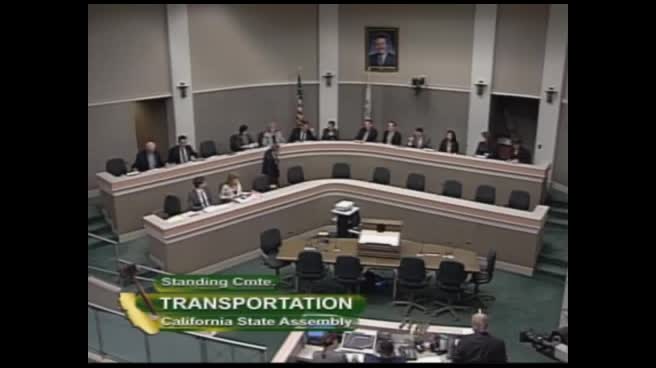 7MIN
Assembly Standing Committee on Transportation
Bill Author

Bill Co-Author(s):