AB 1876: Pupils: diploma alternatives: language options.
- Session Year: 2015-2016
- House: Assembly
- Latest Version Date: 2016-05-18
Existing law requires the Superintendent of Public Instruction to issue a high school equivalency certificate and an official score report, or an official score report only, to a person who has not completed high school and who meets specified requirements, including, among others, having taken all or a portion of a general education development test that has been approved by the State Board of Education and administered by a testing center approved by the State Department of Education, with a score determined by the state board to be equal to the standard of performance expected from high school graduates.
Commencing January 1, 2019, this bill would prohibit the department from approving or renewing approval of a contractor or testing center to administer the tests described above unless the contractor or testing center provides those tests in the top 3 primary languages used in the state, as determined by the department based on United States Census data. English, Spanish, and Vietnamese. The bill would require that an examinee be permitted to take the test in the language of his or her choice of the top 3 primary languages used in the state. those specified languages.
Existing law requires the Superintendent of Public Instruction to issue a high school equivalency certificate and an official score report, or an official score report only, to a person who has not completed high school and who meets specified requirements, including, among others, having taken all or a portion of a general education development test that has been approved by the State Board of Education and administered by a testing center approved by the State Department of Education, with a score determined by the state board to be equal to the standard of performance expected from high school graduates.
Commencing January 1, 2019, this bill would prohibit the department from approving or renewing approval of a contractor or testing center to administer the tests described above unless the contractor or testing center provides those tests in the top 5 3 primary languages used in the state, as determined by the department based on United States Census data. The bill would require that an examinee be permitted to take the test in the language of his or her choice of the top 5 3 primary languages used in the state.
Existing law requires the Superintendent of Public Instruction to issue a high school equivalency certificate and an official score report, or an official score report only, to a person who has not completed high school and who meets specified requirements, including, among others, having taken all or a portion of a general education development test that has been approved by the State Board of Education and administered by a testing center approved by the State Department of Education, with a score determined by the state board to be equal to the standard of performance expected from high school graduates.
Commencing July January 1, 2017, 2019, this bill would prohibit the department from approving or renewing approval of a contractor or testing center to administer the tests described above unless the contractor or testing center provides those tests in the top 5 primary languages used in the contractor or testing centers service area. state, as determined by the department based on United States Census data. The bill would require that an examinee to be able be permitted to take the test in the offered language of his or her choice. choice of the top 5 primary languages used in the state.
Existing law requires the Superintendent of Public Instruction to issue a high school equivalency certificate and an official score report, or an official score report only, to a person who has not completed high school and who meets specified requirements, including, among others, having taken all or a portion of a general education development test that has been approved by the State Board of Education and administered by a testing center approved by the State Department of Education, with a score determined by the state board to be equal to the standard of performance expected from high school graduates.
Commencing July 1, 2017, this bill would prohibit the department from approving or renewing approval of a contractor or testing center to administer the tests described above unless the contractor or testing center provides those tests in the top 5 primary languages used in the contractor or testing centers service area. The bill would require an examinee to be able to take the test in the offered language of his or her choice.
The Legislature finds and declares both of the following:
(a)The intention in enacting the Dymally-Alatorre Bilingual Services Act was to provide for effective communication between all levels of government in this state and the people of this state who are precluded from utilizing public services because of language barriers.
(b)It is in the interest of California to reduce language barriers in obtaining high school equivalency certificates.
SEC. 2.Section 51420.5 is added to the Education Code, to read:51420.5.(a)Commencing January 1, 2019, the department shall not approve or renew approval of a contractor or testing center to administer tests for purposes of Section 51420 unless the contractor or testing center provides the general educational development tests that have been approved by the state board in the top three primary languages used in the state, as determined by the department based on United States Census data. English, Spanish, and Vietnamese.
(b)An examinee shall be permitted to take the test in the language of his or her choice of the top three primary languages used in the state. languages specified in subdivision (a).
(c)This section is intended to supplement and not supplant any other requirements the department adopts for the approval of contractors or testing centers under this article.
The Legislature finds and declares both of the following:
(a)The intention in enacting the Dymally-Alatorre Bilingual Services Act was to provide for effective communication between all levels of government in this state and the people of this state who are precluded from utilizing public services because of language barriers.
(b)It is in the interest of California to reduce language barriers in obtaining high school equivalency certificates.
SEC. 2.Section 51420.5 is added to the Education Code, to read:51420.5.(a)Commencing January 1, 2019, the department shall not approve or renew approval of a contractor or testing center to administer tests for purposes of Section 51420 unless the contractor or testing center provides the general educational development tests that have been approved by the state board in the top five three primary languages used in the state, as determined by the department based on United States Census data.
(b)An examinee shall be permitted to take the test in the language of his or her choice of the top five three primary languages used in the state.
(c)This section is intended to supplement and not supplant any other requirements the department adopts for the approval of contractors or testing centers under this article.
The Legislature finds and declares both of the following:
(a)The intention in enacting the Dymally-Alatorre Bilingual Services Act was to provide for effective communication between all levels of government in this state and the people of this state who are precluded from utilizing public services because of language barriers.
(b)It is in the interest of California to reduce language barriers in obtaining high school equivalency certificates.
SEC. 2.Section 51420.5 is added to the Education Code, to read:51420.5.(a)Commencing July January 1, 2017, 2019, the department shall not approve or renew approval of a contractor or testing center to administer tests for purposes of Section 51420 unless the contractor or testing center provides the general educational development tests that have been approved by the state board in the top five primary languages used in the contractor or testing centers service area. state, as determined by the department based on United States Census data.
(b)An examinee shall be able permitted to take the test in the offered language of his or her choice. choice of the top five primary languages used in the state.
(c)This section is intended to supplement and not supplant any other requirements the department adopts for the approval of contractors or testing centers under this article.
The Legislature finds and declares both of the following:
(a)The intention in enacting the Dymally-Alatorre Bilingual Services Act was to provide for effective communication between all levels of government in this state and the people of this state who are precluded from utilizing public services because of language barriers.
(b)It is in the interest of California to reduce language barriers in obtaining high school equivalency certificates.
SEC. 2.Section 51420.5 is added to the Education Code, to read:51420.5.(a)Commencing July 1, 2017, the department shall not approve or renew approval of a contractor or testing center to administer tests for purposes of Section 51420 unless the contractor or testing center provides the general educational development tests that have been approved by the state board in the top five primary languages used in the contractor or testing centers service area.
(b)An examinee shall be able to take the test in the offered language of his or her choice.
(c)This section is intended to supplement and not supplant any other requirements the department adopts for the approval of contractors or testing centers under this article.
|
Date
|
Status
|
|---|---|
| May 18, 2016 | In committee: Hearing postponed by committee. |
| Jun 29, 2016 | In committee: Set, second hearing. Hearing canceled at the request of author. |
| Jun 22, 2016 | In committee: Set, first hearing. Hearing canceled at the request of author. |
| Jun 13, 2016 | In committee: Hearing postponed by committee. |
| Jun 9, 2016 | Referred to Com. on ED. |
| Jun 1, 2016 | In Senate. Read first time. To Com. on RLS. for assignment. |
| May 31, 2016 | Read third time. Passed. Ordered to the Senate. (Ayes 53. Noes 27.) |
| May 31, 2016 | Read third time. Passed. Ordered to the Senate. (Ayes 53. Noes 27. Page 5014.) |
| May 31, 2016 | Read third time. Passed. Ordered to the Senate. |
| May 26, 2016 | Read second time. Ordered to third reading. |
| May 25, 2016 | From committee: Do pass. (Ayes 14. Noes 6.) (May 25). |
| May 19, 2016 | Re-referred to Com. on APPR. |
| Feb 10, 2016 | Read first time. To print. |
| May 18, 2016 | From committee chair, with author's amendments: Amend, and re-refer to Com. on APPR. Read second time and amended. |
| May 12, 2016 | Re-referred to Com. on APPR. |
| May 11, 2016 | From committee chair, with author's amendments: Amend, and re-refer to Com. on APPR. Read second time and amended. |
| May 4, 2016 | In committee: Set, first hearing. Hearing canceled at the request of author. |
| Apr 7, 2016 | From committee: Do pass and re-refer to Com. on APPR. (Ayes 5. Noes 2.) (April 6). Re-referred to Com. on APPR. |
| Mar 29, 2016 | Re-referred to Com. on ED. |
| Mar 28, 2016 | From committee chair, with author's amendments: Amend, and re-refer to Com. on ED. Read second time and amended. |
| Mar 16, 2016 | In committee: Set, first hearing. Hearing canceled at the request of author. |
| Feb 25, 2016 | Referred to Com. on ED. |
| Feb 11, 2016 | From printer. May be heard in committee March 12. |
|
Date
|
Description
|
Location
|
Votes
|
|
|---|---|---|---|---|
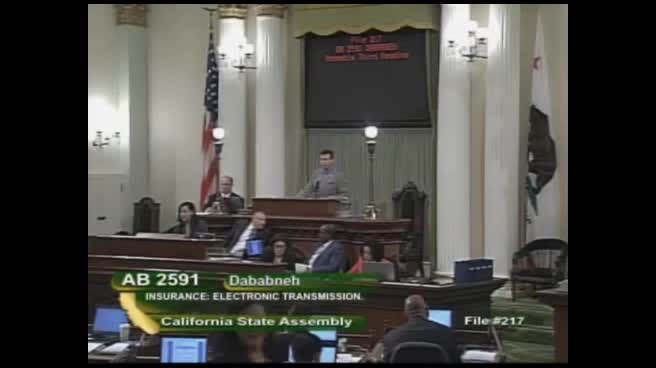
| May 31, 2016 | AB 1876 LOPEZ Assembly Third Reading | Assembly Floor |
Passed |
|
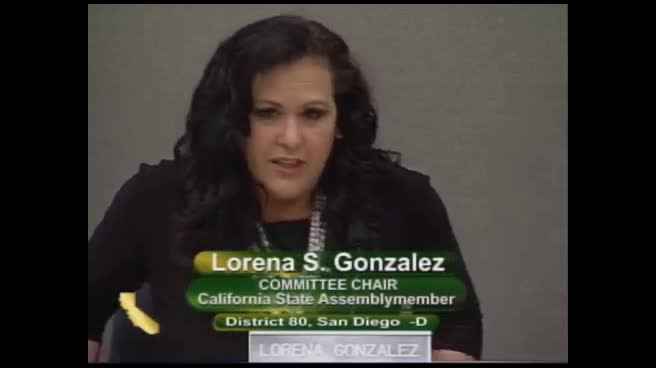
| May 25, 2016 | Do pass. | Assembly Standing Committee on Appropriations |
Passed |
|
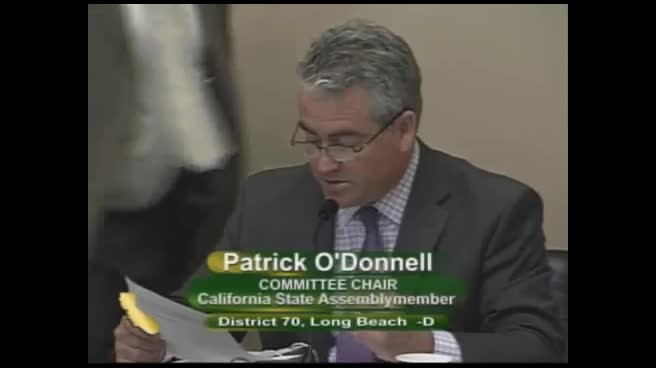
| Apr 6, 2016 | Do pass and be re-referred to the Committee on [Appropriations] | Assembly Standing Committee on Education |
Passed |
This list shows positions taken on this bill by organizations on the date displayed, which is linked to the original source.
Positions by individuals are not included.
|
Organization
|
Position
|
Date
|
|---|---|---|
| California Association For Bilingual Education | * Indeterminate | Apr 6, 2016 |
SENATE COMMITTEE ON EDUCATION
Senator Carol Liu, Chair
2015 - 2016 Regular
Bill No:
Author: | Lopez | ||
Version: | Hearing Date: June 29, 2016 | ||
Urgency: | Fiscal: | ||
Consultant: | |||
Subject:
SUMMARY
This bill prohibits the California Department of Education, beginning January 1, 2019, from approving or renewing a contractor or test center to administer tests for the purpose of a high school equivalency certificate unless the contractor/testing center provides the test in English, Spanish, and Vietnamese, and requires the test to be administered in the examinee’s choice of these languages.
BACKGROUND
Existing law requires the Superintendent of Public Instruction (SPI) to issue a California high school equivalency certificate and an official score report to any person who has not completed high school and who meets all of the following requirements:
- Is a resident of California or is a member of the armed services assigned to duty in California.
- Has taken all or a portion of a general educational development test approved by the State Board of Education (SBE) and administered by a test center approved by the California Department of Education, with a score determined by the SBE to be equal to the standard of performance expected from high school graduates.
- Meets one of the following:
- Is at least 18 years of age.
- Would have graduated from high school had he or she remained in school and followed the usual course of study toward graduation.
- Is at least 17 years of age, has accumulated fewer than 100 units of high school credit, and is confined to a state or county correctional agency.
- Is at least 17 years of age, has accumulated fewer than 100 units of high school credit prior to enrollment in a dropout recovery high school, and has successfully completed the program offered by a dropout recovery high school that provides the student with all of the following:
- Instruction aligned to state academic content standards.
- The opportunity to complete the requirements for a high school diploma.
- At least one year of instruction or instruction followed by services related to the academic program.
Existing law provides that a California high school equivalency certificate is deemed to be a high school diploma for the purpose of meeting the requirements of employment by all state and local public agencies in California. (EC § 51420 and § 51425)
The State Board of Education has approved the use of three high school equivalency tests:
- The General Educational Development Test (GED).
- The High School Equivalency Test (HiSET).
- The Test Assessing Secondary Completion (TASC).
ANALYSIS
This bill:
- Prohibits the California Department of Education (CDE), beginning January 1, 2019, from approving or renewing a contractor/test center to administer tests for purposes of the high school equivalency certificate unless the contractor/testing center provides the test in English, Spanish, and Vietnamese.
- Requires the test to be administered in the examinee’s choice of the three specified languages.
- Declares that these provisions are intended to supplement and not supplant any other requirements for approval of contractors/testing centers adopted by the CDE.
STAFF COMMENTS
- Need for the bill. According to the author, California has an estimated population of 10 million immigrants and roughly 44 percent of the total population speaks a language other than English at home. The author also cites a 2011 report by the Public Policy Institute of California (PPIC) which finds that, in California, 36 percent of immigrants ages 25-64 had not graduated from high school. The report also noted that immigrants dominate the sector of adults in California with less than a high school education, accounting for 73 percent of this population. Offering the high school equivalency exam in Spanish and Vietnamese will better equip immigrants in California who lack a high school diploma to obtain employment, compete in the job market, and have the opportunity to increase their income. This bill requires the test be administered in Vietnamese because it is the second (after Spanish at 87 percent) most frequently spoken language among California's English learners (ELs) in schools (2.3 percent of ELs). According to 2015 U.S. Census information, there are about 300,000 Vietnamese in California who indicate that they speak English “less than very well.”
- Current status. The State Board of Education has approved three high school equivalency tests for use in California: the General Educational Development Test (GED), the High School Equivalency Test (HiSET), and the Test Assessing Secondary Completion (TASC). According to the California Department of Education (CDE), all three approved test centers currently provide the exam in English and in Spanish.
In 2013, about 65,000 Californians took the General Education Development Test (GED) and approximately 45,000 passed the exam. Of those who took the test, 37,430 (57.6%) were reported as Hispanic, and 8,624 (13.2%) took the test in Spanish.
Testing fees vary from test to test and from one test center to another, but are generally around $140 to $150 per test. The state currently subsidizes these testing fees for homeless students.
While the high school equivalency exam is generally used for purposes of employment, GED Testing Service reports that it has been working with the California State University to offer college credit based on a student’s score and information has been provided to the Chancellor’s Office of the California Community Colleges for their review and consideration.
- Unintended consequences. According to the CDE, a high school equivalency
certificate is the same for all students regardless of the language of its administration. However, the transcript for the test will indicate whether it was taken in another language, and the CDE has received anecdotal reports of instances when postsecondary educational institutions or employers did not accept transcripts unless the administration of the test was in English. CDE reports that there are no current options for students to demonstrate English proficiency if the exam is taken in a language other than English.
The Committee may wish to consider:
- Absent a means for assessing English proficiency, would the results of a high school equivalency exam administered in a language other than English have value to higher education institutions or employers?
- Should administration of a test in a language other than English be required to include an assessment of the functional English skills of the examinee?
- Current law authorizes the Superintendent of Public Instruction to charge a one-time maximum fee of $20 to examinees to cover the costs of administration of the exam. In addition, a contractor/testing center is authorized to charge an examinee its own separate fee (currently $140-$150 per exam). Would the cost to test developers to meet the requirements of this bill result in an increase in fees charged of examinees?
- Related legislation. AB 2656 (O’Donnell), also on the Committee’s agenda today, extends to foster youth the fee waivers for the California High School Proficiency Exam and the high school equivalency exam that are currently provided to students who are homeless.
SUPPORT
None received on this version.
OPPOSITION
None received.
-- END --
SENATE COMMITTEE ON EDUCATION
Senator Carol Liu, Chair
2015 - 2016 Regular
Bill No:
Author: | Lopez | ||
Version: | Hearing Date: June 22, 2016 | ||
Urgency: | Fiscal: | ||
Consultant: | |||
Subject:
SUMMARY
This bill prohibits the California Department of Education, beginning January 1, 2019, from approving or renewing a contractor or test center to administer tests for the purpose of a high school equivalency certificate unless the contractor/testing center provides the test in English, Spanish, and Vietnamese, and requires the test to be administered in the examinee’s choice of these languages.
BACKGROUND
Existing law requires the Superintendent of Public Instruction (SPI) to issue a California high school equivalency certificate and an official score report to any person who has not completed high school and who meets all of the following requirements:
- Is a resident of California or is a member of the armed services assigned to duty in California.
- Has taken all or a portion of a general educational development test approved by the State Board of Education (SBE) and administered by a test center approved by the California Department of Education, with a score determined by the SBE to be equal to the standard of performance expected from high school graduates.
- Meets one of the following:
- Is at least 18 years of age.
- Would have graduated from high school had he or she remained in school and followed the usual course of study toward graduation.
- Is at least 17 years of age, has accumulated fewer than 100 units of high school credit, and is confined to a state or county correctional agency.
- Is at least 17 years of age, has accumulated fewer than 100 units of high school credit prior to enrollment in a dropout recovery high school, and has successfully completed the program offered by a dropout recovery high school that provides the student with all of the following:
- Instruction aligned to state academic content standards.
- The opportunity to complete the requirements for a high school diploma.
- At least one year of instruction or instruction followed by services related to the academic program.
Existing law provides that a California high school equivalency certificate is deemed to be a high school diploma for the purpose of meeting the requirements of employment by all state and local public agencies in California. (EC § 51420 and § 51425)
The State Board of Education has approved the use of three high school equivalency tests:
- The General Educational Development Test (GED).
- The High School Equivalency Test (HiSET).
- The Test Assessing Secondary Completion (TASC).
ANALYSIS
This bill:
- Prohibits the California Department of Education (CDE), beginning January 1, 2019, from approving or renewing a contractor/test center to administer tests for purposes of the high school equivalency certificate unless the contractor/testing center provides the test in English, Spanish, and Vietnamese.
- Requires the test to be administered in the examinee’s choice of the three specified languages.
- Declares that these provisions are intended to supplement and not supplant any other requirements for approval of contractors/testing centers adopted by the CDE.
STAFF COMMENTS
- Need for the bill. According to the author, California has an estimated population of 10 million immigrants and roughly 44 percent of the total population speaks a language other than English at home. The author also cites a 2011 report by the Public Policy Institute of California (PPIC) which finds that, in California, 36 percent of immigrants ages 25-64 had not graduated from high school. The report also noted that immigrants dominate the sector of adults in California with less than a high school education, accounting for 73 percent of this population. Offering the high school equivalency exam in Spanish and Vietnamese will better equip immigrants in California who lack a high school diploma to obtain employment, compete in the job market, and have the opportunity to increase their income. This bill requires the test be administered in Vietnamese because it is the second (after Spanish at 87 percent) most frequently spoken language among California's English learners (ELs) in schools (2.3 percent of ELs). According to 2015 U.S. Census information, there are about 300,000 Vietnamese in California who indicate that they speak English “less than very well.”
- Current status. The State Board of Education has approved three high school equivalency tests for use in California: the General Educational Development Test (GED), the High School Equivalency Test (HiSET), and the Test Assessing Secondary Completion (TASC). According to the California Department of Education (CDE), all three approved test centers currently provide the exam in English and in Spanish.
In 2013, about 65,000 Californians took the General Education Development Test (GED) and approximately 45,000 passed the exam. Of those who took the test, 37,430 (57.6%) were reported as Hispanic, and 8,624 (13.2%) took the test in Spanish.
Testing fees vary from test to test and from one test center to another, but are generally around $140 to $150 per test. The state currently subsidizes these testing fees for homeless students.
While the high school equivalency exam is generally used for purposes of employment, GED Testing Service reports that it has been working with the California State University to offer college credit based on a student’s score and information has been provided to the Chancellor’s Office of the California Community Colleges for their review and consideration.
- Unintended consequences. According to the CDE, a high school equivalency
certificate is the same for all students regardless of the language of its administration. However, the transcript for the test will indicate whether it was taken in another language, and the CDE has received anecdotal reports of instances when postsecondary educational institutions or employers did not accept transcripts unless the administration of the test was in English. CDE reports that there are no current options for students to demonstrate English proficiency if the exam is taken in a language other than English.
The committee may wish to consider:
- Absent a means for assessing English proficiency, would the results of a high school equivalency exam administered in a language other than English have value to higher education institutions or employers?
- Should administration of a test in a language other than English be required to include an assessment of the functional English skills of the examinee?
- Current law authorizes the Superintendent of Public Instruction to charge a one-time maximum fee of $20 to examinees to cover the costs of administration of the exam. In addition, a contractor/testing center is authorized to charge an examinee its own separate fee (currently $140-$150 per exam). Would the cost to test developers to meet the requirements of this bill result in an increase in fees charged of examinees?
- Related legislation. AB 2656 (O’Donnell), also on the committee’s agenda today, extends to foster youth the fee waivers for the California High School Proficiency Exam and the high school equivalency exam that are currently provided to students who are homeless.
SUPPORT
None received on this version.
OPPOSITION
None received.
-- END --
ASSEMBLY THIRD READING
ATR Bill Id:AB 1876
Author:(Lopez)
As Amended Ver:May 18, 2016
Majority vote
Committee | Votes | Ayes | Noes |
Education | 5-2 | O'Donnell, McCarty, Santiago, Thurmond, Weber | Olsen, Kim |
Appropriations | 14-6 | Gonzalez, Bloom, McCarty, Bonta, Calderon, Daly, Eggman, Eduardo Garcia, Roger Hernández, Holden, Quirk, Santiago, Weber, Wood | Bigelow, Chang, Gallagher, Jones, Obernolte, Wagner |
SUMMARY: Prohibits the California Department of Education (CDE), commencing January 1, 2019, from approving or renewing approval of a contractor or testing center to administer tests for a high school equivalency certificate unless the contractor or testing center provides the tests that have been approved by the State Board of Education (SBE) in English, Spanish, and Vietnamese, and provides that an examinee shall be permitted to take the test in any of these three languages.
COMMENTS: The SBE has approved three high school equivalency tests for use in California: the General Educational Development Test (GED), the High School Equivalency Test (HiSET), and the Test Assessing Secondary Completion (TASC). The SBE has approved Spanish language as well as English language versions of each of these tests. Testing fees vary from test to test and from one test center to another, but are generally around $140 to $150 per test.
In 2013 (the most recent year for which data are available), 64,983 Californians took the GED, 57,422 completed it, and 44,864 (69.0% of test takers and 78.1% of test completers) passed it. Of the 64,983 Californians who took the test, 37,430 (57.6%) were reported as Hispanic, and 8,624 (15.3%) took the test in Spanish.
Vietnamese is the second most frequently spoken language among California's English learners in schools. According to the 2014 California Fall Language Census, there are 1.3 million English learners in California public schools. The census shows 87% of these students speak Spanish. The next language spoken most frequently is Vietnamese (2.3% or approximately 30,000 students).
FISCAL EFFECT: According to the Assembly Appropriations Committee, minor administrative costs to CDE to renegotiate contracts with the current three test vendors.
Any costs associated with the development of the tests will fall on the testing contractors who will likely pass these costs on to the test takers. Currently, all tests are provided in English and Spanish, therefore, the only new costs are associated with test development in Vietnamese. It is estimated that costs could range from $200,000 to $2 million, depending on whether the test is translated or developed as a new test.
Analysis Prepared by: Rick Pratt / ED. / (916) 319-2087 FN: 0003058
Date of Hearing: May 25, 2016
ASSEMBLY COMMITTEE ON APPROPRIATIONS
Lorena Gonzalez, Chair
ABPCA Bill Id:AB 1876
Author:(Lopez) – As Amended Ver:May 18, 2016
Policy Committee: | Education | Vote: | 5 - 2 |
Urgency: No State Mandated Local Program: No Reimbursable: No
SUMMARY:
This bill prohibits the California Department of Education (CDE), starting January 1, 2019, from approving, or renewing approval of, a contractor or testing center to administer a high school equivalency exam, unless the contractor or testing center provides the general educational development tests that have been approved by the State Board of Education (SBE) in English, Spanish and Vietnamese. Specifically, this bill:
- Requires an examinee to be permitted to take the test in the language of his or her choice, as specified.
- Specifies the provisions of this bill are intended to supplement and not supplant any other requirements the CDE adopts for the approval of contractors or testing centers relative to the high school equivalency exam.
FISCAL EFFECT:
Minor administrative costs to CDE to renegotiate contracts with the current three test vendors.
Any costs associated with the development of the tests will fall on the testing contractors who will likely pass these costs on to the test takers. Currently, all tests are provided in English and Spanish, therefore, the only new costs are associated with test development in Vietnamese. It is estimated that costs could range from $200,000 to $2 million, depending on whether the test is translated or developed as a new test.
COMMENTS:
- Purpose. According to the author, California has an estimated population of 10 million immigrants and roughly 44% of its entire population speaks a language other than English at home. The high school equivalency exam is generally taken for employment reasons, to be a positive role model, or for personal satisfaction. Supporters of the bill state that providing a high school equivalency exam in multiple languages is an issue of equity and access, allowing recipients to better compete in the job market and increase annual income.
- Background. The SBE has approved three high school equivalency tests for use in California: the General Educational Development Test (GED), published by the GED Testing Service, which is owned by Pearson, a for-profit company; the High School Equivalency Test (HiSET), published by the Educational Testing Service (ETS), a private not-for profit company; and the Test Assessing Secondary Completion (TASC), published by CTB/McGraw-Hill, a for-profit company.
Testing fees vary from test to test and from one test center to another, but are generally around $140 to $150 per test. The state currently subsidizes these testing fees for homeless students. In 2013-14, approximately 120 homeless students took one of the three available tests. A bill pending before this committee proposes to subsidize testing fees for foster youth. It is not clear how many of these students would choose to take the test in Vietnamese, although, given the already low number of test takers, the increase should not be significant.
- Comments. Vietnamese is the second most frequently spoken language among California's English learners. According to the 2014 California Fall Language Census, there are 1.3 million English learners in California public schools. The census shows 87% of these students speak Spanish. The next language spoken most frequently is Vietnamese (2.3% or approximately 30,000 students).
It is difficult to estimate the number of people that would choose to take the test in a language other than English or Spanish. In 2013 (the most recent year for which data are available), 64,983 Californians took the high school equivalency exam, 57,422 completed the exam, and 44,864 passed. Of the 64,983 Californians who took the test, 8,624 (15.3%) took the test in Spanish.
Analysis Prepared by: Misty Feusahrens / APPR. / (916) 319-2081
Date of Hearing: April 6, 2016
ASSEMBLY COMMITTEE ON EDUCATION
Patrick O'Donnell, Chair
ABPCA Bill Id:AB 1876 (
Author:Lopez) – As Amended Ver:March 28, 2016
SUBJECT: Pupils: diploma alternatives: language options
SUMMARY: Requires high school equivalency exams to be offered in languages other than English. Specifically, this bill:
- Makes findings and declarations regarding the need to reduce language barriers in all areas of government, including in obtaining high school equivalency certificates.
- Prohibits the California Department of Education (CDE), commencing January 1, 2019, from approving or renewing approval of a contractor or testing center to administer a high school equivalency exam unless the contractor or testing center provides the general educational development tests that have been approved by the State Board of Education (SBE) in the top five primary languages used in the state, as determined by the CDE based on United States Census data.
- Provides that an examinee shall be permitted to take the test in the offered language of his or her choice of the top five primary languages used in the state.
- Specifies that these requirements are intended to supplement and not supplant any other requirements the CDE adopts for approval of contractors or testing centers.
EXISTING LAW: Requires the Superintendent of Public Instruction (SPI) to issue a high school equivalency certificate to any individual who has not completed high school and who meets all of the following requirements:
- Is a resident of this state or is a member of the armed services assigned to duty in this state.
- Has taken all or a portion of a general educational development test that has been approved by the State Board of Education (SBE) and that is administered by a testing center approved by the department, with a score determined by the state board to be equal to the standard of performance expected from high school graduates.
- Meets one of the following:
- Is at least 18 years of age;
- Would have graduated from high school had he or she remained in school and followed the usual course of study toward graduation;
- Is at least 17 years of age, has accumulated fewer than 100 units of high school credit, and is confined to a state or county hospital or to an institution maintained by a state or county correctional agency; or
- Is at least 17 years of age, has accumulated fewer than 100 units of high school credit prior to enrollment in the academic program described in this paragraph, and has successfully completed the academic program offered by a dropout recovery high school that provides the pupil with all of the following:
- Instruction aligned to state academic content standards;
- The opportunity to complete the requirements for a high school diploma; or
- At least one year of instruction or instruction followed by services related to the academic program.
FISCAL EFFECT: Unknown
COMMENTS: The SBE has approved three high school equivalency tests for use in California: the General Educational Development Test (GED), the High School Equivalency Test (HiSET), and the Test Assessing Secondary Completion (TASC). The SBE has approved Spanish language as well as English language versions of each of these tests.
In 2013 (the most recent year for which data are available), 64,983 Californians took the GED, 57,422 completed it, and 44,864 (69.0% of test takers and 78.1% of test completers) passed it. Of the 64,983 Californians who took the test, 37,430 (57.6%) were reported as Hispanic, and 8,624 (15.3%) took the test in Spanish.
This bill prohibits the California Department of Education (CDE), commencing January 1, 2019, from approving or renewing approval of a contractor or testing center to administer a high school equivalency exam unless the contractor or testing center provides the general educational development tests that have been approved by the SBE in the top five primary languages used in the state, as determined by the CDE based on data from the U. S. Census Bureau. Presumably, the top five languages include English, so the bill effectively requires the tests to be offered in English plus the top four non-English languages in each service area. According to an October 2015 report from the Census Bureau, the top five languages spoken in California are:
Language | Number of Speakers | Number Who Speak English"Less than Very Well" |
English | 19,782,598 | N/A |
Spanish | 10,105,385 | 4,539,249 |
Chinese (all dialects) | 1,058,231 | 593,816 |
Tagalog | 764,743 | 258,008 |
Vietnamese | 521,534 | 311,142 |
These data are based on the population aged 5 and over. It is not known how many of those reporting they speak English less than very well would have an interest in, a need to, or be eligible to take a high school equivalency test.
Multiple non-English versions do not currently exist. According to the CDE, it would take about two years to develop non-English versions of the equivalency tests in languages other than Spanish, and the development process is very expensive. It is not a simply matter of translating the English version, which may not be culturally relevant to non-English speakers. The process involves, developing the test, conducting field tests to ensure validity and reliability, and setting performance standards.
Non-English tests have questionable value. The author's office argues that this bill would improve access to college and career opportunities by enabling non-English speakers to receive an equivalency certificate and cites a study that found measurable economic benefits to foreign-born individuals who obtained an equivalency certificate.[1] While this is a laudable goal, the study cited by the author's office was based on individuals who took the test in English and does not support a conclusion that the observed benefits would accrue to individuals who took the test in a language other than English. In fact, the CDE reports that, even though the Spanish language versions of the tests are approved by the SBE, there is anecdotal evidence that it is not recognized by employers and some postsecondary institutions as being equivalent to the English language version.
Unintended consequences. The high cost of test development would leave test providers with three options. The first, and least likely option, would be to absorb the cost of new test development and scoring. This is not likely, because even the not-for-profit providers need to recover their costs through fees. The second, and perhaps most likely consequence, would be to recover the additional costs by increasing the fees charged to test takers. Since 90% of test takers are low income, this option could result in reducing opportunities for many by making the test too expensive. This would be especially true if the additional costs were recovered by higher fees on only the non-English versions of the tests. Those test takers would pay a premium for a certificate that has less value than the English-language one. The third option would be to discontinue offering the tests in California. While the size of the California market makes this seem unlikely, it cannot be ruled out as a possibility if the test providers determine that they cannot expect to recover the increased costs through higher fees. Options 2 and 3 would both reduce opportunities for the very population that this bill is intended to help.
REGISTERED SUPPORT / OPPOSITION:
Support
None received
Opposition
None received
Analysis Prepared by: Rick Pratt / ED. / (916) 319-2087
Melissa A. Clark and David A. Jaeger, "Natives, the Foreign-Born and High School Equivalents: New Evidence on the Returns to the GED." Working Paper #462, Princeton University, Industrial Relations Section, April 2002. ↑
Discussed in Hearing
 1MIN
Assembly Floor
 2MIN
Assembly Standing Committee on Appropriations
 12MIN
Assembly Standing Committee on Education
Bill Author
Bill Co-Author(s):