AB 1957: Public records: body-worn cameras.
- Session Year: 2015-2016
- House: Assembly
- Latest Version Date: 2016-05-18
The California Public Records Act requires that public records be open to inspection at all times during the office hours of a state or local agency and that every person has a right to inspect any public record, except as specifically provided. The act further requires that a reasonably segregable portion of a public record be available for inspection by any person requesting the public record after deletion of the portions that are exempted by law. Existing law exempts from the disclosure requirements records of complaints to, or investigations conducted by, or records of intelligence information or security procedures of, law enforcement agencies, including the Attorney General and state or local police agencies.
This bill would authorize the governing board of a law enforcement agency, in closed session, to review the footage from a body-worn camera when a peace officer who was wearing the camera is involved in in, or was a witness to, an incident that results in great bodily injury to, or death of of, a person other than the peace officer. The bill would require the judge, if there is a prosecution of the peace officer after an investigation, require, if there is an investigation into an allegation of misconduct by the peace officer, and the investigation leads to criminal prosecution of the peace officer within 60 days after the commencement of the investigation, the judge to determine the protocol for release of the footage from a body-worn camera. The bill would require a require, if there is no investigation into an allegation of misconduct by the peace officer, or if there is an investigation, but the investigation does not lead to criminal prosecution of the peace officer within 60 days of the commencement of the investigation, the state or local law enforcement agency employing the peace officer to make available, upon request, footage from a law enforcement body-worn camera 60 days after the commencement of an investigation into an allegation of misconduct by the peace officer based on use of force resulting in great bodily injury or death of a person other than the peace officer. the investigation. The bill would also prohibit the public release release, as specified, of footage that relates to crimes of domestic violence, crimes that include minors, or that includes statements of a witness at the scene of a crime, subject to a specified exception.
By increasing the duties of local law enforcement, this bill would impose a state-mandated local program.
The California Constitution requires the state to reimburse local agencies and school districts for certain costs mandated by the state. Statutory provisions establish procedures for making that reimbursement.
This bill would provide that, with regard to certain mandates no reimbursement is required by this act for a specified reason.
With regard to any other mandates, this bill would provide that, if the Commission on State Mandates determines that the bill contains costs so mandated by the state, reimbursement for those costs shall be made pursuant to the statutory provisions noted above.
The California Constitution requires local agencies, for the purpose of ensuring public access to the meetings of public bodies and the writings of public officials and agencies, to comply with a statutory enactment that amends or enacts laws relating to public records or open meetings and contains findings demonstrating that the enactment furthers the constitutional requirements relating to this purpose.
This bill would make legislative findings to that effect.
The California Public Records Act requires that public records be open to inspection at all times during the office hours of a state or local agency and that every person has a right to inspect any public record, except as specifically provided. The act further requires that a reasonably segregable portion of a public record be available for inspection by any person requesting the public record after deletion of the portions that are exempted by law. Existing law exempts from the disclosure requirements records of complaints to, or investigations conducted by, or records of intelligence information or security procedures of, law enforcement agencies, including the Attorney General and state or local police agencies.
This bill would authorize the governing board of a law enforcement agency, in closed session, to review the footage from a body-worn camera when an a peace officer who was wearing the camera is involved in an incident that results in great bodily injury or death. death of a person other than the peace officer. The bill would require the judge, if there is a prosecution of the peace officer after an investigation, to determine the protocol for release of the footage from a body-worn camera. The bill would require a state or local law enforcement agency to make available, upon request, footage from a law enforcement body-worn camera 60 days after the commencement of an investigation into a misconduct allegation an allegation of misconduct by the peace officer based on use of force resulting in great bodily injury or death. death of a person other than the peace officer. The bill would also prohibit the public release of footage that relates to crimes of domestic violence or violence, crimes that include minors minors, or that includes statements of a witness at the scene of a crime. crime, subject to a specified exception.
By increasing the duties of local law enforcement, this bill would impose a state-mandated local program.
The California Constitution requires the state to reimburse local agencies and school districts for certain costs mandated by the state. Statutory provisions establish procedures for making that reimbursement.
This bill would provide that, with regard to certain mandates no reimbursement is required by this act for a specified reason.
With regard to any other mandates, this bill would provide that, if the Commission on State Mandates determines that the bill contains costs so mandated by the state, reimbursement for those costs shall be made pursuant to the statutory provisions noted above.
The California Constitution requires local agencies, for the purpose of ensuring public access to the meetings of public bodies and the writings of public officials and agencies, to comply with a statutory enactment that amends or enacts laws relating to public records or open meetings and contains findings demonstrating that the enactment furthers the constitutional requirements relating to this purpose.
This bill would make legislative findings to that effect.
The California Public Records Act requires that public records be open to inspection at all times during the office hours of a state or local agency and that every person has a right to inspect any public record, except as specifically provided. The act further requires that a reasonably segregable portion of a public record be available for inspection by any person requesting the public record after deletion of the portions that are exempted by law. Existing law exempts from the disclosure requirements records of complaints to, or investigations conducted by, or records of intelligence information or security procedures of, law enforcement agencies, including the Attorney General and state or local police agencies.
This bill would require authorize the governing board of the a law enforcement agency, in closed session, to review the footage from a body-worn camera when an officer is involved in an incident that results in great bodily harm injury or death. The bill would require the judge, if there is an indictment a prosecution after an investigation, to determine the protocol for release of the footage from a body-worn camera. The bill would require a state or local law enforcement agency to make available, upon request, footage from a law enforcement body-worn camera 60 days after the commencement of an investigation into a misconduct that uses or involves that footage. allegation based on use of force resulting in great bodily injury or death. The bill would also prohibit the public release of footage that relates to crimes of domestic violence or crimes that include minors or that includes statements of a witness at the scene of a crime.
By increasing the duties of local law enforcement, this bill would impose a state-mandated local program.
The California Constitution requires the state to reimburse local agencies and school districts for certain costs mandated by the state. Statutory provisions establish procedures for making that reimbursement.
This bill would provide that that, with regard to certain mandates no reimbursement is required by this act for a specified reason.
With regard to any other mandates, this bill would provide that, if the Commission on State Mandates determines that the bill contains costs so mandated by the state, reimbursement for those costs shall be made pursuant to the statutory provisions noted above.
The California Public Records Act requires that public records be open to inspection at all times during the office hours of a state or local agency and that every person has a right to inspect any public record, except as specifically provided. The act further requires that a reasonably segregable portion of a public record be available for inspection by any person requesting the public record after deletion of the portions that are exempted by law. Existing law exempts from the disclosure requirements records of complaints to, or investigations conducted by, or records of intelligence information or security procedures of, law enforcement agencies, including the Attorney General and state or local police agencies.
This bill would impose a state-mandated local program by requiring require the governing board of the law enforcement agency, in closed session, to review the footage from a body-worn camera when an officer is involved in an incident that results in great bodily harm or death. The bill would require the judge, if there is an indictment after an investigation, to determine the protocol for release of the footage from a body-worn camera. The bill would require a state or local law enforcement agency to make available, upon request, footage from a law enforcement body-worn camera 60 days after the commencement of an investigation into misconduct that uses or involves that footage. The bill would also prohibit the public release of footage that relates to crimes of domestic violence or crimes that include minors or that includes statements of a witness at the scene of a crime.
The California Constitution requires the state to reimburse local agencies and school districts for certain costs mandated by the state. Statutory provisions establish procedures for making that reimbursement.
This bill would provide that no reimbursement is required by this act for a specified reason.
By increasing the duties of local law enforcement, this bill would impose a state-mandated local program.
The California Constitution requires the state to reimburse local agencies and school districts for certain costs mandated by the state. Statutory provisions establish procedures for making that reimbursement.
This bill would provide that with regard to certain mandates no reimbursement is required by this act for a specified reason.
With regard to any other mandates, this bill would provide that, if the Commission on State Mandates determines that the bill contains costs so mandated by the state, reimbursement for those costs shall be made pursuant to the statutory provisions noted above.
The California Public Records Act requires that public records be open to inspection at all times during the office hours of a state or local agency and that every person has a right to inspect any public record, except as specifically provided. The act further requires that a reasonably segregable portion of a public record be available for inspection by any person requesting the public record after deletion of the portions that are exempted by law. Existing law exempts from the disclosure requirements records of complaints to, or investigations conducted by, or records of intelligence information or security procedures of, law enforcement agencies, including the Attorney General and state or local police agencies.
This bill would state the intent of the Legislature to enact legislation to revise the act so that images captured by body-worn cameras of peace officers depicting use of force or death are released to the public if it is determined that the interest in public disclosure outweighs the need to protect the individual right to privacy. impose a state-mandated local program by requiring a state or local law enforcement agency to make available, upon request, footage from a law enforcement body-worn camera 60 days after the commencement of an investigation into misconduct that uses or involves that footage.
The California Constitution requires the state to reimburse local agencies and school districts for certain costs mandated by the state. Statutory provisions establish procedures for making that reimbursement.
This bill would provide that no reimbursement is required by this act for a specified reason.
The California Public Records Act requires that public records be open to inspection at all times during the office hours of a state or local agency and that every person has a right to inspect any public record, except as specifically provided. The act further requires that a reasonably segregable portion of a public record be available for inspection by any person requesting the public record after deletion of the portions that are exempted by law.
This bill would state the intent of the Legislature to enact legislation to revise the act so that images captured by body-worn cameras of peace officers depicting use of force or death are released to the public if it is determined that the interest in public disclosure outweighs the need to protect the individual right to privacy.
(a)Before the end of the business day following the date on which the incident occurs, the governing body of the law enforcement agency, in closed session, may review the footage from a body-worn camera when the peace officer who was wearing the camera is involved in in, or was a witness to, an incident that results in great bodily injury to, or the death of of, a person other than the peace officer.
(b)If, after reviewing the footage as authorized in subdivision (a), there is an investigation that leads to prosecution of the peace officer, the judge shall review the If there is an investigation into an allegation of misconduct by a peace officer based on the peace officers use of force, which resulted in great bodily injury to, or the death of, a person other than the peace officer, and that investigation leads to criminal prosecution of the peace officer within 60 days after the commencement of the investigation, the judge shall review the footage from any body-worn camera footage worn by the peace officer involved, or by a peace officer who was a witness to the incident, and determine the release protocol, including, but not limited to, whether the footage is released, to whom, and if redaction is required.
(c)Except as provided in subdivision (d), and notwithstanding Section 6254, a if there is not an investigation into an allegation of misconduct by a peace officer based on the peace officers use of force, which resulted in great bodily injury to, or the death of, a person other than the peace officer, or if there is an investigation, but the investigation does not lead to criminal prosecution of the peace officer within 60 days after the commencement of the investigation, the state or local law enforcement agency employing the peace officer shall make available, upon request pursuant to this chapter, the footage from a law enforcement body-worn camera worn by the peace officer involved, or by a peace officer who was a witness to the incident, within 60 days after the commencement of an investigation into an allegation of misconduct by the peace officer based on use of force resulting in great bodily injury or death of a person other than the peace officer depicted in the footage. This subdivision shall only apply where the investigation does not result in charges of misconduct against the officer. the investigation.
(d)Footage of body-worn cameras that relates to crimes of domestic violence, crimes that include minors, or that includes statements of a witness at the scene of a crime shall not be released for public viewing pursuant to subdivision (c) if the public interest in nondisclosure, or the privacy interests of any person depicted in the footage clearly outweighs the public interest in disclosure and it is not feasible to redact the portion of the recording that shows domestic violence, minors, or statements of a witness from the footage.
SEC. 2.No reimbursement is required by this act pursuant to Section 6 of Article XIIIB of the California Constitution for certain costs because, in that regard, the only costs that may be incurred by a local agency or school district under this act would result from a legislative mandate that is within the scope of paragraph (7) of subdivision (b) of Section 3 of Article I of the California Constitution.
However, if the Commission on State Mandates determines that this act contains other costs mandated by the state, reimbursement to local agencies and school districts for those costs shall be made pursuant to Part 7 (commencing with Section 17500) of Division 4 of Title 2 of the Government Code.
SEC. 3.The Legislature finds and declares that Section 1 of this act, which adds Section 6254.31 to the Government Code, furthers, within the meaning of paragraph (7) of subdivision (b) of Section 3 of Article I of the California Constitution, the purposes of that constitutional section as it relates to the right of public access to the meetings of local public bodies or the writings of local public officials and local agencies. Pursuant to paragraph (7) of subdivision (b) of Section 3 of Article I of the California Constitution, the Legislature makes the following findings:
By expanding public access to footage obtained from a law enforcement body-worn camera, body-worn cameras, this bill furthers the purpose of paragraph (7) of subdivision (b) of Section 3 of Article I of the California Constitution.
(a)Before the end of the business day following the date on which the incident occurs, the governing body of the law enforcement agency, in closed session, may review the footage from a body-worn camera when the peace officer who was wearing the camera is involved in an incident that results in great bodily injury or death. the death of a person other than the peace officer.
(b)If, after reviewing the footage as required authorized in subdivision (a), there is an investigation that leads to prosecution, prosecution of the peace officer, the judge shall review the body-worn camera footage and determine the release protocol, including, but not limited to, whether the footage is released, to whom, and if redaction is required.
(c)Except as provided in subdivision (d), notwithstanding Section 6254, a state or local law enforcement agency shall make available, upon request pursuant to this chapter, footage from a law enforcement body-worn camera 60 days after the commencement of an investigation into a an allegation of misconduct allegation by the peace officer based on use of force resulting in great bodily injury or death of a person other than the peace officer depicted in the footage. This subdivision shall only apply where the investigation does not result in charges of misconduct against the officer.
(d)Footage of body-worn cameras that relates to crimes of domestic violence or violence, crimes that include minors minors, or that includes statements of a witness at the scene of a crime shall not be released for public viewing. viewing if the public interest in nondisclosure, or the privacy interests of any person depicted in the footage clearly outweighs the public interest in disclosure and it is not feasible to redact the portion of the recording that shows domestic violence, minors, or statements of a witness from the footage.
SEC. 2.No reimbursement is required by this act pursuant to Section 6 of Article XIIIB of the California Constitution for certain costs because, in that regard, the only costs that may be incurred by a local agency or school district under this act would result from a legislative mandate that is within the scope of paragraph (7) of subdivision (b) of Section 3 of Article I of the California Constitution.
However, if the Commission on State Mandates determines that this act contains other costs mandated by the state, reimbursement to local agencies and school districts for those costs shall be made pursuant to Part 7 (commencing with Section 17500) of Division 4 of Title 2 of the Government Code.
SEC. 3.The Legislature finds and declares that Section 1 of this act, which adds Section 6254.31 to the Government Code, furthers, within the meaning of paragraph (7) of subdivision (b) of Section 3 of Article I of the California Constitution, the purposes of that constitutional section as it relates to the right of public access to the meetings of local public bodies or the writings of local public officials and local agencies. Pursuant to paragraph (7) of subdivision (b) of Section 3 of Article I of the California Constitution, the Legislature makes the following findings:
By expanding public access to footage obtained from a law enforcement body-worn camera, this bill furthers the purpose of paragraph (7) of subdivision (b) of Section 3 of Article I of the California Constitution.
(a)Before the end of the business day following the date on which the incident occurs, the governing body of the law enforcement agency, in closed session, shall may review the footage from a body-worn camera when the officer is involved in an incident that results in great bodily harm injury or death.
(b)If, after reviewing the footage as required in subdivision (a), there is an investigation that leads to an indictment, prosecution, the judge shall review the body-worn camera footage and determine the release protocol, including, but not limited to, whether the footage is released, to whom, and if redaction is required.
(c)Except as provided in subdivision (d), notwithstanding Section 6254, a state or local law enforcement agency shall make available, upon request pursuant to this chapter, footage from a law enforcement body-worn camera 60 days after the commencement of an investigation into a misconduct that uses or involves that footage. allegation based on use of force resulting in great bodily injury or death depicted in the footage.
(d)Footage of body-worn cameras that relates to crimes of domestic violence or crimes that include minors or that includes statements of a witness at the scene of a crime shall not be released for public viewing.
SEC. 2.No reimbursement is required by this act pursuant to Section 6 of Article XIIIB of the California Constitution for certain costs because, in that regard, the only costs that may be incurred by a local agency or school district under this act would result from a legislative mandate that is within the scope of paragraph (7) of subdivision (b) of Section 3 of Article I of the California Constitution.
However, if the Commission on State Mandates determines that this act contains other costs mandated by the state, reimbursement to local agencies and school districts for those costs shall be made pursuant to Part 7 (commencing with Section 17500) of Division 4 of Title 2 of the Government Code.
Notwithstanding (a)Before the end of the business day following the date on which the incident occurs, the governing body of the law enforcement agency, in closed session, shall review the footage from a body-worn camera when the officer is involved in an incident that results in great bodily harm or death.
(b)If, after reviewing the footage as required in subdivision (a), there is an investigation that leads to an indictment, the judge shall review the body-worn camera footage and determine the release protocol, including, but not limited to, whether the footage is released, to whom, and if redaction is required.
(c)Except as provided in subdivision (d), notwithstanding Section 6254, a state or local law enforcement agency shall make available, upon request pursuant to this chapter, footage from a law enforcement body-worn camera 60 days after the commencement of an investigation into misconduct that uses or involves that footage.
(d)Footage of body-worn cameras that relates to crimes of domestic violence or crimes that include minors or that includes statements of a witness at the scene of a crime shall not be released for public viewing.
SEC. 2.No reimbursement is required by this act pursuant to Section 6 of Article XIII B of the California Constitution because the only costs that may be incurred by a local agency or school district under this act would result from a legislative mandate that is within the scope of paragraph (7) of subdivision (b) of Section 3 of Article I of the California Constitution.
SEC. 2.No reimbursement is required by this act pursuant to Section 6 of Article XIIIB of the California Constitution for certain costs because, in that regard, the only costs that may be incurred by a local agency or school district under this act would result from a legislative mandate that is within the scope of paragraph (7) of subdivision (b) of Section 3 of Article I of the California Constitution.
However, if the Commission on State Mandates determines that this act contains other costs mandated by the state, reimbursement to local agencies and school districts for those costs shall be made pursuant to Part 7 (commencing with Section 17500) of Division 4 of Title 2 of the Government Code.
Notwithstanding Section 6254, a state or local law enforcement agency shall make available, upon request pursuant to this chapter, footage from a law enforcement body-worn camera 60 days after the commencement of an investigation into misconduct that uses or involves that footage.
SEC. 2.No reimbursement is required by this act pursuant to Section 6 of Article XIII B of the California Constitution because the only costs that may be incurred by a local agency or school district under this act would result from a legislative mandate that is within the scope of paragraph (7) of subdivision (b) of Section 3 of Article I of the California Constitution.
SECTION 1.It is the intent of the Legislature to enact legislation to revise the California Public Records Act (Chapter 3.5 (commencing with Section 6250) of Division 7 of Title 1 of the Government Code) so that images captured by body-worn cameras of peace officers depicting use of force or death are released to the public if it is determined that the interest in public disclosure outweighs the need to protect the individual right to privacy.
It is the intent of the Legislature to enact legislation to revise the California Public Records Act (Chapter 3.5 (commencing with Section 6250) of Division 7 of Title 1 of the Government Code) so that images captured by body-worn cameras of peace officers depicting use of force or death are released to the public if it is determined that the interest in public disclosure outweighs the need to protect the individual right to privacy.
|
Date
|
Status
|
|---|---|
| Apr 25, 2016 | Read second time and amended. |
| Jun 13, 2016 | Stricken from file. |
| Jun 1, 2016 | Read third time. Refused passage. (Ayes 28. Noes 36.). |
| Jun 1, 2016 | Read third time. Refused passage. (Ayes 28. Noes 36. Page 5146.). |
| Jun 1, 2016 | Read third time. Refused passage. |
| Jun 1, 2016 | Motion to reconsider made by Assembly Member Quirk. |
| May 26, 2016 | Read second time. Ordered to third reading. |
| May 25, 2016 | From committee: Do pass. (Ayes 13. Noes 7.) (May 25). |
| May 19, 2016 | Re-referred to Com. on APPR. |
| May 18, 2016 | In committee: Set, first hearing. Hearing canceled at the request of author. |
| May 18, 2016 | From committee chair, with author's amendments: Amend, and re-refer to Com. on APPR. Read second time and amended. |
| Apr 26, 2016 | Re-referred to Com. on APPR. |
| Feb 12, 2016 | Read first time. To print. |
| Apr 21, 2016 | From committee: Amend, and do pass as amended and re-refer to Com. on APPR. (Ayes 8. Noes 2.) (April 19). |
| Apr 18, 2016 | Re-referred to Com. on JUD. |
| Apr 14, 2016 | Read second time and amended. |
| Apr 13, 2016 | From committee: Amend, and do pass as amended and re-refer to Com. on JUD. (Ayes 4. Noes 1.) (April 12). |
| Apr 7, 2016 | Re-referred to Com. on PUB. S. |
| Apr 6, 2016 | From committee chair, with author's amendments: Amend, and re-refer to Com. on PUB. S. Read second time and amended. |
| Apr 5, 2016 | In committee: Set, first hearing. Hearing canceled at the request of author. |
| Mar 28, 2016 | Re-referred to Com. on PUB. S. |
| Mar 17, 2016 | Referred to Coms. on PUB. S. and JUD. |
| Mar 17, 2016 | From committee chair, with author's amendments: Amend, and re-refer to Com. on PUB. S. Read second time and amended. |
| Feb 16, 2016 | From printer. May be heard in committee March 17. |
|
Date
|
Description
|
Location
|
Votes
|
|
|---|---|---|---|---|
| Jun 1, 2016 | AB 1957 QUIRK Assembly Third Reading | Assembly Floor |
Failed |
|
| May 25, 2016 | Do pass. | Assembly Standing Committee on Appropriations |
Passed |
|
| Apr 19, 2016 | Do pass as amended and be re-referred to the Committee on [Appropriations] | Assembly Standing Committee on Judiciary |
Passed |
|
| Apr 12, 2016 | Do pass as amended and be re-referred to the Committee on [Judiciary] | Assembly Standing Committee on Public Safety |
Passed |
This list shows positions taken on this bill by organizations on the date displayed, which is linked to the original source.
Positions by individuals are not included.
|
Organization
|
Position
|
Date
|
|---|---|---|
| California Civil Liberties Advocacy | * Support | May 25, 2016 |
| California District Attorneys Association | * Against | May 25, 2016 |
| California Newspaper Publishers Association | * For If Amend | May 25, 2016 |
| California Police Chiefs Association | * Against | Apr 19, 2016 |
| California Public Defenders Association | ** Support | Apr 19, 2016 |
| California State Sheriffs' Association | ** Against | Apr 19, 2016 |
| Fraternal Order of Police Analysis Prepared | ** Against | Apr 19, 2016 |
| League Of California Cities | * Indeterminate | Apr 19, 2016 |
| Legal Services for Prisoners with Children | ** Support | Apr 19, 2016 |
| San Diego County District Attorney | ** Against | Apr 19, 2016 |
ASSEMBLY THIRD READING
ATR Bill Id:AB 1957
Author:(Quirk)
As Amended Ver:
Majority vote
Committee | Votes | Ayes | Noes |
Public Safety | 4-1 | Jones-Sawyer, Lopez, Quirk, Santiago | Melendez |
Judiciary | 8-2 | Mark Stone, Alejo, Chau, Chiu, Cristina Garcia, Holden, Maienschein, Ting | Wagner, Gallagher |
Appropriations | 13-7 | Gonzalez, Bloom, McCarty, Bonta, Calderon, Daly, Eggman, Eduardo Garcia, Holden, Quirk, Santiago, Weber, Wood | Bigelow, Chang, Gallagher, Roger Hernández, Jones, Obernolte, Wagner |
SUMMARY: Provides a set of procedures for disclosing footage from a law enforcement officer's body-worn camera. Specifically, this bill:
- Allows, before the end of the business day following the date on which the incident occurs, the governing body of the law enforcement agency, in closed session, to review the footage from a body-worn camera when the peace officer who was wearing the camera is involved in, or was a witness to, an incident that results in great bodily injury or death of a person other than the peace officer.
- Provides that, if there is an investigation that leads to prosecution of the peace officer based on the officer's use of force which resulted in great bodily or death of a person other than the officer, a judge shall review the body-worn camera footage and determine a release protocol, including, but not limited to, whether the footage is released, to whom, and if redaction is required.
- Provides that, if there is not an investigation into an allegation of misconduct by the peace officer, or if an investigation does not lead to criminal prosecution of an officer within 60 days of the start of the investigation, a state or local law enforcement agency employing the officer must disclose footage from a body-worn camera, upon request, within 60 days after the commencement of an investigation.
- Provides that footage of body-worn cameras that relate to crimes of domestic violence, crimes that include minors, or that include statements of a witness at the scene of a crime shall not be released for public viewing if the public interest in non-disclosure, or the privacy interests of any person depicted in the footage, clearly outweighs the public interest in disclosure and it is not feasible to redact the portion of the recording that shows domestic violence, minors, or statements of a witness from the footage.
- Contains findings and declarations regarding the right of public access to meetings of local legislative bodies and how the expansion of public access to body camera footage furthers this purpose.
EXISTING LAW:
- Establishes the California Public Records Act and provides that the Legislature, mindful of the right of individuals to privacy, finds and declares that access to information concerning the conduct of the people's business is a fundamental and necessary right of every person in this state.
- Defines "public records" as "any writing containing information relating to the conduct of the public's business prepared, owned, used, or retained by any state or local agency regardless of physical form or characteristics." "Writing" means "any handwriting, typewriting, printing, photostating, photographing, photocopying, transmitting by electronic mail or facsimile, and every other means of recording upon any tangible thing any form of communication or representation, including letters, words, pictures, sounds, or symbols, or combinations thereof, and any record thereby created, regardless of the manner in which the record has been stored."
- Makes public records open to inspection at all times during the office hours of the state or local agency. Every person has a right to inspect any public record, except as hereafter provided. Any reasonably segregable portion of a record shall be available for inspection by any person requesting the record after deletion of the portions that are exempted by law.
- Provides that, except with respect to public records exempt from disclosure by express provisions of law, each state or local agency, upon a request for a copy of records that reasonably describes an identifiable record or records, shall make the records promptly available to any person upon payment of fees covering direct costs of duplication, or a statutory fee if applicable. Upon request, an exact copy shall be provided unless impracticable to do so.
- Requires the public agency, when a member of the public requests to inspect a public record or obtain a copy of a public record, in order to assist the member of the public make a focused and effective request that reasonably describes an identifiable record or records, to do all of the following, to the extent reasonable under the circumstances:
- Assist the member of the public to identify records and information that are responsive to the request or to the purpose of the request, if stated;
- Describe the information technology and physical location in which the records exist; and
- Provide suggestions for overcoming any practical basis for denying access to the records or information sought.
- States that the above provision does not apply when the public agency determines that the request should be denied and bases that determination solely on an exemption listed in Section 6254, as specified.
- States that, except as in other sections of the California Public Records Act, this chapter does not require the disclosure of specified records, which includes among other things: Records of complaints to, or investigations conducted by specified agencies, including any state or local police agency, or any investigatory or security files compiled by any other state or local police agency, or any investigatory or security files compiled by any other state or local agency for correctional, law enforcement, or licensing purposes.
- Provides, notwithstanding any other law, state and local law enforcement agencies shall make public the following information, except to the extent that disclosure of a particular item of information would endanger the safety of a person involved in an investigation or would endanger the successful completion of the investigation or a related investigation:
- The full name and booking information of all persons arrested;
- Calls for service logs and crime reports, subject to protections for protecting the confidentiality of victims; and,
- The addresses of individuals arrested by the agency and victims of a crime, where the requester declares under penalty of perjury that the request is made for a scholarly, journalistic, political, or governmental purpose, or that the request is made for investigation purposes by a licensed private investigator.
- Requires the agency to justify withholding any record by demonstrating that the record in question is exempt under express provisions of this chapter or that on the facts of the particular case the public interest served by not disclosing the record clearly outweighs the public interest served by disclosure of the record.
- Authorizes any person to institute proceedings for injunctive or declarative relief or writ of mandate in any court of competent jurisdiction to enforce his or her right to inspect or to receive a copy of any public record or class of public records under this chapter.
- States that peace officer or custodial officer personnel records and records maintained by any state or local agency pursuant to citizens' complaints against personnel are confidential and shall not be disclosed in any criminal or civil proceeding except by discovery. This section shall not apply to investigations or proceedings concerning the conduct of peace officers or custodial officers, or any agency or department that employ these officers, conducted by a grand jury, a district attorney's office, or the Attorney General's office.
- Provides, notwithstanding the above provision, a department of agency shall release to the complaining party a copy of his or her own statements at the time the complaint is filed.
- States that police "personnel records" include "complaints, or investigations of complaints, concerning an event or transaction in which the officer participated, or which he or she perceived, and pertaining to the manner in which he or she performed his or her duties."
FISCAL EFFECT:
According to the Assembly Appropriations Committee, no state cost.
Significant cost to local agencies that provide body-worn cameras to their peace officers. These requirements apply only if the agency uses body-worn cameras. Furthermore, public disclosure required by this bill falls under the public access provision of California Constitution Article I Section 3, thus costs associated with these provisions are not reimbursable.
COMMENTS: According to the author, "Since 2012, there has been a national outcry of several incidents where law enforcement 'use of force' has been questioned in communities throughout the United States. These incidences, many leading to no indictment, have fractured the relationship between many communities and the law enforcement agencies sworn to protect them.
"Body worn cameras have many benefits. A 2013 University of Cambridge study found that when police wear body cameras, both police and respondents are less likely to use violence. The study indicated a drop in use of force by more than a 50%. Body cameras could thus make the streets safer for both officers and the general public. Body worn footage can improve the public's view of policing.
"California has an untiring commitment to fairness, civil rights, community policing, transparency, and justice; AB 1957 seeks to adopt the best practices for release of images captured by the use of police body-worn cameras in this state."
Analysis Prepared by: Sandy Uribe / PUB. S. / (916) 319-3744 FN: 0003055
Date of Hearing: May 25, 2016
ASSEMBLY COMMITTEE ON APPROPRIATIONS
Lorena Gonzalez, Chair
ABPCA Bill Id:AB 1957
Author:(Quirk) – As Amended Ver:May 18, 2016
Policy Committee: | Public Safety | Vote: | 4 - 1 |
Judiciary | 8 - 2 |
Urgency: No State Mandated Local Program: Yes Reimbursable: No
SUMMARY:
This bill allows a local governing body to review body-worn camera (BWC) footage of an officer-involved incident resulting in death or great bodily injury the day after the incident occurs. This bill allows the public access to the footage 60 days after the commencement of an investigation, but only if the investigation does not result in charges of misconduct against the officer. Footage that relates to domestic violence, crimes against minors, and statements of a witness at the scene of a crime may not be released unless these portions can be redacted.
FISCAL EFFECT:
No state cost.
Significant cost to local agencies that provide body-worn cameras to their peace officers. These requirements apply only if the agency uses body-worn cameras. Furthermore, public disclosure required by AB 1957 falls under the public access provision of, Section 3, Article I of the California Constitution, thus costs associated with these provisions are not reimbursable.
COMMENTS:
- Background. As a result of a string of well-publicized incidents involving the use of force by law enforcement officers against African-American men, beginning with the shooting of Michael Brown in Ferguson, Missouri on August 9, 2014, a public debate has emerged over the use of BWCs by peace officers. According to the National Conference of State Legislatures, there are no fewer than 30 states currently considering some form of legislation on the topic.
A BWC is a small video camera – typically attached to an officer's clothing, helmet or sunglasses – that can capture, from an officer's point of view, video and audio recordings of activities, including traffic stops, arrests, searches, interrogations, and critical incidents such as officer-involved shootings or serious use of force.
In addition to general policy debates about the relative merits and effectiveness of BWCs, when and how they should be used, and whether they will foster trust or distrust among the community, one important issue concerns whether footage obtained from BWCs should be treated as a "public record" open to public inspection, or whether the footage raises unique privacy and safety issues that would justify some constraints on public disclosure of the footage.
- Purpose. According to the author, “Body worn cameras have many benefits. A 2013 University of Cambridge study found that when police wear body cameras, both police and respondents are less likely to use violence. The study indicated a drop in use of force by more than 50 percent. Body cameras could thus make the streets safer for both officers and the general public. Body worn footage can improve the public’s view of policing.
"California has an untiring commitment to fairness, civil rights, community policing, transparency, and justice; AB 1957 seeks to adopt the best practices for release of images captured by the use of police body-worn cameras in this state."
AB 1957 attempts to balance the public’s interest in access with the competing privacy interests of persons depicted in the footage. This bill would create an exception to the investigative-records exemption of the Public Records Act. This bill would allow body camera footage depicting an officer-involved use of force involving great bodily injury or death which has resulted in an investigation of misconduct to be made available to the public under the California Public Records Act, 60 days after the investigation commences, if the investigation does not result in charges of misconduct. However, there appears to be some ambiguity in this bill; it provides that the governing body of the law enforcement agency may review footage by close of business the day after the incident. It is not clear if such a meeting would be exempt from the Brown Act – the law which guarantees the public’s right to attend and participate in meetings of local legislative bodies – and whether notification requirements of such meetings are waived.
- Related legislation. AB 2533 (Santiago), passed by this Committee on May 5, 2016, requires that a public safety officer be given a minimum of three business days' notice before any audio or video data of the officer that was recorded by the officer may be publicly released by the department or other public agency on the Internet.
AB 1940 (Cooper), passed by this Committee on May 18, 2016, requires law enforcement agencies, departments or entities to develop a policy for peace officer use of BWCs, makes that policy subject to collective bargaining, and requires that the policy allow a peace officer to review camera footage before making a report or statement. A peace officer involved in a serious use of force, as defined, may not review the recording until accompanied by an assigned investigator or supervisor.
AB 2611 (Low), pending in the Assembly, exempts from disclosure under the California Public Records Act (CPRA) any visual or audio recording of another that depicts death or serious bodily injury in such a morbid and sensational manner that the content is highly offensive to a reasonable person, and any public interest or law enforcement purpose for disclosure is clearly outweighed by the public interest in nondisclosure, and any recording of the death of a peace officer, unless authorized by his or her family.
- Previous legislation. AB 66 (Weber) would have imposed specified requirements on a law enforcement agency that requires its officers to use BWCs, including a requirement that the policies and procedures being posted online, that peace officers be banned from making personal copies of video footage, that officers be allowed to review their own footage before making an initial statement and report, and exempt footage depicting sexual or domestic violence victims from public disclosure. This bill was held in this Committee’s Suspense file.
AB 69 (Rodriguez), Chapter 461, Statutes of 2015, requires law enforcement agencies to consider specified best practices when establishing policies and procedures for downloading and storing data from BWCs.
AB 1246 (Quirk), held in Assembly Public Safety, would have prohibited the disclosure of a recording made by a BWC, except to the person whose image is recorded by the BWC.
SB 175 (Huff), currently inactive on the Assembly floor, requires each department or agency that employs peace officers and elects to require those peace officers to wear BWCs to develop a policy relating to their use of body-worn cameras.
SB 195 (Anderson), held in Senate Rules, would have stated the intent of the Legislature to enact legislation that protects the privacy of individuals recorded by BWCs utilized by law enforcement officers and the privacy of the officers wearing these cameras.
Analysis Prepared by: Pedro Reyes / APPR. / (916) 319-2081
Date of Hearing: April 19, 2016
ASSEMBLY COMMITTEE ON
, Chair
ABPCA Bill Id:
Author:() – As Ver:
As Proposed to be Amended
SUBJECT:
KEY ISSUE: Should the california public records act be amended to provide a procedure for releasing footage from a Peace officer’s body-worn camera, in A manner that properly balances privacy interests with the substantial public interest in disclosing such footage to the public?
SYNOPSIS
This bill is one of several measures introduced in the current two-session that address the public record status of footage taken by a peace officer's body-worn camera, an issue that will become more pressing as more law enforcement agencies adopt these devices. This bill attempts to balance the public interest in access and competing privacy interests of certain persons depicted in the footage by setting forth a three-tiered process. First, the bill authorizes the governing body of a law enforcement agency (most likely a city council or county board of supervisors) to review footage from a peace officer's body-worn camera whenever there is an incident that results in the death or serious bodily injury of a civilian, allegedly due to the misconduct of a peace officer. Second, if this review leads to an investigation and eventual prosecution of a peace officer for misconduct, then a judge will review the footage and develop a "release protocol," which would include a determination of whether any portion of the footage should be redacted before release to the public. Third, if the investigation does not lead to charges of misconduct against the officer, then the footage would be required to be released upon completion of the investigation. In addition, this bill would place restrictions on the disclosure of footage that depicts a victim of domestic violence, a minor, or a witness at the scene of the incident. The bill is opposed by district attorneys who contend that the existing law already provides an adequate balance between the public interest in disclosure and public interest in non-disclosure, as well as the competing interest between public access and individual privacy. In order to clarify the relationship between the different components of the bill and the appropriate balancing of competing public interests in disclosure and non-disclosure, the author will take amendments today in this Committee. Those amendments are already reflected in the summary and analysis below. These amendments would appear to address some, but not necessarily all, of the concerns raised by opponents. This bill recently passed out of the Assembly Public Safety Committee on a 4-1 vote, with two members not voting.
SUMMARY: Provides a set of procedures for disclosing footage from a law enforcement officer's body-worn camera. Specifically, this bill:
- Allows, before the end of the business day following the date on which the incident occurs, the governing body of the law enforcement agency, in closed session, to review the footage from a body-worn camera when the peace officer who was wearing the camera is involved in an incident that results in great bodily injury or death of a person other than the peace officer.
- If after the footage is reviewed as authorized in 1), above, there is an investigation that leads to prosecution of the peace officer, a judge shall review the body-worn camera footage and determine a release protocol, including, but not limited to, whether the footage is released, to whom, and if redaction is required.
- Requires, except as provided in 4), below, that a state or local law enforcement agency disclose footage from a body-worn camera upon conclusion of an investigation into the misconduct by the peace officer which resulted in great bodily injury or death of a person other than the peace officer. Specifies that this requirement only applies where the investigation does not result in charges of misconduct against the officer.
- Provides that footage of body-worn cameras that relate to crimes of domestic violence, crimes that include minors, or that include statements of a witness at the scene of a crime shall not be released for public viewing if the public interest in non-disclosure, or the privacy interests of any person depicted in the footage, clearly outweighs the public interest in disclosure and it is not feasible to redact the portion of the recording that shows domestic violence, minors, or statements of a witness from the footage.
EXISTING LAW:
- Requires, under the California Public Records Act (CPRA), state and local agencies to make public records available for inspection by the public, unless another provision of the CPRA or another statute expressly exempts the records from the disclosure requirement. (Government Code Section 6250 et seq.)
- Defines "public records" to mean any writing containing information relating to the conduct of the public's business prepared, owned, used, or retained by any state or local agency regardless of physical form or characteristics. Defines "writing" to mean any handwriting, typewriting, printing, photostating, photographing, photocopying, transmitting by electronic mail or facsimile, and every other means of recording upon any tangible thing any form of communication or representation, including letters, words, pictures, sounds, or symbols, or combinations thereof, and any record thereby created, regardless of the manner in which the record has been stored. (Government Code Section 6252.)
- Exempts from disclosure under the CPRA any records relating to an investigation conducted by a state or local law enforcement agency or any investigatory or security files compiled by any other state or local agency for correctional, law enforcement, or licensing purposes. Specifies, however, that state and local law enforcement agencies shall disclose the names and addresses of persons involved in the incident, including certain information about the victim, as specified, unless the disclosure would endanger the successful completion of the investigation. (Government Code Section 6254 (f).)
FISCAL EFFECT: As currently in print this bill is keyed fiscal.
COMMENTS: In the past few years, there have been several tragic and high profile incidents of persons dying or suffering serious injury in interactions with police officers. A Grand Jury's failure to indict a police officer who shot and killed an unarmed African American man, for example, prompted several rounds of protests and confrontations in Ferguson, Missouri. In other incidents, bystanders with camera phones captured encounters that appeared to show police officers using excessive force when arresting or restraining African-American men. These incidents have rekindled longstanding calls for police reform and community oversight, replicating demands that have been made since at least the 1965 Watts Rebellion, which like the recent conflicts were prompted by charges of police abuse of African-Americans. Recent reform proposals include requiring police departments to require the use of body-worn cameras by police officers that will, presumably, capture police-community interactions and provide critical evidence as to whether a police officer abused his or her authority, or if he or she acted reasonably and professionally under the circumstances.
In the current two-year legislative session, at least eight bills have set forth proposals for body-worn cameras. The most comprehensive of these proposals was AB 66 (Weber, 2015). AB 66 would have established mandatory requirements and recommended guidelines for the use of body-worn cameras by peace officers and the handling of the resulting video and audio data. AB 66, not unlike the many of the others, died in various committees without reaching a floor vote. Only one of the body camera measures introduced last year became law, and it was fairly modest. AB 69 (Chapter 461, Statutes of 2015) requires law enforcement agencies to consider "best practices" when establishing policies and procedures for downloading and storing data from body-worn cameras.
In addition to general policy debates about the relative merits and effectiveness of body-worn cameras, when and how they should be used, and whether they will foster trust or distrust among the community, one important issue concerns whether footage obtained from body-worn cameras should be treated as a "public record" open to public inspection, or whether the footage raises unique privacy and safety issues that would justify some constraints on public disclosure of the footage. This bill attempts to balance the public interest in access with the competing privacy interests of persons depicted in the footage.
Specifically, AB 1957 sets forth a three-tiered process for the review and disclosure of footage from body-worn cameras. First, the bill authorizes the "governing body" of a law enforcement agency – most notably a city council for the police and county board of supervisors for the sheriffs – to review, in closed session, the footage from a peace officer's body-worn camera whenever there is an incident that results in death or serious bodily injury to someone other than a peace officer. Second, if the review of the footage leads to an investigation and eventual prosecution of a peace officer for misconduct, based on the contents of the footage, then a judge will review the footage and develop a "release protocol," including a determination of whether any portion of the footage should be redacted if it becomes open to the public. Third, if the investigation does not lead to charges of misconduct against the officer, then the footage is required to be released upon completion of the investigation.
Privacy Interests of Certain Victims, Minors, and Witnesses: While this measure is premised upon the principle that body-worn camera footage is a public record and therefore subject to public inspection, unless an express exemption applies, this bill seeks to offer privacy protection to persons who may, in one way or another, be vulnerable. Specifically, the bill provides that footage related to crimes of domestic violence, footage depicting minors, and footage depicting the testimony of witnesses at the scene of an incident shall not be disclosed if the public interest in non-disclosure, or the privacy interest of any person depicted in the footage, clearly outweighs the public interest in disclosure and it is not feasible to redact the portion showing the victim of domestic violence, minor, or witness.
Proposed Author Amendments: In order to clarify the relationship between the tiers set forth in the bill, and to clarify the appropriate balancing that should take place between the public's interests in disclosure, the author wishes to take the following amendments in this Committee:
SECTION 1. Section 6254.31 is added to the Government Code, to read:
6254.31. (a) Before the end of the business day following the date on which the incident occurs, the governing body of the law enforcement agency, in closed session, may review the footage from a body-worn camera when the peace officer who was wearing the camera is involved in an incident that results in great bodily injury or death of a person other than the peace officer.
(b) If, after reviewing the footage as required authorized in subdivision (a), there is an investigation that leads to prosecution of the peace officer, the judge shall review the body-worn camera footage and determine the release protocol, including, but not limited to, whether the footage is released, to whom, and if redaction is required.
(c) Except as provided in subdivision (d), notwithstanding Section 6254, a state or local law enforcement agency shall make available, upon request pursuant to this chapter, footage from a law enforcement body-worn camera 60 days after the commencement upon conclusion of an investigation into a an allegation of misconduct by the peace officer allegation based on use of force resulting in great bodily injury or death of a person other than the peace officer depicted in the footage. This subdivision shall only apply where the investigation does not result in charges of misconduct against the officer.
d) Footage of body-worn cameras that relates to crimes of domestic violence or crimes that include minors or that includes statements of a witness at the scene of a crime shall not be released for public viewing if the public interest in non-disclosure, or the privacy interests of any person depicted in the footage clearly, outweighs the public interest in disclosure and it is not feasible to redact the portion of the recording that shows domestic violence, minors, or statements of a witness from the footage.
SEC. 2. No reimbursement is required by this act pursuant to Section 6 of Article XIII B of the California Constitution for certain costs because, in that regard, the only costs that may be incurred by a local agency or school district under this act would result from a legislative mandate that is within the scope of paragraph (7) of subdivision (b) of Section 3 of Article I of the California Constitution.
However, if the Commission on State Mandates determines that this act contains other costs mandated by the state, reimbursement to local agencies and school districts for those costs shall be made pursuant to Part 7 (commencing with Section 17500) of Division 4 of Title 2 of the Government Code.
ARGUMENTS IN SUPPORT: According to the author:
Since 2012, there has been a national outcry of several incidents where law enforcement “use of force” has been questioned in communities throughout the United States. These incidences, many leading to no indictment, have fractured the relationship between many communities and the law enforcement agencies sworn to protect them.
Body worn cameras have many benefits, they can prevent violence. A 2013 University of Cambridge study in Rialto, CA found that when police wear body cameras, both police and respondents are less likely to use violence. The study indicated a drop in use of force by more than a 50 percent. Body cameras could thus make the streets safer for both officers and the general public. Body worn footage can improve the public’s view of policing by showing the human side.
California has an untiring commitment to fairness, civil rights, community policing, transparency, and justice; AB 1957 seeks to adopt the best practices for use of police body-worn cameras in this state.
ARGUMENTS IN OPPOSITION: The California District Attorneys Association (CDAA) opposes this bill because it believes that existing law already appropriately balances the competing public interests between disclosure and non-disclosure. Specifically, CDAA points out that existing subdivision (f) of Government Code section 6254(f) already provides an exception to the California Public Records Act that protects against disclosure of reports that “would endanger the successful completion of the investigation or a related investigation.” CDAA opposes this bill because it would "rather arbitrarily . . . override that CPRA exemption after just 60 days. In many cases, particularly those in which an officer is being investigated as a criminal suspect, such an investigation would still be ongoing after 60 days." In addition, CDAA notes that "AB 1957 provides no mechanism by which to delay the release of any footage related to the investigation, and, in fact, requires its release upon request. Under no other circumstances are law enforcement agencies required to disclose evidence during the pendency of an investigation. Existing law sufficiently balances the public’s desire to obtain this type of information with the law enforcement agencies’ need to preserve the integrity of investigations. AB 1957 would undermine those efforts."
The San Diego District Attorney's (SDAA) opposes this bill for much the same reasons as those articulated by CDAA. However, SDAA adds the additional argument that the determination about disclosure should be tied not to the commencement of the investigation but "to the determination that there was, in fact, misconduct." In addition SDAA notes that the City of San Diego and San Diego County have established independent review to investigation allegations of peace officer misconduct, and have had them for more than two decades. SDAA contends that its investigations increase public confidence and accountability by conducting impartial and independent reviews of complaints of misconduct and excessive force. SDAA fears that "AB 1957 may impede our authority . . . to conduct thorough, confidential, and independent investigations of police misconduct."
Author Amendments May Address Some but not All Opposition Concerns: The opposition arguments raised above reflect the bill as currently in print but not the author’s amendments that will be taken today, and which are already reflected in the bill summary and analysis above. The author's amendments appear to address much of CDAA's concerns by specifying that the footage should be made available “upon conclusion” of an investigation, as opposed to 60 days after commencement. Under this bill, as under existing law, so long as there is an investigation the footage will not be subject to disclosure. It is unclear, however, whether the author’s amendments will alleviate all of the opposition concerns. In particular, it is not clear whether opponents still believe that existing law already strikes an appropriate balance.
RECENT RELATED LEGISLATION: SB 175 (Anderson and Gaines, 2015) required each department or agency that employs peace officers and that elects to require those peace officers to wear body-worn cameras to develop a policy relating to the use of body-worn cameras. This bill died on the Assembly Floor.
AB 1940 (Cooper, 2015) required a law enforcement agency, department, or entity, if it employs peace officers and uses body-worn cameras for those officers, to develop a body-worn camera policy allowing a peace officer to review his or her body-worn camera video and audio recordings before making a report, giving an internal affairs statement, or before any criminal or civil proceeding. This bill died without a hearing in the Assembly Public Safety Committee.
AB 2533 (Santiago, 2016) entitles an officer to at least five-day's notice before an agency releases an audio or video recording by that officer on the Internet. AB 2533 is pending in the Privacy and Consumer Protection Committee.
AB 2611 (Low, 2016) exempts from disclosure under the Public Records Act any investigatory or security audio or video recording that shows gruesome injuries, or the death of a peace officer who is killed in the line of duty. AB 2611 is pending in the Privacy and Consumer Protection Committee.
AB 65 (Alejo, 2015) would have redirected funds from the Driver Training Penalty Assessment Fund and allocates that money to the Board of State and Community Corrections to be used to fund local law enforcement agencies to operate a body-worn camera program, as specified. AB 65 was held in the Assembly Appropriations Committee.
AB 66 (Weber, 2015) would have established mandatory requirements and recommended guidelines for the use of body-worn cameras by peace officers and the handling of the resulting video and audio data. AB 66 was held in the Assembly Appropriations Committee.
AB 69 (Rodriguez, Chapter 461, Statutes of 2015) requires law enforcement agencies to consider specified best practices when establishing policies and procedures for downloading and storing data from body-worn cameras.
REGISTERED SUPPORT / OPPOSITION:
Support
None on file
Opposition
California District Attorneys Association
San Diego County District Attorney
Analysis Prepared by:
Date of Hearing: April 12, 2016
Counsel: Sandra Uribe
ASSEMBLY COMMITTEE ON
Reginald Byron Jones-Sawyer, Sr., Chair
ABPCA Bill Id:
Author:() – As Ver:
As Proposed to be Amended in Committee
SUMMARY:
Allows a local governing body to review body camera footage of an officer-involved incident resulting in death or great bodily injury the day after the incident occurs, and allows the public access to the footage 60 days after the commencement of an investigation. Specifically, this bill:
- States that the local governing body may review, in a closed session, body camera footage depicting an officer-involved incident resulting in death or great bodily injury. This review will occur the before the end of the next business day following the incident.
- Provides that, if there is an investigation that leads to a prosecution, the judge shall review the body camera footage and determine the release protocol, including, but not limited to, whether the footage is released, to whom, and if redaction is required.
- Provides that a state or local law enforcement agency shall make available, upon a Public Records Act request, footage from a law enforcement body camera 60 days after the commencement of an investigation into a misconduct allegation based on use of force resulting in great bodily injury or death depicted in the footage.
- Prohibits release of body camera footage that relates to domestic violence crimes, crimes including minors, or depicting statements of a witness at the scene of a crime.
EXISTING LAW:
- Establishes the California Public Records Act and provides that the Legislature, mindful of the right of individuals to privacy, finds and declares that access to information concerning the conduct of the people’s business is a fundamental and necessary right of every person in this state. (Gov. Code, § 6250 et seq.)
- Defines "public records" as "any writing containing information relating to the conduct of the public's business prepared, owned, used, or retained by any state or local agency regardless of physical form or characteristics." "Writing" means " "any handwriting, typewriting, printing, photostating, photographing, photocopying, transmitting by electronic mail or facsimile, and every other means of recording upon any tangible thing any form of communication or representation, including letters, words, pictures, sounds, or symbols, or combinations thereof, and any record thereby created, regardless of the manner in which the record has been stored." (Gov. Code, § 6252.)
- Makes public records open to inspection at all times during the office hours of the state or local agency. Every person has a right to inspect any public record, except as hereafter provided. Any reasonably segregable portion of a record shall be available for inspection by any person requesting the record after deletion of the portions that are exempted by law. (Gov. Code, § 6253, subd. (a).)
- Provides that, except with respect to public records exempt from disclosure by express provisions of law, each state or local agency, upon a request for a copy of records that reasonably describes an identifiable record or records, shall make the records promptly available to any person upon payment of fees covering direct costs of duplication, or a statutory fee if applicable. Upon request, an exact copy shall be provided unless impracticable to do so. (Gov. Code, § 6253, subd. (b).)
- Requires the public agency, when a member of the public requests to inspect a public record or obtain a copy of a public record, in order to assist the member of the public make a focused and effective request that reasonably describes an identifiable record or records, to do all of the following, to the extent reasonable under the circumstances:
- Assist the member of the public to identify records and information that are responsive to the request or to the purpose of the request, if stated;
- Describe the information technology and physical location in which the records exist; and
- Provide suggestions for overcoming any practical basis for denying access to the records or information sought. (Gov. Code, § 6253.1, subd. (a).)
- Assist the member of the public to identify records and information that are responsive to the request or to the purpose of the request, if stated;
- States that the above provision does not apply when the public agency determines that the request should be denied and bases that determination solely on an exemption listed in Section 6254, as specified. (Gov. Code, § 6253.1, subd. (d).)
- States that, except as in other sections of the California Public Records Act, this chapter does not require the disclosure of specified records, which includes among other things: Records of complaints to, or investigations conducted by specified agencies, including any state or local police agency, or any investigatory or security files compiled by any other state or local police agency, or any investigatory or security files compiled by any other state or local agency for correctional, law enforcement, or licensing purposes. (Gov. Code, § 6254.)
- Provides, notwithstanding any other law, state and local law enforcement agencies shall make public the following information, except to the extent that disclosure of a particular item of information would endanger the safety of a person involved in an investigation or would endanger the successful completion of the investigation or a related investigation:
- The full name and booking information of all persons arrested;
- Calls for service logs and crime reports, subject to protections for protecting the confidentiality of victims; and,
- The addresses of individuals arrested by the agency and victims of a crime, where the requester declares under penalty of perjury that the request is made for a scholarly, journalistic, political, or governmental purpose, or that the request is made for investigation purposes by a licensed private investigator. (Gov. Code, § 6254, subd. (f).)
- The full name and booking information of all persons arrested;
- Requires the agency to justify withholding any record by demonstrating that the record in question is exempt under express provisions of this chapter or that on the facts of the particular case the public interest served by not disclosing the record clearly outweighs the public interest served by disclosure of the record. (Gov. Code, § 6255.)
- Authorizes any person to institute proceedings for injunctive or declarative relief or writ of mandate in any court of competent jurisdiction to enforce his or her right to inspect or to receive a copy of any public record or class of public records under this chapter. (Gov. Code, § 6258.)
- States that peace officer or custodial officer personnel records and records maintained by any state or local agency pursuant to citizens' complaints against personnel are confidential and shall not be disclosed in any criminal or civil proceeding except by discovery. This section shall not apply to investigations or proceedings concerning the conduct of peace officers or custodial officers, or any agency or department that employ these officers, conducted by a grand jury, a district attorney's office, or the Attorney General's office. (Pen. Code, § 832.7, subd. (a).)
- Provides, notwithstanding the above provision, a department of agency shall release to the complaining party a copy of his or her own statements at the time the complaint is filed. (Pen. Code, § 832.7, subd. (b).)
- States that police "personnel records" include "complaints, or investigations of complaints, concerning an event or transaction in which the officer participated, or which he or she perceived, and pertaining to the manner in which he or she performed his or her duties." (Pen. Code, § 832.8.)
FISCAL EFFECT:
Unknown
COMMENTS:
- Author's Statement: According to the author, "Since 2012, there has been a national outcry of several incidents where law enforcement 'use of force' has been questioned in communities throughout the United States. These incidences, many leading to no indictment, have fractured the relationship between many communities and the law enforcement agencies sworn to protect them.
"Body worn cameras have many benefits. A 2013 University of Cambridge study found that when police wear body cameras, both police and respondents are less likely to use violence. The study indicated a drop in use of force by more than a 50 percent. Body cameras could thus make the streets safer for both officers and the general public. Body worn footage can improve the public’s view of policing.
"California has an untiring commitment to fairness, civil rights, community policing, transparency, and justice; AB 1957 seeks to adopt the best practices for release of images captured by the use of police body-worn cameras in this state." - Body-Worn Cameras as Tool to Increase Transparency: A recent report released by U.S. Department of Justice's Office of Community Oriented Policing Services and the Police Executive Research Forum studied the use of body-worn cameras by police agencies. This research included a survey of 250 police agencies, interviews with more than 40 police executives, a review of 20 existing body-camera policies, and a national conference at which more than 200 police chiefs, sheriffs, federal justice representatives, and other experts shared their knowledge of and experiences with body-worn cameras. The report shows that body-worn cameras can help agencies demonstrate transparency and address the community's questions about controversial events. Among other reported benefits are that the presence of a body-worn camera have helped strengthen officer professionalism and helped to de-escalate contentious situations, and when questions do arise following an event or encounter, police having a video record helps lead to a quicker resolution. (Miller and Toliver, Implementing a Body-Worn Camera Program: Recommendations and Lessons Learned, Police Executive Research Forum (Nov. 2014).)
- California Public Records Act: The purpose of the California Public Records Act is to prevent secrecy in government and to contribute significantly to the public understanding of government activities. (City of San Jose v. Superior Court (1999) 74 Cal.App.4th 1008, 1016-1017.) Thus, under the California Public Records Act, generally all public records are open to public inspection unless a statutory exception exists. But, even if a specific exception does not exist, an agency may refuse to disclose records if on balance, the interest of nondisclosure outweighs disclosure. "The specific exceptions of section 6254 should be viewed with the general philosophy of section 6255 in mind; that is, that records should be withheld from disclosure only where the public interest served by not making a record public outweighs the public interest served by the general policy of disclosure." (53 Ops.Cal.Atty.Gen. 136 (1970).)
- Police Investigatory Records: Under the California Public Records Act, police investigatory records are exempt from disclosure. (Gov. Code, § 6254, subd. (f).) The California Supreme Court has expressly rejected this to mean that all information reasonably related to criminal activity is exempt. "Such a broad exemption . . . would effectively exclude the law enforcement function of state and local governments from any public scrutiny under the California Act, a result inconsistent with its fundamental purpose." (American Civil Liberties Union Foundation v. Deukmejian (1982) 32 Cal.3d 440, 449.) Additionally, a record or document that contains some information that is exempt does not require the entire record to be exempt as long as the exempt material is reasonably segregable from the non-exempt material. (Id. at p. 453.)
- Police Personnel Records: Under existing law, certain police personnel records are deemed confidential. (Pen. Code, §§ 832.5, 832.7, 832.8.) "Personnel records" are defined to include any file maintained under that individual’s name by the officer's employing agency and containing records relating to any of the following, among other things, "employee advancement, appraisal, or discipline" and "complaints, or investigations of complaints, concerning an event or transaction in which he or she participated, or which he or she perceived, and pertaining to the manner in which he or she performed his or her duties." (Pen. Code, § 832.8, subds. (d) and (e).)
- Case Review: In Copley-Press, Inv. v. Superior Court (2006) 39 Cal.4th 1272, a newspaper publisher requested disciplinary appeal records for a particular officer that had been terminated. The newspaper publisher, Copley-Press, argued for disclosure by stating, among other reasons, that the records maintained by the Commission conducting the disciplinary appeal were not protected because they are not personnel records. The Court rejected this view and stated that the records are "personnel records" and therefore are confidential. It did not matter that the Commission, rather than the actual law enforcement agency was in possession of the documents. The Court relied largely on the language of Penal Code section 832.7, subdivision (c), which permits a department or agency that employs peace officers to disclose certain data against officers, but only "if that information is in a form which does not identify the individuals involved." The Court reasoned that the information demonstrates that the statute is intended to protect, among other things, the identity of officers subject to complaints. (Copley-Press, Inv. v. Superior Court, supra, 39 Cal.4th at p. 1289.)
- Police Investigatory Records: Under the California Public Records Act, police investigatory records are exempt from disclosure. (Gov. Code, § 6254, subd. (f).) The California Supreme Court has expressly rejected this to mean that all information reasonably related to criminal activity is exempt. "Such a broad exemption . . . would effectively exclude the law enforcement function of state and local governments from any public scrutiny under the California Act, a result inconsistent with its fundamental purpose." (American Civil Liberties Union Foundation v. Deukmejian (1982) 32 Cal.3d 440, 449.) Additionally, a record or document that contains some information that is exempt does not require the entire record to be exempt as long as the exempt material is reasonably segregable from the non-exempt material. (Id. at p. 453.)
A more recent case distinguished itself from Copley and held that officers' names in this particular case must be disclosed. In Long Beach Police Officers Association v. City of Long Beach (2015) 59 Cal.4th 59, a police union sought to prevent disclosure of the names of Long Beach police officers involved in certain shootings while on-duty pursuant to exceptions in the California Public Records Act. The California Supreme Court, in reviewing the statutes that make police personnel records confidential (Pen. Code, §§ 832.7 and 832.8) stated that the information contained in the initial incident report of an on-duty shooting are typically not "personnel records" although it would result in an investigation by the employing agency and may lead to discipline. "Only the records generated in connection with that appraisal or discipline would come within the statutory definition of personal records. (Pen. Code, 832.8, subd. (d).) We do not read the phrase 'records relating to . . . employee . . . appraisal or discipline' so broadly to include every record that might be considered for purposes of an officer's appraisal or discipline, for a such a broad reading of the statute would sweep virtually all law enforcement records into the protected category of 'personnel records.'" (Id. at pp. 71-72.)
The Court also analyzed the investigatory records exception within the California Public Records Act (Gov. Code, § 6254, subd. (f)) to support its conclusion that not all records pertaining to an on-duty shooting is confidential. The Court noted that paragraphs (1) and (2) of subdivision (f) require the disclosure of the officer's name when a shooting occurs by the officer during an arrest, or in the course of responding to a complaint or request for assistance, or when the officer's name is recorded as a factual circumstance of the incident. "It thus appears that the Legislature draws a distinction between (1) records of factual information about an incident (which generally must be disclosed) and (2) records generated as part of an internal investigation of an officer in connection with the incident (which generally are confidential)." (Long Beach Officers Association, supra, 59 Cal.4th at p. 72.)
Likewise, the Court found that the exception against disclosure of personnel records if disclosure would constitute an unwarranted invasion of personal privacy, (Gov. Code, § 6254, subd. (c)), would in most instances weigh in favor of disclosure. "The public's substantial interest in the conduct of its peace officers outweighs, in most cases, the officer's personal privacy interest." (Long Beach Officers Association, supra, 59 Cal.4th at p. 73.)
The Court distinguished its finding from Copley, supra, where the court held that an officer's identity was protected from disclosure as a "personnel record." In Copley, supra, disclosing the name of the officer in disciplinary appeal records would link the officer to confidential personnel matters involving disciplinary action. In this case, disclosing the names of officers involved in various shootings would not imply that those shootings resulted in disciplinary action against the officers, and it would not link those names to any confidential personnel matters or other protected information. (Long Beach Officers Association, supra, 59 Cal.4th at p. 73.)
Lastly, the Court considered the catchall exemption in the California Public Records Act that allows a public agency to withhold any public record if the agency shows that "on the facts of the particular case the public interest served by not disclosing the record clearly outweighs the public interest served by disclosure of the record." (Gov. Code, § 6255.) The court concluded that vague safety concerns that apply to all officers involved in shootings are insufficient to tip the balance against disclosure. (Long Beach Officers Association, supra, 59 Cal.4th at p. 74.) Thus, the Court rejected the blanket rule sought by the union preventing disclosure of officer names every time an officer is involved in a shooting, and stated that that some circumstances may warrant the nondisclosure of names but the facts of this case did not warrant it. (Id. at p. 75.)
Police body camera footage would be considered a public record under the Public Records Act. This type of record can have multiple purposes. For example, body camera footage might be used for training purposes. But, when the video depicts police use of force resulting in great bodily injury or death, it will most likely be used for investigatory purposes.
This bill would create an exception to the investigative-records exemption of the Public Records Act. This bill would allow body camera footage depicting an officer-involved use of force involving great bodily injury or death which has resulted in an investigation of misconduct to be made available to the public under the California Public Records Act 60 days after the investigation commences.
This bill is consistent with the Supreme Court's interpretation of the Public Records Act. The California Supreme Court has found a policy favoring disclosure especially salient when the subject is law enforcement: In order to maintain trust in its police department, the public must be kept fully informed of the activities of its peace officers. (See Long Beach Officers Association, supra, 59 Cal.4th at p. 74, see also Commission on Peace Officer Standards & Training v. Superior Court (2007) 42 Cal.4th 278, 297.) In Commission on Peace Officer Standards, supra, the Supreme Court noted:
Given the extraordinary authority with which they are entrusted, the need for transparency, accountability and public access to information is particularly acute when the information sought involves the conduct of police officers. In Commission on Police Officer Standards, the Supreme Court observed, "The public's legitimate interest in the identity and activities of peace officers is even greater than its interest in those of the average public servant. 'Law enforcement officers carry upon their shoulders the cloak of authority to enforce the laws of the state. In order to maintain trust in its police department, the public must be kept fully informed of the activities of its peace officers.' [Citation.] 'It is indisputable that law enforcement is a primary function of local government and that the public has a far greater interest in the qualifications and conduct of law enforcement officers, even at, and perhaps especially at, an "on the street" level than in the qualifications and conduct of other comparably low-ranking government employees performing more proprietary functions. The abuse of a patrolman's office can have great potentiality for social harm ….'" (Commission on Police Officer Standards, at pp. 297–298, fn. omitted.)
Release of body camera footage is precisely the kind of disclosure which will promote public scrutiny of, and accountability for, uses of force.
- Argument in Support: According to the California Public Defenders Association, "The California Public Records Act requires that public records be open to inspection at all times during the office hours of a state or local agency and that every person has a right to inspect any public record, except as specifically provided. The act further requires that a reasonably segregable portion of a public record be available for inspection by any person requesting the public record after deletion of the portions that are exempted by law. Existing law exempts from the disclosure requirements records of complaints to, or investigations conducted by, or records of intelligence information or security procedures of, law enforcement agencies, including the Attorney General and state or local police agencies.
"This bill would by require a state or local law enforcement agency to make available, upon request, footage from a law enforcement body-worn camera 60 days after the commencement of an investigation into misconduct that uses or involves that footage.
"This bill promotes transparency in the actions of law enforcement by mandating the release of recordings that would tend to shed light on possible police misconduct. It can have the purposes of promoting public confidence in such actions, or disclose inappropriate behavior. Under either circumstance, the public has a right to view these recordings." - Argument in Opposition: According to the California District Attorneys Association, "Existing law, in Government Code, section 6254(f), provides an exception to the California Public Records Act that protects against disclosure of reports that 'would endanger the successful completion of the investigation or a related investigation.' This bill, rather arbitrarily, would override that CPRA exemption after just 60 days. In many cases, particularly those in which an officer is being investigated as a criminal suspect, such an investigation would still be ongoing after 60 days.
"AB 1957 provides no mechanism by which to delay the release of any footage related to the investigation, and, in fact, requires its release upon request. Under no circumstances are law enforcement agencies required to disclose evidence during the pendency of an investigation. Existing law sufficiently balances the public's desire to obtain this type of information with law enforcement agencies' need to preserve the integrity of the investigations. AB 1957 would undermine those efforts." - Related Legislation:
- AB 1940 (Cooper), in pertinent part, exempts from disclosure under the Public Records Act body-worn camera recordings that depict the use of force resulting in serious injury or death from public disclosure, except as specified. AB 1940 will be heard in this Committee today.
- AB 2533 (Santiago) entitles an officer to at least five-day's notice before an agency release an audio or video recording by that officer on the Internet. AB 2533 will be heard in this Committee today.
- AB 2611 (Low) exempts from disclosure under the Public Records Act any investigatory or security audio or video recording complied by state or local law enforcement. AB 2611 is pending in the Judiciary Committee.
- AB 1940 (Cooper), in pertinent part, exempts from disclosure under the Public Records Act body-worn camera recordings that depict the use of force resulting in serious injury or death from public disclosure, except as specified. AB 1940 will be heard in this Committee today.
- Prior Legislation:
- AB 65 (Alejo), would have redirected funds from the Driver Training Penalty Assessment Fund and allocates that money to the Board of State and Community Corrections to be used to fund local law enforcement agencies to operate a body-worn camera program, as specified. AB 65 was held in the Assembly Appropriations Committee.
- AB 66 (Weber), would have established mandatory requirements and recommended guidelines for the use of body-worn cameras by peace officers and the handling of the resulting video and audio data. AB 66 was held in the Assembly Appropriations Committee.
- AB 69 (Rodriguez), Chapter 461, Statutes of 2015, requires law enforcement agencies to consider specified best practices when establishing policies and procedures for downloading and storing data from body-worn cameras.
- SB 175 (Huff) would have required each department or agency that employs peace officers and that elects to require those peace officers to wear body-worn cameras to develop a policy relating to the use of body-worn cameras. SB 175 was ordered to the inactive file.
- AB 65 (Alejo), would have redirected funds from the Driver Training Penalty Assessment Fund and allocates that money to the Board of State and Community Corrections to be used to fund local law enforcement agencies to operate a body-worn camera program, as specified. AB 65 was held in the Assembly Appropriations Committee.
REGISTERED SUPPORT / OPPOSITION:
Support
California Public Defenders Association
Legal Services for Prisoners with Children
Opposition
California Civil Liberties Advocacy
California District Attorneys Association
California Police Chiefs Association
California State Sheriffs' Association
Fraternal Order of Police
Analysis Prepared by:
Discussed in Hearing
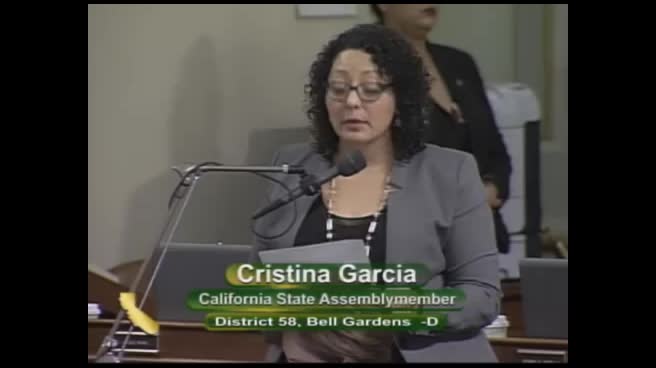 6MIN
Assembly Floor
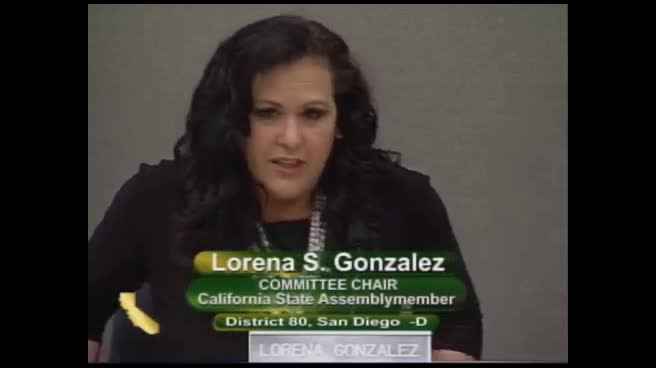 2MIN
Assembly Standing Committee on Appropriations
 10MIN
Assembly Standing Committee on Judiciary
Bill Author

Bill Co-Author(s):