AB 2054: Nutrition assistance: Summer Electronic Benefits Transfer for Children.
- Session Year: 2015-2016
- House: Assembly
- Latest Version Date: 2016-06-30
Existing law establishes the California Health and Human Services Agency. The agency includes various departments that administer social services in this state, including the State Department of Social Services.
Existing federal law provides for the Supplemental Nutrition Assistance Program (SNAP), known in California as CalFresh, under which supplemental nutrition assistance benefits allocated to the state by the federal government are distributed to eligible individuals by each county. Existing state law authorizes a county to deliver CalFresh benefits through the use of an electronic benefits transfer (EBT) system.
This bill would require the California Health and Human Services Agency, in conjunction with any other relevant state agencies, Agency to designate the appropriate agency or agencies to design and implement the Summer Electronic Benefits Transfer for Children (SEBTC) to provide nutrition assistance benefits to eligible households. The bill would require that the system be compatible with the states electronic benefits transfer system, comply with federal laws and regulations, and comply with privacy and confidentiality procedures consistent with all applicable state and federal law. The bill would require, among other things, the agency, and any other state agency, as specified, to Secretary of the California Health and Human Services Agency to designate the appropriate state agency which would be required to request or apply for federal approval or authorization necessary to implement and operate SEBTC. The bill would also require each agency to request or apply for all available federal funding to implement and operate SEBTC. The bill would require the Secretary of the California Health and Human Services Agency secretary to notify in a timely manner the appropriate head of each additional agency that is required to request or apply for federal approval or authorization so as to permit the other agency or agencies sufficient time to complete the process. The bill would provide that the provision of SEBTC benefits to eligible households is contingent upon federal funding for this purpose. The bill would also include a statement of legislative findings and declarations.
Existing law establishes the California Health and Human Services Agency. The agency includes various departments that administer social services in this state, including the State Department of Social Services.
Existing federal law provides for the Supplemental Nutrition Assistance Program (SNAP), known in California as CalFresh, under which supplemental nutrition assistance benefits allocated to the state by the federal government are distributed to eligible individuals by each county. Existing state law authorizes a county to deliver CalFresh benefits through the use of an electronic benefits transfer (EBT) system.
This bill would require the California Health and Human Services Agency, in conjunction with any other relevant state agencies, to design and implement the Summer Electronic Benefits Transfer for Children (SEBTC) to provide nutrition assistance benefits to eligible households. The bill would require that the system be compatible with the states electronic benefits transfer system, comply with federal laws and regulations, and comply with privacy and confidentiality procedures consistent with all applicable state and federal law. The bill would require, among other things, the agency, and any other state agency, as specified, to request or apply for federal approval or authorization necessary to implement and operate SEBTC. The bill would also require each agency to request or apply for all available federal funding to implement and operate SEBTC. The bill would require the Secretary of the California Health and Human Services Agency to notify in a timely manner the appropriate head of each additional agency that is required to request or apply for federal approval or authorization so as to permit the other agency sufficient time to complete the process. The bill would provide that the provision of SEBTC benefits to eligible households is contingent upon federal funding for this purpose. The bill would also include a statement of legislative findings and declarations.
Existing law establishes the California Health and Human Services Agency. The agency includes various departments that administer social services in this state, including the State Department of Social Services.
Existing federal law provides for the Supplemental Nutrition Assistance Program (SNAP), known in California as CalFresh, under which supplemental nutrition assistance benefits allocated to the state by the federal government are distributed to eligible individuals by each county. Existing state law authorizes a county to deliver CalFresh benefits through the use of an electronic benefits transfer (EBT) system.
This bill would require the California Health and Human Services Agency, in conjunction with any other relevant state agencies, to design and implement the Summer Electronic Benefits Transfer for Children (SEBTC) to provide nutrition assistance benefits to eligible households. The bill would require that the system be compatible with the states electronic benefits transfer system, comply with federal laws and regulations, and comply with privacy and confidentiality procedures consistent with all applicable state and federal law. The bill would require, among other things, the agency, and any other state agency, as specified, to request or apply for federal approval or authorization necessary to implement and operate SEBTC. The bill would also require each agency to request or apply for all available federal funding to implement and operate SEBTC. The bill would require the Secretary of the California Health and Human Services Agency to notify in a timely manner the appropriate head of each additional agency that is required to request or apply for federal approval or authorization so as to permit the other agency sufficient time to complete the process. The bill would also include a statement of legislative findings and declarations.
The Legislature finds and declares all of the following:
(a)Across California, two in every five low-income households with children cannot consistently afford enough food. In all, 1.7 million Californians live in these food-insecure households.
(b)Eighty percent, or 1.8 million, of the children in California who benefit from nutritious, free or reduced-price school lunches miss out on similar meals during the summer. This summer nutrition gap has persisted for over a decade.
(c)Children need consistent access to nutritious meals in order to learn, grow, and achieve at their fullest potential. All children deserve to be well nourished.
(d)Summer Electronic Benefits Transfer for Children, hereinafter known as SEBTC, is a well-tested model shown to decrease food insecurity among children and adults and improve the quality of childrens diets.
(e)By providing nutrition assistance benefits for the purchase of groceries when school is out of session and school meals are not available, SEBTC would draw federal dollars into California households with schoolage children and into the state and local economies.
(f)As Congress prepares to expand SEBTC, California should seize all opportunities to ensure that the expansion benefits our state.
(g)Given Californias persistent summer nutrition gap and the positive effects of SEBTC, the state should design a an SEBTC system for California and seek all available federal funding and federal authority to operate the system.
SEC. 2.Section 10072.2 is added to the Welfare and Institutions Code, to read:10072.2.(a)(1)The California Health and Human Services Agency, in conjunction with any other state agency described in paragraph (2), shall Agency shall designate the appropriate agency or agencies to design and implement the Summer Electronic Benefits Transfer for Children (SEBTC) to provide nutrition assistance benefits to eligible households.
(2)If federal law requires a state agency other than the California Health and Human Services Agency or agencies to obtain federal approval or authorization in order to carry out the requirements of this section, that state agency the Secretary of the California Health and Human Services Agency shall designate the appropriate state agency, which shall request or apply for the necessary federal approval or authorization. The Secretary of the California Health and Human Services Agency shall notify in a timely manner the appropriate head of each additional agency that is required to request or apply for that approval or authorization so as to permit the other agency or agencies sufficient time to complete the process.
(b)The system described in subdivision (a) shall be compatible with the states electronic benefits transfer system pursuant to Section 10072 and comply with any federal laws and regulations governing SEBTC.
(c)The system described in subdivision (a) shall comply with privacy and confidentiality procedures consistent with all applicable state and federal law.
(d)Each agency identified in subdivision (a) shall do both of the following:
(1)Request or apply for federal approval or authorization necessary to implement and operate SEBTC and support the request or application of any other state agency, if necessary.
(2)Request or apply for all available federal funding to assist the state in implementing and operating SEBTC and support the request or application of any other state agency, if necessary, to obtain all available federal funds for that purpose.
(e)The provision of SEBTC benefits to eligible households pursuant to this section is contingent upon federal funding for this purpose.
(f)For purposes of this section, Summer Electronic Benefits Transfer for Children or SEBTC means a program, pilot, or demonstration project that, during periods when school is out of session, provides nutrition assistance benefits via electronic benefits transfer to households with children who are within the relevant definitions and criteria in federal statutes and regulations that prescribe eligibility for free and reduced-price meals.
The Legislature finds and declares all of the following:
(a)Across California, two in every five low-income households with children cannot consistently afford enough food. In all, 1.7 million Californians live in these food-insecure households.
(b)Eighty percent, or 1.8 million, of the children in California who benefit from nutritious, free or reduced-price school lunches miss out on similar meals during the summer. This summer nutrition gap has persisted for over a decade.
(c)Children need consistent access to nutritious meals in order to learn, grow, and achieve at their fullest potential. All children deserve to be well nourished.
(d)Summer Electronic Benefits Transfer for Children, hereinafter known as SEBTC, is a well-tested model shown to decrease food insecurity among children and adults and improve the quality of childrens diets.
(e)By providing nutrition assistance benefits for the purchase of groceries when school is out of session and school meals are not available, SEBTC would draw federal dollars into California households with school-age schoolage children and into the state and local economies.
(f)As Congress prepares to expand SEBTC, California should seize all opportunities to ensure that the expansion benefits our state.
(g)Given Californias persistent summer nutrition gap and the positive effects of SEBTC, the state should design a SEBTC system for California and seek all available federal funding and federal authority to operate the system.
SEC. 2.Section 10072.2 is added to the Welfare and Institutions Code, to read:10072.2.(a)(1)The California Health and Human Services Agency, in conjunction with any other state agency described in paragraph (2), shall design and implement the Summer Electronic Benefits Transfer for Children (SEBTC) to provide nutrition assistance benefits to eligible households.
(2)If federal law requires a state agency other than the California Health and Human Services Agency to obtain federal approval or authorization in order to carry out the requirements of this section, that state agency shall request or apply for the necessary federal approval or authorization. The Secretary of the California Health and Human Services Agency shall notify in a timely manner the appropriate head of each additional agency that is required to request or apply for that approval or authorization so as to permit the other agency sufficient time to complete the process.
(b)The system described in subdivision (a) shall be compatible with the states electronic benefits transfer system pursuant to Section 10072 and comply with any federal laws and regulations governing SEBTC.
(c)The system described in subdivision (a) shall comply with privacy and confidentiality procedures consistent with all applicable state and federal law.
(d)Each agency identified in subdivision (a) shall do both of the following:
(1)Request or apply for federal approval or authorization necessary to implement and operate SEBTC and support the request or application of any other state agency, if necessary.
(2)Request or apply for all available federal funding to assist the state in implementing and operating SEBTC and support the request or application of any other state agency, if necessary, to obtain all available federal funds for that purpose.
(e)The provision of SEBTC benefits to eligible households pursuant to this section is contingent upon federal funding for this purpose.
(e)
(f)For purposes of this section, Summer Electronic Benefits Transfer for Children or SEBTC means a program, pilot, or demonstration project that, during periods when school is out of session, provides nutrition assistance benefits via electronic benefits transfer to households with children who are within the relevant definitions and criteria in federal statutes and regulations that prescribe eligibility for free and reduced price reduced-price meals.
The Legislature finds and declares all of the following:
(a)Across California, two in every five low-income households with children cannot consistently afford enough food. In all, 1.7 million Californians live in these food-insecure households.
(b)Eighty percent, or 1.8 million, of the children in California who benefit from nutritious, free or reduced-price school lunches miss out on similar meals during the summer. This summer nutrition gap has persisted for over a decade.
(c)Children need consistent access to nutritious meals in order to learn, grow, and achieve at their fullest potential. All children deserve to be well nourished.
(d)Summer Electronic Benefits Transfer for Children, hereinafter known as SEBTC, is a well-tested model shown to decrease food insecurity among children and adults and improve the quality of childrens diets.
(e)By providing nutrition assistance benefits for the purchase of groceries when school is out of session and school meals are not available, SEBTC would draw federal dollars into California households with school-age children and into the state and local economies.
(f)As Congress prepares to expand SEBTC, California should seize all opportunities to ensure that the expansion benefits our state.
(g)Given Californias persistent summer nutrition gap and the positive effects of SEBTC, the state should design a SEBTC system for California and seek all available federal funding and federal authority to operate the system.
SEC. 2.Section 10072.2 is added to the Welfare and Institutions Code, to read:10072.2.(a)(1)The California Health and Human Services Agency, in conjunction with any other state agency described in paragraph (2), shall design and implement the Summer Electronic Benefits Transfer for Children (SEBTC) to provide nutrition assistance benefits to eligible households.
(2)If federal law requires a state agency other than the California Health and Human Services Agency to obtain federal approval or authorization in order to carry out the requirements of this section, that state agency shall request or apply for the necessary federal approval or authorization. The Secretary of the California Health and Human Services Agency shall notify in a timely manner the appropriate head of each additional agency that is required to request or apply for that approval or authorization so as to permit the other agency sufficient time to complete the process.
(b)The system described in subdivision (a) shall be compatible with the states electronic benefits transfer system pursuant to Section 10072 and comply with any federal laws and regulations governing SEBTC.
(c)The system described in subdivision (a) shall comply with privacy and confidentiality procedures consistent with all applicable state and federal law.
(d)Each agency identified in subdivision (a) shall do both of the following:
(1)Request or apply for federal approval or authorization necessary to implement and operate SEBTC and support the request or application of any other state agency, if necessary.
(2)Request or apply for all available federal funding to assist the state in implementing and operating SEBTC and support the request or application of any other state agency, if necessary, to obtain all available federal funds for that purpose.
(e)For purposes of this section, Summer Electronic Benefits Transfer for Children or SEBTC means a program, pilot, or demonstration project that, during periods when school is out of session, provides nutrition assistance benefits via electronic benefits transfer to households with children who are within the relevant definitions and criteria in federal statutes and regulations that prescribe eligibility for free and reduced price meals.
|
Date
|
Status
|
|---|---|
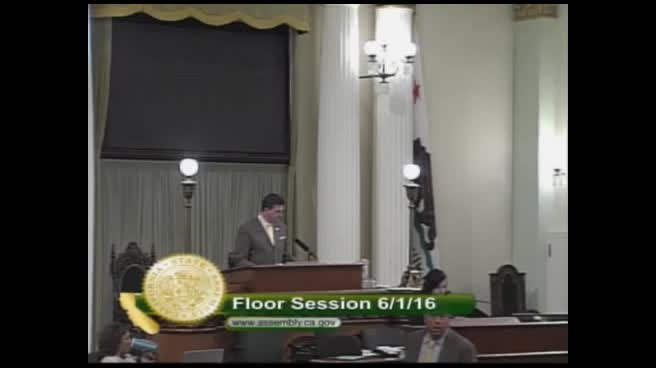
| Jun 1, 2016 | Read third time. Passed. Ordered to the Senate. |
| Aug 11, 2016 | In committee: Held under submission. |
| Aug 1, 2016 | In committee: Referred to APPR. suspense file. |
| Jun 30, 2016 | Read second time and amended. Re-referred to Com. on APPR. |
| Jun 29, 2016 | From committee: Amend, and do pass as amended and re-refer to Com. on APPR. with recommendation: To Consent Calendar. (Ayes 5. Noes 0.) (June 28). |
| Jun 9, 2016 | Referred to Com. on HUMAN S. |
| Jun 2, 2016 | In Senate. Read first time. To Com. on RLS. for assignment. |
| Jun 1, 2016 | Read third time. Passed. Ordered to the Senate. (Ayes 80. Noes 0.) |
| Jun 1, 2016 | Read third time. Passed. Ordered to the Senate. (Ayes 80. Noes 0. Page 5097.) |
| Feb 17, 2016 | Read first time. To print. |
| May 31, 2016 | Read second time. Ordered to third reading. |
| May 27, 2016 | Read second time and amended. Ordered returned to second reading. |
| May 27, 2016 | From committee: Amend, and do pass as amended. (Ayes 20. Noes 0.) (May 27). |
| Apr 20, 2016 | In committee: Set, first hearing. Referred to APPR. suspense file. |
| Mar 30, 2016 | From committee: Do pass and re-refer to Com. on APPR. with recommendation: To Consent Calendar. (Ayes 6. Noes 0.) (March 29). Re-referred to Com. on APPR. |
| Feb 29, 2016 | Referred to Com. on HUM. S. |
| Feb 18, 2016 | From printer. May be heard in committee March 19. |
|
Date
|
Description
|
Location
|
Votes
|
|
|---|---|---|---|---|
| Aug 1, 2016 | Placed on suspense file | Senate Standing Committee on Appropriations |
Passed |
|
| Jun 28, 2016 | Do pass as amended, but first amend, and re-refer to the Committee on [Appropriations] with the recommendation: To Consent Calendar | Senate Standing Committee on Human Services |
Passed |
|
| Jun 1, 2016 | AB 2054 THURMOND Assembly Third Reading | Assembly Floor |
Passed |
|
| May 27, 2016 | Do pass as amended. | Assembly Standing Committee on Appropriations |
Passed |
|
| Mar 29, 2016 | Do pass and be re-referred to the Committee on [Appropriations] with recommendation: To Consent Calendar | Assembly Standing Committee on Human Services |
Passed |
This list shows positions taken on this bill by organizations on the date displayed, which is linked to the original source.
Positions by individuals are not included.
|
Organization
|
Position
|
Date
|
|---|---|---|
| American Academy of Pediatrics | ** Support | Jun 1, 2016 |
| Association of California Healthcare Districts | ** Support | Jun 1, 2016 |
| California Alternative Payment Program Association | ** Support | Jun 1, 2016 |
| California Association Of Food Banks | ** Support | Jun 1, 2016 |
| California Catholic Conference | ** Support | Jun 1, 2016 |
| California Center for Public Health Advocacy | ** Support | Jun 1, 2016 |
| California Food Policy Advocates - sponsor | ** Support | Jun 1, 2016 |
| California Primary Care Association | ** Support | Jun 1, 2016 |
| Children's Defense Fund - CA | ** Support | Jun 1, 2016 |
| County Health Executives Association of CA | ** Support | Jun 1, 2016 |
| Food Bank of Contra Costa and Solano | ** Support | Jun 1, 2016 |
| Hunger Action Los Angeles | ** Support | Jun 1, 2016 |
| Locally Delicious, Inc., in Arcata, CA | ** Support | Jun 1, 2016 |
| National Association of Social Workers, CA Chapter | ** Support | Jun 1, 2016 |
| Orange County Food Access Coalition | ** Support | Jun 1, 2016 |
| Sacramento Hunger Coalition | ** Support | Jun 1, 2016 |
| St. Anthony Foundation | ** Support | Jun 1, 2016 |
| Western Center On Law And Poverty Inc. | ** Support | Jun 1, 2016 |
SENATE COMMITTEE ON
Senator Ricardo Lara, Chair
2015 - 2016 Regular Session
AB 2054 (Thurmond) - Nutrition assistance: Summer Electronic Benefits Transfer for Children
Version: | Policy Vote: |
Urgency: | Mandate: |
Hearing Date: | Consultant: |
This bill meets the criteria for referral to the Suspense File.
Bill Summary:
AB 2054 would require the California Health and Human Services Agency (CHHS) to designate an appropriate agency or agencies to design and implement a Summer Electronic Benefit Transfer for Children (SEBTC) system to deliver nutrition assistance to children eligible for free and reduced-price meals during periods when school is out of session.
Fiscal Impact:
Unknown, but potentially significant costs for automation, design, implementation, and operation of an SEBTC program. (GF)
Background:
The federal National School Lunch Program provides low-cost or free school lunch meals to nearly 22 million low-income children each school day through subsidies to schools. However, many of the children do not receive these meals during the summer months, leaving low-income children at higher risk of food insecurity and poor nutrition when school is out of session. According to the California Food Policy Advocates, almost 2 million of California’s low-income children and youth who receive federally funded lunches during the school year miss out on such lunches during the summer.
In 2011, the USDA created a SEBTC demonstration project to test the impact of providing low-income households with children with additional resources to buy food during the summer months. The demonstration studies the use of Supplemental Nutrition Assistance Program (SNAP) and Women, Infants, and Children (WIC) EBT technology in providing food assistance at food stores during the summer months. Demonstration projects have been launched in Michigan, Nevada, Texas, Cherokee Nation, and Chickasaw Nation using the WIC model, and in Connecticut, Delaware, Missouri, Oregon, and Washington using the SNAP model.
The President’s FY 2017 budget builds on the SEBTC program by investing $12 billion over 10 years to start up a permanent, universal Summer EBT program. This includes a $45 monthly benefit per eligible child during the summer months, which could be redeemed for food purchases at grocery stores. The program would be phased in over 10 years with approximately 10% of states participating in summer 2017.
In anticipation of approval for expansion of the SEBTC demonstration project and funding becoming available, this bill provides state agencies guidance for California to implement the SEBTC program. According to the sponsor, there are currently three potential opportunities for the federal government to authorize and fund SEBTC in California:
- The federal spending bill for FY 2016 included an increase in funding for SEBTC demonstration projects. Future federal appropriations may create similar opportunities for California to establish an SEBTC program.
- The President’s FY 2017 budget includes a proposal to expand SEBTC nationwide and permanently.
- There is a recurring opportunity for federal lawmakers to expand authority and funding for SEBTC through the Child Nutrition Reauthorization.
Proposed Law:
This bill would:
- Require the California Health and Human Services (CHHS) Agency to designate an appropriate agency or agencies to design and implement the Summer Electronic Benefits Transfer for Children (SEBTC) program and an appropriate agency or agencies to request or apply for the necessary federal approval or authorization.
- Require the SEBTC system program to be compatible with the state’s Electronic Benefits Transfer (EBT) system, as specified.
- Require each participating agency to request or apply for federal approval or authorization and federal funding necessary to implement and operate the SEBTC.
- Specify that the provision of SEBTC benefits to eligible households is contingent upon the availability of federal funding.
Staff Comments:
If an SEBTC program, pilot, or demonstration project were approved in California, benefits would be federally funded. However, administrative costs for the design, implementation, and administration of the program would be shared across federal/state/county costs (50/35/15).
-- END --
SENATE COMMITTEE ON HUMAN SERVICES
Senator McGuire, Chair
2015 - 2016 Regular
Bill No: AB 2054
Author: | Thurmond | ||
Version: | May 27, 2016 | Hearing Date: | June 28, 2016 |
Urgency: | No | Fiscal: | Yes |
Consultant: | Taryn Smith | ||
Subject: Nutrition assistance: Summer Electronic Benefits Transfer for Children
SUMMARY
This bill mandates the design and implementation of a Summer Electronic Benefits Transfer for Children (SEBTC) contingent upon federal authorization and funding.
ABSTRACT
Existing law:
- Establishes under federal law the Supplemental Nutrition Assistance Program (SNAP) within the US Department of Agriculture (USDA) to promote the general welfare and to safeguard the health and wellbeing of the nation’s population by raising the levels of nutrition among low-income households. It establishes SNAP eligibility requirements, including income that is at or below 130 percent of the federal poverty level and is a substantial limiting factor in permitting a recipient to obtain a more nutritious diet. (7 CFR 271.1; 7 CFR 273.9)
- Establishes in California statute the CalFresh program to administer the provisions of federal SNAP benefits to families and individuals meeting specified criteria. (WIC 18900 et seq.)
- Establishes in the Electronic Benefits Transfer (EBT) Act a system for the distribution and use of public assistance benefits, such as CalFresh, and requires EBT access to be provided through automated teller machines (ATMs), point-of-sale devices and other devices that accept EBT transactions. (WIC 10065 et seq.)
- Establishes the National School Lunch Program, and program requirements for schools participating in the program. (42 United States Code 1751 et seq.)
This bill:
- Makes a number of Legislative findings and declarations related to poverty, food insecurity, and the "summer nutrition gap" experienced by many children.
- Defines "Summer Electronic Benefits Transfer for Children" to mean a program, pilot, or demonstration project that provides nutrition assistance when school is out of session via EBT to households with children eligible for free and reduced price meals.
- Requires the California Health and Human Services Agency, in conjunction with other agencies to design and implement the SEBTC to provide nutrition assistance benefits to eligible households, as specified.
- Requires the Secretary of the California Health and Human Services Agency to notify the head of each appropriate state agency in a timely manner that the agency is required to request or apply for federal approval or authorization in order to carry out the requirements of this section, as specified.
- Requires the SEBTC system to be compatible with the State's existing EBT system, comply with any federal laws and regulations governing SEBTC, and comply with any and all privacy and confidentiality procedures, as specified.
- Requires each agency, as specified, to do the following:
- Request or apply for federal approval or authorization necessary to implement and operate SEBTC and support the request or application of any other state agency, if necessary.
- Request or apply for all available federal funding to assist the state in implementing and operating SEBTC and support the request or application of any other state agency, if necessary, to obtain all available federal funds for that purpose.
- Specifies that the provision of SEBTC benefits to eligible households is contingent on federal funding for the SEBTC program.
FISCAL IMPACT
According to the Assembly Appropriations Committee, this bill may result in unknown costs that are likely in the hundreds of millions of dollars (Federal funds) to fund the benefit level provided to eligible households. The bill does not specify a benefit level but, if the monthly benefit was $45 per child (as proposed in the Federal budget), the annual cost to fund the benefit level would be approximately $918.5 million, based on an estimated caseload of 1.7 million eligible children. There would be additional unknown, but potentially significant costs for automation, design, implementation and operation of an SEBTC program. These costs would be a shared federal/state/county cost (50/35/15).
BACKGROUND AND DISCUSSION
Purpose of the bill:
According to the author, two in five low-income households with children cannot consistently afford enough food. The author also states that children in at least 1.7 million California households live in food-insecure conditions and that summer is a particularly vulnerable time for low-income children. When school is out of session, these children lose access to many critical resources, including nutritious, affordable school meals, per the author.
Summer EBT for Children (SEBTC) is a federally funded nutrition assistance program that allows participants to purchase groceries through SEBTC when school is out of session and school meals are not available. As shown by federal demonstration projects operating in eight other states and two tribal nations, SEBTC is a well-tested strategy to decrease hunger and improve nutrition, the author states.
AB 2054 would prepare California to implement federally funded SEBTC. Specifically, the bill directs the California Health and Human Services Agency, and all other relevant state agencies, to (1) design a system to deliver SEBTC to eligible Californians and (2) pursue federal authorization and approval and all available federal funds to operate the system.
The author states that while child hunger is a complex problem, SEBTC is one clear solution. By preparing California to implement SEBTC, AB 2054 will help to mitigate chronic hunger among low-income children, according to the author.
Food insecurity
Food security is defined as access by all members of the household at all times to enough food for an active, healthy life. Food insecure households are those in which the children or adults or both report limited access to food resulting in reduced quality or variety of diet (low food security), or reduced food intake or disrupted eating patterns (very low food security).
According to a report issued by the USDA, 14 percent of American households were food insecure at least some time during 2014, including 5.6 percent with very low food security.[1] Another USDA report indicates that children living in a food insecure household face higher risks of health, psychosocial, and developmental problems compared to children in food secure households.[2]
CalFresh
CalFresh provides monthly benefits to assist low-income households in purchasing food or food products intended for human consumption. CalFresh benefits are 100 percent federally funded and national eligibility standards and benefit levels are established by the federal government. To participate in CalFresh, households must meet certain income-eligibility standards. The average monthly benefit for a CalFresh recipient in federal fiscal year 2015 was $126.83 per month, or $4.23 per day, according to the USDA. Households that receive or are eligible to receive cash assistance under CalWORKs or General Assistance and General Relief programs are categorically eligible for CalFresh.
CalFresh currently serves approximately 4.4 million people, according to USDA data. Nonetheless, California’s participation rate has been ranked last or near last in the country for years, prompting concerns from the USDA, stories in the state’s newspapers and two Legislative hearings in 2014.
Electronic Benefit Transfer (EBT)
The EBT system automates the delivery, redemption, and reconciliation of public assistance benefits such as CalWORKs and CalFresh. EBT cards function like a bank-issued automated teller machine (ATM) card; the cardholder slides this card through a point-of-sale device, or uses the card at an ATM. California EBT cards can be used at more than 15,000 businesses and over 54,000 ATMs in California.
Unlike other types of benefits that may be accessed through an EBT card, CalFresh benefits cannot be withdrawn in cash at point-of-sale terminals or at ATM machines. CalFresh benefits can only be used to purchase food items to be prepared and consumed at home, as well as seeds and plants that can be grown at home and produce food.
National School Lunch Program
The National School Lunch Program is a federally funded program that assists schools and other agencies in providing nutritious lunches to children for free or at a reduced price. In addition to financial assistance, the program provides donated commodity foods to help reduce lunch program costs. The USDA is responsible for overseeing the program nationally. In California, the program is administered by the California Department of Education (CDE), Nutrition Services Division.
For children, the National School Lunch Program provides a nutritious meal that contains one-third of the recommended dietary allowance of necessary nutrients. For parents, the program offers a convenient method of providing a nutritionally balanced lunch at the lowest possible price. For schools, the program enhances children's learning abilities by contributing to their physical and mental well-being. Studies have shown that children whose nutritional needs are met have fewer attendance and discipline problems and are more attentive in class.
Summer nutrition gap
A study conducted by researchers at the USDA’s Economic Research Service and the Congressional Research Service showed that food insecurity among households with school-age children is more prevalent during the summer months than during the school year. [3]
According to the bill’s sponsor, California Food Policy Advocates, almost 2 million of California’s low-income children fell into the summer nutrition gap in 2014. This means about 80 percent of the children and youth who received federally funded free or reduced-price lunches during the school year missed out on such lunches during the summer.
Summer EBT for Children (SEBTC)
In 2011, the USDA initiated a SEBTC demonstration project to test the impact of providing additional resources to buy food during the summer months for low-income households with children when the children do not have access to school-based meal programs. This SETBC program uses SNAP and Women, Infants, and Children (WIC) EBT technology to provide children and their families with more resources to use at food stores during the summer months.
Demonstration projects were launched in Michigan and Texas (using the WIC model) and in Connecticut, Missouri, and Oregon (using the SNAP model). Under the same project, each participating state provided benefits to 2,500 children in the summer of 2011. In 2012, all five states increased operations to reach 5,000 children within expanded areas of their states. Also in 2012, the SEBTC program was expanded to the Cherokee and Chickasaw Nations (using the WIC model) and to Nevada, Delaware and Washington (using the SNAP model).
Evaluations of SEBTC pilots found that providing additional food benefits on debit cards to low-income families with school-aged children during the summer months can significantly reduce food insecurity and improve nutrition. Specifically, the pilots reduced very low food security among children, the most severe form of food insecurity, by one third. Studies also showed that these additional resources enabled families to eat significantly more fruits and vegetables and whole grains.[4]
President's Budget proposal
The President’s Fiscal Year 2017 budget builds on the SEBTC program by investing $12 billion over 10 years to start up a nationwide, universal SEBTC program. Specifically, the proposal includes a $45 monthly benefit per child during the summer months for school-aged children eligible for free and reduced price meals through the National School Lunch Program. As proposed, the monthly benefit could be redeemed for food purchases at grocery stores and would be annually adjusted for inflation going forward. The program would be phased in over ten years with 10 percent of states participating by 2017, serving almost one million low-income children. By 2026, when all states are expected to participate, nearly 20 million children will receive SEBTC benefits.[5]
Related legislation:
AB 1542 (Ducheny, Chapter 270, Statutes of 1997) implemented federal welfare reform and established the CalWORKs program, and conformed to federal law in establishing the EBT Act.
COMMENTS
This bill proposes to provide a vehicle through which the state can pursue federal authority and funding to implement and operate SEBTC. While expansion of the current demonstration project has not been approved, this bill provides guidance to state agencies in anticipation of such funding becoming available. According to the sponsor, there are currently three potential opportunities for the federal government to authorize and fund SEBTC in California.
- The federal spending bill for FFY 2016 included an increase in funding for SEBTC demonstration projects. The bill did not limit SEBTC to communities where demonstration projects are already taking place. Future federal appropriations may create similar opportunities for California to establish SEBTC.
- The President's FFY 2017 budget includes a proposal to expand SEBTC nationwide and permanently, rolling the program out over a number of years.
- There is also a recurring opportunity for federal lawmakers to expand authority and funding for SEBTC via the Child Nutrition Reauthorization.
If federal authority to expand SEBT passes, funding will likely be available to states on a competitive basis. AB 2054 will help ensure that California is able to maximize any federal SEBTC opportunities, and to do so in a timely way.
Given the fact that this bill anticipates federal action, the bill lacks specificity regarding implementation. Therefore, future legislation may be necessary to provide guidance and authorization to the appropriate state agency and to county welfare offices. In the meantime, the following amendments are recommended in order to clarify mandates if and when the federal SEBTC program is authorized and funded:
10072.2. (a) (1) The California Health and Human Services Agency shall designate the appropriate state agency or agencies to , in conjunction with any other state agency described in paragraph (2), shall design and implement the Summer Electronic Benefits Transfer for Children (SEBTC) to provide nutrition assistance benefits to eligible households.
(2) If federal law requires a state agency or agencies other than the California Health and Human Services Agency to obtain federal approval or authorization in order to carry out the requirements of this section, the Secretary of the California Health and Human Services Agency shall designate the appropriate that state agency which shall request or apply for the necessary federal approval or authorization. The Secretary of the California Health and Human Services Agency shall notify in a timely manner the appropriate head of each additional agency that is required to request or apply for that approval or authorization so as to permit the other agency or agencies sufficient time to complete the process.
PRIOR VOTES
Assembly Floor: | 80 - 0 |
Assembly Appropriations Committee: | 20 - 0 |
Assembly Human Services Committee: | 6 - 0 |
POSITIONS
Support:
California Food Policy Advocates (Sponsor)
Alameda County Community Food Bank
Asian Law Alliance
CA4Health
California Center for Public Health Advocacy
California WIC Association (CWA)
Children’s Defense Fund
Feeding America
Food for People, Inc.
Food for People, the Food Bank for Humboldt County
Humboldt Food Policy Council
Hunger Action Los Angeles
Jewish Family Service of Los Angeles
Locally Delicious, Inc.
Orange County Food Access Coalition
Orange County United Way
Roots of Change
St Anthony’s Foundation
The American Heart Association/American Stroke Association
The California Alternative Payment Program Association
The California Association of Food Banks
The California Catholic Conference
The California Children’s Hospital Association
The California State PTA
The County Health Executives association of California
The Food Bank of Contra Costa and Solano
The National Association of Social Workers
The Sacramento Hunger Coalition
The Santa Clara County Board of Supervisors
United Ways of California
Western Center on Law and Poverty
Oppose:
None.
-- END --
http://www.ers.usda.gov/media/1896841/err194.pdf ↑
http://www.ers.usda.gov/media/155368/eib56_1_.pdf ↑
http://www.tandfonline.com/doi/abs/10.1080/10796120600879582?journalCode=cjcp20 ↑
http://www.fns.usda.gov/ops/summer-electronic-benefit-transfer-children-sebtc Nationwide Summer EBT ↑
http://www.fns.usda.gov/sites/default/files/ops/FY17SEBTCBudgetFactSheet.pdf ↑
ASSEMBLY THIRD READING
ATR Bill Id:
Author:(Thurmond)
As Amended Ver:May 27, 2016
Majority vote
Committee | Votes | Ayes | Noes |
Human Services | 6-0 | Bonilla, Calderon, Lopez, Maienschein, Mark Stone, Thurmond | |
Appropriations | 20-0 | Gonzalez, Bigelow, Bloom, Bonilla, Bonta, Calderon, Chang, Daly, Eggman, Gallagher, Eduardo Garcia, Roger Hernández, Holden, Jones, Obernolte, Quirk, Santiago, Wagner, Weber, Wood |
|
SUMMARY: Mandates the design and implementation of the Summer Electronic Benefits Transfer for Children (SEBTC). Specifically, this bill:
- Makes a number of Legislative findings and declarations related to poverty, food insecurity, and the "summer nutrition gap" experienced by many children.
- Defines "Summer Electronic Benefits Transfer for Children," or "SEBTC," to mean a program, pilot, or demonstration project that provides nutrition assistance when school is out of session via electronic benefits transfer (EBT) to households with children eligible for free and reduced price meals, as specified.
- Requires the California Health and Human Services Agency, in conjunction with other agencies as specified and pursuant to federal approval and/or authorization, to design and implement the SEBTC to provide nutrition assistance benefits to eligible households.
- Requires the SEBTC system to be compatible with the State's existing EBT system, comply with any federal laws and regulations governing SEBTC, and comply with any and all privacy and confidentiality procedures, as specified.
- Specifies that the provision of SEBTC benefits to eligible households is contingent on federal funding for the SEBTC program.
EXISTING LAW:
- Establishes the Electronic Benefits Transfer Act, and defines the EBT system as the program designed to provide benefits to those eligible to receive public assistance benefits such as CalWORKs and CalFresh. (Welfare and Institutions Code Section (WIC) 10065 et seq.)
- Establishes the National School Lunch Program, and program requirements for schools participating in the program. (42 United States Code 1751 et seq.)
FISCAL EFFECT: According to the Assembly Appropriations Committee, this bill may result in the following costs:
- Unknown costs, but likely in the hundreds of millions of dollars (Federal funds), to fund the benefit level provided to eligible households. The bill does not specify a benefit level but, for example, if the monthly benefit was $45 per child (as proposed in the Federal budget), the annual cost to fund the benefit level would be approximately $918.5 million, based on an estimated caseload of 1.7 million eligible children.
- Unknown, but potentially significant costs for automation, design, implementation and operation of a Summer EBT program. These costs would be a shared federal/state/county cost (50/35/15).
COMMENTS:
Electronic Benefit Transfer (EBT): EBT is an electronic system that automates the delivery, redemption, and reconciliation of issued public assistance benefits such as CalWORKs. EBT is also the method for distributing Cal Fresh benefits (formerly known as Food Stamps and currently known federally as Supplemental Nutrition Assistance Program (SNAP)). EBT is currently used in all 50 states. In California, CalWORKs and CalFresh recipients access their benefits via what has been named the Golden State Advantage EBT card. Like a bank-issued automated teller machine (ATM) card, the cardholder slides this card through a point-of-sale (POS) device, or uses the card at an ATM.
California National School Breakfast and Lunch Program: The United States Department of Agriculture (USDA) provides funding to support school meals and milk programs to assist schools, districts, and other non-profit agencies in providing nutritious meals and milk to children for free or for a reduced price. The California Department of Education (CDE) is responsible for the administration and implementation of the National School Lunch Program, which provides nutritious lunches to children at reasonable prices, or for free if their family receives certain public benefits, including SNAP benefits, or are eligible based on income.
Food scarcity during summer months: According to a study conducted by researchers at the Economic Research Service of the USDA and the Congressional Research Service, food insecurity (chronic hunger) among households with school-age children is more prevalent during the summer than during the school year. In addition to this, research by the California Food Policy Advocates (the sponsor of this legislation), indicates that, in 2014, nearly 2 million (or 80% of) children and youth who benefitted from federally funded free or reduced-price lunches during the school year missed out on such lunches during the summer. While the need for nutritious, affordable meals is consistent year-round, many children fall into the summer nutrition gap.
Summer EBT for Children (SEBTC): In 2011, as part of its efforts to end child hunger, the USDA's Food and Nutrition Service (FNS) created the Summer Electronic Benefits Transfer for Children (SEBTC) program to study the use of SNAP and Women, Infants, and Children (WIC) EBT technology by providing children and their families with more resources to use at food stores during the summer months. In 2011, the USDA began "proof-of concept" demonstrations in two states, Michigan and Texas, for the WIC model, and in three states, Connecticut, Missouri, and Oregon, for the SNAP model. Each state provided benefits to 2,500 children in the summer of 2011. In 2012, each of the five proof-of-concept states increased operations to reach 5,000 children in new parts of their states. In addition to this, in 2012, five new states and Tribal Organizations implemented SEBTC projects: Cherokee Nation (WIC), Chickasaw Nation (WIC), Nevada (WIC), Delaware (SNAP), and Washington (SNAP).
President's Budget proposal: According to the USDA, "The President's FY 2017 Budget seeks to ensure that all children have consistent and adequate access to nutritious food year round by proposing a permanent, nationwide expansion of the [SEBTC] program. This program will provide families with children eligible for free and reduced price school meals access to additional food benefits during the summer."
The President's proposal would invest $12 billion over 10 years to create a permanent, universal Summer EBT program. Specifically, the proposal includes a $45 monthly benefit per child during the summer months for school-aged children eligible for free and reduced price meals through the National School Lunch Program (NSLP). The monthly benefit can be redeemed for food purchases at grocery stores and would be annually adjusted for inflation going forward. The program would be phased in over ten years with 10% of states participating by 2017 and serving almost one million low-income children. By 2026, when all states are expected to participate, nearly 20 million children will receive SEBTC benefits
Need for this bill: According to the author, "Research and common sense tell us that children need year-round access to nutritious meals in order to learn, grow, and achieve at their full potential…Research also shows that food insecurity increases during the summer months. Currently, federally funded summer meal programs operate in a number of communities across California. While summer meal programs provide valuable resources when and where they are able to reach children, nearly 90% of low-income, school-age children in California are not served by these programs…Complex problems like child hunger need multiple solutions. Fortunately, one clear solution has already been rigorously tested and proven effective: Summer Electronic Benefits for Children. Summer EBT for Children (SEBTC) provides nutrition assistance for the purchase of groceries when school is out of session and children lose access to school meals. [This bill] will prepare California to implement SEBTC, which has been successfully serving children in other areas of the country since 2011…[This bill] will ensure that California seizes these opportunities to better support children in need."
PRIOR LEGISLATION:
AB 1542 (Ducheny), Chapter 270, Statutes of 1997, implemented federal welfare reform and established the CalWORKs program, and conformed to federal law in establishing the Electronic Benefits Transfer (EBT) Act.
Analysis Prepared by: Kelsy Castillo / HUM. S. / (916) 319-2089 FN: 0003321
Date of Hearing: April 20, 2016
ASSEMBLY COMMITTEE ON APPROPRIATIONS
Lorena Gonzalez, Chair
ABPCA Bill Id:AB 2054
Author:(Thurmond) – As Introduced Ver:February 17, 2016
Policy Committee: | Human Services | Vote: | 6 - 0 |
|
|
Urgency: No State Mandated Local Program: No Reimbursable: No
SUMMARY: This bill directs the California Health and Human Services Agency to design and implement the Summer Electronic Benefits Transfer for Children (SEBTC). Specifically, this bill:
- Defines “SEBTC,” to mean a program, pilot, or demonstration project that provides nutrition assistance when school is out of session via electronic benefits transfer (EBT) to households with children eligible for free and reduced price meals, as specified.
- Requires the California Department of Health and Human Services Agency, in conjunction with other agencies as specified, and pursuant to federal approval and/or authorization, to design and implement the SEBTC to provide nutrition assistance benefits to eligible households.
- Requires the SEBTC system to be compatible with the State’s existing EBT system, comply with any federal laws and regulations governing SEBTC, and comply with any and all privacy and confidentiality procedures, as specified.
FISCAL EFFECT:
- Unknown costs, but likely in the hundreds of millions of dollars, to fund the benefit level provided to eligible households. The bill does not specify a benefit level but, for example, if the monthly benefit was $45 per child (as proposed in the Federal budget), the annual cost to fund the benefit level would be approximately $918.5 million, based on an estimated caseload of 1.7 million eligible children. If the proposed federal program is in place, this cost would be 100% federally funded. Absent the program, the program would be entirely state funded.
- Unknown, but potentially significant costs for automation, design, implementation and operation of a Summer EBT program. If a Federal program is in place, such as is proposed in the 2017 federal budget, these costs would be a shared federal/state/county cost (50/35/15). Otherwise, these costs would be entirely state funded.
COMMENTS:
- Purpose. According to the author, “Research and common sense tell us that children need year-round access to nutritious meals in order to learn, grow, and achieve at their full potential…Research also shows that food insecurity increases during the summer months. Currently, federally funded summer meal programs operate in a number of communities across California. While summer meal programs provide valuable resources when and where they are able to reach children, nearly 90% of low-income school-age children in California are not served by these programs…Complex problems like child hunger need multiple solutions. Fortunately, one clear solution has already been rigorously tested and proven effective: Summer Electronic Benefits for Children. SEBTC provides nutrition assistance for the purchase of groceries when school is out of session and children lose access to school meals. This bill will prepare California to implement SEBTC, which has been successfully serving children in other areas of the country since 2011.”
- Background. Electronic Benefit Transfer (EBT) is an electronic system that automates the delivery, redemption, and reconciliation of issued public assistance benefits such as CalWORKs. EBT is also the method for distributing Cal Fresh benefits (formerly known as Food Stamps and currently known federally as Supplemental Nutrition Assistance Program (SNAP)). EBT is currently used in all 50 states. In California, CalWORKs and CalFresh recipients access their benefits via what has been named the Golden State Advantage EBT card. Like a bank-issued automated teller machine (ATM) card, the cardholder slides this card through a point-of-sale (POS) device, or uses the card at an ATM.
In 2011, as part of its efforts to end child hunger, the United States Department of Agriculture's (USDA) Food and Nutrition Service (FNS) created the Summer Electronic Benefits Transfer for Children program to study the use of SNAP and Women, Infants, and Children (WIC) EBT technology by providing children and their families with more resources to use at food stores during the summer months. In 2011, the USDA began “proof-of concept” demonstrations in two states, Michigan and Texas, for the WIC model, and in three states, Connecticut, Missouri, and Oregon, for the SNAP model. Each state provided benefits to 2,500 children in the summer of 2011. In 2012, each of the five proof-of-concept states increased operations to reach 5,000 children in new parts of their states. In addition to this, in 2012, five new states and Tribal Organizations implemented SEBTC projects: Cherokee Nation (WIC), Chickasaw Nation (WIC), Nevada (WIC), Delaware (SNAP), and Washington (SNAP).
- Federal Budget. The President’s FY 2017 proposed budget invests $12 billion over 10 years to create a permanent, universal Summer EBT program. Specifically, the proposal includes a $45 monthly benefit per child during the summer months for school-aged children eligible for free and reduced price meals through the National School Lunch Program (NSLP). The monthly benefit can be redeemed for food purchases at grocery stores and would be annually adjusted for inflation going forward. The program would be phased in over ten years with 10% of states participating by 2017 and serving almost one million low-income children. By 2026, when all states are expected to participate, nearly 20 million children will receive SEBTC benefits
- Prior Legislation. AB 1542 (Ducheny), Chapter 270, Statutes of 1997, implemented federal welfare reform and established the CalWORKs program, and conformed to federal law in establishing the Electronic Benefits Transfer (EBT) Act.
Analysis Prepared by: Jennifer Swenson / APPR. / (916) 319-2081
Date of Hearing: March 29,2016
ASSEMBLY COMMITTEE ON HUMAN SERVICES
Susan Bonilla, Chair
ABPCA Bill Id:AB 2054 (
Author:Thurmond) – As Introduced Ver:February 17, 2016
SUBJECT: Nutrition assistance: Summer Electronic Benefits Transfer for Children
SUMMARY: Mandates the design and implementation of the Summer Electronic Benefits Transfer for Children (SEBTC).
Specifically, this bill:
- Makes a number of Legislative findings and declarations related to poverty, food insecurity, and the “summer nutrition gap” experienced by many children.
- Defines “Summer Electronic Benefits Transfer for Children,” or “SEBTC,” to mean a program, pilot, or demonstration project that provides nutrition assistance when school is out of session via electronic benefits transfer (EBT) to households with children eligible for free and reduced price meals, as specified.
- Requires the California Department of Health and Human Services Agency, in conjunction with other agencies as specified and pursuant to federal approval and/or authorization, to design and implement the SEBTC to provide nutrition assistance benefits to eligible households.
- Requires the SEBTC system to be compatible with the State’s existing EBT system, comply with any federal laws and regulations governing SEBTC, and comply with any and all privacy and confidentiality procedures, as specified.
EXISTING LAW:
- Establishes the Electronic Benefits Transfer Act, and defines the EBT system as the program designed to provide benefits to those eligible to receive public assistance benefits such as CalWORKs and CalFresh. (WIC 10065 et seq.)
- Establishes the National School Lunch Program, and program requirements for schools participating in the program. (42 U.S.C. 1751 et seq.)
FISCAL EFFECT: Unknown.
COMMENTS:
Electronic Benefit Transfer (EBT): EBT is an electronic system that automates the delivery, redemption, and reconciliation of issued public assistance benefits such as CalWORKs. EBT is also the method for distributing Cal Fresh benefits (formerly known as Food Stamps and currently known federally as Supplemental Nutrition Assistance Program (SNAP)). EBT is currently used in all 50 states. In California, CalWORKs and CalFresh recipients access their benefits via what has been named the Golden State Advantage EBT card. Like a bank-issued automated teller machine (ATM) card, the cardholder slides this card through a point-of-sale (POS) device, or uses the card at an ATM.
California National School Breakfast and Lunch Program: The United States Department of Agriculture (USDA) provides funding to support school meals and milk programs to assist schools, districts, and other non-profit agencies in providing nutritious meals and milk to children for free or for a reduced price. The California Department of Education (CDE) is responsible for the administration and implementation of the National School Lunch Program, which provides nutritious lunches to children at reasonable prices, or for free if their family receives certain public benefits, including SNAP benefits, or are eligible based on income.
Food scarcity during summer months: According to a study conducted by researchers at the Economic Research Service of the U.S. Department of Agriculture and the Congressional Research Service, food insecurity (chronic hunger) among households with school-age children is more prevalent during the summer than during the school year. In addition to this, research by the California Food Policy Advocates (the sponsor of this legislation), indicates that, in 2014, nearly 2 million (or 80% of) children and youth who benefitted from federally funded free or reduced-price lunches during the school year missed out on such lunches during the summer. While the need for nutritious, affordable meals is consistent year-round, many children fall into the summer nutrition gap.
Summer EBT for Children (SEBTC): In 2011, as part of its efforts to end child hunger, the USDA’s Food and Nutrition Service (FNS) created the Summer Electronic Benefits Transfer for Children (SEBTC) program to study the use of SNAP and Women, Infants, and Children (WIC) EBT technology by providing children and their families with more resources to use at food stores during the summer months. In 2011, the USDA began “proof-of concept” demonstrations in two states, Michigan and Texas, for the WIC model, and in three states, Connecticut, Missouri, and Oregon, for the SNAP model. Each state provided benefits to 2,500 children in the summer of 2011. In 2012, each of the five proof-of-concept states increased operations to reach 5,000 children in new parts of their states. In addition to this, in 2012, five new states and Tribal Organizations implemented SEBTC projects: Cherokee Nation (WIC), Chickasaw Nation (WIC), Nevada (WIC), Delaware (SNAP), and Washington (SNAP).
President’s Budget proposal: According to the USDA, “The President’s FY 2017 Budget seeks to ensure that all children have consistent and adequate access to nutritious food year round by proposing a permanent, nationwide expansion of the [SEBTC] program. This program will provide families with children eligible for free and reduced price school meals access to additional food benefits during the summer.”
The President’s proposal would invest $12 billion over 10 years to create a permanent, universal Summer EBT program. Specifically, the proposal includes a $45 monthly benefit per child during the summer months for school-aged children eligible for free and reduced price meals through the National School Lunch Program (NSLP). The monthly benefit can be redeemed for food purchases at grocery stores and would be annually adjusted for inflation going forward. The program would be phased in over ten years with 10% of states participating by 2017 and serving almost one million low-income children. By 2026, when all states are expected to participate, nearly 20 million children will receive SEBTC benefits
Need for this bill: According to the author, “Research and common sense tell us that children need year-round access to nutritious meals in order to learn, grow, and achieve at their full potential…Research also shows that food insecurity increases during the summer months. Currently, federally funded summer meal programs operate in a number of communities across California. While summer meal programs provide valuable resources when and where they are able to reach children, nearly 90% of low-income, school-age children in California are not served by these programs…Complex problems like child hunger need multiple solutions. Fortunately, one clear solution has already been rigorously tested and proven effective: Summer Electronic Benefits for Children. Summer EBT for Children (SEBTC) provides nutrition assistance for the purchase of groceries when school is out of session and children lose access to school meals. [This bill] will prepare California to implement SEBTC, which has been successfully serving children in other areas of the country since 2011…[This bill] will ensure that California seizes these opportunities to better support children in need.”
PRIOR LEGISLATION:
AB 1542 (Ducheny), Chapter 270, Statutes of 1997, implemented federal welfare reform and established the CalWORKs program, and conformed to federal law in establishing the Electronic Benefits Transfer (EBT) Act.
REGISTERED SUPPORT / OPPOSITION:
Support
American Academy of Pediatrics
Association of California Healthcare Districts (ACHD)
CA4Health
California Alternative Payment Program Association (CAPPA)
California Association of Food Banks
California Catholic Conference
California Center for Public Health Advocacy (CCPHA)
California Food Policy Advocates (CSPA) – sponsor
California Primary Care Association (CPCA)
Children’s Defense Fund – CA (CDF-CA)
Coalition of California Welfare Rights Organization (CCWRO)
County Health Executives Association of CA (CHEAC)
Food Bank of Contra Costa and Solano
Food for People, Inc.
Hunger Action Los Angeles
Locally Delicious, Inc., in Arcata, CA
National Association of Social Workers, CA Chapter (NASW-CA)
Orange County Food Access Coalition
Sacramento Hunger Coalition
St. Anthony Foundation
Western Center on Law and Poverty
8 Individuals
Opposition
None on file.
Analysis Prepared by: Kelsy C. Castillo / HUM. S. / (916) 319-2089
Bill Author

Bill Co-Author(s):
