AB 2102: Tribal gaming: Indian Gaming Local Community Benefit Committee.
- Session Year: 2015-2016
- House: Assembly
- Latest Version Date: 2016-03-15
Existing law creates in the State Treasury the Indian Gaming Special Distribution Fund for the receipt and deposit of moneys received by the state from certain Indian tribes pursuant to the terms of gaming compacts entered into with the state. Existing law authorizes moneys in that fund to be used for specified purposes, including for grants for the support of state and local government agencies impacted by tribal government gaming. Existing law, until January 1, 2021, creates a County Tribal Casino Account in the treasury of each county that contains a tribal casino, which is funded according to specified formulas. Existing law requires the Controller, in consultation with the California Gambling Control Commission, to divide the County Tribal Casino Account for each county that has gaming devices that are subject to an obligation to make contributions to the Indian Gaming Special Distribution Fund into a separate account, known as an Individual Tribal Casino Account, for each tribe that operates a casino within the county. Each Individual Tribal Casino Account is required to be funded in proportion to the amount that each individual tribe paid in the prior fiscal year to the Indian Gaming Special Distribution Fund, and authorizes funds in these accounts to be released to make grants to local agencies impacted by tribal casinos, as specified. Existing law establishes an Indian Gaming Local Community Benefit Committee in each county in which gaming is conducted, specifies the composition and responsibilities of that committee, and requires that committee to make the selection of grants from those casino accounts. Among other things, the committee is responsible for establishing all application policies and procedures for grants from the casino accounts.
Existing law requires every state agency and local government agency to adopt and promulgate a Conflict of Interest Code applicable to enumerated positions within the agency and designated employees, as specified.
This bill would require each Indian Gaming Local Community Benefit Committee to adopt and approve a Conflict of Interest Code pursuant to these provisions. The bill would require any existing Conflict of Interest Code to be reviewed and amended as necessary to bring it into compliance with these requirements. By increasing the duties of local government entities, this bill would impose a state-mandated local program.
The California Constitution requires the state to reimburse local agencies and school districts for certain costs mandated by the state. Statutory provisions establish procedures for making that reimbursement.
This bill would provide that, if the Commission on State Mandates determines that the bill contains costs mandated by the state, reimbursement for those costs shall be made pursuant to these statutory provisions.
Existing federal law, the Indian Gaming Regulatory Act of 1988, provides for the negotiation and execution of tribal-state gaming compacts for the purpose of authorizing certain types of gaming on Indian lands within a state. The California Constitution authorizes the Governor to negotiate and conclude compacts, subject to ratification by the Legislature. Existing law ratifies a number of tribal-state gaming compacts between the State of California and specified Indian tribes.
This bill would state the intent of the Legislature to enact legislation related to tribal gaming in California.
(a)The Controller, acting in consultation with the California Gambling Control Commission, shall divide the County Tribal Casino Account for each county that has gaming devices that are subject to an obligation to make contributions to the Indian Gaming Special Distribution Fund into a separate account for each tribe that operates a casino within the county. These accounts shall be known as Individual Tribal Casino Accounts, and funds may be released from these accounts to make grants selected by an Indian Gaming Local Community Benefit Committee pursuant to the method established by this section to local jurisdictions impacted by tribal casinos. Each Individual Tribal Casino Account shall be funded in proportion to the amount that each individual tribe paid in the prior fiscal year to the Indian Gaming Special Distribution Fund.
(b)(1)There is hereby created in each county in which Indian gaming is conducted an Indian Gaming Local Community Benefit Committee. The selection of all grants from each Individual Tribal Casino Account or County Tribal Casino Account shall be made by each countys Indian Gaming Local Community Benefit Committee. In selecting grants, the Indian Gaming Local Community Benefit Committee shall follow the priorities established in subdivision (g) and the requirements specified in subdivision (h). This committee has the following additional responsibilities:
(A)Establishing all application policies and procedures for grants from the Individual Tribal Casino Account or County Tribal Casino Account. Each grant application shall clearly show how the grant will mitigate the impact of the casino on the grant applicant.
(B)Assessing the eligibility of applications for grants from local jurisdictions impacted by tribal gaming operations.
(C)Determining the appropriate amount for reimbursement from the aggregate county tribal account of the demonstrated costs incurred by the county for administering the grant programs. The reimbursement for county administrative costs may not exceed 2 percent of the aggregate county tribal account in any given fiscal year.
(2)Except as provided in Section 12715.5, the Indian Gaming Local Community Benefit Committee shall be composed of seven representatives, consisting of the following:
(A)Two representatives from the county, selected by the county board of supervisors.
(B)Three elected representatives from cities located within four miles of a tribal casino in the county, selected by the county board of supervisors. In the event that there are no cities located within four miles of a tribal casino in the county, other local representatives may be selected upon mutual agreement by the county board of supervisors and a majority of the tribes paying into the Indian Gaming Special Distribution Fund in the county. When there are no cities within four miles of a tribal casino in the county, and when the Indian Gaming Local Community Benefit Committee acts on behalf of a county where no tribes pay into the Indian Gaming Special Distribution Fund, other local representatives may be selected upon mutual agreement by the county board of supervisors and a majority of the tribes operating casinos in the county. However, if only one city is within four miles of a tribal casino and that same casino is located entirely within the unincorporated area of that particular county, only one elected representative from that city shall be included on the Indian Gaming Local Community Benefit Committee.
(C)Two representatives selected upon the recommendation of a majority of the tribes paying into the Indian Gaming Special Distribution Fund in each county. When an Indian Gaming Local Community Benefit Committee acts on behalf of a county where in which no tribes pay into the Indian Gaming Special Distribution Fund, the two representatives may be selected upon the recommendation of the tribes operating casinos in the county.
(3)The Indian Gaming Local Community Benefit Committee shall adopt and approve a Conflict of Interest Code pursuant to Article 3 (commencing with Section 87300) of Chapter 7 of Title 9. Any existing Conflict of Interest Code shall be reviewed and amended as necessary to bring it into compliance with the requirements of Article 3 (commencing with Section 87300) of Chapter 7 of Title 9.
(c)Sixty percent of each Individual Tribal Casino Account shall be available for nexus grants on a yearly basis to cities and counties impacted by tribes that are paying into the Indian Gaming Special Distribution Fund, according to the four-part nexus test described in paragraph (1). Grant awards shall be selected by each countys Indian Gaming Local Community Benefit Committee and shall be administered by the county. Grants may be awarded on a multiyear basis, and these multiyear grants shall be accounted for in the grant process for each year.
(1)A nexus test based on the geographical proximity of a local government jurisdiction to an individual Indian land upon which a tribal casino is located shall be used by each countys Indian Gaming Local Community Benefit Committee to determine the relative priority for grants, using the following criteria:
(A)Whether the local government jurisdiction borders the Indian lands on all sides.
(B)Whether the local government jurisdiction partially borders Indian lands.
(C)Whether the local government jurisdiction maintains a highway, road, or other thoroughfare that is the predominant access route to a casino that is located within four miles.
(D)Whether all or a portion of the local government jurisdiction is located within four miles of a casino.
(2)Fifty percent of the amount specified in this subdivision (c) shall be awarded in equal proportions to local government jurisdictions that meet all four of the nexus test criteria in paragraph (1). If no eligible local government jurisdiction satisfies this requirement, the amount specified in this paragraph shall be made available for nexus grants in equal proportions to local government jurisdictions meeting the requirements of paragraph (3) or (4).
(3)Thirty percent of the amount specified in this subdivision (c) shall be awarded in equal proportions to local government jurisdictions that meet three of the nexus test criteria in paragraph (1). If no eligible local government jurisdiction satisfies this requirement, the amount specified in this paragraph shall be made available for nexus grants in equal proportions to local government jurisdictions meeting the requirements of paragraph (2) or (4).
(4)Twenty percent of the amount specified in this subdivision (c) shall be awarded in equal proportions to local government jurisdictions that meet two of the nexus test criteria in paragraph (1). If no eligible local government jurisdiction satisfies this requirement, the amount specified in this paragraph shall be made available for nexus grants in equal proportions to local government jurisdictions meeting the requirements of paragraph (2) or (3).
(d)Twenty percent of each Individual Tribal Casino Account shall be available for discretionary grants to local jurisdictions impacted by tribes that are paying into the Indian Gaming Special Distribution Fund. These discretionary grants shall be made available to all local jurisdictions in the county irrespective of any nexus to impacts from any particular tribal casino, as described in paragraph (1) of subdivision (c). Grant awards shall be selected by each countys Indian Gaming Local Community Benefit Committee and shall be administered by the county. Grants may be awarded on a multiyear basis, and these multiyear grants shall be accounted for in the grant process for each year.
(e)(1)Twenty percent of each Individual Tribal Casino Account shall be available for discretionary grants to local jurisdictions impacted by tribes that are not paying into the Indian Gaming Special Distribution Fund. These grants shall be made available to local jurisdictions in the county irrespective of any nexus to impacts from any particular tribal casino, as described in paragraph (1) of subdivision (c), and irrespective of whether the impacts presented are from a tribal casino that is not paying into the Indian Gaming Special Distribution Fund. Grant awards shall be selected by each countys Indian Gaming Local Community Benefit Committee and shall be administered by the county. Grants may be awarded on a multiyear basis, and these multiyear grants shall be accounted for in the grant process for each year.
(A)Grants awarded pursuant to this subdivision are limited to addressing service-oriented impacts and providing assistance with one-time large capital projects related to Indian gaming impacts.
(B)Grants shall be subject to the sole sponsorship of the tribe that pays into the Indian Gaming Special Distribution Fund and the recommendations of the Indian Gaming Local Community Benefit Committee for that county.
(2)If an eligible county does not have a tribal casino operated by a tribe that does not pay into the Indian Gaming Special Distribution Fund, the moneys available for discretionary grants under this subdivision shall be available for distribution pursuant to subdivision (d).
(f)(1)For each county that does not have gaming devices subject to an obligation to make payments to the Indian Gaming Special Distribution Fund, funds may be released from the countys County Tribal Casino Account to make grants selected by the countys Indian Gaming Local Community Benefit Committee pursuant to the method established by this section to local jurisdictions impacted by tribal casinos. These grants shall be made available to local jurisdictions in the county irrespective of any nexus to any particular tribal casino. These grants shall follow the priorities specified in subdivision (g) and the requirements specified in subdivision (h).
(2)Funds not allocated from a county tribal casino account County Tribal Casino Account by the end of each fiscal year shall revert back to the Indian Gaming Special Distribution Fund. Moneys allocated for the 200304 fiscal year shall be eligible for expenditure through December 31, 2004.
(g)The following uses shall be the priorities for the receipt of grant moneys from Individual Tribal Casino Accounts: law enforcement, fire services, emergency medical services, environmental impacts, water supplies, waste disposal, behavioral, health, planning and adjacent land uses, public health, roads, recreation and youth programs, and child care programs.
(h)In selecting grants pursuant to subdivision (b), an Indian Gaming Local Community Benefit Committee shall select only grant applications that mitigate impacts from casinos on local jurisdictions. If a local jurisdiction uses a grant selected pursuant to subdivision (b) for any unrelated purpose, the grant shall terminate immediately and any moneys not yet spent shall revert to the Indian Gaming Special Distribution Fund. If a local jurisdiction approves an expenditure that mitigates an impact from a casino on a local jurisdiction and that also provides other benefits to the local jurisdiction, the grant selected pursuant to subdivision (b) shall be used to finance only the proportionate share of the expenditure that mitigates the impact from the casino.
(i)All grants from Individual Tribal Casino Accounts shall be made only upon the affirmative sponsorship of the tribe paying into the Indian Gaming Special Distribution Fund from whose Individual Tribal Casino Account the grant moneys are available for distribution. Tribal sponsorship shall confirm that the grant application has a reasonable relationship to a casino impact and satisfies at least one of the priorities listed in subdivision (g). A grant may not be made for any purpose that would support or fund, directly or indirectly, any effort related to the opposition or challenge to Indian gaming in the state, and, to the extent any awarded grant is utilized for any prohibited purpose by any local government, upon notice given to the county by any tribe from whose Individual Tribal Casino Account the awarded grant went toward that prohibited use, the grant shall terminate immediately and any moneys not yet used shall again be made available for qualified nexus grants.
(j)A local government jurisdiction that is a recipient of a grant from an Individual Tribal Casino Account or a County Tribal Casino Account shall provide notice to the public, either through a slogan, signage, or other mechanism, stating that the local government project has received funding from the Indian Gaming Special Distribution Fund and further identifying the particular Individual Tribal Casino Account from which the grant derives.
(k)(1)Each countys Indian Gaming Local Community Benefit Committee shall submit to the Controller a list of approved projects for funding from Individual Tribal Casino Accounts. Upon receipt of this list, the Controller shall release the funds directly to the local government entities for which a grant has been approved by the committee.
(2)Funds not allocated from an Individual Tribal Casino Account by the end of each fiscal year shall revert back to the Indian Gaming Special Distribution Fund. Moneys allocated for the 200304 fiscal year shall be eligible for expenditure through December 31, 2004. Moneys allocated for the 200809 fiscal year shall be eligible for expenditure through December 31, 2009.
(l)Notwithstanding any other law, a local government jurisdiction that receives a grant from an Individual Tribal Casino Account shall deposit all funds received in an interest-bearing account and use the interest from those funds only for the purpose of mitigating an impact from a casino. If any portion of the funds in the account is used for any other purpose, the remaining portion shall revert to the Indian Gaming Special Distribution Fund. As a condition of receiving further funds under this section, a local government jurisdiction, upon request of the county, shall demonstrate to the county that all expenditures made from the account have been in compliance with the requirements of this section.
SEC. 2.If the Commission on State Mandates determines that this act contains costs mandated by the state, reimbursement to local agencies and school districts for those costs shall be made pursuant to Part 7 (commencing with Section 17500) of Division 4 of Title 2 of the Government Code.
SECTION 1.It is the intent of the Legislature to enact legislation related to tribal gaming in California.
It is the intent of the Legislature to enact legislation related to tribal gaming in California.
|
Date
|
Status
|
|---|---|
| Feb 17, 2016 | Read first time. To print. |
| Feb 18, 2016 | From printer. May be heard in committee March 19. |
| Mar 14, 2016 | Referred to Com. on G.O. |
| Mar 15, 2016 | From committee chair, with author's amendments: Amend, and re-refer to Com. on G.O. Read second time and amended. |
| Mar 16, 2016 | Re-referred to Com. on G.O. |
| Apr 21, 2016 | From committee: Do pass and re-refer to Com. on APPR. with recommendation: To Consent Calendar. (Ayes 21. Noes 0.) (April 20). Re-referred to Com. on APPR. |
| May 11, 2016 | From committee: Do pass. To Consent Calendar. (Ayes 20. Noes 0.) (May 11). |
| May 12, 2016 | Read second time. Ordered to Consent Calendar. |
| May 19, 2016 | In Senate. Read first time. To Com. on RLS. for assignment. |
| May 19, 2016 | Read third time. Passed. Ordered to the Senate. |
| May 19, 2016 | Read third time. Passed. Ordered to the Senate. (Ayes 76. Noes 0. Page 4870.) |
| May 19, 2016 | Read third time. Passed. Ordered to the Senate. (Ayes 76. Noes 0.) |
| May 26, 2016 | Referred to Com. on G.O. |
| Jun 28, 2016 | In committee: Set, first hearing. Hearing canceled at the request of author. |
|
Date
|
Description
|
Location
|
Votes
|
|
|---|---|---|---|---|
| May 19, 2016 | AB 2102 HERNÁNDEZ Consent Calendar Second Day Regular Session | Assembly Floor |
Passed |
|
| May 11, 2016 | Do pass. To Consent Calendar. | Assembly Standing Committee on Appropriations |
Passed |
|
| Apr 20, 2016 | Do pass and be re-referred to the Committee on [Appropriations] with recommendation: To Consent Calendar | Assembly Standing Committee on Governmental Organization |
Passed |
This list shows positions taken on this bill by organizations on the date displayed, which is linked to the original source.
Positions by individuals are not included.
SENATE COMMITTEE ON GOVERNMENTAL ORGANIZATION
Senator Isadore Hall, III
Chair
2015 - 2016 Regular
Bill No: 2102 Hearing Date: 6/28/2016
Author: | |||
Version: | 3/15/2016 Amended | ||
Urgency: | No | Fiscal: | Yes |
Consultant: | Arthur Terzakis | ||
SUBJECT: Tribal gaming: Indian Gaming Local Community Benefit Committee
DIGEST: This bill requires each Indian Gaming Local Community Benefit Committee (benefit committee) to adopt and approve a Conflict of Interest Code pursuant to the state’s Political Reform Act and provides that any existing Conflict of Interest Code must be reviewed and amended as necessary to bring it into compliance with the requirements of the Act.
ANALYSIS:
Existing law:
- The federal Indian Gaming Regulatory Act of 1988 provides for the negotiation and execution of compacts for the purpose of authorizing class III gaming on Indian lands within a state. Additionally, the California Constitution authorizes the Governor to negotiate and conclude compacts, subject to ratification by the Legislature.
- Creates in the State Treasury the Indian Gaming Special Distribution Fund (SDF) for the receipt and deposit of moneys received by the state from certain Indian tribes pursuant to the terms of gaming compacts entered into with the state.
- Authorizes the Legislature to appropriate money from the SDF as follows: (a) grants for programs designed to address gambling addiction; (b) grants for the support of state and local government agencies impacted by tribal government gaming; (c) compensation for regulatory costs incurred by the California Gambling Control Commission (CGCC) and the Department of Justice (DOJ) in connection with the implementation and administration of compacts; (d) payment of shortfalls that may occur in the Indian Gaming Revenue Sharing Trust Fund (RSTF); (e) disbursements for the purpose of implementing the terms of tribal labor relations ordinances promulgated in accordance with the terms of the 1999 compacts; and, (f) any other purpose specified by law.
- Provides that the “priority” for funding from the SDF is in the following descending order: (a) to make payments of any shortfalls that may occur in the RSTF; (b) grants for programs designed to address gambling addiction; (c) compensation to the CGCC and DOJ for regulatory functions that directly relate to Indian gaming; and, (d) grants for the support of local government agencies impacted by tribal gaming.
- Creates, until January 1, 2021, a County Tribal Casino Account in the treasury of each county that contains a tribal casino, which is funded according to specified formulas.
- Requires the State Controller to divide the County Tribal Casino Account for each county that has gaming devices that are subject to an obligation to make contributions to the SDF into a separate account, known as an Individual Tribal Casino Account, for each tribe that operates a casino within the county. Each Individual Tribal Casino Account is required to be funded in proportion to the amount that each individual tribe paid in the prior fiscal year to the SDF, and used for grants to local agencies impacted by tribal casinos, as specified.
- Establishes an Indian Gaming Local Community Benefit Committee in each county in which gaming is conducted, specifies the composition and responsibilities of that committee, and requires that committee to make the selection of grants from the casino accounts. Among other things, the committee is responsible for establishing all application policies and procedures for grants from the casino accounts.
- Requires the State Auditor to conduct an audit every three years and report its findings to the Legislature regarding the allocation and use of SDF grant monies.
- The Political Reform Act of 1974 requires every agency to promulgate and adopt a Conflict of Interest Code, which will have the force of law, and any violation is deemed a violation of state law. The Act provides that such a “code” shall require that each designated employee file statements disclosing reportable investments, business positions, interests in real property and income. The Act also sets forth specific circumstances under which designated employees or categories of designated employees must disqualify themselves from making, participating in the making, or using their official position to influence the making of any decision.
This bill:
- Requires each benefit committee to adopt and approve a Conflict of Interest Code pursuant to the state’s Political Reform Act and provides that any existing Conflict of Interest Code must be reviewed and amended as necessary to bring it into compliance with the requirements of the Act.
- Deletes obsolete allocation provisions relating to the SDF and makes other code maintenance changes.
Background
Indian Gaming Local Community Benefit Committees. As noted above, existing law establishes benefit committees with specified local government and tribal representation that are responsible for establishing SDF grant application policies and procedures, determining grant eligibility, and selecting grants from Individual Tribal Casino Accounts or County Tribal Casino Accounts based on "nexus test criteria" that mainly takes into consideration the geographical proximity of an applicant local government jurisdiction to the tribal casino.
All grants from Individual Tribal Casino Accounts are required to be made only upon the affirmative sponsorship of the tribe paying into the SDF from whose Individual Tribal Casino Account grants are available for distribution. Priority uses for the receipt of grant money from Individual Tribal Casino Accounts are as follows: law enforcement; fire services; emergency medical services; environmental impacts; water supplies; waste disposal; behavioral; health; planning and adjacent land use; public health; roads; recreation and youth programs; and, childcare programs.
Purpose of AB 2102. According to the author’s office, this bill is intended to address the State Auditor’s recommendations stemming from a 2011 review of the SDF and the benefit committees. The Bureau of State Audits (BSA) found that members of benefit committees do not always make the financial disclosures required by state law. Although each member is required to file a statement of economic interest, the audit found that 12 of the 49 benefit committee members in four of the seven counties whose grants were reviewed failed to file their statements. Furthermore, two members filed statements more than a year late. Several factors contributed to these omissions, including the failure of some benefit committees to establish conflict of interest codes that include each of the elements required by state law as well as the failure of filing officers who collect such forms to follow guidelines for administering the process.
The State Auditor recommended that benefit committees ensure that their conflict of interest codes comply with the Political Reform Act by reviewing the Act and their codes, and changing the codes as necessary to meet the Act’s requirements. The author contends that this bill will clarify existing law and provide direction to benefit committees attempting to implement the distribution of SDF grant monies.
Prior/Related Legislation
AB 1916 (Hall), Chapter 600, Statutes of 2014) created the “Tribal Nation Grant Fund” in the State Treasury, to be administered by the CGCC, for the receipt and deposit of moneys received by the state from Indian tribes, pursuant to the terms of tribal-state gaming compacts.
AB 1042 (Hall, Chapter 746, Statutes of 2013) required the Department of Finance, in consultation with the CGCC, to calculate the total revenue in the SDF that will be available for the current budget year for local government agencies impacted by tribal gaming. In addition, appropriated $13 million from the SDF to the CGCC to provide grants to local agencies for the 2013-14 fiscal years.
AB 2515 (Hall, Chapter 704, Statutes of 2012) required each grant applicant to show how the grant will mitigate the impact of the casino on the grant applicant. Also, appropriated $9.1 million from the SDF to the CGCC to provide grants to local agencies for the 2012-13 fiscal years.
AB 1417 (Hall, Chapter 736, Statutes of 2011) as introduced, this bill would have reorganized statutes pertaining to Indian gaming compacts primarily by moving them to a newly created Title 16.5 on Tribal Gaming in the Government Code. AB 1417 was subsequently gutted in this committee to become the vehicle for the distribution of $9.1 million from the SDF to the CGCC to provide grants to local agencies.
AB 1039 (Perea, 2011), would have declared the intent of the Legislature to establish a fair and proportionate system to award SDF grants. (Held in Assembly Rules Committee)
AB 742 (Nestande, 2011) would have required grant applicants applying for local mitigation funding from the SDF to demonstrate how the grant will be used to mitigate the impact of a casino and would have required Indian Gaming Local Community Benefit Committees to adopt a conflict of interest code. AB 742 was gutted in this committee, to prohibit a specific mining operation proposed in Riverside County at a location that the Pechanga Tribe considers a most important sacred place. (Held in Senate Rules Committee)
SB 856 (Budget and Fiscal Review, Chapter 719, Statutes of 2010) among other things, appropriated $30 million from the SDF to restore funding deleted from the Budget Act of 2007 for grants to mitigate the impact of tribal gaming on local governments.
AB 158 (Torrico, Chapter 754, Statutes of 2008) enacted several recommendations proposed by the BSA relative to the allocation and use of proceeds from the SDF.
SB 288 (Battin, Chapter 13, Statutes of 2006) appropriated $20 million from the SDF for grants to local jurisdictions impacted by tribal gaming.
SB 621 (Battin, Chapter 858, Statutes of 2003) established, until 1/1/2009, priorities and procedures for specified funding to local governments from the SDF for mitigating impacts from tribal casinos and appropriated $25 million from the SDF to mitigate the impact of tribal gaming on local governments.
AB 673 (J. Horton, Chapter 210, Statutes of 2003) provided that money in the SDF may be used to make payment of shortfalls that may occur in the RSTF and specified that payment for those shortfalls in the RSTF shall be the priority use of moneys in the SDF. Also, appropriated the sum of $50.6 million for the purpose of making payments to eligible Indian tribes for the preceding fiscal year. In addition, established and provided for the funding of the Office of Problem and Pathological Gambling in the Department of Alcohol and Drug Programs.
AB 1385 (Battin, Chapter 874, Statutes of 1999) among other things, ratified 57 tribal-state gaming compacts and created two special funds in the State Treasury (SDF and RSTF) for the deposit of revenues derived from Indian gaming and gaming device licensing fees.
FISCAL EFFECT: Appropriation: Fiscal Com.: Local:
SUPPORT:
None received
OPPOSITION:
None received
Date of Hearing: May 11, 2016
ASSEMBLY COMMITTEE ON APPROPRIATIONS
Lorena Gonzalez, Chair
ABPCA Bill Id:AB 2102
Author:(Roger Hernández) – As Amended Ver:March 15, 2016
Policy Committee: | Governmental Organization | Vote: | 21 - 0 |
Urgency: No State Mandated Local Program: Yes Reimbursable: Yes
SUMMARY:
This bill requires Indian Gaming Local Community Benefit Committees (Benefit Committees) to adopt and approve a Conflict of Interest Code and provides that any existing Conflict of Interest Code must be reviewed and amended as necessary to bring it into compliance with these requirements.
FISCAL EFFECT:
One-time, reimbursable state costs of up to $130,000 for Benefit Committees to adopt and approve of Conflict of Interest Code.
COMMENTS:
- Purpose. According to the author the intent of this bill is to address Bureau of State Audits (BSA) recommendations stemming from its review of the Indian Gaming Special Distribution Fund (SDF) and the Benefit Committees. This review recommended that local committees ensure that their conflict-of-interest codes comply with the Political Reform Act (ACT) by reviewing the Act and their codes, and changing the codes as necessary to meet the Act’s requirements. The author contends, this bill will clarify existing law and provide direction to local benefit committees attempting to implement the distribution of SDF grant funds.
- Background. Benefit Committees establish SDF grant application policies and procedures, determine grant eligibility, and select grants from Individual Tribal Casino Accounts or County Tribal Casino Accounts. All grants from Individual Tribal Casino Accounts are required to be made only upon the affirmative sponsorship of the tribe paying into the SDF from whose Individual Tribal Casino Account grants are available for distribution. Priority uses for the receipt of grant money from Individual Tribal Casino Accounts are as follows: law enforcement; fire services; emergency medical services; environmental impacts; water supplies; waste disposal; behavioral; health; planning and adjacent land use; public health; roads; recreation and youth programs; and, childcare programs.
- Conflict of Interest Code: Existing law specifies that every agency promulgate and adopt a Conflict of Interest Code, which will have the force of law, and any violation is deemed a violation of state law. Such a “code” shall require that each designated employee file statements disclosing reportable investments, business positions, interests in real property and income. It also sets forth specific circumstances under which designated employees or categories of designated employees must disqualify themselves from making, participating in the making, or using their official position to influence the making of any decision.
- Previous legislation. AB 2515 (Hall), Chapter 704, Statutes of 2012, modified the procedures governing the award of local mitigation grants from the SDF to require grant applications to Benefit Committees to clearly show how the grant will mitigate the impact of the specified casino and appropriates $9.1 million from the SDF. Earlier versions of that bill had a provision related to Conflict of Interest Codes, but that provision was removed in the Senate.
Analysis Prepared by: Luke Reidenbach / APPR. / (916) 319-2081
Date of Hearing: April 20, 2016
ASSEMBLY COMMITTEE ON GOVERNMENTAL ORGANIZATION
Adam Gray, Chair
ABPCA Bill Id:AB 2102 (
Author:Roger Hernández) – As Amended Ver:March 15, 2016
SUBJECT: Tribal gaming: Indian Gaming Local Community Benefit Committee
SUMMARY: Modifies an existing provision of law governing the award of local mitigation grants from the Indian Gaming Special Distribution Fund (IGSDF). Specifically, this bill:
1) Requires the Indian Gaming Local Community Benefit Committee to adopt and approve a Conflict of Interest Code and provides that any existing conflict of interest code must be reviewed and amended as necessary to bring it into compliance with these requirements.
EXISTING LAW:
1) Existing federal law, the Indian Gaming Regulatory Act of 1988, provides for the negotiation and execution of compacts for the purpose of authorizing class III gaming on Indian lands within a state. Additionally, the California Constitution authorizes the Governor to negotiate and conclude compacts, subject to ratification by the Legislature.
2) Establishes the IGSDF in the State Treasury for the receipt of revenue contributions made by tribal governments pursuant to the terms of the 1999 model Tribal-State Gaming Compacts (compacts).
3) Authorizes the Legislature to appropriate money from the IGSDF as follows: (1) Grants for programs designed to address gambling addiction; (2) Grants for the support of state and local government agencies impacted by tribal government gaming; (3) Compensation for regulatory costs incurred by the California Gambling Control Commission (CGCC) and the Department of Justice (DOJ) in connection with the implementation and administration of compacts; (4) Payment of shortfalls that may occur in the Indian Gaming Revenue Sharing Trust Fund (RSTF); (5) Disbursements for the purpose of implementing the terms of tribal labor relations ordinances promulgated in accordance with the terms of the 1999 compacts; and, (6) Any other purpose specified by law.
4) Provides that the priority for funding from the IGSDF is in the following descending order: (1) To make payments of any shortfalls that may occur in the RSTF; (2) Grants for programs designed to address gambling addiction; (3) Compensation to the CGCC and DOJ for regulatory functions that directly relate to Indian gaming; and, (4) Grants for the support of local government agencies impacted by tribal gaming.
5) Requires the State Auditor to conduct an audit every three years and report its findings to the Legislature regarding the allocation and use of SDF grant monies.
6) Establishes the RSTF in the State Treasury for the receipt and deposit of moneys derived from gaming device license fees paid by Indian tribes with 1999 compacts. Money in that fund is available to the CGCC, upon appropriation by the Legislature, for distribution to non-compact tribes, according to the terms of the compacts.
7) Requires the CGCC to annually determine the aggregate amount necessary to make up the difference between $1.1 million and the actual amount paid to each eligible recipient Indian tribe during the Fiscal Year from the RSTF. The CGCC must report the amount of the deficiency to the Budget Committees in each house of the Legislature. Upon appropriation by the Legislature, the CGCC shall make payments to eligible recipient tribes, as specified.
FISCAL EFFECT: Unknown
COMMENTS:
Local Benefit Committees: Existing law establishes Indian Gaming Local Community Benefit Committees with specified local government and tribal representation that are responsible for establishing SDF grant application policies and procedures, determining grant eligibility, and selecting grants from Individual Tribal Casino Accounts or County Tribal Casino Accounts based on "nexus test criteria" that mainly takes into consideration the geographical proximity of an applicant local government jurisdiction to the tribal casino.
All grants from Individual Tribal Casino Accounts are required to be made only upon the affirmative sponsorship of the tribe paying into the IGSDF from whose Individual Tribal Casino Account grants are available for distribution. Priority uses for the receipt of grant money from Individual Tribal Casino Accounts are as follows: law enforcement; fire services; emergency medical services; environmental impacts; water supplies; waste disposal; behavioral; health; planning and adjacent land use; public health; roads; recreation and youth programs; and, childcare programs.
Conflict of Interest Code: Existing law specifies that every agency promulgate and adopt a Conflict of Interest Code, which will have the force of law, and any violation is deemed a violation of state law. Such a “code” shall require that each designated employee file statements disclosing reportable investments, business positions, interests in real property and income. It also sets forth specific circumstances under which designated employees or categories of designated employees must disqualify themselves from making, participating in the making, or using their official position to influence the making of any decision.
Purpose of the bill: According to the author's office, this bill is intended to address several Bureau of State Audits (BSA) recommendations stemming from its 2011 review of the SDF and the benefit committees by ensuring that benefit committees’ conflict-of-interest codes comply with the Political Reform Act by reviewing the act and their codes, and changing the codes as necessary to meet the act’s requirements.
The BSA report revealed that members of benefit committees do not always make the financial disclosures required by state law. Although each member is required to file a statement of economic interest that helps to identify conflicts of interest that he or she might have, the review found that 12 of the 49-committee members in four of the seven counties whose grants were reviewed failed to file their statements. Further, two members filed statements more than a year late. Several factors contributed to these omissions, including the failure of some benefit committees to establish conflict-of-interest codes that include each of the elements required by state law as well as the failure of filing officers who collect such forms to follow guidelines for administering the process.
Prior legislation: AB 2515 (Hall), Chapter 704, Statutes of 2012. Modifies the procedures governing the award of local mitigation grants from the IGSDF to require grant applications to the Indian Gaming Local Community Benefit Committee to clearly show how the grant will mitigate the impact of the specified casino and appropriates $9.1 million from the IGSDF.
AB 158 (Torrico) Chapter 754, Statutes of 2008. Enacted several recommendations proposed by the State Auditor relative to the allocation and uses of proceeds from the IGSDF.
SB 621 (Battin) Chapter 858, Statutes of 2003. Among other things, established, until 1/1/2009, priorities and procedures for specified funding to local governments from the IGSDF for mitigating impacts from tribal casinos. In addition, appropriated $25 million from the IGSDF to mitigate the impact of tribal gaming on local governments.
AB 673 (J. Horton) Chapter 210, Statutes of 2003. Specified that money in the IGSDF may be used to make payment of shortfalls that may occur in the RSTF and specified that payment for those shortfalls in the RSTF shall be the priority use of moneys in the IGSDF. Also, established a mechanism by which funds may be transferred from the IGSDF to the RSTF pursuant to specified provisions of the tribal-state compacts and appropriated the sum of $50,568,787.99 for the purpose of making payments to eligible Indian tribes for the preceding fiscal year. In addition, established and provided for the funding of the Office of Problem and Pathological Gambling in the Department of Alcohol and Drug Programs.
AB 1385 (Battin) Chapter 874, Statutes of 1999. Among other things, ratified 57 tribal-state gaming compacts and created two special funds in the State Treasury (IGSDF and RSTF) for the deposit of revenues derived from Indian gaming and gaming device licensing fees. In addition, designated the Governor as the state officer responsible for negotiating and executing compacts between the State and federally recognized Indian tribes located in the State.
REGISTERED SUPPORT / OPPOSITION:
Support
None on file
Opposition
None on file
Analysis Prepared by: Eric Johnson / G.O. / (916) 319-2531
Bill Author
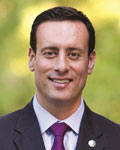
Bill Co-Author(s):