AB 2122: California Classified School Employee Teacher Credentialing Program.
- Session Year: 2015-2016
- House: Assembly
- Latest Version Date: 2016-05-27
The Wildman-Keeley-Solis Exemplary Teacher Training Act of 1997 establishes the California School Paraprofessional Teacher Training Program for the purpose of recruiting paraprofessionals to participate in a program designed to encourage them to enroll in teacher training programs and to provide instructional service as teachers in the public schools. The act requires, among other things, that the Commission on Teacher Credentialing, in consultation with certain other educational entities, to select, pursuant to specified criteria, 24 or more school districts or county offices of education representing rural, urban, and suburban areas that apply to participate in the program. The act requires a school district or county office of education to require a person participating in the program to commit to fulfilling certain specified obligations relating to obtaining a teaching credential and employment as a teacher in the school district or county office of education. The act requires a school district or county office of education to require a program participant to obtain a certificate of clearance from the commission and provide verification of a specified level of academic achievement prior to participating in the program. The act expresses the intent of the Legislature that that, in each fiscal year, funding for the California School Paraprofessional Teacher Training Program be allocated to the commission for grants to school districts and county offices of education, limits grants to $3,500 per program participant per year, and makes funding for the grants contingent upon an appropriation in the annual Budget Act.
This bill would substantially revise those provisions to instead establish the California Classified School Employee Teacher Credentialing Program for the purposes purpose of recruiting classified school employees to participate in a program designed to encourage them to enroll in teacher training programs and to provide instructional service as teachers in the public schools. Subject to an appropriation for these purposes in the annual Budget Act, the bill would require the commission to issue a request for proposals to all school districts and county offices of education in the state in order to solicit applications for funding. The bill would require the criteria adopted by the commission for the selection of school districts or county offices of education to participate in the program to include, among other things, the extent to which the applicants plan for recruitment attempts to meet the demand of teacher shortages in shortage areas in kindergarten transitional kindergarten, kindergarten, and grades 1 to 12, inclusive. The bill would require an applicant that is selected to participate to provide information about the program to all eligible classified school employees in the school district or county office of education and to provide assistance to each classified school employee it recruits under the program regarding admission to a teacher training program. The bill would also require an applicant to require participants to satisfy specified requirements before participating in the program, including passing a background check, and to certify that it has received a commitment from each participant that he or she will accomplish certain things, including completing all of the requirements for, and obtain, a multiple subject, single subject, or education specialist teaching credential. The bill would require the commission to contract with an independent evaluator with a proven record of experience in assessing teacher training programs to conduct an evaluation to determine the success of the program and would require the evaluation to be conducted once every 5 years, with the first evaluation being completed on or before July 1, 2021. The bill would also require the commission, on or before January 1 of each year, to report to the Legislature regarding the status of the program, as specified. The bill would state the Legislatures intent that that, each fiscal year, funding for the program be allocated to the commission for grants for up to 1,000 new participants per year and would prohibit a grant to an applicant from exceeding $4,000 per participant per year. The bill would make funding for grants to applicants contingent upon an appropriation in the annual Budget Act.
The Wildman-Keeley-Solis Exemplary Teacher Training Act of 1997 establishes the California School Paraprofessional Teacher Training Program for the purpose of recruiting paraprofessionals to participate in a program designed to encourage them to enroll in teacher training programs and to provide instructional service as teachers in the public schools. The act requires, among other things, that the Commission on Teacher Credentialing, in consultation with certain other educational entities, to select, pursuant to specified criteria, 24 or more school districts or county offices of education representing rural, urban, and suburban areas that apply to participate in the program. The act requires a school district or county office of education to require a person participating in the program to commit to fulfilling certain specified obligations relating to obtaining a teaching credential and employment as a teacher in the school district or county office of education. The act requires a school district or county office of education to require a program participant to obtain a certificate of clearance from the commission and provide verification of a specified level of academic achievement prior to participating in the program. The act expresses the intent of the Legislature that in each fiscal year, funding for the California School Paraprofessional Teacher Training Program be allocated to the commission for grants to school districts and county offices of education, limits grants to $3,500 per program participant per year, and makes funding for the grants contingent upon an appropriation in the annual Budget Act.
This bill would substantially revise those provisions to instead establish the California Classified School Employee Teacher Credentialing Program for the purpose purposes of recruiting classified school employees to participate in a program designed to encourage them to enroll in teacher training programs and to provide instructional service as teachers in the public schools. Subject to an appropriation for these purposes in the annual Budget Act, the bill would require the commission to issue a request for proposals to all school districts and county offices of education in the state in order to solicit applications for funding. The bill would require the criteria adopted by the commission for the selection of school districts or county offices of education to participate in the program to include, among other things, the extent to which the applicants plan for recruitment attempts to meet the demand of teacher shortages in shortage areas in kindergarten and grades 1 to 12, inclusive. The bill would require an applicant that is selected to participate to provide information about the program to all eligible classified school employees in the school district or county office of education and to provide assistance to each classified school employee it recruits under the program regarding admission to a teacher training program. The bill would also require an applicant to require participants to satisfy specified requirements before participating in the program, including passing a background check, and to certify that it has received a commitment from each participant that he or she will accomplish certain things, including completing all of the requirements for, and obtain, a multiple subject, single subject, or education specialist teaching credential. The bill would require the commission to contract with an independent evaluator with a proven record of experience in assessing teacher training programs to conduct an evaluation to determine the success of the program and would require the evaluation to be conducted once every 5 years, with the first evaluation being completed on or before July 1, 2021. The bill would also require the commission, on or before January 1 of each year, to report to the Legislature regarding the status of the program, as specified. The bill would state the Legislatures intent that each fiscal year, funding for the program be allocated to the commission for grants for up to 1,000 new participants per year and would prohibit a grant to an applicant from exceeding $4,000 per participant per year. The bill would make funding for grants to applicants contingent upon an appropriation in the annual Budget Act.
The Wildman-Keeley-Solis Exemplary Teacher Training Act of 1997 establishes the California School Paraprofessional Teacher Training Program for the purpose of recruiting paraprofessionals to participate in a program designed to encourage them to enroll in teacher training programs and to provide instructional service as teachers in the public schools. The act requires, among other things, that the Commission on Teacher Credentialing, in consultation with certain other educational entities, to select, pursuant to specified criteria, 24 or more school districts or county offices of education representing rural, urban, and suburban areas that apply to participate in the program. The act requires a school district or county office of education to require a person participating in the program to commit to fulfilling certain specified obligations relating to obtaining a teaching credential and employment as a teacher in the school district or county office of education. The act requires a school district or county office of education to require a program participant to obtain a certificate of clearance from the commission and provide verification of a specified level of academic achievement prior to participating in the program. The act expresses the intent of the Legislature that in each fiscal year, funding for the California School Paraprofessional Teacher Training Program be allocated to the commission for grants to school districts and county offices of education, limits grants to $3,500 per program participant per year, and makes funding for the grants contingent upon an appropriation in the annual Budget Act.
This bill would substantially revise those provisions to instead establish the California Classified School Employee Teacher Credentialing Program for the purpose of recruiting classified school employees to participate in a program designed to encourage them to enroll in teacher training programs and to provide instructional service as teachers in the public schools. Subject to an appropriation for these purposes in the annual Budget Act, the bill would require the commission to issue a request for proposals to all school districts and county offices of education in the state in order to solicit applications for funding. The bill would require the criteria adopted by the commission for the selection of school districts or county offices of education to participate in the program to include, among other things, the extent to which the applicants plan for recruitment attempts to meet the demand of teacher shortages in shortage areas in kindergarten and grades 1 to 12, inclusive. The bill would require an applicant that is selected to participate to provide information about the program to all eligible classified school employees in the school district or county office of education and to provide assistance to each classified school employee it recruits under the program regarding admission to a teacher training program. The bill would also require an applicant to require participants to satisfy specified requirements before participating in the program, including passing a background check, and to certify that it has received a commitment from each participant that he or she will accomplish certain things, including completing all of the requirements for, and obtain, a multiple subject, single subject, or education specialist teaching credential. The bill would require the commission to contract with an independent evaluator with a proven record of experience in assessing teacher training programs to conduct an evaluation to determine the success of the program and would require the evaluation to be conducted once every 5 years, with the first evaluation being completed on or before July 1, 2021. The bill would also require the commission, on or before January 1 of each year, to report to the Legislature regarding the status of the program, as specified. The bill would state the Legislatures intent that each fiscal year, funding for the program be allocated to the commission for grants for up to 1,000 new participants per year and would prohibit a grant to an applicant from exceeding $4,000 per participant per year. The bill would make funding for grants to applicants contingent upon an appropriation in the annual Budget Act.
The Legislature finds and declares all of the following:
(a)All children deserve a highly qualified teacher.
(b)California faces a severe teacher shortage.
(c)The demand for new teachers is growing due to the inability to attract new teachers into the profession, the high attrition rate of new teachers, and the retirement of existing teachers.
(d)California has a 50-percent higher pupil-to-teacher ratio than any other state in the country at 24 to 1.
(e)It is estimated that California will need 60,000 additional teachers to maintain the current pupil-to-teacher ratio. bring pupil-to-teacher ratios back to prerecession levels.
(f)If California will were to reduce pupil-to-teacher ratios to the national average of 16 to 1, school districts would need to hire 135,000 additional teachers in order to return to the prerecession pupil-to-teacher ratio of 16 to 1. teachers.
(g)Teacher shortages vary by subject and region.
(h)Enrollment in teacher credentialing programs dropped 76 percent between 2002 and 2014.
(i)In 2014 and 2015, 40 percent of credentials were awarded to underprepared teachers.
(j)The diversity in the teacher workforce in California does not match the diversity of the pupil population.
(k)Roughly 65 percent of teachers are white, 20 percent are Hispanic, and 15 percent are a different race or ethnicity.
(l)Classified school employees currently working in public schools represent a potential pool of future teachers.
(m)Classified school employees as a group make up the most diverse segment of the professional school community.
(n)Providing incentives for classified school employees to obtain a bachelors degree and become fully credentialed teachers is a proven strategy to increase the number of highly qualified teachers in Californias schools.
SEC. 3.Section 44391 of the Education Code is amended to read:44391.This article shall be known, and may be cited, as the California Classified School Employee Teacher Credentialing Program.
SEC. 4.Section 44392 of the Education Code is amended to read:44392.For the purposes of this article, unless the context clearly requires otherwise, the following terms shall have the following meanings:
(a)Applicant means a school district or county office of education applying for program funds under the California Classified School Employee Teacher Credentialing Program.
(b)Institutions of higher education means the California Community Colleges, the California State University, the University of California, and private not-for-profit institutions of higher education that offer a commission-approved teacher preparation program.
(c)Participant means a classified school employee who elects to participate in the California Classified School Employee Teacher Credentialing Program.
(d)Program means the California Classified School Employee Teacher Credentialing Program.
(e)Classified school employee means a noncertificated school employee currently working in a public school pursuant to this chapter.
(f)Teacher training program means an undergraduate or graduate program of instruction conducted by a campus of an institution of higher education teacher preparation program approved by the commission that includes a developmentally sequenced career ladder to provide instruction, coursework, and clearly defined tasks for each level of the ladder, and that is designed to qualify students enrolled in the program for a teaching credential authorizing instruction in kindergarten and grades 1 to 12, inclusive.
SEC. 5.Section 44393 of the Education Code is amended to read:44393.(a)The California Classified School Employee Teacher Credentialing Program is hereby established for the purpose of recruiting classified school employees to participate in a program designed to encourage them to enroll in teacher training programs and to provide instructional service as teachers in the public schools.
(b)Subject to an appropriation for these purposes in the annual Budget Act, the commission shall issue a request for proposals to all school districts and county offices of education in the state in order to solicit applications for funding. The criteria adopted by the commission for the selection of school districts or county offices of education to participate in the program shall include all of the following:
(1)The extent to which the applicant demonstrates the capacity and willingness to accommodate the participation of classified school employees in teacher training programs conducted at institutions of higher education.
(2)The extent to which the applicants plan for the implementation of its recruitment program involves the active participation of one or more local campuses of the participating institutions of higher education in the development of coursework and teaching programs for participating classified school employees. Each selected applicant shall be required to enter into a written articulation agreement with the participating campuses of the institutions of higher education.
(3)The extent to which the applicants plan for recruitment attempts to meet the demand of teacher shortages in shortage areas in kindergarten transitional kindergarten, kindergarten, and grades 1 to 12, inclusive. Each classified school employee selected to participate shall have successfully completed at least two years of undergraduate college or university coursework and shall have demonstrated an interest in obtaining a multiple subject or single subject teaching credential.
(4)The extent to which a developmentally sequenced series of job descriptions leads from an entry-level classified school employee position to an entry-level teaching position in that school district or county office of education.
(5)The extent to which the applicants plan for recruitment attempts to meet its own specific teacher needs.
(c)An applicant that is selected to participate pursuant to subdivision (b) shall provide information about the program to all eligible classified school employees in the school district or county office of education and assistance to each classified school employee it recruits under the program regarding admission to a teacher training program.
(d)(1)An applicant shall require participants to satisfy all both of the following requirements before participating in the program:
(A)Pass a criminal background check.
(B)Provide verification of one of the following:
(i)Has earned an associate or higher level degree.
(ii)Has successfully completed at least two years of study at a postsecondary educational institution.
(2)An applicant shall certify that it has received a commitment from each participant that he or she will accomplish all of the following:
(A)Graduate from an institution of higher education under the program with a bachelors degree.
(B)Complete all of the requirements for, and obtain, a multiple subject, single subject, or education specialist teaching credential.
(C)Complete one school year of classroom instruction in the school district or county office of education for each year that he or she receives assistance for books, fees, and tuition while attending an institution of higher education under the program.
(e)The commission shall contract with an independent evaluator with a proven record of experience in assessing teacher training programs to conduct an evaluation to determine the success of the program. The evaluation shall be conducted once every five years, with the first evaluation being completed on or before July 1, 2021. The commission shall submit the completed evaluation to the Governor and the education policy and fiscal committees of the Assembly and Senate.
(f)On or before January 1 of each year, the commission shall report to the Legislature regarding the status of the program, including, but not limited to, the number of classified school employees recruited, the academic progress of the classified school employees recruited, the number of classified school employees recruited who are subsequently employed as teachers in the public schools, the degree to which the applicant meets the teacher shortage needs of the school district or county office of education, and the ethnic and racial composition of the participants in the program. The report shall be made in conformance with Section 9795 of the Government Code.
(g)It is the intent of the Legislature that that, each fiscal year, funding for the California Classified School Employee Teacher Credentialing Program be allocated to the commission for grants for up to 1,000 new participants per year. A grant to an applicant shall not exceed four thousand dollars ($4,000) per participant per year. Funding for grants to applicants shall be contingent upon an appropriation in the annual Budget Act.
The Legislature finds and declares all of the following:
(a)All children deserve a highly qualified teacher.
(b)California faces a severe teacher shortage.
(c)The demand for new teachers is growing due to the inability to attract new teachers into the profession, the high attrition rate of new teachers, and the retirement of existing teachers.
(d)California has a 50-percent higher pupil-to-teacher ratio than any other state in the country at 24 to 1.
(e)It is estimated that California will need 60,000 additional teachers to maintain the current pupil-to-teacher ratio.
(f)California will need 135,000 additional teachers in order to return to the prerecession pupil-to-teacher ratio of 16 to 1.
(g)Teacher shortages vary by subject and region.
(h)Enrollment in teacher credentialing programs dropped 76 percent between 2002 and 2014.
(i)In 2014 and 2015, 40 percent of credentials were awarded to underprepared teachers.
(j)The diversity in the teacher workforce in California does not match the diversity of the pupil population.
(k)Roughly 65 percent of teachers are white, 20 percent are Hispanic, and 15 percent are a different race or ethnicity.
(l)Classified school employees currently working in public schools represent a potential pool of future teachers.
(m)Classified school employees as a group make up the most diverse segment of the professional school community.
(n)Providing incentives for classified school employees to obtain a bachelors degree and become fully credentialed teachers is a proven strategy to increase the number of highly qualified teachers in Californias schools.
SEC. 3.Section 44391 of the Education Code is amended to read:44391.This article shall be known, and may be cited, as the California Classified School Employee Teacher Credentialing Program.
SEC. 4.Section 44392 of the Education Code is amended to read:44392.For the purposes of this article, unless the context clearly requires otherwise, the following terms shall have the following meanings:
(a)Applicant means a school district or county office of education applying for program funds under the California Classified School Employee Teacher Credentialing Program.
(b)Institutions of higher education means the California Community Colleges, the California State University, and the University of California. California, and private not-for-profit institutions of higher education that offer a commission-approved teacher preparation program.
(c)Participant means a classified school paraprofessional employee who elects to participate in the California Classified School Employee Teacher Credentialing Program.
(d)Program means the California Classified School Employee Teacher Credentialing Program.
(e)Classified school employee means a noncertificated school employee currently working in a public school pursuant to this chapter.
(f)Teacher training program means an undergraduate or graduate program of instruction conducted by a campus of an institution of higher education that includes a developmentally sequenced career ladder to provide instruction, coursework, and clearly defined tasks for each level of the ladder, and that is designed to qualify students enrolled in the program for a teaching credential authorizing instruction in kindergarten and grades 1 to 12, inclusive.
SEC. 5.Section 44393 of the Education Code is amended to read:44393.(a)The California Classified School Employee Teacher Credentialing Program is hereby established for the purpose of recruiting classified school employees to participate in a program designed to encourage them to enroll in teacher training programs and to provide instructional service as teachers in the public schools.
(b)Subject to an appropriation for these purposes in the annual Budget Act, the commission shall issue a request for proposals to all school districts and county offices of education in the state in order to solicit applications for funding. The criteria adopted by the commission for the selection of school districts or county offices of education to participate in the program shall include all of the following:
(1)The extent to which the applicant demonstrates the capacity and willingness to accommodate the participation of classified school employees in teacher training programs conducted at institutions of higher education.
(2)The extent to which the applicants plan for the implementation of its recruitment program involves the active participation of one or more local campuses of the participating institutions of higher education in the development of coursework and teaching programs for participating classified school employees. Each selected applicant shall be required to enter into a written articulation agreement with the participating campuses of the institutions of higher education.
(3)The extent to which the applicants plan for recruitment attempts to meet the demand of teacher shortages in shortage areas in kindergarten and grades 1 to 12, inclusive. Each classified school employee selected to participate shall have completed at least two years of undergraduate college or university coursework and shall have demonstrated an interest in obtaining a multiple subject or single subject teaching credential.
(4)The extent to which a developmentally sequenced series of job descriptions leads from an entry-level classified school employee position to an entry-level teaching position in that school district or county office of education.
(5)The extent to which the applicants plan for recruitment attempts to meet its own specific teacher needs.
(c)An applicant that is selected to participate pursuant to subdivision (b) shall provide information about the program to all eligible classified school employees in the school district or county office of education and assistance to each classified school employee it recruits under the program regarding admission to a teacher training program.
(d)(1)An applicant shall require participants to satisfy all of the following requirements before participating in the program:
(A)Pass a criminal background check.
(B)Provide verification of one of the following:
(i)Has earned an associate or higher level degree.
(ii)Has completed at least two years of study at a postsecondary educational institution.
(2)An applicant shall certify that it has received a commitment from each participant that he or she will accomplish all of the following:
(A)Graduate from an institution of higher education under the program with a bachelors degree.
(B)Complete all of the requirements for, and obtain, a multiple subject, single subject, or education specialist teaching credential.
(C)Complete one school year of classroom instruction in the school district or county office of education for each year that he or she receives assistance for books, fees, and tuition while attending an institution of higher education under the program.
(e)The commission shall contract with an independent evaluator with a proven record of experience in assessing teacher training programs to conduct an evaluation to determine the success of the program. The evaluation shall be conducted once every five years, with the first evaluation being completed on or before July 1, 2021. The commission shall submit the completed evaluation to the Governor and the education policy and fiscal committees of the Assembly and Senate.
(f)On or before January 1 of each year, the commission shall report to the Legislature regarding the status of the program, including, but not limited to, the number of classified school employees recruited, the academic progress of the classified school employees recruited, the number of classified school employees recruited who are subsequently employed as teachers in the public schools, the degree to which the applicant meets the teacher shortage needs of the school district or county office of education, and the ethnic and racial composition of the participants in the program. The report shall be made in conformance with Section 9795 of the Government Code.
(g)It is the intent of the Legislature that each fiscal year, funding for the California Classified School Employee Teacher Credentialing Program be allocated to the commission for grants for up to 1,000 new participants per year. A grant to an applicant shall not exceed four thousand dollars ($4,000) per participant per year. Funding for grants to applicants shall be contingent upon an appropriation in the annual Budget Act.
The Legislature hereby finds and declares that over the next five years, as many as 50 percent of the classroom teachers in many urban school districts with large percentages of minority pupils will be eligible for retirement. The Legislature further finds and declares that in many school districts there are a number of classified employees, particularly minority group members, who are enrolled in, who have been enrolled in, or who would be interested in enrolling in, a teacher training program leading to a teaching credential if they were provided assistance in applying for admission and financial aid for that purpose.
The Legislature also finds and declares that educational paraprofessionals who serve pupils in the public schools provide valuable instructional services to public school pupils. A program to enhance instructional competencies and to prepare school paraprofessionals to become teachers would result in improved services in terms of their role in the instructional program in the classroom.
SEC. 2.Section 44390 is added to the Education Code, to read:44390.The Legislature finds and declares all of the following:
(a)All children deserve a highly qualified teacher.
(b)California faces a severe teacher shortage.
(c)The demand for new teachers is growing due to the inability to attract new teachers into the profession, the high attrition rate of new teachers, and the retirement of existing teachers.
(d)California has a 50-percent higher pupil-to-teacher ratio than any other state in the country at 24 to 1.
(e)It is estimated that California will need 60,000 additional teachers to maintain the current pupil-to-teacher ratio.
(f)California will need 135,000 additional teachers in order to return to the prerecession pupil-to-teacher ratio of 16 to 1.
(g)Teacher shortages vary by subject and region.
(h)Enrollment in teacher credentialing programs dropped 76 percent between 2002 and 2014.
(i)In 2014 and 2015, 40 percent of credentials were awarded to underprepared teachers.
(j)The diversity in the teacher workforce in California does not match the diversity of the pupil population.
(k)Roughly 65 percent of teachers are white, 20 percent are Hispanic, and 15 percent are a different race or ethnicity.
(l)Classified school employees currently working in public schools represent a potential pool of future teachers.
(m)Classified school employees as a group make up the most diverse segment of the professional school community.
(n)Providing incentives for classified school employees to obtain a bachelors degree and become fully credentialed teachers is a proven strategy to increase the number of highly qualified teachers in Californias schools.
SEC. 3.Section 44391 of the Education Code is amended to read:44391.This article shall be known known, and may be cited cited, as the Wildman-Keeley-Solis Exemplary Teacher Training Act of 1997. California Classified School Employee Teacher Credentialing Program.
SEC. 4.Section 44392 of the Education Code is amended to read:44392.For the purposes of this article, unless the context clearly requires otherwise, the following terms shall have the following meanings:
(a)Applicant means a school district or county office of education applying for program funds under the California School Paraprofessional Teacher Training Program established pursuant to Section 44393. Classified School Employee Teacher Credentialing Program.
(b)Institutions of higher education means the California Community Colleges, the California State University, and the University of California, and private institutions of higher education that offer an accredited teacher training program. California.
(c)Participant means a school paraprofessional who elects to participate in the California School Paraprofessional Teacher Training Classified School Employee Teacher Credentialing Program.
(d)Program means the California School Paraprofessional Teacher Training Program established pursuant to Section 44393. Classified School Employee Teacher Credentialing Program.
(e)School paraprofessional means the following job classifications: educational aide, instructional aide, special education aide, special education assistant, teacher associate, teacher assistant, teacher aide, pupil service aide, library aide, child development aide, child development assistant, and physical education aide.
(e)Classified school employee means a noncertificated school employee currently working in a public school pursuant to this chapter.
(f)Teacher training program means an undergraduate or graduate program of instruction conducted by a campus of an institution of higher education that includes a developmentally sequenced career ladder to provide instruction, coursework, and clearly defined tasks for each level of the ladder, and that is designed to qualify students enrolled in the program for a teaching credential authorizing instruction in kindergarten and grades 1 to 12, inclusive.
SEC. 5.Section 44393 of the Education Code is amended to read:44393.(a)The California School Paraprofessional Teacher Training Classified School Employee Teacher Credentialing Program is hereby established for the purpose of recruiting school paraprofessionals classified school employees to participate in a program designed to encourage them to enroll in teacher training programs and to provide instructional service as teachers in the public schools.
(b)The commission, in consultation with the Chancellor of the California Community Colleges, the Chancellor of the California State University, the President of the University of California, the chancellors of private institutions of higher education that offer accredited teacher training programs, and representatives of certificated and classified employee organizations, shall select 24 or more school districts or county offices of education representing rural, urban, and suburban areas that apply to participate in the program. The commission shall ensure that, at a minimum, a total of 600 school paraprofessionals are recruited from among the 24 or more participating school districts or county offices of education. Subject to an appropriation for these purposes in the annual Budget Act, the commission shall issue a request for proposals to all school districts and county offices of education in the state in order to solicit applications for funding. The criteria adopted by the commission for the selection of school districts or county offices of education to participate in the program shall include all of the following:
(1)The extent to which the applicant demonstrates the capacity and willingness to accommodate the participation of school paraprofessionals classified school employees in teacher training programs conducted at institutions of higher education.
(2)The extent to which the applicants plan for the implementation of its recruitment program involves the active participation of one or more local campuses of the participating institutions of higher education in the development of coursework and teaching programs for participating school paraprofessionals. classified school employees. Each selected applicant shall be required to enter into a written articulation agreement with the participating campuses of the institutions of higher education.
(3)The extent to which the applicants plan for recruitment attempts to meet the demand for bilingual-crosscultural teachers.
(4)The extent to which the applicants plan for recruitment attempts to meet the demand for multiple subject credentialed teachers interested in teaching kindergarten or any of grades 1 to 3, inclusive. For purposes of this paragraph, each paraprofessional selected to participate shall have completed at least two years of undergraduate college or university coursework and shall have demonstrated an interest in obtaining a multiple subject teaching credential for teaching kindergarten or any of grades 1 to 3, inclusive.
(5)The extent to which the applicants plan for recruitment attempts to meet the demand for special education teachers.
(3)The extent to which the applicants plan for recruitment attempts to meet the demand of teacher shortages in shortage areas in kindergarten and grades 1 to 12, inclusive. Each classified school employee selected to participate shall have completed at least two years of undergraduate college or university coursework and shall have demonstrated an interest in obtaining a multiple subject or single subject teaching credential.
(6)
(4)The extent to which a developmentally sequenced series of job descriptions leads from an entry-level school paraprofessional classified school employee position to an entry-level teaching position in that school district or county office of education.
(7)
(5)The extent to which the applicants plan for recruitment attempts to meet its own specific teacher needs.
(8)The extent to which the applicants plan for implementation of its recruitment program involves participation in a district internship program pursuant to Article 7.5 (commencing with Section 44325) and Section 44830.3 or a university internship program pursuant to Article 3 (commencing with Section 44450) of Chapter 3.
(c)An applicant that is selected to participate pursuant to subdivision (b) shall provide information about the program to all eligible classified school employees in the school district or county office of education and assistance to each school paraprofessional classified school employee it recruits under the program regarding admission to a teacher training program.
(d)(1)The applicant shall recruit and organize groups, or cohorts, of participants, of no more than 30, and no less than 10, in each cohort. Cohorts shall be organized to consist of participants having approximately equal academic experience and qualifications, as determined by the school district or county office of education. To the extent possible, the members of each cohort shall proceed through the same subject matter and credential programs. The members of each cohort shall enroll in the same college or university and shall be provided appropriate support and information throughout the course of their studies by the applicant.
(2)
(d)(1)An applicant shall require participants to satisfy all of the following requirements prior to before participating in the program:
(A)For the purpose of obtaining current criminal history information from the Department of Justice and the Federal Bureau of Investigation, obtain a certificate of clearance from the commission pursuant to Sections 44339 to 44341, inclusive, and related regulations adopted by the commission.
(A)Pass a criminal background check.
(B)Provide verification of one of the following:
(i)Has earned an associate or higher level degree.
(ii)Has completed at least two years of study at a postsecondary educational institution.
(iii)Has received a passing score on a formal academic assessment that demonstrates knowledge of, and the ability to assist in the instruction of, reading, writing, and mathematics. The formal academic assessment shall be based upon a job analysis for validity purposes and shall be made readily available to examinees.
(3)
(2)An applicant shall certify that it has received a commitment from each participant that he or she will accomplish all of the following:
(A)Graduate from an institution of higher education under the program with a bachelors degree.
(B)Complete all of the requirements for and obtain for, and obtain, a multiple subject, single subject, or education specialist teaching credential.
(C)Complete one school year of classroom instruction in the school district or county office of education for each year that he or she receives assistance for books, fees, and tuition while attending an institution of higher education under the program.
(4)To the extent that a participant does not fulfill his or her obligations, as set forth in paragraph (3), the participant shall be required to repay the assistance. If a participant is laid off, the participant may not be required to repay the assistance until the participant is offered reemployment and has an opportunity to fulfill his or her obligations under this section.
(5)Except as otherwise provided in paragraph (4), if a participant is unable to fulfill his or her obligations pursuant to paragraph (3) due to a serious illness, a pregnancy, or another natural cause, the time period for repayment of the assistance shall be extended by a maximum period of one year.
(6)Except as otherwise provided in paragraph (4), if an interruption in employment caused by a natural disaster prevents a participant from completing one of the required years of service, the time period for repayment of the assistance shall be extended by a period equal to the period between the date the interruption of employment begins and the date employment resumes.
(e)The commission shall contract with an independent evaluator with a proven record of experience in assessing career-advancement programs or teacher training programs to conduct an evaluation to determine the success of the recruitment programs established pursuant to subdivision (b). program. The evaluation shall be conducted once every five years and shall incorporate data annually collected by the commission and reported to the Legislature. years, with the first evaluation being completed on or before July 1, 2021. The commission shall complete the evaluation with existing resources. By January 1 of each year in which an evaluation is conducted pursuant to this subdivision, commencing with January 1, 2009, the commission shall submit the completed evaluation to the Governor and the education policy and fiscal committees of the Assembly and Senate. The evaluation shall include, but is not limited to, all of the following:
(1)The total cost per person participating in the program who successfully obtains a teaching credential, based upon all state, local, federal, and other sources of funding.
(2)The economic status of persons participating in the program.
(3)A description of financial and other resources made available to each recruitment program by participating school districts or county offices of education, institutions of higher education, and other participating organizations.
(4)The extent to which pupil performance on standardized achievement tests has improved in classes taught by teachers who have successfully completed the program, in comparison to classes taught by other teachers who have equivalent teaching experience.
(5)The extent to which pupil dropout rates and other measures of delinquency have improved in classes taught by teachers who have successfully completed the program.
(6)The extent to which teachers who have successfully completed the program remain in the communities in which they reside and in which they teach.
(7)The attrition rate of teachers who have successfully completed the program.
(f)Each selected school district or county office of education shall report to the commission regarding the progress of each cohort of school paraprofessionals, and other information regarding its recruitment program as the commission may direct.
(g)
(f)No later than On or before January 1 of each year, the commission shall report to the Legislature regarding the status of the program, including, but not limited to, the number of school paraprofessionals classified school employees recruited, the academic progress of the school paraprofessionals classified school employees recruited, the number of school paraprofessionals classified school employees recruited who are subsequently employed as teachers in the public schools, the degree to which the program meets the demand for bilingual and special education teachers as well as meeting teacher needs in shortage areas as determined by the school district or county office of education, the degree to which the program or similar programs can meet that demand if properly funded and executed, and other effects upon the operation of the public schools. applicant meets the teacher shortage needs of the school district or county office of education, and the ethnic and racial composition of the participants in the program. The report shall be made in conformance with Section 9795 of the Government Code.
(h)
(g)(1)It is the intent of the Legislature that each fiscal year, funding for the California School Paraprofessional Teacher Training Classified School Employee Teacher Credentialing Program be allocated to the Commission on Teacher Credentialing commission for grants for up to 1,000 new applicants pursuant to this section. participants per year. A grant to an applicant shall not exceed three thousand five hundred dollars ($3,500) four thousand dollars ($4,000) per participant per year. Funding for grants to applicants pursuant to this subdivision shall be contingent upon an appropriation in the annual Budget Act.
(2)The commission shall report to the Department of Finance by March 31 of each year the amount of funds collected by school districts and county offices of education as repayment of assistance pursuant to paragraph (4) of subdivision (d) and the amount of funds that remain unspent from the funds appropriated to the commission in the annual Budget Act for purposes of the program.
|
Date
|
Status
|
|---|---|
| Feb 17, 2016 | Read first time. To print. |
| Feb 18, 2016 | From printer. May be heard in committee March 19. |
| Feb 29, 2016 | Referred to Com. on ED. |
| Apr 13, 2016 | From committee: Amend, and do pass as amended and re-refer to Com. on APPR. with recommendation: To Consent Calendar. (Ayes 7. Noes 0.) (April 6). |
| Apr 14, 2016 | Read second time and amended. |
| Apr 18, 2016 | Re-referred to Com. on APPR. |
| Apr 27, 2016 | In committee: Set, first hearing. Referred to APPR. suspense file. |
| May 27, 2016 | From committee: Amend, and do pass as amended. (Ayes 20. Noes 0.) (May 27). |
| May 27, 2016 | Read second time and amended. Ordered returned to second reading. |
| May 31, 2016 | Read second time. Ordered to third reading. |
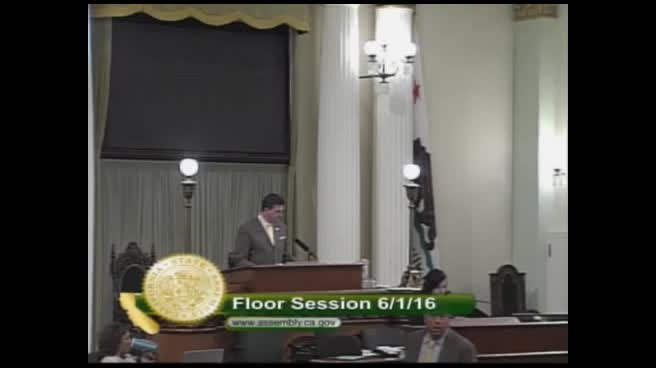
| Jun 1, 2016 | Read third time. Passed. Ordered to the Senate. |
| Jun 1, 2016 | Read third time. Passed. Ordered to the Senate. (Ayes 80. Noes 0. Page 5100.) |
| Jun 1, 2016 | Read third time. Passed. Ordered to the Senate. (Ayes 80. Noes 0.) |
| Jun 2, 2016 | In Senate. Read first time. To Com. on RLS. for assignment. |
| Jun 9, 2016 | Referred to Com. on ED. |
|
Date
|
Description
|
Location
|
Votes
|
|
|---|---|---|---|---|
| Jun 1, 2016 | AB 2122 MCCARTY Assembly Third Reading | Assembly Floor |
Passed |
|
| May 27, 2016 | Do pass as amended. | Assembly Standing Committee on Appropriations |
Passed |
|
| Apr 6, 2016 | Do pass as amended, and be re-referred to the Committee on [Appropriations] with recommendation: To Consent Calendar | Assembly Standing Committee on Education |
Passed |
This list shows positions taken on this bill by organizations on the date displayed, which is linked to the original source.
Positions by individuals are not included.
|
Organization
|
Position
|
Date
|
|---|---|---|
| Advancement Project | ** Support | Jun 1, 2016 |
| Association Of California School Administrators | ** Support | Jun 1, 2016 |
| California Federation Of Teachers | ** Support | Jun 1, 2016 |
| California School Employees Association | ** Support | Jun 1, 2016 |
| LIUNA Locals 777 | ** Support | Jun 1, 2016 |
| Los Angeles Unified School District Superintendent, Michelle King | ** Support | Jun 1, 2016 |
| Public Advocates | ** Support | Jun 1, 2016 |
| Riverside County Superintendent of Schools, Kenneth Young | ** Support | Jun 1, 2016 |
| Superintendent of Public Instruction, Tom Torlakson | ** Support | Jun 1, 2016 |
ASSEMBLY THIRD READING
ATR Bill Id:
Author:(McCarty)
As Amended Ver:May 27, 2016
Majority vote
Committee | Votes | Ayes | Noes |
Education | 7-0 | O'Donnell, Olsen, Kim, McCarty, Santiago, Thurmond, Weber | |
Appropriations | 20-0 | Gonzalez, Bigelow, Bloom, Bonilla, Bonta, Calderon, Chang, Daly, Eggman, Gallagher, Eduardo Garcia, Roger Hernández, Holden, Jones, Obernolte, Quirk, Santiago, Wagner, Weber, Wood |
|
SUMMARY: Re-establishes the Paraprofessional Teacher Training Program (PTTP) as the California Classified School Employee Teacher Credentialing Program (CCSETCP) and expands authorized grant recipients beyond paraprofessionals to also to include all non-certificated school employees currently working in a public school. Specifically, this bill:
- Makes private not-for-profit institutions of higher education (IHEs) that offer a Commission on Teacher Credentialing (CTC) approved teacher preparation program eligible for participation in the program.
- Removes certain criteria for participation, including program emphasis on bilingual cross-cultural teacher development, K-3 teacher development and special education teacher development. Instead, more broadly requires program applicants to address teacher shortage demands and requires the employee to have completed at least two years of undergraduate college or university coursework with a demonstrated interest in obtaining a multiple or single subject credential.
- Requires the CTC, subject to an appropriation for this purpose in the annual Budget Act, to issue a request for proposals to all school districts and county offices of education in the state in order to solicit applications for funding.
- Requires the CTC to contract with an independent evaluator to conduct an evaluation once every five
- Increases the authorized grant amount per applicant from $3,500 to $4,000 per participant per year. Expresses Legislative intent that funding for the program be allocated to support up to 1,000 new participants per year. Makes funding contingent upon an appropriation in the annual budget act.
FISCAL EFFECT: According to the Assembly Appropriations Committee:
- Ongoing Proposition 98/General Fund cost pressure of at least $4 million to support the provision of $4,000 grant awards to 1,000 new participants each year.
- Unknown ongoing administrative costs to the CTC to administer the grant program. Administrative costs will depend on the total amount of funding provided for the program. Generally, administrative costs are approximately 3% of the total grant program. The bill also requires an independent study. Although the exact cost of the study will be contingent upon the size and complexity of the program, given the goals of the bill, it is likely the study would be in the $250,000 range. The fund source for administrative support is unclear; though CCTC indicates they could fund these activities from the Teacher Credentialing Fund (special funds) if authorized by the Legislature.
COMMENTS:
Background. The PTTP was established in 1990 by SB 1690 (Roberti), Chapter 1444, Statutes of 1990) and has been reauthorized several times since. The first reauthorization, AB 352 (Keeley), Chapter 737, Statutes of 1997 and AB 353 (Wildman) Chapter 831, Statutes of 1997, also named the program the Wildman-Keeley-Solis Exemplary Teacher Training Act of 1997. The program provided academic scholarships and other related academic support services to individuals recruited from paraprofessional job classifications seeking a preliminary California teaching credential as a K-12 teacher. PTTP programs were sponsored by local school districts, county offices of education, and/or consortia that applied to the CTC for program funding based on a competitive grant application process.
History of funding. Although the PTTP was established in 1990, funding was not provided until 1994-95, at which time $1.5 million was provided to fund up to 600 paraprofessional participants at the rate of $3,000 per participant. An additional $10 million was provided in the 1999-2000 budget, but that was later reduced to $5.1 million in 2002 due to fiscal challenges faced by the state. In 2007, funding was increased another $1.2 million and the amount per participant was increased to $3,500 in recognition of higher tuition costs.
In 2008-09, the Legislature and Governor agreed to mid-year budget cuts in response to a recession-related decline in state revenues. Among the actions taken, funding for PTTP, along with many other categorical programs, was reduced and "flexed," meaning that school districts could spend the funds for other priorities. As a result of continued flexibility and the uncertainty of continued program funding, the CTC discontinued enrolling new participants in March 2011. With the enactment of the Local Control Funding Formula in 2013, all funding for PTTP was eliminated. Between the time the PTTP was first funded in 1994 and the time the CTC stopped enrolling new participants in 2011, the program resulted in more than 2,200 graduates.
This bill differs from the PTTP in two primary ways. First, it increases the grant amount for participants from $3,500 to $4,000. Second, any classified employee, not just paraprofessionals, is eligible to participate.
Analysis Prepared by: Rick Pratt / ED. / (916) 319-2087 FN: 0003354
Date of Hearing: April 27, 2016
ASSEMBLY COMMITTEE ON APPROPRIATIONS
Lorena Gonzalez, Chair
ABPCA Bill Id:AB 2122
Author:(McCarty) – As Amended Ver:April 14, 2016
Policy Committee: | Education | Vote: | 7 - 0 |
|
|
Urgency: No State Mandated Local Program: No Reimbursable: No
SUMMARY:
This bill re-establishes the Paraprofessional Teacher Training Program (PTTP) as the California Classified School Employee Teacher Credentialing Program (CCSETCP) and expands authorized grant recipients beyond paraprofessionals to also to include all non-certificated school employees currently working in a public school. Specifically, this bill:
- Makes private not-for-profit institutions of higher education (IHEs) that offer a Commission on Teacher Credentialing (CCTC) approved teacher preparation program eligible for participation in the program.
- Removes certain criteria for participation, including program emphasis on bilingual cross-cultural teacher development, K-3 teacher development and special education teacher development. Instead, more broadly requires program applicants to address teacher shortage demands and requires the employee to have completed at least two years of undergraduate college or university coursework with a demonstrated interest in obtaining a multiple or single subject credential.
- Requires the CCTC, subject to an appropriation for this purpose in the annual Budget Act, to issue a request for proposals to all school districts and county offices of education in the state in order to solicit applications for funding.
- Requires the CCTC to contract with an independent evaluator to conduct an evaluation once every five
- Increases the authorized grant amount per applicant from $3,500 to $4,000 per participant per year. Expresses Legislative intent that funding for the program be allocated to support up to 1,000 new participants per year. Makes funding contingent upon an appropriation in the annual budget act.
FISCAL EFFECT:
- Ongoing Proposition 98/GF cost pressure of at least $4 million to support the provision of $4,000 grant awards to 1,000 new participants each year.
- Unknown ongoing administrative costs to the CCTC to administer the grant program. Administrative costs will depend on the total amount of funding provided for the program. Generally, administrative costs are approximately 3% of the total grant program. The bill also requires an independent study. Although the exact cost of the study will be contingent upon the size and complexity of the program, given the goals of the bill, it is likely the study would be in the $250,000 range. The fund source for administrative support is unclear; though CCTC indicates they could fund these activities from the Teacher Credentialing Fund (special funds) if authorized by the Legislature.
COMMENTS:
- Purpose. According to the CCTC, the primary purpose of the original PTTP was to create local career ladders that enable school paraprofessionals (teacher assistants, library, media aides, and instructional assistants) to become certificated classroom teachers in K-12 public schools. The PTTP was established in 1990 by SB 1690 (Roberti) Chapter 1444, Statutes of 1990 and has been reauthorized several times since. This bill differs from the original PTTP in two ways. First, it increases the grant amount for participants from $3,500 to $4,000. Second, all classified employees, not just paraprofessionals, are eligible to participate in the program.
According to the author, this bill is needed to help address California's teacher shortage. Enrollment in teacher preparation programs has dropped 70% in the last 10 years, and the supply of teachers is at a 12 year low. The author's office states that classified employees provide an invaluable pool of potential teachers to help meet this critical need.
- Background. In 2008-09, the Legislature and the Governor agreed to mid-year budget cuts in response to a recession-related decline in state revenues. Funding for the PTTP was no longer identified as a per participant allocation and LEAs were authorized to use PTTP funds for any educational purpose. As a result of this flexibility, and the uncertainty of continued program funding, the CCTC discontinued enrolling new participants in March 2011. With the enactment of the Local Control Funding Formula in 2013, all funding for PTTP was eliminated. Between the time the PTTP was first funded in 1994 and the time the CTC stopped enrolling new participants in 2011, the program resulted in more than 2,200 graduates.
Analysis Prepared by: Misty Feusahrens / APPR. / (916) 319-2081
Date of Hearing: April 6, 2016
ASSEMBLY COMMITTEE ON EDUCATION
Patrick O'Donnell, Chair
ABPCA Bill Id:AB 2122 (
Author:McCarty) – As Introduced Ver:February 17, 2016
SUBJECT: California Classified School Employee Teacher Credentialing Program
SUMMARY: Establishes the California Classified School Employee Teacher Credentialing Program. Specifically, this bill:
- Makes findings and declarations regarding the value of providing incentives to classified school employees to become certificated teachers as a means of reducing the teacher shortage and improving the diversity of the teacher workforce in California.
- Renames the Wildman-Keeley-Solis Exemplary Teacher Training Act of 1977 the California Classified School Employee Teacher Credentialing Program (CCSETCP).
- Provides that the purpose of the CCSETCP is to recruit classified school employees to participate in a program to encourage them to enroll in teacher training programs and to provide instructional service as teachers the public schools.
- Requires the Commission on Teacher Credentialing (CTC), subject to an appropriation for this purpose in the annual Budget Act, to issue a request for proposals to all school districts and county offices of education in the state in order to solicit applications for funding.
- Requires the CTC to adopt criteria for the selection of program participants to include all of the following:
- The extent to which the applicant demonstrates the capacity and willingness to accommodate the participation of classified school employees in teacher training programs conducted at institutions of higher education;
- The extent to which the applicant’s plan for the implementation of its recruitment program involves the active participation of one or more local campuses of the participating institutions of higher education in the development of coursework and teaching programs for participating classified school employees;
- The extent to which the applicant’s plan for recruitment attempts to meet the demand of teacher shortages in shortage areas in kindergarten and grades 1 to 12, inclusive.
- The extent to which a developmentally sequenced series of job descriptions leads from an entry-level classified school employee position to an entry-level teaching position in that school district or county office of education; and
- The extent to which the applicant’s plan for recruitment attempts to meet its own specific teacher needs.
- Requires each applicant that is selected to participate in the program to do all of the following:
- Enter into a written articulation agreement with the participating campuses of the institutions of higher education;
- Provide information about the program to all eligible classified school employees in the school district or county office of education and assistance to each
- Require participants to satisfy the following requirements before participating in the program:
- Pass a criminal background check; and
- Provide verification of either an associate or higher level degree or completion of at least two years of study at a postsecondary institution.
- Certify that it has received a commitment from each participant that he or she will accomplish all of the following:
- Graduate from an institution of higher education under the program with a bachelor’s degree;
- Complete all of the requirements for and obtain a multiple subject, single subject, or education specialist teaching credential; and
- Complete one school year of classroom instruction in the school district or county office of education for each year that he or she receives assistance for books, fees, and tuition while attending an institution of higher education under the program.
- Establishes the following definitions:
- “Applicant” means a school district or county office of education applying for program funds under the CCSETCP;
- “Institutions of higher education” means the California Community Colleges, the California State University, and the University California;
- “Participant” means a school paraprofessional who elects to participate in the CCSETCP;
- “Program” means the California Classified School Employee Teacher Credentialing Program;
- “Classified school employee” means a non-certificated school employee currently working in a public school; and
- “Teacher training program” means an undergraduate or graduate program of instruction conducted by a campus of an institution of higher education that includes a developmentally sequenced career ladder to provide instruction, coursework, and clearly defined tasks for each level of the ladder, and that is designed to qualify students enrolled in the program for a teaching credential authorizing instruction in kindergarten and grades 1 to 12, inclusive.
- Requires the CTC to contract with an independent evaluator with a proven record of experience in assessing teacher training programs to conduct an evaluation to determine the success of the program. The evaluation shall be conducted once every five
- Requires the CTC, on or before January 1 of each year, to report to the Legislature regarding the status of the program, including, but not limited to;
- The number of classified school employees recruited;
- The academic progress of the classified school employees recruited;
- The number of classified school employees recruited who are subsequently employed as teachers in the public schools; and
- The degree to which the applicant meets the teacher shortage needs of the school district or county office of education, and the ethnic and racial composition of the participants in the program.
- Requires the report to be made in conformance with Section 9795 of the Government Code.
- Expresses the intent of the Legislature that, each fiscal year, funding for the CCSETCP be allocated to the CTC for grants for up to 1,000 new
- Provides that a grant to an applicant shall not exceed $4,000 per participant per year.
- Provides that funding for grants to applicants shall be contingent upon an appropriation in the annual Budget Act.
EXISTING LAW: Establishes the California School Paraprofessional Teacher Training Program (PTTP), which provides grants to school paraprofessionals to enroll in and complete teacher preparation programs.
FISCAL EFFECT: Unknown
COMMENTS: The PTTP was established in 1990 by SB 1690 (Roberti, Chapter 1444, Statutes of 1990) and has been reauthorized several times since. The first reauthorization, Chapters 737 and 831, Statutes of 1997, also named the program the Wildman-Keeley-Solis Exemplary Teacher Training Act of 1977. The program provided academic scholarships and other related academic support services to individuals recruited from paraprofessional job classifications seeking a preliminary California teaching credential as a K-12 teacher. PTTP programs were sponsored by local school districts, county offices of education, and/or consortia that applied to the CTC for program funding based on a competitive grant application process.
Although the PTTP was established in 1990, funding was not provided until 1994-95, at which time $1.5 million was provided to fund up to 600 paraprofessional participants at the rate of $3,000 per participant. An additional $10 million was provided in the 1999-2000 budget, but that was later reduced to $5.1 million in 2002 due to fiscal challenges faced by the state. In 2007, funding was increased another $1.2 million and the amount per participant was increased to $3,500 in recognition of higher tuition costs.
In 2008-09, the Legislature and Governor agreed to mid-year budget cuts in response to a recession-related decline in state revenues. Among the actions taken, funding for PTTP, along with many other categorical programs, was reduced and "flexed," meaning that school districts could spend the funds for other priorities. As a result of continued flexibility and the uncertainty of continued program funding, the CTC discontinued enrolling new participants in March 2011. With the enactment of the Local Control Funding Formula in 2013, all funding for PTTP was eliminated. Between the time the PTTP was first funded in 1994 and the time the CTC stopped enrolling new participants in 2011, the program resulted in more than 2,200 graduates.
This bill differs from the PTTP in two primary ways. First, it increases the grant amount for participants from $3,500 to $4,000. Second, any classified employee, not just paraprofessionals, are eligible to participate.
Clarifying amendment needed. Although the bill intends to make the program available to all classified employees, it defines "participant" to mean a "school paraprofessional." Staff recommends the bill be amended to define "participant" to mean a "classified school employee."
Arguments in support. According to the author's office, this bill is needed to help address California's teacher shortage. Enrollment in teacher preparation programs has dropped 70% in the last 10 years, and the supply of teachers is at a 12 year low. The author's office argues that classified employees provide an invaluable pool of potential teachers to help meet this critical need.
REGISTERED SUPPORT / OPPOSITION:
Support
Advancement Project
Association of California School Administrators
California Catholic Conference, Inc.
California Federation of Teachers
California Labor Federation
California School Employees Association
LIUNA Locals 777
Los Angeles Unified School District Superintendent, Michelle King
Public Advocates
Riverside County Superintendent of Schools, Kenneth Young
Superintendent of Public Instruction, Tom Torlakson
Opposition
None received
Analysis Prepared by: Rick Pratt / ED. / (916) 319-2087
Bill Author

Bill Co-Author(s):