AB 2250: Political Reform Act of 1974: contribution limitations.
- Session Year: 2015-2016
- House: Assembly
- Latest Version Date: 2016-02-18
The Political Reform Act of 1974 imposes various limitations on contributions that may be made to, or accepted by, candidates for elective office and campaign committees that support or oppose candidates and ballot measures. The act prohibits a foreign government or principal, as defined, from making a contribution or expenditure in connection with a ballot measure. The act also prohibits a person or committee from soliciting or accepting a contribution from a foreign government or principal for this purpose.
This bill would expand the scope of these prohibitions by also prohibiting a foreign government or principal from making a contribution or expenditure, and a person or committee from soliciting or accepting this type of contribution, in connection with an election.
A violation of the acts provisions is punishable as a misdemeanor. By expanding the scope of an existing crime, this bill would impose a state-mandated local program.
The California Constitution requires the state to reimburse local agencies and school districts for certain costs mandated by the state. Statutory provisions establish procedures for making that reimbursement.
This bill would provide that no reimbursement is required by this act for a specified reason.
The Political Reform Act of 1974, an initiative measure, provides that the Legislature may amend the act to further the acts purposes upon a 2/3 vote of each house and compliance with specified procedural requirements.
This bill would declare that it furthers the purposes of the act.
This bill would declare that it is to take effect immediately as an urgency statute.
(a)No A foreign government or foreign principal shall not make, directly or through any other person, any a contribution, expenditure, or independent expenditure in connection with an election, including the qualification or support of, or opposition to, any a state or local ballot measure.
(b)No A person and no or a committee shall not solicit or accept a contribution from a foreign government or foreign principal in connection with an election, including the qualification or support of, or opposition to, any a state or local ballot measure.
(c)For the purposes of this section, a foreign principal includes the following:
(1)A foreign political party.
(2)A person outside the United States, unless either of the following is established:
(A)The person is an individual and a citizen of the United States.
(B)The person is not an individual and is organized under or created by the laws of the United States or of any state or other place subject to the jurisdiction of the United States and has its principal place of business within the United States.
(3)A partnership, association, corporation, organization, or other combination of persons organized under the laws of or having its principal place of business in a foreign country.
(4)A domestic subsidiary of a foreign corporation if the decision to contribute or expend funds is made by an officer, director, or management employee of the foreign corporation who is neither a citizen of the United States nor a lawfully admitted permanent resident of the United States.
(d)This section shall does not prohibit a contribution, expenditure, or independent expenditure made by a lawfully admitted permanent resident.
(e)Any A person who violates this section shall be is guilty of a misdemeanor and shall be fined an amount equal to punishable by a fine in the amount contributed or expended.
SEC. 2.No reimbursement is required by this act pursuant to Section 6 of Article XIIIB of the California Constitution because the only costs that may be incurred by a local agency or school district will be incurred because this act creates a new crime or infraction, eliminates a crime or infraction, or changes the penalty for a crime or infraction, within the meaning of Section 17556 of the Government Code, or changes the definition of a crime within the meaning of Section 6 of Article XIIIB of the California Constitution.
SEC. 3.The Legislature finds and declares that this bill furthers the purposes of the Political Reform Act of 1974 within the meaning of subdivision (a) of Section 81012 of the Government Code.
SEC. 4.This act is an urgency statute necessary for the immediate preservation of the public peace, health, or safety within the meaning of Article IV of the Constitution and shall go into immediate effect. The facts constituting the necessity are:
In order to protect the process of democratic self-government for Californians in elections held in 2016 by restricting campaign contributions and expenditures made by foreign principals and foreign governments, it is necessary that this act take immediate effect.
|
Date
|
Status
|
|---|---|
| Feb 18, 2016 | Read first time. To print. |
| Feb 19, 2016 | From printer. May be heard in committee March 20. |
| Mar 3, 2016 | Referred to Com. on E. & R. |
| Mar 30, 2016 | From committee: Do pass and re-refer to Com. on APPR. (Ayes 5. Noes 1.) (March 30). Re-referred to Com. on APPR. |
| Apr 13, 2016 | From committee: Do pass. (Ayes 16. Noes 0.) (April 13). |
| Apr 14, 2016 | Read second time. Ordered to third reading. |
| May 9, 2016 | Motion to reconsider made by Assembly Member Ridley-Thomas. |
| May 9, 2016 | Read third time. Urgency clause refused adoption. |
| May 9, 2016 | Read third time. Urgency clause refused adoption. (Ayes 51. Noes 0. Page 4726.) |
| May 9, 2016 | Read third time. Refused passage. |
| May 10, 2016 | through August 17 Motion to reconsider continued. |
| Aug 18, 2016 | Ordered to inactive file by unanimous consent. |
| Aug 18, 2016 | Reconsideration granted. |
| Aug 18, 2016 | Reconsideration granted. (Page 5854.) |
|
Date
|
Description
|
Location
|
Votes
|
|
|---|---|---|---|---|
| May 9, 2016 | AB 2250 RIDLEY-THOMAS Third Reading Urgency | Assembly Floor |
Failed |
|
| May 9, 2016 | AB 2250 RIDLEY-THOMAS Third Reading Urgency Amend By HARPER Set #1 Motion to Lay on the Table By CALDERON | Assembly Floor |
Passed |
|
| Apr 13, 2016 | Do pass. | Assembly Standing Committee on Appropriations |
Passed |
|
| Mar 30, 2016 | Do pass and be re-referred to the Committee on [Appropriations] | Assembly Standing Committee on Elections and Redistricting |
Passed |
This list shows positions taken on this bill by organizations on the date displayed, which is linked to the original source.
Positions by individuals are not included.
|
Organization
|
Position
|
Date
|
|---|---|---|
| Fair Political Practices Commission | ** Support | Apr 13, 2016 |
ASSEMBLY THIRD READING
ATR Bill Id:AB 2250
Author:(Ridley-Thomas)
As Introduced Ver:February 18, 2016
2/3 vote. Urgency
Committee | Votes | Ayes | Noes |
Elections | 5-1 | Weber, Gordon, Low, Mullin, Nazarian | Harper |
Appropriations | 16-0 | Gonzalez, Bloom, Bonilla, Bonta, Calderon, Daly, Eggman, Gallagher, Eduardo Garcia, Roger Hernández, Holden, Obernolte, Quirk, Santiago, Weber, Wood |
SUMMARY: Prohibits, under state law, contributions, expenditures, and independent expenditures from foreign governments and foreign principals in connection with candidate elections. Specifically, this bill:
- Prohibits a foreign government or foreign principal, as defined, from making, directly or through any other person, a contribution, expenditure, or independent expenditure in connection with any election.
- Prohibits a person or a committee from soliciting or accepting a contribution from a foreign government or a foreign principal, as defined, in connection with an election.
- Makes corresponding and technical changes.
- Contains an urgency clause, allowing this bill to take effect immediately upon enactment.
FISCAL EFFECT: According to the Assembly Appropriations Committee, potential minor absorbable costs to the Fair Political Practices Commission (FPPC) and to local prosecutors for enforcement, offset to some extent by fine revenues.
COMMENTS: According to the author, "Since 1966, federal law has prohibited foreign nationals from making contributions in connection with political campaigns in the United States. The purpose of this law is to protect the process of democratic self-governance for Americans.
"[I]n 1997, California enacted Government Code Section 85320 (Section 85320) through the passage of SB 109 (Kopp), Chapter 67, Statutes of 1997. Section 85320 prohibits foreign governments and foreign principals from making contributions, expenditures, and independent expenditures in connection with a state or local initiative, recall, or referendum measure. Section 85320 additionally prohibits any person or committee from soliciting or accepting a contribution from a foreign government or principal in connection with a ballot measure campaign.
"While it is unclear whether federal law governs contributions made by foreign nationals in connection with ballot measure elections, it clearly prohibits foreign nationals from making contributions in connection with candidate elections in California. The [Federal Elections Commission], however, which is responsible for enforcing that law, has a significant backlog and frequently deadlocks on enforcement matters. Furthermore, it is important for the FPPC to have concurrent jurisdiction over the issue of foreign contributions in elections in order to best protect the integrity of California elections."
California voters passed an initiative, Proposition 9, in 1974 that created the FPPC and codified significant restrictions and prohibitions on candidates, officeholders and lobbyists. That initiative is commonly known as the Political Reform Act (PRA). Amendments to the PRA that are not submitted to the voters, such as those contained in this bill, must further the purposes of the initiative and require a two-thirds vote of both houses of the Legislature.
Please see the policy committee analysis for a full discussion of this bill.
Analysis Prepared by: Ethan Jones / E. & R. / (916) 319-2094 FN: 0002741
Date of Hearing: April 13, 2016
ASSEMBLY COMMITTEE ON APPROPRIATIONS
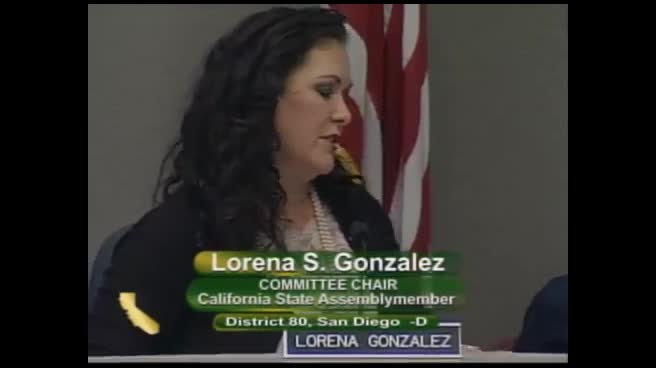
Lorena Gonzalez, Chair
ABPCA Bill Id:AB 2250
Author:(Ridley-Thomas) – As Introduced Ver:February 18, 2016
Policy Committee: | Elections and Redistricting | Vote: | 5 - 1 |
|
| ||
|
|
Urgency: Yes State Mandated Local Program: Yes Reimbursable: No
SUMMARY:
This bill:
- Prohibits, under state law, contributions, expenditures, and independent expenditures from foreign governments and foreign principals in connection with candidate elections, and prohibits a person or a committee from soliciting or accepting such contributions.
- Makes a violation of (1) a misdemeanor subject to fine equal to the amount of the contribution or expenditure.
FISCAL EFFECT:
Potential minor absorbable costs to the Fair Political Practices Commission (FPPC) and to local prosecutors for enforcement, offset to some extent by fine revenues.
COMMENTS:
Purpose. Since 1966, Federal law has prohibited foreign nationals from making contributions in connection with political campaigns in the U.S. Since federal election law does not explicitly provide for ballot measure elections, SB 109 (Kopp), Chapter 67, Statutes of 1997, prohibited foreign governments and foreign principals from making contributions, expenditures, and independent expenditures in connection with a state or local initiative, recall, or referendum measure.
According to the author, though federal law clearly prohibits foreign nationals from making contributions regarding candidate elections in California, the Federal Elections Commission, which is responsible for enforcing that law, has a significant backlog and frequently deadlocks on enforcement matters. The author asserts it is important for the FPPC to have concurrent jurisdiction over the issue of foreign contributions in candidate elections in order to best protect the integrity of California's elections.
Analysis Prepared by: Chuck Nicol / APPR. / (916) 319-2081
Date of Hearing: March 30, 2016
ASSEMBLY COMMITTEE ON ELECTIONS AND REDISTRICTING
Shirley Weber, Chair
ABPCA Bill Id:AB 2250 (
Author:Ridley-Thomas) – As Introduced Ver:February 18, 2016
SUBJECT: Political Reform Act of 1974: contribution limitations. Urgency.
SUMMARY: Prohibits, under state law, contributions, expenditures, and independent expenditures from foreign governments and foreign principals in connection with candidate elections. Specifically, this bill:
- Prohibits a foreign government or foreign principal, as defined, from making, directly or through any other person, a contribution, expenditure, or independent expenditure in connection with any election.
- Prohibits a person or a committee from soliciting or accepting a contribution from a foreign government or a foreign principal, as defined, in connection with an election.
- Makes corresponding and technical changes.
- Contains an urgency clause, allowing this bill to take effect immediately upon enactment.
EXISTING STATE LAW:
- Creates the Fair Political Practices Commission (FPPC), and makes it responsible for the impartial, effective administration and implementation of the Political Reform Act (PRA).
- Prohibits a foreign government or foreign principal from making, directly or through any other person, a contribution, expenditure, or independent expenditure in connection with the qualification or support of, or opposition to, a state or local ballot measure. Prohibits a person or a committee from soliciting or accepting a contribution from a foreign government or a foreign principal in connection with the qualification or support of, or opposition to, any state or local ballot measure.
- Defines “foreign principal,” for the purposes of these restrictions, to include the following:
- A foreign political party;
- A person outside the United States (US), unless either of the following is established:
- The person is an individual and a citizen of the US; or,
- The person is not an individual, and is organized under or created by the laws of the US or of any state or other place subject to the jurisdiction of the US and has its principal place of business within the US;
- A partnership, association, corporation, organization, or other combination of persons organized under the laws of or having its principal place of business in a foreign country; or,
- A domestic subsidiary of a foreign corporation if the decision to contribute or expend funds is made by an officer, director, or management employee of the foreign corporation who is neither a citizen of the US nor a lawfully admitted permanent resident of the US.
- Provides that these restrictions do not prohibit a contribution, expenditure, or independent expenditure made by a lawfully admitted permanent resident.
- Provides that a person who violates these provisions is guilty of a misdemeanor and shall be fined an amount equal to the amount contributed or expended.
- Defines “foreign principal,” for the purposes of these restrictions, to include the following:
- Permits the FPPC to impose administrative penalties of up to $5,000 per violation of the PRA.
EXISTING FEDERAL LAW:
- Prohibits a foreign national, directly or indirectly, from doing either of the following in connection with a federal, state, or local election:
- Making a contribution or donation of money or other thing of value, or an express or implied promise to make a contribution or donation; or,
- Making an expenditure, independent expenditure, or disbursement for an electioneering communication.
- Making a contribution or donation of money or other thing of value, or an express or implied promise to make a contribution or donation; or,
- Prohibits a person from soliciting, accepting, or receiving a contribution or donation made by a foreign national in connection with a federal, state, or local election.
- Defines “foreign national,” for the purposes of the prohibitions described above, as either of the following:
- A government of a foreign country; a foreign political party; or a partnership, association, corporation, organization, or other combination of persons organized under the laws of or having its principal place of business in a foreign country; or,
- An individual who is not a citizen or a national of the US and who is not lawfully admitted for permanent residence in the US.
- Establishes the Federal Election Commission (FEC), and makes it responsible for the administration and enforcement of the Federal Election Campaign Act (FECA), including the restrictions on contributions and expenditures by foreign nationals described above.
FISCAL EFFECT: Unknown. State-mandated local program; contains a crimes and infractions disclaimer.
COMMENTS:
- Purpose of the Bill: According to the author:
Since 1966, federal law has prohibited foreign nationals from making contributions in connection with political campaigns in the [US]. The purpose of this law is to protect the process of democratic self-governance for Americans.
Because federal election law does not explicitly provide for ballot measure elections, it is unclear whether this law applies to contributions made in connection with state or local ballot measure campaigns. In fact, the [FEC], which interprets and enforces the federal law, deadlocked on that question in a case last year involving contributions made in connection with a ballot measure in Los Angeles.
Due to the lack of clarity about whether the federal ban on contributions by foreign nationals applies to ballot measure elections, in 1997, California enacted Government Code Section 85320 (Section 85320) through the passage of SB 109 (Kopp), Chapter 67, Statutes of 1997. Section 85320 prohibits foreign governments and foreign principals from making contributions, expenditures, and independent expenditures in connection with a state or local initiative, recall, or referendum measure. Section 85320 additionally prohibits any person or committee from soliciting or accepting a contribution from a foreign government or principal in connection with a ballot measure campaign. Because Section 85320 was in place, the [FPPC] was able to bring an enforcement action concerning the foreign contributions made in connection with the ballot measure in Los Angeles. The FPPC ultimately imposed a fine of $61,500 in that case for violations of Section 85320 and other provisions of the [PRA]—the first case in which the FPPC brought an enforcement action for a violation of Section 85320.
While it is unclear whether federal law governs contributions made by foreign nationals in connection with ballot measure elections, it clearly prohibits foreign nationals from making contributions in connection with candidate elections in California. The FEC, however, which is responsible for enforcing that law, has a significant backlog and frequently deadlocks on enforcement matters. Furthermore, it is important for the FPPC to have concurrent jurisdiction over the issue of foreign contributions in elections in order to best protect the integrity of California elections.
- Foreign Campaign Spending, Federal Law, and Previous Legislation: As detailed above, federal law prohibits foreign nationals from making contributions in connection with federal, state, and local elections. According to information from the FEC, “[t]he ban on political contributions and expenditures by foreign nationals was first enacted in 1966 as part of the amendments to the Foreign Agents Registration Act (FARA), an ‘internal security’ statute. The goal of the FARA was to minimize foreign intervention in US elections by establishing a series of limitations on foreign nationals. These included registration requirements for the agents of foreign principals and a general prohibition on political contributions by foreign nationals. In 1974, the prohibition was incorporated into [FECA], giving the [FEC] jurisdiction over its enforcement and interpretation.”
Until 2002, the restriction on contributions by foreign nationals specifically applied to contributions made “in connection with an election to any political office.” Because that language was limited to elections for office, it was the position of the FEC that contributions from foreign nationals relating exclusively to ballot measures were not restricted by federal law. (In 2002, the restriction on foreign contributions was amended to make it applicable to any contribution made “in connection with a Federal, State, or local election,” though it is unclear whether that change was intended to cover ballot measure elections.)
In 1997, the Legislature approved and Governor Wilson signed SB 109 (Kopp), Chapter 67, Statutes of 1997, to prohibit foreign governments or foreign principals from making contributions, expenditures, or independent expenditures in connection with state or local ballot measures. The legislative history suggests that SB 109 did not seek to regulate foreign contributions made in connection with elections for office because such contributions were already restricted by federal law. Instead, SB 109 was limited to foreign spending in connection with ballot measure elections, thereby restricting foreign spending that was not covered by federal law.
Aside from the fact that state law is limited to foreign spending made in connection with ballot measures, state and federal law differ in one other important respect. While federal law restricts contributions and expenditures by foreign nationals, state law does not restrict contributions or expenditures by a foreign national who is an individual and who is legally present in the US. The initial version of SB 109 (and an unsuccessful bill from the prior legislative session) would have restricted contributions by foreign nationals who were legally present in the US, but that restriction was amended out of the bill to address opposition. - Recent Enforcement Action Related to Foreign Contributions: As noted above by the author of this bill, the FPPC recently brought an enforcement action for the first time in a case involving foreign contributions made in connection with a ballot measure. That enforcement action was initiated after the FEC considered an enforcement action of its own, and declined to take action in that case.
Measure B was a Los Angeles County initiative dealing with adult film production that appeared on the ballot at the November 2012 statewide general election. In October 2012, one of the proponents of Measure B filed a complaint with the FEC alleging that the committee opposing Measure B had received contributions made by a foreign national, and further alleging that those contributions violated FECA. In August 2014, the Associate General Counsel of the FEC recommended dismissing the complaint due in part to a “lack of clear legal guidance” on whether federal law restricts contributions made by foreign nationals in connection with ballot measures. The FEC was equally divided on whether to dismiss the complaint, and in March 2015, it ultimately closed the file on the complaint without taking further action.
In July 2015, after the FEC’s action to close its file, the FPPC received a sworn complaint in connection with the same matter. Last December, the FPPC reached a stipulated settlement in that case. As detailed in that settlement, Manwin USA, a Delaware-based subsidiary of Manwin International, a Luxembourg-based corporation, made contributions totaling more than $268,000 to the committee opposing Measure B. In addition, Froytal, a Cyprus-based subsidiary of Manwin International, made a contribution of $75,000 to the committee opposing Measure B, although that contribution subsequently was returned by the committee. Even though Manwin USA was incorporated under Delaware-law, its contributions violated California law because it was a subsidiary of a foreign corporation and the decision to contribute funds was made by an officer of the foreign corporation who was neither a US citizen nor a lawfully admitted permanent resident of the US.
The FPPC fined Manwin USA a total of $20,000 for the unlawful contributions that it made, fined Froytal $5,000 for the unlawful contribution that it made, and fined the committee opposing Measure B and its treasurer a total of $20,000 for accepting unlawful contributions made by foreign principals. The FPPC also imposed an additional $16,500 in fines for violations of reporting and disclosure laws that occurred in connection with the unlawful foreign contributions. - Political Reform Act of 1974: California voters passed an initiative, Proposition 9, in 1974 that created the FPPC and codified significant restrictions and prohibitions on candidates, officeholders and lobbyists. That initiative is commonly known as the PRA. Amendments to the PRA that are not submitted to the voters, such as those contained in this bill, must further the purposes of the initiative and require a two-thirds vote of both houses of the Legislature.
REGISTERED SUPPORT / OPPOSITION:
Support
Fair Political Practices Commission
Opposition
None on file.
Analysis Prepared by: Ethan Jones / E. & R. / (916) 319-2094
Discussed in Hearing
View Older Hearings
Bill Author

Bill Co-Author(s):