AB 2411: Transportation revenues.
- Session Year: 2015-2016
- House: Assembly
- Latest Version Date: 2016-05-27
Article XIX of the California Constitution restricts the expenditure of revenues from taxes imposed by the state on fuels used in motor vehicles upon public streets and highways to street and highway and certain mass transit purposes. Existing law requires certain miscellaneous revenues deposited in the State Highway Account that are not restricted as to expenditure by Article XIX of the California Constitution to be transferred to the Transportation Debt Service Fund in the State Transportation Fund, as specified, and requires the Controller to transfer from the fund to the General Fund an amount of those revenues necessary to offset the current year debt service made from the General Fund on general obligation transportation bonds issued pursuant to Proposition 116 of 1990.
This bill would would, on July 1, 2017, delete the transfer of these miscellaneous revenues to the Transportation Debt Service Fund, thereby eliminating the offsetting transfer to the General Fund for debt service on general obligation transportation bonds issued pursuant to Proposition 116 of 1990. The bill, subject to a specified exception, would would, on July 1, 2017, instead require the miscellaneous revenues to be retained in the State Highway Account and to be used solely for transportation expenditures consistent with the restrictions for expenditure of fuel tax revenues in Article XIX of the California Constitution.
Article XIX of the California Constitution restricts the expenditure of revenues from taxes imposed by the state on fuels used in motor vehicles upon public streets and highways to street and highway and certain mass transit purposes. Existing law requires certain miscellaneous revenues deposited in the State Highway Account that are not restricted as to expenditure by Article XIX of the California Constitution to be transferred to the Transportation Debt Service Fund in the State Transportation Fund, as specified, and requires the Controller to transfer from the fund to the General Fund an amount of those revenues necessary to offset the current year debt service made from the General Fund on general obligation transportation bonds issued pursuant to Proposition 116 of 1990.
This bill would delete the transfer of these miscellaneous revenues to the Transportation Debt Service Fund, thereby eliminating the offsetting transfer to the General Fund for debt service on general obligation transportation bonds issued pursuant to Proposition 116 of 1990. The bill, subject to a specified exception, would instead require the miscellaneous revenues to be retained in the State Highway Account and to be used solely for transportation expenditures consistent with the restrictions for expenditure of fuel tax revenues in Article XIX of the California Constitution.
(a)(1)The Transportation Debt Service Fund is hereby created in the State Treasury. Moneys in the fund shall be dedicated to all of the following purposes:
(A)Payment of debt service with respect to designated bonds, as defined in subdivision (c) of Section 16773, and as further provided in paragraph (3) and subdivision (b).
(B)To reimburse the General Fund for debt service with respect to bonds.
(C)To redeem or retire bonds, pursuant to Section 16774, maturing in a subsequent fiscal year.
(2)The bonds eligible under subparagraph (B) or (C) of paragraph (1) include bonds issued pursuant to the Clean Air and Transportation Improvement Act of 1990 (Part 11.5 (commencing with Section 99600) of Division 10 of the Public Utilities Code), the Passenger Rail and Clean Air Bond Act of 1990 (Chapter 17 (commencing with Section 2701) of Division 3 of the Streets and Highways Code), the Seismic Retrofit Bond Act of 1996 (Chapter 12.48 (commencing with Section 8879) of Division 1 of Title 2), and the Safe, Reliable High-Speed Passenger Train Bond Act for the 21st Century (Chapter 20 (commencing with Section 2704) of Division 3 of the Streets and Highways Code), and nondesignated bonds under Proposition 1B, as defined in subdivision (c) of Section 16773.
(3)(A)The Transportation Bond Direct Payment Account is hereby created in the State Treasury, as a subaccount within the Transportation Debt Service Fund, for the purpose of directly paying the debt service, as defined in paragraph (4), of designated bonds of Proposition 1B, as defined in subdivision (c) of Section 16773. Notwithstanding Section 13340, moneys in the Transportation Bond Direct Payment Account are continuously appropriated for payment of debt service with respect to designated bonds as provided in subdivision (c) of Section 16773. So long as any designated bonds remain outstanding, the moneys in the Transportation Bond Direct Payment Account may not be used for any other purpose, and may not be borrowed by or available for transfer to the General Fund pursuant to Section 16310 or any similar law, or to the General Cash Revolving Fund pursuant to Section 16381 or any similar law.
(B)Once the Treasurer makes a certification that payment of debt service with respect to all designated bonds has been paid or provided for, any remaining moneys in the Transportation Bond Direct Payment Account shall be transferred back to the Transportation Debt Service Fund.
(C)The moneys in the Transportation Bond Direct Payment Account shall be invested in the Surplus Money Investment Fund, and all investment earnings shall accrue to the account.
(D)The Controller may establish subaccounts within the Transportation Bond Direct Payment Account as may be required by the resolution, indenture, or other documents governing any designated bonds.
(4)For purposes of this subdivision and subdivision (b), and subdivision (c) of Section 16773, debt service means payment of all of the following costs and expenses with respect to any designated bond:
(A)The principal of and interest on the bonds.
(B)Amounts payable as the result of tender on any bonds, as described in clause (iv) of subparagraph (B) of paragraph (1) of subdivision (d) of Section 16731.
(C)Amounts payable under any contractual obligation of the state to repay advances and pay interest thereon under a credit enhancement or liquidity agreement as described in clause (iv) of subparagraph (B) of paragraph (1) of subdivision (d) of Section 16731.
(D)Any amount owed by the state to a counterparty after any offset for payments owed to the state on any hedging contract as described in subparagraph (A) of paragraph (2) of subdivision (d) of Section 16731.
(b)From the moneys transferred to the fund pursuant to paragraph (2) or (3) of subdivision (c) of Section 9400.4 of the Vehicle Code, there shall first be deposited into the Transportation Bond Direct Payment Account in each month sufficient funds to equal the amount designated in a certificate submitted by the Treasurer to the Controller and the Director of Finance at the start of each fiscal year, and as may be modified by the Treasurer thereafter upon issuance of any new issue of designated bonds or upon change in circumstances that requires such a modification. This certificate shall be calculated by the Treasurer to identify, for each month, the amount necessary to fund all of the debt service with respect to all designated bonds. This calculation shall be done in a manner provided in the resolution, indenture, or other documents governing the designated bonds. In the event that transfers to the Transportation Bond Direct Payment Account in any month are less than the amounts required in the Treasurers certificate, the shortfall shall carry over to be part of the required payment in the succeeding month or months.
(c)The state hereby covenants with the holders from time to time of any designated bonds that it will not alter, amend, or restrict the provisions of subdivision (c) of Section 16773 of the Government Code, or Sections 9400, 9400.1, 9400.4, and 42205 of the Vehicle Code, which provide directly or indirectly for the transfer of weight fees to the Transportation Debt Service Fund or the Transportation Bond Direct Payment Account, or subdivisions (a) and (b) of this section, or reduce the rate of imposition of vehicle weight fees under Sections 9400 and 9400.1 of the Vehicle Code as they existed on the date of the first issuance of any designated bonds, if that alteration, amendment, restriction, or reduction would result in projected weight fees for the next fiscal year determined by the Director of Finance being less than two times the maximum annual debt service with respect to all outstanding designated bonds, as such calculation is determined pursuant to the resolution, indenture, or other documents governing the designated bonds. The state may include this covenant in the resolution, indenture, or other documents governing the designated bonds.
(d)Once the required monthly deposit, including makeup of any shortfalls from any prior month, has been made pursuant to subdivision (b), from moneys transferred to the fund pursuant to paragraph (2) or (3) of subdivision (c) of Section 9400.4 of the Vehicle Code, or pursuant to Section 16965.1 or 63048.67, the Controller shall transfer as an expenditure reduction to the General Fund any amount necessary to offset the cost of current year debt service payments made from the General Fund with respect to any bonds issued pursuant to Proposition 192 (1996) and three-quarters of the amount of current year debt service payments made from the General Fund with respect to any nondesignated bonds, as defined in subdivision (c) of Section 16773, issued pursuant to Proposition 1B (2006). In the alternative, these funds may also be used to redeem or retire the applicable bonds, pursuant to Section 16774, maturing in a subsequent fiscal year as directed by the Director of Finance.
(e)From moneys transferred to the fund pursuant to Section 183.1 of the Streets and Highways Code, the Controller shall transfer as an expenditure reduction to the General Fund any amount necessary to offset the cost of current year debt service payments made from the General Fund with respect to any bonds issued pursuant to Proposition 116 (1990). In the alternative, these funds may also be used to redeem or retire the applicable bonds, pursuant to Section 16774, maturing in a subsequent fiscal year as directed by the Director of Finance.
(f)Once the required monthly deposit, including makeup of any shortfalls from any prior month, has been made pursuant to subdivision (b), from moneys transferred to the fund pursuant to paragraph (2) or (3) of subdivision (c) of Section 9400.4 of the Vehicle Code, or pursuant to Section 16965.1 or 63048.67, the Controller shall transfer as an expenditure reduction to the General Fund any amount necessary to offset the eligible cost of current year debt service payments made from the General Fund with respect to any bonds issued pursuant to Proposition 108 (1990) and Proposition 1A (2008), and one-quarter of the amount of current year debt service payments made from the General Fund with respect to any nondesignated bonds, as defined in subdivision (c) of Section 16773, issued pursuant to Proposition 1B (2006). The Department of Finance shall notify the Controller by July 30 of every year of the percentage of debt service that is expected to be paid in that fiscal year with respect to bond-funded projects that qualify as eligible guideway projects consistent with the requirements applicable to the expenditure of revenues under Article XIX of the California Constitution, and the Controller shall make payments only for those eligible projects. In the alternative, these funds may also be used to redeem or retire the applicable bonds, pursuant to Section 16774, maturing in a subsequent fiscal year as directed by the Director of Finance.
(g)On or before the second business day following the date on which transfers are made to the Transportation Debt Service Fund, and after the required monthly deposits for that month, including makeup of any shortfalls from any prior month, have been made to the Transportation Bond Direct Payment Account, the Controller shall transfer the funds designated for reimbursement of bond debt service with respect to nondesignated bonds, as defined in subdivision (c) of Section 16773, and other bonds identified in subdivisions (d), (e), and (f) in that month from the fund to the General Fund pursuant to this section.
(h)This section shall become inoperative on July 1, 2017, and, as of January 1, 2018, is repealed, unless a later enacted statute, that becomes operative on or before January 1, 2018, deletes or extends the dates on which it becomes inoperative and is repealed.
SEC. 2.Section 16965 is added to the Government Code, to read:16965.(a)(1)The Transportation Debt Service Fund is hereby created in the State Treasury. Moneys in the fund shall be dedicated to all of the following purposes:
(A)Payment of debt service with respect to designated bonds, as defined in subdivision (c) of Section 16773, and as further provided in paragraph (3) and subdivision (b).
(B)To reimburse the General Fund for debt service with respect to bonds.
(C)To redeem or retire bonds, pursuant to Section 16774, maturing in a subsequent fiscal year.
(2)The bonds eligible under subparagraph (B) or (C) of paragraph (1) include bonds issued pursuant to the Passenger Rail and Clean Air Bond Act of 1990 (Chapter 17 (commencing with Section 2701) of Division 3 of the Streets and Highways Code), the Seismic Retrofit Bond Act of 1996 (Chapter 12.48 (commencing with Section 8879) of Division 1 of Title 2), and the Safe, Reliable High-Speed Passenger Train Bond Act for the 21st Century (Chapter 20 (commencing with Section 2704) of Division 3 of the Streets and Highways Code), and nondesignated bonds under Proposition 1B, as defined in subdivision (c) of Section 16773.
(3)(A)The Transportation Bond Direct Payment Account is hereby created in the State Treasury, as a subaccount within the Transportation Debt Service Fund, for the purpose of directly paying the debt service, as defined in paragraph (4), of designated bonds of Proposition 1B, as defined in subdivision (c) of Section 16773. Notwithstanding Section 13340, moneys in the Transportation Bond Direct Payment Account are continuously appropriated for payment of debt service with respect to designated bonds as provided in subdivision (c) of Section 16773. So long as any designated bonds remain outstanding, the moneys in the Transportation Bond Direct Payment Account may not be used for any other purpose, and may not be borrowed by or available for transfer to the General Fund pursuant to Section 16310 or any similar law, or to the General Cash Revolving Fund pursuant to Section 16381 or any similar law.
(B)Once the Treasurer makes a certification that payment of debt service with respect to all designated bonds has been paid or provided for, any remaining moneys in the Transportation Bond Direct Payment Account shall be transferred back to the Transportation Debt Service Fund.
(C)The moneys in the Transportation Bond Direct Payment Account shall be invested in the Surplus Money Investment Fund, and all investment earnings shall accrue to the account.
(D)The Controller may establish subaccounts within the Transportation Bond Direct Payment Account as may be required by the resolution, indenture, or other documents governing any designated bonds.
(4)For purposes of this subdivision and subdivision (b), and subdivision (c) of Section 16773, debt service means payment of all of the following costs and expenses with respect to any designated bond:
(A)The principal of and interest on the bonds.
(B)Amounts payable as the result of tender on any bonds, as described in clause (iv) of subparagraph (B) of paragraph (1) of subdivision (d) of Section 16731.
(C)Amounts payable under any contractual obligation of the state to repay advances and pay interest thereon under a credit enhancement or liquidity agreement as described in clause (iv) of subparagraph (B) of paragraph (1) of subdivision (d) of Section 16731.
(D)Any amount owed by the state to a counterparty after any offset for payments owed to the state on any hedging contract as described in subparagraph (A) of paragraph (2) of subdivision (d) of Section 16731.
(b)From the moneys transferred to the fund pursuant to paragraph (2) or (3) of subdivision (c) of Section 9400.4 of the Vehicle Code, there shall first be deposited into the Transportation Bond Direct Payment Account in each month sufficient funds to equal the amount designated in a certificate submitted by the Treasurer to the Controller and the Director of Finance at the start of each fiscal year, and as may be modified by the Treasurer thereafter upon issuance of any new issue of designated bonds or upon change in circumstances that requires such a modification. This certificate shall be calculated by the Treasurer to identify, for each month, the amount necessary to fund all of the debt service with respect to all designated bonds. This calculation shall be done in a manner provided in the resolution, indenture, or other documents governing the designated bonds. In the event that transfers to the Transportation Bond Direct Payment Account in any month are less than the amounts required in the Treasurers certificate, the shortfall shall carry over to be part of the required payment in the succeeding month or months.
(c)The state hereby covenants with the holders from time to time of any designated bonds that it will not alter, amend, or restrict the provisions of subdivision (c) of Section 16773 of the Government Code, or Sections 9400, 9400.1, 9400.4, and 42205 of the Vehicle Code, which provide directly or indirectly for the transfer of weight fees to the Transportation Debt Service Fund or the Transportation Bond Direct Payment Account, or subdivisions (a) and (b) of this section, or reduce the rate of imposition of vehicle weight fees under Sections 9400 and 9400.1 of the Vehicle Code as they existed on the date of the first issuance of any designated bonds, if that alteration, amendment, restriction, or reduction would result in projected weight fees for the next fiscal year determined by the Director of Finance being less than two times the maximum annual debt service with respect to all outstanding designated bonds, as such calculation is determined pursuant to the resolution, indenture, or other documents governing the designated bonds. The state may include this covenant in the resolution, indenture, or other documents governing the designated bonds.
(d)Once the required monthly deposit, including makeup of any shortfalls from any prior month, has been made pursuant to subdivision (b), from moneys transferred to the fund pursuant to paragraph (2) or (3) of subdivision (c) of Section 9400.4 of the Vehicle Code, or pursuant to Section 16965.1 or 63048.67, the Controller shall transfer as an expenditure reduction to the General Fund any amount necessary to offset the cost of current year debt service payments made from the General Fund with respect to any bonds issued pursuant to Proposition 192 (1996) and three-quarters of the amount of current year debt service payments made from the General Fund with respect to any nondesignated bonds, as defined in subdivision (c) of Section 16773, issued pursuant to Proposition 1B (2006). In the alternative, these funds may also be used to redeem or retire the applicable bonds, pursuant to Section 16774, maturing in a subsequent fiscal year as directed by the Director of Finance.
(e)Once the required monthly deposit, including makeup of any shortfalls from any prior month, has been made pursuant to subdivision (b), from moneys transferred to the fund pursuant to paragraph (2) or (3) of subdivision (c) of Section 9400.4 of the Vehicle Code, or pursuant to Section 16965.1 or 63048.67, the Controller shall transfer as an expenditure reduction to the General Fund any amount necessary to offset the eligible cost of current year debt service payments made from the General Fund with respect to any bonds issued pursuant to Proposition 108 (1990) and Proposition 1A (2008), and one-quarter of the amount of current year debt service payments made from the General Fund with respect to any nondesignated bonds, as defined in subdivision (c) of Section 16773, issued pursuant to Proposition 1B (2006). The Department of Finance shall notify the Controller by July 30 of every year of the percentage of debt service that is expected to be paid in that fiscal year with respect to bond-funded projects that qualify as eligible guideway projects consistent with the requirements applicable to the expenditure of revenues under Article XIX of the California Constitution, and the Controller shall make payments only for those eligible projects. In the alternative, these funds may also be used to redeem or retire the applicable bonds, pursuant to Section 16774, maturing in a subsequent fiscal year as directed by the Director of Finance.
(f)On or before the second business day following the date on which transfers are made to the Transportation Debt Service Fund, and after the required monthly deposits for that month, including makeup of any shortfalls from any prior month, have been made to the Transportation Bond Direct Payment Account, the Controller shall transfer the funds designated for reimbursement of bond debt service with respect to nondesignated bonds, as defined in subdivision (c) of Section 16773, and other bonds identified in subdivisions (d) and (e) in that month from the fund to the General Fund pursuant to this section.
(g)This section shall become operative on July 1, 2017.
SEC. 3.Section 183.1 of the Streets and Highways Code is amended to read:183.1.(a)Notwithstanding subdivision (a) of Section 182 or any other provision of law, money deposited into the account that is not subject to Article XIX of the California Constitution, including, but not limited to, money that is derived from the sale of documents, charges for miscellaneous services to the public, condemnation deposits fund investments, rental of state property, or any other miscellaneous uses of property or money, may be used for any transportation purpose authorized by statute, upon appropriation by the Legislature or, after transfer to another fund, upon appropriation by the Legislature from that fund.
(b)Commencing with the 201314 fiscal year, and not later than November 1 of each fiscal year thereafter, based on prior year financial statements, the Controller shall transfer the funds identified in subdivision (a) for the prior fiscal year from the State Highway Account to the Transportation Debt Service Fund in the State Transportation Fund, and those funds are continuously appropriated for the purposes specified for the Transportation Debt Service Fund.
(c)This section shall become inoperative on July 1, 2017, and, as of January 1, 2018, is repealed, unless a later enacted statute, that becomes operative on or before January 1, 2018, deletes or extends the dates on which it becomes inoperative and is repealed.
SEC. 4.Section 183.1 is added to the Streets and Highways Code, to read:183.1.(a)Except as otherwise provided in Section 54237.7 of the Government Code, money deposited into the account that is not subject to Article XIX of the California Constitution, including, but not limited to, money that is derived from the sale of documents, charges for miscellaneous services to the public, condemnation deposits fund investments, rental of state property, or any other miscellaneous uses of property or money, shall be used solely for transportation expenditures consistent with Section 2 of Article XIX of the California Constitution.
(b)This section shall become operative on July 1, 2017.
SECTION 1.Section 16965 of the Government Code is amended to read:16965.(a)(1)The Transportation Debt Service Fund is hereby created in the State Treasury. Moneys in the fund shall be dedicated to all of the following purposes:
(A)Payment of debt service with respect to designated bonds, as defined in subdivision (c) of Section 16773, and as further provided in paragraph (3) and subdivision (b).
(B)To reimburse the General Fund for debt service with respect to bonds.
(C)To redeem or retire bonds, pursuant to Section 16774, maturing in a subsequent fiscal year.
(2)The bonds eligible under subparagraph (B) or (C) of paragraph (1) include bonds issued pursuant to the Passenger Rail and Clean Air Bond Act of 1990 (Chapter 17 (commencing with Section 2701) of Division 3 of the Streets and Highways Code), the Seismic Retrofit Bond Act of 1996 (Chapter 12.48 (commencing with Section 8879) of Division 1 of Title 2), and the Safe, Reliable High-Speed Passenger Train Bond Act for the 21st Century (Chapter 20 (commencing with Section 2704) of Division 3 of the Streets and Highways Code), and nondesignated bonds under Proposition 1B, as defined in subdivision (c) of Section 16773.
(3)(A)The Transportation Bond Direct Payment Account is hereby created in the State Treasury, as a subaccount within the Transportation Debt Service Fund, for the purpose of directly paying the debt service, as defined in paragraph (4), of designated bonds of Proposition 1B, as defined in subdivision (c) of Section 16773. Notwithstanding Section 13340, moneys in the Transportation Bond Direct Payment Account are continuously appropriated for payment of debt service with respect to designated bonds as provided in subdivision (c) of Section 16773. So long as any designated bonds remain outstanding, the moneys in the Transportation Bond Direct Payment Account may not be used for any other purpose, and may not be borrowed by or available for transfer to the General Fund pursuant to Section 16310 or any similar law, or to the General Cash Revolving Fund pursuant to Section 16381 or any similar law.
(B)Once the Treasurer makes a certification that payment of debt service with respect to all designated bonds has been paid or provided for, any remaining moneys in the Transportation Bond Direct Payment Account shall be transferred back to the Transportation Debt Service Fund.
(C)The moneys in the Transportation Bond Direct Payment Account shall be invested in the Surplus Money Investment Fund, and all investment earnings shall accrue to the account.
(D)The Controller may establish subaccounts within the Transportation Bond Direct Payment Account as may be required by the resolution, indenture, or other documents governing any designated bonds.
(4)For purposes of this subdivision and subdivision (b), and subdivision (c) of Section 16773, debt service means payment of all of the following costs and expenses with respect to any designated bond:
(A)The principal of and interest on the bonds.
(B)Amounts payable as the result of tender on any bonds, as described in clause (iv) of subparagraph (B) of paragraph (1) of subdivision (d) of Section 16731.
(C)Amounts payable under any contractual obligation of the state to repay advances and pay interest thereon under a credit enhancement or liquidity agreement as described in clause (iv) of subparagraph (B) of paragraph (1) of subdivision (d) of Section 16731.
(D)Any amount owed by the state to a counterparty after any offset for payments owed to the state on any hedging contract as described in subparagraph (A) of paragraph (2) of subdivision (d) of Section 16731.
(b)From the moneys transferred to the fund pursuant to paragraph (2) or (3) of subdivision (c) of Section 9400.4 of the Vehicle Code, there shall first be deposited into the Transportation Bond Direct Payment Account in each month sufficient funds to equal the amount designated in a certificate submitted by the Treasurer to the Controller and the Director of Finance at the start of each fiscal year, and as may be modified by the Treasurer thereafter upon issuance of any new issue of designated bonds or upon change in circumstances that requires such a modification. This certificate shall be calculated by the Treasurer to identify, for each month, the amount necessary to fund all of the debt service with respect to all designated bonds. This calculation shall be done in a manner provided in the resolution, indenture, or other documents governing the designated bonds. In the event that transfers to the Transportation Bond Direct Payment Account in any month are less than the amounts required in the Treasurers certificate, the shortfall shall carry over to be part of the required payment in the succeeding month or months.
(c)The state hereby covenants with the holders from time to time of any designated bonds that it will not alter, amend, or restrict the provisions of subdivision (c) of Section 16773 of the Government Code, or Sections 9400, 9400.1, 9400.4, and 42205 of the Vehicle Code, which provide directly or indirectly for the transfer of weight fees to the Transportation Debt Service Fund or the Transportation Bond Direct Payment Account, or subdivisions (a) and (b) of this section, or reduce the rate of imposition of vehicle weight fees under Sections 9400 and 9400.1 of the Vehicle Code as they existed on the date of the first issuance of any designated bonds, if that alteration, amendment, restriction, or reduction would result in projected weight fees for the next fiscal year determined by the Director of Finance being less than two times the maximum annual debt service with respect to all outstanding designated bonds, as such calculation is determined pursuant to the resolution, indenture, or other documents governing the designated bonds. The state may include this covenant in the resolution, indenture, or other documents governing the designated bonds.
(d)Once the required monthly deposit, including makeup of any shortfalls from any prior month, has been made pursuant to subdivision (b), from moneys transferred to the fund pursuant to paragraph (2) or (3) of subdivision (c) of Section 9400.4 of the Vehicle Code, or pursuant to Section 16965.1 or 63048.67, the Controller shall transfer as an expenditure reduction to the General Fund any amount necessary to offset the cost of current year debt service payments made from the General Fund with respect to any bonds issued pursuant to Proposition 192 (1996) and three-quarters of the amount of current year debt service payments made from the General Fund with respect to any nondesignated bonds, as defined in subdivision (c) of Section 16773, issued pursuant to Proposition 1B (2006). In the alternative, these funds may also be used to redeem or retire the applicable bonds, pursuant to Section 16774, maturing in a subsequent fiscal year as directed by the Director of Finance.
(e)Once the required monthly deposit, including makeup of any shortfalls from any prior month, has been made pursuant to subdivision (b), from moneys transferred to the fund pursuant to paragraph (2) or (3) of subdivision (c) of Section 9400.4 of the Vehicle Code, or pursuant to Section 16965.1 or 63048.67, the Controller shall transfer as an expenditure reduction to the General Fund any amount necessary to offset the eligible cost of current year debt service payments made from the General Fund with respect to any bonds issued pursuant to Proposition 108 (1990) and Proposition 1A (2008), and one-quarter of the amount of current year debt service payments made from the General Fund with respect to any nondesignated bonds, as defined in subdivision (c) of Section 16773, issued pursuant to Proposition 1B (2006). The Department of Finance shall notify the Controller by July 30 of every year of the percentage of debt service that is expected to be paid in that fiscal year with respect to bond-funded projects that qualify as eligible guideway projects consistent with the requirements applicable to the expenditure of revenues under Article XIX of the California Constitution, and the Controller shall make payments only for those eligible projects. In the alternative, these funds may also be used to redeem or retire the applicable bonds, pursuant to Section 16774, maturing in a subsequent fiscal year as directed by the Director of Finance.
(f)On or before the second business day following the date on which transfers are made to the Transportation Debt Service Fund, and after the required monthly deposits for that month, including makeup of any shortfalls from any prior month, have been made to the Transportation Bond Direct Payment Account, the Controller shall transfer the funds designated for reimbursement of bond debt service with respect to nondesignated bonds, as defined in subdivision (c) of Section 16773, and other bonds identified in subdivisions (d) and (e) in that month from the fund to the General Fund pursuant to this section.
SEC. 2.Section 183.1 of the Streets and Highways Code is amended to read:183.1.Except as otherwise provided in Section 54237.7 of the Government Code, money deposited into the account that is not subject to Article XIX of the California Constitution, including, but not limited to, money that is derived from the sale of documents, charges for miscellaneous services to the public, condemnation deposits fund investments, rental of state property, or any other miscellaneous uses of property or money, shall be used solely for transportation expenditures consistent with Section 2 of Article XIX of the California Constitution.
(a)(1)The Transportation Debt Service Fund is hereby created in the State Treasury. Moneys in the fund shall be dedicated to all of the following purposes:
(A)Payment of debt service with respect to designated bonds, as defined in subdivision (c) of Section 16773, and as further provided in paragraph (3) and subdivision (b).
(B)To reimburse the General Fund for debt service with respect to bonds.
(C)To redeem or retire bonds, pursuant to Section 16774, maturing in a subsequent fiscal year.
(2)The bonds eligible under subparagraph (B) or (C) of paragraph (1) include bonds issued pursuant to the Clean Air and Transportation Improvement Act of 1990 (Part 11.5 (commencing with Section 99600) of Division 10 of the Public Utilities Code), the Passenger Rail and Clean Air Bond Act of 1990 (Chapter 17 (commencing with Section 2701) of Division 3 of the Streets and Highways Code), the Seismic Retrofit Bond Act of 1996 (Chapter 12.48 (commencing with Section 8879) of Division 1 of Title 2), and the Safe, Reliable High-Speed Passenger Train Bond Act for the 21st Century (Chapter 20 (commencing with Section 2704) of Division 3 of the Streets and Highways Code), and nondesignated bonds under Proposition 1B, as defined in subdivision (c) of Section 16773.
(3)(A)The Transportation Bond Direct Payment Account is hereby created in the State Treasury, as a subaccount within the Transportation Debt Service Fund, for the purpose of directly paying the debt service, as defined in paragraph (4), of designated bonds of Proposition 1B, as defined in subdivision (c) of Section 16773. Notwithstanding Section 13340, moneys in the Transportation Bond Direct Payment Account are continuously appropriated for payment of debt service with respect to designated bonds as provided in subdivision (c) of Section 16773. So long as any designated bonds remain outstanding, the moneys in the Transportation Bond Direct Payment Account may not be used for any other purpose, and may not be borrowed by or available for transfer to the General Fund pursuant to Section 16310 or any similar law, or to the General Cash Revolving Fund pursuant to Section 16381 or any similar law.
(B)Once the Treasurer makes a certification that payment of debt service with respect to all designated bonds has been paid or provided for, any remaining moneys in the Transportation Bond Direct Payment Account shall be transferred back to the Transportation Debt Service Fund.
(C)The moneys in the Transportation Bond Direct Payment Account shall be invested in the Surplus Money Investment Fund, and all investment earnings shall accrue to the account.
(D)The Controller may establish subaccounts within the Transportation Bond Direct Payment Account as may be required by the resolution, indenture, or other documents governing any designated bonds.
(4)For purposes of this subdivision and subdivision (b), and subdivision (c) of Section 16773, debt service means payment of all of the following costs and expenses with respect to any designated bond:
(A)The principal of and interest on the bonds.
(B)Amounts payable as the result of tender on any bonds, as described in clause (iv) of subparagraph (B) of paragraph (1) of subdivision (d) of Section 16731.
(C)Amounts payable under any contractual obligation of the state to repay advances and pay interest thereon under a credit enhancement or liquidity agreement as described in clause (iv) of subparagraph (B) of paragraph (1) of subdivision (d) of Section 16731.
(D)Any amount owed by the state to a counterparty after any offset for payments owed to the state on any hedging contract as described in subparagraph (A) of paragraph (2) of subdivision (d) of Section 16731.
(b)From the moneys transferred to the fund pursuant to paragraph (2) or (3) of subdivision (c) of Section 9400.4 of the Vehicle Code, there shall first be deposited into the Transportation Bond Direct Payment Account in each month sufficient funds to equal the amount designated in a certificate submitted by the Treasurer to the Controller and the Director of Finance at the start of each fiscal year, and as may be modified by the Treasurer thereafter upon issuance of any new issue of designated bonds or upon change in circumstances that requires such a modification. This certificate shall be calculated by the Treasurer to identify, for each month, the amount necessary to fund all of the debt service with respect to all designated bonds. This calculation shall be done in a manner provided in the resolution, indenture, or other documents governing the designated bonds. In the event that transfers to the Transportation Bond Direct Payment Account in any month are less than the amounts required in the Treasurers certificate, the shortfall shall carry over to be part of the required payment in the succeeding month or months.
(c)The state hereby covenants with the holders from time to time of any designated bonds that it will not alter, amend, or restrict the provisions of subdivision (c) of Section 16773 of the Government Code, or Sections 9400, 9400.1, 9400.4, and 42205 of the Vehicle Code, which provide directly or indirectly for the transfer of weight fees to the Transportation Debt Service Fund or the Transportation Bond Direct Payment Account, or subdivisions (a) and (b) of this section, or reduce the rate of imposition of vehicle weight fees under Sections 9400 and 9400.1 of the Vehicle Code as they existed on the date of the first issuance of any designated bonds, if that alteration, amendment, restriction, or reduction would result in projected weight fees for the next fiscal year determined by the Director of Finance being less than two times the maximum annual debt service with respect to all outstanding designated bonds, as such calculation is determined pursuant to the resolution, indenture, or other documents governing the designated bonds. The state may include this covenant in the resolution, indenture, or other documents governing the designated bonds.
(d)Once the required monthly deposit, including makeup of any shortfalls from any prior month, has been made pursuant to subdivision (b), from moneys transferred to the fund pursuant to paragraph (2) or (3) of subdivision (c) of Section 9400.4 of the Vehicle Code, or pursuant to Section 16965.1 or 63048.67, the Controller shall transfer as an expenditure reduction to the General Fund any amount necessary to offset the cost of current year debt service payments made from the General Fund with respect to any bonds issued pursuant to Proposition 192 (1996) and three-quarters of the amount of current year debt service payments made from the General Fund with respect to any nondesignated bonds, as defined in subdivision (c) of Section 16773, issued pursuant to Proposition 1B (2006). In the alternative, these funds may also be used to redeem or retire the applicable bonds, pursuant to Section 16774, maturing in a subsequent fiscal year as directed by the Director of Finance.
(e)From moneys transferred to the fund pursuant to Section 183.1 of the Streets and Highways Code, the Controller shall transfer as an expenditure reduction to the General Fund any amount necessary to offset the cost of current year debt service payments made from the General Fund with respect to any bonds issued pursuant to Proposition 116 (1990). In the alternative, these funds may also be used to redeem or retire the applicable bonds, pursuant to Section 16774, maturing in a subsequent fiscal year as directed by the Director of Finance.
(f)
(e)Once the required monthly deposit, including makeup of any shortfalls from any prior month, has been made pursuant to subdivision (b), from moneys transferred to the fund pursuant to paragraph (2) or (3) of subdivision (c) of Section 9400.4 of the Vehicle Code, or pursuant to Section 16965.1 or 63048.67, the Controller shall transfer as an expenditure reduction to the General Fund any amount necessary to offset the eligible cost of current year debt service payments made from the General Fund with respect to any bonds issued pursuant to Proposition 108 (1990) and Proposition 1A (2008), and one-quarter of the amount of current year debt service payments made from the General Fund with respect to any nondesignated bonds, as defined in subdivision (c) of Section 16773, issued pursuant to Proposition 1B (2006). The Department of Finance shall notify the Controller by July 30 of every year of the percentage of debt service that is expected to be paid in that fiscal year with respect to bond-funded projects that qualify as eligible guideway projects consistent with the requirements applicable to the expenditure of revenues under Article XIX of the California Constitution, and the Controller shall make payments only for those eligible projects. In the alternative, these funds may also be used to redeem or retire the applicable bonds, pursuant to Section 16774, maturing in a subsequent fiscal year as directed by the Director of Finance.
(g)
(f)On or before the second business day following the date on which transfers are made to the Transportation Debt Service Fund, and after the required monthly deposits for that month, including makeup of any shortfalls from any prior month, have been made to the Transportation Bond Direct Payment Account, the Controller shall transfer the funds designated for reimbursement of bond debt service with respect to nondesignated bonds, as defined in subdivision (c) of Section 16773, and other bonds identified in subdivisions (d), (e), and (f) (d) and (e) in that month from the fund to the General Fund pursuant to this section.
SEC. 2.Section 183.1 of the Streets and Highways Code is amended to read:183.1.(a)Notwithstanding subdivision (a) of Section 182 or any other provision of law, money Except as otherwise provided in Section 54237.7 of the Government Code, money deposited into the account that is not subject to Article XIX of the California Constitution, including, but not limited to, money that is derived from the sale of documents, charges for miscellaneous services to the public, condemnation deposits fund investments, rental of state property, or any other miscellaneous uses of property or money, may be used for any transportation purpose authorized by statute, upon appropriation by the Legislature or, after transfer to another fund, upon appropriation by the Legislature from that fund. shall be used solely for transportation expenditures consistent with Section 2 of Article XIX of the California Constitution.
(b)Commencing with the 201314 fiscal year, and not later than November 1 of each fiscal year thereafter, based on prior year financial statements, the Controller shall transfer the funds identified in subdivision (a) for the prior fiscal year from the State Highway Account to the Transportation Debt Service Fund in the State Transportation Fund, and those funds are continuously appropriated for the purposes specified for the Transportation Debt Service Fund.
|
Date
|
Status
|
|---|---|
| Feb 19, 2016 | Introduced. To print. |
| Feb 21, 2016 | From printer. May be heard in committee March 22. |
| Feb 22, 2016 | Read first time. |
| Mar 8, 2016 | Referred to Com. on TRANS. |
| Apr 5, 2016 | From committee: Do pass and re-refer to Com. on APPR. with recommendation: To Consent Calendar. (Ayes 16. Noes 0.) (April 4). Re-referred to Com. on APPR. |
| Apr 20, 2016 | In committee: Set, first hearing. Referred to APPR. suspense file. |
| May 27, 2016 | From committee: Amend, and do pass as amended. (Ayes 20. Noes 0.) (May 27). |
| May 27, 2016 | Read second time and amended. Ordered returned to second reading. |
| May 31, 2016 | Read second time. Ordered to third reading. |
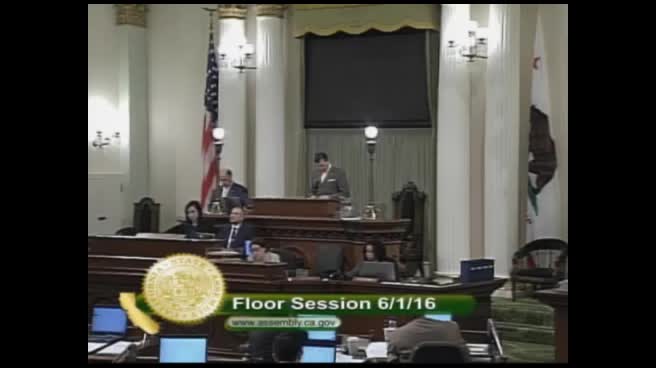
| Jun 1, 2016 | Read third time. Passed. Ordered to the Senate. |
| Jun 1, 2016 | Read third time. Passed. Ordered to the Senate. (Ayes 80. Noes 0. Page 5107.) |
| Jun 1, 2016 | Read third time. Passed. Ordered to the Senate. (Ayes 80. Noes 0.) |
| Jun 2, 2016 | In Senate. Read first time. To Com. on RLS. for assignment. |
| Jun 9, 2016 | Referred to Com. on T. & H. |
|
Date
|
Description
|
Location
|
Votes
|
|
|---|---|---|---|---|
| Jun 1, 2016 | AB 2411 FRAZIER Assembly Third Reading | Assembly Floor |
Passed |
|
| May 27, 2016 | Do pass as amended. | Assembly Standing Committee on Appropriations |
Passed |
|
| Apr 4, 2016 | Do pass and be re-referred to the Committee on [Appropriations] with recommendation: To Consent Calendar | Assembly Standing Committee on Transportation |
Passed |
This list shows positions taken on this bill by organizations on the date displayed, which is linked to the original source.
Positions by individuals are not included.
|
Organization
|
Position
|
Date
|
|---|---|---|
| Automobile Club of Southern California | ** Support | Jun 1, 2016 |
ASSEMBLY THIRD READING
ATR Bill Id:AB 2411
Author:(Frazier)
As Amended Ver:May 27, 2016
Majority vote
Committee | Votes | Ayes | Noes |
Transportation | 16-0 | Frazier, Linder, Baker, Bloom, Brown, Chu, Daly, Dodd, Eduardo Garcia, Gomez, Kim, Mathis, Medina, Melendez, Nazarian, O'Donnell | |
Appropriations | 20-0 | Gonzalez, Bigelow, Bloom, Bonilla, Bonta, Calderon, Chang, Daly, Eggman, Gallagher, Eduardo Garcia, Roger Hernández, Holden, Jones, Obernolte, Quirk, Santiago, Wagner, Weber, Wood |
|
SUMMARY: Beginning July 1, 2017, limits the use of miscellaneous revenue, for example, from the sale of surplus property, only to purposes authorized in California Constitution Article XIX. Specifically, this bill:
- Deletes the transfer of miscellaneous revenues from the State Highway Account to the Transportation Debt Service Fund.
- Instead, requires the miscellaneous revenues to be retained in the State Highway Account and to be used solely for purposes delineated in California Constitution Article XIX.
- Exempts proceeds from the sale of properties in the State Route 710 corridor from these provisions.
- Makes these provisions prospective, beginning July 1, 2017.
EXISTING LAW:
- Provided for in the Constitution of California, restricts the use of revenues from taxes imposed by the state on motor vehicle fuels to the research, planning, construction, improvement, maintenance, and operation of public streets and highways and exclusive public mass transit guideways, including mitigation of their environmental effects.
- Requires miscellaneous revenue deposited into the State Highway Account, for example, from the sale of documents, rental of state property, or sale of state property (except for the sale of property along the State Route 710 corridor) to be transferred from the State Highway Account to the Transportation Debt Service Fund to pay debt service on general obligation bonds authorized by passage of Proposition 116 in 1990, the Clean Air and Transportation Improvement of 1990.
- Creates the State Route 710 Rehabilitation Account and requires the California Department of Transportation (Caltrans) to deposit proceeds from sales of properties it owns within the State Route 710 corridor into the account to be used for allocation by the California Transportation Commission exclusively to fund projects located in the that corridor.
FISCAL EFFECT: According to the Assembly Appropriations Committee, miscellaneous revenues to the State Highway Account have ranged from $60 million to $70 million annually in the last four years. This bill, beginning in Fiscal year 2017-18, increases transportation funding by this amount and requires a like amount of General Fund revenues to instead pay transportation bond debt service.
COMMENTS: Caltrans gets the majority of its funding from gas tax revenue. This revenue is protected by California Constitution Article XIX for specific transportation uses. Long-standing policy held that any money generated by Caltrans, for example, from document sales, property rentals, or surplus property sales, was similarly California Constitution Article XIX protected. This policy began to degrade over time as the State's General Fund began needing support. Increasingly, miscellaneous revenue sources that were not specifically identified in the Constitution were transferred away from transportation and put to General Fund uses.
Today, this updated policy is statutorily established and revenue derived from these miscellaneous income sources, approximately $70 million annually, is used to provide General Fund relief by paying debt service on transportation-related general obligation bonds, specifically on bonds authorized by passage of Proposition 116 in 1990, the Clean Air and Transportation Improvement of 1990.
The General Fund is no longer in crisis. Funding for transportation, however, is. The Governor declared a $6 billion annual unfunded need for state highways alone and local streets and roads needs are greater still. This bill stops the transfer of miscellaneous revenue from the State Highway Account to the Transportation Debt Service Fund for General Fund relief. At a time when the Legislature is considering major transportation funding proposals, the diversion of transportation revenue to the General Fund seems appropriate.
Analysis Prepared by: Janet Dawson / TRANS. / (916) 319-2093 FN: 0003189
Date of Hearing: April 20, 2016
ASSEMBLY COMMITTEE ON APPROPRIATIONS
Lorena Gonzalez, Chair
ABPCA Bill Id:AB 2411
Author:(Frazier) – As Introduced Ver:February 19, 2016
Policy Committee: | Transportation | Vote: | 16 - 0 |
|
|
Urgency: No State Mandated Local Program: No Reimbursable: No
SUMMARY:
This bill deletes the statutory transfer of miscellaneous revenues within the State Highway Account (SHA) to the Transportation Debt Service Fund, and instead, retains these revenues in the SHA, to be used solely for purposes delineated in Article XIX of the California Constitution.
FISCAL EFFECT:
Miscellaneous revenues to the SHA have ranged from $60 million to $70 million annually in the last four years. This bill would increase transportation funding by this amount and require a like amount of General Fund revenues to instead pay transportation bond debt service.
COMMENTS:
Background and Purpose. Article XIX of the state Constitution restricts the use of revenues from taxes imposed by the state on motor vehicle fuels to the research, planning, construction, improvement, maintenance, and operation of public streets and highways and exclusive public mass transit guideways, including mitigation of their environmental effects. These taxes are the main state source Caltrans' funding. Long-standing policy held that any money generated by Caltrans, for example, from document sales, property rentals, or surplus property sales (i.e miscellaneous revenue), was similarly Article XIX protected. To address the state's recent budget challenges, however, budget trailer bill legislation instead directed miscellaneous revenues toward retirement of debt on state transportation bonds.
The author argues that, with the state's General Fund budget no longer in crisis and the state's large and growing unmet need for transportation funding, these annual revenues should once again be used for transportation needs.
Analysis Prepared by: Chuck Nicol / APPR. / (916) 319-2081
Date of Hearing: April 4, 2016
ASSEMBLY COMMITTEE ON TRANSPORTATION
Jim Frazier, Chair
ABPCA Bill Id:AB 2411 (
Author:Frazier) – As Introduced Ver:February 19, 2016
SUBJECT: Transportation revenues
SUMMARY: Limits the use of miscellaneous revenue, for example, from the sale of surplus property, only to purposes authorized in Article XIX of the California Constitution. Specifically, this bill:
- Deletes the transfer of miscellaneous revenues from the State Highway Account to the Transportation Debt Service Fund.
- Instead, requires the miscellaneous revenues to be retained in the State Highway Account and to be used solely for purposes delineated in Article XIX of the California Constitution.
- Exempts proceeds from the sale of properties in the State Route 710 corridor from these provisions.
EXISTING LAW:
- Provided for in the Constitution of California, restricts the use of revenues from taxes imposed by the state on motor vehicle fuels to the research, planning, construction, improvement, maintenance, and operation of public streets and highways and exclusive public mass transit guideways, including mitigation of their environmental effects.
- Requires miscellaneous revenue deposited into the State Highway Account, for example, from the sale of documents, rental of state property, or sale of state property (except for the sale of property along the State Route 710 corridor) to be transferred from the State Highway Account to the Transportation Debt Service Fund to pay debt service on general obligation bonds authorized by passage of Proposition 116 in 1990, the Clean Air and Transportation Improvement of 1990.
- Creates the State Route 710 Rehabilitation Account and requires the California Department of Transportation (Caltrans) to deposit proceeds from sales of properties it owns within the State Route 710 corridor into the account to be used for allocation by the California Transportation Commission exclusively to fund projects located in the that corridor.
FISCAL EFFECT: Revenue derived from miscellaneous income sources amounts to approximately $70 million annually.
COMMENTS: Caltrans gets the majority of its funding from gas tax revenue. This revenue is protected by Article XIX of the State Constitution for specific transportation uses. Long-standing policy held that any money generated by Caltrans, for example, from document sales, property rentals, or surplus property sales, was similarly Article XIX protected. This policy began to degrade over time as the State's General Fund began needing support. Increasingly, miscellaneous revenue sources that were not specifically identified in the Constitution were transferred away from transportation and put to General Fund uses.
Today, this updated policy is statutorily established and revenue derived from these miscellaneous income sources, approximately $70 million annually, is used to provide General Fund relief by paying debt service on transportation-related general obligation bonds, specifically on bonds authorized by passage of Proposition 116 in 1990, the Clean Air and Transportation Improvement of 1990.
The General Fund is no longer in crisis. Funding for transportation, however, is. The Governor declared a $6 billion annual unfunded need for state highways alone and local streets and roads needs are greater still. AB 2411 stops the transfer of miscellaneous revenue from the State Highway Account to the Transportation Debt Service Fund for General Fund relief. At a time when the Legislature is considering major transportation funding proposals, the diversion of transportation revenue to the General Fund seems appropriate.
REGISTERED SUPPORT / OPPOSITION:
Support
Automobile Club of Southern California
Opposition
None on file
Analysis Prepared by: Janet Dawson / TRANS. / (916) 319-2093
Bill Author

Bill Co-Author(s):