AB 2428: State highways: property leases.
- Session Year: 2015-2016
- House: Assembly
- Latest Version Date: 2016-08-01
Existing law provides that the Department of Transportation has full possession and control of the state highway system, including associated property. Existing law authorizes the department to lease certain property, including the area above or below a state highway, and certain property held for future highway purposes, to public agencies under specified terms and conditions, including specific provisions governing leases of airspace and other property in the City and County of San Francisco for purposes of an emergency shelter or feeding program, at a lease cost of $1 per month and payment of an administrative fee not to exceed $500 per year.
This bill would revise the provisions governing leases of department property in the City and County of San Francisco to also authorize leases of property for park, recreational, or open-space purposes, subject to certain additional terms and conditions. These park, recreational, and open-space leases would be subject to a requirement for the department to lease property located within a priority development area, as defined, to the city and county on a right of first refusal basis and, for up to 10 parcels, at a specified below market value lease amount, and a requirement for the lessee to be responsible for all associated nonhighway maintenance costs. The bill would provide for the lease to authorize the lessee to subsidize its maintenance costs through a limited revenue generation model, with any revenues generated above the maintenance costs to be shared with the state, as specified.
Existing law provides that the Department of Transportation has full possession and control of the state highway system, including associated property. Existing law authorizes the department to lease certain property, including the area above or below a state highway, and certain property held for future highway purposes, to public agencies under specified terms and conditions, including specific provisions governing leases of airspace and other property in the City and County of San Francisco for purposes of an emergency shelter or feeding program, at a lease cost of $1 per month and payment of an administrative fee not to exceed $500 per year.
This bill would revise the provisions governing leases of department property in the City and County of San Francisco to also authorize leases of property for park, recreational, or open-space purposes, subject to certain additional terms and conditions, including conditions. These park, recreational, and open-space leases would be subject to a requirement for the department to lease property located within a priority development area, as defined, to the city and county on a right of first refusal basis and and, for up to 10 parcels, at a specified below market value lease amount, and a requirement for the lessee to be responsible for all associated nonhighway maintenance costs. The bill would provide for the lease to authorize the lessee to subsidize its maintenance costs through a limited revenue generation model, with any revenues generated above the maintenance costs to be shared with the state, as specified.
Existing law provides that the Department of Transportation has full possession and control of the state highway system, including associated property. Existing law authorizes the department to lease certain property, including the area above or below a state highway, and certain property held for future highway purposes, to public agencies under specified terms and conditions, including specific provisions governing leases of airspace and other property in the City and County of San Francisco for purposes of an emergency shelter or feeding program, at a lease cost of $1 per month and payment of an administrative fee not to exceed $500 per year.
This bill would revise the provisions governing leases of department property in the City and County of San Francisco under these financial terms to also authorize leases of property for park, recreational, or open-space purposes, subject to certain additional terms and conditions, including a requirement for the department to lease property located within a priority development area, as defined, on a right of first refusal basis and at a specified lease amount, and a requirement for the lessee to be responsible for all associated nonhighway maintenance costs. The bill would provide for the lease to authorize the lessee to subsidize its maintenance costs through a limited revenue generation model, with any revenues generated above the maintenance costs to be shared with the state, as specified.
Existing law provides that the Department of Transportation has full possession and control of the state highway system, including associated property. Existing law authorizes the department to lease certain property, including the area above or below a state highway, and certain property held for future highway purposes, to public agencies under specified terms and conditions, including specific provisions governing leases of airspace and other property in the City and County of San Francisco for purposes of an emergency shelter or feeding program, at a lease cost of $1 per month and payment of an administrative fee not to exceed $500 per year.
This bill would revise the provisions governing leases of department property in the City and County of San Francisco under these financial terms to also authorize leases of property for park, recreational, or open-space purposes, subject to certain additional terms and conditions, including a requirement for the lessee to be responsible for all associated maintenance costs. The bill would provide for the lease to authorize the lessee to subsidize its maintenance costs through a limited revenue generation model, with any revenues generated above the maintenance costs to be shared with the state, as specified.
Existing law requires the California Alternative Energy and Advanced Transportation Financing Authority to develop and administer a Property Assessed Clean Energy Reserve program to reduce the overall costs to property owners of a Property Assessed Clean Energy Reserve bond, or PACE bond, issued by an applicant that has established a Property Assessed Clean Energy program, or PACE program, by providing a reserve of no more than 10% of the initial amount of the PACE bond. Existing law makes various findings and declarations regarding PACE financing.
This bill would make a nonsubstantive change to the findings and declarations.
The Legislature finds and declares all of the following:
(a)Chapter 728 of the Statutes of 2008 (SB 375) supports the goals of the California Global Warming Solutions Act of 2006 (AB 32) by requiring each of the states 18 metropolitan areas to reduce greenhouse gas emissions from cars and light trucks. SB 375 calls on each metropolitan area to develop a sustainable communities strategy (SCS) to accommodate future population growth and reduce greenhouse gas emissions.
(b)One of the major components of SB 375 is to coordinate the regional housing needs allocation process with the regional transportation process while maintaining local authority over land use decisions. Thus, local officials are key decisionmakers in how the provisions of SB 375 are ultimately implemented.
(c)The nine-county Bay Area metropolitan area SCS, Plan Bay Area, was adopted in 2013 through a cooperative effort of the Metropolitan Transportation Commission (MTC) and the Association of Bay Area Governments (ABAG). The Bay Area is expected to grow by 2,000,000 people over the next 25 years.
(d)Plan Bay Area provides a strategy for meeting 80 percent of the regions future housing needs in priority development areas (PDAs). These are neighborhoods within walking distance of frequent transit service, offering a wide variety of housing options, and featuring amenities such as grocery stores, community centers, open space, and restaurants.
(e)There is a direct relationship between development planning for population growth in PDAs and the provision of open space and other amenities in these areas that will be required to support projected growth. San Francisco, like most cities, aims to provide adequate quality open space for the broader public health and quality of life of its citizens and workforce. As new development occurs, it serves additional residents and employees, who, in turn, require new, or expanded and enhanced, open space.
(f)A 2014 San Francisco Citywide Nexus Analysis documents this direct relationship between projected population growth and the cost of new open-space infrastructure to support growth. Providing recreation and open space, such as baseball diamonds, soccer fields, parks, playgrounds, tennis courts, flower gardens, community gardens, and greenways, is a capital intensive undertaking, especially in San Francisco where land availability is low and land prices are high.
(g)To meet the goals of SB 375, more of the future development is planned to be walkable and bikeable and close to public transit, jobs, schools, shopping, parks, recreation, and other amenities. Many of San Franciscos PDAs are located in areas of San Francisco that both lack open space and are home to most of the citys freeways. There are many parcels and right-of-ways rights-of-way beneath and adjacent to these freeways and within PDAs that could be used for open-space purposes, yet currently the cost of leasing those lands from the Department of Transportation (Caltrans) is prohibitively high.
(h)Thus, one strategy for supporting statewide SB 375 goals is to decrease the cost of providing additional open space by decreasing the cost of land. An innovative intergovernmental partnership would engage Caltrans in low-cost leases with San Francisco for areas under the freeways that overlap with PDAs and San Francisco would, in turn, take on the cost of building and maintaining much-needed new open space on those lands to support and accommodate future population growth and reduce greenhouse gas emissions.
(i)San Francisco has already demonstrated the viability of open-space uses under Caltrans freeways through various completed and successful projects. In the Mission Bay Area, San Francisco operates several recreational uses under Interstate 280, including volleyball and basketball courts, as well as pedestrian walkways. In the SoMa West area under the Route 101 Central Freeway, San Francisco leased two Caltrans parcels and built a very popular dog park and skatepark. The leases for these projects, which San Francisco negotiated carefully in partnership with Caltrans, could serve as models for a framework of more financially feasible open-space projects.
(j)With an under-freeway open-space framework in place, San Francisco could more readily meet its SB 375 goals. If this lower land cost opportunity was established, the under-freeway open-space projects could become financially feasible and San Francisco would be able to localize the decisionmaking process for these new open-space uses. This would allow San Francisco the flexibility to coordinate and plan locally and to more comprehensively plan to accommodate future population growth and reduce greenhouse gas emissions.
SEC. 2.Section 104.16 of the Streets and Highways Code is amended to read:104.16.(a)(1)Any airspace under a freeway, or real property acquired for highway purposes, in the City and County of San Francisco, that is not excess property, may be leased by the department to the city and county or a political subdivision of the city and county or a state agency for purposes of an emergency shelter or feeding program.
(2)Any airspace under or adjacent to a freeway, or other real property acquired for highway purposes, in the City and County of San Francisco, which is not excess property and is within a priority development area, shall be leased on a first right of refusal basis by the department to the city and county, a political subdivision of the city and county, or a state agency for park, recreational, or open-space purposes.
(b)(1)The lease amount for emergency shelter or feeding programs shall be for one dollar ($1) per month.
(2)For up to 10 parcels, the lease amount for park, recreational, or open-space purposes shall be 10 percent or less of the average fair market lease value of the applicable parcel.
(3)With respect to a lease for an emergency shelter or feeding program or for park, recreational, or open-space purposes, the lease amount may be paid in advance of the term covered in order to reduce the administrative costs associated with the payment of the monthly rental fee. The lease shall require the payment of an administrative fee not to exceed five hundred dollars ($500) per year, unless the department determines that a higher administrative fee is necessary, for the departments cost of administering the lease.
(c)In the case of a lease for park, recreational, or open-space purposes, the lease shall require the lessee to fund and construct associated infrastructure, and to accept full responsibility for liability associated to the uses, except as otherwise provided in the lease. The lease shall require the lessee to be responsible for all nonhighway-related maintenance costs associated with those uses, except as otherwise provided in the lease. The lease shall authorize the lessee, at its discretion, to subsidize its associated maintenance costs through generation of revenue under a limited revenue generation model, such as from retail use located on or contiguous to the leased property, if any revenues generated that exceed the associated maintenance costs are shared with the state, at a rate not less than 50 percent of those excess revenues, with that amount to be deposited in the State Highway Account.
(d)As used in this section, priority development area means a neighborhood within walking distance of frequent transit service that offers a wide variety of housing options and that features various amenities, including grocery stores, community centers, open space, and restaurants. an area identified in a sustainable communities strategy developed pursuant to Section 65080 of the Government Code.
(e)The Legislature finds and declares that the lease of real property pursuant to this section serves a public purpose.
The Legislature finds and declares all of the following:
(a)Chapter 728 of the Statutes of 2008 (SB 375) supports the goals of the California Global Warming Solutions Act of 2006 (AB 32) by requiring each of the states 18 metropolitan areas to reduce greenhouse gas emissions from cars and light trucks. SB 375 calls on each metropolitan area to develop a sustainable communities strategy (SCS) to accommodate future population growth and reduce greenhouse gas emissions.
(b)One of the major components of SB 375 is to coordinate the regional housing needs allocation process with the regional transportation process while maintaining local authority over land use decisions. Thus, local officials are key decisionmakers in how the provisions of SB 375 are ultimately implemented.
(c)The nine-county Bay Area metropolitan area SCS, Plan Bay Area, was adopted in 2013 through a cooperative effort of the Metropolitan Transportation Commission (MTC) and the Association of Bay Area Governments (ABAG). The Bay Area is expected to grow by 2,000,000 people over the next 25 years.
(d)Plan Bay Area provides a strategy for meeting 80 percent of the regions future housing needs in priority development areas (PDAs). These are neighborhoods within walking distance of frequent transit service, offering a wide variety of housing options, and featuring amenities such as grocery stores, community centers, open space, and restaurants.
(e)There is a direct relationship between development planning for population growth in PDAs and the provision of open space and other amenities in these areas that will be required to support projected growth. San Francisco, like most cities, aims to provide adequate quality open space for the broader public health and quality of life of its citizens and workforce. As new development occurs, it serves additional residents and employees, who, in turn, require new, or expanded and enhanced, open space.
(f)A 2014 San Francisco Citywide Nexus Analysis documents this direct relationship between projected population growth and the cost of new open-space infrastructure to support growth. Providing recreation and open space, such as baseball diamonds, soccer fields, parks, playgrounds, tennis courts, flower gardens, community gardens, and greenways, is a capital intensive undertaking, especially in San Francisco where land availability is low and land prices are high.
(g)To meet the goals of SB 375, more of the future development is planned to be walkable and bikeable and close to public transit, jobs, schools, shopping, parks, recreation, and other amenities. Many of San Franciscos PDAs are located in areas of San Francisco that both lack open space and are home to most of the citys freeways. There are many parcels and right-of-ways beneath and adjacent to these freeways and within PDAs that could be used for open-space purposes, yet currently the cost of leasing those lands from the Department of Transportation (Caltrans) is prohibitively high.
(h)Thus, one strategy for supporting statewide SB 375 goals is to decrease the cost of providing additional open space by decreasing the cost of land. An innovative intergovernmental partnership would engage Caltrans in low-cost leases with San Francisco for areas under the freeways that overlap with PDAs and San Francisco would, in turn, take on the cost of building and maintaining much-needed new open space on those lands to support and accommodate future population growth and reduce greenhouse gas emissions.
(i)San Francisco has already demonstrated the viability of open-space uses under Caltrans freeways through various completed and successful projects. In the Mission Bay Area, San Francisco operates several recreational uses under Interstate 280, including volleyball and basketball courts, as well as pedestrian walkways. In the SoMa West area under the Route 101 Central Freeway, San Francisco leased two Caltrans parcels and built a very popular dog park and skatepark. The leases for these projects, which San Francisco negotiated carefully in partnership with Caltrans, could serve as models for a framework of more financially feasible open-space projects.
(j)With an under-freeway open-space framework in place, San Francisco could more readily meet its SB 375 goals. If this lower land cost opportunity was established, the under-freeway open-space projects could become financially feasible and San Francisco would be able to localize the decisionmaking process for these new open-space uses. This would allow San Francisco the flexibility to coordinate and plan locally and to more comprehensively plan to accommodate future population growth and reduce greenhouse gas emissions.
SEC. 2.Section 104.16 of the Streets and Highways Code is amended to read:104.16.(a)(1)Any airspace under a freeway, or real property acquired for highway purposes, in the City and County of San Francisco, that is not excess property, may be leased by the department to the city and county or a political subdivision of the city and county or a state agency for purposes of an emergency shelter or feeding program.
(2)Any airspace under or adjacent to a freeway, or other real property acquired for highway purposes, in the City and County of San Francisco, which is not excess property and is within a priority development area, shall be leased on a first right of refusal basis by the department to the city and county, a political subdivision of the city and county, or a state agency for park, recreational, or open-space purposes.
(b)(1)The lease amount for emergency shelter or feeding programs shall be for one dollar ($1) per month.
(2)For up to 10 parcels, the lease amount for park, recreational, or open-space purposes shall be 10 percent or less of the average fair market lease value of the applicable parcel, demonstrated through documented lease examples determined through either the average of fair market leases for the applicable parcel over the previous five years, or, in the absence of these recent fair market rate examples for the applicable parcel, an average of the fair market leases over the previous five years for the three department parcels in closest proximity to the applicable parcel. parcel.
(3)With respect to a lease for an emergency shelter or feeding program or for park, recreational, or open-space purposes, the lease amount may be paid in advance of the term covered in order to reduce the administrative costs associated with the payment of the monthly rental fee. The lease shall require the payment of an administrative fee not to exceed five hundred dollars ($500) per year, unless the department determines that a higher administrative fee is necessary, for the departments cost of administering the lease.
(c)In the case of a lease for park, recreational, or open-space purposes, the lease shall require the lessee to fund and construct associated infrastructure, and to accept full responsibility for liability associated to the uses, except as otherwise provided in the lease. The lease shall require the lessee to be responsible for all nonhighway-related maintenance costs associated with those uses, except as otherwise provided in the lease. The lease shall authorize the lessee, at its discretion, to subsidize its associated maintenance costs through generation of revenue under a limited revenue generation model, such as from limited parking facilities or retail use located on or contiguous to the leased property, if any revenues generated that exceed the associated maintenance costs are shared with the state, at a rate not less than 50 percent of those excess revenues, with that amount to be deposited in the State Highway Account.
(d)As used in this section, priority development area means a neighborhood within walking distance of frequent transit service that offers a wide variety of housing options and that features various amenities, including grocery stores, community centers, open space, and restaurants.
(e)The Legislature finds and declares that the lease of real property pursuant to this section serves a public purpose.
The Legislature finds and declares all of the following:
(a)Chapter 728 of the Statutes of 2008 (SB 375) supports the goals of the California Global Warming Solutions Act of 2006 (AB 32) by requiring each of the states 18 metropolitan areas to reduce greenhouse gas emissions from cars and light trucks. SB 375 calls on each metropolitan area to develop a sustainable communities strategy (SCS) to accommodate future population growth and reduce greenhouse gas emissions.
(b)One of the major components of SB 375 is to coordinate the regional housing needs allocation process with the regional transportation process while maintaining local authority over land use decisions. Thus, local officials are key decisionmakers in how the provisions of SB 375 are ultimately implemented.
(c)The nine-county Bay Area metropolitan area SCS, Plan Bay Area, was adopted in 2013 through a cooperative effort of the Metropolitan Transportation Commission (MTC) and the Association of Bay Area Governments (ABAG). The Bay Area is expected to grow by 2,000,000 people over the next 25 years.
(d)Plan Bay Area provides a strategy for meeting 80 percent of the regions future housing needs in priority development areas (PDAs). These are neighborhoods within walking distance of frequent transit service, offering a wide variety of housing options, and featuring amenities such as grocery stores, community centers, open space, and restaurants.
(e)There is a direct relationship between development planning for population growth in PDAs and the provision of open space and other amenities in these areas that will be required to support projected growth. San Francisco, like most cities, aims to provide adequate quality open space for the broader public health and quality of life of its citizens and workforce. As new development occurs, it serves additional residents and employees, who, in turn, require new, or expanded and enhanced, open space.
(f)A 2014 San Francisco Citywide Nexus Analysis documents this direct relationship between projected population growth and the cost of new open-space infrastructure to support growth. Providing recreation and open space, such as baseball diamonds, soccer fields, parks, playgrounds, tennis courts, flower gardens, community gardens, and greenways, is a capital intensive undertaking, especially in San Francisco where land availability is low and land prices are high.
(g)To meet the goals of SB 375, more of the future development is planned to be walkable and bikeable and close to public transit, jobs, schools, shopping, parks, recreation, and other amenities. Many of San Franciscos PDAs are located in areas of San Francisco that both lack open space and are home to most of the citys freeways. There are many parcels and right-of-ways beneath and adjacent to these freeways and within PDAs that could be used for open-space purposes, yet currently the cost of leasing those lands from the Department of Transportation (Caltrans) is prohibitively high.
(h)Thus, one strategy for supporting statewide SB 375 goals is to decrease the cost of providing additional open space by decreasing the cost of land. An innovative intergovernmental partnership would engage Caltrans in low-cost leases with San Francisco for areas under the freeways that overlap with PDAs and San Francisco would, in turn, take on the cost of building and maintaining much-needed new open space on those lands to support and accommodate future population growth and reduce greenhouse gas emissions.
(i)San Francisco has already demonstrated the viability of open-space uses under Caltrans freeways through various completed and successful projects. In the Mission Bay Area, San Francisco operates several recreational uses under Interstate 280, including volleyball and basketball courts, as well as pedestrian walkways. In the SoMa West area under the Route 101 Central Freeway, San Francisco leased two Caltrans parcels and built a very popular dog park and skatepark. The leases for these projects, which San Francisco negotiated carefully in partnership with Caltrans, could serve as models for a framework of more financially feasible open-space projects.
(j)With an under-freeway open-space framework in place, San Francisco could more readily meet its SB 375 goals. If this lower land cost opportunity was established, the under-freeway open-space projects could become financially feasible and San Francisco would be able to localize the decisionmaking process for these new open-space uses. This would allow San Francisco the flexibility to coordinate and plan locally and to more comprehensively plan to accommodate future population growth and reduce greenhouse gas emissions.
SEC. 2.Section 104.16 of the Streets and Highways Code is amended to read:104.16.(a)(1)Any airspace under a freeway, or real property acquired for highway purposes, in the City and County of San Francisco, that is not excess property, may be leased by the department to the city and county or a political subdivision of the city and county or a state agency for purposes of an emergency shelter or feeding program. Any
(2)Any airspace under or adjacent to a freeway, or other real property acquired for highway purposes, in the City and County of San Francisco, which is not excess property and is within a priority development area, shall be leased on a first right of refusal basis by the department to the city and county, a political subdivision of the city and county, or a state agency for park, recreational, or open-space purposes.
(b)(1)The lease amount for emergency shelter or feeding programs shall be for one dollar ($1) per month. The
(2)For up to 10 parcels, the lease amount for park, recreational, or open-space purposes shall be 10 percent or less of the average fair market lease value of the applicable parcel, demonstrated through documented lease examples determined through either the average of fair market leases for the applicable parcel over the previous five years, or, in the absence of these recent fair market rate examples for the applicable parcel, an average of the fair market leases over the previous five years for the three department parcels in closest proximity to the applicable parcel. The
(3)With respect to a lease for an emergency shelter or feeding program or for park, recreational, or open-space purposes, the lease amount may be paid in advance of the term covered in order to reduce the administrative costs associated with the payment of the monthly rental fee. The lease shall require the payment of an administrative fee not to exceed five hundred dollars ($500) per year, unless the department determines that a higher administrative fee is necessary, for the departments cost of administering the lease.
(c)In the case of a lease for park, recreational, or open-space purposes, the lease shall require the lessee to fund and construct associated infrastructure, and to accept full responsibility for liability associated to the uses, except as otherwise provided in the lease. The lease shall require the lessee to be responsible for all nonhighway-related maintenance costs associated with those uses, except as otherwise provided in the lease. The lease shall authorize the lessee, at its discretion, to subsidize its associated maintenance costs through generation of revenue under a limited revenue generation model, such as from limited parking facilities or retail use located on or contiguous to the leased property, if any revenues generated that exceed the associated maintenance costs are shared with the state, at a rate not less than 50 percent of those excess revenues, with that amount to be deposited in the State Highway Account.
(d)As used in this section, priority development area means a neighborhood within walking distance of frequent transit service that offers a wide variety of housing options and that features various amenities, including grocery stores, community centers, open space, and restaurants.
(e)The Legislature finds and declares that the lease of real property pursuant to this section serves a public purpose.
The Legislature finds and declares all of the following:
(a)Chapter 728 of the Statutes of 2008 (SB 375) supports the goals of the California Global Warming Solutions Act of 2006 (AB 32) by requiring each of the states 18 metropolitan areas to reduce greenhouse gas emissions from cars and light trucks. SB 375 calls on each metropolitan area to develop a sustainable communities strategy (SCS) to accommodate future population growth and reduce greenhouse gas emissions.
(b)One of the major components of SB 375 is to coordinate the regional housing needs allocation process with the regional transportation process while maintaining local authority over land use decisions. Thus, local officials are key decisionmakers in how the provisions of SB 375 are ultimately implemented.
(c)The nine-county Bay Area metropolitan area SCS, Plan Bay Area, was adopted in 2013 through a cooperative effort of the Metropolitan Transportation Commission (MTC) and the Association of Bay Area Governments (ABAG). The Bay Area is expected to grow by 2,000,000 people over the next 25 years.
(d)Plan Bay Area provides a strategy for meeting 80 percent of the regions future housing needs in priority development areas (PDAs). These are neighborhoods within walking distance of frequent transit service, offering a wide variety of housing options, and featuring amenities such as grocery stores, community centers, open space, and restaurants.
(e)There is a direct relationship between development planning for population growth in PDAs and the provision of open space and other amenities in these areas that will be required to support projected growth. San Francisco, like most cities, aims to provide adequate quality open space for the broader public health and quality of life of its citizens and workforce. As new development occurs, it serves additional residents and employees, who, in turn, require new, or expanded and enhanced, open space.
(f)A 2014 San Francisco Citywide Nexus Analysis documents this direct relationship between projected population growth and the cost of new open-space infrastructure to support growth. Providing recreation and open space, such as baseball diamonds, soccer fields, parks, playgrounds, tennis courts, flower gardens, community gardens, and greenways, is a capital intensive undertaking, especially in San Francisco where land availability is low and land prices are high.
(g)To meet the goals of SB 375, more of the future development is planned to be walkable and bikeable and close to public transit, jobs, schools, shopping, parks, recreation, and other amenities. Many of San Franciscos PDAs are located in areas of San Francisco that both lack open space and are home to most of the citys freeways. There are many parcels and right-of-ways beneath and adjacent to these freeways and within PDAs that could be used for open-space purposes, yet currently the cost of leasing those lands from the Department of Transportation (Caltrans) is prohibitively high.
(h)Thus, one strategy for supporting statewide SB 375 goals is to decrease the cost of providing additional open space by decreasing the cost of land. An innovative intergovernmental partnership would engage Caltrans in low-cost leases with San Francisco for areas under the freeways that overlap with PDAs and San Francisco would, in turn, take on the cost of building and maintaining much-needed new open space on those lands to support and accommodate future population growth and reduce greenhouse gas emissions.
(i)San Francisco has already demonstrated the viability of open-space uses under Caltrans freeways through various completed and successful projects. In the Mission Bay Area, San Francisco operates several recreational uses under Interstate 280, including volleyball and basketball courts, as well as pedestrian walkways. In the SoMa West area under the Route 101 Central Freeway, San Francisco leased two Caltrans parcels and built a very popular dog park and skatepark. The leases for these projects, which San Francisco negotiated carefully in partnership with Caltrans, could serve as models for a framework of more financially feasible open-space projects.
(j)With an under-freeway open-space framework in place, San Francisco could more readily meet its SB 375 goals. If this lower land cost opportunity was established, the under-freeway open-space projects could become financially feasible and San Francisco would be able to localize the decisionmaking process for these new open-space uses. This would allow San Francisco the flexibility to coordinate and plan locally and to more comprehensively plan to accommodate future population growth and reduce greenhouse gas emissions.
SECTION 1.SEC. 2.Section 104.16 of the Streets and Highways Code is amended to read:104.16.(a)Any airspace under a freeway, or real property acquired for highway purposes, in the City and County of San Francisco, that is not excess property, may be leased by the department to the city and county or another a political subdivision of the city and county or a state agency for purposes of an emergency shelter or feeding program, or for park, recreational, or open-space purposes. program. Any airspace under or adjacent to a freeway, or other real property acquired for highway purposes, in the City and County of San Francisco, which is not excess property and is within a priority development area, shall be leased on a first right of refusal basis by the department to the city and county, a political subdivision of the city and county, or a state agency for park, recreational, or open-space purposes.
(b)The lease amount for emergency shelter or feeding programs shall be for one dollar ($1) per month. The lease amount for park, recreational, or open-space purposes shall be 10 percent or less of the average fair market lease value of the applicable parcel, demonstrated through documented lease examples determined through either the average of fair market leases for the applicable parcel over the previous five years, or, in the absence of these recent fair market rate examples for the applicable parcel, an average of the fair market leases over the previous five years for the three department parcels in closest proximity to the applicable parcel. The lease amount may be paid in advance of the term covered in order to reduce the administrative costs associated with the payment of the monthly rental fee. The lease shall require the payment of an administrative fee not to exceed five hundred dollars ($500) per year, unless the department determines that a higher administrative fee is necessary, for the departments cost of administering the lease.
(c)In the case of a lease for park, recreational, or open-space purposes, the lease shall require the lessee to fund and construct all associated infrastructure, and to accept full responsibility for liability related associated to those uses. the uses, except as otherwise provided in the lease. The lease shall require the lessee to be responsible for all nonhighway-related maintenance costs associated with those uses, except as otherwise provided in the lease. The lease shall authorize the lessee lessee, at its discretion, to subsidize its associated maintenance costs through generation of revenue under a limited revenue generation model, such as from limited parking facilities or retail use located on or contiguous to the leased property, if any revenues generated that exceed the associated maintenance costs are shared with the state, at a rate not less than 50 percent of those excess revenues, with that amount to be deposited in the State Highway Account.
(d)As used in this section, priority development area means a neighborhood within walking distance of frequent transit service that offers a wide variety of housing options and that features various amenities, including grocery stores, community centers, open space, and restaurants.
(d)
(e)The Legislature finds and declares that the lease of real property pursuant to this section serves a public purpose.
(a)Any airspace under a freeway, or real property acquired for highway purposes, in the City and County of San Francisco, which that is not excess property, may be leased by the department to the city and county or another political subdivision or a state agency for purposes of an emergency shelter or feeding program. program, or for park, recreational, or open-space purposes.
(b)The lease shall be for one dollar ($1) per month. The lease amount may be paid in advance of the term covered in order to reduce the administrative costs associated with the payment of the monthly rental fee. The lease shall require the payment of an administrative fee not to exceed five hundred dollars ($500) per year, unless the department determines that a higher administrative fee is necessary, for the departments cost of administering the lease.
(c)In the case of a lease for park, recreational, or open-space purposes, the lease shall require the lessee to fund and construct all associated infrastructure, and to accept full responsibility for liability related to those uses. The lease shall require the lessee to be responsible for all maintenance costs associated with those uses, except as otherwise provided in the lease. The lease shall authorize the lessee to subsidize its associated maintenance costs through generation of revenue under a limited revenue generation model, such as from limited parking facilities located on the leased property, if any revenues generated that exceed the associated maintenance costs are shared with the state, at a rate not less than 50 percent of those excess revenues, with that amount to be deposited in the State Highway Account.
(c)
(d)The Legislature finds and declares that the lease of real property pursuant to this section serves a public purpose.
SECTION 1.Section 26050 of the Public Resources Code is amended to read:26050.(a)The Legislature finds and declares all of the following:
(1)Property Assessed Clean Energy (PACE) financing has been pioneered by municipalities and counties in California as a way for homeowners and small business owners to finance voluntary energy and water efficiency and clean energy improvements.
(2)PACE financing was pioneered in the City of Berkeley, while the City and County of San Francisco, City of San Diego, City of Palm Desert, Sonoma County, and the California Statewide Communities Development Authority have already initiated or are working to launch additional programs.
(3)Seventeen other states, including Colorado and New York, have also enacted enabling PACE legislation.
(4)The public subsidy provided by the PACE financing is justified by the benefits received in job creation, lower energy demand, and spurring new clean industries that will grow the economy.
(b)It is the intent of the Legislature to assist local jurisdictions in financing the installation of distributed generation renewable energy sources, electric vehicle charging infrastructure, or energy or water efficiency improvements that are permanently fixed to real property through the use of voluntary contractual assessments.
(c)It is not the intent of the Legislature to create any debt, liability, or obligation on the part of the state in assisting local jurisdictions pursuant to this division.
(a)The Legislature finds and declares all of the following:
(1)Property Assessed Clean Energy (PACE) financing has been pioneered by municipalities and counties in California as a way for homeowners and small business owners to finance voluntary energy and water efficiency and clean energy improvements.
(2)PACE financing was pioneered in the City of Berkeley, while the City and County of San Francisco, City of San Diego, City of Palm Desert, Sonoma County, and the California Statewide Communities Development Authority (CSCDA) have already initiated or are working to launch additional programs.
(3)Seventeen other states, including Colorado and New York, have also enacted enabling PACE legislation.
(4)The public subsidy provided by the PACE financing is justified by the benefits received in job creation, lower energy demand, and spurring new clean industries that will grow the economy.
(b)It is the intent of the Legislature to assist local jurisdictions in financing the installation of distributed generation renewable energy sources, electric vehicle charging infrastructure, or energy or water efficiency improvements that are permanently fixed to real property through the use of voluntary contractual assessments.
(c)It is not the intent of the Legislature to create any debt, liability, or obligation on the part of the state in assisting local jurisdictions pursuant to this division.
|
Date
|
Status
|
|---|---|
| May 31, 2016 | Read second time and amended. Ordered returned to second reading. |
| Aug 11, 2016 | In committee: Held under submission. |
| Aug 1, 2016 | In committee: Referred to APPR. suspense file. |
| Aug 1, 2016 | From committee chair, with author's amendments: Amend, and re-refer to committee. Read second time, amended, and re-referred to Com. on APPR. |
| Jun 29, 2016 | From committee: Do pass and re-refer to Com. on APPR. (Ayes 8. Noes 3.) (June 28). Re-referred to Com. on APPR. |
| Jun 21, 2016 | From committee chair, with author's amendments: Amend, and re-refer to committee. Read second time, amended, and re-referred to Com. on T. & H. |
| Jun 9, 2016 | Referred to Com. on T. & H. |
| Jun 6, 2016 | In Senate. Read first time. To Com. on RLS. for assignment. |
| Jun 2, 2016 | Read third time. Passed. Ordered to the Senate. (Ayes 52. Noes 26.) |
| Jun 2, 2016 | Read third time. Passed. Ordered to the Senate. (Ayes 52. Noes 26. Page 5209.) |
| Jun 2, 2016 | Read third time. Passed. Ordered to the Senate. |
| Jun 1, 2016 | Read second time. Ordered to third reading. |
| Feb 19, 2016 | Introduced. To print. |
| May 27, 2016 | From committee: Amend, and do pass as amended. (Ayes 14. Noes 6.) (May 27). |
| May 4, 2016 | In committee: Set, first hearing. Referred to APPR. suspense file. |
| Apr 19, 2016 | From committee: Do pass and re-refer to Com. on APPR. (Ayes 10. Noes 5.) (April 18). Re-referred to Com. on APPR. |
| Apr 11, 2016 | Re-referred to Com. on TRANS. |
| Apr 7, 2016 | From committee chair, with author's amendments: Amend, and re-refer to Com. on TRANS. Read second time and amended. |
| Mar 28, 2016 | Re-referred to Com. on TRANS. |
| Mar 18, 2016 | From committee chair, with author's amendments: Amend, and re-refer to Com. on TRANS. Read second time and amended. |
| Mar 17, 2016 | Referred to Com. on TRANS. |
| Feb 22, 2016 | Read first time. |
| Feb 21, 2016 | From printer. May be heard in committee March 22. |
|
Date
|
Description
|
Location
|
Votes
|
|
|---|---|---|---|---|
| Aug 1, 2016 | Placed on suspense file | Senate Standing Committee on Appropriations |
Passed |
|
| Jun 28, 2016 | Do pass, but first be re-referred to the Committee on [Appropriations] | Senate Standing Committee on Transportation and Housing |
Passed |
|
| Jun 2, 2016 | AB 2428 TING Assembly Third Reading | Assembly Floor |
Passed |
|
| May 27, 2016 | Do pass as amended. | Assembly Standing Committee on Appropriations |
Passed |
|
| Apr 18, 2016 | Do pass and be re-referred to the Committee on [Appropriations] | Assembly Standing Committee on Transportation |
Passed |
This list shows positions taken on this bill by organizations on the date displayed, which is linked to the original source.
Positions by individuals are not included.
|
Organization
|
Position
|
Date
|
|---|---|---|
| California Bicycle Coalition | * Support | Jun 28, 2016 |
| California Transportation Commission | ** Against | Jun 28, 2016 |
| City and County of San Francisco | * Support | Jun 28, 2016 |
| San Francisco, City And County Of | * Support | Jun 28, 2016 |
SENATE COMMITTEE ON
Senator Ricardo Lara, Chair
2015 - 2016 Regular Session
AB 2428 (Ting) - State highways: property leases
Version: | Policy Vote: |
Urgency: | Mandate: |
Hearing Date: | Consultant: |
This bill meets the criteria for referral to the Suspense File.
Bill Summary:
AB 2428 would require the Department of Transportation (Caltrans) to lease on a first right of refusal basis any airspace under or adjacent to a freeway, or other property acquired for highway purposes to San Francisco for park, recreational, or open-space purposes. The bill requires that the lease amount would be 10 percent or less of the average fair market lease value for up to 10 parcels.
Fiscal Impact:
- Unknown loss of Caltrans lease revenues for 20 years or more, potentially over $1 million per year initially, and likely increasing in future years as the gap between lease payments and fair market value increases. Actual lease revenue losses would depend upon the fair market lease value of selected properties. Staff notes that these revenue losses would be a General Fund impact because lease revenues are currently used to partially offset General Fund payments for transportation-related debt service.
Background:
Existing law authorizes Caltrans to lease the areas above or below state highways to public agencies or private entities. Leases to private entities are subject to competitive bidding requirements. Existing law authorizes Caltrans to lease any airspace under a freeway, or property acquired for highway purposes, that is not excess property, to the City and County of San Francisco, or a political subdivision thereof, for an emergency shelter or feeding program at a rate of $1 per month.
Caltrans has negotiated several long-term agreements with the City and County of San Francisco to lease airspace under freeways, including a project that provides volleyball and basketball courts and pedestrian trails under Interstate-280, and a dog park and skatepark on two parcels under the Route 101 Central Freeway.
Proposed Law:
AB 2428 would require Caltrans to lease any airspace under or adjacent to a freeway, or other specified property located in San Francisco, which is not excess property and is within a “priority development area,” to the City and County of San Francisco, or a political subdivision thereof, for park, recreational, or open-space purposes. The bill would require the lease amount for up to 10 parcels to be 10 percent or less of the average fair market lease value for each of the parcels.
The bill requires the lessee to fund any associated infrastructure, to accept full liability for non-highway uses, and to fund all non-highway-related maintenance costs associated with park, recreational, and open-space uses. The bill also requires the lease to authorize the lessee to subsidize its associated maintenance costs by generating revenue under a “limited revenue generation model,” so long as any excess revenue is shared 50/50 with Caltrans.
Finally, the bill defines “priority development area” as an area identified in a Sustainable Communities Strategy, as specified.
Staff Comments:
Caltrans indicates that there are 77 available airspace lots in San Francisco; 75 of these parcels are currently leased to a variety of public and private entities, including 66 that are leased at market rate for parking or storage purposes. The leases generate approximately $9.25 million in annual revenue. Caltrans indicates that the monthly rents, current lease terms, and parcel sizes vary dramatically among the currently-leased parcels, but comprehensive data on all of the properties is currently unavailable.
This bill requires Caltrans to give San Francisco the first right of refusal for any properties located within a “priority development area,” including those with current lease tenants that may be interested in renewing an expiring lease. The bill also requires up to ten parcels to be leased for a discounted rate of 10 percent or less of the average fair market lease value. The resulting loss in Caltrans lease revenues are unknown, and could exceed $1 million each year initially. The actual revenue loss would depend on the current fair market value of those parcels that are chosen by San Francisco for park, recreation, or open-space purposes, and the lease terms. Staff notes that the revenue losses are likely to increase in future years since the lease terms are likely to be at least 20 years, and the fair market lease value is likely to increase over the duration of the lease, but the annual lease payments are unlikely to increase over time.
-- END --
SENATE COMMITTEE ON TRANSPORTATION AND HOUSING
Senator Jim Beall, Chair
2015 - 2016 Regular
Bill No: AB 2428 Hearing Date: 6/28/2016
Author: | Ting | ||
Version: | 6/21/2016 | ||
Urgency: | No | Fiscal: | Yes |
Consultant: | Manny Leon | ||
SUBJECT: State highways: property leases
DIGEST: This bill authorizes the California Department of Transportation (Caltrans) to lease to the City and County of San Francisco (San Francisco) airspace under or adjacent to a freeway or other real property acquired for highway purposes at below market value, as specified.
ANALYSIS:
Existing law:
- Grants Caltrans broad authority to acquire by eminent domain any property necessary for state highway purposes.
- Authorizes Caltrans to lease to public agencies or private entities the use of areas above or below state highways. Leases to private entities must be made on the basis of competitive bids.
- Authorizes Caltrans to make land or airspace available, with or without charge, to a public entity to accommodate needed passenger, commuter, or high-speed rail, magnetic levitation systems, and highway and non-highway mass transit facilities.
- Specifically authorizes Caltrans to lease to a local agency for park purposes all or any portion of land outside the boundary of a highway system when such use will preserve its view, appearance, light, air, and usefulness.
- Authorizes Caltrans to lease to San Francisco, or a political subdivision, any airspace under a freeway or property for an emergency shelter or feeding program at a rate of $1 per month.
- Authorizes Caltrans to lease non-operating right-of-way areas to municipalities or other local agencies for public purposes, and allows Caltrans to contribute toward the cost of developing local parks and other recreational facilities on such areas. The lease may provide that the municipality or other local agency can offset the cost of the lease by providing maintenance or landscaping that would otherwise be the responsibility of the state.
This bill:
- Makes legislative findings and declarations regarding San Francisco’s priority development areas (PDAs) and efforts to reduce greenhouse gas emissions.
- Directs Caltrans to offer first right of refusal to lease air space or other real property in a designated PDA to San Francisco, a political subdivision of the city and county, or a state agency for park, recreational, or open-space purposes, as specified.
- Specifies that up to 10 parcels that are leased for the abovementioned purposes are to be leased at an amount that is 10% or less than the average fair-market value of the applicable parcel.
- Requires the lessee to fund associated infrastructure, to accept full liability for non-highway uses of the infrastructure, and to fund all non-highway-related maintenance costs associated with the uses.
- Directs the lease to authorize the lessee, at its discretion, to subsidize its associated maintenance costs by generating revenue under a “limited revenue generation model,” so long as any excess revenue is shared 50/50 with Caltrans.
- Defines “priority development area” to mean a neighborhood within walking distance of frequent transit service that offers a wide variety of housing options and that features various amenities, including grocery stores, community centers, open space, and restaurants.
COMMENTS:
- Purpose. The author notes, “As one of the nation’s most densely populated cities, San Francisco lacks the open space needed to provide opportunities needed to implement its Sustainable Communities Strategy (SCS), which is required by the California Sustainable Communities and Climate Protection Act of 2008 (SB 375). As part of its compliance efforts, the City and County is looking to leveraged right-of-way and airspace below and adjacent to state freeways in order to develop green spaces, parks, and recreational facilities.
The City and County is asking the State to partner with this effort by providing the ability to lease these State-owned spaces at 10% of the current market rate. In addition, San Francisco is asking for the right of first refusal to these leases.”
- What are PDAs? PDAs are locally identified, infill-development opportunity areas within existing communities that are primed for a pedestrian- and bicycle-friendly environment served by transit. Specifically aimed for the development of new housing and job growth, PDAs are the foundation for sustainable regional growth and the Bay Area’s SCS. To become a PDA, an area must be:
- Within an existing community
- Within walking distance of frequent transit service
- Designated for more housing in a locally adopted plan or identified by a local government for future planning and potential growth
- Nominated through a resolution adopted by a city council or county board of supervisors
- What is an SCS? Senate Bill 375 (Steinberg, Chapter 728, Statutes of 2007) was enacted to reduce greenhouse gas emissions from automobiles and light trucks through integrated transportation, land use, housing, and environmental planning. Specifically, SB 375 requires regional transportation agencies to develop an SCS for their respective regions. An SCS is envisioned to combine transportation and land-use elements in order to achieve emissions reduction targets. If the emissions reduction targets cannot be met through the SCS, an Alternative Planning Strategy (APS) may be developed that shows how the targets would be achieved through alternative development patterns, infrastructure, or additional transportation measures or policies. SB 375 also offers local governments regulatory and other incentives to encourage more compact new development and transportation alternatives.
- Existing practices. Existing law provides a number of examples wherein Caltrans is directed to lease or sell property within its possession at well below market rate. For example:
- For emergency shelters or feeding programs in San Francisco, at a lease rate of $1 per month
- For emergency shelters, feeding programs, or day care centers in San Diego, for $1 per month
- For feeding programs in San Joaquin County for $1 per month
This bill simply follows in these footsteps by providing San Francisco with the opportunity to enter into lease agreements with Caltrans, and additionally lease up to 10 parcels of property under market-rate value that will help the city/county achieve their SB375/SCS targets.
FISCAL EFFECT: Appropriation: Fiscal Com.: Local:
Assembly Votes:
Floor: 52-26
Appr: 14-6
Trans: 10-5
POSITIONS: (Communicated to the committee before noon on Wednesday,
June 22, 2016.)
SUPPORT:
City and County of San Francisco (Sponsor)
OPPOSITION:
California Transportation Commission
-- END --
ASSEMBLY THIRD READING
ATR Bill Id:AB 2428
Author:(Ting)
As Amended Ver:May 31, 2016
Majority vote
Committee | Votes | Ayes | Noes |
Transportation | 10-5 | Frazier, Bloom, Brown, Chu, Daly, Dodd, Gomez, Medina, Nazarian, O'Donnell | Linder, Baker, Kim, Mathis, Melendez |
Appropriations | 14-6 | Gonzalez, Bloom, Bonilla, Bonta, Calderon, Daly, Eggman, Eduardo Garcia, Roger Hernández, Holden, Quirk, Santiago, Weber, Wood | Bigelow, Chang, Gallagher, Jones, Obernolte, Wagner |
SUMMARY: Directs the California Department of Transportation (Caltrans) to lease to the City and County of San Francisco (San Francisco) up to 10 airspace parcels under or adjacent to a freeway or other real property acquired for highway purposes that is within a priority development area, as defined, for park, recreational, or open-space purposes. Specifically, this bill:
- Makes legislative findings and declarations:
- Regarding the San Francisco Bay Area's sustainable communities strategies, entitled "Plan Bay Area," that was adopted in 2013 and that provides a strategy for meeting 80% of the area's future housing needs in priority development areas (PDAs).
- Describing the relationship between planning for population growth in PDAs and the provision of open space and other amenities that are required to support the growth and provide greater public health and quality of life benefits for citizens and the workforce.
- Asserting that many parcels and rights-of-way beneath and adjacent to the freeways are within PDAs and could be used for open space purposes except that that cost of leasing these parcels from Caltrans is prohibitively expensive.
- Proposing a strategy to support greenhouse gas emission reduction goals by decreasing the cost of providing open space in PDAs via low-cost leases between Caltrans and San Francisco for areas under freeways.
- Directs Caltrans to offer first right of refusal to lease air space or other property to San Francisco, a political subdivision of the city and county, or a state agency for park, recreational, or open-space purposes.
- For up to 10 parcels, sets the lease amount for park, recreational, or open-space purposes at 10% or less of the average fair market lease value; prescribes how this value is to be calculated.
- Requires the lessee to fund associated infrastructure, to accept full liability for non-highway uses of the infrastructure, and to fund all non-highway-related maintenance costs associated with the uses.
- Directs the lease to authorize the lessee, at its discretion, to subsidize its associated maintenance costs by generating revenue under a "limited revenue generation model" so long as any excess revenue is shared 50/50 with Caltrans.
- Defines "priority development area" to mean a neighborhood within walking distance of frequent transit service that offers a wide variety of housing options and that features various amenities, including grocery stores, community centers, open space, and restaurants.
FISCAL EFFECT: According to the Appropriations Committee, Caltrans indicates that of the 77 airspace lots in San Francisco that can be leased, 75 are currently leased, including 66 to private entities at market rate for parking or storage. These leases generate $9.25 million annually in revenue to the General Fund, which would be an average of $140,000 per lease. If 10 expiring leases were instead leased for open space or park purposes at 10% of market value, the annual revenue General Fund loss would be $1.25 million. It is unclear to what extent the limited revenue generation model would provide additional, offsetting state revenue.
COMMENTS: The author introduced this bill to encourage San Francisco to leverage existing Caltrans property so San Francisco can implement its sustainable community strategies by providing green spaces and recreational opportunities for the people of San Francisco. Specifically, the author seeks to ensure San Francisco has first right of refusal to lease state-owned space at 10% of the current market rate.
San Francisco is sponsoring this bill. As one of the nation's most densely populated cities, San Francisco lacks the open space needed to provide opportunities to implement its sustainable communities strategies, required by the California Sustainable Communities and Climate Protection Act of 2008, [SB 375, (Steinberg), Chapter 728, Statutes of 2008], including its robust housing development plan of which open spaces are a critical component. San Francisco is looking to leverage unused right-of-way and airspace below and adjacent to state freeways in order to develop green spaces, parks, and recreational facilities.
While the authority to enter into these leases is already in existing law, the challenge, apparently, is that Caltrans is obligated to secure fair market value lease rates for these parcels, based on the estimated highest and best use of the property. Not only is this rate too expensive for new open space development, it reportedly tends to attract commercial activities not particularly conducive to San Francisco's plans for its priority development areas, such as parking lots.
Committee comments: Although this bill would likely result in lost revenue for Caltrans, it could improve San Francisco's ability to successfully implement its greenhouse gas emission-reducing strategies and provide much needed housing for the area.
Please see the policy committee analysis for a full discussion of this bill.
Analysis Prepared by: Janet Dawson / TRANS. / (916) 319-2093 FN: 0003231
Date of Hearing: May 4, 2016
ASSEMBLY COMMITTEE ON APPROPRIATIONS
Lorena Gonzalez, Chair
ABPCA Bill Id:AB 2428
Author:(Ting) – As Amended Ver:April 7, 2016
Policy Committee: | Transportation | Vote: | 10 - 5 |
Urgency: No State Mandated Local Program: No Reimbursable: No
SUMMARY:
This bill directs Caltrans to lease any airspace under or adjacent to a freeway or other specified property within in the City and County of San Francisco to the City for park, recreational, or open-space purposes. Specifically, this bill:
- Directs Caltrans to offer first right of refusal to lease air space or other real property acquired for highway purposes that is within a priority development area, as defined, to San Francisco, a political subdivision of the city and county, or a state agency for park, recreational, or open-space purposes.
- Sets the lease amount for park, recreational, or open-space purposes at 10% or less of the average fair market lease value, and prescribes how this value is to be calculated.
- Directs the lease to authorize the lessee, at its discretion, to subsidize its associated maintenance costs by generating revenue under a "limited revenue generation model" so long as any excess revenue is shared 50/50 with Caltrans, with the state's share to be deposited into the State Highway Account.
FISCAL EFFECT:
According to Caltrans, there are 77 airspace lots in SF that can be leased, and 75 are currently leased (tenants also for pay maintenance), including 66 to private entities at market rate for parking or storage. These leases generate $9.25 million annually in revenue to the General Fund, which would be an average of $140,000 per lease. If 10 expiring leases were instead leased for open space or park purposes at 10% of market value, the annual revenue General Fund loss would be $1.25 million. It is unclear to what extent the limited revenue generation model would provide additional, offsetting state revenue.
COMMENTS:
Purpose. AB 2428, sponsored by San Francisco, is intended to encourage the City to leverage existing Caltrans property so San Francisco can implement its sustainable community strategies by providing green spaces and recreational opportunities for its people.
While the authority to enter into these leases is already in existing law, the challenge, apparently, is that Caltrans is obligated to secure fair market value lease rates for these parcels, based on the estimated highest and best use of the property. Not only is this rate too expensive for new open space development, it reportedly tends to attract commercial activities not particularly conducive to San Francisco's plans for its priority development areas, such as parking lots.
Current law provides a number of examples wherein Caltrans is directed to lease or sell at well below market rate:
- For emergency shelters or feeding program in San Francisco, at a lease rate of $1 per month.
- For emergency shelter, feeding program, or day care center in San Diego, for $1 per month.
- For feeding programs in San Joaquin County for $1 per month
Analysis Prepared by: Chuck Nicol / APPR. / (916) 319-2081
Date of Hearing: April 18, 2016
ASSEMBLY COMMITTEE ON TRANSPORTATION
Jim Frazier, Chair
ABPCA Bill Id:AB 2428 (
Author:Ting) – As Amended Ver:April 7, 2016
SUBJECT: State highways: property leases
SUMMARY: Directs the California Department of Transportation (Caltrans) to lease to the City and County of San Francisco (San Francisco) any airspace under or adjacent to a freeway or other real property acquired for highway purposes that is within a priority development area, as defined, for park, recreational, or open-space purposes. Specifically, this bill:
- Makes legislative findings and declarations:
- Regarding the San Francisco Bay Area's sustainable communities strategies, entitled "Plan Bay Area," that was adopted in 2013 and that provides a strategy for meeting 80% of the area's future housing needs in priority development areas (PDAs).
- Describing the relationship between planning for population growth in PDAs and the provision of open space and other amenities that are required to support the growth and provide greater public health and quality of life benefits for citizens and the workforce. Further describes open space to include such amenities as baseball diamonds, soccer fields, parks, playgrounds, tennis courts, flower gardens, and greenways.
- Asserting that many parcels and rights-of-way beneath and adjacent to the freeways are within PDAs and could be used for open space purposes except that that cost of leasing these parcels from Caltrans is prohibitively expensive.
- Proposing a strategy to support greenhouse gas emission reduction goals by decreasing the cost of providing open space in PDAs via low-cost leases between Caltrans and San Francisco for areas under freeways.
- Citing examples where this strategy has already been deployed in leases between San Francisco and Caltrans.
- Directs Caltrans to offer first right of refusal to lease air space or other property to San Francisco, a political subdivision of the city and county, or a state agency for park, recreational, or open-space purposes.
- Sets the lease amount for park, recreational, or open-space purposes at 10% or less of the average fair market lease value; prescribes how this value is to be calculated.
- Requires the lessee to fund associated infrastructure, to accept full liability for non-highway uses of the infrastructure, and to fund all non-highway-related maintenance costs associated with the uses.
- Directs the lease to authorize the lessee, at its discretion, to subsidize its associated maintenance costs by generating revenue under a "limited revenue generation model" so long as any excess revenue is shared 50/50 with Caltrans.
- Defines "priority development area" to mean a neighborhood within walking distance of frequent transit service that offers a wide variety of housing options and that features various amenities, including grocery stores, community centers, open space, and restaurants.
EXISTING LAW:
- Grants Caltrans broad authority to acquire by eminent domain any property necessary for state highway purposes.
- Authorizes Caltrans to lease to public agencies or private entities the use of areas above or below state highways. Leases to private entities have to be made on the basis of competitive bids.
- Authorizes Caltrans to make land or airspace available, with or without charge, to a public entity to accommodate needed passenger, commuter, or high-speed rail, magnetic levitation systems, and highway and non-highway mass transit facilities.
- Specifically authorizes Caltrans to lease to a local agency for park purposes all or any portion of land outside the boundary of a highway system when such use will preserve its view, appearance, light, air, and usefulness.
- Authorizes Caltrans to lease to San Francisco, or a political subdivision, any airspace under a freeway or property for an emergency shelter or feeding program at a rate of $1 per month.
- Authorizes Caltrans to lease non-operating right-of-way areas to municipalities or other local agencies for public purposes, and allows Caltrans to contribute toward the cost of developing local parks and other recreational facilities on such areas. The lease may provide that the municipality or other local agency can offset the cost of the lease by providing maintenance or landscaping that would otherwise be the responsibility of the state.
FISCAL EFFECT: Unknown
COMMENTS: The author introduced AB 2428 to encourage San Francisco to leverage existing Caltrans property so San Francisco can implement its sustainable community strategies by providing green spaces and recreational opportunities for the people of San Francisco. Specifically, the author seeks to ensure San Francisco has first right of refusal to lease state-owned space at 10% of the current market rate.
San Francisco is sponsoring this bill. As one of the nation's most densely populated cities, San Francisco lacks the open space needed to provide opportunities to implement its sustainable communities strategies, required by the California Sustainable Communities and Climate Protection Act of 2008, [SB 375, (Steinberg), Chapter 728, Statutes of 2008], including its robust housing development plan of which open spaces are a critical component. San Francisco is looking to leverage unused right-of-way and airspace below and adjacent to state freeways in order to develop green spaces, parks, and recreational facilities.
While the authority to enter into these leases is already in existing law, the challenge, apparently, is that Caltrans is obligated to secure fair market value lease rates for these parcels, based on the estimated highest and best use of the property. Not only is this rate too expensive for new open space development, it reportedly tends to attract commercial activities not particularly conducive to San Francisco's plans for its priority development areas, such as parking lots.
AB 2428 is not without precedence. Existing law provides a number of examples wherein Caltrans is directed to lease or sell at well below market rate, for example:
- For emergency shelters or feeding program in San Francisco, at a lease rate of $1 per month.
- For emergency shelter, feeding program, or day care center in San Diego, for $1 per month.
- For feeding programs in San Joaquin County for $1 per month
Committee comments: Although this bill would likely result in lost revenue for Caltrans, it could improve San Francisco's ability to successfully implement its greenhouse gas emission-reducing strategies and provide much needed housing for the area.
REGISTERED SUPPORT / OPPOSITION:
Support
City and County of San Francisco (Sponsor)
Opposition
None on file
Analysis Prepared by: Janet Dawson / TRANS. / (916) 319-2093
Discussed in Hearing
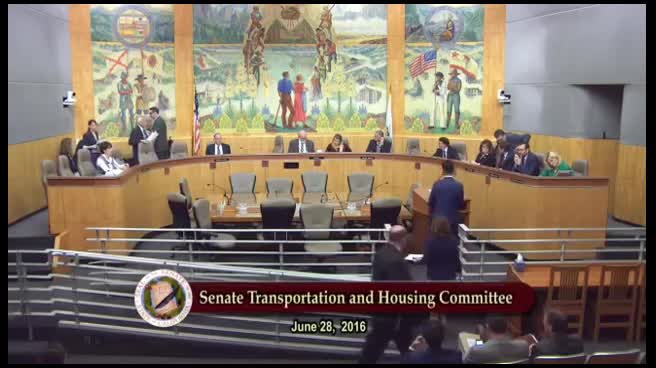 9MIN
Senate Standing Committee on Transportation and Housing
 1MIN
Assembly Floor
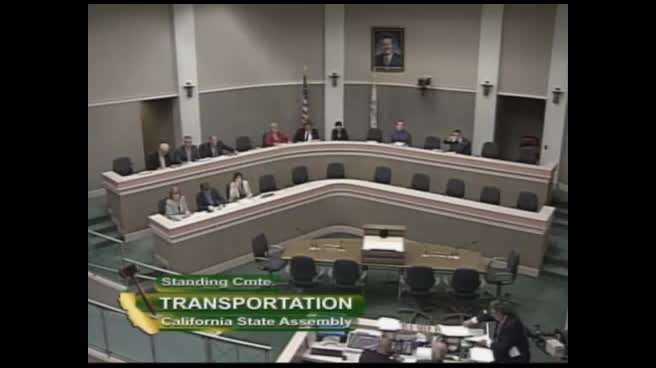 6MIN
Assembly Standing Committee on Transportation
Bill Author

Bill Co-Author(s):