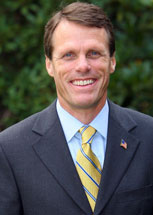
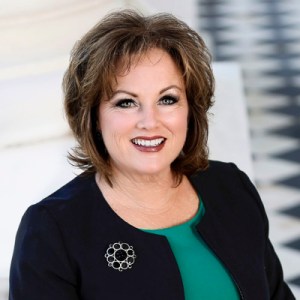
AB 2565: Independent Living Centers: state funding.
- Session Year: 2015-2016
- House: Assembly
- Latest Version Date: 2016-08-01
Under existing law, the Department of Rehabilitation is required to provide various services to individuals with physical or mental disabilities who are found to be eligible therefor, including independent living services. Existing law provides for the operation of independent living centers, which are private, nonprofit organizations that provide specified services to individuals with disabilities, in order to assist those individuals in their attempts to live fuller and freer lives outside institutions. Under existing law, the department has the responsibility and authority for the encouragement of the planning, developing, and funding of independent living centers.
Under existing law, each independent living center, except those centers which have been both established and maintained using specified federal funding as a base funding, is required to receive, to the extent funds are appropriated by the Legislature, at least $235,000 in base grant funds allocated by the department. Existing law authorizes these state funds to be replaced by reimbursements under the federal Supplemental Security Disability Insurance and the federal Supplemental Security Income programs, as specified.
This bill would delete the above provisions excluding the centers that were previously established and maintained with federal funding and would instead require each independent living center to receive at least $235,000 in base grant funds allocated by the department, to the extent funds are appropriated by the Legislature and allocated by the department to the independent living centers from reimbursements under the federal programs. The bill would prohibit the department from redirecting specified funds that support independent living centers to provide the funding for the base grant funds for centers that are newly eligible for the base grant funds pursuant to this bill. make related findings and declarations.
Under existing law, the Department of Rehabilitation is required to provide various services to individuals with physical or mental disabilities who are found to be eligible therefor, including independent living services. Existing law provides for the operation of independent living centers, which are private, nonprofit organizations that provide specified services to individuals with disabilities, in order to assist those individuals in their attempts to live fuller and freer lives outside institutions. The Under existing law, the department has the responsibility and authority for the encouragement of the planning, developing, and funding of independent living centers.
Under existing law, each independent living center, except those centers which have been both established and maintained using specified federal funding as a base funding, is required to receive, to the extent funds are appropriated by the Legislature, at least $235,000 in base grant funds allocated by the department. Existing law authorizes these state funds to be replaced by reimbursements under the federal Supplemental Security Disability Insurance and the federal Supplemental Security Income programs, as specified.
This bill would delete the above provisions excluding the centers that were previously established and maintained with federal funding, thereby making those centers eligible for the prescribed state funding. funding and would instead require each independent living center to receive at least $235,000 in base grant funds allocated by the department, to the extent funds are appropriated by the Legislature and allocated by the department to the independent living centers from reimbursements under the federal programs. The bill would prohibit the department from redirecting specified funds that support independent living centers to provide the funding for the base grant funds for centers that are newly eligible for the base grant funds pursuant to this bill.
Under existing law, the Department of Rehabilitation is required to provide various services to individuals with physical or mental disabilities who are found to be eligible therefor, including independent living services. Existing law provides for the operation of independent living centers, which are private, nonprofit organizations that provide specified services to individuals with disabilities, in order to assist those individuals in their attempts to live fuller and freer lives outside institutions. The department has the responsibility and authority for the encouragement of the planning, developing, and funding of independent living centers.
Under existing law, each independent living center, except those centers which have been both established and maintained using specified federal funding as a base funding, is required to receive, to the extent funds are appropriated by the Legislature, at least $235,000 in base grant funds allocated by the department.
This bill would delete the above provisions excluding the centers that were previously established and maintained with federal funding, thereby making those centers eligible for the prescribed state funding.
The Legislature finds and declares all of the following:
(a)Independent living is a vested civil right under federal and state law, and independent living with home and community-based services is a viable alternative to significantly more costly institutionalization in nursing homes and other settings.
(b)Independent living centers (ILCs) are among only a few federally funded entities that are mandated to help individuals with disabilities who desire to live in their homes and communities transition out of institutional settings, such as nursing homes and other institutions.
(c)ILCs work with individuals with all types of disabilities to advance their personal independence and to remove barriers to their equal inclusion in education, healthcare, employment, housing, transportation, and other aspects of society.
(d)There is currently a large difference in the amount of funding that each ILC in the state receives.
(e)In 1998, the base grant funding was set at two hundred thirty-five thousand dollars ($235,000), with the exception of three ILCs that do not receive the minimum base grant funding that is available to the other 25 ILCs.
(f)The ILCs excluded from base grant funding are the Disability Resources Agency for Independent Living, serving the Counties of Amador, Calaveras, Mariposa, San Joaquin, Stanislaus, and Tuolumne, the Independent Living Center of Kern County, serving the County of Kern, and Placer Independent Resources Services, Inc., serving the Counties of Alpine, El Dorado, and Placer.
(g)Authorization for the base grant funding of two hundred thirty-five thousand dollars ($235,000) for each of the three ILCs would be ILC is a wise and prudent investment to bring the three ILCs up to the minimum base grant funding, and it and is an important first step to begin to address the broader issue of the underfunding of all ILCs.
(h)Although this act authorizes funding for the three ILCs, it does not make an appropriation. The seven hundred five thousand dollars ($705,000) per year funding shall come from federal social security reimbursements.
SEC. 2.Section 19806 of the Welfare and Institutions Code is amended to read:19806.(a)An independent living center shall not be required to provide any matching funds through private contributions as a condition of receiving state funds except to acquire state incentive funds.
(b)Each independent living center shall receive at least two hundred thirty-five thousand dollars ($235,000) in base grant funds allocated by the department, to the extent funds are appropriated by the Legislature and allocated by the department to the independent living centers from reimbursements under the Supplemental Security Disability Insurance and the Supplemental Security Income programs provided for under Titles II and XVII of the Federal Social Security Act, Subchapter II (commencing with Section 401) and Subchapter XVII (commencing with Section 1381) of Chapter 7 of Title 42 of the United States Code. Beginning with the 199899 fiscal year, and each year thereafter, to the extent these funds from the Social Security Act are not appropriated by the Legislature as were appropriated in the 199798 fiscal year, an amount equal to the combined state and federal fund allocation to independent living centers in the Budget Act of 1997 shall be appropriated to, and allocated by, the department to independent living centers under this chapter.
(c)(1)Available state incentive funds shall be allocated at the beginning of each fiscal year based upon the average amount of private contributions received by the independent living center in the second and third preceding fiscal years.
(2)The maximum amount of incentive funds that may be allocated to any independent living center in any single fiscal year shall be computed as follows:
(A)Pool One is defined as 60 percent of all state incentive funds. Pool Two is defined as 40 percent of all state incentive funds. Each independent living center shall be entitled to an equal portion of Pool One, not to exceed the amounts raised pursuant to paragraph (1).
(B)Incentive funds from Pool One not used after the initial allocation pursuant to subparagraph (A) shall be added to Pool Two for allocation among all centers that had unmatched private contributions after distribution of Pool One funds. Pool Two funds shall be awarded in direct proportion to each centers percentage of the total remaining unmatched private contributions raised by those independent living centers.
(3)For the purpose of determining eligibility for state incentive funds, an independent living center that uses a fiscal year other than the state fiscal year may elect to use a different fiscal year so long as the closing date of the fiscal year so elected does not precede the closing date of the equivalent state fiscal year by more than 11 months.
(4)The amount of private contributions claimed by an independent living center for each fiscal year shall be verified by the department by utilizing appropriate financial records including, but not limited to, independent audits. Audits may be performed by the department up to three years from the close of the fiscal year during which state incentive funds were received by the independent living center being audited.
(5)State incentive funds that are not distributed to independent living centers shall not be allocated or retained by the department for distribution as state incentive funds in later fiscal years.
(d)For purposes of this section:
(1)Private funds does not include any funds originating from any entity of the federal, state, city, or county government or any political subdivision thereof. Notwithstanding the provisions of this section, fees from any source for services provided may be included as private contributions by an independent living center for purposes of determining its allocation of incentive funds.
(2)State incentive funds means state funds appropriated by the Legislature for purposes of this chapter, except those funds allocated by the department pursuant to subdivisions (b) and (f).
(e)Any funds allocated under this chapter to any independent living center, other than as part of the initial allocation for each fiscal year, shall be made by contract amendment. Any contract amendment shall require the provision of services in addition to those required by the contract being amended. All those services required by contract amendment shall not be performed prior to the date the contract amendment is approved by the state.
(f)To the extent funds are appropriated by the Legislature for the purpose of providing assistive technology services described in subdivision (d) of Section 19801, two hundred ten thousand dollars ($210,000) of those funds shall be allocated to the nonprofit contractor selected by the Department of Rehabilitation to coordinate delivery of assistive technology services and the remainder shall be allocated equally among independent living centers. The nonprofit contractor shall provide statewide assistive technology information and referral and serve as a resource to the independent living centers assistive technology service programs.
(g)To the extent funds are appropriated by the Legislature, after allocation of base grant and incentive funds and assistive technology funds, remaining funds shall be allocated by the department among independent living centers on the basis of the ratio of the total of the general population in an independent living centers geographic service areas as compared to the total of the general population in all independent living centers geographic services area statewide. The department shall adopt regulations for the distribution of population funds by June 30, 1999.
(h)The department shall not redirect funds allocated in the 201617 fiscal year for the support of independent living centers, including funding for assistive technology, funding based on population, or incentive funding, to provide the funding for the base grant funds for an independent living center that has been both established and maintained using federal funding under Title VII(c) of the federal Rehabilitation Act of 1973, as amended, as their primary base grant, as required by subdivision (b) pursuant to the act that added this subdivision.
The Legislature finds and declares all of the following:
(a)Independent living is a vested civil right under federal and state law, and independent living with home and community-based services is a viable alternative to significantly more costly institutionalization in nursing homes and other settings.
(b)Independent living centers (ILCs) are among only a few federally funded entities that are mandated to help individuals with disabilities who desire to live in their homes and communities transition out of institutional settings, such as nursing homes and other institutions.
(c)ILCs work with individuals with all types of disabilities to advance their personal independence and to remove barriers to their equal inclusion in education, healthcare, employment, housing, transportation, and other aspects of society.
(d)There is currently a large difference in the amount of funding that each ILC in the state receives.
(e)In 1998, the base grant funding was set at two hundred thirty-five thousand dollars ($235,000), with the exception of three ILCs that do not receive the minimum base grant funding that is available to the other 25 ILCs.
(f)The ILCs excluded from base grant funding are the Disability Resources Agency for Independent Living, serving the Counties of Amador, Calaveras, Mariposa, San Joaquin, Stanislaus, and Tuolumne, the Independent Living Center of Kern County, serving the County of Kern, and Placer Independent Resources Services, Inc., serving the Counties of Alpine, El Dorado, and Placer.
(g)Authorization for the base grant funding of two hundred thirty-five thousand dollars ($235,000) for each of the three ILCs would be a wise and prudent investment to bring the three ILCs up to the minimum base grant funding, and it is an important first step to begin to address the broader issue of the underfunding of all ILCs.
(h)Although this act authorizes funding for the three ILCs, it does not make an appropriation. The seven hundred five thousand dollars ($705,000) per year funding shall come from federal social security reimbursements.
SECTION 1.SEC. 2.Section 19806 of the Welfare and Institutions Code is amended to read:19806.(a)An independent living center shall not be required to provide any matching funds through private contributions as a condition of receiving state funds except to acquire state incentive funds.
(b)Each independent living center shall receive, to the extent funds are appropriated by the Legislature, receive at least two hundred thirty-five thousand dollars ($235,000) in base grant funds allocated by the department.
(c)State funds described in subdivision (b) may be replaced by department, to the extent funds are appropriated by the Legislature and allocated by the department to the independent living centers from reimbursements under the Supplemental Security Disability Insurance and the Supplemental Security Income programs provided for under Titles II and XVII of the Federal Social Security Act, Subchapter II (commencing with Section 401) and Subchapter XVII (commencing with Section 1381) of Chapter 7 of Title 42 of the United States Code to the extent appropriated by the Legislature and allocated by the department to independent living centers under this chapter. Code. Beginning with the 199899 fiscal year, and each year thereafter, to the extent these funds from the Social Security Act are not appropriated by the Legislature as were appropriated in the 199798 fiscal year, an amount equal to the combined state and federal fund allocation to independent living centers in the Budget Act of 1997 shall be appropriated to, and allocated by, the department to independent living centers under this chapter.
(d)
(c)(1)Available state incentive funds shall be allocated at the beginning of each fiscal year based upon the average amount of private contributions received by the independent living center in the second and third preceding fiscal years.
(2)The maximum amount of incentive funds that may be allocated to any independent living center in any single fiscal year shall be computed as follows:
(A)Pool One is defined as 60 percent of all state incentive funds. Pool Two is defined as 40 percent of all state incentive funds. Each independent living center shall be entitled to an equal portion of Pool One, not to exceed the amounts raised pursuant to paragraph (1).
(B)Incentive funds from Pool One not used after the initial allocation pursuant to subparagraph (A) shall be added to Pool Two for allocation among all centers that had unmatched private contributions after distribution of Pool One funds. Pool Two funds shall be awarded in direct proportion to each centers percentage of the total remaining unmatched private contributions raised by those independent living centers.
(3)For the purpose of determining eligibility for state incentive funds, any an independent living center that uses a fiscal year other than the state fiscal year may elect to use a different fiscal year so long as the closing date of the fiscal year so elected does not precede the closing date of the equivalent state fiscal year by more than 11 months.
(4)The amount of private contributions claimed by an independent living center for each fiscal year shall be verified by the department by utilizing appropriate financial records including, but not limited to, independent audits. Audits may be performed by the department up to three years from the close of the fiscal year during which state incentive funds were received by the independent living center being audited.
(5)State incentive funds that are not distributed to independent living centers shall not be allocated or retained by the department for distribution as state incentive funds in later fiscal years.
(e)
(d)For purposes of this section:
(1)Private funds does not include any funds originating from any entity of the federal, state, city, or county government or any political subdivision thereof. Notwithstanding the provisions of this section, fees from any source for services provided may be included as private contributions by an independent living center for purposes of determining its allocation of incentive funds.
(2)State incentive funds means state funds appropriated by the Legislature for purposes of this chapter, except those funds allocated by the department pursuant to subdivisions (b) and (g) of this section. (f).
(f)
(e)Any funds allocated under this chapter to any independent living center, other than as part of the initial allocation for each fiscal year, shall be made by contract amendment. Any contract amendment shall require the provision of services in addition to those required by the contract being amended. All those services required by contract amendment shall not be performed prior to the date the contract amendment is approved by the state.
(g)
(f)To the extent funds are appropriated by the Legislature for the purpose of providing assistive technology services described in subdivision (d) of Section 19801, two hundred ten thousand dollars ($210,000) of those funds shall be allocated to the nonprofit contractor selected by the Department of Rehabilitation to coordinate delivery of assistive technology services and the remainder shall be allocated equally among independent living centers. The nonprofit contractor shall provide statewide assistive technology information and referral and serve as a resource to the independent living centers assistive technology service programs.
(h)
(g)To the extent funds are appropriated by the Legislature, after allocation of base grant and incentive funds and assistive technology funds, remaining funds shall be allocated by the department among independent living centers on the basis of the ratio of the total of the general population in an independent living centers geographic service areas as compared to the total of the general population in all independent living centers geographic services area statewide. The department shall adopt regulations for the distribution of population funds by June 30, 1999.
(h)The department shall not redirect funds allocated in the 201617 fiscal year for the support of independent living centers, including funding for assistive technology, funding based on population, or incentive funding, to provide the funding for the base grant funds for an independent living center that has been both established and maintained using federal funding under Title VII(c) of the federal Rehabilitation Act of 1973, as amended, as their primary base grant, as required by subdivision (b) pursuant to the act that added this subdivision.
(a)An independent living center shall not be required to provide any matching funds through private contributions as a condition of receiving state funds except to acquire state incentive funds.
(b)Each independent living center, except those centers which have been both established and maintained using federal funding under Title VII(c) of the federal Rehabilitation Act of 1973 as amended as their primary base grant, as determined by the department, center shall receive receive, to the extent funds are appropriated by the Legislature, at least two hundred thirty-five thousand dollars ($235,000) in base grant funds allocated by the department. The department shall allocate to those centers with Title VII(c) base grant funds of less than two hundred thirty-five thousand dollars ($235,000) an amount that, when combined with the Title VII(c) grant, equals two hundred thirty-five thousand dollars ($235,000).
(c)State funds described in subdivision (b) may be replaced by reimbursements under the Supplemental Security Disability Insurance and the Supplemental Security Income programs provided for under Titles II and XVII of the Federal Social Security Act, Subchapter II (commencing with Section 401) and Subchapter XVII (commencing with Section 1381) of Chapter 7 of Title 42 of the United States Code to the extent appropriated by the Legislature and allocated by the department to independent living centers under this chapter. Beginning with the 199899 fiscal year, and each year thereafter, to the extent these funds from the Social Security Act are not appropriated by the Legislature as were appropriated in the 199798 fiscal year, an amount equal to the combined state and federal fund allocation to independent living centers in the Budget Act of 1997 shall be appropriated to, and allocated by, the department to independent living centers under this chapter.
(d)(1)Available state incentive funds shall be allocated at the beginning of each fiscal year based upon the average amount of private contributions received by the independent living center in the second and third preceding fiscal years.
(2)The maximum amount of incentive funds that may be allocated to any independent living center in any single fiscal year shall be computed as follows:
(A)Pool One is defined as 60 percent of all state incentive funds. Pool Two is defined as 40 percent of all state incentive funds. Each independent living center shall be entitled to an equal portion of Pool One, not to exceed the amounts raised pursuant to paragraph (1).
(B)Incentive funds from Pool One not used after the initial allocation pursuant to subparagraph (A) shall be added to Pool Two for allocation among all centers that had unmatched private contributions after distribution of Pool One funds. Pool Two funds shall be awarded in direct proportion to each centers percentage of the total remaining unmatched private contributions raised by those independent living centers.
(3)For the purpose of determining eligibility for state incentive funds, any independent living center that uses a fiscal year other than the state fiscal year may elect to use a different fiscal year so long as the closing date of the fiscal year so elected does not precede the closing date of the equivalent state fiscal year by more than 11 months.
(4)The amount of private contributions claimed by an independent living center for each fiscal year shall be verified by the department by utilizing appropriate financial records including, but not limited to, independent audits. Audits may be performed by the department up to three years from the close of the fiscal year during which state incentive funds were received by the independent living center being audited.
(5)State incentive funds that are not distributed to independent living centers shall not be allocated or retained by the department for distribution as state incentive funds in later fiscal years.
(e)For purposes of this section:
(1)Private funds does not include any funds originating from any entity of the federal, state, city, or county government or any political subdivision thereof. Notwithstanding the provisions of this section, fees from any source for services provided may be included as private contributions by an independent living center for purposes of determining its allocation of incentive funds.
(2)State incentive funds means state funds appropriated by the Legislature for purposes of this chapter, except those funds allocated by the department pursuant to subdivisions (b) and (g) of this section.
(f)Any funds allocated under this chapter to any independent living center, other than as part of the initial allocation for each fiscal year, shall be made by contract amendment. Any contract amendment shall require the provision of services in addition to those required by the contract being amended. All those services required by contract amendment shall not be performed prior to the date the contract amendment is approved by the state.
(g)To the extent funds are appropriated by the Legislature for the purpose of providing assistive technology services described in subdivision (d) of Section 19801, two hundred ten thousand dollars ($210,000) of those funds shall be allocated to the nonprofit contractor selected by the Department of Rehabilitation to coordinate delivery of assistive technology services and the remainder shall be allocated equally among independent living centers. The nonprofit contractor shall provide statewide assistive technology information and referral and serve as a resource to the independent living centers assistive technology service programs.
(h)To the extent funds are appropriated by the Legislature, after allocation of base grant and incentive funds and assistive technology funds, remaining funds shall be allocated by the department among independent living centers on the basis of the ratio of the total of the general population in an independent living centers geographic service areas as compared to the total of the general population in all independent living centers geographic services area statewide. The department shall adopt regulations for the distribution of population funds by June 30, 1999.
|
Date
|
Status
|
|---|---|
| May 31, 2016 | Read third time. Passed. Ordered to the Senate. (Ayes 80. Noes 0. Page 5039.) |
| Aug 11, 2016 | In committee: Held under submission. |
| Aug 8, 2016 | Referred to APPR. suspense file. |
| Aug 1, 2016 | In committee: Hearing postponed by committee. |
| Aug 1, 2016 | From committee chair, with author's amendments: Amend, and re-refer to committee. Read second time, amended, and re-referred to Com. on APPR. |
| Jun 29, 2016 | From committee: Do pass and re-refer to Com. on APPR. with recommendation: To Consent Calendar. (Ayes 5. Noes 0.) (June 28). Re-referred to Com. on APPR. |
| Jun 21, 2016 | From committee chair, with author's amendments: Amend, and re-refer to committee. Read second time, amended, and re-referred to Com. on HUMAN S. |
| Jun 15, 2016 | Referred to Com. on HUMAN S. |
| Jun 1, 2016 | In Senate. Read first time. To Com. on RLS. for assignment. |
| May 31, 2016 | Read third time. Passed. Ordered to the Senate. (Ayes 80. Noes 0.) |
| Feb 19, 2016 | Introduced. To print. |
| May 31, 2016 | Read third time. Passed. Ordered to the Senate. |
| May 27, 2016 | Read second time. Ordered to third reading. |
| May 27, 2016 | From committee: Do pass. (Ayes 20. Noes 0.) (May 27). |
| May 18, 2016 | In committee: Set, first hearing. Referred to APPR. suspense file. |
| Apr 13, 2016 | From committee: Do pass and re-refer to Com. on APPR. with recommendation: To Consent Calendar. (Ayes 7. Noes 0.) (April 12). Re-referred to Com. on APPR. |
| Mar 8, 2016 | Referred to Com. on HUM. S. |
| Feb 22, 2016 | Read first time. |
| Feb 21, 2016 | From printer. May be heard in committee March 22. |
|
Date
|
Description
|
Location
|
Votes
|
|
|---|---|---|---|---|
| Aug 8, 2016 | Placed on suspense file | Senate Standing Committee on Appropriations |
Passed |
|
| Jun 28, 2016 | Do pass, but first be re-referred to the Committee on [Appropriations] with the recommendation: To Consent Calendar | Senate Standing Committee on Human Services |
Passed |
|
| May 31, 2016 | AB 2565 SALAS Assembly Third Reading | Assembly Floor |
Passed |
|
| May 27, 2016 | Do pass. | Assembly Standing Committee on Appropriations |
Passed |
|
| Apr 12, 2016 | Do pass and be re-referred to the Committee on [Appropriations] with recommendation: To Consent Calendar | Assembly Standing Committee on Human Services |
Passed |
This list shows positions taken on this bill by organizations on the date displayed, which is linked to the original source.
Positions by individuals are not included.
|
Organization
|
Position
|
Date
|
|---|---|---|
| 2 individual | ** Support | May 31, 2016 |
| Bakersfield ARC | ** Support | May 31, 2016 |
| California Association Of Public Authorities For Ihss | ** Support | May 31, 2016 |
| California Foundation For Independent Living Centers | ** Support | May 31, 2016 |
| California State Independent Living Council | ** Support | May 31, 2016 |
| Cornelius Financial Group | ** Support | May 31, 2016 |
| Court Appointed Special Advocates of Kern County | ** Support | May 31, 2016 |
| Disability Resource Agency for Independent Living | ** Support | May 31, 2016 |
| Friends Outside | ** Support | May 31, 2016 |
| Golden Empire Transit District | ** Support | May 31, 2016 |
| Goodwill Industries of South Central California | ** Support | May 31, 2016 |
| Housing Authority of the County of Kern | ** Support | May 31, 2016 |
| Kern County Board of Supervisors | ** Support | May 31, 2016 |
| Kern County Office of the National Multiple Sclerosis | ** Support | May 31, 2016 |
| Kern Travel | ** Support | May 31, 2016 |
| Knight's Pumping & Portable Services, Inc. | ** Support | May 31, 2016 |
| La Perla Market | ** Support | May 31, 2016 |
| Mayor Harvey L. Hall, City of Bakersfield | ** Support | May 31, 2016 |
| Mental Health Collaborative of Kern County | ** Support | May 31, 2016 |
| Modesto, City Of | ** Support | May 31, 2016 |
| New Advance for People with Disabilities | ** Support | May 31, 2016 |
| Petro-LUD | ** Support | May 31, 2016 |
| VOICED Coalition | ** Support | May 31, 2016 |
SENATE COMMITTEE ON APPROPRIATIONS
Senator Ricardo Lara, Chair
2015 - 2016 Regular Session
AB 2565 (Salas) - Independent Living Centers: state funding
Version: August 1, 2016 | Policy Vote: HUMAN S. 5 - 0 |
Urgency: No | Mandate: No |
Hearing Date: August 8, 2016 | Consultant: Debra Cooper |
This bill meets the criteria for referral to the Suspense File.
Bill Summary:
AB 2565 would permit all independent living centers (ILCs), including three that were previously excluded, to receive $235,000 in base grant funding annually.
Fiscal Impact:
Ongoing costs to the Department of Rehabilitation (DOR) of $705,000 per year to provide three ILCs with $235,000 in base grant funding. (Federal/GF)
Background:
An ILC is a consumer‑controlled, community‑based, cross‑disability, nonresidential private nonprofit agency that is designed and operated within a local community by individuals with disabilities and provides an array of independent living services. There are 28 ILCs in California that serve at least 22,000 individuals per year. The centers are overseen and funded by DOR with total statewide funding of $20 million.
The ILCs have several different funding sources. Title VII of the Rehabilitation Act established a framework for the creation and funding of ILCs across the nation. Federal Title VII(c) moneys flow directly to ILCs based on specific contracted agreements. Each ILC receives a standard $70,000 grant for assistive technology, and some ILCs that have taken on additional responsibilities typically receive more Title VII(c) funding.
Existing state law provides that each ILC is required to receive at least $235,000 in base grant funding allocated by DOR, except those centers that have been established and maintained using Title VII(c) funding. Three ILCs in California (the Disability Resources Agency for Independent Living, the Independent Living Center of Kern County, and the Placer Independent Resources Services, Inc) were established with larger Title VII(c) grants instead of the state base funding which was provided to other ILCs. All California ILCs receive Title VII(c) grants of varying amounts ranging from $68,088 for Tri-County Independent Living, Inc. to $531,840 for Disability Resources Agency for Independent Living.
Though the three ILCs that are exempted from the state base grant receive larger federal grants than many of the other ILCs, because they are solely funded with federal funds, they receive among the least total funding of the 28 ILCs.
Proposed Law:
This bill would:
- Strike language excluding ILCs which have been established and maintained using federal funding under Title VII(c) of the federal Rehabilitation Act as their primary base grant from receiving base funding of $235,000 and requiring DOR to fund those ILCs with the difference of the funding from the federal VII(c) allocation and $235,000.
- Strike language that authorizes base funding for the ILCs allocated from the state general fund to be replaced by reimbursements from the federal Supplemental Security Disability Insurance and the Supplemental Security Income programs and replaces it with language that requires base funding amounts to be allocated to the ILCs from those federal funds.
Related Legislation:
SB 826 (Leno, Chapter 23, Statutes of 2016), the State Budget Act of 2016-17, among other things, allocates $705,000 in base allocations from the state general fund.
Staff Comments:
Funding for the additional $705,000 in base allocations was already addressed in the 2016-17 state budget. While the state budget provides for this funding from the general fund, this bill requires the allocation to come from federal reimbursement funding.
Federal Social Security Reimbursements, which regularly fluctuate, are already reserved for other DOR programs; therefore, redirection of federal Social Security Reimbursements from other programs would result in a reduction of vocational rehabilitation services provided through DOR.
-- END --
SENATE COMMITTEE ON HUMAN SERVICES
Senator McGuire, Chair
2015 - 2016 Regular
Bill No: AB 2565
Author: | Salas | ||
Version: | June 21, 2016 | Hearing Date: | June 28, 2016 |
Urgency: | No | Fiscal: | Yes |
Consultant: | Mareva Brown | ||
Subject: Independent Living Centers: state funding
SUMMARY
This bill deletes provisions in current law that make an Independent Living Center (ILC) eligible for state funding only under certain circumstances, thereby permitting three of the state’s 28 ILCs to receive the same $235,000 in state base funding annually that the others receive.
ABSTRACT
Existing law:
- Declares that individuals with disabilities comprise a large percentage of California’s total population and that action is necessary to assist these individuals in their attempts to live fuller and freer lives outside of institutions. Further declares that in order to achieve this, it is necessary to provide state funding to maintain the services provided by existing ILCs and, where feasible, encourage the establishment of new centers which provide services to individuals with disabilities, and to establish the Department of Rehabilitation (DOR) has responsibility and authority to encourage planning, developing and funding of ILCs. (WIC 19800)
- Defines an ILC to be a private, nonprofit organization with a board of directors controlled by a majority of individuals with disabilities and staffed by persons trained to assist persons with disabilities in achieving social and economic independence. Further defines the duties and philosophy of an ILC. (WIC 19801)
- Requires that each ILC, except those centers which have been both established and maintained using federal funding under the federal Rehabilitation Act of 1973 as their primary base grant, shall receive at least $235,000 in base grant funds allocated by DOR, as specified. Requires that DOR allocate to those centers with Title VII(c) base grant funds of less than $235,000 an amount that, when combined with the federal Title VII(c) grant, equals $235,000 (WIC 19806)
- Permits state funds used to fund the base grant to be replaced by reimbursements under the Supplemental Security Disability Insurance (SSDI) and the Supplemental Security Income (SSI) programs, as defined, to the extent appropriated by the Legislature and allocated by the department to ILCs, as specified. (WIC 19806 (c))
- Establishes funding formulas for dispersing incentive funds to ILCs, including the requirement that one grant formula is based on the amount of private funding an ILC has received, as specified. (WIC 19806 (d))
- Prohibits any funding for the base grant be based on receipt of private funding to an ILC. (WIC 19806 (a))
This bill:
- Makes a variety of uncodified Legislative findings and declarations including that independent living is a vested civil right under federal and state law, that it is a viable alternative to significantly more costly institutionalization in nursing homes and other settings, and that there currently is a large difference in the amount of funding that each of the California ILCs receives.
- Strikes language excluding ILCs which have been established and maintained using federal funding under title VII(c) of the federal Rehabilitation Act as their primary base grant from receiving base funding of $235,000 from the DOR.
- Strikes related language requiring DOR to fund those ILCs with the difference of the funding from the federal VII(c) allocation and $235,000.
- Strikes language that permits base funding for the ILCs allocated from the state general fund to be replaced by reimbursements from the federal Supplemental Security Disability Insurance and the Supplemental Security Income programs and replaces it with language that requires base funding amounts be allocated to the ILCs from those federal funds.
FISCAL IMPACT
According to an analysis prepared by the Assembly Appropriations Committee, this bill will result in ongoing costs of $705,000 (Federal funds/GF) annually to provide three ILCs with $235,000 in base grant funding.
Appropriations staff also noted that in addition to an annual base state funding level of $235,000 (with the exception of the three ILCs), all 28 ILCs receive federal funding directly from the Administration for Community Living in the form of Title VII(c) grants. The total amount of federal funding California ILCs receive is approximately $7.7 million annually. However, there is a difference in the amount of federal funding that each ILC receives. The 28 ILCs share a total of $20.2 million dollars through state and federal funding annually, which is about $900 per individual receiving direct services
BACKGROUND AND DISCUSSION
Purpose of the bill:
According to the author, three of the state’s 28 ILCs are excluded from state base funding from the DOR. These ILCs serve a total of 10 counties and thousands of individuals and the author states at least two of the three centers suffer from insufficient staff to provide adequate services.
The author states that these three ILCs were founded after the enacting state statute and were excluded from the annual base allocation of $235,000. While the three received additional federal funding allocations from a different funding stream at the time they were established, the author said inequities persist and these three centers are at particular risk of federal funding loss because they do not have state base funding.
“Resolving this funding inequity requires a modest annual appropriation of $235,000 for each of the three ILCs,” the author states. “This would bring these centers up to the minimum base funding level.” The three ILCs that don’t receive state base funding are Independent Living Center of Kern County; Disability Resource Agency for Independent Living in Modesto, Stockton and Sonora; and Placer Independent Resource Services, serving Placer, El Dorado and Alpine counties.
The author further states that because the base funding is typically allocated from federal Social Security Income incentive payments that the state receives for successful job placements of individuals with disabilities, the state will not be paying for the additional base funding from General Fund.
Independent Living Centers (ILCs)
An ILC is a consumer-controlled, community-based, cross disability, nonresidential private nonprofit agency that is designed and operated within a local community by individuals with disabilities, according to DOR. In California, 28 ILCs each serve at least 22,000 individuals statewide per year with total statewide funding of $20 million.
Each center offers five core services that are mandated by the Rehabilitation Act of 1973, including cross-disability peer support, independent living skill development, advocacy and systems advocacy, information and referrals, assistive technology services and transition services. California added two core services: Personal assistance services and housing.
In order to be certified to become an ILC and to receive state and federal funding, DOR must affirm that 51 percent of the ILCs board is comprised of people with significant disabilities, the majority of decision makers in the organization are persons with disabilities and that specific core services are provided. The California Foundation for Independent Living Centers (CFILC), which represents 23 of the state’s 28 nonprofit ILCs, notes that there is “an enormous difference in the amount of funding” across all ILCs.
Placer Independent Resource Services
The Auburn-based Placer Independent Resource Services serves individuals in Alpine, El Dorado, and Placer Counties. According to the agency’s website, the ILC advocates for the rights of people with disabilities, educates the community about disability issues, empowers and provides services to persons with disabilities to live independent, productive lives. Any person with a disability is eligible for free services. According to documents provided by the CFILC, Placer received total funding of $455,790 in 2013/2014 and $314,504 in Title VII(c) funding.
Independent Living Center of Kern County
The Independent Living Center of Kern County was established more than 30 years ago. The center recently added two programs – an American Sign Language interpretation service, and a technology assistance program for older individuals who are blind. The ILC of Kern County said more than 30 percent of Kern County’s population lives with a disability. The organization’s website notes that more than 90 percent of the ILC’s staff is people with disabilities. According to documents provided by the CFILC, ILC of Kern County’s total grant allocation in 2013/ 2014 was $494,065, the third lowest of the 28 centers, just ahead of Placer. Kern’s ILC received $323,482 in Title VII(c) funding.
Disability Resource Agency for Independent Living (DRAIL)
DRAIL has been serving people with disabilities in Stanislaus County for 25 years, assisting more than 6,000 consumers to establish goals and objectives to achieve reach independence. DRAIL has provided more than 40,000 information and referral resources to consumers and the community in general. During the first two years of DRAIL, it was necessary to outreach to the community and to let the community know that services were available to people with all types of disabilities of all ages. According to the agency’s website, since 2001 DRAIL has transitioned 96 consumers from nursing homes into their own home saving the government $436,464 over twelve years.
The author notes that DRAIL has been forced to start a waiting list because it is cannot meet demand for services. According to documents provided by the CFILC, DRAIL received $734,000 in total funding in 2013/2014, and $516,369 in Title VII(c) funding.
Department of Rehabilitation
The ILCs are overseen and funded by the state DOR, which serves approximately 110,000 people annually with a total budget of approximately $435 million. About $350 million comes from federal sources, according to the agency’s 2015 annual report.
DOR’s primary focus is its vocational rehabilitation (VR) program, which provides job-seeking consumers with disabilities with support to prepare for, find and retain employment. VR services may include career assessment and counseling, help with job search, preparation with interview skills, independent living skills, training, career education and assistive technology. The VR program is not an entitlement; if demand exceeds the available VR slots, the state may institute an “Order of Selection,” per federal statute.
Funding streams
ILCs receive funding in several ways. Those centers with a base allocation from the state may receive $235,000 from the general fund, although typically the base funding in paid for through reimbursements from the federal Social Security Administration, which pays incentive funds to states for finding and maintaining a consumer in a job for nine months. State statute permits the federal reimbursement money to be used in lieu of general fund. Federal regulations say the reimbursement funds must be used for vocational rehabilitation but it is discretionary for the states to allocate.
According to data provided by the CFILC, total funding for ILCs in 2013/2014 ranged from $407,000 in Eureka’s Tri-County Independent Living Inc., center to $1.2 million at the Dayle McIntosh Center for the Disabled in Anaheim.
Federal Title VII(c) dollars flow directly to ILCs from the federal government based on specific contracted agreements for services. ILCs that have taken on additional responsibilities typically have more Title VII(c) funding. Each ILC receives a standard $70,000 grant for assistive technology. Seymour Incentive Grants are used to federally match fundraising dollars that each ILC raises. Funding through the Title VII(c) allocation is based on contracted service delivery obligations and ranges broadly from a low of $63,117 for Marin County to $526,672 allocated to Berkeley’s Center for Independent Living.
According to DOR, in fiscal year 2014-2015, the three centers without state base funding collectively provided services to 1,322 individuals from 10 counties. DOR notes that these three centers were established with large Title 7-C grants instead of the state base funding which was provided to the other ILCs. Today, DOR notes all ILCs receive Title VII-C grants of varying amounts. Because the federal government may award the VII-C funds based upon a variety of reasons, including on need and the compelling justification of an ILC, some ILCs receive more federal funding than others, including some of the 3 ILCs that are not eligible for the base funding under current law.
COMMENTS
Funding for the additional $705,000 in base allocations is already established in the 2016-2017 state budget (SB 826, Leno, 2016, item 5160-101-0001). The budget, however, provides for this funding from state general fund. The language of this bill alters the ongoing allocation of the base grant to require its allocation from the federal reimbursement funding. Should this bill move from this committee, the author may want to revisit whether to include the possibility of General Fund allocations if reimbursement funds are unavailable in future years.
PRIOR VOTES
Assembly Floor: | 80 - 0 |
Assembly Appropriations Committee: | 20 - 0 |
Assembly Human Services Committee: | 7 - 0 |
POSITIONS
Support:
California State Independent Living Council
Cornelius Financial Group
Court Appointed Special Advocates of Kern County
Disability Rights California
Friends Outside
Golden Empire Transit District
Goodwill Industries of South Central California
Housing Authority of the County of Kern
Kern Travel
Knight’s Pumping and Portable Services, Inc.
La Perla Market
New Advances for People with Disabilities
Office of the Mayor of the City of Bakersfield/ The Bakersfield City Council
PETRO-LUD
Rent 1 One
The Bakersfield ARC
The California Association of Public Authorities
The California Foundation for Independent Living Centers
The City of Modesto
The Disability Resource Agency for Independent Living
The Housing Authority of the County of Kern
The Kern County Board of Supervisors
The Kern County Office of the National Multiple Sclerosis Society
The Mental Health Collaborative of Kern County
The Voiced Coalition
Oppose:
None.
-- END --
ASSEMBLY THIRD READING
ATR Bill Id:AB 2565
Author:(Salas)
As Introduced Ver:
Majority vote
Committee | Votes | Ayes | Noes |
Human Services | 7-0 | Bonilla, Grove, Calderon, Lopez, Maienschein, Mark Stone, Thurmond | |
Appropriations | 20-0 | Gonzalez, Bigelow, Bloom, Bonilla, Bonta, Calderon, Chang, Daly, Eggman, Gallagher, Eduardo Garcia, Roger Hernández, Holden, Jones, Obernolte, Quirk, Santiago, Wagner, Weber, Wood |
|
SUMMARY: Includes independent living centers (ILCs) that were previously excluded, due to receipt of funding under Title VII(c) of the federal Rehabilitation Act of 1973, among ILCs that are required to receive at least $235,000 in base grant funds, as specified.
EXISTING LAW:
- Establishes the federal Rehabilitation Act, which, among other things, empowers individuals with disabilities to maximize employment, economic self-sufficiency, self-determination, independence, inclusion and integration into society through statewide workforce investment systems, independent living centers and services, research, training, demonstration projects and the guarantee of equal opportunity. (29 United States Code (U.S.C.) Section 701 et seq.)
- Establishes the Department of Rehabilitation (DOR) within the California Health and Human Services Agency, and designates DOR the sole state agency charged with administration of the state plan for vocational rehabilitation services. (Welfare and Institutions Code (WIC) Section 19000 et seq.)
- Requires DOR to oversee the Independent Living Services Program and the state's 28 ILCs for the purpose of helping people with disabilities live fuller and freer lives outside of institutions. (WIC Section 19751, 19800 et seq.)
- Allocates base grant funding of $235,000 to each ILC, with the exception of those centers established and maintained using federal funding under Title VII(c) of the federal Rehabilitation Act of 1973. (WIC Section 19806)
FISCAL EFFECT: According to the Assembly Appropriations Committee, this bill may result in ongoing costs of $705,000 (Federal funds/General Fund) annually to provide the three ILCs with $235,000 in base grant funding.
COMMENTS:
Department of Rehabilitation (DOR): DOR operates under the California Health and Human Services Agency and in accordance with the federal Rehabilitation Act of 1973, as amended by Title IV of the Workforce Innovation and Opportunity Act of 2014 and, as such, administers programs funded with federal and matching state dollars. Vocational rehabilitation services are funded with 78.7% federal dollars and 21.3% matching funds, part of which are provided by the state General Fund and part by public agencies through the DOR's cooperative program agreements. For every $1 in funds the state contributes, the DOR receives $4 in federal funds. The DOR's overall budget for the 2015-2016 fiscal year is $436 million; of that, $59 million is from the General Fund.
Independent Living Centers: Title VII of the Rehabilitation Act – Independent Living Services and Centers for Independent Living – established a framework for the creation and funding of ILCs across the nation. California currently has 28 ILCs which provide services to people with disabilities, enabling them to remain in their own homes and communities by supporting projects and activities carried out in a manner consistent with the principles of respect for individual dignity, personal responsibility, and self-determination. Additionally, ILCs support the pursuit of meaningful careers, based upon informed choice of individuals with disabilities. An ILC is a consumer-centered, community-based, non-residential, private non-profit entity that is designed and operated within a local community by individuals with disabilities. Currently California has 28 ILCs which serve approximately 100,000 California residents.
AB 204: In 1979, the State of California passed AB 204 (Bates), Chapter 191, Statutes of 1979, which authorized the Department of Rehabilitation to provide each ILC with $235,000 annually, with the exception of the three specific ILCs discussed in this bill, as they were already receiving large funding grants from the federal government.
Federally Funded ILCs: In 1984, three ILCs, Independent Living Center of Kern County (ILCKC), Disability Resource Agency for Independent Living (DRAIL), and Placer Independent Living Resources, applied directly for Title VII funding in order to meet the needs of their consumers. Because these particular ILCs received funding from the federal government and not the state, they were subject to the waxing and waning of Congressional appropriation of funds. The remaining ILCs were funded by the State (and some federal dollars), and as such received Cost of Living Adjustments (COLAs) over time such that there arose funding inequities between ILCs funded by both the state and ILCs funded solely by the federal government.
Today, DRAIL, ILCKC, and Placer Independent Living Resources are among the lowest-funded ILCs in the state, receiving an annual total in Title VII federal funds of $726,730, $481,750, and $444,001, respectively. Still, due to initially seeking federal funds instead of state funds, these three ILCs have larger federal grants than any other ILC that has since applied for and received federal funds in order to meet the needs of their consumers.
Need for this bill: According to the author's office, "By no fault of their own, these 3 centers have been excluded from receiving state funding. [This bill] corrects this inequity and creates parity between all centers improving their ability to operate and make long lasting positive impacts on the lives of those they serve."
PRIOR LEGISLATION:
AB 204 (Bates), Chapter 191, Statutes of 1979, provided state funding to maintain the services offered by existing independent living centers and encouraged the establishment of new centers to provide services to individuals with disabilities.
Analysis Prepared by: Kelsy Castillo / HUM. S. / (916) 319-2089 FN: 0003224
Date of Hearing: May 18, 2016
ASSEMBLY COMMITTEE ON APPROPRIATIONS
Lorena Gonzalez, Chair
ABPCA Bill Id:AB 2565
Author:(Salas) – As Introduced Ver:February 19, 2016
Policy Committee: | Human Services | Vote: | 7 - 0 |
Urgency: No State Mandated Local Program: No Reimbursable: No
SUMMARY:
This bill includes independent living centers (ILCs) that were previously excluded, due to receipt of funding under Title VII(c) of the federal Rehabilitation Act of 1973, among ILCs that are required to receive at least $235,000 in base grant funds, as specified.
FISCAL EFFECT:
Ongoing costs of $705,000 (Federal funds/GF) annually to provide three ILCs with $235,000 in base grant funding.
Staff notes: In addition to an annual base state funding level of $235,000 (with the exception of the 3 ILCs), all 28 ILCs receive federal funding directly from the Administration for Community Living in the form of Title 7C grants. The total amount of federal funding California ILCs receive is approximately $7.7 million annually. However, there is a difference in the amount of federal funding that each ILC receives. The 28 ILCs share a total of $20.2 million dollars through state and federal funding annually, which is about $900 per individual receiving direct services.
COMMENTS:
- Purpose. According to the author’s office, “By no fault of their own, these three centers have been excluded from receiving state funding. This bill corrects this inequity and creates parity between all centers improving their ability to operate and make long lasting positive impacts on the lives of those they serve.”
- Background. The Department of Rehabilitation (DOR), which operates under the California Health and Human Services Agency and in accordance with the federal Rehabilitation Act of 1973, as amended by Title IV of the Workforce Innovation and Opportunity Act of 2014, administers programs funded with federal and matching state dollars. Vocational rehabilitation services are funded with 78.7% federal dollars and 21.3% matching funds, part of which are provided by the state General Fund and part by public agencies through DOR’s cooperative program agreements. For every $1 in funds the state contributes, DOR receives $4 in federal funds. The DOR’s overall budget for FY 2015-2016 is $436 million; of that, $59 million is from the General Fund.
- Independent Living Centers: Title VII of the Rehabilitation Act established a framework for the creation and funding of ILCs across the nation. ILCs serve people who have physical, sensory, cognitive, and mental health disabilities. The state’s twenty-eight centers, serving approximately 100,000 California residents, help promote the social and economic achievements of individuals with disabilities by providing employment, housing, technology, and advocacy services.
Existing law provides that each independent living service is required to receive at least $235,000 in the base grant funds allocated by the department, except those centers which have been both established and maintained using specified federal funding as base funding. Three ILCs were established with federal funding and have therefore been excluded from receiving the annual $235,000 in state funding received by all other ILCs throughout the state. The affected ILCs include:
- Independent Living Center of Kern County (ILCKC), which serves Kern County and receives $481,750 in federal funds;
- Disability Resource Agency for Independent Living (DRAIL), which serves Amador, Calaveras, Tuolumne, Mariposa, Stanislaus, and San Joaquin Counties and receives $726,730 in federal funds; and
- Placer Independent Living Resources, which serves Placer, El Dorado, and Alpine Counties and receives $441,001 in federal funds.
Although these three centers receive larger federal grants than any of the other ILCs, over time funding inequities have arisen because the three funded solely with federal funds have received fewer cost of living adjustments (COLAs). Today, they are among the lowest funded ILCs in the state.
- Prior Legislation. AB 204 (Bates), Chapter 191, Statutes of 1979, authorized the Department of Rehabilitation to provide each ILC with $235,000 annually, with the exception of the three ILCs which were both established and maintained using specific federal funding as base funding.
Analysis Prepared by: Jennifer Swenson / APPR. / (916) 319-2081
Date of Hearing: April 12, 2016
ASSEMBLY COMMITTEE ON HUMAN SERVICES
Susan Bonilla, Chair
ABPCA Bill Id:AB 2565 (
Author:Salas) – As Introduced Ver:February 19, 2016
SUBJECT: Independent Living Centers: state funding
SUMMARY: Includes independent living centers (ILCs) that were previously excluded, due to receipt of funding under Title VII(c) of the federal Rehabilitation Act of 1973, among ILCs that are required to receive at least $235,000 in base grant funds, as specified .
EXISTING LAW:
- Establishes the federal Rehabilitation Act, which, among other things, empowers individuals with disabilities to maximize employment, economic self-sufficiency, self-determination, independence, inclusion and integration into society through statewide workforce investment systems, independent living centers and services, research, training, demonstration projects and the guarantee of equal opportunity. (29 U.S.C. 701 et seq.)
- Establishes the Department of Rehabilitation (DOR) within the California Health and Human Services Agency, and designates DOR the sole state agency charged with administration of the state plan for vocational rehabilitation services. (WIC 19000 et seq.)
- Requires DOR to oversee the Independent Living Services Program and the state's 28 ILCs for the purpose of helping people with disabilities live fuller and freer lives outside of institutions. (WIC 19751, 19800 et seq.)
- Allocates base grant funding of $235,000 to each ILC, with the exception of those centers established and maintained using federal funding under Title VII(c) of the federal Rehabilitation Act of 1973. (WIC 19806)
FISCAL EFFECT: Unknown.
COMMENTS:
Department of Rehabilitation (DOR): DOR operates under the California Health and Human Services Agency and in accordance with the federal Rehabilitation Act of 1973, as amended by Title IV of the Workforce Innovation and Opportunity Act of 2014 and, as such, administers programs funded with federal and matching state dollars. Vocational rehabilitation services are funded with 78.7% federal dollars and 21.3% matching funds, part of which are provided by the state General Fund and part by public agencies through the DOR’s cooperative program agreements. For every $1 in funds the state contributes, the DOR receives $4 in federal funds. The DOR’s overall budget for the 2015-2016 fiscal year is $436 million; of that, $59 million is from the General Fund.
Independent Living Centers: Title VII of the Rehabilitation Act – Independent Living Services and Centers for Independent Living – established a framework for the creation and funding of ILCs across the nation. California currently has 28 ILCs which provide services to people with disabilities, enabling them to remain in their own homes and communities by supporting projects and activities carried out in a manner consistent with the principles of respect for individual dignity, personal responsibility, and self-determination. Additionally, ILCs support the pursuit of meaningful careers, based upon informed choice of individuals with disabilities. An ILC is a consumer-centered, community-based, non-residential, private non-profit entity that is designed and operated within a local community by individuals with disabilities. Currently California has 28 ILCs which serve approximately 100,000 California residents.
AB 204: In 1979, the State of California passed AB 204 (Bates), Chapter 191, Statutes of 1979, which authorized the Department of Rehabilitation to provide each ILC with $235,000 annually, with the exception of the three specific ILCs discussed in this bill, as they were already receiving large funding grants from the federal government.
Federally Funded ILCs: In 1984, three ILCs, Independent Living Center of Kern County (ILCKC), Disability Resource Agency for Independent Living (DRAIL), and Placer Independent Living Resources, applied directly for Title VII funding in order to meet the needs of their consumers. Because these particular ILCs received funding from the federal government and not the state, they were subject to the waxing and waning of Congressional appropriation of funds. The remaining ILCs were funded by the State (and some federal dollars), and as such received Cost of Living Adjustments (COLAs) over time such that there arose funding inequities between ILCs funded by both the state and ILCs funded solely by the federal government.
Today, DRAIL, ILCKC, and Placer Independent Living Resources are among the lowest-funded ILCs in the state, receiving an annual total in Title VII federal funds of $726,730, $481,750, and $444,001, respectively. Still, due to initially seeking federal funds instead of state funds, these three ILCs have larger federal grants than any other ILC that has since applied for and received federal funds in order to meet the needs of their consumers.
Need for this bill: According to the author’s office, “By no fault of their own, these 3 centers have been excluded from receiving state funding. [This bill] corrects this inequity and creates parity between all centers improving their ability to operate and make long lasting positive impacts on the lives of those they serve.”
Staff comments: It has been acknowledged that the ILC system as a whole is in need of additional funding in order to meet the needs of its consumers. AB 204 was initially passed in 1979 in order to provide base funding across the board and ensure foundational equity among ILCs. In order to ensure equitable funding across California’s 28 ILCs, it has been suggested that the State of California first consider all federal grants received by each ILC, and then appropriate State funds according to the needs of each ILC. While DRAIL, ILCKC and Placer Independent Living Resources are among the lowest-funded ILCs, some ILCs do receive less total funding annually, and others receive similar allocations; all would certainly benefit from additional funding, be they state or federal dollars. Most notably, Marin Center for Independent Living has an annual budget of $398,135, and Tri-County Independent Living Center, Inc., has an annual budget of $389,380; each of these ILCs receive the $235,000 state grant, but only receive federal funding of $69,793 and $68,010, respectively. Should this bill move forward, the author may wish to consider the effects of this bill on the remaining ILCs, and seek to address issues of equity across all 28 centers.
PRIOR LEGISLATION:
AB 204 (Bates), Chapter 191, Statutes of 1979, provided state funding to maintain the services offered by existing independent living centers and encouraged the establishment of new centers to provide services to individuals with disabilities.
REGISTERED SUPPORT / OPPOSITION:
Support
Bakersfield ARC
California Association of Public Authorities for IHSS
California Foundation for Independent Living Centers (CFILC)
California State Independent Living Council (SILC)
City of Modesto
Cornelius Financial Group
Court Appointed Special Advocates of Kern County
Disability Resource Agency for Independent Living
Friends Outside
Golden Empire Transit District
Goodwill Industries of South Central California
Housing Authority of the County of Kern
Kern County Board of Supervisors
Kern County Office of the National Multiple Sclerosis
Kern Travel
Knight’s Pumping & Portable Services, Inc.
La Perla Market
Mayor Harvey L. Hall, City of Bakersfield
Mental Health Collaborative of Kern County
New Advance for People with Disabilities
Petro-LUD
RENT 1 ONE
VOICED Coalition
2 individual
Opposition
None on file.
Analysis Prepared by: Kelsy C. Castillo / HUM. S. / (916) 319-2089
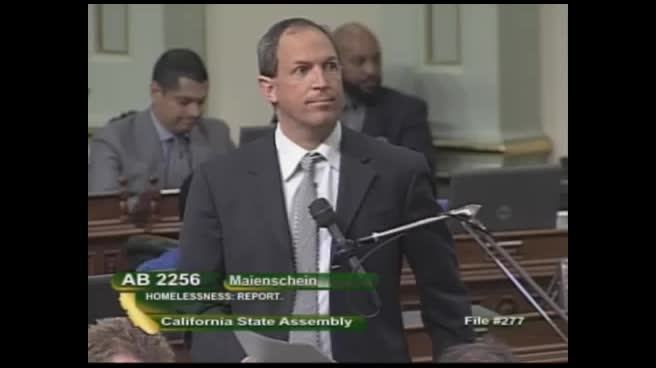
Bill Author