AB 2735: Public employees: unused leave credit.
- Session Year: 2015-2016
- House: Assembly
- Latest Version Date: 2016-02-19
Existing law authorizes the Department of Human Resources, with respect to each state officer and employee who either is excluded from the definition of state employee by specified law, or is a nonelected officer or employee of the executive branch of government who is not a member of the civil service, to provide for vacation, sick leave, annual leave, and bereavement leave benefits, including the lump-sum payment of any amount of accumulated leave. Existing regulations of the department authorize, upon an annual determination by the department whether or not a buy-back will be offered, prescribed buy-back of unused leave credit by managerial, supervisory, confidential, excluded, and related employees, including annual caps of 80 hours for managerial employees and 40 hours for nonmanagerial employees.
This bill would authorize certain of those employees, upon the departments annual determination, to elect annually to be paid at their regular rate of pay for up to 80 hours of eligible unused leave credit. The bill would require the department to determine the date of eligibility and conditions of buy-back and the period for application.
(a)Upon the annual determination by the Department of Human Resources whether or not a buy-back of unused leave credit will be offered, employees designated as supervisory, confidential, or excluded pursuant to subdivision (c), (f), or (g) of Section 3513 and employees designated as managerial pursuant to subdivision (e) of Section 3513 or Section 18801.1 may annually elect to be paid at their regular rate of pay for up to 80 hours of unused leave credit. For the purposes of buy-back, eligible leave may be a combination of vacation leave, annual leave, personal leave, personal holiday, or holiday credit.
(b)The Department of Human Resources shall determine the date of eligibility and conditions of buy-back and the period during which application for buy-back will be accepted.
|
Date
|
Status
|
|---|---|
| Feb 19, 2016 | Introduced. To print. |
| Feb 21, 2016 | From printer. May be heard in committee March 22. |
| Feb 22, 2016 | Read first time. |
| Mar 10, 2016 | Referred to Com. on P.E., R., & S.S. |
| Apr 20, 2016 | From committee: Do pass and re-refer to Com. on APPR. with recommendation: To Consent Calendar. (Ayes 7. Noes 0.) (April 20). Re-referred to Com. on APPR. |
| Apr 27, 2016 | From committee: Do pass. (Ayes 19. Noes 0.) (April 27). |
| Apr 28, 2016 | Read second time. Ordered to third reading. |
| May 2, 2016 | In Senate. Read first time. To Com. on RLS. for assignment. |
| May 2, 2016 | Read third time. Passed. Ordered to the Senate. |
| May 2, 2016 | Read third time. Passed. Ordered to the Senate. (Ayes 76. Noes 0. Page 4625.) |
| May 12, 2016 | Referred to Com. on P.E. & R. |
|
Date
|
Description
|
Location
|
Votes
|
|
|---|---|---|---|---|
| May 2, 2016 | AB 2735 JONES-SAWYER Assembly Third Reading | Assembly Floor |
Passed |
|
| Apr 27, 2016 | Do pass. | Assembly Standing Committee on Appropriations |
Passed |
|
| Apr 20, 2016 | Do pass and be re-referred to the Committee on [Appropriations] with recommendation: To Consent Calendar | Assembly Standing Committee on Public Employees, Retirement, and Social Security |
Passed |
This list shows positions taken on this bill by organizations on the date displayed, which is linked to the original source.
Positions by individuals are not included.
|
Organization
|
Position
|
Date
|
|---|---|---|
| Association Of California State Supervisors | ** Support | Apr 27, 2016 |
| California Association Of Professional Scientists | ** Support | Apr 27, 2016 |
| Professional Engineers In California Government | ** Support | Apr 27, 2016 |
ASSEMBLY THIRD READING
ATR Bill Id:AB 2735
Author:(Jones-Sawyer)
As Introduced Ver:February 19, 2016
Majority vote
Committee | Votes | Ayes | Noes |
Public Employees | 7-0 | Bonta, Waldron, Cooley, Cooper, Cristina Garcia, O'Donnell, Wagner |
|
Appropriations | 19-0 | Gonzalez, Bigelow, Bloom, Bonilla, Bonta, Calderon, Chang, Daly, Eggman, Gallagher, Eduardo Garcia, Holden, Jones, Obernolte, Quirk, Santiago, Wagner, Weber, Wood |
|
SUMMARY: Allows state confidential, supervisory, excluded, or managerial employees to elect to "cash-out" up to 80 hours of eligible unused leave credit if the Department of Human Resources (CalHR) chooses to offer a leave buy-back program. Specifically, this bill:
- Allows, upon the annual determination by CalHR as to whether or not a buy-back program will be offered, state employees designated as supervisory, confidential, excluded or managerial to annually elect to cash-out up to 80 hours of unused leave credit at their regular rate of pay.
- Specifies that for purposes of the buy-back, eligible leave may be a combination of vacation leave, annual leave, personal leave, personal holiday, or holiday credit.
- Requires CalHR to the date of eligibility and conditions of buy-back and the period for application.
FISCAL EFFECT: According to the Assembly Appropriations Committee:
- Unknown but absorbable costs for departments to offer additional hours as part of a leave buyback program, if CalHR determines that existing budgetary resources for a state agency can accommodate the additional hours available for buyback.
- Longer-term cost savings as a result of shifting future costs forward. Leave buyback programs are thought to generate long-term savings and are considered one strategy to curb the growth in unfunded leave liabilities.
COMMENTS: Existing CalHR regulations establish Excluded Employee Buy Back Program which authorizes payment of leave credits to employees who are excluded from collective bargaining. On an annual basis CalHR will determine whether or not a leave buy-back will be offered. Eligible employees may receive payment at their regular salary rate in exchange for accrued vacation, annual leave, personal leave, and/or personal holiday credits. The maximum amount of buy back for managerial and related classes is 80 hours. Supervisors, confidential, and other eligible excluded employees may cash out up to 40 hours.
According to the author, "This bill will increase allowable paid leave buy-back hours to 80 for ALL excluded employees. In current policy, managers are allowed 80 hours and non-managers (supervisors, confidential, and other excluded employees) are ONLY allowed 40 hours of unused leave available for buy-back. This bill will equate the number of hours for buy back to 80 for both state supervisors and managers, removing the discrepancy in the number of hours.
According to a March 2013 report by the Legislative Analysts' Office (LAO), the state's liability to pay employee leave balances totaled $3.9 billion as of June 2013. The LAO concluded that 'the state's large balance of unfunded leave liabilities can pose fiscal stress on departments, reduce budget transparency, strain management-employee relations, and negatively affect public trust in state employee management.' The LAO recommended that the legislature act to reduce leave balance liabilities by 'instituting a leave buy-back program' because 'it reduces the employer's outstanding long-term liabilities.'"
The author concludes, "This bill will also help to ensure that the benefits for state supervisors and managers are consistent with their rank and file counterparts. Under recently negotiated rank and file Memorandum of Understanding (for Bargaining Units 9/Engineers and 10/Scientists), rank and file state engineers and scientists are provided up to 80 hours of leave buy-back in a given year."
Analysis Prepared by: Karon Green / P.E.,R., & S.S. / (916) 319-3957 FN: 0002801
Date of Hearing: April 27, 2016
ASSEMBLY COMMITTEE ON APPROPRIATIONS
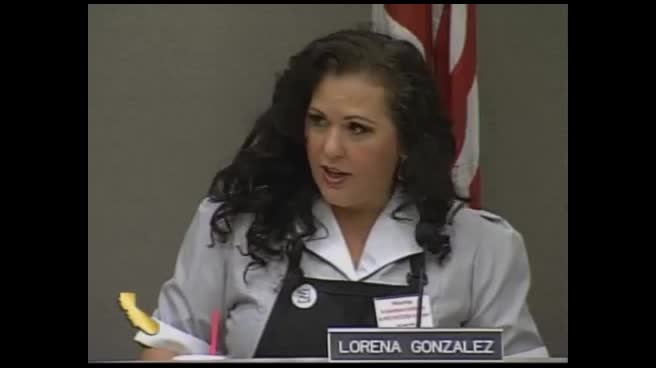
Lorena Gonzalez, Chair
ABPCA Bill Id:AB 2735
Author:(Jones-Sawyer) – As Introduced Ver:February 19, 2016
Policy Committee: | Public Employees, Retirement/Soc Sec | Vote: | 7 - 0 |
|
| ||
|
|
Urgency: No State Mandated Local Program: No Reimbursable: No
This bill allows state confidential, supervisory, excluded, or managerial employees to elect to be paid at their regular rate of pay for up to 80 hours of unused leave credit, which can consist of a combination of vacation leave, annual leave, personal leave, personal holiday, or holiday credit, if the California Department of Human Resources (CalHR) chooses to offer a leave buyback program.
FISCAL EFFECT:
- Unknown but absorbable costs for departments to offer additional hours as part of a leave buyback program, if CalHR determines that existing budgetary resources for a state agency can accommodate the additional hours available for buyback.
- Longer-term cost savings as a result of shifting future costs forward. Leave buyback programs are thought to generate long-term savings and are considered one strategy to curb the growth in unfunded leave liabilities.
COMMENTS:
- Leave buyback programs. Existing CalHR regulations establish the Excluded Employee Buyback Program, which authorizes payment of leave credits to employees who are excluded from collective bargaining. Each year, CalHR determines whether or not a leave buyback will be offered.
Existing policy also allows different buyback amounts for different employees. Some managers are allowed 80 hours while non-managers, which includes supervisors, confidential, or other excluded employees), are allowed up to 40 hours of leave buyback.
These policies are set differently than leave buyback programs established through collective bargaining for non-excluded employees. For instance, the author notes that under a recently negotiated MOU for Bargaining Unit 9, rank and file state engineers and scientists are provided up to 80 hours of leave buy-back in a given year. MOUs such as this one authorize a director of a department to set a maximum number of leave hours that can be bought back, and these maximum hours varies by bargaining unit.
- Purpose. According to the author, AB 2735 will equate the number of hours for buy back to 80 for both state supervisors and managers, removing the discrepancy in the number of hours offered.
- Fiscal impact of leave buyback programs. One practical impact of a leave buyback program is that a state department shifts potential costs forward. As a result, when a leave buyback program is offered, funds are being expended that otherwise wouldn’t be. However, there are a number of important considerations in determining whether a leave buyback program is ultimately determined to be a fiscal cost:
- Departments will typically offer a leave buyback option only if existing budgetary resources allow for it. Therefore while these programs have a fiscal cost, they are not seen as having an effect on the overall budget and are designed to be absorbable.
- Leave buyback programs can also help reduce employers’ long-term leave liabilities. Many state employees can cash out their leave upon retirement, and the value of that cash out depends on an employee’s salary at retirement. A leave buyback program encourages employees to cash out unused leave earlier, often when their salaries are lower. For this reason, a leave buyback program is considered one policy option to curb the growth in unfunded leave liabilities.
Analysis Prepared by: Luke Reidenbach / APPR. / (916) 319-2081
Discussed in Hearing
View Older Hearings
Bill Author

Bill Co-Author(s):