AB 2835: Public employees: orientation and informational programs: exclusive representatives.
- Session Year: 2015-2016
- House: Assembly
- Latest Version Date: 2016-08-19
(1)Existing law, including the Meyers-Milias-Brown Act, the Ralph C. Dills Act, the Trial Court Employment Protection and Governance Act, the Trial Court Interpreter Employment and Labor Relations Act, and the Los Angeles County Metropolitan Transportation Authority Transit Employer-Employee Relations Act, as well as provisions commonly referred to as the Educational Employment Relations Act and the Higher Education Employer-Employee Relations Act, regulates the labor relations of the state, the courts, and specified local public agencies and their employees. Existing law establishes the Public Employment Relations Board and prescribes its powers and duties, in relation to these acts. These acts grant specified public employees of these entities the right to form, join, and participate in the activities of employee organizations of their choosing and requires public agency employers, among other things, to meet and confer with representatives of recognized employee organizations and exclusive representatives on terms and conditions of employment.
This bill would require the public employers regulated by the acts described above to provide newly hired employees, as defined, a specified public employee orientation within 2 4 months of hiring. The bill would require these orientations to be conducted, in-person, during the regular workday of the employees attending. hiring, to be conducted in-person, during work hours. The bill would require, if employees are represented, that the exclusive representative be given notice not less than 10 days in advance of an orientation. The bill would require the pertinent exclusive representative to be permitted to make a presentation of 30 minutes in the first half of the orientation if employees are represented. The bill would, with certain exceptions, require that the content of these presentations be determined solely by the exclusive representative. orientation.
This bill would require, prior to the implementation of the provisions described above, that the public employer provide an exclusive representative the same level of access to orientations allowed as of June 1, 2016. The This bill would require an affected public employer to provide the recognized employee organization or exclusive representative with the name, job title, department, work location, phone number, and home address of newly hired employees within 30 days of the date of hire. The bill would permit a public employer and a recognized employee organization or exclusive representative to negotiate an agreement regarding these employee orientation sessions. The bill would permit agreements between a public employer and an exclusive representative to negotiate an agreement that provides that provide for orientations that vary from the bills requirements, but in absence of an agreement on orientations, the bills requirements would apply. The bill would also require affected public employers to provide the exclusive representative with the name, job title, department, work location, telephone number, and home address of all employees in the bargaining unit at least every 90 days, except as specified.
The bill would provide that affected public employers do not unlawfully support or favor an employee organization or encourage employees to join any organization in preference to another, as specified, by permitting presentations at employee orientations or informational programs, as described above, or consistent with a negotiated agreement. The bill would grant the Public Employment Relations Board jurisdiction over a violation of these provisions. The bill would except from its provisions public employers with respect to in-home supportive services providers, as specified. By creating new duties for various local agencies, this bill would impose a state-mandated local program.
(2)The California Constitution requires the state to reimburse local agencies and school districts for certain costs mandated by the state. Statutory provisions establish procedures for making that reimbursement.
This bill would provide that, with regard to certain mandates, no reimbursement is required by this act for a specified reason.
With regard to any other mandates, this bill would provide that, if the Commission on State Mandates determines that the bill contains costs so mandated by the state, reimbursement for those costs shall be made pursuant to the statutory provisions noted above.
(1)Existing law, including the Meyers-Milias-Brown Act, the Ralph C. Dills Act, the Trial Court Employment Protection and Governance Act, the Trial Court Interpreter Employment and Labor Relations Act, and the Los Angeles County Metropolitan Transportation Authority Transit Employer-Employee Relations Act, as well as provisions commonly referred to as the Educational Employment Relations Act and the Higher Education Employer-Employee Relations Act, regulates the labor relations of the state, the courts, and specified local public agencies and their employees. Existing law establishes the Public Employment Relations Board and prescribes its powers and duties, in relation to these acts. These acts grant specified public employees of these entities the right to form, join, and participate in the activities of employee organizations of their choosing and requires public agency employers, among other things, to meet and confer with representatives of recognized employee organizations and exclusive representatives on terms and conditions of employment.
This bill would require the public employers regulated by the acts described above to provide newly hired employees, as defined, a specified public employee orientation within 2 months of hiring. The bill would require these orientations to be conducted conducted, in-person, during the regular workday at the worksite, except as specified, and that all newly hired employees attend the orientation in person. The bill would require the scheduling of these orientations to be agreed upon with the recognized employee organization or exclusive representative. of the employees attending. The bill would require, if employees are represented, that the exclusive representative be given notice not less than 10 days in advance of an orientation. The bill would require the pertinent recognized employee organization or exclusive representative to be permitted to make a presentation of 30 minutes to begin within one hour of the start in the first half of the orientation if employees are represented by a recognized employee organization or exclusive representative, as specified. represented. The bill would would, with certain exceptions, require that the content of these presentations be determined exclusively solely by the recognized employee organization or exclusive representative.
This bill would require, prior to the implementation of the provisions described above, that the public employer provide a recognized employee organization or an exclusive representative the same level of access to orientations allowed as of June 1, 2016. The bill would require an affected public employer to provide the recognized employee organization or exclusive representative with the name, job title, department, work location, phone number, and home address of newly hired employees within 7 30 days of the date of hire and notice of a scheduled orientation not less than 10 days prior to the orientation, as specified. hire. The bill would permit a public employer and a recognized employee organization or exclusive representative to negotiate an agreement regarding these employee orientation sessions. The bill would permit a public employer and exclusive representative to negotiate an agreement that provides for orientations that vary from the bills requirements, but in absence of an agreement on orientations, the bills requirements would apply.
The bill would provide that the obligation of affected public employers to meet and confer with regard to matters within the scope of representation includes an obligation to meet and confer regarding informational programs for current employees that are similar to the orientations provided to new employees. The bill would require the content of any employee organization presentation included as a part of these informational programs to be determined solely by the recognized employee organization or exclusive representative and that the content is not subject to negotiation.
The bill would provide that affected public employers do not unlawfully support or favor an employee organization or encourage employees to join any organization in preference to another, as specified, by permitting presentations at employee orientations or informational programs, as described above, or consistent with a negotiated agreement. The bill would grant the Public Employment Relations Board jurisdiction over a violation of these provisions. By creating new duties for various local agencies, this bill would impose a state-mandated local program.
(2)The California Constitution requires the state to reimburse local agencies and school districts for certain costs mandated by the state. Statutory provisions establish procedures for making that reimbursement.
This bill would provide that, with regard to certain mandates, no reimbursement is required by this act for a specified reason.
With regard to any other mandates, this bill would provide that, if the Commission on State Mandates determines that the bill contains costs so mandated by the state, reimbursement for those costs shall be made pursuant to the statutory provisions noted above.
(1)Existing law, including the Meyers-Milias-Brown Act, the Ralph C. Dills Act, the Trial Court Employment Protection and Governance Act, the Trial Court Interpreter Employment and Labor Relations Act, and the Los Angeles County Metropolitan Transportation Authority Transit Employer-Employee Relations Act, as well as provisions commonly referred to as the Educational Employment Relations Act and the Higher Education Employer-Employee Relations Act, regulates the labor relations of the state, the courts, and specified local public agencies and their employees. Existing law establishes the Public Employment Relations Board and prescribes its powers and duties, in relation to these acts. These acts grant specified public employees of these entities the right to form, join, and participate in the activities of employee organizations of their choosing and requires public agency employers, among other things, to meet and confer with representatives of recognized employee organizations and exclusive representatives on terms and conditions of employment.
This bill would require the public employers regulated by the acts described above to provide newly hired employees, as defined, a specified public employee orientation within 2 months of hiring. The bill would require these orientations to be conducted during the regular workday at the worksite, except as specified, and that all newly hired employees attend the orientation in person. The bill would require the scheduling of these orientations to be agreed upon with the recognized employee organization or exclusive representative. The bill would require the pertinent recognized employee organization or exclusive representative to be permitted to make a presentation of 30 minutes to begin within one hour of the start of the orientation if employees are represented by a recognized employee organization or exclusive representative, as specified. The bill would require that the content of these presentations be determined exclusively by the recognized employee organization or exclusive representative.
This bill would require, prior to the implementation of the provisions described above, that the public employer provide a recognized employee organization or exclusive representative the same level of access to orientations allowed as of June 1, 2016. The bill would require an affected public employer to provide the recognized employee organization or exclusive representative with the name, job title, department, work location, phone number, and home address of newly hired employees within 7 days of the date of hire and notice of a scheduled orientation not less than 10 days prior to the orientation, as specified. The bill would permit a public employer and a recognized employee organization or exclusive representative to negotiate an agreement regarding these employee orientation sessions.
The bill would provide that the obligation of affected public employers to meet and confer with regard to matters within the scope of representation includes an obligation to meet and confer regarding informational programs for current employees that are similar to the orientations provided to new employees. The bill would require the content of any employee organization presentation included as a part of these informational programs to be determined solely by the recognized employee organization or exclusive representative and that the content is not subject to negotiation.
The bill would provide that affected public employers do not unlawfully support or favor an employee organization or encourage employees to join any organization in preference to another, as specified, by permitting presentations at employee orientations or informational programs, as described above, or consistent with a negotiated agreement. The bill would grant the Public Employment Relations Board jurisdiction over a violation of these provisions. By creating new duties for various local agencies, this bill would impose a state-mandated local program.
(2)The California Constitution requires the state to reimburse local agencies and school districts for certain costs mandated by the state. Statutory provisions establish procedures for making that reimbursement.
This bill would provide that, with regard to certain mandates, no reimbursement is required by this act for a specified reason.
With regard to any other mandates, this bill would provide that, if the Commission on State Mandates determines that the bill contains costs so mandated by the state, reimbursement for those costs shall be made pursuant to the statutory provisions noted above.
Existing law provides that a provision of a memorandum of understanding reached between the state employer and a recognized employee organization representing state civil service employees that requires the expenditure of funds does not become effective unless approved by the Legislature in the annual Budget Act.
This bill would approve provisions of a memorandum of understanding entered into between the state employer and an unspecified bargaining unit that require the expenditure of funds, and would provide that these provisions will become effective even if these provisions are approved by the Legislature in legislation other than the annual Budget Act.
The bill would provide that provisions of the memorandum of understanding approved by this bill that require the expenditure of funds will not take effect unless funds for those provisions are specifically appropriated by the Legislature, and would require the state employer and the affected employee organization to meet and confer to renegotiate the affected provisions if funds for those provisions are not specifically appropriated by the Legislature.
Under existing law, public school employees have the right to form, join, and participate in the activities of employee organizations of their own choosing for the purpose of representation on all matters of employer-employee relations. Existing law makes certain acts of public school employers, such as school districts, unlawful, including, among others, the refusal or failure to meet and negotiate in good faith with an exclusive representative.
This bill would make nonsubstantive changes to that later provision.
(a)Except as set forth in subdivision (d), a A public employer specified in Section 3552 shall provide all newly hired public employees a public employee an orientation within two four months of the time of hiring that may include, but is not limited to, all of the following: hiring. If the employees are represented, the exclusive representative of those employees shall be permitted to make a presentation of 30 minutes to begin in the first half of the orientation. The exclusive representative shall be given not less than 10 days notice in advance of an orientation. Orientations shall be conducted in -person during work hours.
(1)The personnel policies of the public employer, including sexual harassment, violence prevention, and safety plans.
(2)Any applicable civil service rules.
(3)Any ethics or conflict-of-interest rules to which the public employee is subject, if applicable.
(4)Any employer-provided benefit programs for which the public employee is eligible.
(b)An orientation described in subdivision (a) shall meet all of the following minimum requirements:
(1)Orientations shall be conducted in-person, during the regular workday of employees attending. If employees are represented, the exclusive representative shall be given not less than 10 days notice in advance of an orientation.
(2)If employees are represented, the exclusive representative shall be permitted to make a presentation of 30 minutes, to begin in the first half of the orientation that may include, but is not limited to, the following:
(A)Information about the memorandum of understanding, including the term of the agreement, eligibility to vote on its ratification, and how to access the contract.
(B)Any union benefit for which members may be eligible.
(C)Contact information for the exclusive representative.
(3)If the representative from the exclusive representative is not present at the designated start time of the part of the presentation described in paragraph (2), there is no requirement that the representative be afforded additional time.
(4)In addition to other representatives, each exclusive representative may designate one employee representative who may attend the orientation. The content of the exclusive representatives presentation shall be determined solely by the exclusive representative and shall not be subject to negotiation. The presentation shall not include advocacy for or against a candidate for political office or ballot measure. Prior to implementing the orientation requirements set forth in this subdivision, the public employer shall provide at least the level of access to, and the opportunity to make presentations at, orientations that the public employer allowed the exclusive representative as of June 1, 2016, and nothing herein shall be construed as infringing upon or limiting that access.
(c)
(b)Notwithstanding Sections 6254 and 6254.3, the public employer shall provide the exclusive representative with the name, job title, department, work location, telephone number, and home address of any newly hired employee who may be represented by the exclusive representative within 30 days of the date of hire. hire or by the first pay period of the month following hire. The information identified in this subdivision shall be provided to the exclusive representative regardless of whether the newly hired public employee was previously employed by the public employer. The information under this section shall be provided in a manner consistent with paragraph (3) of subdivision (a) of Section 6254.3. The information under this section shall be provided in a manner consistent with Section 6207 for any employee who is a participant in the address confidentiality program established pursuant to Chapter 3.1 (commencing with Section 6205) of Division 7 of Title 1.
(d)A
(c)This section does not prohibit agreements between a public employer and an exclusive representative may negotiate an agreement providing that provide for orientation sessions that vary from any requirement for orientations the requirements of this section. If such an agreement is negotiated, the requirements of subdivisions (a) and (b) shall not apply to the extent that they are inconsistent with the agreement. In the absence of a mutual agreement regarding the orientation sessions, all of the requirements of this section subdivisions (a) and (b) shall apply.
(e)
(d)A public employer identified in Section 3552 does not unlawfully support or favor an employee organization or encourage employees to join any organization in preference to another as prohibited by subdivision (d) of Section 3506.5, subdivision (d) of Section 3519, subdivision (d) of Section 3543.5, or subdivision (d) of Section 3571 of this code, or subdivision (d) of Section 99563.7 of the Public Utilities Code, or any other state law, by permitting an exclusive representative the opportunity to present at employee orientations and informational programs as required by this section or consistent with a negotiated agreement pursuant to Section 3551.
(f)
(e)This section does not modify the scope of bargaining.
3551.Notwithstanding Sections 6254 and 6254.3, the public employer shall provide an exclusive representative with a list containing the name, job title, department, work location, telephone number, and home address of all employees in the bargaining unit at least every 90 days, unless more frequent or more detailed lists are required by an agreement with the exclusive representative. The information under this section shall be provided in a manner consistent with paragraph (3) of subdivision (a) of Section 6254.3. The information under this section shall be provided in a manner consistent with Section 6207 for any employee who is a participant in the address confidentiality program established pursuant to Chapter 3.1 (commencing with Section 6205) of Division 7 of Title 1.
3552.(a)This (1)Except as specified in paragraph (2), this chapter shall only apply to public employers subject to Chapter 10 (commencing with Section 3500), Chapter 10.3 (commencing with Section 3512), Chapter 10.7 (commencing with Section 3540), or Chapter 12 (commencing with Section 3560) of Division 4 of Title 1, Chapter 7 (commencing with Section 71600) or Chapter 7.5 (commencing with Section 71800) of Title 8 of this code, or Chapter 7 (commencing with Section 99560) of Part 11 of Division 10 of the Public Utilities Code.
(2)This chapter does not apply to public employers with respect to in-home supportive services providers who are covered by Section 12301.25 of the Welfare and Institutions Code.
(b)For purposes of this chapter:
(1)Newly hired public employee means any employee, whether permanent, temporary, full time, or part time, hired by a public employer, to which this chapter applies, and who is still employed as of the date of the new hire orientation.
(2)Exclusive representative means the exclusive representative or recognized employee organization for the bargaining unit.
(c)The Public Employment Relations Board shall have jurisdiction over violations of this chapter. The powers and duties of the board described in Section 3541.3 shall apply, as appropriate, to this chapter.
SEC. 2.No reimbursement is required by this act pursuant to Section 6 of Article XIII B of the California Constitution because the only costs that may be incurred by a local agency or school district under this act would result from a legislative mandate that is within the scope of paragraph (7) of subdivision (b) of Section 3 of Article I of the California Constitution.
However, if the Commission on State Mandates determines that this act contains other costs mandated by the state, reimbursement to local agencies and school districts for those costs shall be made pursuant to Part 7 (commencing with Section 17500) of Division 4 of Title 2 of the Government Code.
(a)A Except as set forth in subdivision (d), a public employer specified in Section 3552 shall provide all newly hired public employees a public employee orientation within two months of the time of hiring that shall may include, but is not limited to, all of the following:
(1)The personnel policies of the public employer, including sexual harassment, violence prevention, and safety plans.
(2)Any applicable civil service rules.
(3)Any ethics or conflict-of-interest rules to which the public employee is subject, if applicable.
(4)Any employer-provided benefit programs for which the public employee is eligible.
(b)An orientation described in subdivision (a) shall meet all of the following minimum requirements:
(1)Orientations shall be conducted in-person, during the regular workday and shall take place at the worksite, unless the public employer and recognized employee organization or exclusive representative have agreed otherwise. The scheduling of orientations shall be agreed upon with the recognized employee organization or exclusive representative. All newly hired public employees shall attend in person. of employees attending. If employees are represented, the exclusive representative shall be given not less than 10 days notice in advance of an orientation.
(2)If employees are represented by a recognized employee organization or exclusive representative, representatives of the recognized employee organization or represented, the exclusive representative shall be permitted to make a presentation of 30 minutes minutes, to begin within one hour of the start in the first half of the orientation that shall may include, but is not limited to, all of the following:
(A)Information about the memorandum of understanding, including the term of the agreement, eligibility to vote on its ratification, and how to access the contract.
(B)Any union benefit for which members may be eligible.
(C)Contact information for the exclusive representative.
(3)If no the representative from the recognized employee organization is exclusive representative is not present during at the designated start time of that the part of the presentation, presentation described in paragraph (2), there is no requirement that they the representative be afforded additional time.
(4)If employees in different bargaining units are provided a combined orientation, employees in each bargaining unit shall be provided a separate space in which the employee organization representing each bargaining unit shall be permitted to address its bargaining unit members during the time allotted for the recognized employee organizations or exclusive representatives presentation. In addition to other representatives, each recognized employee organization or exclusive representative may designate one employee representative who may attend the orientation on paid time. orientation. The content of the recognized employee organizations or exclusive representatives presentation shall be determined solely by the employee organization exclusive representative and shall not be subject to negotiation. The presentation shall not include advocacy for or against a candidate for political office or ballot measure. Prior to implementing the orientation requirements set forth in this subdivision, the public employer shall provide at least the level of access to, and the opportunity to make presentations at, orientations that the public employer allowed the recognized employee organization or exclusive representative as of June 1, 2016, and nothing herein shall be construed as infringing upon or limiting that access.
(c)Notwithstanding Sections 6254 and 6254.3, the public employer shall provide the recognized employee organization or exclusive representative with the name, job title, department, work location, telephone number, and home address of any newly hired employee who may be represented by the exclusive representative within seven 30 days of the date of hire and notice of a scheduled orientation not less than 10 days prior to the orientation unless earlier notice is required by an agreement with the recognized employee organization or exclusive representative. hire. The information identified in this subdivision shall be provided to the recognized employee organization or exclusive representative regardless of whether the newly hired public employee was previously employed by the public employer. The information under this section shall be provided in a manner consistent with paragraph (3) of subdivision (a) of Section 6254.3. The information under this section shall be provided in a manner consistent with Section 6207 for any employee who is a participant in the address confidentiality program established pursuant to Chapter 3.1 (commencing with Section 6205) of Division 7 of Title 1.
(d)This section does not prohibit a A public employer and a recognized employee organization or an exclusive representative from negotiating may negotiate an agreement providing for orientation sessions that vary from the requirements any requirement for orientations of this section. However, if the public employer and the recognized employee organization or exclusive representative do not reach In the absence of a mutual agreement regarding the orientation sessions, all of the requirements of this section shall apply.
(e)A public employer identified in Section 3552 does not unlawfully support or favor an employee organization or encourage employees to join any organization in preference to another as prohibited by subdivision (d) of Section 3506.5, subdivision (d) of Section 3519, subdivision (d) of Section 3543.5, or subdivision (d) of Section 3571 of this code, or subdivision (d) of Section 99563.7 of the Public Utilities Code, or any other state law, by permitting a recognized employee organization or an exclusive representative the opportunity to present at employee orientations and informational programs as required by this section or consistent with a negotiated agreement pursuant to Section 3551.
(f)This section does not modify the scope of bargaining.
3551.(a)The obligation established by Sections 3505, 3517, 3543.3, 3570, 71634.2, and 71818 of this code and Section 99563.4 of the Public Utilities Code to meet and confer in good faith regarding terms and conditions of employment includes an obligation to meet and confer regarding informational programs for current state employees that are similar to the state employee orientations required by Section 3550. The establishment, scheduling, and administration of these programs shall be negotiated by the public employer and the recognized employee organization or exclusive representative pursuant to the applicable law governing the public employment relationship at issue in the same manner as other matters within the scope of representation. The content of any recognized employee organization presentation included as part of the informational program shall be determined solely by the recognized employee organization or exclusive representative and shall not be subject to negotiation. The failure to reach agreement on an employee informational program shall be subject to the mediation provisions of law governing the public employment relationship at issue in the same manner as other matters within the scope of representation.
(b)
3551.Notwithstanding Sections 6254 and 6254.3, the public employer shall provide the recognized employee organization or an exclusive representative with a list containing the name, job title, department, work location, telephone number, and home address of all employees in the bargaining unit at least every 90 days, unless more frequent or more detailed lists are required by an agreement with the recognized employee organization or exclusive representative. The information under this section shall be provided in a manner consistent with paragraph (3) of subdivision (a) of Section 6254.3. The information under this section shall be provided in a manner consistent with Section 6207 for any employee who is a participant in the address confidentiality program established pursuant to Chapter 3.1 (commencing with Section 6205) of Division 7 of Title 1.
3552.(a)This chapter shall only apply to public employers subject to Chapter 10 (commencing with Section 3500), Chapter 10.3 (commencing with Section 3512), Chapter 10.7 (commencing with Section 3540), or Chapter 12 (commencing with Section 3560) of Division 4 of Title 1, Chapter 7 (commencing with Section 71600) or Chapter 7.5 (commencing with Section 71800) of Title 8 of this code, or Chapter 7 (commencing with Section 99560) of Part 11 of Division 10 of the Public Utilities Code.
(b)For purposes of this chapter, newly chapter:
(1)Newly hired public employee shall mean means any employee, whether permanent, temporary, full time, or part time, hired by a public employer, to which this chapter applies, and who is still employed as of the date of the new hire orientation.
(2)Exclusive representative means the exclusive representative or recognized employee organization for the bargaining unit.
(c)The Public Employment Relations Board shall have jurisdiction over violations of this chapter. The powers and duties of the board described in Section 3541.3 shall apply, as appropriate, to this chapter.
SEC. 2.No reimbursement is required by this act pursuant to Section 6 of Article XIII B of the California Constitution because the only costs that may be incurred by a local agency or school district under this act would result from a legislative mandate that is within the scope of paragraph (7) of subdivision (b) of Section 3 of Article I of the California Constitution.
However, if the Commission on State Mandates determines that this act contains other costs mandated by the state, reimbursement to local agencies and school districts for those costs shall be made pursuant to Part 7 (commencing with Section 17500) of Division 4 of Title 2 of the Government Code.
(a)A public employer specified in Section 3552 shall provide all newly hired public employees a public employee orientation within two months of the time of hiring that shall include, but is not limited to, all of the following:
(1)The personnel policies of the public employer, including sexual harassment, violence prevention, and safety plans.
(2)Any applicable civil service rules.
(3)Any ethics or conflict-of-interest rules to which the public employee is subject, if applicable.
(4)Any employer-provided benefit programs for which the public employee is eligible.
(b)An orientation described in subdivision (a) shall meet all of the following minimum requirements:
(1)Orientations shall be conducted during the regular workday and shall take place at the worksite, unless the public employer and recognized employee organization or exclusive representative have agreed otherwise. The scheduling of orientations shall be agreed upon with the recognized employee organization or exclusive representative. All newly hired public employees shall attend in person.
(2)If employees are represented by a recognized employee organization or exclusive representative, representatives of the recognized employee organization or exclusive representative shall be permitted to make a presentation of 30 minutes to begin within one hour of the start of the orientation that shall include, but is not limited to, all of the following:
(A)Information about the memorandum of understanding, including the term of the agreement, eligibility to vote on its ratification, and how to access the contract.
(B)Any union benefit for which members may be eligible.
(C)Contact information for the exclusive representative.
(3)If no representative from the recognized employee organization is present during the designated start time of that part of the presentation, there is no requirement that they be afforded additional time.
(4)If employees in different bargaining units are provided a combined orientation, employees in each bargaining unit shall be provided a separate space in which the employee organization representing each bargaining unit shall be permitted to address its bargaining unit members during the time allotted for the recognized employee organizations or exclusive representatives presentation. In addition to other representatives, each recognized employee organization or exclusive representative may designate one employee representative who may attend the orientation on paid time. The content of the recognized employee organizations or exclusive representatives presentation shall be determined solely by the employee organization and shall not be subject to negotiation. The presentation shall not include advocacy for or against a candidate for political office or ballot measure. Prior to implementing the orientation requirements set forth in this subdivision, the public employer shall provide at least the level of access to, and the opportunity to make presentations at, orientations that the public employer allowed the recognized employee organization or exclusive representative as of June 1, 2016, and nothing herein shall be construed as infringing upon or limiting that access.
(c)Notwithstanding Sections 6254 and 6254.3, the public employer shall provide the recognized employee organization or exclusive representative with the name, job title, department, work location, telephone number, and home address of any newly hired employee within seven days of the date of hire and notice of a scheduled orientation not less than 10 days prior to the orientation unless earlier notice is required by an agreement with the recognized employee organization or exclusive representative. The information identified in this subdivision shall be provided to the recognized employee organization or exclusive representative regardless of whether the newly hired public employee was previously employed by the public employer. The information under this section shall be provided in a manner consistent with paragraph (3) of subdivision (a) of Section 6254.3. The information under this section shall be provided in a manner consistent with Section 6207 for any employee who is a participant in the address confidentiality program established pursuant to Chapter 3.1 (commencing with Section 6205) of Division 7 of Title 1.
(d)This section does not prohibit a public employer and a recognized employee organization or exclusive representative from negotiating an agreement providing for orientation sessions that vary from the requirements of this section. However, if the public employer and the recognized employee organization or exclusive representative do not reach a mutual agreement regarding the orientation sessions, all of the requirements of this section shall apply.
(e)A public employer identified in Section 3552 does not unlawfully support or favor an employee organization or encourage employees to join any organization in preference to another as prohibited by subdivision (d) of Section 3506.5, subdivision (d) of Section 3519, subdivision (d) of Section 3543.5, or subdivision (d) of Section 3571 of this code, or subdivision (d) of Section 99563.7 of the Public Utilities Code, or any other state law, by permitting a recognized employee organization or exclusive representative the opportunity to present at employee orientations and informational programs as required by this section or consistent with a negotiated agreement pursuant to Section 3551.
3551.(a)The obligation established by Sections 3505, 3517, 3543.3, 3570, 71634.2, and 71818 of this code and Section 99563.4 of the Public Utilities Code to meet and confer in good faith regarding terms and conditions of employment includes an obligation to meet and confer regarding informational programs for current state employees that are similar to the state employee orientations required by Section 3550. The establishment, scheduling, and administration of these programs shall be negotiated by the public employer and the recognized employee organization or exclusive representative pursuant to the applicable law governing the public employment relationship at issue in the same manner as other matters within the scope of representation. The content of any recognized employee organization presentation included as part of the informational program shall be determined solely by the recognized employee organization or exclusive representative and shall not be subject to negotiation. The failure to reach agreement on an employee informational program shall be subject to the mediation provisions of law governing the public employment relationship at issue in the same manner as other matters within the scope of representation.
(b)Notwithstanding Sections 6254 and 6254.3, the public employer shall provide the recognized employee organization or exclusive representative with a list containing the name, job title, department, work location, telephone number, and home address of all employees in the bargaining unit at least every 90 days, unless more frequent or more detailed lists are required by an agreement with the recognized employee organization or exclusive representative. The information under this section shall be provided in a manner consistent with paragraph (3) of subdivision (a) of Section 6254.3. The information under this section shall be provided in a manner consistent with Section 6207 for any employee who is a participant in the address confidentiality program established pursuant to Chapter 3.1 (commencing with Section 6205) of Division 7 of Title 1.
3552.(a)This chapter shall only apply to public employers subject to Chapter 10 (commencing with Section 3500), Chapter 10.3 (commencing with Section 3512), Chapter 10.7 (commencing with Section 3540), or Chapter 12 (commencing with Section 3560) of Division 4 of Title 1, Chapter 7 (commencing with Section 71600) or Chapter 7.5 (commencing with Section 71800) of Title 8 of this code, or Chapter 7 (commencing with Section 99560) of Part 11 of Division 10 of the Public Utilities Code.
(b)For purposes of this chapter, newly hired public employee shall mean any employee, whether permanent, temporary, full time, or part time, hired by a public employer, to which this chapter applies, and who is still employed as of the date of the new hire orientation.
(c)The Public Employment Relations Board shall have jurisdiction over violations of this chapter. The powers and duties of the board described in Section 3541.3 shall apply, as appropriate, to this chapter.
SEC. 2.No reimbursement is required by this act pursuant to Section 6 of Article XIII B of the California Constitution because the only costs that may be incurred by a local agency or school district under this act would result from a legislative mandate that is within the scope of paragraph (7) of subdivision (b) of Section 3 of Article I of the California Constitution.
However, if the Commission on State Mandates determines that this act contains other costs mandated by the state, reimbursement to local agencies and school districts for those costs shall be made pursuant to Part 7 (commencing with Section 17500) of Division 4 of Title 2 of the Government Code.
SECTION 1.The Legislature finds and declares that the purpose of this act is to approve an agreement entered into by the state employer and State Bargaining Unit ____ pursuant to Section 3517.5 of the Government Code.
SEC. 2.The provisions of the memorandum of understanding prepared pursuant to Section 3517.5 of the Government Code and entered into by the state employer and State Bargaining Unit ____, dated ____, and that require the expenditure of funds, are hereby approved for the purposes of subdivision (b) of Section 3517.6 of the Government Code.
SEC. 3.The provisions of the memorandum of understanding approved by Section 2 of this act that require the expenditure of funds shall not take effect unless funds for these provisions are specifically appropriated by the Legislature. If funds for these provisions are not specifically appropriated by the Legislature, the state employer and the affected employee organization shall meet and confer to renegotiate the affected provisions.
SEC. 4.Notwithstanding Section 3517.6 of the Government Code, the provisions of the memorandum of understanding included in Section 2 of this act that require the expenditure of funds shall become effective even if the provisions of the memorandum of understanding are approved by the Legislature in legislation other than the annual Budget Act.
The Legislature finds and declares that the purpose of this act is to approve an agreement entered into by the state employer and State Bargaining Unit ____ pursuant to Section 3517.5 of the Government Code.
SEC. 2.The provisions of the memorandum of understanding prepared pursuant to Section 3517.5 of the Government Code and entered into by the state employer and State Bargaining Unit ____, dated ____, and that require the expenditure of funds, are hereby approved for the purposes of subdivision (b) of Section 3517.6 of the Government Code.
SEC. 3.The provisions of the memorandum of understanding approved by Section 2 of this act that require the expenditure of funds shall not take effect unless funds for these provisions are specifically appropriated by the Legislature. If funds for these provisions are not specifically appropriated by the Legislature, the state employer and the affected employee organization shall meet and confer to renegotiate the affected provisions.
SEC. 4.Notwithstanding Section 3517.6 of the Government Code, the provisions of the memorandum of understanding included in Section 2 of this act that require the expenditure of funds shall become effective even if the provisions of the memorandum of understanding are approved by the Legislature in legislation other than the annual Budget Act.
SECTION 1.Section 3543.5 of the Government Code is amended to read:3543.5.It is unlawful for a public school employer to do any of the following:
(a)Impose or threaten to impose reprisals on employees, to discriminate or threaten to discriminate against employees, or otherwise to interfere with, restrain, or coerce employees because of their exercise of rights guaranteed by this chapter. For purposes of this subdivision, employee includes an applicant for employment or reemployment.
(b)Deny to employee organizations rights guaranteed to them by this chapter.
(c)Refuse or fail to meet and negotiate in good faith with an exclusive representative. For purposes of this subdivision, knowingly providing an exclusive representative with inaccurate information, whether or not in response to a request for information, regarding the financial resources of the public school employer constitutes a refusal or failure to meet and negotiate in good faith.
(d)Dominate or interfere with the formation or administration of any employee organization, or contribute financial or other support to it, or in any way encourage employees to join any organization in preference to another.
(e)Refuse to participate in good faith in the impasse procedures set forth in Article 9 (commencing with Section 3548).
It is unlawful for a public school employer to do any of the following:
(a)Impose or threaten to impose reprisals on employees, to discriminate or threaten to discriminate against employees, or otherwise to interfere with, restrain, or coerce employees because of their exercise of rights guaranteed by this chapter. For purposes of this subdivision, employee includes an applicant for employment or reemployment.
(b)Deny to employee organizations rights guaranteed to them by this chapter.
(c)Refuse or fail to meet and negotiate in good faith with an exclusive representative. Knowingly For purposes of this subdivision, knowingly providing an exclusive representative with inaccurate information, whether or not in response to a request for information, regarding the financial resources of the public school employer constitutes a refusal or failure to meet and negotiate in good faith.
(d)Dominate or interfere with the formation or administration of any employee organization, or contribute financial or other support to it, or in any way encourage employees to join any organization in preference to another.
(e)Refuse to participate in good faith in the impasse procedure procedures set forth in Article 9 (commencing with Section 3548).
|
Date
|
Status
|
|---|---|
| Jun 1, 2016 | Read third time. Passed. Ordered to the Senate. (Ayes 53. Noes 24. Page 5127.) |
| Aug 31, 2016 | Ordered to inactive file at the request of Senator Pan. |
| Aug 22, 2016 | Read second time. Ordered to third reading. |
| Aug 19, 2016 | Read third time and amended. Ordered to second reading. |
| Aug 15, 2016 | Read second time and amended. Ordered to third reading. |
| Aug 11, 2016 | From committee: Amend, and do pass as amended. (Ayes 5. Noes 2.) (August 11). |
| Aug 1, 2016 | In committee: Referred to APPR. suspense file. |
| Jun 27, 2016 | From committee: Do pass and re-refer to Com. on APPR. (Ayes 3. Noes 2.) (June 27). Re-referred to Com. on APPR. |
| Jun 21, 2016 | From committee chair, with author's amendments: Amend, and re-refer to committee. Read second time, amended, and re-referred to Com. on P.E. & R. |
| Jun 9, 2016 | Referred to Com. on P.E. & R. |
| Jun 2, 2016 | In Senate. Read first time. To Com. on RLS. for assignment. |
| Jun 1, 2016 | Read third time. Passed. Ordered to the Senate. (Ayes 53. Noes 24.) |
| Feb 19, 2016 | Introduced. To print. |
| Jun 1, 2016 | Read third time. Passed. Ordered to the Senate. |
| May 31, 2016 | Read second time. Ordered to third reading. |
| May 27, 2016 | From committee: Do pass. (Ayes 14. Noes 3.) (May 27). |
| Apr 27, 2016 | In committee: Set, first hearing. Referred to APPR. suspense file. |
| Apr 20, 2016 | From committee: Do pass and re-refer to Com. on APPR. (Ayes 6. Noes 1.) (April 20). Re-referred to Com. on APPR. |
| Mar 16, 2016 | Re-referred to Com. on P.E., R., & S.S. |
| Mar 15, 2016 | From committee chair, with author's amendments: Amend, and re-refer to Com. on P.E., R., & S.S. Read second time and amended. |
| Mar 14, 2016 | Referred to Com. on P.E., R., & S.S. |
| Feb 22, 2016 | Read first time. |
| Feb 21, 2016 | From printer. May be heard in committee March 22. |
|
Date
|
Description
|
Location
|
Votes
|
|
|---|---|---|---|---|
| Aug 11, 2016 | Do pass as amended | Senate Standing Committee on Appropriations |
Passed |
|
| Aug 1, 2016 | Placed on suspense file | Senate Standing Committee on Appropriations |
Passed |
|
| Jun 27, 2016 | Do pass, but first be re-referred to the Committee on [Appropriations] | Senate Standing Committee on Public Employment and Retirement |
Passed |
|
| Jun 1, 2016 | AB 2835 COOPER Assembly Third Reading | Assembly Floor |
Passed |
|
| May 27, 2016 | Do pass. | Assembly Standing Committee on Appropriations |
Passed |
|
| Apr 20, 2016 | Do pass and be re-referred to the Committee on [Appropriations] | Assembly Standing Committee on Public Employees, Retirement, and Social Security |
Passed |
This list shows positions taken on this bill by organizations on the date displayed, which is linked to the original source.
Positions by individuals are not included.
Office of Senate Floor Analyses (916) 651-1520 Fax: (916) 327-4478 | AB |
THIRD READING
Bill No: AB 2835
:
SENATE PUBLIC EMP. & RET. COMMITTEE: 3-2, 6/27/16
AYES: Pan, Beall, Hall
NOES: Morrell, Moorlach
SENATE APPROPRIATIONS COMMITTEE: 5-2, 8/11/16
AYES: Lara, Beall, Hill, McGuire, Mendoza
NOES: Bates, Nielsen
ASSEMBLY FLOOR: 53-24, 6/1/16 - See last page for vote
SUBJECT: exclusive representatives
SOURCE: California Labor Federation
California School Employees Association
Services Employees International Union
DIGEST: This bill requires public employers subject to specified labor relations acts to provide an employee orientation to all newly hired public employees, requires the orientation to meet specified minimum requirements, and authorizes the employees’ exclusive representative to make a 30 minute presentation at the orientation.
Senate Floor Amendments of 8/19/16 delete the enumeration of the orientation’s required content and extend the period within which the employer must provide the orientation from two to four months from the time of the employee’s hiring. These amendments make minor, corresponding technical changes. The amendments also exempt public employers from the bill’s provisions with respect to in-home supportive services providers, as specified.
ANALYSIS:
Existing law:
- Establishes several statutory frameworks which provide for public employer-employee relations by providing a reasonable method of resolving disputes regarding wages, hours, and other terms and conditions of employment between public employers and recognized public employee organizations or their exclusive representatives.
- Delegates jurisdiction over the public employer-employee relationship to the Public Employment Relations Board (PERB) and charges PERB with resolving disputes and enforcing the statutory duties and rights of local public agency employers and employee organizations but provides the City and County of Los Angeles a local alternative to PERB oversight.
- Requires that all employers of 50 or more employees provide at least two hours of classroom or other effective interactive training and education regarding sexual harassment to all supervisory employees within six months of their assumption of a supervisory position, and thereafter every two years and requires sexual harassment training to include training on the prevention of abusive conduct.
- Requires all state employees who are required to file statements of economic interest with the Fair Political Practices Commission to attend ethics training every two years.
This bill:
- Requires public employers subject to the specified public employer employee labor relations acts to provide all newly hired public employees an employee orientation within four months of the time of hiring.
- Provides that if employees are represented, the exclusive representative shall be permitted to make a presentation of 30 minutes to begin in the first half of the orientation.
- Requires that the exclusive representative must be given not less than 10 days’ notice in advance of an orientation.
- Provides that the orientations shall be conducted in-person during work hours.
- Requires the public employer to provide to the exclusive representative, with the name, job title, department, work location, telephone number, and home address of any newly hired employee who may be represented by the exclusive representative within 30 days of the date of hire or by the first pay period of the month following hire.
The employee information to be provided by the employer must be provided to the exclusive representative regardless of whether the newly hired employee was previously employed by the public employer. The information shall be provided in a manner consistent with existing law restricting disclosure of information regarding public employees and participants in the address confidentiality program which protects personal information of specified individuals such as law enforcement and victims of domestic abuse.
- Specifies that the bill does not prohibit agreements between a public employer and an exclusive representative that provide for orientation sessions that vary from the requirements of the default orientation provision.
If an agreement is negotiated, this bill’s default provisions shall not apply to the extent that they are inconsistent with the agreement. In the absence of a mutual agreement regarding the orientation sessions, all of the requirements of the default orientation provision of this bill shall apply.
- Clarifies that a public employer does not unlawfully support or favor an employee organization or encourage employees to join any organization in preference to another as prohibited by existing law, as specified, by permitting an exclusive representative the opportunity to present at employee orientations and informational programs as required by this bill or consistent with a negotiated agreement.
- Clarifies that this bill’s provision establishing the default employee orientation session does not modify the scope of bargaining.
- Requires, notwithstanding provisions of the California Public Records Act exempting specified records from disclosure, the public employer to provide the exclusive representative with a list containing the name, job title, department, work location, phone number, and home address of all employees in the bargaining unit at least every 90 days, unless more frequent or more detailed lists are required by an agreement with the exclusive representative. The information shall be provided in a manner consistent with existing law restricting disclosure of information regarding public employees and participants in the address confidentiality program which protects personal information of specified individuals such as law enforcement and victims of domestic abuse.
- Defines public employers that are subject to this bill’s provisions as those employers subject to public employer employee labor relations acts, as specified.
- Exempts from this bill, public employers with respect to in-home services providers who are covered by Section 12301.25 of the Welfare and Institutions Code.
- Defines “newly hired public employee” to mean any employee, whether permanent, temporary, full time, or part time, hired by a public employer, who is still employed as of the date of the new hire orientation.
- Defines “exclusive representative” to mean the exclusive representative or recognized employee organization for the bargaining unit.
- Gives PERB jurisdiction over violations of the requirements of this bill and provides that PERB’s powers and duties apply, as specified.
- States that this bill will not result in a local mandate, as specified, but that if the Commission on State Mandates determines that this act contains mandated costs, reimbursements to local agencies and school districts for those costs shall be made pursuant to Part 7 (commencing with Section 17500) of Division 4 of Title 2 of the Government Code.
Background
According to the author:
Traditionally, public sector jobs have had little turnover, but that is about to change. Governor Brown’s January 2016 budget summary states: “With more than 40 percent of the state workforce entering retirement by 2018, more work is needed to develop and support the next generation of employees.”
As California faces this coming influx of new public servants, there is no uniform standard for public employers to provide an orientation to new employees. Many local agencies and districts provide orientations, but others have no orientation at all.
This bill would address that shortcoming in public sector personnel practices. It would set basic, minimum standards for local agencies and unions to help educate new workers. It would also allow for local flexibility.
This bill is good policy for employees, local government, schools, and the public. Orientations help new employees to fully understand their responsibilities and the laws that govern their work. Orientations also educate employees about their employment rights and benefits and other services available to them.
Together these provisions will help build a more educated and effective workforce, will limit liability to public agencies, and will provide better service to the taxpayers, state, students and communities served.
FISCAL EFFECT: Appropriation: Fiscal Com.: Local:
According to the Senate Appropriations Committee, this bill would result in unknown General and special fund costs, at a minimum in the millions of dollars annually, for state departments to modify their administration functions to implement the provisions of the bill.
California Labor Federation (co-source)
California School Employees Association (co-source)
Services Employees International Union (co-source)
American Federation of State, County and Municipal Employees, AFL-CIO
CAL FIRE Local, 2881
California Faculty Association
California-Nevada Conference of Operating Engineers
California Nurses Association
California Professional Firefighters
California Teachers Association
Laborers’ International Union of North America, Local 777
Laborers’ International Union of North America, Local 792
Los Angeles County Professional Peace Officers Association
Orange County Employees Association
Orange County Professional Firefighters Association
Organization of SMUD Employees
San Diego County Court Employees Association
San Luis Obispo County Employees Association
OPPOSITION: (Verified 8/30/16)
Association of California Community College Administrators
Association of California School Administrators
California Association of School Business Officials
California Association of Suburban Schools
California County Superintendents Association
California School Boards Association
California Special Districts Association
California State Association of Counties
City of Azusa
City of Diamond Bar
City of La Quinta
City of Long Beach
City of Palmdale
City of Thousand Oaks
Kern County Superintendent of Schools
League of California Cities
Riverside County Superintendent of Schools
Rural County Representatives of California
San Joaquin County Board of Supervisors
Urban Counties of California
ARGUMENTS IN SUPPORT: According to the author, this bill “Creates a uniform statewide standard regarding public employee orientation; ensures an effective use of taxpayer funding by confirming employees have balanced and accurate information regarding their rights and benefits; creates a more educated and effective workforce to respond to serve the public; and ensures all new teachers, firefighters, police officers and other public employees understand their rights, benefits, obligations and duties.”
According to the sponsors, California faces an influx of new public servants with more than 40 percent of the state workforce entering retirement by 2018. “There is no uniform standard for public employers to provide an orientation to new employees. Many local agencies and districts provide orientations, but others have no orientation at all.” AB 2835 ensures “that all future public employees participate in a new hire orientation about key policies such as workplace safety, sexual harassment, and violence prevention. It would also give workers the opportunity to hear from their union about their contractual rights and benefits.”
ARGUMENTS IN OPPOSITION: According to the opposition, “The requirements in AB 2835 will significantly increase the costs for public agencies. By increasing the frequency and number of orientations, while requiring the schools and public employers to utilize additional staff to cover classes and other services during the orientation, the bill will drive up state and locals costs in the hundreds of millions of dollars. The over prescriptive requirements of AB 2835 prevent management and labor from utilizing more cost efficient and effective methods of conducting orientations.”
ASSEMBLY FLOOR: 53-24, 6/1/16
AYES: Alejo, Arambula, Atkins, Bloom, Bonilla, Bonta, Brown, Burke, Calderon, Campos, Chau, Chiu, Chu, Cooley, Cooper, Dababneh, Daly, Dodd, Eggman, Frazier, Cristina Garcia, Eduardo Garcia, Gatto, Gipson, Gomez, Gonzalez, Gordon, Gray, Roger Hernández, Holden, Irwin, Jones-Sawyer, Levine, Linder, Lopez, Low, McCarty, Medina, Mullin, Nazarian, O'Donnell, Quirk, Ridley-Thomas, Rodriguez, Salas, Santiago, Mark Stone, Thurmond, Ting, Weber, Williams, Wood, Rendon
NOES: Achadjian, Travis Allen, Baker, Brough, Chang, Chávez, Beth Gaines, Gallagher, Grove, Hadley, Harper, Jones, Kim, Lackey, Maienschein, Mathis, Mayes, Melendez, Obernolte, Olsen, Patterson, Steinorth, Wagner, Wilk
NO VOTE RECORDED: Bigelow, Dahle, Waldron
8/30/16 13:41:10
**** END ****
Office of Senate Floor Analyses (916) 651-1520 Fax: (916) 327-4478 | AB |
THIRD READING
Bill No: AB 2835
:
SENATE PUBLIC EMP. & RET. COMMITTEE: 3-2, 6/27/16
AYES: Pan, Beall, Hall
NOES: Morrell, Moorlach
SENATE APPROPRIATIONS COMMITTEE: 5-2, 8/11/16
AYES: Lara, Beall, Hill, McGuire, Mendoza
NOES: Bates, Nielsen
ASSEMBLY FLOOR: 53-24, 6/1/16 - See last page for vote
SUBJECT: exclusive representatives
SOURCE: California Labor Federation
California School Employees Association
Services Employees International Union
DIGEST: This bill requires public employers subject to specified labor relations acts to provide an employee orientation to all newly hired public employees, requires the orientation to meet specified minimum requirements, and authorizes the employees’ exclusive representative to make a 30 minute presentation at the orientation.
Senate Floor Amendments of 8/19/16 delete the enumeration of the orientation’s required content and extend the period within which the employer must provide the orientation from two to four months from the time of the employee’s hiring. These amendments make minor, corresponding technical changes. The amendments also exempt public employers from the bill’s provisions with respect to in-home supportive services providers, as specified.
ANALYSIS:
Existing law:
- Establishes several statutory frameworks which provide for public employer-employee relations by providing a reasonable method of resolving disputes regarding wages, hours, and other terms and conditions of employment between public employers and recognized public employee organizations or their exclusive representatives.
- Delegates jurisdiction over the public employer-employee relationship to the Public Employment Relations Board (PERB) and charges PERB with resolving disputes and enforcing the statutory duties and rights of local public agency employers and employee organizations but provides the City and County of Los Angeles a local alternative to PERB oversight.
- Requires that all employers of 50 or more employees provide at least two hours of classroom or other effective interactive training and education regarding sexual harassment to all supervisory employees within six months of their assumption of a supervisory position, and thereafter every two years and requires sexual harassment training to include training on the prevention of abusive conduct.
- Requires all state employees who are required to file statements of economic interest with the Fair Political Practices Commission to attend ethics training every two years.
This bill:
- Requires public employers subject to the specified public employer employee labor relations acts to provide all newly hired public employees an employee orientation within four months of the time of hiring.
- Provides that if employees are represented, the exclusive representative shall be permitted to make a presentation of 30 minutes to begin in the first half of the orientation.
- Requires that the exclusive representative must be given not less than 10 days’ notice in advance of an orientation.
- Provides that the orientations shall be conducted in-person during work hours.
- Requires the public employer to provide to the exclusive representative, with the name, job title, department, work location, telephone number, and home address of any newly hired employee who may be represented by the exclusive representative within 30 days of the date of hire or by the first pay period of the month following hire.
The employee information to be provided by the employer must be provided to the exclusive representative regardless of whether the newly hired employee was previously employed by the public employer. The information shall be provided in a manner consistent with existing law restricting disclosure of information regarding public employees and participants in the address confidentiality program which protects personal information of specified individuals such as law enforcement and victims of domestic abuse.
- Specifies that the bill does not prohibit agreements between a public employer and an exclusive representative that provide for orientation sessions that vary from the requirements of the default orientation provision.
If an agreement is negotiated, this bill’s default provisions shall not apply to the extent that they are inconsistent with the agreement. In the absence of a mutual agreement regarding the orientation sessions, all of the requirements of the default orientation provision of this bill shall apply.
- Clarifies that a public employer does not unlawfully support or favor an employee organization or encourage employees to join any organization in preference to another as prohibited by existing law, as specified, by permitting an exclusive representative the opportunity to present at employee orientations and informational programs as required by this bill or consistent with a negotiated agreement.
- Clarifies that this bill’s provision establishing the default employee orientation session does not modify the scope of bargaining.
- Requires, notwithstanding provisions of the California Public Records Act exempting specified records from disclosure, the public employer to provide the exclusive representative with a list containing the name, job title, department, work location, phone number, and home address of all employees in the bargaining unit at least every 90 days, unless more frequent or more detailed lists are required by an agreement with the exclusive representative. The information shall be provided in a manner consistent with existing law restricting disclosure of information regarding public employees and participants in the address confidentiality program which protects personal information of specified individuals such as law enforcement and victims of domestic abuse.
- Defines public employers that are subject to this bill’s provisions as those employers subject to public employer employee labor relations acts, as specified.
- Exempts from this bill, public employers with respect to in-home services providers who are covered by Section 12301.25 of the Welfare and Institutions Code.
- Defines “newly hired public employee” to mean any employee, whether permanent, temporary, full time, or part time, hired by a public employer, who is still employed as of the date of the new hire orientation.
- Defines “exclusive representative” to mean the exclusive representative or recognized employee organization for the bargaining unit.
- Gives PERB jurisdiction over violations of the requirements of this bill and provides that PERB’s powers and duties apply, as specified.
- States that this bill will not result in a local mandate, as specified, but that if the Commission on State Mandates determines that this act contains mandated costs, reimbursements to local agencies and school districts for those costs shall be made pursuant to Part 7 (commencing with Section 17500) of Division 4 of Title 2 of the Government Code.
Background
According to the author:
Traditionally, public sector jobs have had little turnover, but that is about to change. Governor Brown’s January 2016 budget summary states: “With more than 40 percent of the state workforce entering retirement by 2018, more work is needed to develop and support the next generation of employees.”
As California faces this coming influx of new public servants, there is no uniform standard for public employers to provide an orientation to new employees. Many local agencies and districts provide orientations, but others have no orientation at all.
This bill would address that shortcoming in public sector personnel practices. It would set basic, minimum standards for local agencies and unions to help educate new workers. It would also allow for local flexibility.
This bill is good policy for employees, local government, schools, and the public. Orientations help new employees to fully understand their responsibilities and the laws that govern their work. Orientations also educate employees about their employment rights and benefits and other services available to them.
Together these provisions will help build a more educated and effective workforce, will limit liability to public agencies, and will provide better service to the taxpayers, state, students and communities served.
FISCAL EFFECT: Appropriation: Fiscal Com.: Local:
According to the Senate Appropriations Committee, this bill would result in unknown General and special fund costs, at a minimum in the millions of dollars annually, for state departments to modify their administration functions to implement the provisions of the bill.
California Labor Federation (co-source)
California School Employees Association (co-source)
Services Employees International Union (co-source)
American Federation of State, County and Municipal Employees, AFL-CIO
CAL FIRE Local, 2881
California Faculty Association
California-Nevada Conference of Operating Engineers
California Nurses Association
California Professional Firefighters
California Teachers Association
Laborers’ International Union of North America, Local 777
Laborers’ International Union of North America, Local 792
Los Angeles County Professional Peace Officers Association
Orange County Employees Association
Orange County Professional Firefighters Association
Organization of SMUD Employees
San Diego County Court Employees Association
San Luis Obispo County Employees Association
OPPOSITION: (Verified 8/25/16)
Association of California Community College Administrators
Association of California School Administrators
California Association of School Business Officials
California Association of Suburban Schools
California County Superintendents Association
California School Boards Association
California Special Districts Association
California State Association of Counties
City of Diamond Bar
City of La Quinta
City of Long Beach
City of Palmdale
City of Thousand Oaks
Kern County Superintendent of Schools
League of California Cities
Riverside County Superintendent of Schools
Rural County Representatives of California
San Joaquin County Board of Supervisors
Urban Counties of California
ARGUMENTS IN SUPPORT: According to the author, this bill “Creates a uniform statewide standard regarding public employee orientation; ensures an effective use of taxpayer funding by confirming employees have balanced and accurate information regarding their rights and benefits; creates a more educated and effective workforce to respond to serve the public; and ensures all new teachers, firefighters, police officers and other public employees understand their rights, benefits, obligations and duties.”
According to the sponsors, California faces an influx of new public servants with more than 40 percent of the state workforce entering retirement by 2018. “There is no uniform standard for public employers to provide an orientation to new employees. Many local agencies and districts provide orientations, but others have no orientation at all.” AB 2835 ensures “that all future public employees participate in a new hire orientation about key policies such as workplace safety, sexual harassment, and violence prevention. It would also give workers the opportunity to hear from their union about their contractual rights and benefits.”
ARGUMENTS IN OPPOSITION: According to the opposition, “The requirements in AB 2835 will significantly increase the costs for public agencies. By increasing the frequency and number of orientations, while requiring the schools and public employers to utilize additional staff to cover classes and other services during the orientation, the bill will drive up state and locals costs in the hundreds of millions of dollars. The over prescriptive requirements of AB 2835 prevent management and labor from utilizing more cost efficient and effective methods of conducting orientations.”
ASSEMBLY FLOOR: 53-24, 6/1/16
AYES: Alejo, Arambula, Atkins, Bloom, Bonilla, Bonta, Brown, Burke, Calderon, Campos, Chau, Chiu, Chu, Cooley, Cooper, Dababneh, Daly, Dodd, Eggman, Frazier, Cristina Garcia, Eduardo Garcia, Gatto, Gipson, Gomez, Gonzalez, Gordon, Gray, Roger Hernández, Holden, Irwin, Jones-Sawyer, Levine, Linder, Lopez, Low, McCarty, Medina, Mullin, Nazarian, O'Donnell, Quirk, Ridley-Thomas, Rodriguez, Salas, Santiago, Mark Stone, Thurmond, Ting, Weber, Williams, Wood, Rendon
NOES: Achadjian, Travis Allen, Baker, Brough, Chang, Chávez, Beth Gaines, Gallagher, Grove, Hadley, Harper, Jones, Kim, Lackey, Maienschein, Mathis, Mayes, Melendez, Obernolte, Olsen, Patterson, Steinorth, Wagner, Wilk
NO VOTE RECORDED: Bigelow, Dahle, Waldron
8/25/16 16:13:13
**** END ****
Office of Senate Floor Analyses (916) 651-1520 Fax: (916) 327-4478 | AB |
THIRD READING
Bill No: AB 2835
:
SENATE PUBLIC EMP. & RET. COMMITTEE: 3-2, 6/27/16
AYES: Pan, Beall, Hall
NOES: Morrell, Moorlach
SENATE APPROPRIATIONS COMMITTEE: 5-2, 8/11/16
AYES: Lara, Beall, Hill, McGuire, Mendoza
NOES: Bates, Nielsen
ASSEMBLY FLOOR: 53-24, 6/1/16 - See last page for vote
SUBJECT: exclusive representatives
SOURCE: California Labor Federation
California School Employees Association
Services Employees International Union
DIGEST: This bill requires public employers subject to specified labor relations acts to provide an employee orientation to all newly hired public employees, requires the orientation to meet specified minimum requirements, and authorizes the employees’ exclusive representative to make a 30 minute presentation at the orientation.
Senate Floor Amendments of 8/19/16 delete the enumeration of the orientation’s required content and extend the period within which the employer must provide the orientation from two to four months from the time of the employee’s hiring. These amendments make minor, corresponding technical changes. The amendments also exempt public employers from the bill’s provisions with respect to in-home supportive services providers, as specified.
ANALYSIS:
Existing law:
- Establishes several statutory frameworks which provide for public employer-employee relations by providing a reasonable method of resolving disputes regarding wages, hours, and other terms and conditions of employment between public employers and recognized public employee organizations or their exclusive representatives.
- Delegates jurisdiction over the public employer-employee relationship to the Public Employment Relations Board (PERB) and charges PERB with resolving disputes and enforcing the statutory duties and rights of local public agency employers and employee organizations but provides the City and County of Los Angeles a local alternative to PERB oversight.
- Requires that all employers of 50 or more employees provide at least two hours of classroom or other effective interactive training and education regarding sexual harassment to all supervisory employees within six months of their assumption of a supervisory position, and thereafter every two years and requires sexual harassment training to include training on the prevention of abusive conduct.
- Requires all state employees who are required to file statements of economic interest with the Fair Political Practices Commission to attend ethics training every two years.
This bill:
- Requires public employers subject to the specified public employer employee labor relations acts to provide all newly hired public employees an employee orientation within four months of the time of hiring.
- Provides that if employees are represented, the exclusive representative shall be permitted to make a presentation of 30 minutes to begin in the first half of the orientation.
- Requires that the exclusive representative must be given not less than 10 days’ notice in advance of an orientation.
- Provides that the orientations shall be conducted in-person during work hours.
- Requires the public employer to provide to the exclusive representative, with the name, job title, department, work location, telephone number, and home address of any newly hired employee who may be represented by the exclusive representative within 30 days of the date of hire or by the first pay period of the month following hire.
The employee information to be provided by the employer must be provided to the exclusive representative regardless of whether the newly hired employee was previously employed by the public employer. The information shall be provided in a manner consistent with existing law restricting disclosure of information regarding public employees and participants in the address confidentiality program which protects personal information of specified individuals such as law enforcement and victims of domestic abuse.
- Specifies that the bill does not prohibit agreements between a public employer and an exclusive representative that provide for orientation sessions that vary from the requirements of the default orientation provision.
If an agreement is negotiated, this bill’s default provisions shall not apply to the extent that they are inconsistent with the agreement. In the absence of a mutual agreement regarding the orientation sessions, all of the requirements of the default orientation provision of this bill shall apply.
- Clarifies that a public employer does not unlawfully support or favor an employee organization or encourage employees to join any organization in preference to another as prohibited by existing law, as specified, by permitting an exclusive representative the opportunity to present at employee orientations and informational programs as required by this bill or consistent with a negotiated agreement.
- Clarifies that this bill’s provision establishing the default employee orientation session does not modify the scope of bargaining.
- Requires, notwithstanding provisions of the California Public Records Act exempting specified records from disclosure, the public employer to provide the exclusive representative with a list containing the name, job title, department, work location, phone number, and home address of all employees in the bargaining unit at least every 90 days, unless more frequent or more detailed lists are required by an agreement with the exclusive representative. The information shall be provided in a manner consistent with existing law restricting disclosure of information regarding public employees and participants in the address confidentiality program which protects personal information of specified individuals such as law enforcement and victims of domestic abuse.
- Defines public employers that are subject to this bill’s provisions as those employers subject to public employer employee labor relations acts, as specified.
- Exempts from this bill, public employers with respect to in-home services providers who are covered by Section 12301.25 of the Welfare and Institutions Code.
- Defines “newly hired public employee” to mean any employee, whether permanent, temporary, full time, or part time, hired by a public employer, who is still employed as of the date of the new hire orientation.
- Defines “exclusive representative” to mean the exclusive representative or recognized employee organization for the bargaining unit.
- Gives PERB jurisdiction over violations of the requirements of this bill and provides that PERB’s powers and duties apply, as specified.
- States that this bill will not result in a local mandate, as specified, but that if the Commission on State Mandates determines that this act contains mandated costs, reimbursements to local agencies and school districts for those costs shall be made pursuant to Part 7 (commencing with Section 17500) of Division 4 of Title 2 of the Government Code.
Background
According to the author:
Traditionally, public sector jobs have had little turnover, but that is about to change. Governor Brown’s January 2016 budget summary states: “With more than 40 percent of the state workforce entering retirement by 2018, more work is needed to develop and support the next generation of employees.”
As California faces this coming influx of new public servants, there is no uniform standard for public employers to provide an orientation to new employees. Many local agencies and districts provide orientations, but others have no orientation at all.
This bill would address that shortcoming in public sector personnel practices. It would set basic, minimum standards for local agencies and unions to help educate new workers. It would also allow for local flexibility.
This bill is good policy for employees, local government, schools, and the public. Orientations help new employees to fully understand their responsibilities and the laws that govern their work. Orientations also educate employees about their employment rights and benefits and other services available to them.
Together these provisions will help build a more educated and effective workforce, will limit liability to public agencies, and will provide better service to the taxpayers, state, students and communities served.
FISCAL EFFECT: Appropriation: Fiscal Com.: Local:
According to the Senate Appropriations Committee, this bill would result in unknown General and special fund costs, at a minimum in the millions of dollars annually, for state departments to modify their administration functions to implement the provisions of the bill.
California Labor Federation (co-source)
California School Employees Association (co-source)
Services Employees International Union (co-source)
American Federation of State, County and Municipal Employees, AFL-CIO
CAL FIRE Local, 2881
California Faculty Association
California-Nevada Conference of Operating Engineers
California Nurses Association
California Professional Firefighters
California Teachers Association
Laborers’ International Union of North America, Local 777
Laborers’ International Union of North America, Local 792
Los Angeles County Professional Peace Officers Association
Orange County Employees Association
Orange County Professional Firefighters Association
Organization of SMUD Employees
San Diego County Court Employees Association
San Luis Obispo County Employees Association
OPPOSITION: (Verified 8/22/16)
Association of California Community College Administrators
Association of California School Administrators
California Association of School Business Officials
California Association of Suburban Schools
California County Superintendents Association
California School Boards Association
California Special Districts Association
California State Association of Counties
City of Long Beach
City of Palmdale
Kern County Superintendent of Schools
League of California Cities
Riverside County Superintendent of Schools
Rural County Representatives of California
San Joaquin County Board of Supervisors
Urban Counties of California
ARGUMENTS IN SUPPORT: According to the author, this bill “Creates a uniform statewide standard regarding public employee orientation; ensures an effective use of taxpayer funding by confirming employees have balanced and accurate information regarding their rights and benefits; creates a more educated and effective workforce to respond to serve the public; and ensures all new teachers, firefighters, police officers and other public employees understand their rights, benefits, obligations and duties.”
According to the sponsors, California faces an influx of new public servants with more than 40 percent of the state workforce entering retirement by 2018. “There is no uniform standard for public employers to provide an orientation to new employees. Many local agencies and districts provide orientations, but others have no orientation at all.” AB 2835 ensures “that all future public employees participate in a new hire orientation about key policies such as workplace safety, sexual harassment, and violence prevention. It would also give workers the opportunity to hear from their union about their contractual rights and benefits.”
ARGUMENTS IN OPPOSITION: According to the opposition, “The requirements in AB 2835 will significantly increase the costs for public agencies. By increasing the frequency and number of orientations, while requiring the schools and public employers to utilize additional staff to cover classes and other services during the orientation, the bill will drive up state and locals costs in the hundreds of millions of dollars. The over prescriptive requirements of AB 2835 prevent management and labor from utilizing more cost efficient and effective methods of conducting orientations.”
ASSEMBLY FLOOR: 53-24, 6/1/16
AYES: Alejo, Arambula, Atkins, Bloom, Bonilla, Bonta, Brown, Burke, Calderon, Campos, Chau, Chiu, Chu, Cooley, Cooper, Dababneh, Daly, Dodd, Eggman, Frazier, Cristina Garcia, Eduardo Garcia, Gatto, Gipson, Gomez, Gonzalez, Gordon, Gray, Roger Hernández, Holden, Irwin, Jones-Sawyer, Levine, Linder, Lopez, Low, McCarty, Medina, Mullin, Nazarian, O'Donnell, Quirk, Ridley-Thomas, Rodriguez, Salas, Santiago, Mark Stone, Thurmond, Ting, Weber, Williams, Wood, Rendon
NOES: Achadjian, Travis Allen, Baker, Brough, Chang, Chávez, Beth Gaines, Gallagher, Grove, Hadley, Harper, Jones, Kim, Lackey, Maienschein, Mathis, Mayes, Melendez, Obernolte, Olsen, Patterson, Steinorth, Wagner, Wilk
NO VOTE RECORDED: Bigelow, Dahle, Waldron
8/22/16 23:10:19
**** END ****
Office of Senate Floor Analyses (916) 651-1520 Fax: (916) 327-4478 | AB |
THIRD READING
Bill No: AB 2835
:
SENATE PUBLIC EMP. & RET. COMMITTEE: 3-2, 6/27/16
AYES: Pan, Beall, Hall
NOES: Morrell, Moorlach
SENATE APPROPRIATIONS COMMITTEE: 5-2, 8/11/16
AYES: Lara, Beall, Hill, McGuire, Mendoza
NOES: Bates, Nielsen
ASSEMBLY FLOOR: 53-24, 6/1/16 - See last page for vote
SOURCE: California Labor Federation
California School Employees Association
Services Employees International Union
DIGEST: This bill requires public employers subject to specified labor relations acts to provide an employee orientation to all newly hired public employees, requires the orientation to meet specified minimum requirements, and authorizes the employees’ exclusive representative to make a 30 minute presentation at the orientation.
ANALYSIS:
Existing law:
- Establishes several statutory frameworks which provide for employer-employee relations by providing a reasonable method of resolving disputes regarding wages, hours, and other terms and conditions of employment between public employers and recognized public employee organizations or their exclusive representatives. These include the following:
- The State Employee-Employer Relations Act, which governs state government employer-employee relations.
- The Meyers-Milias-Brown Act, which governs labor relations between local public agencies and local public employees.
- The Education Employment Relations Act for employer-employee relations within the public school systems (K-12 and community colleges).
- The Higher Education Employer-Employee Relations Act providing for employer-employee relations at the University of California, the California State University System, and Hastings College of the Law.
- Other parallel statutory frameworks that govern labor relations among trial court employees, train court interpreters, and public transit employees and their respective public employers.
- Uses various terms to identify the official unions representing particular groups of employees including “recognized employee organization” and “exclusive representative.”
- Delegates jurisdiction over the public employer-employee relationship to the Public Employment Relations Board (PERB) and charges PERB with resolving disputes and enforcing the statutory duties and rights of local public agency employers and employee organizations but provides the City and County of Los Angeles a local alternative to PERB oversight.
This bill:
- Requires public employers subject to the specified public employer employee labor relations acts to provide all newly hired public employees, as defined, a public employee orientation within two months of the time of hiring that shall include, but is not limited to, all of the following:
- The personnel and civil service policies of the public employer, including sexual harassment, whistleblower, violence prevention, and safety plans.
- Any applicable civil service rules.
- Any ethics or conflict-of-interest rules to which the public employee is subject, as applicable.
- Any employer-sponsored benefits programs for which the public employee is eligible.
- Provides that a public employee orientation shall meet the following minimum requirements:
- Be conducted in person during the regular workday of employees attending. If employees are represented, the exclusive representative must be given not less than 10 days’ notice in advance of an orientation.
- If employees are represented, the exclusive representative shall be permitted to make a presentation of 30 minutes, to begin in the first half of the orientation that may include, but is not limited to, the following:
- Information about the memorandum of understanding, including the term of the agreement, eligibility to vote on its ratification, and how to access the contract.
- Any union benefit for which members may be eligible.
- Contact information for the exclusive representative.
- If the representative from the exclusive representative is not present at the designated start time of its part of the presentation, there is no requirement that the representative be afforded additional time.
- In addition to other representatives, each exclusive representative may designate one employee representative who may attend the orientation.
The content of the exclusive representative’s presentation shall be determined solely by the exclusive representative and shall not be subject to negotiation.
The presentation shall not include advocacy for or against a candidate for political office or ballot measure.
Prior to implementing the employee orientation requirements, the public employer shall provide at least the level of access to, and the opportunity to make presentations at, orientations that the public employer allowed the exclusive representative as of June 1, 2016, and nothing in the bill shall be construed as infringing upon or limiting that access.
- Requires the public employer to provide to the exclusive representative, with the name, job title, department, work location, telephone number, and home address of any newly hired employee who may be represented by the exclusive representative within 30 days of the date of hire.
The employee information to be provided by the employer must be provided to the exclusive representative regardless of whether the newly hired employee was previously employed by the public employer. The information shall be provided in a manner consistent with existing law restricting disclosure of information regarding public employees and participants in the address confidentiality program which protects personal information of specified individuals such as law enforcement and victims of domestic abuse.
- Authorizes a public employer and an exclusive representative to negotiate an agreement providing for orientation sessions that may vary from any requirements of the default orientation provision. However, in the absence of a mutual agreement regarding the orientation sessions, all of the requirements of the default orientation provision of this bill shall apply.
- Clarifies that a public employer does not unlawfully support or favor an employee organization or encourage employees to join any organization in preference to another as prohibited by existing law, as specified, by permitting an exclusive representative the opportunity to present at employee orientations and informational programs as required by this bill or consistent with a negotiated agreement.
- Clarifies that this bill’s provision establishing the default employee orientation session does not modify the scope of bargaining.
- Requires, notwithstanding provisions of the California Public Records Act exempting specified records from disclosure, the public employer to provide the exclusive representative with a list containing the name, job title, department, work location, phone number, and home address of all employees in the bargaining unit at least every 90 days, unless more frequent or more detailed lists are required by an agreement with the exclusive representative. The information shall be provided in a manner consistent with existing law restricting disclosure of information regarding public employees and participants in the address confidentiality program which protects personal information of specified individuals such as law enforcement and victims of domestic abuse.
- Defines public employers that are subject to this bill’s provisions as those employers subject to public employer employee labor relations acts, as specified.
- Defines “newly hired public employee” to mean any employee, whether permanent, temporary, full time, or part time, hired by a public employer, who is still employed as of the date of the new hire orientation.
- Defines “exclusive representative” to mean the exclusive representative or recognized employee organization for the bargaining unit.
- Gives PERB jurisdiction over violations of the requirements of this bill and provides that PERB’s powers and duties apply, as specified.
- States that this bill will not result in a local mandate, as specified, but that if the Commission on State Mandates determines that this act contains mandated costs, reimbursements to local agencies and school districts for those costs shall be made pursuant to Part 7 (commencing with Section 17500) of Division 4 of Title 2 of the Government Code.
Background
According to the author:
Traditionally, public sector jobs have had little turnover, but that is about to change. Governor Brown’s January 2016 budget summary states: “With more than 40 percent of the state workforce entering retirement by 2018, more work is needed to develop and support the next generation of employees.”
As California faces this coming influx of new public servants, there is no uniform standard for public employers to provide an orientation to new employees. Many local agencies and districts provide orientations, but others have no orientation at all.
This bill would address that shortcoming in public sector personnel practices. It would set basic, minimum standards for local agencies and unions to help educate new workers. It would also allow for local flexibility.
This bill is good policy for employees, local government, schools, and the public. Orientations help new employees to fully understand their responsibilities and the laws that govern their work. Orientations also educate employees about their employment rights and benefits and other services available to them.
Together these provisions will help build a more educated and effective workforce, will limit liability to public agencies, and will provide better service to the taxpayers, state, students and communities served.
FISCAL EFFECT: Appropriation: Fiscal Com.: Local:
According to the Senate Appropriations Committee, this bill would result in unknown General and special fund costs, at a minimum in the millions of dollars annually, for state departments to modify their administration functions to implement the provisions of the bill.
California Labor Federation (co-source)
California School Employees Association (co-source)
Services Employees International Union (co-source)
American Federation of State, County and Municipal Employees, AFL-CIO
CAL FIRE Local, 2881
California Faculty Association
California Nurses Association
California Professional Firefighters
California Teachers Association
California-Nevada Conference of Operating Engineers
Laborers’ International Union of North America, Local 777
Laborers’ International Union of North America, Local 792
Los Angeles County Professional Peace Officers Association
Orange County Employees Association
Orange County Professional Firefighters Association
Organization of SMUD Employees
San Diego County Court Employees Association
San Luis Obispo County Employees Association
OPPOSITION: (Verified 8/18/16)
Association of California Community College Administrators
Association of California School Administrators
California Association of School Business Officials
California Association of Suburban Schools
California County Superintendents Association
California School Boards Association
California Special Districts Association
California State Association of Counties
City of Long Beach
City of Palmdale
Kern County Superintendent of Schools
League of California Cities
Riverside County Superintendent of Schools
Rural County Representatives of California
San Joaquin County Board of Supervisors
Urban Counties of California
ARGUMENTS IN SUPPORT: According to the author, this bill “Creates a uniform statewide standard regarding public employee orientation; ensures an effective use of taxpayer funding by confirming employees have balanced and accurate information regarding their rights and benefits; creates a more educated and effective workforce to respond to serve the public; and ensures all new teachers, firefighters, police officers and other public employees understand their rights, benefits, obligations and duties.”
According to the sponsors, California faces an influx of new public servants with more than 40 percent of the state workforce entering retirement by 2018. “There is no uniform standard for public employers to provide an orientation to new employees. Many local agencies and districts provide orientations, but others have no orientation at all.” AB 2835 ensures “that all future public employees participate in a new hire orientation about key policies such as workplace safety, sexual harassment, and violence prevention. It would also give workers the opportunity to hear from their union about their contractual rights and benefits.”
ARGUMENTS IN OPPOSITION: According to the opposition, “The requirements in AB 2835 will significantly increase the costs for public agencies. By increasing the frequency and number of orientations, while requiring the schools and public employers to utilize additional staff to cover classes and other services during the orientation, the bill will drive up state and locals costs in the hundreds of millions of dollars. The over prescriptive requirements of AB 2835 prevent management and labor from utilizing more cost efficient and effective methods of conducting orientations.”
ASSEMBLY FLOOR: 53-24, 6/1/16
AYES: Alejo, Arambula, Atkins, Bloom, Bonilla, Bonta, Brown, Burke, Calderon, Campos, Chau, Chiu, Chu, Cooley, Cooper, Dababneh, Daly, Dodd, Eggman, Frazier, Cristina Garcia, Eduardo Garcia, Gatto, Gipson, Gomez, Gonzalez, Gordon, Gray, Roger Hernández, Holden, Irwin, Jones-Sawyer, Levine, Linder, Lopez, Low, McCarty, Medina, Mullin, Nazarian, O'Donnell, Quirk, Ridley-Thomas, Rodriguez, Salas, Santiago, Mark Stone, Thurmond, Ting, Weber, Williams, Wood, Rendon
NOES: Achadjian, Travis Allen, Baker, Brough, Chang, Chávez, Beth Gaines, Gallagher, Grove, Hadley, Harper, Jones, Kim, Lackey, Maienschein, Mathis, Mayes, Melendez, Obernolte, Olsen, Patterson, Steinorth, Wagner, Wilk
NO VOTE RECORDED: Bigelow, Dahle, Waldron
8/18/16 11:48:12
**** END ****
Office of Senate Floor Analyses (916) 651-1520 Fax: (916) 327-4478 | AB |
THIRD READING
Bill No: AB 2835
:
SENATE PUBLIC EMP. & RET. COMMITTEE: 3-2, 6/27/16
AYES: Pan, Beall, Hall
NOES: Morrell, Moorlach
SENATE APPROPRIATIONS COMMITTEE: 5-2, 8/11/16
AYES: Lara, Beall, Hill, McGuire, Mendoza
NOES: Bates, Nielsen
ASSEMBLY FLOOR: 53-24, 6/1/16 - See last page for vote
SOURCE: California Labor Federation
California School Employees Association
Services Employees International Union
DIGEST: This bill requires public employers subject to specified labor relations acts to provide an employee orientation to all newly hired public employees, requires the orientation to meet specified minimum requirements, and authorizes the employees’ exclusive representative to make a 30 minute presentation at the orientation.
ANALYSIS:
Existing law:
- Establishes several statutory frameworks which provide for employer-employee relations by providing a reasonable method of resolving disputes regarding wages, hours, and other terms and conditions of employment between public employers and recognized public employee organizations or their exclusive representatives. These include the following:
- The State Employee-Employer Relations Act, which governs state government employer-employee relations.
- The Meyers-Milias-Brown Act, which governs labor relations between local public agencies and local public employees.
- The Education Employment Relations Act for employer-employee relations within the public school systems (K-12 and community colleges).
- The Higher Education Employer-Employee Relations Act providing for employer-employee relations at the University of California, the California State University System, and Hastings College of the Law.
- Other parallel statutory frameworks that govern labor relations among trial court employees, train court interpreters, and public transit employees and their respective public employers.
- Uses various terms to identify the official unions representing particular groups of employees including “recognized employee organization” and “exclusive representative.”
- Delegates jurisdiction over the public employer-employee relationship to the Public Employment Relations Board (PERB) and charges PERB with resolving disputes and enforcing the statutory duties and rights of local public agency employers and employee organizations but provides the City and County of Los Angeles a local alternative to PERB oversight.
This bill:
- Requires public employers subject to the specified public employer employee labor relations acts to provide all newly hired public employees, as defined, a public employee orientation within two months of the time of hiring that shall include, but is not limited to, all of the following:
- The personnel and civil service policies of the public employer, including sexual harassment, whistleblower, violence prevention, and safety plans.
- Any applicable civil service rules.
- Any ethics or conflict-of-interest rules to which the public employee is subject, as applicable.
- Any employer-sponsored benefits programs for which the public employee is eligible.
- Provides that a public employee orientation shall meet the following minimum requirements:
- Be conducted in person during the regular workday of employees attending. If employees are represented, the exclusive representative must be given not less than 10 days’ notice in advance of an orientation.
- If employees are represented, the exclusive representative shall be permitted to make a presentation of 30 minutes, to begin in the first half of the orientation that may include, but is not limited to, the following:
- Information about the memorandum of understanding, including the term of the agreement, eligibility to vote on its ratification, and how to access the contract.
- Any union benefit for which members may be eligible.
- Contact information for the exclusive representative.
- If the representative from the exclusive representative is not present at the designated start time of its part of the presentation, there is no requirement that the representative be afforded additional time.
- In addition to other representatives, each exclusive representative may designate one employee representative who may attend the orientation.
The content of the exclusive representative’s presentation shall be determined solely by the exclusive representative and shall not be subject to negotiation.
The presentation shall not include advocacy for or against a candidate for political office or ballot measure.
Prior to implementing the employee orientation requirements, the public employer shall provide at least the level of access to, and the opportunity to make presentations at, orientations that the public employer allowed the exclusive representative as of June 1, 2016, and nothing in the bill shall be construed as infringing upon or limiting that access.
- Requires the public employer to provide to the exclusive representative, with the name, job title, department, work location, telephone number, and home address of any newly hired employee who may be represented by the exclusive representative within 30 days of the date of hire.
The employee information to be provided by the employer must be provided to the exclusive representative regardless of whether the newly hired employee was previously employed by the public employer. The information shall be provided in a manner consistent with existing law restricting disclosure of information regarding public employees and participants in the address confidentiality program which protects personal information of specified individuals such as law enforcement and victims of domestic abuse.
- Authorizes a public employer and an exclusive representative to negotiate an agreement providing for orientation sessions that may vary from any requirements of the default orientation provision. However, in the absence of a mutual agreement regarding the orientation sessions, all of the requirements of the default orientation provision of this bill shall apply.
- Clarifies that a public employer does not unlawfully support or favor an employee organization or encourage employees to join any organization in preference to another as prohibited by existing law, as specified, by permitting an exclusive representative the opportunity to present at employee orientations and informational programs as required by this bill or consistent with a negotiated agreement.
- Clarifies that this bill’s provision establishing the default employee orientation session does not modify the scope of bargaining.
- Requires, notwithstanding provisions of the California Public Records Act exempting specified records from disclosure, the public employer to provide the exclusive representative with a list containing the name, job title, department, work location, phone number, and home address of all employees in the bargaining unit at least every 90 days, unless more frequent or more detailed lists are required by an agreement with the exclusive representative. The information shall be provided in a manner consistent with existing law restricting disclosure of information regarding public employees and participants in the address confidentiality program which protects personal information of specified individuals such as law enforcement and victims of domestic abuse.
- Defines public employers that are subject to this bill’s provisions as those employers subject to public employer employee labor relations acts, as specified.
- Defines “newly hired public employee” to mean any employee, whether permanent, temporary, full time, or part time, hired by a public employer, who is still employed as of the date of the new hire orientation.
- Defines “exclusive representative” to mean the exclusive representative or recognized employee organization for the bargaining unit.
- Gives PERB jurisdiction over violations of the requirements of this bill and provides that PERB’s powers and duties apply, as specified.
- States that this bill will not result in a local mandate, as specified, but that if the Commission on State Mandates determines that this act contains mandated costs, reimbursements to local agencies and school districts for those costs shall be made pursuant to Part 7 (commencing with Section 17500) of Division 4 of Title 2 of the Government Code.
Background
According to the author:
Traditionally, public sector jobs have had little turnover, but that is about to change. Governor Brown’s January 2016 budget summary states: “With more than 40 percent of the state workforce entering retirement by 2018, more work is needed to develop and support the next generation of employees.”
As California faces this coming influx of new public servants, there is no uniform standard for public employers to provide an orientation to new employees. Many local agencies and districts provide orientations, but others have no orientation at all.
This bill would address that shortcoming in public sector personnel practices. It would set basic, minimum standards for local agencies and unions to help educate new workers. It would also allow for local flexibility.
This bill is good policy for employees, local government, schools, and the public. Orientations help new employees to fully understand their responsibilities and the laws that govern their work. Orientations also educate employees about their employment rights and benefits and other services available to them.
Together these provisions will help build a more educated and effective workforce, will limit liability to public agencies, and will provide better service to the taxpayers, state, students and communities served.
FISCAL EFFECT: Appropriation: Fiscal Com.: Local:
According to the Senate Appropriations Committee, this bill would result in unknown General and special fund costs, at a minimum in the millions of dollars annually, for state departments to modify their administration functions to implement the provisions of the bill.
California Labor Federation (co-source)
California School Employees Association (co-source)
Services Employees International Union (co-source)
American Federation of State, County and Municipal Employees, AFL-CIO
CAL FIRE Local, 2881
California Faculty Association
California Nurses Association
California Professional Firefighters
California Teachers Association
California-Nevada Conference of Operating Engineers
Laborers’ International Union of North America, Local 777
Laborers’ International Union of North America, Local 792
Los Angeles County Professional Peace Officers Association
Orange County Employees Association
Orange County Professional Firefighters Association
Organization of SMUD Employees
San Diego County Court Employees Association
San Luis Obispo County Employees Association
OPPOSITION: (Verified 8/12/16)
Association of California Community College Administrators
Association of California School Administrators
California Association of School Business Officials
California Association of Suburban Schools
California County Superintendents Association
California School Boards Association
California Special Districts Association
California State Association of Counties
City of Palmdale
Kern County Superintendent of Schools
League of California Cities
Riverside County Superintendent of Schools
Rural County Representatives of California
San Joaquin County Board of Supervisors
Urban Counties of California
ARGUMENTS IN SUPPORT: According to the author, this bill “Creates a uniform statewide standard regarding public employee orientation; ensures an effective use of taxpayer funding by confirming employees have balanced and accurate information regarding their rights and benefits; creates a more educated and effective workforce to respond to serve the public; and ensures all new teachers, firefighters, police officers and other public employees understand their rights, benefits, obligations and duties.”
According to the sponsors, California faces an influx of new public servants with more than 40 percent of the state workforce entering retirement by 2018. “There is no uniform standard for public employers to provide an orientation to new employees. Many local agencies and districts provide orientations, but others have no orientation at all.” AB 2835 ensures “that all future public employees participate in a new hire orientation about key policies such as workplace safety, sexual harassment, and violence prevention. It would also give workers the opportunity to hear from their union about their contractual rights and benefits.”
ARGUMENTS IN OPPOSITION: According to the opposition, “The requirements in AB 2835 will significantly increase the costs for public agencies. By increasing the frequency and number of orientations, while requiring the schools and public employers to utilize additional staff to cover classes and other services during the orientation, the bill will drive up state and locals costs in the hundreds of millions of dollars. The over prescriptive requirements of AB 2835 prevent management and labor from utilizing more cost efficient and effective methods of conducting orientations.”
ASSEMBLY FLOOR: 53-24, 6/1/16
AYES: Alejo, Arambula, Atkins, Bloom, Bonilla, Bonta, Brown, Burke, Calderon, Campos, Chau, Chiu, Chu, Cooley, Cooper, Dababneh, Daly, Dodd, Eggman, Frazier, Cristina Garcia, Eduardo Garcia, Gatto, Gipson, Gomez, Gonzalez, Gordon, Gray, Roger Hernández, Holden, Irwin, Jones-Sawyer, Levine, Linder, Lopez, Low, McCarty, Medina, Mullin, Nazarian, O'Donnell, Quirk, Ridley-Thomas, Rodriguez, Salas, Santiago, Mark Stone, Thurmond, Ting, Weber, Williams, Wood, Rendon
NOES: Achadjian, Travis Allen, Baker, Brough, Chang, Chávez, Beth Gaines, Gallagher, Grove, Hadley, Harper, Jones, Kim, Lackey, Maienschein, Mathis, Mayes, Melendez, Obernolte, Olsen, Patterson, Steinorth, Wagner, Wilk
NO VOTE RECORDED: Bigelow, Dahle, Waldron
8/16/16 10:45:14
**** END ****
Office of Senate Floor Analyses (916) 651-1520 Fax: (916) 327-4478 | AB |
THIRD READING
Bill No: AB 2835
:
SENATE PUBLIC EMP. & RET. COMMITTEE: 3-2, 6/27/16
AYES: Pan, Beall, Hall
NOES: Morrell, Moorlach
SENATE APPROPRIATIONS COMMITTEE: 5-2, 8/11/16
AYES: Lara, Beall, Hill, McGuire, Mendoza
NOES: Bates, Nielsen
ASSEMBLY FLOOR: 53-24, 6/1/16 - See last page for vote
SOURCE: California Labor Federation
California School Employees Association
Services Employees International Union
DIGEST: This bill requires public employers subject to specified labor relations acts to provide an employee orientation to all newly hired public employees, requires the orientation to meet specified minimum requirements, and authorizes the employees’ exclusive representative to make a 30 minute presentation at the orientation.
ANALYSIS:
Existing law:
- Establishes several statutory frameworks which provide for employer-employee relations by providing a reasonable method of resolving disputes regarding wages, hours, and other terms and conditions of employment between public employers and recognized public employee organizations or their exclusive representatives. These include the following:
- The State Employee-Employer Relations Act, which governs state government employer-employee relations.
- The Meyers-Milias-Brown Act, which governs labor relations between local public agencies and local public employees.
- The Education Employment Relations Act for employer-employee relations within the public school systems (K-12 and community colleges).
- The Higher Education Employer-Employee Relations Act providing for employer-employee relations at the University of California, the California State University System, and Hastings College of the Law.
- Other parallel statutory frameworks that govern labor relations among trial court employees, train court interpreters, and public transit employees and their respective public employers.
- Uses various terms to identify the official unions representing particular groups of employees including “recognized employee organization” and “exclusive representative.”
- Delegates jurisdiction over the public employer-employee relationship to the Public Employment Relations Board (PERB) and charges PERB with resolving disputes and enforcing the statutory duties and rights of local public agency employers and employee organizations but provides the City and County of Los Angeles a local alternative to PERB oversight.
This bill:
- Requires public employers subject to the specified public employer employee labor relations acts to provide all newly hired public employees, as defined, a public employee orientation within two months of the time of hiring that shall include, but is not limited to, all of the following:
- The personnel and civil service policies of the public employer, including sexual harassment, whistleblower, violence prevention, and safety plans.
- Any applicable civil service rules.
- Any ethics or conflict-of-interest rules to which the public employee is subject, as applicable.
- Any employer-sponsored benefits programs for which the public employee is eligible.
- Provides that a public employee orientation shall meet the following minimum requirements:
- Be conducted in person during the regular workday of employees attending. If employees are represented, the exclusive representative must be given not less than 10 days’ notice in advance of an orientation.
- If employees are represented, the exclusive representative shall be permitted to make a presentation of 30 minutes, to begin in the first half of the orientation that may include, but is not limited to, the following:
- Information about the memorandum of understanding, including the term of the agreement, eligibility to vote on its ratification, and how to access the contract.
- Any union benefit for which members may be eligible.
- Contact information for the exclusive representative.
- If the representative from the exclusive representative is not present at the designated start time of its part of the presentation, there is no requirement that the representative be afforded additional time.
- In addition to other representatives, each exclusive representative may designate one employee representative who may attend the orientation.
The content of the exclusive representative’s presentation shall be determined solely by the exclusive representative and shall not be subject to negotiation.
The presentation shall not include advocacy for or against a candidate for political office or ballot measure.
Prior to implementing the employee orientation requirements, the public employer shall provide at least the level of access to, and the opportunity to make presentations at, orientations that the public employer allowed the exclusive representative as of June 1, 2016, and nothing in the bill shall be construed as infringing upon or limiting that access.
- Requires the public employer to provide to the exclusive representative, with the name, job title, department, work location, telephone number, and home address of any newly hired employee who may be represented by the exclusive representative within 30 days of the date of hire.
The employee information to be provided by the employer must be provided to the exclusive representative regardless of whether the newly hired employee was previously employed by the public employer. The information shall be provided in a manner consistent with existing law restricting disclosure of information regarding public employees and participants in the address confidentiality program which protects personal information of specified individuals such as law enforcement and victims of domestic abuse.
- Authorizes a public employer and an exclusive representative to negotiate an agreement providing for orientation sessions that may vary from any requirements of the default orientation provision. However, in the absence of a mutual agreement regarding the orientation sessions, all of the requirements of the default orientation provision of this bill shall apply.
- Clarifies that a public employer does not unlawfully support or favor an employee organization or encourage employees to join any organization in preference to another as prohibited by existing law, as specified, by permitting an exclusive representative the opportunity to present at employee orientations and informational programs as required by this bill or consistent with a negotiated agreement.
- Clarifies that this bill’s provision establishing the default employee orientation session does not modify the scope of bargaining.
- Requires, notwithstanding provisions of the California Public Records Act exempting specified records from disclosure, the public employer to provide the exclusive representative with a list containing the name, job title, department, work location, phone number, and home address of all employees in the bargaining unit at least every 90 days, unless more frequent or more detailed lists are required by an agreement with the exclusive representative. The information shall be provided in a manner consistent with existing law restricting disclosure of information regarding public employees and participants in the address confidentiality program which protects personal information of specified individuals such as law enforcement and victims of domestic abuse.
- Defines public employers that are subject to this bill’s provisions as those employers subject to public employer employee labor relations acts, as specified.
- Defines “newly hired public employee” to mean any employee, whether permanent, temporary, full time, or part time, hired by a public employer, who is still employed as of the date of the new hire orientation.
- Defines “exclusive representative” to mean the exclusive representative or recognized employee organization for the bargaining unit.
- Gives PERB jurisdiction over violations of the requirements of this bill and provides that PERB’s powers and duties apply, as specified.
- States that this bill will not result in a local mandate, as specified, but that if the Commission on State Mandates determines that this act contains mandated costs, reimbursements to local agencies and school districts for those costs shall be made pursuant to Part 7 (commencing with Section 17500) of Division 4 of Title 2 of the Government Code.
Background
According to the author:
Traditionally, public sector jobs have had little turnover, but that is about to change. Governor Brown’s January 2016 budget summary states: “With more than 40 percent of the state workforce entering retirement by 2018, more work is needed to develop and support the next generation of employees.”
As California faces this coming influx of new public servants, there is no uniform standard for public employers to provide an orientation to new employees. Many local agencies and districts provide orientations, but others have no orientation at all.
This bill would address that shortcoming in public sector personnel practices. It would set basic, minimum standards for local agencies and unions to help educate new workers. It would also allow for local flexibility.
This bill is good policy for employees, local government, schools, and the public. Orientations help new employees to fully understand their responsibilities and the laws that govern their work. Orientations also educate employees about their employment rights and benefits and other services available to them.
Together these provisions will help build a more educated and effective workforce, will limit liability to public agencies, and will provide better service to the taxpayers, state, students and communities served.
FISCAL EFFECT: Appropriation: Fiscal Com.: Local:
According to the Senate Appropriations Committee, this bill would result in unknown General and special fund costs, at a minimum in the millions of dollars annually, for state departments to modify their administration functions to implement the provisions of the bill.
California Labor Federation (co-source)
California School Employees Association (co-source)
Services Employees International Union (co-source)
American Federation of State, County and Municipal Employees, AFL-CIO
CAL FIRE Local, 2881
California Faculty Association
California Nurses Association
California Professional Firefighters
California Teachers Association
California-Nevada Conference of Operating Engineers
Laborers’ International Union of North America, Local 777
Laborers’ International Union of North America, Local 792
Los Angeles County Professional Peace Officers Association
Orange County Employees Association
Orange County Professional Firefighters Association
Organization of SMUD Employees
San Diego County Court Employees Association
San Luis Obispo County Employees Association
OPPOSITION: (Verified 8/12/16)
Association of California Community College Administrators
Association of California School Administrators
California Association of School Business Officials
California Association of Suburban Schools
California County Superintendents Association
California School Boards Association
California Special Districts Association
California State Association of Counties
City of Palmdale
Kern County Superintendent of Schools
League of California Cities
Riverside County Superintendent of Schools
Rural County Representatives of California
San Joaquin County Board of Supervisors
Urban Counties of California
ARGUMENTS IN SUPPORT: According to the author, this bill “Creates a uniform statewide standard regarding public employee orientation; ensures an effective use of taxpayer funding by confirming employees have balanced and accurate information regarding their rights and benefits; creates a more educated and effective workforce to respond to serve the public; and ensures all new teachers, firefighters, police officers and other public employees understand their rights, benefits, obligations and duties.”
According to the sponsors, California faces an influx of new public servants with more than 40 percent of the state workforce entering retirement by 2018. “There is no uniform standard for public employers to provide an orientation to new employees. Many local agencies and districts provide orientations, but others have no orientation at all.” AB 2835 ensures “that all future public employees participate in a new hire orientation about key policies such as workplace safety, sexual harassment, and violence prevention. It would also give workers the opportunity to hear from their union about their contractual rights and benefits.”
ASSEMBLY FLOOR: 53-24, 6/1/16
AYES: Alejo, Arambula, Atkins, Bloom, Bonilla, Bonta, Brown, Burke, Calderon, Campos, Chau, Chiu, Chu, Cooley, Cooper, Dababneh, Daly, Dodd, Eggman, Frazier, Cristina Garcia, Eduardo Garcia, Gatto, Gipson, Gomez, Gonzalez, Gordon, Gray, Roger Hernández, Holden, Irwin, Jones-Sawyer, Levine, Linder, Lopez, Low, McCarty, Medina, Mullin, Nazarian, O'Donnell, Quirk, Ridley-Thomas, Rodriguez, Salas, Santiago, Mark Stone, Thurmond, Ting, Weber, Williams, Wood, Rendon
NOES: Achadjian, Travis Allen, Baker, Brough, Chang, Chávez, Beth Gaines, Gallagher, Grove, Hadley, Harper, Jones, Kim, Lackey, Maienschein, Mathis, Mayes, Melendez, Obernolte, Olsen, Patterson, Steinorth, Wagner, Wilk
NO VOTE RECORDED: Bigelow, Dahle, Waldron
8/15/16 20:22:31
**** END ****
SENATE COMMITTEE ON APPROPRIATIONS
Senator Ricardo Lara, Chair
2015 - 2016 Regular Session
AB 2835 (Cooper) - Public employees: orientation and informational programs: recognized employee organizations
Version: June 21, 2016 | Policy Vote: P.E. & R. 3 - 2 |
Urgency: No | Mandate: Yes |
Hearing Date: August 11, 2016 | Consultant: Robert Ingenito |
*********** ANALYSIS ADDENDUM – SUSPENSE FILE ***********
The following information is revised to reflect amendments
adopted by the committee on August 11, 2016
Bill Summary:
AB 2835 would require all public employers to provide a specified employee orientation to all newly hired public employees, as specified.
Fiscal Impact:
This bill would result in unknown General and special fund costs, at a minimum in the millions of dollars annually, for state departments to modify their administration functions to implement the provisions of the bill.
Author Amendments:
Give employers discretion regarding what is covered in orientations, allow employers to consolidate worksites, and change requirements related to unions’ role in orientations.
-- END --
SENATE COMMITTEE ON
Senator Ricardo Lara, Chair
2015 - 2016 Regular Session
AB 2835 (Cooper) - Public employees: orientation and informational programs: recognized employee organizations
Version: | Policy Vote: |
Urgency: | Mandate: |
Hearing Date: | Consultant: |
This bill meets the criteria for referral to the Suspense File.
Bill Summary:
AB 2835 would (1) require all public employers to provide a specified employee orientation to all newly hired public employees, (2) authorize the recognized employee organization to participate in the employee orientation for represented employees, and (3) provide that orientations for current employees are subject to bargaining.
Fiscal Impact:
This bill would result in unknown General and special fund costs, at a minimum in the low millions of dollars annually, for state departments to modify their administration functions to implement the provisions of the bill.
Proposed Law:
This bill would do all of the following:
- Require public employers to provide all newly hired public employees, as defined, a public employee orientation within two months of the time of hiring that shall include, but is not limited to, all of the following: (1) the personnel and civil service policies of the public employer, including sexual harassment, whistleblower, violence prevention, and safety plans, (2) any applicable civil service rules, (3) any ethics or conflict-of-interest rules to which the public employee is subject, as applicable, and (4) any employer-sponsored benefits programs for which the public employee is eligible.
- Provide that a public employee orientation shall meet the following minimum requirements:
- Take place during the regular workday and at the worksite, unless the public employer and recognized employee organization or exclusive representative have agreed otherwise. The scheduling of orientations shall be agreed upon with the recognized employee organization or exclusive representative. All newly hired public employees shall attend in person.
- If employees are represented by an employee organization or exclusive representative, permit those representatives to make a presentation of 30 minutes that shall begin within one hour of the start of the employer’s orientation that shall include, but is not limited to, all of the following: (1) information about the memorandum of understanding, including the term of the agreement, eligibility to vote on its ratification, and how to access the contract, (2) any union benefit for which members may be eligible, and (3) contact information for the exclusive representative.
If no representative from the employee organization or exclusive representative is present during the designated start time of the union portion of the orientation, there is no requirement that they be afforded additional time.
If employees in different bargaining units are provided a combined orientation, employees in each bargaining unit shall be provided a separate space in which the union representing each bargaining unit shall be permitted to address its bargaining unit members during the time allotted for the union’s presentation.
In addition to other representatives, each employee organization or exclusive representative may designate one employee representative who may attend the orientation on paid time.
The content of the union’s presentation shall be determined solely by the employee organization or exclusive representative and shall not be subject to negotiation.
The presentation shall not include advocacy for or against a candidate for political office or ballot measure.
Prior to implementing the employee orientation requirements, the public employer shall provide at least the level of access to, and the opportunity to make presentations at, orientations that the public employer allowed the employee organization or exclusive representative as of June 1, 2016, and nothing in the bill shall be construed as infringing upon or limiting that access.
- Require the public employer to provide to the employee organization or exclusive representative, the job title, department, work location, phone number, and home address of any newly hired employee within seven days of the date of hire and also notice of a scheduled orientation not less than 10 days prior to the orientation, unless earlier notice is required by an agreement with the employee organization or exclusive representative.
The employee information to be provided by the employer must be provided to the employee organization or exclusive representative regardless of whether the newly hired employee was previously employed by the public employer. The information shall be provided in a manner consistent with existing law restricting disclosure of information regarding public employees and participants in the address confidentiality program which protects personal information of specified individuals such as law enforcement and victims of domestic abuse.
- Does not prohibit a public employer and employee organization or exclusive representative from negotiating an agreement providing for orientation sessions that vary from the bill’s default requirements. However, if the public employer and the employee organization or exclusive representative do not reach mutual agreement regarding the orientation sessions, all of the requirements of this bill shall apply.
- Clarify that a public employer does not unlawfully support or favor an employee organization or encourage employees to join any organization in preference to another as prohibited by existing law, as specified, by permitting an employee organization or exclusive representative the opportunity to present at employee orientations and informational programs as required by this bill or consistent with a negotiated agreement.
- Clarify that existing law governing public employer-employee relations, as specified, includes an obligation to meet and confer regarding informational programs for current state employees that are similar to the state employee orientations required by the bill.
The establishment, scheduling, and administration of these programs shall be negotiated by the employer and the employee organization or exclusive representative pursuant to the applicable law governing the public employment relationship at issue in the same manner as other matters within the scope of representation.
The content of any union presentation included as part of the informational program shall be determined solely by the employee organization or exclusive representative and shall not be subject to negotiation.
The failure to reach agreement on these employee informational programs shall be subject to the mediation provisions of the chapter governing the public employment relationship at issue, in the same manner as other matters within the scope of representation.
- Notwithstanding provisions of the California Public Records Act exempting specified records from disclosure, requires the public employer to provide the employee organization or exclusive representative with a list containing the name, job title, department, work location, phone number, and home address of all employees in the bargaining unit at least every 90 days, unless more frequent or more detailed lists are required by an agreement with the union. The information shall be provided in a manner consistent with existing law restricting disclosure of information regarding public employees and participants in the address confidentiality program which protects personal information of specified individuals such as law enforcement and victims of domestic abuse.
- Define public employers that are subject to this bill’s provisions and defines “newly hired public employee” to mean any employee, whether permanent, temporary, full time, or part time, hired by a public employer, who is still employed as of the date of the new hire orientation.
- Require PERB to have jurisdiction over violations of the requirements of this bill and provides that PERB’s powers and duties apply, as specified.
- State that this bill will not result in a local mandate, as specified, but that if the Commission on State Mandates determines that this act contains mandated costs, reimbursements to local agencies and school districts for those costs shall be made pursuant to Part 7 (commencing with Section 17500) of Division 4 of Title 2 of the Government Code.
Staff Comments:
With respect to new employee orientation, the complexity of implementing the bill would stem from the fact that state departments do not conduct orientations in a uniform manner. Some larger departments likely have a formal new employee orientation program, while some smaller departments may just sit new employees down with the manager or HR staff and review information at the time of hire. For state departments that already conduct new employee orientations the requirements in this bill may go beyond what the department currently covers. For example, some departments may use computer-based training to cover their policies dealing with ethics, sexual harassment, and data security. It would seem that the bill’s requirements could be hard for state departments to coordinate each and every time there are new employees, and would likely require additional personnel and/or labor relations staff. Because some state departments hire as many as 1,000 people per year, this would bill create the possibility of ongoing and continuous orientation-mode, which would be costly and administratively difficult based on the requirements outlined in the bill.
An additional cost driver for many state (and local) agencies would be instances where they have multiple locations. State department with such field offices would include CalTrans, the Franchise Tax Board, the Board of Equalization, the Department of General Services and the Department of Toxic Substances Control. It would be significantly more cost effective to provide trainings at a central location, such as headquarters. Training staff, not all of which are likely to be needed for the entire duration of the training, would be able to return to work, rather than losing time in travel. Additionally the department may be required to pay staff at the employee orientation overtime, travel reimbursements, and potentially lodging in order to meet the requirement that the new employee orientation occur at the employees’ actual worksite.
All told, the state cost resulting from the bill would be unknown, but at a minimum would exceed the low millions of dollars annually. The cost to local government agencies, which are larger in number but would experience the same set of implementation challenges, would be significantly higher.
-- END --
SENATE COMMITTEE ON
PUBLIC EMPLOYMENT AND RETIREMENT
Dr. Richard Pan, Chair
2015 - 2016 Regular
Bill No: AB 2835 Hearing Date: 6/27/16
Author: | Cooper | ||
Version: | 6/21/16 As amended | ||
Urgency: | No | Fiscal: | Yes |
Consultant: | Glenn Miles | ||
Subject: Public employees: new employee orientation
SOURCE: California Labor Federation
California School Employees Association
Services Employees International Union
ASSEMBLY VOTES:
Not Applicable with June 21, 2016, amendments.
DIGEST: This bill requires all public employers to provide a specified employee orientation to all newly hired public employees, authorizes the recognized employee organization to participate in the employee orientation for represented employees, and provides that orientations for current employees are subject to bargaining.
ANALYSIS:
Existing law:
- Establishes several statutory frameworks which provide for employer-employee relations by providing a reasonable method of resolving disputes regarding wages, hours, and other terms and conditions of employment between public employers and recognized public employee organizations or their exclusive representatives. These include the following:
- The State Employee-Employer Relations Act (the Ralph C. Dills Act), which governs state government employer-employee relations
- The Meyers-Milias-Brown Act, which governs labor relations between local public agencies and local public employees.
- The Education Employment Relations Act for employer-employee relations within the public school systems (K-12 and community colleges).
- The Higher Education Employer-Employee Relations Act providing for employer-employee relations at the University of California, the California State University System, and Hastings College of the Law.
- Other parallel statutory frameworks that govern labor relations among trial court employees, train court interpreters, and public transit employees and their respective public employers.
- Uses various terms to identify the official unions representing particular groups of employees including “recognized employee organization” and “exclusive representative.”
- Delegates jurisdiction over the public employer-employee relationship to the Public Employment Relations Board (PERB) and charges PERB with resolving disputes and enforcing the statutory duties and rights of local public agency employers and employee organizations but provides the City and County of Los Angeles a local alternative to PERB oversight.
This bill:
- Requires public employers to provide all newly hired public employees, as defined, a public employee orientation within two months of the time of hiring that shall include, but is not limited to, all of the following:
- The personnel and civil service policies of the public employer, including sexual harassment, whistleblower, violence prevention, and safety plans.
- Any applicable civil service rules.
- Any ethics or conflict-of-interest rules to which the public employee is subject, as applicable.
- Any employer-sponsored benefits programs for which the public employee is eligible.
- Provides that a public employee orientation shall meet the following minimum requirements:
- Take place during the regular workday and at the worksite, unless the public employer and recognized employee organization or exclusive representative have agreed otherwise. The scheduling of orientations shall be agreed upon with the recognized employee organization or exclusive representative. All newly hired public employees shall attend in person.
- If employees are represented by an employee organization or exclusive representative, permit those representatives to make a presentation of 30 minutes that shall begin within one hour of the start of the employer’s orientation that shall include, but is not limited to, all of the following:
- Information about the memorandum of understanding, including the term of the agreement, eligibility to vote on its ratification, and how to access the contract.
- Any union benefit for which members may be eligible.
- Contact information for the exclusive representative.
If no representative from the employee organization or exclusive representative is present during the designated start time of the union portion of the orientation, there is no requirement that they be afforded additional time.
If employees in different bargaining units are provided a combined orientation, employees in each bargaining unit shall be provided a separate space in which the union representing each bargaining unit shall be permitted to address its bargaining unit members during the time allotted for the union’s presentation.
In addition to other representatives, each employee organization or exclusive representative may designate one employee representative who may attend the orientation on paid time.
The content of the union’s presentation shall be determined solely by the employee organization or exclusive representative and shall not be subject to negotiation.
The presentation shall not include advocacy for or against a candidate for political office or ballot measure.
Prior to implementing the employee orientation requirements, the public employer shall provide at least the level of access to, and the opportunity to make presentations at, orientations that the public employer allowed the employee organization or exclusive representative as of June 1, 2016, and nothing in the bill shall be construed as infringing upon or limiting that access.
- Requires the public employer to provide to the employee organization or exclusive representative, the job title, department, work location, phone number, and home address of any newly hired employee within seven days of the date of hire and also notice of a scheduled orientation not less than 10 days prior to the orientation, unless earlier notice is required by an agreement with the employee organization or exclusive representative.
The employee information to be provided by the employer must be provided to the employee organization or exclusive representative regardless of whether the newly hired employee was previously employed by the public employer. The information shall be provided in a manner consistent with existing law restricting disclosure of information regarding public employees and participants in the address confidentiality program which protects personal information of specified individuals such as law enforcement and victims of domestic abuse.
- Does not prohibit a public employer and employee organization or exclusive representative from negotiating an agreement providing for orientation sessions that vary from the bill’s default requirements. However, if the public employer and the employee organization or exclusive representative do not reach mutual agreement regarding the orientation sessions, all of the requirements of this bill shall apply.
- Clarifies that a public employer does not unlawfully support or favor an employee organization or encourage employees to join any organization in preference to another as prohibited by existing law, as specified, by permitting an employee organization or exclusive representative the opportunity to present at employee orientations and informational programs as required by this bill or consistent with a negotiated agreement.
- Clarifies that existing law governing public employer-employee relations, as specified, includes an obligation to meet and confer regarding informational programs for current state employees that are similar to the state employee orientations required by the bill.
The establishment, scheduling, and administration of these programs shall be negotiated by the employer and the employee organization or exclusive representative pursuant to the applicable law governing the public employment relationship at issue in the same manner as other matters within the scope of representation.
The content of any union presentation included as part of the informational program shall be determined solely by the employee organization or exclusive representative and shall not be subject to negotiation.
The failure to reach agreement on these employee informational programs shall be subject to the mediation provisions of the chapter governing the public employment relationship at issue, in the same manner as other matters within the scope of representation.
- Notwithstanding provisions of the California Public Records Act exempting specified records from disclosure, requires the public employer to provide the employee organization or exclusive representative with a list containing the name, job title, department, work location, phone number, and home address of all employees in the bargaining unit at least every 90 days, unless more frequent or more detailed lists are required by an agreement with the union. The information shall be provided in a manner consistent with existing law restricting disclosure of information regarding public employees and participants in the address confidentiality program which protects personal information of specified individuals such as law enforcement and victims of domestic abuse.
- Defines public employers that are subject to this bill’s provisions and defines “newly hired public employee” to mean any employee, whether permanent, temporary, full time, or part time, hired by a public employer, who is still employed as of the date of the new hire orientation.
- Requires PERB to have jurisdiction over violations of the requirements of this bill and provides that PERB’s powers and duties apply, as specified.
- States that this bill will not result in a local mandate, as specified, but that if the Commission on State Mandates determines that this act contains mandated costs, reimbursements to local agencies and school districts for those costs shall be made pursuant to Part 7 (commencing with Section 17500) of Division 4 of Title 2 of the Government Code.
Background
According to the author,
Traditionally, public sector jobs have had little turnover, but that is about to change. Governor Brown’s January 2016 budget summary states: “With more than 40 percent of the state workforce entering retirement by 2018, more work is needed to develop and support the next generation of employees.”
As California faces this coming influx of new public servants, there is no uniform standard for public employers to provide an orientation to new employees. Many local agencies and districts provide orientations, but others have no orientation at all.
This bill would address that shortcoming in public sector personnel practices. It would set basic, minimum standards for local agencies and unions to help educate new workers. It would also allow for local flexibility.
This bill is good policy for employees, local government, schools, and the public. Orientations help new employees to fully understand their responsibilities and the laws that govern their work. Orientations also educate employees about their employment rights and benefits and other services available to them.
Together these provisions will help build a more educated and effective workforce, will limit liability to public agencies, and will provide better service to the taxpayers, state, students and communities served.
FISCAL EFFECT: Appropriation: No Fiscal Com.: Yes Local: No
No fiscal analysis has been provided.
SUPPORT:
California Labor Federation (co-source)
California School Employees Association (co-source)
Services Employees International Union (co-source)
California Professional Firefighters
California Teachers Association
OPPOSITION:
None received
ARGUMENTS IN SUPPORT: According to the author, this bill “Creates a uniform statewide standard regarding public employee orientation; ensures an effective use of taxpayer funding by confirming employees have balanced and accurate information regarding their rights and benefits; creates a more educated and effective workforce to respond to serve the public; and ensures all new teachers, firefighters, police officers and other public employees understand their rights, benefits, obligations and duties.”
According to the sponsors, California faces an influx of new public servants with more than 40 percent of the state workforce entering retirement by 2018. “There is no uniform standard for public employers to provide an orientation to new employees. Many local agencies and districts provide orientations, but others have no orientation at all.” AB 2835 ensures “that all future public employees participate in a new hire orientation about key policies such as workplace safety, sexual harassment, and violence prevention. It would also give workers the opportunity to hear from their union about their contractual rights and benefits.”
ASSEMBLY THIRD READING
ATR Bill Id:AB 2835
Author:(Cooper)
As Amended Ver:March 15, 2016
Majority vote
Committee | Votes | Ayes | Noes |
Public Employees | 6-1 | Bonta, Waldron, Cooley, Cooper, Cristina Garcia, O'Donnell | Wagner |
Appropriations | 14-3 | Gonzalez, Bloom, Bonilla, Bonta, Calderon, Daly, Eggman, Eduardo Garcia, Roger Hernández, Holden, Quirk, Santiago, Weber, Wood | Chang, Jones, Wagner |
SUMMARY: Ratifies the provisions of a memorandum of understanding (MOU) between the state and an as yet unspecified state bargaining unit.
EXISTING LAW requires, under the State Employee-Employer Relations Act (the Dills Act), collective bargaining agreements (MOUs) that are negotiated between the state and exclusive representatives of each of the 21 state bargaining units be ratified by the Legislature.
FISCAL EFFECT: According to the Assembly Appropriations Committee, "Fiscal effect unknown."
COMMENTS: This is a bill that will be used to approve the final collective bargaining agreement reached this year between the state and one or more of the state bargaining units. The current MOUs for 15 of the state's 21 bargaining units expire on or around the first of July of this year.
Analysis Prepared by: Karon Green / P.E.,R., & S.S. / (916) 319-3957 FN: 0003101
Date of Hearing: April 27, 2016
ASSEMBLY COMMITTEE ON APPROPRIATIONS
Lorena Gonzalez, Chair
ABPCA Bill Id:AB 2835
Author:(Cooper) – As Amended Ver:March 15, 2016
Policy Committee: | Public Employees, Retirement/Soc Sec | Vote: | 6 - 1 |
|
| ||
|
|
Urgency: No State Mandated Local Program: No Reimbursable: No
SUMMARY:
This bill ratifies the provisions of a memorandum of understanding (MOU) between the state and an as yet unspecified state bargaining unit.
FISCAL EFFECT:
Unknown.
COMMENTS:
- Purpose. This is a spot bill that will be used to approve the final collective bargaining agreement reached this year between the state and an as yet unspecified state bargaining unit. The current MOU for 15 of the state’s 21 bargaining units expire on or around the first of July this year.
- Background. Existing law requires, under the State Employee-Employer Relations Act (the Dills Act), collective bargaining agreements (MOUs) that are negotiated between the state and exclusive representatives of each of the 21 state bargaining units be ratified by the Legislature.
Analysis Prepared by: Luke Reidenbach / APPR. / (916) 319-2081
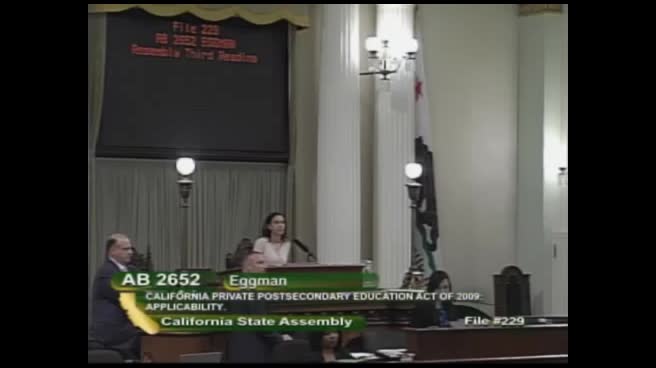
Bill Author