AB 510: Wireless 911 calls: emergency telephone user surcharge.
- Session Year: 2015-2016
- House: Assembly
- Latest Version Date: 2015-07-15
Existing law establishes the Public Safety Communications Division within the Office of Emergency Services, under the supervision of a chief, to carry out specific duties relating to state needs and plans for public safety communications systems and equipment.
This bill would require the division to require its California 911 Emergency Communications Branch to work with the Department of the California Highway Patrol to continue the work of the Routing on Empirical Data (RED) Project by using the technology and procedures employed in that project to assist in determining whether wireless 911 calls should be routed to a local public safety answering point or a California Highway Patrol call center. The bill would require that the project use historical empirical call data to determine the most efficient routing for wireless 911 calls.
The Emergency Telephone Users Surcharge Act generally imposes a surcharge on amounts paid by every person in the state for intrastate telephone service to provide revenues sufficient to fund 911 emergency telephone system costs, and requires the Office of Emergency Services to annually determine the surcharge rate, subject to a specified formula, that it estimates will produce sufficient revenue to fund the current fiscal years 911 costs, as specified.
This bill would instead impose the surcharge at a flat monthly rate of between $0.15 and $0.75, determined annually by the office.
This bill would declare that it is to take effect immediately as an urgency statute.
The Warren-911-Emergency Assistance Act requires a local public agency to adopt a plan to implement a 911 emergency telephone response system, and establishes the State 911 Advisory Board to advise on specified subjects relating to the states 911 emergency telephone response system.
Existing law requires the Office of Emergency Services to determine annually, on or before October 1, a surcharge rate that it estimates will produce sufficient revenue to fund the current fiscal years 911 costs, as specified.
Existing law also requires the office to develop a plan and timeline of target dates for testing, implementing, and operating a Next Generation 911 emergency communication system, including text to 911 service, throughout this state. Existing law requires the office, in determining the surcharge rate, to additionally include costs it expects to incur, consistent with the plan and timeline, to plan, test, implement, and operate Next Generation 911 technology and services, including text to 911 service. Existing law requires the office, at least one month before determining the surcharge rate, to prepare a summary of the calculation of the proposed surcharge and make it available to the Legislature and the 911 Advisory Board, and on the offices Internet Web site.
This bill would require the office, by January 1, 2017, to conduct a comprehensive review of Californias 911 emergency communications system, including all public safety answering points, available technology, funding needs, and telephone and equipment limitations, and provide a report on its findings to the Legislature, to include specified information and recommendations.
The division shall require its California 911 Emergency Communications Branch to work with the Department of the California Highway Patrol to continue the work of the Routing on Empirical Data (RED) Project by using the technology and procedures employed in that project to assist in determining whether wireless 911 calls should be routed to a local public safety answering point or a California Highway Patrol call center. The project pursuant to this section shall use historical empirical call data to determine the most efficient routing for wireless 911 calls.
SECTION 1.SEC. 2.Section 41030 of the Revenue and Taxation Code, as added by Section 6 of Chapter 885 of the Statutes of 2014, is repealed.SEC. 2.SEC. 3.Section 41030 of the Revenue and Taxation Code, as amended by Chapter 926 of the Statutes of 2014, is amended to read:41030.(a)The Office of Emergency Services shall determine annually, on or before October 1, to be effective on January 1 of the following year, a surcharge rate pursuant to subdivision (b) that it estimates will produce sufficient revenue to fund the current fiscal years 911 costs.
(b)Commencing with the calculation made October 1, 2015, to be effective January 1, 2016, the surcharge shall be determined by the Office of Emergency Services using estimates for the current fiscal year of 911 costs approved pursuant to Article 6 (commencing with Section 53100) of Chapter 1 of Part 1 of Division 2 of Title 5 of the Government Code for the period of January 1 to December 31, inclusive, of the next succeeding calendar year, but in no event shall the surcharge rate in any year be less than fifteen cents ($0.15) per month or greater than seventy-five cents ($0.75) per month.
(c)When determining the surcharge rates pursuant to this section, the office shall include the costs it expects to incur to plan, test, implement, and operate Next Generation 911 technology and services, including text to 911 service, consistent with the plan and timeline required by Section 53121 of the Government Code.
(d)The office shall notify the board of the surcharge rate determined pursuant to this section and the surcharge rate applicable to prepaid mobile telephony services by October 15 of each year.
(e)At least 30 days prior to determining the surcharge pursuant to subdivision (a), the Office of Emergency Services shall prepare a summary of the calculation of the proposed surcharge and make it available to the public, the Legislature, the 911 Advisory Board, and on its Internet Web site. The summary shall contain all of the following:
(1)The prior year revenues to fund 911 costs, including, but not limited to, revenues from prepaid service.
(2)Projected expenses and revenues from all sources, including, but not limited to, prepaid service to fund 911 costs.
(3)The rationale for adjustment to the surcharge determined pursuant to subdivision (b), including, but not limited to, all impacts from the surcharge collected pursuant to Part 21 (commencing with Section 42001).
(f)This section shall remain in effect only until January 1, 2020, and as of that date is repealed, unless a later enacted statute, that is enacted before January 1, 2020, deletes or extends that date.
SEC. 3.SEC. 4.Section 41030 of the Revenue and Taxation Code, as added by Chapter 926 of the Statutes of 2014, is amended to read:41030.(a)The Office of Emergency Services shall determine annually, on or before October 1, a surcharge rate that it estimates will produce sufficient revenue to fund the current fiscal years 911 costs. The surcharge rate shall apply for the period of January 1 to December 31, inclusive, of the next succeeding calendar year, but in no event shall the surcharge rate in any year be less than fifteen cents ($0.15) per month or greater than seventy-five cents ($0.75) per month.
(b)When determining the surcharge rate, the office shall include the costs it expects to incur to plan, test, implement, and operate Next Generation 911 technology and services, including text to 911 service, consistent with the plan and timeline required by Section 53121 of the Government Code.
(c)At least one month before determining the surcharge rate pursuant to subdivision (a), the office shall prepare a summary of the calculation of the proposed surcharge and make it available to the Legislature and the 911 Advisory Board, and on the offices Internet Web site.
(d)This section shall become operative on January 1, 2020.
SEC. 4.SEC. 5.This act is an urgency statute necessary for the immediate preservation of the public peace, health, or safety within the meaning of Article IV of the Constitution and shall go into immediate effect. The facts constituting the necessity are:
In order to restart the Routing on Empirical Data (RED) Project for efficient routing of wireless 911 calls and to fully fund the 911 emergency telephone number system, it is necessary that this act take effect immediately.
(a)The Office of Emergency Services shall determine annually, on or before October 1, a surcharge rate that it estimates will produce sufficient revenue to fund the current fiscal years 911 costs. The surcharge rate shall be determined by dividing the costs (including incremental costs) the Office of Emergency Services estimates for the current fiscal year of 911 plans approved pursuant to Section 53115 of the Government Code, less the available balance in the State Emergency Telephone Number Account in the General Fund, by its estimate of the charges for intrastate telephone communications services and VoIP service to which the surcharge will apply for the period of January 1 to December 31, inclusive, of the next succeeding calendar year, but in no event shall the surcharge rate in any year be greater than three-quarters of 1 percent nor less than one-half of 1 percent.
(b)This section shall become operative on January 1, 2020.
SEC. 2.Section 41030 of the Revenue and Taxation Code, as amended by Chapter 926 of the Statutes of 2014, is amended to read:41030.(a)The Office of Emergency Services shall determine annually, on or before October 1, to be effective on January 1 of the following year, a surcharge rate pursuant to subdivision (b) that it estimates will produce sufficient revenue to fund the current fiscal years 911 costs.
(b)(1)The surcharge rate shall be determined by dividing the costs (including incremental costs) the Office of Emergency Services estimates for the current fiscal year of 911 costs approved pursuant to Article 6 (commencing with Section 53100) of Chapter 1 of Part 1 of Division 2 of Title 5 of the Government Code, less the available balance in the State Emergency Telephone Number Account in the General Fund, by its estimate of the charges for intrastate telephone communications services and VoIP service to which the surcharge will apply for the period of January 1, 2015, to December 31, inclusive, of the next succeeding calendar year, but in no event shall the surcharge rate in any year be greater than three-quarters of 1 percent nor less than one-half of 1 percent.
(2)
(b)Commencing with the calculation made October 1, 2015, to be effective January 1, 2016, the surcharge shall be determined by dividing the costs (including incremental costs) the Office of Emergency Services using estimates for the current fiscal year of 911 costs approved pursuant to Article 6 (commencing with Section 53100) of Chapter 1 of Part 1 of Division 2 of Title 5 of the Government Code, less the available balance in the State Emergency Telephone Number Account in the General Fund, by its estimate of the charges for intrastate telephone communications services, the intrastate portion of prepaid mobile telephony services, and VoIP service to which the surcharge will apply Code for the period of January 1 to December 31, inclusive, of the next succeeding calendar year, but in no event shall the surcharge rate in any year be greater than three-quarters of 1 percent or less than one-half of 1 percent. In making its computation of the charges that are applicable to the intrastate portion of prepaid mobile telephony services, the Office of Emergency Services shall use the computation method developed by the Public Utilities Commission and reported to the Office of Emergency Services pursuant to subdivisions (a) and (b) of Section 319 of the Public Utilities Code. less than fifteen cents ($0.15) per month or greater than seventy-five cents ($0.75) per month.
(c)When determining the surcharge rates pursuant to this section, the office shall include the costs it expects to incur to plan, test, implement, and operate Next Generation 911 technology and services, including text to 911 service, consistent with the plan and timeline required by Section 53121 of the Government Code.
(d)The office shall notify the board of the surcharge rate determined pursuant to this section and the surcharge rate applicable to prepaid mobile telephony services by October 15 of each year.
(e)At least 30 days prior to determining the surcharge pursuant to subdivision (a), the Office of Emergency Services shall prepare a summary of the calculation of the proposed surcharge and make it available to the public, the Legislature, the 911 Advisory Board, and on its Internet Web site. The summary shall contain all of the following:
(1)The prior year revenues to fund 911 costs, including, but not limited to, revenues from prepaid service.
(2)Projected expenses and revenues from all sources, including, but not limited to, prepaid service to fund 911 costs.
(3)The rationale for adjustment to the surcharge determined pursuant to subdivision (b), including, but not limited to, all impacts from the surcharge collected pursuant to Part 21 (commencing with Section 42001).
(f)This section shall remain in effect only until January 1, 2020, and as of that date is repealed, unless a later enacted statute, that is enacted before January 1, 2020, deletes or extends that date.
SEC. 3.Section 41030 of the Revenue and Taxation Code, as added by Chapter 926 of the Statutes of 2014, is amended to read:41030.(a)The Office of Emergency Services shall determine annually, on or before October 1, a surcharge rate that it estimates will produce sufficient revenue to fund the current fiscal years 911 costs. The surcharge rate shall be determined by dividing the costs (including incremental costs) the Office of Emergency Services estimates for the current fiscal year of 911 costs approved pursuant to Article 6 (commencing with Section 53100) of Chapter 1 of Part 1 of Division 2 of Title 5 of the Government Code, less the available balance in the State Emergency Telephone Number Account in the General Fund, by its estimate of the charges for intrastate telephone communications services and VoIP service to which the surcharge will apply for the period of January 1 to December 31, inclusive, of the next succeeding calendar year, but in no event shall the surcharge rate in any year be greater than three-quarters of 1 percent nor less than one-half of 1 percent. less than fifteen cents ($0.15) per month or greater than seventy-five cents ($0.75) per month.
(b)When determining the surcharge rate, the office shall include the costs it expects to incur to plan, test, implement, and operate Next Generation 911 technology and services, including text to 911 service, consistent with the plan and timeline required by Section 53121 of the Government Code.
(c)At least one month before determining the surcharge rate pursuant to subdivision (a), the office shall prepare a summary of the calculation of the proposed surcharge and make it available to the Legislature and the 911 Advisory Board, and on the offices Internet Web site.
(d)This section shall become operative on January 1, 2020.
SEC. 4.This act is an urgency statute necessary for the immediate preservation of the public peace, health, or safety within the meaning of Article IV of the Constitution and shall go into immediate effect. The facts constituting the necessity are:
In order to fully fund the 911 emergency telephone number system, it is necessary that this act take effect immediately.
SECTION 1.The Legislature finds and declares all of the following:
(a)There are gaps in public safety protection. Also, accurate caller location information is vital for 911 calls and the safety of Californians.
(b)Problems with the current 911 systems include: (1) misrouting a call to an entirely incorrect public safety answering point (PSAP), sometimes in a different city or region, and (2) delivery of inaccurate caller location information to the proper PSAP.
(c)In many areas, approximately 70 to 80 percent of 911 calls are made by wireless devices, and in many cases the exact location of the caller is not immediately known. Calls are generally forwarded to a California Highway Patrol PSAP. The caller is queried, the location determined, and the call transferred to a local dispatch center. This often results in delays in the arrival of emergency medical services responders and the provision of important medical care. On some occasions errors in this process have resulted in serious injury or death.
(d)The 911 system is technology dependent, which over the years has steadily improved. There are, however, significant problems with the 911 system and planning, and recent developments in technology and decisions made by the Federal Communications Commission (FCC) require the state to reassess policies and practices.
(e)On January 29, 2015, the FCC voted to adopt rules to help emergency responders to better locate wireless callers to 911. The FCC press release stated:
These updates to the Commissions Enhanced 911 (E911) rules respond to Americans increasing use of wireless phones to call 911, especially from indoors, where traditional 911 location technologies often do not work effectively or at all. The new rules take advantage of technological developments that will allow for more accurate location information to be transmitted with indoor 911 calls.
The Commissions E911 rules require wireless providers to automatically transmit to 911 call centers information on the location of wireless 911 callers, within certain parameters for accuracy. These rules, which were adopted in 1996 and underwent their last major revision in 2010, enabled wireless providers to meet this accuracy standard based solely on the measured performance of outdoor wireless 911 calls. However calling habits are changing. Many Americans are replacing landlines with wireless phones, with more than two out of five U.S. households now relying solely on wireless. Most 911 calls are currently made from wireless phones, and most wireless calls are made from indoors. This increases the likelihood that wireless 911 calls will come from indoor environments where traditional location accuracy technologies, optimized for outdoor calling, may not work.
To close this gap in performance, the Commission today updated its E911 rules to include requirements focused on indoor location accuracy. The new rules are intended to help first responders locate Americans calling for help from indoors, including challenging environments such as large multi-story buildings, where responders are often unable to determine the floor or even the building where the 911 call originated.
The new rules establish clear and measurable timelines for wireless providers to meet indoor location accuracy benchmarks, both for horizontal and vertical location information. The Commission noted that no single technological approach will solve the challenge of indoor location, and no solution can be implemented overnight. The new requirements therefore enable wireless providers to choose the most effective solutions and allow sufficient time for development of applicable standards, establishment of testing mechanisms, and deployment of new location technology.
The new rules were informed by extensive input from stakeholders, including public safety organizations, wireless providers, technology vendors, state and local governments, and public interest groups. The Commission emphasized that its ultimate objective in this proceeding is for all Americans whether they are calling 911 from urban or rural areas, from indoors or outdoors to receive the support they need in times of emergency. Todays action takes affirmative steps to make that happen.
(f)It is imperative that the State of California perform a review of its 911 emergency communications system policies and procedures, to make changes that reflect technology available now and in the near future, and to make plans to improve the 911 system in order to protect lives.
SEC. 2.Section 53122 is added to the Government Code, to read:53122.(a)The Office of Emergency Services shall, by January 1, 2017, conduct a comprehensive review of Californias 911 emergency communications system, including all public safety answering points, available technology, funding needs, and telephone and equipment limitations, and provide a report on its findings to the Legislature. The report shall provide information regarding the accuracy of calls made by mobile devices made in different areas of the state and shall include office recommendations for future investment in services and coordination with private and public groups needed to improve service and accuracy.
(b)(1)A report to be submitted pursuant to subdivision (a) shall be submitted in compliance with Section 9795.
(2)Pursuant to Section 10231.5, this section is repealed on January 1, 2020.
The Legislature finds and declares all of the following:
(a)There are gaps in public safety protection. Also, accurate caller location information is vital for 911 calls and the safety of Californians.
(b)Problems with the current 911 systems include: (1) misrouting a call to an entirely incorrect public safety answering point (PSAP), sometimes in a different city or region, and (2) delivery of inaccurate caller location information to the proper PSAP.
(c)In many areas, approximately 70 to 80 percent of 911 calls are made by wireless devices, and in many cases the exact location of the caller is not immediately known. Calls are generally forwarded to a California Highway Patrol PSAP. The caller is queried, the location determined, and the call transferred to a local dispatch center. This often results in delays in the arrival of emergency medical services responders and the provision of important medical care. On some occasions errors in this process have resulted in serious injury or death.
(d)The 911 system is technology dependent, which over the years has steadily improved. There are, however, significant problems with the 911 system and planning, and recent developments in technology and decisions made by the Federal Communications Commission (FCC) require the state to reassess policies and practices.
(e)On January 29, 2015, the FCC voted to adopt rules to help emergency responders to better locate wireless callers to 911. The FCC press release stated:
These updates to the Commissions Enhanced 911 (E911) rules respond to Americans increasing use of wireless phones to call 911, especially from indoors, where traditional 911 location technologies often do not work effectively or at all. The new rules take advantage of technological developments that will allow for more accurate location information to be transmitted with indoor 911 calls.
The Commissions E911 rules require wireless providers to automatically transmit to 911 call centers information on the location of wireless 911 callers, within certain parameters for accuracy. These rules, which were adopted in 1996 and underwent their last major revision in 2010, enabled wireless providers to meet this accuracy standard based solely on the measured performance of outdoor wireless 911 calls. However calling habits are changing. Many Americans are replacing landlines with wireless phones, with more than two out of five U.S. households now relying solely on wireless. Most 911 calls are currently made from wireless phones, and most wireless calls are made from indoors. This increases the likelihood that wireless 911 calls will come from indoor environments where traditional location accuracy technologies, optimized for outdoor calling, may not work.
To close this gap in performance, the Commission today updated its E911 rules to include requirements focused on indoor location accuracy. The new rules are intended to help first responders locate Americans calling for help from indoors, including challenging environments such as large multi-story buildings, where responders are often unable to determine the floor or even the building where the 911 call originated.
The new rules establish clear and measurable timelines for wireless providers to meet indoor location accuracy benchmarks, both for horizontal and vertical location information. The Commission noted that no single technological approach will solve the challenge of indoor location, and no solution can be implemented overnight. The new requirements therefore enable wireless providers to choose the most effective solutions and allow sufficient time for development of applicable standards, establishment of testing mechanisms, and deployment of new location technology.
The new rules were informed by extensive input from stakeholders, including public safety organizations, wireless providers, technology vendors, state and local governments, and public interest groups. The Commission emphasized that its ultimate objective in this proceeding is for all Americans whether they are calling 911 from urban or rural areas, from indoors or outdoors to receive the support they need in times of emergency. Todays action takes affirmative steps to make that happen.
(f)It is imperative that the State of California perform a review of its 911 emergency communications system policies and procedures, to make changes that reflect technology available now and in the near future, and to make plans to improve the 911 system in order to protect lives.
SEC. 2.Section 53122 is added to the Government Code, to read:53122.(a)The Office of Emergency Services shall, by January 1, 2017, conduct a comprehensive review of Californias 911 emergency communications system, including all public safety answering points, available technology, funding needs, and telephone and equipment limitations, and provide a report on its findings to the Legislature. The report shall provide information regarding the accuracy of calls made by mobile devices made in different areas of the state and shall include office recommendations for future investment in services and coordination with private and public groups needed to improve service and accuracy.
(b)(1)A report to be submitted pursuant to subdivision (a) shall be submitted in compliance with Section 9795.
(2)Pursuant to Section 10231.5, this section is repealed on January 1, 2020.
|
Date
|
Status
|
|---|---|
| Jun 1, 2015 | In Senate. Read first time. To Com. on RLS. for assignment. |
| May 31, 2016 | In committee: Set, second hearing. Hearing canceled at the request of author. |
| Jul 15, 2015 | From committee chair, with author's amendments: Amend, and re-refer to committee. Read second time, amended, and re-referred to Com. on E., U., & C. |
| Jul 2, 2015 | In committee: Set, first hearing. Hearing canceled at the request of author. |
| Jun 25, 2015 | In committee: Hearing postponed by committee. |
| Jun 22, 2015 | From committee chair, with author's amendments: Amend, and re-refer to committee. Read second time, amended, and re-referred to Com. on E., U., & C. |
| Jun 11, 2015 | Referred to Coms. on E., U., & C. and G.O. |
| Jun 1, 2015 | Read third time. Passed. Ordered to the Senate. (Ayes 80. Noes 0. Page 1711.) |
| Jun 1, 2015 | Read third time. Passed. Ordered to the Senate. |
| Feb 23, 2015 | Read first time. To print. |
| May 28, 2015 | Read second time. Ordered to third reading. |
| May 28, 2015 | From committee: Do pass. (Ayes 17. Noes 0.) (May 28). |
| May 20, 2015 | In committee: Set, first hearing. Referred to APPR. suspense file. |
| May 20, 2015 | In committee: Set, first hearing. Referred to suspense file. |
| Apr 9, 2015 | From committee: Do pass and re-refer to Com. on APPR. (Ayes 21. Noes 0.) (April 8). Re-referred to Com. on APPR. |
| Mar 5, 2015 | Referred to Com. on G.O. |
| Feb 24, 2015 | From printer. May be heard in committee March 26. |
|
Date
|
Description
|
Location
|
Votes
|
|
|---|---|---|---|---|
| Jun 1, 2015 | AB 510 RODRIGUEZ Assembly Third Reading | Assembly Floor |
Passed |
|
| May 28, 2015 | Do pass. | Assembly Standing Committee on Appropriations |
Passed |
|
| Apr 8, 2015 | Do pass and be re-referred to the Committee on [Appropriations] | Assembly Standing Committee on Governmental Organization |
Passed |
This list shows positions taken on this bill by organizations on the date displayed, which is linked to the original source.
Positions by individuals are not included.
|
Organization
|
Position
|
Date
|
|---|---|---|
| California Ambulance Association | ** Support | Jun 1, 2015 |
| California American College of Emergency Physicians | ** Support | Jun 1, 2015 |
AB 510
Page 4
ASSEMBLY THIRD READING
AB 510
(Rodriguez and Williams)
As Introduced February 23, 2015
Majority vote
Committee |
Votes |
Ayes |
Noes |
Governmental Organization |
21-0 |
Gray, Linder, Achadjian, Alejo, Bigelow, Campos, Cooley, Cooper, Daly, Cristina Garcia, Eduardo Garcia, Gipson, Roger Hernández, Jones-Sawyer, Levine, Mayes, Perea, Salas, Steinorth, Waldron, Wilk |
|
Appropriations |
17-0 |
Gomez, Bigelow, Bonta, Calderon, Chang, Daly, Eggman, Gallagher, Eduardo Garcia, Gordon, Holden, Jones, Quirk, Rendon, Wagner, Weber, Wood |
|
SUMMARY: Requires the Office of Emergency Services (Cal OES) to conduct, by January 1, 2017, a comprehensive review of the state's 911 emergency communications system, including all public safety answering points (PSAP), available technology, funding needs, telephone and equipment limitations, and the accuracy of calls made by mobile devices, and provide a report on its findings and recommendations to the Legislature. Specifically, this bill:
Provides Cal OES shall, by January 1, 2017, conduct a comprehensive review of California's 911 emergency communications system, including all public safety answering points, available technology, funding needs, and telephone and equipment limitations, and provide a report on its findings to the Legislature.
Specifies that the report shall provide information regarding the accuracy of calls made by mobile devices made in different areas of the state and shall include office recommendations for future investment in services and coordination with private and public groups needed to improve service and accuracy.
Makes legislative findings and declarations.
EXISTING LAW:
Establishes Cal OES by the Governor's Reorganization Plan No. 2, operative July 1, 2013. Requires Cal OES to perform a variety of duties with respect to specified emergency preparedness, mitigation, and response activities in the state, including emergency medical services.
Provides under the Warren-911-Emergency Assistance Act of 1976, a local public agency to adopt a plan to implement a 911 emergency telephone response system, and establishes the State 911 Advisory Board to advise on specified subjects relating to the state’s 911 emergency telephone response system.
Requires Cal OES to administer the state's 911 emergency telephone system, including local dispatch centers known as PSAP, with funds from a 911-customer surcharge on intrastate communication service. Requires Cal OES to determine annually, on or before October 1, the customer surcharge rate to fund the subsequent year's costs of the state 911 system.
Requires Cal OES to develop a plan and timeline of target dates for testing, implementing, and operating a Next Generation 911 emergency communication system, including text to 911 service, throughout this state.
Requires Cal OES, in determining the surcharge rate, to additionally include costs it expects to incur, consistent with the plan and timeline, to plan, test, implement, and operate Next Generation 911 technology and services, including text to 911 service.
Requires Cal OES, at least one month before finalizing the 911 surcharge rate, to prepare a summary of the calculation of the proposed surcharge, include the costs it expects to incur consistent with the plan to deploy text to 911 and Next Gen 911, and make this information available to the Legislature and the 911 Advisory Board, and on the office's Internet Web site.
FISCAL EFFECT: According to the Assembly Appropriations Committee, minor and absorbable costs to Cal OES as a similar report has already been commissioned.
COMMENTS:
Purpose of the bill: According to the author, there are two primary problems with the state's current 911 emergency call system resulting from the widespread use of mobile phones: 1) calls are misrouted to the incorrect public safety answering point, sometimes in another city or county; and 2) caller location information provided to the public safety answering point is often inaccurate. The author claims approximately 70% to 80% of 911 calls are now made by wireless devices. These calls are typically forwarded to the California Highway Patrol, which ascertains the location of the call and transfers the caller to the appropriate local dispatch center, often causing delays in emergency response services.
The author points to a 2014 incident where a 24 year-old woman was found unconscious on the floor of her family home in Santa Barbara. A family member called 911 from a cell phone; however, the call was routed to Ventura, instead of Santa Barbara. This resulted in a 20-minute delay in the arrival of medical care. The woman later died at a local hospital.
The author states, the 911 system is technology dependent, which over the years has steadily improved. There are, however, significant problems with the 911 system and planning, and recent developments in technology and decisions made by the Federal Communications Commission (FCC) require the state to reassess policies and practices.
According to the author, it is imperative that the State of California perform a review of its 911 emergency communications system policies and procedures, to make changes that reflect technology available now and in the near future, and to make plans to improve the 911 system in order to protect lives. The author states, "When someone calls 911, every second counts and it is alarming that, in an age where cell phones are so prevalent in our society, our 911 systems are not able to pinpoint a callers location. We need to fix our systems so no more lives are lost to senseless delays."
Background:
OES Administers Statewide 911 System. California's existing 911 system, established pursuant to the Warren 911 Emergency Assistance Act of 1976, includes 458 PSAPs that receive about 25 million 911 voice calls per year. These calls are dispatched to local first responders including police, ambulance, fire, medical and other emergency service providers.
The Public Safety Communications Office within OES administers the state 911 system, reviews local PSAPs’ 911 equipment and operations, and reimburses their reasonable costs for planning, implementation, and maintenance of approved 911 systems. In 2013, this office was transferred from the California Technology Agency to Cal OES as part of budget action. The California Emergency Number Association represents the state's PSAPs and provides research, planning, and training to support 911 dispatchers and the state 911 system. A state 911 Advisory Board advises Cal OES on operation, funding, and long-range planning for PSAPs and the state 911 system.
911 Funded By Customer Surcharge. The 911 program costs are paid from the State Emergency Telephone Number Account funds, which are derived from a statewide 911 surcharge on telephone customer bills, including landline, wireless and Voice over Internet Protocol services. OES is required to determine the surcharge rate annually up to a statutory maximum of 0.75% of intrastate service charges. The State Emergency Telephone Number Account has been in a structural deficit for years, with annual surcharge revenue declining from about $133 million in 2005-06 to about $80 million in 2012-13. The rate was set at 0.50% from 2007 through 2013, but in October 2014, Cal OES increased the surcharge to 0.75% effective January 1, 2014, with projected total revenue of $108 million for 2014-15.
Next Generation 911. Next Gen 911 refers to an Internet Protocol (IP)-based, two-way communications system that will enable real-time transmission of emergency-related voice, text, data, photos, and video between the public and public safety agencies. Next Gen 911 will build upon, and eventually replace, the existing 911-voice system. Implementing Next Gen 911 will require substantial funding for PSAP upgrades to an IP-based platform. A preliminary Cal OES cost estimate reported in 2013 was $885 million for total hardware and software costs to deploy conceptual Next Gen 911 design while also running the existing 911 system. Cal OES states this is an estimated $375 million over five years on top of the $510 million to operate the existing system over that same five years.
Cal OES has conducted field trials of Text-to-911 at six PSAPs in California. Cal OES is working on a contract to fund service, and, upon final approval, can move forward with deploying Text-to-911. PSAPs will have the ability to select how they wish to receive text (Integrated, Web, or TTY emulation). PSAPs can currently receive teletype texts (TTY, devices used by the hearing impaired), but not Short Message Service (SMS) unless activated through the carrier. In the meantime, carriers currently are required to send a "bounce-back" auto-reply message to alert subscribers who attempt to text 911 that the service is not available and that they should place a voice call instead. Many wireless providers are preparing for next-generation emergency communications but many PSAPs continue to operate with outdated equipment that is unable to handle next-generation capabilities.
New Federal 911 location-accuracy rules: On January 29, 2015, the FCC voted to adopt updated rules to help emergency responders to better locate wireless callers to 911. This rule will require commercial wireless carriers to provide improved 911 location-accuracy information, including the first rules for wireless calls made from inside a building or other facility.
According to a FCC press release, "The updated E911 rules are intended to help first responders locate Americans calling for help from indoors, including challenging environments such as large multi-story buildings, where responders are often unable to determine the floor or even the building where the 911 call originated." Under the newly approved rules, within two years, carriers will need to give an indoor position within 50 meters in 40% of cases. Within five years, under the new rules, the location will have to be accurate in 70% of cases.
The FCC noted that no single technological approach will solve the challenge of indoor location, and no solution can be implemented overnight. The new requirements therefore enable wireless providers to choose the most effective solutions and allow sufficient time for development of applicable standards, establishment of testing mechanisms, and deployment of new location technology.
Prior legislation: SB 1211 (Padilla), Chapter 926, Statutes of 2014. Requires the Cal OES to develop a plan and timeline of target dates for testing, implementing, and operating a Next Generation 911 emergency communication system, including text to 911 service, throughout California, as specified. Next Generation 911 is an upgrade to allow texting as an option for requesting emergency assistance.
SB 1597 (Denham), Chapter 73, Statutes of 2006. Declares that monies raised pursuant to the Emergency Telephone Users Surcharge Act shall be held in trust for future 911 emergency service projects.
AB 911 (Longville), Chapter 295, Statutes of 2004. Created a new infraction for using the "911" telephone system for purposes other than an emergency, as defined.
SB 911 (Alpert), Chapter 631, Statutes of 2003. Created in state government, the State 911 Advisory Board to advise the Telecommunications Division of the Department of General Services, comprised of specified members appointed by the Governor.
Analysis Prepared by: Eric Johnson / G.O. / (916) 319-2531 FN: 0000659
AB 510
Page 1
Date of Hearing: May 20, 2015
ASSEMBLY COMMITTEE ON APPROPRIATIONS
Jimmy Gomez, Chair
AB 510
(Rodriguez) – As Introduced February 23, 2015
Policy Committee: |
Governmental Organization |
Vote: |
21 - 0 |
Urgency: No State Mandated Local Program: No Reimbursable: No
SUMMARY:
This bill requires the Office of Emergency Services (OES) to conduct, by January 1, 2017, a comprehensive review of the state's 911 emergency communications system, including all public safety answering points, available technology, funding needs, telephone and equipment limitations, and the accuracy of calls made by mobile devices, and provide a report on its findings and recommendations to the Legislature.
FISCAL EFFECT:
Minor and absorbable costs to OES as a similar report has already been commissioned.
COMMENTS:
1) Purpose. According to the author, there are two primary problems with the state's current 911 emergency call system resulting from the widespread use of mobile phones: (i) calls are misrouted to the incorrect public safety answering point, sometimes in another city or county; and (ii) caller location information provided to the public safety answering point is often inaccurate. The author claims approximately 70% to 80% of 911 calls are now made by wireless devices. These calls are typically forwarded to the California Highway Patrol, which ascertains the location of the call and transfers the caller to the appropriate local dispatch center, often causing delays in emergency response services.
2) Review Underway. The author believes it is imperative the state perform a review of its 911 emergency communications systems and procedures, and adopt new technologies to improve performance and accuracy. OES agrees, and has commissioned such a study, a copy of which would likely be sufficient to comply with the requirements of this bill. In addition, the Federal Communications Commission promulgated new rules requiring 911 systems to provide greater accuracy in locating wireless callers, phasing in the new requirements over the next 5 years.
3) Withering Fees. The state's 911 program is currently funded with a statewide 0.75% surcharge on intrastate telephone costs. Revenue from this surcharge has been declining for years as a result in reductions in intrastate telephone charges. In response, several other states have instituted flat monthly fees for all telephone customers to fund 911 program costs.
Analysis Prepared by: Joel Tashjian / APPR. / (916) 319-2081
AB 510
Page 4
Date of Hearing: April 8, 2015
ASSEMBLY COMMITTEE ON GOVERNMENTAL ORGANIZATION
Adam Gray, Chair
AB 510
(Rodriguez) – As Introduced February 23, 2015
SUBJECT: Emergency services: 911 emergency communication system
SUMMARY: Requires Office of Emergency Services (Cal OES), by January 1, 2017, to conduct a comprehensive review of California’s 911 emergency communications system, including all public safety answering points (PSAP), available technology, funding needs, and telephone and equipment limitations, and provide a report on its findings to the Legislature, to include specified information and recommendations. Specifically, this bill:
1) Provides Cal OES shall, by January 1, 2017, conduct a comprehensive review of California’s 911 emergency communications system, including all public safety answering points, available technology, funding needs, and telephone and equipment limitations, and provide a report on its findings to the Legislature.
2) Specifies that the report shall provide information regarding the accuracy of calls made by mobile devices made in different areas of the state and shall include office recommendations for future investment in services and coordination with private and public groups needed to improve service and accuracy.
3) Makes legislative findings and declarations.
EXISTING LAW:
1) Establishes Cal OES by the Governor's Reorganization Plan No. 2, operative July 1, 2013. Requires Cal OES to perform a variety of duties with respect to specified emergency preparedness, mitigation, and response activities in the state, including emergency medical services.
2) Provides under the Warren-911-Emergency Assistance Act, a local public agency to adopt a plan to implement a 911 emergency telephone response system, and establishes the State 911 Advisory Board to advise on specified subjects relating to the state’s 911 emergency telephone response system.
3) Requires Cal OES to administer the state's 911 emergency telephone system, including local dispatch centers known as Public Safety Answering Points (PSAPs), with funds from a 911-customer surcharge on intrastate communication service. Requires Cal OES to determine annually, on or before October 1, the customer surcharge rate to fund the subsequent year's costs of the state 911 system.
4) Requires Cal OES to develop a plan and timeline of target dates for testing, implementing, and operating a Next Generation 911 emergency communication system, including text to 911 service, throughout this state.
5) Requires Cal OES, in determining the surcharge rate, to additionally include costs it expects to incur, consistent with the plan and timeline, to plan, test, implement, and operate Next Generation 911 technology and services, including text to 911 service.
6) Requires Cal OES, at least one month before finalizing the 911 surcharge rate, to prepare a summary of the calculation of the proposed surcharge, include the costs it expects to incur consistent with the plan to deploy text to 911 and Next Gen 911, and make this information available to the Legislature and the 911 Advisory Board, and on the office's Internet Web site.
FISCAL EFFECT: Unknown
COMMENTS:
Purpose of the bill: According to the author, there are gaps in public safety protection. In addition, accurate caller location information is vital for 911 calls and the safety of Californians. Problems with the current 911 systems include: (1) misrouting a call to an entirely incorrect public safety answering point (PSAP), sometimes in a different city or region, and (2) delivery of inaccurate caller location information to the proper PSAP.
According to the information provided by the author, in many areas, approximately 70 to 80 percent of 911 calls are made by wireless devices, and in many cases, the exact location of the caller is not immediately known. Calls are generally forwarded to a California Highway Patrol PSAP. The caller is queried, the location determined, and the call transferred to a local dispatch center. This often results in delays in the arrival of emergency medical services responders and the provision of important medical care. On some occasions, errors in this process have resulted in serious injury or death.
The author points to a 2014 incident where a 24 year-old woman was found unconscious on the floor of her family home in Santa Barbara. A family member called 911 from a cell phone; however, the call was routed to Ventura, instead of Santa Barbara. This resulted in a 20-minute delay in the arrival of medical care. The woman later died at a local hospital.
The author states, the 911 system is technology dependent, which over the years has steadily improved. There are, however, significant problems with the 911 system and planning, and recent developments in technology and decisions made by the Federal Communications Commission (FCC) require the state to reassess policies and practices.
According to the author, it is imperative that the State of California perform a review of its 911 emergency communications system policies and procedures, to make changes that reflect technology available now and in the near future, and to make plans to improve the 911 system in order to protect lives. The author states, “When someone calls 911, every second counts and it is alarming that, in an age where cell phones are so prevalent in our society, our 911 systems are not able to pinpoint a callers location. We need to fix our systems so no more lives are lost to senseless delays.”
Background:
OES Administers Statewide 911 System. California’s existing 911 system, established pursuant to the Warren 911 Emergency Assistance Act of 1976, includes 458 PSAPs that receive about 25 million 911 voice calls per year. These calls are dispatched to local first responders including police, ambulance, fire, medical and other emergency service providers.
The Public Safety Communications Office within OES administers the state 911 system, reviews local PSAPs’ 911 equipment and operations, and reimburses their reasonable costs for planning, implementation, and maintenance of approved 911 systems. In 2013, this office was transferred from the California Technology Agency to OES as part of budget action. The California Emergency Number Association represents the state’s PSAPs and provides research, planning, and training to support 911 dispatchers and the state 911 system. A state 911 Advisory Board advises OES on operation, funding, and long-range planning for PSAPs and the state 911 system.
911 Funded By Customer Surcharge. The 911 program costs are paid from the State Emergency Telephone Number Account funds, which are derived from a statewide 911 surcharge on telephone customer bills, including landline, wireless and Voice over Internet Protocol services. OES is required to determine the surcharge rate annually up to a statutory maximum of 0.75 percent of intrastate service charges. The State Emergency Telephone Number Account has been in a structural deficit for years, with annual surcharge revenue declining from about $133 million in 2005-06 to about $80 million in 2012-13. The rate was set at 0.50 percent from 2007 through 2013, but in October 2014, OES increased the surcharge to 0.75 percent effective January 1, 2014, with projected total revenue of $108 million for 2014-15.
Next Generation 911. Next Gen 911 refers to an Internet Protocol (IP)-based, two-way communications system that will enable real-time transmission of emergency-related voice, text, data, photos, and video between the public and public safety agencies. Next Gen 911 will build upon, and eventually replace, the existing 911-voice system. Implementing Next Gen 911 will require substantial funding for PSAP upgrades to an IP-based platform. A preliminary Cal OES cost estimate reported in 2013 was $885 million for total hardware and software costs to deploy conceptual Next Gen 911 design while also running the existing 911 system. Cal OES states this is an estimated $375 million over five years on top of the $510 million to operate the existing system over that same five years.
Cal OES has conducted field trials of Text-to-911 at six PSAPs in California. Cal OES is working on a contract to fund service, and, upon final approval, can move forward with deploying Text-to-911. PSAPs will have the ability to select how they wish to receive text (Integrated, Web, or TTY emulation). PSAPs can currently receive teletype texts (TTY, devices used by the hearing impaired), but not Short Message Service (SMS) unless activated through the carrier. In the meantime, carriers currently are required to send a "bounce-back" auto-reply message to alert subscribers who attempt to text 911 that the service is not available and that they should place a voice call instead. Many wireless providers are preparing for next-generation emergency communications but many PSAPs continue to operate with outdated equipment that is unable to handle next-generation capabilities.
New Federal 911 location-accuracy rules: On January 29, 2015, the Federal Communications Commission (FCC) voted to adopt updated rules to help emergency responders to better locate wireless callers to 911. This rule will require commercial wireless carriers to provide improved 911 location-accuracy information, including the first rules for wireless calls made from inside a building or other facility.
According to a FCC press release, "The updated E911 rules are intended to help first responders locate Americans calling for help from indoors, including challenging environments such as large multi-story buildings, where responders are often unable to determine the floor or even the building where the 911 call originated." Under the newly approved rules, within two years, carriers will need to give an indoor position within 50 meters in 40 percent of cases. Within five years, under the new rules, the location will have to be accurate in 70 percent of cases.
The FCC noted that no single technological approach will solve the challenge of indoor location, and no solution can be implemented overnight. The new requirements therefore enable wireless providers to choose the most effective solutions and allow sufficient time for development of applicable standards, establishment of testing mechanisms, and deployment of new location technology.
Prior legislation: SB 1211 (Padilla), Chapter 926, Statutes of 2014. Requires the Cal OES to develop a plan and timeline of target dates for testing, implementing, and operating a Next Generation 911(Next Gen 911) emergency communication system, including text to 911 service, throughout California, as specified. Next Gen 911 is an upgrade to allow texting as an option for requesting emergency assistance.
SB 1597 (Denham), Chapter 73, Statutes of 2006. Declares that monies raised pursuant to the Emergency Telephone Users Surcharge Act shall be held in trust for future 911 emergency service projects.
AB 911 (Longville), Chapter 295, Statutes of 2004. Created a new infraction for using the "911" telephone system for purposes other than an emergency, as defined.
SB 911 (Alpert), Chapter 631, Statutes of 2004. Created in state government, the State 911 Advisory Board to advise the Telecommunications Division of the Department of General Services, comprised of specified members appointed by the Governor.
REGISTERED SUPPORT / OPPOSITION:
Support
California Ambulance Association
California American College of Emergency Physicians
Opposition
None on file
Analysis Prepared by: Eric Johnson / G.O. / (916) 319-2531
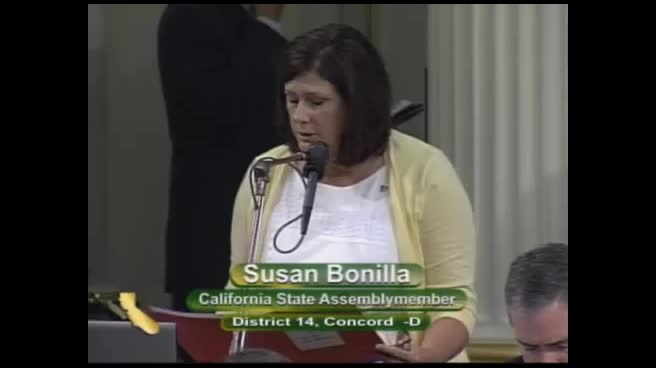


Bill Co-Author(s):