AB 615: Office of Sustainable Water Solutions: technical assistance.
- Session Year: 2015-2016
- House: Assembly
- Latest Version Date: 2015-06-02
Existing law, the Water Quality, Supply, and Infrastructure Improvement Act of 2014, approved by the voters as Proposition 1 at the November 4, 2014, statewide general election, authorizes the issuance of general obligation bonds in the amount of $7,545,000,000 to finance a water quality, supply, and infrastructure improvement program. Proposition 1 makes available, upon appropriation by the Legislature, specified amounts of bond proceeds for grants and loans for projects that improve water quality or safe drinking water, for water recycling and advanced treatment technology projects, and for projects that prevent or clean up the contamination of groundwater, including providing technical assistance services to disadvantaged communities.
Existing law establishes the Office of Sustainable Water Solutions within the State Water Resources Control Board with the purpose of promoting permanent and sustainable drinking water and wastewater treatment solutions to ensure the effective and efficient provision of safe, clean, affordable, and reliable drinking water and wastewater treatment services. Existing law authorizes the office to take certain actions to further this purpose, including providing technical assistance to disadvantaged communities and small drinking water systems and wastewater systems.
This bill would specify the types of technical assistance services that may be provided by the office and would authorize the office to establish and administer at least one Center for Excellence for the purpose of providing technical assistance to disadvantaged communities. The bill would authorize, in establishing and administering the center, the office to collaborate with the California State University, the University of California, nonprofit organizations, and other organizations that can help further the purpose of the center and would require the state board to determine the number and location of centers, if any, that are necessary to adequately provide technical assistance to disadvantaged communities throughout the state. The bill would specify that a center may be funded by both public and private sources, including Proposition 1, but would require, if bond proceeds from that proposition or any other bond act are used, the office to separately account for those moneys. The bill would prohibit moneys from Proposition 1 to be used for the administration of a center. The bill would encourage the University of California to collaborate with the office to establish the center, develop a program similar to the center, or both. office.
Existing law, the Water Quality, Supply, and Infrastructure Improvement Act of 2014, approved by the voters as Proposition 1 at the November 4, 2014, statewide general election, authorizes the issuance of general obligation bonds in the amount of $7,545,000,000 to finance a water quality, supply, and infrastructure improvement program. Proposition 1 makes available, upon appropriation by the Legislature, specified amounts of bond proceeds for grants and loans for projects that improve water quality or safe drinking water, for water recycling and advanced treatment technology projects, and for projects that prevent or clean up the contamination of groundwater, including providing technical assistance services to disadvantaged communities.
Existing law establishes the Office of Sustainable Water Solutions within the State Water Resources Control Board with the purpose of promoting permanent and sustainable drinking water and wastewater treatment solutions to ensure the effective and efficient provision of safe, clean, affordable, and reliable drinking water and wastewater treatment services. Existing law authorizes the office to take certain actions to further this purpose, including providing technical assistance to disadvantaged communities and small drinking water systems and wastewater systems.
This bill would specify the types of technical assistance services that may be provided for the purposes of these provisions. The bill by the office and would authorize the office, in collaboration with the California State University, office to establish and administer at least one Center for Excellence for the purpose of providing technical assistance to disadvantaged communities in the region of the campus. communities. The bill would authorize, in establishing and administering the center, the office to collaborate with the California State University, the University of California, nonprofit organizations, and other organizations that can help further the purpose of the center and would require the state board to determine the number and location of centers, if any, that are necessary to adequately provide technical assistance to disadvantaged communities throughout the state. The bill would specify that a center may be funded by both public and private sources, including Proposition 1, but would require, if bond proceeds from that proposition or any other bond act are used, the office to separately account for those moneys. The bill would prohibit moneys from Proposition 1 to be used for the administration of a center. The bill would encourage the University of California to collaborate with the office to establish the center, develop a program similar to the center, or both.
Existing law, the Water Quality, Supply, and Infrastructure Improvement Act of 2014, approved by the voters as Proposition 1 at the November 4, 2014, statewide general election, authorizes the issuance of general obligation bonds in the amount of $7,545,000,000 to finance a water quality, supply, and infrastructure improvement program. Proposition 1 makes available, upon appropriation by the Legislature, specified amounts of bond proceeds for grants and loans for projects that improve water quality or safe drinking water, for water recycling and advanced treatment technology projects, and for projects that prevent or clean up the contamination of groundwater, including providing technical assistance services to disadvantaged communities.
Existing law establishes the Office of Sustainable Water Solutions within the State Water Resources Control Board with the purpose of promoting permanent and sustainable drinking water and wastewater treatment solutions to ensure the effective and efficient provision of safe, clean, affordable, and reliable drinking water and wastewater treatment services. Existing law authorizes the office to take certain actions to further this purpose, including providing technical assistance to disadvantaged communities and small drinking water systems and wastewater systems.
This bill would specify the types of technical assistance services that may be provided for the purposes of these provisions. The bill would authorize the office, in collaboration with the California State University, to establish and administer at least one Center for Excellence for the purpose of providing technical assistance to disadvantaged communities in the region of the campus. The bill would require the state board to determine the number and location of centers, if any, that are necessary to adequately provide technical assistance to disadvantaged communities throughout the state. The bill would specify that a center may be funded by both public and private sources, including Proposition 1, but would require, if bond proceeds from that proposition or any other bond act are used, the office to separately account for those moneys. The bill would prohibit moneys from Proposition 1 to be used for the administration of a center.
Existing law provides various technical assistance opportunities to disadvantaged communities for projects relating to groundwater sustainability, clean drinking water, and water recycling and advanced treatment water technology projects.
This bill would establish The Center for Community Water Projects, to be administered by the Division of Financial Assistance within the State Water Resources Control Board. The bill would declare the purpose of the center is to provide a centralized, multidisciplinary technical assistance program for disadvantaged communities and to assist those communities in designing and building clean and sustainable water projects. The bill would require the Division of Financial Assistance to provide a broad range of technical assistance to disadvantaged communities, as specified, to coordinate with other entities, and to contract with third party technical assistance provides, as necessary. The bill would authorize the center to receive funding from both public and private sources.
(a)There is hereby established the Office of Sustainable Water Solutions within the state board, which may be administered by the state board as a separate organizational unit or within the state boards divisions or offices.
(b)The purpose of the office is to promote permanent and sustainable drinking water and wastewater treatment solutions to ensure the effective and efficient provision of safe, clean, affordable, and reliable drinking water and wastewater treatment services. In furtherance of this purpose, the office may take, but is not limited to, all of the following actions:
(1)Coordinating with and providing assistance to small drinking water systems, wastewater treatment systems, and disadvantaged communities without drinking water or wastewater treatment systems.
(2)Promoting and facilitating regional drinking water and wastewater projects.
(3)Promoting and facilitating regional solutions, including consolidation of existing water districts, expansion of existing water districts to serve communities unserved by public water systems and wastewater treatment systems, and extension of services to underserved communities and disadvantaged communities.
(4)Advancing the delivery of affordable, safe drinking water to disadvantaged communities throughout the state.
(5)Providing technical assistance to disadvantaged communities and small drinking water systems and wastewater systems. Technical assistance services include, but are not limited to, the following:
(A)Grant application assistance.
(B)Project development and management support.
(C)Engineering services.
(D)Financial management review and support.
(E)Environmental review.
(F)Operations and management review and support.
(G)Legal assistance.
(H)Certification and training of wastewater treatment plant operators.
(I)Facilitation of discussions within and between communities.
(J)Outreach and education in vulnerable communities.
(K)Income surveys and other assessments needed to qualify for funding programs.
SEC. 2.Section 189.5 is added to the Water Code, to read:189.5.(a)The Office of Sustainable Water Solutions may establish and administer at least one Center For Excellence at a California State University campus with the purpose of providing engineering and other types of technical assistance described in Section 189. In establishing the center, the office may collaborate with the California State University, the University of California, nonprofit organizations, and other organizations that can help further the purpose of the center. Technical assistance may be provided by students, faculty, members of nonprofit organizations, and other persons with relevant expertise or knowledge, as deemed appropriate by the office.
(b)The state board shall determine the number and the location of centers, if any, that are necessary to adequately provide technical assistance to disadvantaged communities throughout the state.
(c)A center may be funded by both public and private sources, including, but not limited to, bond proceeds from the Water Quality, Supply, and Infrastructure Improvement Act of 2014 (Division 26.7 (commencing with Section 79700)). If bond proceeds from that act are used, or from any other bond act, the office shall separately account for those moneys to ensure the bond moneys are properly utilized for their intended purposes. Bond proceeds from the Water Quality, Supply, and Infrastructure Improvement Act of 2014 shall not be used for the administration of a center but may be used to provide technical assistance to disadvantaged communities.
(d)The University of California is encouraged to collaborate with the office to establish the center described in this section, develop a program similar to the center described in this section, or both.
(a)There is hereby established the Office of Sustainable Water Solutions within the state board, which may be administered by the state board as a separate organizational unit or within the state boards divisions or offices.
(b)The purpose of the office is to promote permanent and sustainable drinking water and wastewater treatment solutions to ensure the effective and efficient provision of safe, clean, affordable, and reliable drinking water and wastewater treatment services. In furtherance of this purpose, the office may take, but is not limited to, all of the following actions:
(1)Coordinating with and providing assistance to small drinking water systems, wastewater treatment systems, and disadvantaged communities without drinking water or wastewater treatment systems.
(2)Promoting and facilitating regional drinking water and wastewater projects.
(3)Promoting and facilitating regional solutions, including consolidation of existing water districts, expansion of existing water districts to serve communities unserved by public water systems and wastewater treatment systems, and extension of services to underserved communities and disadvantaged communities.
(4)Advancing the delivery of affordable, safe drinking water to disadvantaged communities throughout the state.
(5)Providing technical assistance to disadvantaged communities and small drinking water systems and wastewater systems. Technical assistance services include, but are not limited to, the following:
(A)Grant application assistance.
(B)Project development and management support.
(C)Engineering services.
(D)Financial management review and support.
(E)Environmental review.
(F)Operations and management review and support.
(G)Legal assistance.
(H)Certification and training of wastewater treatment plant operators.
(I)Facilitation of discussions within and between communities.
(J)Outreach and education in vulnerable communities.
(K)Income surveys and other assessments needed to qualify for funding programs.
(c)(1)The office, in collaboration with the California State University, may establish and administer at least one Center For Excellence at a California State University campus with the purpose of providing, through collaboration between California State University faculty and students of that campus, the engineering and other types of technical assistance described in subdivision (b) in the region of the campus.
(2)The state board shall determine the number and the location of centers, if any, that are necessary to adequately provide technical assistance to disadvantaged communities throughout the state.
(3)A center may be funded by both public and private sources, including, but not limited to, bond proceeds from the Water Quality, Supply, and Infrastructure Improvement Act of 2014 (Division 26.7 (commencing with Section 79700)). If bond proceeds from that act are used, or from any other bond act, the office shall separately account for those moneys to ensure the bond moneys are properly utilized for their intended purposes. Bond proceeds from the Water Quality, Supply, and Infrastructure Improvement Act of 2014 shall not be used for the administration of a center but may be used to provide technical assistance to disadvantaged communities.
(4)The University of California is encouraged to develop, in collaboration with the office, a program similar to the one described in this subdivision.
SEC. 2.Section 79713.5 is added to the Water Code, to read:79713.5.For the purpose of providing technical assistance to disadvantaged communities pursuant to Chapter 5 (commencing with Section 79720), 9 (commencing with Section 79765), or 10 (commencing with Section 79770), technical assistance services include, but are not limited to, the following:
(a)Grant application assistance.
(b)Project development and management support.
(c)Engineering services.
(d)Financial management review and support.
(e)Environmental review.
(f)Operations and management review and support.
(g)Legal assistance.
(h)Certification and training of wastewater treatment plant operators.
(i)Facilitation of discussions within and between communities.
(j)Outreach and education in vulnerable communities.
(k)Income surveys and other assessments needed to qualify for funding programs.
SEC. 2.Section 189.5 is added to the Water Code, to read:189.5.(a)The Office of Sustainable Water Solutions may establish and administer at least one Center For Excellence at a California State University campus with the purpose of providing engineering and other types of technical assistance described in Section 189. In establishing the center, the office may collaborate with the California State University, the University of California, nonprofit organizations, and other organizations that can help further the purpose of the center. Technical assistance may be provided by students, faculty, members of nonprofit organizations, and other persons with relevant expertise or knowledge, as deemed appropriate by the office.
(b)The state board shall determine the number and the location of centers, if any, that are necessary to adequately provide technical assistance to disadvantaged communities throughout the state.
(c)A center may be funded by both public and private sources, including, but not limited to, bond proceeds from the Water Quality, Supply, and Infrastructure Improvement Act of 2014 (Division 26.7 (commencing with Section 79700)). If bond proceeds from that act are used, or from any other bond act, the office shall separately account for those moneys to ensure the bond moneys are properly utilized for their intended purposes. Bond proceeds from the Water Quality, Supply, and Infrastructure Improvement Act of 2014 shall not be used for the administration of a center but may be used to provide technical assistance to disadvantaged communities.
(d)The University of California is encouraged to collaborate with the office to establish the center described in this section, develop a program similar to the center described in this section, or both.
(a)There is hereby established the Office of Sustainable Water Solutions within the state board, which may be administered by the state board as a separate organizational unit or within the state boards divisions or offices.
(b)The purpose of the office is to promote permanent and sustainable drinking water and wastewater treatment solutions to ensure the effective and efficient provision of safe, clean, affordable, and reliable drinking water and wastewater treatment services. In furtherance of this purpose, the office may take, but is not limited to, all of the following actions:
(1)Coordinating with and providing assistance to small drinking water systems, wastewater treatment systems, and disadvantaged communities without drinking water or wastewater treatment systems.
(2)Promoting and facilitating regional drinking water and wastewater projects.
(3)Promoting and facilitating regional solutions, including consolidation of existing water districts, expansion of existing water districts to serve communities unserved by public water systems and wastewater treatment systems, and extension of services to underserved communities and disadvantaged communities.
(4)Advancing the delivery of affordable, safe drinking water to disadvantaged communities throughout the state.
(5)Providing technical assistance to disadvantaged communities and small drinking water systems and wastewater systems, including grant application assistance, outreach and education in vulnerable communities, financial management support, and facilitation of discussions within and between communities. systems. Technical assistance services include, but are not limited to, the following:
(A)Grant application assistance.
(B)Project development and management support.
(C)Engineering services.
(D)Financial management review and support.
(E)Environmental review.
(F)Operations and management review and support.
(G)Legal assistance.
(H)Certification and training of wastewater treatment plant operators.
(I)Facilitation of discussions within and between communities.
(J)Outreach and education in vulnerable communities.
(K)Income surveys and other assessments needed to qualify for funding programs.
(c)(1)The office, in collaboration with the California State University, may establish and administer at least one Center For Excellence at a California State University campus with the purpose of providing, through collaboration between California State University faculty and students of that campus, the engineering and other types of technical assistance described in subdivision (b) in the region of the campus.
(2)The state board shall determine the number and the location of centers, if any, that are necessary to adequately provide technical assistance to disadvantaged communities throughout the state.
(3)A center may be funded by both public and private sources, including, but not limited to, bond proceeds from the Water Quality, Supply, and Infrastructure Improvement Act of 2014 (Division 26.7 (commencing with Section 79700)). If bond proceeds from that act are used, or from any other bond act, the office shall separately account for those moneys to ensure the bond moneys are properly utilized for their intended purposes. Bond proceeds from the Water Quality, Supply, and Infrastructure Improvement Act of 2014 shall not be used for the administration of a center but may be used to provide technical assistance to disadvantaged communities.
(4)The University of California is encouraged to develop, in collaboration with the office, a program similar to the one described in this subdivision.
SEC. 2.Section 79713.5 is added to the Water Code, to read:79713.5.For the purpose of providing technical assistance to disadvantaged communities pursuant to Chapter 5 (commencing with Section 79720), 9 (commencing with Section 79765), or 10 (commencing with Section 79770), technical assistance services include, but are not limited to, the following:
(a)Grant application assistance.
(b)Project development and management support.
(c)Engineering services.
(d)Financial management review and support.
(e)Environmental review.
(f)Operations and management review and support.
(g)Legal assistance.
(h)Certification and training of wastewater treatment plant operators.
(i)Facilitation of discussions within and between communities.
(j)Outreach and education in vulnerable communities.
(k)Income surveys and other assessments needed to qualify for funding programs.
SEC. 2.Chapter 10 (commencing with Section 12949.70) is added to Part 6 of Division 6 of the Water Code, to read:10.The Center for Community Water Projects12949.70.There is hereby established The Center for Community Water Projects, which shall be administered by the Division of Financial Assistance within the State Water Resources Control Board, and whose purpose is to provide a centralized, multidisciplinary technical assistance program for disadvantaged communities and to assist those communities in designing and building clean and sustainable water projects.
12949.71.For purposes of this chapter, disadvantaged community has the meaning set forth in subdivision (a) of Section 79505.5, as it may be amended.
12949.72.In administering the program, the division shall do all of the following:
(a)Provide a broad range of technical assistance to disadvantaged communities, including, but not limited to, engineering, operations, ecological, public finance, and economic assistance, that would help those communities achieve the goals described in Section 12949.70. The division shall also take into account cultural and sociological considerations when providing technical assistance to disadvantaged communities.
(b)Coordinate, to the extent possible and applicable, with other entities, including, but not limited to, the California State University and any of its institutions, the University of California and any of its campuses, the Department of Water Resources, and the State Department of Public Health.
(c)Contract with third party technical assistance providers as necessary.
12949.73.The Center for Community Water Projects may receive funding from public and private sources, including, but not limited to, the Water Quality, Supply, and Infrastructure Improvement Act of 2014 (Division 26.7 (commencing with Section 79700)).
There is hereby established The Center for Community Water Projects, which shall be administered by the Division of Financial Assistance within the State Water Resources Control Board, and whose purpose is to provide a centralized, multidisciplinary technical assistance program for disadvantaged communities and to assist those communities in designing and building clean and sustainable water projects.
12949.71.For purposes of this chapter, disadvantaged community has the meaning set forth in subdivision (a) of Section 79505.5, as it may be amended.
12949.72.In administering the program, the division shall do all of the following:
(a)Provide a broad range of technical assistance to disadvantaged communities, including, but not limited to, engineering, operations, ecological, public finance, and economic assistance, that would help those communities achieve the goals described in Section 12949.70. The division shall also take into account cultural and sociological considerations when providing technical assistance to disadvantaged communities.
(b)Coordinate, to the extent possible and applicable, with other entities, including, but not limited to, the California State University and any of its institutions, the University of California and any of its campuses, the Department of Water Resources, and the State Department of Public Health.
(c)Contract with third party technical assistance providers as necessary.
12949.73.The Center for Community Water Projects may receive funding from public and private sources, including, but not limited to, the Water Quality, Supply, and Infrastructure Improvement Act of 2014 (Division 26.7 (commencing with Section 79700)).
|
Date
|
Status
|
|---|---|
| May 6, 2015 | In committee: Set, first hearing. Referred to APPR. suspense file. |
| Jul 6, 2015 | In committee: Set, first hearing. Hearing canceled at the request of author. |
| Jun 18, 2015 | Referred to Com. on E.Q. |
| Jun 4, 2015 | Read third time. Passed. Ordered to the Senate. (Ayes 79. Noes 0. Page 1915.) |
| Jun 4, 2015 | Read third time. Passed. Ordered to the Senate. |
| Jun 4, 2015 | In Senate. Read first time. To Com. on RLS. for assignment. |
| Jun 3, 2015 | Read second time. Ordered to third reading. |
| Jun 2, 2015 | Read second time and amended. Ordered returned to second reading. |
| Jun 1, 2015 | From committee: Amend, and do pass as amended. (Ayes 12. Noes 5.) (May 28). |
| Feb 24, 2015 | Read first time. To print. |
| Apr 28, 2015 | From committee: Do pass and re-refer to Com. on APPR. (Ayes 11. Noes 4.) (April 28). Re-referred to Com. on APPR. |
| Apr 27, 2015 | Re-referred to Com. on W., P., & W. |
| Apr 23, 2015 | From committee chair, with author's amendments: Amend, and re-refer to Com. on W., P., & W. Read second time and amended. |
| Apr 20, 2015 | Re-referred to Com. on W., P., & W. |
| Apr 16, 2015 | From committee chair, with author's amendments: Amend, and re-refer to Com. on W., P., & W. Read second time and amended. |
| Mar 9, 2015 | Referred to Com. on W., P., & W. |
| Feb 25, 2015 | From printer. May be heard in committee March 27. |
|
Date
|
Description
|
Location
|
Votes
|
|
|---|---|---|---|---|
| Jun 4, 2015 | AB 615 RENDON Assembly Third Reading | Assembly Floor |
Passed |
|
| May 28, 2015 | Do pass as amended. | Assembly Standing Committee on Appropriations |
Passed |
|
| Apr 28, 2015 | Do pass and be re-referred to the Committee on [Appropriations] | Assembly Standing Committee on Water, Parks, and Wildlife |
Passed |
This list shows positions taken on this bill by organizations on the date displayed, which is linked to the original source.
Positions by individuals are not included.
|
Organization
|
Position
|
Date
|
|---|---|---|
| Inland Empire Environmental Justice Coalition | ** Support | Jun 4, 2015 |
| San Gabriel Valley Civic Alliance | ** Support | Jun 4, 2015 |
| Valley Clean Air Now | ** Support | Jun 4, 2015 |
AB 615
Page 2
ASSEMBLY THIRD READING
AB 615
(Rendon)
As Amended June 2, 2015
Majority vote
Committee |
Votes |
Ayes |
Noes |
Water |
11-4 |
Levine, Dababneh, Dodd, Cristina Garcia, Gomez, Lopez, Mathis, Medina, Rendon, Salas, Williams |
Bigelow, Dahle, Beth Gaines, Harper |
Appropriations |
12-5 |
Gomez, Bonta, Calderon, Daly, Eggman, Eduardo Garcia, Gordon, Holden, Quirk, Rendon, Weber, Wood |
Bigelow, Chang, Gallagher, Jones, Wagner |
SUMMARY: Clarifies the types of technical assistance that the State Water Resources Control Board (State Water Board) Office of Sustainable Water Solutions (Office) can provide to disadvantaged communities. Specifically, this bill states that the types of technical assistance the Office may provide include, but are not limited to:
Grant application assistance;
Project development and management support;
Engineering services;
Review and support of management, including financial management and operations;
Environmental review;
Legal assistance;
Certification and training of wastewater treatment plant operators;
Facilitation of discussions within and between communities;
Outreach and education to vulnerable communities; and,
Income surveys and other assessments needed to qualify for funding programs.
EXISTING LAW:
Transferred the Safe Drinking Water Program and the Safe Drinking Water State Revolving Fund (SDWSRF) from the Department of Public Health to the State Water Board, effective July 1, 2014.
Under the California Safe Drinking Water Act, requires the State Water Board, in administering programs to fund improvements and expansions of small community water systems, to give priority to funding projects in disadvantaged communities and encourage the consolidation of small community water systems that serve disadvantaged communities in instances where consolidation will help the affected agencies and the state to meet specified goals.
Establishes the Office, which is administered by the State Water Board for purposes that include, but are not limited to: providing assistance, including technical assistance, to small drinking water systems and disadvantaged communities without clean, safe, and reliable drinking water or wastewater treatment systems; promoting and facilitating regional drinking water solutions and wastewater projects; and advancing the delivery of affordable, safe, drinking water throughout the state.
FISCAL EFFECT: According to the Assembly Appropriations Committee, absorbable costs for the Office/State Water Board.
COMMENTS: This bill clarifies the types of activities that could constitute technical assistance by the Office to disadvantaged communities.
The author states that the purpose of this bill is to help create a one-stop-shop in the State Water Board to provide comprehensive technical assistance for disadvantaged communities to design, build, and maintain clean and sustainable water projects. The author adds that in the past, technical assistance programs at the Department of Public Health provided fragmented services that did not necessarily engage with disadvantaged communities in a unified or culturally-sensitive manner and that this bill will help provide that as well as multidisciplinary assistance.
The Office was established as part of the 2015 Emergency Drought Legislation, AB 92 (Budget Committee), Chapter 2, Statutes of 2015. The Office was created in recognition that the drought is affecting many disadvantaged communities, some with shallow wells that are going dry, are impaired by contamination, or both, and who may lack the technical assistance to develop and implement long-term solutions.
Supporters state that studies have shown that disadvantaged communities know clearly what help they need from the state to improve their watersheds, but that the technical aspects of water projects, and water funding, are a barrier to participation.
There is no known opposition to this bill.
Analysis Prepared by: Tina Leahy / W., P., & W. / (916) 319-2096 FN: 0000810
AB 615
Page 1
Date of Hearing: May 6, 2015
ASSEMBLY COMMITTEE ON APPROPRIATIONS
Jimmy Gomez, Chair
AB 615
(Rendon) – As Amended April 23, 2015
Policy Committee: |
Water, Parks and Wildlife |
Vote: |
11 - 4 |
|
|
|
|
|
|
|
|
Urgency: No State Mandated Local Program: No Reimbursable: No
SUMMARY:
This bill enumerates various types of technical assistance the State Water Resources Control Board's (SWRCB) Office of Sustainable Water Solutions (Office) may provide to disadvantaged communities.
Additionally, this bill authorizes the Office to establish at least one Center for Excellence at a California State University Campus to provide technical assistance as specified. Lastly, this bill authorizes the use of public and private funds, including Proposition 1 water bond proceeds, to fund the centers.
FISCAL EFFECT:
Unknown cost pressures on state funds (GF or special), including Proposition 1 funds, potentially in the hundreds of thousands of dollars to fund one or more Centers for Excellence.
Absorbable costs for the Office/SWRCB.
COMMENTS:
Purpose. According to the author, prior technical assistance programs at the Department of Public Health provided fragmented services that did not necessarily engage with disadvantaged communities in a unified or culturally-sensitive manner. This bill will help create a one-stop-shop at SWRCB to provide comprehensive technical assistance for disadvantaged communities to design, build, and maintain clean and sustainable water projects.
Background. The Office was established as part of the 2015 Emergency Drought Legislation, AB 92 (Committee on Budget), Chapter 1, Statutes of 2015. The Office was created in recognition that the drought is affecting many disadvantaged communities, some with shallow wells that are going dry, are impaired by contamination, or both, and who may lack the technical assistance to develop and implement long-term solutions.
Analysis Prepared by: Jennifer Galehouse / APPR. / (916) 319-2081
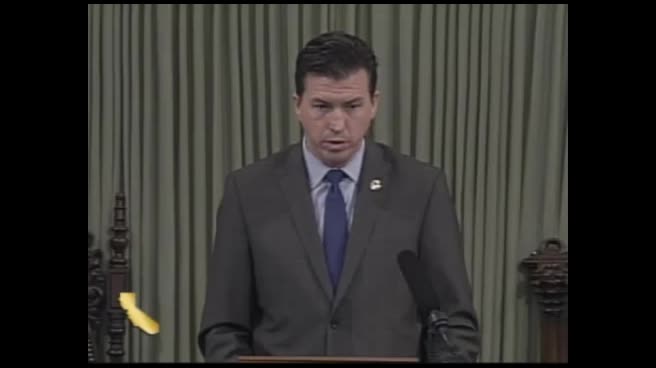
Bill Author

Bill Co-Author(s):