AB 869: Public transportation agencies: fare evasion and prohibited conduct.
- Session Year: 2015-2016
- House: Assembly
- Latest Version Date: 2015-06-18
Existing law authorizes a public transportation agency to adopt and enforce an ordinance to impose and enforce civil administrative penalties for fare evasion or other passenger misconduct, other than by minors, on or in a transit facility or vehicle in lieu of the criminal penalties otherwise applicable, with specified administrative procedures for the imposition and enforcement of the administrative penalties, including an initial review and opportunity for a subsequent administrative hearing.
This bill would provide that a person who fails to pay the administrative penalty when due or successfully complete the administrative process to dismiss the notice of fare evasion or passenger misconduct conduct violation may be subject to those criminal penalties. The bill would require the notice of fare evasion or passenger misconduct conduct violation to contain a printed statement that the person may be charged with an infraction or misdemeanor if the administrative penalty is not paid when due or dismissed pursuant to these provisions.
The bill would also require the processing agency to dismiss the original notice of fare evasion or passenger conduct violation and make no further attempts to collect the administrative penalty if the person is charged with an infraction or misdemeanor after failing to pay the administrative penalty or successfully complete the civil administrative process. The bill would require the processing agency to personally serve the person charged with an infraction or misdemeanor with a new notice of fare evasion or passenger conduct violation that sets forth the criminal violation.
Because the bill would expand the scope of an existing crime, the bill would impose a state-mandated local program.
The California Constitution requires the state to reimburse local agencies and school districts for certain costs mandated by the state. Statutory provisions establish procedures for making that reimbursement.
This bill would provide that no reimbursement is required by this act for a specified reason.
Existing law authorizes a public transportation agency to adopt and enforce an ordinance to impose and enforce civil administrative penalties for fare evasion or other passenger misconduct, other than by minors, on or in a transit facility or vehicle in lieu of the criminal penalties otherwise applicable, with specified administrative procedures for the imposition and enforcement of the administrative penalties, including an initial review and opportunity for a subsequent administrative hearing.
This bill would provide that a person who fails to pay the administrative penalty when due or successfully complete the administrative process to dismiss the notice of fare evasion or passenger misconduct may be subject to those criminal penalties. The bill would require the notice of fare evasion or passenger misconduct to contain a printed statement that the person may be charged with an infraction or misdemeanor if the administrative penalty is not paid when due or dismissed pursuant to these provisions.
The bill would also require the processing agency to dismiss the original notice of fare evasion and make no further attempts to collect the administrative penalty if the person is charged with an infraction or misdemeanor after failing to pay the administrative penalty or successfully complete the civil administrative process. The bill would require the processing agency to personally serve the person charged with an infraction or misdemeanor with a new notice of fare evasion that sets forth the criminal violation.
Because the bill would expand the scope of an existing crime, the bill would impose a state-mandated local program.
The California Constitution requires the state to reimburse local agencies and school districts for certain costs mandated by the state. Statutory provisions establish procedures for making that reimbursement.
This bill would provide that no reimbursement is required by this act for a specified reason.
Existing law authorizes a public transportation agency to adopt and enforce an ordinance to impose and enforce civil administrative penalties for fare evasion or other passenger misconduct, other than by minors, on or in a transit facility or vehicle in lieu of the criminal penalties otherwise applicable, with specified administrative procedures for the imposition and enforcement of the administrative penalties, including an initial review and opportunity for a subsequent administrative hearing.
This bill would provide that a person who fails to pay the administrative penalty when due or successfully complete the administrative process to dismiss the notice of fare evasion or passenger misconduct may be subject to those criminal penalties. The bill would require the notice of fare evasion or passenger misconduct to contain a printed statement that the person may be charged with an infraction or misdemeanor if the administrative penalty is not paid when due or dismissed pursuant to these provisions.
Because the bill would expand the scope of an existing crime, the bill would impose a state-mandated local program.
The California Constitution requires the state to reimburse local agencies and school districts for certain costs mandated by the state. Statutory provisions establish procedures for making that reimbursement.
This bill would provide that no reimbursement is required by this act for a specified reason.
(a)Pursuant to subdivision (e) of Section 640 of the Penal Code, a public transportation agency may enact and enforce an ordinance to impose and enforce an administrative penalty for any of the acts described in subdivision (b). The ordinance shall include the provisions of this chapter and shall not apply to minors.
(b)(1)Evasion of the payment of a fare of the system.
(2)Misuse of a transfer, pass, ticket, or token with the intent to evade the payment of a fare.
(3)Playing sound equipment on or in a system facility or vehicle.
(4)Smoking, eating, or drinking in or on a system facility or vehicle in those areas where those activities are prohibited by that system.
(5)Expectorating upon a system facility or vehicle.
(6)Willfully disturbing others on or in a system facility or vehicle by engaging in boisterous or unruly behavior.
(7)Carrying an explosive or acid, flammable liquid, or toxic or hazardous material in a system facility or vehicle.
(8)Urinating or defecating in a system facility or vehicle, except in a lavatory. However, this paragraph shall not apply to a person who cannot comply with this paragraph as a result of a disability, age, or a medical condition.
(9)(A)Willfully blocking the free movement of another person in a system facility or vehicle.
(B)This paragraph shall not be interpreted to affect any lawful activities permitted or First Amendment rights protected under the laws of this state or applicable federal law, including, but not limited to, laws related to collective bargaining, labor relations, or labor disputes.
(10)Skateboarding, roller skating, bicycle riding, or roller blading in a system facility, including a parking structure, or in a system vehicle. This paragraph does not apply to an activity that is necessary for utilization of a system facility by a bicyclist, including, but not limited to, an activity that is necessary for parking a bicycle or transporting a bicycle aboard a system vehicle, if that activity is conducted with the permission of the agency of the system in a manner that does not interfere with the safety of the bicyclist or other patrons of the system facility.
(11)(A)Unauthorized use of a discount ticket or failure to present, upon request from a system representative, acceptable proof of eligibility to use a discount ticket, in accordance with Section 99155, and posted system identification policies when entering or exiting a system station or vehicle. Acceptable proof of eligibility must be clearly defined in the posting.
(B)In the event that an eligible discount ticket user is not in possession of acceptable proof at the time of request, an issued notice of fare evasion or passenger conduct violation shall be held for a period of 72 hours to allow the user to produce acceptable proof. If the proof is provided, that notice shall be voided. If the proof is not produced within that time period, that notice shall be processed.
(12)Sale or peddling of any goods, merchandise, property, or services of any kind whatsoever on the facilities, vehicles, or property of the public transportation system without the express written consent of the public transportation system or its duly authorized representatives.
(c)(1)The public transportation agency may contract with a private vendor or governmental agency for the processing of notices of fare evasion or passenger conduct violation, and notices of delinquent fare evasion or passenger conduct violation pursuant to Section 99581.
(2)For the purpose of this chapter, processing agency means either of the following:
(A)The agency issuing the notice of fare evasion or passenger conduct violation and the notice of delinquent fare evasion or passenger conduct violation.
(B)The party responsible for processing the notice of fare evasion or passenger conduct violation and the notice of delinquent violation, if a contract is entered into pursuant to paragraph (1).
(3)For the purpose of this chapter, fare evasion or passenger conduct violation penalty includes, but is not limited to, a late payment penalty, administrative fee, fine, assessment, and costs of collection as provided for in the ordinance.
(4)For the purpose of this chapter, public transportation agency shall mean a public agency that provides public transportation as defined in paragraph (1) of subdivision (f) of Section 1 of Article XIXA of the California Constitution.
(5)All fare evasion and passenger conduct violation penalties collected pursuant to this chapter shall be deposited in the general fund of the county in which the citation is administered.
(d)(1)If a fare evasion or passenger conduct violation is observed by a person authorized to enforce the ordinance, a notice of fare evasion or passenger conduct violation shall be issued. The notice shall set forth all of the following:
(A)The violation, including reference to the ordinance setting forth the administrative penalty.
(B)The date and approximate time of the violation, and the location where the violation occurred.
(C)A printed statement indicating the date payment is required to be made.
(D)The procedure for contesting the notice.
(E)A printed statement that the person may be charged with an infraction or misdemeanor pursuant to Section 640 of the Penal Code if the administrative penalty is not paid when due or dismissed pursuant to the procedure for contesting the notice.
(2)The notice shall be served by personal service upon the violator. The notice, or copy of the notice, shall be considered a record kept in the ordinary course of business of the issuing agency and the processing agency, and shall be prima facie evidence of the facts contained in the notice establishing a rebuttable presumption affecting the burden of producing evidence.
(3)When a notice of fare evasion or passenger conduct violation has been served, the person issuing the notice shall file the notice with the processing agency.
(4)If, after a notice of fare evasion or passenger conduct violation is issued pursuant to this section, the issuing officer determines that there is incorrect data on the notice, including, but not limited to, the date or time, the issuing officer may indicate in writing on a form attached to the original notice the necessary correction to allow for the timely entry of the corrected notice on the processing agencys data system. A copy of the correction shall be mailed to the address provided by the person cited at the time the original notice of fare evasion or passenger conduct violation was served.
(5)If a person contests a notice of fare evasion or passenger conduct violation, the issuing agency shall proceed in accordance with Section 99581.
(e)In setting the amounts of administrative penalties for the violations listed in subdivision (b), the public transportation agency shall not establish penalty amounts that exceed the maximum fine amount set forth in Section 640 of the Penal Code.
(f)(1)A person who receives a notice of fare evasion or passenger conduct violation pursuant to this section shall not be subject to citation for a violation of Section 640 of the Penal Code, if the person pays the administrative penalty when due or successfully completes the civil administrative process pursuant to this chapter.
(2)A person who fails to pay the administrative penalty when due or successfully complete the civil administrative process pursuant to this chapter may be charged with an infraction or misdemeanor pursuant to Section 640 of the Penal Code.
(3)If a person is charged with an infraction or misdemeanor pursuant to Section 640 of the Penal Code, after failing to pay the administrative penalty or successfully complete the civil administrative process pursuant to this chapter, the processing agency shall dismiss the original notice of fare evasion or passenger conduct violation and make no further attempts to collect the administrative penalty.
(4)A person who is charged with an infraction or misdemeanor pursuant to Section 640 of the Penal Code, after failing to pay the administrative penalty or successfully complete the civil administrative process pursuant to this chapter, shall be personally served by the processing agency with a new notice of fare evasion or passenger conduct violation that sets forth the violation under Section 640 of the Penal Code.
(g)If an entity enacts an ordinance pursuant to this section it shall, both two years and five years after enactment of the ordinance, report all of the following information to the Senate Committee on Transportation and Housing and the Assembly Committee on Transportation:
(1)A description of the ordinance, including the circumstances under which an alleged violator is afforded the opportunity to complete the administrative process.
(2)The amount of the administrative penalties.
(3)The number and types of citations administered pursuant to the ordinance.
(4)To the extent available, a comparison of the number and types of citations administered pursuant to the ordinance with the number and types of citations issued for similar offenses and administered through the courts both in the two years prior to the ordinance and, if any, since enactment of the ordinance.
(5)A discussion of the effect of the ordinance on passenger behavior.
(6)A discussion of the effect of the ordinance on revenues to the entity described in subdivision (a) and, in consultation with the superior courts, the cost savings to the county courts. The superior courts are encouraged to collaborate on and provide data for this report.
SEC. 2.No reimbursement is required by this act pursuant to Section 6 of Article XIIIB of the California Constitution because the only costs that may be incurred by a local agency or school district will be incurred because this act creates a new crime or infraction, eliminates a crime or infraction, or changes the penalty for a crime or infraction, within the meaning of Section 17556 of the Government Code, or changes the definition of a crime within the meaning of Section 6 of Article XIIIB of the California Constitution.
(a)Pursuant to subdivision (e) of Section 640 of the Penal Code, a public transportation agency may enact and enforce an ordinance to impose and enforce an administrative penalty for any of the acts described in subdivision (b). The ordinance shall include the provisions of this chapter and shall not apply to minors.
(b)(1)Evasion of the payment of a fare of the system.
(2)Misuse of a transfer, pass, ticket, or token with the intent to evade the payment of a fare.
(3)Playing sound equipment on or in a system facility or vehicle.
(4)Smoking, eating, or drinking in or on a system facility or vehicle in those areas where those activities are prohibited by that system.
(5)Expectorating upon a system facility or vehicle.
(6)Willfully disturbing others on or in a system facility or vehicle by engaging in boisterous or unruly behavior.
(7)Carrying an explosive or acid, flammable liquid, or toxic or hazardous material in a system facility or vehicle.
(8)Urinating or defecating in a system facility or vehicle, except in a lavatory. However, this paragraph shall not apply to a person who cannot comply with this paragraph as a result of a disability, age, or a medical condition.
(9)(A)Willfully blocking the free movement of another person in a system facility or vehicle.
(B)This paragraph shall not be interpreted to affect any lawful activities permitted or first amendment First Amendment rights protected under the laws of this state or applicable federal law, including, but not limited to, laws related to collective bargaining, labor relations, or labor disputes.
(10)Skateboarding, roller skating, bicycle riding, or roller blading in a system facility, including a parking structure, or in a system vehicle. This paragraph does not apply to an activity that is necessary for utilization of a system facility by a bicyclist, including, but not limited to, an activity that is necessary for parking a bicycle or transporting a bicycle aboard a system vehicle, if that activity is conducted with the permission of the agency of the system in a manner that does not interfere with the safety of the bicyclist or other patrons of the system facility.
(11)(A)Unauthorized use of a discount ticket or failure to present, upon request from a system representative, acceptable proof of eligibility to use a discount ticket, in accordance with Section 99155, and posted system identification policies when entering or exiting a system station or vehicle. Acceptable proof of eligibility must be clearly defined in the posting.
(B)In the event that an eligible discount ticket user is not in possession of acceptable proof at the time of request, an issued notice of fare evasion or passenger conduct violation shall be held for a period of 72 hours to allow the user to produce acceptable proof. If the proof is provided, that notice shall be voided. If the proof is not produced within that time period, that notice shall be processed.
(12)Sale or peddling of any goods, merchandise, property, or services of any kind whatsoever on the facilities, vehicles, or property of the public transportation system without the express written consent of the public transportation system or its duly authorized representatives.
(c)(1)The public transportation agency may contract with a private vendor or governmental agency for the processing of notices of fare evasion or passenger conduct violation, and notices of delinquent fare evasion or passenger conduct violation pursuant to Section 99581.
(2)For the purpose of this chapter, processing agency means either of the following:
(A)The agency issuing the notice of fare evasion or passenger conduct violation and the notice of delinquent fare evasion or passenger conduct violation.
(B)The party responsible for processing the notice of fare evasion or passenger conduct violation and the notice of delinquent violation, if a contract is entered into pursuant to paragraph (1).
(3)For the purpose of this chapter, fare evasion or passenger conduct violation penalty includes, but is not limited to, a late payment penalty, administrative fee, fine, assessment, and costs of collection as provided for in the ordinance.
(4)For the purpose of this chapter, public transportation agency shall mean a public agency that provides public transportation as defined in paragraph (1) of subdivision (f) of Section 1 of Article XIXA of the California Constitution.
(5)All fare evasion and passenger conduct violation penalties collected pursuant to this chapter shall be deposited in the general fund of the county in which the citation is administered.
(d)(1)If a fare evasion or passenger conduct violation is observed by a person authorized to enforce the ordinance, a notice of fare evasion or passenger conduct violation shall be issued. The notice shall set forth all of the following:
(A)The violation, including reference to the ordinance setting forth the administrative penalty.
(B)The date and approximate time of the violation, and the location where the violation occurred.
(C)A printed statement indicating the date payment is required to be made.
(D)The procedure for contesting the notice.
(E)A printed statement that the person may be charged with an infraction or misdemeanor pursuant to Section 640 of the Penal Code if the administrative penalty is not paid when due or dismissed pursuant to the procedure for contesting the notice.
(2)The notice shall be served by personal service upon the violator. The notice, or copy of the notice, shall be considered a record kept in the ordinary course of business of the issuing agency and the processing agency, and shall be prima facie evidence of the facts contained in the notice establishing a rebuttable presumption affecting the burden of producing evidence.
(3)When a notice of fare evasion or passenger conduct violation has been served, the person issuing the notice shall file the notice with the processing agency.
(4)If, after a notice of fare evasion or passenger conduct violation is issued pursuant to this section, the issuing officer determines that there is incorrect data on the notice, including, but not limited to, the date or time, the issuing officer may indicate in writing on a form attached to the original notice the necessary correction to allow for the timely entry of the corrected notice on the processing agencys data system. A copy of the correction shall be mailed to the address provided by the person cited at the time the original notice of fare evasion or passenger conduct violation was served.
(5)If a person contests a notice of fare evasion or passenger conduct violation, the issuing agency shall proceed in accordance with Section 99581.
(e)In setting the amounts of administrative penalties for the violations listed in subdivision (b), the public transportation agency shall not establish penalty amounts that exceed the maximum fine amount set forth in Section 640 of the Penal Code.
(f)(1)A person who receives a notice of fare evasion or passenger conduct violation pursuant to this section shall not be subject to citation for a violation of Section 640 of the Penal Code, if the person pays the administrative penalty when due or successfully completes the civil administrative process pursuant to this chapter.
(2)A person who fails to pay the administrative penalty when due or successfully complete the civil administrative process pursuant to this chapter may be charged with an infraction or misdemeanor pursuant to Section 640 of the Penal Code.
(3)If a person is charged with an infraction or misdemeanor pursuant to Section 640 of the Penal Code, after failing to pay the administrative penalty or successfully complete the civil administrative process pursuant to this chapter, the processing agency shall dismiss the original notice of fare evasion and make no further attempts to collect the administrative penalty.
(4)A person who is charged with an infraction or misdemeanor pursuant to Section 640 of the Penal Code, after failing to pay the administrative penalty or successfully complete the civil administrative process pursuant to this chapter, shall be personally served by the processing agency with a new notice of fare evasion that sets forth the violation under Section 640 of the Penal Code.
(g)If an entity enacts an ordinance pursuant to this section it shall, both two years and five years after enactment of the ordinance, report all of the following information to the Senate Committee on Transportation and Housing and the Assembly Committee on Transportation:
(1)A description of the ordinance, including the circumstances under which an alleged violator is afforded the opportunity to complete the administrative process.
(2)The amount of the administrative penalties.
(3)The number and types of citations administered pursuant to the ordinance.
(4)To the extent available, a comparison of the number and types of citations administered pursuant to the ordinance with the number and types of citations issued for similar offenses and administered through the courts both in the two years prior to the ordinance and, if any, since enactment of the ordinance.
(5)A discussion of the effect of the ordinance on passenger behavior.
(6)A discussion of the effect of the ordinance on revenues to the entity described in subdivision (a) and, in consultation with the superior courts, the cost savings to the county courts. The superior courts are encouraged to collaborate on and provide data for this report.
SEC. 2.No reimbursement is required by this act pursuant to Section 6 of Article XIIIB of the California Constitution because the only costs that may be incurred by a local agency or school district will be incurred because this act creates a new crime or infraction, eliminates a crime or infraction, or changes the penalty for a crime or infraction, within the meaning of Section 17556 of the Government Code, or changes the definition of a crime within the meaning of Section 6 of Article XIIIB of the California Constitution.
(a)Pursuant to subdivision (e) of Section 640 of the Penal Code, a public transportation agency may enact and enforce an ordinance to impose and enforce an administrative penalty for any of the acts described in subdivision (b). The ordinance shall include the provisions of this chapter and shall not apply to minors.
(b)(1)Evasion of the payment of a fare of the system.
(2)Misuse of a transfer, pass, ticket, or token with the intent to evade the payment of a fare.
(3)Playing sound equipment on or in a system facility or vehicle.
(4)Smoking, eating, or drinking in or on a system facility or vehicle in those areas where those activities are prohibited by that system.
(5)Expectorating upon a system facility or vehicle.
(6)Willfully disturbing others on or in a system facility or vehicle by engaging in boisterous or unruly behavior.
(7)Carrying an explosive or acid, flammable liquid, or toxic or hazardous material in a system facility or vehicle.
(8)Urinating or defecating in a system facility or vehicle, except in a lavatory. However, this paragraph shall not apply to a person who cannot comply with this paragraph as a result of a disability, age, or a medical condition.
(9)(A)Willfully blocking the free movement of another person in a system facility or vehicle.
(B)This paragraph shall not be interpreted to affect any lawful activities permitted or first amendment rights protected under the laws of this state or applicable federal law, including, but not limited to, laws related to collective bargaining, labor relations, or labor disputes.
(10)Skateboarding, roller skating, bicycle riding, or roller blading in a system facility, including a parking structure, or in a system vehicle. This paragraph does not apply to an activity that is necessary for utilization of a system facility by a bicyclist, including, but not limited to, an activity that is necessary for parking a bicycle or transporting a bicycle aboard a system vehicle, if that activity is conducted with the permission of the agency of the system in a manner that does not interfere with the safety of the bicyclist or other patrons of the system facility.
(11)(A)Unauthorized use of a discount ticket or failure to present, upon request from a system representative, acceptable proof of eligibility to use a discount ticket, in accordance with Section 99155, and posted system identification policies when entering or exiting a system station or vehicle. Acceptable proof of eligibility must be clearly defined in the posting.
(B)In the event that an eligible discount ticket user is not in possession of acceptable proof at the time of request, an issued notice of fare evasion or passenger conduct violation shall be held for a period of 72 hours to allow the user to produce acceptable proof. If the proof is provided, that notice shall be voided. If the proof is not produced within that time period, that notice shall be processed.
(12)Sale or peddling of any goods, merchandise, property, or services of any kind whatsoever on the facilities, vehicles, or property of the public transportation system without the express written consent of the public transportation system or its duly authorized representatives.
(c)(1)The public transportation agency may contract with a private vendor or governmental agency for the processing of notices of fare evasion or passenger conduct violation, and notices of delinquent fare evasion or passenger conduct violation pursuant to Section 99581.
(2)For the purpose of this chapter, processing agency means either of the following:
(A)The agency issuing the notice of fare evasion or passenger conduct violation and the notice of delinquent fare evasion or passenger conduct violation.
(B)The party responsible for processing the notice of fare evasion or passenger conduct violation and the notice of delinquent violation, if a contract is entered into pursuant to paragraph (1).
(3)For the purpose of this chapter, fare evasion or passenger conduct violation penalty includes, but is not limited to, a late payment penalty, administrative fee, fine, assessment, and costs of collection as provided for in the ordinance.
(4)For the purpose of this chapter, public transportation agency shall mean a public agency that provides public transportation as defined in paragraph (1) of subdivision (f) of Section 1 of Article XIXA of the California Constitution.
(5)All fare evasion and passenger conduct violation penalties collected pursuant to this chapter shall be deposited in the general fund of the county in which the citation is administered.
(d)(1)If a fare evasion or passenger conduct violation is observed by a person authorized to enforce the ordinance, a notice of fare evasion or passenger conduct violation shall be issued. The notice shall set forth the violation, including reference to the ordinance setting forth the administrative penalty, the date of the violation, the approximate time, and the location where the violation occurred. The notice shall include a printed statement indicating the date payment is required to be made, and the procedure for contesting the notice. The all of the following:
(A)The violation, including reference to the ordinance setting forth the administrative penalty.
(B)The date and approximate time of the violation, and the location where the violation occurred.
(C)A printed statement indicating the date payment is required to be made.
(D)The procedure for contesting the notice.
(E)A printed statement that the person may be charged with an infraction or misdemeanor pursuant to Section 640 of the Penal Code if the administrative penalty is not paid when due or dismissed pursuant to the procedure for contesting the notice.
(2)The notice shall be served by personal service upon the violator. The notice, or copy of the notice, shall be considered a record kept in the ordinary course of business of the issuing agency and the processing agency, and shall be prima facie evidence of the facts contained in the notice establishing a rebuttable presumption affecting the burden of producing evidence.
(2)
(3)When a notice of fare evasion or passenger conduct violation has been served, the person issuing the notice shall file the notice with the processing agency.
(3)
(4)If, after a notice of fare evasion or passenger conduct violation is issued pursuant to this section, the issuing officer determines that there is incorrect data on the notice, including, but not limited to, the date or time, the issuing officer may indicate in writing on a form attached to the original notice the necessary correction to allow for the timely entry of the corrected notice on the processing agencys data system. A copy of the correction shall be mailed to the address provided by the person cited at the time the original notice of fare evasion or passenger conduct violation was served.
(4)
(5)If a person contests a notice of fare evasion or passenger conduct violation, the issuing agency shall proceed in accordance with Section 99581.
(e)In setting the amounts of administrative penalties for the violations listed in subdivision (b), the public transportation agency shall not establish penalty amounts that exceed the maximum fine amount set forth in Section 640 of the Penal Code.
(f)(1)A person who receives a notice of fare evasion or passenger conduct violation pursuant to this section shall not be subject to citation for a violation of Section 640 of the Penal Code, if the person pays the administrative penalty when due or successfully completes the civil administrative process pursuant to this chapter.
(2)A person who fails to pay the administrative penalty when due or successfully complete the civil administrative process pursuant to this chapter may be charged with an infraction or misdemeanor pursuant to Section 640 of the Penal Code.
(g)If an entity enacts an ordinance pursuant to this section it shall, both two years and five years after enactment of the ordinance, report all of the following information to the Senate Committee on Transportation and Housing and the Assembly Committee on Transportation:
(1)A description of the ordinance, including the circumstances under which an alleged violator is afforded the opportunity to complete the administrative process.
(2)The amount of the administrative penalties.
(3)The number and types of citations administered pursuant to the ordinance.
(4)To the extent available, a comparison of the number and types of citations administered pursuant to the ordinance with the number and types of citations issued for similar offenses and administered through the courts both in the two years prior to the ordinance and, if any, since enactment of the ordinance.
(5)A discussion of the effect of the ordinance on passenger behavior.
(6)A discussion of the effect of the ordinance on revenues to the entity described in subdivision (a) and, in consultation with the superior courts, the cost savings to the county courts. The superior courts are encouraged to collaborate on and provide data for this report.
SEC. 2.No reimbursement is required by this act pursuant to Section 6 of Article XIIIB of the California Constitution because the only costs that may be incurred by a local agency or school district will be incurred because this act creates a new crime or infraction, eliminates a crime or infraction, or changes the penalty for a crime or infraction, within the meaning of Section 17556 of the Government Code, or changes the definition of a crime within the meaning of Section 6 of Article XIIIB of the California Constitution.
|
Date
|
Status
|
|---|---|
| May 7, 2015 | Read third time. Passed. Ordered to the Senate. |
| Aug 30, 2016 | Ordered to inactive file pursuant to Senate Rule 29. |
| Jun 27, 2016 | Read second time. Ordered to third reading. |
| Jun 23, 2016 | Ordered to second reading. |
| Jun 23, 2016 | From inactive file. |
| Jul 2, 2015 | Ordered to inactive file at the request of Senator Pan. |
| Jun 30, 2015 | Read second time. Ordered to third reading. |
| Jun 29, 2015 | From committee: Be placed on second reading file pursuant to Senate Rule 28.8. |
| Jun 18, 2015 | Read second time and amended. Re-referred to Com. on APPR. |
| Jun 17, 2015 | From committee: Amend, and do pass as amended and re-refer to Com. on APPR. (Ayes 11. Noes 0.) (June 16). |
| May 21, 2015 | Referred to Com. on T. & H. |
| May 7, 2015 | Read third time. Passed. Ordered to the Senate. (Ayes 77. Noes 0. Page 1348.) |
| Feb 26, 2015 | Read first time. To print. |
| May 7, 2015 | In Senate. Read first time. To Com. on RLS. for assignment. |
| Apr 30, 2015 | Read second time. Ordered to Consent Calendar. |
| Apr 29, 2015 | From committee: Do pass. To Consent Calendar. (Ayes 17. Noes 0.) (April 29). |
| Apr 14, 2015 | Re-referred to Com. on APPR. |
| Apr 13, 2015 | Read second time and amended. |
| Apr 9, 2015 | Re-referred to Com. on TRANS. |
| Apr 9, 2015 | From committee: Amend, and do pass as amended and re-refer to Com. on APPR. (Ayes 15. Noes 0.) (April 6). |
| Apr 9, 2015 | Action rescinded whereby the bill was reported Do pass, and re-refer to Com. on APPR. |
| Apr 7, 2015 | From committee: Do pass and re-refer to Com. on APPR. (Ayes 15. Noes 0.) (April 6). Re-referred to Com. on APPR. |
| Mar 16, 2015 | Referred to Com. on TRANS. |
| Feb 27, 2015 | From printer. May be heard in committee March 29. |
|
Date
|
Description
|
Location
|
Votes
|
|
|---|---|---|---|---|
| Jun 16, 2015 | Do pass as amended, but first amend, and re-refer to the Committee on [Appropriations] | Senate Standing Committee on Transportation and Housing |
Passed |
|
| May 7, 2015 | AB 869 COOPER Consent Calendar Second Day Regular Session | Assembly Floor |
Passed |
|
| Apr 29, 2015 | Do pass. To Consent Calendar. | Assembly Standing Committee on Appropriations |
Passed |
|
| Apr 6, 2015 | Do pass as amended and be re-referred to the Committee on [Appropriations] | Assembly Standing Committee on Transportation |
Passed |
This list shows positions taken on this bill by organizations on the date displayed, which is linked to the original source.
Positions by individuals are not included.
|
Organization
|
Position
|
Date
|
|---|---|---|
| Amalgamated Transit Union | ** Support | Jun 16, 2015 |
| California Conference Board Of The Amalgamated Transit Union | ** Support | Apr 6, 2015 |
| Regional Transit | * Support | Jun 16, 2015 |
| Sacramento Regional Transit District | ** Support | Jun 16, 2015 |
Office of Senate Floor Analyses (916) 651-1520 Fax: (916) 327-4478 | AB |
THIRD READING
Bill No: AB 869
:
SENATE TRANS. & HOUSING COMMITTEE: 11-0, 6/16/15
AYES: Beall, Cannella, Allen, Bates, Gaines, Galgiani, Leyva, McGuire, Mendoza, Roth, Wieckowski
SENATE APPROPRIATIONS COMMITTEE: Senate Rule 28.8
ASSEMBLY FLOOR: 77-0, 5/7/15 (Consent) - See last page for vote
DIGEST: This bill authorizes a transit district to pursue criminal penalties if a person fails to pay the administrative penalty or successfully complete a civil administrative process for minor transit-related offenses.
Existing law:
- Makes it a criminal infraction for a person to engage in any of the following activities in a public transit vehicle or facility:
- Fare evasion.
- Misuse of a transfer, pass, ticket, or token with the intent to evade the payment of a fare.
- Disturbing another person by loud or unreasonable noise.
- Smoking, eating, or drinking where those activities are prohibited by the transit provider.
- Expectorating.
- Willfully disturbing others by engaging in boisterous or unruly behavior.
- Carrying an explosive or acid, flammable liquid, or toxic or hazardous material.
- Urinating or defecating except in a lavatory.
- Willfully blocking the free movement of another person unless permitted by First Amendment rights.
- Skateboarding, roller skating, bicycle riding, rollerblading, or operating a motorized scooter, except as necessary for utilization of the transit facility by a bicyclist.
- Unauthorized use of a discount ticket or failure to present acceptable proof of eligibility to use a discount ticket.
- Selling goods or services if those activities are prohibited by the transit provider.
- Willfully tampering with, removing, displacing, injuring, or destroying part of a transit vehicle or facility.
- Authorizes transit agencies to adopt civil adjudication procedures and impose and enforce administrative penalties for any of the above-listed offenses that are committed by adults.
- Allows transit agencies to set their own administrative penalty amounts, but prohibits the amounts from exceeding the maximum statutory criminal penalties for the same offenses.
- Prohibits a person who receives a notice of fare evasion or passenger conduct violation from a transit agency from also being cited for a criminal infraction for the same offense.
This bill specifies that:
- A person cannot be charged with a criminal violation as long as he or she either pays the administrative penalty on time or otherwise successfully completes the civil administrative process.
- A transit agency may charge a person with a criminal violation if the person does not pay the administrative penalty on time or otherwise successfully complete the civil administrative process.
- If a transit agency chooses to charge a person with a criminal penalty, then the agency must dismiss the civil charge and personally serve the person with the new notice of criminal violation.
- A transit agency must include a printed statement with the served notice of administrative violation that the violator may be charged with a criminal violation if he or she fails to pay the fine when due or successfully complete the civil administrative process.
Comments
- Purpose. According to the author, existing law creates a difficult choice for transit agencies in how they choose to enforce fare evasion and other passenger misconduct. Agencies can either issue criminal citations with costly fines that discourage payment, or they can issue administrative citations with no enforcement recourse if not paid.
For example, according to the author, the Sacramento Regional Transit District (RT) issues criminal citations for fare evasion and other prohibited conduct; the current base fine for such a violation is $20, but the addition of court fees and assessments brings the total to $151. An increasing number of these citations result in dispositions in which individuals either (a) fail to appear, or (b) are unable to pay the fine. Existing law provides an alternative approach to RT through the authority to enact an administrative process to handle fare evasion and other prohibited conduct cases. RT has not utilized this remedy for enforcing fare evasions, however, due to the lack of any compliance mechanism for those cited that fail to appear or pay the fine.
This bill addresses this challenge by allowing transit agencies to first issue an administrative citation for fare evasion or passenger misconduct and then switch to a misdemeanor citation if the alleged violator fails to pay the fine or fails to complete the administrative process.
FISCAL EFFECT: Appropriation: Fiscal Com.: Local:
Amalgamated Transit Union
Sacramento Regional Transit District
OPPOSITION: (Verified 6/27/16)
None received
ASSEMBLY FLOOR: 77-0, 5/7/15
AYES: Achadjian, Alejo, Travis Allen, Baker, Bigelow, Bloom, Bonilla, Bonta, Brough, Brown, Burke, Calderon, Chang, Chau, Chávez, Chiu, Chu, Cooley, Cooper, Dababneh, Dahle, Daly, Dodd, Eggman, Frazier, Beth Gaines, Gallagher, Cristina Garcia, Eduardo Garcia, Gatto, Gipson, Gomez, Gonzalez, Gordon, Gray, Grove, Hadley, Harper, Holden, Irwin, Jones, Jones-Sawyer, Kim, Lackey, Levine, Linder, Lopez, Low, Maienschein, Mathis, Mayes, McCarty, Medina, Melendez, Mullin, Nazarian, Obernolte, O'Donnell, Olsen, Patterson, Perea, Quirk, Rendon, Ridley-Thomas, Rodriguez, Salas, Santiago, Mark Stone, Thurmond, Ting, Wagner, Waldron, Weber, Wilk, Williams, Wood, Atkins
NO VOTE RECORDED: Campos, Roger Hernández, Steinorth
6/27/16 15:56:55
**** END ****
AB 869
Page 4
|
Office of Senate Floor Analyses (916) 651-1520 Fax: (916) 327-4478 |
THIRD READING
Bill No: AB 869
Amended: 6/18/15 in Senate
SENATE TRANS. & HOUSING COMMITTEE: 11-0, 6/16/15
AYES: Beall, Cannella, Allen, Bates, Gaines, Galgiani, Leyva, McGuire, Mendoza, Roth, Wieckowski
SENATE APPROPRIATIONS COMMITTEE: Senate Rule 28.8
ASSEMBLY FLOOR: 77-0, 5/7/15 (Consent) - See last page for vote
SUBJECT: Public transportation agencies: fare evasion and prohibited conduct
DIGEST: This bill authorizes a transit district to pursue criminal penalties if a person fails to pay the administrative penalty or successfully complete a civil administrative process for minor transit-related offenses.
Existing law:
Makes it a criminal infraction for a person to engage in any of the following activities in a public transit vehicle or facility:
Fare evasion.
Misuse of a transfer, pass, ticket, or token with the intent to evade the payment of a fare.
Disturbing another person by loud or unreasonable noise.
Smoking, eating, or drinking where those activities are prohibited by the transit provider.
Expectorating.
Willfully disturbing others by engaging in boisterous or unruly behavior.
Carrying an explosive or acid, flammable liquid, or toxic or hazardous material.
Urinating or defecating except in a lavatory.
Willfully blocking the free movement of another person unless permitted by First Amendment rights.
Skateboarding, roller skating, bicycle riding, rollerblading, or operating a motorized scooter, except as necessary for utilization of the transit facility by a bicyclist.
Unauthorized use of a discount ticket or failure to present acceptable proof of eligibility to use a discount ticket.
Selling goods or services if those activities are prohibited by the transit provider.
Willfully tampering with, removing, displacing, injuring, or destroying part of a transit vehicle or facility.
Authorizes transit agencies to adopt civil adjudication procedures and impose and enforce administrative penalties for any of the above-listed offenses that are committed by adults.
Allows transit agencies to set their own administrative penalty amounts, but prohibits the amounts from exceeding the maximum statutory criminal penalties for the same offenses.
Prohibits a person who receives a notice of fare evasion or passenger conduct violation from a transit agency from also being cited for a criminal infraction for the same offense.
This bill specifies that:
A person cannot be charged with a criminal violation as long as he or she either pays the administrative penalty on time or otherwise successfully completes the civil administrative process.
A transit agency may charge a person with a criminal violation if the person does not pay the administrative penalty on time or otherwise successfully complete the civil administrative process.
If a transit agency chooses to charge a person with a criminal penalty, then the agency must dismiss the civil charge and personally serve the person with the new notice of criminal violation.
A transit agency must include a printed statement with the served notice of administrative violation that the violator may be charged with a criminal violation if he or she fails to pay the fine when due or successfully complete the civil administrative process.
Comments
Purpose. According to the author, existing law creates a difficult choice for transit agencies in how they choose to enforce fare evasion and other passenger misconduct. Agencies can either issue criminal citations with costly fines that discourage payment, or they can issue administrative citations with no enforcement recourse if not paid.
For example, according to the author, the Sacramento Regional Transit District (RT) issues criminal citations for fare evasion and other prohibited conduct; the current base fine for such a violation is $20, but the addition of court fees and assessments brings the total to $151. An increasing number of these citations result in dispositions in which individuals either (1) fail to appear, or (2) are unable to pay the fine. Existing law provides an alternative approach to RT through the authority to enact an administrative process to handle fare evasion and other prohibited conduct cases. RT has not utilized this remedy for enforcing fare evasions, however, due to the lack of any compliance mechanism for those cited that fail to appear or pay the fine.
This bill addresses this challenge by allowing transit agencies to first issue an administrative citation for fare evasion or passenger misconduct and then switch to a misdemeanor citation if the alleged violator fails to pay the fine or fails to complete the administrative process.
Chaptering amendments. This bill has chaptering conflicts with two other bills, SB 140 (Leno) and SB 413 (Wieckowski). Should these bills continue to move through the Legislature, the author will need to resolve these conflicts at some point.
FISCAL EFFECT: Appropriation: No Fiscal Com.: Yes Local: Yes
Amalgamated Transit Union
Sacramento Regional Transit District
None received
ASSEMBLY FLOOR: 77-0, 5/7/15
AYES: Achadjian, Alejo, Travis Allen, Baker, Bigelow, Bloom, Bonilla, Bonta, Brough, Brown, Burke, Calderon, Chang, Chau, Chávez, Chiu, Chu, Cooley, Cooper, Dababneh, Dahle, Daly, Dodd, Eggman, Frazier, Beth Gaines, Gallagher, Cristina Garcia, Eduardo Garcia, Gatto, Gipson, Gomez, Gonzalez, Gordon, Gray, Grove, Hadley, Harper, Holden, Irwin, Jones, Jones-Sawyer, Kim, Lackey, Levine, Linder, Lopez, Low, Maienschein, Mathis, Mayes, McCarty, Medina, Melendez, Mullin, Nazarian, Obernolte, O'Donnell, Olsen, Patterson, Perea, Quirk, Rendon, Ridley-Thomas, Rodriguez, Salas, Santiago, Mark Stone, Thurmond, Ting, Wagner, Waldron, Weber, Wilk, Williams, Wood, Atkins
NO VOTE RECORDED: Campos, Roger Hernández, Steinorth
Prepared by: Eric Thronson / T. & H. / (916) 651-4121
7/1/15 16:37:25
**** END ****
AB 869 (Cooper) Page 4 of 4
SENATE COMMITTEE ON TRANSPORTATION AND HOUSING
Senator Jim Beall, Chair
2015 - 2016 Regular
Bill No: AB 869 Hearing Date: 6/16/2015
Author: |
Cooper |
||
Version: |
4/13/2015 |
||
Urgency: |
No |
Fiscal: |
Yes |
Consultant: |
Eric Thronson |
||
SUBJECT: Public transportation agencies: fare evasion and prohibited conduct
DIGEST: This bill authorizes a transit district to pursue criminal penalties if a person fails to pay the administrative penalty or successfully complete a civil administrative process.
ANALYSIS:
Existing law:
Makes it a criminal infraction for a person to engage in any of the following activities in a public transit vehicle or facility:
Fare evasion.
Misuse of a transfer, pass, ticket, or token with the intent to evade the payment of a fare.
Disturbing another person by loud or unreasonable noise.
Smoking, eating, or drinking where those activities are prohibited by the transit provider.
Expectorating.
Willfully disturbing others by engaging in boisterous or unruly behavior.
Carrying an explosive or acid, flammable liquid, or toxic or hazardous material.
Urinating or defecating except in a lavatory.
Willfully blocking the free movement of another person unless permitted by First Amendment rights.
Skateboarding, roller skating, bicycle riding, rollerblading, or operating a motorized scooter, except as necessary for utilization of the transit facility by a bicyclist.
Unauthorized use of a discount ticket or failure to present acceptable proof of eligibility to use a discount ticket.
Selling goods or services if those activities are prohibited by the transit provider.
Willfully tampering with, removing, displacing, injuring, or destroying part of a transit vehicle or facility.
Authorizes transit agencies to adopt civil adjudication procedures and impose and enforce administrative penalties for any of the above-listed offenses that are committed by adults.
Allows transit agencies to set their own administrative penalty amounts, but prohibits the amounts from exceeding the maximum statutory criminal penalties for the same offenses.
Prohibits a person who receives a notice of fare evasion or passenger conduct violation from a transit agency from also being cited for a criminal infraction for the same offense.
This bill specifies that:
A person cannot be charged with a criminal violation as long as he or she either pays the administrative penalty on time or otherwise successfully completes the civil administrative process.
A transit agency may charge a person with a criminal violation if the person does not pay the administrative penalty on time or otherwise successfully complete the civil administrative process.
If a transit agency chooses to charge a person with a criminal penalty, then the agency must dismiss the civil charge and personally serve the person with the new notice of criminal violation.
A transit agency must include a printed statement with the served notice of administrative violation that the violator may be charged with a criminal violation if he or she fails to pay the fine when due or successfully complete the civil administrative process.
COMMENTS:
Purpose. According to the author, existing law creates a difficult choice for transit agencies in how they choose to enforce fare evasion and other passenger misconduct. Agencies can either issue criminal citations with costly fines that discourage payment, or they can issue administrative citations with no enforcement recourse if not paid.
For example, according to the author, the Sacramento Regional Transit District (RT) issues criminal citations for fare evasion and other prohibited conduct; the current base fine for such a violation is $20, but the addition of court fees and assessments brings the total to $151. An increasing number of these citations result in dispositions in which individuals either (1) fail to appear, or (2) are unable to pay the fine. Existing law provides an alternative approach to RT through the authority to enact an administrative process to handle fare evasion and other prohibited conduct cases. RT has not utilized this remedy for enforcing fare evasions, however, due to the lack of any compliance mechanism for those cited that fail to appear or pay the fine.
This bill addresses this challenge by allowing transit agencies to first issue an administrative citation for fare evasion or passenger misconduct and then switch to a misdemeanor citation if the alleged violator fails to pay the fine or fails to complete the administrative process.
Technical amendments.
On page 5, line 37, after “evasion” add “or passenger conduct violation”.
On page 6, line 3, after “evasion” add “or passenger conduct violation”.
Chaptering amendments. This bill has chaptering conflicts with two other bills, SB 140 (Leno) and SB 413 (Wieckowski). Should these bills continue to move through the Legislature, the author will need to resolve these conflicts at some point.
Related Legislation:
SB 24 (Hill) — restricts the use of e-cigarettes in specific areas, including adding the use of e-cigarettes on transit property to the list of activities that are infractions. This bill failed passage on the Senate Floor.
SB 140 (Leno) — defines “smoking” to include the use of e-cigarettes, and references this definition in relation to the smoking activity included in existing law as an infraction on a transit property. This bill is currently pending in the Assembly Rules Committee.
SB 413 (Wieckowski) — adds violations to the list of activities that are infractions related to transit operators, as well as includes minors as potential violators of all existing infractions. This bill is currently pending in the Assembly Transportation Committee.
Assembly votes:
Floor: 77-0
Appr: 17-0
Trans: 15-0
FISCAL EFFECT: Appropriation: No Fiscal Com.: Yes Local: Yes
POSITIONS: (Communicated to the committee before noon on Wednesday,
June 10, 2015.)
SUPPORT:
Amalgamated Transit Union
Sacramento Regional Transit District
OPPOSITION:
None received
-- END --
AB 869
Page 2
Date of Hearing: April 29, 2015
ASSEMBLY COMMITTEE ON APPROPRIATIONS
Jimmy Gomez, Chair
AB 869
(Cooper) – As Amended April 13, 2015
Policy Committee: |
Transportation |
Vote: |
15 - 0 |
|
|
|
|
|
|
|
|
Urgency: No State Mandated Local Program: Yes Reimbursable: No
SUMMARY:
This bill allows a public transit agency that has opened a civil adjudication procedure for a minor transit-related offense to close out that procedure and instead pursue criminal penalties if a person fails to either pay the administrative penalty or successfully complete the civil administrative process. This bill also requires:
The notice provided following an offense to include a statement informing the person that failure to pay the administrative penalty or to have the penalty dismissed could result in a criminal charge for the alleged misconduct.
The person being charged with an infraction or misdemeanor after failing to pay the administrative penalty to be served with a new notice setting forth the criminal violation.
FISCAL EFFECT:
To the extent providing notification that nonpayment of a civil penalty could instead result in a criminal penalty leads to greater compliance, transit agencies will realize greater penalty revenues offset to some extent by the added administrative costs associated with changing from an administrative process to a criminal matter. In addition there should be concurrent court savings, offset to some extent by costs related to criminal matters.
COMMENTS:
Background and Purpose. Penal Code Section 640 makes it a criminal infraction for a person to engage in a variety of specified activities in a transit vehicle or facility. Rather than citing alleged violators under Penal Code Section 640, public transit agencies have the option to adopt and impose an administrative process for adjudicating offenses committed by adults that is similar to the process for issuing and enforcing parking tickets. The issuing officer serves the alleged violator with a “notice of fare evasion or passenger misconduct violation,” which in part includes the administrative penalty amount, the date by which the penalty must be paid, and the process for contesting the citation. Transit agencies may set their own fines, which by law cannot exceed the maximum base fine established for the offense under Penal Code Section 640. Under an administrative process, transit agencies have the flexibility to establish diversion programs to address repeat offenders.
Under current law, a transit agency can cite an alleged violator either under its administrative process, if it has established one, or under Penal Code 640. This bill would allow transit agencies to first cite an alleged violator under an administrative process but then switch to the criminal process under Penal Code Section 640 if the alleged violator fails to pay the fine or otherwise complete the administrative process.
The sponsor, Sacramento Regional Transit District (RT), would like to adopt an administrative process to address fare evasion and other minor offenses, but feels the existing statute needs this change in order to make the process work effectively. RT contends there is likely to be greater compliance with the administrative process if individuals who receive citations are aware that their case could end up as a more costly criminal matter if they fail to pay the administrative fine or otherwise complete the administrative process. Greater compliance with an administrative process would likely benefit the Sacramento County Superior Court, which is currently overburdened with fare evasion citations and other minor transit-related citations.
Analysis Prepared by: Chuck Nicol / APPR. / (916) 319-2081
AB 869
Page 4
Date of Hearing: April 6, 2015
ASSEMBLY COMMITTEE ON TRANSPORTATION
Jim Frazier, Chair
AB 869
(Cooper) – As Introduced February 26, 2015
SUBJECT: Public transportation agencies: fare evasion and prohibited conduct
SUMMARY: Authorizes a public transit district with a civil adjudication procedure for minor transit-related offenses committed by adults to instead pursue criminal penalties if a person fails to pay the administrative penalty or successfully complete the civil administrative process. Specifically, this bill:
Prohibits a person who receives a notice of fare evasion or passenger conduct violation from a transit agency from being charged with an infraction or misdemeanor if the person pays the administrative penalty when due or successfully completes the civil administrative process.
Authorizes a person who fails to pay the administrative penalty when due or successfully complete the civil administrative process to be charged with an infraction or misdemeanor.
Requires a notice of fare evasion or passenger conduct violation to include a printed statement that the person may be charged with an infraction or misdemeanor if the administrative penalty is not paid when due or dismissed pursuant to the procedure for contesting the notice.
EXISTING LAW:
Makes it a criminal infraction for a person to engage in any of the following activities in a public transit vehicle or facility:
Fare evasion.
Misuse of a transfer, pass, ticket, or token with the intent to evade the payment of a fare.
Disturbing another person by loud or unreasonable noise.
Smoking, eating, or drinking where those activities are prohibited by the transit provider.
Expectorating.
Willfully disturbing others by engaging in boisterous or unruly behavior.
Carrying an explosive or acid, flammable liquid, or toxic or hazardous material.
Urinating or defecating except in a lavatory.
Willfully blocking the free movement of another person unless permitted by First Amendment rights.
Skateboarding, roller skating, bicycle riding, rollerblading, or operating a motorized scooter, except as necessary for utilization of the transit facility by a bicyclist.
Unauthorized use of a discount ticket or failure to present acceptable proof of eligibility to use a discount ticket.
Selling goods or services if those activities are prohibited by the transit provider.
Willfully tampering with, removing, displacing, injuring, or destroying part of a transit vehicle or facility.
Authorizes transit agencies to adopt civil adjudication procedures and impose and enforce administrative penalties for any of the above-listed offenses that are committed by adults.
Allows transit agencies to set their own administrative penalty amounts but prohibits the amounts from exceeding the maximum statutory criminal penalties for the same offenses.
Prohibits a person who receives a notice of fare evasion or passenger conduct violation from a transit agency from also being cited for a criminal infraction for the same offense.
FISCAL EFFECT: Unknown
COMMENTS: Penal Code Section 640 makes it a criminal infraction for a person to engage in a variety of specified activities in a transit vehicle or facility. The standard process for enforcing these criminal infractions is for the transit officer citing the offense to give the alleged violator a citation with a court date, which the alleged violator signs promising to appear. The court later sends a notice to the alleged violator, reminding him or her of the court date, listing the bail amount, and stating that he or she must appear unless the bail is paid. On the day the case is set for a hearing in court, the defendant enters a plea. If the plea is “guilty” or “no contest,” the judge or magistrate fixes the penalty amount. If the plea is “not guilty,” the court generally assigns a later trial date. At the trial, the officer is subpoenaed and must appear. In some counties, the defendant may enter a plea with the court clerk or even online, instead of in court. In some counties, the plea hearing and trial may be held at the same time.
State law generally provides that these criminal offenses are punishable by a maximum base fine not to exceed $250 (which becomes $950 when mandatory assessments are added on) and 48 hours of community service for the first and second offense. The judges in each county, however, set the bail schedule annually. In Los Angeles County, the actual base fines range from $25 for a first offense to $100 for repeated offenses for most violations and from $100 to $250 for defecating/urinating and carrying explosives.
Rather than citing alleged violators under Penal Code Section 640, public transit agencies have the option to adopt and impose an administrative process for adjudicating offenses committed by adults that is similar to the process for issuing and enforcing parking tickets. The issuing officer serves the alleged violator with a “notice of fare evasion or passenger misconduct violation,” which includes the date, time, location, and nature of the violation; the administrative penalty amount; the date by which the penalty must be paid; and the process for contesting the citation. Transit agencies may set their own fines, which by law cannot exceed the maximum base fine established for the offense under Penal Code Section 640. Under an administrative process, transit agencies have the flexibility to establish diversion programs to address repeat offenders.
Under current law, a transit agency can cite an alleged violator either under its administrative process, if it has established one, or under Penal Code 640. This bill would allow transit agencies to first cite an alleged violator under an administrative process but then switch to the criminal process under Penal Code Section 640 if the alleged violator fails to pay the fine or otherwise complete the administrative process. This bill requires the original notice of fare evasion or passenger conduct violation to include a printed statement that the person may be charged with an infraction or misdemeanor if he or she fails to pay the fine when due or complete the administrative process. An individual could not be cited under an administrative process and Penal Code Section 640 at the same time, but rather this bill would give the option of escalating to a Penal Code Section 640 citation if the administrative process fails to resolve the matter.
An administrative process for dealing with minor transit offenses can be beneficial to both individuals who receive citations and to the local courts. For cited individuals, the cost is far lower because an administrative fine does not include all of the additional fees and assessments that are added on to the base fine in a criminal proceeding. In addition, an administrative process may include diversion programs or other options for chronic violators who are unable to pay their fines. Removing these minor matters from the local court system saves money and frees up time and resources to address more serious offenses.
The sponsor of the bill, the Sacramento Regional Transit District (RT) would like to adopt an administrative process to address fare evasion and other minor offenses but feels that the existing statute needs this change in order to make the process work effectively. RT believes that there is likely to be greater compliance with the administrative process if individuals who receive citations are aware that their case could end up as a more costly criminal matter if they fail to pay the administrative fine or otherwise complete the administrative process. Greater compliance with an administrative process will greatly benefit the Sacramento County Superior Court, which is currently overburdened with fare evasion citations and other minor transit-related citations.
Proposed Amendments: In order to ensure that an individual cannot be subject to both administrative and criminal fines for the same offense and promote due process, the author may wish to amend the bill to:
Clarify that the administrative process must be closed (i.e. the transit agency can make no further attempts at collecting the fine) once an individual has been cited under Penal Code Section 640.
Clarify that the transit agency must provide proper notice to an individual that he or she is no longer subject to the administrative process and is now being cited for an infraction or a misdemeanor pursuant to Penal Code Section 640.
REGISTERED SUPPORT / OPPOSITION:
Support
Sacramento Regional Transit District
California Conference Board of the Amalgamated Transit Union
Opposition
None on file
Analysis Prepared by: Anya Lawler / TRANS. / (916) 319-2093
Discussed in Hearing
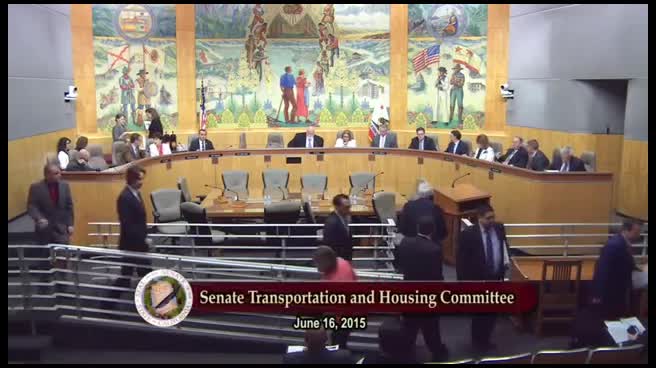 2MIN
Senate Standing Committee on Transportation and Housing
 3MIN
Assembly Standing Committee on Transportation
Bill Author

Bill Co-Author(s):