ACR 102: Opportunity Youth Reengagement Month.
- Session Year: 2017-2018
- House: Assembly
- Latest Version Date: 2017-09-07
This measure would recognize the month of August 2017 as Opportunity Youth Reengagement Month, and state the intent of the Legislature to encourage the expansion of schools authorized to specifically reengage opportunity youth 16 to 24 years of age by developing recommendations for a statewide student reengagement strategy and identifying the cost of the strategy compared to the cost of inaction; authorizing systems for accountability to students, parents, and families through transparency, active engagement, and outreach strategies; and highlighting, promoting, and uplifting evidence-based practices for successful student reengagement efforts that maintain multiple measures for evaluation of student success.
This measure would recognize the month of August 2017 as Opportunity Youth Reengagement Month, and state the intent of the Legislature to encourage the expansion of schools authorized to specifically reengage opportunity youth 16 to 24 years of age by developing recommendations for a statewide student reengagement strategy and identifying the cost of the strategy compared to the cost of inaction; authorizing systems for accountability to students, parents, and families through transparency, active engagement, and outreach strategies; and highlighting, promoting, and uplifting evidence-based practices for successful student reengagement efforts that maintain multiple measures for evaluation of student success.
This measure would recognize the month of August 2017 as Opportunity Youth Reengagement Month, and state the intent of the Legislature to encourage the expansion of schools authorized to specifically reengage opportunity youth 16 to 24 years of age by developing recommendations for a statewide student reengagement strategy and identifying the cost of the strategy compared to the cost of inaction; authorizing systems for accountability to students, parents, and families through transparency, active engagement, and outreach strategies; and highlighting, promoting, and uplifting evidence-based practices for successful student reengagement efforts that maintain multiple measures for evaluation of student success.
WHEREAS, Californias reported dropout rate was 11.6 percent in 2014, and there are approximately 700,000 youths in California who are not in school or are not working; and
WHEREAS, Civic Enterprises and other organizations have recognized the overwhelming economic, social, and personal barriers to young people who are out of work and not in school, defining opportunity youth as youth ages 16 to 24 who are not engaged in either work or school at any meaningful level; and
WHEREAS, Youth and young adults of color disproportionately make up nearly 74 percent of opportunity youth in California, and GradNation reports that the United States cannot achieve its national graduation goals without increasing Californias graduation rate for Latino and African American pupils; and
WHEREAS, The Economic Value of Opportunity Youth study has shown that the total taxpayer burden for each opportunity youth, reflecting earnings, productivity spillovers, and taxes; crime; health costs; and welfare and social supports, in 2012 dollars, is equivalent to $235,680 as a current lump sum, and the total social lump sum burden is $704,020 per youth. That study recognized that the burden is even greater for African American and Latino youth; and
WHEREAS, Our education and workforce systems in California lack the necessary resources to adequately prepare Latinos, African Americans, and other people of color for our current and future workforce needs, which is contributing to a persistent skills gap across the state; and
WHEREAS, Closing wide and persistent gaps in educational attainment will be key to building a strong workforce that is prepared for the jobs of the future, and to ensuring that workers of color can succeed in the knowledge-driven economy; and
WHEREAS, The skills gap faced by opportunity youth limits their employment opportunities to substandard wages, poor-quality jobs, and a greater likelihood to be unemployed or to be the first to be displaced when the economy is tight, and they often face incarceration as adults; and
WHEREAS, Drexel University found that high school dropouts earn 14 percent less than high school graduates, 23 percent less than those earning a postsecondary credential, and 36 percent less than those earning an associate degree; and
WHEREAS, Research by WestEd demonstrates that reenrolling dropouts and providing additional time for reengaged dropouts to earn a diploma can significantly increase graduation rates; and
WHEREAS, Research by the Alliance for Excellent Education concludes that if only one-half of the dropouts from a single year were to earn a diploma, the economic benefits to California would include an additional $1.4 billion in earnings annually for these pupils and an annual increase in state and local tax revenues of $167 million; and
WHEREAS, Successful dropout recovery schools in California utilize evidence-based alternative strategies and accountability metrics, including accelerated learning pedagogies, competency-based instruction, inclusion of noncognitive indicators, and alternative graduation rate cohorts; and
WHEREAS, Successful programs include high-quality career pathways to overcome the skills gap faced by opportunity youth and partnerships to provide a full complement of services along with fully accredited high schools and colleges; now, therefore, be it
Resolved by the Assembly of the State of California, the Senate thereof concurring, That the Legislature hereby declares the month of August as Opportunity Youth Reengagement Month, in honor of the schools and staff who work to reengage pupils who have previously dropped out of school, and in honor of the pupils who overcome significant challenges and systemic barriers to reengage in high school and become transformed learners in preparation for postsecondary success; and be it further
Resolved, That the Legislature intends to encourage the expansion of schools authorized to specifically reengage opportunity youth 16 to 24 years of age by developing recommendations for a statewide student reengagement strategy and identifying the cost of the strategy compared to the cost of inaction; authorizing systems for accountability to students, parents, and families through transparency, active engagement, and outreach strategies; and highlighting, promoting, and uplifting evidence-based practices for successful student reengagement efforts that maintain multiple measures for evaluation of student success; and be it further
Resolved, That the Chief Clerk of the Assembly transmit copies of this resolution to the author for appropriate distribution.
|
Date
|
Status
|
|---|---|
| Sep 7, 2017 | Chaptered by Secretary of State - Res. Chapter 141, Statutes of 2017. |
| Sep 7, 2017 | Enrolled and filed with the Secretary of State at 10 a.m. |
| Aug 31, 2017 | In Assembly. Ordered to Engrossing and Enrolling. |
| Aug 31, 2017 | Adopted and to Assembly. |
| Aug 23, 2017 | From committee: Ordered to third reading. |
| Aug 22, 2017 | In Senate. To Com. on RLS. |
| Aug 21, 2017 | Coauthors revised. |
| Jul 13, 2017 | From committee: Be adopted. Ordered to Third Reading. (Ayes 7. Noes 0.) (July 12). |
| Jun 22, 2017 | Referred to Com. on ED. |
| Jun 14, 2017 | From printer. |
| Jun 13, 2017 | Introduced. To print. |
|
Date
|
Description
|
Location
|
Votes
|
|
|---|---|---|---|---|
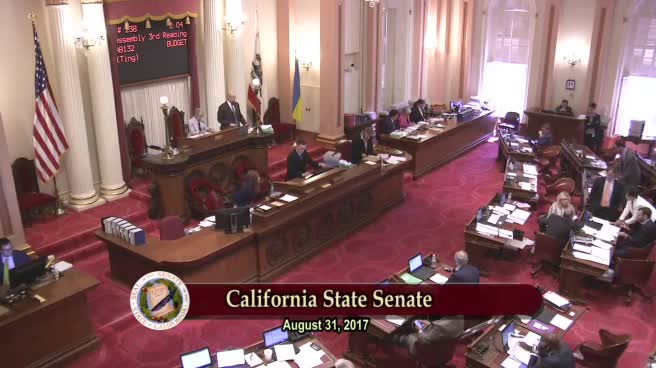
| Aug 31, 2017 | Assembly 3rd Reading ACR102 Eduardo Garcia et al. By Hueso | Senate Floor |
Passed |
|
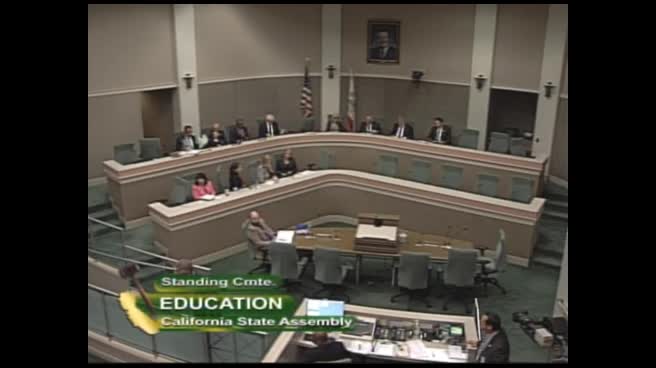
| Jul 12, 2017 | Be adopted. To third reading. | Assembly Standing Committee on Education |
Passed |
This list shows positions taken on this bill by organizations on the date displayed, which is linked to the original source.
Positions by individuals are not included.
|
Organization
|
Position
|
Date
|
|---|---|---|
| California Association Of Local Conservation Corps | ** Support | Aug 23, 2017 |
| EdTrust West | ** Support | Aug 23, 2017 |
| Kids Alliance, John Burton Foundation | ** Support | Aug 23, 2017 |
| learn4life | ** Support | Aug 23, 2017 |
| Los Angeles County Office Of Education | ** Support | Aug 23, 2017 |
| Mexican American Legal Defense and Education Fund | ** Support | Aug 23, 2017 |
| National Center for Youth Law | ** Support | Aug 23, 2017 |
| PolicyLink | ** Support | Aug 23, 2017 |
| Public Advocates | ** Support | Aug 23, 2017 |
| Riverside County Superintendent of Schools | ** Support | Aug 23, 2017 |
| San Diego Unified School District | ** Support | Aug 23, 2017 |
| SIATech | ** Support | Aug 23, 2017 |
Office of Senate Floor Analyses (916) 651-1520 Fax: (916) 327-4478 | ACR 102 |
THIRD READING
Bill No: ACR 102
Author: Eduardo Garcia (D), et al.
Introduced: 6/13/17
ASSEMBLY FLOOR: Read and adopted, 8/21/17
SUBJECT: Opportunity Youth Reengagement Month
SOURCE: California Association of Local Conservation Corps
EdTrust West
Kids Alliance, John Burton Foundation
Learn4Life
Los Angeles County Office of Education
Mexican American Legal Defense and Education Fund
National Center for Youth Law
PolicyLink
Riverside County Superintendent of Schools
San Diego Unified School District
SIATech
DIGEST:
This resolution recognizes the month of August 2017 as Opportunity Youth Reengagement Month, and states the intent of the Legislature to encourage the expansion of schools authorized to specifically reengage “opportunity youth” 16 to 24 years of age.
ANALYSIS: This resolution makes the following legislative findings:
- California’s reported dropout rate was 11.6% in 2014, and there are approximately 700,000 youths in California who are not in school or are not working.
- Civic Enterprises and other organizations have recognized the overwhelming economic, social, and personal barriers to young people who are out of work and not in school, defining “opportunity youth” as youth ages 16 to 24 who are not engaged in either work or school at any meaningful level.
- Youth and young adults of color disproportionately make up nearly 74% of “opportunity youth” in California, and GradNation reports that the United States cannot achieve its national graduation goals without increasing California’s graduation rate for Latino and African American pupils.
- The Economic Value of Opportunity Youth study has shown that the total taxpayer burden for each “opportunity youth,” reflecting earnings, productivity spillovers, and taxes; crime; health costs; and welfare and social supports, in 2012 dollars, is equivalent to $235,680 as a current lump sum, and the total social lump sum burden is $704,020 per youth. That study recognized that the burden is even greater for African American and Latino youth.
- The skills gap faced by “opportunity youth” limits their employment opportunities. Closing wide and persistent gaps in educational attainment will be key to building a strong workforce that is prepared for the jobs of the future, and to ensuring that workers of color can succeed in the knowledge-driven economy.
- Research concludes that if only one-half of the dropouts from a single year were to earn a diploma, the economic benefits to California would include an additional $1.4 billion in earnings annually for these pupils and an annual increase in state and local tax revenues of $167 million.
- Successful programs include high-quality career pathways to overcome the skills gap faced by “opportunity youth” and partnerships to provide a full complement of services along with fully accredited high schools and colleges.
This resolution declares August 2017 as Opportunity Youth Reengagement Month, in honor of the schools and staff who work to reengage pupils who have previously dropped out of school, and in honor of the pupils who overcome significant challenges and systemic barriers to reengage in high school and become transformed learners in preparation for postsecondary success; and states the intent of the Legislature to encourage the expansion of schools authorized to specifically reengage “opportunity youth” 16 to 24 years of age by:
- Developing recommendations for a statewide student reengagement strategy and identifying the cost of the strategy compared to the cost of inaction;
- Authorizing systems for accountability to students, parents, and families through transparency, active engagement, and outreach strategies; and
- Highlighting, promoting, and uplifting evidence-based practices for successful student reengagement efforts that maintain multiple measures for evaluation of student success.
FISCAL EFFECT: Appropriation: No Fiscal Com.: No Local: No
SUPPORT: (Unable to verify at time of writing)
California Association of Local Conservation Corps (co-source)
EdTrust West (co-source)
Kids Alliance, John Burton Foundation (co-source)
Learn4Life (co-source)
Los Angeles County Office of Education (co-source)
Mexican American Legal Defense and Education Fund (co-source)
National Center for Youth Law (co-source)
PolicyLink (co-source)
Riverside County Superintendent of Schools (co-source)
San Diego Unified School District (co-source)
SIATech (co-source)
Los Angeles County Superintendent of Schools, Dr. Debra Duardo
Public Advocates
OPPOSITION: (Unable to verify at time of writing)
None received
Prepared by: Melissa Ward / SFA / (916) 651-1520
8/23/17 15:19:27
**** END ****
ASSEMBLY THIRD READING
ATR Bill Id:ACR 102
Author:(Eduardo Garcia)
As Introduced Ver:
Majority vote
Committee | Votes | Ayes | Noes |
Education | 7-0 | O'Donnell, Chávez, Gloria, Kiley, McCarty, Thurmond, Weber |
SUMMARY: Recognizes the month of August 2017 as Opportunity Youth Reengagement Month, and states the intent of the Legislature to encourage the expansion of schools authorized to specifically reengage "opportunity youth" 16 to 24 years of age. Specifically, this resolution states that:
- California's reported dropout rate was 11.6 % in 2014, and there are approximately 700,000 youths in California who are not in school or are not working.
- There are overwhelming economic, social, and personal barriers to young people who are out of work and not in school, defining "opportunity youth" as youth ages 16 to 24 who are not engaged in either work or school at any meaningful level.
- Youth and young adults of color disproportionately make up nearly 74% of "opportunity youth" in California, and the United States cannot achieve its national graduation goals without increasing California's graduation rate for Latino and African American pupils.
- "The Economic Value of Opportunity Youth" study has shown that the total taxpayer burden for each "opportunity youth," reflecting earnings, productivity spillovers, and taxes; crime; health costs; and welfare and social supports, in 2012 dollars, is equivalent to $235,680 as a current lump sum, and the total social lump sum burden is $704,020 per youth, and that the burden is even greater for African American and Latino youth.
- Our education and workforce systems in California lack the necessary resources to adequately prepare Latinos, African Americans, and other people of color for our current and future workforce needs, which is contributing to a persistent skills gap across the state.
- Closing wide and persistent gaps in educational attainment will be key to building a strong workforce that is prepared for the jobs of the future, and ensuring that workers of color can succeed in the knowledge-driven economy.
- The skills gap faced by "opportunity youth" limits them to substandard wages, poor-quality jobs, and a greater likelihood to be unemployed or to be the first to be displaced when the economy is tight, and they often face incarceration as adults.
- Research found that high school dropouts earn 14% less than high school graduates, 23% less than those earning a postsecondary credential, and 36% less than those earning an associate degree and research also demonstrates that reenrolling dropouts and providing additional time for reengaged dropouts to earn a diploma can significantly increase graduation rates.
- Research by the Alliance for Excellent Education concludes that if only one-half of the dropouts from a single year were to earn a diploma, the economic benefits to California would include an additional $1.4 billion in earnings annually for these pupils and an annual increase in state and local tax revenues of $167 million.
- Successful dropout recovery schools in California utilize evidence-based alternative strategies and accountability metrics, including accelerated learning pedagogies, competency-based instruction, inclusion of noncognitive indicators, and alternative graduation rate cohorts.
- Successful programs include high-quality career pathways to overcome the skills gap faced by "opportunity youth" and partnerships to provide a full complement of services along with fully accredited high schools and colleges.
- Resolves that the Legislature declares the month of August as Opportunity Youth Reengagement Month, in honor of the schools and staff who work to reengage pupils who have previously dropped out of school, and in honor of the pupils who overcome significant challenges and systemic barriers to reengage in high school and become transformed learners in preparation for postsecondary success.
- Resolves that the Legislature intends to encourage the expansion of schools authorized to specifically reengage "opportunity youth" 16 to 24 years of age by developing recommendations for a statewide student reengagement strategy and identifying the cost of the strategy compared to the cost of inaction; authorizing systems for accountability to students, parents, and families through transparency, active engagement, and outreach strategies; and highlighting, promoting, and uplifting evidence-based practices for successful student reengagement efforts that maintain multiple measures for evaluation of student success.
FISCAL EFFECT: This resolution is keyed non-fiscal by the Legislative Counsel.
COMMENTS: According to the author, "California lacks a unified strategy for addressing the needs of the more than 700,000 dropouts and other opportunity youth in the state. ACR 102 provides a platform for developing a statewide strategy for reengaging opportunity youth by declaring August as Opportunity Youth Reengagement Month. The resolution also specifically identifies legislative intent to encourage the expansion of schools authorized to reengage opportunity youth 16-24 years of age by developing recommendations for a statewide student reengagement; authorized systems for accountability; and promotion of evidence-based practices for successful student reengagement efforts."
Analysis Prepared by: Debbie Look / ED. / (916) 319-2087 FN: 0001176
Date of Hearing: July 12, 2017
ASSEMBLY COMMITTEE ON EDUCATION
Patrick O'Donnell, Chair
ABPCA Bill Id:ACR 102 (
Author:Eduardo Garcia) – As Introduced Ver:June 13, 2017
SUBJECT: Opportunity Youth Reengagement Month
SUMMARY: Recognizes the month of August 2017 as Opportunity Youth Reengagement Month, and states the intent of the Legislature to encourage the expansion of schools authorized to specifically reengage “opportunity youth” 16 to 24 years of age. Specifically, this resolution:
- States that California’s reported dropout rate was 11.6 percent in 2014, and there are approximately 700,000 youths in California who are not in school or are not working.
- States that there are overwhelming economic, social, and personal barriers to young people who are out of work and not in school, defining “opportunity youth” as youth ages 16 to 24 who are not engaged in either work or school at any meaningful level.
- States that youth and young adults of color disproportionately make up nearly 74 percent of “opportunity youth” in California, and GradNation reports that the United States cannot achieve its national graduation goals without increasing California’s graduation rate for Latino and African American pupils.
- States that “The Economic Value of Opportunity Youth” study has shown that the total taxpayer burden for each “opportunity youth,” reflecting earnings, productivity spillovers, and taxes; crime; health costs; and welfare and social supports, in 2012 dollars, is equivalent to $235,680 as a current lump sum, and the total social lump sum burden is $704,020 per youth, and that the burden is even greater for African American and Latino youth.
- States that our education and workforce systems in California lack the necessary resources to adequately prepare Latinos, African Americans, and other people of color for our current and future workforce needs, which is contributing to a persistent skills gap across the state.
- States that wide and persistent gaps in educational attainment will be key to building a strong workforce that is prepared for the jobs of the future, and to ensuring that workers of color can succeed in the knowledge-driven economy.
- States that the skills gap faced by “opportunity youth” limits their employment opportunities to substandard wages, poor-quality jobs, and a greater likelihood to be unemployed or to be the first to be displaced when the economy is tight, and they often face incarceration as adults.
- States that Drexel University found that high school dropouts earn 14 percent less than high school graduates, 23 percent less than those earning a postsecondary credential, and 36 percent less than those earning an associate degree.
- States that research by WestEd demonstrates that reenrolling dropouts and providing additional time for reengaged dropouts to earn a diploma can significantly increase graduation rates.
- States that research by the Alliance for Excellent Education concludes that if only one-half of the dropouts from a single year were to earn a diploma, the economic benefits to California would include an additional $1.4 billion in earnings annually for these pupils and an annual increase in state and local tax revenues of $167 million.
- States that successful dropout recovery schools in California utilize evidence-based alternative strategies and accountability metrics, including accelerated learning pedagogies, competency-based instruction, inclusion of noncognitive indicators, and alternative graduation rate cohorts.
- States that successful programs include high-quality career pathways to overcome the skills gap faced by “opportunity youth” and partnerships to provide a full complement of services along with fully accredited high schools and colleges.
- Resolves that the Legislature declares the month of August as Opportunity Youth Reengagement Month, in honor of the schools and staff who work to reengage pupils who have previously dropped out of school, and in honor of the pupils who overcome significant challenges and systemic barriers to reengage in high school and become transformed learners in preparation for postsecondary success.
- Resolves that the Legislature intends to encourage the expansion of schools authorized to specifically reengage “opportunity youth” 16 to 24 years of age by developing recommendations for a statewide student reengagement strategy and identifying the cost of the strategy compared to the cost of inaction; authorizing systems for accountability to students, parents, and families through transparency, active engagement, and outreach strategies; and highlighting, promoting, and uplifting evidence-based practices for successful student reengagement efforts that maintain multiple measures for evaluation of student success.
FISCAL EFFECT: The Office of Legislative Counsel keyed this resolution as non-fiscal.
COMMENTS:
Need for the resolution. According to the author, “California lacks a unified strategy for addressing the needs of the more than 700,000 dropouts and other opportunity youth in the state. ACR 102 provides a platform for developing a statewide strategy for reengaging opportunity youth by declaring August as Opportunity Youth Reengagement Month. The resolution also specifically identifies legislative intent to encourage the expansion of schools authorized to reengage opportunity youth 16-24 years of age by developing recommendations for a statewide student reengagement; authorized systems for accountability; and promotion of evidence-based practices for successful student reengagement efforts.”
Arguments in support. The numerous organizations co-sponsoring the bill note that research has identified policies and practices that can increase success of schools serving opportunity youth. These include policies and practices to reengage dropouts, including multiple metrics of individual student progress, provision of wraparound supports, differentiated instruction, and relevant curriculum including workforce development. Supporters contend that more California schools need to utilize these practices.
REGISTERED SUPPORT / OPPOSITION:
Support
California Association of Local Conservation Corps (Co-sponsor)
EdTrust West (Co-sponsor)
Kids Alliance, John Burton Foundation (Co-sponsor)
Learn4Life (Co-sponsor)
Los Angeles County Office of Education (Co-sponsor)
Los Angeles County Superintendent of Schools, Dr. Debra Duardo
Mexican American Legal Defense and Education Fund (Co-sponsor)
National Center for Youth Law (Co-sponsor)
PolicyLink (Co-sponsor)
Riverside County Superintendent of Schools (Co-sponsor)
San Diego Unified School District (Co-sponsor)
SIATech (Co-sponsor)
Public Advocates
Opposition
None on file
Analysis Prepared by: Debbie Look / ED. / (916) 319-2087
Discussed in Hearing
 3MIN
Senate Floor
 10MIN
Assembly Floor
 17MIN
Assembly Standing Committee on Education
Bill Author

Bill Co-Author(s):