HR 29
- Session Year: 2017-2018
- House: Assembly
- Latest Version Date: 2017-04-04
WHEREAS, The state is committed to providing excellent educational opportunities to all of its pupils; and
WHEREAS, There are over 92 languages other than English spoken throughout the state, with the primary languages being Arabic, Armenian, Cantonese, Korean, Russian, Spanish, Tagalog, and Vietnamese; and
WHEREAS, Data from multiple sources show a sharp increase in incidents of interethnic and interreligious violence, threats of violence, and other hostile behavior that causes increased anxiety in and outside of classrooms across the United States, including California; and
WHEREAS, Research data from schools in Tucson, Arizona; Oahu, Hawaii; and San Francisco show that high school ethnic studies classes have reduced school violence, reduced the school dropout rate for pupils, raised high school graduation rates, reduced unexcused absences, boosted self-esteem, raised self-efficacy, increased academic engagement, and raised personal empowerment for all pupils; and
WHEREAS, Cities in the region, such as Portland, Oregon; Seattle, Washington; and Santa Fe, New Mexico, have passed resolutions requiring or offering ethnic studies classes. Numerous school districts in the state, such as El Rancho Unified School District, Santa Monica-Malibu Unified School District, San Francisco Unified School District, Woodland Joint Unified School District, Los Angeles Unified School District, Oakland Unified School District, Montebello Unified School District, Coachella Valley Unified School District, Sacramento City Unified School District, and San Diego Unified School District, also have passed resolutions requiring or offering ethnic studies classes; and
WHEREAS, Various organizations have passed a motion supporting teachers and pupils efforts to have access to an ethnic studies high school graduation requirement; and
WHEREAS, Governor Jerry Brown signed Assembly Bill 2016 (Chapter 327 of the Statutes of 2016) into law as Section 51226.7 of the Education Code requiring the Instructional Quality Commission to develop and the State Board of Education to adopt, modify, or revise a model ethnic studies curriculum for high schools; and
WHEREAS, Section 51226.7 of the Education Code also encourages school districts and charter schools serving pupils in grades 9 to 12, inclusive, to establish an ethnic studies class; now, therefore, be it
Resolved by the Assembly of the State of California, That the state will establish an ethnic studies graduation requirement for all high school pupils; and be it further
Resolved, That the Chief Clerk of the Assembly transmit copies of this resolution to the author for appropriate distribution.
|
Date
|
Status
|
|---|---|
| Apr 27, 2017 | Coauthors revised. |
| Apr 20, 2017 | From committee: Be adopted. Ordered to Third Reading. (Ayes 5. Noes 2.) (April 19). |
| Apr 6, 2017 | Referred to Com. on ED. |
| Apr 4, 2017 | Introduced. |
|
Date
|
Description
|
Location
|
Votes
|
|
|---|---|---|---|---|
| Apr 19, 2017 | Be adopted. To third reading. | Assembly Standing Committee on Education |
Passed |
This list shows positions taken on this bill by organizations on the date displayed, which is linked to the original source.
Positions by individuals are not included.
|
Organization
|
Position
|
Date
|
|---|---|---|
| College Assistance Migrant Program, California State University, Sacramento | ** Support | Apr 18, 2017 |
| College Assistance Migrant Program, California State University, Sacramento | ** Support | Apr 18, 2017 |
| Ethnic Studies Now Sacramento | ** Support | Apr 18, 2017 |
| ethnic studies now - sacramento | ** Support | Apr 18, 2017 |
| ethnic studies now - sacramento | ** Support | Apr 18, 2017 |
| One individual | ** Support | Apr 18, 2017 |
| One individual | ** Support | Apr 18, 2017 |
Date of Hearing: April 19, 2017
ASSEMBLY COMMITTEE ON EDUCATION
Patrick O'Donnell, Chair
ABPCA Bill Id:HR 29 (
Author:Weber) – As Introduced Ver:April 4, 2017
SUBJECT: Pupil curriculum
SUMMARY: Resolves that the state will establish an ethnic studies graduation requirement for all high school pupils. Specifically, this resolution:
- States that the State of California is committed to providing excellent educational opportunities to all of its pupils.
- States that there are over 92 languages other than English spoken throughout the state, with the primary languages being Arabic, Armenian, Cantonese, Korean, Russian, Spanish, Tagalog, and Vietnamese.
- States that data from multiple sources show a sharp increase in incidents of interethnic and interreligious violence, threats of violence, and other hostile behavior that causes increased anxiety in and outside of classrooms across the United States, including California.
- States that data from schools in Tucson, Arizona; Oahu, Hawaii; and San Francisco show that high school ethnic studies classes have reduced school violence, reduced the school dropout rate for pupils, raised high school graduation rates, reduced unexcused absences, boosted self-esteem, raised self-efficacy, increased academic engagement, and raised personal empowerment for all pupils.
- States that cities in the region, such as Portland, Oregon; Seattle, Washington; and Santa Fe, New Mexico, have passed resolutions requiring or offering ethnic studies classes.
- States that numerous school districts in the state, such as El Rancho Unified School District, Santa Monica-Malibu Unified School District, San Francisco Unified School District, Woodland Joint Unified School District, Los Angeles Unified School District, Oakland Unified School District, Montebello Unified School District, Coachella Valley Unified School District, Sacramento City Unified School District, and San Diego Unified School District, also have passed resolutions requiring or offering ethnic studies classes
- States that various organizations have passed a motion supporting teachers’ and pupils’ efforts to have access to an ethnic studies high school graduation requirement
- Notes that Governor Jerry Brown signed Assembly Bill 2016 (Chapter 327 of the Statutes of 2016) into law, requiring the Instructional Quality Commission to develop and the State Board of Education to adopt, modify, or revise a model ethnic studies curriculum for high schools
- Notes that the Education Code also encourages school districts and charter schools serving pupils in grades 9 to 12, inclusive, to establish an ethnic studies class.
- Resolves that the state will establish an ethnic studies graduation requirement for all high school pupils.
EXISTING LAW:
- Establishes high school graduation requirements, and authorizes school districts to establish additional requirements for graduation.
- Requires the IQC to develop, and the SBE to adopt, modify, or revise, a model curriculum in ethnic studies.
- Requires the model curriculum to be developed with participation from faculty of ethnic studies programs at universities and colleges with ethnic studies programs and a group of representatives of local educational agencies (LEAs).
- Requires that the model curriculum be written as a guide to allow school districts to adapt their courses to reflect the student demographics in their communities, and include examples of courses offered by LEAs that have been approved as meeting A-G admissions requirements including, to the extent possible, course outlines for those courses.
- Requires that, by December 31, 2019, the IQC to submit the model curriculum to the SBE for adoption, and the SBE to adopt the model curriculum by March 31, 2020.
- Requires the IQC to provide a minimum of 45 days for public comment before submitting the model curriculum to the SBE.
- Requires a school district or charter school that elects to offer a course of study in ethnic studies pursuant to this subdivision to offer the course as an elective in the social sciences or English language arts and to make the course available in at least one year during a student’s enrollment in grades 9 to 12.
- States the intent of the Legislature that local educational agencies submit course outlines for ethnic studies for approval as A-G courses. (EC 51226.7)
FISCAL EFFECT: Unknown
COMMENTS:
Need for the resolution. The author’s office states, “HR 29 highlights the importance of Ethnic Studies classes for all students’ academic and social growth and development. It further demonstrates that many districts throughout the state of California and beyond are making Ethnic Studies a graduation requirement. Finally, this resolution expresses the urgency of establishing an Ethnic Studies graduation requirement, given the rapidly rising xenophobia, religious intolerance, and interpersonal and institutional racism in schools and in society.”
Graduation requirements. Current law establishes state requirements for high school graduation. They include three years of English; two years of mathematics, one year of which must be Algebra I; two years of science, including biological and physical sciences; three years of social studies, including United States history and geography, world history, culture, and geography, one semester of American government and civics, and one semester of economics; one year of visual or performing arts, foreign language, or technical education; two years of physical education. Current law also authorizes school districts to impose additional coursework requirements as a condition of graduation from high school.
Trend toward local ethnic studies graduation requirements. A number of California school districts have recently made completion of a course in ethnic studies a local graduation requirement. Among them are Los Angeles Unified School District (which also resolved that the total number of credits required for graduation would not increase), Montebello Unified School District, El Rancho Unified School District, and Coachella Valley Unified School District. San Francisco Unified School District has resolved to offer ethnic studies courses at all high schools, and explore making it a graduation requirement in the next five years. The Oakland Unified School District has required all high schools to offer access to ethnic studies courses which confer credit toward graduation and which are A-G approved by the 2018-19 school year.
Ethnic studies model curriculum proposed to be delayed. In the Governor’s Budget for 2017-18, the administration proposes to delay by one year the development of the ethnic studies model curriculum required by AB 2016, moving the deadline for submittal and adoption of the plan from 2020 to 2021. The same delay is proposed for the revisions of standards in World Languages and Visual and Performing Arts, as well as a plan to improve the availability of courses in computer science.
Research on academic value of ethnic studies. A review by the National Education Association found that “there is considerable research evidence that well-designed and well-taught ethnic studies curricula have positive academic and social outcomes for students.” Another recent analysis found “a consistent, significant, positive relationship between [Mexican American Studies] participation and student academic performance.”
A 2016 study from Stanford University (published as a working paper) on the effects of an ethnic studies curriculum piloted in several SFUSD high schools found that assignment to a year-long 9th grade ethnic studies course was associated with an increase of ninth-grade student attendance by 21 percentage points, GPA by 1.4 grade points, and credits earned by 23. The authors conclude that “these surprisingly large effects are consistent with the hypothesis that the course reduced dropout rates and suggest that culturally relevant teaching, when implemented in a supportive, high-fidelity context, can provide effective support to at-risk students.” They also note that “the implementation of ethnic studies in SFUSD was, arguably, conducted with a high degree of fidelity, forethought, and planning. In particular, it appeared to draw upon the work of a core group of dedicated teachers, engaging in a regular professional learning community, with outside support from experts in the subject to create and sustain the program. As scholars from a number of disciplines have noted, the effects of such smaller-scale interventions are often very different when the same policies are implemented at scale.”
Related and prior legislation. AB 738 (Limon) of this Session requires the development of a model curriculum in Native American studies, and requires school districts which elect to offer one course in Native American studies to make the course available in at least one year during a student’s enrollment in grades 9-12.
AB 2016 (Alejo) Chapter 327, Statues of 2016 requires the development of a model curriculum in ethnic studies, and requires school districts which elect to offer one course in ethnic studies to make the course available in at least one year during a student’s enrollment in grades 9-12.
AB 101 (Alejo) of the 2015-16 Session would have required the SPI to oversee the development of a model curriculum in ethnic studies, and would have established an advisory committee on ethnic studies to make recommendations on the development of the curriculum. AB 101 was vetoed by the Governor.
AB 1750 (Alejo) of the 2013-14 Session would have required the IQC to identify a model curriculum on ethnic studies at the high school level. This bill was held in the Senate Appropriations Committee.
AB 2001 (Diaz) of the 2001-02 Session would have required the Curriculum Development and Supplemental Materials Commission (now the IQC) to identify model programs, standards, and curricula for ethnic studies at the high school level. This bill was vetoed by the Governor, who stated that existing law, teacher training, and curriculum already addressed this topic.
REGISTERED SUPPORT / OPPOSITION:
Support
College Assistance Migrant Program, California State University, Sacramento
Ethnic Studies Now – Sacramento
One individual
Opposition
None on file
Analysis Prepared by: Tanya Lieberman / ED. / (916) 319-2087
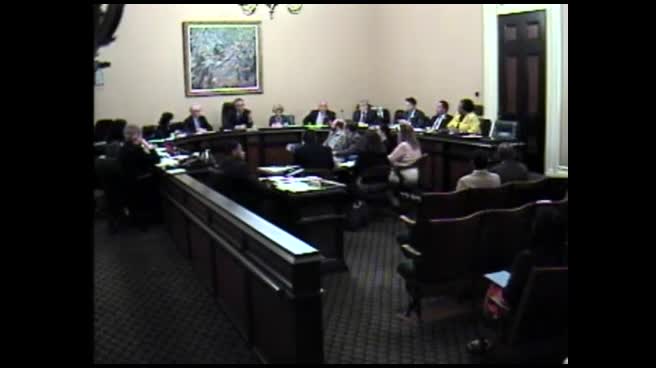
Discussed in Hearing
View Older Hearings
Bill Author

Bill Co-Author(s):