AB 29: Firearms: California Do Not Sell List.
- Session Year: 2023-2024
- House: Assembly
- Latest Version Date: 2023-02-15
Current Status:
Failed
(2024-02-01: From committee: Filed with the Chief Clerk pursuant to Joint Rule 56.)
Introduced
In Committee
First Chamber
In Committee
Second Chamber
Enacted
What does this bill do?
The bill creates a voluntary California “Do Not Sell” list that lets state residents register online to block sales or transfers of firearms to themselves, and requires the Department of Justice to run a secure website and add registrants to the federal background-check system (NICS). It makes knowingly transferring a gun to someone on the list a misdemeanor, and licensed gun dealers who do so may face a $2,000 fine and loss of their license. The law keeps registrations confidential for things like health care, work, housing and insurance, allows registrants to request removal after short waiting periods, and tells hospitals and state-funded suicide hotlines to share information about the list.
The summary is provided by generative AI which can make mistakes. For original language, please view the details in the table below.
Existing law makes possession of a firearm by certain classes of persons, including a convicted felon, a person convicted of specified misdemeanors, a person has been found mentally incompetent to stand trial, a person has been found not guilty of specified crimes by reason of insanity, or a person has been placed under conservatorship, a crime. Existing law additionally makes it a crime to sell or give possession of a firearm to these classes of persons prohibited from owning a firearm.
Existing law requires the Department of Justice, upon submission of firearm purchaser information by a licensed firearm dealer, to examine its records to determine whether a potential firearm purchaser is prohibited by state of federal law from possessing, receiving, owning, or purchasing a firearm. Existing law requires the department to participate in the National Instant Criminal Background Check System.
This bill would require the Department of Justice to develop and launch a secure Internet-based platform to allow a person who resides in California to voluntarily add their own name to the California Do Not Sell List. The bill would require the department to ensure that information on the list is uploaded and reflected in the National Instant Criminal Background Check System. The bill would make it a crime, punishable as misdemeanor or a felony, a misdemeanor, to transfer a firearm to a person who is validly registered on the California Do Not Sell List. By creating a new crime, this bill would impose a state-mandated local program.
The bill would allow a person registered on the list to file a petition in Superior Court requesting to have their name removed from the registry. The bill would require the court to hold a hearing and order removal of the persons name if they establish by a preponderance of the evidence that they are not at elevated risk of suicide.This bill would allow a person, after a specified period of time, to request removal from the list.
The bill would require the State Department of Public Health to create and distribute informational materials about the California Do Not Sell List to general acute care hospitals and acute psychiatric hospitals. The bill would specify that a person presenting in a general acute care hospital or acute psychiatric hospital who is at a substantially elevated risk of suicide should be presented with these informational materials. The bill would specify that any suicide hotline maintained or operated by an entity funded in whole or in part by the state should generally inform callers on how to access the California Do Not Sell List Internet-based platform.
The bill would provide that its provisions are severable.
The California Constitution requires the state to reimburse local agencies and school districts for certain costs mandated by the state. Statutory provisions establish procedures for making that reimbursement.
This bill would provide that no reimbursement is required by this act for a specified reason.
Existing law makes possession of a firearm by certain classes of persons, including a convicted felon, a person convicted of specified misdemeanors, a person has been found mentally incompetent to stand trial, a person has been found not guilty of specified crimes by reason of insanity, or a person has been placed under conservatorship, a crime. Existing law additionally makes it a crime to sell or give possession of a firearm to these classes of persons prohibited from owning a firearm.
Existing law requires the Department of Justice, upon submission of firearm purchaser information by a licensed firearm dealer, to examine its records to determine whether a potential firearm purchaser is prohibited by state of federal law from possessing, receiving, owning, or purchasing a firearm. Existing law requires the department to participate in the National Instant Criminal Background Check System.
This bill would require the Department of Justice to develop and launch a secure Internet-based platform to allow a person who resides in California to voluntarily add their own name to the California Do Not Sell List. The bill would require the department to ensure that information on the list is uploaded and reflected in the National Instant Criminal Background Check System. The bill would make it a crime, punishable as misdemeanor or a felony, to transfer a firearm to a person who is validly registered on the California Do Not Sell List. By creating a new crime, this bill would impose a state-mandated local program.
The bill would allow a person registered on the list to file a petition in Superior Court requesting to have their name removed from the registry. The bill would require the court to hold a hearing and order removal of the persons name if they establish by a preponderance of the evidence that they are not at elevated risk of suicide.
The bill would require the State Department of Public Health to create and distribute informational materials about the California Do Not Sell List to general acute care hospitals and acute psychiatric hospitals. The bill would specify that a person presenting in a general acute care hospital or acute psychiatric hospital who is at a substantially elevated risk of suicide should be presented with these informational materials. The bill would specify that any suicide hotline maintained or operated by an entity funded in whole or in part by the state should generally inform callers on how to access the California Do Not Sell List Internet-based platform.
The bill would provide that its provisions are severable.
The California Constitution requires the state to reimburse local agencies and school districts for certain costs mandated by the state. Statutory provisions establish procedures for making that reimbursement.
This bill would provide that no reimbursement is required by this act for a specified reason.
(a)The Department of Justice shall develop and launch a secure Internet-based platform to allow a person who resides in California to voluntarily add their own name to the California Do Not Sell List, hereafter the registry. The department, in cooperation with the State Department of Public Health, and other relevant state agencies, shall ensure that this Internet-based platform is easy to find. The department shall ensure that the Internet-based platform does all of the following credibly:
(1)Verifies the identity of a person who opts to register or requests removal.
(2)Prevents unauthorized disclosure of a person registering or requesting removal.
(3)Informs the potential registrant of the legal effects of registration or removal.
(b)(1)Once the Internet-based platform is operative, a person who resides in California may request, via the platform, to be added to the California Do Not Sell List. The department shall, on an ongoing basis, ensure that registry information is uploaded and reflected in the National Instant Criminal Background Check System (NICS) Index for California. The list shall not be used for any purpose other than to determine eligibility to purchase a firearm.
(2)(A)At the time of registration, a person may, but is not required to, list up to five electronic mail addresses with the registry to be contacted promptly if the person subsequently requests notified that the person has voluntarily added their name to the California Do Not Sell List or that the person has requested that their name be removed from the registry. The department shall promptly provide notice by electronic mail to the provided electronic mail addresses of the fact that the person has requested removal from the registry and of the date, time, and location of any hearing to be held pursuant to subdivision (d). registry.
(B)A person may request at any time that any of the electronic mail addresses provided to the department at the time of registration be removed from the registry. The department shall promptly provide notice by electronic mail to the provided electronic mail address of the fact that the person has requested that the electronic mail address not receive notifications.
(c)(1)Registration on the California Do Not Sell List renders receipt of a firearm by a registrant unlawful, however, possession after the moment of receipt is not unlawful and the fact of possession may not be relied upon to prove a violation of this paragraph.
(2)It is unlawful to knowingly transfer a firearm to a person who is on the California Do Not Sell List with knowledge that the person is validly registered on the California Do Not Sell List. A violation of this paragraph is punishable by imprisonment in a county jail not exceeding one year, or by imprisonment in a county jail pursuant to subdivision (h) of Section 1170. as a misdemeanor. A violation of this paragraph by a licensed firearms dealer is punishable as a misdemeanor including a fine of two thousand dollars ($2,000) and may result in a revocation of the dealers license.
(d)A person registered on the California Do Not Sell List may subsequently file a petition in the Superior Court of the county in which the person resides requesting to have their name removed from the registry. The court, after a hearing, shall order removal of the persons name from the registry if they establish by a preponderance of the evidence that they are not at elevated risk of suicide. Upon receiving the court order for removal, the department shall promptly remove the person from the NICS Index for California and shall expunge all records related to the persons registration on the California Do Not Sell List and their removal.(d)(1)No sooner than seven days after filing a voluntary waiver of firearm rights, the person may file a request for removal from the California Do Not Sell List via the internet-based platform.
(2)No sooner than 21 days after receiving a request for removal of a voluntary waiver of firearm rights, the department shall remove the person from the National Instant Criminal Background Check System (NICS) Index for California and any other federal or state computer-based systems used by law enforcement agencies or others to identify prohibited purchasers of firearms in which the person was entered, unless the person is otherwise ineligible to possess a firearm pursuant to any other law.
(e)(1)The fact that a person has requested to be added to the registry, is on the registry, has requested to be removed from the registry, or has been removed from the registry is confidential with respect to all matters involving health care, employment, education, housing, insurance, government benefits, and contracting.
(2)A violation of confidentiality occurs if a person or entity engaged in any activity described in paragraph (1), other than a healthcare professional, therapist, or counselor, inquires as to any confidential matter described in paragraph (1), or if any person described in paragraph (1), including, but not limited to, a healthcare professional, therapist, or counselor, takes any adverse action based on that information.
(3)The person whose confidentiality is violated by an inquiry or adverse action in violation of this subdivision may bring a private civil action for appropriate relief, including reasonable attorneys fees, for each violation that occurs.
(f)No person shall be required to voluntarily waive their firearm rights as a condition of employment or of receiving any benefits or services.
30185.(a)The State Department of Public Health shall create and distribute informational materials, including information on how to access the California Do Not Sell List Internet-based platform, to general acute care hospitals and acute psychiatric hospitals, as defined in Section 1250 of the Health and Safety Code.
(b)A person presenting in a general acute care hospital or an acute psychiatric hospital who is reasonably believed by the treating clinician to be at substantially elevated risk of suicide should generally, as a best practice, be presented with the informational materials provided for in subdivision (a).
(c)A suicide hotline maintained or operated by an entity funded in whole or in part by the state should generally, as a best practice, inform callers on how to access the California Do Not Sell List Internet-based platform.
SEC. 2.If any provision of this act or the application thereof to any person or circumstances is held invalid, that invalidity shall not affect other provisions or applications of the act which can be given effect without the invalid provision or application, and to this end the provisions of this act are severable.
SEC. 3.No reimbursement is required by this act pursuant to Section 6 of Article XIIIB of the California Constitution because the only costs that may be incurred by a local agency or school district will be incurred because this act creates a new crime or infraction, eliminates a crime or infraction, or changes the penalty for a crime or infraction, within the meaning of Section 17556 of the Government Code, or changes the definition of a crime within the meaning of Section 6 of Article XIIIB of the California Constitution.
REVISIONS: HeadingLine 3. REVISIONS: HeadingLine 3 and 4.(a)The Department of Justice shall develop and launch a secure Internet-based platform to allow a person who resides in California to voluntarily add their own name to the California Do Not Sell List, hereafter the registry. The department, in cooperation with the State Department of Public Health, and other relevant state agencies, shall ensure that this Internet-based platform is easy to find. The department shall ensure that the Internet-based platform does all of the following credibly:
(1)Verifies the identity of a person who opts to register or requests removal.
(2)Prevents unauthorized disclosure of a person registering or requesting removal.
(3)Informs the potential registrant of the legal effects of registration or removal.
(b)(1)Once the Internet-based platform is operative, a person who resides in California may request, via the platform, to be added to the California Do Not Sell List. The department shall, on an ongoing basis, ensure that registry information is uploaded and reflected in the National Instant Criminal Background Check System (NICS) Index for California. The list shall not be used for any purpose other than to determine eligibility to purchase a firearm.
(2)At the time of registration, a person may, but is not required to, list up to five electronic mail addresses with the registry to be contacted promptly if the person subsequently requests that their name be removed from the registry. The department shall promptly provide notice by electronic mail to the provided electronic mail addresses of the fact that the person has requested removal from the registry and of the date, time, and location of any hearing to be held pursuant to subdivision (d).
(c)(1)Registration on the California Do Not Sell List renders receipt of a firearm by a registrant unlawful, however, possession after the moment of receipt is not unlawful and the fact of possession may not be relied upon to prove a violation of this paragraph.
(2)It is unlawful to knowingly transfer a firearm to a person who is validly registered on the California Do Not Sell List. A violation of this paragraph is punishable by imprisonment in a county jail not exceeding one year, or by imprisonment in a county jail pursuant to subdivision (h) of Section 1170. A violation of this paragraph by a licensed firearms dealer may result in a revocation of the dealers license.
(d)A person registered on the California Do Not Sell List may subsequently file a petition in the Superior Court of the county in which the person resides requesting to have their name removed from the registry. The court, after a hearing, shall order removal of the persons name from the registry if they establish by a preponderance of the evidence that they are not at elevated risk of suicide. Upon receiving the court order for removal, the department shall promptly remove the person from the NICS Index for California and shall expunge all records related to the persons registration on the California Do Not Sell List and their removal.
(e)(1)The fact that a person has requested to be added to the registry, is on the registry, has requested to be removed from the registry, or has been removed from the registry is confidential with respect to all matters involving health care, employment, education, housing, insurance, government benefits, and contracting.
(2)A violation of confidentiality occurs if a person or entity engaged in any activity described in paragraph (1), other than a healthcare professional, therapist, or counselor, inquires as to any confidential matter described in paragraph (1), or if any person described in paragraph (1), including, but not limited to, a healthcare professional, therapist, or counselor, takes any adverse action based on that information.
(3)The person whose confidentiality is violated by an inquiry or adverse action in violation of this subdivision may bring a private civil action for appropriate relief, including reasonable attorneys fees, for each violation that occurs.
30185.(a)The State Department of Public Health shall create and distribute informational materials, including information on how to access the California Do Not Sell List Internet-based platform, to general acute care hospitals and acute psychiatric hospitals, as defined in Section 1250 of the Health and Safety Code.
(b)A person presenting in a general acute care hospital or an acute psychiatric hospital who is reasonably believed by the treating clinician to be at substantially elevated risk of suicide should generally, as a best practice, be presented with the informational materials provided for in subdivision (a).
(c)A suicide hotline maintained or operated by an entity funded in whole or in part by the state should generally, as a best practice, inform callers on how to access the California Do Not Sell List Internet-based platform.
SEC. 2.If any provision of this act or the application thereof to any person or circumstances is held invalid, that invalidity shall not affect other provisions or applications of the act which can be given effect without the invalid provision or application, and to this end the provisions of this act are severable.
SEC. 3.No reimbursement is required by this act pursuant to Section 6 of Article XIIIB of the California Constitution because the only costs that may be incurred by a local agency or school district will be incurred because this act creates a new crime or infraction, eliminates a crime or infraction, or changes the penalty for a crime or infraction, within the meaning of Section 17556 of the Government Code, or changes the definition of a crime within the meaning of Section 6 of Article XIIIB of the California Constitution.
|
Date
|
Status
|
|---|---|
| Feb 1, 2024 | From committee: Filed with the Chief Clerk pursuant to Joint Rule 56. |
| Jan 31, 2024 | Died pursuant to Art. IV, Sec. 10(c) of the Constitution. |
| May 18, 2023 | Coauthors revised. |
| May 18, 2023 | In committee: Held under submission. |
| Apr 19, 2023 | In committee: Set, first hearing. Referred to APPR. suspense file. |
| Mar 22, 2023 | Coauthors revised. |
| Mar 22, 2023 | From committee: Do pass and re-refer to Com. on APPR. (Ayes 13. Noes 0.) (March 21). Re-referred to Com. on APPR. |
| Feb 16, 2023 | Re-referred to Com. on HEALTH. |
| Feb 15, 2023 | Read second time and amended. |
| Feb 14, 2023 | From committee: Amend, and do pass as amended and re-refer to Com. on HEALTH. (Ayes 8. Noes 0.) (February 14). |
| Jan 26, 2023 | Referred to Coms. on PUB. S. and HEALTH. |
| Dec 6, 2022 | From printer. May be heard in committee January 5. |
| Dec 5, 2022 | Read first time. To print. |
|
Date
|
Description
|
Location
|
Votes
|
|
|---|---|---|---|---|
| Mar 21, 2023 | Do pass and be re-referred to the Committee on [Appropriations] | Assembly Standing Committee on Health |
Passed |
|
| Feb 14, 2023 | Do pass as amended and be re-referred to the Committee on [Health] | Assembly Standing Committee on Public Safety |
Passed |
This list shows positions taken on this bill by organizations on the date displayed, which is linked to the original source.
Positions by individuals are not included.
|
Organization
|
Position
|
Date
|
|---|---|---|
| Brady Campaign | ** Support | |
| Brady Campaign California | ** Support | |
| California Council Of Community Behavioral Health Agencies | ** Support | |
| California State Association of Psychiatrists | * Support | Mar 21, 2023 |
| Everytown for Gun Safety | * Support | Mar 21, 2023 |
| Everytown for Gun Safety Action Fund | ** Support | |
| National Association Of Social Workers, California Chapter | ** Support | |
| Prosecutors Alliance California | ** Support | |
| Steinberg Institute | * Support | Mar 21, 2023 |
| Women Against Gun Violence | ** Support |
Date of Hearing: April 19, 2023
ASSEMBLY COMMITTEE ON APPROPRIATIONS
Chris Holden, Chair
ABPCA Bill Id:AB 29
Author:(Gabriel) – As Amended Ver:February 15, 2023
Policy Committee: | Public Safety | Vote: | 8 - 0 |
Health | 13 - 0 | ||
|
|
Urgency: No State Mandated Local Program: Yes Reimbursable: No
SUMMARY:
This bill requires the Department of Justice (DOJ) to develop and launch a secure internet-based platform to allow a California resident to voluntarily add their own name to the California Do Not Sell List for firearms (“registry”), which prohibits an individual from purchasing a firearm.
Specifically, this bill:
- Requires DOJ to develop and launch a secure internet-based platform to allow a California resident to voluntarily add their own name to the registry.
- Requires DOJ to ensure that the internet-based platform verifies the identity of a person who opts to register or requests removal, prevents unauthorized disclosures, and informs the potential registrant of the legal effects of registration or removal.
- Requires DOJ, on an ongoing basis, to ensure that registry information is uploaded and reflected in the National Instant Criminal Background Check System (NICS) Index for California.
- Requires DPH to create and distribute informational materials, including information on how to access the internet-based platform, to general acute care hospitals (GACHs), acute psychiatric hospitals (APHs) and suicide hotlines, and encourages GACHs, APHs, and suicide hotlines to provide those informational materials to a person who is at a substantially elevated risk of suicide.
FISCAL EFFECT:
DOJ estimates costs for personal services, including JAVA/SQL developers, information technology specialists, crime analysts, and administrative staff, and operating expenses and equipment, as follows:
- $1.4 million in fiscal year (FY) 2023-24.
- $3.6 million in FY 2024-25.
- $2 million in FY 2025-26.
- $687,000 in FY 2026-27.
- $636,000 in FY 2027-28 and ongoing.
In developing this estimate, DOJ assumed there would be 1,000 users of the platform, and DOJ would use as a template Employment Development Department technology for unemployment validation, at a cost of approximately $100 per user. Fund sources would be the Dealer Record of Sale Special Fund, except $8,000 per year (General Fund (GF)). DOJ notes, to the extent there is not sufficient cash in the Dealers’ Record of Sale Fund to support the costs of this bill, a GF appropriation may be required.
DPH estimates a one-time cost of approximately $75,000 to $100,000 to contract with a vendor to develop informational materials (GF).
COMMENTS:
- Purpose. The author states:
According to the Centers for Disease Control and Prevention [CDC], 1,586 people died by gun suicide in California in 2019; additionally, more than one-third of all suicides in California are by firearm. Suicide has surpassed homicides as the most prevalent cause of death resulting from the misuse of a firearm in the state.
This bill provides those battling suicidal thoughts an option to protect themselves by temporarily limiting their access to purchase firearms during a time of crisis. We know suicide can be an impulsive decision that most survivors regret. Guns are lethal and, unfortunately, rarely allow for second chances. This bill takes action on the data that shows a correlation between mental illness, suicidal thoughts, and gun purchases.
- Means Restriction. The impulsivity of suicide provides opportunities to reduce suicide risk by restricting access to lethal means of self-harm (“means restriction”). Numerous health organizations and governmental agencies, including the World Health Organization, the European Union, CDC and the Institute of Medicine have recommended means restriction be included in suicide prevention strategies.
- Voluntary Do Not Sell Lists. Whether voluntary do not sell lists will reduce gun suicide rates is not known. One study found that of 200 surveyed persons receiving care at an inpatient facility or one of two outpatient clinics, 46% said they would put their names on a do not sell list. Since 2018, Utah, Virginia, and Washington have created voluntary do not sell lists. A Wisconsin news report from roughly one year ago found that “41 people in three states across the country have voluntarily banned themselves from buying guns.” The three states that have enacted do not sell lists are distinct from California in that they lack a mandatory waiting period for the delivery of a purchased firearm. California imposes a mandatory 10-day waiting period before a firearm can be legally delivered to a purchaser.
Analysis Prepared by: Allegra Kim / APPR. / (916) 319-2081
Date of Hearing: March 21, 2023
ASSEMBLY COMMITTEE ON HEALTH
Jim Wood, Chair
ABPCA Bill Id:AB 29
Author:(Gabriel) – As Amended Ver:February 15, 2023
SUBJECT: Firearms: California Do Not Sell List.
SUMMARY: Requires the Department of Justice (DOJ) to develop and launch a secure Internet-based platform to allow a person who resides in California to voluntarily add their own name to the California Do Not Sell List (the registry) for firearms, which prohibits an individual from purchasing a firearm. Requires the State Department of Public Health (DPH) to create and distribute informational materials about the registry to general acute care hospitals (GACHs), acute psychiatric hospitals (APHs) and suicide hotlines, and encourages GACHs, APHs, and suicide hotlines to provide those informational materials to a person who is at a substantially elevated risk of suicide. Specifically, this bill:
- Requires DOJ to develop and launch a secure Internet-based platform to allow a person who resides in California to voluntarily add their own name to the registry. Requires DOJ in cooperation with DPH, and other relevant state agencies to ensure that the Internet-based platform is easy to find.
- Requires DOJ to ensure that the Internet-based platform does all of the following credibly:
- Verifies the identity of a person who opts to register or requests removal;
- Prevents unauthorized disclosure of a person registering or requesting removal; and,
- Informs the potential registrant of the legal effects of registration or removal.
- Authorizes a person who resides in California to request, once the Internet-based platform is operative, to be added to the registry. Requires DOJ, on an ongoing basis, to ensure that registry information is uploaded and reflected in the National Instant Criminal Background Check System (NICS) Index for California. Prohibits the registry from being used for any purpose other than to determine eligibility to purchase a firearm.
- Authorizes, but does not require, at the time of registration, a person to list up to five electronic mail (email) addresses with the registry to be notified that the person has voluntarily added their name to the registry or that the person has requested that their name be removed from the registry. Requires DOJ to promptly provide notice by email to the provided email addresses of the fact that the person has requested to be removed from the registry.
- Authorizes a person to request at any time that any of the email addresses provided DOJ at the time of registration be removed from the registry. Requires DOJ to promptly provide notice by email to the provided email address of the fact that the person has requested that the email address not receive notifications.
- Renders receipt of a firearm by a registrant unlawful, however, provides that possession after the moment of receipt is not unlawful and prohibits the fact of possession from being relied upon to prove a violation of these provisions.
- Makes it unlawful to knowingly transfer a firearm to a person who is on the registry with knowledge that the person is validly registered. Makes a violation of this provision a misdemeanor.
- Makes a violation of this bill a misdemeanor, and a violation by a licensed firearms dealer a misdemeanor including a fine of two thousand dollars ($2,000) and the possible revocation of the dealer’s license.
- Authorizes a person to file a request for removal from the registry no sooner than seven days after filing a voluntary waiver of firearm rights.
- Requires DOJ, no sooner than 21 days after receiving a request for removal of a voluntary waiver of firearm rights, to remove the person from the NICS Index for California and any other federal or state computer-based systems used by law enforcement agencies or others to identify prohibited purchasers of firearms in which the person was entered, unless the person is otherwise ineligible to possess a firearm pursuant to any other law.
- Makes the fact that a person has requested to be added to the registry, is on the registry, has requested to be removed from the registry, or has been removed from the registry is confidential with respect to all matters involving health care, employment, education, housing, insurance, government benefits, and contracting.
- Specifies that a violation of confidentiality occurs if a person or entity engaged in any activity described in 11) above, other than a healthcare professional, therapist, or counselor, inquires as to any confidential matter described in 11) above, or if any person described in 11) above, including, but not limited to, a healthcare professional, therapist, or counselor, takes any adverse action based on that information.
- Authorizes the person whose confidentiality is violated by an inquiry or adverse action in violation of this bill to bring a private civil action for appropriate relief, including reasonable attorney’s fees, for each violation that occurs.
- Prohibits a person from being required to voluntarily waive their firearm rights as a condition of employment or of receiving any benefits or services.
- Requires DPH to create and distribute informational materials, including information on how to access the registry’s Internet-based platform, to GACHs and APHs.
- Encourages a GACH or an APH to present the informational materials described in 15) above to a person who is reasonably believed by the treating clinician to be at substantially elevated risk of suicide.
- Encourages a suicide hotline maintained or operated by an entity funded in whole or in part by the state to inform callers on how to access the registry’s Internet-based platform.
- Includes severability provisions.
EXISTING LAW:
- Establishes the Attorney General as head of the DOJ. [Government Code Section §12510]
- Provides for an automated system for tracking firearms and assault weapon owners who might fall into a prohibited status. The online database, which is known as the Armed Prohibited Persons System, cross-references all handgun and assault weapon owners across the state against criminal history records to determine whether a person is prohibited from possessing a firearm. [Penal Code (PC) § 30000, et seq.]
- Prohibits persons who know or have reasonable cause to believe that the recipient is prohibited from having firearms and ammunition to supply or provide the same with firearms or ammunition. [PC §§ 27500, 30306; and Welfare & Institutions Code (WIC) § 8101]
- Provides that persons convicted of felonies and certain violent misdemeanors are prohibited from owning or possessing a firearm. [PC §§ 29800 & 29805]
- Prohibits a person from possessing or owning a firearm that is subject to specified restraining orders. [PC § 29825]
- Prohibits a person who has been taken into custody and admitted to a designated facility on a 72-hour hold because that person is a danger to themselves or to others, as specified, from owning or possessing any firearm for a period of five years after the person is released from the facility. [WIC § 8103(f)(1)]
- Establishes DPH to protect and improve the health of communities through education, promotion of healthy lifestyles, and research disease and injury prevention. (Health and Safety Code (HSC) §131000 et seq.]
- Licenses and regulates hospitals, including GACHs and APHs, by DPH. Permits GACHs, in addition to the basic services all hospitals are required to offer, to be approved by DPH to offer special services, including, among other services, an emergency department (ED), and psychiatric services. [HSC §1250 and §1255, et seq.]
- Defines an APH as a health facility having a duly constituted governing body with overall administrative and professional responsibility and an organized medical staff that provides 24-hour inpatient care for persons with mental health disorders, including the following basic services: medical, nursing, rehabilitative, pharmacy, and dietary services. [Ibid.]
FISCAL EFFECT: Unknown. This bill has not yet been analyzed by a fiscal committee.
COMMENTS:
- PURPOSE OF THIS BILL. According to the author, Centers for Disease Control and Prevention (CDC) data show that 1,586 people died by gun suicide in California in 2019, and more than one-third of all suicides in California are by firearm. The author notes that suicide has surpassed homicides as the most prevalent cause of death resulting from the misuse of a firearm in the state. The author states that this bill provides those battling suicidal thoughts an option to protect themselves by temporarily limiting their access to purchase firearms during a time of crisis because we know suicide can be an impulsive decision that most survivors regret. The author concludes that guns are lethal and, unfortunately, rarely allow for second chances, and this bill takes action on the data that shows a correlation between mental illness, suicidal thoughts, and gun purchases.
- BACKGROUND. Suicide is a serious public health concern that is responsible for almost one million deaths each year worldwide. It is commonly an impulsive act by a vulnerable individual. The impulsivity of suicide provides opportunities to reduce the risk of suicide by restricting access to lethal means. According to the National Institute of Health, in the United States, firearms, particularly handguns, are the most common means of suicide.
The World Health Organization (WHO) has identified suicide as a serious public health concern that is responsible for more deaths worldwide each year than homicide and war combined, with almost one million suicides now occurring annually. According to a 2005 Journal of American Medicine article, “ Suicide prevention by limiting access to methods: a review of theory and practice,” psychiatric disorders are present in at least 90% of suicide victims, but untreated in more than 80% of these at the time of death. Treatment of depression and other mood disorders is therefore a central component of suicide prevention. Other factors associated with suicidal behavior include physical illness, alcohol and drug abuse, access to lethal means, and impulsivity. All of these are potentially amenable to modification or treatment if recognized and addressed. The impulsivity of suicide provides opportunities to reduce suicide risk by restriction of access to lethal means of suicide (“means restriction”).
Numerous medical organizations and governmental agencies, including the WHO, the European Union, the Department of Health in England, the American College of Physicians, the CDC and the Institute of Medicine have recommended that means restriction be included in suicide prevention strategies.
California Data. Vital statistics data are collected from death certificates for all violent deaths that occur in California. According to DPH data, there were 6,902 violent deaths to Californians in 2020. Sixty percent of these (4,143) were deaths due to suicide. The rate of death by suicide was 10.4 suicides per 100,000 individuals. There were nearly twice as many suicides as homicides.
More than three-quarters of those who died by suicide (78%) were male. Among those aged 65 years and older, 82% of those who died by suicide were male. The rate of suicide death among males (16.2 per 100,000) was 3.5 times the rate among females (4.6 per 100,000) and was higher than females across the lifespan.
Among males, rates of death by suicide generally increased with age; the highest rates were in males aged 85 years and older (46.2 per 100,000) with a smaller peak at ages 25-34 (23.6 per 100,000). Among females who died by suicide, rates changed less with age; the rate was highest at ages 45-54 (6.6 per 100,000). In older age groups, the rates of suicide among males were up to 12 times higher than females.
There were five suicide deaths among youth under the age of 10 in 2020; these are the first reported deaths by suicide in this age group among California residents since the inception of CalVDRS (violent death reporting system) in 2017.
Most of those who died by suicide were people who were White (61%) or Hispanic (23%).
The highest rates of death by suicide were among people who were White (16.7 per 100,000). However, Blacks accounted for a small percentage for self-harm ED visits but the highest average monthly ED visit rate compared to other racial groups. This means that, although there is a small number of people who are Black that visit the ED for self-harm injury, this group is at elevated risk of self-harm ED visits. Other state data revealed that the suicide rate for Black Californians 18 to 24 years of age doubled from about six of every 100,000 in 2014 to 12 of every 100,000 in 2020.
Firearms were used in one out of every three suicide deaths (37%). Firearms were the most commonly used weapon among males who died by suicide, used in 43% of deaths. Among females, the most used mechanisms were hanging/suffocation (38%) and poisoning (28%).
Firearms were used by 19% of females who died by suicide. Among younger people who died by suicide, hanging/suffocation was the most common method used; hanging/suffocation was used in 56% of those younger than 18 who died by suicide and in 43% of those aged 18 to 24. The use of firearms as a method of suicide increased with age; firearms were used among 28% of those younger than 25 years old, 32% of those aged 25 to 64, and in 59% of those older than 65 years.
- SUPPORT. The California State Association of Psychiatrists (CSAP) is the sponsor of this bill and states that there is strong evidence that access to firearms, whether from household availability or a new purchase, is associated with an increased risk of suicide. CSAP notes that according to the CDC, suicides make up 52% of all firearm deaths in California, and more than one-third of all suicides in California are by firearm. CSAP contends that this decision could be preventable pointing to a recent study that found that close to a third of the general population and more than 40% of those with previously diagnosed mental health concerns would add their name to the registry if they had the option.
- PREVIOUS LEGISLATION. AB 1927 (Bonta) of 2018, was similar to this bill. AB 1927 was vetoed by Governor Edmund G. Brown, Jr., who stated in part: “The Department of Justice is currently implementing a number of large scale changes to our gun laws, and I think that any information regarding a system for self-exclusion from gun purchases can be obtained through existing means. The Legislature's standing committees, as well as California's Violence Prevention Research Center are existing avenues through which this inquiry can be conducted.”
- DOUBLE REFERRAL. This bill is double referred; it passed the Assembly Committee on Public Safety with an 8-0 vote on February 14, 2023.
- POLICY COMMENT. As this bill moves through the Legislative process, the author may wish to work with GACHs, APHs, and suicide prevention hotlines to determine the best way to disseminate information regarding the registry.
REGISTERED SUPPORT / OPPOSITION:
Support
California State Association of Psychiatrists (sponsor)
Brady Campaign
Brady Campaign California
California Council of Community Behavioral Health Agencies
Everytown for Gun Safety Action Fund
March for Our Lives Action Fund
National Association of Social Workers, California Chapter
Prosecutors Alliance California
Steinberg Institute
Women Against Gun Violence
Opposition
None on file.
Analysis Prepared by: Lara Flynn / HEALTH / (916) 319-2097
Date of Hearing: February 14, 2023
Counsel: Andrew Ironside
ASSEMBLY COMMITTEE ON
Reginald Byron Jones-Sawyer, Sr., Chair
ABPCA Bill Id:
Author:() – As Ver:
As Proposed to be Amended in Committee
SUMMARY:
Requires the Department of Justice (DOJ) to develop and launch an Internet-based platform to allow California residents to voluntarily add their own name to the California Do Not Sell List for firearms, which prohibits an individual from purchasing a firearm. Specifically, this bill:
- Requires DOJ to develop and launch a secure Internet-based platform to allow a person who resides in California to voluntarily add their own name to the California Do Not Sell List, hereafter the registry.
- Requires DOJ, in cooperation with the State Department of Public Health (DPH), and other relevant state agencies, to ensure that the Internet-based platform is easy to find.
- Requires DOJ to ensure that the Internet-based platform does all of the following credibly:
- Verifies the identity of a person who opts to register or requests removal;
- Prevents unauthorized disclosure of a person registering or requesting removal; and,
- Informs the potential registrant of the legal effects of registration or removal.
- Verifies the identity of a person who opts to register or requests removal;
- Authorizes a person who resides in California, once the Internet-based platform is operative, to request to be added to the California Do Not Sell List.
- Require DOJ, on an ongoing basis, to ensure that registry information is uploaded and reflected in the National Instant Criminal Background Check System (NICS) Index for California.
- Prohibits the use of the registry for any purpose other than to determine eligibility to purchase a firearm.
- Authorizes a person, at the time of registration to voluntarily list up to five electronic email addresses with the registry to be notified that the person has voluntarily added their name to the registry or that the person requested that their name be removed from the registry.
- Requires DOJ to promptly provide notice by electronic mail to the provided electronic email addresses of the fact that the person has requested removal from the registry.
- Authorizes a person to request at any time that any of the electronic mail addresses provided to DOJ at the time of registration be removed from the registry for purposes of contact for request for removal from the registry.
- Requires DOJ to promptly provide notice to the electronic mail address of the fact that the person has requested that the electronic email address not be informed of a request for removal from the registry.
- Provides that registration on the registry renders receipt of a firearm by a registrant unlawful, however, possession after the moment of receipt is not unlawful and the fact of possession may not be relied upon to prove a violation.
- Provides that knowingly transferring a firearm to a person on the registry with knowledge that the person is validly registered on the registry is a misdemeanor.
- Provides that a licensed firearm deal who knowingly transfers a firearm to a person on the registry with knowledge that the person is validly registered on the registry is punishable as a misdemeanor and by a fine of $2,000 and may result in a revocation of the dealer’s license.
- Authorizes a person, no sooner than seven days after filing a voluntary waiver of firearm rights, to file a request for removal from the registry via the Internet-based platform.
- Requires DOJ, no sooner than 21 days after receiving a request for removal of a voluntary waiver of firearm rights, to remove the person from the National Instant Criminal Background Check System Index for California and any other federal or state computer-based systems used by law enforcement agencies or others to identify prohibited purchasers of firearms in which the person was entered, unless the person is otherwise ineligible to possess a firearm under other statute.
- Provides that the fact that a person has requested to be added to the registry, is on the registry, has requested to be removed from the registry, or has been removed from the registry is confidential with respect to all matters involving health care, employment, education, housing, insurance, government benefits, and contracting.
- Provides that a violation of confidentiality occurs if a person or entity other than a healthcare professional, therapist, or counselor, engaged specified activities inquires as to whether a person has requested to be on the registry, is on the registry, has requested to be removed from the registry, or has been removed from the registry.
- Provides that a violation of confidentiality occurs if a person or entity takes any adverse action based on whether a person has requested to be on the registry, is on the registry, has requested to be removed from the registry, or has been removed from the registry.
- Provides that the person whose confidentiality is violated by an inquiry or adverse action may bring a private civil action for appropriate relief, including reasonable attorney’s fees, for each violation that occurs.
- Prohibits requiring a voluntary waiver of firearm rights as a condition for receiving employment, benefits, or services.
- Requires DPH to create and distribute informational materials, including information on how to access the Internet-based platform, to general acute care hospitals and acute psychiatric hospitals, as specified.
- States that a person presenting in a general acute care hospital or any acute psychiatric hospital who is reasonably believed by the treating clinician to be at substantially elevated risk of suicide should generally, as a best practice, be presented with the informational materials created and distributed by DPH.
- States that a suicide hotline maintained or operated by an entity funded in whole or in part by the state should generally, as a best practice, inform callers on how to access the registry.
EXISTING LAW:
- Provides for an automated system for tracking firearms and assault weapon owners who might fall into a prohibited status. The online database, which is known as the Armed Prohibited Persons System (APPS), cross-references all handgun and assault weapon owners across the state against criminal history records to determine whether a person is prohibited from possessing a firearm. (Pen. Code, § 30000, et seq.)
- Prohibits persons who know or have reasonable cause to believe that the recipient is prohibited from having firearms and ammunition to supply or provide the same with firearms or ammunition. (Pen. Code, §§ 27500, 30306; & Welf. & Inst. Code, § 8101.)
- Provides that persons convicted of felonies and certain violent misdemeanors are prohibited from owning or possessing a firearm. (Pen. Code, §§ 29800 & 29805.)
- Prohibits a person from possessing or owning a firearm that is subject to specified restraining orders. (Pen. Code, § 29825.)
- Prohibits a person who has been taken into custody and admitted to a designated facility on a 72-hour hold because that person is a danger to himself, herself, or to others, as specified, from owning or possessing any firearm for a period of five years after the person is released from the facility. (Welf. & Inst. Code, § 8103, subd. (f)(1).)
- States that a person taken into custody on a 72-hour hold may possess a firearm if the superior court has found that the people of the State of California have not met their burden of showing by a preponderance of the evidence that the person would not be likely to use firearms in a safe and lawful manner. (Welf. & Inst. Code, § 8103, subd. (f)(6).)
- Requires the DOJ, upon submission of firearm purchaser information, to examine its records to determine if the purchaser is prohibited from possessing, receiving, owning, or purchasing a firearm. Existing law prohibits the delivery of a firearm within 10 days of the application to purchase, or, after notice by the department, within 10 days of the submission to the department of any corrections to the application to purchase, or within 10 days of the submission to the department of a specified fee. (Pen. Code, §§ 28200-28250.)
- Mandates those dealers notify DOJ that persons in applications actually took possession of their firearms. (Pen. Code, § 28255.)
- Requires the dealer, if unable to legally deliver a firearm, to return the firearm to the transferor, seller, or person loaning the firearm. (Pen. Code, § 28050, subd. (d).)
- Requires that in connection with any sale, loan or transfer of a firearm, a licensed dealer must provide the DOJ with specified personal information about the seller and purchaser as well as the name and address of the dealer. This personal information of buyer and seller required to be provided includes the name; address; phone number; date of birth; place of birth; occupation; eye color; hair color; height; weight; race; sex; citizenship status; and a driver's license number; California identification card number; or, military identification number. A copy of the DROS, containing the buyer and seller's personal information, must be provided to the buyer or seller upon request. (Pen. Code, §§ 28160, 28210, & 28215.)
FISCAL EFFECT:
Unknown
COMMENTS:
- Author's Statement: According to the author, “According to the Centers for Disease Control and Prevention, 1,586 people died by gun suicide in California in 2019; additionally, more than one-third of all suicides in California are by firearm. Suicide has surpassed homicides as the most prevalent cause of death resulting from the misuse of a firearm in the state.
“This bill provides those battling suicidal thoughts an option to protect themselves by temporarily limiting their access to purchase firearms during a time of crisis. We know suicide can be an impulsive decision that most survivors regret. Guns are lethal and, unfortunately, rarely allow for second chances. This bill takes action on the data that shows a correlation between mental illness, suicidal thoughts, and gun purchases.” - Individuals Prohibited from Possessing Firearms in California: California has several laws that prohibit certain persons from purchasing firearms. All felony convictions lead to a lifetime prohibition, while a conviction of specified misdemeanors result in a 10-year prohibition. A person may be prohibited from possessing a firearm due to a protective order or as a condition of probation. Another prohibition is based on the mental health of the individual. If a person communicates to his or her psychotherapist a serious threat of physical violence against a reasonably-identifiable victim or victims, the person is prohibited from owning or purchasing a firearm for five years, starting from the date the psychotherapist reports to local law enforcement the identity of the person making the threat. (Welf. & Inst. Code, § 8100, subd. (b)(1).) If a person is admitted into a facility because that person is a danger to himself, herself, or to others, the person is prohibited from owning or purchasing a firearm for five years. (Welf. & Inst. Code, § 8103, subd. (f).) For the provisions prohibiting a person from owning or possessing a firearm based on a serious threat of violence or based on admittance into a facility as a threat to self or others, the person has the right to request a hearing whereby the person could restore his or her right to own or possess a firearm if a court determines that the person is likely to use firearms or other deadly weapons in a safe and lawful manner. (Welf. & Inst. Code, §§ 8100, subd. (b)(1) and 8103, subd. (f).)
DOJ developed the Armed Prohibited Persons System (APPS) for tracking handgun and assault weapon owners in California who may pose a threat to public safety. (Pen. Code, § 30000 et seq.) APPS collects information about persons who have been, or will become, prohibited from possessing a firearm subsequent to the legal acquisition or registration of a firearm or assault weapon. DOJ receives automatic notifications from state and federal criminal history systems to determine if there is a match in the APPS for a current California gun owner. DOJ also receives information from courts, local law enforcement and state hospitals as well as public and private mental hospitals to determine whether someone is in a prohibited status. When a match is found, DOJ has the authority to investigate the person’s status and confiscate any firearms or weapons in the person's possession. Local law enforcement also may request from DOJ the status of an individual, or may request a list of prohibited persons within their jurisdiction, and conduct an investigation of those persons. (Pen. Code, § 30010.) Since the development of APPS, California has added long-gun transactions to the list of registered firearms and has added restraining orders to the list of prohibiting events. (http://oag.ca.gov/sites/all/files/agweb/pdfs/publications/sb-140-supp-budget-report.pdf ) These additional requirements have contributed to a backlog in processing APPS matches.
This bill would make an individual ineligible to purchase a firearm if they choose to include themselves on the Do Not Sell List. This bill would not include such individuals in the APPS database. - Suicide and Firearms: The fact that a person possesses a firearm increases their risk of suicide. Suicide attempts that involve the use of a gun are more likely to result in death. There is strong evidence that access to firearms, whether from household availability or a new purchase, is associated with increased risk of suicide. The risk of suicide by guns is far higher in states with high rates of gun ownership than in those with low ownership rates. The increased risk of suicide applies not only to the gun owner but to others living in a household with guns. (https://www.ncbi.nlm.nih.gov/pmc/articles/PMC3518361/)
Fifty-two percent of gun deaths in California are suicides, which accounts for roughly 1,500 gun violence deaths each year. This is the 44th-higest rate in the nation. On average, more Californians die every year from suicide by firearm than from homicide by firearm. (https://maps.everytownresearch.org/wp-content/uploads/2020/04/Every-State-Fact-Sheet-2.0-042720-California.pdf) - Use of Voluntary Do Not Sell Lists to Reduce Gun Suicide: Law Professor Frederick Vars wrote an article entitled “Self Defense Against Gun Violence” in October 2015 about the potential policy benefits of providing individuals an opportunity to voluntarily add their own name to the list of those already prohibited from purchasing a firearm. Professor Vars listed three ways that such a policy might reduce the numbers of suicide by firearms.
The first and most direct pathway is by preventing the purchase of a firearm for quick use in a suicide attempt. . . ., research shows that waiting periods reduce gun prevalence, and that lower gun prevalence reduces suicides. This will reduce the chances that there will be a gun in the home should suicidal thoughts arise in the future.
Second, introducing and advertising a voluntary do not purchase program may reduce gun access even among people who do not participate. Suicide prevention efforts already advise putting firearms out of reach of people at high risk. Launching a new federal program to reduce suicide by voluntarily curbing access to firearms will help disseminate well-established findings showing the benefits of getting existing firearms out of the house. Some people and their families may decide to remove or lock up firearms even if they do not opt for a voluntary do not purchase program.
Third, providing a relatively easy avenue for people concerned about suicide to reduce their own risk of self harm may help alleviate the despair and anxiety that pushes them toward suicide in the first place. It should be noted that an individual who has volunteered for do not purchase program may be less likely to purchase a firearm at all, even during non-suicidal periods. Voluntary do not purchase programs would “enhance patients’ self-efficacy and can help to create a sense that suicidal urges can be mastered,” which in turn “may help [patients] feel less vulnerable and less at the mercy of their suicidal thoughts.” In short, allowing people to protect themselves in this way may give them back a sense of control over their lives. Relatedly, hopelessness is a significant risk factor for suicide. Providing an opportunity for distressed individuals to take one concrete step to prevent suicide may itself mitigate feelings of hopelessness. This could reduce non-firearm suicides as well.
(Vars, Self-Defense Against Gun Suicide, 56 B.C.L.Rev. 1465, 1469-71)
This bill would establish a protocol for a voluntary do not sell list.
- Effectiveness of Voluntary Do Not Sell Lists: Whether voluntary do not sell lists will reduce gun suicide rates is an open question. Proponents point out that a study found that surveyed persons receiving care at an inpatient facility or one of two outpatient clinics and found that 46% of the 200 responses said they would put their names on the list. (https://onlinelibrary.wiley.com/doi/abs/10.1111/sltb.12302) Since 2018, three states have created voluntary do not sell lists—Utah, Virginia, and Washington. How many people have added their names to the lists in those three states is unclear, but a local news report from roughly one year ago found that “41 people in three states across the country have voluntarily banned themselves from buying guns…” (https://fox47.com/news/local/banning-yourself-from-buying-guns-can-a-suicide-prevention-method-happen-in-wisconsin)
Notably, both Alabama and the three states that have enacted do not sell lists are distinct from California in at least one way: they lack a mandatory waiting period for the delivery of a purchased firearm. In California, there is a 10-day mandatory waiting period before a firearm can be legally delivered to the purchaser. (See Pen. Code, §§ 28200-28250.) Whether mandatory waiting periods in other states would have affected the results of the study or the number of people who have signed up for existing do not sell lists is unclear.
Regardless, proponents appear to believe that do not sells lists are worthwhile policies regardless of mandatory waiting periods. According to Professor Vars:
[T]here is an important reason to think [voluntary do not sell lists] will actually be more effective in reducing suicides than an actual waiting period… Having added one’s name to NICS, people will be less likely to make the effort to remove it… Actual waiting periods, in contrast, impose only a delay.
(Vars, supra, at 1476-77)
The success of the proposed California Do Not Sell List will likely depend at least in part on encouraging people to use the list and convincing likely participants that a 10-day waiting period is insufficient protection against the threat of suicide.
- Argument in Support: According to California State Association of Psychiatrists, the sponsor of this bill: “There is strong evidence that access to firearms, whether from household availability or a new purchase, is associated with an increased risk of suicide. According to the Centers for Disease Control and Prevention, suicides make up 52% of all firearm deaths in California, and more than one-third of all suicides in California are by firearm. In 2019, there were 1,586 firearm suicide deaths in California, including 54 children and teens.
“This decision could be preventable. A recent study found that close to a third of the general population and more than 40% of those with previously diagnosed mental health concerns would add their name to a Do Not Sell List if they had the option.
“AB 29 will address mental health as it pertains to our gun violence epidemic by creating a platform to allow California residents to voluntarily and confidentially add their own name to the California Do Not Sell List for firearms, which prohibits an individual from purchasing a firearm.
“This bill provides those battling suicidal thoughts and struggling with severe mental health issues an option to protect themselves by temporarily limiting their access to purchase firearms during a time of crisis. We know suicide can be an impulsive decision that most survivors regret. Guns are lethal and, unfortunately, rarely allow for second chances. This bill takes action on the data that shows a correlation between mental illness, suicidal thoughts, and gun purchases.” - Argument in Opposition: None submitted.
- Prior Legislation: AB 1927 (R. Bonta), of the 2017-2018 Legislative Session, would have required the DOJ to develop and launch an Internet-based platform to allow California residents to voluntarily add their name to the California Do Not Sell List for firearms, which would have prohibited an individual from purchasing a firearm. The governor vetoed a substantially amended version of the bill.
REGISTERED SUPPORT / OPPOSITION:
Support
California State Association of Psychiatrists (CSAP) (Sponsor)
Brady Campaign California
Everytown for Gun Safety Action Fund
Prosecutors Alliance California
Opposition
None
Analysis Prepared by:
Discussed in Hearing
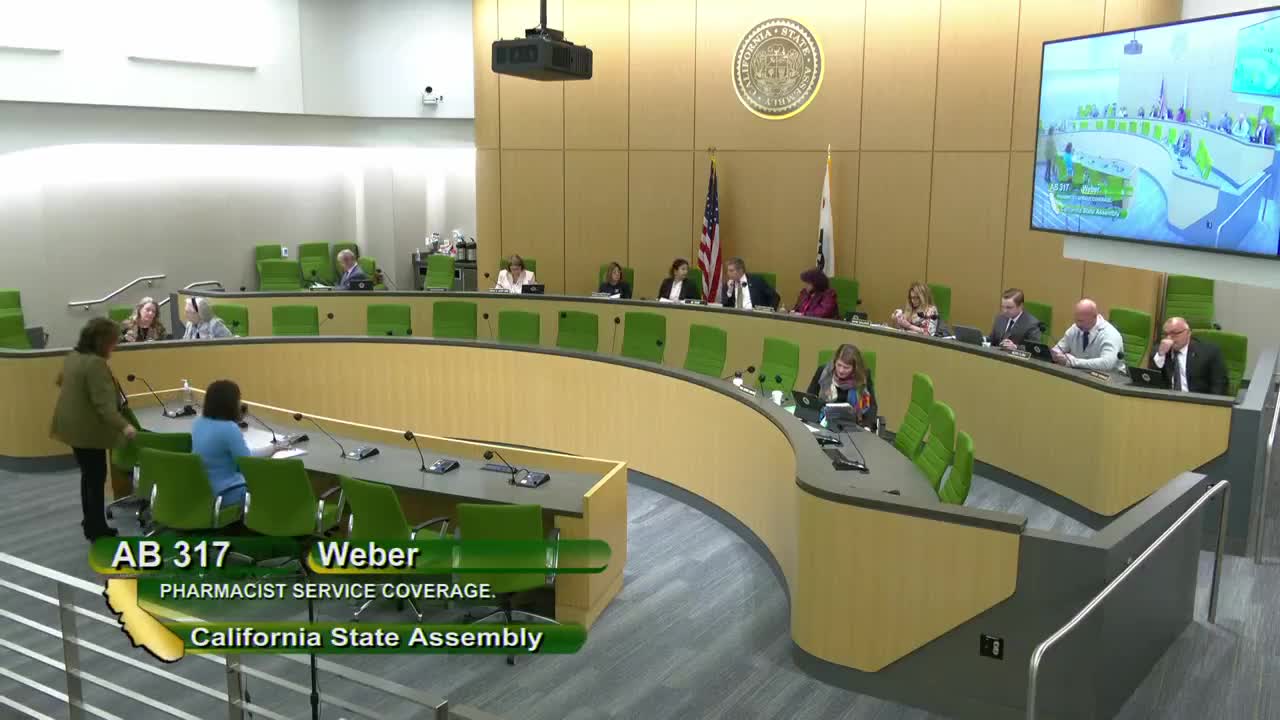 7MIN
Assembly Standing Committee on Health
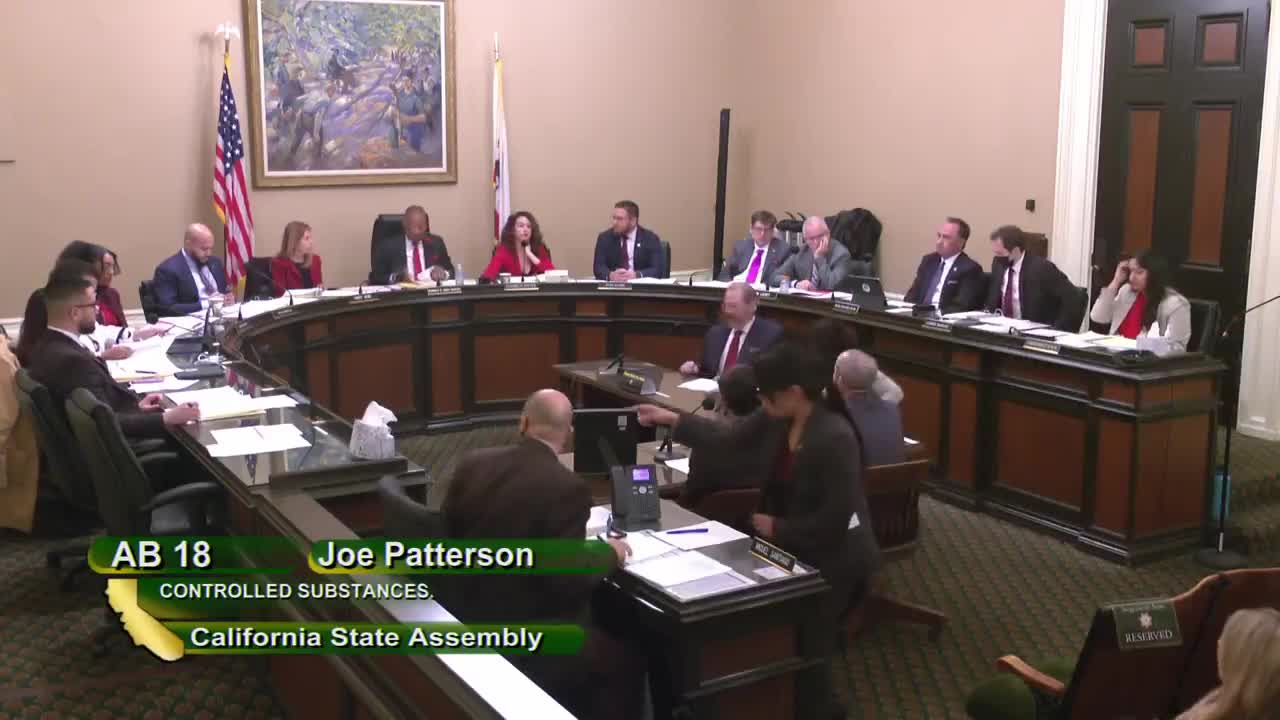 5MIN
Assembly Standing Committee on Public Safety
Bill Author