SB 236: Human trafficking: vertical prosecution program.
- Session Year: 2023-2024
- House: Senate
- Latest Version Date: 2023-04-11
Current Status:
Failed
(2023-09-01: September 1 hearing: Held in committee and under submission.)
Introduced
In Committee
First Chamber
In Committee
Second Chamber
Enacted
What does this bill do?
This bill creates a Human Trafficking Prevention Vertical Prosecution Program in the California Office of Emergency Services to fund and support up to 11 county district attorney offices that prosecute human trafficking. To qualify, counties must use vertical prosecution (where the same prosecutor handles a case from start to finish), dedicate at least half of one deputy district attorney’s time and half of one investigator’s time to trafficking cases, share annual data on filings, convictions, and sentences, and partner with a victim services advocacy agency.
The summary is provided by generative AI which can make mistakes. For original language, please view the details in the table below.
Existing law establishes the Office of Emergency Services, which is required to, among other things, allocate and award funds to communities developing and providing ongoing citizen involvement and crime resistance programs.
This bill would require the office, to the extent funds are available for this purpose and until January 1, 2029, to allocate and award funds to up to 11 district attorney offices that employ a vertical prosecution methodology for the prosecution of human trafficking crimes and that meet other specified criteria, including minimum staffing levels for the program. The bill would require the office, on or before January 1, 2026, to submit to the Legislature and the Governors office a report that describes the counties that received funding pursuant to this program, the number of prosecutions for human trafficking cases filed by the counties receiving funding, the number of human trafficking convictions obtained by those counties, and the sentences imposed for human trafficking crimes in those counties. The bill would also appropriate $2,600,000 from the General Fund to the office for this program.
(a)There is hereby established in the Office of Emergency Services a program of financial and technical assistance for county district attorney offices for the prosecution of human trafficking crimes.
(b)The Director of Emergency Services shall, to the extent funds are available for this purpose, allocate and award funds to up to 11 district attorney offices that apply for funding pursuant to this chapter. Each county selected for funding shall meet all of the following minimum requirements:
(1)Employ a vertical prosecution methodology for human trafficking crimes.
(2)Dedicate at least one-half of the time of one deputy district attorney and one-half of the time of one district attorney investigator solely to the investigation and prosecution of human trafficking crimes.
(3)Provide the office with annual data on the number of human trafficking cases filed by that county, the number of human trafficking convictions obtained, and the sentences imposed for those convicted of human trafficking in that county.
(4)Enter into an agreement, either by contract or a memorandum of understanding, with an advocacy agency funded by the office that provides services, counseling, or both, to victims of human trafficking in order to ensure that victims and witnesses of human trafficking, as appropriate, receive services.
(5)Funding received by district attorney offices pursuant to this program shall be used to supplement, and not supplant, existing financial resources.
(c)The office shall select applications based upon a competitive process and may establish selection criteria. At a minimum, an applicant shall demonstrate the ability to comply with the criteria in subdivision (b) and include an estimate of the number of potential human trafficking crimes in that county.
(d)(1)On or before January 1, 2026, the office shall submit to the Legislature and the Governors office a report that describes the counties that received funding pursuant to this program, the number of prosecutions for human trafficking cases filed by the counties receiving funding, the number of human trafficking convictions obtained by those counties, and the sentences imposed for human trafficking crimes in those counties.
(2)The report required pursuant to paragraph (1) shall be submitted in compliance with Section 9795 of the Government Code.
(e)As used in this section, human trafficking crimes means any violation of Section 236.1 or subdivision (l) of Section 647.
(f)Not more than 10 percent of funds appropriated for this program shall be retained by the office for administrative costs, including technical assistance, training, and the cost of producing the report required pursuant to subdivision (d).
13849.1.This chapter shall remain in effect only until January 1, 2029, and as of that date is repealed, unless a later enacted statute that is enacted before January 1, 2029, deletes or extends that date.
SEC. 2.The sum of two million six hundred thousand dollars ($2,600,000) is hereby appropriated from the General Fund to the Office of Emergency Services for the purpose of funding the Human Trafficking Prevention Vertical Prosecution Program, as described in Chapter 5.8 (commencing with Section 13849) of Title 6 of Part 4 of the Penal Code.(a)There is hereby established in the Office of Emergency Services a program of financial and technical assistance for county district attorney offices for the prosecution of human trafficking crimes.
(b)The Director of Emergency Services shall, to the extent funds are available for this purpose, allocate and award funds to up to 11 district attorney offices that apply for funding pursuant to this chapter. Each county selected for funding shall meet all of the following minimum requirements:
(1)Employ a vertical prosecution methodology for human trafficking crimes.
(2)Dedicate at least one-half of the time of one deputy district attorney and one-half of the time of one district attorney investigator solely to the investigation and prosecution of human trafficking crimes.
(3)Provide the office with annual data on the number of human trafficking cases filed by that county, the number of human trafficking convictions obtained, and the sentences imposed for those convicted of human trafficking in that county.
(4)Enter into an agreement, either by contract or a memorandum of understanding, with an advocacy agency funded by the office that provides services, counseling, or both, to victims of human trafficking in order to ensure that victims and witnesses of human trafficking, as appropriate, receive services.
(5)Funding received by district attorney offices pursuant to this program shall be used to supplement, and not supplant, existing financial resources.
(c)The office shall select applications based upon a competitive process and may establish selection criteria. At a minimum, an applicant shall demonstrate the ability to comply with the criteria in subdivision (b) and include an estimate of the number of potential human trafficking crimes in that county.
(d)(1)On or before January 1, 2026, the office shall submit to the Legislature and the Governors office a report that describes the counties that received funding pursuant to this program, the number of prosecutions for human trafficking cases filed by the counties receiving funding, the number of human trafficking convictions obtained by those counties, and the sentences imposed for human trafficking crimes in those counties.
(2)The report required pursuant to paragraph (1) shall be submitted in compliance with Section 9795 of the Government Code.
(e)As used in this section, human trafficking crimes means any violation of Section 236.1 or subdivision (l) of Section 647.
(f)Not more than 10 percent of funds appropriated for this program shall be retained by the office for administrative costs, including technical assistance, training, and the cost of producing the report required pursuant to subdivision (d).
13849.1.This chapter shall remain in effect only until January 1, 2029, and as of that date is repealed, unless a later enacted statute that is enacted before January 1, 2029, deletes or extends that date.
SEC. 2.The sum of two million six hundred thousand dollars ($2,600,000) is hereby appropriated from the General Fund to the Office of Emergency Services for the purpose of funding the Human Trafficking Prevention Vertical Prosecution Program, as described in Chapter 5.8 (commencing with Section 13849) of Title 6 of Part 4 of the Penal Code.
|
Date
|
Status
|
|---|---|
| Sep 1, 2023 | September 1 hearing: Held in committee and under submission. |
| Jul 12, 2023 | July 12 set for first hearing. Placed on APPR. suspense file. |
| Jun 28, 2023 | From committee: Do pass and re-refer to Com. on APPR. (Ayes 7. Noes 0.) (June 27). Re-referred to Com. on APPR. |
| Jun 8, 2023 | Referred to Com. on PUB. S. |
| Jun 1, 2023 | In Assembly. Read first time. Held at Desk. |
| May 31, 2023 | Read third time. Passed. (Ayes 40. Noes 0. Page 1406.) Ordered to the Assembly. |
| May 18, 2023 | Read second time. Ordered to third reading. |
| May 18, 2023 | From committee: Do pass. (Ayes 7. Noes 0. Page 1161.) (May 18). |
| May 12, 2023 | Set for hearing May 18. |
| Apr 24, 2023 | April 24 hearing: Placed on APPR suspense file. |
| Apr 14, 2023 | Set for hearing April 24. |
| Apr 11, 2023 | Read second time and amended. Re-referred to Com. on APPR. |
| Apr 10, 2023 | From committee: Do pass as amended and re-refer to Com. on APPR. (Ayes 5. Noes 0. Page 578.) (March 28). |
| Mar 2, 2023 | Set for hearing March 28. |
| Feb 1, 2023 | Referred to Com. on PUB S. |
| Jan 25, 2023 | From printer. May be acted upon on or after February 24. |
| Jan 24, 2023 | Introduced. Read first time. To Com. on RLS. for assignment. To print. |
|
Date
|
Description
|
Location
|
Votes
|
|
|---|---|---|---|---|
| Jun 27, 2023 | Do pass and be re-referred to the Committee on [Appropriations] | Assembly Standing Committee on Public Safety |
Passed |
|
| May 31, 2023 | Senate 3rd Reading SB236 Jones | Senate Floor |
Passed |
|
| May 18, 2023 | Do pass | Senate Standing Committee on Appropriations |
Passed |
|
| Apr 24, 2023 | Placed on suspense file | Senate Standing Committee on Appropriations |
Passed |
|
| Mar 28, 2023 | Do pass as amended, but first amend, and re-refer to the Committee on [Appropriations] | Senate Standing Committee on Public Safety |
Passed |
This list shows positions taken on this bill by organizations on the date displayed, which is linked to the original source.
Positions by individuals are not included.
|
Organization
|
Position
|
Date
|
|---|---|---|
| Aaron Read & Associates | * Support | Mar 28, 2023 |
| California District Attorneys Association | ** Support | |
| City of San Marcos | * Support | Jun 27, 2023 |
| Peace Officers Research Association Of California | ** Support | |
| San Diegans Against Crime | ** Support | |
| San Diego County District Attorney's Office | ** Support | |
| San Diego Deputy District Attorneys Association | ** Support | |
| San Francisco Public Defender | ** Against |
Date of Hearing: July 12, 2023
ASSEMBLY COMMITTEE ON APPROPRIATIONS
Chris Holden, Chair
SBPCA Bill Id:SB 236
Author:(Jones) – As Amended Ver:April 11, 2023
Policy Committee: | Public Safety | Vote: | 7 - 0 |
|
| ||
|
|
Urgency: No State Mandated Local Program: No Reimbursable: No
SUMMARY:
This bill establishes a program within the Office of Emergency Services (OES) to provide funding and technical assistance to county district attorney offices for vertical prosecution of human trafficking crimes and requires OES to report to the Legislature and Governor’s office about the program’s outcomes.
FISCAL EFFECT:
Costs likely in the millions of dollars (General Fund) in grant funds to be disbursed to counties and for OES administration of the grant program. The bill does not indicate whether grants would be one-time or ongoing, but OES estimates annual staffing costs of approximately $85,000 to administer the program. The bill provides that no more than 10% of the funds appropriated by this program may be used for administrative costs. The author submitted a budget request for a one-time appropriation of $2.6 million for this bill. At the time of this analysis, there is no appropriation for this program included in the 2023-24 budget agreement.
COMMENTS:
- Purpose. According to the author:
Human trafficking is a modern form of slavery that exploits thousands of individuals each year within the United States. Vertical prosecution involves the use of specialized attorneys who follow the whole case, from inception to conclusion, instead of the standard practice of different attorneys handling individual stages of the case. The implementation of vertical prosecution has been highly successful and has contributed to increased conviction rates. Additionally, these programs ease strain on victims, as they are able to develop and maintain a relationship with a single prosecutor throughout the process as opposed to repeatedly redeveloping their relationship with a new attorney at each step of the way.
- Background. Criminal cases are typically prosecuted horizontally or vertically. In horizontal prosecution, each stage in the case is handled by a different prosecutor, so different attorneys may handle the arraignment, preliminary hearings, and trial for a single case. In vertical prosecution, a single prosecutor handles a case from beginning to end. Advocates argue that vertical prosecution is preferable because if one prosecutor follows a case from charging to sentencing, that prosecutor can become more knowledgeable about the details of the case, develop a comprehensive legal strategy for the matter, and establish a rapport with the victims. For these reasons, vertical prosecution is sometimes favored for cases involving particularly sensitive crimes like sexual offenses, hate crimes, and domestic violence crimes.
This bill establishes a program within OES to provide grant funding and technical assistance to up to 11 county district attorney offices with vertical prosecution units that handle human trafficking crimes. The bill establishes minimum requirements for grant funding recipients and requires OES to use a competitive process to select grant funding recipients. OES must submit a report to the Legislature and Governor by January 1, 2026, that provides information about the counties that received grant funding, and reports the number of cases they filed, number of convictions they obtained, and the sentences that were issued for human trafficking cases.
- Related Legislation. AB 1739 (Sanchez) established a similar human trafficking vertical prosecution grant program within OES. AB 1739 was held on this committee’s suspense file.
Analysis Prepared by: Annika Carlson / APPR. / (916) 319-2081
Date of Hearing: June 27, 2023
Consultant: Elizabeth Potter
ASSEMBLY COMMITTEE ON PUBLIC SAFETY
Reginald Byron Jones-Sawyer, Sr., Chair
SBPCA Bill Id:SB 236
Author:(Jones) – As Amended Ver:April 11, 2023
SUMMARY: Establishes within the Office of Emergency Services (OES) a pilot program to fund up to 11 district attorney offices to employ vertical prosecution for human trafficking crimes. Specifically, this bill:
- Creates the Human Trafficking Prevention Vertical Prosecution Program within the OES and directs the Director of Emergency Services award funds for up to 11 district attorney offices for vertical prosecution of human trafficking crimes.
- States that each county selected for funding must meet the following minimum requirements:
- Employ a vertical prosecution methodology for human trafficking crimes;
- Dedicate at least half the working time of one deputy district attorney and one district attorney investigator solely to the investigation and prosecution of human trafficking;
- Provide annual data on the number of human trafficking cases filed, convictions obtained, and sentences imposed for human trafficking offenses in that county;
- Enter into an agreement with an OES-funded human trafficking advocacy agency to ensure victims and witnesses of human trafficking receive appropriate services; and,
- Mandate that district attorney offices shall use grant funds to supplement and not supplant existing financial resources.
- States that the OES must use a competitive process in selecting grantees and may establish selection criteria which, at minimum, requires prospective grantees demonstrate an ability to comply with the requirements of the program and provide an estimate of human trafficking crimes occurring in their county.
- Requires OES, on or before January 1, 2026, to submit to the Legislature and Governor’s office a report describing which counties were funded, the number of human trafficking cases filed by each county, the number of convictions obtained by each county, and the sentences imposed in each county.
- Defines human trafficking as a violation of either California’s human trafficking statute, or the solicitation of a minor statute.
- States that not more than 10% of funds appropriated for this program shall be retained by the office of administrative costs, including technical assistance, training, and the cost of producing the report required.
- Sunsets the program on January 1, 2029.
EXISTING LAW:
- Establishes the OES within the office of the Governor. (Gov. Code, § 8585, subd. (a).)
- Vests the OES with all the duties and powers of the Office of Homeland Security. (Gov. Code, § 8585, subd. (b).)
- States that a person who deprives or violates the personal liberty of another with the intent to obtain forced labor or services, intent to commit a specified commercial sex offense, or causes, induces, or persuades a minor to engage in a commercial sex act, is guilty of human trafficking. (Pen. Code, § 236.1.)
- States that a person who deprives or violates the personal liberty of another with the intent to commit specified crimes including pimping, pandering, or child pornography, is guilty of human trafficking and shall be punished by imprisonment in the state prison for 8, 14, or 20 years and a fine of not more than $500,000. (Pen. Code, § 236.1, subd. (b).)
- Provides that any person who solicits a minor for an act of prostitution is guilty of disorderly conduct. (Pen. Code, § 647 subd. (l).)
- Establishes a vertical prosecution program for spousal abuse within the Department of Justice (DOJ) and finds that “the concept of vertical prosecution, in which a specially trained deputy district attorney, deputy city attorney, or prosecution unit is assigned to a case after arraignment and continuing to its completion, is a proven way of demonstrably increasing the likelihood of convicting spousal abusers and ensuring appropriate sentences for those offenders.” (Pen. Code, §§ 273.8 et seq.)
- Establishes a vertical prosecution program for repeat sex offenders within the OES and finds that “the concept of vertical prosecution, in which a specially trained deputy district attorney, deputy city attorney, or prosecution unit is assigned to a case after arraignment and continuing to its completion, is a proven way of demonstrably increasing the likelihood of convicting repeat sex offenders and ensuring appropriate sentences for those offenders.” (Pen. Code, §§ 999i et seq.)
- Establishes a vertical prosecution program for child abuse within the OES and finds that “the concept of vertical prosecution, in which a specially trained deputy district attorney, deputy city attorney, or prosecution unit is assigned to a case after arraignment and continuing to its completion, is a proven way of demonstrably increasing the likelihood of convicting child abusers and ensuring appropriate sentences for those offenders.” (Pen. Code, §§ 999q et seq.)
- Establishes a vertical prosecution pilot program for hate crimes within the DOJ. (Pen. Code, § 422.94.)
- Establishes a vertical prosecution program within the OES for major narcotic vendors. (Pen. Code, §§ 13880 et seq.)
FISCAL EFFECT: Unknown.
COMMENTS:
- Author's Statement: According to the author, “SB 236 requires the Office of Emergency Services to provide up to 11 county District Attorneys with funding for the development or maintenance of vertical prosecution teams responsible for the handling of human trafficking cases. Human trafficking is a modern form of slavery that exploits thousands of individuals each year within the United States. Vertical prosecution involves the use of specialized attorneys who follow the whole case, from inception to conclusion, instead of the standard practice of different attorneys handling individual stages of the case. The implementation of vertical prosecution has been highly successful and has contributed to increased conviction rates. Additionally, these programs ease strain on victims, as they are able to develop and maintain a relationship with a single prosecutor throughout the process as opposed to repeatedly redeveloping their relationship with a new attorney at each step of the way. This program will help get criminals off our streets and compassionately deliver justice to the victims that so deeply deserve it.”
- Human Trafficking: According to the DOJ, human trafficking, also known as modern-day slavery, is a crime involving the coercion or compelling of a person to provide labor or services, or to engage in commercial sex acts. The coercion can be physical or psychological, and may involve the use of violence, threats, lies, or debt bondage. It is among the world’s fastest growing criminal enterprises and is estimated to be a $150 billion-a-year worldwide industry. The International Labor Organization estimates that there are approximately 24.9 million human trafficking victims globally at any given time. (DOJ. What is Human Trafficking? <https://oag.ca.gov/human-trafficking/what-is#top> [as of Jun. 13, 2023]; DOJ. Human Trafficking. <https://oag.ca.gov/human-trafficking> [as of Jun. 13, 2023].)
The U.S. is widely regarded as a destination country for human trafficking. At the federal level, it is estimated that 14,500 to 17,500 victims are trafficked into the U.S. annually. At the state level, California is one of the nation’s top destination states for human trafficking. Human trafficking victims do not necessarily fit into any one profile. (Id.) Victims of human trafficking include men, women, and children from diverse backgrounds in terms of race, color, national origin, religion, sexual orientation, socioeconomic status, and education level. (Id.) Many domestic victims of sex trafficking are runaway or homeless youth with backgrounds of sexual and physical abuse, poverty, or addiction; these vulnerabilities are often exploited by traffickers. (Id.) (DOJ. What is Human Trafficking? <https://oag.ca.gov/human-trafficking/what-is#top> [as of Jun. 13, 2023]; DOJ. Human Trafficking. <https://oag.ca.gov/human-trafficking> [as of Jun. 13, 2023].)
To help provide services to human trafficking victims in California, on April 26, 2022, OES announced $20 million in grants for local partners. These grants were distributed to 31 community-based organizations for purposes such as survivor-centered counseling, outreach and referral programs, and reentry back into society. Funding also would be used to assist with cell phones, relocations expenses, court/legal fees, and medical care. (OES. Cal OES Announces $20 million in Grants to Protect and Empower Survivors of Human Trafficking. (Apr. 26, 2022) <https://news.caloes.ca.gov/human-trafficking-grant/> [as of Jun. 13, 2023].) - Vertical Prosecution: Prosecutors generally prosecute offenses in two ways, horizontally or vertically. (Lori Mullins. Prosecuting Cases Vertically: A More Victim-focused Approach. (May 2015) <https://ggulawreview.com/wp-content/uploads/2015/04/mullins_digital_symposium.pdf> [as of Jun. 13, 2023] at p. 2.) Horizontal prosecution generally refers to a method in which a different prosecutor is in charge of a case depending on what stage of the legal process it is in. (Ibid.) For example, one prosecutor may charge a case, another may handle the case at arraignment, then pass it on to another prosecutor for a preliminary hearing, who may then pass it on to another prosecutor for the trial. (Ibid.) Vertical prosecution generally refers to a method where there is a designated prosecutor who handles a case from charging all the way through to sentencing or dismisal. (Ibid.)
Many large jurisdictions combine horizontal and vertical prosecution. (Cassia Spohn. “Specialized Units and Vertical Prosecution Approaches.” The Oxford Handbook of Prosecutors and Prosecution. (May 26, 2021) <https://books.google.com/books?hl=en&lr=&id=uzoqEAAAQBAJ&oi=fnd&pg=PA259&dq=vertical+prosecution+&ots=PDMTnhbBqE&sig=TTjXqo96scfci3IlXdz6YKi6N80#v=onepage&q=vertical%20prosecution&f=false> [as of Jun. 13, 2023] at p. 259.) They usually will prosecute routine misdemeanor and felony cases horizontally, and will select more severe or complex cases such as homicides, sex offenses, high-level drug trafficking offenses, or gang offenses, for vertical prosecution by specialized units. (Ibid.)
Advocates of vertical prosecution contend that cases involving sexual assault or gang violence have reluctant or fearful victims and face potentially complex and difficult evidentiary issues. (Id. at 260.) Furthermore, advocates contend that as a result of continuous contact with a case, the prosecutor will be more informed of the evidentiary issues, will have greater time to develop a comprehensive legal strategy, and will be able to develop familiarity with victims and witnesses leading to securing testimony needed for a conviction. (Ibid.) For example, a prosecutor in a specialized vertical unit may develop the enhanced skill needed to confront the fact that a sexual assault victim may not have reported the crime immediately or may have engaged in supposed “risky behavior” before an incident; the fact that a domestic violence victim may not show up to a court appearance, or, if they do, minimize the defendant’s behavior; and the fact that a victim or witness of gang violence may fear retaliation for testifying. (Ibid.) That said, these assumptions that drive the use of vertical prosecution and specialized units are largely untested as there is no research comparing the efficacy of vertical and horizontal prosecution and limited research examining specialized units. (Id. at 267.)
This bill would fund 11 district attorney offices to address human trafficking offenses in their respective counties by establishing vertical prosecution units for such offenses as has been done for hate crimes, child abuse, domestic abuse, and repeat sex offenders. In addition, this bill would require a report to the Legislature on the effectiveness of vertical prosecution in human trafficking cases. - Argument in Support: According to The California District Attorney’s Association, “Human trafficking remains a lucrative criminal enterprise. The ability to sell a human body multiple times distinguishes it from the sale of other contraband, such as weapons and narcotics. Those who traffic in human flesh know very that they can inflict physical and mental terror upon their victims, making the crime difficult to prosecute. The traffickers also move their enterprise across various jurisdictions seeking to avoid detection.
“The best way to attack these traffickers is through vertical prosecution units, supported by victim advocacy. Vertical units can better coordinate with other jurisdictions to track, apprehend, and prosecute offenders. Specially trained prosecution staff can focus on preventing and overcoming the physical and mental manipulation of trafficking victims. SB 236 encourages the continued use of the vertical prosecution model and helps to hold offenders accountable while also providing valuable victim services to the vulnerable victims of human trafficking.” - Argument in Opposition: According to According to the San Francisco Public Defender’s Office, “For 100 years, the San Francisco Public Defender’s Office has provided dedicated and passionate legal representation to people who are charged with a crime and unable to afford an attorney. Our mission is to protect and defend the rights of our clients through effective, vigorous, compassionate, and creative legal advocacy.
“The San Francisco Public Defender’s Office remains sympathetic to community members who survive human trafficking and the devastation that experience entails. Indeed, many of our clients have been trafficked, harmed, and abused before being funneled into our criminal legal system. However, we do not agree with the approach of SB 236.
“First, district attorneys can use existing resources to employ a vertical prosecution methodology. According to the California Legislative Analyst’s Office, district attorneys receive nearly $1 billion more in funding than public defenders. District attorneys should be motivated on their own to employ what they deem as victim-centered methods, and should not be awarded additional funding for doing so.
“Secondly, this bill ignores the “abuse-to-prison” pipeline, which is a recurring pattern in which trafficked individuals, particularly youth of color, are arrested on suspicion of prostitution or charged as traffickers themselves.
The abuse-to-prison pipeline disproportionately affects girls of color, who are subject to gender and racial bias. But in virtually all cases, police, prosecutors and judges fail or refuse to consider — and prohibit juries from considering — the full context of abuse behind girls’ actions. And sometimes, in a perverse form of paternalism, authorities lock survivors up, citing a dearth of safe alternatives — as if detention is safe for young people who have endured sexual trauma.
“Lastly, we can all agree on the goal of ending human trafficking. We support giving survivors the support and resources necessary to leave abusive and coercive relationships and situations. To do so, we must invest in community-based resources and services — beds in appropriate facilities, mental health counselors and treatment — so that survivors of human trafficking have a place to heal and are not incarcerated.” (citations omitted)
- Related Legislation:
- AB 1602 (Alvarez), would add to the definition of disorderly conduct the attempt to engage in the crime of soliciting prostitution, the attempt to agree to engage in prostitution, or the attempt to engage in prostitution and requires the punishment for a victim of human trafficking to be an education class on the dangers of human trafficking and a referral to human trafficking support services. AB 1602 is pending hearing in this committee
- AB 1739 (Sanchez), is substantially similar to this bill. AB 1739 was held in the Assembly Committee on Appropriations.
- AB 1602 (Alvarez), would add to the definition of disorderly conduct the attempt to engage in the crime of soliciting prostitution, the attempt to agree to engage in prostitution, or the attempt to engage in prostitution and requires the punishment for a victim of human trafficking to be an education class on the dangers of human trafficking and a referral to human trafficking support services. AB 1602 is pending hearing in this committee
- Prior Legislation:
- AB 178 (Budget Act) Chapter 45, Statutes of 2022, established within the Board of State and Community Corrections a grant program for the vertical prosecution of organized retail theft.
- AB 557 (Muratsuchi) Chapter 853, Statutes of 2022, established a vertical prosecution pilot program within the DOJ for the purpose of prosecuting hate crimes until July 1, 2029.
- AB 959 (Melendez), of the 2019-2020 Legislative Session, was substantially similar to this bill. AB 959 was held in the Assembly Appropriations Committee.
- AB 2124 (Rubio), of the 2017-2018 Legislative Session, was substantially similar to this bill. AB 2124 was held in the Senate Appropriations Committee.
- AB 229 (Baker), of the 2017-2018 Legislative Session, was substantially similar to this bill. AB 229 was held in Senate Appropriations Committee.
- AB 2202 (Baker), of the 2015-2016 Legislative Session, was substantially similar to this bill. AB 2202 was held in the Assembly Appropriations Committee.
- AB 178 (Budget Act) Chapter 45, Statutes of 2022, established within the Board of State and Community Corrections a grant program for the vertical prosecution of organized retail theft.
REGISTERED SUPPORT / OPPOSITION:
Support
California District Attorneys Association
City of San Marcos
Peace Officers Research Association of California (PORAC)
San Diegans Against Crime
San Diego County District Attorney's Office
San Diego Deputy District Attorneys Association
Oppose
San Francisco Public Defender
Analysis Prepared by: Elizabeth Potter / PUB. S. / (916) 319-3744
SENATE RULES COMMITTEE Office of Senate Floor Analyses (916) 651-1520 Fax: (916) 327-4478 | SB 236 |
THIRD READING
Bill No: SB 236
Author: Jones (R)
Amended: 4/11/23
Vote: 21
SENATE PUBLIC SAFETY COMMITTEE: 5-0, 3/28/23
AYES: Wahab, Ochoa Bogh, Bradford, Skinner, Wiener
SENATE APPROPRIATIONS COMMITTEE: 7-0, 5/18/23
AYES: Portantino, Jones, Ashby, Bradford, Seyarto, Wahab, Wiener
SUBJECT: Human trafficking: vertical prosecution program
SOURCE: Author
DIGEST:
This bill requires the Office of Emergency Services (CalOES), to the extent that funds are available for this purpose and until January 1, 2029, to allocate and award funds to district Attorney offices that employ a vertical prosecution methodology for human trafficking crimes, as specified.
ANALYSIS:
Existing law:
- States that the CalOES exists within the Governor’s office. (Gov. Code, § 8585, subd. (a).)
- States that Cal OES shall be responsible for the state's emergency and disaster response services for natural, technological, or manmade disasters and emergencies, including responsibility for activities necessary to prevent, respond to, recover from, and mitigate the effects of emergencies and disasters to people and property. (Gov. Code, § 8585, subd. (e).)
- Specifies that during a state of emergency or a local emergency, the secretary shall coordinate the emergency activities of all state agencies in connection with that emergency, and every state agency and officer shall cooperate with the secretary in rendering all possible assistance in carrying out the provisions of this chapter. (Gov. Code, § 8587, subd. (a).)
- Specifies that in addition to the powers designated in this section, the Governor may delegate any of the powers vested in him or her under this chapter to the secretary except the power to make, amend, and rescind orders and regulations, and the power to proclaim a state of emergency. (Gov. Code, § 8587, subd. (b).)
This bill:
- States that the Director of Emergency Services shall, to the extent that funds are available for this purpose, allocate and award funds to up to 11 district attorney offices that apply for funding.
- Requires each county selected for funding to meet all of the following minimum requirements:
- Employ a vertical prosecution methodology for human trafficking crimes;
- Dedicate at least one-half of the time of one deputy district attorney and one-half of the time of one district attorney investigator solely to the investigation and prosecution of human trafficking crimes;
- Provide the office with annual data on the number of human trafficking cases filed by that county, the number of human trafficking convictions obtained, and the sentences imposed for those convicted of human trafficking in that county;
- Enter into an agreement, either by contract or a memorandum of understanding, with an advocacy agency funded by the office that provides services, counseling, or both, to victims of human trafficking in order to ensure that victims and witnesses of human trafficking, as appropriate, receive services; and,
- Funding received by district attorney offices pursuant to this program shall be used to supplement, and not supplant, existing financial resources.
- States that CalOES shall select applications based upon a competitive process and may establish selection criteria.
- States that at minimum, an applicant shall demonstrate the ability to comply with the specified criteria and include an estimate of the number of potential human trafficking crimes in that county.
- Requires, on or before January 1, 2026, CalOES to submit to the Legislature and the Governor’s office a report that describes:
- The counties that received the funding;
- The number of prosecutions for human trafficking cases filed by the counties receiving funding;
- The number of human trafficking convictions obtained by those counties; and,
- The sentences imposed for human trafficking crimes in those counties.
- Specifies that “human trafficking” includes any violation of Penal Code Section 236.1 or the offense of soliciting a minor to engage in an act of prostitution.
- Provides that not more than 10 percent of funds appropriated for this program shall be retained by CalOES for administrative costs, including technical assistance, training, and the cost of producing the required report.
- Includes a sunset date of January 1, 2029.
Background
“Vertical Prosecution” refers to a method in which a prosecutor is assigned to the case from the initial point of referral to the completion of the prosecution. Many argue this method of prosecution results in continuity and improved prosecution success, as well as benefits for crime victims, such as allowing prosecutors to build a rapport with victims by remaining with the case from intake to sentencing, which ensures that victims do not have to tell their story repeatedly to prosecutors at various stages of the case. The prosecutor may develop ongoing relationships with community organizations and be able to connect victims to appropriate resources. This methodology is often used for complex cases like homicide or gangs, or in cases where victims are particularly vulnerable such as child abuse, elder abuse, domestic violence or human trafficking. Several district attorney offices, including San Diego County, Contra Costa County, San Joaquin County, Ventura County, and Napa County, already use this methodology to prosecute these types of crimes.
FISCAL EFFECT: Appropriation: No Fiscal Com.: Yes Local: No
According to the Senate Appropriations Committee, cost pressures of approximately $2.6 million in order to fund grants to district attorney offices that employ vertical prosecution strategies (General Fund). See Staff Comments for additional details.
SUPPORT: (Verified 5/18/23)
California District Attorneys Association
Peace Officers Research Association of California
San Diego County District Attorney
OPPOSITION: (Verified 5/18/23)
San Francisco Public Defender
ARGUMENTS IN SUPPORT: According to the San Diego County District Attorney:
Prosecution of human trafficking cases can pose significant challenges. This is due to the fact that the burden falls on prosecutors who often work with limited resources to secure a conviction. Additionally, the burden falls on victims who are compelled to relive the traumatic experience of the crime.
SB 236 aims to help get criminals off our streets and prevent them from continuing to traffic innocent victims. It will implement Vertical Prosecution as a solution, in which one prosecutor will stay with a case from start to finish. This is opposed to traditional prosecution where different prosecutors are responsible for each step of the process.
Vertical prosecution teams are the most effective in prosecuting human trafficking. SB 236 provides funding for county district attorneys to either develop or maintain vertical prosecution teams. Increasing funding to vertical prosecution programs in California will provide valuable resources to these operations and help further efforts to prosecute and convict human traffickers. These programs would ease strain on victims, as they are able to develop and maintain a relationship with a single prosecutor throughout the process as opposed to repeatedly having to redevelop their relationship with a new attorney at each step of the way.
ARGUMENTS IN SUPPORT: According to the San Francisco Public Defender:
The San Francisco Public Defender’s Office remains sympathetic to community members who survive human trafficking and the devastation that experience entails. Indeed, many of our clients have been trafficked, harmed, and abused before being funneled into our criminal legal system. However, we do not agree with the approach of SB 236.
First, district attorneys can use existing resources to employ a vertical prosecution methodology. According to the California Legislative Analyst’s Office, district attorneys receive nearly $1 billion more in funding than public defenders. District attorneys should be motivated on their own to employ what they deem as victim-centered methods, and should not be awarded additional funding for doing so.
Secondly, this bill ignores the “abuse-to-prison” pipeline, which is a recurring pattern in which trafficked individuals, particularly youth of color, are arrested on suspicion of prostitution or charged as traffickers themselves
Prepared by: Stella Choe / PUB. S. /
5/20/23 12:41:01
**** END ****
SENATE COMMITTEE ON
Senator Anthony Portantino, Chair
2023 - 2024 Regular Session
SB 236 (Jones) - Human trafficking: vertical prosecution program
Version: | Policy Vote: |
Urgency: | Mandate: |
Hearing Date: | Consultant: |
Bill Summary:
Requires the Office of Emergency Services (OES), to the extent that funds are available for this purpose and until January 1, 2029, to allocate and award funds to district attorney offices that employ a vertical prosecution methodology for human trafficking crimes, as specified.
Fiscal Impact:
Cost pressures of approximately $2.6 million in order to fund grants to district attorney offices that employ vertical prosecution strategies (General Fund). See Staff Comments for additional details.
Background:
The former Governor’s Office of Criminal Justice Planning (OCJP) was established in 1968 to provide funding for criminal justice and victim assistance programs. OCJP was abolished in the 2003-2004 State Budget on December 31, 2003. Starting January 2004, all of the programs, with the exception of those in the Juvenile Justice Delinquency Prevention Branch (which transferred to the California Department of Corrections and Rehabilitation), were incorporated into OES. These programs include criminal justice and victim service grant programs administered by OES, including the Violence Against Women Vertical Prosecution Program, the Human Trafficking Advocacy Program, and Internet Crimes and Children Program.
“Vertical Prosecution” refers to a method in which a prosecutor is assigned to the case from the initial point of referral to the completion of the prosecution. Many argue this method of prosecution results in continuity and improved prosecution success, as well as benefits for crime victims, such as allowing prosecutors to build a rapport with victims by remaining with the case from intake to sentencing, which ensures that victims do not have to tell their story repeatedly to prosecutors at various stages of the case. The prosecutor may develop ongoing relationships with community organizations and be able to connect victims to appropriate resources. This methodology is often used for complex cases like homicide or gangs, or in cases where victims are particularly vulnerable such as child abuse, elder abuse, domestic violence or human trafficking. Several district attorney offices, including San Diego County, Contra Costa County, San Joaquin County, Ventura County, and Napa County, already use this methodology to prosecute these types of crimes. This bill would create a grant program, subject to funding, for OES to award and allocate funds to district attorney offices that employ a vertical prosecution methodology for the prosecution of human trafficking crimes.
Proposed Law:
- Establishes within OES a program of financial and technical assistance for county district attorney offices for the prosecution of human trafficking crimes.
- Provides that the Director of OES shall, to the extent that funds are available for this purpose, allocate and award funds to up to 11 district attorney offices that apply for funding.
- Requires each county selected for funding to meet all of the following minimum requirements:
- Employ a vertical prosecution methodology for human trafficking crimes;
- Dedicate at least one-half of the time of one deputy district attorney and one-half of the time of one district attorney investigator solely to the investigation and prosecution of human trafficking crimes;
- Provide the office with annual data on the number of human trafficking cases filed by that county, the number of human trafficking convictions obtained, and the sentences imposed for those convicted of human trafficking in that county;
- Enter into an agreement, either by contract or a memorandum of understanding, with an advocacy agency funded by the office that provides services, counseling, or both, to victims of human trafficking in order to ensure that victims and witnesses of human trafficking, as appropriate, receive services; and,
- Funding received by district attorney offices pursuant to this program shall be used to supplement, and not supplant, existing financial resources.
- Provides that OES shall select applications based upon a competitive process and may establish selection criteria. Provides that at minimum, an applicant shall demonstrate the ability to comply with the specified criteria and include an estimate of the number of potential human trafficking crimes in that county.
- Requires, on or before January 1, 2026, OES to submit to the Legislature and the Governor’s office a report that describes the counties that received the funding and the number of conviction and lengths of sentences for human traffickers in those counties.
- Specifies that “human trafficking” includes any violation of Penal Code section 236.1 or the offense of soliciting a minor to engage in an act of prostitution.
- Provides that not more than 10 percent of funds appropriated for this program shall be retained by OES for administrative costs, including technical assistance, training, and the cost of producing the required report.
- Sunsets these provisions on January 1, 2029.
Related Legislation:
- AB 959 (Melendez, 2019) was nearly identical to this bill. AB 959 was held on the Assembly Appropriations Suspense File.
- AB 229 (Baker), of the 2017-2018 Legislative Session, would have established the Human Trafficking Prevention Vertical Prosecution Program, and appropriated $2,600,000 from the General Fund for that purpose, AB 229. AB 229 was held on the Senate Appropriations Committee suspense file.
- AB 2124 (Rubio), of the 2017-2018 Legislative Session, established the Human Trafficking Prevention Vertical Prosecution Program, and was identical to this bill in that it would only have become operative to the extent that funds were provided in the Budget Act. AB 2124 was held on the Senate Appropriations Committee suspense file.
- AB 2202 (Baker), of the 2015-2016 Legislative Session, would have established the Human Trafficking Prevention Vertical Prosecution Program. AB 2202 was held on the Assembly Appropriations Committee suspense file.
Staff Comments:
This bill does not appropriate funding for the grants it creates, nor does it specify a level of funding. As introduced, the bill would have appropriated $2,600,000 from the General Fund in order to support vertical prosecution programs in up to 11 district attorney offices. OES reports that it would require $182,000 in order to fund .5 Associate Governmental Program Analyst (AGPA) and .25 Staff Services Manager (SSM), ongoing until the bill sunsets. The bill authorizes OES to use up to 10% of the funds appropriated for vertical prosecution programs for administrative costs, including technical assistance, training, and a report to the Legislature.
-- END --
SENATE COMMITTEE ON PUBLIC SAFETY
Senator Aisha Wahab, Chair
2023 - 2024 Regular
Bill No: SB 236 Hearing Date: March 28, 2023
Author: | Jones | ||
Version: | January 24, 2023 | ||
Urgency: | No | Fiscal: | Yes |
Consultant: | SC | ||
Subject: Human trafficking: vertical prosecution program
HISTORY
Source: Author
Prior Legislation: AB 959 (Melendez), 2019-20 Leg. Sess., held in Assem. Approps.
AB 229 (Baker), 2017-18 Leg. Sess., held in Sen. Approps.
AB 2124 (Rubio), 2017-18 Leg. Sess., held in Sen. Approps.
AB 2202 (Baker), 2015-16 Leg. Sess., held in Assem. Approps.
Support: California District Attorneys Association
Opposition: None known
PURPOSE
The purpose of this bill is to require the Office of Emergency Services (CalOES), to the extent that funds are available for this purpose and until January 1, 2029, to allocate and award funds to district Attorney offices that employ a vertical prosecution methodology for human trafficking crimes, as specified.
Existing law states that the CalOES exists within the Governor’s office. (Gov. Code, § 8585, subd. (a).)
Existing law states that Cal OES shall be responsible for the state's emergency and disaster response services for natural, technological, or manmade disasters and emergencies, including responsibility for activities necessary to prevent, respond to, recover from, and mitigate the effects of emergencies and disasters to people and property. (Gov. Code, § 8585, subd. (e).)
Existing law specifies that during a state of emergency or a local emergency, the secretary shall coordinate the emergency activities of all state agencies in connection with that emergency, and every state agency and officer shall cooperate with the secretary in rendering all possible assistance in carrying out the provisions of this chapter. (Gov. Code, § 8587, subd. (a).)
Existing law specifies that in addition to the powers designated in this section, the Governor may delegate any of the powers vested in him or her under this chapter to the secretary except the power to make, amend, and rescind orders and regulations, and the power to proclaim a state of emergency. (Gov. Code, § 8587, subd. (b).)
This bill establishes within Cal OES a program of financial and technical assistance for county district attorney offices for the prosecution of human trafficking crimes.
This bill states that the Director of Emergency Services shall, to the extent that funds are available for this purpose, allocate and award funds to up to 11 district attorney offices that apply for funding.
This bill requires each county selected for funding to meet all of the following minimum requirements:
- Employ a vertical prosecution methodology for human trafficking crimes;
- Dedicate at least one-half of the time of one deputy district attorney and one-half of the time of one district attorney investigator solely to the investigation and prosecution of human trafficking crimes;
- Provide the office with annual data on the number of human trafficking cases filed by that county, the number of human trafficking convictions obtained, and the sentences imposed for those convicted of human trafficking in that county;
- Enter into an agreement, either by contract or a memorandum of understanding, with an advocacy agency funded by the office that provides services, counseling, or both, to victims of human trafficking in order to ensure that victims and witnesses of human trafficking, as appropriate, receive services; and,
- Funding received by district attorney offices pursuant to this program shall be used to supplement, and not supplant, existing financial resources.
This bill states that CalOES shall select applications based upon a competitive process and may establish selection criteria.
This bill states that at minimum, an applicant shall demonstrate the ability to comply with the specified criteria and include an estimate of the number of potential human trafficking crimes in that county.
This bill requires, on or before January 1, 2026, CalOES to submit to the Legislature and the Governor’s office a report that describes:
- The counties that received the funding;
- The number of prosecutions for human trafficking cases filed by the counties receiving funding;
- The number of human trafficking convictions obtained by those counties; and,
- The sentences imposed for human trafficking crimes in those counties.
This bill specifies that “human trafficking” includes any violation of Penal Code section 236.1 or the offense of soliciting a minor to engage in an act of prostitution.
This bill provides that not more than 10 percent of funds appropriated for this program shall be retained by CalOES for administrative costs, including technical assistance, training, and the cost of producing the required report.
This bill includes a sunset date of January 1, 2029.
This bill appropriates two million six hundred thousand dollars ($2,600,000) from the General Fund to the CalOES for the purpose of funding the Human Trafficking Prevention Vertical Prosecution Program.
COMMENTS
- Need for This Bill
According to the author of this bill:
Human trafficking is a modern form of slavery that exploits thousands of individuals each year within the United States. Vertical prosecution involves the use of specialized attorneys who follow the whole case, from inception to conclusion, instead of the standard practice of different attorneys handling individual stages of the case. The implementation of vertical prosecution has been highly successful and has contributed to increased conviction rates.
Additionally, the programs ease strain on victims, as they are able to develop and maintain a relationship with a single prosecutor throughout the process as opposed to repeatedly having to redevelop their relationship with a new attorney at each step of the way. This program will help get criminals off our streets and compassionately deliver justice to the victims that so deeply deserve it.
San Diego County, along with several other, uses vertical prosecution as a strategy to address these types of cases. This bill will help secure funding for the continuation of their programs as well as encourage more counties to follow their lead.
- CalOES
The former Governor’s Office of Criminal Justice Planning (OCJP) was established in 1968 to provide funding for criminal justice and victim assistance programs. OCJP was abolished in the 2003-2004 State Budget on December 31, 2003. Starting January 2004, all of the programs, with the exception of those in the Juvenile Justice Delinquency Prevention Branch (which transferred to the California Department of Corrections and Rehabilitation), were incorporated into CalOES. These programs include criminal justice and victim service grant programs administered by CalOES, including the Violence Against Women Vertical Prosecution Program, the Human Trafficking Advocacy Program, and Internet Crimes and Children Program. (<https://www.caloes.ca.gov/category/grant-announcements-category/criminal-justice-programs/> [as of Mar. 13, 2023].)
This bill would create a grant program, subject to funding, for CalOES to award and allocate funds to district attorney offices that employ a vertical prosecution methodology for the prosecution of human trafficking crimes. This bill also allocates $2,600,000 from the General Fund to CalOES for the purpose of funding this program. This would be General Fund dollars allocated outside of the normal budget process.
- Vertical Prosecution
“Vertical Prosecution” refers to a method in which a prosecutor is assigned to the case from the initial point of referral to the completion of the prosecution. Many argue this method of prosecution results in continuity and improved prosecution success, as well as benefits for crime victims, such as allowing prosecutors to build a rapport with victims by remaining with the case from intake to sentencing, which ensures that victims do not have to tell their story repeatedly to prosecutors at various stages of the case. The prosecutor may develop ongoing relationships with community organizations and be able to connect victims to appropriate resources. This methodology is often used for complex cases like homicide or gangs, or in cases where victims are particularly vulnerable such as child abuse, elder abuse, domestic violence or human trafficking. Several district attorney offices, including San Diego County, Contra Costa County, San Joaquin County, Ventura County, and Napa County, already use this methodology to prosecute these types of crimes.
- Human Trafficking
According to the California Department of Justice,
Human trafficking is among the world's fastest growing criminal enterprises and is estimated to be a $150 billion-a-year global industry. It is a form of modern day slavery that profits from the exploitation of our most vulnerable populations. One common misperception is that human trafficking requires movement across borders. In reality, it involves controlling a person or group through force, fraud, or coercion to exploit the victims for forced labor, sexual exploitation, or both. This can occur entirely within a single country or it can cross borders. Human trafficking strips victims of their freedom and violates our nation's promise that every person in the United States is guaranteed basic human rights. It is also a crime. Attorney General's Office is focused on combating the pervasive issue of human trafficking in California and has made it one of his top priorities.
The International Labor Organization estimates that there are more than 24.9 million human trafficking victims worldwide at any time. This includes 16 million victims of labor exploitation, 4.8 million victims of sexual exploitation, and 4.1 million victims of state imposed forced labor. The victims of human trafficking are often young girls and women. Young girls and women are 57.6% of forced labor victims and 99.4% of sex trafficking victims.
(California Department of Justice, Human Trafficking < https://oag.ca.gov/human-trafficking > [as of Mar. 13, 2023].)
Data on human trafficking and how it is handled is limited. According to the Public Policy Institute of California (PPIC):
Understanding the extent of human trafficking is challenging for several reasons. Trafficking typically happens through clandestine networks. Individuals, families, and businesses who enslave others often seem legitimate. People who experience trafficking are often among the most socially and economically vulnerable. Even if they have opportunities to report their situation, they may not for fear of retaliation.
The United States operates a national hotline through which people can report suspected trafficking or seek help. The hotline publishes data on human trafficking cases and trafficked people that have been identified from hotline reports.
Hotline data spanning 2015 through 2021 indicate that the reported number of people experiencing trafficking nationwide rose from 12,000 in 2015 to more than 22,200 in 2019 and then fell to 16,700 in 2021. In California, these numbers peaked a year earlier and more modestly, so that California now accounts for smaller shares of trafficking cases and trafficked people. In 2015, 18% of trafficking cases and 15% of trafficked people were in California. By 2021, 13% of both cases and people were in California.
(PPIC Blog Post, Human Trafficking in California (Feb. 2023) https://www.ppic.org/blog/human-trafficking-in-california/ [as of Mar. 13, 2023].)
This bill requires the receiving district attorney offices to provide annual data to CalOES on the number of human trafficking cases filed by that county, the number of human trafficking convictions obtained, and the sentences imposed for those convicted of human trafficking in that county. CalOES would be required to provide a report to the Legislature and the Governor’s office that contains this data.
-- END –
Discussed in Hearing
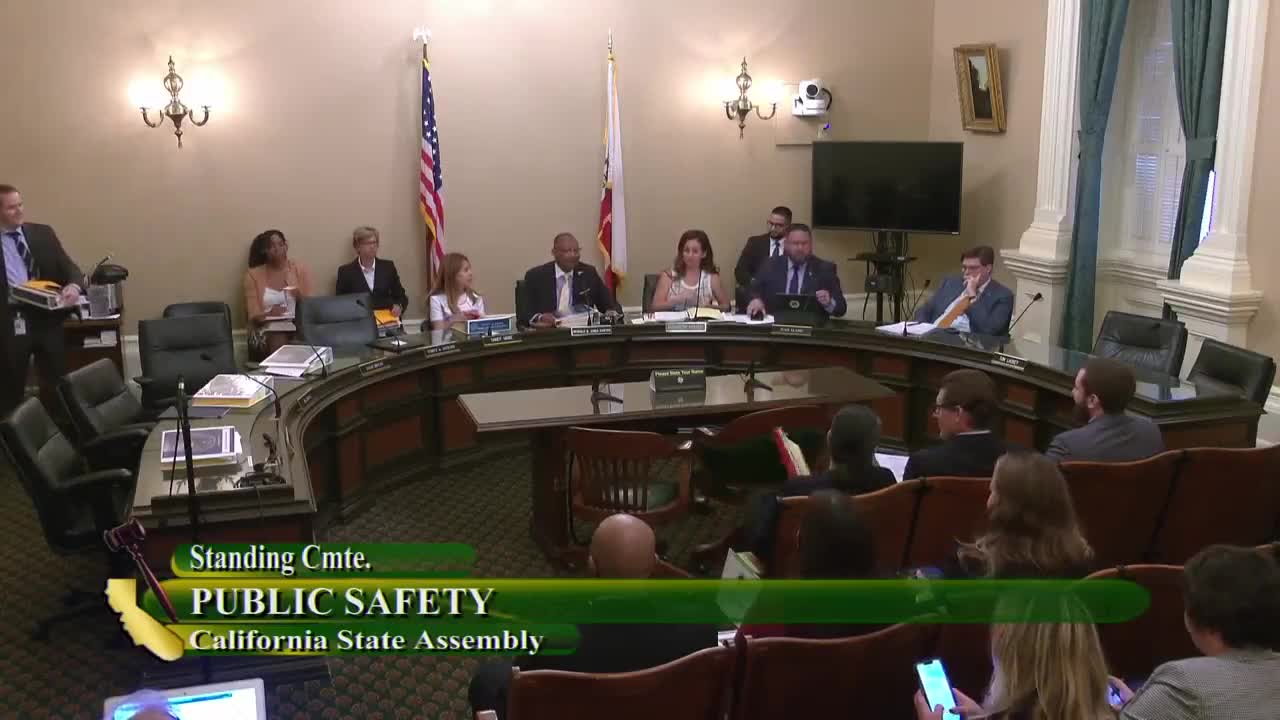 8MIN
Assembly Standing Committee on Public Safety
 55SEC
Senate Floor
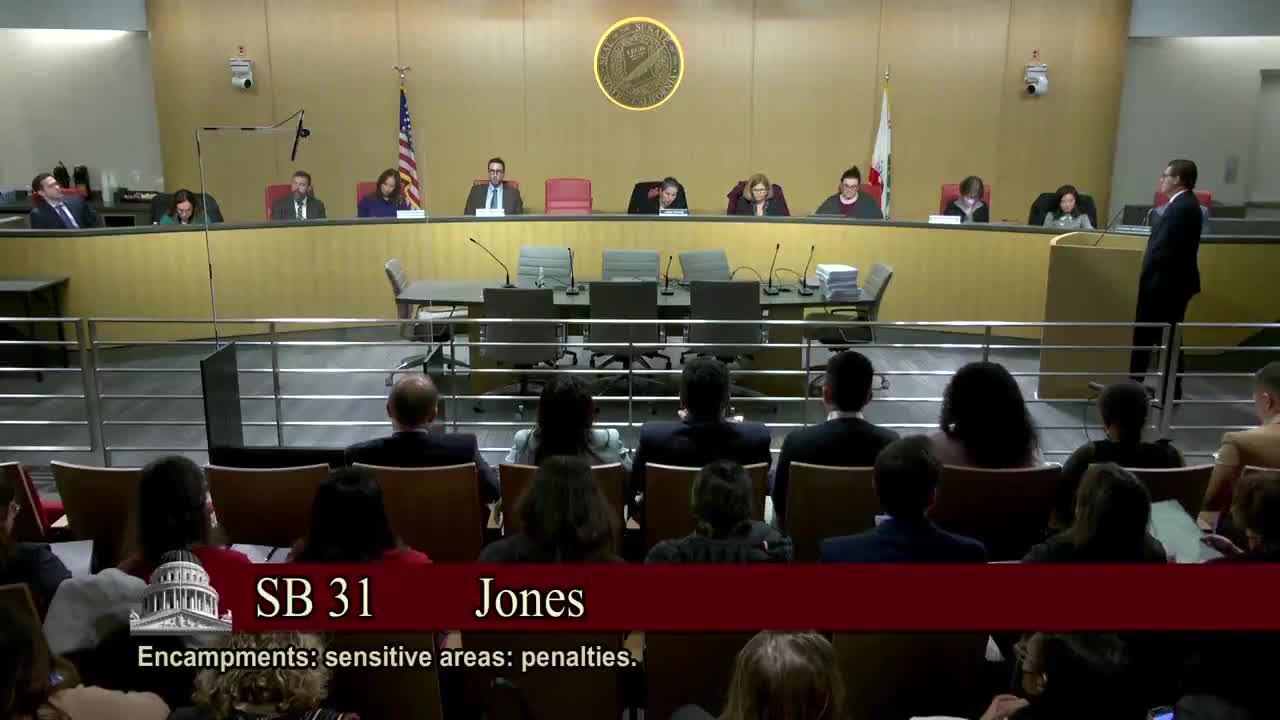 8MIN
Senate Standing Committee on Public Safety
Bill Author

Bill Co-Author(s):