AB 1317: Labor Code Private Attorneys General Act of 2004.
- Session Year: 2015-2016
- House: Assembly
- Latest Version Date: 2016-06-20
Existing law, the Labor Code Private Attorneys General Act of 2004, authorizes an aggrieved employee to bring a civil action to recover specified civil penalties that would otherwise be assessed and collected by the Labor and Workforce Development Agency on behalf of the employee and other current or former employees for the violation of certain provisions affecting employees. The act provides the employer with the right to cure certain violations before the employee may bring a civil action, as specified. For other violations, the act requires the employee to follow specified procedures before bringing an action.
This bill would provide the employer with the right to cure any violation of the Labor Code covered by the act before the employee may bring a civil action. That right to cure would be provided before, and in addition to, any other specified procedures the employee is required to follow prior to bringing an action.
Existing law establishes the Department of Industrial Relations within the agency and sets forth its powers and duties, including, but not limited to, fostering, promoting, and developing the welfare of wage earnings.
This bill would appropriate $1,400,000 to the department for deposit into the Labor and Workforce Development Fund for the purpose of establishing 9 new positions to review and investigate private attorneys general cases under the act.
Existing law establishes the University of California, which is administered by the Regents of the University of California, as one of the segments of public postsecondary education in this state. Existing law authorizes the regents to employ officers and other employees.
This bill would request the regents to refrain from using public funds to increase the compensation of any executive officer, as defined, of the University of California, when the amount of mandatory systemwide student fees and tuition of the university has been increased at any time in the immediately preceding 2 years.
Existing law establishes the University of California, which is administered by the Regents of the University of California, and the California State University, which is administered by the Trustees of the California State University, as 2 as one of the segments of public postsecondary education in this state. Existing law authorizes the regents and the trustees to employ officers and other employees.
This bill would prohibit the trustees from using public funds to increase the compensation of any executive officer, as defined, of the California State University when the amount of mandatory systemwide student fees and tuition of the university has been increased at any time in the immediately preceding 2 years.
The
This bill would also request the regents to refrain from using public funds to increase the compensation of any executive officer, as defined, of the University of California, when the amount of mandatory systemwide student fees and tuition of the university has been increased at any time in the immediately preceding 2 years.
Existing law establishes the University of California, which is administered by the Regents of the University of California, and the California State University, which is administered by the Trustees of the California State University, as 2 of the segments of public postsecondary education in this state. Existing law authorizes the regents and the trustees to employ officers and other employees.
This bill would prohibit the trustees from increasing using public funds to increase the compensation of any executive officer, as defined, of the California State University when the amount of mandatory systemwide student fees and tuition of the university has been increased at any time in the immediately preceding 4 2 years.
The bill would also request the regents to refrain from increasing using public funds to increase the compensation of any executive officer, as defined, of the University of California, when the amount of mandatory systemwide student fees and tuition of the university has been increased at any time in the immediately preceding 4 2 years.
Existing law establishes the University of California, which is administered by the Regents of the University of California, and the California State University, which is administered by the Trustees of the California State University, as 2 of the segments of public postsecondary education in this state. Existing law authorizes the regents and the trustees to employ officers and other employees.
This bill would prohibit the trustees from increasing the compensation of any executive officer, as defined, of the California State University when the amount of mandatory systemwide student fees and tuition of the university has been increased at any time in the immediately preceding 4 years.
The bill would also request the regents to refrain from increasing the compensation of any executive officer, as defined, of the University of California, when the amount of mandatory systemwide student fees and tuition of the university has been increased at any time in the immediately preceding 4 years.
(a)A civil action by an aggrieved employee pursuant to subdivision (a) or (f) of Section 2699 alleging a violation of any provision listed in Section 2699.5 shall commence only after the following requirements have been met:
(1)(A) The aggrieved employee or representative shall give written notice by certified mail to the Labor and Workforce Development Agency and the employer of the specific provisions of this code alleged to have been violated, including the facts and theories to support the alleged violation.
(B)The employer may cure the alleged violation according to the procedures described in paragraph (2) of subdivision (c). If the alleged violation is not cured within the 33-day period prescribed in paragraph (2) of subdivision (c), in lieu of commencing a civil action, the employee or representative shall notify by certified mail the Labor and Workforce Development Agency and the employer of the failure to cure or, if the employee disputes that the alleged violation has been cured, the employee or representative shall provide notice pursuant to the procedures of subparagraph (A) of paragraph (3) of subdivision (c).
(2)(A)The agency shall notify the employer and the aggrieved employee or representative by certified mail that it does not intend to investigate the alleged violation within 30 calendar days of the postmark date of the notice received pursuant to subparagraph (B) of paragraph (1). Upon receipt of that notice or if no notice is provided within 33 calendar days of the postmark date of the notice given pursuant to subparagraph (B) of paragraph (1), the aggrieved employee may commence a civil action pursuant to Section 2699.
(B)If the agency intends to investigate the alleged violation, it shall notify the employer and the aggrieved employee or representative by certified mail of its decision within 33 calendar days of the postmark date of the notice received pursuant to subparagraph (B) of paragraph (1). Within 120 calendar days of that decision, the agency may investigate the alleged violation and issue any appropriate citation. If the agency determines that no citation will be issued, it shall notify the employer and aggrieved employee or representative of that decision within five business days thereof by certified mail. Upon receipt of that notice or if no citation is issued by the agency within that the 158-day period prescribed by this subparagraph or if the agency fails to provide timely or any notification, the aggrieved employee may commence a civil action pursuant to Section 2699.
(C)Notwithstanding any other provision of law, a plaintiff may as a matter of right amend an existing complaint to add a cause of action arising under this part at any time within 60 days of the time periods specified in this part.
(b)A civil action by an aggrieved employee pursuant to subdivision (a) or (f) of Section 2699 alleging a violation of any provision of Division 5 (commencing with Section 6300) other than those listed in Section 2699.5 shall commence only after the following requirements have been met:
(1)(A) The aggrieved employee or representative shall give notice by certified mail to the Division of Occupational Safety and Health and the employer, with a copy to the Labor and Workforce Development Agency, of the specific provisions of Division 5 (commencing with Section 6300) alleged to have been violated, including the facts and theories to support the alleged violation.
(B)The employer may cure the alleged violation according to the procedures described in paragraph (2) of subdivision (c). If the alleged violation is not cured within the 33-day period prescribed in paragraph (2) of subdivision (c), in lieu of commencing a civil action, the employee or representative shall notify by certified mail the Division of Occupational Safety and Health and the employer, with a copy to the Labor and Workforce Development Agency, of the failure to cure or, if the employee disputes that the alleged violation has been cured, the employee or representative shall provide notice pursuant to the procedures of subparagraph (A) of paragraph (3) of subdivision (c).
(2)(A)The division shall inspect or investigate the alleged violation pursuant to the procedures specified in Division 5 (commencing with Section 6300).
(i)If the division issues a citation, the employee may not commence an action pursuant to Section 2699. The division shall notify the aggrieved employee or representative and employer in writing within 14 calendar days of certifying that the employer has corrected the violation.
(ii)If by the end of the period for inspection or investigation provided for in Section 6317, the division fails to issue a citation and the aggrieved employee disputes that decision, the employee may challenge that decision in the superior court. In such an action, the superior court shall follow precedents of the Occupational Safety and Health Appeals Board. If the court finds that the division should have issued a citation and orders the division to issue a citation, then the aggrieved employee may not commence a civil action pursuant to Section 2699.
(iii)A complaint in superior court alleging a violation of Division 5 (commencing with Section 6300) other than those listed in Section 2699.5 shall include therewith a copy of the notices provided to the division and employer pursuant to subparagraphs (A) and (B) of paragraph (1).
(iv)The superior court shall not dismiss the action for nonmaterial differences in facts or theories between those contained in the notices provided to the division and employer pursuant to subparagraphs (A) and (B) of paragraph (1) and the complaint filed with the court.
(B)If the division fails to inspect or investigate the alleged violation as provided by Section 6309, the aggrieved employee may commence a civil action pursuant to Section 2699.
(3)(A)Nothing in this subdivision shall be construed to alter the authority of the division to permit long-term abatement periods or to enter into memoranda of understanding or joint agreements with employers in the case of long-term abatement issues.
(B)Nothing in this subdivision shall be construed to authorize an employee to file a notice or to commence a civil action pursuant to Section 2699 during the period that an employer has voluntarily entered into consultation with the division to ameliorate a condition in that particular worksite.
(C)An employer who has been provided notice pursuant to this section may not then enter into consultation with the division in order to avoid an action under this section.
(4)The superior court shall review and approve any proposed settlement of alleged violations of the provisions of Division 5 (commencing with Section 6300) to ensure that the settlement provisions are at least as effective as the protections or remedies provided by state and federal law or regulation for the alleged violation. The provisions of the settlement relating to health and safety laws shall be submitted to the division at the same time that they are submitted to the court. This requirement shall be construed to authorize and permit the division to comment on those settlement provisions, and the court shall grant the divisions commentary the appropriate weight.
(c)A civil action by an aggrieved employee pursuant to subdivision (a) or (f) of Section 2699 alleging a violation of any provision other than those listed in Section 2699.5 or Division 5 (commencing with Section 6300) shall commence only after the following requirements have been met:
(1)The aggrieved employee or representative shall give written notice by certified mail to the Labor and Workforce Development Agency and the employer of the specific provisions of this code alleged to have been violated, including the facts and theories to support the alleged violation.
(2)(A)The employer may cure the alleged violation within 33 calendar days of the postmark date of the notice. The employer shall give written notice by certified mail within that period of time to the aggrieved employee or representative and the agency if the alleged violation is cured, including a description of actions taken, and no civil action pursuant to Section 2699 may commence. If the alleged violation is not cured within the 33-day period, the employee may commence a civil action pursuant to Section 2699.
(B)(i)Subject to the limitation in clause (ii), no employer may avail himself or herself of the notice and cure provisions of this subdivision more than three times in a 12-month period for the same violation or violations contained in the notice, regardless of the location of the worksite.
(ii)No employer may avail himself or herself of the notice and cure provisions of this subdivision with respect to alleged violations of paragraph (6) or (8) of subdivision (a) of Section 226 more than once in a 12-month period for the same violation or violations contained in the notice, regardless of the location of the worksite.
(3)(A)If the aggrieved employee disputes that the alleged violation has been cured, the aggrieved employee or representative shall provide written notice by certified mail, including specified grounds to support that dispute, to the employer and the agency.
(B)Within 17 calendar days of the postmark date of that notice, the agency shall review the actions taken by the employer to cure the alleged violation, and provide written notice of its decision by certified mail to the aggrieved employee or representative and the employer. The agency may grant the employer three additional business days to cure the alleged violation. If the agency determines that the alleged violation has not been cured or if the agency fails to provide timely or any notification, the employee may proceed with the civil action pursuant to Section 2699. If the agency determines that the alleged violation has been cured, but the employee still disagrees, the employee may appeal that determination to the superior court.
(d)The periods specified in this section are not counted as part of the time limited for the commencement of the civil action to recover penalties under this part.
SEC. 2.The sum of one million four hundred thousand dollars ($1,400,000) is hereby appropriated from the General Fund to the Department of Industrial Relations for deposit into the Labor and Workforce Development Fund for the purpose of establishing nine new positions at the Department of Industrial Relations to review and investigate cases under the Labor Code Private Attorneys General Act of 2004.
(a)A civil action by an aggrieved employee pursuant to subdivision (a) or (f) of Section 2699 alleging a violation of any provision listed in Section 2699.5 shall commence only after the following requirements have been met:
(1)(A) The aggrieved employee or representative shall give written notice by certified mail to the Labor and Workforce Development Agency and the employer of the specific provisions of this code alleged to have been violated, including the facts and theories to support the alleged violation.
(B)The employer may cure the alleged violation according to the procedures described in paragraph (2) of subdivision (c). If the alleged violation is not cured within the 33-day period prescribed in paragraph (2) of subdivision (c), in lieu of commencing a civil action, the employee or representative shall notify by certified mail the Labor and Workforce Development Agency and the employer of the failure to cure or, if the employee disputes that the alleged violation has been cured, the employee or representative shall provide notice pursuant to the procedures of subparagraph (A) of paragraph (3) of subdivision (c).
(2)(A)The agency shall notify the employer and the aggrieved employee or representative by certified mail that it does not intend to investigate the alleged violation within 30 calendar days of the postmark date of the notice received pursuant to subparagraph (B) of paragraph (1). Upon receipt of that notice or if no notice is provided within 33 calendar days of the postmark date of the notice given pursuant to subparagraph (B) of paragraph (1), the aggrieved employee may commence a civil action pursuant to Section 2699.
(B)If the agency intends to investigate the alleged violation, it shall notify the employer and the aggrieved employee or representative by certified mail of its decision within 33 calendar days of the postmark date of the notice received pursuant to subparagraph (B) of paragraph (1). Within 120 calendar days of that decision, the agency may investigate the alleged violation and issue any appropriate citation. If the agency determines that no citation will be issued, it shall notify the employer and aggrieved employee or representative of that decision within five business days thereof by certified mail. Upon receipt of that notice or if no citation is issued by the agency within the that 158-day period prescribed by subparagraph (A) and this subparagraph or if the agency fails to provide timely or any notification, the aggrieved employee may commence a civil action pursuant to Section 2699.
(C)Notwithstanding any other provision of law, a plaintiff may as a matter of right amend an existing complaint to add a cause of action arising under this part at any time within 60 days of the time periods specified in this part.
(b)A civil action by an aggrieved employee pursuant to subdivision (a) or (f) of Section 2699 alleging a violation of any provision of Division 5 (commencing with Section 6300) other than those listed in Section 2699.5 shall commence only after the following requirements have been met:
(1)(A) The aggrieved employee or representative shall give notice by certified mail to the Division of Occupational Safety and Health and the employer, with a copy to the Labor and Workforce Development Agency, of the specific provisions of Division 5 (commencing with Section 6300) alleged to have been violated, including the facts and theories to support the alleged violation.
(B)The employer may cure the alleged violation according to the procedures described in paragraph (2) of subdivision (c). If the alleged violation is not cured within the 33-day period prescribed in paragraph (2) of subdivision (c), in lieu of commencing a civil action, the employee or representative shall notify by certified mail the Division of Occupational Safety and Health and the employer, with a copy to the Labor and Workforce Development Agency, of the failure to cure or, if the employee disputes that the alleged violation has been cured, the employee or representative shall provide notice pursuant to the procedures of subparagraph (A) of paragraph (3) of subdivision (c).
(2)(A)The division shall inspect or investigate the alleged violation pursuant to the procedures specified in Division 5 (commencing with Section 6300).
(i)If the division issues a citation, the employee may not commence an action pursuant to Section 2699. The division shall notify the aggrieved employee or representative and employer in writing within 14 calendar days of certifying that the employer has corrected the violation.
(ii)If by the end of the period for inspection or investigation provided for in Section 6317, the division fails to issue a citation and the aggrieved employee disputes that decision, the employee may challenge that decision in the superior court. In such an action, the superior court shall follow precedents of the Occupational Safety and Health Appeals Board. If the court finds that the division should have issued a citation and orders the division to issue a citation, then the aggrieved employee may not commence a civil action pursuant to Section 2699.
(iii)A complaint in superior court alleging a violation of Division 5 (commencing with Section 6300) other than those listed in Section 2699.5 shall include therewith a copy of the notice of violation notices provided to the division and employer pursuant to subparagraphs (A) and (B) of paragraph (1).
(iv)The superior court shall not dismiss the action for nonmaterial differences in facts or theories between those contained in the notice of violation notices provided to the division and employer pursuant to subparagraphs (A) and (B) of paragraph (1) and the complaint filed with the court.
(B)If the division fails to inspect or investigate the alleged violation as provided by Section 6309, the provisions of subdivision (c) shall apply aggrieved employee may commence a civil action pursuant to the determination of the alleged violation. Section 2699.
(3)(A)Nothing in this subdivision shall be construed to alter the authority of the division to permit long-term abatement periods or to enter into memoranda of understanding or joint agreements with employers in the case of long-term abatement issues.
(B)Nothing in this subdivision shall be construed to authorize an employee to file a notice or to commence a civil action pursuant to Section 2699 during the period that an employer has voluntarily entered into consultation with the division to ameliorate a condition in that particular worksite.
(C)An employer who has been provided notice pursuant to this section may not then enter into consultation with the division in order to avoid an action under this section.
(4)The superior court shall review and approve any proposed settlement of alleged violations of the provisions of Division 5 (commencing with Section 6300) to ensure that the settlement provisions are at least as effective as the protections or remedies provided by state and federal law or regulation for the alleged violation. The provisions of the settlement relating to health and safety laws shall be submitted to the division at the same time that they are submitted to the court. This requirement shall be construed to authorize and permit the division to comment on those settlement provisions, and the court shall grant the divisions commentary the appropriate weight.
(c)A civil action by an aggrieved employee pursuant to subdivision (a) or (f) of Section 2699 alleging a violation of any provision other than those listed in Section 2699.5 or Division 5 (commencing with Section 6300) shall commence only after the following requirements have been met:
(1)The aggrieved employee or representative shall give written notice by certified mail to the Labor and Workforce Development Agency and the employer of the specific provisions of this code alleged to have been violated, including the facts and theories to support the alleged violation.
(2)(A)The employer may cure the alleged violation within 33 calendar days of the postmark date of the notice. The employer shall give written notice by certified mail within that period of time to the aggrieved employee or representative and the agency if the alleged violation is cured, including a description of actions taken, and no civil action pursuant to Section 2699 may commence. If the alleged violation is not cured within the 33-day period, the employee may commence a civil action pursuant to Section 2699.
(B)(i)Subject to the limitation in clause (ii), no employer may avail himself or herself of the notice and cure provisions of this subdivision more than three times in a 12-month period for the same violation or violations contained in the notice, regardless of the location of the worksite.
(ii)No employer may avail himself or herself of the notice and cure provisions of this subdivision with respect to alleged violations of paragraph (6) or (8) of subdivision (a) of Section 226 more than once in a 12-month period for the same violation or violations contained in the notice, regardless of the location of the worksite.
(3)(A)If the aggrieved employee disputes that the alleged violation has been cured, the aggrieved employee or representative shall provide written notice by certified mail, including specified grounds to support that dispute, to the employer and the agency.
(3) If the aggrieved employee disputes that the alleged violation has been cured, the aggrieved employee or representative shall provide written notice by certified mail, including specified grounds to support that dispute, to the employer and the agency. Within
(B)Within 17 calendar days of the postmark date of that notice, the agency shall review the actions taken by the employer to cure the alleged violation, and provide written notice of its decision by certified mail to the aggrieved employee or representative and the employer. The agency may grant the employer three additional business days to cure the alleged violation. If the agency determines that the alleged violation has not been cured or if the agency fails to provide timely or any notification, the employee may proceed with the civil action pursuant to Section 2699. If the agency determines that the alleged violation has been cured, but the employee still disagrees, the employee may appeal that determination to the superior court.
(d)The periods specified in this section are not counted as part of the time limited for the commencement of the civil action to recover penalties under this part.
SEC. 2.The sum of one million four hundred thousand dollars ($1,400,000) is hereby appropriated from the General Fund to the Department of Industrial Relations for deposit into the Labor and Workforce Development Fund for the purpose of establishing nine new positions at the Department of Industrial Relations to review and investigate cases under the Labor Code Private Attorneys General Act of 2004.
SECTION 1.The Legislature finds and declares all of the following:
(a)On November 19, 2014, the Regents of the University of California voted on a five-year stability plan, which establishes annual tuition and student fee increases of up to 5 percent per year for both undergraduate and graduate students, with increase levels contingent on state funding.
(b)While increasing tuition costs for students, the regents also approved compensation increases of up to 20 percent for several chancellors and executives.
(c)As a public institution designed to serve students, the University of California has a responsibility to keep education accessible and affordable and to prioritize student needs over executive pay.
(d)The State of California has an interest in holding the University of California accountable and maintaining affordability in higher education.
SEC. 2.Article 2 (commencing with Section 92010) is added to Chapter 1 of Part 57 of Division 9 of Title 3 of the Education Code, to read:2.Executive Compensation92010.(a)The Regents of the University of California are requested to refrain from using public funds to increase the compensation of any executive officer when the amount of mandatory systemwide student fees and tuition of the university has been increased at any time in the immediately preceding two years.
(b)As used in this section, executive officer includes, but is not limited to, the President of the University of California, the chancellor of an individual campus, a vice president of the university, the treasurer or the assistant treasurer of the university, the general counsel of the university, and the regents secretary.
(c)Subdivision (a) shall apply only to executive officers that enter into or renew contracts for employment with the University of California on or after January 1, 2016.
The Legislature finds and declares all of the following:
(a)On November 19, 2014, the Regents of the University of California voted on a five-year stability plan, which establishes annual tuition and student fee increases of up to 5 percent per year for both undergraduate and graduate students, with increase levels contingent on state funding.
(b)While increasing tuition costs for students, the regents also approved compensation increases of up to 20 percent for several chancellors and executives.
(c)Twelve California State University campuses have imposed student success fees of up to nearly eight hundred dollars ($800) per student, charged in addition to tuition, to augment academic services and hire faculty.
(d)On November 13, 2014, the Trustees of the California State University approved a 3-percent compensation increase for top executives.
(e)As public institutions designed to serve students, state universities have a responsibility to keep education accessible and affordable and to prioritize student needs over executive pay.
(c)As a public institution designed to serve students, the University of California has a responsibility to keep education accessible and affordable and to prioritize student needs over executive pay.
(f)
(d)The State of California has an interest in holding state universities the University of California accountable and maintaining affordability in higher education.
SEC. 2.Section 89500.4 is added to the Education Code, to read:89500.4.(a)The trustees shall not use public funds to increase the compensation of any executive officer when the amount of mandatory systemwide student fees and tuition of the university has been increased at any time in the immediately preceding two years.
(b)As used in this section, executive officer includes, but is not limited to, the Chancellor of the California State University, a vice chancellor or an executive vice chancellor of the university, the general counsel of the university, the trustees secretary, or the president of a campus.
(c)Subdivision (a) shall apply only to executive officers that enter into or renew contracts for employment with the California State University on or after January 1, 2016.
SEC. 3.SEC. 2.Article 2 (commencing with Section 92010) is added to Chapter 1 of Part 57 of Division 9 of Title 3 of the Education Code, to read:2.Executive Compensation92010.(a)The Regents of the University of California are requested to refrain from using public funds to increase the compensation of any executive officer when the amount of mandatory systemwide student fees and tuition of the university has been increased at any time in the immediately preceding two years.
(b)As used in this section, executive officer includes, but is not limited to, the President of the University of California, the chancellor of an individual campus, a vice president of the university, the treasurer or the assistant treasurer of the university, the general counsel of the university, and the regents secretary.
(c)Subdivision (a) shall apply only to executive officers that enter into or renew contracts for employment with the University of California on or after January 1, 2016.
The Legislature finds and declares all of the following:
(a)On November 19, 2014, the Regents of the University of California voted on a five-year stability plan, which establishes annual tuition and student fee increases of up to 5 percent per year for both undergraduate and graduate students, with increase levels contingent on state funding.
(b)While increasing tuition costs for students, the regents also approved compensation increases of up to 20 percent for several chancellors and executives.
(c)Twelve California State University campuses have imposed student success fees of up to nearly eight hundred dollars ($800) per student, charged in addition to tuition, to augment academic services and hire faculty.
(d)On November 13, 2014, the Trustees of the California State University approved a 3-percent compensation increase for top executives.
(e)As public institutions designed to serve students, state universities have a responsibility to keep education accessible and affordable and to prioritize student needs over executive pay.
(f)The State of California has an interest in holding state universities accountable and maintaining affordability in higher education.
SEC. 2.Section 89500.4 is added to the Education Code, to read:89500.4.(a)The trustees shall not use public funds to increase the compensation of any executive officer when the amount of mandatory systemwide student fees and tuition of the university has been increased at any time in the immediately preceding four two years.
(b)As used in this section, executive officer includes, but is not limited to, the Chancellor of the California State University, a vice chancellor or an executive vice chancellor of the university, the general counsel of the university, the trustees secretary, or a the president of a campus.
(c)Subdivision (a) shall apply only to executive officers that enter into or renew contracts for employment with the California State University on or after January 1, 2016.
SEC. 3.Article 2 (commencing with Section 92010) is added to Chapter 1 of Part 57 of Division 9 of Title 3 of the Education Code, to read:2.Executive Compensation92010.(a)The Regents of the University of California are requested to refrain from increasing using public funds to increase the compensation of any executive officer when the amount of mandatory systemwide student fees and tuition of the university has been increased at any time in the immediately preceding four two years.
(b)As used in this section, executive officer includes, but is not limited to, the President of the University of California, the chancellor of an individual campus, a vice president of the university, the treasurer or the assistant treasurer of the university, the general counsel of the university, and the regents secretary.
(c)Subdivision (a) shall apply only to executive officers that enter into or renew contracts for employment with the University of California on or after January 1, 2016.
The Legislature finds and declares all of the following:
(a)On November 19, 2014, the Regents of the University of California voted on a five-year stability plan, which establishes annual tuition and student fee increases of up to 5 percent per year for both undergraduate and graduate students, with increase levels contingent on state funding.
(b)While increasing tuition costs for students, the regents also approved compensation increases of up to 20 percent for several chancellors and executives.
(c)Twelve California State University campuses have imposed student success fees of up to nearly eight hundred dollars ($800) per student, charged in addition to tuition, to augment academic services and hire faculty.
(d)On November 13, 2014, the Trustees of the California State University approved a 3-percent compensation increase for top executives.
(e)As public institutions designed to serve students, state universities have a responsibility to keep education accessible and affordable and to prioritize student needs over executive pay.
(f)The State of California has an interest in holding state universities accountable and maintaining affordability in higher education.
SEC. 2.Section 89500.4 is added to the Education Code, to read:89500.4.(a)The trustees shall not increase the compensation of any executive officer when the amount of mandatory systemwide student fees and tuition of the university has been increased at any time in the immediately preceding four years.
(b)As used in this section, executive officer includes, but is not limited to, the Chancellor of the California State University, a vice chancellor or an executive vice chancellor of the university, the general counsel of the university, the trustees secretary, or a president of a campus.
(c)Subdivision (a) shall apply only to executive officers that enter into or renew contracts for employment with the California State University on or after January 1, 2016.
SEC. 3.Article 2 (commencing with Section 92010) is added to Chapter 1 of Part 57 of Division 9 of Title 3 of the Education Code, to read:2.Executive Compensation92010.(a)The Regents of the University of California are requested to refrain from increasing the compensation of any executive officer when the amount of mandatory systemwide student fees and tuition of the university has been increased at any time in the immediately preceding four years.
(b)As used in this section, executive officer includes, but is not limited to, the President of the University of California, the chancellor of an individual campus, a vice president of the university, the treasurer or the assistant treasurer of the university, the general counsel of the university, and the regents secretary.
(c)Subdivision (a) shall apply only to executive officers that enter into or renew contracts for employment with the University of California on or after January 1, 2016.
|
Date
|
Status
|
|---|---|
| Jun 2, 2015 | Read second time. Ordered to third reading. |
| Jun 20, 2016 | Withdrawn from committee. |
| Jun 20, 2016 | Re-referred to Com. on RLS. |
| Jun 20, 2016 | From committee chair, with author's amendments: Amend, and re-refer to committee. Read second time, amended, and re-referred to Com. on RLS. |
| Jun 16, 2016 | From committee chair, with author's amendments: Amend, and re-refer to committee. Read second time, amended, and re-referred to Com. on ED. |
| Jul 14, 2015 | In committee: Set, first hearing. Hearing canceled at the request of author. |
| Jun 18, 2015 | Referred to Com. on ED. |
| Jun 4, 2015 | Read third time. Passed. Ordered to the Senate. (Ayes 77. Noes 0. Page 1914.) |
| Jun 4, 2015 | Read third time. Passed. Ordered to the Senate. |
| Jun 4, 2015 | In Senate. Read first time. To Com. on RLS. for assignment. |
| Feb 27, 2015 | Introduced. To print. |
| Jun 1, 2015 | Read second time and amended. Ordered returned to second reading. |
| May 28, 2015 | From committee: Amend, and do pass as amended. (Ayes 14. Noes 1.) (May 28). |
| May 6, 2015 | In committee: Set, first hearing. Referred to APPR. suspense file. |
| Apr 27, 2015 | Re-referred to Com. on APPR. |
| Apr 23, 2015 | Read second time and amended. |
| Apr 22, 2015 | From committee: Amend, and do pass as amended and re-refer to Com. on APPR. (Ayes 13. Noes 0.) (April 21). |
| Mar 23, 2015 | Referred to Com. on HIGHER ED. |
| Mar 2, 2015 | Read first time. |
| Mar 1, 2015 | From printer. May be heard in committee March 31. |
|
Date
|
Description
|
Location
|
Votes
|
|
|---|---|---|---|---|
| Jun 4, 2015 | AB 1317 SALAS Assembly Third Reading | Assembly Floor |
Passed |
|
| May 28, 2015 | Do pass as amended. | Assembly Standing Committee on Appropriations |
Passed |
|
| Apr 21, 2015 | Do pass as amended and be re-referred to the Committee on [Appropriations] | Assembly Standing Committee on Higher Education |
Passed |
This list shows positions taken on this bill by organizations on the date displayed, which is linked to the original source.
Positions by individuals are not included.
|
Organization
|
Position
|
Date
|
|---|---|---|
| California State University | ** Against | Jun 4, 2015 |
| University of California | ** Against | Jun 4, 2015 |
AB 1317
Page 2
ASSEMBLY THIRD READING
AB 1317
(Salas)
As Amended June 1, 2015
Majority vote
Committee |
Votes |
Ayes |
Noes |
Higher Education |
13-0 |
Medina, Baker, Bloom, Chávez, Harper, Irwin, Jones-Sawyer, Levine, Linder, Low, Santiago, Weber, Williams |
|
Appropriations |
14-1 |
Gomez, Bonta, Calderon, Chang, Daly, Eggman, Gallagher, Eduardo Garcia, Gordon, Holden, Quirk, Rendon, Weber, Wood |
Bigelow |
SUMMARY: Establishes requirements regarding executive compensation increases at the University of California (UC). Specifically, this bill:
Finds and declares all of the following:
On November 19, 2014, the UC Regents voted on a "five-year stability plan," which establishes annual tuition and student fee increases of up to 5% per year for both undergraduate and graduate students, with increase levels contingent on state funding;
While increasing tuition costs for students, the regents also approved compensation increases of up to 20% for several chancellors and executives;
As a public institution designed to serve students, the UC has a responsibility to keep education accessible and affordable and to prioritize student needs over executive pay; and,
The State of California has an interest in holding UC accountable and maintaining affordability in higher education.
Requests the UC Regents refrain from increasing the compensation of any executive officer when the amount of mandatory system wide student fees and tuition of the university has been increased at any time in the immediately preceding two years.
Defines "executive officer" to include, but not be limited to, the President of the UC, a chancellor, a vice chancellor, an executive vice chancellor, the general counsel, and the regents secretary.
Applies the aforementioned restriction only to executive officers that enter into or renew contracts for employment on or after January 1, 2016.
EXISTING LAW:
Establishes UC as a public trust and confers the full powers of the UC upon the UC Regents. The Constitution establishes that the UC is subject to legislative control only to the degree necessary to ensure the security of its funds and compliance with the terms of its endowments. Judicial decisions have held that there are three additional areas in which there may be limited legislative intrusion into university operations: authority over the appropriation of state moneys; exercise of the general police power to provide for the public health, safety and welfare; and, legislation on matters of general statewide concern not involving internal university affairs. (Constitution of California Article IX, Section 9)
Declares the Legislature's intent that no proposal relating to the salary, benefits, perquisite, severance payments (except in the case of a dismissal or litigation settlement), retirement benefits or any other form of compensation paid to an officer of the UC become effective unless specified notice requirements have been met and action taken in an open session meeting of the regents. (Education Code Section 92032.5)
FISCAL EFFECT: According to the Assembly Appropriations Committee, this bill's restrictions on compensation will, to some indeterminable degree, increase turnover in executive positions at UC as individuals leave for more favorable compensation prospects. Though this bill applies to specifically named positions, it is not limited to those positions. UC will incur significant additional costs associated with filling additional vacancies including the search firm, travel expenses, relocation expenses, and interim's salary.
The above costs will be partially offset by savings from the compensation limitations provided for in the bill.
COMMENTS: In May of 2006, the Bureau of State Audits (BSA) released an audit (Report 2006-103) reviewing UC compensation practices and finding that stricter oversight and greater transparency were needed to improve practices. The BSA's recommendations included improving use of the Corporate Personnel System to track employee compensation, tracking approved exceptions to UC compensation policies and identifying unauthorized exceptions to policies, and requiring highly paid university employees to disclose all forms of compensation. In response to issues raised by audits and management reviews, legislative hearings, and media reports, UC enacted several reforms to improve transparency and accountability regarding compensation practices. These reforms include providing an annual report to the Legislature on senior management compensation and reform efforts, annually auditing senior management compensation, establishing new policies governing oversight and market appropriateness of senior management compensation, expanding public disclosure of salaries, and establishing comprehensive and ongoing review of compensation-related policies.
Analysis Prepared by: Laura Metune / HIGHER ED. / (916) 319-3960 FN: 0000763
AB 1317
Page 2
Date of Hearing: May 6, 2015
ASSEMBLY COMMITTEE ON APPROPRIATIONS
Jimmy Gomez, Chair
AB 1317
(Salas) – As Amended April 23, 2015
Policy Committee: |
Higher Education |
Vote: |
13 - 0 |
|
|
|
|
|
|
|
|
Urgency: No State Mandated Local Program: No Reimbursable: No
SUMMARY:
This bill prohibits the California State University (CSU) Trustees and University of California (UC) Regents from using public funds to increase compensation for a CSU or UC "executive officers," as defined, if the trustees or regents, respectively, have increased tuition any time in the preceding two years. The bill also:
Applies the above only to executive officers entering into or renewing employment contracts on or after January 1, 2016.
Defines executive office, for purposes of CSU, to include, but not be limited to: the CSU Chancellor, vice chancellors or executive vice chancellor, general counsel, Trustees' secretary, and campus presidents.
Defines executive officer, for purposes of UC, to include, but not be limited to: the UC President, vice president, treasurer or assistant treasurer, general counsel, Regents' secretary, and chancellors of each campus.
FISCAL EFFECT:
The bill's restrictions on compensation will, to some indeterminable degree, increase turnover in executive positions at UC and CSU as individuals leave for more favorable compensation prospects. Though the bill applies to specifically named positions at each segment, it is not limited to those positions. Both segments will incur significant additional costs associated with filling additional vacancies. For example, CSU estimates the cost to fill each vacant president position is around $500,000, including the search firm, travel expenses, relocation expenses, and interim president's salary.
The above costs will be partially offset by savings from the compensation limitations provided for in the bill.
COMMENTS:
Purpose. According to the author, during the last decade, both the CSU and UC systems have increased tuition while also increasing executive pay for some executive officers. The author argues that "at a time when access, affordability, and diversity are in question, we need to ensure our institutions are utilizing the limited public resources appropriately." The author argues this measure will "help foster the transparency in our educational systems so that the public continues to have confidence in our institutions while allowing the CSU and UC to provide high quality education."
Opposition. UC argues that "AB 1317 creates a false correlation between executive compensation and tuition. For example, the pay for UC’s Senior Management Group (SMG), some of whom are included in the AB 1317 definition of “executive officer,” composes a tiny percentage of UC’s overall payroll and budget…Freezing these wages would not significantly change the budget picture, but it would harm UC's ability to attract and retain highly skilled leadership to run this organization."
Related Legislation. AB 837 (Hernández), pending on this committee's Suspense file, caps UC employee salaries at $500,000 annually, and requires reporting on salaries and funding sources.
Prior Legislation. SB 8 (Yee) of 2013, which was held in the Senate Education Committee, would have established conditions, similar to those contained in this bill, on granting executive compensation increases by California State University (CSU) for any employment contract after January 1, 2014; UC was requested to comply with these provisions.
AB 1561 (Hernández) of 2012, which would have limited compensation increases for certain executive-level positions at UC and CSU, was held on this committee's Suspense file.
AB 1684 (Eng) of 2012, which would have limited the pay of California Community College Chancellors to no more than twice the highest faculty member salary, was held on this committee's Suspense file.
SB 952 (Alquist) of 2012, which would have limited CSU administrator salary increases using state funds to 10% above the predecessor's salary, was never heard in this committee,.
SB 967 (Yee) of 2012, which capped UC and CSU executive compensation at five percent of the predecessor's total compensation, failed passage in the Senate Education Committee,.
SB 217 and SB 86 (Yee) of 2009 were similar to SB 967. SB 217 was held on this committee's Suspense file and SB 86 was vetoed by Governor Schwarzenegger.
Analysis Prepared by: Chuck Nicol / APPR. / (916) 319-2081
AB 1317
Page 5
Date of Hearing: April 21, 2015
ASSEMBLY COMMITTEE ON HIGHER EDUCATION
Jose Medina, Chair
AB 1317
(Salas) – As Introduced February 27, 2015
SUBJECT: Public postsecondary education: executive officer compensation
SUMMARY: Establishes requirements regarding executive compensation increases at the California State University (CSU), and requests compliance by the University of California (UC). Specifically, this bill:
Finds and declares all of the following:
On November 19, 2014, the UC Regents voted on a “five-year stability plan,” which establishes annual tuition and student fee increases of up to 5 percent per year for both undergraduate and graduate students, with increase levels contingent on state funding;
While increasing tuition costs for students, the regents also approved compensation increases of up to 20 percent for several chancellors and executives;
Twelve CSU campuses have imposed “student success fees” of up to nearly eight hundred dollars ($800) per student, charged in addition to tuition, to augment academic services and hire faculty;
On November 13, 2014, the CSU Trustees approved a 3-percent compensation increase for top executives;
As public institutions designed to serve students, state universities have a responsibility to keep education accessible and affordable and to prioritize student needs over executive pay; and,
The State of California has an interest in holding state universities accountable and maintaining affordability in higher education.
Prohibits the CSU trustees from increasing the compensation of any executive officer when the amount of mandatory systemwide student fees and tuition of the university has been increased at any time in the immediately preceding four years.
Defines “executive officer” to include, but not be limited to, the CSU Chancellor, a vice chancellor, an executive vice chancellor, the general counsel, the trustees’ secretary, or a president of a campus.
Applies the aforementioned restriction only to executive officers that enter into or renew contracts for employment with CSU on or after January 1, 2016.
Requests the UC Regents to comply with the aforementioned prohibitions.
EXISTING LAW:
Establishes UC as a public trust and confers the full powers of the UC upon the UC Regents. The Constitution establishes that the UC is subject to legislative control only to the degree necessary to ensure the security of its funds and compliance with the terms of its endowments. Judicial decisions have held that there are three additional areas in which there may be limited legislative intrusion into university operations: authority over the appropriation of state moneys; exercise of the general police power to provide for the public health, safety and welfare; and, legislation on matters of general statewide concern not involving internal university affairs. (Constitution of California, Article IX, Section 9)
Declares the Legislature's intent that no proposal relating to the salary, benefits, perquisite, severance payments (except in the case of a dismissal or litigation settlement), retirement benefits or any other form of compensation paid to an officer of the UC become effective unless specified notice requirements have been met and action taken in an open session meeting of the regents. (Education Code Section 92032.5)
Establishes the CSU Trustees to administer the CSU and provides the Trustees authority and directives regarding personnel matters. (EDC Section 66600 and 89500 et.seq.)
Requires proposals for the compensation package of specified CSU executive officers (the Chancellor, president of an individual campus, vice chancellor, treasurer, general counsel and the trustee's secretary) occur in open sessions of a committee of the trustees and the full board of trustees, as specified. (EDC Section 66602.7)
FISCAL EFFECT: Unknown
COMMENTS: Purpose of this bill. According to the author, during the last decade, both the CSU and UC systems have increased tuition while also increasing executive pay for some executive officers. The author argues that "at a time when access, affordability, and diversity are in question, we need to ensure our institutions are utilizing the limited public resources appropriately." The author argues this measure will "help foster the transparency in our educational systems so that the public continues to have confidence in our institutions while allowing the CSU and UC to provide high quality education."
Background on CSU Executive Compensation. In November of 2007, the Bureau of State Audits (BSA) released an audit (Report 2007-102.1) reviewing the CSU compensation practices. The BSA revealed, among other findings, that CSU had not developed a system to adequately monitor adherence to compensation policies, concerns had been raised about the methodology used to justify salary increases for some executives, and some Management Personnel Plan employees received questionable compensation after they were no longer providing services to the university or were transitioning to faculty positions. The BSA made a number of recommendations to improve CSU compensation policies, including, improving systemwide data collection, working with interested parties to adjust methodology for determining salary increases, and establishing clear expectations for transitioning executives.
CSU executive compensation reforms. In July 2011, the Trustees appointed a special committee to review the policy regarding the selection of presidents, as well as the policies and practices with respect to executive compensation. In January 2012, the Trustees adopted a new compensation policy for the CSU which, among other things, expressed intent to compensate in a manner that was fiscally prudent in respect to the system budget and state funding, to evaluate compensation based on periodic market comparison surveys, to have presidential compensation guided by the mean of the appropriate tier of comparison institutions, as well as other factors, and until otherwise determined by the Trustees, to cap the amount of the initial base salary paid to a new campus president from public funds at the previous incumbent's pay. Salary compensation above the incumbent's base pay deemed necessary to retain the best leader could be paid from foundations, but not in excess of 10% of the base salary. In addition, in November 2012 the new CSU Chancellor voluntarily took a 10 percent reduction in the compensation package he was offered by the CSU Trustees.
Background on UC Executive Compensation. In May of 2006, the Bureau of State Audits (BSA) released an audit (Report 2006-103) reviewing UC compensation practices and finding that stricter oversight and greater transparency were needed to improve practices. The BSA's recommendations included improving use of the Corporate Personnel System to track employee compensation, tracking approved exceptions to UC compensation policies and identifying unauthorized exceptions to policies, and requiring highly paid university employees to disclose all forms of compensation.
UC Compensation Reforms. In response to issues raised by audits and management reviews, legislative hearings, and media reports, UC enacted several reforms to improve transparency and accountability regarding compensation practices. These reforms include providing an annual report to the Legislature on senior management compensation and reform efforts, annually auditing senior management compensation, establishing new policies governing oversight and market appropriateness of senior management compensation, expanding public disclosure of salaries, and establishing comprehensive and ongoing review of compensation-related policies.
Issues to consider. This bill would place policies governing executive compensation in statute rather than leaving these decisions to the UC Regents and CSU Trustees. The committee may wish to consider the following:
Will eliminating pay increases for executives for four years after a fee increase affect California's ability to retain high quality professionals? Will this policy result in increased turnover in executive positions? The committee may wish to amend this bill to specify that the limitation applies for two budget years, rather than four calendar years.
The fee levels set by the institutions are historically tied to the funding decisions made in the annual Budget Act by the Legislature and the Governor. Should the discretion of CSU and UC to compensate leadership be tied to budget related decisions of the Legislature and the Governor? How do fee levels link to the management and leadership needs of the institutions?
In February 2015, the Joint Legislative Audit Committee approved a Bureau of State Audits (BSA) review of UC. The scope of the audit includes a review of compensation packages for top executives and management for the most recent five years. BSA is tasked with identifying trends and comparing compensation packages to other public and private universities. Is it appropriate to wait for the results of this audit, which is scheduled to begin in July, prior to enacting statutory changes?
As drafted, this bill would restrict the use of funds for compensation regardless of the source. Should the Legislature restrict the discretion of a foundation to use private funds to supplement public funding for executive salaries? The author has agreed to accept amendments to clarify that the limitation imposed by this bill does not impact the use of private funds to supplement executive salaries.
Related legislation.
AB 837 (Hernández) was approved by this committee on April 8, 2015. AB 837 would cap UC employee salaries at $500,000 annually, and require reporting on salaries and funding sources.
Prior legislation.
SB 8 (Yee) of 2013, held in the Senate Education Committee, would have established conditions, similar to those contained in this bill, on granting executive compensation increases by California State University (CSU) for any employment contract after January 1, 2014; UC was requested to comply with these provisions.
AB 1561 (Hernández) of 2012, held in the Assembly Appropriations Committee, would have limited compensation increases for certain executive-level positions at UC and CSU.
AB 1684 (Eng) of 2012, held in the Assembly Appropriations Committee, would have limited the pay of California Community College Chancellors to no more than twice the highest faculty member salary.
SB 952 (Alquist) of 2012, held in the Assembly Appropriations Committee, would have limited administrator salary increases using state fund to 10% above the predecessor's salary.
SB 967 (Yee) of 2012, which failed passage in the Senate Education Committee, capped compensation at 5% of the predecessor's total compensation.
SB 1368 (Anderson) of 2012, held in the Senate Governmental Organization Committee, would have limited the annual rate of salary of a state officer or employee to the annual salary authorized to be received by the Governor.
ABx1 39 (Hernández, 2011), which was not heard by the Legislature, was substantially similar to AB 837.
SBx1 26 (Lieu, 2011), which was not heard by the Legislature, established various limitations on executive compensation.
SB 217 and SB 86 (Yee) of 2009 were similar to SB 967. SB 217 was held in the Assembly Appropriations Committee and SB 86 was vetoed by Governor Schwarzenegger.
REGISTERED SUPPORT / OPPOSITION:
Support
None on File
Opposition
California State University
University of California
Analysis Prepared by: Laura Metune / HIGHER ED. / (916) 319-3960
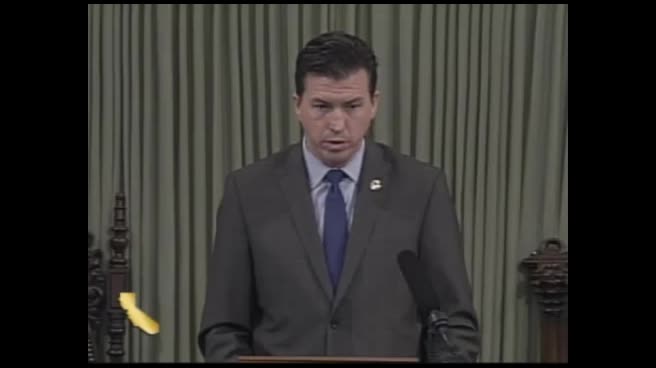
Bill Author