AB 1679: Child care: state preschool programs: eligibility: military families.
- Session Year: 2015-2016
- House: Assembly
- Latest Version Date: 2016-04-06
The Child Care and Development Services Act requires the Superintendent of Public Instruction to administer state preschool programs according to specified funding priorities. The act requires that priority for receiving state preschool services be given to low-income families who meet eligibility standards established by the Superintendent.
This bill would exclude the amount of the basic allowance for housing provided to an individual who is on federal active duty, state active duty, active duty for special work, or Active Guard and Reserve duty in the military that is equal to the lowest rate of the allowance for the military housing area in which the individual resides from income for purposes of determining eligibility for state preschool services.
(a)The Legislature finds and declares all of the following:
(1)California is home to a large number of military personnel, including 150,000 active duty personnel.
(2)Military families are a unique population with unique circumstances. The children of military families face constant transition, including family mobility and parental deployment.
(3)Military families move more than twice as often as civilian families. Forty percent of officers and 60 percent of enlisted personnel move during the school year. Thus, the lower the rank of the military family member, the more often the family moves.
(4)During a time of war, military families endure the strains of long-term separation as one or both parents may be deployed overseas.
(5)During parental deployment children are often anxious, stressed, and confused. Preschools can be a place where stability and routine can provide security. The classroom routine helps to cushion the impact of parental deployment.
(6)Preschool can be a determining factor in the early academic success of a pupil from a military family by providing educational enrichment, as well as a stable and nurturing learning environment.
(b)Given these special circumstances, it is the intent of the Legislature in enacting this act to ensure that military families have access to the preschool services that their children need.
SEC. 2.Section 8236.2 is added to the Education Code, to read:8236.2.(a)For purposes of determining eligibility for state preschool services pursuant to this article, the income of an individual who is on federal active duty, state active duty, active duty for special work, or Active Guard and Reserve duty in the military does not include the amount of the basic allowance for housing pursuant to Section 403 of Title 37 of the United States Code provided to the individual that is equal to the lowest rate of the allowance for the military housing area in which the individual resides.
(b)Nothing in this section shall supersede the priority for state-subsidized child development services included in this chapter.
(a)The Legislature finds and declares all of the following:
(1)California is home to a large number of military personnel, including 150,000 active duty personnel.
(2)Military families are a unique population with unique circumstances. The children of military families face constant transition, including family mobility and parental deployment.
(3)Military families move more than twice as often as civilian families. Forty percent of officers and 60 percent of enlisted personnel move during the school year. Thus, the lower the rank of the military family member, the more often the family moves.
(4)During a time of war, military families endure the strains of long-term separation as one or both parents may be deployed overseas.
(5)During parental deployment children are often anxious, stressed, and confused. Preschools can be a place where stability and routine can provide security. The classroom routine helps to cushion the impact of parental deployment.
(6)Preschool can be a determining factor in the early academic success of a pupil from a military family by providing educational enrichment, as well as a stable and nurturing learning environment.
(b)Given these special circumstances, it is the intent of the Legislature in enacting this act to ensure that military families have access to the preschool services that their children need.
SEC. 2.Section 8236.2 is added to the Education Code, to read:8236.2.For purposes of determining eligibility for state preschool services pursuant to this article, the income of an individual who is on federal active duty, state active duty, active duty for special work, or Active Guard and Reserve duty in the military does not include the amount of the basic allowance for housing pursuant to Section 403 of Title 37 of the United States Code provided to the individual that is equal to the lowest rate of the allowance for the military housing area in which the individual resides.
|
Date
|
Status
|
|---|---|
| Jan 19, 2016 | Read first time. To print. |
| Jan 20, 2016 | From printer. May be heard in committee February 19. |
| Feb 18, 2016 | Referred to Com. on HUM. S. |
| Apr 5, 2016 | From committee: Amend, and do pass as amended and re-refer to Com. on APPR. with recommendation: To Consent Calendar. (Ayes 6. Noes 0.) (March 29). |
| Apr 6, 2016 | Read second time and amended. |
| Apr 7, 2016 | Re-referred to Com. on APPR. |
| Apr 20, 2016 | From committee: Do pass. To Consent Calendar. (Ayes 16. Noes 0.) (April 20). |
| Apr 21, 2016 | Read second time. Ordered to Consent Calendar. |
| Apr 28, 2016 | In Senate. Read first time. To Com. on RLS. for assignment. |
| Apr 28, 2016 | Read third time. Passed. Ordered to the Senate. |
| Apr 28, 2016 | Read third time. Passed. Ordered to the Senate. (Ayes 76. Noes 0. Page 4593.) |
| Apr 28, 2016 | Read third time. Passed. Ordered to the Senate. (Ayes 76. Noes 0.) |
| May 5, 2016 | Referred to Com. on ED. |
| Jun 8, 2016 | From committee: Do pass and re-refer to Com. on APPR. with recommendation: To Consent Calendar. (Ayes 9. Noes 0.) (June 8). Re-referred to Com. on APPR. |
| Jun 27, 2016 | In committee: Referred to APPR. suspense file. |
| Aug 11, 2016 | In committee: Held under submission. |
|
Date
|
Description
|
Location
|
Votes
|
|
|---|---|---|---|---|
| Jun 27, 2016 | Placed on suspense file | Senate Standing Committee on Appropriations |
Passed |
|
| Jun 8, 2016 | Do pass, but first be re-referred to the Committee on [Appropriations] with the recommendation: To Consent Calendar | Senate Standing Committee on Education |
Passed |
|
| Apr 28, 2016 | AB 1679 WEBER Consent Calendar Second Day Regular Session | Assembly Floor |
Passed |
|
| Apr 20, 2016 | Do pass. To Consent Calendar. | Assembly Standing Committee on Appropriations |
Passed |
|
| Mar 29, 2016 | Do pass as amended, and be re-referred to the Committee on [Appropriations] with recommendation: To Consent Calendar | Assembly Standing Committee on Human Services |
Passed |
This list shows positions taken on this bill by organizations on the date displayed, which is linked to the original source.
Positions by individuals are not included.
|
Organization
|
Position
|
Date
|
|---|---|---|
| American Academy Of Pediatrics, Ca | ** Support | Jun 27, 2016 |
| Association Of California School Administrators | ** Support | Jun 27, 2016 |
| California Alternative Payment Program Association | ** Support | Jun 27, 2016 |
| First 5 California | ** Support | Jun 27, 2016 |
| Los Angeles County Office Of Education | * Support | Jun 27, 2016 |
| Marine Corps Installations West, United State Marine Corps | ** Support | Jun 27, 2016 |
| Tom Torlakson, State Superintendent of Public Instruction | ** Support | Jun 27, 2016 |
| u None received. | ** Against | Jun 27, 2016 |
SENATE COMMITTEE ON
Senator Ricardo Lara, Chair
2015 - 2016 Regular Session
AB 1679 (Weber) - Child care: state preschool programs: eligibility: military families
Version: | Policy Vote: |
Urgency: | Mandate: |
Hearing Date: | Consultant: |
This bill meets the criteria for referral to the Suspense File.
Bill Summary:
This bill, for purposes of determining eligibility for state preschool services, excludes the amount of basic allowance for housing, as specified, from the income of active duty military personnel.
Fiscal Impact:
- Unknown, potentially significant state cost pressure to provide additional funding for services to the extent additional families become eligible for preschool services that would have otherwise not qualified, by excluding the basic allowance for housing from income calculations, resulting in longer waitlists. This bill codifies existing regulations providing this benefit, and expands upon them by not limiting it to preschool programs on or near a military base or base housing, or to families that reside on a military base or in military housing. See staff comments. (Proposition 98)
- The California Department of Education (CDE) indicates that this bill creates minor costs related to issuing technical assistance to the field and amending regulations which can be incorporated into existing workload.
Background:
Existing law establishes the state preschool program for purposes of providing part-day and full-day developmentally appropriate programs designed to facilitate the transition to kindergarten for three- and four-year-old children in educational development, health services, social services, nutritional services, parent education and participation, evaluation, and staff development. Existing law requires that to be eligible for preschool, a family must meet at least one of the following criteria: the family is a current aid recipient, income eligible, homeless, or one whose children are recipients of protective services, or have been identified as being abused, neglected, or exploited. (Education Code § 8235 and 8263)
Existing law requires that first priority go to three- or four-year-old neglected or abused children who are recipients of child protective services, or who are at risk of being neglected, abused, or exploited upon written referral from a legal, medical, or social service agency. After this priority is satisfied then the next priority is given to eligible four-year-old children who are not enrolled in a state-funded transitional kindergarten program before enrolling eligible three-year-old children. (Education Code § 8236)
Existing law establishes the income eligibility limit for child care and development services, including State Preschool, at 70 percent of the state median income that was in use for the 2007-08 fiscal year, adjusted for family size. (Education Code § 8263.1)
Existing federal law provides a basic allowance for housing to which a uniformed service member, including a member with dependents, as specified, is entitled if he or she is also entitled to basic pay. (37 U.S.C. § 403) According to the Department of Defense’s website, basic pay is received by all in the military and is the main component of an individual's salary. Monetary allowances are provided when the government does not provide for a specific need. The majority of military personnel receive the basic allowance for housing.
State regulations provide that for state preschool programs located on or in close proximity to a military base, the contractor may, with the approval of the CDE, exclude the basic allowance for housing for purposes of determining eligibility and income ranking for families with military personnel, as specified, if the families reside on a military base or in military housing. (Title 5, California Code of Regulations, § 18134)
Proposed Law:
This bill, for purposes of determining eligibility for state preschool services, excludes from the income of an individual who is on federal active duty, state active duty, active duty for special work, or Active Guard and Reserve duty in the military the amount of basic allowance for housing provided to the individual that is equal to the lowest rate of the allowance for the military housing area in which the individual resides.
This bill also provides that nothing shall supersede the state mandated priorities for state-subsidized child development services.
Related Legislation:
AB 427 (Weber, 2015), similar to this bill, excludes the military housing allowance from being calculated as income when determining eligibility for child care and development services specified under the Child Care and Development Services Act. This bill (AB 1679) is limited to state preschool services only. AB 427 failed passage in this committee.
AB 170 (Saldaña, 2007) was almost identical to this bill. It failed passage in the Assembly Appropriations Committee.
Staff Comments:
State Preschool, among other child care programs, is unable to serve all eligible children since the number of subsidized slots is capped by the amount authorized in the annual budget act. Priority is given to certain children and those that do not receive a slot may be put on waiting lists.
The basic allowance for housing depends on the service member’s geographic duty location, pay grade, and dependency status. This allowance is on top of the individual’s basic pay and other allowances the federal government provides. This bill requires the lowest rate of the housing allowance for the military housing area in which the individual resides to be excluded from income calculations. According to the Department of Defense’s website, rates in California range from $4,002 per month in San Francisco and $807 per month in Twenty Nine Palms for the lowest pay grade, assuming the individual has dependents. Annualized, these amounts equate to $48,024 and $9,684 respectively, and would be excluded from a service member’s income for determining State Preschool income eligibility. The annual income cap for a family of three to receive state preschool services is $42,216.
State Preschool is reimbursed through contracts with the CDE. To date, 16 contractors covering 96 sites were approved for waivers to exclude the basic allowance for housing under the authority provided by regulations. This bill codifies and expands upon existing regulations as exclusion of the housing allowance would not be limited to programs on or near a military base or base housing, or to families that reside on a military base or in military housing.
There are about 3,000 preschool children of Marines that meet the income eligibility requirement in California. The Marine Corps is estimated to have about one-third of the preschool population in the state for all services, which would be extrapolated to a total of 9,000 eligible preschool children.
This bill will likely increase eligibility for services to families that are currently marginally above the income eligibility requirement causing waitlists for services to grow. The annual cost for one part-day State Preschool slot is about $4,600 and $10,600 for full day, using the anticipated reimbursement rate effective January 1, 2017. If eligibility increased by roughly 1 percent, funding needed for 100 more slots would be about $460,000 for part-day preschool and about $1 million for full-day, using Proposition 98 funds if the services take place at a local educational agency.
This bill will also have the effect of prioritizing military families for slots as they become available. Since their income will be lower without the inclusion of the basic allowance for housing, they will move higher on the waitlist for services, while other families will move down. However, once on the waitlist, at-risk children and eligible four-year-olds would continue to have priority in the program. Staff notes that SB 826, the 2016-17 budget bill, provides 2,959 additional full-day state preschool slots beginning March 1, 2017.
-- END --
SENATE COMMITTEE ON EDUCATION
Senator Carol Liu, Chair
2015 - 2016 Regular
Bill No: AB 1679
Author: | |||
Version: | April 6, 2016 Hearing Date: June 8, 2016 | ||
Urgency: | No | Fiscal: | Yes |
Consultant: | Olgalilia Ramirez | ||
Subject: Child care: state preschool programs: eligibility: military families
SUMMARY
This bill expands and codifies emergency regulations that exclude all or a portion of the basic allowance for housing provided to active duty military personnel from income considerations for purposes of determining eligibility for state preschool.
BACKGROUND
Existing Law:
- Requires the Superintendent of Public Instruction to administer all state preschool programs, which include, but are not limited to, part-day age- and developmentally appropriate programs designed to facilitate the transition to kindergarten for three- and four-year-old children in educational development, health services, social services, nutritional services, parent education and parent participation, evaluation, and staff development. (Education Code § 8235(a))
- Authorizes a part-day state preschool program to provide services to children in families with incomes up to 15% above the income eligibility threshold, as specified, provided all other eligible three- and four-year-olds have been enrolled. Further specifies that no more than 10% of the children enrolled under a provider’s entire contract can be children in families above the income eligibility threshold. (EC § 8235(c))
- Requires families to meet certain criteria in order to be eligible for federal and state subsidized child development services, including that a family must be either a current aid recipient, income eligible, homeless, or one whose children are recipients of protective services or have been identified as being abused, or neglected, as specified. (EC § 8263)
- Establishes the income eligibility limit for child development services, including state preschool, at 70% of the State median income that was in use for the 2007-08 fiscal year, adjusted for family size, as specified. (EC § 8263.1)
- Provides, pursuant to federal law, a basic allowance for housing to which a uniformed service member, including a member with dependents, as specified, is entitled if he or she is also entitled to basic pay.
(Title 37, United States Code § 403)
- Authorizes a state preschool contractor located on or in close proximity to a military base, with prior written approval, as specified, to exclude from the child care eligibility and rankings determination the amount of the basic allowance for housing provided to an individual on federal active duty, state active duty, active duty for special work, or Active Guard and Reserve duty in the military whose family resides on a military base or in military housing. Requires program vacancies to first be filled by children pursuant to all statutorily mandated priorities for state preschool programs.
(Title 5, California Code of Regulations, § 18134)
ANALYSIS
This bill expands and codifies emergency regulations that exclude all or a portion of the basic allowance for housing provided to active duty military personnel from income considerations for purposes of determining eligibility for state preschool. Specifically, it:
- Makes various declarations and findings related to the unique circumstances faced by transitioning California Military Families and the role preschools play in early academic success and providing stability for military children.
- States the Legislature’s intent to ensure that military families have access to preschool services that their children need.
- Excludes from income calculation the amount of basic allowance for housing received by specified active duty military for purposes of determining eligibility for state preschool services.
- Specifies, that the amount of basic allowance for housing excluded from income be equal to the lowest rate of the allowance for the military housing area in which an individual resides.
- States that its provisions do not supersede state mandated priorities for state-subsidized child development services.
STAFF COMMENTS
- Need for the bill. To help cover the cost of housing for a military family, some service members are issued a housing allowance. Many of these families that could be eligible for state preschool programs do not qualify as a result of the housing allowance inflating their calculated income. According to the author, Since July 2013 over 95 waivers have been issued by the California Department of Education to local education agencies authorizing the exclusion of the military housing allowance from the income calculation when determining eligibility for state preschool programs. This bill seeks to codify and continue this trend of expanding access to state subsidized preschool services for active duty military families.
- Existing authorization. State regulations (Title 5, CCR, § 18134) allow for state preschool programs located on or in close proximity to a military base to, exclude the military allowance for housing provided for active military personnel, when calculating income for eligibility. The contractor with prior written approval from the State Superintendent of Public Instruction may exclude the amount of the military housing allowance provided to the individual pursuant to federal law (37 USC 403). Rather than authorizing state preschool program, this bill would automatically exclude the amount from being calculated as income when determining eligibility for subsidized preschool services. This would apply statewide regardless of proximity to a military base.
- California State Subsidized Preschool. The state preschool program provides both part-day and full-day services that offer age and developmentally appropriate curriculum to children designed to facilitate the transition to kindergarten for three- and four-year-old children in educational development, health services, social services, nutritional services, parent education and participation, evaluation, and staff development. The program prioritizes three- or four-year-olds neglected or abused children who are recipients of child protective services, or who are at risk of being neglected, abused, or exploited. After this priority is satisfied then the next priority is given to eligible four-year-old children before enrolling eligible three-year-old children. This bill clarifies that its provisions do not supersede state mandated priorities for subsidized state preschool services.
- Military Allowance for Housing. The housing allowance or the Basic Allowance for Housing (BAH) is based on geographic location, pay grade, and dependency status. The intent of BAH is to provide service members equitable housing compensation based on local housing markets, when military housing is not provided. In California, the starting BAH for beginning-ranking personnel with dependents range from the mid $800's for areas such as China Lake to the low $4,000’s for San Francisco. The ranges subsequently increase according to military rank. In order to be eligible for state preschool services, existing law requires a family's adjusted monthly income to be at or below 70% of the state median income.
This bill proposes to exclude the BAH as income for purposes of determining eligibility for state preschool services thereby making families that would not otherwise qualify eligible for subsidized care. Under the provisions of this bill, the amount of basic allowance for housing excluded from income must be equal to the lowest rate of the allowance for the military housing area in which an individual resides leaving a higher ranking official with the same allowance as lower ranking personnel.
- Prior Legislation.
AB 427 (Weber, 2015) excludes the military housing allowance from being calculated as income when determining eligibility for child care and development services specified under the Child Care and Development Services Act. This bill is limited to state preschool services. AB 427 was held on suspense in the Senate Appropriations committee.
AB 170 (Saldaña, 2007) similar to this bill, excludes from income calculation, the basic housing allowance received by active military personnel for purposes of determining eligibility for state preschool. AB 170 was held by the Assembly Appropriations committee.
SUPPORT
Association of California School Administrators
First 5 California
Los Angeles County Office of Education
Marine Corps Installations West, United State Marine Corps
Tom Torlakson, State Superintendent of Public Instruction
OPPOSITION
None received.
-- END --
Date of Hearing: April 20, 2016
ASSEMBLY COMMITTEE ON APPROPRIATIONS
Lorena Gonzalez, Chair
ABPCA Bill Id:AB 1679
Author:(Weber) – As Amended Ver:April 6, 2016
Policy Committee: | Human Services | Vote: | 6 - 0 |
|
|
Urgency: No State Mandated Local Program: No Reimbursable: No
SUMMARY: This bill expands, and codifies, emergency regulations that exclude all or a portion of the basic allowance for housing provided to active duty military personnel from income considerations for purposes of determining eligibility for state preschool. The bill further specifies that its provisions do not supersede state mandated priorities for state-subsidized child development services.
FISCAL EFFECT:
Minor and absorbable costs to the California Department of Education to provide technical assistance to employees and amend regulations.
COMMENTS:
- Purpose. According to the author, “Because of disruptions in their school lives from frequent involuntary relocations, children from military families are at risk of academic setbacks and delayed graduation. Stress from deployments can also affect academic performance, social development and mental health. Access to preschool will help provide routine, stability and an academic, social and developmental foundation to mitigate many of these issues.
- State Preschool. The California State Preschool Program provides both part-day and full-day services to eligible three- and four-year-olds. Children are eligible for state preschool if their families are one of the following: current aid recipients, income eligible, homeless, or one in which children are recipients of protective services or children have been identified as being, or at risk of being, abused, neglected, or exploited.
For 2015-16, there are an estimated 98,956 part-day state preschool slots, and an estimated 58,504 full-day slots. Over the last two years, the state has augmented funding to provide $247 million for additional state child care and preschool slots, with over two-thirds of that funding going to state preschool slots.
- Basic Housing Allowance. As of August 2013, there were almost 169,000 active duty military personnel in California. In addition to basic pay, which is provided to a uniformed service member based on his or her grade (or rank) and years of service, there are a number of allowances the federal government provides including a basic allowance for housing (BAH), which is provided to service members that don’t live in government-provided housing. The amount of the BAH is adjusted based on pay grade and whether a service member has dependents. This allowance is also adjusted based on the local median rental rates across different geographic locations, but it is not designed to cover all costs.
The BAH was not counted as income when military housing was strictly operated by the Department of Defense (DOD), so military families who met the low-income eligibility threshold were granted admission to the state-funded preschools. When DOD moved toward public-private partnerships in military housing, the BAH was often inaccurately calculated as income when determining a family's eligibility for access to state-funded pre-schools.
In response, in 2007, then Superintendent of Public Instruction (SPI) Jack O’Connell issued an emergency regulation to allow preschool contractors, with written approval from the Department of Education, to exclude the BAH given to military families from being factored into eligibility for state preschool.
More recently, waivers have been issued to local education agencies by the California Department of Education, allowing them to exclude this amount without seeking individual case approval. This bill seeks to continue this trend of allowing access to preschool by codifying the SPI’s emergency regulation and streamlining the process for determining military family eligibility.
- Prior Legislation.
- AB 427 (Weber), 2015, was similar to this bill, in that it would have excluded all or a portion of the basic allowance for housing provided to active duty military personnel from counting as income for purposes of determining eligibility for child care and development programs. It was held on the Senate Appropriations Committee suspense file.
- AB 170 (Saldaña), 2007, contained provisions identical to the provisions in this bill that exclude the basic allowance for housing provided to military families from being counted in state preschool services eligibility determinations. It was held on the Assembly Appropriations Committee suspense file. Title 5, CCR, Section 18134 was subsequently established through emergency regulations.
Analysis Prepared by: Jennifer Swenson / APPR. / (916) 319-2081
Date of Hearing: March 29, 2016
ASSEMBLY COMMITTEE ON HUMAN SERVICES
Susan Bonilla, Chair
ABPCA Bill Id:AB 1679 (
Author:Weber) – As Introduced Ver:January 19, 2016
SUBJECT: Child care: state preschool programs: eligibility: military families
SUMMARY: Expands and codifies emergency regulations that exclude all or a portion of the basic allowance for housing provided to active duty military personnel from income considerations for purposes of determining eligibility for state preschool.
Specifically, this bill:
- Declares a number of Legislative findings related to military families and the importance of preschool for child development, including that preschool can be a determining factor in the early academic success of a pupil from a military family by providing educational enrichment, as well as a stable and nurturing learning environment.
- Expresses the intent of the Legislature to ensure that military families have access to the preschool services their children need.
- Excludes the amount of the basic allowance for housing equal to the lowest rate of the allowance for the military housing area in which an individual resides from income calculations for children of active military personnel, as specified, when determining eligibility for state preschool services.
EXISTING LAW:
- Requires the Superintendent of Public Instruction to administer all state preschool programs, which include, but are not limited to, part-day age- and developmentally appropriate programs designed to facilitate the transition to kindergarten for three- and four-year-old children in educational development, health services, social services, nutritional services, parent education and parent participation, evaluation, and staff development. (EDC 8235(a))
- Authorizes a part-day state preschool program to provide services to children in families with incomes up to 15% above the income eligibility threshold, as specified, provided all other eligible three- and four-year-olds have been enrolled. Further specifies that no more than 10% of the children enrolled under a provider’s entire contract can be children in families above the income eligibility threshold. (EDC 8235(c))
- Requires families to meet certain criteria in order to be eligible for federal and state subsidized child development services, including that a family must be either a current aid recipient, income eligible, homeless, or one whose children are recipients of protective services or have been identified as being abused, or neglected, as specified. (EDC 8263)
- Establishes the income eligibility limit for child development services, including state preschool, at 70% of the State median income that was in use for the 2007-08 fiscal year, adjusted for family size, as specified. (EDC 8263.1)
- Provides, pursuant to federal law, a basic allowance for housing to which a uniformed service member, including a member with dependents, as specified, is entitled if he or she is also entitled to basic pay. (37 U.S.C. 403)
- Authorizes a State Preschool contractor located on or in close proximity to a military base, with prior written approval, as specified, to exclude from the child care eligibility and rankings determination the amount of the basic allowance for housing provided to an individual on federal active duty, state active duty, active duty for special work, or Active Guard and Reserve duty in the military whose family resides on a military base or in military housing. Requires program vacancies to first be filled by children pursuant to all statutorily mandated priorities for State Preschool programs. (Title 5, CCR, Section 18134)
FISCAL EFFECT: Unknown.
COMMENTS:
State preschool programs: The California State Preschool Program provides both part-day and full-day services to eligible three- and four-year-olds. These services include developmentally appropriate curriculum, parent education, meals and snacks, and referral to social and health services for families. State preschool can be offered in various settings, including child care centers, family child care network homes, school districts, or county offices of education.
As with the rest of the subsidized child care system in California, children are eligible for state preschool if their families are one of the following: current aid recipients, income eligible, homeless, or one in which children are recipients of protective services or children have been identified as being, or at risk of being, abused, neglected, or exploited. However, state preschool differs from the subsidized child care system in a few ways. For one, state preschool prioritizes four-year-olds for enrollment, and then serves three-year-olds if slots remain after enrolling all eligible four-year-olds. Additionally, parents do not have to be working (or meeting related criteria) to be eligible for state preschool; however, this is a requirement for other child care programs. State preschool also may serve some families whose incomes exceed the eligibility cut-off by up to 15%.
For 2015-16, there are an estimated 98,956 part-day state preschool slots, and an estimated 58,504 full-day slots. Over the last two years, the state has augmented funding to provide $247 million for additional state child care and preschool slots, with over two-thirds of that funding going to state preschool slots.
Military compensation and allowances: As of August 2013, there were almost 169,000 active duty military personnel in California. In addition to basic pay, which is provided to a uniformed service member based on his or her grade (or rank) and years of service, there are a number of allowances the federal government provides to service members when it cannot meet an individual’s specific needs. These allowances include a basic allowance for housing (BAH), which is provided to service members that don’t live in government-provided housing. The amount of the BAH is adjusted based on pay grade and whether a service member has dependents. This allowance is also adjusted based on the local median rental rates across different geographic locations (called military housing areas), but it is not designed to cover all costs. According to 2016 rates in California, the beginning BAH amounts for service members with dependents range from $807 per month in Twentynine Palms and $846 in China Lake, up to $3,351 per month in Santa Clara County and $4,002 in San Francisco. All of these rates increase according to rank.
Because this bill proposes to exclude from state preschool eligibility calculations the amount of a service member’s BAH that is equal to the lowest rate of the allowance for the military housing area in which the individual resides, it will exclude the entire allowance for beginning-rank service members, while excluding only a portion of the rate for higher-ranking service members.
Income calculations for state preschool: Section 18134 of Title 5 of the California Code of Regulations provides for an exception to the calculation of the adjusted monthly income for military personnel enrolling their children in state preschool. More specifically, the regulations allow a state preschool contractor to exclude the BAH from consideration when determining eligibility and income ranking for families that include specified active military personnel (consistent with the individuals identified in this bill), provided the contractor has prior written approval from the California Department of Education (CDE). The regulation also requires the state preschool program for which this exclusion is provided to be on or in close proximity to a military base, and it requires that first priority for program vacancies be provided to children pursuant to all statutorily mandated priorities, which are consistent with the priorities outlined for subsidized child care programs.
Need for this bill: According to the author, “Because of disruptions in their school lives from frequent involuntary relocations, children from military families are at risk of academic setbacks and delayed graduation. Stress from deployments can also affect academic performance, social development and mental health. Access to preschool will help provide routine, stability and an academic, social and developmental foundation to mitigate many of these issues.
The Basic Allowance for Housing (BAH) is a non-discretionary housing allowance given to active duty members of the military to seek housing when there is limited availability on base or when the military housing is privately operated. This is a product of the Department of Defense’s (DOD) move toward public-private partnerships in military housing as part of the Military Housing Privatization Initiative. Some military housing was transferred to private operation, and military personnel now receive a monthly BAH that increases their income above the income ceiling levels for preschool programs. The BAH did not show up as income when military housing was strictly operated by the DOD, so military families who met the low-income eligibility threshold were granted admission to the state-funded preschools.
Prior to 2007, the BAH was inaccurately calculated as income when determining a family eligibility to receive access to state-funded preschool. This excluded a significant number of families from this vital program, while also putting a number of preschool facilities at risk of closure because of lack of enrollment. In 2007, then Superintendent of Public Instruction (SPI) Jack O’Connell issued an emergency regulation (California Code of Regulations, Title 5, Education, Section 18134), allowing preschool contractors with written approval from the Department of Education to exclude the BAH given to military families from being factored into eligibility for state preschool.
More recently, waivers have been issued to local education agencies by the California Department of Education, allowing them to exclude this amount without seeking individual case approval. [This bill] seeks to continue this trend of allowing access to preschool by codifying the SPI’s emergency regulation and streamlining the process for determining military family eligibility.”
Recommended amendments: In order to maintain consistency with the originating regulations, and make clear that state program vacancies are to first be filled by children pursuant to all statutorily mandated priorities, committee staff recommends the following amendments starting on line 25 of page 2 of the bill:
25
8236.2. a) For purposes of determining eligibility for state
26
preschool services pursuant to this article, the income of an
27
individual who is on federal active duty, state active duty, active
28
duty for special work, or Active Guard and Reserve duty in the
29
military does not include the amount of the basic allowance for
30
housing pursuant to Section 403 of Title 37 of the United States
31
Code provided to the individual that is equal to the lowest rate of
32
the allowance for the military housing area in which the individual
33
resides.
b) Nothing in this Section shall supersede the priority for federal and state subsidized child development services included in this Chapter.
PRIOR LEGISLATION:
AB 170 (Saldaña), 2007, contained provisions identical to the provisions in this bill that exclude the basic allowance for housing provided to military families from being counted in state preschool services eligibility determinations. It died on the Assembly Appropriations Committee suspense file. Title 5, CCR, Section 18134 was subsequently established through emergency regulations.
AB 427 (Weber), 2015, was similar to this bill, in that it would have excluded all or a portion of the basic allowance for housing provided to active duty military personnel from counting as income for purposes of determining eligibility for child care and development programs. It died on the Senate Appropriations Committee suspense file.
REGISTERED SUPPORT / OPPOSITION:
Support
American Academy of Pediatrics, CA (AAP-CA)
California Alternative Payment Program Association (CAPPA)
First 5 California
Los Angeles County Office of Education
Opposition
None on file.
Analysis Prepared by: Myesha Jackson/Daphne Hunt / HUM. S. / (916) 319-2089
Discussed in Hearing
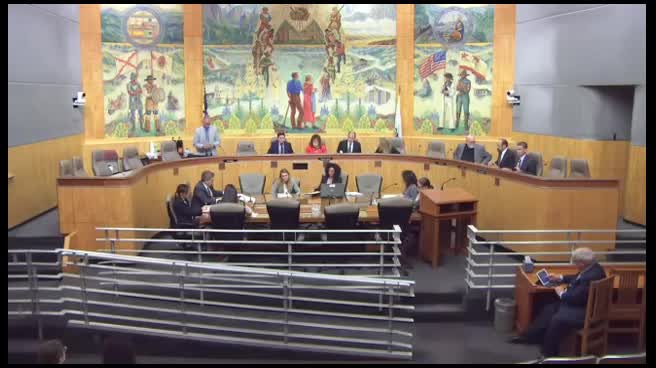 5MIN
Senate Standing Committee on Appropriations
Bill Author

Bill Co-Author(s):