AB 1936: Public postsecondary education: residency: dependents of armed forces members.
- Session Year: 2015-2016
- House: Assembly
- Latest Version Date: 2016-02-12
(1)Under existing law, the segments of the public postsecondary education system in the state include the University of California, which is administered by the Regents of the University of California, the California State University, which is administered by the Trustees of the California State University, and the California Community Colleges, which are administered by the Board of Governors of the California Community Colleges.
Existing law establishes uniform student residency requirements for purposes of ascertaining the amount of tuition and fees to be paid by students of public postsecondary education institutions. Existing law entitles a student to resident classification for the purpose of determining tuition and fees if the student is a member, or a child or spouse who is a dependent of a member, of the Armed Forces of the United States stationed in the state on active duty, except as specified.
Existing law further provides that, if that member of the Armed Forces of the United States, whose dependent natural or adopted child, stepchild, or spouse is in attendance at an institution, (1) is thereafter transferred on military orders to a place outside this state where the member continues to serve in the Armed Forces of the United States, or (2) is thereafter retired as an active member of the Armed Forces of the United States, the student dependent shall not lose his or her resident classification so long as he or she remains continuously enrolled at that institution.
This bill would extend that resident classification for designated dependents of transferred and retired members of the Armed Forces of the United States to those dependents who have been admitted to a public postsecondary institution before the transfer or retirement. The bill would request the Regents of the University of California to establish the same residency benefits as those established by this bill for students enrolled at the University of California.
To the extent that the bill would impose new duties on community college districts, it would constitute a state-mandated local program.
(2)The California Constitution requires the state to reimburse local agencies and school districts for certain costs mandated by the state. Statutory provisions establish procedures for making that reimbursement.
This bill would provide that, if the Commission on State Mandates determines that the bill contains costs mandated by the state, reimbursement for those costs shall be made pursuant to these statutory provisions.
(a)A student who is a natural or adopted child, stepchild, or spouse who is a dependent of a member of the Armed Forces of the United States stationed in this state on active duty is entitled to resident classification only for the purpose of determining the amount of tuition and fees.
(b)If that member of the Armed Forces of the United States, whose dependent natural or adopted child, stepchild, or spouse is in attendance at an at, or has been admitted to, a public postsecondary institution, (1) is thereafter transferred on military orders to a place outside this state where the member continues to serve in the Armed Forces of the United States, or (2) is thereafter retired as an active member of the Armed Forces of the United States, the student dependent shall not lose his or her resident classification so long as he or she remains continuously enrolled at that institution.
SEC. 2.The Legislature hereby requests the Regents of the University of California to establish the same residency benefits for students enrolled at the University of California as those enacted by Section 1 of this act.
SEC. 3.If the Commission on State Mandates determines that this act contains costs mandated by the state, reimbursement to local agencies and school districts for those costs shall be made pursuant to Part 7 (commencing with Section 17500) of Division 4 of Title 2 of the Government Code.
|
Date
|
Status
|
|---|---|
| May 12, 2016 | Read third time. Passed. Ordered to the Senate. |
| Aug 11, 2016 | In committee: Referred to APPR. suspense file. |
| Aug 11, 2016 | In committee: Held under submission. |
| Aug 8, 2016 | In committee: Hearing postponed by committee. |
| Jun 22, 2016 | In committee: Hearing postponed by committee. |
| Jun 8, 2016 | From committee: Do pass and re-refer to Com. on APPR. with recommendation: To Consent Calendar. (Ayes 9. Noes 0.) (June 8). Re-referred to Com. on APPR. |
| May 19, 2016 | Referred to Com. on ED. |
| May 12, 2016 | Read third time. Passed. Ordered to the Senate. (Ayes 78. Noes 0.) |
| May 12, 2016 | Read third time. Passed. Ordered to the Senate. (Ayes 78. Noes 0. Page 4786.) |
| Feb 12, 2016 | Read first time. To print. |
| May 12, 2016 | In Senate. Read first time. To Com. on RLS. for assignment. |
| May 5, 2016 | Read second time. Ordered to Consent Calendar. |
| May 4, 2016 | From committee: Do pass. To Consent Calendar. (Ayes 20. Noes 0.) (May 4). |
| Apr 13, 2016 | From committee: Do pass and re-refer to Com. on APPR. (Ayes 9. Noes 0.) (April 12). Re-referred to Com. on APPR. |
| Apr 6, 2016 | From committee: Do pass and re-refer to Com. on V.A. (Ayes 13. Noes 0.) (April 5). Re-referred to Com. on V.A. |
| Feb 25, 2016 | Referred to Coms. on HIGHER ED. and V.A. |
| Feb 16, 2016 | From printer. May be heard in committee March 17. |
|
Date
|
Description
|
Location
|
Votes
|
|
|---|---|---|---|---|
| Aug 11, 2016 | Placed on suspense file | Senate Standing Committee on Appropriations |
Passed |
|
| Jun 8, 2016 | Do pass, but first be re-referred to the Committee on [Appropriations] with the recommendation: To Consent Calendar | Senate Standing Committee on Education |
Passed |
|
| May 12, 2016 | AB 1936 CHÁVEZ Consent Calendar Second Day Regular Session | Assembly Floor |
Passed |
|
| May 4, 2016 | Do pass. To Consent Calendar. | Assembly Standing Committee on Appropriations |
Passed |
|
| Apr 12, 2016 | Do pass and be re-referred to the Committee on [Appropriations] | Assembly Standing Committee on Veterans Affairs |
Passed |
|
| Apr 5, 2016 | Do pass and be re-referred to the Committee on [Veterans Affairs] | Assembly Standing Committee on Higher Education |
Passed |
This list shows positions taken on this bill by organizations on the date displayed, which is linked to the original source.
Positions by individuals are not included.
|
Organization
|
Position
|
Date
|
|---|---|---|
| America G.I. Forum of California | ** Support | Aug 11, 2016 |
| American G.I. Forum of California | ** Support | Aug 11, 2016 |
| American Legion- Department of California | ** Support | Aug 11, 2016 |
| American Legion-Department of California | ** Support | Aug 11, 2016 |
| AMVETS - Department of California | ** Support | Aug 11, 2016 |
| AMVETS- Department of California | ** Support | Aug 11, 2016 |
| Board of Governors of the California Community Colleges | ** Support | Aug 11, 2016 |
| California Council of Chapters | ** Support | Aug 11, 2016 |
| California State University | ** Support | Aug 11, 2016 |
| Military Officers Association- California Council of Chapters | ** Support | Aug 11, 2016 |
| National Association of Social Workers - California Chapter | ** Support | Aug 11, 2016 |
| National Association Of Social Workers, California Chapter | ** Support | Aug 11, 2016 |
| North Orange County Community College District | ** Support | Aug 11, 2016 |
| The Military Officers Association of America | ** Support | Aug 11, 2016 |
| u None received. | ** Against | Aug 11, 2016 |
| VFW - Department of California | ** Support | Aug 11, 2016 |
| VFW- Department of California | ** Support | Aug 11, 2016 |
| Vietnam Veterans Of America, California State Council | ** Support | Aug 11, 2016 |
SENATE COMMITTEE ON
Senator Ricardo Lara, Chair
2015 - 2016 Regular Session
AB 1936 (Chávez) - Public postsecondary education: residency: dependents of armed forces members
Version: | Policy Vote: |
Urgency: | Mandate: |
Hearing Date: | Consultant: |
This bill does not meet the criteria for referral to the Suspense File.
Bill Summary:
This bill expands the current eligibility for resident postsecondary tuition and fees currently provided for enrolled dependents of an Armed Forces member who either transfers or retires, to those that are admitted to the institution. This bill requests the University of California (UC) to establish the same residency benefits for students.
Fiscal Impact:
- The California Community Colleges indicates that costs would likely be minor.
- The California State University (CSU) anticipates that the number of students would be affected by this bill would be very low. CSU is unaware of any such instance occurring within the system.
- The UC indicates that this bill is consistent with current practice.
Background:
Existing law entitles a student who is a natural or adopted child, stepchild, or spouse who is a dependent of a member of the Armed Forces of the United States stationed in this state on active duty to resident classification only for the purpose of determining the amount of tuition and fees a student is charged. Existing law prohibits such a dependent from losing resident classification if the Armed Forces member is thereafter transferred on military orders to a place outside this state or retires as an active member of the Armed Forces, as long as the student remains continuously enrolled at that institution. (Education Code Section 68074)
This bill would expand this benefit to those dependents that has been admitted so that if the service member transfers or retires before the dependent has begun classes, the dependent would not be charged out-of-state tuition.
Existing law provides that a “resident” is a student who has residence in the state for more than one year immediately preceding the residence determination date. (Education Code Section 68017) According to the UC, the residence determination date is the day instruction begins at the last of the UC campuses to open for the quarter.
This bill is in response to a dependent of a service member that granted a nonresident student a tuition exemption by the UC in April, based on the service member being stationed in California at that time and having orders to deploy out of state in January 2016. However, the deployment occurred earlier and because the service member was not stationed in California on the first day of class, the dependent was determined ineligible for in-state tuition. The UC subsequently determined that an exception was appropriate in this case due to several factors and reversed its decision.
-- END --
SENATE COMMITTEE ON APPROPRIATIONS
Senator Ricardo Lara, Chair
2015 - 2016 Regular Session
AB 1936 (Chávez) - Public postsecondary education: residency: dependents of armed forces members
Version: February 12, 2016 | Policy Vote: ED. 9 - 0 |
Urgency: No | Mandate: Yes |
Hearing Date: June 27, 2016 | Consultant: Jillian Kissee |
This bill does not meet the criteria for referral to the Suspense File.
Bill Summary:
This bill expands the current eligibility for resident postsecondary tuition and fees currently provided for enrolled dependents of an Armed Forces member who either transfers or retires, to those that are admitted to the institution. This bill requests the University of California (UC) to establish the same residency benefits for students.
Fiscal Impact:
- The California Community Colleges indicates that costs would likely be minor.
- The California State University (CSU) anticipates that the number of students would be affected by this bill would be very low. CSU is unaware of any such instance occurring within the system.
- The UC indicates that this bill is consistent with current practice.
Background:
Existing law entitles a student who is a natural or adopted child, stepchild, or spouse who is a dependent of a member of the Armed Forces of the United States stationed in this state on active duty to resident classification only for the purpose of determining the amount of tuition and fees a student is charged. Existing law prohibits such a dependent from losing resident classification if the Armed Forces member is thereafter transferred on military orders to a place outside this state or retires as an active member of the Armed Forces, as long as the student remains continuously enrolled at that institution. (Education Code Section 68074)
This bill would expand this benefit to those dependents that has been admitted so that if the service member transfers or retires before the dependent has begun classes, the dependent would not be charged out-of-state tuition.
Existing law provides that a “resident” is a student who has residence in the state for more than one year immediately preceding the residence determination date. (Education Code Section 68017) According to the UC, the residence determination date is the day instruction begins at the last of the UC campuses to open for the quarter.
This bill is in response to a dependent of a service member that granted a nonresident student a tuition exemption by the UC in April, based on the service member being stationed in California at that time and having orders to deploy out of state in January 2016. However, the deployment occurred earlier and because the service member was not stationed in California on the first day of class, the dependent was determined ineligible for in-state tuition. The UC subsequently determined that an exception was appropriate in this case due to several factors and reversed its decision.
-- END --
SENATE COMMITTEE ON EDUCATION
Senator Carol Liu, Chair
2015 - 2016 Regular
Bill No: AB 1936
Author: | |||
Version: | February 12, 2016 Hearing Date: June 8, 2016 | ||
Urgency: | No | Fiscal: | Yes |
Consultant: | Kathleen Chavira | ||
Subject: Public postsecondary education: residency: dependents of armed forces members
SUMMARY
This bill expands the current eligibility for resident classification extended to enrolled dependents of an Armed Forces member who transfer or retires to include admitted dependents of the Armed Forces member, for purposes of determining postsecondary institution tuition and fees.
BACKGROUND
Existing law entitles a student who is a natural or adopted child, stepchild, or spouse who is a dependent of a member of the Armed Forces of the United States stationed in this state on active duty to resident classification only for the purpose of determining the amount of tuition and fees.
Existing law prohibits such a dependent from losing resident classification if the Armed Forces member is thereafter transferred on military orders to a place outside this state or thereafter retires as an active member of the Armed Forces, as long as the student remains continuously enrolled at that institution. (Education Code § 68074)
ANALYSIS
This bill:
- Expands the current eligibility for resident classification extended to enrolled dependents of an Armed Forces member who transfer or retires to include admitted dependents of an Armed Forces member who transfers or retires.
- Requests that the University of California (UC) establish these same residency benefits for UC enrolled students.
- Identifies potential state mandated costs, likely as a result of the application of the bill’s provisions to the California Community Colleges.
STAFF COMMENTS
Need for the bill. Current law provides that in-state residency classification of the dependent of an Armed Forces member is contingent upon attendance and continuous enrollment at the institution. This bill would additionally authorize resident classification at the time of admission to ensure that a dependent does not lose the benefit of in-state residency if their sponsor is re-assigned by the military prior to the dependent beginning to attend classes.
SUPPORT
America G.I. Forum of California
American Legion-Department of California
AMVETS – Department of California
Board of Governors of the California Community Colleges
California Council of Chapters
California State University
Military Officers Association of America
National Association of Social Workers, California Chapter
North Orange County Community College District
VFW – Department of California
Vietnam Veterans of America, California State Council
OPPOSITION
None received.
-- END --
Date of Hearing: May 4, 2016
ASSEMBLY COMMITTEE ON APPROPRIATIONS
Lorena Gonzalez, Chair
ABPCA Bill Id:AB 1936
Author:(Chávez) – As Introduced Ver:February 12, 2016
Policy Committee: | Higher Education | Vote: | 13 - 0 |
Veterans Affairs | 9 - 0 |
Urgency: No State Mandated Local Program: Yes Reimbursable: Yes
SUMMARY:
This bill provides that if a member of the U.S. Armed Forces stationed in California, whose dependent or spouse has been admitted to a public postsecondary institution, and the service member is thereafter transferred on military orders out of state, the student dependent shall not lose resident classification, and thus pay in-state tuition, as long as he or she is continuously enrolled.
FISCAL EFFECT:
Likely minor fiscal impact. To the extent that, absent this bill, some students would otherwise have to pay higher, nonresident tuition, this bill could result in a revenue loss to the University of California (UC) or the California State University. However, given the rather unique circumstance to which this bill applies, the amount of any revenue loss would be very minor.
COMMENTS:
- Background. Under current law, to qualify for an exemption from nonresident tuition as a dependent child of a member of the military, the service member must be stationed in California on active duty as of the Residence Determination Date. Last year, the dependent of a service member was granted a nonresident tuition exemption by UC in April, based on the service member being stationed in California at that time and having orders to deploy out of state in January 2016. The deployment occurred earlier, however, and because the service member was not stationed in California on the Residence Determination Date of September 24, 2105, the dependent was determined ineligible for in-state tuition. UC subsequently determined that an exception was appropriate in this case and reversed its decision.
- Purpose. According to the author, this bill specifies the point at which in-state tuition is granted to a nonresident dependent to be at the time of admission or attendance rather than just attendance. According to the author, applying a dependent’s in-state residence classification at the time of admittance rather than just attendance will eliminate the issues that often arise when a member of the Armed Forces is deployed before their dependent attends an institution.
Analysis Prepared by: Chuck Nicol / APPR. / (916) 319-2081
Date of Hearing: April 12, 2016
ASSEMBLY COMMITTEE ON VETERANS AFFAIRS
Jacqui Irwin, Chair
ABPCA Bill Id:AB 1936 (
Author:Chávez) – As Introduced Ver:February 12, 2016
SUBJECT: Public postsecondary education: residency: dependents of armed forces members
SUMMARY: Provides an exemption from nonresident tuition for dependents of members of the Armed Forces, as specified. Specifically, this bill:
- Provides that if a member of the Armed Forces of the United States stationed in California, whose dependent natural or adopted stepchild, or spouse has been admitted to a public postsecondary institution is thereafter transferred on military orders out of state where the member continues to serve, the student dependent shall not lose his or her resident classification as long as he or she is continuously enrolled.
- Requests the Regents of the University of California (UC) to establish the aforementioned residency benefits for students enrolled at the UC.
- Provides for reimbursement to local agencies and school districts for costs associated with this bill, should the Commission on State Mandates determine this bill contains state mandated local costs.
EXISTING LAW:
- Provides that each student shall be classified as a resident or nonresident at UC, the California State University (CSU), or the California Community Colleges (CCC). (Education Code Section 68040).
- Requires a student classified as a nonresident to pay, in addition to other fees required by the institution, nonresident tuition. (EC Sec. 68050).
- Provides numerous exemptions from nonresident tuition, including for dependents of members of the Armed Forces stationed in California on active duty. Provides that a student in attendance at a public institution that is granted residency status shall retain that residency classification so as long as he or she is continuously enrolled at that institution. (EC Sec. 68074).
FISCAL EFFECT: Unknown.
COMMENTS:
At all three public higher education segments in California, the UC, the CSU, and the CCC, the difference in tuition charged residents vs non-residents is remarkable. With some variation, the cost for non-residents is approximately triple the cost for residents. At UC, the costliest of the three segments, the resident tuition for 2015-16 is $12,192 vs $35,070 for non-residents. Setting aside policy arguments about the cost differential between residents and non-residents, for most students and their families, military or not, a potential triple difference in cost will at the very least factor into educational and financial decision-making and planning.
Under California law, to qualify for an exemption from nonresident tuition as a dependent child of a member of the military, the service member must be stationed in California on active duty as of the Residence Determination Date.
In December of 2015, this committee was contacted by a member of the armed forces regarding the UC nonresident tuition exemption status of his dependent, whom had been accepted to a UC campus. According to the service member, his dependent was granted a nonresident tuition exemption in April 2015 based on his station in California and his orders showing his prospective rotation date of January 2016.
The servicemember’s orders were changed and he was required to report to his new duty station earlier than anticipated. The UC uses the first day of classes as the Residence Determination Date. As a result of the servicemember not being stationed in California on "active duty" on the Residence Determination Date of the first day of class, the UC campus determined the service member's dependent was no longer eligible for the nonresident exemption.
According to documentation provided by the service member, the decision was appealed and, in January of 2016, the UC campus determined that based upon new information and unique circumstances, it would be unreasonable to withhold a military exemption due to the service member's requirement to report prior to the original prospective rotation date. The UC campus determined that an exception to UC's policy was appropriate in this case.
According to the author, this bill specifies the point at which in-state tuition is granted to a nonresident dependent to be at the time of admission or attendance rather than just attendance. According to the author, applying a dependent’s in-state residence classification at the time of admittance rather than just attendance will eliminate the issues that often arise when a member of the Armed Forces is deployed before their dependent attends an institution.
Double-Referral: This bill passed out of the Higher Education Committee on Consent.
REGISTERED SUPPORT / OPPOSITION:
Support
American G.I. Forum of California
American Legion- Department of California
AMVETS- Department of California
Military Officers Association- California Council of Chapters
National Association of Social Workers – California Chapter
VFW- Department of California
Vietnam Veterans of America, California State Council
Opposition
None on File.
Analysis Prepared by: John Spangler / V.A. / (916) 319-3550
Date of Hearing: April 5, 2016
ASSEMBLY COMMITTEE ON HIGHER EDUCATION
Jose Medina, Chair
ABPCA Bill Id:AB 1936 (
Author:Chávez) – As Introduced Ver:February 12, 2016
[Note: This bill is double referred to the Assembly Veteran's Affairs Committee and will be heard as it relates to issues under its jurisdiction.]
SUBJECT: Public postsecondary education: residency: dependents of armed forces members
SUMMARY: Provides an exemption from nonresident tuition for dependents of members of the Armed Forces, as specified. Specifically, this bill:
- Provides that if a member of the Armed Forces of the United States stationed in California, whose dependent natural or adopted stepchild, or spouse has been admitted to a public postsecondary institution is thereafter transferred on military orders out of state where the member continues to serve, the student dependent shall not lose his or her resident classification as long as he or she is continuously enrolled.
- Requests the Regents of the University of California (UC) to establish the aforementioned residency benefits for students enrolled at the UC.
- Provides for reimbursement to local agencies and school districts for costs associated with this bill, should the Commission on State Mandates determine this bill contains state mandated local costs.
EXISTING LAW:
- Provides that each student shall be classified as a resident or nonresident at UC, the California State University (CSU), or the California Community Colleges (CCC). (Education Code Section 68040).
- Requires a student classified as a nonresident to pay, in addition to other fees required by the institution, nonresident tuition. (EC Sec. 68050).
- Provides numerous exemptions from nonresident tuition, including for dependents of members of the Armed Forces stationed in California on active duty. Provides that a student in attendance at a public institution that is granted residency status shall retain that residency classification so as long as he or she is continuously enrolled at that institution. (EC Sec. 68074).
FISCAL EFFECT: Unknown.
COMMENTS: Background. Under California law, to qualify for an exemption from nonresident tuition as a dependent child of a member of the military, the service member must be stationed in California on active duty as of the Residence Determination Date. In December of 2015, this committee was contacted by a member of the armed forces regarding the UC nonresident tuition exemption status of his dependent, whom had been accepted to a UC campus. According to the service member, his dependent was granted a nonresident tuition exemption in April 2015 based on his station in California and his orders showing his prospective rotation date of January 2016.
According to the service member, as often happens within the military, orders were changed and he was required to leave the state earlier than expected. As a result of not being stationed in California on "active duty" on the Residence Determination Date of September 24, 2015, the service member's dependent was determined ineligible for the nonresident exemption.
According to documentation provided by the service member, the decision was appealed and, in January of 2016, the UC campus determined that based upon new information and unique circumstances, it would be unreasonable to withhold a military exemption due to the service member's requirement to report prior to the original prospective rotation date. The UC campus determined that an exception to UC's policy was appropriate in this case.
Purpose of this bill. According to the author, this bill specifies the point at which in-state tuition is granted to a nonresident dependent to be at the time of admission or attendance rather than just attendance. According to the author, applying a dependent’s in-state residence classification at the time of admittance rather than just attendance will eliminate the issues that often arise when a member of the Armed Forces is deployed before their dependent attends an institution.
REGISTERED SUPPORT / OPPOSITION:
Support
National Association of Social Workers – California Chapter
Opposition
None on File
Analysis Prepared by: Laura Metune / HIGHER ED. / (916) 319-3960
Discussed in Hearing
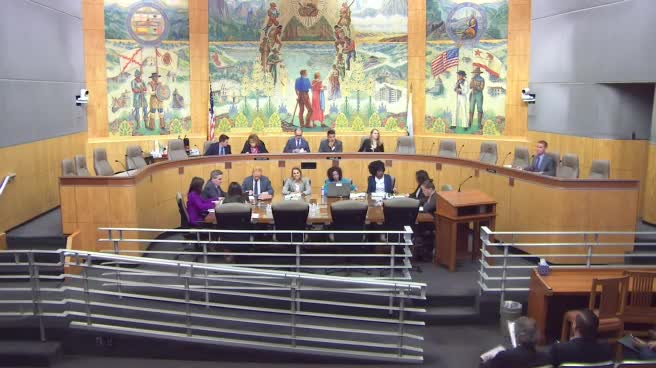 3MIN
Senate Standing Committee on Appropriations
Bill Author

Bill Co-Author(s):