AB 1944: Personal Income Tax Law: gross income exclusion: Olympic and Paralympic Games.
- Session Year: 2015-2016
- House: Assembly
- Latest Version Date: 2016-06-13
The Personal Income Tax Law provides for various exclusions from gross income, including a reward from a crime hotline.
This bill, for taxable years beginning on or after January 1, 2016, and before January 1, 2021, also would exclude from gross income the value of any medal given by the International Olympic Committee or the International Paralympic Committee, and any prize money or honoraria received from the United States Olympic Committee, on account of either the Olympic Games or the Paralympic Games.
This bill would take effect immediately as a tax levy.
The Personal Income Tax Law provides for various exclusions from gross income, including a reward from a crime hotline.
This bill would, bill, for taxable years beginning on or after January 1, 2016, and before January 1, 2025, 2021, also would exclude from gross income the value of any medal given by the International Olympic Committee, and any prize money or honoraria received from the United States Olympic Committee, on account of either the Olympic Games or the Paralympic Games.
This bill would take effect immediately as a tax levy.
The Personal Income Tax Law provides for various exclusions from gross income, including a reward from a crime hotline.
This bill would, for taxable years beginning on or after January 1, 2016, and before January 1, 2025, also exclude from gross income the value of any medal given by the International Olympic Committee, and any prize money or honoraria received from the United States Olympic Committee, on account of either the Olympic Games or the Paralympic Games.
This bill would take effect immediately as a tax levy.
(a)For taxable years beginning on or after January 1, 2016, and before January 1, 2021, gross income shall not include the value of any medal given by the International Olympic Committee or the International Paralympic Committee, and any prize money or honoraria received from the United States Olympic Committee, on account of the Olympic Games or the Paralympic Games.
(b)This section shall remain in effect only until December 1, 2021, and as of that date is repealed.
SEC. 2.This act provides for a tax levy within the meaning of Article IV of the Constitution and shall go into immediate effect.
(a)For taxable years beginning on or after January 1, 2016, and before January 1, 2025, 2021, gross income shall not include the value of any medal given by the International Olympic Committee, and any prize money or honoraria received from the United States Olympic Committee, on account of the Olympic Games or the Paralympic Games.
(b) This section shall remain in effect only until December 1, 2025, 2021, and as of that date is repealed, unless a later enacted statute, that is enacted before December 1, 2025, deletes or extends that date. repealed.
SEC. 2.This act provides for a tax levy within the meaning of Article IV of the Constitution and shall go into immediate effect.
(a)For taxable years beginning on or after January 1, 2016, and before January 1, 2025, gross income shall not include the value of any medal given by the International Olympic Committee, and any prize money or honoraria received from the United States Olympic Committee, on account of the Olympic Games or the Paralympic Games.
(b) This section shall remain in effect only until December 1, 2025, and as of that date is repealed, unless a later enacted statute, that is enacted before December 1, 2025, deletes or extends that date.
SEC. 2.This act provides for a tax levy within the meaning of Article IV of the Constitution and shall go into immediate effect.
|
Date
|
Status
|
|---|---|
| May 31, 2016 | Read third time. Passed. Ordered to the Senate. |
| Aug 11, 2016 | In committee: Held under submission. |
| Aug 1, 2016 | In committee: Referred to APPR. suspense file. |
| Jun 22, 2016 | From committee: Do pass and re-refer to Com. on APPR. (Ayes 5. Noes 0.) (June 22). Re-referred to Com. on APPR. |
| Jun 13, 2016 | From committee chair, with author's amendments: Amend, and re-refer to committee. Read second time, amended, and re-referred to Com. on GOV. & F. |
| Jun 9, 2016 | Referred to Com. on GOV. & F. |
| Jun 1, 2016 | In Senate. Read first time. To Com. on RLS. for assignment. |
| May 31, 2016 | Read third time. Passed. Ordered to the Senate. (Ayes 80. Noes 0.) |
| May 31, 2016 | Read third time. Passed. Ordered to the Senate. (Ayes 80. Noes 0. Page 5051.) |
| Feb 12, 2016 | Read first time. To print. |
| May 26, 2016 | Read second time. Ordered to Consent Calendar. |
| May 25, 2016 | From committee: Do pass. To Consent Calendar. (Ayes 20. Noes 0.) (May 25). |
| May 17, 2016 | Re-referred to Com. on APPR. |
| May 16, 2016 | Read second time and amended. |
| May 12, 2016 | From committee: Amend, and do pass as amended and re-refer to Com. on APPR. (Ayes 9. Noes 0.) (May 9). |
| Feb 25, 2016 | Referred to Com. on REV. & TAX. |
| Feb 16, 2016 | From printer. May be heard in committee March 17. |
|
Date
|
Description
|
Location
|
Votes
|
|
|---|---|---|---|---|
| Aug 1, 2016 | Placed on suspense file | Senate Standing Committee on Appropriations |
Passed |
|
| Jun 22, 2016 | Do pass, but first be re-referred to the Committee on [Appropriations] | Senate Standing Committee on Governance and Finance |
Passed |
|
| May 31, 2016 | AB 1944 JONES Consent Calendar Second Day | Assembly Floor |
Passed |
|
| May 25, 2016 | Do pass. To Consent Calendar. | Assembly Standing Committee on Appropriations |
Passed |
|
| May 9, 2016 | Do pass as amended and be re-referred to the Committee on [Appropriations] | Assembly Standing Committee on Revenue and Taxation |
Passed |
This list shows positions taken on this bill by organizations on the date displayed, which is linked to the original source.
Positions by individuals are not included.
|
Organization
|
Position
|
Date
|
|---|---|---|
| San Diego Regional Chamber Of Commerce | ** Support | May 9, 2016 |
| San Francisco Chamber of Commerce | ** Support | May 9, 2016 |
SENATE COMMITTEE ON APPROPRIATIONS
Senator Ricardo Lara, Chair
2015 - 2016 Regular Session
AB 1944 (Jones) - Personal Income Tax Law: gross income exclusion: Olympic and Paralympic Games
Version: June 13, 2016 | Policy Vote: GOV. & F. 5 - 0 |
Urgency: No | Mandate: No |
Hearing Date: August 1, 2016 | Consultant: Robert Ingenito |
This bill meets the criteria for referral to the Suspense File.
Bill Summary:
AB 1944 would, for taxable years 2016 through 2020, exclude from income the value of any prize or award won in the Olympic Games or Paralympic Games.
Fiscal Impact:
Based on historical athlete performance, the Franchise Tax Board (FTB) estimates that the bill would result in revenue losses (General Fund) of $100,000 in 2016-17, $6,000 in 2017-18, and $4,000 in 2018-19. The bill would not significantly impact FTB’s administrative costs.
Background:
The United States Olympic Committee (USOC) pays out a $25,000 bonus per gold medal, $15,000 for silver and $10,000 for bronze (and for the Paralympics, $5,000, $3,500 and $2,500, respectively). The money does not come from the United States government; instead, the USOC gets it money from the sale of broadcast rights, licensing and trademark income, and corporate sponsorships. As a point of comparison, Kazakhstan pays its athletes the equivalent of $250,000 per gold medal. Under current law, the Olympic-related bonuses are considered taxable income, which includes all gifts and prizes unless specifically excluded (such as employee achievement awards, and any gift or prize donated to charity). Current state law excludes from income some items that are includible as income in federal tax, such as lottery winnings, unemployment insurance, and a portion of social security benefits.
Proposed Law:
This bill would, for taxable years 2016 through 2020, exclude from income the value of any medal given by the International Olympic Committee and any prize money or honoraria received from the United States Olympic Committee in athletic competition in the Olympic Games or the Paralympic Games.
Related Legislation:
AB 2323 (Gorell, 2014) would have excluded from gross income any prize or award won by an individual in athletic competition at the Olympics Games. The bill was held under submission on the Suspense File of this Committee.
Staff Comments:
The revenue loss from this bill depends entirely on the number of Californians that will medal at each Olympic and Paralympic Games, which is unknown. The 2012 Summer Olympic Games featured 26 sports and 302 events. The 2016 Summer Olympic Games will include 28 sports and a total of 306 events. Likewise, the number of Winter Olympic events in 2018 could rise from the 98 that were included in the 2014 Games. FTB’s revenue estimate assumes that California athletes will receive medals, prize money and honoraria valued at approximately $1.3 million during the Summer Olympics/Paralympic games that will be held in 2016, and approximately $120,000 during the Winter Olympics/Paralympic games that will be held during 2018.
The estimate assumes future Summer and Winter Olympic/Paralympic performances for California athletes will be comparable to past performances.
Staff notes that, in June 2016, the International Association of Athletics Federations, the governing body for track and field, announced that Russia’s track and field team is barred from competing in the 2016 Olympic Games. Additionally, it is possible that Russian athletes in other sports will be precluded from competing as well. To the extent that their absence leads to more Californians winning medals than historical performance would predict, FTB’s revenue loss could be understated. The magnitude is unknown, but probably minor.
-- END --
SENATE COMMITTEE ON GOVERNANCE AND FINANCE
Senator Robert M. Hertzberg, Chair
2015 - 2016 Regular
Bill No: | AB 1944 | Hearing Date: | 6/22/16 |
Author: | Jones | Tax Levy: | Yes |
Version: | 6/13/16 Amended | Fiscal: | Yes |
Consultant: | Bouaziz | ||
Personal Income Tax Law: gross income exclusion: Olympic and Paralympic Games
Excludes from income the value of any prize or award won in the Olympic Games or Paralympic Games.
Background
Generally, federal and state tax law provide that “income” includes all income from any source, such as wages, dividends, or capital gains, unless specifically excluded, such as employer’s health insurance contributions, and insurance payments. California typically conforms to federal law for exclusions to gross income for ease of administration: in 2015, the state conformed to the federal exclusion from gross income of qualified military base realignment and closure fringe benefits (AB 154, Ting, 2015).
Income includes all gifts and prizes unless specifically excluded, such as employee achievement awards, and any gift or prize donated to charity. California also expressly excludes from income some items that are includible as income in federal tax, such as lottery winnings, unemployment insurance, and a portion of social security benefits.
Proposed Law
Assembly Bill 1944 excludes from income the value of any medal given by the International Olympic Committee and any prize money or honoraria received from the United States Olympic Committee in athletic competition in the Olympic Games or the Paralympic Games.
The measure applies to taxable years beginning on or after January 1, 2016 and before January 1, 2021.
State Revenue Impact
The Franchise Tax Board (FTB) estimates General Fund revenue losses of $100,000 in 2016-17, $6,000 in 2017-18, and $4,000 in 2018-19.
Comments
1. Purpose of the bill. According to the author, “This bill would exclude from income tax the value of any medal given by the International Olympic Committee and any prize money or honorarium given by the United States Olympic Committee as a result of winning a gold, silver, or bronze medal in the Olympic or Paralympic games. This legislation does not include income generated through any sponsorship deals or other endorsements the athlete may receive. Many countries compensate their Olympic and Paralympic athletes, but athletes representing the United States compete on a voluntary basis and earn no prize money unless they are victorious in competition. Tragically, American athletes who do win a bronze, silver, or gold medal are then subjected to federal and state taxes.”
2. What about me? The Olympic Games are one of the world’s most enduring and popular traditions, and seek to bring together representatives from all countries across the globe in athletic competition. However, global associations of all form and fashion hold competitions every year to recognize the best among them, and award fully taxable prizes: Nobel Prizes are awarded to individuals in recognition of scientific and cultural contributions to the world, and the American Academy of Motion Pictures Arts and Sciences recognizes excellence in filmmaking by bestowing Academy Awards to name a few. These awards are won by dedicated, talented individuals who work hard to become the best; however, AB 1944 excludes only prizes won by Olympic and Paralympic Athletes from tax. Why should one set of successful competitors be excluded from tax when others have to pay? The Committee may wish to consider what policy rationale to apply when distinguishing tax-free winnings from taxable ones.
3. Reverse Nonconformity. California law does not automatically conform to changes to federal tax law, except under specified circumstances. Instead, the Legislature must affirmatively conform to federal changes. Generally, when the federal government changes its tax laws, California catches up by enacting its own legislation the following year to reduce differences between the two codes, thereby easing the tax preparation burden on taxpayers, tax preparers, and the Franchise Tax Board. AB 1944 seeks to exclude prizes and awards won in the Olympic Games and the Paralympic Games from income before Congress has acted, upsetting the usual timing for conformity items, and potentially confusing affected taxpayers by requiring them to include their prizes and awards for federal purposes but excluding them for state tax purposes. The Committee may wish to consider deferring action on AB 1944 until and unless Congress acts, after which it can conform to the federal change.
4. Prior legislation.
- AB 2323 (Gorell, 2014), contained provisions substantially similar to this bill. AB 2323 was held by the Senate Committee on Appropriations.
- AB 1786 (Mansoor, 2012), would have excluded from gross income the value of any prize or award won by the taxpayer in athletic competition in the Olympic Games. AB 1786 was held by the Senate Committee on Appropriations.
Assembly Actions
Assembly Revenue and Taxation 9-0
Assembly Appropriations 20-0
Assembly Floor 80-0
Support and Opposition
(6/15/16)
Support: San Diego Regional Chamber of Commerce; San Francisco Chamber of Commerce; United States Olympic Committee.
Opposition: Unknown.
-- END --
Date of Hearing: May 25, 2016
ASSEMBLY COMMITTEE ON APPROPRIATIONS
Lorena Gonzalez, Chair
ABPCA Bill Id:AB 1944
Author:(Jones) – As Amended Ver:May 16, 2016
Policy Committee: | Revenue and Taxation | Vote: | 9 - 0 |
Urgency: No State Mandated Local Program: No Reimbursable: No
SUMMARY:
This bill excludes from adjusted gross income under the Personal Income Tax law, from taxable years beginning on or after January 1, 2016 to January 1, 2021, the value of any medal or prize money or honoraria given to a taxpayer by the International Olympic Committee or the United States Olympic Committee on account of either the Olympic games or the Paralympic games.
FISCAL EFFECT:
GF revenue losses of approximately $100,000 in FY 2016-17, $6,000 in FY 2017-18, and $4,000 in FY 2018-19.
COMMENTS:
- Purpose. According to the author, many other countries compensate their Olympic and Paralympic athletes, but athletes representing the United States compete on a voluntary basis, unless they win a medal. The author notes that “tragically, American athletes who do win a bronze, silver, or gold medal are then subjected to federal and state taxes.” This bill excludes, for personal income tax purposes, the value of these medals as well as the honoraria received for those wins.
- Background. The US Olympic Committee (USOC) provides honoraria to medaling athletes. In 2013, athletes were generally awarded $25,000 for a gold medal, $15,000 for silver, and $10,000 for bronze. The tax they pay on these honoraria depends on their overall income.
- Brawn over brain? California has a proud Olympic history and is home to approximately 14% of all Olympic and Paralympic athletes. However, athletes are by no means the only individuals who receive a monetary award because of their laudable accomplishments. Today, the Nobel Prize is accompanied by a monetary award of roughly $1.2 million, but that amount is also subject to tax.
- Related legislation. AB 2323 (Gorell) of 2014 and AB 1786 (Wansour) of 2012 would have also created similar exclusions. Both bills were held in the Senate Committee on Appropriations.
Analysis Prepared by: Luke Reidenbach / APPR. / (916) 319-2081
Date of Hearing: May 9, 2016
ASSEMBLY COMMITTEE ON REVENUE AND TAXATION
Sebastian Ridley-Thomas, Chair
ABPCA Bill Id:AB 1944 (
Author:Jones) – As Introduced Ver:February 12, 2016
Majority vote. Tax levy. Fiscal committee.
SUBJECT: Personal Income Tax Law: gross income exclusion: Olympic and Paralympic Games
SUMMARY: Excludes from gross income the value of any medal given by the International Olympic Committee, and any prize money or honoraria received from the United States Olympic Committee (USOC), on account of the Olympic Games or the Paralympic Games. Specifically, this bill:
- Applies to taxable years beginning on or after January 1, 2016, and before January 1, 2025.
- Provides that the statute shall remain in effect only until December 1, 2025, unless a later enacted statute deletes or extends the sunset date.
- Takes immediate effect as a tax levy.
EXISTING FEDERAL LAW defines "gross income", except as otherwise provided, as all income from whatever source derived. (Internal Revenue Code (IRC) Section 61.)
EXISTING STATE LAW:
- Provides that IRC Section 61, relating to the definition of gross income, shall apply, except as specified. (Revenue and Taxation Code (R&TC) Section 17071.)
- Provides for various exclusions from gross income under the Personal Income Tax Law.
FISCAL EFFECT: The Franchise Tax Board (FTB) estimates General Fund revenue losses of $100,000 in fiscal year (FY) 2016-17, $6,000 in FY 2017-18, and $4,000 in FY 2018-19.
COMMENTS:
- The author has provided the following statement in support of this bill:
This bill would exclude from income tax the value of any medal given by the International Olympic Committee and any prize money or honorarium given by the United States Olympic Committee as a result of winning a gold, silver, or bronze medal in the Olympic or Paralympic games. This legislation does not include income generated through any sponsorship deals or other endorsements the athlete may receive.
Many countries compensate their Olympic and Paralympic athletes, but athletes representing the United States compete on a voluntary basis and earn no prize money unless they are victorious in competition. Tragically, American athletes who do win a bronze, silver, or gold medal are then subjected to federal and state taxes.
- This bill is supported by the San Francisco Chamber of Commerce, which notes the following:
As advocates of bringing the Olympics to the San Francisco Bay Area, the Chamber is a proud supporter of California athletes who compete in the games. The United States Olympic Committee notes that approximately 14% of all Olympic and Paralympic athletes reside in California. In the 2012 Olympic Games in London, California sent 128 athletes to compete.
Unlike many other countries, Olympic and Paralympic athletes from the United States compete on a voluntary basis. When they win their sport they receive cash awards in addition to their medals. Those cash awards, as well as the value of the medals, are fully taxable because no federal or state law exists to exclude from gross income taxes the awards and prize money received in the Olympic and Paralympic games.
This legislation allows our California Olympians and Paralympians to rightfully keep the full monetary award given to them for successfully winning a gold, silver or bronze medal.
- Committee Staff Comments
- What is a "tax expenditure"? Existing law provides various credits, deductions, exclusions, and exemptions for particular taxpayer groups. In the late 1960s, U.S. Treasury officials began arguing that these features of the tax law should be referred to as "expenditures," since they are generally enacted to accomplish some governmental purpose and there is a determinable cost associated with each (in the form of foregone revenues).
- How is a tax expenditure different from a direct expenditure? As the Department of Finance notes in its annual Tax Expenditure Report, there are several key differences between tax expenditures and direct expenditures. First, tax expenditures are reviewed less frequently than direct expenditures once they are put in place. This can offer taxpayers greater economic certainty, but it can also result in tax expenditures remaining a part of the tax code without demonstrating any public benefit. Second, there is generally no control over the amount of revenue losses associated with any given tax expenditure. Finally, it should also be noted that, once enacted, it takes a two-thirds vote to rescind an existing tax expenditure absent a sunset date. This effectively results in a "one-way ratchet" whereby tax expenditures can be conferred by majority vote, but cannot be rescinded, irrespective of their cost or efficacy, without a supermajority vote.
- What's included? Under both federal and state law, gross income generally includes all income from whatever source derived. Thus, the FTB notes that gross income includes prize awards, absent a specific exclusion. California typically conforms to federal exclusions for ease of administration. For example, in a prior omnibus conformity bill taken up by the Legislature, California excluded from gross income grants for renewable energy under the American Recovery and Reinvestment Tax Act of 2009. [SB 401 (Wolk), Chapter 14, Statutes of 2010.]
This is not to suggest, however, that federal and state law are in perfect accord. California law expressly excludes from gross income some items that are included within the federal definition. For example, Government Code Section 8880.68 provides that no state or local taxes shall be imposed on any prize awarded by the lottery. More recently, the Legislature acted to exclude disaster relief payments made to victims of the San Bruno gas pipeline explosion [AB 50 (Hill), Chapter 18, Statutes of 2011].
- What would this bill do? This bill would enact a new, California-specific exclusion for awards and prize money received in connection with the Olympic or Paralympic Games. This bill is designed to provide modest tax relief to successful athletes, many of whom have made enormous personal sacrifices in pursuit of Olympic and Paralympic success.
Unlike the athletes of numerous other nations, the USOC notes that the nation's athletes receive no government funding and, instead, rely on the generosity of the American public and private sponsors for support. The USOC does provide honoraria to medaling athletes. Specifically, the author notes that athletes are generally awarded $25,000 for a gold medal, $15,000 for a silver medal, and $10,000 for a bronze medal. Under this bill, such awards would not be subject to state taxation. Moreover, this bill would also exclude from state taxation the value of the actual gold, silver, and bronze medals as well.
- A proud California tradition: California has a proud Olympic history, having served as host of the Los Angeles Olympic Games in 1932 and 1984, and the 1960 Olympic Winter Games in Squaw Valley. In addition, California is home to one of three national Olympic Training Centers. Finally, the USOC notes that approximately 14% of all Olympic and Paralympic athletes reside in California.
- But what about me? Successful Olympic athletes are by no means the only individuals who receive a monetary award on account of their laudable accomplishments. On November 27, 1895, Alfred Nobel signed a will stipulating that the bulk of his estate should be invested into a fund, the income from which would be distributed annually in the form of prizes "to those who during the preceding year have conferred the greatest benefit on mankind." Today, the Nobel Prize is accompanied by a monetary award of roughly $1.2 million. Nobel prizes are often awarded in recognition of groundbreaking discoveries with far-reaching implications for humanity as a whole. The state, however, does not exclude such award payments from gross income. Thus, the Committee may wish to consider the precedent this bill might set for award payments, and whether it is equitable to treat such payments in a dissimilar manner.
- A note on sunsets: In its current form, this bill's exclusion applies to nine taxable years (i.e., those beginning on or after January 1, 2016, and before January 1, 2025). This Committee has a longstanding policy favoring the inclusion of five-year sunset dates to allow more frequent review of tax expenditure programs. The Committee may wish to consider shortening the sunset period of this bill.
- Prior legislation:
- AB 2323 (Gorell), of the 2013-14 Regular Session, contained provisions substantially similar to this bill. AB 2323 was held by the Senate Committee on Appropriations.
- AB 1786 (Mansoor), of the 2011-12 Regular Session, would have excluded from gross income the value of any prize or award won by the taxpayer in athletic competition in the Olympic Games. AB 1786 was held by the Senate Committee on Appropriations.
- AB 2323 (Gorell), of the 2013-14 Regular Session, contained provisions substantially similar to this bill. AB 2323 was held by the Senate Committee on Appropriations.
- A proud California tradition: California has a proud Olympic history, having served as host of the Los Angeles Olympic Games in 1932 and 1984, and the 1960 Olympic Winter Games in Squaw Valley. In addition, California is home to one of three national Olympic Training Centers. Finally, the USOC notes that approximately 14% of all Olympic and Paralympic athletes reside in California.
REGISTERED SUPPORT / OPPOSITION:
Support
San Diego Regional Chamber of Commerce
San Francisco Chamber of Commerce
Opposition
None on file
Analysis Prepared by: M. David Ruff / REV. & TAX. / (916) 319-2098
Discussed in Hearing
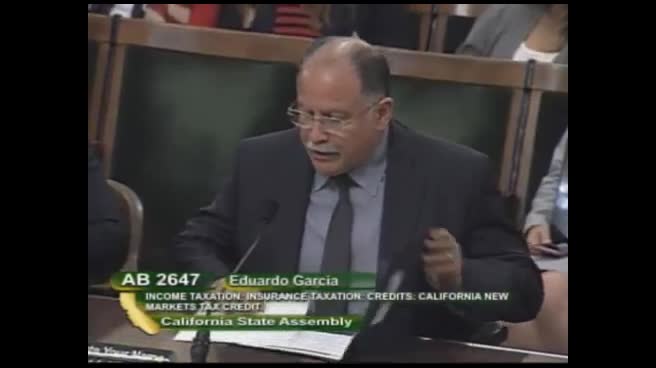 6MIN
Assembly Standing Committee on Revenue and Taxation
Bill Author