AB 2120: Public Utilities Commission: proceedings: intervenor fees: customers.
- Session Year: 2015-2016
- House: Assembly
- Latest Version Date: 2016-04-26
Under existing law, the Public Utilities Commission has broad regulatory authority pursuant to the California Constitution and the Public Utilities Act over public utilities, as defined. Existing law provides compensation for reasonable advocates fees, reasonable expert witness fees, and other reasonable costs to public utility customers and representatives of customers for participation or intervention in formal proceedings of the commission involving electrical, gas, water, telegraph, and telephone public utilities, but does not provide that compensation for local government agencies.
This bill would make legislative findings and declarations relating to local educational agency involvement in commission proceedings. The bill would authorize compensation for participation or intervention in the proceedings described above for a county office of education, on behalf of any of the local educational agencies in whole or part within the county or on behalf of itself, or for a community college district. or a consortium of public school districts or agencies participating or intervening on behalf of local K12 educational agencies in a commission proceeding relating to gas or electricity rates. The bill would require that a representative of a consortium not have had a direct financial interest in the resolution of the commission proceeding within the 2 years preceding the filing of comments with the commission and not have a direct financial interest in the resolution until 2 years after that resolution.
Under existing law, the Public Utilities Commission has broad regulatory authority pursuant to the California Constitution and the Public Utilities Act over public utilities, as defined. Existing law provides compensation for reasonable advocates fees, reasonable expert witness fees, and other reasonable costs to public utility customers and representatives of customers for participation or intervention in formal proceedings of the commission involving electrical, gas, water, telegraph, and telephone public utilities, but does not provide that compensation for local government agencies.
This bill would make legislative findings and declarations relating to local educational agency involvement in commission proceedings. The bill would authorize compensation for participation or intervention in the proceedings described above for a county office of education, on behalf of any of the local educational agencies in whole or part within the county or on behalf of itself, or for a community college district.
The Legislature finds and declares all of the following:
(a)Many local educational agencies, including school districts, county offices of education, and community college districts districts, have experienced rapid increases in energy costs due to energy rate increases approved by the Public Utilities Commission.
(b)Local educational agencies are disproportionately affected by rapid increases in energy costs and differ from other public agencies because they are strictly limited in their ability to raise local tax revenues to cover operational cost increases. Local educational agencies seeking to participate in Public Utilities Commission proceedings must hire attorneys and experts at their own expense, using the state and local dollars that were designated for educational programs.
(c)The cost of intervening in Public Utilities Commission proceedings is often prohibitive for local educational agencies; therefore, the perspectives of local educational agencies are often lost during proceedings to discuss rate changes.
(d)The Public Utilities Commissions Intervenor Compensation Program is intended to ensure that individuals and groups that represent residential or small commercial electric utility customers have the financial resources to bring their concerns and interests to the commission during formal proceedings.
(e)As a regional agency, a county office of education is the appropriate intervenor in a proceeding affecting any local educational agency in whole or part within the county.
SEC. 2.Section 1802 of the Public Utilities Code is amended to read:1802.As used in this article:
(a)Compensation means payment for all or part, as determined by the commission, of reasonable advocates fees, reasonable expert witness fees, and other reasonable costs of preparation for and participation in a proceeding, and includes the fees and costs of obtaining an award under this article and of obtaining judicial review, if any.
(b)(1)Customer means any of the following:
(A)A participant representing consumers, customers, or subscribers of any electrical, gas, telephone, telegraph, or water corporation that is subject to the jurisdiction of the commission.
(B)A representative who has been authorized by a customer.
(C)A representative of a group or organization authorized pursuant to its articles of incorporation or bylaws to represent the interests of residential customers, or to represent small commercial customers who receive bundled electric service from an electrical corporation.
(D)(i)Notwithstanding paragraph (2), a county office of education or a community college district. consortium of public school districts or agencies.
(ii)(I)A county office of education may consortium of public school districts or agencies shall only participate or intervene pursuant to this article on behalf of any of the a local K12 educational agencies in whole or part within the county or on behalf of itself. agency in a commission proceeding relating to gas or electricity rates.
(II)A representative of a consortium of public school districts or agencies participating or intervening pursuant to this article in a commission proceeding shall not have had a direct financial interest in the resolution of the commission proceeding within the two years preceding the filing of comments with the commission, and shall not have a direct financial interest in the resolution of the proceeding sooner than two years after that resolution.
(2)Customer does not include any state, federal, or local government agency, any publicly owned public utility, or any entity that, in the commissions opinion, was established or formed by a local government entity for the purpose of participating in a commission proceeding.
(c)Expert witness fees means recorded or billed costs incurred by a customer for an expert witness.
(d)Other reasonable costs means reasonable out-of-pocket expenses directly incurred by a customer that are directly related to the contentions or recommendations made by the customer that resulted in a substantial contribution.
(e)Party means any interested party, respondent public utility, or commission staff in a hearing or proceeding.
(f)Proceeding means an application, complaint, or investigation, rulemaking, alternative dispute resolution procedures in lieu of formal proceedings as may be sponsored or endorsed by the commission, or other formal proceeding before the commission.
(g)Significant financial hardship means either that the customer cannot afford, without undue hardship, to pay the costs of effective participation, including advocates fees, expert witness fees, and other reasonable costs of participation, or that, in the case of a group or organization, the economic interest of the individual members of the group or organization is small in comparison to the costs of effective participation in the proceeding.
(h)Small commercial customer means any a nonresidential customer with a maximum peak demand of less than 50 kilowatts. The commission may establish rules to modify or change the definition of small commercial customer, including use of criteria other than a peak demand threshold, if the commission determines that the modification or change will promote participation in proceedings at the commission by organizations representing small businesses, without incorporating large commercial and industrial customers.
(i)Substantial contribution means that, in the judgment of the commission, the customers presentation has substantially assisted the commission in the making of its order or decision because the order or decision has adopted in whole or in part one or more factual contentions, legal contentions, or specific policy or procedural recommendations presented by the customer. Where If the customers participation has resulted in a substantial contribution, even if the decision adopts that customers contention or recommendations only in part, the commission may award the customer compensation for all reasonable advocates fees, reasonable expert fees, and other reasonable costs incurred by the customer in preparing or presenting that contention or recommendation.
The Legislature finds and declares all of the following:
(a)Many local educational agencies, including school districts, county offices of education, and community college districts have experienced rapid increases in energy costs due to energy rate increases approved by the Public Utilities Commission.
(b)Local educational agencies are disproportionately affected by rapid increases in energy costs and differ from other public agencies because they are strictly limited in their ability to raise local tax revenues to cover operational cost increases. Local educational agencies seeking to participate in Public Utilities Commission proceedings must hire attorneys and experts at their own expense, using the state and local dollars that were designated for educational programs.
(c)The cost of intervening in Public Utilities Commission proceedings is often prohibitive for local educational agencies; therefore, the perspectives of local educational agencies are often lost during proceedings to discuss rate changes.
(d)The Public Utilities Commissions Intervenor Compensation Program is intended to ensure that individuals and groups that represent residential or small commercial electric utility customers have the financial resources to bring their concerns and interests to the commission during formal proceedings.
(e)As a regional agency, a county office of education is the appropriate intervenor in a proceeding affecting any local educational agency in whole or part within the county.
SEC. 2.Section 1802 of the Public Utilities Code is amended to read:1802.As used in this article:
(a)Compensation means payment for all or part, as determined by the commission, of reasonable advocates fees, reasonable expert witness fees, and other reasonable costs of preparation for and participation in a proceeding, and includes the fees and costs of obtaining an award under this article and of obtaining judicial review, if any.
(b)(1)Customer means any of the following:
(A)A participant representing consumers, customers, or subscribers of any electrical, gas, telephone, telegraph, or water corporation that is subject to the jurisdiction of the commission.
(B)A representative who has been authorized by a customer.
(C)A representative of a group or organization authorized pursuant to its articles of incorporation or bylaws to represent the interests of residential customers, or to represent small commercial customers who receive bundled electric service from an electrical corporation.
(D)(i)Notwithstanding paragraph (2), a county office of education or a community college district.
(ii)A county office of education may participate or intervene pursuant to this article on behalf of any of the local educational agencies in whole or part within the county or on behalf of itself.
(2)Customer does not include any state, federal, or local government agency, any publicly owned public utility, or any entity that, in the commissions opinion, was established or formed by a local government entity for the purpose of participating in a commission proceeding.
(c)Expert witness fees means recorded or billed costs incurred by a customer for an expert witness.
(d)Other reasonable costs means reasonable out-of-pocket expenses directly incurred by a customer that are directly related to the contentions or recommendations made by the customer that resulted in a substantial contribution.
(e)Party means any interested party, respondent public utility, or commission staff in a hearing or proceeding.
(f)Proceeding means an application, complaint, or investigation, rulemaking, alternative dispute resolution procedures in lieu of formal proceedings as may be sponsored or endorsed by the commission, or other formal proceeding before the commission.
(g)Significant financial hardship means either that the customer cannot afford, without undue hardship, to pay the costs of effective participation, including advocates fees, expert witness fees, and other reasonable costs of participation, or that, in the case of a group or organization, the economic interest of the individual members of the group or organization is small in comparison to the costs of effective participation in the proceeding.
(h)Small commercial customer means any nonresidential customer with a maximum peak demand of less than 50 kilowatts. The commission may establish rules to modify or change the definition of small commercial customer, including use of criteria other than a peak demand threshold, if the commission determines that the modification or change will promote participation in proceedings at the commission by organizations representing small businesses, without incorporating large commercial and industrial customers.
(i)Substantial contribution means that, in the judgment of the commission, the customers presentation has substantially assisted the commission in the making of its order or decision because the order or decision has adopted in whole or in part one or more factual contentions, legal contentions, or specific policy or procedural recommendations presented by the customer. Where the customers participation has resulted in a substantial contribution, even if the decision adopts that customers contention or recommendations only in part, the commission may award the customer compensation for all reasonable advocates fees, reasonable expert fees, and other reasonable costs incurred by the customer in preparing or presenting that contention or recommendation.
|
Date
|
Status
|
|---|---|
| Jun 1, 2016 | Read third time. Passed. Ordered to the Senate. |
| Aug 11, 2016 | In committee: Held under submission. |
| Aug 1, 2016 | In committee: Referred to APPR. suspense file. |
| Jun 28, 2016 | From committee: Do pass and re-refer to Com. on APPR. (Ayes 7. Noes 2.) (June 27). Re-referred to Com. on APPR. |
| Jun 16, 2016 | In committee: Hearing postponed by committee. |
| Jun 9, 2016 | Referred to Com. on E., U., & C. |
| Jun 2, 2016 | In Senate. Read first time. To Com. on RLS. for assignment. |
| Jun 1, 2016 | Read third time. Passed. Ordered to the Senate. (Ayes 51. Noes 26.) |
| Jun 1, 2016 | Read third time. Passed. Ordered to the Senate. (Ayes 51. Noes 26. Page 5140.) |
| Feb 17, 2016 | Read first time. To print. |
| May 31, 2016 | Read second time. Ordered to third reading. |
| May 27, 2016 | From committee: Do pass. (Ayes 14. Noes 6.) (May 27). |
| May 18, 2016 | In committee: Set, first hearing. Referred to APPR. suspense file. |
| Apr 27, 2016 | Re-referred to Com. on APPR. |
| Apr 26, 2016 | Read second time and amended. |
| Apr 25, 2016 | From committee: Amend, and do pass as amended and re-refer to Com. on APPR. (Ayes 8. Noes 4.) (April 20). |
| Mar 17, 2016 | Referred to Com. on U. & C. |
| Feb 18, 2016 | From printer. May be heard in committee March 19. |
|
Date
|
Description
|
Location
|
Votes
|
|
|---|---|---|---|---|
| Aug 1, 2016 | Placed on suspense file | Senate Standing Committee on Appropriations |
Passed |
|
| Jun 27, 2016 | Do pass, but first be re-referred to the Committee on [Appropriations] | Senate Standing Committee on Energy, Utilities and Communications |
Passed |
|
| Jun 1, 2016 | AB 2120 WEBER Assembly Third Reading | Assembly Floor |
Passed |
|
| May 27, 2016 | Do pass. | Assembly Standing Committee on Appropriations |
Passed |
|
| Apr 20, 2016 | Do pass as amended and be re-referred to the Committee on [Appropriations] | Assembly Standing Committee on Utilities and Commerce |
Passed |
This list shows positions taken on this bill by organizations on the date displayed, which is linked to the original source.
Positions by individuals are not included.
|
Organization
|
Position
|
Date
|
|---|---|---|
| California Association Of School Business Officials | ** Support | Apr 20, 2016 |
| San Diego County Office of Education | ** Support | Apr 20, 2016 |
| San Diego Schools Coalition for Electricity Cost Reduction | ** Support | Apr 20, 2016 |
SENATE COMMITTEE ON APPROPRIATIONS
Senator Ricardo Lara, Chair
2015 - 2016 Regular Session
AB 2120 (Weber) - Public Utilities Commission: proceedings: intervenor fees: customers
Version: April 26, 2016 | Policy Vote: E., U., & C. 7 - 2 |
Urgency: No | Mandate: No |
Hearing Date: August 1, 2016 | Consultant: Narisha Bonakdar |
This bill meets the criteria for referral to the Suspense File.
Bill Summary:
AB 2120 expands the California Public Utilities Commission’s (CPUC) intervenor compensation program to include county offices of education and consortiums of K-12 public school districts or agencies that participate or intervene in a proceeding related to gas or electricity rates.
Fiscal Impact:
- Unknown, potentially significant, costs (Utilities Reimbursement Account) to the CPUC. (See staff comments).
- Potential costs to the state as a ratepayer in the tens of thousands. This bill increases the number of entities eligible to receive intervenor compensation program awards. Utilities are allowed to recover the full amount of the award in customer rates within one year of the award. Given that the state itself is a ratepayer, responsible for approximately 1-2% of the state's electricity use, this expansion could increase the state’s utility costs.
Background:
The CPUC Intervenor Program. The CPUC’s intervenor compensation program (program) is intended to encourage and enable wide customer participation in CPUC proceedings by removing cost as a barrier to participation. The program started with utility rate cases because of the CPUC’s complex and lengthy proceeding process, which acts much like a court, relying on judges, attorneys, and expert witnesses before making final decisions. The cases involve public hearings with written and oral testimony, cross examination, opening and reply briefs, draft decisions with comments from parties, and ultimately a final decision.
Under the program, customers who had “significant financial hardship” and who have made a “substantial contribution” to the case, as determined by the CPUC, are eligible to have their reasonable expenses covered, including attorney fees and expert witness fees. Awards are paid for by the public utility that is the subject of the proceeding.
Utilities subject to traditional cost-of-service ratemaking (e.g. the electric utilities), may recover the expense of the program from ratepayers. Where the utility is subject to price-cap regulation, or where prices aren’t regulated (e.g. telecommunications utilities) the utility must manage the cost of the program. In 2015, intervenors filed 98 claims and the CPUC issued 158 decisions.
Local governments are explicitly exempt from participating in the program premised on the fact that local government agencies are funded with public dollars and have the ability to increase taxes or fees to fund their activities. Proponents of this bill argue that, while schools are public entities, they do not have the same authority to generate funds through taxes or fees, and therefore need intervenor compensation to participate in the proceedings.
According to the CPUC, in response to State Audit Report 2012-118, the CPUC modified program procedures and augmented staffing to achieve compliance with statutory requirements. Based on the average number of claims filed each year and the productivity of the average staff person, staffing is currently sized to enable the CPUC to comply with the requirements of § 1804(e) to resolve compensation requests within 75 days. Currently, a staff person can process about 40 compensation requests per year.
The impetus for the bill. According to the author, last year, school districts in San Diego County experienced an unprecedented and unanticipated surge in electricity costs averaging 39%, with 33% of that increased attributable to utility rate increases alone.
It is estimated that this increase cost San Diego County School Districts more than $25 million in one year. This resulted in an estimated 15% to 20% of the 2014-15 increase in Local Control Funding Formula (LCFF) Base Grants fund being diverted away from their intended purpose.
A coalition of 40 San Diego County School Districts and the county Office of Education formed a coalition dedicated to seeking protection from further drastic escalation of electricity costs in order to preserve LCFF funds for their intended purpose. Specifically, one of their recommendations was to allow schools to participate in the CPUC intervenor compensation proceedings. This bill implements that recommendation.
Proposed Law:
This bill:
- Defines “customer” to include a county office of education or a consortium of public school districts or agencies in addition to the existing definition.
- Requires a consortium of public school districts or agencies to only participate or intervene on behalf of a LEA in a CPUC proceeding.
- Prohibits a representative of a consortium of public school districts or agencies participating or intervening in a CPUC proceeding from having a direct financial interest in the resolution of the CPUC proceeding within the two years preceding the filing of comments with the CPUC and sooner than two years after that resolution.
Related Legislation:
- SB 1165 (Wright, 2012) would have allowed intervenor compensation to be awarded for participation or intervention in proceedings at the CPUC for a county office of education, on behalf of any of the local educational agencies in whole or part within the county or on behalf of itself, or for a community college district. This bill was held on suspense in the Senate Appropriations Committee.
Staff Comments:
The cost of this bill is dependent upon how many of the 130 newly-eligible local educational agencies (LEAs) participate and seek reimbursement, and the reimbursement amounts requested.
According to the CPUC:
While the current bill language is narrower than the original language, which included telecommunications and water industry proceedings, it encompasses more proceedings than just general rate cases (GRC). There are many proceedings in addition to GRCs that relate to or have an effect on gas and electricity rates. Examples include applications to construct major new infrastructure such as gas pipelines, or proceedings relating to greenhouse gas cap and trade, charges for customer solar installation and interconnection and metering, and tiered rate structures. Accordingly, it is likely that more than 43 requests per year could be filed.
An increase of 43 claims per year result in a 44% increase over the average number of claims filed over the last three years. Without additional staff support resources, the CPUC would not be able to process claims within 75 days, as required by § 1804(e).”
The number of claims and reimbursement data for the last three years is below:
- 2013: 107 claims filed with an average of $102,018 per claim
- 2014: 92 claims filed with an average of $80,089 per claim
- 2015: 94 claims filed with an average of $85,208 per claim
Staff notes that it is unclear how many LEA’s would participate in the intervenor compensation program, in which type of proceedings they would participate, and the reimbursable costs associated with that participation. However, it is likely that the expansion of the eligible participation will result in an increase in staff costs for the CPUC to accommodate this increase as well as increased costs to the state as a ratepayer to reimburse utilities for intervenor compensation.
-- END --
SENATE COMMITTEE ON ENERGY, UTILITIES AND COMMUNICATIONS
Senator Ben Hueso, Chair
2015 - 2016 Regular
Bill No: AB 2120 Hearing Date: 6/27/2016
Author: | Weber | ||
Version: | 4/26/2016 As Amended | ||
Urgency: | No | Fiscal: | Yes |
Consultant: | Nidia Bautista | ||
SUBJECT: Public Utilities Commission: proceedings: intervenor fees: customers
DIGEST: This bill would authorize compensation for participation or intervention of a county office of education, or a consortium of public school districts or agencies on behalf of local K–12 educational agencies (LEAs) in a California Public Utilities Commission (CPUC) proceeding relating to gas or electricity rates.
ANALYSIS:
Existing law:
- Authorizes intervenors involving electric, water, and telephone utilities to be compensated for making a substantial contribution to proceedings of the CPUC, as determined by the CPUC. (Public Utilities Code §1801 et seq.)
- Requires intervenor compensation to be awarded to eligible intervenors in a timely manner, within a reasonable period after the intervenor has made the substantial contribution to a proceeding that is the basis for the compensation award. (Public Utilities Code §1801.3)
- Defines "compensation" to mean payments for all or part, as determined by the CPUC, of reasonable advocate's fees, reasonable expert witness fees, and other reasonable costs of preparation for and participation in a proceeding, and includes the fees and costs of obtaining an award, as specified, and of obtaining judicial review, if any. (Public Utilities Code §1802)
- Defines "customer" to mean any of the following:
- A participant representing consumers, customers, or subscribers of any electrical, gas, telephone, telegraph, or water corporation that is subject to the jurisdiction of the CPUC;
- A representative who has been authorized by a customer; or
- A representative of a group or organization authorized pursuant to its articles of incorporation or bylaws to represent the interests of residential customers, or to represent small commercial customers who receive bundled electric service from an electrical corporation. (Public Utilities Code §1802)
- States that “customer” does not include any state, federal, or local government agency, any publicly owned public utility, or any entity that, in the CPUC’s opinion was established or formed by a local government entity for the purpose of participating in a CPUC proceeding. (Public Utilities Code §1802)
- Establishes an Office of Ratepayer Advocates (ORA) to represent and advocate on behalf of public utility customers with a goal to obtain the lowest possible rate for service consistent with reliable and safe service levels with a primary focus on residential and small commercial customers. (Public Utilities Code §309.5)
This bill:
- Includes findings and declarations that LEAs are limited in their ability to raise local tax revenues, the costs to intervene in CPUC proceedings is often prohibitive for LEAs, and a county office of education is the appropriate intervenor in a proceeding affecting any LEA in whole or in part.
- Defines “customer” to include a county office of education or a consortium of public school districts or agencies in addition to the existing definition.
- Requires a consortium of public school districts or agencies to only participate or intervene on behalf of a LEA in a CPUC proceeding.
- Prohibits a representative of a consortium of public school districts or agencies participating or intervening in a CPUC proceeding from having a direct financial interest in the resolution of the CPUC proceeding within the two years preceding the filing of comments with the CPUC and sooner than two years after that resolution.
Background
CPUC intervenor compensation. The CPUC initiated its intervenor compensation program in 1981 and state law was enacted in 1984 to govern the program. The program is intended to ensure that intervenors – individuals and groups that represent the interests of utility ratepayers – have the financial resources to bring their concerns and interest to the CPUC at its proceedings. Intervenors advocate for a variety of ratepayers, including residential and small-business customers, minority groups, and the disabled. State law allows intervenors that participate in CPUC proceedings involving utilities, such as electric, gas, and water utilities, to request compensation for the costs associated with that participation. Public utilities generally pay these intervenor compensation awards from the amounts they collect from their ratepayers. These awards affect utility rates so that utilities can recoup any amounts they pay to intervenors.
Intervenor compensation process. An intervenor planning to claim intervenor compensation must get involved in the proceeding by filing a notice of intent to claim compensation that indicates the planned extent and estimated costs of the intervenor’s planned participation in a proceeding. In addition, to be eligible for compensation, the intervenor must show that it meets various mandates that state law imposes, including the need to demonstrate substantial contribution to the CPUC proceeding. When an intervenor participates in a proceeding they are excepted to contribute via factual contentions, legal arguments, or policy recommendations. These efforts can be demonstrated by bringing witnesses, submitting testimony from multiple witnesses, raising issues when it cross-examines the utility’s witnesses during evidentiary hearings, working with other intervenors to achieve a settlement and others. When the CPUC issues a final decision on a proceeding, the intervenor may file a claim for intervenor compensation. The CPUC reviews the claim and adjusts up or down based on their assessment of the intervenor’s participation. Additionally, intervenors must show “significant financial hardship” to receive compensation, by submitting documents demonstrating either that the intervenor could not afford to participate without undue hardship or that the economic interest of the individual members is small in comparison to the cost of effective participation in the proceeding.
Office of Ratepayer Advocates (ORA). Within the CPUC is an independent ORA to represent and advocate on behalf of the interests of public utility customers and subscribers within the jurisdiction of the CPUC. ORA’s goal is to obtain the lowest possible rate for service consistent with reliable and safe service levels. For revenue allocation and rate design matters, the office primarily considers the interests of residential and small commercial customers. ORA has a staff of 147 staff, consisting of engineers, economists, scientists, and auditors with expertise in regulatory issues related to the electricity, natural gas, water, and communications industries in California. ORA’s staff performs in-depth review and analyses of regulatory policy issues and utility proposals, for funding that totals in the tens of billions of dollars, in order to determine whether utility requests are in the interest of the ratepayers who fund utility activities through their utility bills. ORA also supports environmental policies that benefit customers and seeks to ensure that utility actions comport with CPUC rules and California environmental laws and policy goals. In 2015, ORA participated in 192 CPUC proceedings.
Government agencies not eligible. The statute governing intervenor compensation excludes state, federal, or local government agency, any public utility, or any entity formed by a local government agency for the purpose of participating in a CPUC proceeding from the definition of customer. This exclusion is premised on the fact that government agencies are funded with public dollars and have the ability to increase taxes or fees to fund their activities. Government agencies can participate as a party in any CPUC proceeding. However, in the case of K-12 school districts, they argue that they have very limited ability to raise revenues through parcel taxes or school facilities bonds. It is not always foreseeable when CPUC proceeding intervention may be deemed necessary because rate increases can be unpredictable. Further, it is not clear that the costs of intervention would be eligible for facilities bond funding. Finally, it may be difficult to pass a parcel tax increase with voters if there is no guarantee when the funds will be needed. According to the author's office, these funding barriers result in intervention costs being covered by with funds that may be better directed at classroom instruction.
2013 State Auditor’s report. In July 2013, the State Auditor issued a report on an audit it conducted on the intervenor compensation program at the CPUC. The report found that despite some administrative weaknesses, the CPUC had generally awarded compensation to intervenors in accordance with state law. The report identified the 10 largest intervenors from 2008 to 2012. During that time period, the CPUC awarded $25.5 million in intervenor compensation. The Utility Reform Network accounted for approximately $12.7 million of the awards claimed, followed by the Utility Consumers Action Network with approximately $2.9 million, and Disability Rights Advocates with approximately $1.3 million.
Opportunities to engage. In addition to the efforts of ORA to address general rate cases on behalf of ratepayers, the CPUC process to establish rates often involves numerous public participation hearings that provide anyone from the public to weigh in on their perspectives. For general rate cases involving investor-owned electric utilities, these public hearings often occur within the territory of the given utility. Schools, like other participants, can participate without much expense. However, the capacity of school districts may be limited as they juggle other priorities.
The case for schools. The author reports a number of schools in the San Diego region have recently experienced sharp increases in their electricity bills. According to representatives of those schools, the increases have come about, in large part, because of rate increases. Many of these schools have coalesced to participate in CPUC ratemaking proceedings. However, as stated above, schools are limited in their ability to raise revenues to cover costs related to participating in CPUC proceedings. As a result, LEAs desire to participate in the CPUC intervenor compensation program. A similar legislative bill in 2012 also proposed to allow schools to participate in the intervenor compensation program via representation from county offices of education. This bill was held in Senate Committee on Appropriations.
A slippery slope? It may be difficult to allow K-12 schools to participate in the intervenor compensation program, but not allow other government agencies that may also face similar challenges in their ability to raise revenues to cover costs to participate in CPUC proceedings. Ultimately, it’s ratepayers who shoulder the costs of compensating intervenors. However, in the case of schools, it may be students who are affected if LEAs can’t participate in the intervenor compensation program. According to the author, LEAs are among those who most affected by proposed energy rate increases, and also cash-strapped to afford the costs necessary to intervene in all CPUC rate proceedings without the potential for reimbursement.
Prior/Related Legislation
SB 512 (Hill, 2015) would define a customer for purposes of participating in the intervenor compensation program to include a local government entity that is not a publicly owned public utility that participates in a proceeding for purposes of protecting the health and safety of the residents within their jurisdiction after suffering a material loss, either in significant damage to infrastructure or loss of life and property. The bill will be considered on June 29th in the Assembly Committee on Utilities and Commerce.
SB 1165 (Wright, 2012) would have allowed intervenor compensation to be awarded for participation or intervention in proceedings at the CPUC for a county office of education, on behalf of any of the local educational agencies in whole or part within the county or on behalf of itself, or for a community college district. Died in the Senate Committee on Appropriations.
FISCAL EFFECT: Appropriation: No Fiscal Com.: Yes Local: No
SUPPORT:
San Diego Schools Coalition for Electricity Cost Reduction (Source)
Association of California School Administrators
California Association of School Business Officials
California Educational Technology Professional Association
California School Boards Association
Contra Costa County Superintendents’ Coalition
Coronado Unified School District
Fallbrook Union Elementary School District
Jamul-Dulzura Union School District
La Mesa-Spring Valley School District
Mountain Empire Unified School District
National School District
San Bernardino County District Advocates for Better Schools
San Diego County Office of Education
Santee School District
School Energy Coalition
School Project for Utility Rate Reduction, if amended
Small School Districts’ Association
Solana Beach School District
South Bay Union School District
Sweetwater Union High School District
Valley Center-Pauma Unified School District
OPPOSITION:
None received
ARGUMENTS IN SUPPORT: According to the author: “LEAs are among those who are most affected by proposed energy rate increases, and in order to advocate on the behalf of children and schools, must hire attorneys and other experts at substantial cost. In such cases, it is difficult for cash-strapped LEAs to afford the costs necessary to intervene in all CPUC rate proceedings without the potential for reimbursement. Furthermore, schools lack the ability to raise money to accommodate sudden jumps in energy bills without potentially taking valuable dollars out of classrooms.”
-- END --
ASSEMBLY THIRD READING
ATR Bill Id:AB 2120
Author:(Weber)
As Amended Ver:April 26, 2016
Majority vote
Committee | Votes | Ayes | Noes |
Utilities | 8-4 | Gatto, Burke, Cristina Garcia, Eduardo Garcia, Roger Hernández, Quirk, Santiago, Williams | Patterson, Dahle, Hadley, Obernolte |
Appropriations | 14-6 | Gonzalez, Bloom, Bonilla, Bonta, Calderon, Daly, Eggman, Eduardo Garcia, Roger Hernández, Holden, Quirk, Santiago, Weber, Wood | Bigelow, Chang, Gallagher, Jones, Obernolte, Wagner |
SUMMARY: Expands the intervenor compensation program at the California Public Utilities Commission (CPUC) to include county offices of education, and consortiums of K-12 public school districts or agencies who participate or intervene in a proceeding related to gas or electricity rates.
FISCAL EFFECT: According to the Assembly Appropriations Committee:
- According to the CPUC, if 130 or less county offices of education or consortiums of K-12 public schools filed a claim to participate in one General Rate Case claims per year, the CPUC estimates one additional staff person or administrative law judge would be required at about $187,000 to $250,000 per year to ensure compliance with the 75-day deadline.
This unit in the CPUC is currently staffed with a limited term position that expires in October 2016. With or without this bill, additional resources will be required to meet the statutory timelines and requirements.
- By expanding the number of entities eligible to receive intervenor compensation program awards, this bill increases the potential for electric customer rate increases as electric utilities are allowed to recover the full amount of the award in customer rates within one year of the award. Given that the state itself is a ratepayer, responsible for approximately 1-2% of the state's electricity use, expanding the intervenor compensation program could result in costs to the state in the tens of thousands of dollars from the General Fund and special funds.
COMMENTS:
- Purpose: According to the author, last year, school districts in San Diego County experienced an unprecedented and unanticipated surge in electricity costs averaging 39%, with 33% of that increased attributable to utility rate increases alone.
It is estimated that this increase cost San Diego County School Districts over $25 million in one year. This resulted in an estimated 15% to 20% of the 2014-15 increase in Local Control Funding Formula (LCFF) Base Grants fund being diverted away from their intended purpose.
A coalition of 40 San Diego County School Districts and the county Office of Education formed a coalition dedicated to seeking protection from further drastic escalation of electricity costs in order to preserve LCFF funds for their intended purpose. Specifically, one of their recommendations was to allow schools to participate in the CPUC intervenor compensation proceedings. This bill implements that recommendation.
- Background: The intervenor compensation program (program) at the CPUC is a program intended to encourage and enable wide customer participation in CPUC proceedings by removing cost as a barrier to participation. The program started with utility rate cases because of the complex and lengthy proceedings that involve the CPUC acting much like a court, relying on judges, attorneys, and expert witnesses before making final decisions. The cases involve public hearings with written and oral testimony, cross examination, opening and reply briefs, draft decisions with comments from parties, and ultimately a final decision.
Under the program, customers who couldn't otherwise afford to participate without "significant financial hardship" and who have made a "substantial contribution" to the case, as determined by the CPUC, are eligible to have their reasonable expenses covered, including attorney fees and expert witness fees. Awards are paid for by the public utility that is the subject of the proceeding. For utilities subject to traditional cost-of-service ratemaking (e.g. the electric utilities), the expense of the program is recoverable from ratepayers. Where the utility is subject to price-cap regulation, or where prices aren't regulated (e.g. telecommunications utilities) the utility must manage the cost of the program. In 2015, intervenors filed 98 claims and the CPUC issued 158 decisions.
Local governments are explicitly exempt from participating in the program premised on the fact that local government agencies are funded with public dollars and have the ability to increase taxes or fees to fund their activities.
- Prior Legislation: SB 1165 (Wright) of 2012 would have allowed intervenor compensation to be awarded for participation or intervention in proceedings at the CPUC for a county office of education, on behalf of any of the local educational agencies in whole or part within the county or on behalf of itself, or for a community college district. This bill was held on suspense in the Senate Appropriations Committee.
Analysis Prepared by: Darion Johnston / U. & C. / (916) 319-2083 FN: 0003219
Date of Hearing: May 18, 2016
ASSEMBLY COMMITTEE ON APPROPRIATIONS
Lorena Gonzalez, Chair
ABPCA Bill Id:AB 2120
Author:(Weber) – As Amended Ver:April 26, 2016
Policy Committee: | Utilities and Commerce | Vote: | 8 - 4 |
Urgency: No State Mandated Local Program: No Reimbursable: No
SUMMARY:
This bill expands the intervenor compensation program at the California Public Utilities Commission (PUC) to include county offices of education, and consortiums of K-12 public school districts or agencies who participate or intervene in a proceeding related to gas or electricity rates.
FISCAL EFFECT:
- According to the PUC, if 130 or less county offices of education or consortiums of K-12 public schools filed a claim to participate in one General Rate Case (GRC) claims per year, the PUC estimates one additional staff person or administrative law judge would be required at about $187,000 to $250,000 per year to ensure compliance with the 75-day deadline.
This unit in the PUC is currently staffed with a limited term position that expires in October 2016. With or without this bill, additional resources will be required to meet the statutory timelines and requirements.
- By expanding the number of entities eligible to receive intervenor compensation program awards, this bill increases the potential for electric customer rate increases as electric utilities are allowed to recover the full amount of the award in customer rates within one year of the award. Given that the state itself is a ratepayer, responsible for approximately 1-2% of the state's electricity use, expanding the intervenor compensation program could result in costs to the state in the tens of thousands of dollars from the General Fund and special funds.
COMMENTS:
- Purpose. According to the author, last year, school districts in San Diego County experienced an unprecedented and unanticipated surge in electricity costs averaging 39%, with 33% of that increased attributable to utility rate increases alone.
It is estimated that this increase cost San Diego County School Districts over $25 million in one year. This resulted in an estimated 15% to 20% of the 2014-15 increase in Local Control Funding Formula (LCFF) Base Grants fund being diverted away from their intended purpose.
A coalition of 40 San Diego County School Districts and the county Office of Education formed a coalition dedicated to seeking protection from further drastic escalation of electricity costs in order to preserve LCFF funds for their intended purpose. Specifically, one of their recommendations was to allow schools to participate in the PUC intervenor compensation proceedings. This bill implements that recommendation.
- Background. The intervenor compensation program (program) at the PUC is a program intended to encourage and enable wide customer participation in PUC proceedings by removing cost as a barrier to participation. The program started with utility rate cases because of the complex and lengthy proceedings that involve the PUC acting much like a court, relying on judges, attorneys, and expert witnesses before making final decisions. The cases involve public hearings with written and oral testimony, cross examination, opening and reply briefs, draft decisions with comments from parties, and ultimately a final decision.
Under the program, customers who couldn’t otherwise afford to participate without “significant financial hardship” and who have made a “substantial contribution” to the case, as determined by the PUC, are eligible to have their reasonable expenses covered, including attorney fees and expert witness fees. Awards are paid for by the public utility that is the subject of the proceeding. For utilities subject to traditional cost-of-service ratemaking (e.g. the electric utilities), the expense of the program is recoverable from ratepayers. Where the utility is subject to price-cap regulation, or where prices aren’t regulated (e.g. telecommunications utilities) the utility must manage the cost of the program. In 2015, intervenors filed 98 claims and the PUC issued 158 decisions.
Local governments are explicitly exempt from participating in the program premised on the fact that local government agencies are funded with public dollars and have the ability to increase taxes or fees to fund their activities.
- Prior Legislation. SB 1165 (Wright) of 2012: would have allowed intervenor compensation to be awarded for participation or intervention in proceedings at the CPUC for a county office of education, on behalf of any of the local educational agencies in whole or part within the county or on behalf of itself, or for a community college district. This bill was held on suspense in the Senate Appropriations Committee.
Analysis Prepared by: Jennifer Galehouse / APPR. / (916) 319-2081
Date of Hearing: April 20, 2016
ASSEMBLY COMMITTEE ON UTILITIES AND COMMERCE
Mike Gatto, Chair
ABPCA Bill Id:AB 2120 (
Author:Weber) – As Introduced Ver:February 17, 2016
SUBJECT: Public Utilities Commission: proceedings: intervenor fees: customers
SUMMARY: Authorizes compensation for participation or intervention in proceedings at the California Public Utilities Commission (CPUC) for a county office of education, on behalf of any of the local educational agencies (LEA) in whole or part within the county or on behalf of itself, or for a community college district.
EXISTING LAW:
- Provides compensation for reasonable advocate's fees, reasonable expert witness fees, and other reasonable costs to public utility customers and representatives of customers for participation or intervention in formal proceedings of the commission involving electrical, gas, water, telegraph, and telephone public utilities, but does not provide that compensation for local government agencies. (Public Utilities Code Section 1802)
- Authorizes intervenors involving electric, water, and telephone utilities to be compensated for making a substantial contribution to proceedings of the CPUC, as determined by the CPUC. (Public Utilities Code Section 1801.3)
- Requires intervenor compensation to be awarded to eligible intervenors in a timely manner, within a reasonable period after the intervenor has made the substantial contribution to a proceeding that is the basis for the compensation award. (Public Utilities Code Section 1801.3)
- Defines "compensation" to mean payments for all or part, as determined by the CPUC, of reasonable advocate's fees, reasonable expert witness fees, and other reasonable costs of preparation for and participation in a proceeding, and includes the fees and costs of obtaining an award, as specified, and of obtaining judicial review, if any. (Public Utilities Code Section 1802)
- Defines "customer" to mean any of the following:
- A participant representing consumers, customers, or subscribers of any electrical, gas, telephone, telegraph, or water corporation that is subject to the jurisdiction of the CPUC;
- A representative who has been authorized by a customer; or
- A representative of a group or organization authorized pursuant to its articles of incorporation or bylaws to represent the interests of residential customers, or to represent small commercial customers who receive bundled electric service from an electrical corporation. (Public Utilities Code Section 1802)
FISCAL EFFECT: Unknown.
COMMENTS:
- Author's Statement: “Last year school districts in San Diego County experienced an unprecedented and unanticipated surge in electricity costs averaging 39%, with 33% of that increased attributable to utility rate increases alone. It is estimated that this increase cost San Diego County School Districts over $25 million in one year. This resulted in an estimated 15% to 20% of the 2014-15 increase in Local Control Funding Formula (LCFF) Base Grants fund being diverted away from their intended purpose. A coalition of 40
Due to the fact that the impetus of the bill is to address intervenor compensation in CPUC proceedings related to energy rates, the author may wish to consider an amendment to limit intervenor compensation eligibility for schools to proceedings related to energy rates only.
- Background: Under current law, the CPUC is authorized to compensate intervenors involved in electric, water, and telephone utilities for making a substantial contribution to a proceeding. The intervenor compensation program is intended to ensure that intervenors such as individuals and groups that represent the interest of utility ratepayers, have the financial resources to bring their concerns and interest to the CPUC at its proceedings, compared to the other major regulated utilities.
In general, a participating intervenor involved in a proceeding involving electric, water, or telephone utilities would submit a claim for intervenor compensation. The CPUC would determine if the intervenor has made a substantial contribution to the proceeding of the CPUC and will either approve or deny the claim. If approved, the CPUC directs the participating electric, water, or telephone utilities to award the intervenor a specific amount as determined by the CPUC. In most cases, the utilities would then recover such claim payments in their General Rate Cases as they seek CPUC approval of funds they may be charged from their ratepayers.
- Background: The program began in the early 1980s to allow intervenor compensation in electrical, gas, telephone, or water proceedings where the purpose of the participation was to modify or influence a rate. SB 4 (Montoya), Chapter 297, Statutes of 1984, codified the program, defining the customers eligible for awards and specifying the criteria the CPUC must consider determining if an eligible applicant is entitled to an award – substantial contribution and significant financial hardship. Making an entity eligible for the program is no guarantee the CPUC will award compensation in any given proceeding.
The program started with utility rate cases because of the complex and lengthy proceedings that involve the CPUC acting much like a court, relying on judges, attorneys, and expert witnesses before making decisions. The cases involve public hearings with written and oral testimony, cross examination, opening and reply briefs, draft decisions with comments from parties, and ultimately a final decision.
Participation is complicated, time consuming and expensive. Utilities are able to fully participate in these cases and recover their costs in rates. The CPUC's Division of Ratepayer Advocates is directed by statute to represent customer interests in virtually all CPUC proceedings involving electricity, natural gas, telecommunications, and water. Residential customer interests are represented by individual customers or organizations who regularly participate in proceedings, such as The Utility Reform Network (TURN) representing residential utility customers.
Under the intervenor compensation, customers who couldn't otherwise afford to participate without "significant financial hardship" and who have made a substantial contribution to the case, as determined by the CPUC, are eligible to have their reasonable expenses covered, including attorney’s fees and expert witness fees. Any award made is paid by the public utility that is the subject of the proceeding. For utilities subject to traditional cost-of-service ratemaking (e.g. the electric utilities), the expense of the intervenor compensation program is recoverable from ratepayers. Where the utility is subject to price-cap regulation, or where prices aren't regulated (e.g. telecommunications utilities) the utility must manage the cost of the program.
- Expanded to All Utility Proceedings: Statutory changes in 1992 authorized intervenor compensation in any utility proceeding, rather than just rate cases, with the award to be paid proportionately by ratepayer funds from participating utilities. Thus, an eligible customer could seek an award for participation in a rulemaking or investigation for the CPUC to adopt requirements for utilities to adopt energy efficiency programs or to award funds to subsidize solar and other renewable energy investments.
- Government Agencies Not Eligible: The statute governing intervenor compensation defines an eligible customer as not including any state, federal, or local government agency, any public utility, or any entity formed by a local government agency for the purpose of participating in a CPUC proceeding. This exclusion is premised on the fact that government agencies are funded with public dollars and have the ability to increase taxes or fees to fund their activities. Government agencies can participate as a party in any CPUC proceeding.
This argument may not carry as much weight when considering the limited funding opportunities available to school agencies. Schools may raise revenue through parcel taxes or school facilities bonds; however funding use must be specified in advance. It is not always foreseeable when CPUC proceeding intervention may be deemed necessary because rate increases can be unpredictable. Further, it is not clear that the costs of intervention would be eligible for facilities bond funding. Finally, it may difficult to pass a parcel tax increase with voters if there is no guarantee when the funds will be needed.
According to the author's office, these funding barriers result in intervention costs being covered by other means such as supplemental and concentration grants provided through the Local Control Funding Formula. These grants are meant to provide improvements in services to English-learner and low-income students.
It is unclear how community colleges are differentiated from other publically funded entities excluded from intervenor compensation that have the capability to increase taxes or fees to fund their activities. Community colleges have control over system wide and campus fees that could be used to cover the cost of intervenor compensation. Further, community colleges as opposed to school district are primarily funded by the State. Therefore, they may request funds for such activities through the normal state budget process.
The author may wish to consider an amendment to remove community college eligibility for intervenor compensation in the bill.
- Proposal for Education JPA Eligibility: A 1998 CPUC decision adopted revisions to the intervenor compensation program and identified proposals for statutory changes, including a proposal that would authorize limited eligibility for public schools. The CPUC noted the participation in CPUC proceedings of School Project for Utility Rate Reduction and Regional Energy Management Coalition (SPURR/REMAC). SPURR, according to its Web site, is a joint powers authority (JPA) that provides energy management and regulatory services to nearly 4,000 facilities operated by over 200 public K-12 districts, community colleges, county offices of education, universities, and other public agencies in California. The CPUC decision stated:
We believe that local government public education institutions are to be encouraged to participate in CPUC proceedings and thereby identify ways to lower the utility-related operating costs they face. According to SPURR/REMAC, its member institutions do not have discretion to allocate funds to the SPURR/REMAC consumer protection efforts, and the current SPURR/REMAC funding barely covers the costs of administering members' natural gas aggregation programs. We are convinced that local government public education institutions are a unique and important customer, whose views, absent the participation of SPURR/REMAC, are otherwise absent from our proceedings. We would support a Legislative amendment to make it clear that local public education Joint Powers agencies, like SPURR/REMAC, are customers able to avail themselves of our intervenor compensation program.
Prior to this bill, SB 1165 (Wright) from 2012 proposed amending intervenor compensation eligibility to implement this recommendation before it died in the Senate Appropriations Committee. Nonetheless, CPUC records indicate SPURR continues to participate in proceedings, more than 15 years after the 1998 decision without intervenor compensation. No current information about REMAC was identified.
The general rate cases (GRC) of large energy utilities’ are conducted every three years. There are currently 130 LEAs in California (58 county offices of education and 72 community college districts). Therefore, if all of the LEAs intervened in their respective energy utility GRCs, the CPUC could expect to see an average of 43 LEA compensation requests per year. This does not include possible participation in telecommunications or water corporation GRCs or other proceedings in which LEAS would also be eligible for compensation. It is likely that most LEAs will have similar perspectives in the impact that rate changes and rate design have on their school budgets. If LEAs participate in and request compensation in all energy, telecommunications and water GRCs affecting them, they could potentially file more than 130 compensation requests per year. By comparison, during 2015, intervenors filed 98 requests with the CPUC, and the CPUC issued 158 compensation decisions.
In order to avoid duplication of testimony and effort, the author may wish to consider an amendment to allow a consortium of schools or school agencies to become eligible for intervenor compensation as opposed to individual campuses.
- 2013 State Auditors Report: In July 2013, the State Auditor issued a report on an audit it conducted on the intervenor compensation program. The report found that the despite some administrative weaknesses, the CPUC had a robust process for determining intervenor compensation. The report identified the 10 largest intervenors from 2008 to 2012. TURN accounted for approximately $12.7 million of the awards claimed, followed by the Utility Consumers Action Network with approximately $2.9 million, and Disability Rights Advocates with approximately $1.3 million.
The author may wish to consider an amendment to ensure advocates on behalf of school agencies eligible for intervenor compensation do not have a conflict of interest.
- Arguments in Support: According to the San Diego Office of Education, one of the bill sponsors, "The 42 school districts in San Diego County have seen electricity bills rise 39% over just a one-year period. During this same one-year period (fiscal year 2014 – 15) electricity usage only rose by 6%. This energy rate shock resulted in nearly $30 million being diverted from educational programs to pay for additional, unplanned operational costs. Consequently, school districts must reduce expenditures in other areas in order to mitigate the impact, thereby negatively affecting educational programs and services."
Suggested Amendments:
SEC. 2.
Section 1802 of the Public Utilities Code is amended to read:
1802. As used in this article:
(a) “Compensation” means payment for all or part, as determined by the commission, of reasonable advocate’s fees, reasonable expert witness fees, and other reasonable costs of preparation for and participation in a proceeding, and includes the fees and costs of obtaining an award under this article and of obtaining judicial review, if any.
(b) (1) “Customer” means any of the following:
(A) A participant representing consumers, customers, or subscribers of any electrical, gas, telephone, telegraph, or water corporation that is subject to the jurisdiction of the commission.
(B) A representative who has been authorized by a customer.
(C) A representative of a group or organization authorized pursuant to its articles of incorporation or bylaws to represent the interests of residential customers, or to represent small commercial customers who receive bundled electric service from an electrical corporation.
(D) (i) Notwithstanding paragraph (2), a county office of education or a community college district.
(ii) A county office of education consortium of public school districts or agencies may participate or intervene pursuant to this article on behalf of any of the local K-12 educational agencies in whole or part within the county or on behalf of itself in commission proceedings relative to gas and electricity rates.
(2) “Customer” does not include any state, federal, or local government agency, any publicly owned public utility, or any entity that, in the commission’s opinion, was established or formed by a local government entity for the purpose of participating in a commission proceeding.
(c) “Expert witness fees” means recorded or billed costs incurred by a customer for an expert witness.
(d) “Other reasonable costs” means reasonable out-of-pocket expenses directly incurred by a customer that are directly related to the contentions or recommendations made by the customer that resulted in a substantial contribution.
(e) “Party” means any interested party, respondent public utility, or commission staff in a hearing or proceeding.
(1) An entity or individual who represents a consortium of public school districts or agencies in a commission proceeding shall not have a direct financial interest in the outcome of the proceeding from two years prior to the filing of comments at the commission or two years following the resolution of the same commission proceeding.
(f) “Proceeding” means an application, complaint, or investigation, rulemaking, alternative dispute resolution procedures in lieu of formal proceedings as may be sponsored or endorsed by the commission, or other formal proceeding before the commission.
(g) “Significant financial hardship” means either that the customer cannot afford, without undue hardship, to pay the costs of effective participation, including advocate’s fees, expert witness fees, and other reasonable costs of participation, or that, in the case of a group or organization, the economic interest of the individual members of the group or organization is small in comparison to the costs of effective participation in the proceeding.
(h) “Small commercial customer” means any nonresidential customer with a maximum peak demand of less than 50 kilowatts. The commission may establish rules to modify or change the definition of “small commercial customer,” including use of criteria other than a peak demand threshold, if the commission determines that the modification or change will promote participation in proceedings at the commission by organizations representing small businesses, without incorporating large commercial and industrial customers.
(i) “Substantial contribution” means that, in the judgment of the commission, the customer’s presentation has substantially assisted the commission in the making of its order or decision because the order or decision has adopted in whole or in part one or more factual contentions, legal contentions, or specific policy or procedural recommendations presented by the customer. Where the customer’s participation has resulted in a substantial contribution, even if the decision adopts that customer’s contention or recommendations only in part, the commission may award the customer compensation for all reasonable advocate’s fees, reasonable expert fees, and other reasonable costs incurred by the customer in preparing or presenting that contention or recommendation.
- Prior Legislation:
SB 1165 (Wright) of 2012: Allowed intervenor compensation to be awarded for participation or intervention in proceedings at the CPUC for a county office of education, on behalf of any of the local educational agencies in whole or part within the county or on behalf of itself, or for a community college district. Died in the Senate Appropriations Committee.
REGISTERED SUPPORT / OPPOSITION:
Support
San Diego County Office of Education (Sponsor)
San Diego Schools Coalition for Electricity Cost Reduction (Sponsor)
California Association of School Business Officials
Opposition
None on file.
Analysis Prepared by: Darion Johnston / U. & C. / (916) 319-2083
Discussed in Hearing
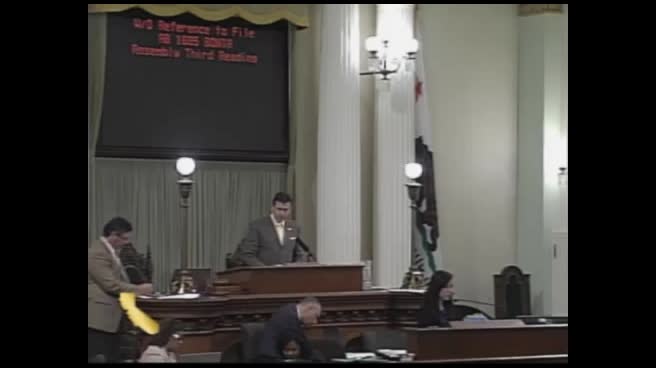 5MIN
Assembly Floor
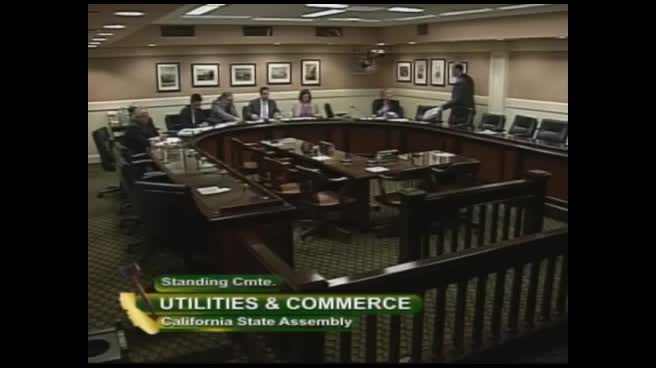 23MIN
Assembly Standing Committee on Utilities and Commerce
Bill Author

Bill Co-Author(s):