AB 2149: State Board of Equalization: counties: state agencies: collection of cash payments: medical cannabis-related businesses.
- Session Year: 2015-2016
- House: Assembly
- Latest Version Date: 2016-08-02
Existing law, the Compassionate Use Act of 1996, an initiative measure enacted by the approval of Proposition 215 at the November 5, 1996, statewide general election, exempts from specified criminal penalties the possession or cultivation of medical marijuana by patients and primary caregivers. The Medical Marijuana Cannabis Regulation and Safety Act provides for the licensure and regulation of commercial medical marijuana cannabis activity by various state entities, as specified.
This bill would authorize the State Board of Equalization or a county to collect cash payments from medical cannabis-related businesses for state agencies, including the Department of Consumer Affairs and the Employment Development Department, if that state agency has entered into an agreement with the board or county. This bill would require a county to collect only if both the board of supervisors of the county and the county tax collector or county treasurer-tax collector approves of entering into an agreement with a state agency to make those collections. The bill would require the agreement to include specified provisions, including that the board or county transmit the collected moneys to the Treasurer to be deposited in the State Treasury to the credit of the funds or accounts which the fees, fines, penalties, or other charges are otherwise required by law to be deposited, as specified.
For the collection by the board or a county of regulatory fees on the behalf of a state agency pursuant to an agreement, this bill would continuously appropriate to the board or county an amount equal to the amount necessary for its costs of collection, not to exceed 10% of the amounts collected, from the funds or accounts which those regulatory fees are to be deposited. For the collection by the board or a county of fines, penalties, taxes, or other charges on the behalf of a state agency pursuant to an agreement, the bill would require the board or county to be reimbursed for its costs of collection from the funds or accounts which those fines, penalties, taxes, or other charges are to be deposited, not to exceed 10% of the amounts collected, upon appropriation by the Legislature.
This bill would also allow a state agency that enters into an agreement with the board or a county to impose a cash collection fee in an amount reasonably necessary to recover the collection costs to be incurred by the board or county in dealing with cash payments, not to exceed 10% of any amounts collected. The bill would require the cash collection fee to be determined by the state agency and the board or county, and would require any cash collection fees to be deposited into the funds or accounts which the fine, penalty, or other charge to be collected is deposited.
Existing law, the Compassionate Use Act of 1996, an initiative measure enacted by the approval of Proposition 215 at the November 5, 1996, statewide general election, allows the use of marijuana for medical purposes. exempts from specified criminal penalties the possession or cultivation of medical marijuana by patients and primary caregivers. The Medical Marijuana Regulation and Safety Act provides for the licensure and regulation of commercial medical marijuana activity by various state entities, as specified. The Fee Collection Procedures Law, the violation of which is a crime, provides procedures for the collection of certain fees and surcharges.
This bill would authorize the State Board of Equalization or a county to collect cash payments from medical marijuana-related cannabis-related businesses for other state agencies, including the Department of Consumer Affairs and the Employment Development Department, if that state agency has entered into an agreement with the board. board or county. This bill would require a county to collect only if both the board of supervisors of the county and the county tax collector or county treasurer-tax collector approves of entering into an agreement with a state agency to make those collections. The bill would require the agreement to include specified provisions, including that the board be reimbursed for the administrative costs of the collection, as specified, from the fund for which collection was authorized, upon appropriation by the Legislature. or county transmit the collected moneys to the Treasurer to be deposited in the State Treasury to the credit of the funds or accounts which the fees, fines, penalties, or other charges are otherwise required by law to be deposited, as specified.
For the collection by the board or a county of regulatory fees on the behalf of a state agency pursuant to an agreement, this bill would continuously appropriate to the board or county an amount equal to the amount necessary for its costs of collection, not to exceed 10% of the amounts collected, from the funds or accounts which those regulatory fees are to be deposited. For the collection by the board or a county of fines, penalties, taxes, or other charges on the behalf of a state agency pursuant to an agreement, the bill would require the board or county to be reimbursed for its costs of collection from the funds or accounts which those fines, penalties, taxes, or other charges are to be deposited, not to exceed 10% of the amounts collected, upon appropriation by the Legislature.
This bill would also allow a state agency that enters into an agreement with the board or a county to impose a cash collection fee in an amount reasonably necessary to recover the collection costs to be incurred by the board or county in dealing with cash payments, not to exceed 10% of any amounts collected. The bill would require the cash collection fee to be determined by the state agency and the board or county, and would require any cash collection fees to be deposited into the funds or accounts which the fine, penalty, or other charge to be collected is deposited.
The bill would require the board to administer and collect the payments in accordance with the Fee Collection Procedures Law. By expanding the application of the Fee Collection Procedures Law, the violation of which is a crime, this bill would impose a state-mandated local program.
The California Constitution requires the state to reimburse local agencies and school districts for certain costs mandated by the state. Statutory provisions establish procedures for making that reimbursement.
This bill would provide that no reimbursement is required by this act for a specified reason.
Existing law, the Compassionate Use Act of 1996, an initiative measure enacted by the approval of Proposition 215 at the November 5, 1996, statewide general election, allows the use of marijuana for medical purposes. The Medical Marijuana Regulation and Safety Act provides for the licensure and regulation of commercial medical marijuana activity by various state entities, as specified. The Fee Collection Procedures Law, the violation of which is a crime, provides procedures for the collection of certain fees and surcharges.
This bill would authorize the State Board of Equalization to collect cash payments from medical marijuana-related businesses for other state agencies, including the Department of Consumer Affairs and the Employment Development Department, if that state agency has entered into an agreement with the board. The bill would require the agreement to include specified provisions, including that the board be reimbursed for the administrative costs of the collection, as specified, from the fund for which collection was authorized, upon appropriation by the Legislature.
The bill would require the board to administer and collect the payments in accordance with the Fee Collection Procedures Law. By expanding the application of the Fee Collection Procedures Law, the violation of which is a crime, this bill would impose a state-mandated local program.
The California Constitution requires the state to reimburse local agencies and school districts for certain costs mandated by the state. Statutory provisions establish procedures for making that reimbursement.
This bill would provide that no reimbursement is required by this act for a specified reason.
Existing law, the Compassionate Use Act of 1996, an initiative measure enacted by the approval of Proposition 215 at the November 5, 1996, statewide general election, allows the use of marijuana for medical purposes. The Medical Marijuana Regulation and Safety Act provides for the licensure and regulation of commercial medical marijuana activity by various state entities, as specified.
This bill would require the Legislative Analysts Office, in consultation with the Department of Justice, to conduct a study and provide a report to the Legislature on the most efficient and cost-effective manner for state entities to collect payments from medical marijuana-related businesses.
Existing law, the Compassionate Use Act of 1996, an initiative measure enacted by the approval of Proposition 215 at the November 5, 1996, statewide general election, allows the use of marijuana for medical purposes. The Medical Marijuana Regulation and Safety Act provides for the licensure and regulation of commercial medical marijuana activity by various state entities, as specified. The Fee Collection Procedures Law, the violation of which is a crime, provides procedures for the collection of certain fees and surcharges.
This bill would authorize the State Board of Equalization to collect cash payments from medical marijuana-related businesses for other state agencies, including the Department of Consumer Affairs and the Employment Development Department, if that state agency has entered into an agreement with the board. The bill would require the agreement to include specified provisions including that the board be reimbursed for the administrative costs of the collection, as specified, from the fund for which collection was authorized, upon appropriation by the Legislature. require the Legislative Analysts Office, in consultation with the Department of Justice, to conduct a study and provide a report to the Legislature on the most efficient and cost-effective manner for state entities to collect payments from medical marijuana-related businesses.
The bill would require the board to administer and collect the payments in accordance with the Fee Collection Procedures Law. By expanding the application of the Fee Collection Procedures Law, the violation of which is a crime, this bill would impose a state-mandated local program.
The California Constitution requires the state to reimburse local agencies and school districts for certain costs mandated by the state. Statutory provisions establish procedures for making that reimbursement.
This bill would provide that no reimbursement is required by this act for a specified reason.
Existing law, the Compassionate Use Act of 1996, an initiative measure enacted by the approval of Proposition 215 at the November 5, 1996, statewide general election, allows the use of marijuana for medical purposes. The Medical Marijuana Regulation and Safety Act provides for the licensure and regulation of commercial medical marijuana activity by various state entities, as specified. The Fee Collection Procedures Law, the violation of which is a crime, provides procedures for the collection of certain fees and surcharges.
This bill would authorize the State Board of Equalization to collect cash payments from medical marijuana-related businesses for other state agencies, including the Department of Consumer Affairs and the Employment Development Department, if that state agency has entered into an agreement with the board. The bill would require the agreement to include specified provisions including that the board be reimbursed for the administrative costs of the collection, as specified, from the fund for which collection was authorized, upon appropriation by the Legislature.
The bill would require the board to administer and collect the payments in accordance with the Fee Collection Procedures Law. By expanding the application of the Fee Collection Procedures Law, the violation of which is a crime, this bill would impose a state-mandated local program.
The California Constitution requires the state to reimburse local agencies and school districts for certain costs mandated by the state. Statutory provisions establish procedures for making that reimbursement.
This bill would provide that no reimbursement is required by this act for a specified reason.
Existing law, the California Finance Lenders Law, provides for the licensure and regulation of finance lenders and brokers by the Commissioner of Business Oversight and makes a willful violation of its provisions a crime. Existing law, until January 1, 2018, establishes the Pilot Program for Increased Access to Responsible Small Dollar Loans for the purpose of allowing greater access for responsible installment loans in principal amounts of at least $300 and less than $2,500. Existing law, on or before January 1, 2017, requires the commissioner to post a report on his or her Internet Web site containing specified information including a recommendation whether the program should be continued after January 1, 2018.
This bill would require, on or before January 1, 2018, the commissioner to also post a report that provides the number of borrowers who were students and obtained loans for specified purposes.
This part shall be known, and may be cited, as the Medical Cannabis State Payment Collection Law.
31002.All of the following definitions shall apply for purposes of this part:
(a)County means a county and a city and county.
(b)Regulatory fee means a charge as defined in paragraph (3) of subdivision (b) of Section 3 of Article XIIIA of the California Constitution.
(c)State agency means a state entity, as defined in Section 11000 of the Government Code, that administers any fee, fine, penalty, or other charge payable by a medical cannabis-related business. As used in this part, state agency includes, but is not limited to, the following:
(1)The Department of Consumer Affairs.
(2)The Department of Food and Agriculture.
(3)The State Department of Public Health.
(4)The Employment Development Department.
(5)The State Water Resources Control Board.
(6)The Franchise Tax Board.
(7)The regional water boards described in Chapter 4 (commencing with Section 13200) of Division 7 of the Water Code.
31003.(a)The board or a county may enter into an agreement with a state agency to collect cash payments for any fee, fine, penalty, or other charge payable to the state agency by a person that is a medical cannabis-related business in accordance with provisions of this part.
(b)(1)The board shall collect fees, fines, penalties, and other charges if the board enters into an agreement with a state agency to make those collections described in subdivision (a).
(2)A county shall collect fees, fines, penalties, and other charges only if both the board of supervisors of the county and the county tax collector or county treasurer-tax collector approves of entering into an agreement with a state agency to make those collections described in subdivision (a).
(c)(1)For the collection by the board or a county of regulatory fees on the behalf of a state agency pursuant to an agreement authorized by this part, the board or county shall be reimbursed for its costs of collection from the funds or accounts in which those regulatory fees are to be deposited, not to exceed 10 percent of the amounts collected. Notwithstanding Section 13340 of the Government Code, there is hereby continuously appropriated to the board or county an amount equal to the amount necessary for its costs of collection of regulatory fees on the behalf of a state agency pursuant to an agreement authorized by this part, not to exceed 10 percent of the amounts collected, from the funds or accounts in which those regulatory fees are to be deposited.
(2)For the collection by the board or a county of fines, penalties, taxes, or other charges on the behalf of a state agency pursuant to an agreement authorized by this part, the board or county shall be reimbursed for its costs of collection from the funds or accounts which those fines, penalties, taxes, or other charges are to be deposited, not to exceed 10 percent of the amounts collected, upon appropriation by the Legislature.
(d)(1)A state agency that enters into an agreement with the board or a county pursuant to the authorization of this part may impose a cash collection fee in an amount reasonably necessary to recover the collection costs to be incurred by the board or county in dealing with cash payments, which may include, but are not limited to, the costs of processing and securing the cash payments, but shall not exceed 10 percent of any amounts collected.
(2)The amount of the cash collection fee shall be determined by the state agency and the board or county.
(3)A cash collection fee shall not be imposed pursuant to this subdivision if the fine, penalty, or other charge already includes amounts reasonably necessary to recover the collection costs of cash payments.
(4)Any cash collection fees imposed shall be deposited into the funds or accounts which the fine, penalty, or other charge to be collected is deposited.
(5)This subdivision does not authorize a cash collection fee to be imposed for the collection of a tax, as defined in Section 3 of Article XIIIA of the California Constitution.
(e)An agreement between the board or a county and a state agency shall include all of the following:
(1)A provision that the board or county be reimbursed for the administrative costs of the collection from the funds or accounts which the fees, fines, penalties, taxes, or other charges are otherwise required by law to be deposited, and shall specify whether that reimbursement is continuously appropriated or made upon appropriation by the Legislature, as described in subdivision (c).
(2)A provision that the board or county transmit the collected moneys to the Treasurer to be deposited in the State Treasury to the credit of the funds or accounts which the fees, fines, penalties, taxes, or other charges are otherwise required by law to be deposited.
(3)A provision that describes the administrative costs the board or county will incur in carrying out the collection, which costs shall not exceed 10 percent of the moneys collected.
(4)If the state agency decides to impose a cash collection fee pursuant to subdivision (d), the amount of the cash collection fee and how that amount was determined by the state agency and the board or county.
(5)Any other provisions the board or county and state agency determines is necessary to properly implement the collection of the fees, fines, penalties, taxes, or other charges.
This part shall be known, and may be cited, as the Medical Marijuana Cannabis State Payment Collection Law.
31002.(a)For purposes of this part, the references in the Fee Collection Procedures Law to fee shall include any fee, fine, penalty, or other charge required to be paid by a person that is a medical marijuana-related business, and references to feepayer shall include a person required to pay those fees.
(b)State agency, as used in this part, includes, but is not limited to, the following:
(1)The Department of Consumer Affairs.
(2)The Department of Food and Agriculture.
(3)The State Department of Public Health.
(4)The Employment Development Department.
(5)The State Water Resources Control Board.
(6)The Franchise Tax Board.
31002.All of the following definitions shall apply for purposes of this part:
(a)County means a county and a city and county.
(b)Regulatory fee means a charge as defined in paragraph (3) of subdivision (b) of Section 3 of Article XIIIA of the California Constitution.
(c)State agency means a state entity, as defined in Section 11000 of the Government Code, that administers any fee, fine, penalty, or other charge payable by a medical cannabis-related business. As used in this part, state agency includes, but is not limited to, the following:
(1)The Department of Consumer Affairs.
(2)The Department of Food and Agriculture.
(3)The State Department of Public Health.
(4)The Employment Development Department.
(5)The State Water Resources Control Board.
(6)The Franchise Tax Board.
(7)The regional water boards described in Chapter 4 (commencing with Section 13200) of Division 7 of the Water Code.
31003.(a)The board or a county may enter into an agreement with a state agency to collect cash payments for any fee, fine, penalty, or other charge payable to the state agency by a person that is a medical marijuana-related cannabis-related business in accordance with provisions of this part.
(b)(1)The board shall collect fees, fines, penalties, and other charges if the board enters into an agreement with a state agency to make those collections. The agreement shall include the following: collections described in subdivision (a).
(2)A county shall collect fees, fines, penalties, and other charges only if both the board of supervisors of the county and the county tax collector or county treasurer-tax collector approves of entering into an agreement with a state agency to make those collections described in subdivision (a).
(c)(1)For the collection by the board or a county of regulatory fees on the behalf of a state agency pursuant to an agreement authorized by this part, the board or county shall be reimbursed for its costs of collection from the funds or accounts which those regulatory fees are to be deposited, not to exceed 10 percent of the amounts collected. Notwithstanding Section 13340 of the Government Code, there is hereby continuously appropriated to the board or county an amount equal to the amount necessary for its costs of collection of regulatory fees on the behalf of a state agency pursuant to an agreement authorized by this part, not to exceed 10 percent of the amounts collected, from the funds or accounts which those regulatory fees are to be deposited.
(2)For the collection by the board or a county of fines, penalties, taxes, or other charges on the behalf of a state agency pursuant to an agreement authorized by this part, the board or county shall be reimbursed for its costs of collection from the funds or accounts which those fines, penalties, taxes, or other charges are to be deposited, not to exceed 10 percent of the amounts collected, upon appropriation by the Legislature.
(d)(1)A state agency that enters into an agreement with the board or a county pursuant to the authorization of this part may impose a cash collection fee in an amount reasonably necessary to recover the collection costs to be incurred by the board or county in dealing with cash payments, which may include, but are not limited to, the costs of processing and securing the cash payments, but shall not exceed 10 percent of any amounts collected.
(2)The amount of the cash collection fee shall be determined by the state agency and the board or county.
(3)A cash collection fee shall not be imposed pursuant to this subdivision if the fine, penalty, or other charge already includes amounts reasonably necessary to recover the collection costs of cash payments.
(4)Any cash collection fees imposed shall be deposited into the funds or accounts which the fine, penalty, or other charge to be collected is deposited.
(5)This subdivision does not authorize a cash collection fee to be imposed for the collection of a tax, as defined in Section 3 of Article XIIIA of the California Constitution.
(e)An agreement between the board or a county and a state agency shall include all of the following:
(1)A provision that the board or county be reimbursed for the administrative costs of the collection from the fund for which cash payments are collected, upon appropriation of the Legislature. funds or accounts which the fees, fines, penalties, taxes, or other charges are otherwise required by law to be deposited, and shall specify whether that reimbursement is continuously appropriated or made upon appropriation by the Legislature, as described in subdivision (c).
(2)A provision that the board or county transmit the collected moneys to the Treasurer to be deposited in the State Treasury to the credit of the fund for which collection was authorized. funds or accounts which the fees, fines, penalties, taxes, or other charges are otherwise required by law to be deposited.
(3)A provision that describes the administrative costs the board or county will incur in carrying out the collection and administration, collection, which costs shall not exceed 10 percent of the moneys collected.
(4)A savings clause that provides the board the authority to collect and to make refunds after the sunset date if a sunset date exists.
(5)A provision that sets forth the due date for payment of the fee, fine, penalty, or other charge and return by the feepayer.
(c)The board shall administer and collect the payments authorized by an agreement made pursuant to this part pursuant to the Fee Collection Procedures Law (Part 30 (commencing with Section 55001)), except that Article 1.1 (commencing with Section 55050) of Chapter 3 of that part shall not apply.
(4)If the state agency decides to impose a cash collection fee pursuant to subdivision (d), the amount of the cash collection fee and how that amount was determined by the state agency and the board or county.
(5)Any other provisions the board or county and state agency determines is necessary to properly implement the collection of the fees, fines, penalties, taxes, or other charges.
SEC. 2.No reimbursement is required by this act pursuant to Section 6 of Article XIIIB of the California Constitution because the only costs that may be incurred by a local agency or school district will be incurred because this act creates a new crime or infraction, eliminates a crime or infraction, or changes the penalty for a crime or infraction, within the meaning of Section 17556 of the Government Code, or changes the definition of a crime within the meaning of Section 6 of Article XIIIB of the California Constitution.
This part shall be known, and may be cited, as the Medical Marijuana State Payment Collection Law.
31002.(a)For purposes of this part, the references in the Fee Collection Procedures Law to fee shall include any fee, fine, penalty, or other charge required to be paid by a person that is a medical marijuana-related business, and references to feepayer shall include a person required to pay those fees.
(b)State agency, as used in this part, includes, but is not limited to, the following:
(1)The Department of Consumer Affairs.
(2)The Department of Food and Agriculture.
(3)The State Department of Public Health.
(4)The Employment Development Department.
(5)The State Water Resources Control Board.
(6)The Franchise Tax Board.
31003.(a)The board may enter into an agreement with a state agency to collect cash payments for any fee, fine, penalty, or other charge payable to the state agency by a person that is a medical marijuana-related business in accordance with provisions of this part.
(b)The board shall collect fees, fines, penalties, and other charges if the board enters into an agreement with a state agency to make those collections. The agreement shall include the following:
(1)A provision that the board be reimbursed for the administrative costs of the collection from the fund for which cash payments are collected, upon appropriation of the Legislature.
(2)A provision that the board transmit the collected moneys to the Treasurer to be deposited in the State Treasury to the credit of the fund for which collection was authorized.
(3)A provision that describes the administrative costs the board will incur in carrying out the collection and administration, which costs shall not exceed 10 percent of the moneys collected.
(4)A savings clause that provides the board the authority to collect and to make refunds after the sunset date if a sunset date exists.
(5)A provision that sets forth the due date for payment of the fee, fine, penalty, or other charge and return by the feepayer.
(c)The board shall administer and collect the payments authorized by an agreement made pursuant to this part pursuant to the Fee Collection Procedures Law (Part 30 (commencing with Section 55001)), except that Article 1.1 (commencing with Section 55050) of Chapter 3 of that part shall not apply.
SEC. 2.No reimbursement is required by this act pursuant to Section 6 of Article XIIIB of the California Constitution because the only costs that may be incurred by a local agency or school district will be incurred because this act creates a new crime or infraction, eliminates a crime or infraction, or changes the penalty for a crime or infraction, within the meaning of Section 17556 of the Government Code, or changes the definition of a crime within the meaning of Section 6 of Article XIIIB of the California Constitution.
SECTION 1.Section 19318.1 is added to the Business and Professions Code, to read:19318.1.On or before January 1, 2018, the Legislative Analysts Office, in consultation with the Department of Justice, shall conduct a study and submit a report to the Legislature on the most efficient and cost-effective manner for state entities to collect payments from medical marijuana-related businesses.
On or before January 1, 2018, the Legislative Analysts Office, in consultation with the Department of Justice, shall conduct a study and submit a report to the Legislature on the most efficient and cost-effective manner for state entities to collect payments from medical marijuana-related businesses.
SECTION 1.Part 13.5 (commencing with Section 31001) is added to the Revenue and Taxation Code, to read:13.5.Medical Marijuana State Payment Collection Law31001.This part shall be known, and may be cited, as the Medical Marijuana State Payment Collection Law.
31002.(a)For purposes of this part, the references in the Fee Collection Procedures Law to fee shall include any fee, fine, penalty, or other charge required to be paid by a person that is a medical marijuana-related business, and references to feepayer shall include a person required to pay those fees.
(b)State agency, as used in this part, includes, but is not limited to, the following:
(1)Department of Consumer Affairs.
(2)Department of Food and Agriculture.
(3)Department of Public Health.
(4)Employment Development Department.
(5)State Water Resources Control Board.
(6)Franchise Tax Board.
31003.(a)The board may enter into an agreement with a state agency to collect cash payments for any fee, fine, penalty, or other charge payable to the state agency by a person that is a medical marijuana-related business in accordance with provisions of this part.
(b)The board shall collect fees, fines, penalties, and other charges if the board enters into an agreement with a state agency to make those collections. The agreement shall include the following:
(1)A provision that the board be reimbursed for the administrative costs of the collection from the fund for which cash payments are collected, upon appropriation of the Legislature.
(2)A provision that the board transmit the collected moneys to the Treasurer to be deposited in the State Treasury to the credit of the fund for which collection was authorized.
(3)A provision that describes the administrative costs the board will incur in carrying out the collection and administration, which costs shall not exceed ten percent of the moneys collected.
(4)A savings clause that provides the board the authority to collect and to make refunds after the sunset date if a sunset date exists.
(5)A provision that sets forth the due date for payment of the fee, fine, penalty, or other charge and return by the feepayer.
(c)The board shall administer and collect the payments authorized by an agreement made pursuant to this part pursuant to the Fee Collection Procedures Law (Part 30 (commencing with Section 55001)), except that Article 1.1 (commencing with Section 55050) of Chapter 3 of that part shall not apply.
SEC. 2.No reimbursement is required by this act pursuant to Section 6 of Article XIIIB of the California Constitution because the only costs that may be incurred by a local agency or school district will be incurred because this act creates a new crime or infraction, eliminates a crime or infraction, or changes the penalty for a crime or infraction, within the meaning of Section 17556 of the Government Code, or changes the definition of a crime within the meaning of Section 6 of Article XIIIB of the California Constitution.
This part shall be known, and may be cited, as the Medical Marijuana State Payment Collection Law.
31002.(a)For purposes of this part, the references in the Fee Collection Procedures Law to fee shall include any fee, fine, penalty, or other charge required to be paid by a person that is a medical marijuana-related business, and references to feepayer shall include a person required to pay those fees.
(b)State agency, as used in this part, includes, but is not limited to, the following:
(1)Department of Consumer Affairs.
(2)Department of Food and Agriculture.
(3)Department of Public Health.
(4)Employment Development Department.
(5)State Water Resources Control Board.
(6)Franchise Tax Board.
31003.(a)The board may enter into an agreement with a state agency to collect cash payments for any fee, fine, penalty, or other charge payable to the state agency by a person that is a medical marijuana-related business in accordance with provisions of this part.
(b)The board shall collect fees, fines, penalties, and other charges if the board enters into an agreement with a state agency to make those collections. The agreement shall include the following:
(1)A provision that the board be reimbursed for the administrative costs of the collection from the fund for which cash payments are collected, upon appropriation of the Legislature.
(2)A provision that the board transmit the collected moneys to the Treasurer to be deposited in the State Treasury to the credit of the fund for which collection was authorized.
(3)A provision that describes the administrative costs the board will incur in carrying out the collection and administration, which costs shall not exceed ten percent of the moneys collected.
(4)A savings clause that provides the board the authority to collect and to make refunds after the sunset date if a sunset date exists.
(5)A provision that sets forth the due date for payment of the fee, fine, penalty, or other charge and return by the feepayer.
(c)The board shall administer and collect the payments authorized by an agreement made pursuant to this part pursuant to the Fee Collection Procedures Law (Part 30 (commencing with Section 55001)), except that Article 1.1 (commencing with Section 55050) of Chapter 3 of that part shall not apply.
SEC. 2.No reimbursement is required by this act pursuant to Section 6 of Article XIIIB of the California Constitution because the only costs that may be incurred by a local agency or school district will be incurred because this act creates a new crime or infraction, eliminates a crime or infraction, or changes the penalty for a crime or infraction, within the meaning of Section 17556 of the Government Code, or changes the definition of a crime within the meaning of Section 6 of Article XIIIB of the California Constitution.
SECTION 1.Section 22380 of the Financial Code is amended to read:22380.(a)(1)On or before July 1, 2015, and again, on or before January 1, 2017, the commissioner shall post a report on his or her Internet Web site summarizing utilization of the Pilot Program for Increased Access to Responsible Small Dollar Loans. The report required to be submitted on or before July 1, 2015, shall additionally include the information required by former Section 22361, summarizing utilization of the Pilot Program for Affordable Credit-Building Opportunities, which was created by Chapter 640 of the Statutes of 2010.
(2)On or before January 1, 2018, the commissioner shall post a report on the same Internet Web site that provides the number of borrowers who were students and obtained a loan for school textbooks, materials, and electronics, along with the time period to which the report corresponds.
(b)The information disclosed to the commissioner for the commissioners use in preparing the report described in this section is exempted from any requirement of public disclosure by paragraph (2) of subdivision (d) of Section 6254 of the Government Code.
(c)If there is more than one licensee approved to participate in the program under this article, the report required pursuant to subdivision (a) shall state information in aggregate so as not to identify data by specific licensee.
(d)The report required pursuant to paragraph (1) of subdivision (a) shall specify the time period to which the report corresponds, and shall include, but not be limited to, the following for that time period:
(1)The number of entities that applied to participate in the program.
(2)The number of entities accepted to participate in the program.
(3)The reason or reasons for rejecting applications for participation, if applicable. This information shall be provided in a manner that does not identify the entity or entities rejected.
(4)The number of program loan applications received by lenders participating in the program, the number of loans made pursuant to the program, the total amount loaned, the distribution of loan lengths upon origination, and the distribution of interest rates and principal amounts upon origination among those loans.
(5)The number of borrowers who obtained more than one program loan and the distribution of the number of loans per borrower.
(6)Of the number of borrowers who obtained more than one program loan, the percentage of those borrowers whose credit scores increased between successive loans, based on information from at least one major credit bureau, and the average size of the increase.
(7)The income distribution of borrowers upon loan origination, including the number of borrowers who obtained at least one program loan and who resided in a low-to-moderate-income census tract at the time of their loan application.
(8)The number of borrowers who obtained loans for the following purposes, based on borrower responses at the time of their loan applications indicating the primary purpose for which the loan was obtained:
(A)Medical.
(B)Other emergency.
(C)Vehicle repair.
(D)Vehicle purchase.
(E)To pay bills.
(F)To consolidate debt.
(G)To build or repair credit history.
(H)To finance a purchase of goods or services other than a vehicle.
(I)For other than personal, family, or household purposes.
(J)Other.
(9)The number of borrowers who self-report that they had a bank account at the time of their loan application, the number of borrowers who self-report that they had a bank account and used check-cashing services, and the number of borrowers who self-report that they did not have a bank account at the time of their loan application.
(10)With respect to refinance loans, the report shall specifically include the following information:
(A)The number and percentage of borrowers who applied for a refinance loan.
(B)Of those borrowers who applied for a refinance loan, the number and percentage of borrowers who obtained a refinance loan.
(C)Of those borrowers who obtained a refinance loan:
(i)The percentage of borrowers who refinanced once.
(ii)The percentage of borrowers who refinanced twice.
(iii)The percentage of borrowers who refinanced more than twice.
(D)Of those borrowers who obtained a refinance loan, the average percentage of principal paid down before obtaining a refinance loan.
(E)Of those borrowers who obtained a refinance loan, the average amount of additional principal extended.
(F)Of those borrowers who obtained a refinance loan, the average number of late payments made on the loan that was refinanced.
(11)The number and type of finders used by licensees and the relative performance of loans consummated by finders compared to the performance of loans consummated without a finder.
(12)The number and percentage of borrowers who obtained one or more program loans on which late fees were assessed, the total amount of late fees assessed, and the average late fee assessed by dollar amount and as a percentage of the principal amount loaned.
(13)(A)The performance of loans under this article, as reflected by all of the following:
(i)The number and percentage of pilot program borrowers who experienced at least one delinquency lasting between seven and 29 days, and the distribution of principal loan amounts corresponding to those delinquencies.
(ii)The number and percentage of pilot program borrowers who experienced at least one delinquency lasting between 30 and 59 days, and the distribution of principal loan amounts corresponding to those delinquencies.
(iii)The number and percentage of pilot program borrowers who experienced at least one delinquency lasting 60 days or more, and the distribution of principal loan amounts corresponding to those delinquencies.
(iv)The number and percentage of pilot program borrowers who experienced at least one delinquency of greater than seven days and who did not subsequently bring their loan current.
(v)Among loans that were ever delinquent for seven days or more, the average number of times borrowers experienced a delinquency of seven days or more.
(B)To the extent data are readily available to the commissioner, the commissioner shall include in his or her report comparable delinquency data for unsecured loans made by persons licensed under Chapter 2 (commencing with Section 22365) of Division 9 in principal amounts between two thousand five hundred dollars ($2,500) and four thousand nine hundred ninety-nine dollars ($4,999), and in principal amounts between five thousand dollars ($5,000) and nine thousand nine hundred ninety-nine dollars ($9,999), and for unsecured extensions of credit made by state-chartered banks and credit unions under the commissioners jurisdiction, in principal amounts between two thousand five hundred dollars ($2,500) and four thousand nine hundred ninety-nine dollars ($4,999), and in principal amounts between five thousand dollars ($5,000) and nine thousand nine hundred ninety-nine dollars ($9,999).
(14)The number and types of violations of this article by finders, which were documented by the commissioner.
(15)The number and types of violations of this article by licensees, which were documented by the commissioner.
(16)The number of times that the commissioner disqualified a finder from performing services, barred a finder from performing services at one or more specific locations of the finder, terminated a written agreement between a finder and a licensee, or imposed an administrative penalty.
(17)The number of complaints received by the commissioner about a licensee or a finder, and the nature of those complaints.
(18)Recommendations for improving the program.
(19)Recommendations regarding whether the program should be continued after January 1, 2018.
(e)The commissioner shall conduct a random sample survey of borrowers who have participated in the program to obtain information regarding the borrowers experience and licensees compliance with this article. The results of this survey shall be included in the report required by this section.
(a)(1)On or before July 1, 2015, and again, on or before January 1, 2017, the commissioner shall post a report on his or her Internet Web site summarizing utilization of the Pilot Program for Increased Access to Responsible Small Dollar Loans. The report required to be submitted on or before July 1, 2015, shall additionally include the information required by former Section 22361, summarizing utilization of the Pilot Program for Affordable Credit-Building Opportunities, which was created by Chapter 640 of the Statutes of 2010.
(2)On or before January 1, 2018, the commissioner shall post a report on the same Internet Web site that provides the number of borrowers who were students and obtained a loan for school textbooks, materials, and electronics, along with the time period to which the report corresponds.
(b)The information disclosed to the commissioner for the commissioners use in preparing the report described in this section is exempted from any requirement of public disclosure by paragraph (2) of subdivision (d) of Section 6254 of the Government Code.
(c)If there is more than one licensee approved to participate in the program under this article, the report required pursuant to subdivision (a) shall state information in aggregate so as not to identify data by specific licensee.
(d)The report required pursuant to this section paragraph (1) of subdivision (a) shall specify the time period to which the report corresponds, and shall include, but not be limited to, the following for that time period:
(1)The number of entities that applied to participate in the program.
(2)The number of entities accepted to participate in the program.
(3)The reason or reasons for rejecting applications for participation, if applicable. This information shall be provided in a manner that does not identify the entity or entities rejected.
(4)The number of program loan applications received by lenders participating in the program, the number of loans made pursuant to the program, the total amount loaned, the distribution of loan lengths upon origination, and the distribution of interest rates and principal amounts upon origination among those loans.
(5)The number of borrowers who obtained more than one program loan and the distribution of the number of loans per borrower.
(6)Of the number of borrowers who obtained more than one program loan, the percentage of those borrowers whose credit scores increased between successive loans, based on information from at least one major credit bureau, and the average size of the increase.
(7)The income distribution of borrowers upon loan origination, including the number of borrowers who obtained at least one program loan and who resided in a low-to-moderate-income census tract at the time of their loan application.
(8)The number of borrowers who obtained loans for the following purposes, based on borrower responses at the time of their loan applications indicating the primary purpose for which the loan was obtained:
(A)Medical.
(B)Other emergency.
(C)Vehicle repair.
(D)Vehicle purchase.
(E)To pay bills.
(F)To consolidate debt.
(G)To build or repair credit history.
(H)To finance a purchase of goods or services other than a vehicle.
(I)For other than personal, family, or household purposes.
(J)Other.
(9)The number of borrowers who self-report that they had a bank account at the time of their loan application, the number of borrowers who self-report that they had a bank account and used check-cashing services, and the number of borrowers who self-report that they did not have a bank account at the time of their loan application.
(10)With respect to refinance loans, the report shall specifically include the following information:
(A)The number and percentage of borrowers who applied for a refinance loan.
(B)Of those borrowers who applied for a refinance loan, the number and percentage of borrowers who obtained a refinance loan.
(C)Of those borrowers who obtained a refinance loan:
(i)The percentage of borrowers who refinanced once.
(ii)The percentage of borrowers who refinanced twice.
(iii)The percentage of borrowers who refinanced more than twice.
(D)Of those borrowers who obtained a refinance loan, the average percentage of principal paid down before obtaining a refinance loan.
(E)Of those borrowers who obtained a refinance loan, the average amount of additional principal extended.
(F)Of those borrowers who obtained a refinance loan, the average number of late payments made on the loan that was refinanced.
(11)The number and type of finders used by licensees and the relative performance of loans consummated by finders compared to the performance of loans consummated without a finder.
(12)The number and percentage of borrowers who obtained one or more program loans on which late fees were assessed, the total amount of late fees assessed, and the average late fee assessed by dollar amount and as a percentage of the principal amount loaned.
(13)(A)The performance of loans under this article, as reflected by all of the following:
(i)The number and percentage of pilot program borrowers who experienced at least one delinquency lasting between 7 seven and 29 days, and the distribution of principal loan amounts corresponding to those delinquencies.
(ii)The number and percentage of pilot program borrowers who experienced at least one delinquency lasting between 30 and 59 days, and the distribution of principal loan amounts corresponding to those delinquencies.
(iii)The number and percentage of pilot program borrowers who experienced at least one delinquency lasting 60 days or more, and the distribution of principal loan amounts corresponding to those delinquencies.
(iv)The number and percentage of pilot program borrowers who experienced at least one delinquency of greater than 7 seven days and who did not subsequently bring their loan current.
(v)Among loans that were ever delinquent for 7 seven days or more, the average number of times borrowers experienced a delinquency of 7 seven days or more.
(B)To the extent data are readily available to the commissioner, the commissioner shall include in his or her report comparable delinquency data for unsecured loans made by persons licensed under Chapter 2 (commencing with Section 22365) of Division 9 in principal amounts between two thousand five hundred dollars ($2,500) and four thousand nine hundred ninety-nine dollars ($4,999), and in principal amounts between five thousand dollars ($5,000) and nine thousand nine hundred ninety-nine dollars ($9,999), and for unsecured extensions of credit made by state-chartered banks and credit unions under the commissioners jurisdiction, in principal amounts between two thousand five hundred dollars ($2,500) and four thousand nine hundred ninety-nine dollars ($4,999), and in principal amounts between five thousand dollars ($5,000) and nine thousand nine hundred ninety-nine dollars ($9,999).
(14)The number and types of violations of this article by finders, which were documented by the commissioner.
(15)The number and types of violations of this article by licensees, which were documented by the commissioner.
(16)The number of times that the commissioner disqualified a finder from performing services, barred a finder from performing services at one or more specific locations of the finder, terminated a written agreement between a finder and a licensee, or imposed an administrative penalty.
(17)The number of complaints received by the commissioner about a licensee or a finder, and the nature of those complaints.
(18)Recommendations for improving the program.
(19)Recommendations regarding whether the program should be continued after January 1, 2018.
(e)The commissioner shall conduct a random sample survey of borrowers who have participated in the program to obtain information regarding the borrowers experience and licensees compliance with this article. The results of this survey shall be included in the report required by this section.
|
Date
|
Status
|
|---|---|
| May 11, 2016 | In committee: Set, first hearing. Referred to APPR. suspense file. |
| Aug 11, 2016 | In committee: Held under submission. |
| Aug 8, 2016 | Referred to APPR. suspense file. |
| Aug 2, 2016 | Read second time and amended. Re-referred to Com. on APPR. |
| Aug 1, 2016 | From committee: Amend, and do pass as amended and re-refer to Com. on APPR. (Ayes 5. Noes 1.) (June 29). |
| Jun 22, 2016 | From committee chair, with author's amendments: Amend, and re-refer to committee. Read second time, amended, and re-referred to Com. on GOV. & F. |
| Jun 9, 2016 | Referred to Com. on GOV. & F. |
| Jun 2, 2016 | In Senate. Read first time. To Com. on RLS. for assignment. |
| Jun 1, 2016 | Read third time. Passed. Ordered to the Senate. (Ayes 57. Noes 22.) |
| Jun 1, 2016 | Read third time. Passed. Ordered to the Senate. (Ayes 57. Noes 22. Page 5140.) |
| Jun 1, 2016 | Read third time. Passed. Ordered to the Senate. |
| May 31, 2016 | Read second time. Ordered to third reading. |
| May 27, 2016 | From committee: Do pass. (Ayes 14. Noes 4.) (May 27). |
| Feb 17, 2016 | Read first time. To print. |
| May 5, 2016 | Re-referred to Com. on APPR. |
| May 4, 2016 | From committee chair, with author's amendments: Amend, and re-refer to Com. on APPR. Read second time and amended. |
| Apr 27, 2016 | Re-referred to Com. on APPR. |
| Apr 26, 2016 | Read second time and amended. |
| Apr 25, 2016 | From committee: Amend, and do pass as amended and re-refer to Com. on APPR. (Ayes 9. Noes 0.) (April 18). |
| Apr 18, 2016 | In committee: Set, first hearing. Referred to REV. & TAX. suspense file. |
| Mar 31, 2016 | From committee: Be re-referred to Com. on REV. & TAX. Re-referred. (Ayes 8. Noes 0.) (March 31). Re-referred to Com. on REV. & TAX. |
| Mar 28, 2016 | Re-referred to Com. on RLS. pursuant to Assembly Rule 96. |
| Mar 28, 2016 | Re-referred to Com. on B. & F. |
| Mar 17, 2016 | From committee chair, with author's amendments: Amend, and re-refer to Com. on B. & F. Read second time and amended. |
| Feb 29, 2016 | Referred to Com. on B. & F. |
| Feb 18, 2016 | From printer. May be heard in committee March 19. |
|
Date
|
Description
|
Location
|
Votes
|
|
|---|---|---|---|---|
| Aug 8, 2016 | Placed on suspense file | Senate Standing Committee on Appropriations |
Passed |
|
| Jun 29, 2016 | Do pass as amended, but first amend, and re-refer to the Committee on [Appropriations] | Senate Standing Committee on Governance and Finance |
Passed |
|
| Jun 1, 2016 | AB 2149 BONILLA Assembly Third Reading | Assembly Floor |
Passed |
|
| May 27, 2016 | Do pass. | Assembly Standing Committee on Appropriations |
Passed |
|
| Apr 18, 2016 | Do pass as amended and be re-referred to the Committee on [Appropriations] | Assembly Standing Committee on Revenue and Taxation |
Passed |
|
| Mar 31, 2016 | Be re-referred to the Committee on [Revenue and Taxation] | Assembly Standing Committee on Rules |
Passed |
This list shows positions taken on this bill by organizations on the date displayed, which is linked to the original source.
Positions by individuals are not included.
|
Organization
|
Position
|
Date
|
|---|---|---|
| Americans for Safe Access | ** Support | Jun 1, 2016 |
| California Cannabis Industry Association | * Support | Jun 29, 2016 |
| California Growers Association | ** Support | Jun 1, 2016 |
| California NORML | ** Support | Jun 1, 2016 |
| Consortium Management Group | * Support | Jun 29, 2016 |
| Diane L. Harkey, Member, State Board of Equalization | ** Against | Jun 1, 2016 |
| Fiona Ma, Chairwoman, State Board of Equalization | ** Support | Jun 1, 2016 |
| Rural County Representatives of California | ** Support | Jun 1, 2016 |
SENATE COMMITTEE ON
Senator Ricardo Lara, Chair
2015 - 2016 Regular Session
AB 2149 (Bonilla) - State Board of Equalization: counties: state agencies: collection of cash payments: medical cannabis-related businesses
Version: | Policy Vote: |
Urgency: | Mandate: |
Hearing Date: | Consultant: |
This bill meets the criteria for referral to the Suspense File.
Bill Summary:
AB 2149 would authorize the Board of Equalization (BOE) and counties to collect cash payments from medical cannabis-related businesses for state agencies.
Fiscal Impact: BOE would incur costs, minimally in the high hundreds of thousands of dollars, to expand cash collection infrastructure and operations across district offices to enter into agreement with a state agency (special fund). This bill would allow BOE to be reimbursed for up to 10 percent of the funds. Most cannabis-related fees have not yet been established; therefore, it is unclear whether this cap would cover BOE costs.
Additionally, the bill would result in unknown, ongoing administrative cost savings (special fund) to state agencies that otherwise would collect fee payments themselves absent the bill. BOE, by being the single cash collection entity, could specialize and develop procedures that apply universally to collecting cash for different agencies. In contrast, each individual agency that imposes a fee on medical marijuana-related businesses would incur substantial costs to develop the infrastructure and security needed to collect cash payments.
Background:
Prior to 1996, both federal and state law prohibited the possession, possession with intent to sell, cultivation, sale, transportation, importation, or furnishing of marijuana. However, in 1996, California voters approved Proposition 215, known as the Compassionate use Act of 1996 (CUA). Under CUA, qualified patients with specified illnesses, and their primary caregivers, cannot be prosecuted for possessing or cultivating medical marijuana upon the written or oral recommendation or approval of an attending physician. Thus, CUA allowed qualified patients and primary caregivers to obtain and use medical marijuana.
The Legislature clarified CUA in 2003 by enacting SB 420 (Vasconcellos, 2003). SB 420 exempted qualified patients and caregivers from prosecution for using or from collectively or cooperatively cultivating medical marijuana, and established a medical marijuana card program for patients to use on a voluntary basis. SB 420 provides a safe harbor for qualified patients as to the amount of marijuana they may possess and the number of plants they may maintain. It also protects patients with valid identification cards from both arrest and criminal liability for possession, transportation, delivery, or cultivation of marijuana. Thus, California's estimated one billion dollar medical marijuana industry exists amid a conflict between federal and state law, and within state law itself. The industry remained largely unregulated at the same level until 2015.
Medical Marijuana Regulation and Safety Act. In 2015, the Legislature enacted the Medical Marijuana Regulation and Safety Act (MMRSA), a package of legislation that comprehensively regulates many aspects of medical marijuana including cultivation, manufacturing, transportation, distribution, sale, and product safety. The MMRSA comprises three bills-SB 643 (McGuire, 2015), AB 243 (Wood, 2015), and AB 266 (Bonta, 2015). Among other provisions, MMRSA establishes categories of licenses for various medical marijuana activities, such as cultivation, manufacturing, distribution, transportation, and sale. The MMRSA requires each licensing authority to establish a scale of application, licensing, and renewal fees, based upon MMRSA enforcement costs. These fees have not yet been set.
State law imposes a sales and use tax on retailers for the privilege of selling tangible personal property, absent a specific exemption. The tax is based upon the retailer's gross receipts from sales in California. Generally, medicine is exempt from the sales and use tax, but medical marijuana does not qualify for the exemption. To be exempt, medication must be (1) prescribed by an authorized person and dispensed on a prescription filled by a pharmacist, (2) furnished by a licensed physician to his or her own patient, or (3) furnished by a health facility for treatment pursuant to a licensed physician’s order, or sold to a licensed physician. Consequently, the sale of medical marijuana is subject to both the state and local sales and use tax.
Proposed Law:
This bill would authorize BOE and counties to collect cash payments from medical cannabis-related businesses for state agencies. Specifically, the bill would do the following:
- Enact the Medical Cannabis State Payment Collection Law ("Collection Law").
- Authorize BOE and counties to enter into an agreement with specified state agencies to collect cash payments for any fee, fine, penalty, or other charge payable to the state agency by a person that is a medical marijuana-related business.
- Specify that counties shall collect fees, fines, penalties, and other charges only if both the board of supervisors of the county, and the county tax collector or county treasurer-tax collector approves of entering into an agreement with a state agency to make those collections.
- Provide that a state agency that enters into an agreement with BOE or a county may impose a cash collection fee in an amount reasonably necessary to recover the collection costs not to exceed 10 percent of any amounts collected. The amount of the cash collection fee shall be determined by the state agency and BOE or county, and a cash collection fee shall not be imposed if the fine, penalty, or other charge already includes amounts reasonably necessary to recover the collection costs of cash payments.
- State that any cash collection fees imposed shall be deposited into the funds or accounts which the fine, penalty, or other charge to be collected is deposited.
- Prohibit a cash collection fee to be imposed for the collection of a tax.
- Require an agreement with a state agency to collect cash payments for any fee, fine, penalty, or other charge payable to the state agency to include the following:
- A provision that BOE or the county be reimbursed for the administrative costs of the collection from the fund for which cash payments are collected.
- A provision that BOE or the county transmit the collected moneys to the Treasurer to be deposited in the State Treasury to the credit of the funds or accounts which the fees, fines, penalties, taxes, or other charges are otherwise required by law to be deposited.
- A provision that describes the administrative costs BOE or the county will incur in carrying out the collection, limited to no more than 10 percent of the funds collected.
Related Legislation:
- AB 821 (Gipson) would authorize BOE, until January 1, 2018, to allow medical marijuana dispensaries to remit tax liability due in a method other than an electronic transfer. The bill is currently pending on the Senate Floor.
Staff Comments:
Medical marijuana-related businesses in California generally have difficulty obtaining banking services due to federal drug policy. Nevertheless, these businesses must remit sales taxes, income taxes, applicable government fines, and soon-to-be-determined licensing fees.
In 2014, all of BOE’s 22 field offices stopped accepting cash from taxpayers attempting to pay their sales or use tax liabilities. This “No Cash Policy” allows BOE to reduce costs and ensure safety to its employees. However, BOE allows an exception when taxpayers can document that they are unable to obtain a bank account or that paying in cash is necessary to avoid significant hardship. The exception is most frequently applied to medical marijuana dispensaries. Consequently, BOE field offices receive hundreds of thousands of dollars in sales and use tax payments from medical marijuana-related businesses. Accepting such large cash payments creates a safety concern for the both the public and BOE’s own staff. Allowing the BOE to contract with state agencies to collect cash payments from medical marijuana-related businesses would magnify these risks.
Additionally, this bill would further BOE’s administrative challenges related to accepting cash payments. BOE’s field offices already are generally unequipped to handle large sums of cash for sales and use tax payments. Collecting medical marijuana cash payments for other state agencies, as proposed by this bill, would require additional modifications and upgrades to BOE district office security systems and cash storage, as well as the BOE’s computer system and cash payment procedures.
-- END --
SENATE COMMITTEE ON GOVERNANCE AND FINANCE
Senator Robert M. Hertzberg, Chair
2015 - 2016 Regular
Bill No: | AB 2149 | Hearing Date: | 6/29/16 |
Author: | Bonilla | Tax Levy: | No |
Version: | 6/22/16 | Fiscal: | Yes |
Consultant: | Bouaziz | ||
State Board of Equalization: counties: state agencies: collection of cash payments: medical cannabis-related businesses
Authorizes the Board of Equalization and counties to collect cash payments from medical cannabis-related businesses for state agencies.
Background
Prior to 1996, both federal and state law prohibited the possession, possession with intent to sell, cultivation, sale, transportation, importation, or furnishing of marijuana. However, in 1996, California voters approved Proposition 215, known as the Compassionate use Act of 1996 (CUA). Under CUA, qualified patients with specified illnesses, and their primary caregivers, cannot be prosecuted for possessing or cultivating medical marijuana upon the written or oral recommendation or approval of an attending physician. Thus, CUA allowed qualified patients and primary caregivers to obtain and use medical marijuana.
The Legislature clarified CUA in 2003 by enacting SB 420 (Vasconcellos, 2003). SB 420 exempted qualified patients and caregivers from prosecution for using or from collectively or cooperatively cultivating medical marijuana, and established a medical marijuana card program for patients to use on a voluntary basis. SB 420 provides a safe harbor for qualified patients as to the amount of marijuana they may possess and the number of plants they may maintain. It also protects patients with valid identification cards from both arrest and criminal liability for possession, transportation, delivery, or cultivation of marijuana. Thus, California’s estimated one billion dollar medical marijuana industry exists amid a conflict between federal and state law, and within state law itself. The industry remained largely unregulated at the same level until 2015.
Medical Marijuana Regulation and Safety Act. In 2015, the Legislature enacted the Medical Marijuana Regulation and Safety Act (MMRSA), a package of legislation that comprehensively regulates many aspects of medical marijuana including cultivation, manufacturing, transportation, distribution, sale, and product safety. The MMRSA comprises three bills—SB 643 (McGuire, 2015), AB 243 (Wood, 2015), and AB 266 (Bonta, 2015). Among other provisions, MMRSA establishes categories of licenses for various medical marijuana activities, such as cultivation, manufacturing, distribution, transportation, and sale. The MMRSA requires each licensing authority to establish a scale of application, licensing, and renewal fees, based upon MMRSA enforcement costs. These fees have not yet been set.
Sales and Use Tax. State law imposes a sales and use tax (SUT) on the sale, storage, or use of tangible personal property unless exempted by state law. The current state SUT is 7.5%, but beginning January 1, 2017, the state SUT rate on tangible personal property will be 7.25%. Cities and Counties may increase the SUT rate up to 2% as a transactions and use tax for either specific or general purposes with a vote of the people.
Generally, medicine is exempt from the sales and use tax, but medical marijuana does not satisfy the following elements to qualify for the exemption. To be exempt, medication must be:
- Prescribed by an authorized person and dispensed on a prescription filled by a pharmacist;
- Furnished by a licensed physician to his or her own patient, or;
- Furnished by a health facility for treatment pursuant to a licensed physician’s order, or sold to a licensed physician.
Thus, the sale of medical marijuana is subject to both the state and local sales and use tax. Sales and use tax imposed on medical marijuana is collected by the Board of Equalization.
Proposed Law
Assembly Bill 2149 authorizes the Board of Equalization (BOE) and counties to collect cash payments from medical cannabis-related businesses for state agencies. Specifically, the bill:
- Enacts the Medical Cannabis State Payment Collection Law ("Collection Law").
- Authorizes BOE and counties to enter into an agreement with a state agency to collect cash payments for any fee, fine, penalty, or other charge payable to the state agency by a person that is a medical marijuana-related business.
- States that counties shall collect fees, fines, penalties, and other charges only if both the board of supervisors of the county, and the county tax collector or county treasurer-tax collector approves of entering into an agreement with a state agency to make those collections.
- Provides that a state agency that enters into an agreement with BOE or a county may impose a cash collection fee in an amount reasonably necessary to recover the collection costs not to exceed 10 percent of any amounts collected. The amount of the cash collection fee shall be determined by the state agency and BOE or county, and a cash collection fee shall not be imposed if the fine, penalty, or other charge already includes amounts reasonably necessary to recover the collection costs of cash payments.
- States that any cash collection fees imposed shall be deposited into the funds or accounts which the fine, penalty, or other charge to be collected is deposited.
- Prohibits a cash collection fee to be imposed for the collection of a tax
- Requires an agreement with a state agency to collect cash payments for any fee, fine, penalty, or other charge payable to the state agency to include the following:
- A provision that BOE or the county be reimbursed for the administrative costs of the collection from the fund for which cash payments are collected.
- A provision that BOE or the county transmit the collected moneys to the Treasurer to be deposited in the State Treasury to the credit of the funds or accounts which the fees, fines, penalties, taxes, or other charges are otherwise required by law to be deposited.
- A provision that describes the administrative costs BOE or the county will incur in carrying out the collection, limited to no more than 10 percent of the funds collected.
- Provides that the term "state agency" includes, but is not limited to, the following:
- The Department of Consumer Affairs.
- The Department of Food and Agriculture.
- The Department of Public Health.
- The Employment Development Department (EDD).
- The State Water Resources Control Board.
- The Franchise Tax Board.
- Regional water boards.
State Revenue Impact
According to BOE, AB 2149 would not affect state revenues.
Comments
1. Purpose of the bill. According to the author, “AB 2149 helps medical marijuana related businesses to pay their state fees and taxes by allowing the Board of Equalization (BOE) and counties to collect cash payments on behalf of other state entities. Medical marijuana is estimated to be a $2.7 billion dollar industry in California. Unfortunately, because marijuana is still a Schedule 1 controlled substance under the federal Controlled Substance Act, the same schedule as ecstasy and heroin, it is very difficult for medical marijuana related businesses to gain access to our traditional banking system. These businesses are obligated to pay sales taxes, payroll taxes, water discharge permits, and soon to be developed licensing fees for medical marijuana related entities, among others. Because of the difficulty in obtaining bank accounts, marijuana related businesses pay large sums of money in cash to meet tax and fee obligations. This poses great difficulty to the state entities which are responsible for collecting state obligations from these entities. Not only must they count the cash, but contend with greater security, surveillance, and transportation issues. AB 2149 addresses this problem by authorizing BOE and counties to collect fees and taxes from medical marijuana related businesses on behalf of other state entities. The BOE has field offices up and down the state and has already begun to establish protocols for how to deal with large cash payments. AB 2149 will allow the state to centralize its cash collecting infrastructure, streamline the locations which have an increased security need, and ensure that California businesses can meet their state financial obligations.”
2. Nowhere to bank. Individuals who run cannabis-related businesses in compliance with California law are currently shut off from the banking system, by federal law, as Marijuana is classified as a Class I drug, for which the cultivation, sale, and possession can constitute a felony. Therefore, the majority of banks and credit unions have decided not to accept cannabis-related businesses as customers for fear of federal sanctions. As such, less than 1% of all banks and credit unions nationwide provide banking services to cannabis businesses. As a result, cannabis-related businesses have to remit fees, fines, penalties, and tax liability due in cash.
3. Cash industry. In addition to safety issues, this measure compounds BOE's administrative challenges with accepting cash payments. BOE's district offices already are unequipped to handle large sums of cash for sales and use tax payments. Collecting medical marijuana cash payments for other state agencies, as proposed by this bill, will require additional modifications and upgrades to BOE district office security systems and cash storage, as well as to BOE's computer system and cash payment procedures. Counties would face the same challenges that BOE has in collecting cash payments.
4. Location, location, location. Currently, certain BOE district offices receive hundreds of thousands of dollars in cash payments from medical marijuana-related businesses, and BOE has 22 field offices located up and down the state. Every county has at least one county office that could collect cash payments from medical cannabis-related businesses. However, many state agencies only have offices in Sacramento, so the convenience of several BOE field offices spread out all over California, and at least one county office is every county makes cash payment easier for cannabis-related businesses. Additionally, it makes administrative sense to centralize cash collection so that multiple state agencies are not required to count and verify cash payments, purchase safes to store cash, contract with armored cars, employ armed guards, and install new or additional surveillance.
5. Lack of a statewide standard. BOE has 22 field offices in California. The author's office notes that, in FY 2014-15, 15 of those offices accepted cash payments of some type. The author's office also notes that all of BOE's districts, with the exception of District 4, "allowed for hardship exemptions where the fee to pay in cash can be waived." It is not clear why tax agency policy would depend on the location of the taxpayer in California. The Committee may wish consider whether policies governing the payment of tax liabilities in cash should be uniform throughout the state.
6. Sunset? The Committee may wish to consider the inclusion of an appropriate sunset date. Specifically, the Legislature may wish to revisit this bill's authorization should the federal government allow marijuana-related businesses to gain access to bank accounts.
7. Related legislation. AB 821 (Gipson) authorizes BOE, until January 1, 2022, to allow medical marijuana dispensaries to remit tax liability due in a method other than an electronic funds transfer. AB 821 is currently pending in the Senate Committee on Appropriations.
8. Technical amendments.
- Define “board” as the State Board of Equalization.
- On page 4, line 31, add “in” after “accounts.”
- On page 4, line 39, add “in” after “accounts.”
Assembly Actions
Assembly Appropriations 14-4
Assembly Floor 57-22
Support and Opposition
(6/23/16)
Support: Americans for Safe Access; California Growers Association; California NORML; Consortium Management Group; Fiona Ma, Board of Equalization Member; HdL Companies; Rural County Representatives of California.
Opposition: Diane L. Harkey, State Board of Equalization Member.
-- END --
ASSEMBLY THIRD READING
ATR Bill Id:AB 2149
Author:(Bonilla)
As Amended Ver:May 4, 2016
Majority vote
Committee | Votes | Ayes | Noes |
Revenue & Taxation | 9-0 | Ridley-Thomas, Brough, Dababneh, Gipson, Mullin, O'Donnell, Patterson, Quirk, Wagner | |
Appropriations | 14-4 | Gonzalez, Bloom, Bonilla, Bonta, Calderon, Daly, Eggman, Eduardo Garcia, Roger Hernández, Holden, Quirk, Santiago, Weber, Wood | Bigelow, Gallagher, Jones, Wagner |
SUMMARY: Authorizes the State Board of Equalization (BOE) to collect cash payments from medical marijuana-related businesses for other state agencies, as specified. Specifically, this bill:
- Enacts the Medical Marijuana State Payment Collection Law ("Collection Law").
- Authorizes the BOE to enter into an agreement with a "state agency" to collect cash payments for any fee, fine, penalty, or other charge payable to the "state agency" by a person that is a medical marijuana-related business, as specified.
- Requires the BOE to collect fees, fines, penalties, and other charges if the BOE enters into an agreement with a "state agency" to make those collections. Such an agreement shall include the following:
- A provision that the BOE be reimbursed for the administrative costs of the collection from the fund for which cash payments are collected, upon appropriation by the Legislature;
- A provision that the BOE transmit the collected moneys to the Treasurer to be deposited in the State Treasury to the credit of the fund for which collection was authorized;
- A provision describing the administrative costs the BOE will incur in carrying out the collection and administration, which costs shall not exceed 10% of the moneys collected;
- A savings clause that provides the BOE authority to collect and to make refunds after the sunset date if a sunset date exists; and,
- A provision that sets forth the due date for payment of the fee, fine, penalty, or other charge and return by the feepayer [sic].
- Provides that the term "state agency" includes, but is not limited to, the following:
- The Department of Consumer Affairs;
- The Department of Food and Agriculture;
- The Department of Public Health;
- The Employment Development Department;
- The Water Resources Control Board; and,
- The Franchise Tax Board.
- Directs the BOE to administer and collect the authorized payments pursuant to the Fee Collection Procedures Law, except as provided.
- Provides that, for purposes of the Collection Law, the references in the Fee Collection Procedures Law to "fee" shall include any fee, fine, penalty, or other charge required to be paid by a person that is a medical marijuana-related business, and all references to "feepayer" shall include a person required to pay those fees.
- Provides that no reimbursement is required pursuant to California Constitution Article XIII B, Section 6, for specified reasons.
EXISTING FEDERAL LAW prohibits the manufacture, possession, sale, or distribution of marijuana. [21 United States Code Section 841 et seq.]
EXISTING STATE LAW:
- Imposes a sales tax on retailers for the privilege of selling tangible personal property (TPP), absent a specific exemption. The tax is based upon the retailer's gross receipts from TPP sales in this state.
- Imposes a complimentary use tax on the storage, use, or other consumption of TPP purchased out-of-state and brought into California. The use tax is imposed on the purchaser, and unless the purchaser pays the use tax to an out-of-state retailer registered to collect California's use tax, the purchaser remains liable for the tax. The use tax is set at the same rate as the state's sales tax and must generally be remitted to the BOE.
- Applies the sales and use tax to retail sales of marijuana, including medical marijuana, to the same extent as any other retail sale of TPP.
- Allows, under the Compassionate Use Act of 1996 (Proposition 215), for the use of marijuana for medical purposes.
- Allows, under the Medical Marijuana Regulation and Safety Act, for the licensure and regulation of commercial medical marijuana activity by various state entities, as specified.
FISCAL EFFECT: According to the Assembly Appropriations Committee:
- Costs of approximately $1.2 million for BOE to expand cash collection infrastructure and operations across district offices if BOE enters into an agreement with a state agency. This bill allows BOE to be reimbursed for up to 10% of the moneys collected. Since most cannabis-related fees have not yet been established, it is unknown whether this cap is sufficient to cover BOE costs.
- Potential unknown, ongoing administrative cost savings to state agencies that otherwise would collect fee payments themselves. BOE, by being the primary point of cash collection, can specialize and develop procedures that apply universally to collecting cash for different agencies. In contrast, each individual agency that imposes a fee on medical marijuana-related businesses would incur substantial costs to develop the infrastructure and security needed to collect cash payments.
COMMENTS:
- The author has provided the following statement in support of this bill:
AB 2149 helps medical marijuana related businesses to pay their state fees and taxes by allowing the Board of Equalization (BOE) to collect cash payments on behalf of other state entities. Medical marijuana is estimated to be a $2.7 billion dollar industry in California. Unfortunately, because marijuana is still a Schedule 1 controlled substance under the federal Controlled Substance Act, the same schedule as ecstasy and heroin, it is very difficult for medical marijuana related businesses to gain access to our traditional banking system. These businesses are obligated to pay sales taxes, payroll taxes, water discharge permits, and soon to be developed licensing fees for medical marijuana related entities, among others. Because of the difficulty in obtaining bank accounts, marijuana related businesses pay large sums of money in cash to meet tax and fee obligations. This poses great difficulty to the state entities which are responsible for collecting state obligations from these entities. Not only must they count the cash, but contend with greater security, surveillance, and transportation issues. AB 2149 addresses this problem by authorizing the BOE to collect fees and taxes from medical marijuana related businesses on behalf of other state entities. The BOE has field offices up and down the state and has already begun to establish protocols for how to deal with large cash payments. AB 2149 will allow the state to centralize its cash collecting infrastructure, streamline the locations which have an increased security need, and ensure that California businesses can meet their state financial obligations.
- Revenue and Taxation Committee comments:
- Caught in the middle: Due to the evident conflict between federal and state drug laws noted above, many medical marijuana-related businesses in California find it difficult to obtain banking services. The author notes that this difficulty is faced by many different types of businesses, including cultivators, transporters, dispensaries, and manufacturers of marijuana edibles. Moreover, the author's office notes:
Most banks refuse to accept medical marijuana businesses as customers because they fear enforcement action by the federal Department of Justice in regards to the Racketeer Influence and Corrupt Organizations Act (RICO Act). Violation of this act could risk the forfeiture of a bank's assets or collateral used to secure loans.
At the same time, however, marijuana-related businesses in California must still find a way to remit sales taxes, income taxes, applicable government fines, and soon-to-be-determined licensing fees. This bill would attempt to solve this problem, at least partially, by authorizing the BOE to accept cash payments from marijuana-related businesses on behalf of other state entities that may not have the built-in infrastructure to handle large quantities of cash.
- Is there a statewide standard in place? The BOE has 22 field offices located up and down the state. The author's office notes that, in Fiscal Year 2014-15, 15 of those offices accepted cash payments of some type. The author's office also notes that all of the BOE's districts, with the exception of District 4, "allowed for hardship exemptions where the fee to pay in cash can be waived." It is not clear to Committee staff why tax agency policy would depend on the location of the taxpayer in California. The Legislature may wish to assess, in the context of this bill, whether policies governing the payment of tax liabilities in cash should be uniform throughout the state.
Analysis Prepared by: M. David Ruff / REV. & TAX. / (916) 319-2098 FN: 0003100
Date of Hearing: May 11, 2016
ASSEMBLY COMMITTEE ON APPROPRIATIONS
Lorena Gonzalez, Chair
ABPCA Bill Id:AB 2149
Author:(Bonilla) – As Amended Ver:May 4, 2016
Policy Committee: | Revenue and Taxation | Vote: | 9 - 0 |
| |||
|
|
Urgency: No State Mandated Local Program: Yes Reimbursable: No
SUMMARY:
This bill establishes the Medical Marijuana State Payment Collection Law, which allows the Board of Equalization (BOE) to collect cash from medical cannabis-related businesses on behalf of specified state agencies. Specifically, this bill:
- Allows the BOE to enter into an agreement with a state agency to collect cash payments for any fee, fine, penalty, or other charge payable to the agency by a medical cannabis-related business.
- Specifies that “state agencies” that can contract with the BOE include the Department of Consumer Affairs (DCA), the California Department of Food and Agriculture (CDFA), the Department of Public Health (DPH), the Employment Development Department (EDD), the State water Resources Control Board (SWRCB), and the Franchise Tax Board (FTB).
- Requires certain provisions to be included in the agreement between BOE and a state agency, as specified, including that BOE will be reimbursed for costs not to exceed 10% of the moneys collected.
FISCAL EFFECT:
- Costs of approximately $1.2 million for BOE to expand cash collection infrastructure and operations across district offices if BOE enters into an agreement with a state agency. This bill allows BOE to be reimbursed for up to 10% of the moneys collected. Since most cannabis-related fees have not yet been established, it is unknown whether this cap is sufficient to cover BOE costs.
- Potential unknown, ongoing administrative cost savings to state agencies that otherwise would collect fee payments themselves. BOE, by being the primary point of cash collection, can specialize and develop procedures that apply universally to collecting cash for different agencies. In contrast, each individual agency that imposes a fee on medical marijuana-related businesses would incur substantial costs to develop the infrastructure and security needed to collect cash payments.
COMMENTS:
- Purpose and background. Many medical marijuana-related businesses in California find it difficult to obtain banking services because of federal drug laws. At the same time, marijuana-related businesses in California must still find a way to remit sales taxes, income taxes, applicable government fines, and soon-to-be-determined licensing fees. AB 2149 attempts to solve this problem by authorizing the BOE to accept cash payments from marijuana-related businesses on behalf of other state entities that may not have the built-in infrastructure to handle large quantities of cash.
- Centralizing cash collections. BOE raised a number of concerns about AB 2149 in its analysis of the introduced version of the bill. Specifically, accepting such large amounts of cash creates understandable safety concerns – both for the public and for BOE staff. If the BOE were to accept cash payments on behalf of other state agencies, these safety concerns would only be exacerbated. BOE also notes that in the event of disputes over fees or reimbursements, the agency’s role is unclear.
At the same time, centralizing cash collections so that multiple state agencies are not required to count and verify cash payments, purchase safes to store cash, contract with armored cars, employ armed guards, and install new or additional surveillance, may result in additional efficiencies and result in overall state savings.
For example, CDFA is expected to incur additional costs of approximately $215,000 in FY 2016-17 and $380,000 annually thereafter to develop and maintain cash-collection processes and to ensure safety of licensees and staff. These costs would instead be replaced by the costs of reimbursing BOE, which would be established by an agreement with the two agencies.
- The BOE's current policy on cash payments. The BOE notes that, since early 2014, all of its field offices have stopped accepting cash from taxpayers attempting to pay their SUT liabilities. This "No Cash Policy" was implemented both to reduce administrative costs and to ensure the safety of BOE employees. The BOE does allow an exception, however, when a taxpayer demonstrates that it is unable to obtain a bank account. According to the Assembly Revenue and Taxation Committee staff analysis of this bill, this exception is mainly applied to marijuana dispensaries. As a result, certain BOE district offices receive hundreds of thousands of dollars in cash payments from medical marijuana-related businesses already.
- Who goes first? Under AB 2149, BOE can enter into an agreement that allows BOE to be reimbursed for up to 10% of the money it collects on behalf of another agency. However, the initial costs to collect on behalf of another agency will be substantial. One unresolved question is whether a state agency would enter into an agreement if they are reimbursing for those initial upfront costs.
- Related legislation. AB 821 (Gipson) would authorize the BOE, until January 1, 2022, to allow medical marijuana dispensaries to remit tax liability due in a method other than an electronic funds transfer. AB 821 is currently pending hearing by the Senate Committee on Governance and Finance.
Analysis Prepared by: Luke Reidenbach / APPR. / (916) 319-2081
Date of Hearing: April 18, 2016
ASSEMBLY COMMITTEE ON REVENUE AND TAXATION
Sebastian Ridley-Thomas, Chair
ABPCA Bill Id:AB 2149 (
Author:Bonilla) – As Amended Ver:March 17, 2016
Majority vote. Fiscal committee.
SUBJECT: State Board of Equalization: state agencies: collection of cash payments: medical marijuana-related businesses
SUMMARY: Authorizes the State Board of Equalization (BOE) to collect cash payments from medical marijuana-related businesses for other state agencies, as specified. Specifically, this bill:
- Enacts the Medical Marijuana State Payment Collection Law ("Collection Law").
- Authorizes the BOE to enter into an agreement with a "state agency" to collect cash payments for any fee, fine, penalty, or other charge payable to the "state agency" by a person that is a medical marijuana-related business, as specified.
- Requires the BOE to collect fees, fines, penalties, and other charges if the BOE enters into an agreement with a "state agency" to make those collections. Such an agreement shall include the following:
- A provision that the BOE be reimbursed for the administrative costs of the collection from the fund for which cash payments are collected, upon appropriation by the Legislature;
- A provision that the BOE transmit the collected moneys to the Treasurer to be deposited in the State Treasury to the credit of the fund for which collection was authorized;
- A provision describing the administrative costs the BOE will incur in carrying out the collection and administration, which costs shall not exceed 10% of the moneys collected;
- A savings clause that provides the BOE authority to collect and to make refunds after the sunset date if a sunset date exists; and,
- A provision that sets forth the due date for payment of the fee, fine, penalty, or other charge and return by the feepayer [sic].
- Provides that the term "state agency" includes, but is not limited to, the following:
- The Department of Consumer Affairs;
- The Department of Food and Agriculture;
- The Department of Public Health;
- The Employment Development Department (EDD);
- The State Water Resources Control Board; and,
- The Franchise Tax Board.
- Directs the BOE to administer and collect the authorized payments pursuant to the Fee Collection Procedures Law, except as provided.
- Provides that, for purposes of the Collection Law, the references in the Fee Collection Procedures Law to "fee" shall include any fee, fine, penalty, or other charge required to be paid by a person that is a medical marijuana-related business, and all references to "feepayer" shall include a person required to pay those fees.
- Provides that no reimbursement is required pursuant to Section 6 of Article XIII B of the California Constitution for specified reasons.
EXISTING FEDERAL LAW prohibits the manufacture, possession, sale, or distribution of marijuana. [21 United States Code Section 841 et seq.]
EXISTING STATE LAW:
- Imposes a sales tax on retailers for the privilege of selling tangible personal property (TPP), absent a specific exemption. The tax is based upon the retailer's gross receipts from TPP sales in this state.
- Imposes a complimentary use tax on the storage, use, or other consumption of TPP purchased out-of-state and brought into California. The use tax is imposed on the purchaser, and unless the purchaser pays the use tax to an out-of-state retailer registered to collect California's use tax, the purchaser remains liable for the tax. The use tax is set at the same rate as the state's sales tax and must generally be remitted to the BOE.
- Applies the sales and use tax (SUT) to retail sales of marijuana, including medical marijuana, to the same extent as any other retail sale of TPP.
- Allows, under the Compassionate Use Act of 1996 (Proposition 215), for the use of marijuana for medical purposes.
- Allows, under the Medical Marijuana Regulation and Safety Act (MMRSA), for the licensure and regulation of commercial medical marijuana activity by various state entities, as specified.
FISCAL EFFECT: The BOE estimates that this bill would not directly impact state revenues.
COMMENTS:
- The author has provided the following statement in support of this bill:
AB 2149 helps medical marijuana related businesses to pay their state fees and taxes by allowing the Board of Equalization (BOE) to collect cash payments on behalf of other state entities. Medical marijuana is estimated to be a $2.7 billion dollar industry in California. Unfortunately, because marijuana is still a Schedule 1 controlled substance under the federal Controlled Substance Act, the same schedule as ecstasy and heroin, it is very difficult for medical marijuana related businesses to gain access to our traditional banking system. These businesses are obligated to pay sales taxes, payroll taxes, water discharge permits, and soon to be developed licensing fees for medical marijuana related entities, among others. Because of the difficulty in obtaining bank accounts, marijuana related businesses pay large sums of money in cash to meet tax and fee obligations. This poses great difficulty to the state entities which are responsible for collecting state obligations from these entities. Not only must they count the cash, but contend with greater security, surveillance, and transportation issues. AB 2149 addresses this problem by authorizing the BOE to collect fees and taxes from medical marijuana related businesses on behalf of other state entities. The BOE has field offices up and down the state and has already begun to establish protocols for how to deal with large cash payments. AB 2149 will allow the state to centralize its cash collecting infrastructure, streamline the locations which have an increased security need, and ensure that California businesses can meet their state financial obligations.
- This bill is supported by the California Growers Association, which notes the following:
The all cash nature of the cannabis industry is straining the cash collection capacity of regulatory agencies that will be interacting [with] and licensing cannabis business owners and growers throughout the state. The lack of financial services is inhibiting our members' ability to meet financial obligations associated with state and local regulatory requirements or taxes. This problem will only get worse as comprehensive regulatory programs are brought online over the next two years.
AB 2149 would authorize the State Board of Equalization, and its twenty-two (22) regional field offices throughout the state, to collect cash on behalf of state agencies for the payment of license fees, taxes and other regulatory payments. The bill will assist with the timely and efficient payment of fees to regulatory agencies – namely the Department of Consumer Affairs, the Department of Food & Agriculture, the Department of Public Health and the State and Regional Water Boards. The bill would harness the resources of the Board of Equalization's existing regional presence and capacity to accept cash payments for tax collection.
- The BOE notes the following in its staff analysis of this bill:
- Practical issues: "In addition to safety issues, this measure compounds the BOE's administrative challenges with accepting cash payments. The BOE's district offices already are unequipped to handle large sums of cash for sales and use tax payments. Collecting medical marijuana cash payments for other state agencies, as proposed by this bill, will require additional modifications and upgrades to BOE district office security systems and cash storage, as well as the BOE's computer system and cash payment procedures."
- BOE's mission and tasks: "The BOE's mission 'is to serve the public through fair, effective, and efficient tax administration.' Arguably, facilitating cash payments for taxpayers who have barriers to banking would create efficiencies for those taxpayers. However, this bill's authorization for the BOE to collect cash payments from medical marijuana-related businesses on behalf of other state agencies departs from the BOE's traditional 'tax collection and enforcement' functions. In general, the BOE does not collect cash payments on behalf of other state agencies when it has no role in administering the revenue-generating tax or fee, nor does it collect and administer partial tax and fee programs that relate to a specified category of tax and feepayers."
- Committee staff comments:
- An overview of federal law: Federal law prohibits the manufacture, possession, sale, or distribution of marijuana. Congress enacted the Controlled Substances Act (CSA) as part of the Comprehensive Drug Abuse Prevention and Control Act of 1970. The CSA sets forth five "schedules" of specified drugs and other substances designated "controlled substances." For a drug or other substance to be designated as a "Schedule I" controlled substance, it must be found that the substance "has a high potential for abuse" and has "no currently accepted medical use in treatment in the United States". Federal law lists marijuana as a Schedule I controlled substance, deemed to have no accepted medical use.
- The Cole Memo: On August 29, 2013, the U.S. Department of Justice issued guidance to federal prosecutors regarding cannabis enforcement under the CSA (referred to as the "Cole Memo"). The Cole Memo reiterated the Department's commitment to enforcing the CSA consistent with Congress' determination that cannabis is a dangerous drug that provides a significant source of revenue to large-scale criminal enterprises, gangs, and cartels. In furtherance of this objective, the Cole Memo instructed Department attorneys and law enforcement officials to focus on the following eight enforcement priorities:
- Preventing the distribution of marijuana to minors;
- Preventing revenue from marijuana sales from going to criminal enterprises, gangs, and cartels;
- Preventing the diversion of marijuana from states where it is legal under state law in some form to other states;
- Preventing state-authorized marijuana activity from being used as a cover or pretext for the trafficking of other illegal drugs or other illegal activity;
- Preventing violence and the use of firearms in the cultivation and distribution of marijuana;
- Preventing drugged driving and the exacerbation of other adverse public health consequences associated with marijuana use;
- Preventing the growing of marijuana on public lands and the attendant public safety and environmental dangers posed by marijuana production on public lands; and,
- Preventing marijuana possession or use on federal property.
- The Cole Memo: On August 29, 2013, the U.S. Department of Justice issued guidance to federal prosecutors regarding cannabis enforcement under the CSA (referred to as the "Cole Memo"). The Cole Memo reiterated the Department's commitment to enforcing the CSA consistent with Congress' determination that cannabis is a dangerous drug that provides a significant source of revenue to large-scale criminal enterprises, gangs, and cartels. In furtherance of this objective, the Cole Memo instructed Department attorneys and law enforcement officials to focus on the following eight enforcement priorities:
- An overview of federal law: Federal law prohibits the manufacture, possession, sale, or distribution of marijuana. Congress enacted the Controlled Substances Act (CSA) as part of the Comprehensive Drug Abuse Prevention and Control Act of 1970. The CSA sets forth five "schedules" of specified drugs and other substances designated "controlled substances." For a drug or other substance to be designated as a "Schedule I" controlled substance, it must be found that the substance "has a high potential for abuse" and has "no currently accepted medical use in treatment in the United States". Federal law lists marijuana as a Schedule I controlled substance, deemed to have no accepted medical use.
Under the Cole Memo, these priorities will guide the Department's enforcement of the CSA against marijuana-related conduct. While the Cole Memo's guidance was issued in response to recent marijuana legalization initiatives in other states, it applies to all Departmental marijuana enforcement nationwide.
- Public Law 113-235: Operative December 16, 2014, Public Law 113-235 prohibits the U.S. Department of Justice from using funds to prevent specified states, including California, from implementing laws that authorize the use, distribution, possession, or cultivation of medical marijuana.
- An overview of state law: The California Uniform Controlled Substances Act prohibits, except as authorized, the possession, cultivation, transportation, and sale of marijuana and marijuana derivatives. Under Proposition 215, however, existing law does authorize a patient (or the patient's primary caregiver) to cultivate or possess marijuana for the patient's medical use when recommended by a physician, as specified.
- SB 420: SB 420 (Vasconcellos), Chapter 875, Statutes of 2003, established statewide guidelines for Proposition 215 enforcement. Specifically, SB 420 called for the establishment of a voluntary program for the issuance of identification cards to qualified patients. SB 420 further specified that no patient or primary caregiver in possession of a valid identification card shall be subject to arrest for possession, transportation, delivery, or cultivation of medical marijuana, as specified.
- Medical Marijuana Regulation and Safety Act (MMRSA): In 2015, the Legislature enacted the MMRSA through a package of bills establishing a comprehensive licensing and regulatory framework for medical marijuana. Specifically, the MMRSA consists of three bills: (1) SB 643 (McGuire), Chapter 719, Statutes of 2015; (2) AB 243 (Wood), Chapter 688, Statutes of 2015; and, (3) AB 266 (Bonta), Chapter 689, Statutes of 2015.
Among its provisions, the MMRSA established the Bureau of Medical Marijuana Regulation within the Department of Consumer Affairs to oversee and enforce the state's medical marijuana regulations, in collaboration with the California Department of Public Health and the California Department of Food and Agriculture. Additionally, the law established categories of licenses for various medical marijuana activities, such as cultivating, manufacturing, distributing, transporting, and selling. The MMRSA also requires each licensing authority to establish a scale of application, licensing, and renewal fees, based on MMRSA enforcement costs. These fees have not yet been set.
- Caught in the middle: Due to the evident conflict between federal and state drug laws noted above, many medical marijuana-related businesses in California find it difficult to obtain banking services. The author notes that this difficulty is faced by many different types of businesses, including cultivators, transporters, dispensaries, and manufacturers of marijuana edibles. Moreover, the author's office notes:
Most banks refuse to accept medical marijuana businesses as customers because they fear enforcement action by the federal Department of Justice in regards to the Racketeer Influence and Corrupt Organizations Act (RICO Act). Violation of this act could risk the forfeiture of a bank's assets or collateral used to secure loans.
At the same time, however, marijuana-related businesses in California must still find a way to remit sales taxes, income taxes, applicable government fines, and soon-to-be-determined licensing fees. This bill would attempt to solve this problem, at least partially, by authorizing the BOE to accept cash payments from marijuana-related businesses on behalf of other state entities that may not have the built-in infrastructure to handle large quantities of cash.
- The BOE's current policy against cash payments: The BOE notes that, since early 2014, all of its field offices have stopped accepting cash from taxpayers attempting to pay their SUT liabilities. This "No Cash Policy" was implemented both to reduce administrative costs and to ensure the safety of BOE employees. The BOE does allow an exception, however, when a taxpayer demonstrates that it is unable to obtain a bank account. Committee staff understands that this exception mainly applies to marijuana dispensaries. As a result of this exception, certain BOE district offices receive hundreds of thousands of dollars in cash payments from medical marijuana-related businesses. Accepting such large amounts of cash, however, creates understandable safety concerns – both for the public and for BOE staff. It could be argued that if the BOE were to accept cash payments on behalf of other state agencies, these safety concerns would only be exacerbated.
On the other hand, it could be argued that it makes more administrative sense to centralize cash collection so that multiple state agencies are not required to count and verify cash payments, purchase safes to store cash, contract with armored cars, employ armed guards, and install new or additional surveillance.
- Is there a statewide standard in place? The BOE has 22 field offices located up and down the state. The author's office notes that, in FY 2014-15, 15 of those offices accepted cash payments of some type. The author's office also notes that all of the BOE's districts, with the exception of District 4, "allowed for hardship exemptions where the fee to pay in cash can be waived." It is not clear to Committee staff why tax agency policy would depend on the location of the taxpayer in California. This Committee may wish to assess, in the context of this bill, whether policies governing the payment of tax liabilities in cash should be uniform throughout the state.
- What is the BOE's administrative role under this bill? In its current form, this bill authorizes the BOE to collect cash payments from medical marijuana-related businesses for other state agencies. It would appear, at first blush, that the BOE would have no other administrative responsibilities. In other words, the BOE would not be responsible for handling appeals, processing refunds, or pursuing delinquent payments. A degree of confusion is created, however, by this bill's requirement for the BOE to administer and collect the authorized payments pursuant to the Fee Collection Procedures Law. The BOE notes that if the author intends for the BOE to take a more active administrative role, additional amendments should be taken making the BOE's role clear. For example, would medical marijuana-related businesses making cash payments be required to register with the BOE? Moreover, would the same state agency program be governed by different administrative provisions? For example, would employment taxes paid to the BOE be collected and administered under the Fee Collection Procedures Law, while taxes paid directly to EDD would be collected under that agency's administrative provisions?
- Looking ahead: The Committee may wish to consider the inclusion of an appropriate sunset date. Specifically, the Legislature may wish to revisit this bill's authorization should the federal government allow marijuana-related businesses to gain access to bank accounts.
- Related legislation: AB 821 (Gipson) would authorize the BOE, until January 1, 2022, to allow medical marijuana dispensaries to remit tax liability due in a method other than an electronic funds transfer. AB 821 is currently pending hearing by the Senate Committee on Governance and Finance.
- Suggested technical amendments: Committee staff suggests adoption of the following technical amendments:
- On page 3, in line 23, insert "the" before "provisions";
- On page 4, in line 2, strike "feepayer" and insert "payer of the charge".
REGISTERED SUPPORT / OPPOSITION:
Support
Americans for Safe Access
California Growers Association
California NORML
Consortium Management Group
Fiona Ma, Chairwoman, State Board of Equalization
Rural County Representatives of California
Opposition
Diane L. Harkey, Member, State Board of Equalization
Analysis Prepared by: M. David Ruff / REV. & TAX. / (916) 319-2098
Discussed in Hearing
 6MIN
Senate Standing Committee on Governance and Finance
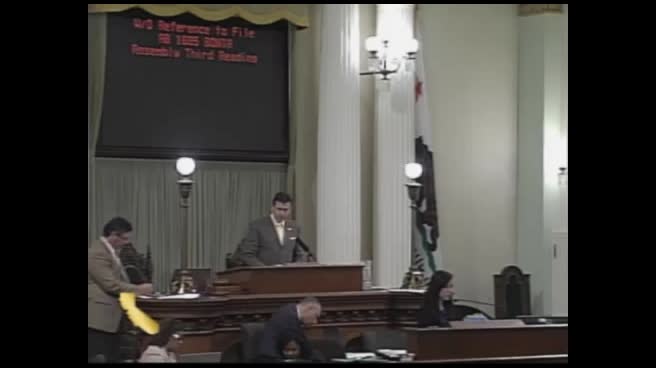 3MIN
Assembly Floor
Bill Author

Bill Co-Author(s):