AB 2783: Affordable Housing and Sustainable Communities Program.
- Session Year: 2015-2016
- House: Assembly
- Latest Version Date: 2016-06-23
Existing law requires all moneys, except for fines and penalties, collected by the State Air Resources Board from the auction or sale of allowances as part of a market-based compliance mechanism to be deposited in the Greenhouse Gas Reduction Fund and to be available upon appropriation by the Legislature. Existing law continuously appropriates 20% of the annual proceeds of the fund to the Affordable Housing and Sustainable Communities Program, administered by the Strategic Growth Council, to reduce greenhouse gas emissions through projects that implement land use, housing, transportation, and agricultural land preservation practices to support infill and compact development and that support other related and coordinated public policy objectives. Existing law requires the council to develop guidelines and selection criteria for the program.
This bill would require the Strategic Growth Council to consider revisions to the guidelines and selection criteria with respect to affordable housing projects that qualify under the programs rural innovation project area, as specified, and to provide a written explanation to the Assembly Committee on Housing and Community Development Legislature by March 1, 2017, if the council determines that it will not make the revisions.
Existing law requires all moneys, except for fines and penalties, collected by the State Air Resources Board from the auction or sale of allowances as part of a market-based compliance mechanism to be deposited in the Greenhouse Gas Reduction Fund and to be available upon appropriation by the Legislature. Existing law continuously appropriates 20% of the annual proceeds of the fund to the Affordable Housing and Sustainable Communities Program, administered by the Strategic Growth Council, to reduce greenhouse gas emissions through projects that implement land use, housing, transportation, and agricultural land preservation practices to support infill and compact development and that support other related and coordinated public policy objectives. Existing law requires the council to develop guidelines and selection criteria for the program.
This bill would require the Strategic Growth Council to revise consider revisions to the guidelines and selection criteria with respect to affordable housing projects that qualify under the programs rural innovation project area, as specified. specified, and to provide a written explanation to the Assembly Committee on Housing and Community Development by March 1, 2017, if the council determines that it will not make the revisions.
Existing law requires all moneys, except for fines and penalties, collected by the State Air Resources Board from the auction or sale of allowances as part of a market-based compliance mechanism to be deposited in the Greenhouse Gas Reduction Fund and to be available upon appropriation by the Legislature. Existing law continuously appropriates 20% of the annual proceeds of the fund to the Affordable Housing and Sustainable Communities Program, administered by the Strategic Growth Council, to reduce greenhouse gas emissions through projects that implement land use, housing, transportation, and agricultural land preservation practices to support infill and compact development and that support other related and coordinated public policy objectives. Existing law requires the council to develop guidelines and selection criteria for the program.
This bill would require the Strategic Growth Council to revise the guidelines and selection criteria with respect to density requirements, as specified, and to include specified factors, including energy efficiency, in its greenhouse gas quantification methodology. affordable housing projects that qualify under the programs rural innovation project area, as specified.
Existing law requires all moneys, except for fines and penalties, collected by the State Air Resources Board from the auction or sale of allowances as part of a market-based compliance mechanism to be deposited in the Greenhouse Gas Reduction Fund and to be available upon appropriation by the Legislature. Existing law continuously appropriates 20% of the annual proceeds of the fund to the Affordable Housing and Sustainable Communities Program, administered by the Strategic Growth Council, to reduce greenhouse gas emissions through projects that implement land use, housing, transportation, and agricultural land preservation practices to support infill and compact development and that support other related and coordinated public policy objectives. Existing law requires the council to develop guidelines and selection criteria for the program.
This bill would require the Strategic Growth Council to revise the guidelines and selection criteria with respect to density requirements, as specified, and to include specified factors, including energy efficiency, in its greenhouse gas quantification methodology.
(a)Prior to awarding funds under the program, the council, in coordination with the member agencies and departments of the council, the State Air Resources Board, and other state entities, as needed, shall develop guidelines and selection criteria for the implementation of the program.
(b)Prior to adoption of the guidelines and the selection criteria, the council shall conduct at least two public workshops to receive and consider public comments. One workshop shall be held at a location in northern California and one workshop shall be held at a location in southern California.
(c)The council shall publish the draft guidelines and selection criteria on its Internet Web site at least 30 days prior to the public meetings.
(d)In adopting the guidelines and selection criteria, the council shall consider the comments from local governments, regional agencies, and other stakeholders. The council shall conduct outreach to disadvantaged communities to encourage comments on the draft guidelines from those communities.
(e)(1)Program guidelines may be revised by the council to reflect changes in program focus or need. Outreach to stakeholders shall be conducted, pursuant to subdivisions (a), (b), (c), and (d), before the council adopts changes to guidelines.
(2)The council shall consider all of the following changes to the guidelines and selection criteria with respect to affordable housing projects that qualify under the programs rural innovation project area:
(A)Projects shall be allowed to build Allow projects to be built at nonmetropolitan density requirements based on net density. The
(B)Revise the definition of net density shall be revised to mean the total number of dwelling units per acre of land to be developed for residential or mixed use, excluding permanent streets, required drainage facilities, sidewalks, parks, public rights-of-way, easements, encroachments, and dedicated open space.
(B)
(C)For projects that receive 4 percent low-income housing tax credits, require one hundred thousand dollars ($100,000) per restricted unit shall to be added to the base amount for loan limit calculation purposes.
(C)Scoring shall
(D)Require scoring to be awarded based on the extent to which an application demonstrates walkable corridors and incorporates features that encourage bicycling, which will exist upon completion of the project.
(3)If the council determines that it will not revise the guidelines and selection criteria consistent with paragraph (2), the council shall provide a written explanation on or before March 1, 2017, to the Assembly Committee on Housing and Community Development Legislature, pursuant to Section 9795 of the Government Code, as to why the revisions will not be adopted.
(f)Upon the adoption of the guidelines and selection criteria, the council shall, pursuant to Section 9795 of the Government Code, submit copies of the guidelines to the fiscal and appropriate policy committees of the Legislature.
(g)Chapter 3.5 (commencing with Section 11340) of Part 1 of Division 3 of Title 2 of the Government Code does not apply to the development and adoption of the guidelines and selection criteria pursuant to this section.
(a)Prior to awarding funds under the program, the council, in coordination with the member agencies and departments of the council, the State Air Resources Board, and other state entities, as needed, shall develop guidelines and selection criteria for the implementation of the program.
(b)Prior to adoption of the guidelines and the selection criteria, the council shall conduct at least two public workshops to receive and consider public comments. One workshop shall be held at a location in northern California and one workshop shall be held at a location in southern California.
(c)The council shall publish the draft guidelines and selection criteria on its Internet Web site at least 30 days prior to the public meetings.
(d)In adopting the guidelines and selection criteria, the council shall consider the comments from local governments, regional agencies, and other stakeholders. The council shall conduct outreach to disadvantaged communities to encourage comments on the draft guidelines from those communities.
(e)(1)Program guidelines may be revised by the council to reflect changes in program focus or need. Outreach to stakeholders shall be conducted, pursuant to subdivisions (a), (b), (c), and (d), before the council adopts changes to guidelines.
(2)The council shall revise the guidelines and selection criteria initially adopted to include all of the following consider all of the following changes to the guidelines and selection criteria with respect to affordable housing projects that qualify under the programs rural innovation project area:
(A)Projects shall be allowed to build at nonmetropolitan density requirements based on net density. The definition of net density shall be revised to mean the total number of dwelling units per acre of land to be developed for residential or mixed use, excluding permanent streets, required drainage facilities, sidewalks, parks, public rights-of-way, easements, encroachments, and dedicated open space.
(C)
(B)For projects that receive 4 percent low-income housing tax credits, one hundred thousand dollars ($100,000) per restricted unit shall be added to the base amount for loan limit calculation purposes.
(D)
(C)Scoring shall be awarded based on the extent to which an application demonstrates walkable corridors and incorporates features that encourage bicycling, which will exist upon completion of the project.
(3)If the council determines that it will not revise the guidelines and selection criteria consistent with paragraph (2), the council shall provide a written explanation on or before March 1, 2017, to the Assembly Committee on Housing and Community Development as to why the revisions will not be adopted.
(f)Upon the adoption of the guidelines and selection criteria, the council shall, pursuant to Section 9795 of the Government Code, submit copies of the guidelines to the fiscal and appropriate policy committees of the Legislature.
(g)Chapter 3.5 (commencing with Section 11340) of Part 1 of Division 3 of Title 2 of the Government Code does not apply to the development and adoption of the guidelines and selection criteria pursuant to this section.
(a)Prior to awarding funds under the program, the council, in coordination with the member agencies and departments of the council, the State Air Resources Board, and other state entities, as needed, shall develop guidelines and selection criteria for the implementation of the program.
(b)Prior to adoption of the guidelines and the selection criteria, the council shall conduct at least two public workshops to receive and consider public comments. One workshop shall be held at a location in northern California and one workshop shall be held at a location in southern California.
(c)The council shall publish the draft guidelines and selection criteria on its Internet Web site at least 30 days prior to the public meetings.
(d)In adopting the guidelines and selection criteria, the council shall consider the comments from local governments, regional agencies, and other stakeholders. The council shall conduct outreach to disadvantaged communities to encourage comments on the draft guidelines from those communities.
(e)(1)Program guidelines may be revised by the council to reflect changes in program focus or need. Outreach to stakeholders shall be conducted, pursuant to subdivisions (a), (b), (c), and (d), before the council adopts changes to guidelines.
(2)The council shall revise the guidelines and selection criteria initially adopted to include all of the following: following with respect to affordable housing projects that qualify under the programs rural innovation project area:
(A)Projects that qualify under the programs rural innovation project area shall be allowed to build at nonmetropolitan density requirements.
(B)The requirements based on net density. The definition of net density shall be revised to mean the total number of dwelling units per acre of land to be developed for residential or mixed use, excluding permanent streets, required drainage facilities, sidewalks, parks, public rights-of-way, easements, encroachments, and dedicated open space.(C)Urban greening, green building, energy efficiency, and renewable energy shall be counted in the greenhouse gas quantification methodology in addition to the selection criteria.
(C)For projects that receive 4 percent low-income housing tax credits, one hundred thousand dollars ($100,000) per restricted unit shall be added to the base amount for loan limit calculation purposes.
(D)Scoring shall be awarded based on the extent to which an application demonstrates walkable corridors and incorporates features that encourage bicycling, which will exist upon completion of the project.
(f)Upon the adoption of the guidelines and selection criteria, the council shall, pursuant to Section 9795 of the Government Code, submit copies of the guidelines to the fiscal and appropriate policy committees of the Legislature.
(g)Chapter 3.5 (commencing with Section 11340) of Part 1 of Division 3 of Title 2 of the Government Code does not apply to the development and adoption of the guidelines and selection criteria pursuant to this section.
TextPage 3.(a)Prior to awarding funds under the program, the council, in coordination with the member agencies and departments of the council, the State Air Resources Board, and other state entities, as needed, shall develop guidelines and selection criteria for the implementation of the program.
(b)Prior to adoption of the guidelines and the selection criteria, the council shall conduct at least two public workshops to receive and consider public comments. One workshop shall be held at a location in northern California and one workshop shall be held at a location in southern California.
(c)The council shall publish the draft guidelines and selection criteria on its Internet Web site at least 30 days prior to the public meetings.
(d)In adopting the guidelines and selection criteria, the council shall consider the comments from local governments, regional agencies, and other stakeholders. The council shall conduct outreach to disadvantaged communities to encourage comments on the draft guidelines from those communities.
(e)(1)Program guidelines may be revised by the council to reflect changes in program focus or need. Outreach to stakeholders shall be conducted, pursuant to subdivisions (a), (b), and (c) (c), and (d), before the council adopts changes to guidelines.
(2)The council shall revise the guidelines and selection criteria initially adopted to include all of the following:
(A)Projects that qualify under the programs rural innovation project area shall be allowed to build at nonmetropolitan density requirements.
(B)The definition of net density shall be revised to mean the total number of dwelling units per acre of land to be developed for residential or mixed use, excluding permanent streets, required drainage facilities, sidewalks, parks, public rights-of-way, easements, encroachments, and dedicated open space.
(C)Urban greening, green building, energy efficiency, and renewable energy shall be counted in the greenhouse gas quantification methodology in addition to the selection criteria.
(f)Upon the adoption of the guidelines and selection criteria, the council shall, pursuant to Section 9795 of the Government Code, submit copies of the guidelines to the fiscal and appropriate policy committees of the Legislature.
(g)Chapter 3.5 (commencing with Section 11340) of Part 1 of Division 3 of Title 2 of the Government Code does not apply to the development and adoption of the guidelines and selection criteria pursuant to this section.
|
Date
|
Status
|
|---|---|
| Apr 26, 2016 | Re-referred to Com. on APPR. |
| Jun 29, 2016 | In committee: Set, first hearing. Failed passage. Reconsideration granted. |
| Jun 23, 2016 | Read second time and amended. Re-referred to Com. on E.Q. |
| Jun 22, 2016 | From committee: Amend, and do pass as amended and re-refer to Com. on E.Q. (Ayes 10. Noes 0.) (June 21). |
| Jun 2, 2016 | Referred to Coms. on T. & H. and E.Q. |
| May 27, 2016 | Read third time. Passed. Ordered to the Senate. (Ayes 67. Noes 0. Page 4960.) |
| May 27, 2016 | Read third time. Passed. Ordered to the Senate. |
| May 27, 2016 | In Senate. Read first time. To Com. on RLS. for assignment. |
| May 19, 2016 | Read second time. Ordered to Consent Calendar. |
| May 18, 2016 | From committee: Do pass. To Consent Calendar. (Ayes 20. Noes 0.) (May 18). |
| Feb 19, 2016 | Introduced. To print. |
| Apr 25, 2016 | Read second time and amended. |
| Apr 21, 2016 | From committee: Amend, and do pass as amended and re-refer to Com. on APPR. (Ayes 7. Noes 0.) (April 20). |
| Apr 4, 2016 | Measure version as amended on March 28 corrected. |
| Mar 29, 2016 | Re-referred to Com. on H. & C.D. |
| Mar 28, 2016 | From committee chair, with author's amendments: Amend, and re-refer to Com. on H. & C.D. Read second time and amended. |
| Mar 10, 2016 | Referred to Com. on H. & C.D. |
| Feb 22, 2016 | Read first time. |
| Feb 21, 2016 | From printer. May be heard in committee March 22. |
|
Date
|
Description
|
Location
|
Votes
|
|
|---|---|---|---|---|
| Jun 29, 2016 | [First] hearing set for [06-29-2016]: Failed passage in Committee. Reconsideration granted | Senate Standing Committee on Environmental Quality |
Passed |
|
| Jun 29, 2016 | Do pass, but first be re-referred to the Committee on [Appropriations] | Senate Standing Committee on Environmental Quality |
Failed |
|
| Jun 21, 2016 | Do pass as amended, but first amend, and re-refer to the Committee on [Environmental Quality] | Senate Standing Committee on Transportation and Housing |
Passed |
|
| May 27, 2016 | AB 2783 GARCIA, E. Consent Calendar Second Day Regular Session | Assembly Floor |
Passed |
|
| May 18, 2016 | Do pass. To Consent Calendar. | Assembly Standing Committee on Appropriations |
Passed |
|
| Apr 20, 2016 | Do pass as amended and be re-referred to the Committee on [Appropriations] | Assembly Standing Committee on Housing and Community Development |
Passed |
This list shows positions taken on this bill by organizations on the date displayed, which is linked to the original source.
Positions by individuals are not included.
|
Organization
|
Position
|
Date
|
|---|---|---|
| A Better Community | ** Support | Jun 21, 2016 |
| Burbank Housing Development Corporation | ** Support | Jun 21, 2016 |
| California Coalition For Rural Housing | ** Support | Jun 21, 2016 |
| Coachella Valley Housing Coalition | ** Support | Jun 21, 2016 |
| Comite Civico Del Valle | ** Support | Jun 21, 2016 |
| Comitxe9 Civico Del Valle | ** Support | Jun 21, 2016 |
| La Union Hace la Fuerza | ** Support | Jun 21, 2016 |
| Metropolitan Transportation Commission | ** Against | Jun 21, 2016 |
| Peoples' Self Help Housing Corporation | ** Support | Jun 21, 2016 |
| Pueblo Unido CDC | ** Support | Jun 21, 2016 |
| Redwood Valley Little River Band of Pomo Indians | ** Support | Jun 21, 2016 |
| Rural Community Assistance Corporation | ** Support | Jun 21, 2016 |
SENATE COMMITTEE ON ENVIRONMENTAL QUALITY
Senator Wieckowski, Chair
2015 - 2016 Regular
Bill No: AB 2783
Author: | E. Garcia, Eggman, C. Garcia, Gomez, Steinorth | ||
Version: | 6/23/2016 | Hearing Date: | June 29, 2016 |
Urgency: | No | Fiscal: | Yes |
Consultant: | Joanne Roy | ||
SUBJECT: Affordable Housing and Sustainable Communities Program
ANALYSIS:
Existing law:
- Creates the Strategic Growth Council (SGC). (Public Resources Code (PRC) §75121).
- Establishes the Affordable Housing and Sustainable Communities (AHSC) Program. (PRC §75210 et seq.).
- Provides that the purpose of the AHSC program is to reduce greenhouse gas (GHG) emissions through projects that implement land use, housing, transportation, and agricultural land preservation practices to support infill and compact development and that support related and coordinated public policy objectives as specified.
- Directs SGC to develop and administer the AHSC program, and develop guidelines and selection criteria for implementation.
- To be eligible for funding from the AHSC program, requires a project to demonstrate the following:
- Reduction in GHG emissions;
- Implementation of an adopted or draft Sustainable Communities Strategy (SCS); if an SCS is not required for the region, a regional plan that includes policies and programs that reduce GHG emissions;
- Consistency with the state planning priorities established to achieve the state’s environmental goals.
- Reduction in GHG emissions;
- Provides a list of eligible types of projects for funding, such as:
- Intermodal, affordable housing projects that support infill and compact housing.
- Transit capital projects and programs supporting transit ridership.
- Transit-oriented development projects, including affordable housing and infrastructure at or near transit stations or connecting those developments to transit stations.
- Intermodal, affordable housing projects that support infill and compact housing.
- Requires that at least 50% of the funding for AHSC benefit projects in disadvantaged communities.
- Requires SGC when revising its guidelines to develop the guidelines and selection criteria, conduct at least two public workshops to receive and consider public comments, and publish the draft guidelines on its Internet website at least 30 days prior to the public meeting.
- Provides that the purpose of the AHSC program is to reduce greenhouse gas (GHG) emissions through projects that implement land use, housing, transportation, and agricultural land preservation practices to support infill and compact development and that support related and coordinated public policy objectives as specified.
- Defines “disadvantaged communities” to mean communities identified by the California Environmental Protection Agency (CalEPA) based on geographic, socioeconomic, public health, and environmental hazard criteria, and may include, but are not limited to, either of the following (Health and Safety Code (HSC) §39711):
- Areas disproportionately affected by environmental pollution and other hazards that can lead to negative public health effects, exposure, or environmental degradation; or
- Areas with concentrations of people that are of low income, high unemployment, low levels of homeownership, high rent burden, sensitive populations, or low levels of educational attainment.
- Areas disproportionately affected by environmental pollution and other hazards that can lead to negative public health effects, exposure, or environmental degradation; or
- Defines “rural area” as an area that meets specified criteria, including: a) the area is eligible for financing under the Rural Development Administration of the US Department of Agriculture; the area is located in a nonmetropolitan area as defined in HSC §50090; or, the area is either an incorporated city with a population of 40,000 or less, or an unincorporated area which adjoins a city having a population of 40,000 or less, as specified. (HSC §50199.21).
- Establishes the Greenhouse Gas Reduction Fund (GGRF) in the State Treasury, requires all moneys, except for fines and penalties, collected pursuant to a market-based mechanism be deposited in the fund and requires the Department of Finance, in consultation with the California Air Resources Board (ARB) and any other relevant state agency, to develop, as specified, a three-year investment plan for the moneys deposited in the GGRF. (Government Code §16428.8).
- Prohibits the state from approving allocations for a measure or program using GGRF moneys except after determining that the use of those moneys furthers the regulatory purposes of AB 32 (Núñez and Pavley, Chapter 488, Statutes of 2006), and requires moneys from the GGRF be used to facilitate the achievement of reductions of GHG emissions in California. (HSC §39712).
This bill:
- Requires SGC to consider revisions to the guidelines and selection criteria for affordable housing projects that qualify for funding under the AHSC Program for a rural innovation project area (RIPA), as follows:
- Allow projects to be built at nonmetropolitan density requirements based on net density.
- Revise the definition of “net density.”
Modify the Rural Innovation Project Area (RIPA) within AHSC by lowering density requirements. - Provide additional loan assistance for projects that receive 4% low-income housing tax credits, by increasing the amount to $100,000 per restricted unit to be added to the base amount for loan calculation purposes.
- Require scoring to consider the extent to which an application demonstrates walkable corridors and incorporates features that encourage bicycling, which will exist upon completion of the project.
- Allow projects to be built at nonmetropolitan density requirements based on net density.
- If SGC determines that it will not make revisions, requires SGC to provide the Legislature an explanation by March 1, 2017.
Background
- Strategic Growth Council. SGC was established by SB 732 (Steinberg, Chapter 729, Statutes of 2008), and is tasked with coordinating state agency activities so they assist and support the planning and development of sustainable communities that strengthen the economy, ensure social equality, and enhance environmental stewardship. The objectives of SGC include:
- Improving air and water quality.
- Protecting natural resources and agricultural lands.
- Increasing the availability of affordable housing.
- Promoting public health.
- Improving transportation.
- Encouraging greater infill and compact development.
- Revitalizing community and urban centers.
- Assisting state and local entities in the planning of sustainable communities and meeting AB 32 goals.
SGC is comprised of agency secretaries from the California Business Consumer Services and Housing Agency, Health and Human Services, CalEPA, State Transportation Agency, Department of Food and Agriculture, and the Natural Resources Agency; the director of the Governor’s Office of Planning and Research; and three public members appointed by the Governor, Senate Committee on Rules, and Speaker of the Assembly.
- Affordable Housing, and Sustainable Communities (AHSC) Program. SB 862 (Committee on Budget and Fiscal Review, Chapter 36, Statutes of 2014) established the AHSC Program to reduce GHG emissions through projects that implement land use, housing, transportation, and agricultural land preservation practices to support infill and compact development. The broader AHSC Program is implemented in two components: a) the housing and infrastructure-focused AHSC Program; and, b) the Sustainable Agricultural Lands Conservation (SALC) Program, which focuses on protection of agricultural lands under threat of conversion to non-agricultural uses.
SB 862 provided a continuous appropriation of 35% of cap-and-trade funds for investments in transit, affordable housing, and sustainable communities. Of this, 10% is for transit and inter-city rail capital programs; 5% for low carbon transit operations; and 20% for affordable housing and sustainable communities.
A primary goal of the AHSC Program furthers the objectives of the California Global Warming Solutions Act (AB 32, Núñez and Pavley, Chapter 488, Statutes of 2006), and The Sustainable Communities and Climate Protection Act of 2008 (SB 375, Steinberg, Chapter 728, Statutes of 2008). The AHSC Program invests in projects that reduce GHG emissions by supporting more compact, infill development patterns, encouraging active transportation and transit usage, and protecting agricultural land from sprawl development. The AHSC Program also supports related and coordinated public policy objectives, including the following:
- Reducing air pollution;
- Improving conditions in disadvantaged communities;
- Supporting or improving public health and other co-benefits as defined in HSC §39712;
- Improving connectivity and accessibility to jobs, housing, and services;
- Increasing options for mobility, including the implementation of the Active Transportation Program;
- Increasing transit ridership;
- Preserving and developing affordable housing for lower income households; and,
- Protecting agricultural lands to support infill development.
SGC administers, and Department of Housing and Community Development (HCD) implements, the AHSC Program. In addition, SGC and HCD coordinate with the Air Resources Board to manage the program, including developing program guidelines, evaluating applications, preparing agreements, monitoring agreement implementation, and reporting.
AHSC is a competitive grant/loan program funded by GGRF moneys. Eligible projects include those that will achieve GHG emission reductions and benefit disadvantaged communities through increasing accessibility of affordable housing, employment centers, and key destinations via low-carbon transportation resulting in fewer vehicle miles travelled through shortened or reduced vehicle rip length or mode shift transit, bicycling, or walking. Funding applicants track metrics in accordance with the Air Resources Board’s Funding Guidelines. Fifty percent of all funding in this program must benefit disadvantaged communities.
- Rural Innovation Project Area (RIPA) projects. RIPA projects are a component of the AHSC Program, where the focus is on projects in rural areas, as defined. According to SGC, for RIPA projects, and across other project areas, the key to maximizing GHG reduction for housing projects will be higher densities, reducing parking, and incorporating mixed use elements in to the development. For both housing and transportation projects, proximity to a central business district and providing some kind of subsidy to incentivize transportation use will help yield greater GHG reductions.
- Cap-and-trade auction revenue. Since November 2012, ARB has conducted more than14 cap-and-trade auctions, generating over $4 billion in proceeds to the state. The latest auction in May 2016 fell sharply below expectations as buyers purchased a mere 2% of the carbon credits, which will provide $10 million for state programs.
State law specifies that the auction revenues must be used to facilitate the achievement of GHG emissions reductions and outlines various categories of allowable expenditures. Statute further requires the Department of Finance, in consultation with ARB and any other relevant state agency, to develop a three-year investment plan for the auction proceeds, which are deposited in the GGRF.- Disadvantaged communities. SB 535 (de León, Chapter 830, Statutes of 2012) requires the Department of Finance, in the investment plan, to allocate at least 25% of available moneys in the GGRF to projects that provide benefits to disadvantaged communities, and at least 10% to projects located within disadvantaged communities.
To meet the SB 535 mandate, the Office of Environmental Health Hazard Assessment, under CalEPA’s guidance, developed a tool (termed CalEnviroScreen) to assess and rank census tracts across the state that are disproportionately affected by multiple types of pollution and areas with vulnerable populations. CalEPA has designated 25% of census tracts in California as disadvantaged communities for the purpose of investing cap-and-trade proceeds.
Additionally, SB 862 (Committee on Budget and Fiscal Review, Chapter 36, Statutes of 2014) requires ARB to develop guidelines on maximizing benefits for disadvantaged communities by agencies administering GGRF funds. - Legal consideration of cap-and-trade auction revenues. The 2012-13 Budget analysis of cap-and-trade auction revenue by the Legislative Analyst’s Office noted that, based on an opinion from the Office of Legislative Counsel, the auction revenues should be considered mitigation fee revenues, and their use requires that a clear nexus exist between an activity for which a mitigation fee is used and the adverse effects related to the activity on which that fee is levied. Therefore, in order for their use to be valid as mitigation fees, revenues from the cap-and-trade auction must be used to mitigate GHG emissions or the harms caused by GHG emissions.
In 2012, the California Chamber of Commerce filed a lawsuit against the ARB claiming that cap-and-trade auction revenues constitute illegal tax revenue. In November 2013, the superior court ruling declined to hold the auction a tax, concluding that it is more akin to a regulatory fee. In February of 2014, the plaintiffs filed an appeal with the 3rd District Court of Appeal in Sacramento. That case is currently pending.
- Disadvantaged communities. SB 535 (de León, Chapter 830, Statutes of 2012) requires the Department of Finance, in the investment plan, to allocate at least 25% of available moneys in the GGRF to projects that provide benefits to disadvantaged communities, and at least 10% to projects located within disadvantaged communities.
Comments
- Purpose of Bill. According to the author, “In over three years of guideline and program feedback, almost none of rural communities’ recommendations have been treated with the gravity they deserve and the only response has been creating the RIPA, but with the same thresholds and scoring criteria as the other two project prototypes. The longer we wait to make substantive, meaningful changes in the RIPA, the more good quality rural housing projects will be denied access and the more money will be left on the table.”
- AHSC Program and rural projects. In the first round of funding in 2015, out of the 36 projects that received funding, two projects were in rural areas. SGC convened four stakeholder meetings over the fall of 2015 to receive public comment and consider changes to the program. Recognizing that rural projects were not able to compete well against urban projects, SGC changed the guidelines to set aside 10% of the total AHSC funding for rural areas. As a result, applicants in rural areas now compete against other rural projects rather than against urban projects, which generally have an advantage of being able to show a greater reduction in vehicle-miles traveled (VMT).
In January 2016, SGC released a notice of funding availability for the AHSC Program, which included the new RIPA 10% set-aside and guidelines. In the current round of applications for AHSC funding, a total of 130 applications were received in all categories, 23 of which for RIPA. Awards are expected to be announced in September 2016.
Because the current round of AHSC Program funding, which is the first time utilizing the newly revised guidelines, will be awarded in a few months, the Committee may wish to consider whether this bill is premature and if it would be prudent to see whether the guideline revisions satisfactorily address the RIPA funding issue before potential legislative action. - Lowering the density requirement seems antithetical to the goal of reducing GHG emissions. AB 2783 proposes to require SGC to consider lowering the net density requirement for affordable housing projects that qualify under RIPA. The revisions of the guidelines have recently been through a public process with public input; and the revisions reflect a reasonable way to ensure that affordable housing projects in rural areas are competitive for funding while achieving the goals of the AHSC program. The fundamental criteria for programs/projects funded by cap-and-trade moneys is that the money is spent on actions that reduce GHG emissions. Since one of the purposes of the AHSC Program is to reduce GHG emissions by increasing affordable housing near transit, requiring the consideration of lowering the density requirements would likely not help achieve AB 32 GHG emissions reductions goals.
DOUBLE REFERRAL: This measure was heard in Senate Transportation & Housing Committee on June 21, 2016, and passed out of committee with a vote of 10-0.
SOURCE:
California Coalition for Rural Housing
SUPPORT:
California Institute for Rural Studies
California Rural Legal Assistance Foundation
Center for Sustainable Neighborhoods
Creswell Consulting
Leadership Counsel for Justice & Accountability
Public Interest Law Project
Self-Help Enterprises
Sierra Business Council
OPPOSITION:
None received
-- END --
SENATE COMMITTEE ON TRANSPORTATION AND HOUSING
Senator Jim Beall, Chair
2015 - 2016 Regular
Bill No: AB 2783 Hearing Date: 6/21/2016
Author: | Eduardo Garcia | ||
Version: | 4/25/2016 | ||
Urgency: | No | Fiscal: | Yes |
Consultant: | Sarah Carvill | ||
SUBJECT: Affordable Housing and Sustainable Communities Program
DIGEST: This bill requires the Strategic Growth Council to consider changing the guidelines and selection criteria for the Affordable Housing and Sustainable Communities Program to reduce barriers for rural projects.
ANALYSIS:
Existing law:
- Establishes the Strategic Growth Council (SGC), composed of the secretaries and directors of seven agencies and departments, to coordinate the activities, policies, and funding programs of those entities in order to better achieve specified policy goals. These goals include reducing greenhouse gas (GHG) emissions, building affordable housing, improving transportation, and encouraging sustainable land use planning.
- Establishes the Affordable Housing and Sustainable Communities Program (AHSC) to reduce GHG emissions by funding projects that implement land use, housing, transportation, and agricultural land preservation practices that support infill, compact development, and the following related policy objectives:
- Reducing air pollution
- Improving conditions in disadvantaged communities
- Supporting public health and other specified “co-benefits”
- Improving connectivity among housing, jobs, and services
- Increasing mobility options, including active transportation
- Increasing transit ridership
- Preserving and developing affordable housing for low-income households
- Protecting agricultural lands
- Directs the SGC to implement the AHSC by developing guidelines and selection criteria reflective of program goals in consultation with member agencies and departments and the State Air Resources Board (ARB).
- Requires the SGC to solicit input from stakeholders on the guidelines and selection criteria by:
- Conducting at least two public workshops prior to the adoption of the guidelines and selection criteria
- Publishing draft guidelines and selection criteria on its website for at least 30 days prior to public meetings
- Considering comments from local governments, regional agencies, and other stakeholders in adopting the guidelines and selection criteria
- Repeating these outreach steps if the guidelines are revised
- Conducting outreach to disadvantaged communities to encourage comments on the draft guidelines
- Provides that projects must do all of the following to be eligible for AHSC funding:
- Achieve reductions in GHG emissions
- Support the implementation of either a sustainable communities strategy or, in areas where one is not required, a regional plan that includes policies to reduce GHG emissions
- Demonstrate consistency with state planning priorities related to the environment, as specified in existing law
- Requires that 50% of AHSC funds be spent on projects that benefit disadvantaged communities, and defines "disadvantaged communities” to mean communities identified by the California Environmental Protection Agency (CalEPA) that may include, but are not limited to, either of the following:
- Areas disproportionately affected by environmental pollution and other hazards that can lead to negative public health effects, exposure, or environmental degradation; and
- Areas with concentrations of people that are of low income, high unemployment, low levels of homeownership, high rent burden, sensitive populations, or low levels of educational attainment.
This bill:
- Instructs the SGC to consider the following changes to the AHSC guidelines and selection criteria for projects proposed within the program’s Rural Innovation Project Area (RIPA):
- Allow projects to meet nonmetropolitan density requirements
- Revise the definition of “net density” to exclude the area in a development devoted to permanent streets, drainage facilities, sidewalks, parks, public rights of way, easements, encroachments, and dedicated open space
- When calculating the loan limit for projects that receive 4% low- income housing tax credits, allow $100,000 to be added to the base amount for each restricted unit in the project
- Modify scoring so that points will be awarded to proposals based on the extent to which an application demonstrates that walkable corridors and features that encourage biking will exist upon the completion of a project
- Requires the SGC to provide a written explanation to the Assembly Committee on Housing and Community Development by March 1, 2017, if it determines that it will not revise the guidelines and the selection criteria as described.
- Requires the SGC to conduct outreach to stakeholders, including disadvantaged communities, when program guidelines are revised.
COMMENTS:
- Purpose. According to the author, rural communities throughout the state have been placed at a competitive disadvantage when attempting to access AHSC funds, and changes in the law are needed to ensure that AHSC monies are equitably distributed and can reach rural and disadvantaged communities in the state. The author argues that these communities have been overlooked, and that if this trend continues they will not be adequately prepared to face climate change. Also, the author states that lack of investment in rural communities will widen the gap that exists between inland and coastal communities in California. The author points out that in the first AHSC funding cycle, only 2 of the 36 funded projects were located in rural communities. Despite the subsequent establishment of the RIPA, the author states that there are threshold barriers that impede rural communities from accessing AHSC funds. One of these is the requirement that rural projects in non-rural or metropolitan counties build to the same density as suburban areas. The author argues that this is a major barrier that will continue to hinder rural communities from receiving the necessary investments they need from AHSC.
- Background: What is AHSC? AHSC is administered by the SGC and funded by a 20% appropriation from the Greenhouse Gas Reduction Fund. These funds are allocated by a competitive process to projects that reduce GHG emissions by supporting more compact, infill development patterns, encouraging active transportation and transit usage, and protecting agricultural land from sprawl development. HCD is responsible for implementing the transportation, housing, and infrastructure components of the AHSC program, and the California Air Resources Board (ARB) is also involved in program development. The first funding cycle (2014-2015) saw 146 applications, of which 36 were funded. After those awards were announced in fall 2015, the SGC held four stakeholder meetings and revised the guidelines based on the feedback it received. SGC received 130 for the second funding cycle (2015-2016) and awards will be announced in the fall.
- AHSC and rural projects. In the 2014-2015 cycle, 12 projects were proposed for rural areas, of which 2 (17%) were funded. In contrast, the success rate for non-rural projects was 27%. Recognizing that rural projects were not able to compete well against urban projects, SGC established the RIPA, an application category specifically for rural projects, for the 2015-2016 funding cycle. The SGC set aside 10% of the total funding for projects in this category. Applicants in rural areas now compete against other rural projects rather than against urban projects that can generally show a greater reduction in vehicle miles traveled (VMT). However, they must still meet “threshold” requirements to be funded, and projects may not be able to earn points toward their overall score if they are rated on metrics that are not appropriate for rural areas.
- The trouble with density. This bill urges the SGC to make two changes to the guidelines that would ease density requirements for affordable housing projects in rural communities. Supporters of this bill characterize density requirements as a “threshold barrier” because GHG reductions are calculated in part based on project density. In the existing guidelines, projects that are located in Metropolitan Statistical Areas (MSAs) are subject to higher minimum density requirements than projects that are not located in MSAs. MSAs are designated at the county level, however, so they may capture smaller geographic areas that are “rural” by one of the definitions that are used to qualify a project for submission under the RIPA. This bill aims to address this discrepancy by encouraging the SGC to allow any project that is “rural” enough for the RIPA to use the non-MSA minimum density requirement of 15 units per acre.
This bill also urges the SGC to consider changing how density is calculated for rural projects. Current density requirements are based on “net density,” which is specifically defined in the guidelines such that some uses of exterior space on a development site are included in the project area and some are excluded. This bill advocates changing the specific inclusions and exclusions for rural projects only, effectively increasing the “net density” of these projects and making it easier for them to meet minimum density requirements. Supporters of the bill claim this is necessary because basic infrastructure is already in place in urban areas, while rural projects often must build their own sidewalks, streets, parks, drainage ponds, and septic systems. This increases the physical footprint of rural developments, decreasing density.
- Maximum loan-limit calculations. Under the current guidelines, projects that receive 4% low income housing tax credits may add $60,000 per restricted unit to the base amount when calculating maximum loan limits. The bill suggests adding $100,000 per restricted unit. Such a change would increase the maximum loan by $40,000 per restricted unit, making it easier to finance affordable housing projects in rural areas.
- Scoring modification. This bill urges the SGC to consider changing how the walking and biking benefits provided by rural projects are scored in the application process. Currently, the guidelines utilize the “Walk Score” and “Bike Score” for the project site. These metrics are provided on a public website by a private company as a service to Realtors and prospective homebuyers and renters. Supporters of this bill argue that the methodology is not appropriate for all applications and does not accurately characterize many rural areas. Additionally, the company provides scores for sites as they currently exist; walk and bike scores do not take into account improvements that would be made as part of the proposed project. The change this bill asks the SGC to consider reflects the way scores for active transportation access were calculated in the guidelines for the first funding cycle, which provided specific parameters for evaluating existing walking and biking infrastructure and incorporating project improvements.
- Rural versus reductions. AHSC is funded by the proceeds of the cap-and-trade auction, and programs that receive these monies must reduce GHG emissions. Within the context of affordable housing projects, GHG reductions are achieved by housing that provides connectivity to public transportation and increases the density of existing development. The former is often more difficult to meaningfully achieve in a rural setting, and the changes urged by this bill would reduce density requirements. It is important to bear in mind that the SGC must balance the need for an equitable geographic distribution of projects with the goal of reducing GHGs as much as possible, and the changes suggested in this bill may undermine the latter objective.
- Is the bill necessary? Existing law already requires that the SGC solicit and consider feedback from a variety of stakeholders in developing and revising the guidelines and selection criteria for AHSC. Additionally, after the first funding cycle, the SGC went above and beyond the required two public workshops, instead holding four events to inform revisions to the guidelines. In response to the concerns of rural stakeholders, the SGC established the RIPA and dedicated funding to rural projects. While the author has drawn attention to additional changes that may be necessary to support strong proposals from rural areas, the robust public process that is already in place for this program and the SGC’s responsiveness to the rural issue indicate that legislation may not be necessary to address ongoing difficulties.
- Report to the Legislature. While this bill does not force the SGC to revise the guidelines, it does require it to provide a written explanation to the Assembly Committee on Housing and Community Development if the suggested changes are not made. The implementation of AHSC has implications for transportation and environmental policy as well as housing and community development, however, and there is broad interest in both the Senate and the Assembly in these policy areas. The author and the committee may wish to consider amendments that direct the SGC’s explanation of a decision not to revise the guidelines to the Legislature as a whole.
- Clean up. An earlier version of this bill would have required the SGC to make the specified changes to the AHSC guidelines. When the bill was amended to direct SGC to consider revisions, the wording of the suggested changes was not altered, and they are still phrased as commands. The author and committee may wish to consider minor, nonsubstantive amendments that align the presentation of the suggested changes in the bill with the fact that the SGC is only being asked to consider them.
- Double-referral. This bill is double referred to the Committee on Environmental Quality.
Assembly Votes:
Floor: 67-0
Appr: 20-0
H. & C.D.: 7-0
FISCAL EFFECT: Appropriation: Fiscal Com.: Local:
POSITIONS: (Communicated to the committee before noon on Wednesday,
June 15, 2016.)
SUPPORT:
California Coalition for Rural Housing (sponsor)
A Better Community
Coachella Valley Housing Coalition
Comite Civico del Valle
La Union Hace La Fuerza
Pueblo Unido CDC
Rural Community Assistance Corporation
OPPOSITION:
None received
-- END --
Date of Hearing: May 18, 2016
ASSEMBLY COMMITTEE ON APPROPRIATIONS
Lorena Gonzalez, Chair
ABPCA Bill Id:AB 2783
Author:(Eduardo Garcia) – As Amended Ver:April 25, 2016
Policy Committee: | Housing and Community Development | Vote: | 7 - 0 |
|
| ||
|
|
Urgency: No State Mandated Local Program: No Reimbursable: No
SUMMARY:
This bill requires the Strategic Growth Council (SGC) to consider revisions to the guidelines and selection criteria for affordable housing projects that qualify under the Affordable Housing and Sustainable Communities Program (AHSC) for the Rural Innovation Project Area (RIPA). The bill further requires SGC to provide a written explanation to the Assembly Committee on Housing and Community Development by March 1, 2017, if the SGC determines it will not make revisions.
FISCAL EFFECT:
- One-time costs to the SGC of approximately $120,000 (GF) for two staff at 1/3 PY and outreach travel, to determine whether the guidelines and selection criteria need to be revised, and to either make the revisions or report to the Assembly Committee on Housing and Community Development as to why not.
- Minor and absorbable costs to the Air Resources Board (ARB) to implement any guideline revisions.
COMMENTS:
- Purpose. The California Coalition of Rural Housing asserts, "AB 2783 will help eliminate barriers faced by rural communities to access the AHSC program to build safe affordable housing. Rural communities throughout the state have been systematically overlooked and as a result have not received investments from the AHSC program which will help these communities increase their access to affordable housing while also achieving greenhouse gas reductions. In 2015, there were no rural affordable housing projects that received funding from the AHSC. Despite the RIPA being established by the SGC to address inequitable distribution of fund[s], there are still threshold barriers that hinder rural communities in the state having access to the investments needed to help combat climate change while also achieving other co-benefits."
This bill requires the SGC to reexamine the selection criteria in order to improve access to the RIPA funds for rural communities.
- Background. In 2014, the Legislature created the AHSC program which is funded through cap-and-trade proceeds and administered by the SGC and the Department of Housing and Community Development (HCD). SB 862 (Senate Budget and Fiscal Review Committee) Chaptered 862, Statutes of 2014, continuously appropriated 35% of the cap-and-trade funds for investments in transit, affordable housing, and sustainable communities. Of this, 10% is for transit and inter-city rail capital programs administered by the Department of Transportation (Caltrans) and the California Transportation Commission (CTC); 5% is for low carbon transit operations through the State Transit Assistance formula; and 20% is for affordable housing and sustainable communities, with half of this funding going to affordable housing projects that demonstrate a reduction in greenhouse gases. In order to meet this standard, an affordable housing project must combine both density and proximity to public transportation in order to result in fewer vehicle miles traveled which will reduce our overall greenhouse gas production.
- Recent Guideline Revisions. Recognizing that rural projects were not able to compete well against urban projects, in the fall of 2015, the SGC revised the guidelines for the AHSC program to set-aside 10% of the total funding for AHSC for rural areas. This change eliminated the competition between rural and urban projects and allowed rural projects to compete against each other rather than against urban projects that can generally show a greater reduction in vehicle miles traveled.
In January 2016, the SGC released a notice of funding availability for the AHSC program which included the new RIPA set aside and guidelines. In response, they received a total of 130 applications in all categories, 23 of the applications are for RIPA. HCD is in the process of determining which applicants will be asked to move to the next phase of the process and submit full applications.
This bill requires the SGC to consider revising the guidelines again. The Committee may wish to consider whether another revision is necessary at this time.
Analysis Prepared by: Jennifer Swenson / APPR. / (916) 319-2081
Date of Hearing: April 20, 2016
ASSEMBLY COMMITTEE ON HOUSING AND COMMUNITY DEVELOPMENT
David Chiu, Chair
ABPCA Bill Id:AB 2783 (
Author:Eduardo Garcia) – As Amended Ver:March 28, 2016
SUBJECT: Affordable Housing and Sustainable Communities Program
SUMMARY: Requires the Strategic Growth Council (SGC) to revise their adopted guidelines and selection criteria for affordable housing project that qualify under the Affordable Housing and Sustainable Communities Program (AHSC) for the Rural Innovation Project Area (RIPA). Specifically, this bill:
- Requires the SGC to revise their adopted guidelines and selection criteria for affordable housing project that qualify under the AHSC for the RIPA as follows:
- Projects shall be allowed to build at nonmetropolitan density requirements based on net density.
- Defines "net density" to mean the total number of dwelling units per acre of land to be developed for resident or missed use excluding permanent streets, required drainage facilities, sidewalks, parks, public rights of way, easements, encroachments, and dedicated open space.
- For projects that receive 4% low-income housing tax credits, one hundred thousand dollars $100,000 per restricted unit shall be added to the base amount for loan limit calculations purposes.
- Scoring must be awarded based on the extent to which an application demonstrates walkable corridors and incorporates features that encourage bicycling which will exist upon completion of the project.
EXISTING LAW:
- Establishes the SGC made up of the California Business Consumer Services and Housing Agency (BCSH), California Health and Human Services (CHHS), California Environmental Protection Agency (CalEPA), California State Transportation Agency (CalSTA), the California Department of Food and Agriculture (CDFA) and the California Natural Resources Agency (CNRA); the director of the Governor's Office of Planning and Research (OPR).
- Directs the SGC to develop guidelines and selection criteria for the implementation of the AHCS to reduce greenhouse gas emissions through projects that implement land use, housing, transportation, and agricultural land preservation practices to support infill and compact development and that support related and coordinated public policy objectives including the following:
- Reducing air pollution;
- Improving conditions in disadvantaged communities;
- Supporting or improving public health or other co-benefits;
- Improving connectivity and accessibility to jobs, housing, and services;
- Increasing options for mobility, including the Active Transportation Program;
- Increase transit ridership;
- Preserve and develop affordable housing for lower income people; and
- Protect agricultural lands to support infill development.
- Requires a project to demonstrate the following to be eligible for funding from the AHSC program:
- Demonstrate that it will achieve a reduction in greenhouse gas emissions;
- Support implementation of an adopted or draft SCS, or if a SCS is not required for the region a regional plan that includes policies and programs that reduce greenhouse gas emissions.
- Demonstrate consistency with the state planning priorities established to achieve the state's environmental goals.
- Requires that at least 50% of the funding for AHSC benefit projects in disadvantaged communities.
- Requires SGC when revising its guidelines to develop the guidelines and selection criteria, conduct at least two public workshops (one in northern California and one in southern California) to receive and consider public comments, and publish the draft guidelines on its Internet Web site at least 30 days prior to the public meetings.
- Requires SGC to consider comments from local governments, regional agencies, and other stakeholders in adopting guidelines and selection criteria.
- Requires the SGC to conduct outreach to disadvantaged communities to encourage comments on the draft guidelines from those communities.
- Defines "disadvantaged communities” to mean communities identified by the CalEPA based on geographic, socioeconomic, public health, and environmental hazard criteria, and may include, but are not limited to, either of the following:
- Areas disproportionately affected by environmental pollution and other hazards that can lead to negative public health effects, exposure, or environmental degradation; and
- Areas with concentrations of people that are of low income, high unemployment, low levels of homeownership, high rent burden, sensitive populations, or low levels of educational attainment.
FISCAL EFFECT: Unknown
COMMENTS:
In 2014, Legislature created the AHSC program funded through cap-and-trade proceeds. SB 862 (Senate Budget and Fiscal Review Committee) Chaptered 862, Statutes of 2014 continuously appropriated 35% of the cap-and-trade funds for investments in transit, affordable housing, and sustainable communities. Of this, 10% is for transit and inter-city rail capital programs administered by the Department of Transportation (Caltrans) and the California Transportation Commission (CTC); 5% is for low carbon transit operations through the State Transit Assistance formula; and 20% is for affordable housing and sustainable communities, with half of this funding going to affordable housing projects that demonstrate a reduction in greenhouse gases.
The AHSC program is administered by the SGC and HCD. HCD is responsible for implementing the transportation, housing, and infrastructure components of the AHSC program. According to the guidelines, "The AHSC program is designed to implement the GHG emissions reductions through fewer shorter vehicle trips. The AHSC program will fund integrated land use and transportation projects supporting low-carbon transportation options. Promoting mode shift to low-carbon transportation will require strategies that link residential areas, major employment centers and other key destinations to accessible reliable, affordable safe, comfortable transit, and active transportation options. The AHSC provides grants and/or loans to projects that will achieve GHG reductions and benefit disadvantaged communities through increasing accessibility of affordable housing, employment centers, and key destinations via low-carbon transportation resulting in fewer vehicle miles travelled (VMT) through shortened or reduced vehicle trip length or mode shift transit, bicycling, or walking. Funding applicants track metrics in accordance with the Air Resources Board's Funding Guidelines.
In the first round of funding, two projects in rural areas were funded from the affordable housing set-aside. The SGC convened four stakeholder meetings over the Fall of 2016 to receive public comment and consider changes to the program. Recognizing that rural projects were not able to compete well against urban projects, the SGC changed their guidelines to set-aside 10% of the total funding for AHSC for rural areas. As a result, applicants in rural areas compete against other rural projects rather than against urban projects that can generally show a greater reduction in VMT.
In January, the SGC released a NOFA for the AHSC program which included the new RIPA set aside and guidelines. In response they received a total of 130 applications in all categories, 23 of the applications are for RIPA. HCD is in the process of determining which applicants will be asked to move to the next phase of the process and submit full applications.
The intent of programs funded by cap-and-trade proceeds is to reduce greenhouse gas emissions to achieve goals set in AB 32. In order to meet this standard affordable housing project must combine both density and proximity to public transportation in order to result in fewer vehicle miles travelled which will reduce our overall greenhouse gas production. The effect of this bill is to reduce the density required for RIPA projects below what is required in the AHCS guidelines and potentially undermine the goal of the program.
Arguments in support: According to the, The California Coalition of Rural Housing, "AB 2783, a measure that will help eliminate barriers to rural communities to access the AHSC program to build safe affordable housing. Rural communities throughout the state have been systematically overlooked and as a result have not received investments from the AHSC program which will help these communities increase their access to affordable housing while also achieving greenhouse gas reductions. In 2015, there were no rural affordable housing projects that received funding from the AHSC. Out of the 36 projects that did received funding, two projects were in rural communities but those did not result in the building of much needed affordable housing in rural areas of the state. Despite the RIPA being established by the SGC to address inequitable distribution of fund, there are still threshold barriers that hinder rural communities in the state having access to the investments needed to help combat climate change while also achieving other co-benefits, such as maximize overall economic, public health and environmental benefits, improve air quality, and lessen effects of climate change in California."
Arguments in opposition: According to the Metropolitan Transportation Commission, "in response to concerns that the AHSC program did not provide sufficient funding to rural areas in its first two rounds, the AHSC guidelines for 2015-16 include a target of 10% for RIPA proposals, though the target is not binding in the event there aren't sufficient qualifying applications. MTC does not oppose the RIPA target, but we do oppose lowering what is already a relatively low density requirement (20 units/acre, suburban standard) to the non-metropolitan area standard of 15 units/acre. As an illustration the city of Calistoga has submitted for AHSC funding an affordable housing development project for seniors with an estimated density of 35 units/acre. The minimum density requirements for the AHSC guidelines were developed with extensive public input. Given the purpose of the AHSC program is to reduce GHG emission by boosting the availability of affordable housing in near transit, lowering the density requirements undermines that goal."
Policy concerns:
In the Fall of last year, the SGC revised the guidelines for the AHSC program to provide greater access for rural areas of the state by eliminating competition between rural and urban projects and allowing rural projects to compete against each other. The committee may wish to consider allowing this process to play out before pursing changes to the program.
Climate change is a dynamic and evolving situation that the state needs to be able to respond to through policy and funding mechanisms in an efficient and thoughtful manner. Locking program guidelines into statute may undermine that process and the fundamental purpose of the AHSC program, to reduce our GHG emissions and slow climate change. The committee may wish to consider if making changes to the guidelines through this bill will invite other stakeholders who are dissatisfied with the guidelines process to pursue changes through the legislative process.
REGISTERED SUPPORT / OPPOSITION:
Support
Burbank Housing Development Corporation
California Coalition for Rural Housing
Coachella Valley Housing Coalition
Comité Civico del Valle
La Union Hace La Fuerza
Peoples' Self Help Housing Corporation
Pueblo Unido CDC
Redwood Valley Little River Band of Pomo Indians
Opposition
Metropolitan Transportation Commission
Analysis Prepared by: Lisa Engel / H. & C.D. / (961) 319-2085, Lisa Engel / H. & C.D. / (916) 319-2085
Discussed in Hearing
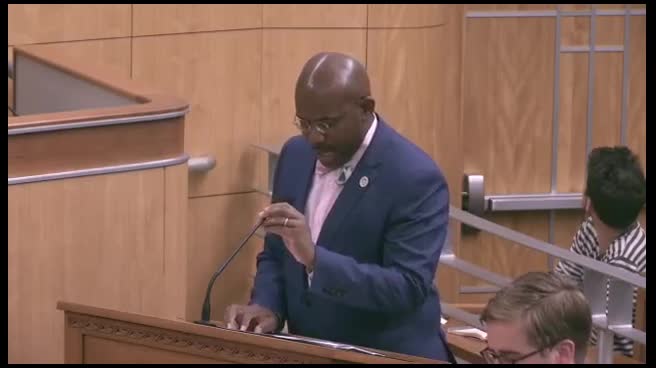 1MIN
Senate Standing Committee on Transportation and Housing





Bill Co-Author(s):