AB 427: Early primary programs: child care services: eligibility: military families.
- Session Year: 2015-2016
- House: Assembly
- Latest Version Date: 2015-05-06
The Child Care and Development Services Act has a purpose of providing a comprehensive, coordinated, and cost-effective system of child care and development services for children from infancy to 13 years of age and their parents, including a full range of supervision, health, and support services through full- and part-time programs.
This bill would exclude from income the amount of the basic allowance for housing provided to an individual who is on federal active duty, state active duty, active duty for special work, or Active Guard and Reserve duty in the military that is equal to the lowest rate of the allowance for the military housing area in which the individual resides for purposes of determining eligibility for child care and development services.
Existing law provides various legislative declarations concerning early primary programs, including, among others, that it is the Legislatures intent that school districts that establish an early primary program coordinate that program, whenever possible, with the Demonstration in Restructuring of Public Education program and, where applicable, with the county interagency childrens services coordinating council.
This bill would make nonsubstantive changes to those provisions.
(a)The Legislature finds and declares all of the following:
(1)California is home to a large number of military personnel, including 150,000 active duty personnel.
(2)Military families are a unique population with unique circumstances. The children of military families face constant transition, including family mobility and parental deployment.
(3)Military families move more than twice as often as civilian families. Forty percent of officers and 60 percent of enlisted personnel move during the school year. Thus, the lower the rank of the military family member, the more often the family moves.
(4)During a time of war, military families endure the strains of long-term separation as one or both parents may be deployed overseas.
(5)During parental deployment children are often anxious, stressed, and confused. Child care providers and preschools can be places where stability and routine can provide security. The routine helps to cushion the impact of parental deployment.
(6)Early education can be a determining factor in the early academic success of a pupil from a military family by providing educational enrichment, as well as a stable and nurturing learning environment.
(b)Given these special circumstances, it is the intent of the Legislature in enacting this act to ensure that military families have access to the child care development services that their children need.
SEC. 2.Section 8209.5 is added to the Education Code, to read:8209.5.(a)For purposes of determining eligibility for services offered pursuant to this chapter, the income of an individual who is on federal active duty, state active duty, active duty for special work, or Active Guard and Reserve duty in the military shall not include the amount of the basic allowance for housing pursuant to Section 403 of Title 37 of the United States Code provided to the individual that is equal to the lowest rate of the allowance for the military housing area in which the individual resides.
(b)This section does not affect the priorities for federal and state subsidized child development services established pursuant to subdivision (b) of Section 8263.
(a)The Legislature finds and declares all of the following:
(1)California is home to a large number of military personnel, including 150,000 active duty personnel.
(2)Military families are a unique population with unique circumstances. The children of military families face constant transition, including family mobility and parental deployment.
(3)Military families move more than twice as often as civilian families. Forty percent of officers and 60 percent of enlisted personnel move during the school year. Thus, the lower the rank of the military family member, the more often the family moves.
(4)During a time of war, military families endure the strains of long-term separation as one or both parents may be deployed overseas.
(5)During parental deployment children are often anxious, stressed, and confused. Child care providers and preschools can be places where stability and routine can provide security. The routine helps to cushion the impact of parental deployment.
(6)Early education can be a determining factor in the early academic success of a pupil from a military family by providing educational enrichment, as well as a stable and nurturing learning environment.
(b)Given these special circumstances, it is the intent of the Legislature in enacting this act to ensure that military families have access to the child care development services that their children need.
SEC. 2.Section 8209.5 is added to the Education Code, to read:8209.5.For purposes of determining eligibility for services offered pursuant to this chapter, the income of an individual who is on federal active duty, state active duty, active duty for special work, or Active Guard and Reserve duty in the military shall not include the amount of the basic allowance for housing pursuant to Section 403 of Title 37 of the United States Code provided to the individual that is equal to the lowest rate of the allowance for the military housing area in which the individual resides.
SECTION 1.Section 8970 of the Education Code is amended to read:8970.The Legislature hereby finds and declares all of the following:
(a)The Superintendent convened a Task Force on School Readiness that prepared a report that included the following findings and recommendations:
(1)Preschool and kindergarten programs have become more academically oriented with an emphasis on paper and pencil seat work and a decreased emphasis on other essential age-appropriate curricular elements such as language development; familiarity with stories, music, and oral language experiences; artistic exploration; social interaction; and large muscle development.
(2)Assessment tests of questionable validity and reliability are being used to delay childrens entrance to kindergarten or to place them in a two-year kindergarten.
(3)An appropriate, integrated experiential curriculum should be provided for children in preschool, kindergarten, and grades 1 to 3, inclusive.
(4)Programs should meet the special needs of our culturally and linguistically diverse pupils as well as the needs of exceptional children.
(5)Classroom organization and teaching methods should reflect the heterogeneous skills and abilities of children in early primary programs.
(6)School districts should be encouraged to develop communication about linkages between programs for four-year-olds, early primary programs, and the primary and intermediate grades of elementary schools.
(7)The staff of early primary programs should receive appropriate education, training, and remuneration.
(8)Programs should be offered full-day and also should provide before- and after-school care.
(9)Assessment methods of children in early primary programs should be drastically altered.
(10)Parental involvement should be encouraged.
(11)A public awareness campaign should be launched describing appropriate learning practices for children in preschool, kindergarten, and grades 1 to 3, inclusive.
(b)The Superintendent issued a Triennial Report on Publicly Funded Child Development Programs that documents the increasing numbers of low-income families eligible but unserved by limited preschool and child care funds, and that presents policy implications for staffing and funding issues.
(c)National studies show future benefits of early intervention programs to society and immediate advantages to California employers in the form of reduced absenteeism, improved worker morale, and increased productivity.
(d)It is the intent of the Legislature that activities initiated as a result of this chapter shall continue without regard to fiscal year depending, when necessary, on continued funding.
(e)It is the intent of the Legislature that school districts that establish an early primary program coordinate that program, whenever possible, with the Demonstration of Restructuring in Public Education program, established pursuant to Chapter 9 (commencing with Section 58900) of Part 31 and, where applicable, with the county interagency childrens services coordination council, established pursuant to Article 2 (commencing with Section 18986.10) of Chapter 12.8 of Part 6 of Division 9 of the Welfare and Institutions Code.
The Legislature hereby finds and declares all of the following:
(a)The Superintendent of Public Instruction convened a Task Force on School Readiness that prepared a report which that included the following findings and recommendations:
(1)Preschool and kindergarten programs have become more academically oriented with an emphasis on paper and pencil seat work and a decreased emphasis on other essential age-appropriate curricular elements such as language development; familiarity with stories, music, and oral language experiences; artistic exploration; social interaction; and large muscle development.
(2)Assessment tests of questionable validity and reliability are being used to delay childrens entrance to kindergarten or to place them in a two-year kindergarten.
(3)An appropriate, integrated experiential curriculum should be provided for children in preschool, kindergarten, and grades 1 to 3, inclusive.
(4)Programs should meet the special needs of our culturally and linguistically diverse pupils as well as the needs of exceptional children.
(5)Classroom organization and teaching methods should reflect the heterogeneous skills and abilities of children in early primary programs.
(6)School districts should be encouraged to develop communication about linkages between programs for four-year-olds, early primary programs, and the primary and intermediate grades of elementary schools.
(7)The staff of early primary programs should receive appropriate education, training, and remuneration.
(8)Programs should be offered full-day and also should provide before- and after-school care.
(9)Assessment methods of children in early primary programs should be drastically altered.
(10)Parental involvement should be encouraged.
(11)A public awareness campaign should be launched describing appropriate learning practices for children in preschool, kindergarten, and grades 1 to 3, inclusive.
(b)The Superintendent of Public Instruction issued a Triennial Report on Publicly Funded Child Development Programs that documents the increasing numbers of low-income families eligible but unserved by limited preschool and child care funds, and that presents policy implications for staffing and funding issues.
(c)National studies show future benefits of early intervention programs to society and immediate advantages to California employers in the form of reduced absenteeism, improved worker morale, and increased productivity.
(d)It is the intent of the Legislature that activities initiated as a result of this chapter shall continue without regard to fiscal year depending, when necessary, on continued funding.
(e)It is the intent of the Legislature that school districts that establish an early primary program coordinate that program, whenever possible, with the Demonstration in of Restructuring of in Public Education program, established pursuant to Chapter 9 (commencing with Section 58900) of Part 31 and, where applicable, with the county interagency childrens services coordinating coordination council, established pursuant to Article 2 (commencing with Section 18986.10) of Chapter 12.8 of Part 6 of Division 9 of the Welfare and Institutions Code.
|
Date
|
Status
|
|---|---|
| May 27, 2015 | From committee: Do pass. To Consent Calendar. (Ayes 17. Noes 0.) (May 27). |
| Aug 27, 2015 | In committee: Held under submission. |
| Jul 6, 2015 | In committee: Referred to APPR. suspense file. |
| Jun 24, 2015 | From committee: Do pass and re-refer to Com. on APPR. with recommendation: To Consent Calendar. (Ayes 9. Noes 0.) (June 24). Re-referred to Com. on APPR. |
| Jun 11, 2015 | Referred to Com. on ED. |
| Jun 2, 2015 | Read third time. Passed. Ordered to the Senate. (Ayes 78. Noes 0. Page 1816.) |
| Jun 2, 2015 | Read third time. Passed. Ordered to the Senate. |
| Jun 2, 2015 | In Senate. Read first time. To Com. on RLS. for assignment. |
| May 28, 2015 | Read second time. Ordered to Consent Calendar. |
| Feb 19, 2015 | Read first time. To print. |
| May 7, 2015 | Re-referred to Com. on APPR. |
| May 6, 2015 | Read second time and amended. |
| May 5, 2015 | From committee: Amend, and do pass as amended and re-refer to Com. on APPR. with recommendation: To Consent Calendar. (Ayes 7. Noes 0.) (April 28). |
| Apr 6, 2015 | Re-referred to Com. on HUM. S. |
| Mar 26, 2015 | Referred to Com. on HUM. S. |
| Mar 26, 2015 | From committee chair, with author's amendments: Amend, and re-refer to Com. on HUM. S. Read second time and amended. |
| Feb 20, 2015 | From printer. May be heard in committee March 22. |
|
Date
|
Description
|
Location
|
Votes
|
|
|---|---|---|---|---|
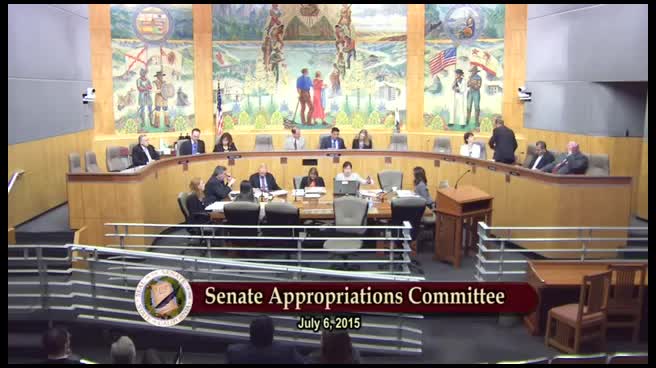
| Jul 6, 2015 | Placed on suspense file | Senate Standing Committee on Appropriations |
Passed |
|
| Jun 24, 2015 | Do pass, but first be re-referred to the Committee on [Appropriations] with the recommendation: To Consent Calendar | Senate Standing Committee on Education |
Passed |
|
| Jun 2, 2015 | AB 427 WEBER Consent Calendar Second Day Regular Session | Assembly Floor |
Passed |
|
| May 27, 2015 | Do pass. To Consent Calendar. | Assembly Standing Committee on Appropriations |
Passed |
|
| Apr 28, 2015 | Do pass as amended, and be re-referred to the Committee on [Appropriations] with recommendation: To Consent Calendar | Assembly Standing Committee on Human Services |
Passed |
This list shows positions taken on this bill by organizations on the date displayed, which is linked to the original source.
Positions by individuals are not included.
|
Organization
|
Position
|
Date
|
|---|---|---|
| American Federation of State, County and Municipal Employees | ** Support | Jul 6, 2015 |
| California School Boards Association | ** Support | Jul 6, 2015 |
| California State PTA | ** Support | Jul 6, 2015 |
| Educational Enrichment Systems | ** Support | Jul 6, 2015 |
| Military Child Education Coalition | ** Support | Jul 6, 2015 |
| San Diego County Office of Education | ** Support | Jul 6, 2015 |
| San Diego Unified School District | ** Support | Jul 6, 2015 |
| u None received. | ** Against | Jul 6, 2015 |
AB 427 (Weber) Page 3 of 3
SENATE COMMITTEE ON APPROPRIATIONS
Senator Ricardo Lara, Chair
2015 - 2016 Regular Session
AB 427 (Weber) - Early primary programs: child care services: eligibility: military families.
|
|
Version: May 6, 2015 |
Policy Vote: ED. 9 - 0 |
Urgency: No |
Mandate: No |
Hearing Date: July 6, 2015 |
Consultant: Jillian Kissee |
This bill meets the criteria for referral to the Suspense File.
Bill Summary:
This bill excludes the military housing allowance from being calculated as income when determining eligibility for child care and development services specified under the Child Care and Development Services Act.
Fiscal Impact:
Unknown, potentially significant, costs and/or cost pressures to the state to provide funding for services to the extent additional families become eligible by meeting the income eligibility requirement from disregarding the military housing allowance. Increased eligibility would result in General Fund cost increases in the CalWORKs child care program, as it is an entitlement, and increased cost pressures resulting from longer waitlists in the appropriation-capped programs. See staff comments.
Minor and absorbable costs to the State Department of Education to amend regulations and to train staff on new requirements.
Background:
Existing law establishes the Child Care and Development Services Act to provide child care and development services as part of a coordinated, comprehensive, and cost-effective system serving children from birth to 13 years old and their parents including a full range of supervision, health, and support services through full- and part-time programs. (Education Code § 8200 et seq.)
The state pays for services through vouchers and contracts. Child care provided through CalWORKs and the Alternative Payment Program is reimbursed through vouchers. Care provided through General Child Care, Migrant and Handicapped child care, and State Preschool is reimbursed through contracts with the State Department of Education.
Existing law defines “child care and development services” to mean services designed to meet a wide variety of children’s and families’ needs while parents and guardians are working, in training, seeking employment, incapacitated, or in need of respite. (EC § 8208)
Existing federal law provides a basic allowance for housing to which a uniformed service member, including a member with dependents, as specified, is entitled if he or she is also entitled to basic pay. (37 U.S.C. § 403) Basic pay is received by all in the military and is the main component of an individual's salary.
Child
Care Eligibility
Existing law specifies that
children are eligible for subsidized child care if the family
currently receives aid, meets specified income eligibility
requirements, is homeless, or if the child is the recipient of
protective services, or has been identified as neglected, abused or
exploited (or at risk of such). In addition, the family must be in
need of the child care services due to specified social service
circumstances, employment training, or other specified needs.
Families are required to report changes in these circumstances
throughout their child’s enrollment that could disqualify a child
from the program.
State regulations provide that for state preschool programs located on or in close proximity to a military base, the contractor may, with the approval of the State Department of Education, exclude the basic allowance for housing for purposes of determining eligibility for families with military personnel, as specified, if the families reside on a military base or in military housing.
Proposed Law:
For purposes of determining eligibility for child care and development services, this bill excludes the amount of the basic allowance for housing provided to the individual that is equal to the lowest rate of the allowance for the military housing area in which the individual resides from the income of an individual who is on federal active duty, state duty, active duty for special work, or Active Guard and Reserve duty in the military. This bill also specifies that it does not affect the priorities for federal and state subsidized child development services that exist pursuant to existing law.
Related Legislation:
AB 170 (Saldaña, 2007) similar to this bill, excluded the basic housing allowance received by active military personnel from the income calculation for purposes of determining eligibility for state preschool. AB 170 died in the Assembly Appropriations committee.
Staff
Comments: This bill requires that the basic allowance for housing
provided to individuals in the military, as specified, be excluded
from the income calculation for purposes of determining eligibility
for child care and development services.
The basic housing allowance depends on the individual’s geographic duty location, pay grade, and dependency status. According to the Department of Defense, rates for Los Angeles range from about $2,200 per month for lower pay grades and $3,600 per month for higher pay grades, assuming the individual has dependents. This bill requires that the deducted amount be equal to the lowest rate of the allowance for the military housing area in which the individual resides. This bill could require exclusion of about $26,000 from a family’s income using Los Angeles as an example.
This bill will likely have the effect of prioritizing military families for slots in child care programs as they become available. Since their income will be lower without the inclusion of the basic housing allowance, they will move higher on the waitlist for services, while other families will move down.
To
the extent this bill results in increased eligibility for services
for those families that are marginally above the income eligibility
requirement, waitlists for services may grow for capped programs and
General Fund costs could be triggered for the CalWORKs program.
Funding in the 2015-16 fiscal year for the child care and development
services administered by the State Department of Education that would
be affected by this bill, is about $2.4 billion. Assuming most
families that would be affected by this bill are already receiving
prioritization in the state’s preschool program, as authorized by
regulations, the scope of programs that could be affected by this
bill amount to about $1.4 billion. A one percent increase in these
programs to serve additional children would amount to about $14
million.
The Budget Act of 2015 provides an increase of $52.6 million General Fund to provide child care vouchers for an additional 6,800 children from low-income working families. This would equate to about $7,700 per slot.
-- END --
AB 427 (Weber) Page 3 of 3
SENATE COMMITTEE ON EDUCATION
Senator Carol Liu, Chair
2015 - 2016 Regular
Bill No: AB 427
Author: |
Weber |
||
Version: |
May 6, 2015 Hearing Date: June 24, 2015 |
||
Urgency: |
No |
Fiscal: |
Yes |
Consultant: |
Olgalilia Ramirez |
||
Subject: Early primary programs: child care services: eligibility: military families
SUMMARY
This bill excludes the military housing allowance from being calculated as income when determining eligibility for child care and development services specified under the Child Care and Development Services Act.
BACKGROUND
1) Existing law establishes the Child Care and Development Services Act to provide child care and development services as part of a coordinated, comprehensive, and cost-effective system serving children from birth to 13 years old and their parents including a full range of supervision, health, and support services through full- and part-time programs. (Education Code § 8200 et seq.)
2) Existing law defines “child care and development services” to mean services designed to meet a wide variety of children’s and families’ needs while parents and guardians are working, in training, seeking employment, incapacitated, or in need of respite. (EC § 8208)
3) Existing law requires the Superintendent of Public Instruction to administer general child care and development programs to include, among other things as specified, age- and developmentally-appropriate activities, supervision, parenting education and involvement, and nutrition. Further allows such programs to be designed to meet child-related needs identified by parents or guardians, as specified.
(EC § 8240 and § 8241)
4) Existing law establishes requirements that families must meet in order to be eligible for federal and state subsidized child development services, and grant priority enrollment to children who have been or are at risk of being abused or neglected, as specified. (EC § 8263)
5) Existing federal law provides, a basic allowance for housing to which a uniformed service member, including a member with dependents, as specified, is entitled if he or she is also entitled to basic pay. (37 U.S.C. § 403)
ANALYSIS
Excludes from income calculation the amount of basic allowance for housing received by specified active duty military for purposes of determining eligibility for child care and development services specified under the Child Care and Development Services Act.
Specifies, that the amount of basic allowance for housing excluded from income be equal to the lowest rate of the allowance for the military housing area in which an individual resides.
Makes a number of legislative declarations and findings related to military families and the role child care and preschools play for providing a stability environment for military children.
STAFF
COMMENTS
Need for the bill: To help cover the cost of housing for a military family, some service members are issued a housing allowance. According to the author, many of these families that could be eligible for subsidized child care services do not qualify as a result of the housing allowance inflating their calculated income. This bill seeks to expand access to state subsidized child care programs for active duty military families.
Military Allowance for Housing. The housing allowance or the Basic Allowance for Housing (BAH) is based on geographic duty location, pay grade, and dependency status. The intent of BAH is to provide service members equitable housing compensation based on local housing markets, when military housing is not provided. In California, the beginning BAH for beginning-ranking personnel with dependents range from the mid $800's for areas such as China Lake to the mid $3,000’s for San Francisco. The ranges subsequently increase according to military rank. In order to be eligible for subsidized child care and development services, state regulations require a family's adjusted monthly income to be at or below 75% of the state median income.
This bill proposes to exclude the BAH as income for purposes of determining eligibility for child care and development services thereby making families that would not otherwise qualify eligible for subsidized care. Under the provisions of this bill the amount of basic allowance for housing excluded from income must be equal to the lowest rate of the allowance for the military housing area in which an individual resides. Leaving a higher ranking official with the same allowance as lower ranking personnel.
Child Care Eligibility. Existing law specifies that children are eligible for subsidized child care if the family currently receives aid, meets specified income eligibility requirements, is homeless, or if the child is the recipient of protective services, or has been identified as neglected, abused or exploited (or at risk of such). In addition, the family must be in need of child care services due to specified social service circumstances, employment training, or other specified needs.
Existing state regulations (Title 5, CCR, § 18134) allow for state pre-school programs located on or in close proximity to a military base to, exclude the military housing allowance provided for active military personnel, when calculating income for eligibility. This bill would expand this process to include a variety of child care and development services as defined by current law.
Prior legislation.
AB 170 (Saldaña, 2007) similar to this bill, excludes from income calculation the basic housing allowance received by active military personnel for purposes of determining eligibility for state preschool. AB 170 died in the Assembly Appropriations committee.
SUPPORT
American Federation of State, County and Municipal Employees (AFSCME)
California School Boards Association
California State PTA
San Diego County Office of Education
San Diego Unified School District
OPPOSITION
None received.
-- END --
AB 427
Page 2
Date of Hearing: May 27, 2015
ASSEMBLY COMMITTEE ON APPROPRIATIONS
Jimmy Gomez, Chair
AB 427
(Weber) – As Amended May 6, 2015
Policy Committee: |
Human Services |
Vote: |
7 - 0 |
|
|
|
|
|
|
|
|
Urgency: No State Mandated Local Program: No Reimbursable: No
SUMMARY:
This bill excludes all or a portion of the basic allowance for housing received by active duty military personnel from income calculations, for purposes of determining eligibility for child care and development programs.
FISCAL EFFECT:
Minor and absorbable costs to the California Department of Education (CDE) to amend its regulations and train employees on the new requirements.
Statewide, if there is no additional appropriation to support the increased number of families who would become eligible for subsidized childcare as a result of this bill, waiting lists would grow.
COMMENTS:
Purpose. According to the author, “Currently, due to an emergency regulation passed back in 2007, preschool contractors with written approval from the Department of Education can exclude the Basic Allowance for Housing (BAH) given to military families from being factored into eligibility for state preschool. This bill simply seeks to both streamline and expand this process, by codifying the exclusion of the BAH along with expanding it to more childcare services. Many of these military families should be eligible for state funded childcare services, but they do not qualify because an earmarked affordable housing allowance inflates their calculated income. These children are a population in need and deserve to have access to high quality childcare.”
When housing allowances are excluded, more military families would qualify for childcare.
With waiting lists common statewide, excluding BAH would give military families enrollment priority over other income-eligible families.
Basic Allowance for Housing. The United States Government, in addition to providing a base salary, provides additional monthly allowances for various purposes (e.g., for clothing, housing), all of which are reported as monthly or annual income on the military's Leave and Earnings statement. The amounts of the allowances vary according to rank, length of service, and geographic location. The BAH is provided to those military personnel who do not live in military housing units or units that are no longer military-operated housing units. In California, the beginning BAH for personnel with dependents range from the mid $800's for areas such as Twenty Nine Palms and China Lake, to $3,651 for San Francisco. The ranges increase according to rank. This bill proposes to exclude the BAH as income for purposes of determining eligibility for childcare programs.
State Preschool. Current regulations allow a state preschool contractor to exclude the BAH from consideration when determining eligibility and income ranking for families that include specified active military personnel (consistent with the individuals identified in this bill), provided the contractor has prior written approval from the California Department of Education (CDE). The regulation also requires the state preschool program for which this exclusion is provided to be on or in close proximity to a military base, and it requires that first priority for program vacancies be provided to children pursuant to all statutorily mandated priorities, which are consistent with the priorities outlined for subsidized child care programs.
This bill expands the BAH exclusion to additional types of childcare and eliminates the requirement for a state preschool contractor to be granted written approval from CDE prior to excluding the BAH from eligibility considerations.
Prior Legislation. AB 170 (Saldaña), 2007, was held in this Committee's suspense file, would have excluded the basic allowance for housing provided to military families from being counted in state preschool services eligibility determinations. Title 5, CCR, Section 18134 was subsequently established through emergency regulations.
Analysis Prepared by: Jennifer Swenson / APPR. / (916) 319-2081
AB 427
Page 4
Date of Hearing: April 28, 2015
ASSEMBLY COMMITTEE ON HUMAN SERVICES
Kansen Chu, Chair
AB 427
(Weber) – As Amended March 26, 2015
SUBJECT: Early primary programs: child care services: eligibility: military families
SUMMARY: Excludes all or a portion of the basic allowance for housing provided to active duty military personnel from counting as income for purposes of determining eligibility for child care and development programs.
Specifically, this bill:
Makes a number of legislative findings related to military families and the role of early education in providing stability and routine for children whose parents are deployed.
States the intent of the Legislature to ensure that military families have access to the child care development services that their children need.
Excludes the amount of the basic allowance for housing equal to the lowest rate of the allowance for the military housing area in which an individual resides from income calculations for children of active military personnel, as specified, when determining eligibility for services under the Child Care and Development Services Act.
EXISTING LAW:
Establishes the Child Care and Development Services Act to provide child care and development services as part of a coordinated, comprehensive, and cost-effective system serving children from birth to 13 years old and their parents and including a full range of supervision, health, and support services through full- and part-time programs. (EDC 8200 et seq.)
Defines “child care and development services” to mean services designed to meet a wide variety of children’s and families’ needs while parents and guardians are working, in training, seeking employment, incapacitated, or in need of respite. (EDC 8208)
Requires the Superintendent of Public Instruction to administer general child care and development programs to include, among other things as specified, age- and developmentally-appropriate activities, supervision, parenting education and involvement, and nutrition. Further allows such programs to be designed to meet child-related needs identified by parents or guardians, as specified. (EDC 8240, 8241)
Establishes requirements families must meet in order to be eligible for federal and state subsidized child development services, and grants priority enrollment to children who have been or are at risk of being abused or neglected, as specified. (EDC 8263)
Provides, pursuant to federal law, a basic allowance for housing to which a uniformed service member, including a member with dependents, as specified, is entitled if he or she is also entitled to basic pay. (37 U.S.C. 403)
Authorizes a State Preschool contractor located on or in close proximity to a military base, with prior written approval, as specified, to exclude from the child care eligibility and rankings determination the amount of the basic allowance for housing provided to an individual on federal active duty, state active duty, active duty for special work, or Active Guard and Reserve duty in the military whose family resides on a military base or in military housing. Requires program vacancies to first be filled by children pursuant to all statutorily mandated priorities for State Preschool programs. (Title 5, CCR, Section 18134)
FISCAL EFFECT: Unknown
COMMENTS:
Child development programs: Child care and development services are provided throughout California pursuant to requirements and standards included in the Child Care and Development Services Act. Among other supports, the state’s child development system accommodates parents by ensuring their children are served in a healthy and safe environment while they are at work, in training or seeking employment, and it grants families access to programs that will help children with their social, emotional, educational and physical development. General child care and development programs are funded with federal and state dollars, and serve children from birth through 12 years of age.
Subsidized child care eligibility and prioritization: Certain eligibility and prioritization rules apply to subsidized child care in California. For non-CalWORKs subsidized child care, a family must meet both eligibility and need criteria. The eligibility criteria include: currently receiving aid, being income-eligible, being homeless, or having children who are recipients of protective services or who have been identified as being, or are at risk of being, abused, neglected, or exploited. Families must also meet the need criteria, meaning either the child has to have been identified by a legal, medical, or social services agency or emergency shelter as being a recipient of protective services or being (or at risk of being) abused, neglected or exploited, or the parents need to be employed or seeking employment, engaged in vocational training, seeking permanent housing for family stability, or incapacitated. In addition to making care for their children more financially accessible for low-income families, subsidized child care helps to ensure that providers can operate in low-income communities where child care would otherwise be unavailable.
Military compensation and allowances: A report prepared for the US Department of Defense revealed that in 2012, there were 155,985 active duty military personnel in California. In addition to basic pay, which is provided to a uniformed service member based on his or her grade (or rank) and years of service, there are a number of allowances the federal government provides to service members when it cannot meet an individual’s specific needs. These allowances include a basic allowance for housing (BAH), which is provided to service members that don’t live in government-provided housing. The amount of the BAH is adjusted based on pay grade and whether a service member has dependents. This allowance is also adjusted based on the local median rental rates across different geographic locations (called military housing areas), but it is not designed to cover all costs. According to 2015 rates in California, the beginning BAH amounts for service members with dependents range from $840 per month in China Lake and $849 in Twentynine Palms up to $2,925 per month in Santa Clara County and $3,651 in San Francisco. All of these rates increase according to rank.
Because this bill proposes to exclude from child care eligibility calculations the amount of a service member’s BAH that is equal to the lowest rate of the allowance for the military housing area in which the individual resides, it will exclude the entire allowance for beginning-rank service members, while excluding only a portion of the rate for higher ranking service members.
Income calculations for state preschool: Section 18134 of Title 5 of the California Code of Regulations provides for an exception to the calculation of the adjusted monthly income for military personnel enrolling their children in state preschool. More specifically, the regulations allow a state preschool contractor to exclude the BAH from consideration when determining eligibility and income ranking for families that include specified active military personnel (consistent with the individuals identified in this bill), provided the contractor has prior written approval from the California Department of Education (CDE). The regulation also requires the state preschool program for which this exclusion is provided to be on or in close proximity to a military base, and it requires that first priority for program vacancies be provided to children pursuant to all statutorily mandated priorities, which are consistent with the priorities outlined for subsidized child care programs.
Need for this bill: According to the author, “Currently, due to an emergency regulation passed back in 2007, preschool contractors with written approval from the Department of Education can exclude the Basic Allowance for Housing given to military families from being factored into eligibility for state preschool. This bill simply seeks to both streamline and expand this process, by codifying the exclusion of the BAH along with expanding it to more childcare services. Many of these military families should be eligible for state funded childcare services, but they do not qualify because an earmarked affordable housing allowance inflates their calculated income. These children are a population in need and deserve to have access to high quality childcare.”
Recommended amendment: Because this bill applies to the entire Chapter within the Education Code that establishes and sets forth requirements of the Child Care and Development Services Act, this bill applies to child care services and overrides the current regulation relative to the exclusion of the BAH for state preschool eligibility determinations. As stated by the author, this bill expands the scope of the current BAH exclusion and eliminates the requirement that a state preschool contractor be granted approval from CDE prior to excluding the BAH from consideration.
While quality child care is essential for all parents to gain and retain employment in the civilian workforce, the stability child care can provide to military families is, additionally, directly linked to an active military member’s readiness for service. Still, without providing an increase in the number of funded child care slots, this bill could potentially cause children from military families receiving a BAH, though also deserving of quality child care, to crowd out the other priority categories of children, including abused, neglected, and at-risk children, with often far fewer resources. Efforts to increase access to adequate child care for military families should most definitely be made; however, this must be done with care so as to not consequently diminish access for other vulnerable populations.
In order to not jeopardize access to child care for other vulnerable children, committee staff recommends that this bill be amended to maintain the prioritization for Child Care and Development Services Act programs provided for in current law.
PRIOR LEGISLATION:
AB 170 (Saldaña), 2007, would have excluded the basic allowance for housing provided to military families from being counted in state preschool services eligibility determinations. It died on the Assembly Appropriations Committee suspense file. Title 5, CCR, Section 18134 was subsequently established through emergency regulations.
REGISTERED SUPPORT / OPPOSITION:
Support
American Federation of State, County and Municipal Employees (AFSCME), AFL-CIO
San Diego County Office of Education (SDCOE)
Educational Enrichment Systems
Military Child Education Coalition
Opposition
None on file.
Analysis Prepared by: Myesha Jackson / HUM. S. / (916) 319-2089
Discussed in Hearing
 59SEC
Senate Standing Committee on Appropriations
Bill Author

Bill Co-Author(s):