AB 678: Energy Efficiency and Greenhouse Gas Reductions Ports Program.
- Session Year: 2015-2016
- House: Assembly
- Latest Version Date: 2015-08-18
Existing law establishes various programs to provide financial assistance for energy efficiency upgrades and investments. Under existing law, the State Air Resources Board has issued regulations to reduce emissions from diesel auxiliary engines on container ships, passenger ships, and refrigerated cargo ships while berthing at a California port. Existing law establishes the Greenhouse Gas Reduction Fund as a special fund in the State Treasury, and requires that all moneys collected by the state board from the auction or sale of specified greenhouse gas allowances, allowances be deposited in the fund and available for appropriation by the Legislature.
This bill would require the state board, in conjunction with the State Energy Resources Conservation and Development Commission, to develop and implement the Energy Efficiency and Greenhouse Gas Reductions Ports Program to fund energy efficiency upgrades and investments at public ports, as described. The bill would require a port to develop and adopt an energy plan for the port to receive funding under the program for energy-related projects. The bill would authorize the state board to expend moneys it receives from an appropriation from the fund for the purposes of the bill, as provided.
Existing law establishes various programs to provide financial assistance for energy efficiency upgrades and investments. Under existing law, the State Air Resources Board has issued regulations to reduce emissions from diesel auxiliary engines on container ships, passenger ships, and refrigerated cargo ships while berthing at a California port. Existing law establishes the Greenhouse Gas Reduction Fund as a special fund in the State Treasury, and requires that all moneys collected by the state board from the auction or sale of specified greenhouse gas allowances, be deposited in the fund and available for appropriation by the Legislature.
This bill would require the state board, in conjunction with the State Energy Resources Conservation and Development Commission, to develop and implement the Energy Efficient Efficiency and Greenhouse Gas Reductions Ports Program to fund energy efficiency upgrades and investments at public ports, as described. The bill would require a port to develop and adopt an energy plan for the port to receive funding under the program for energy-related projects. The bill would authorize the state board to expend moneys it receives from an appropriation from the fund for the purposes of the bill, as provided.
Existing law establishes various programs to provide financial assistance for energy efficiency upgrades and investments. Under existing law, the State Air Resources Board has issued regulations to reduce emissions from diesel auxiliary engines on container ships, passenger ships, and refrigerated cargo ships while berthing at a California port. Existing law establishes the Greenhouse Gas Reduction Fund as a special fund in the State Treasury, and requires that all moneys collected by the state board from the auction or sale of specified greenhouse gas allowances, be deposited in the fund and available for appropriation by the Legislature.
This bill would require the state board, in conjunction with the State Energy Resources Conservation and Development Commission, to develop and implement the Energy Efficient Ports Program to fund energy efficiency upgrades and investments at public ports, as described. The bill would authorize the state board to expend moneys it receives from an appropriation from the fund for the purposes, purposes of the bill, as provided.
Existing law establishes various programs to provide financial assistance for energy efficiency upgrades and investments. Under existing law, the State Air Resources Board has issued regulations to reduce emissions from diesel auxiliary engines on container ships, passenger ships, and refrigerated cargo ships while berthing at a California port. Existing law establishes the Greenhouse Gas Reduction Fund as a special fund in the State Treasury, and requires that all moneys collected by the state board from the auction or sale of specified greenhouse gas allowances, be deposited in the fund and available for appropriation by the Legislature.
This bill would require the state board, in conjunction with the State Energy Resources Conservation and Development Commission, to develop and implement the Energy Efficient Ports Program to fund energy efficiency upgrades and investments at public ports. The bill would require that moneys in the fund be available, upon appropriation by the Legislature, for expenditure by the state board for the purposes of the bill. authorize the state board to expend moneys it receives from an appropriation from the fund for the purposes, of the bill, as provided.
Existing law establishes various programs to provide financial assistance for energy efficiency upgrades and investments. Under existing law, the State Air Resources Board has issued regulations to reduce emissions from diesel auxiliary engines on container ships, passenger ships, and refrigerated cargo ships while berthing at a California port. Existing law establishes the Greenhouse Gas Reduction Fund as a special fund in the State Treasury, and requires that all moneys collected by the state board from the auction or sale of specified greenhouse gas allowances, be deposited in the fund and available for appropriation by the Legislature.
This bill would require the state board, in conjunction with the State Energy Resources Conservation and Development Commission, to develop and implement the Energy Efficient Ports Program to fund energy efficiency upgrades and investments at public ports. The bill would require that moneys in the fund be available, upon appropriation by the Legislature, for expenditure by the state board for the purposes of the bill.
Existing law establishes various programs to provide financial assistance for energy efficiency upgrades and investments. Under existing law, the State Air Resources Board has issued regulations to reduce emissions from diesel auxiliary engines on container ships, passenger ships, and refrigerated cargo ships while berthing at a California port.
This bill would require the state board, in conjunction with the State Energy Resources Conservation and Development Commission, to develop and implement the Energy Efficient Ports Program to fund energy efficiency upgrades and investments at public ports.
(a)The state board, in conjunction with the State Energy Resources Conservation and Development Commission, shall develop and implement the Energy Efficiency and Greenhouse Gas Reductions Ports Program to fund energy efficiency upgrades and investments at public ports that help reduce the emissions of criteria pollutants, toxic air contaminants, and greenhouse gases.
(b)Projects eligible for funding in the program shall include, but are not limited to, the following:
(1)Installation of solar, wind, and other renewable technologies at marine terminals, and warehouses and other freight facilities at the ports.
(2)Replacement of conventional lighting with light emitting diodes (LED) lighting at the ports.
(3)Installation of cold ironing or shorepower equipment, or other emissions control or reduction technologies, on vessels, beyond actions required by regulations, to facilitate reduced emissions from diesel auxiliary engines on container ships, passenger ships, and refrigerated cargo ships while berthing at a California port.
(4)Deployment of zero and near-zero emission vehicles and infrastructure technologies, including, but not limited to, stationary fuel cells, energy storage and battery, and electric trucks at California ports.
(5)Other projects that reduce grid-based energy demand from cargo handling operations at public seaports.
(c)The state board, in consultation with the State Energy Resources Conservation and Development Commission, shall develop guidelines for the implementation of this chapter that are consistent with the California Global Warming Solutions Act of 2006 (Division 25.5 (commencing with Section 38500) and Chapter 4.1 (commencing with Section 39710)).
(d)(1)In order to receive funding under this section for energy-related projects, a port shall develop and adopt, in consultation with the respective electric utility providing service to the port, an energy plan for the port.
(2)The energy plan shall be approved by the State Energy Resources Conservation and Development Commission before the port may receive any funding pursuant to this section for energy-related projects. The commission shall review the plan and require any changes before approving the plan.
(3)The energy plan shall adhere to the states preferred energy loading order and require benchmarking for energy retrofit projects and reporting of measurable energy savings.
(e)In order to receive funding under this section, a project shall demonstrate that it will achieve a reduction in emissions of greenhouse gases. In prioritizing projects for funding, the state board, in consultation with the State Energy Resources Conservation and Development Commission, shall consider the extent to which a project would reduce emissions of greenhouse gases and provide environmental and public health co-benefits, including, but not limited to, improved air and water quality.
(e)
(f)Moneys appropriated to the state board from the Greenhouse Gas Reduction Fund, established pursuant to Section 16428.8 of the Government Code, for the purposes of paragraph (1) of subdivision (c) of Section 39712 may be used for the purposes of this section.
(a)The state board, in conjunction with the State Energy Resources Conservation and Development Commission, shall develop and implement the Energy Efficient Efficiency and Greenhouse Gas Reductions Ports Program to fund energy efficiency upgrades and investments at public ports that help reduce the emissions of criteria pollutants, toxic air contaminants, and greenhouse gases.
(b)Projects eligible for funding in the program shall include, but are not limited to, the following:
(1)Installation of solar, wind, and other renewable technologies at marine terminals, and warehouses and other freight facilities at the ports.
(2)Replacement of conventional lighting with light emitting diodes (LED) lighting at the ports.
(3)Installation of cold ironing or shorepower equipment, or other emissions control or reduction technologies, on vessels, beyond actions required by regulations, to facilitate reduced emissions from diesel auxiliary engines on container ships, passenger ships, and refrigerated cargo ships while berthing at a California port.
(4)Deployment of zero and near-zero emission vehicles and infrastructure technologies, including, but not limited to, stationary fuel cells, energy storage and battery, and electric trucks at California ports.
(5)Other projects that reduce grid-based energy demand from cargo handling operations at public seaports.
(c)The state board, in consultation with the State Energy Resources Conservation and Development Commission, shall develop guidelines for the implementation of this chapter that are consistent with the California Global Warming Solutions Act of 2006 (Division 25.5 (commencing with Section 38500) and Chapter 4.1 (commencing with Section 39710)).
(d)(1)In order to receive funding under this section for energy-related projects, a port shall develop and adopt, in consultation with the respective electric utility providing service to the port, an energy plan for the port.
(2)The energy plan shall be approved by the State Energy Resources Conservation and Development Commission before the port may receive any funding pursuant to this section for energy-related projects. The commission shall review the plan and require any changes before approving the plan.
(3)The energy plan shall adhere to the states preferred energy loading order and require benchmarking for energy retrofit projects and reporting of measurable energy savings.
(d)
(e)Moneys appropriated to the state board from the Greenhouse Gas Reduction Fund, established pursuant to Section 16428.8 of the Government Code, for the purposes of paragraph (1) of subdivision (c) of Section 39712 may be used for the purposes of this section.
(a)The state board, in conjunction with the State Energy Resources Conservation and Development Commission, shall develop and implement the Energy Efficient Ports Program to fund energy efficiency upgrades and investments at public ports that help reduce the emissions of criteria pollutants, toxic air contaminants, and greenhouse gases.
(b)Projects eligible for funding in the program shall include, but are not limited to, the following:
(1)Installation of solar, wind, and other renewable technologies at marine terminals, and warehouses and other freight facilities at the ports.
(2)Replacement of conventional lighting with light emitting diodes (LED) lighting at the ports.
(3)Installation of cold ironing or shorepower equipment equipment, or other emissions control or reduction technologies, on vessels, beyond actions required by regulations, to facilitate reduced emissions from diesel auxiliary engines on container ships, passenger ships, and refrigerated cargo ships while berthing at a California port.
(4)Deployment of zero and near-zero emission vehicles and infrastructure technologies, including, but not limited to, stationary fuel cells, energy storage and battery, and electric trucks at California ports.
(5)Other projects that reduce grid-based energy demand from cargo handling operations at public seaports.
(c)The state board, in consultation with the State Energy Resources Conservation and Development Commission, shall develop guidelines for the implementation of this chapter that are consistent with the California Global Warming Solutions Act of 2006 (Division 25.5 (commencing with Section 38500) and Chapter 4.1 (commencing with Section 39710)).
(d)Moneys appropriated to the state board from the Greenhouse Gas Reduction Fund, established pursuant to Section 16428.8 of the Government Code, for the purposes of paragraph (1) of subdivision (c) of Section 39712 may be used for the purposes of this section.
(a)The state board, in conjunction with the State Energy Resources Conservation and Development Commission, shall develop and implement the Energy Efficient Ports Program to fund energy efficiency upgrades and investments at public ports that help reduce the emissions of criteria pollutants, toxic air contaminants, and greenhouse gases.
(b)Projects eligible for funding in the program shall include, but are not limited to, the following:
(1)Installation of solar, wind, and other renewable technologies at marine terminals, and warehouses and other freight facilities at the ports.
(2)Replacement of conventional lighting with light emitting diodes (LED) lighting at the ports.
(3)Installation of cold ironing or shorepower equipment on vessels, beyond actions required by regulations, to facilitate reduced emissions from diesel auxiliary engines on container ships, passenger ships, and refrigerated cargo ships while berthing at a California port.
(4)Deployment of zero and near-zero emission vehicles and infrastructure technologies, including, but not limited to, stationary fuel cells, energy storage and battery, and electric trucks at California ports.
(5)Other projects that reduce grid-based energy demand from cargo handling operations at public seaports.
(c)The state board, in consultation with the State Energy Resources Conservation and Development Commission, shall develop guidelines for the implementation of this chapter that are consistent with the California Global Warming Solutions Act of 2006 (Division 25.5 (commencing with Section 38500) and Chapter 4.1 (commencing with Section 39710)).
(d)Moneys in the Greenhouse Gas Reduction Fund, established pursuant to Section 16428.8 of the Government Code, shall be available, upon appropriation by the Legislature, for expenditure by the state board for the purposes of this section.
(d)Moneys appropriated to the state board from the Greenhouse Gas Reduction Fund, established pursuant to Section 16428.8 of the Government Code, for the purposes of paragraph (1) of subdivision (c) of Section 39712 may be used for the purposes of this section.
(a)The state board, in conjunction with the State Energy Resources Conservation and Development Commission, shall develop and implement the Energy Efficient Ports Program to fund energy efficiency upgrades and investments at public ports that help reduce the emissions of criteria pollutants, toxic air contaminants, and greenhouse gases.
(b)Projects eligible for funding in the program shall include, but are not limited to, the following:
(1)Installation of solar, wind, and other renewable technologies at marine terminals, and warehouses and other freight facilities at the ports.
(2)Replacement of conventional lighting with light emitting diodes (LED) lighting at the ports.
(3)Installation of cold ironing or shorepower equipment on vessels, beyond actions required by regulations, to facilitate reduced emissions from diesel auxiliary engines on container ships, passenger ships, and refrigerated cargo ships while berthing at a California port.
(4)Deployment of zero and near-zero emission vehicles and infrastructure technologies, including, but not limited to, stationary fuel cells, energy storage and battery, and electric trucks at California ports.
(5)Other projects that reduce grid-based energy demand from cargo handling operations at public seaports.
(c)The state board, in consultation with the State Energy Resources Conservation and Development Commission, shall develop guidelines through the funding plan process for the Air Quality Improvement Program established pursuant to Article 3 (commencing with Section 44274) of Chapter 8.9 of Part 5 for the implementation of this chapter that are consistent with the California Global Warming Solutions Act of 2006 (Division 25.5 (commencing with Section 38500) and Chapter 4.1 (commencing with Section 39710)).
(d)Moneys in the Greenhouse Gas Reduction Fund, established pursuant to Section 16428.8 of the Government Code, shall be available, upon appropriation by the Legislature, for expenditure by the state board for the purposes of this section.
(a)The state board, in conjunction with the State Energy Resources Conservation and Development Commission, shall develop and implement the Energy Efficient Ports Program to fund energy efficiency upgrades and investments at public ports. ports that help reduce the emissions of criteria pollutants, toxic air contaminants, and greenhouse gases.
(b)Projects eligible for funding in the program shall include, but are not limited to, the following:
(1)Installation of solar solar, wind, and other renewable technologies at marine terminals, and warehouses and other freight facilities at the ports.
(2)Replacement of conventional lighting with light emitting diodes (LED) lighting at the ports.
(3)Installation of cold ironing or shorepower equipment on vessels, beyond actions required by regulations, to facilitate reduced emissions from diesel auxiliary engines on container ships, passenger ships, and refrigerated cargo ships while berthing at a California port.
(4)Deployment of zero and near-zero emission vehicles and infrastructure technologies, including, but not limited to, stationary fuel cells, energy storage and battery, and electric trucks at California ports.
(5)Other projects that reduce grid-based energy demand from cargo handling operations at public seaports.
(c)The state board, in consultation with the State Energy Resources Conservation and Development Commission, shall develop guidelines through the funding plan process for the Air Quality Improvement Program established pursuant to Article 3 (commencing with Section 44274) of Chapter 8.9 of Part 5 for the implementation of this chapter that are consistent with the California Global Warming Solutions Act of 2006 (Division 25.5 (commencing with Section 38500) and Chapter 4.1 (commencing with Section 39710)).
(a)The state board, in conjunction with the State Energy Resources Conservation and Development Commission, shall develop and implement the Energy Efficient Ports Program to fund energy efficiency upgrades and investments at public ports.
(b)Projects eligible for funding in the program shall include, but are not limited to, the following:
(1)Installation of solar technologies at marine terminals, and warehouses and other freight facilities at the ports.
(2)Replacement of conventional lighting with light emitting diodes (LED) lighting at the ports.
(c)The state board, in consultation with the State Energy Resources Conservation and Development Commission, shall develop guidelines through the funding plan process for the Air Quality Improvement Program established pursuant to Article 3 (commencing with Section 44274) of Chapter 8.9 of Part 5 for the implementation of this chapter that are consistent with the California Global Warming Solutions Act of 2006 (Division 25.5 (commencing with Section 38500) and Chapter 4.1 (commencing with Section 39710)).
|
Date
|
Status
|
|---|---|
| Jun 2, 2015 | In Senate. Read first time. To Com. on RLS. for assignment. |
| Aug 27, 2015 | In committee: Held under submission. |
| Aug 24, 2015 | In committee: Referred to APPR. suspense file. |
| Aug 18, 2015 | Read second time and amended. Re-referred to Com. on APPR. |
| Aug 17, 2015 | From committee: Amend, and do pass as amended and re-refer to Com. on APPR. (Ayes 7. Noes 0.) (July 15). |
| Jul 9, 2015 | Read second time and amended. Re-referred to Com. on E.Q. |
| Jul 8, 2015 | From committee: Amend, and do pass as amended and re-refer to Com. on E.Q. (Ayes 8. Noes 0.) (June 30). |
| Jun 22, 2015 | From committee chair, with author's amendments: Amend, and re-refer to committee. Read second time, amended, and re-referred to Com. on E., U., & C. |
| Jun 18, 2015 | Withdrawn from committee. |
| Jun 18, 2015 | Re-referred to Coms. on E., U., & C. and E.Q. |
| Jun 11, 2015 | Referred to Coms. on E.Q. and E., U., & C. |
| Jun 2, 2015 | Read third time. Passed. Ordered to the Senate. (Ayes 77. Noes 0. Page 1807.) |
| Jun 2, 2015 | Read third time. Passed. Ordered to the Senate. |
| Feb 25, 2015 | Read first time. To print. |
| Jun 1, 2015 | Read second time. Ordered to third reading. |
| May 28, 2015 | Read second time and amended. Ordered returned to second reading. |
| May 28, 2015 | From committee: Amend, and do pass as amended. (Ayes 17. Noes 0.) (May 28). |
| May 13, 2015 | In committee: Set, first hearing. Referred to APPR. suspense file. |
| Apr 28, 2015 | From committee: Do pass and re-refer to Com. on APPR. (Ayes 16. Noes 0.) (April 27). Re-referred to Com. on APPR. |
| Apr 22, 2015 | Re-referred to Com. on TRANS. |
| Apr 21, 2015 | Read second time and amended. |
| Apr 20, 2015 | From committee: Amend, and do pass as amended and re-refer to Com. on TRANS. (Ayes 9. Noes 0.) (April 13). |
| Apr 7, 2015 | Re-referred to Com. on NAT. RES. |
| Apr 6, 2015 | From committee chair, with author's amendments: Amend, and re-refer to Com. on NAT. RES. Read second time and amended. |
| Mar 9, 2015 | Referred to Coms. on NAT. RES. and TRANS. |
| Feb 26, 2015 | From printer. May be heard in committee March 28. |
|
Date
|
Description
|
Location
|
Votes
|
|
|---|---|---|---|---|
| Aug 24, 2015 | Placed on suspense file | Senate Standing Committee on Appropriations |
Passed |
|
| Jul 15, 2015 | Do pass as amended, but first amend, and re-refer to the Committee on [Appropriations] | Senate Standing Committee on Environmental Quality |
Passed |
|
| Jun 30, 2015 | Do pass as amended, but first amend, and re-refer to the Committee on [Environmental Quality] | Senate Standing Committee on Energy, Utilities and Communications |
Passed |
|
| Jun 2, 2015 | AB 678 O'DONNELL Assembly Third Reading | Assembly Floor |
Passed |
|
| May 28, 2015 | Do pass as amended. | Assembly Standing Committee on Appropriations |
Passed |
|
| Apr 27, 2015 | Do pass and be re-referred to the Committee on [Appropriations] | Assembly Standing Committee on Transportation |
Passed |
|
| Apr 13, 2015 | Do pass as amended and be re-referred to the Committee on [Transportation] | Assembly Standing Committee on Natural Resources |
Passed |
This list shows positions taken on this bill by organizations on the date displayed, which is linked to the original source.
Positions by individuals are not included.
|
Organization
|
Position
|
Date
|
|---|---|---|
| APM Terminals | ** Support | Aug 24, 2015 |
| California Association Of Port Authorities | * Indeterminate | Jun 30, 2015 |
| California Infill Builders Federation | ** Support | Aug 24, 2015 |
| Infill Builders Federation | * Indeterminate | Apr 27, 2015 |
| Maersk Line | ** Support | Jun 30, 2015 |
| Pacific Marine Shipping Association | ** Support | Apr 27, 2015 |
| Pacific Merchant Shipping Association | ** Support | Jun 30, 2015 |
| Port of Long Beach | ** Support | Aug 24, 2015 |
| Port of Los Angeles | ** Support | Jun 30, 2015 |
| South Coast Air Quality Management District | ** Support | Aug 24, 2015 |
AB 678 (O'Donnell) Page 3 of 3
SENATE COMMITTEE ON APPROPRIATIONS
Senator Ricardo Lara, Chair
2015 - 2016 Regular Session
AB 678 (O'Donnell) - Energy Efficiency and Greenhouse Gas Reductions Ports Program.
|
|
Version: August 18, 2015 |
Policy Vote: E., U., & C. 8 - 0, E.Q. 7 - 0 |
Urgency: No |
Mandate: No |
Hearing Date: August 24, 2015 |
Consultant: Marie Liu |
This bill meets the criteria for referral to the Suspense File.
Bill Summary:
AB 678 would create a grant program that may be funded by the Greenhouse Gas Reduction Fund (GGRF) to provide financial assistance for energy efficiency upgrades and investments at public ports.
Fiscal Impact:
$1.7 million annually (special fund) for administration of the grant program by ARB
$450,000-$750,000 per $10 million of grant funding (special fund) for review of energy plans submitted as part of a grant application.
Cost pressures in the millions of dollars (special fund) to fund port projects
Background:
The California Global Warming Solutions Act of 2006 (referred to as AB 32, HSC §38500 et seq.) requires the California Air Resources Board (ARB) to determine the 1990 statewide greenhouse gas (GHG) emissions level, to approve a statewide GHG emissions limit equivalent to that level that will be achieved by 2020, and to adopt GHG emissions reductions measures by regulation. ARB is authorized to include the use of market-based mechanisms to comply with the regulations. Under this authority, the ARB initiated the cap-and-trade program. All monies, except for fines and penalties, collected pursuant to the cap-and-trade program deposited in the Greenhouse Gas Reduction Fund (GGRF) (Government Code §16428.8).
Existing law requires that the GGRF only be used to facilitate the achievement of reductions of GHG emissions consistent with AB 32 (HSC §39710 et seq.). To this end, the Department of Finance, in consultation with the ARB and any other relevant state agencies, is required to develop, as specified, a three-year investment plan for the moneys deposited in the GGRF. The investment plan must allocate a minimum of 25% of the funds to projects that benefit disadvantaged communities and to allocate 10% of the funds to projects located within disadvantaged communities. Additionally, the ARB, in consultation with CalEPA, is required to develop funding guidelines for administering agencies receiving allocations of GGRF funds that include a component for how agencies should maximize benefits to disadvantaged communities.
Proposed Law:
This bill would require the ARB to develop the Energy Efficiency and Greenhouse Gas Reductions Ports Program to fund energy efficiency upgrades and investments at public ports that reduce emissions of criteria pollutants, toxic air contaminants, and GHGs. Eligible projects would be required to reduce GHG emissions and would specifically include, but are not limited to:
Installation of renewable energy generation facilities
Replacement of conventional lighting with LED lighting at the ports
Installation of technologies that reduce emissions from diesel auxiliary endings on container ship that are beyond actions required by regulations
Deployment of zero and near-zero emission vehicles and infrastructure technologies
Projects at reduce grid-based energy demand from cargo handling
Priority would be given based on the extent to which GHG emissions are reduced and to the extent that the projects provides environmental and public health co-benefits including improved air and water quality.
To be eligible for funding, a port must develop and adopt an energy plan in consultation with the electric utility that provides service to the port that is approved by the CEC.
The ARB would be required o to consult with the CEC to develop guidelines for the program that are consistent with AB 32 and GGRF expenditure requirements and guidelines.
This bill would allow the GGRF to be used to fund this grant program.
Staff Comments:
To develop and administer the grant program proposed by this bill the ARB estimates that it would need approximately 9 positions at a cost of $1.6 million assuming a grant program with $50 million in annual funding.
The CEC assumes it would need between 3 and 5 positions at a cost between $450,000 and $750,000 annually per $10 million in grant program funding. These costs are based on the assumption that all 11 public ports in California would apply for assistance and the review of the port’s energy plan would only be in the context of the application. Staff notes that the bill requires the CEC to approve a port energy plan that is developed in consultation with the respective electric utility providing service to the port. The commission is authorized to require changes before approving the plan. Given that the CEC has very limited authority over publically owned utilities and no authority over investor-owned utilities, its ability to require changes to an energy plan could only be effective in the context of a grant application. If the intent of this bill is for the CEC to review full energy plans, the CEC would be higher.
Staff notes that the bill does not establish any criteria for the CEC’s review and approval of a port energy plan. AB 628 (Gorell) Chapter 741, Statutes of 2013 established minimum content for an energy management plan developed by a port including, among other things, an electric or natural gas load forecast, a description of measures to be taken to reduce air emissions from vehicle use, and short and long term objectives for implementation of the plan. The CPUC is authorized to offer technical assistance in the preparation of the plan and is required to encourage electric or gas corporations to participate in the development of the plan. It is not clear if the port energy plan called for this bill is meant to reference the energy management plans in PRC §25990 added by AB 628. However, providing the CEC some basis on which to judge energy plans, whether by referencing PRC §25990 or by specifying other criteria in the bill, would potentially reduce initial costs to the CEC and ARB in developing grant criteria.
Staff notes that some of the specified eligible project types, while having benefits, may not be the highest use of state funds. Specifically, replacing conventional lighting with LEDs is a proven way to achieve dramatic electricity savings. Given that LEDs are a well-established technology with prices that have dropped significantly in the past few years and that the electricity savings are immediate and large, it is unclear whether such projects still need to be incentivized. Also, in regards to projects that involve technologies installed on vessels, such as cold ironing or shorepower equipment, there are no assurances that the vessels spend a certain amount of time at California ports so that state funds may be expended without commensurate air quality benefits to the state. This issue would potentially be addressed by the requirement that the grant program consider the extent that a project would provide environmental and public health co-benefits, so that projects would not compete well in the grant program.
Staff also notes that eligible projects specified in this bill may also be funded through other grant incentive programs, including programs funded by GGRF, in particular the deployment of zero and near-zero emission vehicles and infrastructure technologies. Managing multiple programs for the same project types can increase overall administrative costs to the state.
Staff notes that there are multiple bills being considered by both houses of the Legislature that propose projects that would be eligible to receive GGRF funds. It is unclear how these bills will interact with each other. Staff notes that a discussion on the spending of GGRF is anticipated in August as part of a budget discussion.
-- END --
AB 678 (O'Donnell) Page 10 of 10
SENATE COMMITTEE ON ENVIRONMENTAL QUALITY
Senator Wieckowski, Chair
2015 - 2016 Regular
Bill No: AB 678
Author: |
O'Donnell |
||
Version: |
7/9/2015 |
Hearing Date: |
7/15/2015 |
Urgency: |
No |
Fiscal: |
Yes |
Consultant: |
Rebecca Newhouse |
||
SUBJECT: Greenhouse gases: Energy Efficient Ports Program.
ANALYSIS:
Existing law:
Under the California Global Warming Solutions Act of 2006 (also known as AB 32), requires the Air Resources Board (ARB) to determine the 1990 statewide greenhouse gas (GHG) emissions level and approve a statewide GHG emissions limit that is equivalent to that level, to be achieved by 2020, and to adopt GHG emissions reductions measures by regulation. ARB is authorized to include the use of market-based mechanisms to comply with these regulations. (Health and Safety Code (HSC) §38500 et seq.)
Establishes the Greenhouse Gas Reduction Fund (GGRF) in the State Treasury, requires moneys collected pursuant to a market-based mechanism be deposited in the fund. (Government Code §16428.8)
Requires moneys from the GGRF be used to facilitate the achievement of reductions of GHG emissions in this state consistent with the California Global Warming Solutions Act of 2006. (HSC §39712)
Requires the GGRF investment plan to allocate, at a minimum, 25% of the funds to benefit disadvantaged communities, and to allocate 10% of GGRF moneys within disadvantaged communities. (HSC §39713)
This bill:
Requires ARB and the State Energy Resources Conservation and Development Commission (CEC) to develop and implement the Energy Efficiency and Greenhouse Gas Reductions Ports Program to fund energy efficiency upgrades at public ports that help reduce emissions of criteria pollutants and GHGs, and specifies the following projects as eligible for funding projects under the program:
Installation of solar, wind and other renewable technologies at marine terminals, warehouses, and other freight facilities at the ports.
Replacement of conventional lighting with light emitting diodes.
Installation of cold ironing or shorepower equipment on vessels, beyond action required by regulations, to facilitate reduced emissions from diesel auxiliary engines on ships, as specified, while berthing at a California port.
Emissions control technologies on ships and other vessels.
Other projects that reduce grid-based energy demand from cargo handling operations at public seaports.
Requires ARB, in consultation with CEC, to develop guidelines for this program, consistent with AB 32, and requirements for the expenditure of GGRF moneys.
Requires a port to have adopted, in consultation with the respective electric utility providing service to the port, an energy plan for the port, as specified, and requires that plan to be approved by the CEC, prior to receiving any funds under the program.
Authorizes GGRF moneys appropriated to ARB to be used for the Energy Efficient Ports Program.
Background
Cap and trade auction revenue. ARB has conducted 11 cap-and-trade auctions. The first 10 have generated almost $1.6 billion in proceeds to the state.
Several bills in 2012, and one in 2014, provided legislative direction for the expenditure of auction proceeds including:
SB 535 (de León, Chapter 830, Statutes of 2012) requires that 25% of auction revenue be used to benefit disadvantaged communities and requires that 10% of auction revenue be invested in disadvantaged communities.
AB 1532 (J. Pérez, Chapter 807, Statutes of 2012) directs the Department of Finance to develop and periodically update a three-year investment plan that identifies feasible and cost-effective GHG emission reduction investments to be funded with cap-and-trade auction revenues. AB 1532 specifies that GGRF moneys may be allocated to reduce GHG emissions through investments including, but not limited to, energy efficiency, and clean and renewable energy generation.
SB 1018 (Budget and Fiscal Review Committee, Chapter 39, Statutes of 2012) created the GGRF, into which all auction revenue is to be deposited. The legislation requires that before departments can spend moneys from the GGRF, they must prepare a record specifying, among other things, how the expenditures will be used, and how the expenditures will further the purposes of AB 32.
SB 862 (Budget and Fiscal Review Committee, Chapter 36, Statutes of 2014) requires the ARB to develop guidelines on maximizing benefits for agencies administering GGRF funds and guidance for administering agencies on GHG emission reduction reporting and quantification methods.
Legal consideration of cap-and-trade auction revenues. The 2012-13 budget analysis of cap-and-trade auction revenue by the Legislative Analyst’s Office noted that, based on an opinion from the Office of Legislative Counsel, the auction revenues should be considered mitigation fee revenues, and their use requires that a clear nexus exist between an activity for which a mitigation fee is used and the adverse effects related to the activity on which that fee is levied. Therefore, in order for their use to be valid as mitigation fees, revenues from the cap-and-trade auction must be used to mitigate GHG emissions or the harms caused by GHG emissions.
In 2012, the California Chamber of Commerce filed a lawsuit against the ARB claiming that cap-and-trade auction revenues constitute illegal tax revenue. In November 2013, the superior court ruling declined to hold the auction a tax, concluding that it is more akin to a regulatory fee. The plaintiffs filed an appeal with the 3rd District Court of Appeal in Sacramento in February of last year.
AB 32 auction revenue investment plan. The first three-year investment plan for cap-and-trade auction proceeds, submitted by Department of Finance, in consultation with ARB and other state agencies in May of 2013, identified sustainable communities and clean transportation, energy efficiency and clean energy, and natural resources and waste diversion as the three sectors that provide the best opportunities, in that order, for achieving the legislative goals and supporting the purposes of AB 32.
Budget allocations. The 2014-15 Budget allocates $832 million in GGRF revenues to a variety of transportation, energy, and resources programs aimed at reducing GHG emissions. Various agencies are in the process of implementing this funding. SB 862 (Budget and Fiscal Review Committee), the 2014 budget trailer bill, established a long-term cap-and-trade expenditure plan by continuously appropriating portions of the funds for designated programs or purposes. The legislation appropriates 25% for the state’s high-speed rail project, 20% for affordable housing and sustainable communities grants, 10% to the Transit and Intercity Rail Capital Program, and 5% for low-carbon transit operations. The remaining 40% is available for annual appropriation by the Legislature.
Of that 40%, $75 million was appropriated for energy efficiency and weatherization upgrades in disadvantaged communities to be administered by the Department of Community Services and Development and $20 million was appropriated to CEC for energy efficiency projects in public buildings.
The Governor’s proposed budget for 2015-16 increases those appropriations to $140 million and $40 million respectively, and adds additional appropriations of $60 million for renewable energy and energy efficiency projects at the University of California and California State University campuses.
Regulations, incentives, and strategies. ARB has a variety of programs designed to reduce toxic, criteria, and GHG emissions from port operations.
At-berth regulation. Pursuant to authority under AB 32, in December 2007, ARB approved the "Airborne Toxic Control Measure for Auxiliary Diesel Engines Operated on Ocean-Going Vessels At-Berth in a California Port" Regulation (At-Berth Regulation) as a discrete early action measure for GHG emissions reductions. The purpose of the At-Berth Regulation is to reduce emissions from diesel auxiliary engines on container ships, passenger ships, and refrigerated-cargo ships while berthing at a California port. The At-Berth Regulation defines a California port as the ports of Los Angeles, Long Beach, Oakland, San Diego, San Francisco, and Hueneme. The regulation provides vessel fleet operators visiting these ports two options to reduce at-berth emissions from auxiliary engines: 1) turn off auxiliary engines and connect the vessel to some other source of power, most likely grid-based shore power; or 2) use alternative control techniques that achieve equivalent emission reductions.
If alternative control techniques are not used, the regulation specifically requires at least 50% of the vessels docked at-berth to utilize shore power in 2014, eventually reaching 70% in 2017 and 80% by 2020.
Fuel requirements for ocean-going vessels. ARB adopted the regulation, “Fuel Sulfur and Other Operation Requirements for Ocean-Going Vessels within California Waters and 24 Nautical Miles of the California Baseline” on July 24, 2008. This regulation is designed to reduce particulate matter, oxides of nitrogen, and sulfur oxide emissions from ocean-going vessels; reductions that are necessary to improve air quality and public health in California.
Commercial harbor craft regulations. In November 2007, ARB approved a regulation to target diesel particulate matter (PM) and nitrogen oxides (NOx) emissions from diesel-fueled engines on commercial harbor craft vessels, including ferries, excursion vessels, tugboats, towboats, crew and supply vessels, work boats, dredges, barges and commercial and charter fishing boats.
Cargo handling equipment regulation. This regulation helps reduce diesel particulate matter (PM) and oxides of nitrogen (NOx) emissions from diesel-fueled cargo handling equipment at California's ports and intermodal rail yards. Cargo handling equipment is used to transfer goods or perform maintenance and repair activities at ports and other facilities. ARB adopted a regulation for mobile cargo handling equipment at ports and intermodal rail yards in 2005, and the regulation became effective on December 31, 2006 (engine must meet performance standards).
Sustainable freight. On January 23, 2014, ARB adopted Resolution 14-2, which directed staff to engage all interested stakeholders to provide input on the development of a Sustainable Freight Strategy document. ARB staff is working with the State's transportation and energy agencies, as well as its economic development office, local partners, and stakeholders to develop the Strategy. To inform that effort, a Sustainable Freight Discussion Draft approved by the board in April of this year, sets out ARB's vision of a clean freight system, together with the immediate and near-term steps that ARB will take to support use of zero and near-zero emission technology. The full Strategy will include additional measures to reduce emissions to meet the state’s air quality goals under the State Implementation Plan.
Incentive funding.
Carl Moyer. The Carl Moyer Memorial Air Quality Standards Attainment Program (Carl Moyer Program) provides grant funding for cleaner-than-required engines and equipment. Local air districts administer the grants. The Carl Moyer Program achieves reductions in emissions of nitrogen oxides (NOx) and particulate matter (PM) pollutants in areas of the state that are not in attainment of national air pollutant standards. According to ARB’s website, eligible projects include cleaner on and off-road vehicles, marine vessels, locomotives, light duty passenger vehicles being scrapped and agricultural equipment.
Proposition 1B Goods Movement Emission Reduction Program. The Goods Movement Emission Reduction Program, funded through Proposition 1b approved in 2008, is a partnership between ARB and local agencies (like air districts and seaports) in order to reduce air pollution emissions and health risk from freight movement along the state’s trade corridors. Local agencies apply to ARB for funding, then those agencies offer financial incentives to owners of equipment used in freight movement to upgrade to cleaner technologies. Projects funded under this Program must achieve early or extra emission reductions not otherwise required by law or regulation.
CalCAP. With ARRA funds, ARB has partnered with the California Pollution Control Financing Authority to facilitate loans through CPCFA’s Capital Access Program (CalCAP). CalCAP helps small business customers finance products that include replacement of off-road vehicles, portable diesel equipment, marine vessels, marine diesel engine repowers, or purchases and installations of ARB-verified exhaust retrofits in order to comply early with various ARB regulations targeting emissions from diesel engines, as well as other air pollutants.
Comments
Purpose of Bill. According to the author, “In order to reduce the environmental impacts of port operations and improve air quality, enhancement of the existing port infrastructure and investment in renewable energy is needed. AB 678 provides funding to California seaports so they can invest in energy efficiency, improve air quality around the ports, and meet the important environmental demands put forward by the Air Resources Board. These investments will not only further reduce the environmental impacts associated with ports, but have the potential to lower port operating costs, resulting in improved competitiveness and job growth.”
At-berth regulations. The author notes that due to ARB’s At-Berth Regulation requiring increasing percentages of vessel fleets to plug into shore power when berthed at California ports, there has been, and will continue to be, significant increases in electricity demands at California ports. The author also notes that the California ports have invested in costly infrastructure to support the expected demands of fleets plugging into shore power.
In recognition of that, AB 678 seeks to offer financial assistance to ports in the form of energy upgrades, so as to reduce the port’s electricity demand on the grid, and help offset the cost of increased electricity demand as a result of the At-Berth Regulation.
Emissions reductions and reducing grid-based energy demand. The bill specifies energy efficiency upgrades and investments at public ports to reduced criteria air pollutants, toxic air contaminants, and GHG emissions, as the stated goal of the program. Several of the projects specified in the bill are intended to help ports reduce electricity demand, thereby reducing GHGs. These include renewable energy installation, upgrading lighting to LEDs, as well as other projects that reduce grid-based demand. Although helpful in offsetting the port’s increased electricity costs due to increased electricity demand from berthed vessels, these types of projects help reduce overall emissions, specifically those emitted at the power plant that is supplying the electricity, but do not help mitigate criteria air pollutants and toxic air emissions generated from the ports.
In furtherance of reducing emission from the port, AB 678 specifies deployment of near-zero and zero-emission vehicles and infrastructure as an eligible project under the program. Unlike the projects to reduce grid demand, these types of investments may result in reduced GHGs, criteria air pollutants and toxic air emissions coming from the ports. Interestingly, however, these projects may also increase grid demand if electric vehicles and electric-charging infrastructure are deployed.
Other incentive programs for zero-emission and near-zero emission vehicles. Although ports are responsible for significant amounts of air pollution, including toxic and criteria air pollutants emissions, there are a variety of other incentive programs available for upgrading to near-zero and zero-emission vehicle equipment and alternative vehicle infrastructure. Some of these incentive programs are currently funded through the GGRF already, such as the California Clean Truck, Bus and Off-Road Vehicle Program created through SB 1204 (Lara & Pavley, Chapter 524, Statutes of 2014).
Incentives for vessels that may not spend significant time at California ports. AB 678 specifies that an eligible project under the bill is cold-ironing equipment (connecting to a shoreside electrical power source) and emissions control technologies for vessels, to reduce diesel auxiliary engine emissions, beyond what is required by regulations. However, the bill does not specify that these ships must spend above a certain threshold of time at California ports in order to be eligible for funding. This could result in vessels qualifying for state investments that spend little or no time at California ports, so that state funds are expended without commensurate air quality benefits to the state.
Additionally, the bill specifies that only these projects that go “beyond regulation” shall qualify as eligible for funding. Since the regulation applies to entire vessel fleets, and their total trips to California ports, it is unclear how ARB, in granting individual vessel upgrades through the program, ensures that these individual projects go “beyond what is required under regulation.”
GHG emissions reductions. AB 678 authorizes the use of the GGRF for the Energy Efficient Ports Program. As noted in the background, GGRF moneys are required to be used to achieve GHG emissions reductions. However, there is no requirement in the bill for the prioritization, or consideration of projects based on the potential for GHG emission reductions. Additionally, although the program’s mission is partly to reduce harmful air emissions, there is no requirement for the consideration of projects based on their ability to further that goal, or achieve other cobenefits.
Amendments are needed to 1) require that in order to be eligible for funding under the program, a project must demonstrate that it will achieve GHG emissions reductions, and 2) require eligible projects be prioritized for funding based on the extent to which they reduce GHG emissions reductions, and achieve cobenefits, including improved air and water quality.
Piece by piece. GGRF investments must facilitate the achievement of GHG emissions reductions. However, after that requirement is fulfilled, there are a number of other policy goals that should be considered, including benefits to environmental quality, resource protection, public health and the economy, as well as benefits to disadvantaged communities. And although the fund is growing, it is still a limited source of revenue. In order to create an optimized investment strategy from GGRF moneys, proposals should not be considered in isolation, but be assessed in aggregate to determine what suite of measures best meets the requirements of the fund, uses resources most efficiently, and maximizes policy objectives.
As budget discussions on a cap-and-trade investment strategy have been pushed to later this session, an opportunity exists to have a comprehensive discussion on the universe of GGRF proposals currently in the Legislature, during budget negotiations this summer. If the Legislature feels that the program established through AB 678 is an appropriate expenditure of GGRF moneys, then this measure should also be considered through the budget process for cap-and-trade expenditures, along with all other measures proposing to expend, or authorize for expenditure, GGRF moneys.
Related/Prior Legislation
SB 1204 (Lara & Pavley, Chapter 524, Statutes of 2014) established the California Clean Truck, Bus, and Off-Road Vehicle Program for the development and deployment of near-zero and zero-emission heavy-duty vehicles, funded through the GGRF.
DOUBLE REFERRAL:
This
measure was heard in Senate Energy, Utilities and Communications
Committee on June 30, 2015, and passed out of committee with a vote
of 8-0.
SOURCE:
Pacific Merchant Shipping Association
SUPPORT:
APM Terminals
California Infill Builders Federation
Port of Long Beach
South Coast Air Quality Management District
OPPOSITION:
None received
ARGUMENTS IN SUPPORT:
Supporters state that the program will help
reduce the negative environmental impacts caused by port operations and improve
air quality. Supporters also state that AB 678 has the potential to lower port
operating costs which can result in increased competiveness and job growth.
-- END --
AB 678 (O'Donnell) Page 5 of 5
SENATE COMMITTEE ON ENERGY, UTILITIES AND COMMUNICATIONS
Senator Ben Hueso, Chair
2015 - 2016 Regular
Bill No: AB 678 Hearing Date: 6/30/2015
Author: |
O'Donnell |
||
Version: |
6/22/2015 As Amended |
||
Urgency: |
No |
Fiscal: |
Yes |
Consultant: |
Nidia Bautista |
||
SUBJECT: Greenhouse gases: Energy Efficient Ports Program
DIGEST: This bill would require the California Air Resources Board (ARB), in conjunction with the California Energy Commission (CEC), to develop and implement the Energy Efficiency Ports Program to fund, if appropriated, energy efficiency upgrades and emissions reduction investments at California’s public seaports.
ANALYSIS:
Existing law:
Requires the ARB, pursuant to the California Global Warming Solutions Act of 2006, to adopt rules and regulations that would reduce greenhouse gas (GHG) emissions in the state to 1990 levels by 2020. (Health and Safety Code §§38500 to 38599)
Establishes the Greenhouse Gas Reduction Fund (GGRF), and requires all moneys collected by the ARB from the auction or sales of allowances, pursuant to a market-based compliance mechanism, be deposited in the fund and made available for appropriation. (Government Code §16428.8)
Establishes the GGRF Investment Plan and Communities Revitalization Act to set procedures for the investment of regulatory fee revenues derived from the auction of GHG allowances. (Health and Safety Code §§39710 to 39720)
Requires the GGRF Investment Plan to allocate: (a) at least 25% of the available moneys in the fund to projects that provide benefits to disadvantaged communities, and (b) at least 10% of moneys in the fund to projects located within disadvantaged communities. (Health and Safety Code §§39711 to 39723)
This bill:
Requires ARB, in conjunction with the CEC, to develop and implement the Energy Efficient Ports Program to fund energy efficiency upgrades and investments at public ports.
Establishes that eligible projects include, but are not limited to:
Installation of renewable energy at marine port facilities.
Lighting retrofits.
Cold-ironing, allowing ships to plug into electricity while docked.
Emissions control technologies on ships and other vessels.
Near-zero and zero-emission vehicles and infrastructure, including fuel cells, energy storage and batteries, and electric trucks.
Other projects that reduce grid-based energy demand.
Requires ARB, in consultation with CEC, to develop guidelines for the program.
Authorizes ARB to expend moneys it receives from an appropriation from the fund for the purposes of the bill.
Background
While air quality across the state has improved as a result of more health-protective air quality laws and regulations, many areas in the state continue to experience poor air quality. In their annual air pollution rankings released earlier this year, the American Lung Association again reported that the Los Angeles Basin has some of the nation's highest ozone (smog) and fine particle (soot) pollution and, as a result, ranked fourth among metropolitan areas nationwide for short-term spikes in fine particle pollution. The South Coast Air Quality Management District, in a study released in late 2014, noted specifically that black carbon, formaldehyde, nickel, benzene, arsenic, and dozens of other chemicals are still causing increased cancer risk, around the ports of Los Angeles and Long Beach due primarily to heavy diesel emissions associated with port operations, including the low-grade crude fuel used by cargo ships. The maritime shipping industry itself is responsible for an estimated 3% of GHG emissions worldwide.
Clean air regulations. The ARB has adopted several regulations to reduce emissions from port and related operations, including Statewide Diesel Truck and Bus Rule, regulations on cargo-handling equipment and, most notably for this bill, the At-berth Regulations for ships at California ports. The Regulations are being implemented in stages and began in 2010. ARB required that 50% of visits by container and passenger ships be powered by on-shore power, or that ship operators alternatively reduce 50% of emissions associated with their ships at-berth by 2014. Ultimately these percentages will be increased to 80% by 2020. Previously, ships visiting ports would power themselves with on-board diesel generators, which are a significant cause of air pollutants in port and harbor districts. The ARB regulations are intended to improve the air quality of these ports, but in doing so will increase demand for electricity power from the local electric utility. California's ports have, for the most part, come into compliance with the At-Berth Regulation.
The ARB identifies three types of incentives for compliance with the at-berth regulations:
Emission credits that can be accumulated and used by fleets complying with the equivalent emissions reduction option;
Proposition 1B (2006) funding available to reduce emissions from goods-movement activities; and
Carl Moyer funding available to reduce emissions of diesel emissions.
The author and committee may wish to amend the bill to rename the program to better reflect its diverse strategies which are not exclusively related to energy efficiency, but address emissions reductions strategies more broadly.
The author and committee may wish to amend the bill to require ports to adopt energy plans, in consultation with their respective electric utility, prior to receiving funding from this program for energy-related activities. The energy plans should adhere to the State’s energy loading order and require benchmarking for energy retrofit projects, as well as, reporting of measurable energy savings.
Better in the budget. While this bill establishes a program by which ARB is to provide funding for port facilities, the bill makes no appropriation of funds. Such an appropriation, should one occur, will likely result from the budget process. In addition, the Legislature may attach control language to any such appropriation, which would govern uses of the money and its administration. The Legislature has deferred action on appropriations from the GGRF for this budget cycle and will likely take action on such appropriations later this summer. The committee may wish to defer action on this bill in deference to the budget process.
Double Referral. Should this bill be approved by this committee, it will be re-referred to the Senate Committee on Environmental Quality for its consideration.
Prior/Related Legislation
AB 1074 (C. Garcia, 2015) among other things, funds the development of an integrated strategy for alternative refueling infrastructure. AB 1074 was held in the Assembly Committee on Appropriations.
AB 1176 (Perea, 2015) among other things, establishes the Advanced Low-Carbon Diesel Fuels Access Program, administered by ARB to reduce GHG emissions of diesel motor vehicles by providing funding for projects that expand advanced low-carbon diesel fueling infrastructure. AB 1176 is scheduled to be heard in the Senate Committee on Transportation and Housing on June 30, 2015.
SB 1204 (Lara, Chapter 524, Statutes of 2014) created the California Clean Truck, Bus, and Off-Road Vehicle and Equipment Technology Program to fund development, demonstration, and early commercial deployment of zero- and near-zero-emission truck, bus, and off-road vehicle and equipment technologies from cap-and-trade Greenhouse Gas Reduction Fund.
AB 628 (Gorrell, Chapter 741, Statutes of 2013) created a framework for the development of energy management plans between specified port and harbor districts and investor-owned utilities, publicly-owned utilities and Community Choice Aggregators, as defined, in order to reduce air emissions and promote economic development of the district.
AB 1532 (John A. Pérez, Chapter 807, Statutes of 2012) among other things, established the GGRF Investment Plan and Communities Revitalization Act to set procedures for the investment of GHG allowance auction revenues and authorized a range of GHG reduction investments.
SB 535 (De León, Chapter 830, Statutes of 2012) required the GGRF investment plan to allocate a minimum of 25 percent of the available moneys to projects that provide benefits to identified disadvantaged communities and a minimum of 10% of the available moneys to projects located within identified disadvantaged communities.
AB 32 (Nuñez/Pavley, Chapter 488, Statutes of 2006) created the California Global Warming Solutions Act of 2006 and required ARB to adopt GHG reduction measures to ensure that statewide emissions are reduced to 1990 levels by 2020.
FISCAL EFFECT: Appropriation: No Fiscal Com.: Yes Local: No
ASSEMBLY VOTES:
Assembly Floor (77-0)
Assembly Appropriations Committee (17-0)
Assembly Transportation Committee (16-0)
Assembly Natural Resources Committee (9-0)
SUPPORT:
Pacific Merchant Shipping Association (source)
California Infill Builders Federation
Maersk Line
Port of Los Angeles
South Coast Air Quality Management District
OPPOSITION:
None received
ARGUMENTS IN SUPPORT: The author states: “California ports have especially invested in shore-power infrastructure, compliant with the At-Berth Regulation, to reduce the negative impacts associated with port operations. The Port of Long Beach is nearing completion of more than $185 million worth of dockside power hookups, while the Port of Oakland is undertaking a cost of $85 million for their shore power infrastructure. Shore power enables ships at-berth to literally plug into a port’s electrical grid system so essential functions can continue while the ship’s engines are shut down. As a result, 90% or more of SOx, NOx, CO2 and particle emissions can be cut. Shore power infrastructure, however, is not cheap. Both ships and ports need switchboards, various breakers and disconnectors, transformers, appropriate communication links, very large cables necessary for connection, and many other pieces of equipment to install energy efficient upgrades. Because shore-power is not required across the country, these substantial costs have placed California ports at a competitive disadvantage. Ports and their private sector partners have actually lost cargo due to the high costs associated with energy efficiency upgrades, and therefore lack the revenue needed to invest in the infrastructure necessary for future energy demands.”
-- END --
AB 678
Page 3
ASSEMBLY THIRD READING
AB 678
(O'Donnell)
As Amended May 28, 2015
Majority vote
Committee |
Votes |
Ayes |
Noes |
Natural Resources |
9-0 |
Williams, Dahle, Cristina Garcia, Hadley, Harper, McCarty, Rendon, Mark Stone, Wood |
|
Transportation |
16-0 |
Frazier, Achadjian, Baker, Bloom, Chu, Daly, Dodd, Eduardo Garcia, Gomez, Kim, Linder, Medina, Melendez, Nazarian, O'Donnell, Santiago |
|
Appropriations |
17-0 |
Gomez, Bigelow, Bonta, Calderon, Chang, Daly, Eggman, Gallagher, Eduardo Garcia, Gordon, Holden, Jones, Quirk, Rendon, Wagner, Weber, Wood |
|
SUMMARY: Requires the Air Resources Board (ARB), in conjunction with the California Energy Commission (CEC), to develop the Energy Efficient Ports Program (EEPP), as specified, and requires ARB to develop guidelines for implementation.
EXISTING LAW:
Requires ARB, pursuant to California Global Warming Solutions Act of 2006 [AB 32 (Nunez), Chapter 488, Statutes of 2006], to adopt a statewide greenhouse gas (GHG) emissions limit equivalent to 1990 levels by 2020 and adopt regulations to achieve maximum technologically feasible and cost-effective GHG emission reductions. AB 32 authorizes ARB to permit the use of market-based compliance mechanisms to comply with GHG reduction regulations, once specified conditions are met.
Establishes the Greenhouse Gas Reduction Fund (GGRF) and requires all moneys, except for fines and penalties, collected by ARB from the auction or sale of allowances pursuant to a market-based compliance mechanism (i.e., the cap-and-trade program adopted by ARB under AB 32 to be deposited in the GGRF and available for appropriation by the Legislature.
Establishes the GGRF Investment Plan and Communities Revitalization Act [AB 1532 (John A. Pérez), Chapter 807, Statutes of 2012] to set procedures for the investment of GHG allowance auction revenues. AB 1532 authorizes a range of GHG reduction investments and establishes several additional policy objectives.
Requires the investment plan to allocate a) a minimum of 25% of the available moneys in the GGRF to projects that provide benefits to identified disadvantaged communities and b) a minimum of 10% of the available moneys in the GHGRF to projects located within identified disadvantaged communities [SB 535 (De León), Chapter 830, Statutes of 2012].
This Bill:
Requires ARB and CEC to develop the EEPP to fund energy efficiency projects that help reduce emissions of GHG and air pollutants at public ports.
Specifies eligible port projects include, but are not limited to:
Installation of renewable technologies at marine terminals, warehouses and other freight facilities.
Replacement of conventional lighting with LED lighting.
Installation of cold ironing or shorepower equipment to reduce diesel auxiliary engine emissions from ships at port, beyond actions required by regulations.
Deployment of zero and near-zero emission vehicles and infrastructure technologies.
Other projects that reduce grid-based energy demand from cargo handling operations at public seaports.
Requires ARB to develop guidelines for EEPP implementation that are consistent with AB 32, AB 1532 and SB 535.
Authorizes EEPP to use GGRF funds appropriated to ARB for purposes of reducing GHG emissions through energy efficiency, clean and renewable energy generation, distributed renewable energy generation, transmission and storage, and other related actions.
FISCAL EFFECT: According to the Assembly Appropriations Committee:
Unknown cost pressures, likely in the tens of millions of dollars, on the GGRF to fund the EEPP.
Increased costs to ARB of approximately $1.5 million (GGRF) to develop and implement the program and calculate GHG benefits.
Increased costs, likely in the $150,000 range (GGRF) for CEC to provide consultation.
COMMENTS: The 2014-15 Budget Act allocates cap-and-trade revenues for the 2014-15 Fiscal Year and establishes a long-term plan for the allocation of cap-and-trade revenues beginning in Fiscal Year 2015-16. The Budget continuously appropriates 35% of cap-and-trade funds for investments in transit, affordable housing, and sustainable communities. Twenty-five percent of the revenues are continuously appropriated to continue the construction of high-speed rail. The remaining 40% will be appropriated annually by the Legislature for investments in programs that include low-carbon transportation, energy efficiency and renewable energy, and natural resources and waste diversion.
In December of 2007, ARB approved an early action item aimed towards reducing the maritime industry’s carbon footprint. The "Airborne Toxic Control Measure for Auxiliary Diesel Engines Operated on Ocean-Going Vessels At-Berth in a California Port" Regulation, commonly referred to as the At-Berth Regulation, directs vessels docked at-berth in California ports to use shore power instead of running their onboard diesel engines. The ship’s power load is seamlessly transferred to a shore side power supply without disruption to onboard services, eliminating the negative side-effects of auxiliary engine combustion. The regulation specifically requires at least 50% of the vessels docked at-berth to utilize shore power in 2014, eventually reaching 70% in 2017, and 80% by 2020. As a result, more and more vessels are demanding larger quantities of electrical power.
Analysis Prepared by: Lawrence Lingbloom / NAT. RES. / (916) 319-2092 FN: 0000847
AB 678
Page 2
Date of Hearing: May 13, 2015
ASSEMBLY COMMITTEE ON APPROPRIATIONS
Jimmy Gomez, Chair
AB 678
(O'Donnell) – As Amended April 21, 2015
Policy Committee: |
Natural Resources |
Vote: |
9 - 0 |
|
Transportation |
|
16 - 0 |
|
|
|
|
Urgency: No State Mandated Local Program: No Reimbursable: No
SUMMARY: This bill requires the Air Resources Board (ARB), in conjunction with the California Energy Commission (CEC), to develop the Energy Efficient Ports Program (EEPP) to fund energy efficiency upgrades and investments at public ports. Specifically, this bill:
Requires ARB, in conjunction with the CEC, to develop and implement the EEPP to fund efficiency upgrades and investments at public ports that help reduce emissions of criteria pollutants, toxic air contaminants, and greenhouse gases (GHGs).
Requires that projects eligible for funding in the EEPP include, but are not limited to:
Installation of solar technologies at marine terminals, warehouses, and other freight facilities.
Replacement of conventional lighting with light emitting diodes.
Installation of cold ironing or shorepower equipment and vessels beyond those required by existing regulations.
Deployment of zero- and near-zero emission vehicles and infrastructure technologies including, but not necessarily limited to, stationary fuel cells, energy storage and battery, and battery electric trucks.
Projects that reduce grid-based energy demand.
Requires ARB, in consultation with the CEC, to develop guidelines for the implementation of the EEPP consistent with the California Global Warming Solutions Act of 2006 pursuant to AB 32 (Nunez), Chapter 488, Statutes of 2006.
Authorizes funds from the Greenhouse Gas Reduction Fund (GGRF), upon appropriation by the Legislature, to be used for the EEPP.
FISCAL EFFECT:
Unknown cost pressures, likely in the tens of millions of dollars, on the GGRF to fund the EEPP.
Increased costs to ARB of approximately $1.5 million (GGRF) to develop and implement the program and calculate GHG benefits.
Increased costs, likely in the $150,000 range (GGRF) for CEC to provide consultation.
COMMENTS:
Purpose. According to the author and the sponsor, the Pacific Merchant Shipping Association, the maritime and ports industry have made an estimated $1.8 billion investment into infrastructure necessary to implement ARB's shorepower requirements and, as a result, have kept thousands of tons of criteria pollutants from entering the atmosphere. However, the port's energy demands have grown substantially and there are a number remaining emissions reduction improvements that still need to be made to help reduce port-generated emissions.
This bill establishes a program to help California ports reduce power demands, operating costs, and overhead and counteract the electricity impacts of At-Berth regulations.
At-Berth Regulation. In December of 2007, ARB approved an early action item aimed towards reducing the maritime industry’s carbon footprint. The "Airborne Toxic Control Measure for Auxiliary Diesel Engines Operated on Ocean-Going Vessels At-Berth in a California Port" Regulation, commonly referred to as the At-Berth Regulation, directs vessels docked at-berth in California ports to use shore power instead of running their onboard diesel engines. The ship’s power load is seamlessly transferred to a shore side power supply without disruption to onboard services, eliminating the negative side-effects of auxiliary engine combustion. The regulation specifically requires at least 50 percent of the vessels docked at-berth to utilize shore power in 2014, eventually reaching 70 percent in 2017, and 80 percent by 2020. As a result, more and more vessels are demanding larger quantities of electrical power.
AB 32 Cap and Trade Revenues. The California Global Warming Solutions Act of 2006 (AB 32) requires ARB to adopt: a) statewide GHG emissions limit equivalent to 1990 levels by 2020; and b) regulations, including market-based compliance mechanisms, to achieve maximum technologically feasible and cost-effective GHG emission reductions.
As part of the implementation of AB 32 market-based compliance measures, ARB adopted a cap-and-trade program that caps the allowable statewide emissions and provides for the auctioning of emission credits, the proceeds of which are quarterly deposited into the GGRF available for appropriation by the Legislature.
The 2014-15 Budget Act allocates cap-and-trade revenues for the 2014-15 fiscal year and establishes a long-term plan for the allocation of cap-and-trade revenues beginning in fiscal year 2015-16.
The Budget continuously appropriates 35% of cap-and-trade funds for investments in transit, affordable housing, and sustainable communities. Twenty-five percent of the revenues are continuously appropriated to continue the construction of high-speed rail. The remaining 40% will be appropriated annually by the Legislature for investments in programs that include low-carbon transportation, energy efficiency and renewable energy, and natural resources and waste diversion.
Analysis Prepared by: Jennifer Galehouse / APPR. / (916) 319-2081
AB 678
Page 4
Date of Hearing: April 27, 2015
ASSEMBLY COMMITTEE ON TRANSPORTATION
Jim Frazier, Chair
AB 678
(O'Donnell) – As Amended April 21, 2015
SUBJECT: Greenhouse gases: Energy Efficient Ports Program
SUMMARY: Requires the Air Resources Board (ARB), in conjunction with the California Energy Commission (Commission), to develop the Energy Efficient Ports Program (EEPP) to fund energy efficiency upgrades and investments at public ports. Specifically, this bill:
Requires ARB, in conjunction with the Commission, to develop and implement the EEPP to fund efficiency upgrades and investments at public ports that help reduce emissions of criteria pollutants, toxic air contaminants, and greenhouse gases (GHGs).
Requires that projects eligible for funding in the EEPP include, but not necessarily be limited to:
Installation of solar technologies at marine terminals, warehouses, and other freight facilities;
Replacement of conventional lighting with light emitting diodes;
Installation of cold ironing or shorepower equipment and vessels beyond those required by existing regulations;
Deployment of zero- and near-zero emission vehicles and infrastructure technologies including, but not necessarily limited to, stationary fuel cells, energy storage and battery, and battery electric trucks; and,
Projects that reduce grid-based energy demand.
Requires that ARB, in consultation with the Commission, develop guidelines for the implementation of the EEPP consistent with the California Global Warming Solutions Act of 2006 pursuant to AB 32 (Nunez), Chapter 488, Statutes of 2006.
Makes monies from the Greenhouse Gas Reduction Fund (GGRF) available for appropriation by the Legislature to the EEPP.
EXISTING LAW:
Required ARB, pursuant to AB 32, to adopt a statewide GHG emissions limits equivalent to 1990 levels by 2020 and adopt regulations to achieve maximum technologically feasible and cost-effective GHG emission reductions.
Authorizes ARB, pursuant to AB 32, to use market-based compliance mechanisms (cap-and-trade) to comply with GHG reduction regulations.
Established the GGRF and requires all moneys, except for fines and penalties, collected by ARB pursuant to cap-and-trade be deposited in the GGRF and available for appropriation by the Legislature.
Established the GGRF Investment Plan and Communities Revitalization Act, pursuant to
AB 1532 (John A. Pérez), Chapter 807, Statutes of 2012, which set procedures for the investment of GHG allowance auction revenues.
Requires, pursuant to SB 535, (De Leon), Chapter 830, Statutes of 2012, that the investment plan allocate a minimum of 25% of the available moneys in the GGRF to projects that provide benefits to identified disadvantaged communities and a minimum of 10% of the available moneys in the GGRF to projects located within identified disadvantaged communities.
FISCAL EFFECT: Unknown
COMMENTS: According to the author and the sponsor, the Pacific Merchant Shipping Association (PMSA), the maritime and ports industry have made an estimated $1.8 billion investment into infrastructure necessary to implement ARB's shorepower requirements and, as a result, have kept thousands of tons of criteria pollutants from entering the atmosphere. As a result, however, the port's energy demands have grown substantially and, additionally, there are a number remaining emissions reduction improvements that still need to be made to help reduce port-generated emissions.
To
help the ports complete these improvements, the author has introduced
AB 678 to fund projects to help California ports reduce power
demands, operating costs, and overhead and counteract unavoidable
energy impacts of At-Berth regulations. AB 678 is modeled after
SB
1204 (Lara), Chapter 524, Statutes of 2014, that created the
California Clean Truck, Bus, and Off-Road Vehicle and Equipment
Technology Program to fund development, demonstration, and early
commercial deployment of zero- and near-zero-emission truck, bus, and
off-road vehicle and equipment technologies.
The author notes that while air quality across the state has improved as a result of stricter air quality laws and regulations, many areas in the state continue to experience poor air quality. In their annual air pollution rankings released this month, the American Lung Association again reported that the Los Angeles Basin has some of the nation's highest ozone and fine particle pollution and, as a result, ranked fourth among metropolitan areas nationwide for short-term spikes in fine particle pollution. The South Coast Air Quality Management District, in a study released in late 2014, noted specifically that black carbon, formaldehyde, nickel, benzene, arsenic, and dozens of other chemicals are still causing increased cancer risk, around the ports of Los Angeles and Long Beach due primarily to heavy diesel emissions associated with port operations. The author points out that not only are port operations to blame, the maritime shipping industry itself is responsible for an estimated 3% of GHG emissions worldwide. He points out that with the significant expected growth of international trade, this percentage is expected to increase by a factor of 2-3 by 2050 if no further action is taken.
In December of 2007, ARB approved an early action item aimed at reducing the maritime industry’s carbon footprint. The "Airborne Toxic Control Measure for Auxiliary Diesel Engines Operated on Ocean-Going Vessels At-Berth in a California Port" Regulation, commonly referred to as the At-Berth Regulation, that directed vessels docked at-berth in California ports must use shorepower instead of running their onboard diesel engines-which has been proven to be a significant source of emissions and contaminants. Through the use of shorepower, the ship’s power load is seamlessly transferred to a dockside power supply without disruption to onboard services, thereby eliminating the negative side-effects of auxiliary engine combustion when ships are in port. The regulation specifically requires at least 50% of the vessels docked at-berth to utilize shore power in 2014, eventually reaching 70% in 2017, and 80% by 2020. California's ports have, for the most part, come into compliance with the At-Berth Regulation. The sponsor reports that not only was the installation of shorepower costly, the result has been that more and more vessels are demanding larger quantities of electrical power.
There are a number of programs within ARB and the Commission that have been created to help reduce emissions including funding mobile source technology such as on- and off-road equipment, developing and increasing availability of alternative fuels, replacing medium- and heavy-duty equipment with cleaner technology and training the workforce as it relates to the continued use of these cleaner, advanced technologies. It is understandable, that California's public ports would therefore seek an opportunity to utilize emissions reduction funding, given that ports generate a significant amount of emissions that result in poor air quality in and around the facilities.
In addition to existing emissions reduction programs, there are a number of bills that have been introduced this year, including AB 678, that, if enacted, would place a substantial demand on limited funding available to support emissions reduction programs. The Legislature will categorically need to prioritize in order to maximize benefits and remain within existing funding limits. By directing monies to projects on or near California's public ports, as envisioned by AB 678, benefits would include targeting known emissions sources that have substantial impacts on air quality and the quality of life for nearby disadvantaged communities. Further, expending money for programs on and around California's ports would encourage leveraging of funds which could increase the return on monies invested.
Double referral: This bill passed out of the Assembly Natural Resources Committee on April 13, 2015, with a 9-0 vote.
Related legislation: AB 1074 (C. Garcia) would, among other things, fund the development of an integrated strategy for alternative refueling infrastructure. AB 1074 passed out of this committee on April 13, 2015, with a 16-0 vote and is awaiting a hearing in the Assembly Appropriations Committee.
AB 1176 (Perea) would, among other things, establish the Advanced Low-Carbon Diesel Fuels Access Program, administered by ARB to reduce GHG emissions of diesel motor vehicles by providing funding for projects that expand advanced low-carbon diesel fueling infrastructure. AB 1176 is scheduled to be heard by this committee on April 27, 2015.
AB 904 (Perea) would establish the Clean Reused Vehicle Rebate Project to provide purchase incentives for clean, used zero- and near-zero emission light-duty vehicles. AB 904 is scheduled to be heard by this committee on April 27, 2015.
Previous legislation: SB 1204 (Lara), Chapter 524, Statutes of 2014, created the California Clean Truck, Bus, and Off-Road Vehicle and Equipment Technology Program to fund development, demonstration, and early commercial deployment of zero- and near-zero-emission truck, bus, and off-road vehicle and equipment technologies from cap-and-trade Greenhouse Gas Reduction Fund.
AB 1532 (John A. Pérez), Chapter 807, Statutes of 2012, among other things, established the GGRF Investment Plan and Communities Revitalization Act to set procedures for the investment of GHG allowance auction revenues and authorized a range of GHG reduction investments.
SB 535 (De Leon), Chapter 830, Statutes of 2012, required the GGRF investment plan to allocate a minimum of 25 percent of the available moneys to projects that provide benefits to identified disadvantaged communities and a minimum of 10% of the available moneys to projects located within identified disadvantaged communities.
AB 32 (Nunez), Chapter 488, Statutes of 2006, created the California Global Warming Solutions Act of 2006 and required ARB to adopt GHG reduction measures to ensure that statewide emissions are reduced to 1990 levels by 2020.
REGISTERED SUPPORT / OPPOSITION:
Support
Pacific Marine Shipping Association (sponsor)
California Infill Builders Federation
South Coast Air Quality Management District
Opposition
None on file
Analysis Prepared by: Victoria Alvarez / TRANS. / (916) 319-2093
AB 678
Page 3
Date of Hearing: April 13, 2015
ASSEMBLY COMMITTEE ON NATURAL RESOURCES
Das Williams, Chair
AB 678
(O'Donnell) – As Amended April 6, 2015
SUBJECT: Greenhouse gases: Energy Efficient Ports Program
SUMMARY: Requires the Air Resources Board (ARB), in conjunction with the California Energy Commission (CEC), to develop the Energy Efficient Ports Program (EEPP), as specified, and requires ARB to develop guidelines for EEPP implementation through the Air Quality Improvement Program (AQIP) funding plan process.
EXISTING LAW:
Establishes AQIP, which funds projects that reduce criteria air pollutants, improve air quality, and provide research for alternative fuels and vehicles, vessels, and equipment technologies. The two primary programs adopted by ARB pursuant to AQIP are the Clean Vehicle Rebate Project (CVRP) and the Hybrid and Zero Emissions Truck and Bus Voucher Incentive Program (HVIP). AQIP is funded primarily by smog abatement fees paid by vehicle owners to the Department of Motor Vehicles, with smaller contributions from boat registration fees and special identification plate fees.
Requires ARB, pursuant to California Global Warming Solutions Act of 2006 [AB 32 (Nunez), Chapter 488, Statutes of 2006], to adopt a statewide greenhouse gas (GHG) emissions limit equivalent to 1990 levels by 2020 and adopt regulations to achieve maximum technologically feasible and cost-effective GHG emission reductions. AB 32 authorizes ARB to permit the use of market-based compliance mechanisms to comply with GHG reduction regulations, once specified conditions are met.
Establishes the Greenhouse Gas Reduction Fund (GGRF) and requires all moneys, except for fines and penalties, collected by ARB from the auction or sale of allowances pursuant to a market-based compliance mechanism (i.e., the cap-and-trade program adopted by ARB under AB 32) to be deposited in the GGRF and available for appropriation by the Legislature.
Establishes the GGRF Investment Plan and Communities Revitalization Act [AB 1532 (John A. Pérez), Chapter 807, Statutes of 2012] to set procedures for the investment of GHG allowance auction revenues. AB 1532 authorizes a range of GHG reduction investments and establishes several additional policy objectives.
Requires the investment plan to allocate (1) a minimum of 25 percent of the available moneys in the GGRF to projects that provide benefits to identified disadvantaged communities and (2) a minimum of 10 percent of the available moneys in the GHGRF to projects located within identified disadvantaged communities [SB 535 (De Leon), Chapter 830, Statutes of 2012].
THIS BILL:
Requires ARB and CEC to develop the EEPP to fund energy efficiency projects that help reduce emissions of GHG and air pollutants at public ports.
Specifies eligible port projects include, but are not limited to:
Installation of renewable technologies at marine terminals, warehouses and other freight facilities.
Replacement of conventional lighting with LED lighting.
Installation of cold ironing or shorepower equipment to reduce diesel auxiliary engine emissions from ships at port, beyond actions required by regulations.
Deployment of zero and near-zero emission vehicles and infrastructure technologies.
Other projects that reduce grid-based energy demand from cargo handling operations at public seaports.
Requires ARB to develop guidelines for EEPP implementation through the AQIP funding plan process that are consistent with AB 32, AB 1532 and SB 535.
FISCAL EFFECT: Unknown
COMMENTS:
AQIP. AQIP provides financial incentives for public and private groups and individuals to adopt smog and diesel particulate pollution reducing technology that concurrently reduces GHG emissions. Two of AQIP's flagship projects, CVRP and HVIP, represent the program’s largest funding commitments. AQIP has also provided incentives for biofuels research, hybrid truck testing, lawn and garden equipment replacement, zero-emission all-terrain agricultural work vehicle rebates, advanced technology demonstration, and hybrid off-road equipment pilot projects. The 2014-15 Budget Act appropriated $200 million from the GGRF to ARB for "low carbon transportation." These funds have been used to significantly increase funding for CVRP and HVIP. As a result, AQIP funds have been redirected to ARB's Truck Loan Assistance Program.
At-Berth Regulation. In December of 2007, ARB approved an early action item aimed towards reducing the maritime industry’s carbon footprint. The "Airborne Toxic Control Measure for Auxiliary Diesel Engines Operated on Ocean-Going Vessels At-Berth in a California Port" Regulation, commonly referred to as the At-Berth Regulation, directs vessels docked at-berth in California ports to use shore power instead of running their onboard diesel engines. The ship’s power load is seamlessly transferred to a shore side power supply without disruption to onboard services, eliminating the negative side-effects of auxiliary engine combustion. The regulation specifically requires at least 50 percent of the vessels docked at-berth to utilize shore power in 2014, eventually reaching 70 percent in 2017, and 80 percent by 2020. As a result, more and more vessels are demanding larger quantities of electrical power.
Purposes of this bill don't match purposes of AQIP. AQIP is funded by vehicle fees and is focused on alternative vehicle fuels and technologies. This bill is about reducing electricity demand at ports, not reducing vehicle emissions through alternative fuels and clean vehicles. In addition to the purposes of this bill being inconsistent with the statutory purpose and program design of AQIP, the California Constitution may prohibit the use of vehicle fees for the types of projects listed in the bill.
Article XIX of the California Constitution requires that revenues from fees and taxes imposed by the state on vehicles and their use or operation can only be used for certain purposes, including: collection of these fees and taxes; motor vehicle and traffic law administration and enforcement; research, planning, construction, maintenance, operation, and environmental mitigation of streets and roads; research, planning, construction, improvement, and mitigation of environmental impacts of exclusive mass transit guideways; and mitigating the environmental effects of motor vehicle sound and air emissions.
The author and the committee may wish to consider striking reference to AQIP.
Double referral. This bill has been double referred to the Transportation Committee.
REGISTERED SUPPORT / OPPOSITION:
Support
Pacific Merchant Shipping Association (sponsor)
California Infill Builders Federation
South Coast Air Quality Management District
Opposition
None on file
Analysis Prepared by: Lawrence Lingbloom / NAT. RES. / (916) 319-2092
Discussed in Hearing
 33SEC
Senate Standing Committee on Appropriations
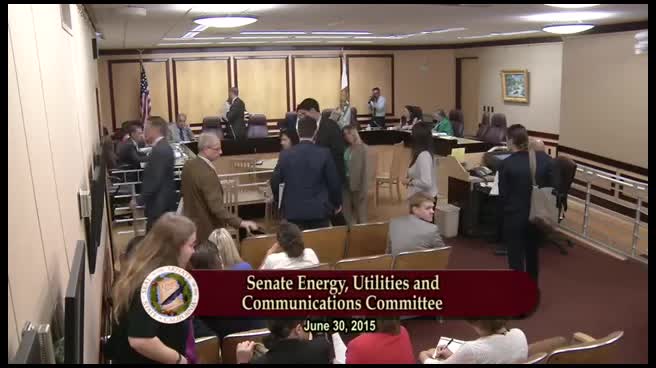 4MIN
Senate Standing Committee on Energy, Utilities and Communications
 50SEC
Assembly Floor
 4MIN
Assembly Standing Committee on Transportation
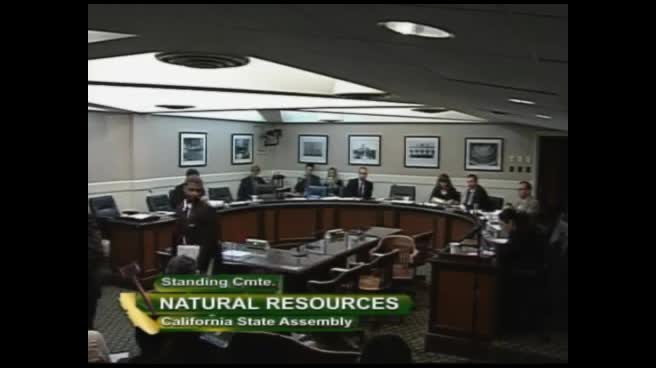 4MIN
Assembly Standing Committee on Natural Resources
Bill Author

Bill Co-Author(s):