AB 853: Electrical and gas corporations: security of plant and facilities.
- Session Year: 2015-2016
- House: Assembly
- Latest Version Date: 2015-09-04
Under existing law, the Public Utilities Commission has regulatory authority over public utilities, including electrical corporations and gas corporations, as defined. If the commission finds after a hearing that the rules, practices, equipment, appliances, facilities, or service of any public utility, or of the methods of manufacture, distribution, transmission, storage, or supply employed by the public utility, are unjust, unreasonable, unsafe, improper, inadequate, or insufficient, the Public Utilities Act requires that the commission determine and, by order or rule, fix the rules, practices, equipment, appliances, facilities, service, or methods to be observed, furnished, constructed, enforced, or employed. The Public Utilities Act requires the commission to prescribe rules for the performance of any service or the furnishing of any commodity of the character furnished or supplied by any public utility and, on proper demand and tender of rates, require the public utility to furnish the commodity or render the service within the time and upon the conditions provided in the rules adopted by the commission.
This bill would, on and after the filing of an electrical corporations or gas corporations general rate case application, require that electrical corporation or gas corporation, except as provided, to utilize employees of that corporation for any work associated with the design, engineering, and operation of its nuclear, electrical, and gas infrastructure, including all computer and information technology systems, unless the utility files a request to employ contract to utilize persons that are not who will replace those employees with the commission as a part of the utilitys general rate case application. The bill would require that the request be a separate stand-alone section that is not embedded in the general requested staffing change proposals. The bill would require the utility to demonstrate that the work can be performed safely and securely, and without jeopardizing the security of its nuclear, electrical, and gas infrastructure, by persons that are not employees. infrastructure. The bill would require the commission to evaluate the utilitys proposal to utilize persons that are not employees. proposal. The bill would require the commission to issue a written decision, decision to approve or deny the request as part of the general rate case proceeding, determining whether the electrical corporation or gas corporation may utilize persons that are not employees for the described work. proceeding.
Under existing law, a violation of the Public Utilities Act or any order, decision, rule, direction, demand, or requirement of the commission is a crime.
Because the provisions of this bill would be a part of the act and because a violation of an order or decision of the commission implementing its requirements would be a crime, the bill would impose a state-mandated local program by creating a new crime.
The California Constitution requires the state to reimburse local agencies and school districts for certain costs mandated by the state. Statutory provisions establish procedures for making that reimbursement.
This bill would provide that no reimbursement is required by this act for a specified reason.
Under existing law, the Public Utilities Commission has regulatory authority over public utilities, including electrical corporations and gas corporations, as defined. If the commission finds after a hearing that the rules, practices, equipment, appliances, facilities, or service of any public utility, or of the methods of manufacture, distribution, transmission, storage, or supply employed by the public utility, are unjust, unreasonable, unsafe, improper, inadequate, or insufficient, the Public Utilities Act requires that the commission determine and, by order or rule, fix the rules, practices, equipment, appliances, facilities, service, or methods to be observed, furnished, constructed, enforced, or employed. The Public Utilities Act requires the commission to prescribe rules for the performance of any service or the furnishing of any commodity of the character furnished or supplied by any public utility and, on proper demand and tender of rates, require the public utility to furnish the commodity or render the service within the time and upon the conditions provided in the rules adopted by the commission.
This bill would, on and after the filing of an electrical corporations or gas corporations general rate case application, require an that electrical corporation or gas corporation, except as provided, to utilize direct employees, as defined, employees of that corporation for any work associated with the design, engineering, and operation of its nuclear, electrical, and gas infrastructure, including all computer and information technology systems, unless the utility files a request to employ persons that are not direct employees with the commission an application in as a part of the utilitys general rate case. case application. The bill would require that the request be a separate stand-alone section that is not embedded in the general requested staffing change proposals. The bill would require the utility to demonstrate that the work can be performed safely and securely, and without jeopardizing the security of its nuclear, electrical, and gas infrastructure, by persons that are not direct employees. The bill would require the commission to evaluate the utilitys proposal to utilize persons that are not direct employees. The bill would require the commission to issue a written decision, as part of the general rate case proceeding, determining whether the electrical corporation or gas corporation may utilize persons that are not direct employees for the described work.
Under existing law, a violation of the Public Utilities Act or any order, decision, rule, direction, demand, or requirement of the commission is a crime.
Because the provisions of this bill would be a part of the act and because a violation of an order or decision of the commission implementing its requirements would be a crime, the bill would impose a state-mandated local program by creating a new crime.
The California Constitution requires the state to reimburse local agencies and school districts for certain costs mandated by the state. Statutory provisions establish procedures for making that reimbursement.
This bill would provide that no reimbursement is required by this act for a specified reason.
Under existing law, the Public Utilities Commission has regulatory authority over public utilities, including electrical corporations and gas corporations, as defined. If the commission finds after a hearing that the rules, practices, equipment, appliances, facilities, or service of any public utility, or of the methods of manufacture, distribution, transmission, storage, or supply employed by the public utility, are unjust, unreasonable, unsafe, improper, inadequate, or insufficient, the Public Utilities Act requires that the commission determine and, by order or rule, fix the rules, practices, equipment, appliances, facilities, service, or methods to be observed, furnished, constructed, enforced, or employed. The Public Utilities Act requires the commission to prescribe rules for the performance of any service or the furnishing of any commodity of the character furnished or supplied by any public utility and, on proper demand and tender of rates, require the public utility to furnish the commodity or render the service within the time and upon the conditions provided in the rules adopted by the commission.
This bill would, to the extent feasible, would require an electrical corporation or gas corporation to utilize direct employees, as defined, for any work associated with the design, engineering, and operation of its nuclear, electrical, and gas infrastructure, including all computer and information technology systems, unless the utility files a Tier 3 advice letter with the commission that demonstrates a request to employ persons that are not direct employees with the commission an application in the utilitys general rate case. The bill would require that the request be a separate stand-alone section that is not embedded in the general requested staffing change proposals. The bill would require the utility to demonstrate that the work can be performed safely and securely, and without jeopardizing the security of its nuclear, electrical, and gas infrastructure, by persons that are not direct employees. The bill would require the commission to open a proceeding, or expand the scope of an existing proceeding, to evaluate the advice letter and to hold not less than one duly noticed public hearing for the proceeding. evaluate the utilitys proposal to utilize persons that are not direct employees. The bill would require the commission to issue a written decision decision, as part of the general rate case proceeding, determining whether the electrical corporation or gas corporation may utilize persons that are not direct employees for the described work.
Under existing law, a violation of the Public Utilities Act or any order, decision, rule, direction, demand, or requirement of the commission is a crime.
Because the provisions of this bill would be a part of the act and because a violation of an order or decision of the commission implementing its requirements would be a crime, the bill would impose a state-mandated local program by creating a new crime.
The California Constitution requires the state to reimburse local agencies and school districts for certain costs mandated by the state. Statutory provisions establish procedures for making that reimbursement.
This bill would provide that no reimbursement is required by this act for a specified reason.
Under existing law, the Public Utilities Commission has regulatory authority over public utilities, including electrical corporations and gas corporations, as defined. If the commission finds after a hearing that the rules, practices, equipment, appliances, facilities, or service of any public utility, or of the methods of manufacture, distribution, transmission, storage, or supply employed by the public utility, are unjust, unreasonable, unsafe, improper, inadequate, or insufficient, the Public Utilities Act requires that the commission determine and, by order or rule, fix the rules, practices, equipment, appliances, facilities, service, or methods to be observed, furnished, constructed, enforced, or employed. The Public Utilities Act requires the commission to prescribe rules for the performance of any service or the furnishing of any commodity of the character furnished or supplied by any public utility and, on proper demand and tender of rates, require the public utility to furnish the commodity or render the service within the time and upon the conditions provided in the rules adopted by the commission.
This bill would, to the extent feasible, require an electrical corporation or gas corporation to utilize direct employees, as defined, for any work associated with the design, engineering, and operation of its nuclear, electrical, and gas infrastructure, including all computer and information technology systems, unless the utility files a Tier 3 advice letter with the commission that demonstrates that the work can be performed safely and securely, and without jeopardizing the security of its nuclear, electrical, and gas infrastructure infrastructure, by persons that are not direct employees. The bill would require the commission to open a proceeding, or expand the scope of an existing proceeding, to evaluate the advice letter and to hold not less than one duly noticed public hearing for the proceeding. The bill would require the commission to issue a written decision determining whether the electrical corporation or gas corporation may utilize persons that are not direct employees for the described work.
Under existing law, a violation of the Public Utilities Act or any order, decision, rule, direction, demand, or requirement of the commission is a crime.
Because the provisions of this bill would be a part of the act and because a violation of an order or decision of the commission implementing its requirements would be a crime, the bill would impose a state-mandated local program by creating a new crime.
The California Constitution requires the state to reimburse local agencies and school districts for certain costs mandated by the state. Statutory provisions establish procedures for making that reimbursement.
This bill would provide that no reimbursement is required by this act for a specified reason.
Under existing law, the Public Utilities Commission has regulatory authority over public utilities, including electrical corporations and gas corporations, as defined. The Public Utilities Act prohibits any electrical corporation from beginning the construction of, among other things, a line, plant, or system, or of any extension thereof, without having first obtained from the commission a certificate that the present or future public convenience and necessity require or will require that construction (certificate of public convenience and necessity). Existing law requires the commission, in considering an application for a certificate of public convenience and necessity for an electric transmission facility, to consider costeffective alternatives to transmission facilities that meet the need for an efficient, reliable, and affordable supply of electricity, including demand-side alternatives such as targeted energy efficiency, ultraclean distributed generation, as defined, and other demand reduction resources. If the commission finds after a hearing that the rules, practices, equipment, appliances, facilities, or service of any public utility, or of the methods of manufacture, distribution, transmission, storage, or supply employed by the public utility, are unjust, unreasonable, unsafe, improper, inadequate, or insufficient, the Public Utilities Act requires that the commission determine and, by order or rule, fix the rules, practices, equipment, appliances, facilities, service, or methods to be observed, furnished, constructed, enforced, or employed. The Public Utilities Act requires the commission to prescribe rules for the performance of any service or the furnishing of any commodity of the character furnished or supplied by any public utility and, on proper demand and tender of rates, require the public utility to furnish the commodity or render the service within the time and upon the conditions provided in the rules adopted by the commission.
This bill would, to the extent feasible, require an electrical corporation or gas corporation to utilize direct employees, as defined, for any work associated with the design, engineering, and operation of its nuclear, electrical, and gas infrastructure, including all computer and information technology systems, unless the utility files a Tier 3 advice letter with the commission that demonstrates that the work can be performed safely and securely, and without jeopardizing the security of its nuclear, electrical, and gas infrastructure by persons that are not direct employees. The bill would require the commission to open a proceeding, or expand the scope of an existing proceeding, to evaluate the advice letter and to hold not less than one duly noticed public hearing for the proceeding. The bill would require the commission to issue a written decision determining whether the electrical corporation or gas corporation may utilize persons that are not direct employees for the described work.
Under existing law, a violation of the Public Utilities Act or any order, decision, rule, direction, demand, or requirement of the commission is a crime.
Because the provisions of this bill would be a part of the act and because a violation of an order or decision of the commission implementing its requirements would be a crime, the bill would impose a state-mandated local program by creating a new crime.
The California Constitution requires the state to reimburse local agencies and school districts for certain costs mandated by the state. Statutory provisions establish procedures for making that reimbursement.
This bill would provide that no reimbursement is required by this act for a specified reason.
This bill would include demand response as being amongst the demand-side alternatives that the commission is to consider.
Under existing law, the Public Utilities Commission has regulatory authority over public utilities, including electrical corporations, as defined. The Public Utilities Act prohibits any electrical corporation from beginning the construction of, among other things, a line, plant, or system, or of any extension thereof, without having first obtained from the commission a certificate that the present or future public convenience and necessity require or will require that construction (certificate of public convenience and necessity). Existing law requires the commission, in considering an application for a certificate of public convenience and necessity for an electric transmission facility, to consider costeffective alternatives to transmission facilities that meet the need for an efficient, reliable, and affordable supply of electricity, including demand-side alternatives such as targeted energy efficiency, ultraclean distributed generation, as defined, and other demand reduction resources.
This bill would include demand response as being amongst the demand-side alternatives that the commission is to consider.
The Legislature finds and declares all of the following:
(a)Protecting the security of nuclear, electrical, and natural gas utility systems is a paramount state interest.
(b)Protecting the privacy of ratepayers personal information, including usage information, is a paramount state interest.
(c)Recent intrusions into major corporate computer systems, including Sony and Anthem Blue Cross, and the theft of information from those systems have demonstrated the vulnerability of those systems.
(d)The computer systems of Californias electrical corporations and gas corporations have information about the design, engineering, and operation of the nuclear, electrical, and natural gas utility infrastructure, as well as personal information about California ratepayers. This information could be used to compromise the security of Californias utility infrastructure and the privacy of Californias ratepayers.
(e)Widespread deployment of smart meters, smart grid equipment, and microgrids increases the importance of protecting the computer systems of electrical corporations and gas corporations.
(f)The part of any computer system that is most vulnerable to being compromised is the personnel who operate that system.
(g)Electrical corporations and gas corporations should make every reasonable effort to protect their computer systems from unauthorized intrusions.
(h)To protect the security of electrical and natural gas utility computer systems, including nuclear infrastructure, the information technology personnel who operate those systems should be employees of the electrical corporation or gas corporation.
(i)To protect the security of nuclear, electrical, and gas utility infrastructure, the design, engineering, and operation of that infrastructure should, to the extent feasible, be performed by employees of the electrical corporation or gas corporation.
SEC. 2.Section 764 is added to the Public Utilities Code, to read:764.(a)An electrical corporation or gas corporation shall utilize employees of the electrical corporation or gas corporation for any work associated with the design, engineering, and operation of its nuclear, electrical, and gas infrastructure, including all computer and information technology systems, unless the utility complies with the requirements of this section and obtains the approval of the commission pursuant to this section.
(b)Before utilizing contracting to utilize persons that are not who will replace employees of the electrical corporation or gas corporation for work the same work performed by those employees that is associated with the design, engineering, and operation of its nuclear, electrical, and gas infrastructure, including all computer and information technology systems, an electrical corporation or gas corporation shall file a request to employ contract with those persons that are not who will replace those employees with the commission, as part of the utilitys general rate case application. The request shall be a separate stand-alone section that is not embedded in the general requested staffing change proposals. The utility shall demonstrate that the work can be performed safely and securely, and without jeopardizing the security of its nuclear, electrical, and gas infrastructure.
(c)The commission shall evaluate the utilitys proposal to utilize persons that are not employees of the electrical corporation or gas corporation for work associated with the design, engineering, and operation of its nuclear, electrical, and gas infrastructure, including all computer and information technology systems. described in subdivision (b).
(d)The commission shall issue a written decision to approve or deny the proposal described in subdivision (b) as part of the general rate case proceeding determining whether the electrical corporation or gas corporation may utilize persons that are not employees of the electrical or gas corporation for the described work. proceeding.
(e)A person or corporation owning or operating a qualifying facility pursuant to federal law or a facility that is an exempt wholesale generator is not an electrical corporation due to the ownership or operation of that facility. This subdivision is declaratory of existing law.
(f)The requirements of this section are applicable only to electrical corporations or gas corporations that file general rate cases with the commission.
(g)(1)This section does not apply to an electrical corporation or gas corporation contracting out construction, alteration, demolition, installation, maintenance, or repair work on its nuclear, electrical, or gas infrastructure.
(2)This section does not apply to the design and engineering of standard equipment purchased from an outside vendor.
(3)This section does not apply to supplemental work performed by a third party in response to an emergency.
(4)This section does not apply to the design, engineering, or construction work associated with existing or new electrical or gas utility infrastructure necessary to accommodate or serve state transportation infrastructure projects.
(5)Nothing in this section shall be construed to alter the requirements of Article 5 (commencing with Section 8281) of Chapter 7 of Division 4.
(3)
(6)For each electrical or gas corporation, this section shall become effective for that corporation upon the filing, on or after January 1, 2016, of that corporations general rate case application.
SEC. 3.No reimbursement is required by this act pursuant to Section 6 of Article XIIIB of the California Constitution because the only costs that may be incurred by a local agency or school district will be incurred because this act creates a new crime or infraction, eliminates a crime or infraction, or changes the penalty for a crime or infraction, within the meaning of Section 17556 of the Government Code, or changes the definition of a crime within the meaning of Section 6 of Article XIIIB of the California Constitution.
The Legislature finds and declares all of the following:
(a)Protecting the security of nuclear, electrical, and natural gas utility systems is a paramount state interest.
(b)Protecting the privacy of ratepayers personal information, including usage information, is a paramount state interest.
(c)Recent intrusions into major corporate computer systems, including Sony and Anthem Blue Cross, and the theft of information from those systems have demonstrated the vulnerability of those systems.
(d)The computer systems of Californias electrical corporations and gas corporations have information about the design, engineering, and operation of the nuclear, electrical, and natural gas utility infrastructure, as well as personal information about California ratepayers. This information could be used to compromise the security of Californias utility infrastructure and the privacy of Californias ratepayers.
(e)Widespread deployment of smart meters, smart grid equipment, and microgrids increases the importance of protecting the computer systems of electrical corporations and gas corporations.
(f)The part of any computer system that is most vulnerable to being compromised is the personnel who operate that system.
(g)Electrical corporations and gas corporations should make every reasonable effort to protect their computer systems from unauthorized intrusions.
(h)To protect the security of electrical and natural gas utility computer systems, including nuclear infrastructure, the information technology personnel who operate those systems should be employees of the electrical corporation or gas corporation.
(i)To protect the security of nuclear, electrical, and gas utility infrastructure, the design, engineering, and operation of that infrastructure should, to the extent feasible, be performed by employees of the electrical corporation or gas corporation.
SECTION 1.SEC. 2.Section 764 is added to the Public Utilities Code, to read:764.(a)The Legislature finds and declares all of the following: An electrical corporation or gas corporation shall utilize employees of the electrical corporation or gas corporation for any work associated with the design, engineering, and operation of its nuclear, electrical, and gas infrastructure, including all computer and information technology systems, unless the utility complies with the requirements of this section and obtains the approval of the commission pursuant to this section.
(1)Protecting the security of nuclear, electrical, and natural gas utility systems is a paramount state interest.
(2)Protecting the privacy of ratepayers personal information, including usage information, is a paramount state interest.
(3)Recent intrusions into major corporate computer systems, including Sony and Anthem Blue Cross, and the theft of information from those systems have demonstrated the vulnerability of those systems.
(4)The computer systems of Californias electrical corporations and gas corporations have information about the design, engineering, and operation of the nuclear, electrical, and natural gas utility infrastructure, as well as personal information about California ratepayers. This information could be used to compromise the security of Californias utility infrastructure and the privacy of Californias ratepayers.
(5)Widespread deployment of smart meters, smart grid equipment, and microgrids increases the importance of protecting the computer systems of electrical corporations and gas corporations.
(6)The part of any computer system that is most vulnerable to being compromised is the personnel who operate that system.
(7)Electrical corporations and gas corporations should make every reasonable effort to protect their computer systems from unauthorized intrusions.
(8)To protect the security of electrical and natural gas utility computer systems, including nuclear infrastructure, the information technology personnel who operate those systems should be direct employees of the electrical corporation or gas corporation.
(9)To protect the security of nuclear, electrical, and gas utility infrastructure, the design, engineering, and operation of that infrastructure should, to the extent feasible, be performed by direct employees of the electrical corporation or gas corporation.
(b)For purposes of this section, direct employees for construction or maintenance work include the employees of a contractor or subcontractor licensed in California and working under the direct supervision of the electrical corporation or gas corporation.
(c)An electrical corporation or gas corporation shall utilize direct employees for any work associated with the design, engineering, and operation of its nuclear, electrical, and gas infrastructure, including all computer and information technology systems, unless the utility complies with the requirements of this section and obtains the approval of the commission pursuant to this section.
(d)
(b)Before utilizing persons that are not direct employees of the electrical corporation or gas corporation for work associated with the design, engineering, and operation of its nuclear, electrical, and gas infrastructure, including all computer and information technology systems, an electrical corporation or gas corporation shall file a request to employ persons that are not direct employees with the commission, as part of the utilitys general rate case application. The request shall be a separate stand-alone section that is not embedded in the general requested staffing change proposals. The utility shall demonstrate that the work can be performed safely and securely, and without jeopardizing the security of its nuclear, electrical, and gas infrastructure.
(e)
(c)The commission shall evaluate the utilitys proposal to utilize persons that are not direct employees of the electrical corporation or gas corporation for work associated with the design, engineering, and operation of its nuclear, electrical, and gas infrastructure, including all computer and information technology systems.
(f)
(d)The commission shall issue a written decision as part of the general rate case proceeding determining whether the electrical corporation or gas corporation may utilize persons that are not direct employees of the electrical or gas corporation for the described work.
(g)
(e)A person or corporation owning or operating a qualifying facility pursuant to federal law or a facility that is an exempt wholesale generator is not an electrical corporation due to the ownership or operation of that facility. This subdivision is declaratory of existing law.
(f)The requirements of this section are applicable only to electrical corporations or gas corporations that file general rate cases with the commission.
(g)(1)This section does not apply to an electrical corporation or gas corporation contracting out construction, alteration, demolition, installation, maintenance, or repair work on its nuclear, electrical, or gas infrastructure.
(2)This section does not apply to the design and engineering of standard equipment purchased from an outside vendor.
(3)For each electrical or gas corporation, this section shall become effective for that corporation upon the filing, on or after January 1, 2016, of that corporations general rate case application.
SEC. 2.SEC. 3.No reimbursement is required by this act pursuant to Section 6 of Article XIIIB of the California Constitution because the only costs that may be incurred by a local agency or school district will be incurred because this act creates a new crime or infraction, eliminates a crime or infraction, or changes the penalty for a crime or infraction, within the meaning of Section 17556 of the Government Code, or changes the definition of a crime within the meaning of Section 6 of Article XIIIB of the California Constitution.
(a)The Legislature finds and declares all of the following:
(1)Protecting the security of nuclear, electrical, and natural gas utility systems is a paramount state interest.
(2)Protecting the privacy of ratepayers personal information, including usage information, is a paramount state interest.
(3)Recent intrusions into major corporate computer systems, including Sony and Anthem Blue Cross, and the theft of information from those systems have demonstrated the vulnerability of those systems.
(4)The computer systems of Californias electrical corporations and gas corporations have information about the design, engineering, and operation of the nuclear, electrical, and natural gas utility infrastructure, as well as personal information about California ratepayers. This information could be used to compromise the security of Californias utility infrastructure and the privacy of Californias ratepayers.
(5)Widespread deployment of smart meters, smart grid equipment, and microgrids increases the importance of protecting the computer systems of electrical corporations and gas corporations.
(6)The part of any computer system that is most vulnerable to being compromised is the personnel who operate that system.
(7)Electrical corporations and gas corporations should make every reasonable effort to protect their computer systems from unauthorized intrusions.
(8)To protect the security of electrical and natural gas utility computer systems, including nuclear infrastructure, the information technology personnel who operate those systems should be direct employees of the electrical corporation or gas corporation.
(9)To protect the security of nuclear, electrical, and gas utility infrastructure, the design, engineering, and operation of that infrastructure should, to the extent feasible, be performed by direct employees of the electrical corporation or gas corporation.
(b)For purposes of this section, direct employees for construction or maintenance work include the employees of a contractor or subcontractor licensed in California and working under the direct supervision of the electrical corporation or gas corporation.
(c)To the extent feasible, an An electrical corporation or gas corporation shall utilize direct employees for any work associated with the design, engineering, and operation of its nuclear, electrical, and gas infrastructure, including all computer and information technology systems, unless the utility complies with the requirements of this section and obtains the approval of the commission pursuant to this section.
(d)Before utilizing persons that are not direct employees for work associated with the design, engineering, and operation of its nuclear, electrical, and gas infrastructure, including all computer and information technology systems, an electrical corporation or gas corporation shall file a Tier 3 advice letter with the commission that demonstrates a request to employ persons that are not direct employees with the commission, as part of the utilitys general rate case application. The request shall be a separate stand-alone section that is not embedded in the general requested staffing change proposals. The utility shall demonstrate that the work can be performed safely and securely, and without jeopardizing the security of its nuclear, electrical, and gas infrastructure.
(e)The commission shall open a proceeding, or expand the scope of an existing proceeding, to evaluate the advice letter. The commission shall hold not less than one duly noticed public hearing for the proceeding. The evaluate the utilitys proposal to utilize persons that are not direct employees for work associated with the design, engineering, and operation of its nuclear, electrical, and gas infrastructure, including all computer and information technology systems.
(f)The commission shall issue a written decision as part of the general rate case proceeding determining whether the electrical corporation or gas corporation may utilize persons that are not direct employees for the described work.
(f)
(g)A person or corporation owning or operating a qualifying facility pursuant to federal law or a facility that is an exempt wholesale generator is not an electrical corporation due to the ownership or operation of that facility. This subdivision is declaratory of existing law.
SEC. 2.No reimbursement is required by this act pursuant to Section 6 of Article XIIIB of the California Constitution because the only costs that may be incurred by a local agency or school district will be incurred because this act creates a new crime or infraction, eliminates a crime or infraction, or changes the penalty for a crime or infraction, within the meaning of Section 17556 of the Government Code, or changes the definition of a crime within the meaning of Section 6 of Article XIIIB of the California Constitution.
(a)The Legislature finds and declares all of the following:
(1)Protecting the security of nuclear, electrical, and natural gas utility systems is a paramount state interest.
(2)Protecting the privacy of ratepayers personal information, including usage information, is a paramount state interest.
(3)Recent intrusions into major corporate computer systems, including Sony and Anthem Blue Cross, and the theft of information from those systems have demonstrated the vulnerability of those systems.
(4)The computer systems of Californias electrical corporations and gas corporations have information about the design, engineering, and operation of the nuclear, electrical, and natural gas utility infrastructure, as well as personal information about California ratepayers. This information could be used to compromise the security of Californias utility infrastructure and the privacy of Californias ratepayers.
(5)Widespread deployment of smart meters, smart grid equipment, and microgrids increases the importance of protecting the computer systems of electrical corporations and gas corporations.
(6)The part of any computer system that is most vulnerable to being compromised is the personnel who operate that system.
(7)Electrical corporations and gas corporations should make every reasonable effort to protect their computer systems from unauthorized intrusions.
(8)To protect the security of electrical and natural gas utility computer systems, including nuclear infrastructure, the information technology personnel who operate those systems should be direct employees of the electrical corporation or gas corporation.
(9)To protect the security of nuclear, electrical, and gas utility infrastructure, the design, engineering, and operation of that infrastructure should, to the extent feasible, be performed by direct employees of the electrical corporation or gas corporation.
(b)For purposes of this section, direct employees for construction or maintenance work include the employees of a contractor or subcontractor licensed in California and working under the direct supervision of the electrical corporation or gas corporation.
(c)To the extent feasible, an electrical corporation or gas corporation shall utilize direct employees for any work associated with the design, engineering, and operation of its nuclear, electrical, and gas infrastructure, including all computer and information technology systems, unless the utility complies with the requirements of this section and obtains the approval of the commission pursuant to this section.
(d)Before utilizing persons that are not direct employees for work associated with the design, engineering, and operation of its nuclear, electrical, and gas infrastructure, including all computer and information technology systems, an electrical corporation or gas corporation shall file a Tier 3 advice letter with the commission that demonstrates that the work can be performed safely and securely, and without jeopardizing the security of its nuclear, electrical, and gas infrastructure.
(e)The commission shall open a proceeding, or expand the scope of an existing proceeding, to evaluate the advice letter. The commission shall hold not less than one duly noticed public hearing for the proceeding. The commission shall issue a written decision determining whether the electrical corporation or gas corporation may utilize persons that are not direct employees for the described work.
(f)A person or corporation owning or operating a qualifying facility pursuant to federal law or a facility that is an exempt wholesale generator is not an electrical corporation due to the ownership or operation of that facility. This subdivision is declaratory of existing law.
SEC. 2.No reimbursement is required by this act pursuant to Section 6 of Article XIIIB of the California Constitution because the only costs that may be incurred by a local agency or school district will be incurred because this act creates a new crime or infraction, eliminates a crime or infraction, or changes the penalty for a crime or infraction, within the meaning of Section 17556 of the Government Code, or changes the definition of a crime within the meaning of Section 6 of Article XIIIB of the California Constitution.
(a)The Legislature finds and declares all of the following:
(1)Protecting the security of nuclear, electrical, and natural gas utility systems is a paramount state interest.
(2)Protecting the privacy of ratepayers personal information, including usage information, is a paramount state interest.
(3)Recent intrusions into major corporate computer systems, including Sony and Anthem Blue Cross, and the theft of information from those systems have demonstrated the vulnerability of those systems.
(4)The computer systems of Californias electrical corporations and gas corporations have information about the design, engineering, and operation of the nuclear, electrical, and natural gas utility infrastructure, as well as personal information about California ratepayers. This information could be used to compromise the security of Californias utility infrastructure and the privacy of Californias ratepayers.
(5)Widespread deployment of smart meters, smart grid equipment, and microgrids increases the importance of protecting the computer systems of electrical corporations and gas corporations.
(6)The part of any computer system that is most vulnerable to being compromised is the personnel who operate that system.
(7)Electrical corporations and gas corporations should make every reasonable effort to protect their computer systems from unauthorized intrusions.
(8)To protect the security of electrical and natural gas utility computer systems, including nuclear infrastructure, the information technology personnel who operate those systems should be direct employees of the electrical corporation or gas corporation.
(9)To protect the security of nuclear, electrical, and gas utility infrastructure, the design, engineering, and operation of that infrastructure should, to the extent feasible, be performed by direct employees of the electrical corporation or gas corporation.
(b)For purposes of this section, direct employees for construction or maintenance work include the employees of a contractor or subcontractor licensed in California and working under the direct supervision of the electrical corporation or gas corporation.
(c)To the extent feasible, an electrical corporation or gas corporation shall utilize direct employees for any work associated with the design, engineering, and operation of its nuclear, electrical, and gas infrastructure, including all computer and information technology systems, unless the utility complies with the requirements of this section and obtains the approval of the commission pursuant to this section.
(d)Before utilizing persons that are not direct employees for work associated with the design, engineering, and operation of its nuclear, electrical, and gas infrastructure, including all computer and information technology systems, an electrical corporation or gas corporation shall file a Tier 3 advice letter with the commission that demonstrates that the work can be performed safely and securely, and without jeopardizing the security of its nuclear, electrical, and gas infrastructure.
(e)The commission shall open a proceeding, or expand the scope of an existing proceeding, to evaluate the advice letter. The commission shall hold not less than one duly noticed public hearing for the proceeding. The commission shall issue a written decision determining whether the electrical corporation or gas corporation may utilize persons that are not direct employees for the described work.
SEC. 2.No reimbursement is required by this act pursuant to Section 6 of Article XIIIB of the California Constitution because the only costs that may be incurred by a local agency or school district will be incurred because this act creates a new crime or infraction, eliminates a crime or infraction, or changes the penalty for a crime or infraction, within the meaning of Section 17556 of the Government Code, or changes the definition of a crime within the meaning of Section 6 of Article XIIIB of the California Constitution.
SECTION 1.Section 1002.3 of the Public Utilities Code is amended to read:1002.3.In considering an application for a certificate for an electric transmission facility pursuant to Section 1001, the commission shall consider cost-effective alternatives to transmission facilities that meet the need for an efficient, reliable, and affordable supply of electricity, including, but not limited to, demand-side alternatives such as targeted energy efficiency, demand response, ultraclean distributed generation, as defined in Section 353.2, and other demand reduction resources.
In considering an application for a certificate for an electric transmission facility pursuant to Section 1001, the commission shall consider cost-effective alternatives to transmission facilities that meet the need for an efficient, reliable, and affordable supply of electricity, including, but not limited to, demand-side alternatives such as targeted energy efficiency, demand response, ultraclean distributed generation, as defined in Section 353.2, and other demand reduction resources.
|
Date
|
Status
|
|---|---|
| Jun 2, 2015 | Read third time. Passed. Ordered to the Senate. |
| Sep 11, 2015 | Ordered to inactive file at the request of Senator Mitchell. |
| Sep 8, 2015 | Read second time. Ordered to third reading. |
| Sep 4, 2015 | Read third time and amended. Ordered to second reading. |
| Sep 1, 2015 | Read second time and amended. Ordered to third reading. |
| Aug 31, 2015 | From committee: Amend, and do pass as amended. (Ayes 4. Noes 3.) (August 27). |
| Aug 24, 2015 | In committee: Referred to APPR. suspense file. |
| Aug 18, 2015 | Read second time and amended. Re-referred to Com. on APPR. |
| Aug 17, 2015 | From committee: Amend, and do pass as amended and re-refer to Com. on APPR. (Ayes 7. Noes 3.) (July 13). |
| Jun 29, 2015 | In committee: Hearing postponed by committee. |
| Jun 18, 2015 | In committee: Hearing postponed by committee. |
| Jun 11, 2015 | Referred to Com. on E., U., & C. |
| Jun 2, 2015 | Read third time. Passed. Ordered to the Senate. (Ayes 50. Noes 25. Page 1789.) |
| Feb 26, 2015 | Read first time. To print. |
| Jun 2, 2015 | In Senate. Read first time. To Com. on RLS. for assignment. |
| Jun 1, 2015 | Read second time. Ordered to third reading. |
| May 28, 2015 | From committee: Do pass. (Ayes 12. Noes 5.) (May 28). |
| May 13, 2015 | In committee: Set, first hearing. Referred to APPR. suspense file. |
| May 4, 2015 | Re-referred to Com. on APPR. |
| Apr 30, 2015 | Read second time and amended. |
| Apr 29, 2015 | From committee: Amend, and do pass as amended and re-refer to Com. on APPR. (Ayes 10. Noes 4.) (April 27). |
| Mar 25, 2015 | Re-referred to Com. on U. & C. |
| Mar 24, 2015 | From committee chair, with author's amendments: Amend, and re-refer to Com. on U. & C. Read second time and amended. |
| Mar 16, 2015 | Referred to Com. on U. & C. |
| Feb 27, 2015 | From printer. May be heard in committee March 29. |
|
Date
|
Description
|
Location
|
Votes
|
|
|---|---|---|---|---|
| Aug 27, 2015 | Do pass as amended | Senate Standing Committee on Appropriations |
Passed |
|
| Aug 24, 2015 | Placed on suspense file | Senate Standing Committee on Appropriations |
Passed |
|
| Jul 13, 2015 | Do pass as amended, but first amend, and re-refer to the Committee on [Appropriations] | Senate Standing Committee on Energy, Utilities and Communications |
Passed |
|
| Jun 2, 2015 | AB 853 HERNÁNDEZ Assembly Third Reading | Assembly Floor |
Passed |
|
| May 28, 2015 | Do pass. | Assembly Standing Committee on Appropriations |
Passed |
|
| Apr 27, 2015 | Do pass as amended and be re-referred to the Committee on [Appropriations] | Assembly Standing Committee on Utilities and Commerce |
Passed |
This list shows positions taken on this bill by organizations on the date displayed, which is linked to the original source.
Positions by individuals are not included.
|
Organization
|
Position
|
Date
|
|---|---|---|
| California State Association Of Electrical Workers | ** Support | Jul 13, 2015 |
| California State Pipe Trades Council | ** Support | Jul 13, 2015 |
| Coalition of California Utility Employees | ** Support | Jul 13, 2015 |
| Coalition of California Utility Workers | ** Support | Jul 13, 2015 |
| Computing Technology Industry Association | * Against | Jul 13, 2015 |
| Elevator Constructors Union | ** Support | Jul 13, 2015 |
| IBEW Local 47 | * Support | Jul 13, 2015 |
| International Union of Elevator Constructors | ** Support | Jul 13, 2015 |
| Large Scale Solar Associaiton | * Against | Jul 13, 2015 |
| Southern California Edison | * Support | Jul 13, 2015 |
| State Building & Construction Trades Council Of California | * Support | Jul 13, 2015 |
| Technet | * Against | Jul 13, 2015 |
| Western States Council Of Sheet Metal Workers | ** Support | Jul 13, 2015 |
AB 853
Page 8
|
Office of Senate Floor Analyses (916) 651-1520 Fax: (916) 327-4478 |
THIRD READING
Bill No: AB 853
Amended: 9/4/15 in Senate
SENATE ENERGY, U. & C. COMMITTEE: 7-3, 7/13/15
AYES: Hueso, Hertzberg, Hill, Lara, Leyva, McGuire, Wolk
NOES: Fuller, Cannella, Morrell
NO VOTE RECORDED: Pavley
SENATE APPROPRIATIONS COMMITTEE: 4-3, 8/27/15
AYES: Lara, Beall, Leyva, Mendoza
NOES: Bates, Hill, Nielsen
ASSEMBLY FLOOR: 50-25, 6/2/15 - See last page for vote
SUBJECT: Electrical and gas corporations: security of plant and facilities
SOURCE: Coalition of California Utility Workers
DIGEST: This bill requires an electrical and gas investor-owned utility to utilize employees of the utility for any work associated with the design, engineering, and operation of its nuclear, electrical and gas infrastructure, unless the utility has prior approval from the California Public Utilities Commission to contract out that work.
Senate Floor Amendments of 9/4/15 (1) exempt from the requirements of the bill (a) emergency situations that require supplemental work by third parties and (b) utility projects that serve state transportation infrastructure projects; (2) note that existing requirements of investor-owned utilities to procure from women, minority, disabled veterans and lesbian, gay, bisexual and transgender owned businesses still applies; and (3) make additional technical changes.
Existing law:
Establishes the California Public Utilities Commission (CPUC) and empowers it to regulate privately-owned public utilities in California. Specifies that the Legislature may prescribe that additional classes of private corporations or other persons are public utilities. (Article XII of the California Constitution; Public Utilities Code §301 et seq.)
Provides the CPUC regulatory authority over public utilities, including electrical corporations and gas corporations, as defined. (Public Utilities Code §§218 and 222)
Requires the CPUC, after a hearing, if it finds that the rules, practices, equipment, appliances, facilities, or service of any public utility, or the methods of manufacture, distribution, transmission, storage, or supply employed by it, are unjust, unreasonable, unsafe, improper, inadequate, or insufficient, to determine and, by order or rule, fix the rules, practices, equipment, appliances, facilities, service, or methods to be observed, furnished, constructed, enforced, or employed. (Public Utilities Code §761)
Requires the CPUC to prescribe rules for the performance of any service or the furnishing of any commodity of the character furnished or supplied by any public utility, and, on proper demand and tender of rates, require such public utility to furnish such commodity or render such service within the time and upon the conditions provided in such rules. (Public Utilities Code §761)
Requires electrical and gas corporations, and other investor-owned utilities, to submit a detailed and annual report and plan to the CPUC to increase procurement and contracting with women, minority, disabled veterans and lesbian, gay, bisexual and transgender owned businesses. (Public Utilities Code §8281 et seq.)
This bill:
Requires electrical and gas corporations that file general rate cases on or after January 1, 2016, with the CPUC to obtain approval from the CPUC prior to contracting out work to non-utility employees for any work associated with design, engineering, and operation of its nuclear, electrical, and gas infrastructure, including all computer and information technology (IT) systems
Requires the electrical and gas corporation to file a request with the CPUC to employ persons that are not employees of the utility as part of the general rate case proceeding.
Requires the utility to demonstrate and the CPUC to evaluate that the work can be performed safely and securely, and without jeopardizing the security of its nuclear, electrical, and gas infrastructure.
Requires the CPUC to issue a written decision as part of the general rate case proceeding to determine whether the utility can utilize non-utility employees for the described work.
Exempts contracting for work related to construction, alteration, demolition, installation, maintenance, or repair work on its nuclear, electrical or gas infrastructure from requiring approval by the CPUC.
Exempts standard equipment purchased from an outside vendor from the requirements of this bill.
Exempts supplemental work performed by a third party in response to an emergency from the requirements of this bill.
Exempts design, engineering, or construction work associated with infrastructure necessary to accommodate state transportation infrastructure projects.
Clarifies that nothing in this bill alters the requirements of investor-owned utilities to increase procurement and contracting with women, minority, disabled veterans, and lesbian, gay, bisexual and transgender owned businesses
Background
Southern California Edison (SCE) layoffs. In April 2014, SCE announced it would be laying off 400-500 IT workers at its Irwindale, California location. SCE has also stated that an additional 100 employees would be leaving voluntarily. The 500 lost jobs reportedly represent just over a quarter to a third of the SCE Irwindale facility IT workforce of 1,500 to 1,800 employees.
Earlier this year, news reports in the Los Angeles Times, and other outlets, surfaced that SCE was replacing laid off workers with outsourced contracted workers from two Indian companies, Infosys and Tata. Some of these news reports included claims by SCE laid off workers that they were being asked to train their replacements who were in the country on H-1B visas. SCE has confirmed it is outsourcing IT work to two Indian companies, Tata and Infosys, and that about 70 percent of that work would be completed offshore, but did not know whether or not foreign workers would be brought to the U.S. to complete the remaining 30 percent of the work.
H-1B Visas. H-1B visas were introduced by the federal government in 1990, and over the years the annual cap on them has ranged up to 195,000, and currently stands at 65,000 (plus 20,000 for individuals with master’s degrees). Under federal law, visa users must have specialized training or a bachelor’s degree in the subject for which they are being hired. The visa holder must be offered the prevailing wage for the work, and they can only take jobs for which employers could not find a qualified American worker.
Tata and Infosys are reportedly the largest holders of H-1B visas, based on the 2013 figures, with each having 6,000+ H-1B visas. According to the same list, about 50 percent of the H-1B visas holders are offshore companies. Employers must file wage data and location information with federal authorities, known as a Labor Condition Application (LCA). A February 2015 news story in Computer World Magazine noted that “in Irwindale, California, where SCE runs a major part of its IT operations, Tata and Infosys, had as many as 180 LCAs, and in a random check of these applications, every address matched a SCE location.”
Lawmakers and the public have raised concerns about potential abuses with the H-1B visa program after several news reports have noted the potential widespread abuse of the program by companies who are looking to reduce their costs at the expense of American workers. Many of these news stories have included claims by laid off employees that they are required to train their replacements who are H-1B visa holders in exchange for their severance or other benefits package, and/or on condition of confidentiality. In March 2015, the U.S. Senate Judiciary Committee held a hearing on “Immigration Reforms Needed to Protect Skilled American Workers.” The hearing focused on the H-1B visa program, the ability to bring high-skilled workers in the country to help companies compete, but also noted concerns with stories of abuse by employers who are displacing American workers in a manner inconsistent with the requirements or intent of the visa program.
Outsourcing as a security risk. AB 853 finds and declares that protecting the security of nuclear, electrical, and natural gas utility systems, as well as the privacy of ratepayers’ personal information is a paramount state interest. This bill declares that electrical and gas corporations should make every reasonable effort to protect their computer systems from unauthorized intrusions and, to do so, the IT personnel who operate those systems should be direct employees of the utility.
General Rate Case (GRC). All utilities that are regulated by the CPUC are required to undergo a GRC to request funding for distribution and generation costs associated with their service. GRCs are major regulatory proceedings and provide the CPUC an opportunity to perform an exhaustive examination of a utility’s operations and costs. Usually performed every three years, the GRC allows the CPUC to conduct a broad and detailed review of a utility’s revenues, expenses, and investments in plant and equipment to establish an approved revenue requirement. Through the GRC, a utility forecasts how they will structure their operations and make investments for the next three years.
Prior/Related Legislation
AJR 12 (E. Garcia, 2015) urges the United States Department of Labor and the Congress of the United States to investigate alleged misuse of the H1-B Visa program. The bill is currently under consideration on the Senate Floor.
FISCAL EFFECT: Appropriation: No Fiscal Com.: Yes Local: Yes
According to the Senate Appropriations Committee, at least $40,000 in one-time costs and at least $144,000 ongoing annually to the Public Utilities Reimbursement Account (special) to consider advice letters or GRC petitions to allow the use of contract works.
Coalition of California Utility Workers (source)
California Labor Federation
California State Association of Electrical Workers
California State Pipe Trades Council
International Union of Elevator Constructors
State Building and Construction Trades Council, AFL-CIO
Western States Council of Sheet Metal Workers
@Business, Inc.
Accu-Bore Directional Drilling
Advanced Concepts, Inc.
Agile Sourcing Partners, Inc.
American Council of Engineering Companies – California
American Truck & Trailer body Co., Inc.
AREVA
Barnard Pipeline, Inc.
Bay Area Council
Bjork Construction Company, Inc.
Burns & McDonnell Engineering Company
Cadence Resource Group
CalAsian Chamber of Commerce
California Business Properties Association
California Chamber of Commerce
California Hispanic Chambers of Commerce
California Manufacturers & Technology Association
CANUS Corporations
CB&I
Computer Technology Industry Association
Cupertino Electric Inc.
EN Engineering, LLC
Energy Experts International
ETIC Engineering, Inc.
Fluor Corporation
Gas Transmission Systems, Inc.
Golder Associates
Granite Construction Company
Gravity Pro Consulting
Holtec International
Hot Line Construction, Inc.
Information Technology Alliance for Public Sector
IW Group, Inc.
J. Givoo Consultants, Inc.
Large-Scale Solar Association
Latin Business Association
Latino Journal
Los Angeles Area Chamber of Commerce
Los Angeles County Business Federation
MGE Underground, Inc.
National Federation of Independent Business
National Gay & Lesbian Chamber of Commerce
OneSource Supply Solutions
Orange County Hispanic Chamber of Commerce
Pacific Gas and Electric Company
ProActive Business Solutions, Inc.
PS Energy Group, Inc.
S2S Environmental Resource Management
San Francisco Chamber of Commerce
San Jose Silicon Valley Chamber of Commerce
Sargent & Lundy Engineers, Ltd.
Semper Electric, Inc.
Siemens
Sierra Utility Sales, Inc.
Silicon Valley Leadership Group
Snelson Companies, Inc.
Southern California Edison
Sumitomo Electric USA, Inc.
TechNet
Terra Verde Environmental Consulting, LLC
The Latino Coalition
The Okonite Company
Underground Construction Co., Inc.
Utility Tree Service Inc.
Western Electrical Contractors Association, Inc.
Wilson Utility Construction Company
World Wide Technology, Inc.
Zines, Inc.
ARGUMENTS IN SUPPORT: According to the author, AB 853 prohibits an electrical or gas corporation from outsourcing critical nuclear, electrical and gas infrastructure work, including computer and informational technology systems, without first obtaining approval from the CPUC. The author cites concerns with news reports regarding layoffs of hundreds of SCE employees and the outsourcing of these jobs to contractors from overseas, potentially including H-1B visa holders who would be brought in to replace California workers. “The part of any computer system most vulnerable to being compromised is the personnel who operate the system. Unfortunately, recent events have raised concerns about the safety and security of such systems.”
ARGUMENTS IN OPPOSITION: SCE argues that AB 853 has the potential to jeopardize the safe, reliable operation of the electric service and thousands of California jobs. SCE further states they currently have a database of 8,000 contract workers in a wide variety of jobs related to operations of the utility. “Work is performed by contract workers in any manner of job duties… to bring expertise that is not a core function of the utility, for urgent projects… This bill could bring utility projects to a stand-still, including interconnections, major projects, and critical emergency response and recovery effort, by requiring each hiring to go through a lengthy public process. AB 853 suggests this [contract] workforce creates questions about the security and safety of the utility, which is unfair and unwarranted.”
ASSEMBLY FLOOR: 50-25, 6/2/15
AYES: Alejo, Bonilla, Bonta, Brown, Burke, Calderon, Campos, Chau, Chiu, Chu, Cooley, Cooper, Dababneh, Daly, Dodd, Eggman, Frazier, Cristina Garcia, Eduardo Garcia, Gatto, Gipson, Gomez, Gonzalez, Gordon, Gray, Roger Hernández, Holden, Irwin, Jones-Sawyer, Levine, Lopez, Low, McCarty, Medina, Mullin, Nazarian, O'Donnell, Perea, Quirk, Rendon, Ridley-Thomas, Rodriguez, Salas, Santiago, Mark Stone, Thurmond, Ting, Weber, Williams, Atkins
NOES: Achadjian, Travis Allen, Baker, Bigelow, Brough, Chang, Beth Gaines, Gallagher, Hadley, Harper, Jones, Kim, Lackey, Linder, Maienschein, Mathis, Mayes, Melendez, Obernolte, Olsen, Patterson, Steinorth, Wagner, Waldron, Wilk
NO VOTE RECORDED: Bloom, Chávez, Dahle, Grove, Wood
Prepared by: Nidia Bautista / E., U., & C. / (916) 651-4107
9/8/15 20:56:42
**** END ****
AB 853
Page 7
|
Office of Senate Floor Analyses (916) 651-1520 Fax: (916) 327-4478 |
THIRD READING
Bill No: AB 853
Amended: 9/1/15 in Senate
SENATE ENERGY, U. & C. COMMITTEE: 7-3, 7/13/15
AYES: Hueso, Hertzberg, Hill, Lara, Leyva, McGuire, Wolk
NOES: Fuller, Cannella, Morrell
NO VOTE RECORDED: Pavley
SENATE APPROPRIATIONS COMMITTEE: 4-3, 8/27/15
AYES: Lara, Beall, Leyva, Mendoza
NOES: Bates, Hill, Nielsen
ASSEMBLY FLOOR: 50-25, 6/2/15 - See last page for vote
SUBJECT: Electrical and gas corporations: security of plant and facilities
SOURCE: Coalition of California Utility Workers
DIGEST: This bill requires an electrical and gas investor-owned utility to utilize employees of the utility for any work associated with the design, engineering, and operation of its nuclear, electrical and gas infrastructure, unless the utility has prior approval from the California Public Utilities Commission to contract out that work.
Existing law:
Establishes the California Public Utilities Commission (CPUC) and empowers it to regulate privately-owned public utilities in California. Specifies that the Legislature may prescribe that additional classes of private corporations or other persons are public utilities. (Article XII of the California Constitution; Public Utilities Code §301 et seq.)
Provides the CPUC regulatory authority over public utilities, including electrical corporations and gas corporations, as defined. (Public Utilities Code §§218 and 222)
Requires the CPUC, after a hearing, if it finds that the rules, practices, equipment, appliances, facilities, or service of any public utility, or the methods of manufacture, distribution, transmission, storage, or supply employed by it, are unjust, unreasonable, unsafe, improper, inadequate, or insufficient, to determine and, by order or rule, fix the rules, practices, equipment, appliances, facilities, service, or methods to be observed, furnished, constructed, enforced, or employed. (Public Utilities Code §761)
Requires the CPUC to prescribe rules for the performance of any service or the furnishing of any commodity of the character furnished or supplied by any public utility, and, on proper demand and tender of rates, require such public utility to furnish such commodity or render such service within the time and upon the conditions provided in such rules. (Public Utilities Code §761)
This bill:
Requires electrical and gas corporations that file general rate cases on or after January 1, 2016 with the CPUC to obtain approval from the CPUC prior to contracting out work to non-utility employees for any work associated with design, engineering, and operation of its nuclear, electrical, and gas infrastructure, including all computer and information technology systems
Requires the electrical and gas corporation to file a request with the CPUC to employ persons that are not employees of the utility as part of the general rate case application.
Requires the utility to demonstrate and the CPUC to evaluate that the work can be performed safely and securely, and without jeopardizing the security of its nuclear, electrical, and gas infrastructure.
Requires the CPUC to issue a written decision as part of the general rate case proceeding to determine whether the utility can utilize non-utility employees for the described work.
Exempts contracting for work related to construction, alteration, demolition, installation, maintenance, or repair work on its nuclear, electrical or gas infrastructure from requiring approval by the CPUC.
Exempts standard equipment purchased from an outside vendor from the requirements of this section.
Background
Southern California Edison (SCE) layoffs. In April 2014, SCE announced it would be laying off 400-500 information technology (IT) workers at its Irwindale, California location. SCE has also stated that an additional 100 employees would be leaving voluntarily. The 500 lost jobs reportedly represent just over a quarter to a third of the SCE Irwindale facility IT workforce of 1,500 to 1,800 employees.
Earlier this year, news reports in the Los Angeles Times, and other outlets, surfaced that SCE was replacing laid off workers with outsourced contracted workers from two Indian companies, Infosys and Tata. Some of these news reports included claims by SCE laid off workers that they were being asked to train their replacements who were in the country on H-1B visas. SCE has confirmed it is outsourcing IT work to two Indian companies, Tata and Infosys, and that about 70 percent of that work would be completed offshore, but did not know whether or not foreign workers would be brought to the U.S. to complete the remaining 30 percent of the work.
H-1B Visas. H-1B visas were introduced by the federal government in 1990, and over the years the annual cap on them has ranged up to 195,000, and currently stands at 65,000 (plus 20,000 for individuals with master’s degrees). Under federal law, visa users must have specialized training or a bachelor’s degree in the subject for which they are being hired. The visa holder must be offered the prevailing wage for the work, and they can only take jobs for which employers could not find a qualified American worker.
Tata and Infosys are reportedly the largest holders of H-1B visas, based on the 2013 figures, with each having 6,000+ H-1B visas. According to the same list, about 50 percent of the H-1B visas holders are offshore companies. Employers must file wage data and location information with federal authorities, known as a Labor Condition Application (LCA). A February 2015 news story in Computer World Magazine noted that “in Irwindale, California, where SCE runs a major part of its IT operations, Tata and Infosys, had as many as 180 LCAs, and in a random check of these applications, every address matched a SCE location.”
Lawmakers and the public have raised concerns about potential abuses with the H-1B visa program after several news reports have noted the potential widespread abuse of the program by companies who are looking to reduce their costs at the expense of American workers. Many of these news stories have included claims by laid off employees that they are required to train their replacements who are H-1B visa holders in exchange for their severance or other benefits package, and/or on condition of confidentiality. In March 2015, the U.S. Senate Judiciary Committee held a hearing on “Immigration Reforms Needed to Protect Skilled American Workers.” The hearing focused on the H-1B visa program, the ability to bring high-skilled workers in the country to help companies compete, but also noted concerns with stories of abuse by employers who are displacing American workers in a manner inconsistent with the requirements or intent of the visa program.
Outsourcing as a security risk. AB 853 finds and declares that protecting the security of nuclear, electrical, and natural gas utility systems, as well as the privacy of ratepayers’ personal information is a paramount state interest. This bill declares that electrical and gas corporations should make every reasonable effort to protect their computer systems from unauthorized intrusions and, to do so, the information technology personnel who operate those systems should be direct employees of the utility.
General Rate Case (GRC). All utilities that are regulated by the CPUC are required to undergo a GRC to request funding for distribution and generation costs associated with their service. GRCs are major regulatory proceedings and provide the CPUC an opportunity to perform an exhaustive examination of a utility’s operations and costs. Usually performed every three years, the GRC allows the CPUC to conduct a broad and detailed review of a utility’s revenues, expenses, and investments in plant and equipment to establish an approved revenue requirement. Through the GRC, a utility forecasts how they will structure their operations and make investments for the next three years.
Prior/Related Legislation
AJR 12 (E. Garcia, 2015) urges the United States Department of Labor and the Congress of the United States to investigate alleged misuse of the H1-B Visa program. The bill is currently under consideration on the Assembly Floor.
FISCAL EFFECT: Appropriation: No Fiscal Com.: Yes Local: Yes
According to the Senate Appropriations Committee, at least $40,000 in one-time costs and at least $144,000 ongoing annually to the Public Utilities Reimbursement Account (special) to consider advice letters or GRC petitions to allow the use of contract works.
Coalition of California Utility Workers (source)
California Labor Federation
California State Association of Electrical Workers
California State Pipe Trades Council
International Union of Elevator Constructors
Western States Council of Sheet Metal Workers
OPPOSITION: (Verified 8/31/15)
@Business, Inc.
Accu-Bore Directional Drilling
Advanced Concepts, Inc.
Agile Sourcing Partners, Inc.
American Council of Engineering Companies – California
American Truck & Trailer body Co., Inc.
AREVA
Barnard Pipeline, Inc.
Bjork Construction Company, Inc.
Burns & McDonnell Engineering Company
Cadence Resource Group
California Business Properties Association
California Chamber of Commerce
California Hispanic Chambers of Commerce
California Manufacturer & Technology Association
CANUS Corporations
CB&I
CompTIA
Cupertino Electric Inc.
EN Engineering, LLC
Energy Experts International
ETIC Engineering, Inc.
Fluor Corporation
Gas Transmission Systems, Inc.
Golder Associates
Granite Construction Company
Gravity Pro Consulting
Holtec International
Hot Line Construction, Inc.
Information Technology Alliance for Public Sector
IW Group, Inc.
J. Givoo Consultants, Inc.
Large-Scale Solar Association
Latin Business Association
Latino Journal
Los Angeles Area Chamber of Commerce
Los Angeles County Business Federation
MGE Underground, Inc.
National Gay & Lesbian Chamber of Commerce
OneSource Supply Solutions
Orange County Hispanic Chamber of Commerce
Pacific Gas and Electric Company
ProActive Business Solutions, Inc.
PS Energy Group, Inc.
S2S Environmental Resource Management
Sargent & Lundy Engineers, Ltd.
Semper Electric, Inc.
Siemens
Sierra Utility Sales, Inc.
Snelson Companies, Inc.
Southern California Edison
Sumitomo Electric USA, Inc.
TechNet
Terra Verde Environmental Consulting, LLC
The Okonite Company
Underground Construction Co., Inc.
Utility Tree Service Inc.
Western Electrical Contractors Association, Inc.
Wilson Utility Construction Company
World Wide Technology, Inc.
Zines, Inc.
ARGUMENTS IN SUPPORT: According to the author, AB 853 prohibits an electrical or gas corporation from outsourcing critical nuclear, electrical and gas infrastructure work, including computer and informational technology systems, without first obtaining approval from the CPUC. The author cites concerns with news reports regarding layoffs of hundreds of SCE employees and the outsourcing of these jobs to contractors from overseas, potentially including H-1B visa holders who would be brought in to replace California workers. “The part of any computer system most vulnerable to being compromised is the personnel who operate the system. Unfortunately, recent events have raised concerns about the safety and security of such systems.”
ARGUMENTS IN OPPOSITION: SCE argues that AB 853 has the potential to jeopardize the safe, reliable operation of the electric service and thousands of California jobs. SCE further states they currently have a database of 8,000 contract workers in a wide variety of jobs related to operations of the utility. “Work is performed by contract workers in any manner of job duties… to bring expertise that is not a core function of the utility, for urgent projects… This bill could bring utility projects to a stand-still, including interconnections, major projects, and critical emergency response and recovery effort, by requiring each hiring to go through a lengthy public process. AB 853 suggests this [contract] workforce creates questions about the security and safety of the utility, which is unfair and unwarranted.”
ASSEMBLY FLOOR: 50-25, 6/2/15
AYES: Alejo, Bonilla, Bonta, Brown, Burke, Calderon, Campos, Chau, Chiu, Chu, Cooley, Cooper, Dababneh, Daly, Dodd, Eggman, Frazier, Cristina Garcia, Eduardo Garcia, Gatto, Gipson, Gomez, Gonzalez, Gordon, Gray, Roger Hernández, Holden, Irwin, Jones-Sawyer, Levine, Lopez, Low, McCarty, Medina, Mullin, Nazarian, O'Donnell, Perea, Quirk, Rendon, Ridley-Thomas, Rodriguez, Salas, Santiago, Mark Stone, Thurmond, Ting, Weber, Williams, Atkins
NOES: Achadjian, Travis Allen, Baker, Bigelow, Brough, Chang, Beth Gaines, Gallagher, Hadley, Harper, Jones, Kim, Lackey, Linder, Maienschein, Mathis, Mayes, Melendez, Obernolte, Olsen, Patterson, Steinorth, Wagner, Waldron, Wilk
NO VOTE RECORDED: Bloom, Chávez, Dahle, Grove, Wood
Prepared by: Nidia Bautista / E., U., & C. / (916) 651-4107
9/1/15 21:34:07
AB 853 (Roger Hernández) Page 0 of 1
SENATE COMMITTEE ON APPROPRIATIONS
Senator Ricardo Lara, Chair
2015 - 2016 Regular Session
AB 853 (Roger Hernández) - Electrical and gas corporations: security of plant and facilities.
|
|
Version: August 18, 2015 |
Policy Vote: E., U., & C. 7 - 3 |
Urgency: No |
Mandate: Yes |
Hearing Date: August 27, 2015 |
Consultant: Marie Liu |
*********** ANALYSIS ADDENDUM – SUSPENSE FILE ***********
The following information is revised to reflect amendments
adopted by the committee on August 27, 2015
Bill Summary:
AB 853 would require the California Public Utilities Commission (CPUC) to evaluate and consider approval of an electrical or gas corporation’s utilization of persons not employed by the utility as part of that utility’s general rate case application.
Fiscal Impact:
At least $40,000 in one-time costs and at least $144,000 ongoing annually to the Public Utilities Reimbursement Account (special) to consider advice letters or GRC petitions to allow the use of contract works.
Author Amendments:
Exclude from the bill’s requirements contracts for construction, alteration, demolition, installation, maintenance, or repair on its nuclear, electrical, or gas infrastructure or the design and engineering of standard equipment purchased from an outside vendor
Make the bill’s requirement effective for the corporation after its next general rate case.
Clarification amendments
Committee Amendments:
Specify that the requirements of the bill only apply to an electrical or gas corporation that file general rate cases with the Commission.
-- END --
AB 853 (Roger Hernández) Page 2 of 2
SENATE COMMITTEE ON APPROPRIATIONS
Senator Ricardo Lara, Chair
2015 - 2016 Regular Session
AB 853 (Roger Hernández) - Electrical and gas corporations: security of plant and facilities.
|
|
Version: August 18, 2015 |
Policy Vote: E., U., & C. 7 - 3 |
Urgency: No |
Mandate: Yes (see staff comment) |
Hearing Date: August 24, 2015 |
Consultant: Marie Liu |
This bill meets the criteria for referral to the Suspense File.
Bill Summary:
AB 853 would require the California Public Utilities Commission (CPUC) to evaluate and consider approval of an electrical or gas corporation’s utilization of persons not employed by the utility as part of that utility’s general rate case application.
Fiscal Impact:
At least $200,000 from the Public Utilities Reimbursement Account (special) to consider advice letters or GRC petitions to allow the use of contract works.
Background:
Existing law establishes the CPUC to regulate privately-owned public utilities in California including the setting of rates. Requests to recover monies for distribution and generation costs from ratepayers are considered through a general rate case (GRC). GRCs are major regulatory proceedings and provide the CPUC an opportunity to perform an exhaustive examination of a utility’s operations and costs. Usually performed every three years, the GRC allows the CPUC to conduct a broad and detailed review of a utility’s revenues, expenses, and investments in plant and equipment to establish an approved revenue requirement. Through the GRC a utility forecasts how they will structure their operations and make investments for the next three years.
Proposed Law:
This bill would require an electrical corporation or gas corporation (IOU) to use direct employees for any work associated with the design, engineering, and operation of its nuclear, electrical, and gas infrastructure, including all computer and information technology systems unless it obtains written approval from the CPUC.
An IOU must request approval for the use of non-direct employees through the utility’s GRC in a separate stand-alone section. The IOU would be required to demonstrate that the work can be performed safely and securely and without jeopardizing the security of its nuclear, electrical, and gas infrastructure. The commission would be required to issue a written decision as part of the GRC that determines whether the utility can utilize non-direct employees.
Staff Comments:
Given the wide scope of the work that would require approval from the CPUC should non-direct employees be used, the CPUC assumes that every GRC would contain a review of the use of non-direct employees. To perform the additional review, the CPCU anticipates needing approximately $200,000 annually.
Staff notes that the CPUC estimate may be considered a minimum. GRCs are typically considered every three years. This bill does not offer a process for which a utility could seek approval for the use of non-direct employees for work that was unanticipated at the time of the last GRC, including emergency work. A utility could file a Petition to Modify a previous GRC decision, which would result in workload not anticipated in the CPUC’s estimate. Also, there may be additional costs to the extent that the requests to use non-direct employees result in extra complaints, data requests, and other motions. It is unclear to the extent the CPUC’s estimates take into account these costs.
This bill contains codified findings and declarations. In the interest of code clarity and efficiency, staff recommends this bill be amended to place the findings and declarations in an uncodified section of the bill.
This bill amends the Public Utilities Code. As violations of the PUC are crimes, this bill modifies crimes thereby creating a local mandate. However, under the California Constitution, such mandates are not reimbursable.
Proposed Author Amendments:
The author has submitted amendments past the amendment deadline that would exclude the construction, alteration, demolition, installation, maintenance, or repair work on its nuclear, electrical, or gas infrastructure from the requirements of this bill. Also excluded from the requirement would be the design and engineering of standard equipment purchased from an outside vendor. The amendments would also make the requirements effective with the next GRC for each utility.
-- END --
AB 853 (Roger Hernández) Page 6 of 6
SENATE COMMITTEE ON ENERGY, UTILITIES AND COMMUNICATIONS
Senator Ben Hueso, Chair
2015 - 2016 Regular
Bill No: AB 853 Hearing Date: 7/13/2015
Author: |
Roger Hernández |
||
Version: |
4/30/2015 As Amended |
||
Urgency: |
No |
Fiscal: |
Yes |
Consultant: |
Nidia Bautista |
||
SUBJECT: Electrical and gas corporations: security of plant and facilities
DIGEST: This bill requires an electrical and gas investor-owned utility prior to contracting any work, besides construction and maintenance, to get approval from the CPUC.
ANALYSIS:
Existing law:
Establishes the California Public Utilities Commission (CPUC) and empowers it to regulate privately-owned public utilities in California. Specifies that the Legislature may prescribe that additional classes of private corporations or other persons are public utilities. (Article XII of the California Constitution; Public Utilities Code §301 et seq.)
Provides the CPUC regulatory authority over public utilities, including electrical corporations and gas corporations, as defined. (Public Utilities Code §§218 and 222)
Requires the CPUC, after a hearing, if it finds that the rules, practices, equipment, appliances, facilities, or service of any public utility, or the methods of manufacture, distribution, transmission, storage, or supply employed by it, are unjust, unreasonable, unsafe, improper, inadequate, or insufficient, to determine and, by order or rule, fix the rules, practices, equipment, appliances, facilities, service, or methods to be observed, furnished, constructed, enforced, or employed. (Public Utilities Code §761)
Requires the CPUC to prescribe rules for the performance of any service or the furnishing of any commodity of the character furnished or supplied by any public utility, and, on proper demand and tender of rates, require such public utility to furnish such commodity or render such service within the time and upon the conditions provided in such rules. (Public Utilities Code §761)
This bill:
Requires, to the extent feasible, electrical and gas corporations to utilize direct employees for any work associated with design, engineering, and operation of its nuclear, electrical, gas infrastructure, including all computer and information technology systems.
Defines “direct employees” to include employees of a contractor or subcontractor licensed in California for construction and maintenance work and working under the direct supervision of the electrical corporation or gas corporation.
Requires electrical and gas corporations to obtain approval from the CPUC prior to utilizing non-direct employees.
Requires the electrical and gas corporation to file a Tier 3 advice letter with the CPUC that demonstrates that the work can be performed safely and securely, and without jeopardizing the security of its nuclear, electrical, and gas infrastructure.
Requires the CPUC to open a proceeding, or expand the scope of a proceeding, to evaluate the advice letter.
Requires the CPUC to hold not less than one public hearing for the proceeding.
Requires the CPUC to issue a written decision on whether the utility can utilize non direct employees.
Background
Southern California Edison (SCE) layoffs. In April 2014, SCE announced it would be laying off 400-500 information technology (IT) workers at its Irwindale, California location. SCE has also stated that an additional 100 employees would be leaving voluntarily. The 500 lost jobs reportedly represent just over a quarter to a third of the SCE Irwindale facility IT workforce of 1,500 to 1,800 employees.
Earlier this year, news reports in the Los Angeles Times, and other outlets, surfaced that SCE was replacing laid off workers with outsourced contracted workers from two Indian companies, Infosys and Tata. Some of these news reports included claims by SCE laid off workers that they were being asked to train their replacements who were in the country on H-1B visas. SCE has confirmed it is outsourcing IT work to two Indian companies, Tata and Infosys, and that about 70 percent of that work would be completed offshore, but did not know whether or not foreign workers would be brought to the U.S. to complete the remaining 30 percent of the work.
H-1B Visas. H-1B visas were introduced by the federal government in 1990, and over the years the annual cap on them has ranged up to 195,000, and currently stands at 65,000 (plus 20,000 for individuals with master’s degrees). Under federal law, visa users must have specialized training or a bachelor’s degree in the subject for which they are being hired. The visa holder must be offered the prevailing wage for the work, and they can only take jobs for which employers could not find a qualified American worker.
Tata and Infosys are reportedly the largest holders of H-1B visas, based on the 2013 figures, with each having 6,000+ H-1B visas. According to the same list, about 50 percent of the H-1B visas holders are offshore companies. Employers must file wage data and location information with federal authorities, known as a Labor Condition Application (LCA). A February 2015 news story in Computer World Magazine noted that “in Irwindale, California, where SCE runs a major part of its IT operations, Tata and Infosys, had as many as 180 LCAs, and in a random check of these applications, every address matched a SCE location.”
Lawmakers and the public have raised concerns about potential abuses with the H-1B visa program after several news reports have noted the potential widespread abuse of the program by companies who are looking to reduce their costs at the expense of American workers. Many of these news stories have included claims by laid off employees that they are required to train their replacements who are H-1B visa holders in exchange for their severance or other benefits package, and/or on condition of confidentiality. In March 2015, the U.S. Senate Judiciary Committee held a hearing on “Immigration Reforms Needed to Protect Skilled American Workers.” The hearing focused on the H-1B visa program, the ability to bring high-skilled workers in the country to help companies compete, but also noted concerns with stories of abuse by employers who are displacing American workers in a manner inconsistent with the requirements or intent of the visa program.
Outsourcing as a security risk. AB 853 finds and declares that protecting the security of nuclear, electrical, and natural gas utility systems, as well as the privacy of ratepayers’ personal information is a paramount state interest. This bill declares that electrical and gas corporations should make every reasonable effort to protect their computer systems from unauthorized intrusions and, to do so, the information technology personnel who operate those systems should be direct employees of the utility.
CPUC advice letter. An advice letter is a request by a utility for CPUC approval, authorization, or other relief, including an informal request for approval to furnish service under rates, charges, terms or conditions other than those contained in the utility's tariffs then in effect. Advice letters are procedurally less formal than other proceedings at the CPUC which require more judicial-type elements of an evidentiary hearing. Advice letters are classified into three tiers, ranging from Tier 1 to Tier 3. Tier 1 advice letters generally become effective upon filing of the letter. However, Tier 3 advice letters require commissioners to hear the item and take a vote at a publicly noticed meeting.
This bill requires a Tier 3 advice letter for any contracting work done by a utility. Currently, the CPUC handles about 1,000 advice letters for the energy sector alone.
This bill could compound the number of advice letters that would need to be processed and make the process untenable. An alternative approach is to address any contracting work in the utility’s general rate case (GRC).
General Rate Case (GRC). All utilities that are regulated by the CPUC are required to undergo a GRC to request funding for distribution and generation costs associated with their service. GRCs are major regulatory proceedings and provide the CPUC an opportunity to perform an exhaustive examination of a utility’s operations and costs. Usually performed every three years, the GRC allows the CPUC to conduct a broad and detailed review of a utility’s revenues, expenses, and investments in plant and equipment to establish an approved revenue requirement. Through the GRC, a utility forecasts how they will structure their operations and make investments for the next three years. In consideration of the current volume of advice letters that must be processed by the CPUC and the potential to overwhelm the agency with requests, as noted by the opponents, the author and committee may wish to amend the bill to have the CPUC approval process occur exclusively as part of the GRC proceeding of the utility.
Prior/Related Legislation
AJR 12 (E. Garcia, 2015) H-1B Visa Program: investigation of misuse. The bill urges the United States Department of Labor and the Congress of the United States to investigate alleged misuse of the H1-B Visa program.
FISCAL EFFECT: Appropriation: No Fiscal Com.: Yes Local: Yes
ASSEMBLY VOTES:
Assembly Floor (50-25)
Assembly Appropriations Committee (12-5)
Assembly Utilities and Commerce Committee (10-4)
SUPPORT:
Coalition of California Utility Workers (source)
California Labor Federation
California State Association of Electrical Workers
California State Pipe Trades Council
International Union of Elevator Constructors
Western States Council of Sheet Metal Workers
OPPOSITION:
@Business, Inc.
American Council of Engineering Companies
California Business Properties Association
California Chamber of Commerce
California Manufacturer & Technology Association
Large-scale Solar Association
Los Angeles Area Chamber of Commerce
Los Angeles County Business Federation
National Gay & Lesbian Chamber of Commerce
Southern California Edison
TechNet
Western Electrical Contractors Association, Inc.
ARGUMENTS IN SUPPORT: According to the author, AB 853 prohibits an electrical or gas corporation from outsourcing critical nuclear, electrical and gas infrastructure work, including computer and informational technology systems, without first obtaining approval from the CPUC. The author cites concerns with news reports regarding layoffs of hundreds of SCE employees and the outsourcing of these jobs to contractors from overseas, potentially including H-1B visa holders who would be brought in to replace California workers. “The part of any computer system most vulnerable to being compromised is the personnel who operate the system. Unfortunately, recent events have raised concerns about the safety and security of such systems.”
ARGUMENTS IN OPPOSITION: SCE argues that AB 853 has the potential to jeopardize the safe, reliable operation of the electric service and thousands of California jobs. SCE further states they currently have a database of 8,000 contract workers in a wide variety of jobs related to operations of the utility. “Work is performed by contract workers in any manner of job duties… to bring expertise that is not a core function of the utility, for urgent projects… This bill could bring utility projects to a stand-still, including interconnections, major projects, and critical emergency response and recovery effort, by requiring each hiring to go through a lengthy public process. AB 853 suggests this [contract] workforce creates questions about the security and safety of the utility, which is unfair and unwarranted.”
-- END --
AB 853
Page 4
Date of Hearing: April 27, 2015
ASSEMBLY COMMITTEE ON UTILITIES AND COMMERCE
Anthony Rendon, Chair
AB 853
(Roger Hernández) – As Amended March 24, 2015
SUBJECT: Electrical and gas corporations: security of plant and facilities
SUMMARY: This bill requires an electrical or gas corporation to utilize direct employees for any work associated with its infrastructure and computer systems, as specified. Specifically, this bill:
Requires an electrical or gas corporation, to the extent feasible, utilize direct employees for any work associated with the design, engineering, and operation of its nuclear, electrical, and gas infrastructure, including all computer and information technology systems.
Defines “direct employees” for construction or maintenance work to include the employees of a contractor or subcontractor licensed in California and working under the direct supervision of the electrical or gas corporation.
Requires an electrical or gas corporation, before utilizing non-direct employees, to file a Tier 3 advice letter with the California Public Utilities Commission (CPUC) that demonstrates that the work can be performed safely and securely, and without jeopardizing the security of its nuclear, electrical, and gas infrastructure.
Requires the CPUC to open a proceeding, or expand the scope of an existing proceeding, to evaluate the advice letter and hold at least one duly noticed public hearing for the proceeding.
Requires the CPUC to issue a written decision determining whether the electrical or gas corporation may utilize persons that are not direct employees for the described work.
EXISTING LAW:
Gives the CPUC regulatory authority over public utilities, including electrical corporations and gas corporations, as defined. (Public Utilities Code Sections 218 and 222)
Requires the CPUC, after a hearing, finds that the rules, practices, equipment, appliances, facilities, or service of any public utility, or the methods of manufacture, distribution, transmission, storage, or supply employed by it, are unjust, unreasonable, unsafe, improper, inadequate, or insufficient, to determine and, by order or rule, fix the rules, practices, equipment, appliances, facilities, service, or methods to be observed, furnished, constructed, enforced, or employed. (Public Utilities Code Section 761)
Requires the CPUC to prescribe rules for the performance of any service or the furnishing of any commodity of the character furnished or supplied by any public utility, and, on proper demand and tender of rates, require such public utility to furnish such commodity or render such service within the time and upon the conditions provided in such rules. (Public Utilities Code Section 761)
FISCAL EFFECT: Unknown.
COMMENTS:
Author’s Statement: “Protecting the security of nuclear, electric and natural gas utility systems (as well as the privacy of ratepayer personal information) is a paramount state interest. However, recent intrusions into major corporate computer systems such as Sony and Anthem Blue Cross and theft of information from those systems have demonstrated the vulnerability of those systems. … Electrical corporations and gas corporations should make every reasonable effort to protect their computer systems from unauthorized intrusions. Unfortunately, recent events have raised concerns about the safety and security of such systems. … AB 853 will prohibit an electric or gas corporation from outsourcing critical nuclear, electrical and gas infrastructure work, including computer and information technology systems, without first obtaining approval from the Public Utilities Commission.”
Background: Recently, Southern California Edison (SCE) announced plans to lay off hundreds of employees and hire foreign workers. SCE announced that it was laying off about 400 information technology employees, with an additional 100 leaving voluntarily. SCE said that it was outsourcing some tech-related work to two Indian companies, Infosys in Bangalore and Tata Consultancy Services in Mumbai, after looking at multiple firms. According to SCE, about 70% of the work would be done by Tata and Infosys will be completed offshore, but did not know whether or not foreign workers would be brought to the US to complete the remaining 30% of the work. SCE said the layoffs are necessary to stay competitive.
In addition, some of the foreign workers hired by SCE are in the US because of the H-1B visa. The H-1B visa allows United States (US) companies to temporarily hire foreign workers in certain occupations. The number of visas is capped at 65,000 (plus 20,000 for workers with master’s degrees) annually. The visa is a way to encourage foreign workers with specific expertise, mostly in science, technology, engineering, and mathematics related fields, to work in the US in areas where there is a shortage of US workers. In March 2015, the US Senate Judiciary Committee held a hearing on “Immigration Reforms Needed to Protect Skilled American Workers.” The hearing focused on problems with the H-1B and other visa programs. The hearing noted that the visas are used to bring high-skilled workers into the US so that companies can continue to attract world-class talent and continue to lead on the global stage. However, the hearing highlighted troubling stories of abuses that have caused the displacement of American workers, and noted that these visa programs are to be used to complement the US workforce, not displace it.
Security of Utility Infrastructure: This bill declares that protecting the security of nuclear, electrical, and natural gas utility systems, as well as the privacy of ratepayers’ personal information is a paramount state interest. It further declares that California’s electrical and gas corporation’s computer systems have information about the design, engineering, and operation of the utility infrastructure, and that this information could be used to compromise the security of California’s utility infrastructure and privacy of California ratepayers. In light of the recent intrusions into major corporate computer systems, the bill notes that the part of any computer system that is most vulnerable to being compromised is the personnel who operate the system. The bill declares that electrical and gas corporations should make every reasonable effort to protect their computer systems from unauthorized intrusions and, to do so, the information technology personnel who operate those systems should be direct employees of the utility.
This bill would require an electrical or gas corporation to use direct employees for any work associated with the design, engineering, and operation of its nuclear, electrical, and gas infrastructure, including all computer and information systems, to the extent feasible. Furthermore, this bill would prohibit an electrical or gas corporation from using a non-direct employee, unless it files a Tier 3 advice letter with the CPUC that demonstrates that the work can be performed safely and securely, and without jeopardizing the security of the utilities infrastructure. The CPUC then must open or expand the scope of a proceeding to evaluate the advice letter over at least one public hearing and issue a written decision determining whether the electrical or gas corporation may utilize the non-direct employee for the described work.
The author may wish to clarify that it intends to apply this bill only to electric or gas public utilities and not all electrical corporations and gas corporations.
Suggested Amendments:
764.(a) The Legislature finds and declares all of the following:
Protecting the security of nuclear, electrical, and natural gas utility systems is a paramount state interest.
Protecting the privacy of ratepayers’ personal information, including usage information, is a paramount state interest.
Recent intrusions into major corporate computer systems, including Sony and Anthem Blue Cross, and the theft of information from those systems have demonstrated the vulnerability of those systems.
The computer systems of California’s electrical corporations and gas corporations have information about the design, engineering, and operation of the nuclear, electrical, and natural gas utility infrastructure, as well as personal information about California ratepayers. This information could be used to compromise the security of California’s utility infrastructure and the privacy of California’s ratepayers.
Widespread deployment of smart meters, smart grid equipment, and microgrids increases the importance of protecting the computer systems of electrical corporations and gas corporations.
The part of any computer system that is most vulnerable to being compromised is the personnel who operate that system.
Electrical corporations and gas corporations should make every reasonable effort to protect their computer systems from unauthorized intrusions.
To protect the security of electrical and natural gas utility computer systems, including nuclear infrastructure, the information technology personnel who operate those systems should be direct employees of the
electrical corporation or gas corporationelectric or gas public utility.To protect the security of nuclear, electrical, and gas utility infrastructure, the design, engineering, and operation of that infrastructure should, to the extent feasible, be performed by direct employees of the
electrical corporation or gas corporationelectric or gas public utility.
(b) For purposes of this section, “direct employees” for
construction or maintenance work include the employees of a
contractor or subcontractor licensed in California and working under
the direct supervision of the electrical corporation or gas
corporation electric or gas public utility.
(c) To the extent feasible, an electrical corporation or
gas corporation electric or gas public utility shall
utilize direct employees for any work associated with the design,
engineering, and operation of its nuclear, electrical, and gas
infrastructure, including all computer and information technology
systems, unless the utility complies with the requirements of this
section and obtains the approval of the commission pursuant to this
section.
(d) Before utilizing persons that are not direct employees for
work associated with the design, engineering, and operation of its
nuclear, electrical, and gas infrastructure, including all computer
and information technology systems, an electrical corporation
or gas corporation electric or gas public utility
shall file a Tier 3 advice letter with the commission that
demonstrates that the work can be performed safely and securely, and
without jeopardizing the security of its nuclear, electrical, and gas
infrastructure.
(e) The commission shall open a proceeding, or expand the scope
of an existing proceeding, to evaluate the advice letter. The
commission shall hold not less than one duly noticed public hearing
for the proceeding. The commission shall issue a written decision
determining whether the electrical corporation or gas
corporation electric or gas public utility may
utilize persons that are not direct employees for the described work.
Arguments in Support: According to the Coalition of California Utility Employees, the sponsor of the bill, “while the actions of SCE as an employer are deplorable, this activity rings alarm bells that need to be addressed. Outsourcing any information technology work to foreign companies that operate off of our borders makes vulnerable grid systems, customer data, sites of extremely high danger and sensitivity without any oversight. This kind of access is a direct threat to our national security and integrity of grid systems that in some cases include nuclear power. AB 853 is needed to ensure that if any work is going to be outsourced that security and safety measures are in place to guarantee the integrity of the data and information that is at the finger-tips of these foreign staffing companies. While we would hope that employers like SCE would not abuse well intentioned programs like the H1B visa program and would instead prefer to keep a locally based, engaged and well trained work force we realize that some companies bottom line is more important. While we never stop fighting for the rights of all workers we must not let these abusers endanger our grid systems and our safety.”
REGISTERED SUPPORT / OPPOSITION:
Support
Coalition of California Utility Employees (Sponsor)
California Labor Federation
California State Association of Electrical Workers
California State Pipe Trades Council
Elevator Constructors Union
Western States Council of Sheet Metal Workers
Opposition
None on file.
Analysis Prepared by: Edmond Cheung / U. & C. / (916) 319-2083
AB 853
Page 2
6/22/2015: Changes per consultant
ASSEMBLY THIRD READING
AB 853
(Roger Hernández)
As Amended April 30, 2015
Majority vote
Committee |
Votes |
Ayes |
Noes |
Utilities |
10-4 |
Rendon, Bonilla, Burke, Eggman, Cristina Garcia, Roger Hernández, Quirk, Santiago, Ting, Williams |
Patterson, Achadjian, Hadley, Obernolte |
Appropriations |
12-5 |
Gomez, Bonta, Calderon, Daly, Eggman, Eduardo Garcia, Gordon, Holden, Quirk, Rendon, Weber, Wood |
Bigelow, Chang, Gallagher, Jones, Wagner |
SUMMARY: Requires an electrical or gas corporation to utilize direct employees for any work associated with its infrastructure and computer systems, as specified. Specifically, this bill:
Requires an electrical or gas corporation, to the extent feasible, utilize direct employees for any work associated with the design, engineering, and operation of its nuclear, electrical, and gas infrastructure, including all computer and information technology systems.
Defines "direct employees" for construction or maintenance work to include the employees of a contractor or subcontractor licensed in California and working under the direct supervision of the electrical or gas corporation.
Requires an electrical or gas corporation, before utilizing non-direct employees, to file a Tier 3 advice letter with the California Public Utilities Commission (CPUC) that demonstrates that the work can be performed safely and securely, and without jeopardizing the security of its nuclear, electrical, and gas infrastructure.
Requires the CPUC to open a proceeding, or expand the scope of an existing proceeding, to evaluate the advice letter and hold at least one duly noticed public hearing for the proceeding.
Requires the CPUC to issue a written decision determining whether the electrical or gas corporation may utilize persons that are not direct employees for the described work.
FISCAL EFFECT: According to the Assembly Appropriations Committee, increased costs in the $200,000 range (special fund) for the CPUC to review advice letters and conduct proceedings.
COMMENTS:
Author’s Statement: "Protecting the security of nuclear, electric and natural gas utility systems (as well as the privacy of ratepayer personal information) is a paramount state interest. However, recent intrusions into major corporate computer systems such as Sony and Anthem Blue Cross and theft of information from those systems have demonstrated the vulnerability of those systems … Electrical corporations and gas corporations should make every reasonable effort to protect their computer systems from unauthorized intrusions. Unfortunately, recent events have raised concerns about the safety and security of such systems … AB 853 will prohibit an electric or gas corporation from outsourcing critical nuclear, electrical and gas infrastructure work, including computer and information technology systems, without first obtaining approval from the Public Utilities Commission."
Background: Recently, Southern California Edison (SCE) announced plans to lay off hundreds of employees and hire foreign workers. SCE announced that it was laying off about 400 information technology employees, with an additional 100 leaving voluntarily. SCE said that it was outsourcing some tech-related work to two Indian companies, Infosys in Bangalore and Tata Consultancy Services in Mumbai, after looking at multiple firms.
In addition, some of the foreign workers hired by SCE are in the United States because of the H-1B visa. In March 2015, the United States Senate Judiciary Committee held a hearing on problems with the H-1B and other visa programs. The hearing noted that the visas are used to bring high-skilled workers into the United States so that companies can continue to attract world-class talent and continue to lead on the global stage. However, the hearing highlighted troubling stories of abuses that have caused the displacement of American workers, and noted that these visa programs are to be used to complement the United States workforce, not displace it.
Security of Utility Infrastructure: In light of the recent intrusions into major corporate computer systems, the bill notes that the part of any computer system that is most vulnerable to being compromised is the personnel who operate the system. This bill would require an electrical or gas corporation to use direct employees for any work associated with the design, engineering, and operation of its nuclear, electrical, and gas infrastructure, including all computer and information systems, to the extent feasible. Furthermore, this bill would prohibit an electrical or gas corporation from using a non-direct employee, unless it files a Tier 3 advice letter with the CPUC that demonstrates that the work can be performed safely and securely, and without jeopardizing the security of the utilities infrastructure. The CPUC then must open or expand the scope of a proceeding to evaluate the advice letter over at least one public hearing and issue a written decision determining whether the electrical or gas corporation may utilize the non-direct employee for the described work.
Analysis Prepared by: Edmond Cheung / U. & C. / (916) 319-2083 FN: 0000607
AB 853
Page 2
Date of Hearing: May 13, 2015
ASSEMBLY COMMITTEE ON APPROPRIATIONS
Jimmy Gomez, Chair
AB 853
(Roger Hernández) – As Amended April 30, 2015
Policy Committee: |
Utilities and Commerce |
Vote: |
10 - 4 |
|
|
|
|
|
|
|
|
Urgency: No State Mandated Local Program: Yes Reimbursable: No
SUMMARY:
This bill requires electrical or gas corporations to utilize direct employees for any work associated with its infrastructure and computer systems. Specifically, this bill:
Requires an electrical or gas corporation, to the extent feasible, to utilize direct employees for any work associated with the design, engineering, and operation of its nuclear, electrical, and gas infrastructure, including all computer and information technology systems.
Defines direct employees for construction or maintenance work to include the employees of a contractor or subcontractor licensed in California working under the direct supervision of the electrical or gas corporation.
Requires an electrical or gas corporation, before utilizing direct employees, to file a Tier 3 advice letter with the Public Utilities Commission (PUC) that demonstrates that the work can be performed safely and securely, and without jeopardizing the security of its nuclear, electrical, and gas infrastructure.
Requires the PUC to open a proceeding, or expand the scope of an existing proceeding, to evaluate the advice letter and hold at least one duly noticed public hearing.
Requires the PUC to issue a written decision determining whether the electrical or gas corporation may utilize persons that are not direct employees for the described work.
Declares existing law specifies a person or corporation owning or operating a qualifying facility pursuant to federal law or a facility that is an exempt wholesale generator is not an electrical corporation due to the ownership or operation of that facility.
FISCAL EFFECT:
Increased costs to in the $200,000 range (special fund) for the PUC to review advice letters and conduct proceedings.
COMMENTS:
Purpose. According to the author, recent intrusions into major corporate computer systems such as Sony and Antham Blue Cross and theft of information from those systems have demonstrated the vulnerability of those systems. This bill will prohibit electrical or gas corporations from outsourcing critical nuclear, electrical and gas infrastructure work without first obtaining approval from the PUC.
Background. Recently, Southern California Edison (SCE) announced plans to lay off hundreds of employees and hire foreign workers. SCE announced that it was laying off about 400 information technology employees, with an additional 100 leaving voluntarily. SCE said that it was outsourcing some tech-related work to two Indian companies, Infosys in Bangalore and Tata Consultancy Services in Mumbai, after looking at multiple firms.
In March 2015, the United States Senate Judiciary Committee held a hearing focused on problems with foreign workers and visa programs. The hearing noted that visas are used to bring high-skilled workers into the US to attract world-class talent and lead in the global arena. However, the hearing highlighted stories of abuses causing the displacement of American workers and noted visa programs are to complement the US workforce, not displace it.
Drafting Considerations. The Tier 3 advice letter process is different than a formal proceeding and results in resolutions, while a proceeding results in decisions. If the author intends the bill to require a formal proceeding to consider the use of outside employees, he may wish to consider requiring the electrical or gas corporations to file an application rather than an advice letter.
Analysis Prepared by: Jennifer Galehouse / APPR. / (916) 319-2081
Discussed in Hearing
 35SEC
Senate Standing Committee on Appropriations
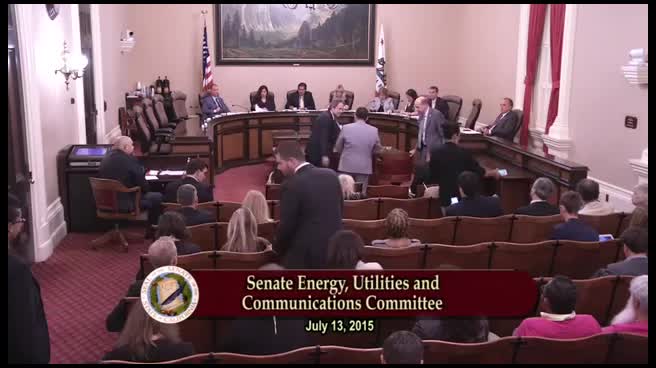 13MIN
Senate Standing Committee on Energy, Utilities and Communications
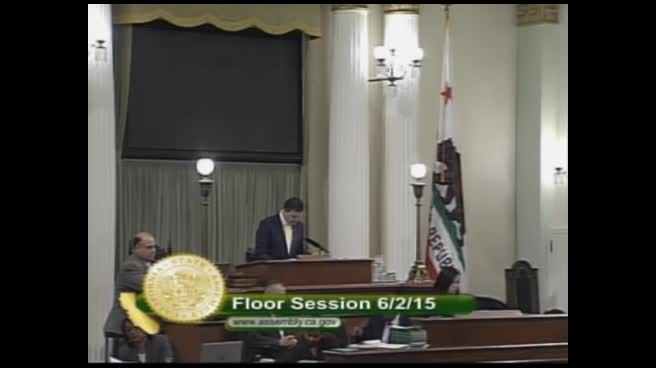 5MIN
Assembly Floor
Bill Author

Bill Co-Author(s):