AB 954: Water and Wastewater Loan and Grant Program.
- Session Year: 2015-2016
- House: Assembly
- Latest Version Date: 2015-07-06
Existing law, the Safe Drinking Water State Revolving Fund Law of 1997, establishes the Safe Drinking Water State Revolving Fund to provide grants or revolving fund loans for the design and construction of projects for public water systems that will enable those systems to meet safe drinking water standards.
This bill would require the State Water Resources Control Board to establish a program to provide low-interest loans and grants to local agencies for low-interest loans and grants to eligible applicants for specified purposes relating to drinking water and wastewater treatment. This bill would create the Water and Wastewater Loan and Grant Fund and provide that the moneys in this fund are available, upon appropriation by the Legislature, to the board for expenditure for the program. This bill would transfer to the Water and Wastewater Loan and Grant Fund $10,000,000 from the General Fund.
This bill would declare that it is to take effect immediately as an urgency statute.
Existing law, the Safe Drinking Water State Revolving Fund Law of 1997, establishes the Safe Drinking Water State Revolving Fund to provide grants or revolving fund loans for the design and construction of projects for public water systems that will enable those systems to meet safe drinking water standards.
This bill would require the State Water Resources Control Board to establish a pilot program to provide low-interest loans and grants to local agencies for low-interest loans and grants to eligible applicants for specified purposes relating to drinking water and wastewater treatment. This bill would prohibit the board from issuing these loans or grants on or after January 1, 2026. This bill would create the Water and Wastewater Loan and Grant Fund and provide that the moneys in this fund are available, upon appropriation by the Legislature, to the board for expenditure for the pilot program. This bill would transfer to the Water and Wastewater Loan and Grant Fund $20,000,000 $10,000,000 from the General Fund. This bill would require moneys in the Water and Wastewater Loan and Grant Fund after January 1, 2026, to revert to the General Fund.
This bill would declare that it is to take effect immediately as an urgency statute.
Existing law, the Safe Drinking Water State Revolving Fund Law of 1997, establishes the Safe Drinking Water State Revolving Fund to provide grants or revolving fund loans for the design and construction of projects for public water systems that will enable those systems to meet safe drinking water standards.
This bill would require the State Water Resources Control Board to establish a pilot program to provide low-interest loans and grants to local agencies for low-interest loans and grants to eligible applicants for specified purposes relating to drinking water and wastewater treatment. This bill would prohibit the board from issuing these loans or grants on or after January 1, 2026. This bill would create the Water and Wastewater Loan and Grant Fund and provide that the moneys in this fund are available, upon appropriation by the Legislature, to the board for expenditure for the pilot program. This bill would transfer to the Water and Wastewater Loan and Grant Fund $20,000,000 from the General Fund. This bill would require moneys in the Water and Wastewater Loan and Grant Fund after January 1, 2026, to revert to the General Fund.
Existing law, the Safe Drinking Water State Revolving Fund Law of 1997, establishes the Safe Drinking Water State Revolving Fund to provide grants or revolving fund loans for the design and construction of projects for public water systems that will enable those systems to meet safe drinking water standards.
This bill would require the State Water Resources Control Board to establish a pilot program to provide low-interest loans and grants to eligible applicants for specified purposes relating to drinking water and wastewater treatment. This bill would prohibit the board from issuing these loans or grants on or after January 1, 2026. This bill would create the Water and Wastewater Loan and Grant Fund and provide that the moneys in this fund are available, upon appropriation by the Legislature, to the board for expenditure for the pilot program. This bill would transfer to the Water and Wastewater Loan and Grant Fund $20,000,000 from the General Fund.
Existing law, the Water Quality, Supply, and Infrastructure Improvement Act of 2014, approved by the voters as Proposition 1 at the November 4, 2014, statewide general election, authorizes the issuance of general obligation bonds in the amount of $7,545,000,000 to finance a water quality, supply, and infrastructure improvement program.
This bill would state the intent of the Legislature to enact legislation to implement this bond act.
The Legislature hereby finds and declares the following: as follows:
(a)Many areas of the state are disproportionately impacted by drought because they are heavily dependent or completely reliant on groundwater from basins that are in overdraft and in which the water table declines year after year or from basins that are contaminated.
(b)There are a number of state grant and loan programs that provide financial assistance to communities to address drinking water and wastewater needs. Unfortunately, there is no program in place to provide similar assistance to individual homeowners who are reliant on their own groundwater wells and who may not be able to afford conventional private loans to undertake vital water supply, water quality, and wastewater improvements.
(c)The program created by this act is intended to bridge that gap by providing low-interest loans, grants, or both, to individual homeowners to undertake actions necessary to provide safer, cleaner, and more reliable drinking water and wastewater treatment. These actions may include, but are not limited to, digging deeper wells, improving existing wells and related equipment, addressing drinking water contaminants in the homeowners water, or connecting to a local water or wastewater system.
SEC. 2.Chapter 6.6 (commencing with Section 13486) is added to Division 7 of the Water Code, to read:6.6.Water and Wastewater Loan and Grant Program13486.(a)The board shall establish a program in accordance with this chapter to provide low-interest loans and grants to local agencies for low-interest loans and grants to eligible applicants for any of the following purposes:
(1)Extending or connecting service lines from a water or wastewater system to the applicants residence or plumbing.
(2)Paying reasonable charges or fees for connecting to a water or wastewater system.
(3)Paying costs to close abandoned septic tanks and water wells, as necessary, to protect health and safety as required by local or state law.
(4)Deepening an existing groundwater well.
(5)Improving an existing groundwater well, including associated equipment.
(6)Installing a water treatment system if the groundwater exceeds a primary or secondary drinking standard, as defined in Section 116275 of the Health and Safety Code.
(b)The board may adopt any regulation it determines is necessary to carry out the purposes of the chapter. A regulation adopted pursuant to this subdivision shall not be subject to the rulemaking requirements of Chapter 3.5 (commencing with Section 11340) of Part 1 of Division 3 of Title 2 of the Government Code.
13487.(a)The Water and Wastewater Loan and Grant Fund is hereby created in the State Treasury. The moneys in the Water and Wastewater Loan and Grant Fund are available, upon appropriation by the Legislature, to the board for expenditure in accordance with this chapter.
(b)The following moneys shall be deposited in the Water and Wastewater Loan and Grant Fund:
(1)Moneys repaid to the board pursuant to a grant or loan made in accordance with this chapter, including interest payments.
(2)Notwithstanding Section 16475 of the Government Code, any interest earned upon the moneys in the Water and Wastewater Loan and Grant Fund.
13488.(a)An eligible applicant for a loan shall meet all of the following criteria:
(1)Have a household income below the statewide median household income.
(2)Have an ownership interest in the residence.
(3)Be unable to obtain financial assistance at reasonable terms and conditions from private lenders and lack the personal resources to undertake these improvements.
(4)Demonstrate an ability to repay the loan. This requirement may be satisfied by having another party join the application as a cosigner.
(b)Any loan granted shall be secured by a mortgage on the residence and repaid within 20 years in accordance with terms established by the board. The interest rate on the loan shall not exceed 1 percent. While any balance on the loan is outstanding, a loan recipient shall furnish evidence of and continually maintain homeowners insurance on the security residence to protect the states interest in the residence.
(c)The board may enter into a contract with a private financial institution to provide loans consistent with the purposes of this chapter. If the board exercises this authority, the board may utilize a portion of the moneys in the Water and Wastewater Loan and Grant Fund to provide a loan guarantee or similar loss mitigation mechanism.
13489.(a)An eligible applicant for a grant shall meet all of the following criteria:
(1)Have a household income that is 60 percent or less of the statewide median household income.
(2)Have an ownership interest in the residence.
(3)Be unable to obtain financial assistance at reasonable terms and conditions from private lenders and lack the personal resources to undertake these improvements.
(b)A grant recipient shall repay to the board the grant amount in full if that recipient sells the residence less than five years from the date that the grant agreement was signed.
(c)A grant recipient shall repay to the board any unused grant funds.
SEC. 3.Ten million dollars ($10,000,000) is hereby transferred from the General Fund to the Water and Wastewater Loan and Grant Fund.
SEC. 4.This act is an urgency statute necessary for the immediate preservation of the public peace, health, or safety within the meaning of Article IV of the Constitution and shall go into immediate effect. The facts constituting the necessity are:
In order to provide eligible households with access to safer, cleaner, and more reliable drinking water and wastewater treatment during Californias prolonged drought, it is necessary that this act take effect immediately.
The Legislature hereby finds and declares the following:
(a)Many areas of the state are disproportionately impacted by drought because they are heavily dependent or completely reliant on groundwater from basins that are in overdraft and in which the water table declines year after year or from basins that are contaminated.
(b)There are a number of state grant and loan programs that provide financial assistance to communities to address drinking water and wastewater needs. Unfortunately, there is no program in place to provide similar assistance to individual homeowners who are reliant on their own groundwater wells and who may not be able to afford conventional private loans to undertake vital water supply, water quality, and wastewater improvements.
(c)The program created by this act is intended to bridge that gap by providing low-interest loans, grants, or both, to individual homeowners to undertake actions necessary to provide safer, cleaner, and more reliable drinking water and wastewater treatment. These actions may include, but are not limited to, digging deeper wells, improving existing wells and related equipment, addressing drinking water contaminants in the homeowners water, or connecting to a local water or wastewater system.
SEC. 2.Chapter 6.6 (commencing with Section 13486) is added to Division 7 of the Water Code, to read:6.6.Water and Wastewater Loan and Grant Pilot Program13486.(a)The board shall establish a pilot program in accordance with this chapter to provide low-interest loans and grants to local agencies for low-interest loans and grants to eligible applicants for any of the following purposes:
(1)Extending or connecting service lines from a water or wastewater system to the applicants residence or plumbing.
(2)Paying reasonable charges or fees for connecting to a water or wastewater system.
(3)Paying costs to close abandoned septic tanks and water wells, as necessary, to protect health and safety as required by local or state law.
(4)Deepening an existing groundwater well.
(5)Improving an existing groundwater well, including associated equipment.
(6)Installing a water treatment system if the groundwater exceeds a primary or secondary drinking standard, as defined in Section 116275 of the Health and Safety Code.
(b)The board may adopt any regulation it determines is necessary to carry out the purposes of the chapter as an emergency regulation in accordance with chapter. A regulation adopted pursuant to this subdivision shall not be subject to the rulemaking requirements of Chapter 3.5 (commencing with Section 11340) of Part 1 of Division 3 of Title 2 of the Government Code.
(c)The board shall not issue loans or grants pursuant to this chapter on or after January 1, 2026, after which time moneys in the Water and Wastewater Loan and Grant Fund shall revert to the General Fund. This subdivision shall not terminate either of the following rights, obligations, or authorities, or any provision necessary to carry out these rights, obligations, or authorities:
(1)The repayment of a loan due and payable to the board.
(2)The resolution of a cost recovery action or the initiation of an action or other collection process to recover defaulted loan moneys due to the board or to recover grant moneys paid.
13487.(a)The Water and Wastewater Loan and Grant Fund is hereby created in the State Treasury. The moneys in the Water and Wastewater Loan and Grant Fund are available, upon appropriation by the Legislature, to the board for expenditure in accordance with this chapter.
(b)The following moneys shall be deposited in the Water and Wastewater Loan and Grant Fund:
(1)Moneys repaid to the board pursuant to a grant or loan made in accordance with this chapter, including interest payments.
(2)Notwithstanding Section 16475 of the Government Code, any interest earned upon the moneys in the Water and Wastewater Loan and Grant Fund.
13488.(a)An eligible applicant for a loan shall meet all of the following criteria:
(1)Have a household income below the statewide median household income.
(2)Have an ownership interest in the residence.
(3)Be unable to obtain financial assistance at reasonable terms and conditions from private lenders and lack the personal resources to undertake these improvements.
(4)Demonstrate an ability to repay the loan. This requirement may be satisfied by having another party join the application as a cosigner.
(b)Any loan granted shall be secured by a mortgage on the residence and repaid within 20 years in accordance with terms established by the board. The interest rate on the loan shall not exceed 1 percent. While any balance on the loan is outstanding, a loan recipient shall furnish evidence of and continually maintain homeowners insurance on the security residence to protect the states interest in the residence.
(c)The board may enter into a contract with a private financial institution to provide loans consistent with the purposes of this chapter. If the board exercises this authority, the board may utilize a portion of the moneys in the Water and Wastewater Loan and Grant Fund to provide a loan guarantee or similar loss mitigation mechanism.
13489.(a)An eligible applicant for a grant shall meet all of the following criteria:
(1)Have a household income that is 60 percent or less of the statewide median household income.
(2)Have an ownership interest in the residence.
(3)Be unable to obtain financial assistance at reasonable terms and conditions from private lenders and lack the personal resources to undertake these improvements.
(b)A grant recipient shall repay to the board the grant amount in full if that recipient sells the residence less than five years from the date that the grant agreement was signed.
(c)A grant recipient shall repay to the board any unused grant funds.
SEC. 3.Twenty million dollars ($20,000,000) Ten million dollars ($10,000,000) is hereby transferred from the General Fund to the Water and Wastewater Loan and Grant Fund.
SEC. 4.This act is an urgency statute necessary for the immediate preservation of the public peace, health, or safety within the meaning of Article IV of the Constitution and shall go into immediate effect. The facts constituting the necessity are:
In order to provide eligible households with access to safer, cleaner, and more reliable drinking water and wastewater treatment during Californias prolonged drought, it is necessary that this act take effect immediately.
The Legislature hereby finds and declares the following:
(a)Many areas of the state are disproportionately impacted by drought because they are heavily dependent or completely reliant on groundwater from basins that are in overdraft and in which the water table declines year after year or from basins that are contaminated.
(b)There are a number of state grant and loan programs that provide financial assistance to communities to address drinking water and wastewater needs. Unfortunately, there is no program in place to provide similar assistance to individual homeowners who are reliant on their own groundwater wells and who may not be able to afford conventional private loans to undertake vital water supply, water quality, and wastewater improvements.
(c)The program created by this act is intended to bridge that gap by providing low-interest loans, grants, or both, to individual homeowners to undertake actions necessary to provide safer, cleaner, and more reliable drinking water and wastewater treatment. These actions may include, but are not limited to, digging deeper wells, improving existing wells and related equipment, addressing drinking water contaminants in the homeowners water, or connecting to a local water or wastewater system.
SEC. 2.Chapter 6.6 (commencing with Section 13486) is added to Division 7 of the Water Code, to read:6.6.Water and Wastewater Loan and Grant Pilot Program13486.(a)The board shall establish a pilot program in accordance with this chapter to provide low-interest loans and grants to local agencies for low-interest loans and grants to eligible applicants for any of the following purposes:
(1)Extending or connecting service lines from a water or wastewater system to the applicants residence or plumbing.
(2)Paying reasonable charges or fees for connecting to a water or wastewater system.
(3)Paying costs to close abandoned septic tanks and water wells, as necessary, to protect health and safety as required by local or state law.
(4)Deepening an existing groundwater well.
(5)Improving an existing groundwater well, including associated equipment.
(6)Installing a water treatment system if the groundwater exceeds a primary or secondary drinking standard, as defined in Section 116275 of the Health and Safety Code.
(b)The board may adopt any regulation it determines is necessary to carry out the purposes of the chapter as an emergency regulation in accordance with Chapter 3.5 (commencing with Section 11340) of Part 1 of Division 3 of Title 2 of the Government Code.
(c)The board shall not issue loans or grants pursuant to this chapter on or after January 1, 2026, after which time moneys in the Water and Wastewater Loan and Grant Fund shall revert to the General Fund. This subdivision shall not terminate either of the following rights, obligations, or authorities, or any provision necessary to carry out these rights, obligations, or authorities:
(1)The repayment of a loan due and payable to the board.
(2)The resolution of a cost recovery action or the initiation of an action or other collection process to recover defaulted loan moneys due to the board or to recover grant moneys paid.
13487.(a)The Water and Wastewater Loan and Grant Fund is hereby created in the State Treasury. The moneys in the Water and Wastewater Loan and Grant Fund are available, upon appropriation by the Legislature, to the board for expenditure in accordance with this chapter.
(b)The following moneys shall be deposited in the Water and Wastewater Loan and Grant Fund:
(1)Moneys repaid to the board pursuant to any a grant or loan made in accordance with this chapter, including interest payments.
(2)Notwithstanding Section 16475 of the Government Code, any interest earned upon the moneys in the Water and Wastewater Loan and Grant Fund.
13488.(a)An eligible applicant for a loan shall meet all of the following criteria:
(1)Have a household income below the statewide median household income.
(2)Have an ownership interest in the residence.
(3)Be unable to obtain financial assistance at reasonable terms and conditions from private lenders and lack the personal resources to undertake these improvements.
(4)Demonstrate an ability to repay the loan. This requirement may be satisfied by having another party join the application as a cosigner.
(b)Any loan granted shall be secured by a mortgage on the residence and repaid within 20 years in accordance with terms established by the board. The interest rate on the loan shall not exceed 1 percent. While any balance on the loan is outstanding, a loan recipient shall furnish evidence of and continually maintain homeowners insurance on the security residence to protect the states interest in the residence.
(c)The board may enter into a contract with a private financial institution to provide loans consistent with the purposes of this chapter. If the board exercises this authority, the board may utilize a portion of the moneys in the Water and Wastewater Loan and Grant Fund to provide a loan guarantee or similar loss mitigation mechanism.
13489.(a)An eligible applicant for a grant shall meet all of the following criteria:
(1)Have a household income that is 60 percent or less of the statewide median household income.
(2)Have an ownership interest in the residence.
(3)Be unable to obtain financial assistance at reasonable terms and conditions from private lenders and lack the personal resources to undertake these improvements.
(b)A grant recipient shall repay to the board the grant amount in full if that recipient sells the residence less than five years from the date that the grant agreement was signed.
(c)A grant recipient shall repay to the board any unused grant funds.
SEC. 3.Twenty million dollars ($20,000,000) is hereby transferred from the General Fund to the Water and Wastewater Loan and Grant Fund.
The Legislature hereby finds and declares the following:
(a)Many areas of the state are disproportionately impacted by drought because they are heavily dependent or completely reliant on groundwater from basins that are in overdraft and in which the water table declines year after year or from basins that are contaminated.
(b)There are a number of state grant and loan programs that provide financial assistance to communities to address drinking water and wastewater needs. Unfortunately, there is no program in place to provide similar assistance to individual homeowners who are reliant on their own groundwater wells and who may not be able to afford conventional private loans to undertake vital water supply, water quality, and wastewater improvements.
(c)The program created by this act is intended to bridge that gap by providing low-interest loans, grants, or both, to individual homeowners to undertake actions necessary to provide safer, cleaner, and more reliable drinking water and wastewater treatment. These actions may include, but are not limited to, digging deeper wells, improving existing wells and related equipment, addressing drinking water contaminants in the homeowners water, or connecting to a local water or wastewater system.
SEC. 2.Chapter 6.6 (commencing with Section 13486) is added to Division 7 of the Water Code, to read:6.6.Water and Wastewater Loan and Grant Pilot Program13486.(a)The board shall establish a pilot program in accordance with this chapter to provide low-interest loans and grants to local agencies for low-interest loans and grants to eligible applicants for any of the following purposes:
(1)Extending or connecting service lines from a water or wastewater system to the applicants residence or plumbing.
(2)Paying reasonable charges or fees for connecting to a water or wastewater system.
(3)Paying costs to close abandoned septic tanks and water wells, as necessary, to protect health and safety as required by local or state law.
(4)Deepening an existing groundwater well.
(5)Improving an existing groundwater well, including associated equipment.
(6)Installing a water treatment system if the groundwater exceeds a primary or secondary drinking standard, as defined in Section 116275 of the Health and Safety Code.
(b)The board may adopt any regulation it determines is necessary to carry out the purposes of the chapter as an emergency regulation in accordance with Chapter 3.5 (commencing with Section 11340) of Part 1 of Division 3 of Title 2 of the Government Code.
(c)The board shall not issue loans or grants pursuant to this chapter on or after January 1, 2026. 2026, after which time moneys in the Water and Wastewater Loan and Grant Fund shall revert to the General Fund. This subdivision shall not terminate either of the following rights, obligations, or authorities, or any provision necessary to carry out these rights, obligations, or authorities:
(1)The repayment of a loan due and payable to the board.
(2)The resolution of a cost recovery action or the initiation of an action or other collection process to recover defaulted loan moneys due to the board or to recover grant moneys paid.
13487.(a)The Water and Wastewater Loan and Grant Fund is hereby created in the State Treasury. The moneys in the Water and Wastewater Loan and Grant Fund are available, upon appropriation by the Legislature, to the board for expenditure in accordance with this chapter.
(b)The following moneys shall be deposited in the Water and Wastewater Loan and Grant Fund:
(1)Moneys repaid to the board pursuant to any grant or loan made in accordance with this chapter, including interest payments.
(2)Notwithstanding Section 16475 of the Government Code, any interest earned upon the moneys in the Water and Wastewater Loan and Grant Fund.
13488.(a)An eligible applicant for a loan shall meet all of the following criteria:
(1)Have a household income below the statewide median household income.
(2)Have an ownership interest in the residence.
(3)Be unable to obtain financial assistance at reasonable terms and conditions from private lenders and lack the personal resources to undertake these improvements.
(4)Demonstrate an ability to repay the loan. This requirement may be satisfied by having another party join the application as a cosigner.
(b)Any loan granted shall be secured by a mortgage on the residence and repaid within 20 years in accordance with terms established by the board. The interest rate on the loan shall not exceed 1 percent. While any balance on the loan is outstanding, a loan recipient shall furnish evidence of and continually maintain homeowners insurance on the security residence to protect the states interest in the residence.
(c)The board may enter into a contract with a private financial institution to provide loans consistent with the purposes of this chapter. If the board exercises this authority, the board may utilize a portion of the moneys in the Water and Wastewater Loan and Grant Fund to provide a loan guarantee or similar loss mitigation mechanism.
13489.(a)An eligible applicant for a grant shall meet all of the following criteria:
(1)Have a household income that is 60 percent or less of the statewide median household income.
(2)Have an ownership interest in the residence.
(3)Be unable to obtain financial assistance at reasonable terms and conditions from private lenders and lack the personal resources to undertake these improvements.
(b)A grant recipient shall repay to the board the grant amount in full if that recipient sells the residence less than five years from the date that the grant agreement was signed.
(c)A grant recipient shall repay to the board any unused grant funds.
SEC. 3.Twenty million dollars ($20,000,000) is hereby transferred from the General Fund to the Water and Wastewater Loan and Grant Fund.
The Legislature hereby finds and declares the following:
(a)Many areas of the state are disproportionately impacted by drought because they are heavily dependent or completely reliant on groundwater from basins that are in overdraft and in which the water table declines year after year or from basins that are contaminated.
(b)There are a number of state grant and loan programs that provide financial assistance to communities to address drinking water and wastewater needs. Unfortunately, there is no program in place to provide similar assistance to individual homeowners who are reliant on their own groundwater wells and who may not be able to afford conventional private loans to undertake vital water supply, water quality, and wastewater improvements.
(c)The program created by this act is intended to bridge that gap by providing low-interest loans, grants, or both, to individual homeowners to undertake actions necessary to provide safer, cleaner, and more reliable drinking water and wastewater treatment. These actions may include, but are not limited to, digging deeper wells, improving existing wells and related equipment, addressing drinking water contaminants in the homeowners water, or connecting to a local water or wastewater system.
SEC. 2.Chapter 6.6 (commencing with Section 13486) is added to Division 7 of the Water Code, to read:6.6.Water and Wastewater Loan and Grant Pilot Program13486.(a)The board shall establish a pilot program in accordance with this chapter to provide low-interest loans and grants to eligible applicants for any of the following purposes:
(1)Extending or connecting service lines from a water or wastewater system to the applicants residence or plumbing.
(2)Paying reasonable charges or fees for connecting to a water or wastewater system.
(3)Paying costs to close abandoned septic tanks and water wells, as necessary, to protect health and safety as required by local or state law.
(4)Deepening an existing groundwater well.
(5)Improving an existing groundwater well, including associated equipment.
(6)Installing a water treatment system if the groundwater exceeds a primary or secondary drinking standard, as defined in Section 116275 of the Health and Safety Code.
(b)The board may adopt any regulation it determines is necessary to carry out the purposes of the chapter as an emergency regulation in accordance with Chapter 3.5 (commencing with Section 11340) of Part 1 of Division 3 of Title 2 of the Government Code.
(c)The board shall not issue loans or grants pursuant to this chapter on or after January 1, 2026. This subdivision shall not terminate either of the following rights, obligations, or authorities, or any provision necessary to carry out these rights, obligations, or authorities:
(1)The repayment of a loan due and payable to the board.
(2)The resolution of a cost recovery action or the initiation of an action or other collection process to recover defaulted loan moneys due to the board or to recover grant moneys paid.
13487.(a)The Water and Wastewater Loan and Grant Fund is hereby created in the State Treasury. The moneys in the Water and Wastewater Loan and Grant Fund are available, upon appropriation by the Legislature, to the board for expenditure in accordance with this chapter.
(b)The following moneys shall be deposited in the Water and Wastewater Loan and Grant Fund:
(1)Moneys repaid to the board pursuant to any grant or loan made in accordance with this chapter, including interest payments.
(2)Notwithstanding Section 16475 of the Government Code, any interest earned upon the moneys in the Water and Wastewater Loan and Grant Fund.
13488.(a)An eligible applicant for a loan shall meet all of the following criteria:
(1)Have a household income below the statewide median household income.
(2)Have an ownership interest in the residence.
(3)Be unable to obtain financial assistance at reasonable terms and conditions from private lenders and lack the personal resources to undertake these improvements.
(4)Demonstrate an ability to repay the loan. This requirement may be satisfied by having another party join the application as a cosigner.
(b)Any loan granted shall be secured by a mortgage on the residence and repaid within 20 years in accordance with terms established by the board. The interest rate on the loan shall not exceed 1 percent. While any balance on the loan is outstanding, a loan recipient shall furnish evidence of and continually maintain homeowners insurance on the security residence to protect the states interest in the residence.
(c)The board may enter into a contract with a private financial institution to provide loans consistent with the purposes of this chapter. If the board exercises this authority, the board may utilize a portion of the moneys in the Water and Wastewater Loan and Grant Fund to provide a loan guarantee or similar loss mitigation mechanism.
13489.(a)An eligible applicant for a grant shall meet all of the following criteria:
(1)Have a household income that is 60 percent or less of the statewide median household income.
(2)Have an ownership interest in the residence.
(3)Be unable to obtain financial assistance at reasonable terms and conditions from private lenders and lack the personal resources to undertake these improvements.
(b)A grant recipient shall repay to the board the grant amount in full if that recipient sells the residence less than five years from the date that the grant agreement was signed.
(c)A grant recipient shall repay to the board any unused grant funds.
SEC. 3.Twenty million dollars ($20,000,000) is hereby transferred from the General Fund to the Water and Wastewater Loan and Grant Fund.
SECTION 1.It is the intent of the Legislature to enact legislation to implement the Water Quality, Supply, and Infrastructure Improvement Act of 2014, approved by the voters as Proposition 1 at the November 4, 2014, statewide general election.
It is the intent of the Legislature to enact legislation to implement the Water Quality, Supply, and Infrastructure Improvement Act of 2014, approved by the voters as Proposition 1 at the November 4, 2014, statewide general election.
|
Date
|
Status
|
|---|---|
| Jun 2, 2015 | From committee: Amend, and do pass as amended. (Ayes 17. Noes 0.) (May 28). |
| Aug 27, 2015 | In committee: Held under submission. |
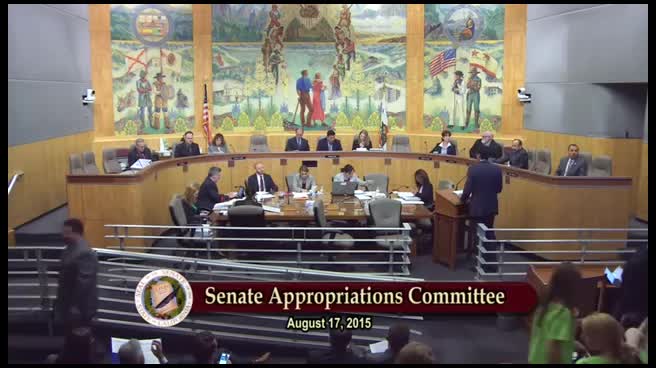
| Aug 17, 2015 | In committee: Referred to APPR. suspense file. |
| Jul 16, 2015 | From committee: Do pass and re-refer to Com. on APPR. (Ayes 7. Noes 0.) (July 15). Re-referred to Com. on APPR. |
| Jul 6, 2015 | From committee chair, with author's amendments: Amend, and re-refer to committee. Read second time, amended, and re-referred to Com. on E.Q. |
| Jun 22, 2015 | In committee: Hearing postponed by committee. |
| Jun 19, 2015 | In committee: Hearing postponed by committee. |
| Jun 18, 2015 | Referred to Com. on E.Q. |
| Jun 4, 2015 | Read third time. Urgency clause adopted. Passed. Ordered to the Senate. (Ayes 78. Noes 0. Page 1921.). |
| Jun 4, 2015 | Read third time. Urgency clause adopted. Passed. Ordered to the Senate. |
| Jun 4, 2015 | In Senate. Read first time. To Com. on RLS. for assignment. |
| Jun 3, 2015 | Read second time. Ordered to third reading. |
| Jun 2, 2015 | Read second time and amended. Ordered returned to second reading. |
| Feb 26, 2015 | Read first time. To print. |
| May 20, 2015 | In committee: Set, first hearing. Referred to APPR. suspense file. |
| May 20, 2015 | In committee: Set, first hearing. Referred to suspense file. |
| May 6, 2015 | Re-referred to Com. on APPR. |
| May 5, 2015 | Re-referred to Com. on APPR. |
| May 5, 2015 | From committee chair, with author's amendments: Amend, and re-refer to Com. on APPR. Read second time and amended. |
| May 4, 2015 | Read second time and amended. |
| Apr 30, 2015 | From committee: Amend, and do pass as amended and re-refer to Com. on APPR. (Ayes 15. Noes 0.) (April 28). |
| Apr 6, 2015 | Re-referred to Com. on W., P., & W. |
| Mar 26, 2015 | Referred to Com. on W., P., & W. |
| Mar 26, 2015 | From committee chair, with author's amendments: Amend, and re-refer to Com. on W., P., & W. Read second time and amended. |
| Feb 27, 2015 | From printer. May be heard in committee March 29. |
|
Date
|
Description
|
Location
|
Votes
|
|
|---|---|---|---|---|
| Aug 17, 2015 | Placed on suspense file | Senate Standing Committee on Appropriations |
Passed |
|
| Jul 15, 2015 | Do pass, but first be re-referred to the Committee on [Appropriations] | Senate Standing Committee on Environmental Quality |
Passed |
|
| Jun 4, 2015 | AB 954 MATHIS Third Reading Urgency | Assembly Floor |
Passed |
|
| May 28, 2015 | Do pass as amended. | Assembly Standing Committee on Appropriations |
Passed |
|
| Apr 28, 2015 | Do pass as amended and be re-referred to the Committee on [Appropriations] | Assembly Standing Committee on Water, Parks, and Wildlife |
Passed |
This list shows positions taken on this bill by organizations on the date displayed, which is linked to the original source.
Positions by individuals are not included.
|
Organization
|
Position
|
Date
|
|---|---|---|
| California League Of Conservation Voters | ** Support | Aug 17, 2015 |
| California State Association Of Counties | ** Support | Aug 17, 2015 |
| Clean Water Action | ** Support | Aug 17, 2015 |
| Community Water Center | ** Support | Aug 17, 2015 |
| Environmental Justice Coalition for Water | ** Support | Aug 17, 2015 |
| Friends of the River | ** Support | Aug 17, 2015 |
| Kern County Board of Supervisors | ** Support | Aug 17, 2015 |
| Leadership Counsel for Justice and Accountability | ** Support | Aug 17, 2015 |
| Planning And Conservation League | ** Support | Aug 17, 2015 |
| Tulare County Board of Supervisors | ** Support | Aug 17, 2015 |
| Wholly H2O | ** Support | Aug 17, 2015 |
AB 954 (Mathis) Page 3 of 3
SENATE COMMITTEE ON APPROPRIATIONS
Senator Ricardo Lara, Chair
2015 - 2016 Regular Session
AB 954 (Mathis) - Water and Wastewater Loan and Grant Program
|
|
Version: July 6, 2015 |
Policy Vote: E.Q. 7 - 0 |
Urgency: Yes |
Mandate: No |
Hearing Date: August 17, 2015 |
Consultant: Marie Liu |
This bill meets the criteria for referral to the Suspense File.
Bill Summary:
AB 954 would establish a program to provide funding for local agencies to offer low-interest loans and grants to eligible applicants for projects that provide access to drinking water or wastewater treatment.
Fiscal Impact:
Onetime appropriation of $10 million from the General Fund for the financial assistance program.
Ongoing costs of $490,000 annually to Water and Wastewater Loan and Grant Fund (General Fund) to the SWRCB to administer the grant program.
Background:
The SWRCB is charged with administering the Drinking Water Program.
Proposed Law:
This bill would establish a program at the SWRCB to give low-interest loans and grants to local governments to administer their own low-interest loan and grant program to eligible applicants for the following purposes:
Extending or connecting service lines from water or wastewater system to the applicant’s resident or plumbing.
Costs to connect to a water or wastewater system.
Paying costs to close abandoned septic tanks and water wells to protect health and safety.
Deepening an existing groundwater well.
Improving an existing groundwater well.
Installing a water treatment system.
Eligible applicants would have a household income below the statewide median household income, have ownership interest in the residence, be unable to obtain financial assistance at reasonable terms and conditions from private lenders, lack the personal resources to undertake the project, and demonstrate an ability to repay the loan. Any loan must be secured by a mortgage on the residence and repaid within 20 years. Loan interest would be capped at one percent.
If the applicant has a household income that is 60% or less of the statewide median household income, the applicant would be eligible for a grant. Grant recipients would be required to repay the grant in full if the residence is sold less within five years from the date that the grant agreement was signed.
This bill would allow the SWRCB to enter into a contract with a private financial institution to provide loans consistent for this purpose.
The SWRCB would be authorized to adopt regulations that are not subject the Administrative Procedures Act to implement the program.
The program would be funded by the Water and Wastewater Loan and Grant Fund (fund), which would be created in this bill. Interest in the fund and monies repaid to the SWRCB pursuant to the program would be deposited into the fund.
This bill would appropriate $10 million from the General Fund to the fund.
This bill is an urgency measure.
Staff Comments:
The author has submitted amendments to the committee that would delete the authority for the SWRCB to enter into a contract with a private institution to provide loans consistent with this program (see proposed author amendments). As such, this analysis does not consider these provisions.
Staff notes that this bill establishes a financial assistance program for local financial assistance programs. That is, the state will be giving funds to locals who will then distribute assistance to individual homeowners. The SWRCB estimates that it would need approximately $490,000 for 3.5 positions to administer a $10 million grant program. These costs are assuming that the local agencies administering the program will be doing all of their own program development including establishing loan and grant repayment terms and vetting of homeowner applicants.
Staff notes that the bill does not establish any parameters regarding how the SWRCB will determine how much each local agency applicant can receive from the program, how the SWRCB is to prioritize local agency requests for funds assuming that the program will be oversubscribed, whether the SWRCB issues a grant or a loan to the local agencies, and whether the local agencies can use part of the financial assistance for their own administrative costs. The SWRCB costs assume that they would only issue grants to locals and grants would be issued to local agencies based on their “readiness to proceed” and the severity of the deficiencies the water systems Administrative costs may change if the author requires the SWRCB to run the program differently.
Staff notes that this bill is silent on whether the state or the local agency bears the risk if a homeowner defaults on a loan and the costs cannot be recovered from the mortgage. However, this is only an issue that needs to be resolved if the author intends for the SWRCB to issue loans instead of or in addition to grants to local agencies.
Proposed Author Amendments:
The author has submitted amendments to the committee that would specify that the local agency would set the terms of loan and grant repayments, not the SWRCB, and would delete the provision that would give the SWRCB the authority to enter into a contract with a private institution to provide loans consistent with the program. The amendments would also make technical changes.
-- END --
AB 954 (Mathis) Page 5 of 5
SENATE COMMITTEE ON ENVIRONMENTAL QUALITY
Senator Wieckowski, Chair
2015 - 2016 Regular
Bill No: AB 954
Author: |
Mathis and Alejo |
||
Version: |
7/6/2015 |
Hearing Date: |
7/15/2015 |
Urgency: |
Yes |
Fiscal: |
Yes |
Consultant: |
Rachel Machi Wagoner |
||
SUBJECT: Water and Wastewater Loan and Grant Program.
ANALYSIS:
Existing law:
Under the federal Clean Water Act:
Establishes federal guidelines for surface water quality protection.
Authorizes water quality programs; requires federal effluent limitations and state water quality standards; requires permits for the discharge of pollutants into navigable waters; provides enforcement mechanisms; and authorizes funding for wastewater treatment works, construction grants, and state revolving loan programs, as well as funding to states and tribes for their water quality programs.
Establishes the Clean Water State Revolving Fund (CWSRF) to offer financial assistance for water quality projects.
Under the federal Safe Drinking Water Act (SDWA):
Establishes federal standards for contaminants in drinking water,
Authorizes states to enter into primacy agreements with the federal United States Environmental Protection Agency (US EPA) to enforce SDWA if the state establishes drinking water standards that are at least as stringent as those developed by US EPA, as required by SDWA.
Establishes the Safe Drinking Water State Revolving Fund (SDWSRF) to offer financial assistance for safe drinking water projects.
Under the Porter-Cologne Water Quality Control Act,
Establishes the State Water Resources Control Board (SWRCB) and Regional Water Quality Control Boards to regulate and protect water quality in California.
Establishes the State Water Pollution Control Revolving Fund to, among other things, implement the federal CWSRF program.
Transferred the Drinking Water Program and the Safe Drinking Water State Revolving Fund (SDWSRF) from the Department of Public Health to SWRCB effective July 1, 2014.
Under the California Safe Drinking Water Act,
Requires SWRCB to protect the public from contaminants in drinking water.
Establishes the SDWSRF which is partially capitalized by federal contributions from the federal Safe Drinking Water Act. Specifies that the SDWSRF provide funding for public water systems to correct deficiencies and problems that pose public health risks and to meet safe drinking water standards.
Proposition 1, the Water Quality, Supply, and Infrastructure Improvement Act of 2014 (Prop. 1), includes $260 million, upon appropriation by the Legislature to the SWRCB to be placed in the CWSRF and used for grants for wastewater treatment projects. Prop. 1 also includes another $260 million, upon appropriation by the Legislature (recipient agency not specified) for public water system infrastructure improvements and related actions to meet safe drinking water standards, ensure affordable drinking water, or both.
AB 91 (Budget Committee, Chapter 1, Statutes of 2015) appropriates $19 million to the SWRCB, for grants and direct expenditures for emergency drinking water projects, including hauled water, bottled water, design and construction of connections to adjacent public water systems, new wells and well rehabilitation.
This bill:
Appropriates $10 million dollars from the General Fund to a newly-established program at SWRCB to provide low-interest loans and grants to eligible applicants for any of the following:
Connecting to water or wastewater service.
Closing abandoned septic tanks or water wells to protect health and safety.
Deepening an existing groundwater well.
Installing a water treatment system if the groundwater doesn't meet primary or secondary drinking water standards.
Requires eligible loan applicants to:
Own their own home and be unable to obtain a conventional loan.
Be below the statewide median income; demonstrate an ability to repay the loan which may include having a co-signer; secure the loan on the home and repay it within 20 years.
Have a household income that is less than 60% of the statewide median; repay the grant in full if the home is sold less than five years from the date of the agreement; and, repay the SWRCB any unused grant funds.
Provides that due to drought the act is an urgency statute in order to provide eligible households with access to safer, cleaner, and more reliable drinking water and wastewater treatment.
Comments
Purpose of Bill. The author states that this bill creates a SWRCB program to provide water and waste water project grants and loans for owners of private homes who cannot afford conventional loans for needed water and wastewater improvements.
The author believes that while catastrophic drought continues to ravage the state, Californians who are reliant on groundwater wells need access to low-interest financing and grants to undertake necessary repairs to provide safer, reliable drinking water. The author adds that this bill is needed because while there are many state and federal programs that provide financial assistance, such as low-interest loans and grants, to communities to undertake water and wastewater infrastructure improvement projects there are very few resources available to individual homeowners who are reliant on their own groundwater wells. The author highlights that many individual homeowners who rely upon private groundwater wells are often in disadvantaged communities and economically distressed areas, and so may not be able to afford conventional private financing to undertake vital water supply, water quality, and wastewater improvements
The CWSRF program provides low-interest loans and other financing mechanisms for publicly-owned wastewater treatment facilities, local sewers, sewer interceptors, water recycling facilities, and storm water treatment facilities. The SDWSRF provides funding for public water systems. But improvements to those parts of the water and wastewater infrastructure that are on private property such as wells, sewer laterals, or septic systems have not been funded by the CWSRF or SDWSRF programs.
General Fund Appropriation. This legislation identifies an unfunded water quality need for Californians and appropriates $10 million General Fund for this purpose. Should this legislation be approved by the Senate Environmental Quality Committee, the Senate Appropriations Committee will need to consider if this is an appropriation expenditure of General Fund and if the revenue is available to fund this new program.
SOURCE:
Author
SUPPORT:
California State Association of Counties
California League of Conservation Voters
Clean Water Action
Community Water Center
Environmental Justice Coalition for Water
Friends of the River
Kern County Board of Supervisors
Leadership Counsel for Justice and Accountability
Planning and Conservation League
Tulare County Board of Supervisors
Wholly H2O
OPPOSITION:
None received
-- END --
AB 954
Page 4
ASSEMBLY THIRD READING
AB 954
(Mathis)
As Amended June 2, 2015
2/3 vote. Urgency
Committee |
Votes |
Ayes |
Noes |
Water |
15-0 |
Levine, Bigelow, Dababneh, Dahle, Dodd, Beth Gaines, Cristina Garcia, Gomez, Harper, Lopez, Mathis, Medina, Rendon, Salas, Williams |
|
Appropriations |
17-0 |
Gomez, Bigelow, Bonta, Calderon, Chang, Daly, Eggman, Gallagher, Eduardo Garcia, Gordon, Holden, Jones, Quirk, Rendon, Wagner, Weber, Wood |
|
SUMMARY: Appropriates $10 million dollars to a newly-created fund at the State Water Resources Control Board (State Water Board) to provide low-interest loans and grants to eligible applicants for water and wastewater. Specifically, this bill:
Makes findings including, but not limited to, the impacts of drought and the need to establish a program to provide assistance to individual homeowners who are reliant on their own groundwater wells and may not be able to afford conventional private loans to take care of vital water supply, water quality, and wastewater improvements.
Requires the State Water Board to establish a pilot program of low-interest loans and grants to eligible applicants for any of the following:
Connecting to water or wastewater service.
Closing abandoned septic tanks or water wells to protect health and safety.
Deepening an existing groundwater well.
Installing a water treatment system if the groundwater doesn't meet primary or secondary drinking water standards.
Allows the State Water Board to adopt regulations implementing the program and makes such regulations exempt from the requirements of the California Administrative Procedures Act.
Establishes the Water and Wastewater Loan and Grant Program (Program) at the State Water Board with a Water and Wastewater Loan and Grant Fund (LGF).
Appropriates $10 million of General Fund into the LGF and allows moneys repaid from any grant or loan under the Pilot Program to be deposited in the fund as well as and any interest on those moneys.
Specifies that all loan or grant applicants must own their own home and be unable to obtain a conventional loan.
Requires eligible loan applicants to: be below the statewide median income; demonstrate an ability to repay the loan which may include having a co-signer; secure the loan on the home and repay it within 20 years.
Requires the State Water Board to set interest rates under the pilot program at 1% or less and allows the State Water Board to administer the program through a private financial institution.
Requires eligible grant applicants to: have a household income that is less than 60% of the statewide median; repay the grant in full if the home is sold less than five years from the date of the agreement; and, repay the State Water Board any unused grant funds.
Provides that due to drought the act is an urgency statute in order to provide eligible households with access to safer, cleaner, and more reliable drinking water and wastewater treatment.
EXISTING LAW:
Under the federal Water Pollution Control Act (Clean Water Act) Amendments of 1972 and 1987:
Establishes federal guidelines for surface water quality protection.
Authorizes water quality programs; requires federal effluent limitations and state water quality standards; requires permits for the discharge of pollutants into navigable waters; provides enforcement mechanisms; and authorizes funding for wastewater treatment works, construction grants, and state revolving loan programs, as well as funding to states and tribes for their water quality programs.
Establishes the Clean Water State Revolving Fund (CWSRF) to offer low interest financing agreements for water quality projects.
Under the Porter-Cologne Water Quality Control Act, establishes the State Water Pollution Control Revolving Fund to, among other things, implement the federal CWSRF program.
Transferred the Safe Drinking Water Program and the Safe Drinking Water State Revolving Fund (SDWSRF) from the Department of Public Health to the State Water Board, effective July 1, 2014.
Under the California Safe Drinking Water Act, requires the State Water Board, in administering programs to fund improvements and expansions of small community water systems, to give priority to funding projects in disadvantaged communities and encourage the consolidation of small community water systems that serve disadvantaged communities in instances where consolidation will help the affected agencies and the state to meet specified goals
Establishes the SDWSRF which is partially capitalized by federal contributions from the federal Safe Drinking Water Act. Specifies that the SDWSRF provide funding for public water systems to correct deficiencies and problems that pose public health risks and to meet safe drinking water standards.
FISCAL EFFECT: According to the Assembly Appropriations Committee:
Appropriates $10 million (General Fund (GF)).
Unknown costs, likely in the $600,000 to $800,000 range for SWRCB to administer the program (GF).
COMMENTS: This bill creates a State Water Board program to provide water and waste water project grants and loans for owners of private homes who cannot afford conventional loans for needed water and wastewater improvements.
The author states that while catastrophic drought continues to ravage the state, Californians who are reliant on groundwater wells need access to low-interest financing and grants to undertake necessary repairs to provide safer, reliable drinking water. The author adds that this bill is needed because while there are many state and federal programs that provide financial assistance, such as low-interest loans and grants, to communities to undertake water and wastewater infrastructure improvement projects there are very few resources available to individual homeowners who are reliant on their own groundwater wells. The author highlights that many individual homeowners who rely upon private groundwater wells are often in disadvantaged communities and economically distressed areas, and so may not be able to afford conventional private financing to undertake vital water supply, water quality, and wastewater improvements
The CWSRF program provides low-interest loans and other financing mechanisms for publicly-owned wastewater treatment facilities, local sewers, sewer interceptors, water recycling facilities, and storm water treatment facilities. The SDWSRF provides funding for public water systems. But improvements to those parts of the water and wastewater infrastructure that are on private property such as wells, sewer laterals, or septic systems have not been funded by the CWSRF or SDWSRF programs.
Proposition 1, the Water Quality, Supply, and Infrastructure Improvement Act of 2014 (Prop. 1), includes $260 million, upon appropriation by the Legislature to the State Water Board to be placed in the CWSRF and used for grants for wastewater treatment projects. Prop. 1 also includes another $260 million, upon appropriation by the Legislature (recipient agency not specified) for public water system infrastructure improvements and related actions to meet safe drinking water standards, ensure affordable drinking water, or both. But, again, the funding is focused on the public water system or public agency solution, not the individual homeowner's property.
AB 91 (Budget Committee), Chapter 1, Statutes of 2015 appropriates $19 million to the State Water Board, for grants and direct expenditures for emergency drinking water projects, including hauled water, bottled water, design and construction of connections to adjacent public water systems, new wells and well rehabilitation. However, these funds are only available until June 30, 2016, and are intended to address drought-related drinking water emergencies or threatened emergencies as opposed to long-term solutions.
Supporters state that there are no programs to provide assistance to individual homeowners who rely on their own groundwater wells and cannot afford conventional loans. Supporters advise that this bill would bridge the gap by providing low-interests loans, grants, or both to low-income homeowners to undertake vital water supply, water quality, and wastewater treatment improvements.
There is not opposition on file.
Analysis Prepared by: Tina Leahy / W., P., & W. / (916) 319-2096 FN: 0000841
AB 954
Page 2
Date of Hearing: May 20, 2015
ASSEMBLY COMMITTEE ON APPROPRIATIONS
Jimmy Gomez, Chair
AB 954
(Mathis) – As Amended May 5, 2015
Policy Committee: |
Water, Parks and Wildlife |
Vote: |
15 - 0 |
|
|
|
|
|
|
|
|
Urgency: No State Mandated Local Program: No Reimbursable: No
SUMMARY:
This bill appropriates $20 million GF to a newly created fund, and requires the State Water Resources Control Board (SWRCB) to implement a low-interest loan and grant pilot program for water and wastewaster facilities and improvements until January 1, 2026. Specifically, this bill:
Requires SWRCB to establish a pilot program of low-interest loans and grants for local agencies to provide funds to eligible applicants for any of the following:
Connecting to water or wastewater service.
Closing abandoned septic tanks or water wells to protect health and safety.
Deepening an existing groundwater well.
Installing a water treatment system if the groundwater doesn't meet primary or secondary drinking water standards.
Establishes the Water and Wastewater Loan and Grant Pilot Program (Pilot Program) at the State Water Board with a Water and Wastewater Loan and Grant Fund (LGF). Appropriates $20 million of General Fund into the LGF and allows moneys repaid from any grant or loan under the Pilot Program to be deposited in the fund as well as and any interest on those moneys.
Specifies that all loan or grant applicants must own their own home and be unable to obtain a conventional loan. Requires eligible loan applicants to be below the statewide median income; demonstrate an ability to repay the loan which may include having a co-signer; secure the loan on the home and repay it within 20 years. Requires all eligible grant recipients to have a household income that is less than 60% of the statewide median; repay the grant in full if the home is sold less than five years from the date of the agreement; and, repay the SWRCB any unused grant funds.
Requires the SWRCB to set interest rates under the pilot program at 1% or less and allows the SWRCB to administer the program through a private financial institution.
FISCAL EFFECT:
This bill appropriates $20 million GF.
Unknown costs, likely in the $600,000 to $800,000 range, for SWRCB to administer the program (GF)
COMMENTS:
Purpose. According to the author, while catastrophic drought continues to ravage the state, Californians who are reliant on groundwater wells need access to low-interest financing and grants to undertake necessary repairs to provide safer, reliable drinking water.
The author adds that this bill is needed because while there are many state and federal programs that provide financial assistance, such as low-interest loans and grants, to communities to undertake water and wastewater infrastructure improvement projects there are very few resources available to individual homeowners who are reliant on their own groundwater wells.
Many individual homeowners who rely upon private groundwater wells are often in disadvantaged communities and economically distressed areas, and may not be able to afford conventional private financing to undertake vital water supply, water quality, and wastewater improvements
Emergency Drought Package. The Governor's May Revision includes $35 million GF and special funds for SWRCB to provide grants for emergency drinking water projects. The author may wish to expand upon this proposal to achieve the goals of this bill.
Other Considerations. The author may wish to provide SWRCB with an exemption from the Administrative Procedures Act to reduce administrative costs and ensure any funds are disbursed in an expedited manner.
Analysis Prepared by: Jennifer Galehouse / APPR. / (916) 319-2081
Discussed in Hearing
View Older Hearings