AJR 12: H-1B Visa program: investigation of misuse.
- Session Year: 2015-2016
- House: Assembly
- Latest Version Date: 2015-06-29
This measure would urge the United States Department of Labor and the Congress of the United States to investigate alleged misuse of the H1-B Visa program.
This measure would urge the United States Department of Labor and the Congress of the United States to investigate alleged misuse of the H1-B Visa program by Southern California Edison Company. program.
This measure would urge the United States Department of Labor and the Congress of the United States to investigate alleged misuse of the H1-B Visa program by Southern California Edison Company.
WHEREAS, The H-1B Visa program allows businesses to temporarily hire highly skilled foreign workers with specialized knowledge where a qualified United States worker cannot be found; and
WHEREAS, The H-1B Visa program was never intended to be used as a catalyst for laying off United States workers and replacing them with H-1B workers; and
WHEREAS, The granting of H-1B Visas should never result in the creation of a virtual pipeline for outsourcing United States workforce jobs; and
WHEREAS, Californias average unemployment rate in January 2015 was 6.9 percent with Imperial Countys unemployment rate being 20.6 percent; and
WHEREAS, Some companies are misusing the federal H-1B Visa program, including the documented misuse by one California public utility to replace 400 California workers; and
WHEREAS, Senate Bill No. 477 (Chapter 711 of the Statutes of 2014) seeks to end the exploitation of foreign, temporary, nonimmigrant workers brought to California under various federal work visa programs; and
WHEREAS, Displaced American workers are being exploited through the misapplication of the H-1B Visa program; now, therefore, be it
Resolved by the Assembly and the Senate of the State of California, jointly, That the Legislature respectfully urges the United States Department of Labor and the Congress of the United States to investigate this alleged misuse of the H1-B Visa program; and be it further
Resolved, That any company that has engaged in this improper practice is urged to immediately cease the practice of replacing California employees with foreign workers under this, or any other, program; and be it further
Resolved, That the Chief Clerk of the Assembly transmit copies of this resolution to the President and Vice President of the United States, the Speaker of the House of Representatives, the Minority Leader of the House of Representatives, the Majority Leader of the Senate, the Minority Leader of the Senate, and each Senator and Representative from California in the Congress of the United States.
WHEREAS, The H-1B Visa program allows businesses to temporarily hire highly skilled foreign workers with specialized knowledge where a qualified United States worker cannot be found; and
WHEREAS, The H-1B Visa program was never intended to be used as a catalyst for lying laying off United States States workers and replacing them with H-1B workers; and
WHEREAS, The granting of H-1B Visas should never result in the creation of a virtual pipeline for outsourcing United States workforce jobs; and
WHEREAS, Californias average unemployment rate in January 2015 was 6.9 percent with Imperial Countys unemployment rate being 20.6 percent; and
WHEREAS, Southern California Edison Company is reported to be Some companies are misusing the federal H-1B Visa program, including the documented misuse by one California public utility to replace 400 California workers; and
WHEREAS, Senate Bill No. 477 (Chapter 711 of the Statutes of 2014) seeks to end the exploitation of foreign, temporary, nonimmigrant workers brought to California under various federal work visa programs; and
WHEREAS, Displaced American workers are being exploited through the misapplication of the H-1B Visa program; now, therefore, be it
Resolved by the Assembly and the Senate of the State of California, jointly, That the Legislature respectfully urge urges the United States Department of Labor and the Congress of the United States to investigate this alleged misuse of the H1-B Visa program by Southern California Edison Company; program; and be it further
Resolved, That Southern California Edison Company is urged to discontinue any company that has engaged in this improper practice is urged to immediately cease the practice of replacing California employees with foreign workers under this, or any other, program; and be it further
Resolved, That the Chief Clerk of the Assembly transmit copies of this resolution to the President and Vice President of the United States, the Speaker of the House of Representatives, the Minority Leader of the House of Representatives, the Majority Leader of the Senate, the Minority Leader of the Senate, and each Senator and Representative from California in the Congress of the United States.
WHEREAS, The H-1B Visa program allows businesses to temporarily hire highly skilled foreign workers with specialized knowledge where a qualified United States worker cannot be found; and
WHEREAS, The H-1B Visa program was never intended to be used as a catalyst for lying off United States workers and replacing them with H-1B workers; and
WHEREAS, The granting of H-1B Visas should never result in the creation of a virtual pipeline for outsourcing United States workforce jobs; and
WHEREAS, Californias average unemployment rate in January 2015 was 6.9 percent with Imperial Countys unemployment rate being 20.6 percent; and
WHEREAS, Southern California Edison Company is reported to be misusing the federal H-1B Visa program to replace 400 California workers; and
WHEREAS, Southern California Edison Company has admitted that these laid-off workers are being replaced by overseas consulting services; and
WHEREAS, Senate Bill No. 477 (Chapter 711 of the Statutes of 2014) seeks to end the exploitation of foreign, temporary, nonimmigrant workers brought to California under various federal work visa programs; and
WHEREAS, Displaced American workers are being exploited through the misapplication of the H-1B Visa program; now, therefore, be it
Resolved by the Assembly and the Senate of the State of California, jointly, That the Legislature respectfully urge the United States Department of Labor and the Congress of the United States to investigate this alleged misuse of the H1-B Visa program by Southern California Edison Company; and be it further
Resolved, That Southern California Edison Company is urged to discontinue the practice of replacing California employees with foreign workers under this, or any other, program; and be it further
Resolved, That the Chief Clerk of the Assembly transmit copies of this resolution to the President and Vice President of the United States, the Speaker of the House of Representatives, the Minority Leader of the House of Representatives, the Majority Leader of the Senate, the Minority Leader of the Senate, and each Senator and Representative from California in the Congress of the United States.
|
Date
|
Status
|
|---|---|
| Mar 24, 2015 | Introduced. To print. |
| Mar 25, 2015 | From printer. |
| May 26, 2015 | From committee chair, with author's amendments: Amend, and re-refer to Com. on L. & E. Amended. |
| May 26, 2015 | Referred to Com. on L. & E. |
| May 27, 2015 | Re-referred to Com. on L. & E. |
| Jun 25, 2015 | From committee: Be adopted. Ordered to Third Reading. (Ayes 5. Noes 2.) (June 24). |
| Jun 29, 2015 | Amended, adopted, and to Senate. |
| Jun 29, 2015 | Amended, adopted, and to Senate. (Ayes 49. Noes 20. Page 2177.) |
| Jun 30, 2015 | In Senate. To Com. on RLS. |
| Jul 1, 2015 | Re-referred to Com. on L. & I.R. |
| Jul 13, 2015 | From committee: Be adopted. Ordered to Third Reading. (Ayes 4. Noes 1.) (July 13). |
| Sep 11, 2015 | Ordered to inactive file at the request of Senator Mitchell. |
|
Date
|
Description
|
Location
|
Votes
|
|
|---|---|---|---|---|
| Jul 13, 2015 | Be adopted. Ordered to third reading | Senate Standing Committee on Labor and Industrial Relations |
Passed |
|
| Jun 29, 2015 | AJR 12 GARCIA, E. Assembly Third Reading | Assembly Floor |
Passed |
|
| Jun 24, 2015 | Be adopted. To third reading. | Assembly Standing Committee on Labor and Employment |
Passed |
This list shows positions taken on this bill by organizations on the date displayed, which is linked to the original source.
Positions by individuals are not included.
|
Organization
|
Position
|
Date
|
|---|---|---|
| California Labor of Federation | * Indeterminate | Jun 24, 2015 |
| California State Association Of Electrical Workers | ** Support | Jun 24, 2015 |
| California State Pipe Trades Council | ** Support | Jun 24, 2015 |
| Coalition of California Utility Employees | * Support | Jun 24, 2015 |
| Coalition of California Utility Employees | * Indeterminate | Jun 24, 2015 |
| International Union of Elevator Constructors | ** Support | Jun 24, 2015 |
| Western States Council Of Sheet Metal Workers | ** Support | Jun 24, 2015 |
Office of Senate Floor Analyses (916) 651-1520 Fax: (916) 327-4478 | AJR |
THIRD READING
Bill No: AJR 12
Author: Eduardo Garcia (D), Brown (D), and Hernandez (D), et al.
:
SENATE LABOR & IND. REL. COMMITTEE: 4-1, 7/13/15
AYES: Mendoza, Jackson, Leno, Mitchell
NOES: Stone
ASSEMBLY FLOOR: 49-20, 6/29/15 - See last page for vote
SOURCE: Coalition of California Utility Employees
DIGEST: This resolution urges the United States Department of Labor and the Congress of the United States to investigate alleged misuse of the H-1B Visa program.
Existing law:
- Establishes the H-1B Visa program which applies to employers seeking to hire nonimmigrant aliens as workers in specialty occupations or as fashion models of distinguished merit and ability, as defined.
- Specifies that the program is for employers who cannot otherwise obtain needed business skills and abilities from the U.S. workforce by authorizing the temporary employment of qualified individuals who are not otherwise authorized to work in the United States.
- Establishes certain standards in order to protect similarly employed U.S. workers from being adversely affected by the employment of the nonimmigrant workers, as well as to protect the H-1B workers.
- Requires employers to attest to the U.S. Department of Labor that they will pay wages to the H-1B workers that are at least equal to the actual wage paid by the employer to other workers with similar experience and qualifications for the job in question, or the prevailing wage for the occupation in the area of intended employment – whichever is greater.
This resolution:
- Makes the following legislative findings and declarations:
- The H-1B Visa program allows businesses to temporarily hire highly skilled foreign workers with specialized knowledge where a qualified U.S. worker cannot be found.
- The H-1B Visa program was never intended to be used as a catalyst for laying off U.S. workers and replacing them with H-1B workers.
- The granting of H-1B visas should never result in the creation of a virtual pipeline for outsourcing U.S. workforce jobs.
- California’s average unemployment rate in January 2015 was 6.9 percent with Imperial County’s unemployment rate being 20.6 percent.
- Some companies are misusing the federal H-1B Visa program, including the documented misuse by one California public utility to replace 400 California workers.
- SB 477 (Steinberg, Chapter 711, Statutes of 2014) seeks to end the exploitation of foreign, temporary, nonimmigrant workers brought to California under various federal work visa programs.
- Displaced American workers are being exploited through the misapplication of the H-1B Visa program.
- Makes the following resolutions:
- That the Legislature respectfully urges the U.S. Department of Labor and the Congress of the United States to investigate this alleged misuse of the H-1B Visa
- That any company that has engaged in this improper practice is urged to immediately cease the practice of replacing California employees with foreign workers under this, or any other, program.
- That the Legislature respectfully urges the U.S. Department of Labor and the Congress of the United States to investigate this alleged misuse of the H-1B Visa
Background
H-1B Visa Program: The H-1B program applies to employers seeking to hire nonimmigrant aliens as workers in specialty occupations or as fashion models of distinguished merit and ability. A specialty occupation is one that requires the application of a body of highly specialized knowledge and the attainment of at least a bachelor’s degree or its equivalent. The intent of the H-1B provisions is to help employers who cannot otherwise obtain needed business skills and abilities from the U.S. workforce by authorizing the temporary employment of qualified individuals who are not otherwise authorized to work in the United States.
Prospective employers must obtain a certification of a Labor Condition Application from the U.S. Department of Labor. This application includes certain attestations, a violation of which can result in fines, bars on sponsoring nonimmigrant or immigrant petitions, and other sanctions to the employer. The application requires the employer to attest that it will comply with the following labor requirements:
- The employer will pay the beneficiary a wage which is no less than the wage paid to similarly qualified workers or, if greater, the prevailing wage for your position in the geographic area in which you will be working.
- The employer will provide working conditions that will not adversely affect other similarly employed workers. At the time of the labor condition application there is no strike or lockout at the employer place of business.
The duration of stay under an H-1B visa is three years, extendable to six years. The current law limits to 65,000 the number of foreign nationals who may be issued a visa or otherwise provided H-1B status each fiscal year. Laws exempt up to 20,000 foreign nationals holding a master's or higher degree from U.S. universities from the cap on H-1B visas. In addition, excluded from the ceiling are H-1B non-immigrants who work at (but not necessarily for) universities, non-profit research facilities associated with universities, and government research facilities.
Allegations of Abuse of the H-1B Visa Program and Southern California Edison (SCE): According to various news accounts, recently SCE announced plans to lay off hundreds of employees. SCE announced that it was laying off about 400 information technology employees, with an additional 100 leaving voluntarily. SCE said that it was outsourcing some tech-related work to two Indian companies, Infosys in Bangalore and Tata Consultancy Services in Mumbai, after looking at multiple firms. According to SCE, about 70% of the work would be done by Tata and Infosys will be completed offshore, but did not know whether or not foreign workers would be brought to the U.S. to complete the remaining 30% of the work. SCE said the layoffs are necessary to stay competitive.
In addition, some of the foreign workers hired by SCE are in the U.S. because of the H-1B visa. The visa program is a way to encourage foreign workers with specific expertise, mostly in science, technology, engineering, and mathematics related fields, to work in the U.S. in areas where there is a shortage of U.S. workers. In March 2015, the U.S. Senate Judiciary Committee held a hearing on “Immigration Reforms Needed to Protect Skilled American Workers.” The hearing focused on problems with the H-1B and other visa programs. The hearing noted that the visas are used to bring high-skilled workers into the U.S. so that companies can continue to attract world-class talent and continue to lead on the global stage. However, the hearing highlighted troubling stories of abuses that have caused the displacement of American workers, and noted that these visa programs are to be used to complement the U.S. workforce, not displace it.
In June, the U.S. Department of Labor announced it has opened an investigation of two foreign outsourcing companies – Infosys and Tata Consultancy Services – who imported H-1B guest workers to replace hundreds of American workers at SCE.
Other Recent Criticisms of the H-1B Program: A June 3, 2015 article in the New York Times titled “Pink Slips at Disney. But First, Training Foreign Replacements,” raised similar concerns about allegations involving the misuse of H-1B Visa program in technology jobs at Disney, SCE, Fossil, and Northeast Utilities, among others. The article stated:
"But the layoffs at Disney and at other companies, including the Southern California Edison power utility, are raising new questions about how businesses and outsourcing companies are using the temporary visas, known as H-1B, to place immigrants in technology jobs in the United States. These visas are at the center of a fierce debate in Congress over whether they complement American workers or displace them.
According to federal guidelines, the visas are intended for foreigners with advanced science or computer skills to fill discrete positions when American workers with those skills cannot be found. Their use, the guidelines say, should not “adversely affect the wages and working conditions” of Americans. Because of legal loopholes, however, in practice, companies do not have to recruit American workers first or guarantee that Americans will not be displaced.
Too often, critics say, the visas are being used to bring in immigrants to do the work of Americans for less money, with laid-off American workers having to train their replacements.
…H-1B immigrants work for less than American tech workers, Professor Hira said at a hearing in March of the Senate Judiciary Committee, because of weaknesses in wage regulations. The savings have been 25 percent to 49 percent in recent cases, he told lawmakers."
Prior/Related Legislation
AB 853 (Hernandez, 2015) requires an electrical or gas corporation to use direct employees for any work associated with the design, engineering, and operation of its nuclear, electrical, and gas infrastructure, including all computer and information systems, to the extent feasible.
SB 477 (Steinberg, Chapter 711, Statutes of 2014) was aimed at ending the exploitation of foreign, temporary, nonimmigrant workers brought to California under various federal work visa programs by requiring foreign labor contractors to register with the Labor Commissioner, as well as follow additional contractual and bonding requirements, as specified.
FISCAL EFFECT: Appropriation: No Fiscal Com.: No Local: No
Coalition of California Utility Employees (source)
California State Association of Electrical Workers
California State Pipe Trades Council
International Union of Elevator Constructors
Western States Council of Sheet Metal Workers
OPPOSITION: (Verified 7/13/15)
California Chamber of Commerce
California Manufacturers and Technology Association
ARGUMENTS IN SUPPORT: According to the author, the H-1B visa law was crafted to prevent displacement of U.S. workers and adverse treatment of the H-1B visa worker. Unfortunately, recent media reports have described violations of both provisions of the law. According to proponents, it appears that most top recipients of the visas have been outsourcing or consulting with firms based in India and are using the visas to bring in immigrants to do the work of Americans for less money, with laid-off American workers having to train their replacements. Proponents and the author argue that the H-1B visa program was never intended as a vehicle to replace skilled workers in the U.S. Because of the various accounts of alleged misuse of the H-1B Visa Program, the author and sponsor of this resolution believe it is necessary to urge the U.S. Department of Labor and the Congress of the United States to investigate.
ARGUMENTS IN OPPOSITION: The California Chamber of Commerce and the California Manufacturers and Technology Association oppose this resolution arguing that it abuses the resolution process by making accusatory statements implicating a company rather than condemning a particular practice. Unlike most Joint Resolutions which urge or encourage certain practices within a specific industry, this resolution sites “one California public utility,” therefore, unfairly targeting one company. They argue that the language of the resolution sets a bad precedence to single out a specific person, company, organization, or entity, rather than focus on general policies that impact multiple entities.
ASSEMBLY FLOOR: 49-20, 6/29/15
AYES: Alejo, Baker, Bloom, Bonilla, Bonta, Brown, Burke, Calderon, Campos, Chau, Chiu, Chu, Cooley, Cooper, Daly, Dodd, Eggman, Frazier, Cristina Garcia, Eduardo Garcia, Gatto, Gipson, Gomez, Gonzalez, Gordon, Gray, Roger Hernández, Holden, Irwin, Jones-Sawyer, Levine, Lopez, McCarty, Medina, Mullin, Nazarian, Quirk, Rendon, Ridley-Thomas, Rodriguez, Salas, Santiago, Mark Stone, Thurmond, Ting, Weber, Williams, Wood, Atkins
NOES: Travis Allen, Bigelow, Brough, Chang, Chávez, Beth Gaines, Gallagher, Grove, Harper, Kim, Lackey, Mathis, Mayes, Obernolte, Olsen, Patterson, Steinorth, Wagner, Waldron, Wilk
NO VOTE RECORDED: Achadjian, Dababneh, Dahle, Hadley, Jones, Linder, Low, Maienschein, Melendez, O'Donnell, Perea
3/22/16 9:42:26
**** END ****
AJR 12 (Eduardo Garcia) Page 6 of 6
SENATE COMMITTEE ON LABOR AND INDUSTRIAL RELATIONS
Senator Tony Mendoza, Chair
2015 - 2016 Regular
Bill No: AJR 12 Hearing Date: July 13, 2015
Author: |
Eduardo Garcia |
||
Version: |
June 29, 2015 |
||
Urgency: |
|
Fiscal: |
No |
Consultant: |
Alma Perez-Schwab |
||
Subject: H-1B Visa program: investigation of misuse
KEY ISSUE
Should the Legislature urge the United States Department of Labor and Congress to investigate the alleged misuse of the H1-B Visa program?
ANALYSIS
Existing federal law establishes the H-1B program which applies to employers seeking to hire nonimmigrant aliens as workers in specialty occupations or as fashion models of distinguished merit and ability and defines a specialty occupation as one that requires the application of a body of highly specialized knowledge and the attainment of at least a bachelor’s degree or its equivalent. The program is for employers who cannot otherwise obtain needed business skills and abilities from the U.S. workforce by authorizing the temporary employment of qualified individuals who are not otherwise authorized to work in the United States.
Existing law establishes certain standards in order to protect similarly employed U.S. workers from being adversely affected by the employment of the nonimmigrant workers, as well as to protect the H-1B workers. Employers must attest to the U.S. Department of Labor that they will pay wages to the H-1B workers that are at least equal to the actual wage paid by the employer to other workers with similar experience and qualifications for the job in question, or the prevailing wage for the occupation in the area of intended employment – whichever is greater.
This Resolution urges the United States Department of Labor and Congress to investigate the alleged misuse of the H1-B Visa program.
Specifically, this resolution makes the following legislative findings and declarations:
The H-1B Visa program allows businesses to temporarily hire highly skilled foreign workers with specialized knowledge where a qualified U.S. worker cannot be found.
The H-1B Visa program was never intended to be used as a catalyst for laying off U.S. workers and replacing them with H-1B workers.
The granting of H-1B Visas should never result in the creation of a virtual pipeline for outsourcing United States workforce jobs.
California’s average unemployment rate in January 2015 was 6.9 percent with Imperial County’s unemployment rate being 20.6 percent.
Some companies are misusing the federal H-1B Visa program, including the documented misuse by one California public utility to replace 400 California workers.
Senate Bill No. 477 (Chapter 711 of the Statutes of 2014) seeks to end the exploitation of foreign, temporary, nonimmigrant workers brought to California under various federal work visa programs.
Displaced American workers are being exploited through the misapplication of the H-1B Visa program.
In addition, AJR 12 makes the following resolutions:
That the Legislature respectfully urges the U.S. Department of Labor and the Congress of the United States to investigate this alleged misuse of the H1-B Visa
That any company that has engaged in this improper practice is urged to immediately cease the practice of replacing California employees with foreign workers under this, or any other, program.
That the Chief Clerk of the Assembly transmit copies of this resolution to the President and Vice President of the United States, the Speaker of the House of Representatives, the Minority Leader of the House of Representatives, the Majority Leader of the Senate, the Minority Leader of the Senate, and each Senator and Representative from California in the Congress of the United States.
COMMENTS
1. Background on the H1-B Visa Program:
The H-1B program applies to employers seeking to hire nonimmigrant aliens as workers in
specialty occupations or as fashion models of distinguished merit and ability. A specialty occupation is one that requires the application of a body of highly specialized knowledge and the attainment of at least a bachelor’s degree or its equivalent. The intent of the H-1B provisions is to help employers who cannot otherwise obtain needed business skills and abilities from the U.S. workforce by authorizing the temporary employment of qualified individuals who are not otherwise authorized to work in the United States.
Prospective employers must obtain a certification of a Labor Condition Application (LCA) from the U.S. Department of Labor (DOL). This application includes certain attestations, a violation of which can result in fines, bars on sponsoring nonimmigrant or immigrant petitions, and other sanctions to the employer. The application requires the employer to attest that it will comply with the following labor requirements:
The employer will pay the beneficiary a wage which is no less than the wage paid to similarly qualified workers or, if greater, the prevailing wage for your position in the geographic area in which you will be working.
The employer will provide working conditions that will not adversely affect other similarly employed workers. At the time of the labor condition application there is no strike or lockout at the employer place of business.
The duration of stay under an H1-B visa is three years, extendable to six years. The current law limits to 65,000 the number of foreign nationals who may be issued a visa or otherwise provided H-1B status each fiscal year. Laws exempt up to 20,000 foreign nationals holding a master's or higher degree from U.S. universities from the cap on H-1B visas. In addition, excluded from the ceiling are all H-1B non-immigrants who work at (but not necessarily for) universities, non-profit research facilities associated with universities, and government research facilities.
2. Allegations of Abuse of the H1-B Visa Program and Southern California Edison:
According to various news accounts, recently Southern California Edison (SCE) announced plans to lay off hundreds of employees. SCE announced that it was laying off about 400 information technology employees, with an additional 100 leaving voluntarily. SCE said that it was outsourcing some tech-related work to two Indian companies, Infosys in Bangalore and Tata Consultancy Services in Mumbai, after looking at multiple firms. According to SCE, about 70% of the work would be done by Tata and Infosys will be completed offshore, but did not know whether or not foreign workers would be brought to the US to complete the remaining 30% of the work. SCE said the layoffs are necessary to stay competitive.
In addition, some of the foreign workers hired by SCE are in the US because of the H-1B visa. The visa program is a way to encourage foreign workers with specific expertise, mostly in science, technology, engineering, and mathematics related fields, to work in the US in areas where there is a shortage of US workers. In March 2015, the US Senate Judiciary Committee held a hearing on “Immigration Reforms Needed to Protect Skilled American Workers.” The hearing focused on problems with the H-1B and other visa programs. The hearing noted that the visas are used to bring high-skilled workers into the US so that companies can continue to attract world-class talent and continue to lead on the global stage. However, the hearing highlighted troubling stories of abuses that have caused the displacement of American workers, and noted that these visa programs are to be used to complement the US workforce, not displace it.
The Los Angeles Times reported in April that the Department of Labor was not planning to investigate alleged abuse of the H1-B visa program by SCE. However, on May 29, 2015, an official from U.S. Citizenship and Immigration Services wrote to a Member of Congress that the agency strives "to do our work with the greatest possible integrity and efficiency." The letter continues, "This includes following up on concerns such as those you raise regarding Southern California Edison to ensure that petitions are entirely consistent with our legal framework. USCIS will work with the Department of Labor to review visa petitions and labor condition and certification applications, as appropriate. If we receive information that alleges violations have occurred, the Department will take appropriate action to maintain the integrity of our programs."
3. Other Recent Criticisms of the H1-B Program:
A June 3, 2015 article in the New York Times titled “Pink Slips at Disney. But First, Training Foreign Replacements,” raised similar concerns about allegations involving the misuse of H1-B Visa program in technology jobs at Disney, Southern California Edison, Fossil, and Northeast Utilities, among others. The article stated:
"But the layoffs at Disney and at other companies, including the Southern California Edison power utility, are raising new questions about how businesses and outsourcing companies are using the temporary visas, known as H-1B, to place immigrants in technology jobs in the United States. These visas are at the center of a fierce debate in Congress over whether they complement American workers or displace them.
According to federal guidelines, the visas are intended for foreigners with advanced science or computer skills to fill discrete positions when American workers with those skills cannot be found. Their use, the guidelines say, should not “adversely affect the wages and working conditions” of Americans. Because of legal loopholes, however, in practice, companies do not have to recruit American workers first or guarantee that Americans will not be displaced.
Too often, critics say, the visas are being used to bring in immigrants to do the work of Americans for less money, with laid-off American workers having to train their replacements.
…H-1B immigrants work for less than American tech workers, Professor Hira said at a hearing in March of the Senate Judiciary Committee, because of weaknesses in wage regulations. The savings have been 25 percent to 49 percent in recent cases, he told lawmakers."
4. Need for this resolution?
Because of the various accounts of alleged misuse of the H1-B Visa Program, the author and sponsors of the resolution believe it is necessary to urge the U.S. Department of Labor and the Congress of the United States to investigate. Many American companies use H-1B visas to bring in small numbers of foreigners for openings demanding specialized skills, however, it appears that most top recipients of the visas have been outsourcing or consulting firms based in India, or their American subsidiaries brought on to cut costs. Critics say that the visas are being used to bring in immigrants to do the work of Americans for less money, with laid-off American workers having to train their replacements.
5. Proponent Arguments:
According to the author,
the H-1B visa law was
crafted to prevent displacement of U.S. workers and adverse treatment
of the H-1B visa worker. (U.S. Department of Labor Wage and Hour
Division Fact Sheet 62A) Recent media reports have described
violations of both provisions of the law. The author argues that this
is particularly unfortunate with the U.S. and California economies
beginning to showing signs of economic recovery after years of
turmoil. Proponents and
the author argue that the H1-B visa program was never intended as a
vehicle to replace skilled workers in the U.S. In some instances,
the workers that were being laid off were coerced into training their
replacements. They argue that this is a violation of the letter and
spirit of the program and such behavior cannot be tolerated.
6. Opponent Arguments:
The California Chamber of Commerce and the California Manufacturers & Technology Association oppose this resolution arguing that it abuses the resolution process by making accusatory statements implicating a company rather than condemning a particular practice. Unlike most Joint Resolutions which urge or encourage certain practices within a specific industry, this resolution sites “one California public utility,” therefore, unfairly targeting one company. They argue that the language of the resolution sets a bad precedence for future legislation to single out a specific person, company, organization, or entity, rather than focus on general policies that impact multiple entities. They believe this is unnecessary and unfairly incriminates a company that has done business in California for over 128 years.
7. Related Legislation:
AB 853 (Hernández) of 2015: Pending in Senate Energy, Utilities and Communications
This bill would require an electrical or gas corporation to use direct employees for any work associated with the design, engineering, and operation of its nuclear, electrical, and gas infrastructure, including all computer and information systems, to the extent feasible.
SB 477 (Steinberg) of 2014: Chaptered
This bill was aimed at ending the exploitation of foreign, temporary, nonimmigrant workers brought to California under various federal work visa programs by requiring foreign labor contractors to register with the Labor Commissioner, as well as follow additional contractual and bonding requirements, as specified.
SUPPORT
Coalition of California Utility Employees (Sponsor)
California State Association of Electrical Workers
California State Pipe Trades Council
International Union of Elevator Constructors
Western States Council of Sheet Metal Workers
OPPOSITION
California Chamber of Commerce
California Manufactures and Technology Association
-- END --
AJR 12
Page 2
ASSEMBLY THIRD READING
AJR 12
(Eduardo Garcia, et al.)
As Amended May 26, 2015
Majority vote
Committee |
Votes |
Ayes |
Noes |
Labor |
5-2 |
Roger Hernández, Chu, Low, McCarty, Thurmond |
Harper, Patterson |
SUMMARY: Urges the United States Department of Labor and Congress to investigate the alleged misuse of the H-1B Visa program. Specifically, this resolution makes the following legislative findings and declarations:
The H-1B Visa program allows businesses to temporarily hire highly skilled foreign workers with specialized knowledge where a qualified United States worker cannot be found.
The H-1B Visa program was never intended to be used as a catalyst for laying off United
The granting of H-1B Visas should never result in the creation of a virtual pipeline for outsourcing United States workforce jobs.
California's average unemployment rate in January 2015 was 6.9% with Imperial County's unemployment rate being 20.6%.
Some companies are misusing the federal H-1B Visa program, including the documented misuse by one California public utility to replace 400 California workers.
SB 477 (Steinberg), Chapter 711, Statutes of 2014, seeks to end the exploitation of foreign, temporary, nonimmigrant workers brought to California under various federal work visa programs.
Displaced American workers are being exploited through the misapplication of the H-1B Visa program.
In addition, this resolution makes the following resolutions:
That the Legislature respectfully urges the United States Department of Labor and the Congress of the United States to investigate this alleged misuse of the H-1B Visa
That any company that has engaged in this improper practice is urged to immediately cease the practice of replacing California employees with foreign workers under this, or any other, program.
That the Chief Clerk of the Assembly transmit copies of this resolution to the President and Vice President of the United States, the Speaker of the House of Representatives, the Minority Leader of the House of Representatives, the Majority Leader of the Senate, the Minority Leader of the Senate, and each Senator and Representative from California in the Congress of the United States.
FISCAL EFFECT: None. This bill is keyed non-fiscal by the Legislative Counsel.
COMMENTS: The H-1B program applies to employers seeking to hire nonimmigrant aliens as workers in specialty occupations or as fashion models of distinguished merit and ability. A specialty occupation is one that requires the application of a body of highly specialized knowledge and the attainment of at least a bachelor's degree or its equivalent. The intent of the H-1B provisions is to help employers who cannot otherwise obtain needed business skills and abilities from the United States workforce by authorizing the temporary employment of qualified individuals who are not otherwise authorized to work in the United States.
Supporters argue that the H-1B visa program was never intended as a vehicle to replace skilled workers in the United States. In some instances, the workers that were being laid off were coerced into training their replacements. They argue that this is a violation of the letter and spirit of the program and such behavior cannot be tolerated.
There is no opposition on file.
Analysis Prepared by: Ben Ebbink / L. & E. / (916) 319-2091 FN: 0001077
AJR 12
Page 5
Date of Hearing: June 24, 2015
ASSEMBLY COMMITTEE ON LABOR AND EMPLOYMENT
Roger Hernández, Chair
AJR 12 (
Eduardo Garcia) – As Amended May 26, 2015
SUBJECT: H-1B Visa program: investigation of misuse.
SUMMARY: Urges the United States Department of Labor and Congress to investigate the alleged misuse of the H1-B Visa program. Specifically, this resolution makes the following legislative findings and declarations:
The H-1B Visa program allows businesses to temporarily hire highly skilled foreign workers with specialized knowledge where a qualified United States worker cannot be found.
The H-1B Visa program was never intended to be used as a catalyst for laying off United
The granting of H-1B Visas should never result in the creation of a virtual pipeline for outsourcing United States workforce jobs.
California’s average unemployment rate in January 2015 was 6.9 percent with Imperial County’s unemployment rate being 20.6 percent.
Some companies are misusing the federal H-1B Visa program, including the documented misuse by one California public utility to replace 400 California workers.
Senate Bill No. 477 (Chapter 711 of the Statutes of 2014) seeks to end the exploitation of foreign, temporary, nonimmigrant workers brought to California under various federal work visa programs.
Displaced American workers are being exploited through the misapplication of the H-1B Visa program.
In addition, this resolution makes the following resolutions:
That the Legislature respectfully urges the United States Department of Labor and the Congress of the United States to investigate this alleged misuse of the H1-B Visa
That any company that has engaged in this improper practice is urged to immediately cease the practice of replacing California employees with foreign workers under this, or any other, program.
That the Chief Clerk of the Assembly transmit copies of this resolution to the President and Vice President of the United States, the Speaker of the House of Representatives, the Minority Leader of the House of Representatives, the Majority Leader of the Senate, the Minority Leader of the Senate, and each Senator and Representative from California in the Congress of the United States.
FISCAL EFFECT: None. This bill is keyed non-fiscal by the Legislative Counsel.
COMMENTS:
Overview of the H1-B Visa Program
The H-1B program applies to employers seeking to hire nonimmigrant aliens as workers in specialty occupations or as fashion models of distinguished merit and ability. A specialty occupation is one that requires the application of a body of highly specialized knowledge and the attainment of at least a bachelor’s degree or its equivalent. The intent of the H-1B provisions is to help employers who cannot otherwise obtain needed business skills and abilities from the U.S. workforce by authorizing the temporary employment of qualified individuals who are not otherwise authorized to work in the United States.
The law establishes certain standards in order to protect similarly employed U.S. workers from being adversely affected by the employment of the nonimmigrant workers, as well as to protect the H-1B nonimmigrant workers. Employers must attest to the Department of Labor that they will pay wages to the H-1B nonimmigrant workers that are at least equal to the actual wage paid by the employer to other workers with similar experience and qualifications for the job in question, or the prevailing wage for the occupation in the area of intended employment – whichever is greater.
Prospective employers must obtain a certification of a Labor Condition Application (LCA) from the U.S. Department of Labor (DOL). This application includes certain attestations, a violation of which can result in fines, bars on sponsoring nonimmigrant or immigrant petitions, and other sanctions to the employer. The application requires the employer to attest that it will comply with the following labor requirements:
The employer will pay the beneficiary a wage which is no less than the wage paid to similarly qualified workers or, if greater, the prevailing wage for your position in the geographic area in which you will be working.
The employer will provide working conditions that will not adversely affect other similarly employed workers. At the time of the labor condition application there is no strike or lockout at the employer place of business.
The duration of stay under an H1-B visa is three years, extendable to six years. The current law limits to 65,000 the number of foreign nationals who may be issued a visa or otherwise provided H-1B status each fiscal year. Laws exempt up to 20,000 foreign nationals holding a master's or higher degree from U.S. universities from the cap on H-1B visas. In addition, excluded from the ceiling are all H-1B non-immigrants who work at (but not necessarily for) universities, non-profit research facilities associated with universities, and government research facilities.
Recent Allegations of Abuse of the H1-B Visa Program and Southern California Edison
Recently, Southern California Edison (SCE) announced plans to lay off hundreds of employees and hire foreign workers. SCE announced that it was laying off about 400 information technology employees, with an additional 100 leaving voluntarily. SCE said that it was outsourcing some tech-related work to two Indian companies, Infosys in Bangalore and Tata Consultancy Services in Mumbai, after looking at multiple firms. According to SCE, about 70% of the work would be done by Tata and Infosys will be completed offshore, but did not know whether or not foreign workers would be brought to the US to complete the remaining 30% of the work. SCE said the layoffs are necessary to stay competitive.
In addition, some of the foreign workers hired by SCE are in the US because of the H-1B visa. The H-1B visa allows United States (US) companies to temporarily hire foreign workers in certain occupations. The number of visas is capped at 65,000 (plus 20,000 for workers with master’s degrees) annually. The visa is a way to encourage foreign workers with specific expertise, mostly in science, technology, engineering, and mathematics related fields, to work in the US in areas where there is a shortage of US workers. In March 2015, the US Senate Judiciary Committee held a hearing on “Immigration Reforms Needed to Protect Skilled American Workers.” The hearing focused on problems with the H-1B and other visa programs. The hearing noted that the visas are used to bring high-skilled workers into the US so that companies can continue to attract world-class talent and continue to lead on the global stage. However, the hearing highlighted troubling stories of abuses that have caused the displacement of American workers, and noted that these visa programs are to be used to complement the US workforce, not displace it.
The Los Angeles Times reported in April that the Department of Labor was not planning to investigate alleged abuse of the H1-B visa program by SCE. However, on May 29, 2015, an official from U.S. Citizenship and Immigration Services wrote to a Member of Congress that the agency strives "to do our work with the greatest possible integrity and efficiency." The letter continues, "This includes following up on concerns such as those you raise regarding Southern California Edison to ensure that petitions are entirely consistent with our legal framework. USCIS will work with the Department of Labor to review visa petitions and labor condition and certification applications, as appropriate. If we receive information that alleges violations have occurred, the Department will take appropriate action to maintain the integrity of our programs."
Other Recent Criticisms of the H1-B Visa Program
A recent article1 in the New York Times raised similar concerns about allegations involving the use of H1-B visa in technology jobs at Disney, Fossil, and Northeast Utilities, among others. The article stated:
"But the layoffs at Disney and at other companies, including the Southern California Edison power utility, are raising new questions about how businesses and outsourcing companies are using the temporary visas, known as H-1B, to place immigrants in technology jobs in the United States. These visas are at the center of a fierce debate in Congress over whether they complement American workers or displace them.
According to federal guidelines, the visas are intended for foreigners with advanced science or computer skills to fill discrete positions when American workers with those skills cannot be found. Their use, the guidelines say, should not “adversely affect the wages and working conditions” of Americans. Because of legal loopholes, however, in practice, companies do not have to recruit American workers first or guarantee that Americans will not be displaced.
Too often, critics say, the visas are being used to bring in immigrants to do the work of Americans for less money, with laid-off American workers having to train their replacements.
'The program has created a highly lucrative business model of bringing in cheaper H-1B workers to substitute for Americans,' said Ronil Hira, a professor of public policy at Howard University who studies visa programs and has testified before Congress about H-1B visas…
…H-1B immigrants work for less than American tech workers, Professor Hira said at a hearing in March of the Senate Judiciary Committee, because of weaknesses in wage regulations. The savings have been 25 percent to 49 percent in recent cases, he told lawmakers."
ARGUMENTS IN SUPPORT:
Supporters argue that the H1-B visa program was never intended as a vehicle to replace skilled workers in the United States. In some instances, the workers that were being laid off were coerced into training their replacements. They argue that this is a violation of the letter and spirit of the program and such behavior cannot be tolerated.
RELATED LEGISLATION:
AB 853 (Roger Hernández) would require an electrical or gas corporation to use direct employees for any work associated with the design, engineering, and operation of its nuclear, electrical, and gas infrastructure, including all computer and information systems, to the extent feasible. Furthermore, AB 853 would prohibit an electrical or gas corporation from using a non-direct employee, unless it files a Tier 3 advice letter with the California Public Utilities Commission that demonstrates that the work can be performed safely and securely, and without jeopardizing the security of the utilities infrastructure. AB 853 is currently pending in the Senate.
REGISTERED SUPPORT / OPPOSITION:
Support
California State Association of Electrical Workers
California State Pipe Trades Council
Coalition of California Utility Employees (sponsor)
International Union of Elevator Constructors
Western States Council of Sheet Metal Workers
Opposition
None on file.
Analysis Prepared by: Ben Ebbink / L. & E. / (916) 319-2091
1 http://mobile.nytimes.com/2015/06/04/us/last-task-after-layoff-at-disney-train-foreign-replacements.html?_r=1
Discussed in Hearing
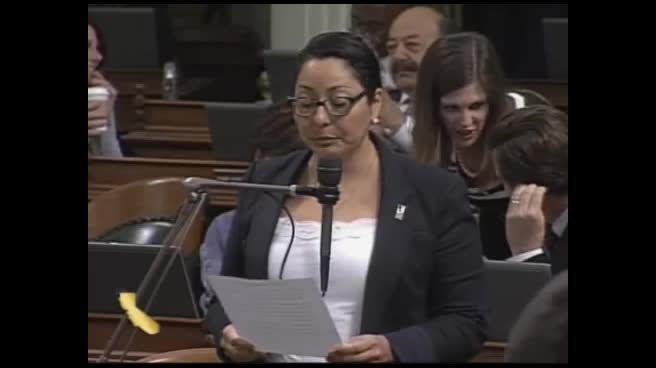 7MIN
Assembly Floor
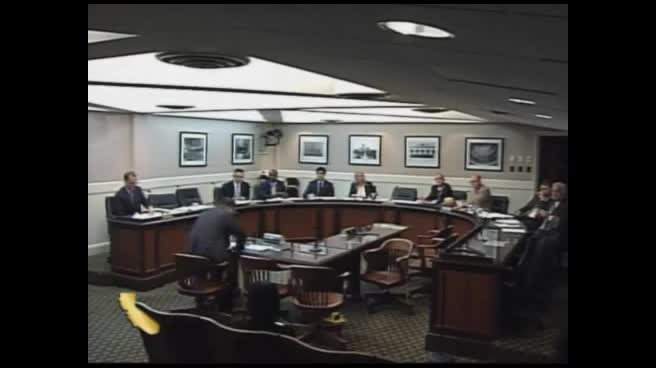 24MIN
Assembly Standing Committee on Labor and Employment



Bill Co-Author(s):