SB 1116: Unemployment insurance: trade disputes: eligibility for benefits.
- Session Year: 2023-2024
- House: Senate
- Latest Version Date: 2024-02-13
Current Status:
Failed
(2024-08-28: Returned to Chief Clerk pursuant to Joint Rule 62(a).)
Introduced
In Committee
First Chamber
In Committee
Second Chamber
Enacted
Existing law provides for the payment of unemployment compensation benefits and extended benefits to eligible individuals who meet specified requirements.
Under existing law, unemployment benefits are paid from the Unemployment Fund, which is continuously appropriated for these purposes.
Existing law makes an employee ineligible for benefits if the employee left work because of a trade dispute and specifies that the employee remains ineligible for the duration of the trade dispute. Existing case law holds that employees who left work due to a lockout by the employer, even if it was in anticipation of a trade dispute, are eligible for benefits.
This bill would restore eligibility after the first 2 weeks for an employee who left work because of a trade dispute. The bill would codify specified case law that holds that employees who left work due to a lockout by the employer, even if it was in anticipation of a trade dispute, are eligible for benefits. The bill would specify that the bills provisions do not diminish eligibility for benefits of individuals deprived of work due to an employer lockout or similar action, as specified.
Because this bill would expand the categories of people eligible to receive benefits from a continuously appropriated fund, it would make an appropriation.
(a)An individual is not eligible for unemployment compensation benefits, and these benefits shall not be payable to him or her, payable, if the individual left his or her work because of a trade dispute. The individual shall remain ineligible for the period during which he or she continues out of work by reason of the fact that the trade dispute is still in active progress in the establishment in which he or she was employed. dispute, other than a lockout in the establishment where the individual was employed. For purposes of this subdivision, lockout has the same meaning as defined in Section 1132.8 of the Labor Code.
(b)The ineligibility of an individual to receive benefits pursuant to subdivision (a) shall expire after the first two weeks of the trade dispute.
(c)This section shall not diminish the eligibility of individuals who were deprived of work as a result of an employer lockout or similar action under the principles set out in Coast Packing Co. v. California Unemployment Ins. Appeals Bd. (1966) 64 Cal.2d 76.
|
Date
|
Status
|
|---|---|
| Aug 28, 2024 | Returned to Chief Clerk pursuant to Joint Rule 62(a). |
| Jun 27, 2024 | June 26 set for first hearing. Failed passage in committee. (Ayes 6. Noes 2.) |
| Jun 3, 2024 | Referred to Com. on INS. |
| May 22, 2024 | In Assembly. Read first time. Held at Desk. |
| May 21, 2024 | Read third time. Passed. (Ayes 22. Noes 12. Page 4089.) Ordered to the Assembly. |
| May 16, 2024 | From committee: Do pass. (Ayes 5. Noes 2. Page 3972.) (May 16). |
| May 16, 2024 | Read second time. Ordered to third reading. |
| May 10, 2024 | Set for hearing May 16. |
| May 6, 2024 | May 6 hearing: Placed on APPR suspense file. |
| Apr 26, 2024 | Set for hearing May 6. |
| Apr 24, 2024 | From committee: Do pass and re-refer to Com. on APPR. (Ayes 4. Noes 1. Page 3758.) (April 24). Re-referred to Com. on APPR. |
| Apr 16, 2024 | Set for hearing April 24. |
| Feb 21, 2024 | Referred to Com. on L., P.E. & R. |
| Feb 14, 2024 | From printer. May be acted upon on or after March 15. |
| Feb 13, 2024 | Introduced. Read first time. To Com. on RLS. for assignment. To print. |
|
Date
|
Description
|
Location
|
Votes
|
|
|---|---|---|---|---|
| Jun 26, 2024 | Do pass and be re-referred to the Committee on [Appropriations] | Assembly Standing Committee on Insurance |
Failed |
|
| May 21, 2024 | Senate 3rd Reading SB1116 Portantino et al. | Senate Floor |
Passed |
|
| May 16, 2024 | Do pass | Senate Standing Committee on Appropriations |
Passed |
|
| May 6, 2024 | Placed on suspense file | Senate Standing Committee on Appropriations |
Passed |
|
| Apr 24, 2024 | Do pass, but first be re-referred to the Committee on [Appropriations] | Senate Standing Committee on Labor, Public Employment and Retirement |
Passed |
This list shows positions taken on this bill by organizations on the date displayed, which is linked to the original source.
Positions by individuals are not included.
|
Organization
|
Position
|
Date
|
|---|---|---|
| Murrieta Wildomar Chamber of Commerce | ** Against | |
| 21St Century Alliance | * Against | Jun 26, 2024 |
| Acclamation Insurance Management Services | ** Against | |
| AFSCME California | * Support | Jun 26, 2024 |
| Agricultural Council Of California | ** Against | |
| Air Conditioning Sheet Metal Association | ** Against | |
| Airlines for America . | ** Against | |
| Allied Managed Care | ** Against | |
| Amalgamated Transit Union | * Support | Jun 26, 2024 |
| american council of engineering companies | ** Against | |
| Associated General Contractors | ** Against | |
| Associated General Contractors, San Diego | ** Against | |
| Association of California Healthcare Districts | * Against | Jun 26, 2024 |
| Association Of California School Administrators | ** Against | |
| Association of California School Districts | * Against | Jun 26, 2024 |
| Association Of Western Employers | ** Against | |
| Bay Area Council | ** Against | |
| Beverly Hills Chamber Of Commerce | ** Against | |
| Bizfed Los Angeles County Business Federation | ** Against | |
| Brea Chamber of Commerce | ** Against | |
| Building Owners and Managers Association | ** Against | |
| Calforests | ** Against | |
| California Alliance For Retired Americans | ** Support | |
| California Alliance of Family Owned Businesses | ** Against | |
| California Apple Commission | ** Against | |
| California Asian Pacific Chamber Of Commerce | ** Against | |
| California Association Of Joint Powers Authorities | * Against | Jun 26, 2024 |
| California Association Of Licensed Security Agencies, Guards & Associates | ** Against | |
| California Association Of Professional Scientists | * Support | Apr 24, 2024 |
| California Association Of Psychiatric Technicians | * Support | Jun 26, 2024 |
| California Association of Recreation and Park Districts | * Against | Jun 26, 2024 |
| California Association Of School Business Officials | * Against | Jun 26, 2024 |
| California Association Of Sheet Metal Air Conditioning Contractors National Association | ** Against | |
| California Association Of Winegrape Growers | ** Against | |
| California Attractions And Parks Association | ** Against | Jun 26, 2024 |
| California Bankers Association | ** Against | |
| California Blueberry Association | ** Against | |
| California Blueberry Commission | ** Against | |
| California Building Industry Association | ** Against | |
| California Business Properties Association | * Against | Jun 26, 2024 |
| California Business Roundtable | ** Against | |
| California Chamber Of Commerce | * Against | Jun 26, 2024 |
| California Citrus Mutual | ** Against | |
| California Conference Board Of The Amalgamated Transit Union | ** Support | |
| California Cotton Ginners and Growers Association | ** Against | |
| California Democratic Party | ** Support | |
| California Department of Insurance, Commissioner Ricardo Lara | ** Support | |
| California Employment Law Council | ** Against | |
| California Faculty Association | ** Support | |
| California Farm Bureau | * Against | Jun 26, 2024 |
| California Forestry Association | * Against | Apr 24, 2024 |
| California Framing Contractors Association | ** Against | |
| California Fresh Fruit Association | ** Against | |
| California Fuels And Convenience Alliance | * Against | Jun 26, 2024 |
| California Grocers Association | * Against | Jun 26, 2024 |
| California Hospital Association | ** Against | |
| California Hotel and Lodging Association | * Against | Jun 26, 2024 |
| California Labor Federation | * Support | Jun 26, 2024 |
| California Landscape Contractors Association | ** Against | |
| California League of Food Producers | ** Against | |
| California Legislative Conference Of Plumbing, Heating & Piping Industry | ** Against | |
| California Manufacturers And Technology Association | * Against | Jun 26, 2024 |
| California Nurses Association | * Support | Jun 26, 2024 |
| California Professional Firefighters | ** Support | |
| California Restaurant Association | * Against | Jun 26, 2024 |
| California Retailers Association | * Against | Jun 26, 2024 |
| California Rural Legal Assistance Foundation | ** Support | |
| California School Employees Association | * Support | Jun 26, 2024 |
| California Self Storage Association | ** Against | |
| California Special Districts Association | * Against | Jun 26, 2024 |
| California State Building Trades | * Support | Jun 26, 2024 |
| California State Council of SHRM | ** Against | |
| California State Treasurer | ** Support | |
| California State Treasurer Fiona Ma | ** Support | |
| California State University Employees Union | ** Support | |
| California State University, Office Of The Chancellor | ** Against | |
| California Taxpayers Association | ** Against | |
| California Teachers Association | ** Support | |
| California Tomato Growers Association | ** Against | |
| California Transit Association | ** Against | |
| California Travel Association | * Against | Jun 26, 2024 |
| California Trucking Association | * Against | Jun 26, 2024 |
| Can Manufacturers Institute | ** Against | |
| Cash Creek Casino Resort | * Support | Jun 26, 2024 |
| CFT - Union of Educators and Classified Professionals | * Support | Jun 26, 2024 |
| city of carlsbad | ** Against | |
| City Of Lomita | ** Against | |
| City of Norwalk | ** Against | |
| City of Rancho Cucamonga | ** Against | |
| City of San Marcos | ** Against | |
| City of Sunnyvale | ** Against | |
| City of Thousand Oaks | ** Against | |
| City of Torrance | ** Against | |
| Coalition of Small and Disabled Veteran Businesses | ** Against | |
| Communication Workers of America District 9 | * Support | Jun 26, 2024 |
| Communication Workers of America Local 9408 | * Support | Jun 26, 2024 |
| Construction Employers' Association | ** Against | |
| Corona Chamber of Commerce | ** Against | |
| CSAC | * Against | Jun 26, 2024 |
| Culver City Democratic Club | ** Support | |
| Dairy Institute Of California | ** Against | |
| Department of Insurance | ** Support | |
| El Dorado County Chamber of Commerce | ** Against | |
| El Dorado Hills Chamber of Commerce | ** Against | |
| Elk Grove Chamber Of Commerce | ** Against | |
| Engineers & Scientists of California, Local 20, IFPTE, AFL-CIO | ** Support | |
| Family Business Association of California | ** Against | |
| Family Winemakers Of California | ** Against | |
| Finishing Contractors Association Of Southern California | ** Against | |
| Flasher Barricade Association | ** Against | |
| Folsom Chamber Of Commerce | ** Against | |
| Fremont Chamber of Commerce | ** Against | |
| Garden Grove Chamber Of Commerce | ** Against | |
| Gateway Chambers Alliance | ** Against | |
| Greater Coachella Valley Chamber of Commerce | ** Against | |
| Greater Conejo Valley Chamber of Commerce | ** Against | |
| Greater High Desert Chamber of Commerce | ** Against | |
| Greater Riverside Chambers of Commerce | ** Against | |
| Greater San Fernando Valley Chamber of Commerce | ** Against | |
| Hollywood Chamber of Commerce | * Against | Jun 26, 2024 |
| Housing Contractors Of California | ** Against | |
| Institute of Real Estate Management | ** Against | |
| Kern County Board of Supervisors | * Against | Jun 26, 2024 |
| Laguna Nigel Chamber of Commerce | ** Against | |
| League Of California Cities | ** Against | |
| lincoln area chamber of commerce | ** Against | |
| livermore valley chamber of commerce | ** Against | |
| lodi district chamber of commerce | ** Against | |
| Long Beach Area Chamber of Commerce | ** Against | |
| Los Angeles Area Chamber Of Commerce | * Against | Jun 26, 2024 |
| Los Angeles County Business Federation | ** Against | |
| Machinists | * Support | Jun 26, 2024 |
| Naiop California | ** Against | |
| National Association of Theatre Owners of California | ** Against | |
| National Electrical Contractors Association | ** Against | |
| National Federation Of Independent Business | * Against | Jun 26, 2024 |
| National Union Of Healthcare Workers | * Support | Jun 26, 2024 |
| Nisei Farmers League | ** Against | |
| Northern California Allied Trades | ** Against | |
| Northern California District Council of the International Longshore and Warehouse Union | ** Support | |
| Northern California Floor Covering Association | ** Against | |
| Norwalk Chamber Of Commerce | ** Against | |
| Norwalk City Of | ** Against | |
| Olive Growers Council of California | ** Against | |
| Orange County Business Council | * Against | Jun 26, 2024 |
| Orange County Employees Association | ** Support | |
| Orange County Taxpayers Association | ** Against | |
| Palos Verdes Peninsula Chamber Of Commerce | ** Against | |
| Paso Robles & Templeton Chamber of Commerce | ** Against | |
| Plant California Alliance | ** Against | |
| Prism | * Against | Jun 26, 2024 |
| Rancho Cordova Area Chamber of Commerce | ** Against | |
| Redondo Beach Chamber of Commerce | ** Against | |
| Ridgecrest Chamber of Commerce | ** Against | |
| Rocklin Area Chamber of Commerce | ** Against | |
| Roseville Area Chamber Of Commerce | ** Against | |
| Rural County Representatives of California | * Against | Jun 26, 2024 |
| Sacramento Metropolitan Chamber of Commerce | ** Against | |
| SAG-AFTRA | * Support | Jun 26, 2024 |
| San Gabriel Valley Economic Partnership | ** Against | |
| San Pedro Chamber of Commerce | ** Against | |
| Santa Ana Chamber of Commerce | ** Against | |
| Santa Barbara South Coast Chamber of Commerce | ** Against | |
| Santa Maria Valley Chamber of Commerce | ** Against | |
| Shingle Springs/cameron Park Chamber of Commerce | ** Against | |
| Silicon Valley Leadership Group | ** Against | |
| Simi Valley Chamber of Commerce | ** Against | |
| Smart Sheet Metal Workers Local Union | * Support | Apr 24, 2024 |
| Smart Transportation State legislative Board | * Support | Jun 26, 2024 |
| Society of Human Resource Management | * Against | Jun 26, 2024 |
| Solvang Chamber of Commerce | ** Against | |
| South Bay Association of Chambers of Commerce | ** Against | |
| Southern California Contractors Association | ** Against | |
| Southern California Glass Management Association | ** Against | |
| Southern California Leadership Council | ** Against | |
| Southwest California Legislative Council | ** Against | |
| Teamsters | * Support | Jun 26, 2024 |
| Technet | ** Against | |
| The San Fernando Valley Young Democrats | ** Support | |
| Torrance Area Chamber of Commerce | ** Against | |
| Tri County Chamber Alliance | ** Against | |
| Tulare Chamber of Commerce | ** Against | |
| UFCW Local 1428 | * Support | Jun 26, 2024 |
| Ufcw Western States Council | * Support | Jun 26, 2024 |
| Unite Here | * Support | Jun 26, 2024 |
| united ag | ** Against | |
| United Auto Workers | ** Support | |
| United Chamber Advocacy Network | ** Against | |
| United Contractors | ** Against | |
| United Steelworkers District 12 | ** Support | |
| University of California | ** Against | |
| Urban Counties of California | * Against | Jun 26, 2024 |
| Utility Workers Union | * Support | Jun 26, 2024 |
| Vacaville Chamber of Commerce | ** Against | |
| VALLEY INDUSTRY AND COMMERCE ASSOCIATION | ** Against | |
| Vista Chamber Of Commerce | ** Against | |
| Wall and Ceiling Alliance | ** Against | |
| Walnut Creek Chamber of Commerce | ** Against | |
| West Ventura County Business Alliance | ** Against | |
| Western Agricultural Processors Association | ** Against | |
| Western Car Wash Association | ** Against | |
| Western Electrical Contractors Association | ** Against | |
| Western Growers Association | ** Against | |
| Western Line Constructors Chapter | ** Against | |
| Western Line Constructors Chapter, Inc., Neca, Inc. | ** Against | |
| Western Painting and Coating Contractors Association | ** Against | |
| Western Plant Health Association | ** Against | |
| Western Wall And Ceiling Contractors Association | ** Against | |
| Writers Guild Of America West Inc | * Support | Jun 26, 2024 |
| Yorba Linda Chamber of Commerce | ** Against | |
| Yuba Sutter Chamber of Commerce | ** Against |
Date of Hearing: June 26, 2024
ASSEMBLY COMMITTEE ON INSURANCE
Lisa Calderon, Chair
SBPCA Bill Id:SB 1116
Author:(Portantino) – As Introduced Ver:February 13, 2024
SENATE VOTE: 22-12
SUBJECT: Unemployment insurance: trade disputes: eligibility for benefits
SUMMARY: Allows individuals involved in a trade dispute to collect unemployment insurance (UI) benefits. Specifically, this bill:
- Permits individuals involved in a trade dispute to be eligible to collect UI benefits after a two-week waiting period.
- Codifies a California Supreme Court Decision (Coast Packing Co. v. California Unemployment Insurance Appeals Board (1966) 64 Cal. 2d 76) that found individuals subject to a lockout eligible for UI benefits.
EXISTING LAW:
- Creates a comprehensive UI system, administered by the Employment Development Department (EDD), where employers pay an experienced-based tax on total payroll that are used to fund unemployment benefits to unemployed individuals. (Unemployment Insurance Code Sections (UIC) 301, 602, 675, 926, 970, 977 & 1251)
- Defines an individual as “unemployed” in any week in which they meet any of the following conditions:
- Any week during which they perform no services and with respect to which no wages are payable to them;
- Any week of less than full-time work, if the wages payable to them with respect to the week, when reduced by $25 or 25% of the wages payable, whichever is greater, do not equal or exceed the individual’s weekly benefit;
- Any week for which, an individual is unable to work due to mental or physical health illness or injury, as specified; or,
- Any week during which an individual performs full-time work for five days as a juror, or as a witness under subpoena. (UIC 1252)
- Provides that an individual is disqualified for unemployment compensation benefits if the individual left their most recent work voluntarily without good cause or that they have been discharged for misconduct connected with their most recent work. (UIC 1256)
- Provides that an individual is not eligible for unemployment compensation benefits if the individual left their work because of a trade dispute. The individual shall remain ineligible for the period during which they remain out of work because of the fact that the trade dispute is still in active progress. (UIC 1262)
- Provides that, when EDD learns that a trade dispute is in progress, EDD must promptly conduct an investigation and make investigation findings as to the nature, location, labor organizations and employers involved, and other relevant facts concerning the trade dispute as it deems necessary. EDD shall provide its findings to its field offices in locations affected by the trade dispute, and must, upon request, make its findings available to any employer, employers’ association or labor organization involved in the trade dispute. (UIC 1262.5)
FISCAL EFFECT: Unknown.
COMMENTS:
- Purpose. According to the author:
Workers do not go on strike because they want to – they do so as a last resort: to convince employers to come to the negotiation table for fair terms. SB 1116 provides a crucial lifeline for California’s workforce, preserving the right to advocate for better working conditions and preserving local economies.
- Background. This bill (SB 1116) is an identical re-introduction of SB 799 from last year. Governor Newsom vetoed SB 799 and stated, in part, the following:
California employers fund UI benefits through contributions to the state's UI Trust Fund on behalf of each employee. The UI financing structure has not been updated since 1984, which has made the UI Trust Fund vulnerable to insolvency. Any expansion of eligibility for UI benefits could increase California's outstanding federal UI debt projected to be nearly $20 billion by the end of the year and could jeopardize California's Benefit Cost Ratio add-on waiver application, significantly increasing taxes on employers. Furthermore, the state is responsible for the interest payments on the federal UI loan and to date has paid $362.7 million in interest with another $302 million due this month. Now is not the time to increase costs or incur this sizable debt.
I have deep appreciation and respect for workers who fight for their rights and come together in collective action. I look forward to building on the progress we have made over the past five years to improve conditions for all workers in California.
For these reasons, I cannot sign this bill.
Both SB 799 and this measure are substantially similar to the April 22, 2019 version of AB 1066 (Gonzalez). It should be noted that AB 1066 passed out of the Assembly Insurance Committee with amendments on April 24, 2019 with a vote of 8-2 with four members absent, abstaining, or not-voting. The amendments accepted in the Assembly Insurance Committee at that hearing extended the waiting period from 2-weeks to 4-weeks.
It must be emphasized that since the Assembly Insurance Committee passed AB 1066 with amendments in 2019 that California has gone through a (COVID-19) pandemic and continues to recover. As presented at several informational hearings conducted by the Assembly Insurance Committee, EDD went through a number of challenges and obstacles during and following the pandemic. The Legislature responded by introducing, passing, and the Governor signing almost two dozen pieces of legislation that addressed the weaknesses of EDD. Additionally, EDD is going through a massive, multi-year over haul to the EDD user experience and IT system, EDDNext.
- Background on the UI program. Created in 1935 as part of the Social Security Act of 1935, the UI program is a unique federal-state program, created by federal law and administered under state and federal laws by EDD. UI provides weekly benefits, for up to a maximum of 26 weeks, unless extended by law, to workers who are unemployed (or underemployed) through no fault of their own and who are able to, available for, and actively seeking work.
A claimant's eligibility for benefits depends on their attachment to the labor force determined by computing a minimum earnings test. This requirement denies benefits to claimants whose earnings in a 12-month "base period" are below a specified minimum. The quarter in which the highest wages were received determines the weekly benefit amount. UI benefits range from $40 to a maximum of $450 per week. In 2023, the California average UI benefit amount was $368 per week. The United States total for the 12-month average of weekly benefit amount ending on February 29, 2024 was $443.85.[1]
The UI program is financed by employers who pay unemployment taxes on the first $7,000 in wages paid to each worker. The tax rates are set based on schedules laid out in state law, which require higher rates, up to a maximum of 6.2%, when the condition of the UI trust fund is poor.[2] Working much like other insurance programs, the actual tax rate varies for each employer, depending in part on the amount of UI benefits paid to former employees. Referred to as being “experience rated,” this method of taxing ensures that employers who lay off or otherwise discharge more workers bear more of the costs of paying for the UI system. An employer may earn a lower tax rate when fewer claims are made on the employer's account by former employees.
- Issues Related to UI Trust Fund. As previously mentioned, California employers fund UI benefits through contributions to the state’s UI Trust Fund on behalf of each employee. Employers also pay Federal Unemployment Tax Act (FUTA) taxes to the federal government to help pay for administration of the UI program, UI loans to insolvent states, and federal extension benefits.
Due to the impact of the pandemic, California began borrowing from the federal government starting June 3, 2020 in order to maintain solvency of the UI fund. According to the U.S. Department of Labor, as of June 18, 2024, California’s federal loan balance was more than $19 billion.[3] The loan balance is estimated to be $21 billion by the end of 2025.[4]
Generally, federal law provides employers with a 5.4% FUTA tax credit toward the 6.0% regular tax when they file their Employer’s Annual FUTA Return (Form 940). However, when a state UI Fund is in deficit for two consecutive years federal law imposes a tax increase on employers to repay the principal on the federal UI loan. This actually occurs as a reduction of the 5.4% FUTA tax credit. The state loses 0.3% of the FUTA tax credit each year, which is the equivalent of an increase in federal taxes of $21 per worker per year.
Despite a loan balance at the end of 2020, the FUTA tax credit reduction was not assessed in that year, as California had not been in deficit for two consecutive years. The FUTA credit reductions started occurring for tax year 2022, with the higher federal taxes due in January 2023. In 2023, employers began paying higher FUTA taxes, as required by federal law, in order to repay the loan. Therefore, in 2024 instead of paying $21 per worker in federal taxes, California employers will pay $84 per worker in federal UI taxes.[5] In 2023, this generated $397 million and $858 million is projected to be collected in 2024.[6]
States can request waivers (for example, a Benefit Cost Ratio (BCR) add-on waiver) for these credit reductions if they meet certain criteria. One criteria requires states to take no legislative or other action to decrease the net solvency of their UI Fund within a specified time period. Therefore, any new actions or legislation, such as this bill, that impact the solvency of the fund could jeopardize California’s eligibility for the BCR waiver.
The Legislative Analyst’s Office (LAO) estimates that the federal loan could be paid-off by 2032. However, that does not capture the possibility of any actions that could impact the solvency of the fund or another recession. Should that occur, the LAO estimates that payoff of the federal loan would extend well beyond 2032.[7]
In 2022, the Legislature passed and signed AB 178 (Chapter 45, Statutes of 2022) which, among other things, included a $342.4 million one-time General Fund UI loan interest payment. The 2023-24 state budget included a $306 million General Fund allocation to pay the annual interest on the loan. The 2024-25 budget proposed by the Governor contains a $331 million dollar UI loan interest payment.[8]
- Other issues related to EDD. As mentioned above, EDD is currently in the middle of a multi-year project called “EDDNext.” EDDNext is a full system modernization of EDD that is expected to take at least five years to fully implement. The project is currently in its second year. The purpose of EDDNext is to create a user-centric and secure technology environment to support timely and quality service to California’s workers. EDDNext includes updates to online applications, call centers, the claims process, policies, procedures, and forms.
It is unclear if any changes to UI eligibility requirements, such as the ones sought by this bill, would impact the rollout of EDDNext and how long it would take EDD to make system changes to add new classifications (i.e. striking workers).
Additionally, on August 24, 2023, the California State Auditor released its list of “high risk” agencies and EDD was added to that list. The Auditor notes:
EDD is a high-risk agency because of its mismanagement of the UI program. Specifically, EDD is unable to reliably estimate improper payments under the UI program, thus adversely affecting the State’s financial statements as well as impairing efforts to independently evaluate the efficacy of EDD’s own fraud prevention activities. Further, EDD needs to improve customer service to unemployment insurance claimants, while also taking steps to ensure its eligibility decisions are not frequently overturned on appeal. EDD’s mismanagement of the UI program has resulted in a substantial risk of serious detriment to the State and its residents.[9]
- Existing EDD authority related to trade disputes. EDD already has mechanisms in place to investigate whether an applicant is involved in a trade dispute and how this impacts the individual’s eligibility for UI benefits. UIC 1262.5 specifically provides that when EDD “learns that a trade dispute is in progress, the department shall promptly conduct an investigation and make investigation findings as to the nature, location, labor organizations and employers involved, and other relevant facts concerning the trade dispute as it deems necessary.”
The UI Benefits Determination Guide (BDG) is used by EDD personnel to make proper decisions about eligibility for unemployment insurance benefits. The BDG contains an entire volume specifically related to trade disputes.[10] The BDG is based on state and federal law, state and federal regulations, case law from the United States Supreme Court, the California Supreme Court, lower federal and state courts and Precedent Benefit Decisions issued by the California Unemployment Insurance Appeals Board.
- Similar Laws in New York & New Jersey. New York and New Jersey are currently the only two states that allow individuals on strike to collect UI benefits. In 2020, New York reduced the amount of time a worker has to be on strike before they can begin collecting unemployment, from seven weeks to 14 days. In 2018, New Jersey enacted a law allowing striking workers to collect UI benefits. Recently, that law was amended to decrease the waiting period from 30 days to 14 days.
- Recent Strikes in California. According to data from the Bureau of Labor Statistics (BLS), from 2012-2022, there were at least 56 strikes in California with only two that lasted over two weeks. BLS records strikes where at least 1,000 workers participated. The two strikes that lasted over two weeks both occurred in 2022, with one lasting 64 days total and the other lasting 39 days total. According to data from the Bureau of Labor Statistics (BLS), in 2023, there were at least 15 strikes in California with work stoppages involving 1,000 or more workers. Below are the strikes lasting longer than two weeks[11]:
- Alliance of Motion Picture and Television Producers (Writers Guild of America West) - 5/2/23 to 9/24/23
- Alliance of Motion Picture and Television Producers (Screen Actors Guild, American Federation of Television and Radio Artists) - 7/14/23 to 11/8/23
- Ford Motor Co., General Motors Co., and Stellantis (United Auto Workers) - 9/15/23 to 10/30/23
The above referenced data tracks strikes with work stoppages involving 1,000 or more workers. This bill, however, would extend access to UI benefits to employees participating in a labor dispute with an employer of any size.
- Related legislation.
- SB 227 (Durazo) of 2023 would, upon an appropriation by the Legislature, establish the Excluded Workers Program within EDD to provide income assistance to unemployed excluded workers who are not eligible for regular state or federal unemployment insurance benefits due to their immigration status. In Assembly Appropriations Committee om suspense.
- SB 799 (Portantino) of 2023, was identical to this measure, would have authorized workers involved in a trade dispute to collect UI benefits, after a two-week wait period, while they are on strike. This bill was vetoed by Governor Newsom.
- AB 1066 (Gonzalez) of 2019, would have permitted individuals in a trade dispute to collect UI compensation after a three-week waiting period. AB 1066 failed on the Senate Floor and was later amended to address another issue in the UI Code. That subsequent version of AB 1066 was then vetoed by Governor Newsom.
- Arguments in Support. The California Labor Federation, the sponsor of this bill, write in support on behalf of a coalition of labor groups, saying the bill is needed because:
The right to strike to improve working conditions, wages, and address other issues in collective bargaining is a fundamental worker right that is codified in law for employees in the public and private sector. The decision to go on strike is not one that union members take lightly. Striking workers lose all income for the duration of their job action. Workers deplete their savings as bills pile up, rent and mortgages go unpaid, and debt accumulates. Corporations rely on the expectation that striking workers will have few resources, and their strategy is often to starve workers until they give up their demands for better wages, fair compensation, and job security. To prevent striking workers from being driven into debt, bankruptcy, and homelessness, SB 1116 will make striking workers eligible to receive UI benefits.
- Arguments in Opposition. A coalition of employer groups, including the California Chamber of Commerce oppose this bill. Cal Chamber has labeled this bill a job killer because:
It would effectively require employers to subsidize striking workers, even if that employer is not presently (or has never) experienced any strikes. By forcing employers to pay unemployment insurance (UI) payments to striking workers, SB 1116 would also raise unemployment insurance taxes on employers across California, overturn more than 70 years of precedent, and put California’s UI program at risk of violating federal law. This bill is a repeat of last year’s SB 799, which was vetoed by the Governor because of the debt it would add to California’s UI Fund—which is an even more pressing concern given the state’s long-term estimated budget concerns.
REGISTERED SUPPORT / OPPOSITION:
Support
American Federation of State, County and Municipal Employees (AFSCME) California
California Alliance for Retired Americans (CARA)
California Conference Board of the Amalgamated Transit Union
California Conference of Machinists
California Democratic Party
California Faculty Association
California Federation of Teachers Afl-cio
California Labor Federation, Afl-cio
California Nurses Association
California Professional Firefighters
California Rural Legal Assistance Foundation (crla Foundation)
California School Employees Association
California State Treasurer
California State University Employees Union (CSUEU)
California Teachers Association
California Teamsters Public Affairs Council
Communications Workers of America, District 9
Culver City Democratic Club
Department of Insurance
Engineers & Scientists of California, Local 20, Ifpte, Afl-cio
National Union of Healthcare Workers (NUHW)
Northern California District Council of The International Longshore and Warehouse Union (ILWU)
Orange County Employees Association
Sag-aftra, Afl-cio
Smart - Transportation Division (SMART-TD)
The San Fernando Valley Young Democrats
Unite-here, Afl-cio
United Auto Workers
United Food and Commercial Workers, Western States Council
United Steelworkers District 12
Utility Workers Union of America, Afl-cio
Writers Guild of America West
Writers Guild of America, West, INC.
Opposition
21st Century Alliance
Acclamation Insurance Management Services
Agricultural Council of California
Airlines for America (A4A).
Allied Managed Care
American Council of Engineering Companies
Association of California School Administrators
Associated General Contractors
Associated General Contractors San Diego
Association of California Healthcare Districts (ACHD)
Association of Western Employers
Bay Area Council
Beverly Hills Chamber of Commerce
Brea Chamber of Commerce
Building Owners and Managers Association
Calforests
California Alliance of Family Owned Businesses
California Apple Commission
California Asian Pacific Chamber of Commerce
California Association of Joint Powers Authorities (CAJPA)
California Association of Licensed Security Agencies, Guards & Associates
California Association of Recreation & Park Districts
California Association of School Business Officials (CASBO)
California Association of Sheet Metal & Air Conditioning Contractors National Association
California Association of Winegrape Growers
California Attractions and Parks Association
California Bankers Association
California Blueberry Association
California Blueberry Commission
California Building Industry Association
California Business Properties Association
California Business Roundtable
California Chamber of Commerce
California Citrus Mutual
California Cotton Ginners and Growers Association
California Employment Law Council
California Farm Bureau
California Framing Contractors Association
California Fresh Fruit Association
California Fuels and Convenience Alliance
California Grocers Association
California Hospital Association
California Hotel & Lodging Association
California Landscape Contractors Association
California League of Food Producers
California Manufacturers and Technology Association
California Restaurant Association
California Retailers Association
California Self Storage Association
California Special Districts Association
California State Association of Counties (CSAC)
California State University, Office of The Chancellor
California Taxpayers Association
California Tomato Growers Association
California Transit Association
California Travel Association
California Trucking Association
Can Manufacturers Institute
City of Carlsbad
City of Norwalk
City of Rancho Cucamonga
City of Sunnyvale
City of Thousand Oaks
Coalition of Small and Disabled Veteran Businesses
Construction Employers' Association
Corona Chamber of Commerce
County of Kern
Dairy Institute of California
El Dorado County Chamber of Commerce
El Dorado Hills Chamber of Commerce
Elk Grove Chamber of Commerce
Family Business Association of California
Family Winemakers of California
Flasher Barricade Association
Folsom Chamber of Commerce
Fremont Chamber of Commerce
Garden Grove Chamber of Commerce
Gateway Chambers Alliance
Greater Coachella Valley Chamber of Commerce
Greater Conejo Valley Chamber of Commerce
Greater High Desert Chamber of Commerce
Greater Riverside Chambers of Commerce
Greater San Fernando Valley Chamber of Commerce
Hollywood Chamber of Commerce
Housing Contractors of California
Institute of Real Estate Management (IREM)
Laguna Niguel Chamber of Commerce
League of California Cities
Lincoln Area Chamber of Commerce
Livermore Valley Chamber of Commerce
Lodi District Chamber of Commerce
Long Beach Area Chamber of Commerce
Los Angeles Area Chamber of Commerce
Los Angeles County Business Federation
Murrieta Wildomar Chamber of Commerce
Naiop California
National Association of Theatre Owners of California
National Federation of Independent Business
Nisei Farmers League
Norwalk Chamber of Commerce
Norwalk; City of
Olive Growers Council of California
Orange County Business Council
Orange County Taxpayers Association
Palos Verdes Peninsula Chamber of Commerce
Paso Robles Templeton Chamber of Commerce
Plant California Alliance
Public Risk Innovation, Solutions, and Management (PRISM)
Rancho Cordova Area Chamber of Commerce
Redondo Beach Chamber of Commerce
Ridgecrest Chamber of Commerce
Rocklin Area Chamber of Commerce
Roseville Area Chamber of Commerce
Rural County Representatives of California (RCRC)
Sacramento Metropolitan Chamber of Commerce
San Gabriel Valley Economic Partnership
San Pedro Chamber of Commerce
Santa Ana Chamber of Commerce
Santa Barbara South Coast Chamber of Commerce
Santa Maria Valley Chamber of Commerce
Shingle Springs/Cameron Park Chamber of Commerce
Silicon Valley Leadership Group
Simi Valley Chamber of Commerce
Solvang Chamber of Commerce
South Bay Association of Chambers of Commerce
Southern California Leadership Council
Southwest California Legislative Council
Technet
Torrance Area Chamber of Commerce
Tri County Chamber Alliance
Tulare Chamber of Commerce
Twenty First Century Alliance
United Ag
United Chamber Advocacy Network
University of California
Urban Counties of California (UCC)
Vacaville Chamber of Commerce
Vista Chamber of Commerce
Walnut Creek Chamber of Commerce
West Ventura County Business Alliance
Western Agricultural Processors Association
Western Car Wash Association
Western Electrical Contractors Association
Western Growers Association
Western Plant Health Association
Yorba Linda Chamber of Commerce
Yuba Sutter Chamber of Commerce
Analysis Prepared by: Claire Wendt / INS. / (916) 319-2086
https://oui.doleta.gov/unemploy/DataDashboard.asp ↑
Alamo, Chas. “Repaying the State’s Federal Unemployment Insurance Loan,” Legislative Analyst’s Office, May 26, 2021. https://lao.ca.gov/Publications/Report/4442 ↑
https://oui.doleta.gov/unemploy/budget.asp ↑
EDD January 2024 UI Fund Forecast. https://edd.ca.gov/siteassets/files/unemployment/pdf/edduiforecastjan24.pdf ↑
https://caltax.org/new-year-brings-higher-taxes-on-california-employees-and-employers. ↑
Employment Development Department: May 2023 Unemployment Insurance (UI) Fund Forecast. https://edd.ca.gov/siteassets/files/pdf/edduiforecastmay23.pdf ↑
https://lao.ca.gov/Publications/Report/4543 ↑
https://ebudget.ca.gov/2023-24/pdf/Enacted/BudgetSummary/LaborandWorkforceDevelopment.pdf ↑
http://auditor.ca.gov/reports/2023-601/index.html#section2 ↑
https://edd.ca.gov/en/uibdg/Trade_Dispute_-_Table_of_Contents/ ↑
https://www.bls.gov/web/wkstp/monthly-listing.htm ↑
SENATE RULES COMMITTEE Office of Senate Floor Analyses (916) 651-1520 Fax: (916) 327-4478 | SB 1116 |
THIRD READING
Bill No: SB 1116
Author: Portantino (D) and Durazo (D)
Introduced: 2/13/24
Vote: 21
SENATE LABOR, PUB. EMP. & RET. COMMITTEE: 4-1, 4/24/24
AYES: Smallwood-Cuevas, Cortese, Durazo, Laird
NOES: Wilk
SENATE APPROPRIATIONS COMMITTEE: 5-2, 5/16/24
AYES: Caballero, Ashby, Becker, Bradford, Wahab
NOES: Jones, Seyarto
SUBJECT: Unemployment insurance: trade disputes: eligibility for benefits
SOURCE: California Labor Federation
United Food and Commercial Workers Western States Council
DIGEST:
This bill authorizes workers involved in a trade dispute to collect unemployment insurance (UI) benefits, after a two-week wait period, while they are on strike.
ANALYSIS:
Existing law:
- Creates a comprehensive Unemployment Insurance (UI) system, administered by the Employment Development Department (EDD), where employers pay an experienced-based tax on total payroll that are used to fund UI benefits to unemployed workers. (UI Code §§ 301, 602, 675, 926, 970, 977 & 1251)
- Defines a worker as “unemployed” in any week in which they meet any of the following:
- Any week during which they perform no services and with respect to which no wages are payable to them;
- Any week of less than full-time work, if the wages payable to them with respect to the week, when reduced by $25 or 25 percent of the wages payable, whichever is greater, do not equal or exceed the worker’s weekly benefit amount;
- Any week for which a worker is unable to work due to mental or physical health illness or injury, as specified; or,
- Any week during which they perform full-time work for five days as a juror, or as a witness under subpoena. (UI Code §1252)
- Provides that an individual is disqualified for UI benefits if the individual left their most recent work voluntarily without good cause or that they have been discharged for misconduct connected with their most recent work. (UI Code §1256)
- Provides that an individual is not eligible for UI benefits if the individual left their work because of a trade dispute. The individuals shall remain ineligible for the period during which they continue out of work because of the fact that the trade dispute is still in active progress. (UI Code §1262)
- Provides that, when EDD learns that a trade dispute is in progress, EDD must promptly conduct an investigation and make investigative findings as to the nature, location, labor organizations and employers involved, and other relevant facts it deems necessary. EDD shall provide its findings to its field offices in locations affected by the trade dispute, and must, upon request, make its findings available to any employer, employers’ association or labor organization involved in the trade dispute. (UI Code §1262.5)
This bill:
- Makes individuals involved in a trade dispute eligible to collect UI benefits after a two-week waiting period.
- Specifies that individuals who left work because of a lockout in the establishment where they are employed are eligible for UI benefits.
- Defines “lockout” to mean any refusal by an employer to permit any group of five or more employees to work as a result of a dispute with such employees affecting wages, hours or other terms or conditions of employment of such employees.
- Codifies a California Supreme Court Decision (Coast Packing Co. v. California Unemployment Insurance Appeals Board (1966) 64 Cal. 2d 76) that found employees who were deprived of work as a result of an employer lockout or similar action eligible for UI benefits.
Background
- UI Benefits. UI provides weekly benefits, for up to a maximum of 26 weeks, unless extended by law, to workers who are unemployed (or underemployed) through no fault of their own and who are able to, available for and actively seeking work. Eligibility for UI benefits is set by law and administered by California’s Employment Development Department (EDD). California’s current unemployment rate is 5.3 percent.
- Claimant Benefit Calculations. A claimant's eligibility for benefits depends on their attachment to the labor force determined by computing a minimum earnings test. UI benefits range from $40 to a maximum of $450 per week. In 2023, the California average UI benefit amount was $368 per week. The United States total for the 12-month average of weekly benefit amount ending on February 29, 2024 was $443.85.[1]
- Financing Structure. The UI program is financed by employers who pay unemployment taxes on the first $7,000 in wages paid to each worker. The tax rates are set based on schedules laid out in state law, which require higher rates, up to a maximum of 6.2 percent, when the condition of the UI trust fund is poor.[2] The actual tax rate varies for each employer, depending in part on the amount of UI benefits paid to former employees. Employers may earn a lower tax rate when fewer claims are made on their account by former employees.
It is important to remember that UI benefits only provide up to a maximum of $450 a week. Considering the median weekly income of a Californian is roughly triple that amount, a worker is not likely to be incentivized to go on strike simply because they can get UI benefits. Because UI is “experience rated,” striking workers who claim UI benefits impact their employer’s UI tax rate for that year and not the rates of other employers. The UI system as a whole, however, faces insolvency which impacts all employers and a remedy for this long-standing problem has yet to be addressed.
- UI Trust Fund Status. Due to the sudden and immense impact of COVID-19, the UI Fund became temporarily insolvent on April 29, 2020, and fluctuated in and out of solvency until maintaining a deficit starting June 3, 2020. As a result, in 2020, California began borrowing from the federal government to pay regular UI benefits, and ended the year with a federal loan balance of $17.8 billion. The loan balance is estimated to be $21 billion by the end of 2025.[3]
In order to repay the principal on the federal loan, federal law imposes a tax increase on employers, referred to as the Federal Unemployment Tax Act (FUTA) credit reduction. This happens when a state UI Fund is in deficit for two consecutive years. Once this occurs, the state loses 0.3 percent of the FUTA tax credit each year, which is the equivalent of an increase in federal taxes of $21 per worker per year. The FUTA credit reductions started occurring for tax year 2022, with the higher federal taxes due in January 2023.
The state pays the interest on these loans from the General Fund. In 2022, the Legislature passed and signed AB 178 (Chapter 45, Statutes of 2022) which, among other things, included a $342.4 million one-time General Fund UI loan interest payment. The 2023-24 state budget included a $306 million General Fund allocation to pay the annual interest on the loan. The 2024-25 proposed budget contains a $331 million dollar UI loan interest payment.[4] The federal loan is not expected to be paid off until between 2030 and 2032, depending on low and high-cost scenarios.
- How does California’s taxable wage base compare to other states? According to the United States Department of Labor (US DOL), almost all states have adopted a higher taxable wage base than applicable under FUTA ($7,000) for purposes of assessing state UI taxes. Some states have established flexible taxable wage bases that are automatically adjusted, generally on an annual basis. Most of these states index the taxable wage base to the state’s average annual wage. Other states tie the base to the health of the state’s trust fund.
California, however, has neither a taxable wage base above $7,000 nor a provision in law that automatically adjusts the taxable wage base if FUTA is amended to apply to a higher amount.[5] In reviewing the US DOL data comparisons, it appears that Washington is the state with the highest taxable wage base at $62,500. At the lower end, California shares the lowest $7,000 taxable wage base with Tennessee, Arizona, Florida, Puerto Rico and Louisiana at $7,700.[6] According to the US DOL, besides the U.S. Virgin Islands, California’s trust fund was the least adequately funded of all 53 UI programs heading into the pandemic.[7]
- Data on Strikes. According to data from the Bureau of Labor Statistics (BLS), in 2023, there were at least 15 strikes in California with work stoppages involving 1,000 or more workers. Below are the strikes lasting longer than two weeks[8]:
- Alliance of Motion Picture and Television Producers (Writers Guild of America West) - 5/2/23 to 9/24/23
- Alliance of Motion Picture and Television Producers (Screen Actors Guild, American Federation of Television and Radio Artists) - 7/14/23 to 11/8/23
- Ford Motor Co., General Motors Co., and Stellantis (United Auto Workers) - 9/15/23 to 10/30/23
The above referenced data tracks strikes with work stoppages involving 1,000
or more workers. This bill, however, would extend access to UI benefits to
employees participating in a labor dispute with an employer of any size.
- Need for this bill? According to the author, “Multiple studies have found that UI benefits help stabilize the economy during downturns and allow for a quicker recovery for individual businesses and the economy as a whole. The benefits, however minimal, allow workers to pay rent to stay housed, avoid going into crippling debt, and pay for necessities. UI benefits are paid to workers, but generally end up in the hands of businesses—UI provides regional economic stabilization as well as support for individual workers. UI benefits also have a multiplier effect on the economy. The International Monetary Fund found that every $1 in pandemic UI benefits resulted in $1.92 of economic activity, a huge return on investment.”
Related/Prior Legislation
SB 227 (Durazo, 2023) would, upon an appropriation by the Legislature, establish the Excluded Workers Program within EDD to provide income assistance to unemployed excluded workers who are not eligible for regular state or federal UI benefits due to their immigration status. Pending in Assembly Appropriations.
SB 799 (Portantino, 2023), identical to this measure, would have authorized workers involved in a trade dispute to collect UI benefits, after a two-week wait period, while they are on strike. Governor Newsom vetoed the measure.
AB 2847 (E. Garcia, 2022, Vetoed), was substantially similar to SB 227 from 2023 which would have established a pilot program to provide UI type benefits, at slightly lower rates, to workers who are not eligible due to their immigration status.
AB 1066 (Gonzalez, 2019) would have permitted individuals in a trade dispute to collect UI compensation after a three-week waiting period. AB 1066 failed on the Senate Floor and was later amended to address another issue in the UI Code. That subsequent version of AB 1066 was then vetoed by the Governor.
FISCAL EFFECT: Appropriation: Yes Fiscal Com.: Yes Local: No
According to the Senate Appropriations Committee:
- The Employment Development Department (EDD) indicates that it would incur a one-time administrative cost of $1.5 million over 18 months, for information technology modifications, the promulgation of regulations, and updating affected forms, policies, procedures, and training (Unemployment Administration Fund). The Department notes that its fiscal estimate includes a modification to its existing IT system, and excludes any potential additional cost to integrate the bill’s changes into EDDNext; the magnitude of these costs is unknown. Finally, If this bill results in additional UI claims, EDD may require additional staff to address any significant increase in resulting workload.
- By paying UI benefits to striking workers, this bill would result in higher payments than would occur under current law. The magnitude is unknown, and would depend on future events, specifically (1) the number of strikes that occur, (2) the duration of the strikes (specifically the number of them that continue for more than 14 days), and (3) the number of impacted employees who apply for UI benefits (Unemployment Fund).
- In addition to the direct impact of additional benefit payments, EDD notes this bill could indirectly impact the repayment of California’s outstanding federal UI loan.
SUPPORT: (Verified 5/16/24)
California Labor Federation (co-source)
United Food and Commercial Workers Western States Council (co-source)
American Federation of State, County, and Municipal Employees
California Association of Psychiatric Technicians
California Department of Insurance Commissioner Ricardo Lara
California Faculty Association
California Federation of Teachers
California Nurses Association
California Professional Firefighters
California Rural Legal Assistance Foundation, Inc.
California School Employees Association
California State Treasurer Fiona Ma
California State University Employees Union
California Teachers Association
Culver City Democratic Club
National Union of Healthcare Workers
Orange County Employees Association
San Fernando Valley Young Democrats
SMART - Transportation Division
Writers Guild of America, West, Inc.
OPPOSITION: (Verified 5/16/24)
Acclamation Insurance Management Services
Agricultural Council of California
Air Conditioning Sheet Metal Association
Airlines for America
Allied Managed Care
American Council of Engineering Companies
Associated General Contractors
Associated General Contractors San Diego
Association of California Healthcare Districts
Association of California School Administrators
Association of Western Employers
Bay Area Council
BizFed Los Angeles County Business Federation
Brea Chamber of Commerce
Building Owners and Managers Association of California
Calforests
California Alliance of Family Owned Businesses
California Apple Commission
California Asian Pacific Chamber of Commerce
California Association of Joint Powers Authorities (CAJPA)
California Association of Licensed Security Agencies, Guards & Associates
California Association of Recreation & Park Districts
California Association of Sheet Metal & Air Conditioning Contractors National
California Association of Winegrape Growers
California Attractions and Parks Association
California Bankers Association
California Blueberry Association
California Blueberry Commission
California Building Industry Association
California Business Properties Association
California Business Roundtable
California Chamber of Commerce
California Citrus Mutual
California Cotton Ginners and Growers Association
California Employment Law Council
California Farm Bureau
California Framing Contractors Association
California Fresh Fruit Association
California Fuels and Convenience Alliance
California Grocers Association
California Hospital Association
California Hotel & Lodging Association
California Landscape Contractors Association
California League of Food Producers
California Legislative Conference of Plumbing, Heating & Piping Industry
California Manufacturers & Technology Association
California Restaurant Association
California Retailers Association
California Self Storage Association
California Special Districts Association
California State Association of Counties
California State Council of SHRM
California State University, Office of the Chancellor
California Taxpayers Association
California Tomato Growers Association
California Transit Association
California Travel Association
California Trucking Association
Can Manufacturers Institute
City of Lomita
City of Norwalk
City of Rancho Cucamonga
City of San Marcos
City of Torrance
Coalition of Small and Disabled Veteran Businesses
Construction Employers' Association
Corona Chamber of Commerce
Dairy Institute of California
El Dorado County Chamber of Commerce
El Dorado Hills Chamber of Commerce
Elk Grove Chamber of Commerce
Family Business Association of California
Family Winemakers of California
Finishing Contractors Association of Southern California
Flasher Barricade Association
Folsom Chamber of Commerce
Fremont Chamber of Commerce
Garden Grove Chamber of Commerce
Gateway Chambers Alliance
Greater Coachella Valley Chamber of Commerce
Greater Conejo Valley Chamber of Commerce
Greater High Desert Chamber of Commerce
Greater Riverside Chambers of Commerce
Greater San Fernando Valley Chamber of Commerce
Hollywood Chamber of Commerce
Housing Contractors of California
Institute of Real Estate Management (IREM)
Laguna Niguel Chamber of Commerce
League of California Cities
Lincoln Area Chamber of Commerce
Livermore Valley Chamber of Commerce
Lodi District Chamber of Commerce
Long Beach Area Chamber of Commerce
Los Angeles Area Chamber of Commerce
Murrieta/Wildomar Chamber of Commerce
NAIOP California
National Association of Theatre Owners of California
National Electrical Contractors Association (NECA)
National Federation of Independent Business
Nisei Farmers League
Northern California Allied Trades
Norwalk Chamber of Commerce
Olive Growers Council of California
Orange County Business Council
Orange County Taxpayers Association
Palos Verdes Peninsula Chamber of Commerce
Paso Robles Templeton Chamber of Commerce
Plant California Alliance
Public Risk Innovation, Solutions, and Management (PRISM)
Rancho Cordova Area Chamber of Commerce
Redondo Beach Chamber of Commerce
Ridgecrest Chamber of Commerce
Rocklin Area Chamber of Commerce
Roseville Area Chamber of Commerce
Rural County Representatives of California (RCRC)
Sacramento Metropolitan Chamber of Commerce
San Gabriel Valley Economic Partnership
San Pedro Chamber of Commerce
Santa Ana Chamber of Commerce
Santa Barbara South Coast Chamber of Commerce
Santa Maria Valley Chamber of Commerce
Shingle Springs/Cameron Park Chamber of Commerce
Silicon Valley Leadership Group
Simi Valley Chamber of Commerce
Society of Human Resources Management (SHRM)
Solvang Chamber of Commerce
South Bay Association of Chambers of Commerce
Southern California Contractors Association
Southern California Glass Management Association (SCGMA)
Southern California Leadership Council
Southwest California Legislative Council
TechNet
Torrance Area Chamber of Commerce
Tri County Chamber Alliance
Tulare Chamber of Commerce
Twenty First Century Alliance
United Ag
United Chamber Advocacy Network
United Contractors (UCON)
University of California
Urban Counties of California (UCC)
Vacaville Chamber of Commerce
Valley Industry and Commerce Association (VICA)
Vista Chamber of Commerce
Wall and Ceiling Alliance
Walnut Creek Chamber of Commerce
West Ventura County Business Alliance
Western Agricultural Processors Association
Western Carwash Association
Western Electrical Contractors Association
Western Growers Association
Western Line Constructors Chapter
Western Painting and Coating Contractors Association
Western Plant Health Association
Western Wall and Ceiling Contractors Association (WWCCA)
Yorba Linda Chamber of Commerce
Yuba-Sutter Chamber of Commerce
ARGUMENTS IN SUPPORT: According to the sponsors of the measure, “Corporations rely on the expectation that striking workers will have few resources, and their strategy is often to starve workers until they give up their demands for better wages, fair compensation, and job security.” They note that, “though the number of strikes increased nationally in 2023, two-thirds of all strikes last year ended within seven days, reflecting a trend over the past few years towards short duration strikes. Even with the increased strike activity, the impact on the UI fund would be minimal, especially given the trend toward shorter strikes. The number of potentially eligible striking workers at the high end simply pales in comparison to the overall pool of UI claimants.”
Regarding concerns raised about the UI Fund’s financial condition, proponents note, “that money is already owed and benefits for striking workers will not increase that debt. There are numerous models for how California could reform the UI funding system—almost all other states have both higher taxable wage bases and higher tax rates than California. Of course, this would mean employers of high-wage workers would pay more into the system to offset the higher benefits their workers are paid if they get laid off. Yet, business groups have battled against reform and have failed to make this happen even though the UI fund has been structurally insolvent for decades.”
ARGUMENTS IN OPPOSITION: A coalition of employers, including the California Chamber of Commerce, are opposed arguing it creates a fundamental unfairness that would effectively require employers to subsidize striking workers, even if those workers or labor strikes had nothing to do with the employer, even if that employer is not presently (or has never) experienced any strikes. They argue that, “California is in historic debt (approx. $20 billion) in large part due to the COVID-19 pandemic and the resulting statewide shutdown. As a result, California employers are already paying increased UI taxes pursuant to federal law, and are likely to face ongoing tax increases until approximately 2034.”
Additionally, they argue that, “SB 1116 would change incentives around striking. Though striking workers presently may access union strike funds and other resources, SB 1116 would add a new pool of income—unemployment insurance—and thereby change the financial calculus around a strike. In other words, we believe SB 1116 is likely to encourage labor disputes, which in turn would add costs to the Fund and to California employers. In addition to adding to employers’ tax burdens, SB 1116 will also add to the state’s General Fund obligation regarding the UI Fund.”
Additional opposition, including from the League of California Cities and California State Association of Counties, argue that, this measure will further erode good faith negotiations at the bargaining table for local government and schools employers. They argue that if SB 1116 were to become law, they anticipate longer lengths of impasse, higher costs associated with protracted Public Employee Relations Board (PERB) proceedings and a decline in quality of public services.
Prepared by: Alma Perez-Schwab / L., P.E. & R. / (916) 651-1556
5/17/24 16:07:55
**** END ****
https://oui.doleta.gov/unemploy/DataDashboard.asp ↑
Alamo, Chas. “Repaying the State’s Federal Unemployment Insurance Loan,” Legislative Analyst’s Office, May 26, 2021. https://lao.ca.gov/Publications/Report/4442 ↑
EDD January 2024 UI Fund Forecast. https://edd.ca.gov/siteassets/files/unemployment/pdf/edduiforecastjan24.pdf ↑
https://ebudget.ca.gov/2023-24/pdf/Enacted/BudgetSummary/LaborandWorkforceDevelopment.pdf ↑
U.S. Department of Labor, Comparison of State Unemployment Laws 2022. Chapter 2 – Financing, 2-4 and 2-5. https://oui.doleta.gov/unemploy/pdf/uilawcompar/2022/complete.pdf ↑
U.S. Department of Labor, Comparison of State Unemployment Laws 2022. Chapter 2 – Financing, 2-5. https://oui.doleta.gov/unemploy/pdf/uilawcompar/2022/complete.pdf ↑
U.S. Department of Labor, “State Unemployment Insurance Trust Fund Solvency Report 2020,” https://oui.doleta.gov/unemploy/docs/trustFundSolvReport2020.pdf ↑
https://www.bls.gov/web/wkstp/monthly-listing.htm ↑
SENATE COMMITTEE ON APPROPRIATIONS
Senator Anna Caballero, Chair
2023 - 2024 Regular Session
SB 1116 (Portantino) - Unemployment insurance: trade disputes: eligibility for benefits
Version: February 13, 2024 | Policy Vote: L., P.E. & R. 4 - 1 |
Urgency: No | Mandate: No |
Hearing Date: May 6, 2024 | Consultant: Robert Ingenito |
Bill Summary:
SB 1116 would authorize workers involved in a trade dispute to collect unemployment insurance (UI) benefits, after a two-week wait period, while they are on strike.
Fiscal Impact:
- The Employment Development Department (EDD) indicates that it would incur a one-time administrative cost of $1.5 million over 18 months, for information technology modifications, the promulgation of regulations, and updating affected forms, policies, procedures, and training (Unemployment Administration Fund). The Department notes that its fiscal estimate includes a modification to its existing IT system, and excludes any potential additional cost to integrate the bill’s changes into EDDNext; the magnitude of these costs is unknown. Finally, If this bill results in additional UI claims, EDD may require additional staff to address any significant increase in resulting workload.
- By paying UI benefits to striking workers, this bill would result in higher payments than would occur under current law. The magnitude is unknown, and would depend on future events, specifically (1) the number of strikes that occur, (2) the duration of the strikes (specifically the number of them that continue for more than 14 days), and (3) the number of impacted employees who apply for UI benefits (Unemployment Fund).
- In addition to the direct impact of additional benefit payments, EDD notes this bill could indirectly impact the repayment of California’s outstanding federal UI loan (See Staff Comments).
Background:
The State’s UI program provides weekly wage replacement to workers who have lost their jobs through no fault of their own. EDD both oversees UI and operates it. The program replaces half of workers’ wages for up to 26 weeks. State law sets the maximum benefit at $450 per week, and the current weekly average benefit is about $330. UI covers traditional employees (workers who work for the same business each day; independent contractors, self-employed individuals, informal workers, and undocumented workers are not covered. Overall, the majority of California workers are covered by UI and therefore eligible for benefits should they become unemployed. Available data indicate that the UI program covers 80 percent of the State’s workers. Under current law, an employee is ineligible for UI benefits if the employee left work because of a trade dispute.
The UI system is funded through two employer taxes. Employer UI payroll taxes average 3.6 percent, applied to the first $7,000 of each employee’s wages, but the exact rate in effect for the year depends on how much the employer has paid in UI benefits. The Federal Unemployment Tax Act (FUTA) also imposes an employer tax equal to 6 percent of the first $7,000 in wages paid to each qualifying employee, which funds system administration and the federal Unemployment Trust Fund from which states may borrow (if needed) to pay benefits. States must repay any loans, with interest.
FUTA provides employers a tax credit of 5.4 percent against the federal tax; thus, the net federal tax is 0.6 percent. However, the full credit is allowed only if the employer’s state’s UI Fund is solvent and in compliance with federal law. If a state’s UI Fund is not solvent and it borrows from the federal Unemployment Trust Fund to meet its state unemployment benefits liabilities, the FUTA tax credit is reduced at a rate of 0.3 percentage points annually, with the increased tax revenues (equivalent to an increase of $21 per worker per year) going to repay the borrowed federal funds. Additional credit reductions will continue every year, meaning the employer’s federal payroll taxes increase by 0.3 percentage points, until the employers are paying the full 6 percent tax or the state’s UI Fund becomes solvent. States can request a waiver to avoid the credit reduction if certain criteria are met.
Proposed Law:
This bill would do the following:
- Make individuals involved in a trade dispute eligible to collect UI benefits after a two-week waiting period.
- Specify that individuals who left work because of a lockout (as defined) in the establishment where they are employed are eligible for UI benefits.
- Codify a California Supreme Court Decision (Coast Packing Co. v. California Unemployment Insurance Appeals Board (1966) 64 Cal. 2d 76) that found employees who were deprived of work as a result of an employer lockout or similar action eligible for UI benefits.
Related Legislation:
- SB 799 (Portantino), identical to this measure, would have authorized workers involved in a trade dispute to collect UI benefits, after a two-week wait period, while they are on strike. The bill was vetoed by the Governor.
- AB 1066 (Gonzalez, 2019) would have permitted individuals in a trade dispute to collect UI compensation after a three-week waiting period. AB 1066 failed on the Senate Floor and was later amended to address another issue in the UI Code, and was subsequently vetoed by the Governor.
- SB 227 (Durazo) would, upon an appropriation by the Legislature, establish the Excluded Workers Program within EDD to provide income assistance to unemployed excluded workers who are not eligible for regular state or federal unemployment insurance benefits due to their immigration status. The bill is currently pending in Assembly Appropriations Committee.
- AB 2847 (E. Garcia, 2022), was substantially similar to SB 227, and would have established a pilot program to provide UI type benefits, at slightly lower rates, to workers who are not eligible for regular state or federal unemployment insurance benefits due to their immigration status. The bill was vetoed by the Governor.
Staff Comments:
During the Great Recession, California borrowed from the federal government to pay UI benefits, triggering a FUTA tax credit reduction that began in 2012 and continued until the loan balance was repaid in 2018.
The State’s UI Fund had a balance of $3.3 billion as it entered 2020; however, these reserves were depleted and California borrowed $20 billion from the federal government to pay claims resulting from the sharp rise in unemployment caused by the COVID-19 pandemic. Federal data indicate that, as of August 2023, the State’s federal loan balance was more than $18 billion. Consequently, California’s FUTA tax credit was reduced by 0.3 percentage points in January 2023. According to EDD, in 2024 employers will pay $84 per worker in federal UI taxes. Preliminary estimates by the Department indicate that increased FUTA taxes could, on the natural, continue in the near-term. While the State could apply for a waiver, the Department notes that expanding UI benefit eligibility under this bill would jeopardize the waiver application unless the cost of the additional UI benefits is offset by a commensurate increase in UI tax revenue. Overall, the Legislative Analyst’s Office indicates that the federal UI loan is not expected to be paid off until between 2030 and 2032, depending on future events.
In 2022, the Legislature enacted AB 178 (Committee on Budget) which, among other things, included a $342 million one-time General Fund UI loan interest payment. The 2023-24 enacted state budget included a $306 million General Fund allocation to pay the annual interest on the loan. The 2024-25 budget currently proposed by the Governor contains a $331 million dollar UI loan interest payment, $231 million of which would come from the General Fund.
-- END --
SENATE COMMITTEE ON LABOR, PUBLIC EMPLOYMENT AND RETIREMENT
Senator Lola Smallwood-Cuevas, Chair
2023 - 2024 Regular
Bill No: SB 1116 Hearing Date: April 24, 2024
Author: | Portantino | ||
Version: | February 13, 2024 | ||
Urgency: | No | Fiscal: | Yes |
Consultant: | Alma Perez-Schwab | ||
SUBJECT: Unemployment insurance: trade disputes: eligibility for benefits
KEY ISSUE
This bill authorizes workers involved in a trade dispute to collect unemployment insurance (UI) benefits, after a two-week wait period, while they are on strike.
ANALYSIS
Existing law:
- Creates a comprehensive Unemployment Insurance (UI) system, administered by the Employment Development Department (EDD), where employers pay an experienced-based tax on total payroll that are used to fund UI benefits to unemployed workers. (UI Code §§ 301, 602, 675, 926, 970, 977 & 1251)
- Defines a worker as “unemployed” in any week in which they meet any of the following:
- Any week during which they perform no services and with respect to which no wages are payable to them;
- Any week of less than full-time work, if the wages payable to them with respect to the week, when reduced by $25 or 25 percent of the wages payable, whichever is greater, do not equal or exceed the worker’s weekly benefit amount;
- Any week for which a worker is unable to work due to mental or physical health illness or injury, as specified; or,
- Any week during which they perform full-time work for five days as a juror, or as a witness under subpoena. (UI Code §1252)
- Provides that an individual is disqualified for UI benefits if the individual left their most recent work voluntarily without good cause or that they have been discharged for misconduct connected with their most recent work. (UI Code §1256)
- Provides that an individual is not eligible for UI benefits if the individual left their work because of a trade dispute. The individuals shall remain ineligible for the period during which they continue out of work because of the fact that the trade dispute is still in active progress. (UI Code §1262)
- Provides that, when EDD learns that a trade dispute is in progress, EDD must promptly conduct an investigation and make investigative findings as to the nature, location, labor organizations and employers involved, and other relevant facts it deems necessary. EDD shall provide its findings to its field offices in locations affected by the trade dispute, and must, upon request, make its findings available to any employer, employers’ association or labor organization involved in the trade dispute. (UI Code §1262.5)
This bill:
- Makes individuals involved in a trade dispute eligible to collect UI benefits after a two-week waiting period.
- Specifies that individuals who left work because of a lockout in the establishment where they are employed are eligible for UI benefits.
- Defines “lockout” to mean any refusal by an employer to permit any group of five or more employees to work as a result of a dispute with such employees affecting wages, hours or other terms or conditions of employment of such employees.
- Codifies a California Supreme Court Decision (Coast Packing Co. v. California Unemployment Insurance Appeals Board (1966) 64 Cal. 2d 76) that found employees who were deprived of work as a result of an employer lockout or similar action eligible for UI benefits.
COMMENTS
1. Background on the Unemployment Insurance Program:
Created in 1935 as part of the Social Security Act of 1935, the UI program is a unique federal-state program, created by federal law and administered under state and federal laws by EDD. UI provides weekly benefits, for up to a maximum of 26 weeks, unless extended by law, to workers who are unemployed (or underemployed) through no fault of their own and who are able to, available for, and actively seeking work.
Claimant Benefit Calculations
A claimant's eligibility for benefits depends on their attachment to the labor force determined by computing a minimum earnings test. This requirement denies benefits to claimants whose earnings in a 12-month "base period" are below a specified minimum. The quarter in which the highest wages were received determines the weekly benefit amount. UI benefits range from $40 to a maximum of $450 per week. In 2023, the California average UI benefit amount was $368 per week. The United States total for the 12-month average of weekly benefit amount ending on February 29, 2024 was $443.85.[1]
Financing Structure
The UI program is financed by employers who pay unemployment taxes on the first $7,000 in wages paid to each worker. The tax rates are set based on schedules laid out in state law, which require higher rates, up to a maximum of 6.2 percent, when the condition of the UI trust fund is poor.[2] Working much like other insurance programs, the actual tax rate varies for each employer, depending in part on the amount of UI benefits paid to former employees. Referred to as being “experience rated,” this method of taxing ensures that employers who lay off or otherwise discharge more workers bear more of the costs of paying for the UI system. An employer may earn a lower tax rate when fewer claims are made on the employer's account by former employees.
It is important to remember that UI benefits only provide up to a maximum of $450 a week. Considering the median weekly income of a Californian is roughly triple that amount, a worker is not likely to be incentivized to go on strike simply because they can get UI benefits.
Because UI is “experience rated,” striking workers who claim UI benefits impact their employer’s UI tax rate for that year and not the rates of other employers. The UI system as a whole, however, faces insolvency which impacts all employers and a remedy for this long-standing problem has yet to be addressed. (Please see section 3 and 4 below)
2. COVID-19 Pandemic and EDD:
The COVID-19 pandemic and the shutdown orders to mitigate the spread of the virus led to a dramatic increase in unemployment beginning in March 2020. Millions of Californians were left unemployed and in critical need of assistance to replace some of the income in which they relied to pay for essentials. Supplemental benefits authorized by the federal CARES Act, including Pandemic Unemployment Assistance and Pandemic Emergency Unemployment Compensation, further increased the volume and dollar amount of payments. By April 2020, the unemployment rate had surpassed previous peaks observed during the Great Recession. At its peak, the unemployment rate in California reached 16 percent in April 2020. According to EDD, since March 2020, 31.5 million UI claims have been filed and EDD has paid more than $194 billion in UI benefits.[3]
EDD struggled to service this unprecedented volume of claims and because of the new populations of unemployed individuals eligible for UI under the Pandemic Unemployment Assistance program (the self-employed), EDD was exposed to a range of fraudulent activity. Under scrutiny for its handling of claims and ensuing fraudulent activity, EDD has been the subject of several State Auditor reports, Legislative Analyst’s Office reports and a Governor-directed EDD Strike Team to set a path for needed reforms at EDD. In addition, the Legislature held several oversight hearings on the department and passed into law numerous bills that addressed the various issues facing EDD. EDD has begun implementing many of the recommendations put forth by the various reports and teams.
3. UI Trust Fund Status:
California’s unemployment rate increased to 5.3 percent in February 2024, up from 5.2 percent in January, and compared to January 2023 where it stood at 4.5 percent.
Due to the sudden and immense impact of COVID-19, the UI Fund became temporarily insolvent on April 29, 2020, and fluctuated in and out of solvency until maintaining a deficit starting June 3, 2020. As a result, in 2020, California began borrowing from the federal government to pay regular UI benefits, and ended the year with a federal loan balance of $17.8 billion. The loan balance is estimated to be $21 billion by the end of 2025.[4]
In order to repay the principal on the federal loan, federal law imposes a tax increase on
employers, referred to as the Federal Unemployment Tax Act (FUTA) credit reduction. This happens when a state UI Fund is in deficit for two consecutive years. Once this occurs, the state loses 0.3 percent of the FUTA tax credit each year, which is the equivalent of an increase in federal taxes of $21 per worker per year. Despite a loan balance at the end of 2020, the FUTA tax credit reduction was not assessed in that year, as California had not been in deficit for two consecutive years. The FUTA credit reductions started occurring for tax year 2022, with the higher federal taxes due in January 2023. In 2023, the federal tax increase generated $397 million and $858 million is projected to be collected in 2024.[5]
According to the LAO, “As the administration expects the underlying gap to worsen faster than the federal surcharge revenues increase, the annual fund imbalance is expected to continue despite federal payroll tax surcharges. Consequently, the administration expects the outstanding federal UI loan balance to increase by more than $1 billion over the two-year period, from $19 billion in 2022 to $20.3 billion in 2024. The state pays the interest on these loans from the General Fund.[6] The federal loan is not expected to be paid off until between 2030 and 2032, depending on low and high-cost scenarios.
In 2022, the Legislature passed and signed AB 178 (Chapter 45, Statutes of 2022) which, among other things, included a $342.4 million one-time General Fund UI loan interest payment. The 2023-24 state budget included a $306 million General Fund allocation to pay the annual interest on the loan. The 2024-25 budget proposed by the Governor contains a $331 million dollar UI loan interest payment.[7]
4. How does California’s taxable wage base compare to other states?
According to the United States Department of Labor (US DOL), almost all states have adopted a higher taxable wage base than applicable under FUTA ($7,000) for purposes of assessing state UI taxes. Some states have established flexible taxable wage bases that are automatically adjusted, generally on an annual basis. According to the US DOL, most of these states index the taxable wage base to the state’s average annual wage. Other states tie the taxable wage base to the health of the state’s trust fund balance.
California, however, has neither a taxable wage base above $7,000 nor a provision in law that automatically adjusts the taxable wage base if FUTA is amended to apply to a higher amount.[8] In reviewing the US DOL data comparisons, it appears that Washington is the state with the highest taxable wage base at $62,500. At the lower end, California shares the lowest $7,000 taxable wage base with Tennessee, Arizona, Florida, Puerto Rico and Louisiana at $7,700.[9] According to the US DOL, besides the U.S. Virgin Islands, California’s trust fund was the least adequately funded of all 53 UI programs heading into the pandemic.[10]
5. Similar Laws in New York & New Jersey:
Currently, New York and New Jersey are the only two states that allow individuals on strike to collect UI benefits. New York changed their UI laws in 2020 to allow a worker to collect UI benefits after a 14-day suspension period. However, eligibility could be sooner if the worker is subject to a lockout, the employer hires permanent replacement workers, or the labor dispute ends and the worker is still unemployed. In 2018, New Jersey enacted a law making workers eligible for UI if on strike for more than 30 days. Then in 2023, New Jersey reduced that waiting period from 30 days to 14 days. Over the last couple of years, a growing number of states have proposed legislation authorizing striking workers access to UI.
Last year, SB 799 (Portantino) was California’s effort to extend UI benefits to striking workers. This bill (SB 1116) is an identical re-introduction of SB 799 from last year. Governor Newsom vetoed SB 799 and stated, in part, the following:
“California employers fund UI benefits through contributions to the state's UI Trust Fund on behalf of each employee. The UI financing structure has not been updated since 1984, which has made the UI Trust Fund vulnerable to insolvency. Any expansion of eligibility for UI benefits could increase California's outstanding federal UI debt projected to be nearly $20 billion by the end of the year and could jeopardize California's Benefit Cost Ratio add-on waiver application, significantly increasing taxes on employers. Furthermore, the state is responsible for the interest payments on the federal UI loan and to date has paid $362.7 million in interest with another $302 million due this month. Now is not the time to increase costs or incur this sizable debt.
I have deep appreciation and respect for workers who fight for their rights and come together in collective action. I look forward to building on the progress we have made over the past five years to improve conditions for all workers in California.
For these reasons, I cannot sign this bill.”
6. Data on Striking Workers:
The year 2023, including California’s “hot labor summer” months, was challenging for many workers. Frustrated by high costs of living that have outpaced wage increases, many workers took action and went on strike against their employers, demanding higher wages and better working conditions. With dozens of strikes happening over a wide range of industries, from Hollywood writers and actors, university employees, to city and hospital workers, the impact of these strikes was and continues to be felt across the state.
According to data from the Bureau of Labor Statistics (BLS), in 2023, there were at least 15 strikes in California with work stoppages involving 1,000 or more workers. Below are the strikes lasting longer than two weeks[11]:
- Alliance of Motion Picture and Television Producers (Writers Guild of America West) - 5/2/23 to 9/24/23
- Alliance of Motion Picture and Television Producers (Screen Actors Guild, American Federation of Television and Radio Artists) - 7/14/23 to 11/8/23
- Ford Motor Co., General Motors Co., and Stellantis (United Auto Workers) - 9/15/23 to 10/30/23
The above referenced data tracks strikes with work stoppages involving 1,000 or more
workers. This bill, however, would extend access to UI benefits to employees participating in
a labor dispute with an employer of any size.
7. Need for this bill?
According to the author, “Although a labor dispute is not the fault of any worker, California has historically denied striking workers these earned benefits. Section 1262 of the Unemployment Insurance Code disqualifies workers involved in a trade dispute from being eligible for UI benefits. This is not the case for other states, like New York and New Jersey. This bill would reinstate eligibility for striking workers for UI after the first two weeks they were out of work because of a trade dispute.
UI benefits play an important role in supporting workers, stimulating the economy, and benefiting local economies. Multiple studies have found that UI benefits help stabilize the economy during downturns and allow for a quicker recovery for individual businesses and the economy as a whole. The benefits, however minimal, allow workers to pay rent to stay housed, avoid going into crippling debt, and pay for necessities. UI benefits are paid to workers, but generally end up in the hands of businesses—UI provides regional economic stabilization as well as support for individual workers. UI benefits also have a multiplier effect on the economy. The International Monetary Fund found that every $1 in pandemic UI benefits resulted in $1.92 of economic activity, a huge return on investment.”
8. Proponent Arguments:
According to the sponsors of the measure, the California Labor Federation, “the decision to go on strike is not one that union members take lightly. Striking workers lose all income for the duration of their job action. Workers deplete their savings as bills pile up, rent and mortgages go unpaid, and debt accumulates. Corporations rely on the expectation that striking workers will have few resources, and their strategy is often to starve workers until they give up their demands for better wages, fair compensation, and job security.”
Furthermore, they note, “it is difficult to estimate the number of striking workers potentially eligible for UI in any given year. Though the number of strikes increased nationally in 2023, two-thirds of all strikes last year ended within seven days, reflecting a trend over the past few years towards short duration strikes. Even with the increased strike activity, the impact on the UI fund would be minimal, especially given the trend toward shorter strikes. The number of potentially eligible striking workers at the high end simply pales in comparison to the overall pool of UI claimants.
For one, it is highly unlikely that all eligible striking workers would receive UI since in 2022 only 43% of California’s unemployed workers received UI, even if the strike exceeded two weeks, which is also unlikely. For context, in 2022, California paid out nearly $5 billion in regular state UI benefits and EDD projected that UI benefit payments would be $6.7 billion in 2024, and $6.8 billion in 2025. The number of striking workers that could be eligible for UI given the time requirements and take-up rate is minimal compared to the benefits paid currently.”
Regarding concerns raised about the UI Fund’s financial condition, proponents note, “that money is already owed and benefits for striking workers will not increase that debt. There are numerous models for how California could reform the UI funding system—almost all other states have both higher taxable wage bases and higher tax rates than California. Of course, this would mean employers of high-wage workers would pay more into the system to offset the higher benefits their workers are paid if they get laid off. Yet, business groups have battled against reform and have failed to make this happen even though the UI fund has been structurally insolvent for decades. We agree that this issue requires attention, but the structural insolvency of the UI Fund is no excuse to deny striking workers and their communities the benefits they have earned.”
9. Opponent Arguments:
A coalition of employers, including the California Chamber of Commerce, are opposed arguing that it would effectively require employers to subsidize striking workers, even if those workers or labor strikes had nothing to do with the employer, even if that employer is not presently (or has never) experienced any strikes. This, they argue, “creates a fundamental unfairness by forcing employers with absolutely no involvement in any strikes to pay for labor disputes that they have no involvement in.” They argue that, “if the Fund becomes insolvent, all employers face steadily increasing UI taxes. These taxes increase by $21 per employee per year, until they reach a maximum of $434 dollars per employee. Presently, California is in historic debt (approx. $20 billion) in large part due to the COVID-19 pandemic and the resulting statewide shutdown. As a result, California employers are already paying increased UI taxes pursuant to federal law, and are likely to face ongoing tax increases until approximately 2034.[12]”
Additionally, they argue that, “SB 1116 would change incentives around striking. Though striking workers presently may access union strike funds and other resources, SB 1116 would add a new pool of income—unemployment insurance—and thereby change the financial calculus around a strike. In other words, we believe SB 1116 is likely to encourage labor disputes, which in turn would add costs to the Fund and to California employers. In addition to adding to employers’ tax burdens, SB 1116 will also add to the state’s General Fund obligation regarding the UI Fund.”
Opponents are additionally concerned that SB 1116 may violate federal law. They argue that the “basic tenet of federal UI eligibility appears in conflict with the situation of a strike - where workers have a job, but are choosing not to work to create economic leverage.” They continue, “Proponents argue that two Democratic states (New York and New Jersey) have recently made similar changes, and emphasize that the Supreme Court reviewed New York’s program in a 1979 case. Because those two programs have not been decertified, they assert that SB 1116 must be acceptable under federal law. This argument is incorrect. Though New York’s program was reviewed in 1979 by the Supreme Court, that case did not consider today’s federal law. To the contrary, that case considered whether allowing striking workers to collect unemployment violated the National Labor Relations Act because government was weighing in on a labor dispute—and held narrowly that NY’s program did not violate the NLRA.[13]
Since the applicable law was changed in 2012 to require claimants be ‘able to work, available to work, and actively seeking work,’ there does not appear to be any judicial review or Department of Labor guidance approving New York or New Jersey’s program—meaning the matter remains unresolved and would be in the discretion of future Secretaries of Labor. Should an unfriendly federal administration take office, the Department of Labor could move to decertify California’s UI program, which would be cataclysmic for California’s budget and California’s truly unemployed claimants.”
Additional opposition, including from the League of Cities and California State Association of Counties, argue that, “in addition to its considerable costs to employers, SB 1116 will likely further harm the already insolvent UI fund and threaten benefits to unemployed Californians in future recessions.” Lastly, they argue, “this measure will further erode good faith negotiations at the bargaining table for local government and schools employers. Local governments and schools work hard to engage in good faith bargaining. If SB 1116 were to become law, we anticipate longer lengths of impasse, higher costs associated with protracted Public Employee Relations Board (PERB) proceedings and a decline in quality of public services. These impacts could be amplified by a pending measure concerning sympathy strikes (Assembly Bill 2404 (Lee)) and a recently-enacted measure allowing for collective bargaining for temporary employees (Assembly Bill 1484 (Zbur, 2023)).”
10. Prior Legislation:
SB 799 (Portantino, 2023, Vetoed), identical to this measure, would have authorized workers involved in a trade dispute to collect UI benefits, after a two-week wait period, while they are on strike. Governor Newsom vetoed the measure.
AB 1066 (Gonzalez, 2019) would have permitted individuals in a trade dispute to collect UI compensation after a three-week waiting period. AB 1066 failed on the Senate Floor and was later amended to address another issue in the UI Code (authorizing the director of EDD to delegate its authority to collect and recover funds from a business or employer to the Attorney General when the business or employer has 500 or more employees, including misclassified independent contractors). That subsequent version of AB 1066 was then vetoed by the Governor.
SB 227 (Durazo, 2023) would, upon an appropriation by the Legislature, establish the Excluded Workers Program within the Employment Development Department (EDD) to provide income assistance to unemployed excluded workers who are not eligible for regular state or federal unemployment insurance benefits due to their immigration status. Pending in Assembly Appropriations Committee.
AB 2847 (E. Garcia, 2022, Vetoed), was substantially similar to SB 227 from 2023 which would have established a pilot program to provide UI type benefits, at slightly lower rates, to workers who are not eligible for regular state or federal unemployment insurance benefits due to their immigration status.
SUPPORT
California Labor Federation – Sponsor
AFSCME CA
California Association of Psychiatric Technicians
California Federation of Teachers Afl-cio
California Nurses Association
California Professional Firefighters
California School Employees Association
California State Treasurer
California State University Employees Union (CSUEU)
California Teachers Association
Culver City Democratic Club
National Union of Healthcare Workers (NUHW)
Orange County Employees Association
Smart - Transportation Division (SMART-TD)
The San Fernando Valley Young Democrats
Writers Guild of America West
OPPOSITION
Acclamation Insurance Management Services
Agricultural Council of California
Air Conditioning Sheet Metal Association
Airlines for America (A4A)
Allied Managed Care
American Council of Engineering Companies
Association of California School Administrators
Associated General Contractors
Associated General Contractors San Diego
Association of California Healthcare Districts (ACHD)
Association of Western Employers
Bay Area Council
Bizfed - Los Angeles County
Brea Chamber of Commerce
Building Owners and Managers Association of California
Calforests
California Alliance of Family Owned Businesses
California Apple Commission
California Asian Pacific Chamber of Commerce
California Association of Joint Powers Authorities (CAJPA)
California Association of Licensed Security Agencies, Guards & Associates
California Association of Recreation & Park Districts
California Association of Sheet Metal & Air Conditioning Contractors National Association
California Association of Winegrape Growers
California Attractions and Parks Association
California Bankers Association
California Blueberry Association
California Blueberry Commission
California Building Industry Association
California Business Properties Association
California Business Roundtable
California Chamber of Commerce
California Citrus Mutual
California Cotton Ginners and Growers Association
California Employment Law Council
California Farm Bureau
California Framing Contractors Association
California Fresh Fruit Association
California Fuels and Convenience Alliance
California Grocers Association
California Hospital Association
California Hotel & Lodging Association
California Landscape Contractor's Association
California Landscape Contractors Association
California League of Food Producers
California Legislative Conference of Plumbing, Heating & Piping Industry
California Manufacturers & Technology Association
California Restaurant Association
California Retailers Association
California Self Storage Association
California Special Districts Association
California State Association of Counties (CSAC)
California Taxpayers Association
California Tomato Growers Association
California Travel Association
California Trucking Association
Can Manufacturers Institute
City of Rancho Cucamonga
Coalition of Small and Disabled Veteran Businesses
Construction Employers' Association
Corona Chamber of Commerce
Dairy Institute of California
El Dorado County Chamber of Commerce
El Dorado Hills Chamber of Commerce
Elk Grove Chamber of Commerce
Family Business Association of California
Family Winemakers of California
Finishing Contractors Association of Southern California
Flasher Barricade Association
Folsom Chamber of Commerce
Fremont Chamber of Commerce
Garden Grove Chamber of Commerce
Gateway Chambers Alliance
Greater Coachella Valley Chamber of Commerce
Greater Conejo Valley Chamber of Commerce
Greater High Desert Chamber of Commerce
Greater Riverside Chambers of Commerce
Greater San Fernando Valley Chamber of Commerce
Hollywood Chamber of Commerce
Housing Contractors of California
Institute of Real Estate Management (IREM)
Laguna Niguel Chamber of Commerce
League of California Cities
Lincoln Area Chamber of Commerce
Livermore Valley Chamber of Commerce
Lodi District Chamber of Commerce
Long Beach Area Chamber of Commerce
Los Angeles Area Chamber of Commerce
Murrieta Wildomar Chamber of Commerce
Naiop California
National Association of Theatre Owners of California
National Electrical Contractors Association (NECA)
National Federation of Independent Business
Nisei Farmers League
Northern California Allied Trades
Northern California Floor Covering Association
Norwalk Chamber of Commerce
Olive Growers Council of California
Orange County Business Council
Orange County Taxpayers Association
Palos Verdes Peninsula Chamber of Commerce
Paso Robles Templeton Chamber of Commerce
Plant California Alliance
Public Risk Innovation, Solutions, and Management (PRISM)
Rancho Cordova Area Chamber of Commerce
Redondo Beach Chamber of Commerce
Ridgecrest Chamber of Commerce
Rocklin Area Chamber of Commerce
Roseville Area Chamber of Commerce
Rural County Representatives of California (RCRC)
Sacramento Metropolitan Chamber of Commerce
San Gabriel Valley Economic Partnership
San Pedro Chamber of Commerce
Santa Ana Chamber of Commerce
Santa Barbara South Coast Chamber of Commerce
Santa Maria Valley Chamber of Commerce
Shingle Springs/Cameron Park Chamber of Commerce
Silicon Valley Leadership Group
Simi Valley Chamber of Commerce
Solvang Chamber of Commerce
South Bay Association of Chambers of Commerce
Southern California Contractors Association
Southern California Glass Management Association (SCGMA)
Southern California Leadership Council
Southwest California Legislative Council
Technet
Torrance Area Chamber of Commerce
Tri County Chamber Alliance
Tulare Chamber of Commerce
Twenty First Century Alliance
United Ag
United Chamber Advocacy Network
United Contractors (UCON)
University of California
Urban Counties of California (UCC)
Vacaville Chamber of Commerce
Valley Industry and Commerce Association (VICA)
Vista Chamber of Commerce
Wall and Ceiling Alliance
Walnut Creek Chamber of Commerce
West Ventura County Business Alliance
Western Agricultural Processors Association
Western Car Wash Association
Western Electrical Contractors Association
Western Growers Association
Western Line Constructors Chapter, Inc., Neca, INC.
Western Painting and Coating Contractors Association
Western Plant Health Association
Western Wall and Ceiling Contractors Association (WWCCA)
Yorba Linda Chamber of Commerce
Yuba Sutter Chamber of Commerce
-- END --
https://oui.doleta.gov/unemploy/DataDashboard.asp ↑
Alamo, Chas. “Repaying the State’s Federal Unemployment Insurance Loan,” Legislative Analyst’s Office, May 26, 2021. https://lao.ca.gov/Publications/Report/4442 ↑
https://edd.ca.gov/en/newsroom/facts-and-stats/dashboard/ ↑
EDD January 2024 UI Fund Forecast. https://edd.ca.gov/siteassets/files/unemployment/pdf/edduiforecastjan24.pdf ↑
Employment Development Department: May 2023 Unemployment Insurance (UI) Fund Forecast. https://edd.ca.gov/siteassets/files/pdf/edduiforecastmay23.pdf ↑
Alamo, Chas. “New Unemployment Insurance Fund Forecast Shows Imbalance,” Legislative Analyst’s Office, July 7, 2023. https://lao.ca.gov/LAOEconTax/article/Detail/779 ↑
https://ebudget.ca.gov/2023-24/pdf/Enacted/BudgetSummary/LaborandWorkforceDevelopment.pdf ↑
U.S. Department of Labor, Comparison of State Unemployment Laws 2022. Chapter 2 – Financing, 2-4 and 2-5. https://oui.doleta.gov/unemploy/pdf/uilawcompar/2022/complete.pdf ↑
U.S. Department of Labor, Comparison of State Unemployment Laws 2022. Chapter 2 – Financing, 2-5. https://oui.doleta.gov/unemploy/pdf/uilawcompar/2022/complete.pdf ↑
U.S. Department of Labor, “State Unemployment Insurance Trust Fund Solvency Report 2020,” https://oui.doleta.gov/unemploy/docs/trustFundSolvReport2020.pdf ↑
https://www.bls.gov/web/wkstp/monthly-listing.htm ↑
The LAO’s February 15, 2022 budget analysis estimated 2033, presuming a “high cost” scenario, but no recession occurring in the interceding years. Text available here: https://lao.ca.gov/Publications/Report/4543. However, that estimate did not take into account the rising UI Debt heading into 2024, so we have revised this projection upward by one year. ↑
Department of Labor’s memorandum summarizing the decision available at https://oui.doleta.gov/dmstree/uipl/uipl79/uipl_2479.htm. ↑
Discussed in Hearing
 36MIN
Assembly Standing Committee on Insurance
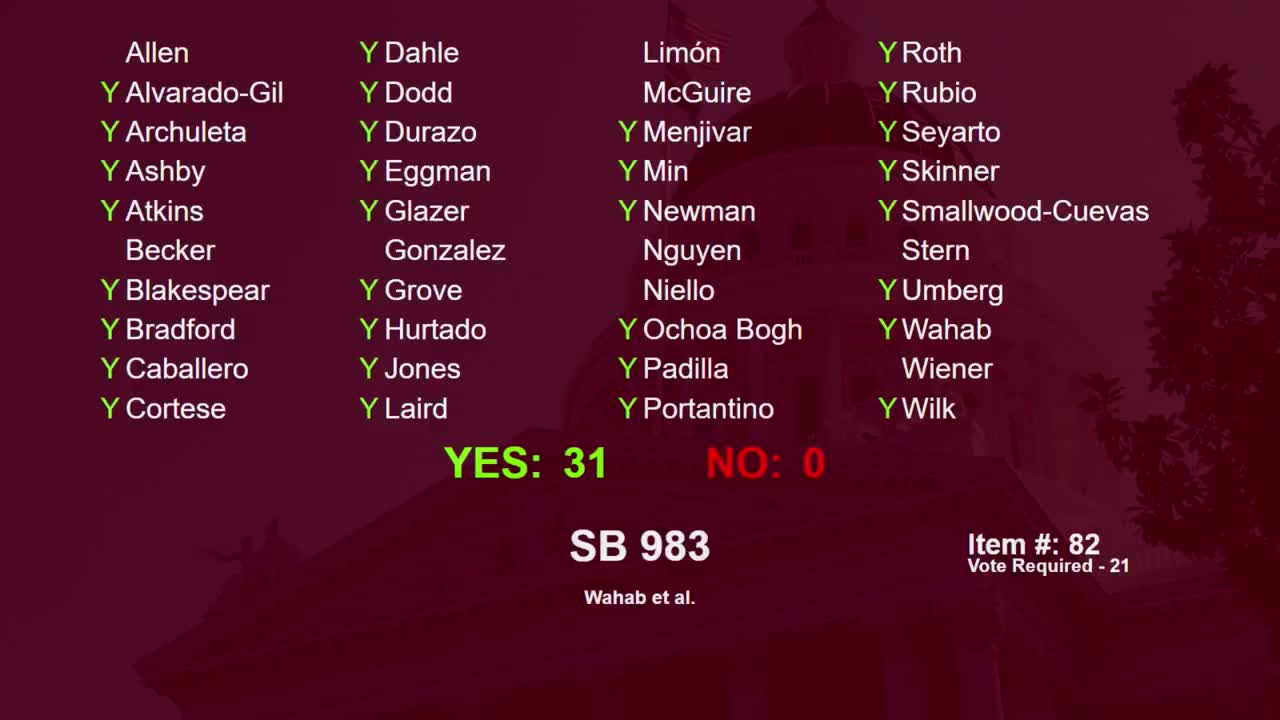 7MIN
Senate Floor
 14MIN
Senate Standing Committee on Labor, Public Employment and Retirement


Bill Co-Author(s):