SB 1256: Crimes: prostitution: DNA collection.
- Session Year: 2023-2024
- House: Senate
- Latest Version Date: 2024-05-16
Current Status:
Failed
(2024-08-15: August 15 hearing: Held in committee and under submission.)
Introduced
In Committee
First Chamber
In Committee
Second Chamber
Enacted
What does this bill do?
The bill expands California’s DNA and fingerprint collection rules to require people convicted on or after January 1, 2025, of soliciting or otherwise engaging in prostitution with a minor for money to provide biological and print samples. In particular it covers certain cases that include a prior similar conviction and where the defendant was more than three years older than the minor, and requires buccal (cheek) swabs, right thumbprints, full palm prints of each hand, and any needed blood or other biological samples for law enforcement identification.
The summary is provided by generative AI which can make mistakes. For original language, please view the details in the table below.
Existing law, as amended by the DNA Fingerprint, Unsolved Crime and Innocence Protection Act, Proposition 69, approved by the voters at the November 2, 2004, general election, requires a person who has been convicted of a felony offense to provide buccal swab samples, right thumbprints, and a full palm print impression of each hand, and any blood specimens or other biological samples required for law enforcement identification analysis. Existing law makes these provisions retroactive, regardless of when the crime charged or committed became a qualifying offense. The Legislature may amend Proposition 69 by a statute passed in each house by majority vote, as specified.
This bill would expand these provisions to require persons convicted on or after January 1, 2025, of soliciting, agreeing to engage in, or engaging in, in an act of prostitution with a minor minor, as specified, in exchange for providing money or compensation to the minor to provide buccal swab samples, right thumbprints, and a full palm print impression of each hand, and any blood specimens or other biological samples required for law enforcement identification analysis. By imposing additional duties on local law enforcement agencies to collect and forward these samples, this bill would impose a state-mandated local program.
The California Constitution requires the state to reimburse local agencies and school districts for certain costs mandated by the state. Statutory provisions establish procedures for making that reimbursement.
This bill would provide that, if the Commission on State Mandates determines that the bill contains costs mandated by the state, reimbursement for those costs shall be made pursuant to the statutory provisions noted above.
Existing law, as amended by the DNA Fingerprint, Unsolved Crime and Innocence Protection Act, Proposition 69, approved by the voters at the November 2, 2004, general election, requires a person who has been convicted of a felony offense to provide buccal swab samples, right thumbprints, and a full palm print impression of each hand, and any blood specimens or other biological samples required for law enforcement identification analysis. Existing law makes these provisions retroactive, regardless of when the crime charged or committed became a qualifying offense. The Legislature may amend Proposition 69 by a statute passed in each house by majority vote, as specified.
This bill would expand these provisions to require persons convicted of soliciting, agreeing to engage in, or engaging in, an act of prostitution with a minor in exchange for providing money or compensation to the minor to provide buccal swab samples, right thumbprints, and a full palm print impression of each hand, and any blood specimens or other biological samples required for law enforcement identification analysis. By imposing additional duties on local law enforcement agencies to collect and forward these samples, this bill would impose a state-mandated local program.
The California Constitution requires the state to reimburse local agencies and school districts for certain costs mandated by the state. Statutory provisions establish procedures for making that reimbursement.This bill would provide that with regard to certain mandates no reimbursement is required by this act for a specified reason.With regard to any other mandates, this bill would provide that, if the Commission on State Mandates determines that the bill contains costs so mandated by the state, reimbursement for those costs shall be made pursuant to the statutory provisions noted above.The California Constitution requires the state to reimburse local agencies and school districts for certain costs mandated by the state. Statutory provisions establish procedures for making that reimbursement.
This bill would provide that, if the Commission on State Mandates determines that the bill contains costs mandated by the state, reimbursement for those costs shall be made pursuant to the statutory provisions noted above.
Existing law requires persons convicted of specified sex offenses, or attempts to commit those offenses, to register with local law enforcement agencies while residing in the state or while attending school or working in the state. Existing law establishes 3 tiers of registration based on specified criteria, for periods of at least 10 years, at least 20 years, and life, respectively, for a conviction of specified sex offenses. Willful failure to register, as required, is a misdemeanor, or a felony, depending on the underlying offense.
This bill would add the offense of soliciting, or agreeing to engage in, or engaging in, an act of prostitution with a minor in exchange for providing money or compensation to the minor, except as specified, to the list of offenses requiring registration as a tier one offender on the sex offender registry. By imposing additional duties on local authorities, and by expanding the scope of persons who would be committing a crime by failing to register as a sex offender, this bill would create a state-mandated local program.
Existing law, as amended by the DNA Fingerprint, Unsolved Crime and Innocence Protection Act, Proposition 69, approved by the voters at the November 2, 2004, general election, requires a person who has been convicted of a felony offense to provide buccal swab samples, right thumbprints, and a full palm print impression of each hand, and any blood specimens or other biological samples required for law enforcement identification analysis. Existing law makes these provisions retroactive, regardless of when the crime charged or committed became a qualifying offense. The Legislature may amend Proposition 69 by a statute passed in each house by majority vote, as specified.
This bill would expand these provisions to require persons convicted of soliciting, agreeing to engage in, or engaging in, an act of prostitution with a minor in exchange for providing money or compensation to the minor to provide buccal swab samples, right thumbprints, and a full palm print impression of each hand, and any blood specimens or other biological samples required for law enforcement identification analysis. By imposing additional duties on local law enforcement agencies to collect and forward these samples, this bill would impose a state-mandated local program.
The California Constitution requires the state to reimburse local agencies and school districts for certain costs mandated by the state. Statutory provisions establish procedures for making that reimbursement.
This bill would provide that with regard to certain mandates no reimbursement is required by this act for a specified reason.
With regard to any other mandates, this bill would provide that, if the Commission on State Mandates determines that the bill contains costs so mandated by the state, reimbursement for those costs shall be made pursuant to the statutory provisions noted above.
(a)The following persons shall provide buccal swab samples, right thumbprints, and a full palm print impression of each hand, and any blood specimens or other biological samples required pursuant to this chapter for law enforcement identification analysis:
(1)Any person, including any juvenile, who is convicted of or pleads guilty or no contest to any felony offense, or is found not guilty by reason of insanity of any felony offense, or any juvenile who is adjudicated under Section 602 of the Welfare and Institutions Code for committing any felony offense.
(2)Any adult person who is arrested for or charged with any of the following felony offenses:
(A)Any felony offense specified in Section 290 or attempt to commit any felony offense described in Section 290, or any felony offense that imposes upon a person the duty to register in California as a sex offender under Section 290.
(B)Murder or voluntary manslaughter or any attempt to commit murder or voluntary manslaughter.
(C)Commencing on January 1, 2009, any adult person arrested or charged with any felony offense.
(3)Any person, including any juvenile, who is required to register under Section 290 or 457.1 because of the commission of, or the attempt to commit, a felony or misdemeanor offense, or any person, including any juvenile, who is housed in a mental health facility or sex offender treatment program after referral to such facility or program by a court after being charged with any felony offense.
(4)Any person, excluding a juvenile, who is convicted of, or pleads guilty or no contest to, on or after January 1, 2025, a violation of paragraph (3) (1) of subdivision (b) (l) of Section 647. 647 and has a prior conviction of paragraph (1) of subdivision (l) of Section 647 if, at the time of the offense, the person was more than three years older than the solicited minor, as measured from the minors date of birth to the persons date of birth.
(5)The term felony as used in this subdivision includes an attempt to commit the offense.
(6)Nothing in this chapter shall be construed as prohibiting collection and analysis of specimens, samples, or print impressions as a condition of a plea for a nonqualifying offense.
(b)The provisions of this chapter and its requirements for submission of specimens, samples, and print impressions as soon as administratively practicable shall apply to all qualifying persons regardless of sentence imposed, including any sentence of death, life without the possibility of parole, or any life or indeterminate term, or any other disposition rendered in the case of an adult or juvenile tried as an adult, or whether the person is diverted, fined, or referred for evaluation, and regardless of disposition rendered or placement made in the case of a juvenile who is found to have committed any felony offense or is adjudicated under Section 602 of the Welfare and Institutions Code.
(c)The provisions of this chapter and its requirements for submission of specimens, samples, and print impressions as soon as administratively practicable by qualified persons as described in subdivision (a) shall apply regardless of placement or confinement in any mental hospital or other public or private treatment facility, and shall include, but not be limited to, the following persons, including juveniles:
(1)Any person committed to a state hospital or other treatment facility as a mentally disordered sex offender under Article 1 (commencing with Section 6300) of Chapter 2 of Part 2 of Division 6 of the Welfare and Institutions Code.
(2)Any person who has a severe mental disorder as set forth within the provisions of Article 4 (commencing with Section 2960) of Chapter 7 of Title 1 of Part 3 of the Penal Code.
(3)Any person found to be a sexually violent predator pursuant to Article 4 (commencing with Section 6600) of Chapter 2 of Part 2 of Division 6 of the Welfare and Institutions Code.
(d)The provisions of this chapter are mandatory and apply whether or not the court advises a person, including any juvenile, that the person must provide the data bank and database specimens, samples, and print impressions as a condition of probation, parole, or any plea of guilty, no contest, or not guilty by reason of insanity, or any admission to any of the offenses described in subdivision (a).
(e)If at any stage of court proceedings the prosecuting attorney determines that specimens, samples, and print impressions required by this chapter have not already been taken from any person, as defined under subdivision (a) of Section 296, the prosecuting attorney shall notify the court orally on the record, or in writing, and request that the court order collection of the specimens, samples, and print impressions required by law. However, a failure by the prosecuting attorney or any other law enforcement agency to notify the court shall not relieve a person of the obligation to provide specimens, samples, and print impressions pursuant to this chapter.
(f)Prior to final disposition or sentencing in the case the court shall inquire and verify that the specimens, samples, and print impressions required by this chapter have been obtained and that this fact is included in the abstract of judgment or dispositional order in the case of a juvenile. The abstract of judgment issued by the court shall indicate that the court has ordered the person to comply with the requirements of this chapter and that the person shall be included in the states DNA and Forensic Identification Database and Data Bank Program and be subject to this chapter.
However, failure by the court to verify specimen, sample, and print impression collection or enter these facts in the abstract of judgment or dispositional order in the case of a juvenile shall not invalidate an arrest, plea, conviction, or disposition, or otherwise relieve a person from the requirements of this chapter.
SEC. 2.If the Commission on State Mandates determines that this act contains costs mandated by the state, reimbursement to local agencies and school districts for those costs shall be made pursuant to Part 7 (commencing with Section 17500) of Division 4 of Title 2 of the Government Code.
(a)The following persons shall provide buccal swab samples, right thumbprints, and a full palm print impression of each hand, and any blood specimens or other biological samples required pursuant to this chapter for law enforcement identification analysis:
(1)Any person, including any juvenile, who is convicted of or pleads guilty or no contest to any felony offense, or is found not guilty by reason of insanity of any felony offense, or any juvenile who is adjudicated under Section 602 of the Welfare and Institutions Code for committing any felony offense.
(2)Any adult person who is arrested for or charged with any of the following felony offenses:
(A)Any felony offense specified in Section 290 or attempt to commit any felony offense described in Section 290, or any felony offense that imposes upon a person the duty to register in California as a sex offender under Section 290.
(B)Murder or voluntary manslaughter or any attempt to commit murder or voluntary manslaughter.
(C)Commencing on January 1, 2009, any adult person arrested or charged with any felony offense.
(3)Any person, including any juvenile, who is required to register under Section 290 or 457.1 because of the commission of, or the attempt to commit, a felony or misdemeanor offense, or any person, including any juvenile, who is housed in a mental health facility or sex offender treatment program after referral to such facility or program by a court after being charged with any felony offense.
(4)Any person, excluding a juvenile, who is convicted of, or pleads guilty or no contest to, a violation of paragraph (3) of subdivision (b) of Section 647.
(5)The term felony as used in this subdivision includes an attempt to commit the offense.
(6)Nothing in this chapter shall be construed as prohibiting collection and analysis of specimens, samples, or print impressions as a condition of a plea for a nonqualifying offense.
(b)The provisions of this chapter and its requirements for submission of specimens, samples, and print impressions as soon as administratively practicable shall apply to all qualifying persons regardless of sentence imposed, including any sentence of death, life without the possibility of parole, or any life or indeterminate term, or any other disposition rendered in the case of an adult or juvenile tried as an adult, or whether the person is diverted, fined, or referred for evaluation, and regardless of disposition rendered or placement made in the case of a juvenile who is found to have committed any felony offense or is adjudicated under Section 602 of the Welfare and Institutions Code.
(c)The provisions of this chapter and its requirements for submission of specimens, samples, and print impressions as soon as administratively practicable by qualified persons as described in subdivision (a) shall apply regardless of placement or confinement in any mental hospital or other public or private treatment facility, and shall include, but not be limited to, the following persons, including juveniles:
(1)Any person committed to a state hospital or other treatment facility as a mentally disordered sex offender under Article 1 (commencing with Section 6300) of Chapter 2 of Part 2 of Division 6 of the Welfare and Institutions Code.
(2)Any person who has a severe mental disorder as set forth within the provisions of Article 4 (commencing with Section 2960) of Chapter 7 of Title 1 of Part 3 of the Penal Code.
(3)Any person found to be a sexually violent predator pursuant to Article 4 (commencing with Section 6600) of Chapter 2 of Part 2 of Division 6 of the Welfare and Institutions Code.
(d)The provisions of this chapter are mandatory and apply whether or not the court advises a person, including any juvenile, that the person must provide the data bank and database specimens, samples, and print impressions as a condition of probation, parole, or any plea of guilty, no contest, or not guilty by reason of insanity, or any admission to any of the offenses described in subdivision (a).
(e)If at any stage of court proceedings the prosecuting attorney determines that specimens, samples, and print impressions required by this chapter have not already been taken from any person, as defined under subdivision (a) of Section 296, the prosecuting attorney shall notify the court orally on the record, or in writing, and request that the court order collection of the specimens, samples, and print impressions required by law. However, a failure by the prosecuting attorney or any other law enforcement agency to notify the court shall not relieve a person of the obligation to provide specimens, samples, and print impressions pursuant to this chapter.
(f)Prior to final disposition or sentencing in the case the court shall inquire and verify that the specimens, samples, and print impressions required by this chapter have been obtained and that this fact is included in the abstract of judgment or dispositional order in the case of a juvenile. The abstract of judgment issued by the court shall indicate that the court has ordered the person to comply with the requirements of this chapter and that the person shall be included in the states DNA and Forensic Identification Database and Data Bank Program and be subject to this chapter.
However, failure by the court to verify specimen, sample, and print impression collection or enter these facts in the abstract of judgment or dispositional order in the case of a juvenile shall not invalidate an arrest, plea, conviction, or disposition, or otherwise relieve a person from the requirements of this chapter.
SEC. 3.No reimbursement is required by this act pursuant to Section 6 of Article XIIIB of the California Constitution for certain costs that may be incurred by a local agency or school district because, in that regard, this act creates a new crime or infraction, eliminates a crime or infraction, or changes the penalty for a crime or infraction, within the meaning of Section 17556 of the Government Code, or changes the definition of a crime within the meaning of Section 6 of Article XIIIB of the California Constitution.However, if the Commission on State Mandates determines that this act contains other costs mandated by the state, reimbursement to local agencies and school districts for those costs shall be made pursuant to Part 7 (commencing with Section 17500) of Division 4 of Title 2 of the Government Code.SEC. 2.If the Commission on State Mandates determines that this act contains costs mandated by the state, reimbursement to local agencies and school districts for those costs shall be made pursuant to Part 7 (commencing with Section 17500) of Division 4 of Title 2 of the Government Code.
(a)Sections 290 to 290.024, inclusive, shall be known, and may be cited, as the Sex Offender Registration Act. All references to the Act in those sections are to the Sex Offender Registration Act.
(b)Every person described in subdivision (c), for the period specified in subdivision (d) while residing in California, or while attending school or working in California, as described in Sections 290.002 and 290.01, shall register with the chief of police of the city in which the person is residing, or the sheriff of the county if the person is residing in an unincorporated area or city that has no police department, and, additionally, with the chief of police of a campus of the University of California, the California State University, or community college if the person is residing upon the campus or in any of its facilities, within five working days of coming into, or changing the persons residence within, any city, county, or city and county, or campus in which the person temporarily resides, and shall register thereafter in accordance with the Act, unless the duty to register is terminated pursuant to Section 290.5 or as otherwise provided by law.
(c)(1)The following persons shall register:
(A)Every person who, since July 1, 1944, has been or is hereafter convicted in any court in this state or in any federal or military court of a violation of Section 187 committed in the perpetration, or an attempt to perpetrate, rape, or any act punishable under Section 286, 287, 288, or 289 or former Section 288a, Section 207 or 209 committed with intent to violate Section 261, 286, 287, 288, or 289 or former Section 288a, Section 220, except assault to commit mayhem, subdivision (b) or (c) of Section 236.1, Section 243.4, Section 261, paragraph (1) of subdivision (a) of former Section 262 involving the use of force or violence for which the person is sentenced to the state prison, Section 264.1, 266, or 266c, subdivision (b) of Section 266h, subdivision (b) of Section 266i, Section 266j, 267, 269, 285, 286, 287, 288, 288.3, 288.4, 288.5, 288.7, 289, or 311.1, or former Section 288a, subdivision (b), (c), or (d) of Section 311.2, Section 311.3, 311.4, 311.10, 311.11, or 647.6, former Section 647a, subdivision (c) of Section 653f, subdivision 1 or 2 of Section 314, any offense involving lewd or lascivious conduct under Section 272, or any felony violation of Section 288.2; any statutory predecessor that includes all elements of one of the offenses described in this subdivision; or any person who since that date has been or is hereafter convicted of the attempt or conspiracy to commit any of the offenses described in this subdivision.
(B)A person who has been convicted of violating paragraph (3) of subdivision (b) of Section 647, unless the court finds that the defendant had reason to believe the victim was not a minor, was misled about the victims age, or was less than three years older than the victim at the time of the solicitation.
(2)Notwithstanding paragraph (1), a person convicted of a violation of subdivision (b) of Section 286, subdivision (b) of Section 287, or subdivision (h) or (i) of Section 289 shall not be required to register if, at the time of the offense, the person is not more than 10 years older than the minor, as measured from the minors date of birth to the persons date of birth, and the conviction is the only one requiring the person to register. This paragraph does not preclude the court from requiring a person to register pursuant to Section 290.006.
(d)A person described in subdivision (c), or who is otherwise required to register pursuant to the Act shall register for 10 years, 20 years, or life, following a conviction and release from incarceration, placement, commitment, or release on probation or other supervision, as follows:
(1)(A)A tier one offender is subject to registration for a minimum of 10 years. A person is a tier one offender if the person is required to register for conviction of a misdemeanor described in subdivision (c), or for conviction of a felony described in subdivision (c) that was not a serious or violent felony as described in subdivision (c) of Section 667.5 or subdivision (c) of Section 1192.7.
(B)This paragraph does not apply to a person who is subject to registration pursuant to paragraph (2) or (3).
(2)(A)A tier two offender is subject to registration for a minimum of 20 years. A person is a tier two offender if the person was convicted of an offense described in subdivision (c) that is also described in subdivision (c) of Section 667.5 or subdivision (c) of Section 1192.7, Section 285, subdivision (g) or (h) of Section 286, subdivision (g) or (h) of Section 287 or former Section 288a, subdivision (b) of Section 289, or Section 647.6 if it is a second or subsequent conviction for that offense that was brought and tried separately.
(B)This paragraph does not apply if the person is subject to lifetime registration as required in paragraph (3).
(3)A tier three offender is subject to registration for life. A person is a tier three offender if any one of the following applies:
(A)Following conviction of a registerable offense, the person was subsequently convicted in a separate proceeding of committing an offense described in subdivision (c) and the conviction is for commission of a violent felony described in subdivision (c) of Section 667.5, or the person was subsequently convicted of committing an offense for which the person was ordered to register pursuant to Section 290.006, and the conviction is for the commission of a violent felony described in subdivision (c) of Section 667.5.
(B)The person was committed to a state mental hospital as a sexually violent predator pursuant to Article 4 (commencing with Section 6600) of Chapter 2 of Part 2 of Division 6 of the Welfare and Institutions Code.
(C)The person was convicted of violating any of the following:
(i)Section 187 while attempting to commit or committing an act punishable under Section 261, 286, 287, 288, or 289 or former Section 288a.
(ii)Section 207 or 209 with intent to violate Section 261, 286, 287, 288, or 289 or former Section 288a.
(iii)Section 220.
(iv)Subdivision (b) of Section 266h.
(v)Subdivision (b) of Section 266i.
(vi)Section 266j.
(vii)Section 267.
(viii)Section 269.
(ix)Subdivision (b) or (c) of Section 288.
(x)Section 288.2.
(xi)Section 288.3, unless committed with the intent to commit a violation of subdivision (b) of Section 286, subdivision (b) of Section 287 or former Section 288a, or subdivision (h) or (i) of Section 289.
(xii)Section 288.4.
(xiii)Section 288.5.
(xiv)Section 288.7.
(xv)Subdivision (c) of Section 653f.
(xvi)Any offense for which the person is sentenced to a life term pursuant to Section 667.61.
(D)The persons risk level on the static risk assessment instrument for sex offenders (SARATSO), pursuant to Section 290.04, is well above average risk at the time of release on the index sex offense into the community, as defined in the Coding Rules for that instrument.
(E)The person is a habitual sex offender pursuant to Section 667.71.
(F)The person was convicted of violating subdivision (a) of Section 288 in two proceedings brought and tried separately.
(G)The person was sentenced to 15 to 25 years to life for an offense listed in Section 667.61.
(H)The person is required to register pursuant to Section 290.004.
(I)The person was convicted of a felony offense described in subdivision (b) or (c) of Section 236.1.
(J)The person was convicted of a felony offense described in subdivision (a), (c), or (d) of Section 243.4.
(K)The person was convicted of violating paragraph (2), (3), or (4) of subdivision (a) of Section 261 or was convicted of violating Section 261 and punished pursuant to paragraph (1) or (2) of subdivision (c) of Section 264.
(L)The person was convicted of violating paragraph (1) of subdivision (a) of former Section 262.
(M)The person was convicted of violating Section 264.1.
(N)The person was convicted of any offense involving lewd or lascivious conduct under Section 272.
(O)The person was convicted of violating paragraph (2) of subdivision (c) or subdivision (d), (f), or (i) of Section 286.
(P)The person was convicted of violating paragraph (2) of subdivision (c) or subdivision (d), (f), or (i) of Section 287 or former Section 288a.
(Q)The person was convicted of violating paragraph (1) of subdivision (a) or subdivision (d), (e), or (j) of Section 289.
(R)The person was convicted of a felony violation of Section 311.1 or 311.11 or of violating subdivision (b), (c), or (d) of Section 311.2, Section 311.3, 311.4, or 311.10.
(4)(A)A person who is required to register pursuant to Section 290.005 shall be placed in the appropriate tier if the offense is assessed as equivalent to a California registerable offense described in subdivision (c).
(B)If the persons duty to register pursuant to Section 290.005 is based solely on the requirement of registration in another jurisdiction, and there is no equivalent California registerable offense, the person shall be subject to registration as a tier two offender, except that the person is subject to registration as a tier three offender if one of the following applies:
(i)The persons risk level on the static risk assessment instrument for sex offenders (SARATSO), pursuant to Section 290.06, is well above average risk at the time of release on the index sex offense into the community, as defined in the Coding Rules for that instrument.
(ii)The person was subsequently convicted in a separate proceeding of an offense substantially similar to an offense listed in subdivision (c) which is also substantially similar to an offense described in subdivision (c) of Section 667.5, or is substantially similar to Section 269 or 288.7.
(iii)The person has ever been committed to a state mental hospital or mental health facility in a proceeding substantially similar to civil commitment as a sexually violent predator pursuant to Article 4 (commencing with Section 6600) of Chapter 2 of Part 2 of Division 6 of the Welfare and Institutions Code.
(5)(A)The Department of Justice may place a person described in subdivision (c), or who is otherwise required to register pursuant to the Act, in a tier-to-be-determined category if the appropriate tier designation described in this subdivision cannot be immediately ascertained. An individual placed in this tier-to-be-determined category shall continue to register in accordance with the Act. The individual shall be given credit toward the mandated minimum registration period for any period for which the individual registers.
(B)The Department of Justice shall ascertain an individuals appropriate tier designation as described in this subdivision within 24 months of the individuals placement in the tier-to-be-determined category.
(e)The minimum time period for the completion of the required registration period in tier one or two commences on the date of release from incarceration, placement, or commitment, including any related civil commitment on the registerable offense. The minimum time for the completion of the required registration period for a designated tier is tolled during any period of subsequent incarceration, placement, or commitment, including any subsequent civil commitment, except that arrests not resulting in conviction, adjudication, or revocation of probation or parole shall not toll the required registration period. The minimum time period shall be extended by one year for each misdemeanor conviction of failing to register under this act, and by three years for each felony conviction of failing to register under this act, without regard to the actual time served in custody for the conviction. If a registrant is subsequently convicted of another offense requiring registration pursuant to the Act, a new minimum time period for the completion of the registration requirement for the applicable tier shall commence upon that persons release from incarceration, placement, or commitment, including any related civil commitment. If the subsequent conviction requiring registration pursuant to the Act occurs prior to an order to terminate the registrant from the registry after completion of a tier associated with the first conviction for a registerable offense, the applicable tier shall be the highest tier associated with the convictions.
(f)This section does not require a ward of the juvenile court to register under the Act, except as provided in Section 290.008.
SEC. 2.Section 296 of the Penal Code is amended to read:296.(a)The following persons shall provide buccal swab samples, right thumbprints, and a full palm print impression of each hand, and any blood specimens or other biological samples required pursuant to this chapter for law enforcement identification analysis:
(1)Any person, including any juvenile, who is convicted of or pleads guilty or no contest to any felony offense, or is found not guilty by reason of insanity of any felony offense, or any juvenile who is adjudicated under Section 602 of the Welfare and Institutions Code for committing any felony offense.
(2)Any adult person who is arrested for or charged with any of the following felony offenses:
(A)Any felony offense specified in Section 290 or attempt to commit any felony offense described in Section 290, or any felony offense that imposes upon a person the duty to register in California as a sex offender under Section 290.
(B)Murder or voluntary manslaughter or any attempt to commit murder or voluntary manslaughter.
(C)Commencing on January 1 of the fifth year following enactment of the act that added this subparagraph, as amended, 1, 2009, any adult person arrested or charged with any felony offense.
(3)Any person, including any juvenile, who is required to register under Section 290 or 457.1 because of the commission of, or the attempt to commit, a felony or misdemeanor offense, or any person, including any juvenile, who is housed in a mental health facility or sex offender treatment program after referral to such facility or program by a court after being charged with any felony offense.
(4)Any person, excluding a juvenile, who is convicted of, or pleads guilty or no contest to, a violation of paragraph (3) of subdivision (b) of Section 647.
(4)(5)The term felony as used in this subdivision includes an attempt to commit the offense.
(5)(6)Nothing in this chapter shall be construed as prohibiting collection and analysis of specimens, samples, or print impressions as a condition of a plea for a non-qualifying nonqualifying offense.
(b)The provisions of this chapter and its requirements for submission of specimens, samples samples, and print impressions as soon as administratively practicable shall apply to all qualifying persons regardless of sentence imposed, including any sentence of death, life without the possibility of parole, or any life or indeterminate term, or any other disposition rendered in the case of an adult or juvenile tried as an adult, or whether the person is diverted, fined, or referred for evaluation, and regardless of disposition rendered or placement made in the case of a juvenile who is found to have committed any felony offense or is adjudicated under Section 602 of the Welfare and Institutions Code.
(c)The provisions of this chapter and its requirements for submission of specimens, samples, and print impressions as soon as administratively practicable by qualified persons as described in subdivision (a) shall apply regardless of placement or confinement in any mental hospital or other public or private treatment facility, and shall include, but not be limited to, the following persons, including juveniles:
(1)Any person committed to a state hospital or other treatment facility as a mentally disordered sex offender under Article 1 (commencing with Section 6300) of Chapter 2 of Part 2 of Division 6 of the Welfare and Institutions Code.
(2)Any person who has a severe mental disorder as set forth within the provisions of Article 4 (commencing with Section 2960) of Chapter 7 of Title 1 of Part 3 of the Penal Code.
(3)Any person found to be a sexually violent predator pursuant to Article 4 (commencing with Section 6600) of Chapter 2 of Part 2 of Division 6 of the Welfare and Institutions Code.
(d)The provisions of this chapter are mandatory and apply whether or not the court advises a person, including any juvenile, that he or she the person must provide the data bank and database specimens, samples, and print impressions as a condition of probation, parole, or any plea of guilty, no contest, or not guilty by reason of insanity, or any admission to any of the offenses described in subdivision (a).
(e)If at any stage of court proceedings the prosecuting attorney determines that specimens, samples, and print impressions required by this chapter have not already been taken from any person, as defined under subdivision (a) of Section 296, the prosecuting attorney shall notify the court orally on the record, or in writing, and request that the court order collection of the specimens, samples, and print impressions required by law. However, a failure by the prosecuting attorney or any other law enforcement agency to notify the court shall not relieve a person of the obligation to provide specimens, samples, and print impressions pursuant to this chapter.
(f)Prior to final disposition or sentencing in the case the court shall inquire and verify that the specimens, samples, and print impressions required by this chapter have been obtained and that this fact is included in the abstract of judgment or dispositional order in the case of a juvenile. The abstract of judgment issued by the court shall indicate that the court has ordered the person to comply with the requirements of this chapter and that the person shall be included in the states DNA and Forensic Identification Data Base Database and Data Bank program Program and be subject to this chapter.
However, failure by the court to verify specimen, sample, and print impression collection or enter these facts in the abstract of judgment or dispositional order in the case of a juvenile shall not invalidate an arrest, plea, conviction, or disposition, or otherwise relieve a person from the requirements of this chapter.
SEC. 3.No reimbursement is required by this act pursuant to Section 6 of Article XIIIB of the California Constitution for certain costs that may be incurred by a local agency or school district because, in that regard, this act creates a new crime or infraction, eliminates a crime or infraction, or changes the penalty for a crime or infraction, within the meaning of Section 17556 of the Government Code, or changes the definition of a crime within the meaning of Section 6 of Article XIIIB of the California Constitution.
However, if the Commission on State Mandates determines that this act contains other costs mandated by the state, reimbursement to local agencies and school districts for those costs shall be made pursuant to Part 7 (commencing with Section 17500) of Division 4 of Title 2 of the Government Code.
|
Date
|
Status
|
|---|---|
| Aug 15, 2024 | August 15 hearing: Held in committee and under submission. |
| Aug 7, 2024 | August 7 set for first hearing. Placed on suspense file. |
| Jul 3, 2024 | From committee: Do pass and re-refer to Com. on APPR. (Ayes 7. Noes 0.) (July 2). Re-referred to Com. on APPR. |
| Jun 3, 2024 | Referred to Com. on PUB. S. |
| May 23, 2024 | In Assembly. Read first time. Held at Desk. |
| May 22, 2024 | Read third time. Passed. (Ayes 38. Noes 0. Page 4148.) Ordered to the Assembly. |
| May 20, 2024 | Read second time. Ordered to third reading. |
| May 16, 2024 | From committee: Do pass as amended. (Ayes 7. Noes 0. Page 3977.) (May 16). |
| May 16, 2024 | Read second time and amended. Ordered to second reading. |
| May 14, 2024 | Set for hearing May 16. |
| May 13, 2024 | May 13 hearing: Placed on APPR suspense file. |
| May 3, 2024 | Set for hearing May 13. |
| Apr 16, 2024 | From committee: Do pass and re-refer to Com. on APPR. (Ayes 5. Noes 0. Page 3637.) (April 16). Re-referred to Com. on APPR. |
| Apr 2, 2024 | From committee with author's amendments. Read second time and amended. Re-referred to Com. on PUB S. |
| Mar 6, 2024 | Set for hearing April 16. |
| Feb 29, 2024 | Referred to Com. on PUB S. |
| Feb 16, 2024 | From printer. May be acted upon on or after March 17. |
| Feb 15, 2024 | Introduced. Read first time. To Com. on RLS. for assignment. To print. |
|
Date
|
Description
|
Location
|
Votes
|
|
|---|---|---|---|---|
| Jul 2, 2024 | Do pass and be re-referred to the Committee on [Appropriations] | Assembly Standing Committee on Public Safety |
Passed |
|
| May 22, 2024 | Senate 3rd Reading SB1256 Glazer | Senate Floor |
Passed |
|
| May 16, 2024 | Do pass as amended | Senate Standing Committee on Appropriations |
Passed |
|
| May 13, 2024 | Placed on suspense file | Senate Standing Committee on Appropriations |
Passed |
|
| Apr 16, 2024 | Do pass, but first be re-referred to the Committee on [Appropriations] | Senate Standing Committee on Public Safety |
Passed |
This list shows positions taken on this bill by organizations on the date displayed, which is linked to the original source.
Positions by individuals are not included.
|
Organization
|
Position
|
Date
|
|---|---|---|
| Aclu California Action | ** Against | |
| California District Attorneys Association | ** Support | |
| California Police Chiefs Association | ** Support | |
| California State Sheriffs' Association | * Support | Jul 2, 2024 |
| Los Angeles County Professional Peace Officers Association | ** Support | |
| Oakland Privacy | ** Against | |
| Peace Officers Research Association Of California | ** Support | |
| Sacramento County District Attorney's Office | ** Support | Apr 16, 2024 |
| Sacramento County Sheriff Jim Cooper | ** Support |
Date of Hearing: August 7, 2024
ASSEMBLY COMMITTEE ON APPROPRIATIONS
Buffy Wicks, Chair
SBPCA Bill Id:SB 1256
Author:(Glazer) – As Amended Ver:May 16, 2024
Policy Committee: | Public Safety | Vote: | 7 - 0 |
|
| ||
|
|
Urgency: No State Mandated Local Program: Yes Reimbursable: Yes
SUMMARY:
This bill requires an adult convicted of specified misdemeanor offenses for solicitation of a minor to submit a DNA sample to the DNA databank for use in law enforcement investigations.
Specifically, this bill requires an adult defendant to submit a DNA sample if all of the following conditions are met:
- The defendant is convicted of a specified solicitation of prostitution offense on or after January 1, 2025.
- The person who was solicited was a minor at the time of the offense, and the defendant knew or should have known that the person was a minor.
- The defendant has a prior conviction for soliciting a minor.
- At the time of the offense, the defendant was more than three years older than the solicited minor.
FISCAL EFFECT:
- Costs (local fund, General Fund) of an unknown but potentially significant amount to local law enforcement agencies to collect additional DNA samples and submit them to the DNA databank. Costs may be minor for each collection but may be significant when aggregated statewide. General Fund costs will depend on whether the Commission on State Mandates determines these duties constitute a reimbursable state mandate.
- The Department of Justice (DOJ) reports no significant fiscal impact, but notes that the department may seek additional funding if this bill and several others currently pending in the Legislature are enacted and result in an increase in workload to the department. Actual costs to DOJ will depend on the number of additional DNA samples submitted to the department for processing.
- Cost pressures (General Fund) to continue backfilling the DNA Identification Fund. Criminal fee and fine revenue deposited into the DNA Identification Fund has declined steadily in the past decade, from $69 million in FY 2013-14 to $34 million in 2022-23. To maintain service levels, the state has provided General Fund backfill to the DNA Identification Fund since FY 2016-17, in the tens of millions of dollars annually.
According to the Legislative Analyst’s Office, the General Fund faces a structural deficit in the tens of billions of dollars over the next several fiscal years.
COMMENTS:
- Purpose. According to the author, “SB 1256 would expand DNA collection to include individuals found to have solicited, or engages in prostitution with a minor in an effort to combat the persistent issue of child sex trafficking.”
- Background. The DNA Identification Fund was created pursuant to Proposition 69 (2004), which expanded the collection and use of DNA samples taken from criminal defendants. Criminal fines and fees are collected in the fund and used to finance the Bureau of Forensic Services (BFS) within DOJ. BFS operates state and regional crime laboratories that provide services to law enforcement and prosecutorial agencies, including DNA testing, drug analysis, and crime scene investigative support.
When a defendant is required to submit samples to the DNA data bank, a local law enforcement agency collects a buccal swab, print impression, blood specimen, and any other required biological samples from the defendant and sends the samples to BFS. BFS processes the samples and adds them to California’s DNA data bank and the National DNA Index System. When a law enforcement agency is investigating a crime and collects an unidentified DNA sample, the agency can submit the unidentified sample to these databases to search for a potential match among the previously uploaded samples.
Under existing law, collection of DNA is required for a defendant convicted of a felony or specified misdemeanors that require registration as a sex offender. This bill expands mandatory DNA collection to defendants convicted of misdemeanor solicitation of a minor. Solicitation refers to a defendant’s request to pay another person for sexual acts. Actual sexual conduct is not an element of this crime and a conviction does not currently require sex offender registration. Human trafficking offenses are distinct from solicitation of prostitution and are punished much more harshly under existing law.
Analysis Prepared by: Annika Carlson / APPR. / (916) 319-2081
Date of Hearing: July 2, 2024
Counsel: Ilan Zur
ASSEMBLY COMMITTEE ON PUBLIC SAFETY
Kevin McCarty, Chair
SBPCA Bill Id:SB 1256
Author:(Glazer) – As Amended Ver:May 16, 2024
SUMMARY: Requires a person, excluding a juvenile, convicted of specified misdemeanor solicitation of a minor offenses, where the person is more than three years older than the solicited minor, to provide a biological DNA sample to the DNA databank for law enforcement identification analysis. Specifically, this bill:
- Requires any person, excluding a juvenile, to provide DNA samples (buccal swab samples, right thumbprints, and a full palm print impression of each hand, and any blood specimens or other specified biological samples required) for law enforcement identification analysis, if the following conditions are met:
- That person is convicted of, or pleads guilty or no contest to, on or after January 1, 2025, any of the following :
- Soliciting, agreeing to engage in, or engaging in any act of prostitution with the intent to receive compensation, money, or anything of value from another person.
- Soliciting, agreeing to engage in, or engaging in, any act of prostitution with another person who is 18 years of age or older in exchange for the individual providing compensation, money, or anything of value to the other person.
- Soliciting, or agreeing to engage in, or engaging in, any act of prostitution with another person who is a minor in exchange for the individual providing compensation, money, or anything of value to the minor.
- The person who was solicited was a minor at the time of the offense, and the defendant knew or should have known that the person was a minor;
- The person has a prior conviction for soliciting a minor;; and
- At the time of the offense, the defendant was more than three years older than the solicited minor, as measured from the minor’s date of birth to the person’s date of birth.
- That person is convicted of, or pleads guilty or no contest to, on or after January 1, 2025, any of the following :
EXISTING LAW:
DNA Collection for Specified Crimes
- Provides that the Department of Justice (DOJ), through its DNA Laboratory, is responsible for the management and administration of the state’s DNA and Forensic Identification Database and Data Bank Program and for liaising with the Federal Bureau of Investigation (FBI) regarding the state’s participation in a national or international DNA database and data bank program such as the Combined DNA Index System (CODIS) that allows the storage and exchange of DNA records submitted by state and local forensic DNA laboratories nationwide. (Penal Code, § 295 (g).)
- Provides that the DOJ can perform DNA analysis, other forensic identification analysis, and examination of palm prints only for identification purposes. (Penal Code § 295.1 (a) & (b).)
- Provides that the DNA Laboratory of the DOJ shall serve as a repository for blood specimens and buccal swab and other biological samples collected, and shall analyze specimens and samples, and store, compile, correlate, compare, maintain, and use DNA and forensic identification profiles and records related to the following:
- Forensic casework and forensic unknowns.
- Known and evidentiary specimens and samples from crime scenes or criminal investigations.
- Missing or unidentified persons.
- Persons required to provide specimens, samples, and print impressions under this chapter.
- Legally obtained samples.
- Anonymous DNA records used for training, research, statistical analysis of populations, quality assurance, or quality control. (Penal Code § 295.1, subd. (c).)
- Specifies that the Director of Corrections, or the Chief Administrative Officer of the detention facility, jail, or other facility at which the blood specimens, buccal swab samples, and thumb and palm print impressions were collected must send these DNA samples promptly to the DOJ.(Penal Code § 298.)
- Makes it a misdemeanor to refuse to provide a required specimen. (Pen. Code, § 298.1, subd. (a).)
- Requires any person arrested for or charged with a felony, and any person required to register as a sex offender or as an arsonist to submit buccal swab samples, a full palm print impression of each hand, and any blood specimens or other biological samples required for submission to the DNA databank. (Pen. Code, § 296, subd. (a).)
- Provides that this does not prohibit the collection and analysis of specimens, samples, or print impressions as a condition of a plea for a non-qualifying offense. (Pen. Code, § 296, subd. (a)(5).)
- Provides that the above requirements for submission of specimens, samples and print impressions as soon as administratively practicable shall apply to all qualifying persons regardless of sentence imposedand regardless of disposition rendered or placement made in the case of juvenile who is found to have committed any felony offense or is adjudicated to be a ward of the court, as specified. (Pen. Code, § 296, subd. (b).)
- Provides that the above DNA submission requirements shall apply regardless of placement or confinement in any mental hospital or other public or private treatment facility, and shall include persons committed to a state hospital as a mentally disordered sex offender, any person who has a severe mental disorder, and sexually violent predators, as specified. (Pen. Code, § 296, subd. (c).)
- Provides that the above DNA submission requirements are mandatory and apply whether or not the court advises a person, that they must provide the data bank and database specimens, samples, and print impressions as a condition of probation, parole, or any plea of guilty, no contest, or not guilty by reason of insanity, or any admission to any of the above specified offenses. (Pen. Code, § 296, subd. (d).)
- Provides that if at any stage of court proceedings the prosecuting attorney determines that specimens, samples, and print impressions required, as specified, have not already been taken from any person, the prosecuting attorney shall request that the court order collection of the specimens, samples, and print impressions required by law. (Pen. Code, § 296, subd. (e).)
- Provides that prior to final disposition or sentencing in the case the court shall inquire and verify that the specimens, samples, and print impressions required by this chapter have been obtained and that this fact is included in the abstract of judgment or dispositional order in the case of a juvenile. (Pen. Code, § 296, subd. (f).)
- Provides that the failure by the court to verify specimen, sample, and print impression collection or enter these facts in the abstract of judgment or dispositional order in the case of a juvenile shall not invalidate an arrest, plea, conviction, or disposition, or otherwise relieve a person from the requirements of this chapter. (Pen. Code, § 296, subd. (f).)
- States that whenever the DNA Laboratory of the DOJ notifies the CDCR or any law enforcement agency that a biological specimen or sample, or print impression is not usable for any reason, the person who provided the original specimen, sample, or print impression shall submit to collection of additional specimens, samples, or print impressions. CDCR or other responsible law enforcement agency shall collect additional specimens, samples, and print impressions from these persons as necessary, and transmit these specimens, samples, and print impressions to the appropriate agencies of the DOJ. (Pen. Code, 296.2, subd (a).)
- Provides that as of January 2, 2021, there will be a three-tiered registration system for sex offender registration and a person will be required to register for at least 10 years, at least 20 years or for their lifetime depending on what crime is requiring registration. (Pen. Code, § 290.)
- Allows the court to require sex offender registration for any offense not specifically listed in the statute if the court finds at the time of conviction or sentencing that the person committed the offense as a result of sexual compulsion or for purposes of sexual gratification. (Pen. Code, § 290.006, subd. (a).)
Misdemeanor Prostitution Offenses
- Establishes three types of misdemeanor disorderly conduct offenses pertaining to prostitution, punishable by up to six months in county jail, a $1,000 fine, or both. Specifically, existing law:
- States an individual who solicits, or who agrees to engage in, or who engages in, any act of prostitution with the intent to receive compensation, money, or anything of value from another person is guilty of misdemeanor disorderly conduct (Pen. Code, § 647, subd. (b)(1).)
- States any individual who solicits, or who agrees to engage in, or who engages in, any act of prostitution with another person who is 18 years of age or older in exchange for the individual providing compensation, money, or anything of value to the other person is guilty of guilty of misdemeanor disorderly conduct. (Pen. Code 647, subd (b)(2).
- States any individual who solicits, or who agrees to engage in, or who engages in, any act of prostitution with another person who is a minor (i.e., under the age of 18) in exchange for the individual providing compensation, money, or anything of value to the minor, is guilty of misdemeanor disorderly conduct. (Pen. Code, § 647, subd. (b)(3).)
- Defines an agreement to engage in an act of prostitution as any person, with specific intent to so engage the individual, manifests an acceptance of an offer or solicitation by another person who is 18 years of age or older to so engage, regardless of whether the offer or solicitation was made by a person who also possessed the specific intent to engage in an act of prostitution. (Pen. Code, § 647, subd. (b)(2).)
- Provides that the above misdemeanor offenses do not apply to a person under 18 years of age who is alleged to have engaged in conduct to receive money or other consideration that would, if committed by an adult, constitute disorderly conduct. (Pen. Code § 647, subd. (b)(5).)
- Provides that if any of the above disorderly conduct misdemeanors are committed, and the person who was solicited was a minor at the time of the offense, and the defendant knew or should have known that the person solicited was a minor at the time of the offense, the violation is punishable by imprisonment in a county jail for two days up to one year, or by a fine up to $10,000, or both. (Pen. Code § 647, subd. (l)(1).)
FISCAL EFFECT: Unknown.
COMMENTS:
- Author's Statement: According to the author, "SB 1256 would expand DNA collection to include individuals found to have solicited, or engages in prostitution with a minor in an effort to combat the persistent issue of child sex trafficking. By requiring those convicted of these crimes to provide DNA samples, we aim to strengthen law enforcement’s efforts in identifying and combatting this heinous crime. DNA has been demonstrated to be useful in combatting trafficking. The provisions in this bill build upon existing laws, such as Proposition 35 and Proposition 69, to further protect vulnerable children and enhance the integrity of our justice systems.”
- Misdemeanor Solicitation of Prostitution: The crime of soliciting another person to engage in prostitution is a misdemeanor punishable by up to six months in county jail, a $1,000 fine, or both. Misdemeanor solicitation applies to both sex workers offering sex acts in exchange for compensation as well as individuals offering compensation in exchange for sex acts. Penal Code section 647, subdivision (b)(1) makes it a misdemeanor to solicit, agree to engage in, or engage in an act of prostitution with intent to receive compensation. Penal Code section 647, subdivision (b)(2) makes it a misdemeanor for an individual to solicit, agree to engage in, or engage in an act of prostitution with an adult or minor in exchange for that individual providing compensation to the other person.
The crime of soliciting another person to engage in prostitution requires proof that: 1) the defendant requested that another person engage in an act of prostitution; 2) the defendant intended to engage in an act of prostitution with the other person; and 3) the other person received the communication containing the request.[1] The crime occurs when the person has the specific intent to engage in either sexual intercourse or lewd acts in exchange for money or other consideration for the purpose of sexual arousal or gratification and communicates that intent.[2] Actual sexual conduct is not an element of the crime.
- Effect of this Bill: SB 1256 would require an adult to provide DNA samples if they are: 1) convicted of, or plead guilty to, misdemeanor solicitation of prostitution; 2) the person being solicited was a minor at the time of the offense; 3) the defendant knew or should have known that the solicited person was a minor; 4) the defendant has a prior conviction of misdemeanor solicitation of a minor where the defendant knew or should have known the solicited person was a minor; and 5) the defendant was more than three years older than the solicited minor.
- Proposition 69: Proposition 69, the DNA Fingerprint, Unsolved Crime and Innocence Protection Act, was passed by the voters in 2004. The proposition expanded the categories of people required to provide DNA samples for law enforcement identification analysis. Under existing law, any person arrested for, or charged with, a felony, and any person required to register as either a sex offender or arsonist is required to submit buccal swab samples, a full palm print impression of each hand and any blood specimens or other biological samples required for submission to the DNA databank.[3]
In People v. Robinson, the California Supreme Court upheld the collection of DNA samples of persons convicted of any felony offenses, as required by Prop. 69.[4] In People v. Buza, the California Supreme Court upheld the application of Prop. 69 to persons arrested for, but not yet convicted of, a felony offense.[5]
It is not clear if this bill is consistent with Prop 69. Regarding the Legislature’s authority to amend the initiative, Proposition 69 states “The provisions of this measure may be amended by a statute that is passed by each house of the Legislature and signed by the Governor. All amendments to this measure shall be to further the measure and shall be consistent with its purposes to enhance the use of DNA identification evidence for the purpose of accurate and expeditious crime-solving and exonerating the innocent.”[6] This general intent language does not appear to place strict limits on the type of crimes DNA samples can be used for, beyond that outlined by Penal Code 296. However, seeing as Penal Code 296 has not been amended since Prop 69’s was enacted, and currently only permits DNA collection for felonies and specified misdemeanors requiring registration, the legality of adding non-violent, non-registration misdemeanors to Penal Code Section 296 may need to be a matter to be resolved through litigation.
- Expanding DNA Collection Requirements to Include Non-Violent Misdemeanors Not Involving Sex Acts: Currently in California, the only misdemeanors that are included are those for which a person must register as a sex offender or as an arsonist.[7] This bill would expand the type of offenses that require a person’s DNA to be taken to include the misdemeanor crime of solicitation of a minor for purposes of prostitution.
California criminal law generally imposes consequences in proportion to the level of criminal conduct for which the defendant has been convicted. For example, a conviction on a felony offense generally justifies consequences which are more serious or more intrusive on an individual’s privacy and rights than a conviction on a misdemeanor. California law currently requires DNA samples to be collected in relation to felony offenses. As noted above, the only misdemeanor convictions which currently require a DNA sample are those serious misdemeanor convictions which result in registration of the defendant as a sex or arson offender – maintaining consistency with concept of proportionality underlying California criminal law.
The crimes allowing for DNA collection pursuant to PC 296 under Proposition 69 have remained unchanged for 20 years. Permitting DNA collection for non-violent disorderly conduct misdemeanors that do not result in sex acts may open the door for law enforcement to collect DNA for many other non-violent misdemeanors. This may undermine the criminal law principle of proportionality by permitting the same level of intrusion on an individual’s privacy and rights for non-violent misdemeanors, as permitted for felonies and offenses requiring sex offender registration.
SB 1256 would permit DNA to be seized irrespective of whether any sex act occurred, and whether the solicitation to buy or purchase a sex act was initiated by a minor. A DNA sample from an individual contains a tremendous amount of private and sensitive information about that individual. This bill raises the question of whether California should allow such a significant intrusion for a non-violent misdemeanor offense.
As noted earlier, a person arrested for or charged with a felony, or an attempt to commit a felony, and any person required to register as a sex offender, is already required to submit DNA samples to the DNA databank. Under existing law a person can be arrested and charged with a felony if they attempt to engage in unlawful sexual intercourse with a minor more than three years younger than the perpetrator.[8] As such, an adult who solicits a minor three years younger than them to provide or pay for a sex act, and attempts to engage in unlawful sexual intercourse with that minor can already be arrested for an attempt to commit a felony, thus permitting a DNA sample to be taken. Alternatively, if an adult solicits a minor three years younger than them, and the solicitation does in fact result in a sex act, then that adult can be charged with a felony, permitting law enforcement to take a DNA sample upon arrest.
Accordingly, DNA collection may already permitted for solicitation of a minor three years younger than a defendant that either results in sex acts, or rises to the level of attempted unlawful intercourse with a minor.
- Prior Legislative Attempts to Expand DNA Collection Under Penal Code 296. Since Prop 69 was passed by the voters in 2004 there have been many attempts to add non-violent crimes and misdemeanors to the list of crimes where law enforcement can take DNA samples from defendants. None have been successful.
Among others, SB 710 (Bates) of the 2019-2020 Legislative Session, would have expanded the collection of DNA to include specified misdemeanors. SB 757 (Glazer) of the 2017-2018 Legislative Session, would have required a person convicted of misdemeanor solicitation of a minor for prostitution to provide a DNA sample to the DNA databank.[9]
- Disproportionate Impact on Communities of Color and the LGBTQ+ Community: Enforcement efforts against misdemeanor solicitation relating to prostitution tend to disproportionately impact members of the LGBTQ+ community and persons of color. Consider a study conducted in 2019 through the Los Angeles County Public Defender’s office that compiled data from violations of a prostitution-related crime reported from the Compton Branch of the Public Defender’s office. During a one-week period of time in July 2019, a total of 48 cases were reported.[10] The study found that the majority of arrests were made up of young Black women. 42.6 percent of arrests were for people aged 21-24 with the next highest rate being 23.4 percent for people aged 18-20.[11] As for race, 72.3 percent were Black with the next highest rate being 17 percent for Hispanic.[12] While this bill does narrow this bill to solicitation of minors at least three years younger than the defendant, given that people of color and the LGBTQ community are disproportionately impacted by criminal enforcement efforts pertaining to misdemeanor solicitation more generally, SB 1256 may similarly result in the disproportionate collection of DNA from those same vulnerable communities.
- Argument in Support: According to the Sacramento County Sheriff’s Office, “Human Trafficking has plagued our state and the Sacramento region for years. It is growing to unprecedented levels and is one of the fastest growing criminal enterprises. As you know, sex trafficking is a persistent and horrific problem in California and across the United States. Federal prosecutions of child-only sex trafficking cases increased 17% from 2019 to 2020, and children made up 69% of victims in newly charged sex trafficking cases in 2020. Moreover, with the recent removal of Penal Code 653.22 it has been increasingly difficult to prosecute and investigate violations involving solicitation of a minor emboldening traffickers to traffic girls as young as 12 years old on our streets. Unfortunately, once these young girls enter the “life”, their life expectancy is only 7-10 years. Just in the past year, there have been over 300,000 commercial sex ads in the Sacramento region alone. Additionally, with advanced technology and social media apps, law enforcement has been losing the battle in this arena. Human Traffickers religiously use their smart devices to further their criminal empire.
Providing law enforcement and prosecutors with more tools to combat the human trafficking crisis, especially of children for sexual purposes, is a worthy pursuit. SB 1256 will bring to bear the powerful resources of DNA specimen collection and testing with the goal of bringing traffickers to justice and interceding in future trafficking efforts.”
- Argument in Opposition: According to ACLU California Action, “SB 1256 [] represents a creeping assault on Californian’s privacy and due process rights that could lead to more bias in the state’s criminal justice system — and even false convictions. California is facing an immense budget shortfall and cannot afford an expansion of the carceral costs associated with this bill.
SB 1256 will require people to submit their DNA to law enforcement for lifetime inclusion in a DNA database, accessible to local, state, and federal law enforcement agencies across the country. These requirements will apply not only to those who are convicted of misdemeanor offenses of purchasing and engaging in commercial sex with a person under age 18, but also to those who solicit commercial sex with a person under age 18 without engaging in any sexual act. The ACLU has long fought to preserve the privacy of sensitive medical and genetic information and are compelled to do so here. While people of all races, economic backgrounds, and sexual preferences purchase commercial sex, people of color who earn low incomes, immigrants, and LGBTQ people suffer disproportionate arrests for this conduct.[13] Even after Lawrence v. Texas (the U.S. Supreme Court case finding unconstitutional a Texas law that banned homosexual adults from engaging in consensual sexual acts), police departments in California continue to regularly target and arrest men in the LGBTQ community on charges of solicitation and other offenses such as lewdness.[14]LGBTQ people in many communities are also simply more frequently stopped by police than non-LGBTQ people, thus making them more likely to be arrested for the conduct targeted by SB 1256. [15] Disproportionate enforcement is often fueled by purposeful and implicit bias.[16]
Given that people of color who earn low incomes and LGBTQ people are stopped, arrested, and convicted for the crimes targeted by SB 1256 at higher rates than higher income people, whites, and non-LGBTQ people, respectively, it follows that they will also be disproportionately impacted by the negative consequences of DNA collection. Racial justice, civil liberties, and privacy advocates across the country have argued against the use of DNA databases in law enforcement given the general disparate arrest and conviction rates of people of color. [17]A report for the Council for Responsible Genetics termed the practice, “building Jim Crow’s database.”[18] Inclusion in the DNA database opens people up to wrongful arrests and convictions and raises very serious privacy concerns.
While SB 1256 is premised on the belief that DNA collection protects public safety, the reality is increasing the size of DNA databases actually raises the likelihood of false hits. Recent studies have confirmed that erroneous matches between DNA profiles from different people, including close relatives, are far from impossible and can lead to false arrests and convictions. This is important because in California, inclusion in the database potentially subjects people’s family members to investigation, through a controversial technique called “familial DNA searching,” which extends the size and reach of the California database to effectively include the parents, children, and siblings of the millions of convicted and arrested people whose DNA profiles are stored in the database. This bill would vastly increase the number of people whose privacy is compromised and who are subject to potential false arrest.”
- Related Legislation: AB 2957 (Gallagher) of the 2023-2024 Legislative Session, makes technical changes to when DNA submissions for specified crimes. AB 2957 was never heard.
- Prior Legislation:
- SB 710 (Bates) of the 2019-2020 Legislative Session, would have expanded the collection of DNA to include misdemeanors that used to be wobblers or felonies pre-Proposition 47, SB 710 failed passage in Senate Public Safety.
- SB 781 (Glazer) of the 2017-2018 Legislative Session, would have required the collection of DNA from persons convicted of crimes that were made misdemeanors by Proposition 47. SB 781 was not heard in Senate Public Safety Committee.
- SB 757 (Glazer) of the 2017-2018 Legislative Session, would have required a person convicted of misdemeanor solicitation of a minor for prostitution to register as a sex offender and to provide a DNA sample to the DNA databank. SB 757 failed passage in Assembly Public Safety.
- AB 16 (Cooper) of the 2017-2018 Legislative Session, would have expanded existing provisions requiring adults convicted of specified misdemeanors to provide DNA samples for inclusion in the DNA database AB 16 died on Third Reading.
- SB 1355 (Glazer) of the 2015-2016 Legislative Session, would have required the collection of DNA from persons convicted of crimes that were made misdemeanors by Proposition 47. SB 1355 died pending referral.
- AB 390 (Cooper) of the 2015-2016 Legislative Session, would have required require DNA collection of people who commit the crimes that used to be wobblers but are now misdemeanors after the passage of Proposition 47. AB 390 died pending referral.
- AB 84 (Gatto) of the 2015-2016 Legislative Session, would have expanded the collection of DNA samples to include persons convicted of specified misdemeanors. AB 84 died in Assembly Appropriations Committee.
- SB 248 (Wyland) of the 2011-2012 Legislative Session, would have to require people convicted or adjudicated of specified misdemeanors to give a DNA sample. SB 248 failed passage in Senate Public Safety.
REGISTERED SUPPORT / OPPOSITION:
Support
California District Attorneys Association
California Police Chiefs Association
California State Sheriffs' Association
Los Angeles County Professional Peace Officers Association
Peace Officers Research Association of California (PORAC)
Sacramento County Sheriff Jim Cooper
Oppose
ACLU California Action
Oakland Privacy
Analysis Prepared by: Ilan Zur
See CALCRIM No. 1154. ↑
See e.g. People v. Love (1980) 111 Cal.App.3d Supp. 1, 13; People v. Norris (1978) 88 Cal.App.3d Supp. 32, 38. ↑
Law enforcement can obtain a DNA sample from a juvenile only if he or she has been found guilty of a felony or required to register as a sex offender. Pen. Code, § 290, subd. (a).) ↑
People v. Robinson (2010) 47 Cal.4th 1104. ↑
People v. Buza (2018) 4 Cal.5th 658. ↑
DNA Samples. Collection. Dabaase Funding. Proposition 69 (2004), p. 145, available at: https://repository.uclawsf.edu/ca_ballot_props/1231 ↑
Pen. Code, § 296, subd. (a). ↑
Pen. Code, § 261.5. ↑
Other bills which also sought to authorize the taking of DNA for new misdemeanors include SB 781 (Glazer) of the 2017-2018 Legislative Session, AB 16 (Cooper) of the 2017-2018 Legislative Session, SB 1355 (Glazer) of the 2015-2016 Legislative Session, AB 390 (Cooper) of the 2015-2016 Legislative Session, AB 84 (Gatto) of the 2015-2016 Legislative Session, SB 248 (Wyland) of the 2011-2012 Legislative Session. ↑
Derek J. Demeri, “Policing of People in the Sex Trades in Compton: Analysis of Section 653.22 Clients,” Law Offices of the Los Angeles County Public Defender (2019). ↑
Id. at p. 2. ↑
Id., at p. 4. ↑
Melissa Gira Grant, DNA Database of Men Who Pay for Sex? The Strange Push to Make Cops Collect DNA from Suspected Johns, Alternet (2012); Brief of the American Civil Liberties Union Foundation of Southern California, et al as Amicus Curiae In Support of Plaintiffs-Appellants, Erotic Service Provider Legal, et al. v. George Gascon, No. 4:15-cv-01007 (9th Cir.2016); Nan D. Hunter, et al., The Rights of Lesbians, Gay Men, Bisexuals, and Transgender People, New York University Press (2004). ↑
Brief for American Civil Liberties Foundation of Southern California, supra note 1. ↑
Dustin Gardiner, Police Much More Likely to Stop Transgender People in California for ‘Reasonable Suspicion’, San Francisco Chronicle (2022) ; Winston Luhur et al., Policing LGBQ People, UCLA School of Law Williams Institute (2021),. ↑
Brief for American Civil Liberties Foundation of Southern California, supra note 1. ↑
Grant, supra note 1. ↑
Harry G. Levine et al., Drug Arrests and DNA: Building Jim Crow’s Database,” Council for Responsible Genetics Forum on Racial Justice Impacts of Forensic DNA Databanks (2008), available at ↑
SENATE RULES COMMITTEE Office of Senate Floor Analyses (916) 651-1520 Fax: (916) 327-4478 | SB 1256 |
THIRD READING
Bill No: SB 1256
Author: Glazer (D)
Amended: 4/2/24
Vote: 21
SENATE PUBLIC SAFETY COMMITTEE: 5-0, 4/16/24
AYES: Wahab, Seyarto, Bradford, Skinner, Wiener
SENATE APPROPRIATIONS COMMITTEE: 7-0, 5/16/24
AYES: Caballero, Jones, Ashby, Becker, Bradford, Seyarto, Wahab
SUBJECT: Crimes: prostitution: DNA collection
SOURCE: Author
DIGEST:
This bill requires an adult to give a sample to the DNA databank when they are convicted of misdemeanor solicitation of a minor if they have a prior conviction for the same and they were more than 3 years older than the minor.
ANALYSIS:
Existing law:
- Provides that the Department of Justice (DOJ), through its DNA Laboratory, is responsible for the management and administration of the state’s DNA and Forensic Identification Database and Data Bank Program and for liaising with the Federal Bureau of Investigation (FBI) regarding the state’s participation in a national or international DNA database and data bank program such as the Combined DNA Index System (CODIS) that allows the storage and exchange of DNA records submitted by state and local forensic DNA laboratories nationwide. (Penal Code, § 295 (g).)
- Provides that DOJ can perform DNA analysis, other forensic identification analysis, and examination of palm prints pursuant to the Act only for identification purposes. (Penal Code § 295.1 (a) & (b).)
- Provides that the DOJ DNA Laboratory is to serve as a repository for blood specimens, buccal swab, and other biological samples collected and is required to analyze specimens and samples and store, compile, correlate, compare, maintain, and use DNA and forensic identification profiles and records related to the following:
- Forensic casework and forensic unknowns;
- Known and evidentiary specimens and samples from crime scenes or criminal investigations;
- Missing or unidentified persons;
- Persons required to provide specimens, samples, and print impressions;
- Legally obtained samples; and
- Anonymous DNA records used for training, research, statistical analysis of populations, quality assurance, or quality control. (Penal Code § 295.1)
- Specifies that the Director of Corrections, or the Chief Administrative Officer of the detention facility, jail, or other facility at which the blood specimens, buccal swab samples, and thumb and palm print impressions were collected send them promptly to the DOJ.(Penal Code § 298.)
- Requires the DNA Laboratory of DOJ to establish procedures for entering data bank and database information. (Penal Code § 298(b)(6).)
- Provides any person arrested for or charged with a felony and any person required to register as a sex offender or arsonist shall be required to submit buccal swab samples, a full palm print impression of each hand and any blood specimens or other biological samples required for submission to the DNA databank. (Penal Code § 296)
- Makes it a misdemeanor for an individual to solicit, or agree to engage in, or engage in, any act of prostitution with another person who is 18 years of age or older in exchange for the individual providing compensation, money, or anything of value to the other person. An individual agrees to engage in an act of prostitution when, with specific intent to so engage, he or she manifests an acceptance of an offer or solicitation by another person who is 18 years of age or older to so engage, regardless of whether the offer or solicitation was made by a person who also possessed the specific intent to engage in an act of prostitution. (Penal Code § 647 (b)(2))
- Makes it a misdemeanor for an individual to solicit, or who agree to engage in, or engage in, any act of prostitution with another person who is a minor in exchange for the individual providing compensation, money, or anything of value to the minor. An individual agrees to engage in an act of prostitution when, with specific intent to so engage, he or she manifests an acceptance of an offer or solicitation by someone who is a minor to so engage, regardless of whether the offer or solicitation was made by a minor who also possessed the specific intent to engage in an act of prostitution. (Penal Code § 647 (b)(3))
This bill provides that a person convicted of solicitation of a minor excluding a juvenile must submit the required samples to be included in the DNA databank if they have a prior conviction of the same and they were three years older than the minor.
Background
According to the author:
SB 1256 would expand DNA collection to include individuals found to have solicited, or engages in prostitution with a minor in an effort to combat the persistent issue of child sex trafficking. By requiring those convicted of these crimes to provide DNA samples, we aim to strengthen law enforcement’s efforts in identifying and combatting this heinous crime. DNA has been demonstrated to be useful in combatting trafficking. The provisions in this bill build upon existing laws, such as Proposition 35 and Proposition 69, to further protect vulnerable children and enhance the integrity of our justice systems.
FISCAL EFFECT: Appropriation: No Fiscal Com.: Yes Local: Yes
According to the Senate Appropriations Committee:
Unknown, potentially significant ongoing state mandated costs (local funds, General Fund) to local law enforcement agencies.
Unknown, likely significant ongoing cost pressures (General Fund) to continue backfilling the DNA Identification Fund.
SUPPORT: (Verified 5/16/2024)
California District Attorneys Association
California Police Chiefs Association
California State Sheriffs' Association
Los Angeles County Professional Peace Officers Association
Peace Officers Research Association of California (PORAC)
OPPOSITION: (Verified 5/16/24)
ACLU California Action
ARGUMENTS IN SUPPORT:
PORAC supports stating:
Current law, as amended by the DNA Fingerprint, Unsolved Crime and Innocence Protection Act, Proposition 69, approved by the voters at the November 2, 2004, general election, requires a person who has been convicted of a felony offense to provide buccal swab samples, right thumbprints, and a full palm print impression of each hand, and any blood specimens or other biological samples required for law enforcement identification analysis. Current law makes these provisions retroactive, regardless of when the crime charged or committed became a qualifying offense. The Legislature may amend Proposition 69 by a statute passed in each house by majority vote, as specified.
This bill would expand these provisions to require persons convicted of soliciting, agreeing to engage in, or engaging in, an act of prostitution with a minor in exchange for providing money or compensation to the minor to provide buccal swab samples, right thumbprints, and a full palm print impression of each hand, and any blood specimens or other biological samples required for law enforcement identification analysis.
ARGUMENTS IN OPPOSITION:
ACLU California Action opposes stating:
SB 1256 will require people to submit their DNA to law enforcement for lifetime inclusion in a DNA database, accessible to local, state, and federal law enforcement agencies across the country. These requirements will apply not only to those who are convicted of misdemeanor offenses of purchasing and engaging in commercial sex with a person under age 18, but also to those who solicit commercial sex with a person under age 18 without engaging in any sexual act. The ACLU has long fought to preserve the privacy of sensitive medical and genetic information and are compelled to do so here.
While people of all races, economic backgrounds, and sexual preferences purchase commercial sex, people of color who earn low incomes, immigrants, and LGBTQ people suffer disproportionate arrests for this conduct.1 Even after Lawrence v. Texas (the U.S. Supreme Court case finding unconstitutional a Texas law that banned homosexual adults from engaging in consensual sexual acts), police departments in California continue to regularly target and arrest men in the LGBTQ community on charges of solicitation and other offenses such as lewdness.2 LGBTQ people in many communities are also simply more frequently stopped by police than non-LGBTQ people, thus making them more likely to be arrested for the conduct targeted by SB 1256.3 Disproportionate enforcement is often fueled by purposeful and implicit bias.4
Given that people of color who earn low incomes and LGBTQ people are stopped, arrested, and convicted for the crimes targeted by SB 1256 at higher rates than higher income people, whites, and non-LGBTQ people, respectively, it follows that they will also be disproportionately impacted by the negative consequences of DNA collection. Racial justice, civil liberties, and privacy advocates across the country have argued against the use of DNA databases in law enforcement given the general disparate arrest and conviction rates of people of color.5 A report for the Council for Responsible Genetics termed the practice, “building Jim Crow’s database.”6 Inclusion in the DNA database opens people up to wrongful arrests and convictions and raises very serious privacy concerns.
While SB 1256 is premised on the belief that DNA collection protects public safety, the reality is increasing the size of DNA databases actually raises the likelihood of false hits. Recent studies have confirmed that erroneous matches between DNA profiles from different people, including close relatives, are far from impossible and can lead to false arrests and convictions. This is important because in California, inclusion in the database potentially subjects people’s family members to investigation, through a controversial technique called “familial DNA searching,” which extends the size and reach of the California database to effectively include the parents, children, and siblings of the millions of convicted and arrested people whose DNA profiles are stored in the database. This bill would vastly increase the number of people whose privacy is compromised and who are subject to potential false arrest.
Prepared by: Mary Kennedy / PUB. S. /
5/17/24 10:09:30
**** END ****
SENATE COMMITTEE ON APPROPRIATIONS
Senator Anna Caballero, Chair
2023 - 2024 Regular Session
SB 1256 (Glazer) - Crimes: prostitution: DNA collection
Version: April 2, 2024 | Policy Vote: PUB. S. 5 - 0 |
Urgency: No | Mandate: Yes |
Hearing Date: May 16, 2024 | Consultant: Liah Burnley |
Bill Summary:
SB 1256 requires an adult convicted of misdemeanor solicitation of a minor to give a sample to the DNA databank.
*********** ANALYSIS ADDENDUM – SUSPENSE FILE ***********
The following information is revised to reflect amendments
adopted by the committee on May 16, 2024
Fiscal Impact:
- Unknown, potentially significant ongoing state mandated costs (local funds, General Fund) to local law enforcement agencies.
- Unknown, likely significant ongoing cost pressures (General Fund) to continue backfilling the DNA Identification Fund.
Committee Amendments:
Narrow the bill to adults with a prior conviction, as specified; and to offenders who knew, or should have known, that the person solicited was a minor.
-- END --
SENATE COMMITTEE ON
Senator Anna Caballero, Chair
2023 - 2024 Regular Session
SB 1256 (Glazer) - Crimes: prostitution: DNA collection
Version: | Policy Vote: |
Urgency: | Mandate: |
Hearing Date: | Consultant: |
Bill Summary: SB 1256 requires an adult convicted of misdemeanor solicitation of a minor to give a sample to the DNA databank.
Fiscal Impact:
- Unknown, potentially significant ongoing state mandated costs (local funds, General Fund) to local law enforcement agencies to administer the collection of buccal swabs, print impression, and blood specimens and send the information to the Department of Justice (DOJ). The actual costs would be dependent on the number of people convicted of this offense.
- Unknown, likely significant ongoing cost pressures (General Fund) to continue backfilling the DNA Identification Fund. The 2023-24 Budget included $46.1 million General Fund to backfill declining revenue to the DNA Identification Fund, plus $7.3 million one-time for equipment purchase and replacement. The Governor’s 2024-25 proposed budget includes another $46.1 million General Fund backfill to the DNA Identification Fund. (See staff comments.)
Background:
Existing law makes it a crime to solicit prostitution. Specifically, this means offering or agreeing to engage in any sexual act in exchange for money or other compensation. While people of all races, economic backgrounds, and sexual preferences purchase commercial sex, people of color who earn low incomes, immigrants, and LGBTQ people suffer disproportionate arrests for this conduct. Police departments in California continue to regularly target and arrest men in the LGBTQ community on charges of solicitation and other offenses such as lewdness. LGBTQ people in many communities are also simply more frequently stopped by police than non-LGBTQ people, thus making them more likely to be arrested for the conduct targeted by SB 1256.
Under existing law, the only misdemeanors that require the collection and use of DNA samples are sex offense misdemeanors for which registration is required. Misdemeanor solicitation is not a sex offense requiring registration. This bill would apply to individuals convicted of misdemeanor offenses for requesting that another person under 18 engage in act, without actually engaging in any sexual act. Given that people of color who earn low incomes and LGBTQ people are stopped, arrested, and convicted for solicitation at disproportionately higher rates, it follows that they will also be disproportionately impacted by the negative consequences of DNA collection.
Proposed Law: SB 1256 requires any adult convicted of misdemeanor solicitation of a minor to provide buccal swab samples, right thumbprints, and a full palm print impression of each hand, and any blood specimens or other biological samples for law enforcement identification analysis.
Staff Comments:
The DNA Identification Fund was created pursuant to Proposition 69 (2004), which expanded the collection and use of DNA samples taken from criminal defendants. Under Proposition 69, courts are required to levy an additional penalty – $1 on every $10 of base fine assessed – for criminal and traffic offenses. These penalty funds are transferred into the DNA Identification Fund, which finances the Bureau of Forensic Services (BFS) within the Department of Justice (DOJ). BFS operates state and regional crime laboratories that provide services to law enforcement and prosecutorial agencies, including DNA testing, drug analysis, and crime scene investigative support, generally provided at no cost to the local agencies. According to the LAO, criminal fee and fine revenue deposited into the DNA Identification Fund has declined steadily in the past ten years, from $69 million in FY 2013-14 to $34 million in 2022-23. To maintain BFS service levels, the state has provided limited-term General Fund backfill to the DNA Identification Fund since FY 2016-17. Revenue from criminal fines and fees is expected to continue to decline, which will likely result in ongoing cost pressures to the General Fund to continue providing backfill in the tens of millions of dollars annually to the DNA Identification Fund, with General Fund backfill potentially continuing to increase over time.
-- END --
SENATE COMMITTEE ON PUBLIC SAFETY
Senator Aisha Wahab, Chair
2023 - 2024 Regular
Bill No: SB 1256 Hearing Date: April 16, 2024
Author: | Glazer | ||
Version: | April 2, 2024 | ||
Urgency: | No | Fiscal: | Yes |
Consultant: | MK | ||
Subject: Crimes: prostitution: DNA collection
HISTORY
Source: Author
Prior Legislation: SB 757 (Glazer) failed Senate Public Safety 2018
SB 1355 (Glazer) held Senate Public Safety 2016
AB 390 (Cooper) held Senate Public Safety 2015
Proposition 69 November 2, 2004
SB 883 (Margett) not heard Assembly Public Safety 2004
SB 284 (Brulte) failed Senate Public Safety 2003
SB 1242 (Brulte) Chapter 632, Stats. 2002
AB 2105 (La Suer) Chapter 160, Stats. 2002
AB 673 (Migden) Chapter 906, Stats. 2001
AB 2814 (Machado) Chapter 823, Stats. 2000
AB 557 (Nakano) not heard in Senate Public Safety 1999-2000
SB 654 (Schiff) Chapter 475, Stats. 1999
AB 1332 (Murray) Chapter 696, Stats. 1998
Support: California District Attorneys Association; California Police Chiefs Association; California State Sheriffs' Association; Peace Officers’ Research Association of California (PORAC)
Opposition: ACLU California Action
PURPOSE
The purpose of this bill is to require an adult convicted of misdemeanor solicitation of an adult or minor to give a sample to the DNA databank.
Existing law provides that the Department of Justice (DOJ), through its DNA Laboratory, is responsible for the management and administration of the state’s DNA and Forensic Identification Database and Data Bank Program and for liaising with the Federal Bureau of Investigation (FBI) regarding the state’s participation in a national or international DNA database and data bank program such as the Combined DNA Index System (CODIS) that allows the storage and exchange of DNA records submitted by state and local forensic DNA laboratories nationwide. (Penal Code, § 295 (g).)
Existing law provides that DOJ can perform DNA analysis, other forensic identification analysis, and examination of palm prints pursuant to the Act only for identification purposes. (Penal Code § 295.1 (a) & (b).)
Existing law provides that the DOJ DNA Laboratory is to serve as a repository for blood specimens, buccal swab, and other biological samples collected and is required to analyze specimens and samples and store, compile, correlate, compare, maintain, and use DNA and forensic identification profiles and records related to the following:
- Forensic casework and forensic unknowns;
- Known and evidentiary specimens and samples from crime scenes or criminal investigations;
- Missing or unidentified persons;
- Persons required to provide specimens, samples, and print impressions;
- Legally obtained samples; and
- Anonymous DNA records used for training, research, statistical analysis of populations, quality assurance, or quality control. (Penal Code § 295.1)
Existing law specifies that the Director of Corrections, or the Chief Administrative Officer of the detention facility, jail, or other facility at which the blood specimens, buccal swab samples, and thumb and palm print impressions were collected send them promptly to the DOJ.(Penal Code § 298.)
Existing law requires the DNA Laboratory of DOJ to establish procedures for entering data bank and database information. (Penal Code § 298(b)(6).)
Existing law provides any person arrested for or charged with a felony and any person required to register as a sex offender or arsonist shall be required to submit buccal swab samples, a full palm print impression of each hand and any blood specimens or other biological samples required for submission to the DNA databank. (Penal Code § 296)
Existing law makes it a misdemeanor for an individual to solicit, or agree to engage in, or engage in, any act of prostitution with another person who is 18 years of age or older in exchange for the individual providing compensation, money, or anything of value to the other person. An individual agrees to engage in an act of prostitution when, with specific intent to so engage, he or she manifests an acceptance of an offer or solicitation by another person who is 18 years of age or older to so engage, regardless of whether the offer or solicitation was made by a person who also possessed the specific intent to engage in an act of prostitution. (Penal Code § 647 (b)(2))
Existing law makes it a misdemeanor for an individual to solicit, or who agree to engage in, or engage in, any act of prostitution with another person who is a minor in exchange for the individual providing compensation, money, or anything of value to the minor. An individual agrees to engage in an act of prostitution when, with specific intent to so engage, he or she manifests an acceptance of an offer or solicitation by someone who is a minor to so engage, regardless of whether the offer or solicitation was made by a minor who also possessed the specific intent to engage in an act of prostitution. (Penal Code § 647 (b)(3))
This bill provides that a person convicted of Penal Code 647 (b)(2) or (3), excluding a juvenile must submit the required samples to be included in the DNA databank.
COMMENTS
1. Need for This Bill
According to the author:
SB 1256 would expand DNA collection to include individuals found to have solicited, or engages in prostitution with a minor in an effort to combat the persistent issue of child sex trafficking. By requiring those convicted of these crimes to provide DNA samples, we aim to strengthen law enforcement’s efforts in identifying and combatting this heinous crime. DNA has been demonstrated to be useful in combatting trafficking. The provisions in this bill build upon existing laws, such as Proposition 35 and Proposition 69, to further protect vulnerable children and enhance the integrity of our justice systems.
2. DNA collection for solicitation conviction
This bill would provide that any adult who is convicted of solicitation of a minor or adult be required to give his or her DNA to the DNA databank.
The profile derived from a DNA sample is uploaded into the state's DNA databank, which is part of the national Combined DNA Index System (CODIS), and can be accessed by local, state and federal law enforcement agencies and officials. When a DNA profile is uploaded, it is compared to profiles contained in the Convicted Offender and Arrestee Indices; if there is a "hit," the laboratory conducts procedures to confirm the match and, if confirmed, obtains the identity of the suspect. The uploaded profile is also compared to crime scene profiles contained in the Forensic Index; again, if there is a hit, the match is confirmed by the laboratory. CODIS also performs weekly searches of the entire system. In CODIS, the profile does not include the name of the person from whom the DNA was collected or any case-related information, but only a specimen identification number, an identifier for the agency that provided the sample, and the name of the personnel associated with the analysis. CODIS is also the name of the related computer software program. CODIS's national component is the National DNA Index System (NDIS), the receptacle for all DNA profiles submitted by federal, state, and local forensic laboratories. DNA profiles typically originate at the Local DNA Index System (LDIS), then migrate to the State DNA Index System (SDIS), containing forensic profiles analyzed by local and state laboratories, and then to NDIS.
The only misdemeanors in the DNA databank are those sex offense misdemeanors for which registration is required. These offenses are forcible sex offenses or a person is guilty because the person is a minor and cannot consent. Is it appropriate to require an adult who solicits another adult in act of prostitution to give his or her DNA to the databank?
3. Argument in Support
PORAC supports this bill stating:
Current law, as amended by the DNA Fingerprint, Unsolved Crime and Innocence Protection Act, Proposition 69, approved by the voters at the November 2, 2004, general election, requires a person who has been convicted of a felony offense to provide buccal swab samples, right thumbprints, and a full palm print impression of each hand, and any blood specimens or other biological samples required for law enforcement identification analysis. Current law makes these provisions retroactive, regardless of when the crime charged or committed became a qualifying offense. The Legislature may amend Proposition 69 by a statute passed in each house by majority vote, as specified.
This bill would expand these provisions to require persons convicted of soliciting, agreeing to engage in, or engaging in, an act of prostitution with a minor in exchange for providing money or compensation to the minor to provide buccal swab samples, right thumbprints, and a full palm print impression of each hand, and any blood specimens or other biological samples required for law enforcement identification analysis.
3. Argument in Opposition
ACLU California Action opposes this bill stating:
SB 1256 will require people to submit their DNA to law enforcement for lifetime inclusion in a DNA database, accessible to local, state, and federal law enforcement agencies across the country. These requirements will apply not only to those who are convicted of misdemeanor offenses of purchasing and engaging in commercial sex with a person under age 18, but also to those who solicit commercial sex with a person under age 18 without engaging in any sexual act. The ACLU has long fought to preserve the privacy of sensitive medical and genetic information and are compelled to do so here.
While people of all races, economic backgrounds, and sexual preferences purchase commercial sex, people of color who earn low incomes, immigrants, and LGBTQ people suffer disproportionate arrests for this conduct.1 Even after Lawrence v. Texas (the U.S. Supreme Court case finding unconstitutional a Texas law that banned homosexual adults from engaging in consensual sexual acts), police departments in California continue to regularly target and arrest men in the LGBTQ community on charges of solicitation and other offenses such as lewdness.2 LGBTQ people in many communities are also simply more frequently stopped by police than non-LGBTQ people, thus making them more likely to be arrested for the conduct targeted by SB 1256.3 Disproportionate enforcement is often fueled by purposeful and implicit bias.4
Given that people of color who earn low incomes and LGBTQ people are stopped, arrested, and convicted for the crimes targeted by SB 1256 at higher rates than higher income people, whites, and non-LGBTQ people, respectively, it follows that they will also be disproportionately impacted by the negative consequences of DNA collection. Racial justice, civil liberties, and privacy advocates across the country have argued against the use of DNA databases in law enforcement given the general disparate arrest and conviction rates of people of color.5 A report for the Council for Responsible Genetics termed the practice, “building Jim Crow’s database.”6 Inclusion in the DNA database opens people up to wrongful arrests and convictions and raises very serious privacy concerns.
While SB 1256 is premised on the belief that DNA collection protects public safety, the reality is increasing the size of DNA databases actually raises the likelihood of false hits. Recent studies have confirmed that erroneous matches between DNA profiles from different people, including close relatives, are far from impossible and can lead to false arrests and convictions. This is important because in California, inclusion in the database potentially subjects people’s family members to investigation, through a controversial technique called “familial DNA searching,” which extends the size and reach of the California database to effectively include the parents, children, and siblings of the millions of convicted and arrested people whose DNA profiles are stored in the database. This bill would vastly increase the number of people whose privacy is compromised and who are subject to potential false arrest.
-- END –
Discussed in Hearing
 1MIN
Assembly Standing Committee on Public Safety
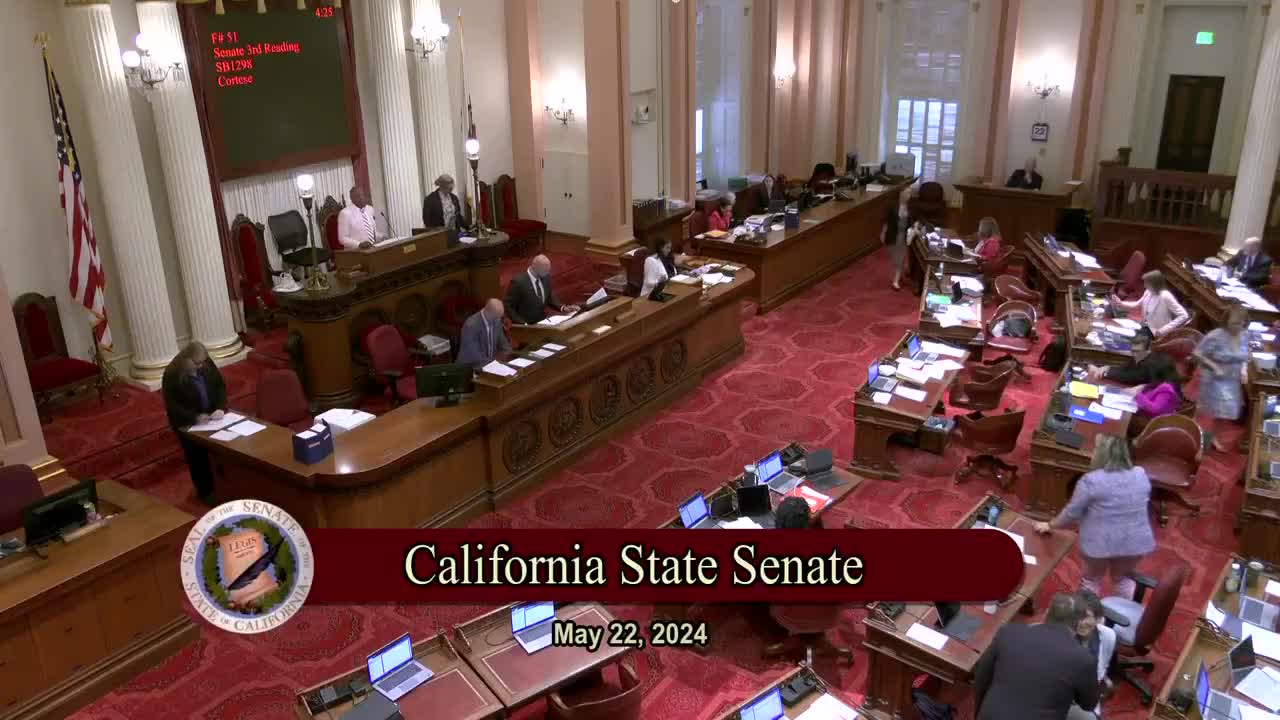 1MIN
Senate Floor
 6MIN
Senate Standing Committee on Public Safety
Bill Author

Bill Co-Author(s):