SB 1331: The Fund for Reparations and Reparative Justice.
- Session Year: 2023-2024
- House: Senate
- Latest Version Date: 2024-05-16
Current Status:
Failed
(2024-08-31: Ordered to inactive file on request of Assembly Member Aguiar-Curry.)
Introduced
In Committee
First Chamber
In Committee
Second Chamber
Enacted
What does this bill do?
Creates a state Fund for Reparations and Reparative Justice to pay for programs and policies addressing harms California caused to descendants of African Americans who were enslaved or descendants of free Black people living in the U.S. before the end of the 19th century. The fund may accept federal, state, local, and private grants and donations.
The summary is provided by generative AI which can make mistakes. For original language, please view the details in the table below.
Previously existing law established, until July 1, 2023, the Task Force to Study and Develop Reparation Proposals for African Americans, with a Special Consideration for African Americans Who are Descendants of Persons Enslaved in the United States. Previously existing law required the Task Force to, among other things, identify, compile, and synthesize the relevant corpus of evidentiary documentation of the institution of slavery that existed within the United States and the colonies that became the United States, as specified, and to recommend appropriate remedies in consideration of the Task Forces findings, as specified. Previously existing law required the Task Force to submit a written report of its findings and recommendations to the Legislature, as specified.
Existing law establishes the Special Fund for Economic Uncertainties, and requires the Controller to make, among other transfers between that fund and the General Fund, a transfer from the General Fund to the Special Fund for Economic Uncertainties of the unencumbered balance in the General Fund at the end of each fiscal year. Existing law continuously appropriates moneys in the Special Fund for Economic Uncertainties to the Director of Finance for the purpose of allocating funds for disaster relief, as specified.This bill would establish the Fund for Reparations and Reparative Justice in the State Treasury for the purpose of funding policies approved by the Legislature and the Governor that address the harm that the State of California has caused to descendants of an African American chattel enslaved person or descendants of a free Black person living in the United States prior to the end of the 19th century. The bill would require the Controller to transfer from the Special Fund for Economic Uncertainties to the Fund for Reparations and Reparative Justice an amount equal to 6% of transfers from the General Fund to the Special Fund for Economic Uncertainties, as specified. Upon appropriation, the bill would require the moneys in the Fund for Reparations and Reparative Justice to be expended for the above-described purpose. The bill would authorize the fund to receive moneys from any other federal, state, or local grant, or from any private donation or grant, as specified. The bill would also make related findings and declarations.
Previously existing law established, until July 1, 2023, the Task Force to Study and Develop Reparation Proposals for African Americans, with a Special Consideration for African Americans Who are Descendants of Persons Enslaved in the United States. Previously existing law required the Task Force to, among other things, identify, compile, and synthesize the relevant corpus of evidentiary documentation of the institution of slavery that existed within the United States and the colonies that became the United States, as specified, and to recommend appropriate remedies in consideration of the Task Forces findings, as specified. Previously existing law required the Task Force to submit a written report of its findings and recommendations to the Legislature, as specified.
Existing law establishes the Special Fund for Economic Uncertainties, and requires the Controller to make, among other transfers between that fund and the General Fund, a transfer from the General Fund to the Special Fund for Economic Uncertainties of the unencumbered balance in the General Fund at the end of each fiscal year. Existing law continuously appropriates moneys in the Special Fund for Economic Uncertainties to the Director of Finance for the purpose of allocating funds for disaster relief, as specified.
This bill would establish the Fund for Reparations and Reparative Justice in the State Treasury for the purpose of funding policies approved by the Legislature and the Governor that indemnify address the harm that the State of California has caused to descendants of an African American chattel enslaved person or descendants of a free Black person living in the United States prior to the end of the 19th century. The bill would require the Controller to transfer from the Special Fund for Economic Uncertainties to the Fund for Reparations and Reparative Justice an amount equal to 6% of transfers from the General Fund to the Special Fund for Economic Uncertainties, as specified. Upon appropriation, the bill would require the moneys in the Fund for Reparations and Reparative Justice to be expended for the above-described purpose. The bill would authorize the fund to receive moneys from any other federal, state, or local grant, or from any private donation or grant, as specified. The bill would also make related findings and declarations.
Previously existing law established, until July 1, 2023, the Task Force to Study and Develop Reparation Proposals for African Americans, with a Special Consideration for African Americans Who are Descendants of Persons Enslaved in the United States. Previously existing law required the Task Force to, among other things, identify, compile, and synthesize the relevant corpus of evidentiary documentation of the institution of slavery that existed within the United States and the colonies that became the United States, as specified, and to recommend appropriate remedies in consideration of the Task Forces findings, as specified. Previously existing law required the Task Force to submit a written report of its findings and recommendations to the Legislature, as specified.
Existing law establishes the Special Fund for Economic Uncertainties, and requires the Controller to make, among other transfers between that fund and the General Fund, a transfer from the General Fund to the Special Fund for Economic Uncertainties of the unencumbered balance in the General Fund at the end of each fiscal year. Existing law continuously appropriates moneys in the Special Fund for Economic Uncertainties to the Director of Finance for the purpose of allocating funds for disaster relief, as specified.
This bill would establish the Fund for Reparations and Restorative Reparative Justice in the State Treasury for the purpose of funding policies approved by the Legislature and the Governor that indemnify descendants of an African American descendants of a chattel enslaved person or descendants of a free Black person living in the United States prior to the end of the 19th century. The bill would require the Controller to transfer from the Special Fund for Economic Uncertainties to the Fund for Reparations and Restorative Reparative Justice an amount equal to 6% of transfers from the General Fund to the Special Fund for Economic Uncertainties, as specified. Upon appropriation, the bill would require the moneys in the Fund for Reparations and Restorative Reparative Justice to be expended for the above-described purpose. The bill would authorize the fund to receive moneys from any other federal, state, or local grant, or from any private donation or grant, as specified.
Previously existing law established, until July 1, 2023, the Task Force to Study and Develop Reparation Proposals for African Americans, with a Special Consideration for African Americans Who are Descendants of Persons Enslaved in the United States. Previously existing law required the Task Force to, among other things, identify, compile, and synthesize the relevant corpus of evidentiary documentation of the institution of slavery that existed within the United States and the colonies that became the United States, as specified, and to recommend appropriate remedies in consideration of the Task Forces findings, as specified. Previously existing law required the Task Force to submit a written report of its findings and recommendations to the Legislature, as specified.
Existing law establishes the Special Fund for Economic Uncertainties, and requires the Controller to make, among other transfers between that fund and the General Fund, a transfer from the General Fund to the Special Fund for Economic Uncertainties of the unencumbered balance in the General Fund at the end of each fiscal year. Existing law continuously appropriates moneys in the Special Fund for Economic Uncertainties to the Director of Finance for the purpose of allocating funds for disaster relief, as specified.
This bill would establish the Fund for Reparations and Restorative Justice in the State Treasury for the purpose of funding policies that indemnify African American descendants of a chattel enslaved person or descendants of a free Black person living in the United States prior to the end of the 19th century. The bill would require the Controller to transfer from the Special Fund for Economic Uncertainties to the Fund for Reparations and Restorative Justice an amount equal to 6% of transfers from the General Fund to the Special Fund for Economic Uncertainties, as specified. Upon appropriation, the bill would require the moneys in the Fund for Reparations and Restorative Justice to be expended for the above-described purpose. The bill would authorize the fund to receive moneys from any other federal, state, or local grant, or from any private donation or grant, as specified.
The Legislature finds and declares all of the following:
(a)California has begun the process of addressing the states role in accommodating and facilitating slavery, as documented in The California Reparations Report and sources cited therein, perpetuating the vestiges of enslavement, propagating state-sanctioned discrimination, and facilitating persistent, systemic policies and practices discriminating against living African Americans across its systems of government at the local and state level.
(b)As a result of this historic and continued discrimination, African Americans in California, especially those whose lineage can be traced to an enslaved person, continue to suffer economic, educational, and health hardships that have prevented them as a people from achieving equality.
(c)In order to maintain slavery, government actors adopted white supremacist beliefs and passed laws to create a racial hierarchy and control enslaved and free African Americans.
(d)After the end of slavery, although the Federal Constitution recognized African Americans as citizens on paper, the government failed to give them the full rights of citizenship and failed to protect them from widespread terror and violence.
(e)Along with a dereliction of the United States duty to protect its African American citizens, direct state and local government actions in California continued to enforce the racist lies created to justify slavery. These state laws and government-supported cultural beliefs have since formed the foundation of innumerable modern laws, policies, and practices across the state and nation.
(f)Even after the abolition of slavery, its badges and incidents remain embedded in the political, legal, health, financial, educational, cultural, environmental, social, and economic systems of the United States of America and the State of California. Racist, casteist, untrue, and harmful stereotypes created to support slavery continue to physically and mentally harm African Americans today.
(g)Without a remedy specifically targeted to dismantle our countrys racist policies and practices and heal the injuries inflicted by colonial, state, and American governments, the badges and incidents of slavery will continue to harm African Americans in almost all aspects of American life.
(h)The Legislature recognizes and accepts responsibility for all of the harms and atrocities committed by representatives of the state who promoted, facilitated, enforced, and permitted the institution of chattel slavery and its legacy of ongoing badges and incidents of slavery that form the systemic structures of discrimination.
(i)The Legislature intends that the benefits issued under this chapter be dedicated to policies or programs that address the harm that the State of California has caused to descendants of an African American chattel enslaved person or descendants of a free Black person living in the United States prior to the end of the 19th century.
6631.(a)There is hereby created in the State Treasury the Fund for Reparations and Reparative Justice for the purpose of funding policies approved by the Legislature and the Governor that address the harm that the State of California has caused to descendants of an African American chattel enslaved person in the United States or descendants of a free Black person living in the United States prior to the end of the 19th century.
(b)The Controller shall transfer from the Special Fund for Economic Uncertainties to the Fund for Reparations and Reparative Justice an amount, as determined by the Department of Finance, equal to six percent of the transfers from the General Fund to the Special Fund for Economic Uncertainties, as specified in the annual Budget Act. Upon appropriation by the Legislature, the moneys in the fund shall be expended for the purpose described in subdivision (a).(c)(b)The Fund for Reparations and Reparative Justice may receive moneys from any other federal, state, or local grant, or from any private donation or grant, for the purpose of this chapter.
The Legislature finds and declares all of the following:
(a)California has begun the process of addressing its the states role in accommodating and facilitating slavery, as documented in The California Reparations Report and sources cited therein, perpetuating the vestiges of enslavement, propagating state-sanctioned discrimination, and tolerating facilitating persistent, systemic structures of discrimination policies and practices discriminating against living African Americans across its systems of government at the local and state level.
(b)As a result of this historic and continued discrimination, African Americans in California, especially those whose lineage can be traced to an enslaved person, continue to suffer economic, educational, and health hardships that have prevented them as a people from achieving equality.
(c)In order to maintain slavery, government actors adopted white supremacist beliefs and passed laws to create a racial hierarchy and control enslaved and free African Americans.
(d)After the end of slavery, although the Federal Constitution recognized African Americans as citizens on paper, the government failed to give them the full rights of citizenship and failed to protect them from widespread terror and violence.
(e)Along with a dereliction of the United States duty to protect its African American citizens, direct federal, state, state and local government actions in California continued to enforce the racist lies created to justify slavery. These state laws and government-supported cultural beliefs have since formed the foundation of innumerable modern laws, policies, and practices across the state and nation.
(f)Even after the abolition of slavery, its badges and incidents remain embedded in the political, legal, health, financial, educational, cultural, environmental, social, and economic systems of the United States of America. America and the State of California. Racist, casteist, untrue, and harmful stereotypes created to support slavery continue to physically and mentally harm African Americans today.
(g)Without a remedy specifically targeted to dismantle our countrys racist foundations policies and practices and heal the injuries inflicted by colonial colonial, state, and American governments, the badges and incidents of slavery will continue to harm African Americans in almost all aspects of American life.
(h)The Legislature recognizes and accepts responsibility for all of the harms and atrocities committed by representatives of the state who promoted, facilitated, enforced, and permitted the institution of chattel slavery and its legacy of ongoing badges and incidents of slavery that form the systemic structures of discrimination.
(i)The Legislature intends that the benefits issued under this chapter be dedicated to policies or programs that indemnify address the harm that the State of California has caused to descendants of an African American chattel enslaved person or descendants of a free Black person living in the United States prior to the end of the 19th century.
6631.(a)There is hereby created in the State Treasury the Fund for Reparations and Reparative Justice for the purpose of funding policies approved by the Legislature and the Governor that indemnify address the harm that the State of California has caused to descendants of an African American chattel enslaved person in the United States or descendants of a free Black person living in the United States prior to the end of the 19th century.
(b)The Controller shall transfer from the Special Fund for Economic Uncertainties to the Fund for Reparations and Reparative Justice an amount, as determined by the Department of Finance, equal to six percent of the transfers from the General Fund to the Special Fund for Economic Uncertainties, as specified in the annual Budget Act. Upon appropriation by the Legislature, the moneys in the fund shall be expended for the purpose described in subdivision (a).
(c)The Fund for Reparations and Reparative Justice may receive moneys from any other federal, state, or local grant, or from any private donation or grant, for the purpose of this chapter.
The Legislature finds and declares all of the following:
(a)California has begun the process of addressing its role in accommodating and facilitating slavery, perpetuating the vestiges of enslavement, propagating state-sanctioned discrimination, and tolerating persistent, systemic structures of discrimination against living African Americans across its systems of government at the local and state level.
(b)As a result of this historic and continued discrimination, African Americans in California, especially those whose lineage can be traced to an enslaved person, continue to suffer economic, educational, and health hardships that have prevented them as a people from achieving equality.
(c)In order to maintain slavery, government actors adopted white supremacist beliefs and passed laws to create a racial hierarchy and control enslaved and free African Americans.
(d)After the end of slavery, although the Federal Constitution recognized African Americans as citizens on paper, the government failed to give them the full rights of citizenship and failed to protect them from widespread terror and violence.
(e)Along with a dereliction of the United States duty to protect its African American citizens, direct federal, state, and local government actions continued to enforce the racist lies created to justify slavery. These laws and government-supported cultural beliefs have since formed the foundation of innumerable modern laws, policies, and practices across the nation.
(f)Even after the abolition of slavery, its badges and incidents remain embedded in the political, legal, health, financial, educational, cultural, environmental, social, and economic systems of the United States of America. Racist, casteist, untrue, and harmful stereotypes created to support slavery continue to physically and mentally harm African Americans today.
(g)Without a remedy specifically targeted to dismantle our countrys racist foundations and heal the injuries inflicted by colonial and American governments, the badges and incidents of slavery will continue to harm African Americans in almost all aspects of American life.
(h)The Legislature recognizes and accepts responsibility for all of the harms and atrocities committed by representatives of the state who promoted, facilitated, enforced, and permitted the institution of chattel slavery and its legacy of ongoing badges and incidents of slavery that form the systemic structures of discrimination.
(i)The Legislature intends that the benefits issued under this chapter be dedicated to policies or programs that indemnify descendants of an African American descendants of a chattel enslaved person or descendants of a free Black person living in the United States prior to the end of the 19th century.
6631.(a)There is hereby created in the State Treasury the Fund for Reparations and Restorative Reparative Justice for the purpose of funding policies approved by the Legislature and the Governor that indemnify descendants of an African American descendants of a chattel enslaved person in the United States or descendants of a free Black person living in the United States prior to the end of the 19th century.
(b)The Controller shall transfer from the Special Fund for Economic Uncertainties to the Fund for Reparations and Restorative Reparative Justice an amount, as determined by the Department of Finance, equal to six percent of the transfers from the General Fund to the Special Fund for Economic Uncertainties, as specified in the annual Budget Act. Upon appropriation by the Legislature, the moneys in the fund shall be expended for the purpose described in subdivision (a).
(c)The Fund for Reparations and Restorative Reparative Justice may receive moneys from any other federal, state, or local grant, or from any private donation or grant, for the purpose of this chapter.
The Legislature finds and declares all of the following:
(a)California has begun the process of addressing its role in accommodating and facilitating slavery, perpetuating the vestiges of enslavement, propagating state-sanctioned discrimination, and tolerating persistent, systemic structures of discrimination against living African Americans across its systems of government at the local and state level.
(b)As a result of this historic and continued discrimination, African Americans in California, especially those whose lineage can be traced to an enslaved person, continue to suffer economic, educational, and health hardships that have prevented them as a people from achieving equality.
(c)In order to maintain slavery, government actors adopted white supremacist beliefs and passed laws to create a racial hierarchy and control enslaved and free African Americans.
(d)After the end of slavery, although the Federal Constitution recognized African Americans as citizens on paper, the government failed to give them the full rights of citizenship and failed to protect them from widespread terror and violence.
(e)Along with a dereliction of the United States duty to protect its African American citizens, direct federal, state, and local government actions continued to enforce the racist lies created to justify slavery. These laws and government-supported cultural beliefs have since formed the foundation of innumerable modern laws, policies, and practices across the nation.
(f)Even after the abolition of slavery, its badges and incidents remain embedded in the political, legal, health, financial, educational, cultural, environmental, social, and economic systems of the United States of America. Racist, casteist, untrue, and harmful stereotypes created to support slavery continue to physically and mentally harm African Americans today.
(g)Without a remedy specifically targeted to dismantle our countrys racist foundations and heal the injuries inflicted by colonial and American governments, the badges and incidents of slavery will continue to harm African Americans in almost all aspects of American life.
(h)The Legislature recognizes and accepts responsibility for all of the harms and atrocities committed by representatives of the state who promoted, facilitated, enforced, and permitted the institution of chattel slavery and its legacy of ongoing badges and incidents of slavery that form the systemic structures of discrimination.
(i)The Legislature intends that the benefits issued under this chapter be dedicated to policies or programs that indemnify African American descendants of a chattel enslaved person or descendants of a free Black person living in the United States prior to the end of the 19th century.
6631.(a)There is hereby created in the State Treasury the Fund for Reparations and Restorative Justice for the purpose of funding policies that indemnify African American descendants of a chattel enslaved person or descendants of a free Black person living in the United States prior to the end of the 19th century.
(b)The Controller shall transfer from the Special Fund for Economic Uncertainties to the Fund for Reparations and Restorative Justice an amount, as determined by the Department of Finance, equal to six percent of the transfers from the General Fund to the Special Fund for Economic Uncertainties, as specified in the annual Budget Act. Upon appropriation by the Legislature, the moneys in the fund shall be expended for the purpose described in subdivision (a).
(c)The Fund for Reparations and Restorative Justice may receive moneys from any other federal, state, or local grant, or from any private donation or grant, for the purpose of this chapter.
|
Date
|
Status
|
|---|---|
| Aug 31, 2024 | Ordered to inactive file on request of Assembly Member Aguiar-Curry. |
| Aug 19, 2024 | Read second time. Ordered to third reading. |
| Aug 15, 2024 | From committee: Do pass. (Ayes 11. Noes 3.) (August 15). |
| Jul 2, 2024 | July 2 set for first hearing. Placed on suspense file. |
| Jun 26, 2024 | June 26 hearing postponed by committee. |
| Jun 11, 2024 | From committee: Do pass and re-refer to Com. on APPR. (Ayes 9. Noes 3.) (June 11). Re-referred to Com. on APPR. |
| Jun 3, 2024 | Referred to Com. on JUD. |
| May 22, 2024 | In Assembly. Read first time. Held at Desk. |
| May 21, 2024 | Reconsideration granted. (Ayes 39. Noes 0. Page 4068.) |
| May 21, 2024 | Read third time. Passed. (Ayes 30. Noes 7. Page 4068.) Ordered to the Assembly. |
| May 21, 2024 | Read third time. Passed. (Ayes 29. Noes 8. Page 4067.) Ordered to the Assembly. |
| May 21, 2024 | Motion to reconsider made by Senator Bradford. |
| May 20, 2024 | Read second time. Ordered to third reading. |
| May 16, 2024 | Read second time and amended. Ordered to second reading. |
| May 16, 2024 | From committee: Do pass as amended. (Ayes 5. Noes 2. Page 3980.) (May 16). |
| May 14, 2024 | Set for hearing May 16. |
| May 13, 2024 | May 13 hearing: Placed on APPR suspense file. |
| May 6, 2024 | From committee with author's amendments. Read second time and amended. Re-referred to Com. on APPR. |
| May 3, 2024 | Set for hearing May 13. |
| Apr 17, 2024 | From committee: Do pass and re-refer to Com. on APPR. (Ayes 8. Noes 1. Page 3636.) (April 16). Re-referred to Com. on APPR. |
| Apr 3, 2024 | From committee with author's amendments. Read second time and amended. Re-referred to Com. on JUD. |
| Apr 2, 2024 | Set for hearing April 16. |
| Mar 13, 2024 | Referred to Com. on JUD. |
| Feb 20, 2024 | From printer. May be acted upon on or after March 18. |
| Feb 16, 2024 | Introduced. Read first time. To Com. on RLS. for assignment. To print. |
|
Date
|
Description
|
Location
|
Votes
|
|
|---|---|---|---|---|
| Aug 15, 2024 | Do pass. | Assembly Standing Committee on Appropriations |
Passed |
|
| Jun 11, 2024 | Do pass and be re-referred to the Committee on [Appropriations] | Assembly Standing Committee on Judiciary |
Passed |
|
| May 21, 2024 | Senate 3rd Reading SB1331 Bradford | Senate Floor |
Passed |
|
| May 21, 2024 | Senate 3rd Reading SB1331 Bradford Reconsider | Senate Floor |
Passed |
|
| May 21, 2024 | Senate 3rd Reading SB1331 Bradford | Senate Floor |
Passed |
|
| May 16, 2024 | Do pass as amended | Senate Standing Committee on Appropriations |
Passed |
|
| May 13, 2024 | Placed on suspense file | Senate Standing Committee on Appropriations |
Passed |
|
| Apr 16, 2024 | Do pass, but first be re-referred to the Committee on [Appropriations] | Senate Standing Committee on Judiciary |
Passed |
This list shows positions taken on this bill by organizations on the date displayed, which is linked to the original source.
Positions by individuals are not included.
|
Organization
|
Position
|
Date
|
|---|---|---|
| Aclu California Action | * Support | Jun 11, 2024 |
| Africa Town Coalition | ** Support | |
| Agricultural Institute of Marin | ** Support | |
| Alameda County Mental Health | * Support | Apr 16, 2024 |
| Alliance College-Ready Public Schools | * Support | Jun 11, 2024 |
| Alliance for Reparations, Reconciliation, and Truth | ** Support | |
| American Redress Coalition of California – Sacramento | ** Support | |
| ARC Bay Area | * Support | Jun 11, 2024 |
| ARC Sacramento | * Support | Jun 11, 2024 |
| BAMBD CDC | ** Support | |
| Bay Area Regional Health and Equities Initiative | * Support | Jun 12, 2024 |
| Bend the Arc | * Support | Apr 16, 2024 |
| Black National Wall street project | * Support | Jun 11, 2024 |
| Black Panther Party | * Support | Jun 11, 2024 |
| Black Reparations Project | ** Support | |
| Black United Community Advocacy foundation | * Support | Jun 11, 2024 |
| Black United Community Advocacy foundation | * Support | Jun 11, 2024 |
| California African American Chamber Of Commerce | ** Support | |
| California Black Health Network | ** Support | |
| California Black Lineage Society | * Support | Apr 16, 2024 |
| California Black Power Network | ** Support | |
| California Federation of Teachers – A Union of Educators & Classified Professionals, AFT, AFL-CIO | ** Support | |
| California Food and Farming Network | ** Support | |
| California Hawaii NAACP | * Support | Jun 11, 2024 |
| Catalyst California | ** Support | |
| Ceres Community Project | ** Support | |
| CJEC | * Support | Jun 11, 2024 |
| CJEC | * Support | Jun 11, 2024 |
| CJEC | * Support | Jun 11, 2024 |
| Coalition for a Just and Equitable California | * Support | Jun 11, 2024 |
| Collaborising | ** Support | |
| Community Services Coalition | * Support | Jun 11, 2024 |
| Emend the Mass Media | ** Support | |
| ETM Media Group | * Support | Jun 11, 2024 |
| Gold Green foundation | * Support | Jun 11, 2024 |
| Greater Sacramento Urban League | ** Support | |
| Green Lighting Institute | * Support | Jun 11, 2024 |
| Haitian American Youth Council | * Support | Jun 11, 2024 |
| Kingmakers Of Oakland | * Support | Jun 11, 2024 |
| Lineage Equity and Advancement Project | ** Support | |
| Livefree California | ** Support | |
| Minami Tamaki LLP | * Support | Apr 16, 2024 |
| National Black Wall Street Project | * Support | Jun 11, 2024 |
| National Volunteer Council on Freedman Affairs | ** Support | |
| Oakland City Of | * Support | Jun 12, 2024 |
| PRC|Black Leadership Council | ** Support | |
| Prevention Institute | ** Support | |
| Reparation Generation | ** Support | |
| Rising Communities | ** Support | |
| Support: Western Center on Law and Poverty | * Support | Jun 11, 2024 |
| The Greenlining Institute | ** Support |
SENATE THIRD READING
STR Bill Id:SB 1331
Author:(Bradford)
As Amended Ver:May 16, 2024
Majority vote
SUMMARY
Establishes the Fund for Reparations and Reparative Justice in the State Treasury for the purpose of funding policies approved by the Legislature and the Governor that address the harm that the State of California has caused to descendants of enslaved African Americans, and certain Free Blacks.
Major Provisions
- Makes findings and declarations on California's role in perpetuating the institution of slavery, as documented in the Final Report of Reparations Task Force.
- Creates, within the State Treasury, the Fund for Reparations and Reparative Justice in order to fund policies approved by the Legislature and the Governor that address the harm that the State of California inflicted upon descendants of enslaved African Americans or descendants of a free Black person living in the United States prior to the end of the 19th century.
- Specifies that the fund created by this bill may receive moneys from any federal, state, or local grant, or from any private donation or grant.
COMMENTS
Findings and Recommendations of Reparations Task Force. AB 3121 (Chapter 319, Statutes of 2020) created the Task Force to Study and Develop Reparations Proposals for African Americans (Task Force). The legislation required the Task Force to gather and synthesize the documentary evidence of slavery and its ongoing legacy in California, develop ways to educate Californians about its findings, and recommend appropriate remedies in a report to the Legislature. The more than 1000-page Task Force report details both the past and continuing legacy of California laws and policy designed to prevent African Americans in California from enjoying the full benefits of their citizenship. (The California Reparations Report, "Executive Summary," p. 48.) The section headings and chapter titles of the Report suggest a breathtaking range of laws and policies that have harmed African Americans: enslavement, racial terror, political disfranchisement, housing segregation, separate and unequal education, employment discrimination, and an unjust legal system that has led to unconscionable rates of incarceration for Black Californians. After laying out these findings of harm, the Report examines international approaches to reparations and healing, from Germany, Chile, and South Africa, among others. These remedies can take the form of restitution, economic compensation, or programs of "rehabilitation," which could include an array of legal and social services or educational programs.
The concluding parts of the Report suggest specific remedies for California, starting with a formal apology and acknowledgment of wrongs done by the state. Because "apologies alone are inadequate reparations for victims" the Report makes concrete policy recommendations, designed to provide true reparations for the harms documented. As the Report stresses on more than one occasion, the harms inflicted “have not been incidental or accidental," but are often the intentional result of "an all-encompassing web of discriminatory laws, regulations, and policies enacted by government." Therefore, addressing these wrongs will require changes in existing laws and the disruption of institutionalized patterns of racism. Although the Task Force's final report did not necessarily call for a single reparations fund, it repeatedly acknowledged that any policies or programs that arise from the recommendations would require adequate funding.
This bill establishes the "Fund for Reparations and Reparative Justice" within the State Treasury for funding policies to redress the harm that the State of California caused to descendants of enslaved African Americans or descendants of a Free Black person living the United States prior to the end of the 19th century. Although the substantive portions of bill do not expressly reference the Reparations Task Force or the recommendations in its report, the findings and declarations make it clear that the fund is intended to help carry out those recommendations. The bill in print does not appropriate any money to this fund, but it does allow the fund to receive moneys from any federal, state, or local grant, or from any private donation or grant.
According to the Author
According to the author, who served as a member of the Reparations Task Force, the Task Force Final Report "documented the history of slavery in California and patterns of systemic racial injustice that continued long after slavery ended. We documented the racially- motivated taking of land owned by blacks through eminent domain, over-policing and mass incarceration and the denial of home ownership through practices like red-lining that have created generational harm – harm that still exist to this very day." Reparations, the author notes, are not a "gift" but "a debt owed to the descendants of slavery." This bill will establish a fund "that would be available to begin paying the debt."
Arguments in Support
The Alliance for Reparations, Reconciliation, and Truth (ARRT), a coalition of groups dedicated to promoting reparations and the findings of the Reparations Task Force, writes that this bill is a necessary follow up to AB 3121. Specifically, ARRT writes:
In their final report, the Task Force found that even though California entered the Union in 1850 as a "free state," the state government at the time nonetheless permitted and committed grave injustices against African Americans. These injustices included enslavement, legal public and private segregation, discrimination in state funding and programming, and stigmatization. [Because] of this historic and continued discrimination, African Americans in California, especially those whose lineage can be traced to an enslaved person, continue to suffer economic, educational, and health hardships that have prevented them as a people from achieving equality. The Task Force completed its mandate under AB 3121 last June, and now it is time for the Legislature to codify its work and support bills like SB 1331.
Without a remedy specifically targeted to dismantle our country's racist foundations and heal the injuries inflicted by colonial and American governments, the "vestiges and incidents of slavery" will continue to harm African Americans in almost all aspects of American life. SB 1331 would establish the Fund for Reparations and Restorative Justice in the State Treasury to fund policies that indemnify African American descendants of . . . enslaved persons or descendants of a free Black person living in the United States prior to the end of the 19th century.
Arguments in Opposition
No opposition on file.
FISCAL COMMENTS
According to the Assembly Appropriations analysis, cost pressures (General Fund, special funds) of an unknown but significant amount to transfer moneys into the Fund to support reparations proposals enacted by the Legislature. The fiscal needs of the Fund will depend on the number of reparations proposals passed by the Legislature, the resources needed to implement the proposals, and the other fund sources, if any, for the proposals.
According to the Legislative Analyst's Office, the General Fund faces a structural deficit in the tens of billions of dollars over the next several fiscal years.
VOTES
SENATE FLOOR: 29-8-3
YES: Alvarado-Gil, Archuleta, Ashby, Atkins, Becker, Blakespear, Bradford, Caballero, Cortese, Dodd, Durazo, Eggman, Glazer, Gonzalez, Hurtado, Laird, Limón, McGuire, Menjivar, Newman, Padilla, Portantino, Roth, Rubio, Skinner, Smallwood-Cuevas, Umberg, Wahab, Wiener
NO: Dahle, Grove, Jones, Nguyen, Niello, Ochoa Bogh, Seyarto, Wilk
ABS, ABST OR NV: Allen, Min, Stern
ASM JUDICIARY: 9-3-0
YES: Kalra, Bauer-Kahan, Bryan, Connolly, Haney, Maienschein, McKinnor, Pacheco, Reyes
NO: Dixon, Joe Patterson, Sanchez
ASM APPROPRIATIONS: 11-3-1
YES: Wicks, Arambula, Bryan, Calderon, Wendy Carrillo, Mike Fong, Grayson, Haney, Hart, Pellerin, Villapudua
NO: Sanchez, Dixon, Ta
ABS, ABST OR NV: Jim Patterson
SENATE FLOOR: 39-0-1
YES: Alvarado-Gil, Archuleta, Ashby, Atkins, Becker, Blakespear, Bradford, Caballero, Cortese, Dahle, Dodd, Durazo, Eggman, Glazer, Gonzalez, Grove, Hurtado, Jones, Laird, Limón, McGuire, Menjivar, Min, Newman, Nguyen, Niello, Ochoa Bogh, Padilla, Portantino, Roth, Rubio, Seyarto, Skinner, Smallwood-Cuevas, Stern, Umberg, Wahab, Wiener, Wilk
ABS, ABST OR NV: Allen
SENATE FLOOR: 30-7-3
YES: Alvarado-Gil, Archuleta, Ashby, Atkins, Becker, Blakespear, Bradford, Caballero, Cortese, Dodd, Durazo, Eggman, Glazer, Gonzalez, Hurtado, Laird, Limón, McGuire, Menjivar, Newman, Padilla, Portantino, Roth, Rubio, Skinner, Smallwood-Cuevas, Stern, Umberg, Wahab, Wiener
NO: Dahle, Grove, Jones, Nguyen, Niello, Ochoa Bogh, Seyarto
ABS, ABST OR NV: Allen, Min, Wilk
UPDATED
VERSION: May 16, 2024
CONSULTANT: Tom Clark / JUD. / (916) 319-2334 FN: 0003909
Date of Hearing: July 2, 2024
ASSEMBLY COMMITTEE ON APPROPRIATIONS
Buffy Wicks, Chair
SBPCA Bill Id:SB 1331
Author:(Bradford) – As Amended Ver:May 16, 2024
Policy Committee: | Judiciary | Vote: | 9 - 3 |
|
| ||
|
|
Urgency: No State Mandated Local Program: No Reimbursable: No
SUMMARY:
This bill establishes within the State Treasury the Fund for Reparations and Reparative Justice (“Fund”) for the purpose of funding policies approved by the Legislature and the Governor that address the harm that California has caused to descendants of an African American chattel enslaved person in the United States or descendants of a free Black person living in the United States prior to the end of the 19th century.
The bill specifies the Fund may receive moneys from any federal, state, or local grant, or from any private donation or grant.
FISCAL EFFECT:
Cost pressures (General Fund, special funds) of an unknown but significant amount to transfer moneys into the Fund to support reparations proposals enacted by the Legislature. The fiscal needs of the Fund will depend on the number of reparations proposals passed by the Legislature, the resources needed to implement the proposals, and the other fund sources, if any, for the proposals.
According to the Legislative Analyst’s Office, the General Fund faces a structural deficit in the tens of billions of dollars over the next several fiscal years.
COMMENTS:
- Purpose. According to the author:
When slavery ended in this country in 1863, a promise was made – a promise of land that was never paid. SB 1331 establishes a fund – the Fund for Reparations and Reparative Justice that would be available to begin paying that debt. People might say – “Why California? California was a free state!” It was a Free State in name only. California practiced everything that a slave state did. People may also say, “I didn’t own slaves, why should I have to pay?” I say to them, if you can inherit generational wealth, then you can inherit generational debt. Reparations are a debt owed to the descendants of slavery. They are not a gift. They are not a hand-out or charity. They are what was promised, owed and overdue.
- Background. AB 3121 (Weber), Chapter 319, Statutes of 2020, established the Task Force to Study and Develop Reparation Proposals for African Americans, with a Special Consideration for African Americans Who are Descendants of Persons Enslaved in the United States (“Task Force”) to explore options for providing reparations to African Americans, and particularly the descendants of enslaved persons, in recognition of California’s role in slavery and the post-abolition perpetuation of racist institutions. In June 2023, the Task Force issued its final report to the Legislature. The report includes detailed information about the horrors of slavery, the ongoing harms experienced by African Americans as a result of slavery, and the task force’s reparations proposals. The Task Force’s reparations proposals include a number of specific policy recommendations that relate to racial terror, political disenfranchisement, separate and unequal education, and racism in environment and infrastructure, among other topics.
This bill establishes the Fund, which may receive moneys from government or private sources in order to finance reparations policies enacted by the Legislature.
- Related Legislation. SB 1050 (Bradford) requires the California American Freedmen Agency to collect and investigate claims of racially motivated eminent domain and to distribute, upon appropriation by the Legislature, just compensation to the rightful owner of affected property. SB 1050 is pending in this committee.
SB 1403 (Bradford) establishes the California American Freedmen Agency for the purpose of implementing reparations proposals. SB 1403 is pending in this committee.
Analysis Prepared by: Annika Carlson / APPR. / (916) 319-2081
Date of Hearing: June 11, 2024
ASSEMBLY COMMITTEE ON JUDICIARY
Ash Kalra, Chair
SBPCA Bill Id:SB 1331
Author:(Bradford) – As Amended Ver:May 16, 2024
SENATE VOTE: 30-7
SUBJECT: The Fund for Reparations and Reparative Justice
KEY ISSUE: should California establish a “Fund for Reparations and Reparative Justice” to fund policies approved by the Legislature and Governor that address harms that the State of california imposed upon Enslaved African Americans and Certain free Blacks throughtout its history?
SYNOPSIS
Fifty-six years ago, the late historian John Hope Franklin, a distinguished pioneer in the field of African American History, wrote the following: “If the house is to be set in order, one cannot begin with the present; he must begin with the past.” (John Hope Franklin, “Rediscovering Black America,” New York Times, September 8, 1968). With AB 3121 (Chap. 319, Stats. 2020), California belatedly confronted parts of its past and created the Task Force to Study and Develop Reparations Proposals for African Americans (Task Force). The legislation required the Task Force to gather and synthesize the documentary evidence of slavery and its ongoing legacy in California, develop ways to educate Californians about its findings, and recommend appropriate remedies in a report to the Legislature. Although the Task Force’s final report did not necessarily call for a single reparations fund, it repeatedly acknowledged that any policies or programs that arise from its recommendations would require adequate funding.
This bill would establish the “Fund for Reparations and Reparative Justice” for funding policies that redress the harms that the State of California inflicted upon descendants of enslaved African Americans or descendants of a Free Black person living the United States prior to the end of the 19th century. Although the substantive portions of the bill do not expressly reference the Reparations Task Force or the recommendations in its report, the bill’s findings and declarations make it clear that the fund is intended to help carry out the policies recommended. The bill in print does not appropriate any money to this fund, but it does allow the fund to receive moneys from any federal, state, or local grant, or from any private donation or grant.
This bill overlaps with two other bills by the same author that are before the Committee today. SB 1403 would create a new agency to oversee implementation of policies recommended by the Task Force and approved by the Legislature and Governor. SB 1050 would require the Office of Legal Affairs within the proposed new agency to review, investigate, and make determinations regarding applications by eligible persons who seek compensation for property lost because of racially motivated eminent domain.
A coalition dedicated to seeking reparations for slavery and its legacy, several civil rights and social justice groups, and scores of individuals support this bill. There is no registered opposition.
SUMMARY: Establishes the Fund for Reparations and Reparative Justice in the State Treasury for the purpose of funding policies approved by the Legislature and the Governor that address the harm that the State of California has caused to descendants of enslaved African Americans, and certain Free Blacks. Specifically, this bill:
- Makes findings and declarations on California’s role in perpetuating the institution of slavery, as documented in the Final Report of Reparations Task Force.
- Creates, within the State Treasury, the Fund for Reparations and Reparative Justice in order to fund policies approved by the Legislature and the Governor that address the harm that the State of California inflicted upon descendants of enslaved African Americans or descendants of a free Black person living in the United States prior to the end of the 19th century.
- Specifies that the fund created by this bill may receive moneys from any federal, state, or local grant, or from any private donation or grant.
EXISTING LAW: Established, under former law, the Task Force To Develop Reparations Proposals for African Americans, with Special Consideration for African Americans Descended from Persons Enslaved in the United States (Task Force), and provided that the Task Force statute would remain in effect until July 1, 2023, and as of that date be repealed. (Former Government Code Sections 8301-8301.7, repealed by Section 8301.7.)
FISCAL EFFECT: As currently in print this bill is keyed fiscal.
COMMENTS: According to the author, who served as a member of the Reparations Task Force, the Task Force Final Report “documented the history of slavery in California and patterns of systemic racial injustice that continued long after slavery ended. We documented the racially- motivated taking of land owned by blacks through eminent domain, over-policing and mass incarceration and the denial of home ownership through practices like red-lining that have created generational harm – harm that still exist to this very day.” Reparations, the author notes, are not a “gift” but “a debt owed to the descendants of slavery.” This bill will establish a fund “that would be available to begin paying the debt.”
Findings and Recommendations of Reparations Task Force. AB 3121 (Chap. 319, Stats. 2020) created the Task Force to Study and Develop Reparations Proposals for African Americans (Task Force). The legislation required the Task Force to gather and synthesize the documentary evidence of slavery and its ongoing legacy in California, develop ways to educate Californians about its findings, and recommend appropriate remedies in a report to the Legislature. The more than 1000-page Task Force report details both the past and continuing legacy of California laws and policy designed to prevent African Americans in California from enjoying the full benefits of their citizenship. (The California Reparations Report, “Executive Summary,” p. 48.) The section headings and chapter titles of the Report suggest a breathtaking range of laws and policies that have harmed African Americans: enslavement, racial terror, political disfranchisement, housing segregation, separate and unequal education, employment discrimination, and an unjust legal system that has led to unconscionable rates of incarceration for Black Californians. After laying out these findings of harm, the Report examines international approaches to reparations and healing, from Germany, Chile, and South Africa, among others. These remedies can take the form of restitution, economic compensation, or programs of “rehabilitation,” which could include an array of legal and social services or educational programs.
The concluding parts of the Report suggest specific remedies for California, starting with a formal apology and acknowledgment of wrongs done by the state. Because “apologies alone are inadequate reparations for victims,” the Report makes concrete policy recommendations, designed to provide true reparations for the harms documented. As the Report stresses on more than one occasion, the harms inflicted “have not been incidental or accidental,” but are often the intentional result of “an all-encompassing web of discriminatory laws, regulations, and policies enacted by government.” Therefore, addressing these wrongs will require changes in existing laws and the disruption of institutionalized patterns of racism. Although the Task Force’s final report did not necessarily call for a single reparations fund, it repeatedly acknowledged that any policies or programs that arise from the recommendations would require adequate funding.
This bill establishes the “Fund for Reparations and Reparative Justice” within the State Treasury for funding policies to redress the harm that the State of California caused to descendants of enslaved African Americans or descendants of a Free Black person living the United States prior to the end of the 19th century. Although the substantive portions of bill do not expressly reference the Reparations Task Force or the recommendations in its report, the findings and declarations make it clear that the fund is intended to help carry out those recommendations. The bill in print does not appropriate any money to this fund, but it does allow the fund to receive moneys from any federal, state, or local grant, or from any private donation or grant.
Related Legislation Before the Committee. This bill overlaps with two other bills by the same author that are before the Committee today. SB 1403 would create a new agency to oversee implementation of policies recommended by the Task Force and approved by the Legislature and Governor. SB 1050 would require the Office of Legal Affairs within the proposed new agency to review, investigate, and make determinations regarding applications by eligible persons who seek compensation for property lost because of racially motivated eminent domain.
ARGUMENTS IN SUPPORT: The Alliance for Reparations, Reconciliation, and Truth (ARRT), a coalition of groups dedicated to promoting reparations and the findings of the Reparations Task Force, writes that this bill is a necessary follow up to AB 3121. Specifically, ARRT writes:
In their final report, the Task Force found that even though California entered the Union in 1850 as a “free state,” the state government at the time nonetheless permitted and committed grave injustices against African Americans. These injustices included enslavement, legal public and private segregation, discrimination in state funding and programming, and stigmatization. [Because] of this historic and continued discrimination, African Americans in California, especially those whose lineage can be traced to an enslaved person, continue to suffer economic, educational, and health hardships that have prevented them as a people from achieving equality. The Task Force completed its mandate under AB 3121 last June, and now it is time for the Legislature to codify its work and support bills like SB 1331.
Without a remedy specifically targeted to dismantle our country’s racist foundations and heal the injuries inflicted by colonial and American governments, the “vestiges and incidents of slavery” will continue to harm African Americans in almost all aspects of American life. SB 1331 would establish the Fund for Reparations and Restorative Justice in the State Treasury to fund policies that indemnify African American descendants of . . . enslaved persons or descendants of a free Black person living in the United States prior to the end of the 19th century.
REGISTERED SUPPORT / OPPOSITION:
Support
ACLU California Action
Agricultural Institute of Marin
Alliance for Reparations, Reconciliation, and Truth (ARRT)
American Redress Coalition of California Bay Area
Bay Area Regional Health Inequities Initiative
Black Equity Collective
California African American Chamber of Commerce
California Black Power Network
California Federation of Teachers
California Food and Farming Network
California Reparations Task Force Members Dr. Cheryl Grills, Lisa Holder, and Don Tamaki
Catalyst California
Ceres Community Project
Coalition for a Just and Equitable California
Emend the Mass Media Group
Equal Justice Society
Free Indeed Reentry Project, Inc.
Greater Sacramento Urban League
Lineage Equity and Advancement Project
Live Free California
National Black Wall Street Project
National Volunteer Council on Freedmen Affairs
Secure Justice
The Greenlining Institute
Scores of individuals
Opposition
None on file
Analysis Prepared by: Tom Clark / JUD. / (916) 319-2334
SENATE RULES COMMITTEE Office of Senate Floor Analyses (916) 651-1520 Fax: (916) 327-4478 | SB 1331 |
THIRD READING
Bill No: SB 1331
Author: Bradford (D)
Amended: 5/16/24
Vote: 21
SENATE JUDICIARY COMMITTEE: 8-1, 4/16/24
AYES: Umberg, Allen, Ashby, Caballero, Durazo, Laird, Stern, Wahab
NOES: Niello
NO VOTE RECORDED: Wilk, Min
SENATE APPROPRIATIONS COMMITTEE: 5-2, 5/16/24
AYES: Caballero, Ashby, Becker, Bradford, Wahab
NOES: Jones, Seyarto
SUBJECT: The Fund for Reparations and Reparative Justice
SOURCE: Author
DIGEST:
This bill establishes the Fund for Reparations and Reparative Justice in the State Treasury for the purpose of funding policies approved by the Legislature and the Governor that indemnify descendants of an African American chattel enslaved person in the United States or descendants of a free Black person living in the United States prior to the end of the 19th century.
ANALYSIS:
Existing constitutional law:
- Provides for equal protection under the law as follows
- Under the United States Constitution, provides that no state shall deny to any person within its jurisdiction the equal protection of the laws. (U.S. Const., 14th Amend., § 1.)
- Under the California Constitution, provides that a person may not be denied the equal protection of the laws, and that a citizen or class of citizens may not be granted privileges or immunities not granted on the same terms to all citizens. (Cal. Const., art. I, § 7.)
- Provides that the State shall not discriminate against, or grant preferential treatment to, any individual or group on the basis of race, sex, color, ethnicity, or national origin in the operation of public employment, public education, or public contracting. (Cal. Const., art. I, § 31.)
Existing law:
- Establishes, contingent on an appropriation, the Forced or Involuntary Sterilization Compensation Program, administered by the California Victim Compensation Board (CalVCB), which is intended to provide compensation to individuals who are the survivors of state-sponsored sterilization conducted pursuant to eugenics laws that existed in the State of California between 1909 and 1979 or of coercive sterilization performed on an individual in the custody and control of the Department of Corrections and Rehabilitation after 1979. (Health & Saf. Code, div. 20, ch. 1.6, §§ 24210 et seq.)
- Establishes the Forced or Involuntary Sterilization Compensation Account in the State Treasury, which is administered by the CalVCB; funds appropriated for the Account must be used for the purpose of providing payment to persons determined eligible under 1). (Health & Saf. Code, §§ 24212, 24213.)
Former state law:
Established the Task Force to develop reparations proposals for African Americans, with special consideration for African Americans who are descended from persons enslaved in the United States, and provided that the Task Force statutes would remain in effect until July 1, 2023, and as of that date be repealed. (former Gov. Code, §§ 8301-8301.7, repealed by Gov. Code § 8301.7.)
This bill:
- States that the Legislature finds and declares all of the following:
- California has begun the process of addressing its role in accommodating and facilitating slavery, perpetuating the vestiges of enslavement, propagating state-sanctioned discrimination, and tolerating persistent, systemic structures of discrimination against living African Americans across its systems of government at the local and state level.
- As a result of this historic and continued discrimination, African Americans in California, especially those whose lineage can be traced to an enslaved person, continue to suffer economic, educational, and health hardships that have prevented them as a people from achieving equality.
- In order to maintain slavery, government actors adopted white supremacist beliefs and passed laws to create a racial hierarchy and control enslaved and free African Americans.
- After the end of slavery, although the Federal Constitution recognized African Americans as citizens on paper, the government failed to give them the full rights of citizenship and failed to protect them from widespread terror and violence
.
- Along with a dereliction of the United States’ duty to protect its African American citizens, direct federal, state, and local government actions continued to enforce the racist lies created to justify slavery. These laws and government-supported cultural beliefs have since formed the foundation of innumerable modern laws, policies, and practices across the nation.
- Even after the abolition of slavery, its badges and incidents remain embedded in the political, legal, health, financial, educational, cultural, environmental, social, and economic systems of the United States of America. Racist, casteist, untrue, and harmful stereotypes created to support slavery continue to physically and mentally harm African Americans today.
- Without a remedy specifically targeted to dismantle our country’s racist foundations and heal the injuries inflicted by colonial and American governments, the “badges and incidents of slavery” will continue to harm African Americans in almost all aspects of American life.
- The Legislature recognizes and accepts responsibility for all of the harms and atrocities committed by representatives of the state who promoted, facilitated, enforced, and permitted the institution of chattel slavery and its legacy of ongoing badges and incidents of slavery that form the systemic structures of discrimination.
- The Legislature intends that the benefits issued under this chapter be dedicated to policies or programs that indemnify African American descendants of a chattel enslaved person or descendants of a free Black person living in the United States prior to the end of the 19th century.
- Establishes in the State Treasury the Fund for Reparations and Reparative Justice for the purpose of funding policies that indemnify descendants of an African American chattel enslaved person in the United States or descendants of a free Black person living in the United States prior to the end of the 19th century.
- Permits the Fund for Reparations and Reparative Justice to receive monies from any other federal, state, or local grant, or from any private donation or grant, to effect its purpose.
Comments
In 2020, the Legislature passed, and the Governor signed, SB 3121 (Weber, Chapter. 319, Statutes of. 2020), which established the first-in-the nation Task Force to study and develop reparations proposals for California’s role in accommodating and facilitating slavery, perpetuating the vestiges of enslavement, enforcing state-sanctioned discrimination, and permitting pervasive, systematic structures of discrimination against African Americans. The Task Force completed its work and issued its final report in 2023. The report contains a number of recommended remedies the state could implement in order to atone for its decades of state-sanctioned white supremacy.
This bill establishes the Fund for Reparations and Reparative Justice (Fund) in the State Treasury, for the purpose of funding policies approved by the Legislature and the Governor that address the harm that the state has caused to descendants of African American chattel enslaved persons in the United States or free Black persons living in the United States at the end of the nineteenth century. The Fund may receive money from any federal, state, or local grant, or from any private donation or grant.
The U.S. and California Constitutions guarantee equal protection under the law,[1] and Section 31 of Article I of the California Constitution (better known as Proposition 209) prohibits discrimination or preferential treatment “on the basis of race, sex, color, ethnicity, or national origin in the operation of public employment, public education, or public contracting.”[2] This bill does not appear to run afoul of these provisions, for several reasons. This bill only establishes the Fund for Reparations and Reparative Justice; it does not simultaneously fund any particular programs to be paid out. The mere existence of a fund which could, in the future, carry out reparations measures which could, theoretically, be subject to court scrutiny does not render the mere creation of the Fund problematic.[3] Additionally, the purpose of the Fund for Reparations and Reparative Justice is, facially, a fund to pay for reparations programs for the harms of chattel enslavement; eligibility is not tied to the race of the recipient. Instead, these programs would be implemented on the basis of whether a person is descended from an African American chattel enslaved person or a free Black person living in the U.S. prior to the end of the 19th century—persons descended from the individuals subjected to the horrors of American chattel slavery and the worst of the post-Reconstruction state-sponsored discrimination. Under these criteria, the race of the claimant would not be at issue; the sole question would be whether they are descended from the people whom the State subjected to the abuses for which it now seeks to make restitution.
FISCAL EFFECT: Appropriation: No Fiscal Com.: Yes Local: No
According to the Senate Appropriations Committee, this bill presents an unknown fiscal impact.
SUPPORT: (Verified 5/16/24)
ACLU California Action
Agricultural Institute of Marin
Africatown Coalition
Alliance for Reparations, Reconciliation, and Truth
American Redress Coalition of California – Sacramento
BAMBD CDC
Bay Area Regional Health Inequities Initiative
Black Reparations Project
California African American Chamber of Commerce
California Black Health Network
California Black Power Network
California Food and Farming Network
Catalyst California
Ceres Community Project
California Federation of Teachers – A Union of Educators & Classified Professionals, AFT, AFL-CIO
Coalition for a Just and Equitable California
Collaborising
Emend the Mass Media
Greater Sacramento Urban League
Lineage Equity and Advancement Project
Live Free California
National Volunteer Council on Freedman Affairs
PRC|Black Leadership Council
Prevention Institute
Reparation Generation
Rising Communities
The Greenlining Institute
Western Center on law and Poverty
Three individuals
OPPOSITION: (Verified 5/16/24)
None received
ARGUMENTS IN SUPPORT: According to a coalition of this bill’s supporters:
We call for the California legislature to lead the nation by enacting SB 1331. While our government has made strides towards health and racial equity, now is the time to prioritize focused investment in the infrastructure for Black health and wealth and pay the debts that are owed to Black communities from generations of harmful policies.
Prepared by: Allison Whitt Meredith / JUD. / (916) 651-4113
5/18/24 12:31:14
**** END ****
U.S. Const., 14th amend., § 1; Cal. Const., art I, § 7. ↑
Cal. Const. art. I, § 31 (added by initiative measure (Prop. 209, approved Nov. 5, 1996), eff. Nov. 6, 1996). ACA 7 (Jackson, 2024) would ask the voters to repeal Proposition 209; the amendment is pending in the Senate Rules Committee. ↑
Cf. Tobe v. City of Santa Ana (1995) 9 Cal.4th 1069, 1084 (“To support a determination of facial constitutionality, voiding the statute as a whole, petitioners cannot prevail by suggesting that in some future hypothetical situation constitutional problems may possibly arise as to the particular application of the statute. Rather, petitioners must demonstrate that the act’s provisions inevitably pose a present total and fatal conflict with applicable constitutional prohibitions.” (cleaned up).) ↑
SENATE COMMITTEE ON
Senator Anna Caballero, Chair
2023 - 2024 Regular Session
SB 1331 (Bradford) - The Fund for Reparations and Reparative Justice
Version: | Policy Vote: |
Urgency: | Mandate: |
Hearing Date: | Consultant: |
Bill Summary:
SB 1331 would create in the State Treasury the Fund for Reparations and Reparative Justice for the purpose of funding policies approved by the Legislature and the Governor that address the harm that the state has caused to descendants of African American chattel enslaved persons in the United States or descendants of free Black persons living in the United States prior to the end of the 19th century.
*********** ANALYSIS ADDENDUM – SUSPENSE FILE ***********
The following information is revised to reflect amendments
adopted by the committee on May 16, 2024
Fiscal Impact:
Unknown.
Committee Amendments:
Delete the provision requiring the Controller to transfer specified amounts from the Special Fund for Economic Uncertainties to the Fund for Reparations and Reparative Justice.
-- END --
SENATE COMMITTEE ON
Senator Anna Caballero, Chair
2023 - 2024 Regular Session
SB 1331 (Bradford) - The Fund for Reparations and Reparative Justice
Version: | Policy Vote: |
Urgency: | Mandate: |
Hearing Date: | Consultant: |
Bill Summary: SB 1331 would create in the State Treasury the Fund for Reparations and Reparative Justice for the purpose of funding policies approved by the Legislature and the Governor that address the harm that the state has caused to descendants of African American chattel enslaved persons in the United States or descendants of free Black persons living in the United States prior to the end of the 19th century.
Fiscal Impact: Unknown, likely significant impact to the General Fund to transfer funds from the Special Fund for Economic Uncertainties to the fund created by this bill. The impact to the Special Fund for Economic Uncertainties would depend on the transfers from the General Fund to the Special Fund for Economic Uncertainties as specified in the annual Budget Act. The Legislative Analyst’s Office estimates the 2024‑25 ending balance in the Special Fund for Economic Uncertainties to be at a deficit of $68 billion. (See Staff Comment.)
Background: In 2020, AB 3121 (Weber, Chapter 319) created the Task Force to Study and Develop Reparation Proposals for African Americans, with a Special Consideration for African Americans Who are Descendants of Persons Enslaved in the United States (Task Force) to explore options for providing reparations to African Americans, and particularly the descendants of enslaved persons, in recognition of California’s role in slavery and the post-abolition perpetuation of racist institutions. The Task Force was responsible for recommending appropriate remedies of compensation, rehabilitation, and restitution and to issue a public report. In June 2023, the Task Force issued its final report to the Legislature. The report includes detailed information about the horrors of slavery, the ongoing harms experienced by African Americans as a result of slavery, and the task force’s reparations proposals. The report includes policy recommendations that relate to disenfranchisement, education, and racism in environment and infrastructure, among others.
One of the many recommendations made by the Task Force in its report is to establish and fund the California American Freedman Affairs Agency—the mission of which would be to support the implementation of the other recommendations of the Task Force that are approved by the Legislature and the Governor. “In the Task Force’s view, adoption and implementation of these recommendations are crucial to effectuating AB 3121’s purpose and beginning the long-overdue process of providing true reparations for African Americans.” SB 1403 (Bradford) currently pending in this Committee, would establish the California American Freedman Affairs Agency to support potential reparations claims by descendants of slavery in the United States and implement policies approved by the Legislature.
Proposed Law:
- Creates the Fund for Reparations and Reparative Justice in the State Treasury.
- Requires the Controller to transfer from the Special Fund for Economic Uncertainties to the Fund for Reparations and Reparative Justice an amount, as determined by the Department of Finance, equal to six percent of the transfers from the General Fund to the Special Fund for Economic Uncertainties, as specified in the annual Budget Act.
- Requires, upon appropriation by the Legislature, the moneys in the fund to be expended for the purpose of funding policies approved by the Legislature and the Governor that that address the harm that the state has caused to descendants of African American chattel enslaved persons in the United States descendants of an African American chattel enslaved person in the United States or descendants of a free Black person living in the United States prior to the end of the 19th century.
- Provides that the Fund for Reparations and Reparative Justice may receive moneys from any other federal, state, or local grant, or from any private donation or grant.
Related Legislation:
- SB 1050 (Bradford) requires the Office of the Chief Financial Officer within the California American Freedmen Affairs Agency to collect and investigate claims of racially motivated eminent domain, as defined, and to distribute, upon appropriation by the Legislature, just compensation to the rightful owner of the property. SB 1050 is pending in this Committee.
- SB 1403 (Bradford) establishes the California American Freedman Affairs Agency to support potential reparations claims by descendants of slavery in the United States. SB 1403 is pending in this Committee.
- AB 3089 (Jones-Sawyer) provides that California recognizes and accepts responsibility for all of the harms and atrocities committed by the state, its representatives thereof, and entities under its jurisdiction who promoted, facilitated, enforced, and permitted the institution of chattel slavery and the enduring legacy of ongoing badges and incidents from which the systemic structures of discrimination have come to exist; and that the State of California accepts this responsibility with a formal apology for the harms perpetrated by the state, and orders this apology to be memorialized in the form of a proclamation to be publicly and conspicuously displayed permanently in the California State Capitol building. AB 3089 is pending on the Assembly Floor.
- AB 3121 (Weber, Chapter 319, Statutes of 2020) established the Task Force and its mission, with a sunset date of July 1, 2023.
- ACR 130 (Weber, Chapter 176, Statutes of 2019) recognized, on behalf of the California Legislature, the need to pursue avenues to implement proposed reparations for the descendants of African slaves in the United States.
Staff Comment: The Special Fund for Economic Uncertainties is a reserve fund for the General Fund and special funds within the meaning of Section 5 of Article XIIIB of the California Constitution. Monies are appropriated to the Special Fund for Economic Uncertainties to ensure the ability of the state to meet General Fund obligations in the event of declining revenues or unanticipated expenditures. The Controller is required to transfer from the Special Fund for Economic Uncertainties to the unappropriated balance of the General Fund an amount necessary to eliminate any General Fund deficit as of the end of each fiscal year. As necessary, the Controller may use the monies in the Special Fund for Economic Uncertainties to help meet General Fund cash needs. Any appropriations made specifically from the Special Fund for Economic Uncertainties are be deemed an appropriation from the General Fund. (Gov. Code, § 16418.) According to the LAO, the General Fund faces a structural deficit in the tens of billions of dollars over the next several fiscal years. The LAO also estimates the 2024‑25 ending balance in the Special Fund for Economic Uncertainties to be at a $68 billion deficit.
-- END --
Senator Thomas Umberg, Chair
2023-2024 Regular Session
Bill No: SB 1331 (Author:Bradford)
Version: April 3, 2024
Hearing Date: April 16, 2024
Fiscal: Yes
Urgency: No
Consultant: AWM
SUBJECT
The Fund for Reparations and Reparative Justice
DIGEST
This bill establishes the Fund for Reparations and Reparative Justice in the State Treasury for the purpose of funding policies approved by the Legislature and the Governor that indemnify descendants of an African American chattel enslaved person in the United States or descendants of a free Black person living in the United States prior to the end of the 19th century.
EXECUTIVE SUMMARY
In 2020, the Legislature passed, and the Governor signed, SB 3121 (Weber, Ch. 319, Stats. 2020), which established the first-in-the nation Task Force to study and develop reparations proposals for California’s role in accommodating and facilitating slavery, perpetuating the vestiges of enslavement, enforcing state-sanctioned discrimination, and permitting pervasive, systematic structures of discrimination against African Americans. The Task Force completed its work and issued its final report in 2023. The report contains a number of recommended remedies the state could implement in order to atone for its decades of state-sanctioned white supremacy.
This bill establishes the Fund for Reparations and Reparative Justice (Fund) in the State Treasury. Upon appropriation by the Legislature, the funds may be expended for the purpose of funding policies approved by the Legislature and the Governor that indemnify descendants of an African American chattel enslaved person in the United States or descendants of a free Black person living in the United States prior to the end of the 19th century. The bill requires the Controller to transfer from the Special Fund for Economic Uncertainties a specified amount, as specified in the annual budget, and permits the Fund to receive money from any other federal, state, or local grant, or from any private donation or grant.
This bill is sponsored by the author and is supported by over 20 organizations and three individuals. The Committee has not received timely opposition to this bill.
PROPOSED CHANGES TO THE LAW
Existing constitutional law:
- Provides for equal protection under the law as follows:
- Under the United States Constitution, provides that no state shall deny to any person within its jurisdiction the equal protection of the laws. (U.S. Const., 14th Amend., § 1.)
- Under the California Constitution, provides that a person may not be denied the equal protection of the laws, and that a citizen or class of citizens may not be granted privileges or immunities not granted on the same terms to all citizens. (Cal. Const., art. I, § 7.)
- Provides that the State shall not discriminate against, or grant preferential treatment to, any individual or group on the basis of race, sex, color, ethnicity, or national origin in the operation of public employment, public education, or public contracting. (Cal. Const., art. I, § 31.)
Existing federal law:
- Acknowledges that a grave injustice was done to U.S. citizens and permanent residents of Japanese ancestry by the evacuation, relocation, and internment of civilians during World War II, which were motivated largely by racial prejudice, wartime hysteria, and a failure of political leadership; and that the interned individuals of Japanese ancestry suffered enormous, both material and intangible, as a result of the fundamental violations of their basic civil liberties and constitutional rights. (50 U.S.C. § 4202(a).)
- Provided, as restitution for 1), a payment of $20,000 to each individual of Japanese ancestry who was a U.S. citizen or permanent resident and was subjected to internment during World War II, as specified; or, if the person is deceased, to their surviving spouse, child, or parent. (50 U.S.C. §§ 4215, 4218.)
- Established the Civil Liberties Public Education Fund within the U.S. treasury, which expired ten years after its creation, for the purpose of distributing the funds under 2). (50 U.S.C. § 4214.)
- Acknowledges that the United States forcibly relocated Aleut civilian residents of the Pribilof Islands and the Aleutian Islands west of Unimak Island during World War II to temporary camps in isolated regions of Southeast Alaska, where the United States failed to provide reasonable care for the Aleuts, resulting in widespread illness, disease, and death; and that the United States failed to protect Aleut personal and community property while the property was under its protection or control. (50 U.S.C. § 4202(b).)
- Provided, as restitution for 4), the value of land taken from the Aleut; the establishment of a trust from which to pay for destroyed and damaged property; and $12,000 to each eligible Aleut, subject to the availability of funds, as specified. (50 U.S.C. §§ 4233, 4235, 4236.)
- Establishes the Aleutian and Pribilof Islands Restitution Fund to fund 5). (50 U.S.C. § 4233.)
Existing state law:
- Establishes, contingent on an appropriation, the Forced or Involuntary Sterilization Compensation Program, administered by the California Victim Compensation Board (CalVCB), which is intended to provide compensation to individuals who are the survivors of state-sponsored sterilization conducted pursuant to eugenics laws that existed in the State of California between 1909 and 1979 or of coercive sterilization performed on an individual in the custody and control of the Department of Corrections and Rehabilitation after 1979. (Health & Saf. Code, div. 20, ch. 1.6, §§ 24210 et seq.)
- Establishes the Forced or Involuntary Sterilization Compensation Account in the State Treasury, which is administered by the CalVCB; funds appropriated for the Account must be used for the purpose of providing payment to persons determined eligible under 1). (Health & Saf. Code, §§ 24212, 24213.)
Former state law:
- Established the Task Force to develop reparations proposals for African Americans, with special consideration for African Americans who are descended from persons enslaved in the United States, and provided that the Task Force statutes would remain in effect until July 1, 2023, and as of that date be repealed. (former Gov. Code, §§ 8301-8301.7, repealed by Gov. Code § 8301.7.)
This bill:
- States that the Legislature finds and declares all of the following:
- California has begun the process of addressing its role in accommodating and facilitating slavery, perpetuating the vestiges of enslavement, propagating state-sanctioned discrimination, and tolerating persistent, systemic structures of discrimination against living African Americans across its systems of government at the local and state level.
- As a result of this historic and continued discrimination, African Americans in California, especially those whose lineage can be traced to an enslaved person, continue to suffer economic, educational, and health hardships that have prevented them as a people from achieving equality.
- In order to maintain slavery, government actors adopted white supremacist beliefs and passed laws to create a racial hierarchy and control enslaved and free African Americans.
- After the end of slavery, although the Federal Constitution recognized African Americans as citizens on paper, the government failed to give them the full rights of citizenship and failed to protect them from widespread terror and violence.
- Along with a dereliction of the United States’ duty to protect its African American citizens, direct federal, state, and local government actions continued to enforce the racist lies created to justify slavery. These laws and government-supported cultural beliefs have since formed the foundation of innumerable modern laws, policies, and practices across the nation.
- Even after the abolition of slavery, its badges and incidents remain embedded in the political, legal, health, financial, educational, cultural, environmental, social, and economic systems of the United States of America. Racist, casteist, untrue, and harmful stereotypes created to support slavery continue to physically and mentally harm African Americans today.
- Without a remedy specifically targeted to dismantle our country’s racist foundations and heal the injuries inflicted by colonial and American governments, the “badges and incidents of slavery” will continue to harm African Americans in almost all aspects of American life.
- The Legislature recognizes and accepts responsibility for all of the harms and atrocities committed by representatives of the state who promoted, facilitated, enforced, and permitted the institution of chattel slavery and its legacy of ongoing badges and incidents of slavery that form the systemic structures of discrimination.
- The Legislature intends that the benefits issued under this chapter be dedicated to policies or programs that indemnify African American descendants of a chattel enslaved person or descendants of a free Black person living in the United States prior to the end of the 19th century.
- Establishes in the State Treasury the Fund for Reparations and Reparative Justice for the purpose of funding policies that indemnify descendants of an African American chattel enslaved person in the United States or descendants of a free Black person living in the United States prior to the end of the 19th century.
- Requires the Controller to transfer from the Special Fund for Economic Uncertainties to the Fund for Reparations and Reparative Justice an amount, as determined by the Department of Finance, equal to six percent of the transfers from the General Fund to the Special Fund for Economic Uncertainties, as specified in the annual Budget Act. Upon appropriation by the Legislature, the monies in the fund shall be expended for the purpose described in 2).
- Permits the Fund for Reparations and Reparative Justice to receive monies from any other federal, state, or local grant, or from any private donation or grant, to effect its purpose.
COMMENTS
- Author’s comment
According to the author:
Over the last two years, I served as a member of the Task Force to Develop Reparations Proposals for African Americans (Task Force). Through a lot of study and testimony from experts and individual Californian’s, my Task Force colleagues and I documented the history of slavery in California and patterns of systemic racial injustice that continued long after slavery ended.
We documented the racially- motivated taking of land owned by blacks through eminent domain, over-policing and mass incarceration and the denial of home ownership through practices like red-lining that have created generational harm – harm that still exist to this very day.
When slavery ended in this country in 1863, a promise was made – a promise of land that was never paid.
SB 1331 establishes a fund – the Fund for Reparations and Reparative Justice that would be available to begin paying that debt.
People might say – “Why California? California was a free state!” It was a Free State in name only. California practiced everything that a slave state did.
People may also say, “I didn’t own slaves, why should I have to pay?” I say to them, if you can inherit generational wealth, then you can inherit generational debt.
Reparations are a debt owed to the descendants of slavery. They are not a gift. They are not a hand-out or charity. They are what was promised, owed and overdue.
SB 1331 is written to recognize the financial challenges and budget deficit that the state currently faces. It does not take funding away from any program. But it creates a fund that would be funded through a percentage of the general fund that would be set aside in the state fund for Economic Uncertainties (the budget reserve). SB 1331 represents a commitment from the state to fund the Reparations policies approved by the Legislature and the Governor.
2. The Task Force’s reports and recommendations
In 2020, the Legislature enacted AB 3121 (Weber, Ch. 319, Stats. 2020), which created the first-in-the-nation Task Force to explore options for providing reparations to African Americans, and particularly the descendants of enslaved persons, in recognition of California’s role in the heinous institution of slavery and the post-abolition perpetuation of racist institutions.[1] The Task Force released an interim report on June 1, 2022, which provided the Task Force’s preliminary findings regarding the ongoing and compounding harms caused by federal, state, and local governments from slavery and the “ ‘badges and incidents of slavery’ ” that continued to be imposed on African Americans long after slavery was formally abolished.[2] The report notes that, because “the effects of slavery infected every aspect of American society over the last 400 years…it is nearly impossible to identify every ‘badge and incident of slavery,’ to include every piece of evidence, or describe every harm done to African Americans.”[3]
On June 29, 2023, the Task Force issued its final report to the California Legislature.[4] The final report incorporates and updates the interim report and recommends appropriate remedies, including compensation, for African Americans as recompense for the State’s gross human rights violations against African Americans and their descendants.[5] The final report explains:
[T]he harms inflicted upon African Americans have not been incidental or accidental—they have been by design. They are the result of an all-encompassing web of discriminatory laws, regulations, and policies enacted by government. These laws and policies have enabled government officials and private individuals and entities to perpetuate the legacy of slavery by subjecting African Americans as a group to discrimination, exclusion, neglect, and violence in every facet of American life. And there has been no comprehensive effort to disrupt and dismantle institutionalized racism, stop the harm, and redress the specific injuries caused to descendants and the larger African American community.[6]
The Task Force developed its recommendations for reparations taking into account this willful infliction of harm and applying international standards and principles for the remedy of wrongs and injuries caused by a government.[7]
3. This bill establishes the Fund for Reparations and Reparative Justice
In order to effectuate any of the Task Force’s recommendations that the Legislature may choose to adopt, this bill establishes the Fund for Reparations and Reparative Justice in the State Treasury. The bill requires the Controller to transfer from the Special Fund for Economic Uncertainties a specified amount, as specified in the annual budget. The bill also permits the Fund to receive money from any other federal, state, or local grant, or from any private donation or grant. Upon appropriation by the Legislature, the funds may be expended for the purpose of funding policies approved by the Legislature and the Governor that indemnify descendants of an African American chattel enslaved person in the United States or descendants of a free Black person living in the United States prior to the end of the 19th century.
4. The creation of the Fund for Reparations and Reparative Justice does not appear to violate equal protection guarantees or Proposition 209
The U.S. and California Constitutions guarantee equal protection under the law,[8] and Section 31 of Article I of the California Constitution (better known as Proposition 209) prohibits discrimination or preferential treatment “on the basis of race, sex, color, ethnicity, or national origin in the operation of public employment, public education, or public contracting.”[9] This bill does not appear to run afoul of these provisions.
Most straightforwardly, this bill only establishes the Fund for Reparations and Reparative Justice; it does not simultaneously fund any particular programs to be paid out. The mere existence of a fund which could, in the future, carry out reparations measures which could, theoretically, be subject to court scrutiny does not render the mere creation of the Fund problematic.[10]
Moreover, because the Legislature retains control over the policies paid out through the Fund for Reparations and Reparative Justice, the Legislature can continue to ensure that all of those policies meet constitutional muster. Thus, as long as the Legislature adopts constitutionally vetted measures for funding, the Fund itself will not find itself paying for constitutionally prohibited programs. Pending legislation with programs to be paid from the Fund—for example, SB 1050 (Bradford, 2024), pending before this Committee, which provides compensation for property taken without just compensation due to racially discriminatory motives on a race-neutral basis—illustrate how the Fund may be used to pay for restitution programs without implicating equal protection protections or Proposition 209 at all.
Additionally, the purpose of the Fund for Reparations and Reparative Justice is, facially, a fund to pay for reparations programs for the harms of chattel enslavement; eligibility is not tied to the race of the recipient. Instead, these programs would be implemented on the basis of whether a person is descended from an African American chattel enslaved person or a free Black person living in the U.S. prior to the end of the 19th century—persons descended from the individuals subjected to the horrors of American chattel slavery and the worst of the post-Reconstruction state-sponsored discrimination. Under these criteria, the race of the claimant would not be at issue; the sole question would be whether they are descended from the people whom the State subjected to the abuses for which it now seeks to make restitution.
Finally, to the extent the specific reparations program in question is for the harms caused by America’s project of the chattel enslavement of Africans and African Americans, precedent suggests that granting reparations to persons for an injury that was inflicted on the basis of their race or national origin is acceptable under the guarantees of equal protection provided that it is targeted. For example, awarding reparations for America’s policy of internment during World War II might have been a problem if it sought to award reparations to all Japanese Americans, but because the reparations was targeted to the individuals and their descendants who were actually victims of internment, there were no concerns about the program.[11] For the same reasons, this analysis would be different if California’s reparations project was intended to provide compensation to all persons of a particular race, regardless of how long their ancestors had been in the country or whether those ancestors suffered the harms for which the state intended to make reparations. And with respect to Proposition 209, Committee staff did not find any case law addressing Proposition 209’s application to reparations programs; but given that this bill does not establish any preference or unequal treatment in “public employment, public education, or public contracting,” or make any awards of any kind, it does not appear that this bill falls within Proposition 209’s ambit.[12]
5. Arguments in support
According to a coalition of the bill’s supporters:
We call for the California legislature to lead the nation by enacting SB 1331. While our government has made strides towards health and racial equity, now is the time to prioritize focused investment in the infrastructure for Black health and wealth and pay the debts that are owed to Black communities from generations of harmful policies.
SUPPORT
ACLU California Action
Alliance for Reparations, Reconciliation, and Truth
Africatown Coalition
American Redress Coalition of California – Sacramento
BAMBD CDC
Bay Area Regional Health Inequities Initiative
Black Reparations Project
California African American Chamber of Commerce
California Black Health Network
CFT – A Union of Educators & Classified Professionals, AFT, AFL-CIO
Coalition for a Just and Equitable California
Collaborising
Greater Sacramento Urban League
Lineage Equity and Advancement Project
National Volunteer Council on Freedman Affairs
PRC|Black Leadership Council
Prevention Institute
Reparation Generation
Rising Communities
The Greenlining Institute
Western Center on law and Poverty
Three individuals
OPPOSITION
None received
RELATED LEGISLATION
Pending Legislation:
SB 1403 (Bradford, 2024) establishes the California American Freedman Affairs Agency, which would implement the recommendations of the Task Force, as approved by the Legislature and the Governor. SB 1403 is pending in the Senate Governmental Organization Committee.
SB 1050 (Bradford, 2024) requires the Office of the Chief Financial Officer within the California American Freedmen Affairs Agency to collect and investigate claims of racially motivated eminent domain, as defined, and to distribute, upon appropriation by the Legislature, just compensation to the rightful owner of the property. SB 1050 is pending before this Committee and is set to be heard on the same date as this bill.
SB 490 (Bradford, 2024) establishes the California Freedmen Affairs Agency which would, among other things, implement and oversee the implementation of the recommendations of the Task Force, including establishing specific offices within the Agency that are not present in SB 1403. SB 490 is pending before the Assembly Judiciary Committee.
ACA 7 (Jackson, 2024) proposes an amendment to the California Constitution’s prohibition on the State granting preferential treatment to any group on the basis of race, sex, color, ethnicity, or national origin in the operation of public employment, public education, or public contracting, to permit the state to use state monies to fund research-based, or research-informed, and culturally specific programs in any industry, including, but not limited to, public employment, public education, and public contracting, if those programs are established or otherwise implemented by the State for purposes of increasing the life expectancy of, improving educational outcomes for, or lifting out of poverty specific groups based on race, color, ethnicity, national origin, or marginalized genders, sexes, or sexual orientations, subject to approval by the Governor. ACA 7 is pending before the Senate Rules Committee.
Prior Legislation:
AB 2296 (Jones-Sawyer, 2022), would have made it easier for members of the Task Force to be removed, allowed officers of the Task Force to be removed by a majority vote of the members, and extended the July 1, 2023, sunset on the Task Force to July 1, 2024. The bill was passed by the Legislature but vetoed by Governor Newsom, whose veto message stated that he was vetoing the bill at the request of the author of the original legislation that created the Task force.
SB 796 (Bradford, Ch. 435, Stats. 2021) required the Director of Parks and Recreation, by December 31, 2021, to execute a deed amendment to exclude Bruce’s Beach, a portion of land within Manhattan State Beach, from the requirement to use the property for recreational purposes only; and authorized Los Angeles County to sell, transfer, or encumber Bruce’s Beach, upon terms and conditions determined by the county board of supervisors to be in the best interest of the county and the general public.
AB 3121 (Weber, Ch. 319, Stats. 2020) established the Task Force and its mission, with a sunset date of July 1, 2023.
**************
HR 40 (Lee, 118th Cong., 2023-2024), a federal bill to create a federal commission to study the effects of slavery and discrimination on African Americans and devise reparations proposals, is pending before the House Committee on Judiciary. The bill has been introduced every year since 1989. ↑
California Task Force to Study and Develop Reparation Proposals for African Americans, Interim Report (June 1, 2022). ↑
Id. at p. 5. ↑
See generally California Task Force to Study and Develop Reparation Proposals for African Americans, Final Report (Jun. 29, 2023), available at https://oag.ca.gov/system/files/media/full-ca-reparations.pdf (Final Report) (link current as of April 11, 2024). ↑
Id. at p. 4. ↑
Id. at p. 48. ↑
Id. at p. 512. ↑
U.S. Const., 14th amend., § 1; Cal. Const., art I, § 7. ↑
Cal. Const. art. I, § 31 (added by initiative measure (Prop. 209, approved Nov. 5, 1996), eff. Nov. 6, 1996). ACA 7 (Jackson, 2024) would ask the voters to repeal Proposition 209; the amendment is pending in the Senate Rules Committee. ↑
Cf. Tobe v. City of Santa Ana (1995) 9 Cal.4th 1069, 1084 (“To support a determination of facial constitutionality, voiding the statute as a whole, petitioners cannot prevail by suggesting that in some future hypothetical situation constitutional problems may possibly arise as to the particular application of the statute. Rather, petitioners must demonstrate that the act’s provisions inevitably pose a present total and fatal conflict with applicable constitutional prohibitions.” (cleaned up).) ↑
See 42 U.S.C. §§ 4211-4220. Going a step further, the Supreme Court’s most recent case discussing the Equal Protection clause affirms that “remediating specific, identified instances of past discrimination that violated the Constitution or a statute” justifies a wholly race-based classification that does not violate the Fourteenth Amendment (Students for Fair Admissions, Inc. v. President and Fellows of Harvard College (2023) 600 U.S. 181, 207.) ↑
See Cal. Const., art. I, § 31. ↑
Discussed in Hearing
 17MIN
Assembly Standing Committee on Judiciary
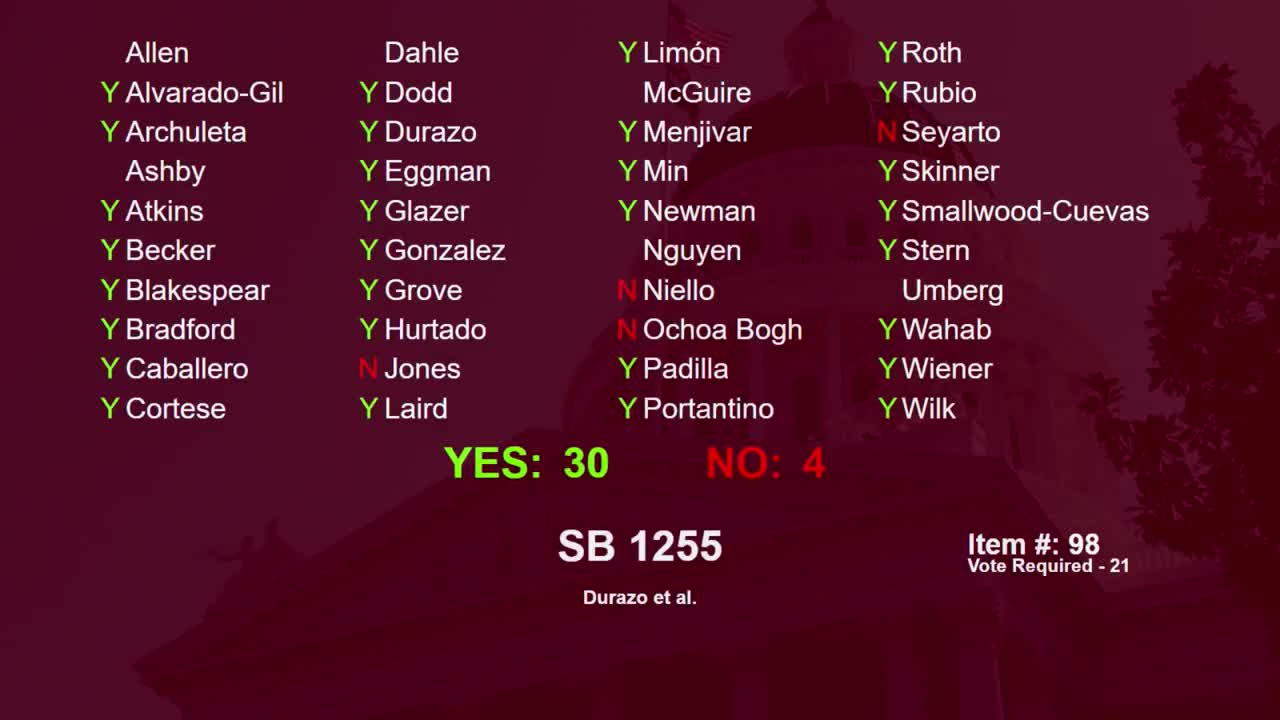 5MIN
Senate Floor
 3MIN
Senate Floor
 9MIN
Senate Standing Committee on Judiciary
Bill Author

Bill Co-Author(s):