SB 624: Horse racing: state-designated fairs: allocation of revenues: gross receipts for sales and use tax.
- Session Year: 2023-2024
- House: Senate
- Latest Version Date: 2023-06-26
Current Status:
Failed
(2023-07-10: July 10 hearing. Held in committee and under submission.)
Introduced
In Committee
First Chamber
In Committee
Second Chamber
Enacted
Existing law requires a tax return filed with the California Department of Tax and Fee Administration (CDTFA) that reports gross receipts for sales and use tax purposes to segregate the gross receipts of the seller and the sales price of the property on a line or a separate form when the place of sale in this state or for use in this state is on or within the real property of a state-designated fair, as defined, or any real property of a state-designated fair that is leased to another party. Existing law requires, on or before November 1 of each year, the CDTFA to report to the Department of Finance the amount of the total gross receipts segregated on these tax returns for the prior fiscal year, and that 3/4 of 1% of the total gross receipts be included in the next annual Governors Budget for use by the Department of Food and Agriculture for allocation to fairs and that those funds be transferred by the Controller to the Fair and Exposition Fund, which is continuously appropriated, as prescribed. Existing law provides that certain revenues deposited into the Fair and Exposition Fund are appropriated without regard to fiscal years for allocation by the Secretary of Food and Agriculture for capital outlay to California fairs, as specified.
This bill would increase the amount of the total gross receipts required to be included in the next annual Governors Budget for use by the Department of Food and Agriculture and transferred to the Fair and Exposition Fund, as specified, from 3/4 of 1% to 3.5%. From the funds subject to allocation by the Secretary of Food and Agriculture for capital outlay to California fairs, which the bill would increase by adding this 3.5% gross receipts transfer, the bill would require, each fiscal year, the sum of $2,500,000, or an amount equal to 5% of the fund, whichever is greater, to be paid to the department for purposes of providing administrative services to fairs, as specified. The bill would also require, each fiscal year, from the amounts available in the Fair and Exposition Fund after the payment made to the department, the sum of $500,000 to be paid to the nonprofit organization representing all fairs in the network of California fairs for purposes of providing services to fairs, as specified. The bill would make other nonsubstantive changes regarding appropriations to the department for fairs.
This bill would require the Secretary of Food and Agriculture, by May 15 of each year, to prepare an annual expenditure plan for funds from the Fair and Exposition Fund for review and approval by the Joint Committee on Fairs Allocation and Classification, as provided.
By increasing the amounts to be deposited into the Fair and Exposition Fund, which is continuously appropriated, and by appropriating these amounts for new purposes, the bill would make an appropriation.
This bill would declare that it is to take effect immediately as an urgency statute.
Existing law requires a tax return filed with the California Department of Tax and Fee Administration (CDTFA) that reports gross receipts for sales and use tax purposes to segregate the gross receipts of the seller and the sales price of the property on a line or a separate form when the place of sale in this state or for use in this state is on or within the real property of a state-designated fair, as defined, or any real property of a state-designated fair that is leased to another party. Existing law requires, on or before November 1 of each year, the CDTFA to report to the Department of Finance the amount of the total gross receipts segregated on these tax returns for the prior fiscal year, and that 3/4 of 1% of the total gross receipts be included in the next annual Governors Budget for use by the Department of Food and Agriculture for allocation to fairs and that those funds be transferred by the Controller to the Fair and Exposition Fund, which is continuously appropriated, as prescribed. Before any allocation is made to fairs from those funds, existing law requires the CDTFA to be paid the actual cost from those funds for administering these provisions. Existing law provides that certain revenues deposited into the Fair and Exposition Fund are appropriated without regard to fiscal years for allocation by the Secretary of Food and Agriculture for capital outlay to California fairs, as specified.
This bill would also require, before any allocation to fairs is made from these funds, the Department of Food and Agriculture to be paid the cost of administering the allocation of these funds to fairs, as determined by the Secretary of Food and Agriculture, in an amount not to exceed 5% of the funds. By expanding the use of continuously appropriated funds, the bill would make an appropriation. increase the amount of the total gross receipts required to be included in the next annual Governors Budget for use by the Department of Food and Agriculture and transferred to the Fair and Exposition Fund, as specified, from 3/4 of 1% to 3.5%. From the funds subject to allocation by the Secretary of Food and Agriculture for capital outlay to California fairs, which the bill would increase by adding this 3.5% gross receipts transfer, the bill would require, each fiscal year, the sum of $2,500,000, or an amount equal to 5% of the fund, whichever is greater, to be paid to the department for purposes of providing administrative services to fairs, as specified. The bill would also require, each fiscal year, from the amounts available in the Fair and Exposition Fund after the payment made to the department, the sum of $500,000 to be paid to the nonprofit organization representing all fairs in the network of California fairs for purposes of providing services to fairs, as specified. The bill would make other nonsubstantive changes regarding appropriations to the department for fairs.
This bill would require the Secretary of Food and Agriculture, by May 15 of each year, to prepare an annual expenditure plan for funds from the Fair and Exposition Fund for review and approval by the Joint Committee on Fairs Allocation and Classification, as provided.
By increasing the amounts to be deposited into the Fair and Exposition Fund, which is continuously appropriated, and by appropriating these amounts for new purposes, the bill would make an appropriation.
Existing law requires a tax return filed with the California Department of Tax and Fee Administration (CDTFA) that reports gross receipts for sales and use tax purposes to segregate the gross receipts of the seller and the sales price of the property on a line or a separate form when the place of sale in this state or for use in this state is on or within the real property of a state-designated fair, as defined, or any real property of a state-designated fair that is leased to another party. Existing law requires, on or before November 1 of each year, the CDTFA to report to the Department of Finance the amount of the total gross receipts segregated on these tax returns for the prior fiscal year, and that 3/4 of 1% of the total gross receipts be included in the next annual Governors Budget for use by the Department of Food and Agriculture for allocation to fairs and that those funds be transferred by the Controller to the Fair and Exposition Fund, which is continuously appropriated, as prescribed. Before any allocation is made to fairs from those funds, existing law requires the CDTFA to be paid the actual cost from those funds for administering these provisions.
This bill would also require, before any allocation to fairs is made from these funds, the Department of Food and Agriculture to be paid the cost of administering the allocation of these funds to fairs, as determined by the Secretary of Food and Agriculture, in an amount not to exceed 5% of the funds. By expanding the use of continuously appropriated funds, the bill would make an appropriation.
The Legislature finds and declares that fairgrounds serve the needs of the citizens of California in times of emergency by assisting federal, state, and local public health and safety agencies with emergency preparedness and response, and in times of celebration by providing a focal point for cultural, educational, and social interaction for the people of their local communities throughout the state.
SEC. 2.Section 19620.1 of the Business and Professions Code is amended to read:19620.1.From the total revenue received by the department, the Legislature shall annually appropriate to the department those sums as it deems necessary for the following purposes:
(a)For the oversight of the network of California fairs receiving money from the fund.
(b)For the auditing of all district agricultural association fairs, county fairs, and citrus fruit fairs.
SEC. 3.Section 19620.15 of the Business and Professions Code is amended to read:19620.15.(a)Notwithstanding any other law, a return filed with the California Department of Tax and Fee Administration (CDTFA) to report gross receipts for sales and use tax purposes shall segregate the gross receipts of the seller and the sales price of the property on a line or a separate form as prescribed by the CDTFA when the place of sale in this state or for use in this state is on or within the real property of a state-designated fair or any real property of a state-designated fair that is leased to another party.
(b)For purposes of this section, state-designated fair means a state-designated fair as defined in Sections 19418, 19418.1, 19418.2, and 19418.3.
(c)The CDTFA shall add a line to a current return form, or develop a separate form for purposes of this section.
(d)(1)The CDTFA shall report the amount of the total gross receipts segregated on the returns filed for the prior fiscal year pursuant to subdivision (a) to the Department of Finance on or before November 1 of each year.
(2)The total gross receipts shall be subject to review by the CDTFA for errors. The review may be a review of a sample of returns. The CDTFA shall note any errors identified in the review and the approximate impact of those errors on the total gross receipts in its report to the Department of Finance to allow an adjusted total gross receipt amount to be determined.
(e)An amount equal to 3.5 percent of the total amount of gross receipts, or adjusted gross receipts, for the prior fiscal year reported to the Department of Finance by the CDTFA as specified in subdivision (d) shall be included in the next annual Governors Budget for the Department of Food and Agriculture for allocation to fairs pursuant to Section 19620.2. No later than 30 days after the enactment of the annual Budget Act, the amount appropriated by the Legislature to the Department of Food and Agriculture pursuant to this section shall be transferred by the Controller to the Fair and Exposition Fund in the State Treasury and shall be continuously appropriated and available to be allocated pursuant to Section 19620.2.
(f)The CDTFA shall be paid the actual cost for administering the provisions of this section from the funds appropriated pursuant to subdivision (e) before any allocation is made to fairs in accordance with Section 19620.2.
(g)(1)Any revenues deposited into the Fair and Exposition Fund pursuant to this section shall only be allocated to a state-designated fair if nonmanagement employees at that state-designated fair, or nonmanagement employees at any real property of that state-designated fair that is leased to another party, are provided the following working conditions:
(A)The employee receives a meal period of not less than 30 minutes for a work period of more than five hours per day, unless the work period per day of the employee is less than six hours and the meal period is waived by mutual consent of both the employer and the employee.
(B)The employee receives a second meal period of not less than 30 minutes for a work period of more than 10 hours per day, unless the work period per day of the employee is less than 12 hours, the second meal period is waived by mutual consent of both the employer and the employee, and the first meal period was not waived.
(C)Any work in excess of eight hours in one workday, any work in excess of 40 hours in any one workweek, and the first eight hours worked on the seventh day of work in any one workweek is compensated at the rate of no less than one and one-half times the regular rate of pay for an employee.
(D)Any work in excess of 12 hours in one day is compensated at the rate of no less than twice the regular rate of pay for an employee.
(E)Any work in excess of eight hours on any seventh day of a workweek is compensated at the rate of no less than twice the regular rate of pay for an employee.
(2)This subdivision shall not apply to full-time carnival ride operators employed by a traveling carnival.
(3)For purposes of this subdivision, an employee shall not include an employee covered by a valid collective bargaining agreement if that agreement expressly provides for all of the following:
(A)Wages, hours of work, and working conditions of the employees.
(B)Meal periods for the employees, including final and binding arbitration of disputes concerning application of its meal period provisions.
(C)Premium wage rates for all overtime hours worked, and a regular hourly rate of pay of not less than 30 percent more than the state minimum wage.
SEC. 4.Section 19620.2 of the Business and Professions Code is amended to read:19620.2.(a)Any unallocated balance from Sections 19606.1 and 19620.1, revenue deposited into the Fair and Exposition Fund pursuant to Sections 19614 and 19620.15, and funding appropriated by the Legislature or otherwise designated for California fairs pursuant to this chapter or any other law is hereby appropriated without regard to fiscal years for allocation by the Secretary of Food and Agriculture for capital outlay to California fairs for fair projects involving public health and safety, for fair projects involving major and deferred maintenance, for fair projects necessary due to any emergency, for projects that are required by physical changes to the fair site, for projects that are required to protect the fair property or installation, such as fencing and flood protection, and for the acquisition or improvement of any property or facility that will serve to enhance the operation of the fair.
(b)A portion of the funds subject to allocation pursuant to subdivision (a) may be allocated to California fairs for general operational support. It is the intent of the Legislature that these moneys be used primarily for those fairs whose sources of revenue may be limited for purposes specified in this section.
(c)Each fiscal year, from the funds subject to allocation pursuant to subdivision (a), the sum of two million five hundred thousand dollars ($2,500,000), or an amount equal to 5 percent of the fund, whichever is greater, shall be paid to the Department of Food and Agriculture for purposes of providing administrative services to fairs as specified in Section 19620.
(d)Each fiscal year, from the amounts available in the Fair and Exposition Fund after the payment made pursuant to subdivision (c), the sum of five hundred thousand dollars ($500,000), adjusted annually for inflation with the approval of the Secretary of Food and Agriculture, shall be paid to the nonprofit organization representing all fairs in the network of California fairs for purposes of providing services to fairs, including professional leadership development and training, education, advocacy, communication, technical advice, networking opportunities, and other professional services to help fairgrounds continue to be vibrant and relevant community venues.
(e)By May 15 of each year year, the Secretary of Food and Agriculture shall prepare an annual expenditure plan for funds available from the Fair and Exposition Fund for review and approval by the Joint Committee on Fairs Allocation and Classification. The committee shall review and concur or not concur with the spending plan in its entirety, and may not add to, or delete, projects, or line items from the expenditure plan. The expenditure plan shall be deemed approved 30 days after it is received, unless it is rejected by the committee.
(f)If the Joint Committee on Fairs Allocation and Classification does not concur with the Secretary of Food and Agricultures recommendations, the secretary may submit another set of recommendations that incorporate the committees review and suggestions. The committee shall approve the resubmitted expenditure plan no later than June 30 of each year to meet the needs of the Department of Food and Agriculture and the network of California fairs.
SEC. 5.This act is an urgency statute necessary for the immediate preservation of the public peace, health, or safety within the meaning of Article IV of the California Constitution and shall go into immediate effect. The facts constituting the necessity are:
In order to ensure that fairground infrastructure is financially solvent and available for emergency management activities, it is necessary for this act to take effect immediately.
The Legislature finds and declares that fairgrounds serve the needs of the citizens of California in times of emergency by assisting federal, state, and local public health and safety agencies with emergency preparedness and response, and in times of celebration by providing a focal point for cultural, educational, and social interaction for the people of their local communities throughout the state.
SEC. 2.Section 19620.1 of the Business and Professions Code is amended to read:19620.1.From the total revenue received by the department, exclusive of money received pursuant to Sections 19640 and 19641, the Legislature shall annually appropriate to the department those sums as it deems necessary for the following purposes:
(a)For the oversight of the network of California fairs receiving money from the fund.
(b)For the auditing of all district agricultural association fairs, county fairs, and citrus fruit fairs.
SECTION 1.SEC. 3.Section 19620.15 of the Business and Professions Code is amended to read:19620.15.(a)Notwithstanding any other law, a return filed with the California Department of Tax and Fee Administration (CDTFA) to report gross receipts for sales and use tax purposes shall segregate the gross receipts of the seller and the sales price of the property on a line or a separate form as prescribed by the CDTFA when the place of sale in this state or for use in this state is on or within the real property of a state-designated fair or any real property of a state-designated fair that is leased to another party.
(b)For purposes of this section, state-designated fair means a state-designated fair as defined in Sections 19418, 19418.1, 19418.2, and 19418.3.
(c)The CDTFA shall add a line to a current return form, or develop a separate form for purposes of this section.
(d)(1)The CDTFA shall report the amount of the total gross receipts segregated on the returns filed for the prior fiscal year pursuant to subdivision (a) to the Department of Finance on or before November 1 of each year.
(2)The total gross receipts shall be subject to review by the CDTFA for errors. The review may be a review of a sample of returns. The CDTFA shall note any errors identified in the review and the approximate impact of those errors on the total gross receipts in its report to the Department of Finance to allow an adjusted total gross receipt amount to be determined.
(e)An amount equal to three-quarters of 1 3.5 percent of the total amount of gross receipts, or adjusted gross receipts, for the prior fiscal year reported to the Department of Finance by the CDTFA as specified in subdivision (d) shall be included in the next annual Governors Budget for the Department of Food and Agriculture for allocation to fairs pursuant to Section 19620.2. No later than 30 days after the enactment of the annual Budget Act, the amount appropriated by the Legislature to the Department of Food and Agriculture pursuant to this section shall be transferred by the Controller to the Fair and Exposition Fund in the State Treasury and shall be continuously appropriated and available to be allocated pursuant to Section 19620.2.
(f)(1)The CDTFA shall be paid the actual cost for administering the provisions of this section from the funds appropriated pursuant to subdivision (e) before any allocation is made to fairs in accordance with Section 19620.2.
(2)Before any allocation is made to fairs in accordance with Section 19620.2, the Department of Food and Agriculture shall be paid the cost of administering the allocation of funds appropriated pursuant to subdivision (e), as determined by the Secretary of Food and Agriculture. The payment made pursuant to this paragraph shall be from the funds appropriated pursuant to subdivision (e) and the amount of the payment shall not exceed 5 percent of the funds appropriated pursuant to subdivision (e).(g)(1)Any revenues deposited into the Fair and Exposition Fund pursuant to this section shall only be allocated to a state-designated fair if nonmanagement employees at that state-designated fair, or nonmanagement employees at any real property of that state-designated fair that is leased to another party, are provided the following working conditions:
(A)The employee receives a meal period of not less than 30 minutes for a work period of more than five hours per day, unless the work period per day of the employee is less than six hours and the meal period is waived by mutual consent of both the employer and the employee.
(B)The employee receives a second meal period of not less than 30 minutes for a work period of more than 10 hours per day, unless the work period per day of the employee is less than 12 hours, the second meal period is waived by mutual consent of both the employer and the employee, and the first meal period was not waived.
(C)Any work in excess of eight hours in one workday, any work in excess of 40 hours in any one workweek, and the first eight hours worked on the seventh day of work in any one workweek is compensated at the rate of no less than one and one-half times the regular rate of pay for an employee.
(D)Any work in excess of 12 hours in one day is compensated at the rate of no less than twice the regular rate of pay for an employee.
(E)Any work in excess of eight hours on any seventh day of a workweek is compensated at the rate of no less than twice the regular rate of pay for an employee.
(2)This subdivision shall not apply to full-time carnival ride operators employed by a traveling carnival.
(3)For purposes of this subdivision, an employee shall not include an employee covered by a valid collective bargaining agreement if that agreement expressly provides for all of the following:
(A)Wages, hours of work, and working conditions of the employees.
(B)Meal periods for the employees, including final and binding arbitration of disputes concerning application of its meal period provisions.
(C)Premium wage rates for all overtime hours worked, and a regular hourly rate of pay of not less than 30 percent more than the state minimum wage.
SEC. 4.Section 19620.2 of the Business and Professions Code is amended to read:19620.2.(a)Any unallocated balance from Sections 19606.1 and 19620.1, revenue deposited into the Fair and Exposition Fund pursuant to Section 19614, Sections 19614 and 19620.15, and funding appropriated by the Legislature or otherwise designated for California fairs pursuant to this chapter or any other law is hereby appropriated without regard to fiscal years for allocation by the Secretary of Food and Agriculture for capital outlay to California fairs for fair projects involving public health and safety, for fair projects involving major and deferred maintenance, for fair projects necessary due to any emergency, for projects that are required by physical changes to the fair site, for projects that are required to protect the fair property or installation, such as fencing and flood protection, and for the acquisition or improvement of any property or facility that will serve to enhance the operation of the fair.
(b)A portion of the funds subject to allocation pursuant to subdivision (a) may be allocated to California fairs for general operational support. It is the intent of the Legislature that these moneys be used primarily for those fairs whose sources of revenue may be limited for purposes specified in this section.
(c)Each fiscal year, from the funds subject to allocation pursuant to subdivision (a), the sum of two million five hundred thousand dollars ($2,500,000), or an amount equal to 5 percent of the fund, whichever is greater, shall be paid to the Department of Food and Agriculture for purposes of providing administrative services to fairs as specified in Section 19620.
(d)Each fiscal year, from the amounts available in the Fair and Exposition Fund after the payment made pursuant to subdivision (c), the sum of five hundred thousand dollars ($500,000), adjusted annually for inflation with the approval of the Secretary of Food and Agriculture, shall be paid to the nonprofit organization representing all fairs in the network of California fairs for purposes of providing services to fairs, including professional leadership development and training, education, advocacy, communication, technical advice, networking opportunities, and other professional services to help fairgrounds continue to be vibrant and relevant community venues.
(e)By May 15 of each year the Secretary of Food and Agriculture shall prepare an annual expenditure plan for funds available from the Fair and Exposition Fund for review and approval by the Joint Committee on Fairs Allocation and Classification. The committee shall review and concur or not concur with the spending plan in its entirety, and may not add to, or delete, projects, or line items from the expenditure plan. The expenditure plan shall be deemed approved 30 days after it is received, unless it is rejected by the committee.
(f)If the Joint Committee on Fairs Allocation and Classification does not concur with the Secretary of Food and Agricultures recommendations, the secretary may submit another set of recommendations that incorporate the committees review and suggestions. The committee shall approve the resubmitted expenditure plan no later than June 30 of each year to meet the needs of the Department of Food and Agriculture and the network of California fairs.
(a)Notwithstanding any other law, a return filed with the California Department of Tax and Fee Administration (CDTFA) to report gross receipts for sales and use tax purposes shall segregate the gross receipts of the seller and the sales price of the property on a line or a separate form as prescribed by the CDTFA when the place of sale in this state or for use in this state is on or within the real property of a state-designated fair or any real property of a state-designated fair that is leased to another party.
(b)For purposes of this section, state-designated fair means a state-designated fair as defined in Sections 19418, 19418.1, 19418.2, and 19418.3.
(c)The CDTFA shall add a line to a current return form, or develop a separate form for purposes of this section.
(d)(1)The CDTFA shall report the amount of the total gross receipts segregated on the returns filed for the prior fiscal year pursuant to subdivision (a) to the Department of Finance on or before November 1 of each year.
(2)The total gross receipts shall be subject to review by the CDTFA for errors. The review may be a review of a sample of returns. The CDTFA shall note any errors identified in the review and the approximate impact of those errors on the total gross receipts in its report to the Department of Finance to allow an adjusted total gross receipt amount to be determined.
(e)An amount equal to three-quarters of 1 percent of the total amount of gross receipts, or adjusted gross receipts, for the prior fiscal year reported to the Department of Finance by the CDTFA as specified in subdivision (d) shall be included in the next annual Governors Budget for the Department of Food and Agriculture for allocation to fairs pursuant to Section 19620.2. No later than 30 days after the enactment of the annual Budget Act, the amount appropriated by the Legislature to the Department of Food and Agriculture pursuant to this section shall be transferred by the Controller to the Fair and Exposition Fund in the State Treasury and shall be continuously appropriated and available to be allocated pursuant to Section 19620.2.
(f)(1)The CDTFA shall be paid the actual cost for administering the provisions of this section from the funds appropriated pursuant to subdivision (e) before any allocation is made to fairs in accordance with Section 19620.2.
(2)Before any allocation is made to fairs in accordance with Section 19620.2, the Department of Food and Agriculture shall be paid the cost of administering the allocation of funds appropriated pursuant to subdivision (e), as determined by the Secretary of Food and Agriculture. The payment made pursuant to this paragraph shall be from the funds appropriated pursuant to subdivision (e) and the amount of the payment shall not exceed 5 percent of the funds appropriated pursuant to subdivision (e).
(g)(1)Any revenues deposited into the Fair and Exposition Fund pursuant to this section shall only be allocated to a state-designated fair if nonmanagement employees at that state-designated fair, or nonmanagement employees at any real property of that state-designated fair that is leased to another party, are provided the following working conditions:
(A)The employee receives a meal period of not less than 30 minutes for a work period of more than five hours per day, unless the work period per day of the employee is less than six hours and the meal period is waived by mutual consent of both the employer and the employee.
(B)The employee receives a second meal period of not less than 30 minutes for a work period of more than 10 hours per day, unless the work period per day of the employee is less than 12 hours, the second meal period is waived by mutual consent of both the employer and the employee, and the first meal period was not waived.
(C)Any work in excess of eight hours in one workday, any work in excess of 40 hours in any one workweek, and the first eight hours worked on the seventh day of work in any one workweek is compensated at the rate of no less than one and one-half times the regular rate of pay for an employee.
(D)Any work in excess of 12 hours in one day is compensated at the rate of no less than twice the regular rate of pay for an employee.
(E)Any work in excess of eight hours on any seventh day of a workweek is compensated at the rate of no less than twice the regular rate of pay for an employee.
(2)This subdivision shall not apply to full-time carnival ride operators employed by a traveling carnival.
(3)For purposes of this subdivision, an employee shall not include an employee covered by a valid collective bargaining agreement if that agreement expressly provides for all of the following:
(A)Wages, hours of work, and working conditions of the employees.
(B)Meal periods for the employees, including final and binding arbitration of disputes concerning application of its meal period provisions.
(C)Premium wage rates for all overtime hours worked, and a regular hourly rate of pay of not less than 30 percent more than the state minimum wage.
|
Date
|
Status
|
|---|---|
| Jul 10, 2023 | July 10 set for first hearing. Placed on REV. & TAX. suspense file. |
| Jul 10, 2023 | July 10 hearing. Held in committee and under submission. |
| Jun 29, 2023 | Re-referred to Com. on REV. & TAX. pursuant to Assembly Rule 96. |
| Jun 26, 2023 | Read second time and amended. Re-referred to Com. on APPR. |
| Jun 22, 2023 | From committee: Do pass as amended and re-refer to Com. on APPR. (Ayes 10. Noes 0.) (June 21). |
| May 25, 2023 | From committee with author's amendments. Read second time and amended. Re-referred to Com. on AGRI. |
| May 11, 2023 | Referred to Com. on AGRI. |
| May 4, 2023 | In Assembly. Read first time. Held at Desk. |
| May 4, 2023 | Read third time. Passed. (Ayes 37. Noes 0. Page 1004.) Ordered to the Assembly. |
| May 2, 2023 | Read second time. Ordered to consent calendar. |
| May 1, 2023 | From committee: Be ordered to second reading pursuant to Senate Rule 28.8 and ordered to consent calendar. |
| Apr 21, 2023 | Set for hearing May 1. |
| Apr 18, 2023 | From committee: Do pass and re-refer to Com. on APPR with recommendation: To consent calendar. (Ayes 3. Noes 0. Page 768.) (April 18). Re-referred to Com. on APPR. |
| Mar 8, 2023 | Set for hearing April 18. |
| Mar 1, 2023 | Referred to Com. on AGRI. |
| Feb 17, 2023 | From printer. May be acted upon on or after March 19. |
| Feb 16, 2023 | Introduced. Read first time. To Com. on RLS. for assignment. To print. |
|
Date
|
Description
|
Location
|
Votes
|
|
|---|---|---|---|---|
| Jun 21, 2023 | Do pass as amended and be re-referred to the Committee on [Appropriations] | Assembly Standing Committee on Agriculture |
Passed |
|
| May 4, 2023 | Consent Calendar SB624 Alvarado-Gil | Senate Floor |
Passed |
|
| Apr 18, 2023 | Do pass, but first be re-referred to the Committee on [Appropriations] with the recommendation: To Consent Calendar | Senate Standing Committee on Agriculture |
Passed |
This list shows positions taken on this bill by organizations on the date displayed, which is linked to the original source.
Positions by individuals are not included.
|
Organization
|
Position
|
Date
|
|---|---|---|
| 17th District Agricultural Association | * Support | Jun 21, 2023 |
| Association Of California Egg Farmers | ** Support | |
| Calaveras County Chamber of Commerce | ** Support | |
| California Association Of Wheat Growers | ** Support | |
| California Bean Shippers Association | ** Support | |
| California Grain & Feed Association | ** Support | |
| California Pear Growers Association | ** Support | |
| California Seed Association | ** Support | |
| California State Association Counties | * Support | Jul 10, 2023 |
| California State Floral Association | ** Support | |
| California State Treasurer Fiona Ma | ** Support | |
| Mact Health Board INC | ** Support | |
| MACT Health Board, Inc. | ** Support | |
| Mariposa County | * Support | Jun 21, 2023 |
| Monterey County Fair Vendor | ** Support | |
| Pacific Egg and Poultry Association | ** Support | |
| RCRC | * Support | Jul 10, 2023 |
| RS Management Group, Inc. | ** Support | |
| Rural County Representatives of California | ** Support | |
| Sonoma County Fair And Event Center | * Support | Jun 21, 2023 |
| Stanislaus County Fair | ** Support | |
| Trinity County Fair Association | ** Support | |
| Tuolumne County Supervisor, Jaron E. Brandon | ** Support | |
| Western Fairs Association | * Support | Jul 10, 2023 |
Date of Hearing: July 10, 2023
ASSEMBLY COMMITTEE ON REVENUE AND TAXATION
Jacqui Irwin, Chair
SBPCA Bill Id:SB 624
Author:(Alvarado-Gil) – As Amended Ver:June 26, 2023
2/3 vote. Urgency. Fiscal committee.
SENATE VOTE: 37-0
SUBJECT: Horse racing: state-designated fairs: allocation of revenues: gross receipts for sales and use tax
SUMMARY: Increases, from 0.75% to 3.5%, the percentage of gross receipts from sales at state-designated fairs used to calculate the annual budget augmentation for the Department of Food and Agriculture (DFA) for allocation to fairs via the Fair and Exposition Fund (Fund). Specifically, this bill:
- Finds and declares that fairgrounds serve the needs of the citizens of California in times of emergency by assisting federal, state, and local public health and safety agencies with emergency preparedness and response, and in times of celebration by providing a focal point for cultural, educational, and social interaction for the people of their local communities throughout the state.
- Provides that each fiscal year (FY) the sum of $2.5 million, or an amount equal to 5% of the Fund, whichever is greater, must be paid to the DFA for purposes of providing administrative services to fairs, as specified.
- Provides that each FY, from the amounts available in the Fund after payment of the above amount, the sum of $500,000, adjusted annually for inflation, must be paid to the nonprofit organization representing all fairs in the network of California fairs for purposes of providing services to fairs, as specified.
- Requires the Secretary of Food and Agriculture, by May 15 of each year, to prepare an annual expenditure plan for funds from the Fund for review and approval by the Joint Committee on Fairs Allocation and Classification, as provided.
- Takes immediate effect as an urgency measure.
EXISTING LAW:
- Requires a tax return filed with the California Department of Tax and Fee Administration (CDTFA) reporting gross receipts for sales and use tax (SUT) purposes to segregate the gross receipts on a line or a separate form when the place of sale in this state is on the real property of a state-designated fair. (Business and Professions Code Section 19620.15.)
- Requires, on or before November 1 of each year, the CDTFA to report to the Department of Finance (DOF) the amount of the total gross receipts segregated on returns for the prior FY. 0.75% of these gross receipts must then be included in the next annual Governor's Budget for use by the DFA for allocation to fairs. Specifically, these funds must be transferred by the State Controller to the Fund, which is continuously appropriated, as prescribed. (Id.)
FISCAL EFFECT: Unknown, but in excess of $150,000 per year.
COMMENTS:
- The author has provided the following statement in support of this bill:
California's fairs are the embodiment of our communities. They provide educational, social, and economic insights from each region of the state. However, many of our fairs are critically underfunded and in need of repairs to their infrastructure and emergency management facilities. By increasing the funding available to fairs and limiting administrative costs, SB 624 will provide the needed support for our fairs to thrive.
- Supporters of this bill note the following:
Fairgrounds are an important public asset, especially important in rural areas, often providing the only space available for enhancing commercial enterprises, hosting affordable and accessible community gatherings, and providing invaluable emergency support. They are also substantial economic drivers, providing a wide variety of services and supporting hundreds of small businesses that rely on a solid network to create thousands of jobs and millions in tax revenue for California. The fair industry reflects California's diversity like no other. Women, minorities, and veterans are all represented in this humble business sector, and they all rely on the solvency of the fairground.
For more than 75 years, California's fairs had a stable source of funding from horse racing license fees and supplementary General Fund resources. These fund sources were eliminated in the 2011-12 state budget, requiring all fairs to become self-sufficient. With the lapse in funding, many fairs suffered from deferred maintenance, while concurrently becoming more necessary as climactic and community emergencies increased. In response in 2017, the Legislature authored and the Governor signed AB 1499, which offered an opportunity for fairs to retain three-quarters of 1% (0.75%) of sales and use tax revenues generated on fairgrounds. Through these limited revenues some fairs have been able to benefit, however the amount of revenue is not sufficient to serve as a statewide fiscal solution as currently crafted. And as a result, many of our fairgrounds and staff at the California Department of Food and Agriculture (CDFA) remain in jeopardy.
- Committee Staff Comments:
- General background: In 2017, the Governor signed into law AB 1499 (Gray), Chapter 798, Statutes of 2017, to provide a dedicated funding source for state fairs. Specifically, the law now requires that SUT returns filed with the CDTFA must segregate the retailer's gross receipts when the place of sale in this state is at a state-designated fair, as defined. On or before November 1 of each year, CDTFA must report to DOF the total gross receipts segregated on returns for the prior FY. An amount equal to 0.75% of the total gross receipts for the prior FY must then be included in the next annual Governor's Budget for DFA for allocation to fairs pursuant to Business and Professions Code Section 19620.2.
- What would this bill do? The main provision of this bill would simply increase, from 0.75% to 3.5%, the percentage of gross receipts from sales at state-designated fairs used to calculate the annual budget augmentation for the DFA for allocation to fairs. According to the author, California's network of fairs is critically underfunded and many fairs are in need of repairs to their infrastructure and emergency management facilities. Specifically, the author's office notes:
The Senate Appropriations Committee analysis for AB 1499 states "CDTFA estimates that this bill would result in an annual transfer of $14.9 million from the General Fund to CDFA's Fair and Exposition Fund". Since the initial allocation, this number has not been achieved. Rather, in 2022, the annual transfers from AB 1499 resulted in $4.2 million to be distributed amongst the 78 fairgrounds in California. At the same time, the deferred maintenance needs of the fairgrounds has grown to exceed $200 billion (according to CDFA).
By increasing the apportionment of sales and use tax revenues generated on fairgrounds to be retained and redistributed to fairs, SB 624 allows additional funds to support outstanding deferred maintenance needs on [uniquely] situated, but not otherwise financially supported fairgrounds.
- The benefits and perils of earmarking: Proponents of this bill might argue that this bill provides a stable and much-needed source of funding for California's network of state fairs. Critics, however, might contend that the practice of earmarking restricts the Legislature's ability to fund vital state programs in a holistic manner through the annual budgetary process. Critics might also argue that this bill elevates the needs of state fairs above other vital programs designed to address basic human necessities, ranging from health care to public safety. It should be noted that, however, that while this bill calls for an ongoing augmentation of funding for state fairs in future years, these augmentations would still be subject to adjustment and approval in the annual budget process.
- Amendments proposed by the author: The author's office has noted that, in an effort to streamline this bill's focus, the author plans to take amendments to strike those portions of the bill providing that:
- Each FY the sum of $2.5 million be paid to the DFA for purposes of providing administrative services to fairs, as specified; and,
- Each FY, from the amounts available in the Fund after payment of the above amount, the sum of $500,000, adjusted annually for inflation, must be paid to the nonprofit organization representing all fairs in the network of California fairs for purposes of providing services to fairs, as specified.
- Double referral: This bill was recently heard in the Assembly Committee on Agriculture, and passed that committee, 10-0, on June 21, 2023. For additional discussion of this bill's provisions, please refer to the analysis prepared by the Assembly Committee on Agriculture.
REGISTERED SUPPORT / OPPOSITION:
Support
Association of California Egg Farmers
Calaveras County Chamber of Commerce
California Association of Wheat Growers
California Bean Shippers Association
California Grain & Feed Association
California Pear Growers Association
California Seed Association
California State Association of Counties
California State Floral Association
California State Treasurer Fiona Ma
MACT Health Board, Inc.
Pacific Egg and Poultry Association
RS Management Group, Inc.
Rural County Representatives of California
Stanislaus County Fair
Trinity County Fair Association
Tuolumne County Supervisor Jaron E. Brandon
Western Fairs Association
Opposition
None on file
Analysis Prepared by: M. David Ruff / REV. & TAX. / (916) 319-2098
Date of Hearing: June 21, 2023
ASSEMBLY COMMITTEE ON AGRICULTURE
Robert Rivas, Chair
SBPCA Bill Id:SB 624
Author:(Alvarado-Gil) – As Amended Ver:May 25, 2023
SENATE VOTE: 37-0
SUBJECT: Horse racing: state-designated fairs: allocation of revenues: gross receipts for sales and use tax
SUMMARY: This bill allows the California Department of Food and Agriculture (CDFA) to receive reimbursement for the cost of allocating revenue received from sales tax collected on state-designated fairgrounds to fairs, not to exceed 5 percent or $2,500.000 of the funds; and increase the percentage of fair sales tax from .75 percent to 3.5 percent to that can be allocated to fairs in the state. Specifically, this bill:
- Makes legislative findings and declarations that fairgrounds serve the needs of the citizens of California in times of emergency by assisting federal, state, and local public health and safety agencies with emergency preparedness and response, and in times of celebration by providing a focal point for cultural, educational, and social interaction for the people of their local communities throughout the state.
- Increases, from .75 percent to 3.5 percent, of the total amount of gross receipts, or adjusted gross receipts from sales tax at fairs included in the annual Governor’s Budget for CDFA to administer the allocation of funding to the fairs.
- Requires the sum of two million five hundred thousand dollars ($2,500,000), or an amount equal to 5 percent of the fund, whichever is greater, to be paid to CDFA for purposes of providing administrative services to fairs as specified.
- Requires each fiscal year, the sum of five hundred thousand dollars ($500,000), adjusted annually for inflation with the approval of the Secretary of CDFA, to be paid to the nonprofit organization representing all fairs in the network of California fairs for purposes of providing services to fairs, as specified.
- Requires CDFA to, by May 15 of each year, prepare an annual expenditure plan for funds available from the Fair and Exposition Fund for review and approval by the Joint Committee on Fairs Allocation and Classification.
- Makes technical and conforming changes.
EXISTING LAW:
- Requires a tax return filed with the California Department of Tax and Fee Administration (CDTFA) that reports gross receipts for sales and use tax purposes to segregate the gross receipts of the seller and the sales price of the property on a line or a separate form when the place of sale in this state is on or within the real property of a state-designated fair or any real property of a state-designated fair that is leased to another party. Business and Professions Code (BPC) 19620.15.
- Requires, on or before November 1 of each year, that CDTFA report to the Department of Finance the amount of the total gross receipts for sales and use tax. BPC 19620.15
- Requires .75 percent of the total amount of gross receipts, or adjusted gross receipts, for the prior fiscal year reported to the Department of Finance shall be included in the next annual Governor’s Budget for CDFA to administer the allocation of funding to the fairs. BPC 19620.15
- Requires CDTFA to be reimbursed for the actual cost for administering the provisions of this section from the funds appropriated pursuant to subdivision (e) before allocation of funding to the fairs. BPC 19620.15
- Designates CDFA as the entity responsible for ensuring the integrity of the Fair and Exposition Fund and administering allocations from the fund to the network of California Fairs, among other duties. BPC 19620
FISCAL EFFECT: Unknown.
COMMENTS: Fairs in California began in 1854, and have since grown to encompass 78 fairs statewide. The network of California fairs is composed of 52 district agricultural associations (DAA), 23 county fairs, two citrus fruit fairs, and the California Exposition and State Fair (Cal Expo). DAAs are state government entities governed by a nine-member gubernatorial appointed board of directors. In contrast, county fairs are either directly operated by counties or not-for-profit organizations; citrus fruit fairs are not-for-profit organizations; and Cal Expo is a state agency.
The Division of Fairs and Expositions within CDFA provides fiscal and policy oversight for the network of California fairs, and the Department of General Services (DGS) provides oversight for use of state property, procurement, and services contracts. Satellite wagering license fees are deposited into a separate account in the Satellite Wagering Account (SWA), and continuously appropriated for specified fair-related purposes, including the payment of expenses incurred in establishing and operating satellite-wagering facilities at fairs.
Prior to 2009, license fees imposed on horse racing wagers were deposited into the Fairs and Exposition Fund and the SWA, which supports the annual budget of the California Horse Racing Board, and supplements California fairs. However, in 2009, the Legislature shifted the horse racing industry's obligation to fund fairs through license fees imposed on wagers to the General Fund, instead providing an annual continuous appropriation of $32 million from the General Fund to support fairs (SBx2 16, Ashburn). However, the 2011-12 State Budget Act eliminated General Fund contributions to the Fund, requiring DAAs and all other designated fairs to be self-sufficient as of January 1, 2012.
In 2017, AB 1499 (Chapter 798, Statutes of 2017) required retailers making sales at events held on state designated fairgrounds to segregate the gross receipts from these sales when filing their sales and use tax returns. This bill required CDTFA to calculate ¾ of 1% of those gross receipts and report that amount to DOF to be included in the Governor’s annual budget for allocation to CDFA to fund state-designated fairs. This has helped struggling fairs handle some of the financial difficulties in the past 5 years.
According to the author, The California network of fairs is critically underfunded and many fairs are in need of repairs to their infrastructure and emergency management facilities. SB 624 will increase funding available to fairs and limit the amount of AB 1499 money that is used for administrative costs and expanding the portion of sales tax revenue from fairs.
Supporter’s state, this bill helps provide a reliable funding source for California's network of fairs and offer needed financial support for projects involving public health and safety, infrastructure, deferred maintenance, and emergency management.
The committee may wish to consider an amendment to add and Urgency Clause to this bill.
REGISTERED SUPPORT / OPPOSITION:
Support
Western Fairs Association (Sponsor)
Association of California Egg Farmers
Calaveras County Chamber of Commerce
California Association of Wheat Growers
California Bean Shippers Association
California Grain & Feed Association
California Pear Growers Association
California Seed Association
California State Association of Counties
California State Floral Association
Mact Health Board INC
Monterey County Fair Vendor
Pacific Egg and Poultry Association
Rural County Representatives of California
Stanislaus County Fair
Trinity County Fair Association
Opposition
None on file
Analysis Prepared by: Victor Francovich / AGRI. / (916) 319-2084
SENATE RULES COMMITTEE Office of Senate Floor Analyses (916) 651-1520 Fax: (916) 327-4478 | SB 624 |
CONSENT
Bill No: SB 624
Author: Alvarado-Gil (D)
Introduced: 2/16/23
Vote: 27
SENATE AGRICULTURE COMMITTEE: 3-0, 4/18/23
AYES: McGuire, Grove, Alvarado-Gil
NO VOTE RECORDED: Padilla
SENATE APPROPRIATIONS COMMITTEE: Senate Rule 28.8
SUBJECT: Horse racing: state-designated fairs: allocation of revenues: gross receipts for sales and use tax
SOURCE: Author
DIGEST:
This bill allows the California Department of Food and Agriculture (CDFA) to receive reimbursement for the cost of allocating revenue received from sales tax collected on state-designated fairgrounds to fairs, not to exceed 5 percent of the funds.
ANALYSIS:
Existing law:
- Requires a tax return filed with the California Department of Tax and Fee Administration (CDTFA) that reports gross receipts for sales and use tax purposes to segregate the gross receipts of the seller and the sales price of the property on a line or a separate form when the place of sale in this state is on or within the real property of a state-designated fair or any real property of a state-designated fair that is leased to another party (Business and Professions Code Section 19620.15(a)).
- Requires, on or before November 1 of each year, that CDTFA report to the Department of Finance the amount of the total gross receipts for sales and use tax (Business and Professions Code Section 19620.15 (d)).
- Requires ¾ of 1 percent of the total amount of gross receipts, or adjusted gross receipts, for the prior fiscal year reported to the Department of Finance shall be included in the next annual Governor’s Budget for CDFA to administer the allocation of funding to the fairs (Business and Professions Code Section 19620.15 (e)).
- Requires CDTFA to be reimbursed for the actual cost for administering the provisions of this section from the funds appropriated pursuant to subdivision (e) before allocation of funding to the fairs (Business and Professions Code Section 19620.15(f)).
- Designates the California Department of Food and Agriculture (CDFA) as the entity responsible for ensuring the integrity of the Fair and Exposition Fund and administering allocations from the fund to the network of California Fairs, among other duties (Business and Professions Code, Section 19620).
This bill:
- Requires CDFA to be paid for the cost of administering the allocation of funds to the fairs prior to any allocation of funds to the fairs.
- States the cost of administering the allocation of these funds to the fairs shall not exceed 5% of the funds to be allocated to the fairs.
FISCAL EFFECT: Appropriation: Yes Fiscal Com.: Yes Local: No
SUPPORT: (Verified 5/2/23)
Western Fairs Association
OPPOSITION: (Verified 5/2/23)
None received
ARGUMENTS IN SUPPORT: According to the author this bill is needed to help CDFA recoup the costs of administering the program and caps the amount not to exceed 5 percent of the funds collected.
Prepared by: Reichel Everhart / AGRI. / (916) 651-1508
5/3/23 15:16:12
**** END ****
SENATE COMMITTEE ON AGRICULTURE
Senator Melissa Hurtado, Chair
2023 - 2024 Regular
Bill No: SB 624 Hearing Date: 4/18/23
Author: | Alvarado-Gil | ||
Version: | 2/16/23 | ||
Urgency: | No | Fiscal: | Yes |
Consultant: | Reichel Everhart | ||
Subject: Horse racing: state-designated fairs: allocation of revenues: gross receipts for sales and use tax
SUMMARY
:
This bill would allow the California Department of Food and Agriculture (CDFA) to receive reimbursement for the cost of allocating revenue received from sales tax collected on state-designated fairgrounds to fairs, not to exceed 5 percent of the funds.
BACKGROUND AND EXISTING LAW
:
Existing law:
- Imposes sales tax on every retailer in California who is making sales of “tangible personal property for storage, use, or other consumption in this state” (Revenue and Tax Code Section 6203).
- Requires a tax return filed with the California Department of Tax and Fee Administration (CDTFA) that reports gross receipts for sales and use tax purposes to segregate the gross receipts of the seller and the sales price of the property on a line or a separate form when the place of sale in this state is on or within the real property of a state-designated fair or any real property of a state-designated fair that is leased to another party (Business and Professions Code Section 19620.15(a)).
- Requires, on or before November 1 of each year, that CDTFA report to the Department of Finance the amount of the total gross receipts for sales and use tax (Business and Professions Code Section 19620.15 (d)).
- Requires ¾ of 1 percent of the total amount of gross receipts, or adjusted gross receipts, for the prior fiscal year reported to the Department of Finance shall be included in the next annual Governor’s Budget for CDFA to administer the allocation of funding to the fairs (Business and Professions Code Section 19620.15 (e)).
- Requires CDTFA to be reimbursed for the actual cost for administering the provisions of this section from the funds appropriated pursuant to subdivision (e) before allocation of funding to the fairs (Business and Professions Code Section 19620.15(f)).
- Designates the California Department of Food and Agriculture (CDFA) as the entity responsible for ensuring the integrity of the Fair and Exposition Fund and administering allocations from the fund to the network of California Fairs, among other duties (Business and Professions Code, Section 19620).
PROPOSED LAW
:
This bill:
- Requires CDFA to be paid for the cost of administering the allocation of funds to the fairs prior to any allocation of funds to the fairs.
- States the cost of administering the allocation of these funds to the fairs shall not exceed 5% of the funds to be allocated to the fairs.
ARGUMENTS IN SUPPORT:
According to the author this bill is needed to help CDFA recoup the costs of administering the program and caps the amount not to exceed 5 percent of the funds collected.
ARGUMENTS IN OPPOSITION:
None received
COMMENTS
:
Retailers engaged in business in California must register with the California Department of Tax and Fee Administration (CDTFA) and pay sales tax which applies to all retail sales of goods and merchandise, with a few exemptions. The sales and use tax can have three parts, depending on location: the state tax rate, the local tax rate, and any district tax rate. The statewide tax rate is 7.25 percent. Local jurisdictions can add district taxes that increase the tax owed by a seller and can range from 0.10 percent to 1.00 percent.
Current law states a tax return filed with CDTFA that reports gross receipts for sales and use tax of the sale or lease of any state-designated fair real property be reported separately and that ¾ of 1% of the total gross receipts be included in the following annual Governor’s Budget and allocated to CDFA to administer disbursement of these funds to the fairs.
Statutes enacted in 2021 allow CDTFA to recover administrative costs associated with the allocation from the funds before any allocation of funds is made to the fairs. This bill would also allow CDFA to recover the costs associated with the allocation of the funds to the fairs and caps it at no more than 5%.
RELATED LEGISLATION
:
SB 820 (Chapter 393, Statutes of 2021) required, on or before November 1 of each year, the CDTFA to report to the Department of Finance (DOF) the actual amount of the total gross receipts segregated on tax returns filed for the prior fiscal year, as specified; deletes an existing requirement that the total gross receipts are subject to review by the CDTFA for errors; and, deletes the requirement that CDTFA note any identified errors and the approximate impact of those errors on the total gross receipts, as specified.
- AB 1499 (Chapter 798, Statutes of 2017) required retailers making sales at events held on state designated fairgrounds to segregate the gross receipts from these sales when filing their sales and use tax returns. This bill required CDTFA to calculate ¾ of 1% of those gross receipts and report that amount to DOF to be included in the Governor’s annual budget for allocation to CDFA to fund state-designated fairs.
SUPPORT
: (As of 4/14/23)
None received
OPPOSITION
: (As of 4/14/23)
None received
-- END --
Discussed in Hearing
 6MIN
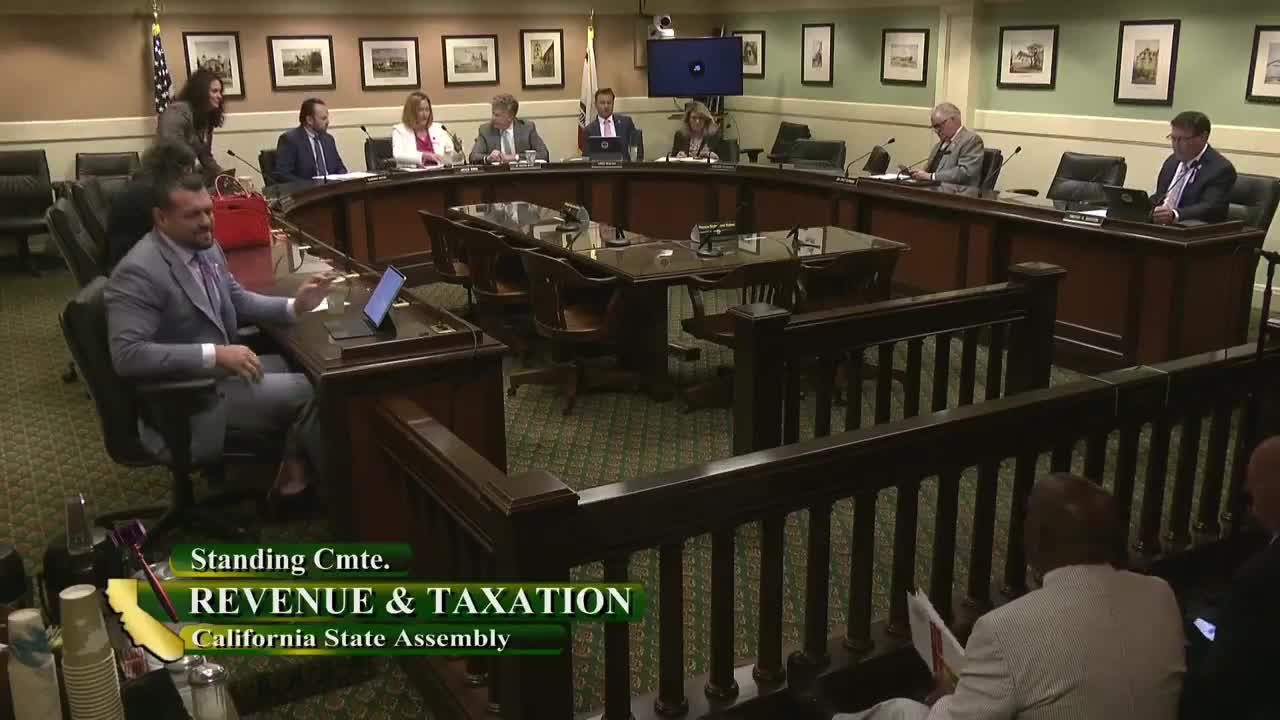
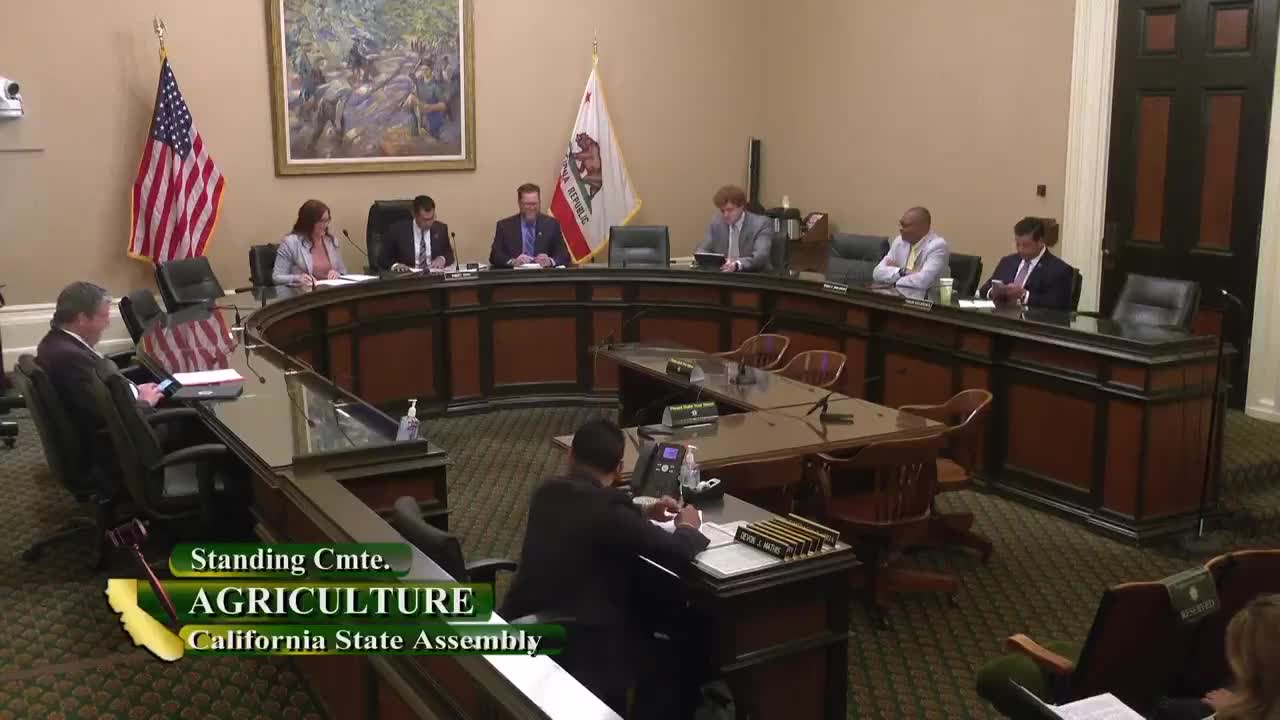
Assembly Standing Committee on Revenue and Taxation
 10MIN
Assembly Standing Committee on Agriculture
Bill Author