SB 1177: Wage statements: airline cabin crew employees.
- Session Year: 2025-2026
- House: Senate
- Latest Version Date: 2026-06-18
Current Status:
In Progress
(2026-06-18: From committee with author's amendments. Read second time and amended. Re-referred to Com. on L. & E.)
Introduced
In Committee
Awaiting First Chamber Vote
Passed First Chamber
In Committee
Awaiting Second Chamber Vote
Passed Second Chamber
Enacted
Existing law requires an employer, semimonthly or at the time of payment of wages, to furnish an employee an accurate, itemized, written statement containing specified information regarding the amounts earned, hours worked, and the employees identity, among other things, subject to certain variations. Existing law provides that an itemized wage statement furnished by an employer pursuant to these provisions is not required to show total hours worked by the employee if, among other things, the employee is exempt from the payment of minimum wage and overtime under specified law.
Existing federal law, the Railway Labor Act, regulates labor relations for rail and air carriers and entitles employees to organize and bargain collectively.
This bill would create an exemption from the above-described wage statement requirements with respect to specified airline crew members covered by the Railway Labor Act, as prescribed. provide that an itemized wage statement may, in lieu of total hours worked, show all applicable hourly rates in effect during the pay period and the corresponding number of hours worked at each hourly rate if the employee is a flight deck crewmember or cabin crewmember covered by the federal Railway Labor Act and the employer makes available certain information regarding duty hours in accordance with federal regulations, as specified. The bill would also provide that an itemized wage statement may not be required to show the number of piece-rate units earned and any applicable piece rate for a covered employee under specified circumstances. The bill would prohibit a person, commencing June 11, 2026, from filing a new legal action by or on behalf of a crew member crewmember asserting specified violations of the wage statement requirements.
Existing law requires an employer, semimonthly or at the time of payment of wages, to furnish an employee an accurate, itemized, written statement containing specified information regarding the amounts earned, hours worked, and the employees identity, among other things, subject to certain variations. Existing law provides that an itemized wage statement furnished by an employer pursuant to these provisions is not required to show total hours worked by the employee if, among other things, the employee is exempt from the payment of minimum wage and overtime under specified law.
Existing federal law, the Railway Labor Act, regulates labor relations for rail and air carriers and entitles employees to organize and bargain collectively.
This bill would create an exemption from the above-described wage statement requirements with respect to specified airline crew members covered by the Railway Labor Act, as prescribed. The bill would prohibit a person, commencing June 11, 2026, from filing a new legal action by or on behalf of a crew member asserting specified violations of the wage statement requirements.
Existing law, the California High-Speed Rail Act, creates the High-Speed Rail Authority to develop and implement a high-speed rail system in the state, with specified powers and duties. Existing law requires the authority to biennially provide a project update report to the Legislature on the development and implementation of intercity high-speed train service. Existing law requires the project update report to include, among other things, the baseline budget for all project phase costs, by segment or contract, and a comparison of the current and projected work schedule and the baseline schedule contained in the California High-Speed Rail Program Revised 2012 Business Plan.This bill would additionally require the project update report to include (1) an explanation of the assumptions used for financing methods calculations, (2) a comparison of the current and projected work schedule to projected schedules in previous project update reports, (3) an analysis of potential ancillary revenue sources, and (4) a comparison and benchmarking of cost, scope, and timeline to international high-speed rail projects.Existing law, the California High-Speed Rail Act, creates the High-Speed Rail Authority to develop and implement a high-speed rail system in the state, with specified powers and duties. Existing law requires the authority to biennially provide a project update report to the Legislature on the development and implementation of intercity high-speed train service. Existing law requires the project update report to include, among other things, the baseline budget for all project phase costs, by segment or contract, and a comparison of the current and projected work schedule and the baseline schedule contained in the California High-Speed Rail Program Revised 2012 Business Plan.
This bill would additionally require the project update report to include (1) an explanation of the assumptions used for financing methods calculations, (2) a comparison of the current and projected work schedule to projected schedules in previous project update reports, (3) an analysis of potential ancillary revenue sources, and (4) a comparison and benchmarking of cost, scope, and timeline to international high-speed rail projects.
(a)An employer, semimonthly or at the time of each payment of wages, shall furnish to their employee, either as a detachable part of the check, draft, or voucher paying the employees wages, or separately if wages are paid by personal check or cash, an accurate itemized statement in writing showing (1) gross wages earned, (2) total hours worked by the employee, except as provided in subdivision (j), (3) the number of piece-rate units earned and any applicable piece rate if the employee is paid on a piece-rate basis, except as provided in subdivision (k), (l), (4) all deductions, provided that all deductions made on written orders of the employee may be aggregated and shown as one item, (5) net wages earned, (6) the inclusive dates of the period for which the employee is paid, (7) the name of the employee and only the last four digits of their social security number or an employee identification number other than a social security number, (8) the name and address of the legal entity that is the employer and, if the employer is a farm labor contractor, as defined in subdivision (b) of Section 1682, the name and address of the legal entity that secured the services of the employer, and (9) all applicable hourly rates in effect during the pay period and the corresponding number of hours worked at each hourly rate by the employee, except as provided in subdivision (k), (l), and, beginning July 1, 2013, if the employer is a temporary services employer as defined in Section 201.3, the rate of pay and the total hours worked for each temporary services assignment. The deductions made from payment of wages shall be recorded in ink or other indelible form, properly dated, showing the month, day, and year, and a copy of the statement and the record of the deductions shall be kept on file by the employer for at least three years at the place of employment or at a central location within the State of California. For purposes of this subdivision, copy includes a duplicate of the itemized statement provided to an employee or a computer-generated record that accurately shows all of the information required by this subdivision.
(b)An employer that is required by this code or any regulation adopted pursuant to this code to keep the information required by subdivision (a) shall afford current and former employees the right to inspect or receive a copy of records pertaining to their employment, upon reasonable request to the employer. The employer may take reasonable steps to ensure the identity of a current or former employee. If the employer provides copies of the records, the actual cost of reproduction may be charged to the current or former employee.
(c)An employer who receives a written or oral request to inspect or receive a copy of records pursuant to subdivision (b) pertaining to a current or former employee shall comply with the request as soon as practicable, but no later than 21 calendar days from the date of the request. A violation of this subdivision is an infraction. Impossibility of performance, not caused by or a result of a violation of law, shall be an affirmative defense for an employer in any action alleging a violation of this subdivision. An employer may designate the person to whom a request under this subdivision will be made.
(d)This section does not apply to any employer of a person employed by the owner or occupant of a residential dwelling whose duties are incidental to the ownership, maintenance, or use of the dwelling, including the care and supervision of children, or whose duties are personal and not in the course of the trade, business, profession, or occupation of the owner or occupant.
(e)(1)An employee suffering injury as a result of a knowing and intentional failure by an employer to comply with subdivision (a) is entitled to recover the greater of all actual damages or fifty dollars ($50) for the initial pay period in which a violation occurs and one hundred dollars ($100) per employee for each violation in a subsequent pay period, not to exceed an aggregate penalty of four thousand dollars ($4,000), and is entitled to an award of costs and reasonable attorneys fees.
(2)(A)An employee is deemed to suffer injury for purposes of this subdivision if the employer fails to provide a wage statement.
(B)An employee is deemed to suffer injury for purposes of this subdivision if the employer fails to provide accurate and complete information as required by any one or more of items (1) to (9), inclusive, of subdivision (a) and the employee cannot promptly and easily determine from the wage statement alone one or more of the following:
(i)The amount of the gross wages or net wages paid to the employee during the pay period or any of the other information required to be provided on the itemized wage statement pursuant to items (2) to (4), inclusive, (6), and (9) of subdivision (a).
(ii)Which deductions the employer made from gross wages to determine the net wages paid to the employee during the pay period. Nothing in this subdivision alters the ability of the employer to aggregate deductions consistent with the requirements of item (4) of subdivision (a).
(iii)The name and address of the employer and, if the employer is a farm labor contractor, as defined in subdivision (b) of Section 1682, the name and address of the legal entity that secured the services of the employer during the pay period.
(iv)The name of the employee and only the last four digits of their social security number or an employee identification number other than a social security number.
(C)For purposes of this paragraph, promptly and easily determine means a reasonable person would be able to readily ascertain the information without reference to other documents or information.
(3)For purposes of this subdivision, a knowing and intentional failure does not include an isolated and unintentional payroll error due to a clerical or inadvertent mistake. In reviewing for compliance with this section, the factfinder may consider as a relevant factor whether the employer, prior to an alleged violation, has adopted and is in compliance with a set of policies, procedures, and practices that fully comply with this section.
(f)A failure by an employer to permit a current or former employee to inspect or receive a copy of records within the time set forth in subdivision (c) entitles the current or former employee or the Labor Commissioner to recover a seven-hundred-fifty-dollar ($750) penalty from the employer.
(g)The listing by an employer of the name and address of the legal entity that secured the services of the employer in the itemized statement required by subdivision (a) shall not create any liability on the part of that legal entity.
(h)An employee may also bring an action for injunctive relief to ensure compliance with this section, and is entitled to an award of costs and reasonable attorneys fees.
(i)This section does not apply to the state, to any city, county, city and county, district, or to any other governmental entity, except that if the state or a city, county, city and county, district, or other governmental entity furnishes its employees with a check, draft, or voucher paying the employees wages, the state or a city, county, city and county, district, or other governmental entity shall use no more than the last four digits of the employees social security number or shall use an employee identification number other than the social security number on the itemized statement provided with the check, draft, or voucher.
(j)An itemized wage statement furnished by an employer pursuant to subdivision (a) shall not be required to show total hours worked by the employee if any of the following apply:
(1)The employees compensation is solely based on salary and the employee is exempt from payment of overtime under subdivision (a) of Section 515 or any applicable order of the Industrial Welfare Commission.
(2)The employee is exempt from the payment of minimum wage and overtime under any of the following:
(A)The exemption for persons employed in an executive, administrative, or professional capacity provided in any applicable order of the Industrial Welfare Commission.
(B)The exemption for outside salespersons provided in any applicable order of the Industrial Welfare Commission.
(C)The overtime exemption for computer software professionals paid on a salaried basis provided in Section 515.5.
(D)The exemption for individuals who are the parent, spouse, child, or legally adopted child of the employer provided in any applicable order of the Industrial Welfare Commission.
(E)The exemption for participants, director, and staff of a live-in alternative to an incarceration rehabilitation program with special focus on substance abusers provided in Section 8002 of the Penal Code.
(F)The exemption for any crew member crewmember employed on a commercial passenger fishing boat licensed pursuant to Article 5 (commencing with Section 7920) of Chapter 1 of Part 3 of Division 6 of the Fish and Game Code provided in any applicable order of the Industrial Welfare Commission.
(G)The exemption for any individual participating in a national service program provided in any applicable order of the Industrial Welfare Commission.
(H)The exemption for any person who has entered into a contract to play baseball at the minor league level who satisfies the requirements set forth in subdivision (a) of Section 514.5.
(3)The employee is a flight deck crew member or cabin crew member covered by the federal Railway Labor Act (45 U.S.C. Sec. 151 et seq.) and the employer makes available, either electronically or in hard copy, a statement of the number of duty hours, tracked in accordance with the regulations of the Federal Aviation Administration, in the pay period, either with the wage statement furnished by the employer pursuant to subdivision (a) or in a separate document.(k)(1)An itemized wage statement furnished by an employer pursuant to subdivision (a) may, in lieu of total hours worked, show all applicable hourly rates in effect during the pay period and the corresponding number of hours worked at each hourly rate pursuant to paragraph (2) if the employee is a flight deck crewmember or cabin crewmember covered by the federal Railway Labor Act (45 U.S.C. Sec. 151 et seq.) and the employer makes available, either electronically or in hard copy, a statement of the number of duty hours, tracked in accordance with the regulations of the Federal Aviation Administration, in the pay period, either with the wage statement furnished by the employer pursuant to subdivision (a) or in a separate document.
(2)The employer shall make available, either: (A) an itemization of the employees pay for the pay period as calculated pursuant to the terms of the applicable compensation policy or collective bargaining agreement, or (B) a document that shows all applicable rates of pay in effect during the pay period and the corresponding number of units or credits paid at each applicable rate. Either of these itemizations may be made available, either electronically or in hard copy, with the wage statement furnished by the employer pursuant to subdivision (a) or in separate documents.
(k)(l)An itemized wage statement furnished by an employer pursuant to subdivision (a) shall may not be required to show the number of piece-rate units earned and any applicable piece rate if the employee is paid on a piece-rate basis or to show all applicable hourly rates in effect during the pay period and the corresponding number of hours worked at each hourly rate if the employee is covered by the provisions in paragraph (3) of subdivision (j), (k) and the employer makes available, either: (1) an itemization of the employees pay for the pay period as calculated pursuant to the terms of the applicable compensation policy or collective bargaining agreement, or (2) a document that shows all applicable rates of pay in effect during the pay period and the corresponding number of units or credits paid at each applicable rate. Either of these itemizations may be made available, either electronically or in hard copy, with the wage statement furnished by the employer pursuant to subdivision (a) or in separate documents.
(l)(m)Notwithstanding any other law, commencing June 11, 2026, a person shall not file a new legal action by or on behalf of a person meeting the requirements of paragraph (3) of subdivision (j) (k) asserting a claim for alleged wage statement violations.
(a)An employer, semimonthly or at the time of each payment of wages, shall furnish to their employee, either as a detachable part of the check, draft, or voucher paying the employees wages, or separately if wages are paid by personal check or cash, an accurate itemized statement in writing showing (1) gross wages earned, (2) total hours worked by the employee, except as provided in subdivision (j), (3) the number of piece-rate units earned and any applicable piece rate if the employee is paid on a piece-rate basis, except as provided in subdivision (k), (4) all deductions, provided that all deductions made on written orders of the employee may be aggregated and shown as one item, (5) net wages earned, (6) the inclusive dates of the period for which the employee is paid, (7) the name of the employee and only the last four digits of their social security number or an employee identification number other than a social security number, (8) the name and address of the legal entity that is the employer and, if the employer is a farm labor contractor, as defined in subdivision (b) of Section 1682, the name and address of the legal entity that secured the services of the employer, and (9) all applicable hourly rates in effect during the pay period and the corresponding number of hours worked at each hourly rate by the employee employee, except as provided in subdivision (k), and, beginning July 1, 2013, if the employer is a temporary services employer as defined in Section 201.3, the rate of pay and the total hours worked for each temporary services assignment. The deductions made from payment of wages shall be recorded in ink or other indelible form, properly dated, showing the month, day, and year, and a copy of the statement and the record of the deductions shall be kept on file by the employer for at least three years at the place of employment or at a central location within the State of California. For purposes of this subdivision, copy includes a duplicate of the itemized statement provided to an employee or a computer-generated record that accurately shows all of the information required by this subdivision.
(b)An employer that is required by this code or any regulation adopted pursuant to this code to keep the information required by subdivision (a) shall afford current and former employees the right to inspect or receive a copy of records pertaining to their employment, upon reasonable request to the employer. The employer may take reasonable steps to ensure the identity of a current or former employee. If the employer provides copies of the records, the actual cost of reproduction may be charged to the current or former employee.
(c)An employer who receives a written or oral request to inspect or receive a copy of records pursuant to subdivision (b) pertaining to a current or former employee shall comply with the request as soon as practicable, but no later than 21 calendar days from the date of the request. A violation of this subdivision is an infraction. Impossibility of performance, not caused by or a result of a violation of law, shall be an affirmative defense for an employer in any action alleging a violation of this subdivision. An employer may designate the person to whom a request under this subdivision will be made.
(d)This section does not apply to any employer of a person employed by the owner or occupant of a residential dwelling whose duties are incidental to the ownership, maintenance, or use of the dwelling, including the care and supervision of children, or whose duties are personal and not in the course of the trade, business, profession, or occupation of the owner or occupant.
(e)(1)An employee suffering injury as a result of a knowing and intentional failure by an employer to comply with subdivision (a) is entitled to recover the greater of all actual damages or fifty dollars ($50) for the initial pay period in which a violation occurs and one hundred dollars ($100) per employee for each violation in a subsequent pay period, not to exceed an aggregate penalty of four thousand dollars ($4,000), and is entitled to an award of costs and reasonable attorneys fees.
(2)(A)An employee is deemed to suffer injury for purposes of this subdivision if the employer fails to provide a wage statement.
(B)An employee is deemed to suffer injury for purposes of this subdivision if the employer fails to provide accurate and complete information as required by any one or more of items (1) to (9), inclusive, of subdivision (a) and the employee cannot promptly and easily determine from the wage statement alone one or more of the following:
(i)The amount of the gross wages or net wages paid to the employee during the pay period or any of the other information required to be provided on the itemized wage statement pursuant to items (2) to (4), inclusive, (6), and (9) of subdivision (a).
(ii)Which deductions the employer made from gross wages to determine the net wages paid to the employee during the pay period. Nothing in this subdivision alters the ability of the employer to aggregate deductions consistent with the requirements of item (4) of subdivision (a).
(iii)The name and address of the employer and, if the employer is a farm labor contractor, as defined in subdivision (b) of Section 1682, the name and address of the legal entity that secured the services of the employer during the pay period.
(iv)The name of the employee and only the last four digits of their social security number or an employee identification number other than a social security number.
(C)For purposes of this paragraph, promptly and easily determine means a reasonable person would be able to readily ascertain the information without reference to other documents or information.
(3)For purposes of this subdivision, a knowing and intentional failure does not include an isolated and unintentional payroll error due to a clerical or inadvertent mistake. In reviewing for compliance with this section, the factfinder may consider as a relevant factor whether the employer, prior to an alleged violation, has adopted and is in compliance with a set of policies, procedures, and practices that fully comply with this section.
(f)A failure by an employer to permit a current or former employee to inspect or receive a copy of records within the time set forth in subdivision (c) entitles the current or former employee or the Labor Commissioner to recover a seven-hundred-fifty-dollar ($750) penalty from the employer.
(g)The listing by an employer of the name and address of the legal entity that secured the services of the employer in the itemized statement required by subdivision (a) shall not create any liability on the part of that legal entity.
(h)An employee may also bring an action for injunctive relief to ensure compliance with this section, and is entitled to an award of costs and reasonable attorneys fees.
(i)This section does not apply to the state, to any city, county, city and county, district, or to any other governmental entity, except that if the state or a city, county, city and county, district, or other governmental entity furnishes its employees with a check, draft, or voucher paying the employees wages, the state or a city, county, city and county, district, or other governmental entity shall use no more than the last four digits of the employees social security number or shall use an employee identification number other than the social security number on the itemized statement provided with the check, draft, or voucher.
(j)An itemized wage statement furnished by an employer pursuant to subdivision (a) shall not be required to show total hours worked by the employee if any of the following apply:
(1)The employees compensation is solely based on salary and the employee is exempt from payment of overtime under subdivision (a) of Section 515 or any applicable order of the Industrial Welfare Commission.
(2)The employee is exempt from the payment of minimum wage and overtime under any of the following:
(A)The exemption for persons employed in an executive, administrative, or professional capacity provided in any applicable order of the Industrial Welfare Commission.
(B)The exemption for outside salespersons provided in any applicable order of the Industrial Welfare Commission.
(C)The overtime exemption for computer software professionals paid on a salaried basis provided in Section 515.5.
(D)The exemption for individuals who are the parent, spouse, child, or legally adopted child of the employer provided in any applicable order of the Industrial Welfare Commission.
(E)The exemption for participants, director, and staff of a live-in alternative to an incarceration rehabilitation program with special focus on substance abusers provided in Section 8002 of the Penal Code.
(F)The exemption for any crew member employed on a commercial passenger fishing boat licensed pursuant to Article 5 (commencing with Section 7920) of Chapter 1 of Part 3 of Division 6 of the Fish and Game Code provided in any applicable order of the Industrial Welfare Commission.
(G)The exemption for any individual participating in a national service program provided in any applicable order of the Industrial Welfare Commission.
(H)The exemption for any person who has entered into a contract to play baseball at the minor league level who satisfies the requirements set forth in subdivision (a) of Section 514.5.
(3)The employee is a flight deck crew member or cabin crew member covered by the federal Railway Labor Act (45 U.S.C. Sec. 151 et seq.) and the employer makes available, either electronically or in hard copy, a statement of the number of duty hours, tracked in accordance with the regulations of the Federal Aviation Administration, in the pay period, either with the wage statement furnished by the employer pursuant to subdivision (a) or in a separate document.
(k)An itemized wage statement furnished by an employer pursuant to subdivision (a) shall not be required to show the number of piece-rate units earned and any applicable piece rate if the employee is paid on a piece-rate basis or to show all applicable hourly rates in effect during the pay period and the corresponding number of hours worked at each hourly rate if the employee is covered by the provisions in paragraph (3) of subdivision (j), and the employer makes available, either: (1) an itemization of the employees pay for the pay period as calculated pursuant to the terms of the applicable compensation policy or collective bargaining agreement, or (2) shows all applicable rates of pay in effect during the pay period and the corresponding number of units or credits paid at each applicable rate. Either of these itemizations may be made available, either electronically or in hard copy, with the wage statement furnished by the employer pursuant to subdivision (a) or in separate documents.
(l)Notwithstanding any other law, commencing June 11, 2026, a person shall not file a new legal action by or on behalf of a person meeting the requirements of paragraph (3) of subdivision (j) asserting a claim for alleged wage statement violations.
SECTION 1.Section 185033.5 of the Public Utilities Code is amended to read:185033.5.On or before March 1, 2017, and every two years thereafter, the authority shall submit a project update report, approved by the Secretary of Transportation as consistent with the criteria in this section, to the budget committees and the appropriate policy committees of both houses of the Legislature, on the development and implementation of intercity high-speed train service pursuant to Section 185030. The report, at minimum, shall include a programwide summary, and details by project segment, with all information necessary to clearly describe the status of the project, including, but not limited to, all of the following:(a)A summary describing the overall progress of the project.(b)The baseline budget for all project phase costs, by segment or contract, beginning with the California High-Speed Rail Program Revised 2012 Business Plan, and an explanation of the assumptions used for financing methods calculations.(c)The current and projected budget, by segment or contract, for all project phase costs.(d)Expenditures to date, by segment or contract, for all project phase costs.(e)A comparison of the current and projected work schedule to the baseline schedule contained in the California High-Speed Rail Program Revised 2012 Business Plan and to projected schedules in previous project update reports.(f)A summary of milestones achieved during the prior two-year period and milestones expected to be reached in the coming two-year period.(g)Any issues identified during the prior two-year period and actions taken to address those issues.(h)A thorough discussion of risks to the project and steps taken to mitigate those risks.(i)An analysis of potential ancillary revenue sources.(j)A comparison and benchmarking of cost, scope, and timeline to international high-speed rail projects.On or before March 1, 2017, and every two years thereafter, the authority shall provide submit a project update report, approved by the Secretary of Transportation as consistent with the criteria in this section, to the budget committees and the appropriate policy committees of both houses of the Legislature, on the development and implementation of intercity high-speed train service pursuant to Section 185030. The report, at a minimum, shall include a programwide summary, as well as and details by project segment, with all information necessary to clearly describe the status of the project, including, but not limited to, all of the following:
(a)A summary describing the overall progress of the project.
(b)The baseline budget for all project phase costs, by segment or contract, beginning with the California High-Speed Rail Program Revised 2012 Business Plan. Plan, and an explanation of the assumptions used for financing methods calculations.
(c)The current and projected budget, by segment or contract, for all project phase costs.
(d)Expenditures to date, by segment or contract, for all project phase costs.
(e)A comparison of the current and projected work schedule and to the baseline schedule contained in the California High-Speed Rail Program Revised 2012 Business Plan. Plan and to projected schedules in previous project update reports.
(f)A summary of milestones achieved during the prior two-year period and milestones expected to be reached in the coming two-year period.
(g)Any issues identified during the prior two-year period and actions taken to address those issues.
(h)A thorough discussion of risks to the project and steps taken to mitigate those risks.
(i)An analysis of potential ancillary revenue sources.
(j)A comparison and benchmarking of cost, scope, and timeline to international high-speed rail projects.
|
Date
|
Status
|
|---|---|
| Jun 18, 2026 | From committee with author's amendments. Read second time and amended. Re-referred to Com. on L. & E. |
| Jun 15, 2026 | Re-referred to Com. on L. & E. pursuant to Assembly Rule 96. |
| Jun 11, 2026 | June 29 set for first hearing canceled at the request of author. |
| Jun 11, 2026 | From committee with author's amendments. Read second time and amended. Re-referred to Com. on TRANS. |
| May 26, 2026 | Referred to Com. on TRANS. |
| May 19, 2026 | In Assembly. Read first time. Held at Desk. |
| May 18, 2026 | Read third time. Passed. (Ayes 30. Noes 8.) Ordered to the Assembly. |
| May 18, 2026 | Read third time. Passed. (Ayes 30. Noes 8. Page 4314.) Ordered to the Assembly. |
| Apr 21, 2026 | Read second time. Ordered to third reading. |
| Apr 20, 2026 | From committee: Be ordered to second reading pursuant to Senate Rule 28.8. |
| Apr 10, 2026 | Set for hearing April 20. |
| Apr 8, 2026 | From committee: Do pass and re-refer to Com. on APPR. (Ayes 9. Noes 3.) (April 7). Re-referred to Com. on APPR. |
| Apr 8, 2026 | From committee: Do pass and re-refer to Com. on APPR. (Ayes 9. Noes 3. Page 3760.) (April 7). Re-referred to Com. on APPR. |
| Mar 17, 2026 | Set for hearing April 7. |
| Feb 26, 2026 | Referred to Com. on TRANS. |
| Feb 19, 2026 | From printer. May be acted upon on or after March 21. |
| Feb 18, 2026 | Introduced. Read first time. To Com. on RLS. for assignment. To print. |
|
Date
|
Description
|
Location
|
Votes
|
|
|---|---|---|---|---|
| May 18, 2026 | Senate 3rd Reading SB1177 Cortese | Senate Floor |
Passed |
|
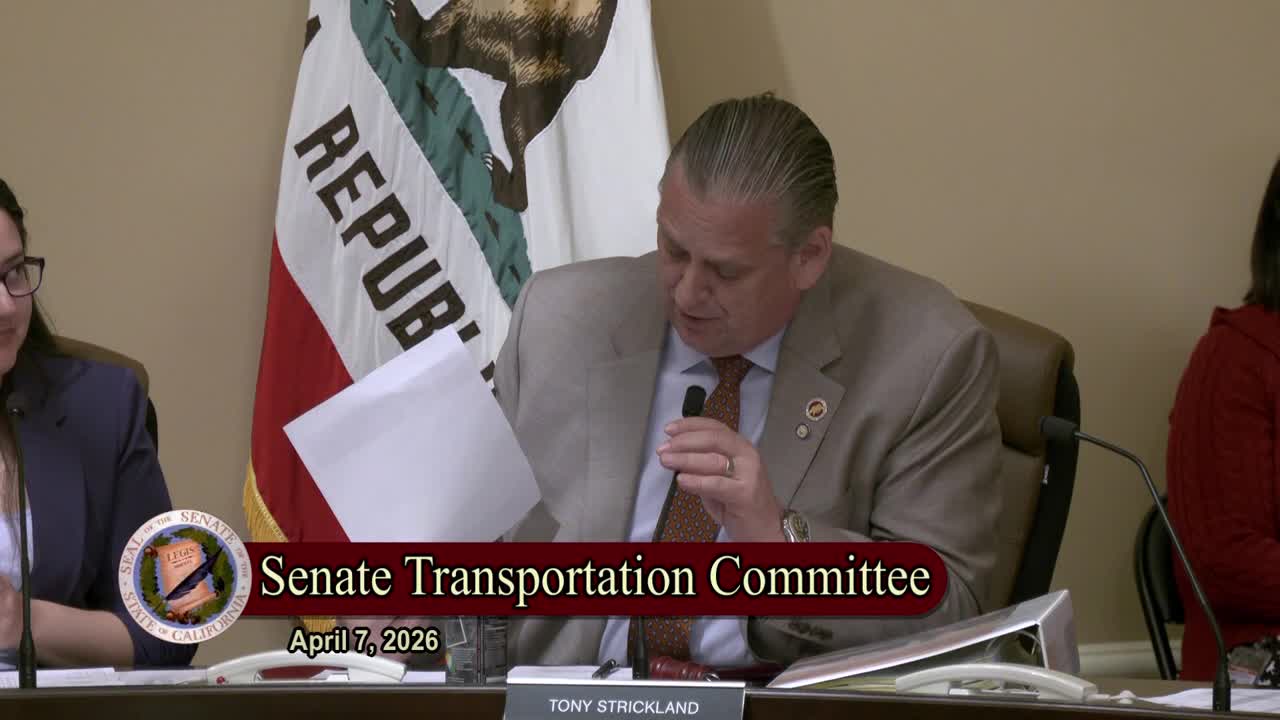
| Apr 7, 2026 | Do pass, but first be re-referred to the Committee on [Appropriations] | Senate Standing Committee on Transportation |
Passed |
This list shows positions taken on this bill by organizations on the date displayed, which is linked to the original source.
Positions by individuals are not included.
|
Organization
|
Position
|
Date
|
|---|---|---|
| City Of Burbank | ** Against | |
| Climate Action California | ** Support | |
| Transbay Coalition | ** Support | |
| U.S. HIGH SPEED RAIL ASSOCIATION | ** Support |
SENATE RULES COMMITTEE Office of Senate Floor Analyses (916) 651-4171 | SB 1177 |
THIRD READING
Bill No: SB 1177
Author: Cortese (D)
Introduced: 2/18/26
Vote: 21
SENATE TRANSPORTATION COMMITTEE: 9-3, 4/7/26
AYES: Cortese, Archuleta, Arreguín, Blakespear, Gonzalez, Grayson, Menjivar, Richardson, Wiener
NOES: Strickland, Seyarto, Valladares
NO VOTE RECORDED: Dahle
SENATE APPROPRIATIONS COMMITTEE: Senate Rule 28.8
SUBJECT: High-Speed Rail Authority: project update report
SOURCE: U.S. High Speed Rail Association
DIGEST:
This bill requires the California High-Speed Rail Authority’s (Authority) biennial project update report (PUR) to include certain additional information about the budget, schedule, and planning of the high-speed rail project.
ANALYSIS:
Existing law:
- Creates the Authority in the California State Transportation Agency (CalSTA). (Public Utilities Code (PUC) § 185020)
- Requires the Authority to direct the development and implementation of an intercity high-speed rail service. (PUC § 185030)
- Requires the Authority to submit to the Legislature no later than March 1, 2017, and every two years thereafter, a PUR containing specified information that includes at a minimum, a program wide summary, as well as details by project segment, including information about the progress of the project, budget projections, expenditures, and project schedule. (PUC § 185033.5)
This bill:
- Requires the biennial PUR, in addition to existing statutory requirements, to include:
- An explanation of the assumptions used for financing methods calculations;
- A comparison of the current and projected work schedule to projected schedules in previous PURs;
- An analysis of potential ancillary revenue sources; and,
- A comparison and benchmarking of cost, scope, and timeline to international high-speed rail projects.
- An explanation of the assumptions used for financing methods calculations;
Comments
- Purpose of the bill. According to the author, “The High-Speed Rail Project has been a decades-long investment in our transit system, our environment, and our economy. It is essential that we maintain transparency into the project’s cost, scope, and progress. The High-Speed Rail PUR is published and submitted to the Legislature every two years and provides an important record of the Authority’s progress and their projections for the future. As the Authority completes its comprehensive review of the Project’s design criteria, scope, cost, procurement strategy, ridership, and schedule, SB 1177 will ensure that critical project information about the Projects implementation continues to be reported to the Legislature and made available to the public.”
- California High-Speed Rail. Development of high-speed rail in California began nearly 30 years ago with the creatin of the Authority. However, the project did not gain steam until 2008 when voters approved Proposition 1A, the Safe, Reliable, High-Speed Passenger Train Bond Act. This was a $9.95 billion general obligation bond to fund the proposed California high-speed rail project and related improvements. As envisioned at the time of the ballot measure, the project was to consist of an 800-mile dedicated high-speed passenger rail system capable of speeds up to 220 miles per hour, initially serving the major metropolitan market of San Francisco through the Central Valley into Los Angeles and Anaheim (Phase I), with service eventually extending to Sacramento, the Inland Empire, and San Diego (Phase II).
In July 2012, the Legislature approved SB 1029 (Committee on Budget and Fiscal Review, Chapter 152, Statutes of 2012), that appropriated nearly $8 billion in federal and state funds to begin the construction between Madera and Bakersfield. Further, the 2014-15 state budget trailer bill SB 862 (Committee on Budget and Fiscal Review, Chapter 36, Statutes of 2014), continuously appropriated 25% of the revenues derived from the state’s Cap‑and-Trade program to the project. Additionally, the Legislature approved SB 198 (Committee on Budget and Fiscal Review, Chapter 71, Statutes of 2022), which required the Authority to focus its resources on finishing a usable high-speed segment from Merced to Bakersfield. Finally, in 2025, through AB 1207 (Irwin, Chapter 117, Statutes of 2025) and SB 840 (Limon and McGuire, Chapter 121, Statutes of 2025), the Legislature extended the Cap-and-Trade program through 2045, renaming it Cap-and-Invest. SB 840 also allocated $1 billion of Cap-and-Invest funds annually to the Authority through 2045. - Financial constraints. Despite the large level of investment in high-speed rail over the past years, the project is still vastly short of its funding needs. When Proposition 1A bonds were approved in 2008, the cost for the project was estimated at $45 billion, to be paid for by a mix of state bonds, federal grants, and private investments. Since then, the cost of the project has risen markedly, with the 2026 Draft Business Plan providing a price estimate for Phase I at just shy of $128 billion. The same plan places the projected cost for the Merced-Bakersfield segment at $34.8 billion. These estimates also include a number of cost-saving measures identified during a new “bottom-up cost review” that adjusted the Authority’s overall financing assumptions. This review further included explicit and implicit scope changes to the project, such as moving the Merced and Bakersfield stations outside of the downtown area and reducing the amount of dual-track rail to 20 miles across the entire segment. Finally, these changes also come on the heels of the Authority dropping efforts to retain $4 billion in disputed federal grant funds, effectively relinquishing the money.
Despite these challenges, the Authority projects that they currently have the funds to complete the Merced-Bakersfield segment. However, this funding does not mean that they have cash on hand to align with planned construction schedules. The Authority’s most recent financial outlook assumes that they are able to secure these near-term funds through financing based on their ongoing Cap-and-Invest appropriations. Additionally, this outlook requires that the Legislature approves the aforementioned scope changes to the plan that is currently outlined in SB 198. As noted, these changes include controversial decisions, including relocating the Merced station outside of the downtown area. - Required reporting. As part of its reporting and transparency requirements, the Authority is required to prepare, publish, and adopt a Business Plan every even numbered year outlining key required elements of the high-speed rail project. Those elements include project development information, including a description of the type of service being developed; the timing and sequencing of project phases and segments; estimated capital costs; ridership estimates; and a discussion of reasonable foreseeable risks and strategies to manage those risks. Additionally, the Business Plan is required to contain estimates and descriptions of the total anticipated federal, state, local, and other funds the Authority intends to access for the construction and operation of the system.
In addition to the Business Plan, the Authority is also required to prepare a PUR by March 1 of every odd numbered year that provides certain updated information including a program wide summary, as well as details by project segment, including information about the progress of the project, budget projections, expenditures, and project schedule. - This bill requires more reporting consistency. Both the Business Plan and PUR are required to contain specific, statutorily outlined information about the high-speed rail project. However, these reports commonly contain additional information beyond these requirements. This information is often helpful in providing additional context about the overall state and trajectory of the project, as well as to help track progress on the project over time. This bill proposes to mandate the inclusion of this additional information in future PURs. For example, recent reports have either directly contained or referred to other public documents that contain information about many of the items this bill would mandate. These include the financing assumptions made by the Authority in preparing its budget numbers, an analysis on potential ancillary revenue sources for the project, and certain types of comparisons to other international high-speed rail projects. Thus, this bill would help provide a consistency in the type of information provided that would enable better tracking of how the project has evolved over time.
FISCAL EFFECT: Appropriation: No Fiscal Com.: Yes Local: No
SUPPORT: (Verified 4/20/26)
U.S. High Speed Rail Association (Source)
Climate Action California
Transbay Coalition
OPPOSITION: (Verified 4/20/26)
City of Burbank
Prepared by: Samuel Myers / TRANS. / (916) 651-4879
4/21/26 16:19:40
**** END ****
SENATE COMMITTEE ON TRANSPORTATION
Senator Dave Cortese, Chair
2025 - 2026 Regular
Bill No: Hearing Date: 4/7/2026
Author: | Cortese | ||
Version: | 2/18/2026 Introduced | ||
Urgency: | No | Fiscal: | Yes |
Consultant: | Samuel Myers | ||
SUBJECT:
DIGEST: This bill would require the California High-Speed Rail Authority’s (Authority) biennial project update report (PUR) to include certain additional information about the budget, schedule, and planning of the high-speed rail project.
ANALYSIS:
Existing law:
- Creates the Authority in the California State Transportation Agency (CalSTA) with 11 members: five appointed by the Governor, two appointed by the Senate Committee on Rules, two appointed by the Speaker of the Assembly, and one each ex-officio member appointed by the Senate and Assembly. (PUC 185020)
- Requires the Authority to direct the development and implementation of an intercity high-speed rail service. (PUC 185030)
- Establishes the independent peer review group to review the planning, engineering, financing, and other elements of the Authority’s plans and issuing analyses of these plans. (PUC 185035)
- Requires the Authority to submit to the Legislature no later than May 1, 2014, and every two years thereafter, a business plan containing specified information that includes project schedule, scope, and cost, forecast patronage and maintenance and operating costs. (PUC 185033)
- Requires the Authority to submit to the Legislature no later than March 1, 2017, and every two years thereafter, a PUR containing specified information that includes at a minimum, a program wide summary, as well as details by project segment, including information about the progress of the project, budget projections, expenditures, and project schedule. (PUC 185033.5)
- Establishes the Office of the High-Speed Rail Inspector General (OIG) and gives it the authority to initiate an audit or review of the Authority and gives it specific duties and responsibilities relating to reviewing the Authority’s business plans and PURs. (PUC 187020)
This bill:
- Requires the biennial PUR, in addition to existing statutory requirements, to include:
- An explanation of the assumptions used for financing methods calculations;
- A comparison of the current and projected work schedule to projected schedules in previous PURs;
- An analysis of potential ancillary revenue sources; and,
- A comparison and benchmarking of cost, scope, and timeline to international high-speed rail projects.
- An explanation of the assumptions used for financing methods calculations;
COMMENTS:
- Purpose of the bill. According to the author, “The High-Speed Rail Project has been a decades-long investment in our transit system, our environment, and our economy. It is essential that we maintain transparency into the project’s cost, scope, and progress. The High-Speed Rail PUR is published and submitted to the Legislature every two years and provides an important record of the Authority’s progress and their projections for the future. As the Authority completes its comprehensive review of the Project’s design criteria, scope, cost, procurement strategy, ridership, and schedule, SB 1177 will ensure that critical project information about the Projects implementation continues to be reported to the Legislature and made available to the public.
“In the 2025 PUR, the High-Speed Rail Authority stated that it was going to comprehensively review its design criteria, scope, cost, procurement strategy, ridership, and schedule for the High-Speed Rail Project. While we welcome an updated assessment of these factors, previous PURs have included certain useful data, insights, and analyses that our office wants to continue to see included in future PURs. SB 1177 would codify this data and analysis in the list of required information that must be included in each PUR.” - California High-Speed Rail. Development of high-speed rail in California began nearly 30 years ago. SB 1420 (Kopp, Chapter 796, Statutes of 1996), created the Authority to direct development and implementation of intercity high-speed rail service that would be fully coordinated with other public transportation services. The Authority is part of CalSTA and is governed by an eleven-member Board of Directors. The Governor appoints five members of the board, the Senate Rules Committee appoints two, and the Assembly Speaker appoints two. Additionally, the board includes two ex-officio, non-voting members, one member of the Assembly and one member of the Senate.
In 2008, voters approved Proposition 1A, the Safe, Reliable, High-Speed Passenger Train Bond Act, a $9.95 billion general obligation bond to fund the proposed California high-speed rail project and related improvements. As envisioned at the time of the ballot measure, the project was to consist of an 800-mile dedicated high-speed passenger rail system capable of speeds up to 220 miles per hour, initially serving the major metropolitan market of San Francisco through the Central Valley into Los Angeles and Anaheim (Phase I), with service eventually extending to Sacramento, the Inland Empire, and San Diego (Phase II).
In July 2012, the Legislature approved SB 1029 (Committee on Budget and Fiscal Review, Chapter 152, Statutes of 2012), that appropriated nearly $8 billion in federal and state funds to begin the construction between Madera and Bakersfield. SB 1029 funded three components of the project, including $5.8 billion ($3.2 billion from federal grants and $2.6 billion from Proposition 1A) to fund the construction of the high-speed rail “backbone” in the Central Valley; $819 million of Proposition 1A bonds for “connectivity” projects on existing rail and transit systems throughout the state; and $1.1 billion for the “bookends” projects in the Bay Area and Southern California ($600 million for the electrification of Caltrain and $500 million for projects in the Los Angeles Basin) to improve existing rail corridors for eventual use by the high-speed rail system.
Further, the 2014-15 state budget trailer bill SB 862 (Committee on Budget and Fiscal Review, Chapter 36, Statutes of 2014), continuously appropriated 25% of the revenues derived from the state’s Cap-and-Trade program to the project. Additionally, the Legislature approved SB 198 (Committee on Budget and Fiscal Review, Chapter 71, Statutes of 2022), which required the Authority to focus its resources on finishing a usable high-speed segment from Merced to Bakersfield, which is defined as a 171-mile electrified dual-track segment with a new combined station in downtown Merced. SB 198 also limited spending outside of the Merced to Bakersfield line. Finally, in 2025, through AB 1207 (Irwin, Chapter 117, Statutes of 2025) and SB 840 (Limon and McGuire, Chapter 121, Statutes of 2025), the Legislature extended the Cap-and-Trade program through 2045, renaming it Cap-and-Invest. SB 840 also allocated $1 billion of Cap-and-Invest funds annually to the Authority through 2045. - Financial constraints. Despite the large level of investment in high-speed rail over the past years, the project is still vastly short of its funding needs. When Proposition 1A bonds were approved in 2008, the cost for the project was estimated at $45 billion, to be paid for by a mix of state bonds, federal grants, and private investments. Since then, the cost of the project has risen markedly, with the 2026 Draft Business Plan providing a total 65% confidence interval price estimate for Phase I at just shy of $128 billion. The same plan places the projected cost for the Merced-Bakersfield segment at $34.8 billion. These estimates also include a number of cost-saving measures identified during a new “bottom-up cost review” that adjusted the Authority’s overall financing assumptions. This review further included explicit and implicit scope changes to the project, such as moving the Merced and Bakersfield stations outside of the downtown area and reducing the amount of dual-track rail to 20 miles across the entire segment. Finally, these changes also come on the heels of the Authority dropping efforts to retain $4 billion in disputed federal grant funds, effectively relinquishing the money.
Despite these challenges, the Authority projects that they currently have the funds to complete the Merced-Bakersfield segment. However, this funding does not mean that they have cash on hand to align with planned construction schedules. The Authority’s most recent financial outlook assumes that they are able to secure these near-term funds through financing based on their ongoing Cap-and-Invest appropriations. Additionally, this outlook requires that the Legislature approves the aforementioned scope changes to the plan that is currently outlined in SB 198. As noted, these changes include controversial decisions, including relocating the Merced station outside of the downtown area.
In order to fund the remaining parts of Phase I, the Authority proposes to enter a number of so-called P3 agreements. These public-private partnerships aim to bring significant private capital into the project to close the large funding gap. The Authority has also laid out plans to explore what they call ancillary revenue sources. These are various forms of value-capture, aiming to produce additional revenues based on the overall economic growth facilitated by the project itself. Some of these proposed revenue sources include advertising, baggage fees, parking fees, station retail, sponsorship deals, telecommunications infrastructure, and ground leases, among others. However, a recent report[1] by the Legislative Analyst’s Office has called into question whether even the sum total of these efforts will be sufficient to close the Phase I funding gap. - Required reporting. As part of its reporting and transparency requirements, the Authority is required to prepare, publish, and adopt a Business Plan every even numbered year outlining key required elements of the high-speed rail project. Those elements include project development information, including a description of the type of service being developed; the timing and sequencing of project phases and segments; estimated capital costs; ridership estimates; and a discussion of reasonable foreseeable risks and strategies to manage those risks. Additionally, the Business Plan is required to contain estimates and descriptions of the total anticipated federal, state, local, and other funds the Authority intends to access for the construction and operation of the system.
SB 198 further added requirements for the Business Plan, including a set of specific delivery schedules for various components of the Central Valley project; updates to cost estimates with a stated probability level; an updated funding plan for Merced to Bakersfield, including any new funding awards; and any additional milestones required for the completion of the Merced to Bakersfield segment. These were enhanced again by AB 377 (Tangipa, Chapter 81, Statutes of 2025), which outlined specific requirements to be reported on the overall funding plan for the Merced-Bakersfield segment.
In addition to the Business Plan, the Authority is also required to prepare a PUR by March 1 of every odd numbered year that provides certain updated information including a program wide summary, as well as details by project segment, including information about the progress of the project, budget projections, expenditures, and project schedule. - SB 1177 requires more reporting consistency. Both the Business Plan and PUR are required to contain specific, statutorily outlined information about the high-speed rail project. However, these reports commonly contain additional information beyond these requirements. This information is often helpful in providing additional context about the overall state and trajectory of the project, as well as to help track progress on the project over time. SB 1177 proposes to mandate the inclusion of this additional information in future PURs. For example, recent reports have either directly contained or referred to other public documents that contain information about many of the items this bill would mandate. These include the financing assumptions made by the Authority in preparing its budget numbers, an analysis on potential ancillary revenue sources for the project, and certain types of comparisons to other international high-speed rail projects. Thus, this bill would help provide a consistency in the type of information provided that would enable better tracking of how the project has evolved over time.
According to the bill sponsors, “SB 1177 will codify the additional elements from recent PURs into statute to ensure that as the Authority updates its design criteria, consistent project information continues to be submitted to the Legislature. That consistency will help the Legislature maintain long-term transparency and accountability as California continues to invest in our high-speed rail transformation.”
Related/previous Legislation:
AB 377 (Tangipa, Chapter 81, Statutes of 2025) – Required the biennial Business Plan to provide additional details on the funding plan for the Merced-Bakersfield segment.
SB 545 (Cortese, 2025) – Would have required the Office of Land Use and Climate Innovation (LCI), on or before July 1, 2027, to commission a study and submit a progress report to the Legislature on funding and economic opportunities along high-speed rail corridors, as specified, with a final report due January 1, 2028. This bill was held in Assembly Appropriations Committee.
SB 840 (Limon and McGuire, Chapter 121, Statutes of 2025) – Extended the Cap-and-Trade program through 2045, renaming it Cap-and-Invest, and appropriated $1 billion annually of Cap-and-Invest funds to the Authority.
SB 1260 (Niello, 2024) – Would have required OIG to conduct two independent reviews related to the high-speed rail project. This bill was held in Senate Transportation Committee.
SB 198 (Committee on Budget and Fiscal Review, Chapter 71, Statutes of 2022) – Appropriated the remaining $4.2 billion Proposition 1A bonds for the high-speed rail project, created the High-Speed Rail OIG, and laid out certain requirements for the prioritization of the Central Valley Segment.
AB 95 (Committee on Budget, Chapter 12, Statutes of 2015) – Required the Authority to produce a biennial Project Update Report on years when a Business Plan was not required.
SB 862 (Committee on Budget and Fiscal Review, Chapter 36, Statutes of 2014) – Continuously appropriated 25 percent of the revenues derived from the state’s Cap-and-Trade program to the project.
SB 1420 (Kopp, Chapter 796, Statutes of 1996) – Created the Authority to direct development and implementation of intercity high-speed rail service that would be fully coordinated with other public transportation services.
FISCAL EFFECT: Appropriation: Fiscal Com.: Local:
POSITIONS: (Communicated to the committee before noon on Wednesday,
April 1, 2026.)
SUPPORT:
U.S. High Speed Rail Association (Sponsor)
Climate Action California (UNREG)
Transbay Coalition
OPPOSITION:
City of Burbank
-- END --
https://lao.ca.gov/Publications/Detail/5020 ↑
Discussed in Hearing
View Older Hearings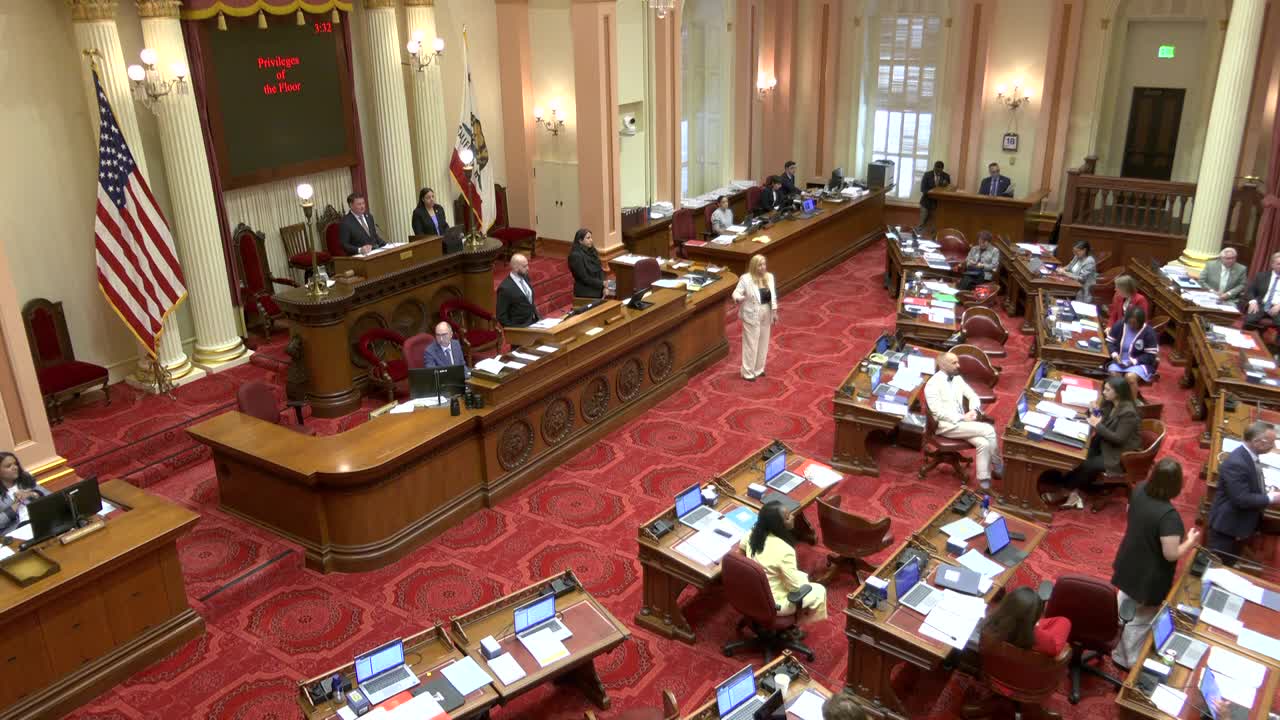
Bill Author

Bill Co-Author(s):