SB 452: Child welfare services: prevention legal services.
- Session Year: 2025-2026
- House: Senate
- Latest Version Date: 2025-06-10
Current Status:
In Progress
(2025-07-02: July 1 set for first hearing canceled at the request of author.)
Introduced
In Committee
Awaiting First Chamber Vote
Passed First Chamber
In Committee
Awaiting Second Chamber Vote
Passed Second Chamber
Enacted
Existing law establishes the jurisdiction of the juvenile court, which may adjudge children to be dependents of the court under certain circumstances, including when the child suffered or there is a substantial risk that the child will suffer serious physical harm, or a parent fails to provide the child with adequate food, clothing, shelter, or medical treatment. Existing law also establishes a system of child welfare services provided to children alleged to be the victims of child abuse, neglect, or exploitation, and defines child welfare services for these purposes to mean public social services that are directed toward the accomplishment of various purposes, including protecting and promoting the welfare of all children, and includes, among other services, emergency response services and family maintenance services.
This bill would, subject to an appropriation by the Legislature, require the State Department of Social Services to establish and implement the Family Advocacy Pilot Program for 3 years to provide grants to qualified organizations, as defined, to provide (1) prevention legal services designed to prevent the filing of a petition in a juvenile court or stabilize a family who is at risk of receiving child welfare services, or in cases in which a report regarding a family has been made to the county child welfare department or a tribal agency, as specified, (2) direct assistance by an interdisciplinary team for families who are at risk of child welfare services or in cases in which a report regarding a family has been made to the county child welfare department or a tribal agency and (3) legal training or technical assistance to other qualified organizations providing prevention legal services or direct assistance by an interdisciplinary team. The bill would require the department to submit a report to the Legislature evaluating the effectiveness of the program, as specified.
Existing law establishes the jurisdiction of the juvenile court, which may adjudge children to be dependents of the court under certain circumstances, including when the child suffered or there is a substantial risk that the child will suffer serious physical harm, or a parent fails to provide the child with adequate food, clothing, shelter, or medical treatment. Existing law also establishes a system of child welfare services provided to children alleged to be the victims of child abuse, neglect, or exploitation, and defines child welfare services for these purposes to mean public social services that are directed toward the accomplishment of various purposes, including protecting and promoting the welfare of all children, and includes, among other services, emergency response services and family maintenance services.
This bill would, subject to an appropriation by the Legislature, require the State Department of Social Services to establish and implement the Family Advocacy Pilot Program for 3 years to provide grants to qualified organizations, as defined, to provide (1) prevention legal services designed to prevent the filing of a petition in a juvenile court or stabilize a family who is at risk of receiving child welfare services, or in cases in which a report regarding a family has been made to the county child welfare department, department or a tribal agency, as specified, (2) direct assistance by an interdisciplinary team for families who are at risk of child welfare services or in cases in which a report regarding a family has been made to the county child welfare department, department or a tribal agency and (3) legal training or technical assistance to other qualified organizations providing prevention legal services or direct assistance by an interdisciplinary team. The bill would require the department to submit a report to the Legislature evaluating the effectiveness of the program. program, as specified.
Existing law establishes the jurisdiction of the juvenile court, which may adjudge children to be dependents of the court under certain circumstances, including when the child suffered or there is a substantial risk that the child will suffer serious physical harm, or a parent fails to provide the child with adequate food, clothing, shelter, or medical treatment. Existing law also establishes a system of child welfare services provided to children alleged to be the victims of child abuse, neglect, or exploitation, and defines child welfare services for these purposes to mean public social services that are directed toward the accomplishment of various purposes, including protecting and promoting the welfare of all children, and includes, among other services, emergency response services and family maintenance services.
This bill would, subject to an appropriation by the Legislature, require the State Department of Social Services to establish and implement the Family Advocacy Pilot Program for 3 years to provide grants to qualified organizations, as defined, to provide (1) prevention legal services designed to prevent the filing of a petition in a juvenile court or stabilize a family who is at risk of receiving child welfare services, or in cases in which a report regarding a family has been made to the county child welfare department, (2) direct assistance by an interdisciplinary team for families who are at risk of child welfare services or in cases in which a report regarding a family has been made to the county child welfare department, and (3) legal training or technical assistance to other qualified organizations providing prevention legal services or direct assistance by an interdisciplinary team. The bill would require the department to submit a report to the Legislature evaluating the effectiveness of the program.
The Legislature finds and declares that for many families who come to the attention of the county child welfare department, the provision of early, high-quality legal representation can help stabilize families and prevent unnecessary family separation and foster care placement.
SEC. 2.Chapter 7.5 (commencing with Section 16590) is added to Part 4 of Division 9 of the Welfare and Institutions Code, to read:7.5.Prevention Legal Services16590.(a)Subject to an appropriation by the Legislature in the annual Budget Act or another statute for this purpose, the State Department of Social Services shall establish and implement the Family Advocacy Pilot Program for three years to provide grants, as described in Section 16590.1, to qualified organizations.
(b)On or before July 1, 2026, the department shall, in consultation with lived experience experts, advocates, dependency attorneys, tribes, civil legal-aid legal aid organizations, and community-based organizations, develop parameters and an implementation plan to distribute grants pursuant to this chapter.
(c)The department shall may seek federal reimbursement through Title IV-E of the federal Social Security Act (42 U.S.C. Sec. 670 et seq.), Temporary Assistance for Needy Families block grant, and any other applicable federal funding to the maximum extent possible for any prevention legal services provided pursuant to this chapter. Any costs that are reimbursed shall be used to supplement, and not supplant, the funds appropriated by the Legislature for the program.
(d)If any counties are funding prevention legal services programs that are providing the services described in subdivision (a) of Section 16590.1, the department shall may seek federal reimbursement through Title IV-E of the federal Social Security Act (42 U.S.C. Sec. 670 et seq.), Temporary Assistance for Needy Families block grant, and any other applicable federal funding to the maximum extent possible. Any costs that are reimbursed shall be used to supplement, and not supplant, the funding available in that county for prevention legal services.
16590.1.(a)The department shall provide grants pursuant to this chapter to qualified organizations to provide one or more of the following services, as determined by the department:
(1)Prevention legal services designed to prevent the filing of a petition in a juvenile court or stabilize a family that is at risk of receiving child welfare services, as defined in Section 16501, or in cases in which a report regarding a family has been made to the county child welfare department or a tribal Title IV-E agency. Prevention legal services may include, but are not limited to, navigating an investigation by the county welfare department or a tribal Title IV-E agency, obtaining a restraining order, formalizing safe custody or visitation arrangements, obtaining immigration relief for survivors of domestic violence, obtaining or maintaining public benefits, improving a familys housing stability, reducing barriers to reentry for those who have had involvement with the criminal legal system, accessing health care and coverage, addressing education barriers, and handling probate guardianship matters.
(2)Direct assistance by an interdisciplinary team, including, but not limited to, a social worker, case worker, parent partner, and peer advocate, for families who are at risk of child welfare services, as defined in Section 16501, or in cases in which a report regarding a family has been made to the county child welfare department or a tribal Title IV-E agency. Assistance by the interdisciplinary team may include, but is not limited to, navigating an investigation by the county child welfare department or a tribal Title IV-E agency, and accessing services related to substance use, mental health counseling, domestic violence, education, housing, employment, childcare, immigration, and public benefits.
(3)Legal training or technical assistance to other qualified organizations providing the services described in paragraphs (1) and (2).
(b)All services provided by qualified organizations under a grant provided pursuant to this chapter shall be free to the recipients of the services.
(c)(1)For the purposes of this chapter, qualified organization includes both of the following:
(A)A legal aid or community-based nonprofit or tribal organization that has a minimum of three years of experience providing legal services to low-income Californians.
(B)A legal service organization providing legal training and technical assistance that has a minimum of seven years of experience conducting dependency legal services and technical assistance training.
(2)Priority shall be given to qualified organizations that have been providing prevention legal services to families who are at risk of receiving child welfare services, as defined in Section 16501, for a minimum of two years.
16590.2.(a)At the conclusion of the three-year program, the department shall submit a report to the Legislature evaluating the effectiveness of the program.
(b)The report shall not contain any personal identifying information about any person or family that participated in the program.
(c)A report to be submitted pursuant to subdivision (a) shall be submitted in compliance with Section 9795 of the Government Code.
The Legislature finds and declares that for many families who come to the attention of the county child welfare department, the provision of early, high-quality legal representation can help stabilize families and prevent unnecessary family separation and foster care placement.
SEC. 2.Chapter 7.5 (commencing with Section 16590) is added to Part 4 of Division 9 of the Welfare and Institutions Code, to read:7.5.Prevention Legal Services16590.(a)Subject to an appropriation by the Legislature in the annual Budget Act or another statute for this purpose, the State Department of Social Services shall establish and implement the Family Advocacy Pilot Program for three years to provide grants, as described in Section 16590.1, to qualified organizations.
(b)On or before July 1, 2026, the department shall, in consultation with lived experience experts, advocates, dependency attorneys, tribes, civil legal-aid organizations, and community-based organizations, develop parameters and an implementation plan to distribute grants pursuant to this chapter.
(c)The department shall seek federal reimbursement through Title IV-E of the federal Social Security Act (42 U.S.C. Sec. 670 et seq.), Temporary Assistance for Needy Families block grant, and any other applicable federal funding to the maximum extent possible for any prevention legal services provided pursuant to this chapter. Any costs that are reimbursed shall be used to supplement, and not supplant, the funds appropriated by the Legislature for the program.
(d)If any counties are funding prevention legal services programs that are providing the services described in subdivision (a) of Section 16590.1, the department shall seek federal reimbursement through Title IV-E of the federal Social Security Act (42 U.S.C. Sec. 670 et seq.), Temporary Assistance for Needy Families block grant, and any other applicable federal funding to the maximum extent possible. Any costs that are reimbursed shall be used to supplement, and not supplant, the funding available in that county for prevention legal services.
16590.1.(a)The department shall provide grants pursuant to this chapter to qualified organizations to provide one or more of the following services, as determined by the department:
(1)Prevention legal services designed to prevent the filing of a petition in a juvenile court or stabilize a family that is at risk of receiving child welfare services, as defined in Section 16501, or in cases in which a report regarding a family has been made to the county child welfare department. department or a tribal Title IV-E agency. Prevention legal services may include, but are not limited to, navigating an investigation by the county welfare department, department or a tribal Title IV-E agency, obtaining a restraining order, formalizing safe custody or visitation arrangements, obtaining immigration relief for survivors of domestic violence, obtaining or maintaining public benefits, improving a familys housing stability, reducing barriers to reentry for those who have had involvement with the criminal legal system, accessing health care and coverage, addressing education barriers, and handling probate guardianship matters.
(2)Direct assistance by an interdisciplinary team, including, but not limited to, a social worker, case worker, parent partner, and peer advocate, for families who are at risk of child welfare services, as defined in Section 16501, or in cases in which a report regarding a family has been made to the county child welfare department. department or a tribal Title IV-E agency. Assistance by the interdisciplinary team may include, but is not limited to, navigating an investigation by the county child welfare department or a tribal Title IV-E agency, and accessing services related to substance use, mental health counseling, domestic violence, education, housing, employment, childcare, immigration, and public benefits.
(3)Legal training or technical assistance to other qualified organizations providing the services described in paragraphs (1) and (2).
(b)All services provided by qualified organizations under a grant provided pursuant to this chapter shall be free to the recipients of the services.
(c)(1)For the purposes of this chapter, qualified organization includes both of the following:
(A)A legal aid or community-based nonprofit or tribal organization that has a minimum of three years of experience providing legal services to low-income Californians.
(B)A legal service organization providing legal training and technical assistance that has a minimum of seven years of experience conducting dependency legal services and technical assistance training.
(2)Priority shall be given to qualified organizations that have been providing prevention legal services to families who are at risk of receiving child welfare services, as defined in Section 16501, for a minimum of two years.
16590.2.(a)At the conclusion of the three-year program, the department shall submit a report to the Legislature evaluating the effectiveness of the program.
(b)The report shall not contain any personal identifying information about any person or family that participated in the program.
(b)(c)A report to be submitted pursuant to subdivision (a) shall be submitted in compliance with Section 9795 of the Government Code.
The Legislature finds and declares that for many families who come to the attention of the county child welfare department, the provision of early, high-quality legal representation can help stabilize families and prevent unnecessary family separation and foster care placement.
SEC. 2.Chapter 7.5 (commencing with Section 16590) is added to Part 4 of Division 9 of the Welfare and Institutions Code, to read:7.5.Prevention Legal Services16590.(a)Subject to an appropriation by the Legislature in the annual Budget Act or another statute for this purpose, the State Department of Social Services shall establish and implement the Family Advocacy Pilot Program for three years to provide grants, as described in Section 16590.1, to qualified organizations.
(b)On or before July 1, 2026, the department shall, in consultation with lived experience experts, advocates, dependency attorneys, and community-based organizations, develop parameters and an implementation plan to distribute grants pursuant to this chapter.
(c)The department shall seek federal reimbursement through Title IV-E of the federal Social Security Act (42 U.S.C. Sec. 670 et seq.), Temporary Assistance for Needy Families block grant, and any other applicable federal funding to the maximum extent possible for any prevention legal services provided pursuant to this chapter. Any costs that are reimbursed shall be used to supplement, and not supplant, the funds appropriated by the Legislature for the program.
(d)If any counties are funding prevention legal services programs that are providing the services described in subdivision (a) of Section 16590.1, the department shall seek federal reimbursement through Title IV-E of the federal Social Security Act (42 U.S.C. Sec. 670 et seq.), Temporary Assistance for Needy Families block grant, and any other applicable federal funding to the maximum extent possible. Any costs that are reimbursed shall be used to supplement, and not supplant, the funding available in that county for prevention legal services.
16590.1.(a)The department shall provide grants pursuant to this chapter to qualified organizations to provide one or more of the following services, as determined by the department:
(1)Prevention legal services designed to prevent the filing of a petition in a juvenile court or stabilize a family that is at risk of receiving child welfare services, as defined in Section 16501, or in cases in which a report regarding a family has been made to the county child welfare department. Prevention legal services may include, but are not limited to, navigating an investigation by the county welfare department, obtaining a restraining order, formalizing safe custody or visitation arrangements, obtaining immigration relief for survivors of domestic violence, obtaining or maintaining public benefits, improving a familys housing stability, reducing barriers to reentry for those who have had involvement with the criminal legal system, accessing health care and coverage, addressing education barriers, and handling probate guardianship matters.
(2)Direct assistance by an interdisciplinary team, including, but not limited to, a social worker, case worker, parent partner, and peer advocate, for families who are at risk of child welfare services, as defined in Section 16501, or in cases in which a report regarding a family has been made to the county child welfare department. Assistance by the interdisciplinary team may include, but is not limited to, navigating an investigation by the county child welfare department and accessing services related to substance use, mental health counseling, domestic violence, education, housing, employment, childcare, immigration, and public benefits.
(3)Legal training or technical assistance to other qualified organizations providing the services described in paragraphs (1) and (2).
(b)All services provided by qualified organizations under a grant provided pursuant to this chapter shall be free to the recipients of the services.
(c)(1)For the purposes of this chapter, qualified organization includes both of the following:
(A)A legal aid or community-based nonprofit organization that has a minimum of three years of experience providing legal services to low-income Californians.
(B)A legal service organization providing legal training and technical assistance that has a minimum of seven years of experience conducting dependency legal services and technical assistance training.
(2)Priority shall be given to qualified organizations that have been providing prevention legal services to families who are at risk of receiving child welfare services, as defined in Section 16501, for a minimum of two years.
16590.2.(a)At the conclusion of the three-year program, the department shall submit a report to the Legislature evaluating the effectiveness of the program.
(b)A report to be submitted pursuant to subdivision (a) shall be submitted in compliance with Section 9795 of the Government Code.
|
Date
|
Status
|
|---|---|
| Jul 2, 2025 | July 1 set for first hearing canceled at the request of author. |
| Jun 10, 2025 | From committee with author's amendments. Read second time and amended. Re-referred to Com. on HUM. S. |
| Jun 5, 2025 | Referred to Coms. on HUM. S. and JUD. |
| May 29, 2025 | In Assembly. Read first time. Held at Desk. |
| May 29, 2025 | Read third time. Passed. (Ayes 38. Noes 0. Page 1326.) Ordered to the Assembly. |
| May 27, 2025 | Ordered to special consent calendar. |
| May 23, 2025 | Read second time. Ordered to third reading. |
| May 23, 2025 | From committee: Do pass. (Ayes 6. Noes 0. Page 1201.) (May 23). |
| May 16, 2025 | Set for hearing May 23. |
| May 5, 2025 | May 5 hearing: Placed on APPR. suspense file. |
| Apr 25, 2025 | Set for hearing May 5. |
| Apr 23, 2025 | From committee: Do pass and re-refer to Com. on APPR. with recommendation: To consent calendar. (Ayes 13. Noes 0. Page 835.) (April 22). Re-referred to Com. on APPR. |
| Apr 8, 2025 | From committee: Do pass and re-refer to Com. on JUD. (Ayes 5. Noes 0. Page 682.) (April 7). Re-referred to Com. on JUD. |
| Apr 1, 2025 | Set for hearing April 22 in JUD. pending receipt. |
| Mar 27, 2025 | From committee with author's amendments. Read second time and amended. Re-referred to Com. on HUMAN S. |
| Mar 13, 2025 | Set for hearing April 7. |
| Feb 26, 2025 | Referred to Coms. on HUMAN S. and JUD. |
| Feb 19, 2025 | From printer. May be acted upon on or after March 21. |
| Feb 18, 2025 | Introduced. Read first time. To Com. on RLS. for assignment. To print. |
|
Date
|
Description
|
Location
|
Votes
|
|
|---|---|---|---|---|
| May 29, 2025 | Special Consent SB452 Weber Pierson | Senate Floor |
Passed |
|
| May 23, 2025 | Do pass | Senate Standing Committee on Appropriations |
Passed |
|
| May 5, 2025 | Placed on suspense file | Senate Standing Committee on Appropriations |
Passed |
|
| Apr 22, 2025 | Do pass, but first be re-referred to the Committee on [Appropriations] with the recommendation: To Consent Calendar | Senate Standing Committee on Judiciary |
Passed |
|
| Apr 7, 2025 | Do pass, but first be re-referred to the Committee on [Judiciary] | Senate Standing Committee on Human Services |
Passed |
This list shows positions taken on this bill by organizations on the date displayed, which is linked to the original source.
Positions by individuals are not included.
|
Organization
|
Position
|
Date
|
|---|---|---|
| Aclu California Action | ** Support | |
| All for Kids | ** Support | |
| All of Us or None | ** Support | |
| All Of Us Or None Orange County | ** Support | |
| Alliance for Children's Rights | ** Support | |
| California Alliance of Caregivers | ** Support | |
| California Alliance Of Child And Family Services | ** Support | |
| California Tribal Families Coalition | ** Support | |
| Children Now | ** Support | |
| Children'S Law Center Of California | ** Support | |
| Dependency Advocacy Center | ** Support | |
| Dependency Legal Services | ** Support | |
| Families Inspiring Reentry & Reunification 4 Everyone | ** Support | |
| Legal Services for Prisoners with Children | ** Support | |
| Los Angeles Dependency Lawyers | ** Support | |
| Starting Over Inc. | ** Support | |
| Starting Over Strong | ** Support |
Date of Hearing: July 1, 2025
ASSEMBLY COMMITTEE ON HUMAN SERVICES
Alex Lee, Chair
SBPCA Bill Id:SB 452
Author:(Weber Pierson) – As Amended Ver:June 10, 2025
SENATE VOTE: 38-0
SUBJECT: Child welfare services: prevention legal services
SUMMARY: Requires the California Department of Social Services (CDSS) to establish and implement the Family Advocacy Pilot Program (Program) for three years, to provide grants to qualified organizations to provide legal services designed to prevent the filing of a petition in a juvenile court, or in which a report regarding a family has been made to the county child welfare department. Specifically, this bill:
- Requires CDSS, on or before July 1, 2026, in consultation with lived experience experts, advocates, dependency attorneys, tribes, civil legal aid organizations, and community-based organizations, to develop parameters and an implementation plan to distribute grants.
- Specifies that prevention legal services may include, but are not limited to, navigating an investigation by the county welfare department or a tribal Title IV-E agency, obtaining a restraining order, formalizing safe custody or visitation arrangements, obtaining immigration relief for survivors of domestic violence, obtaining or maintaining public benefits, improving a family’s housing stability, reducing barriers to reentry for those who have had involvement with the criminal legal system, accessing health care and coverage, addressing education barriers, and handling probate guardianship matters.
- Authorizes CDSS to seek federal reimbursement through Title IV-E, Temporary Assistance for Needy Families (TANF) block grant, and any other applicable federal funding to the maximum extent possible for any prevention legal services provided. Requires any costs that are reimbursed to be used to supplement, and not supplant, the funds appropriated by the Legislature for the Program. Further authorizes CDSS to seek federal reimbursement through Title IV-E, TANF block grant, and any other applicable federal funding to the maximum extent possible, if any counties are funding prevention legal services programs that are providing the services described in these provisions. Similarly requires any costs that are reimbursed to be used to supplement, and not supplant, the funding available in that county for prevention legal services.
- Requires CDSS to provide grants to qualified organizations to provide one or more of the following services, as determined by CDSS:
- Prevention legal services designed to prevent the filing of a petition in a juvenile court or to stabilize a family that is at risk of receiving child welfare services, as defined in existing law 1) below, or in cases in which a report regarding a family has been made to the county child welfare department or a tribal Title IV-E agency;
- Direct assistance by an interdisciplinary team, including, but not limited to, a social worker, case worker, parent partner, and peer advocate, for families who are at risk of child welfare services or in cases in which a report regarding a family has been made to the county child welfare department or a tribal Title IV-E agency. Assistance by the interdisciplinary team may include, but is not limited to, navigating an investigation by the county child welfare department or a tribal Title IV-E agency, and accessing services related to substance use, mental health counseling, domestic violence, education, housing, employment, childcare, immigration, and public benefits; and,
- Legal training or technical assistance to other qualified organizations providing prevention legal services or direct assistance.
- Defines “qualified organization” to include both of the following:
- A legal aid or community-based nonprofit or tribal organization that has a minimum of three years of experience providing legal services to low-income Californians; and,
- A legal service organization providing legal training and technical assistance that has a minimum of seven years of experience conducting dependency legal services and technical assistance training.
- Requires priority to be given to qualified organizations that have been providing prevention legal services to families who are at risk of receiving child welfare services, as defined in existing law 1) below, for a minimum of two years.
- Requires CDSS, at the conclusion of the three-year Program, to submit a report to the Legislature evaluating the effectiveness of the program and prohibits the report from containing any personal identifying information about any person or family that participated in the Program.
- Makes the following finding and declaration: for many families who come to the attention of the county child welfare department, the provision of early, high-quality legal representation can help stabilize families and prevent unnecessary family separation and foster care placement.
EXISTING LAW:
State law:
- Defines “child welfare services” to mean public social services that are directed toward the accomplishment of any or all of the following purposes:
- Protecting and promoting the welfare of all children, including disabled, homeless, dependent, or neglected children;
- Preventing or remedying, or assisting in the solution of problems that may result in, the neglect, abuse, exploitation, or delinquency of children;
- Preventing the unnecessary separation of children from their families by identifying family problems, assisting families in resolving their problems, and preventing breakup of the family where the prevention of child removal is desirable and possible;
- Restoring to their families children who have been removed, by the provision of services to the child and the families;
- Identifying children to be placed in suitable adoptive homes, in cases where restoration to the biological family is not possible or appropriate; and/or,
- Ensuring adequate care of children away from their homes, in cases where the child cannot be returned home or cannot be placed for adoption. (Welfare and Institutions Code [WIC] § 16501(a)(1)
- Defines “child welfare services” to also mean services provided on behalf of children alleged to be the victims of child abuse, neglect, or exploitation. Specifies the child welfare services provided on behalf of each child represent a continuum of services, including emergency response services, family preservation services, family maintenance services, family reunification services, and permanent placement services, including supportive transition services. Declares the individual child’s case plan is the guiding principle in the provision of these services. Requires the case plan to be developed within a maximum of 60 days of the initial removal of the child or of the in-person response as required under existing law, if the child has not been removed from their home, or by the date of the dispositional hearing, whichever comes first. (WIC § 16501(a)(2)
- Defines “at risk of entering foster care” to mean that conditions within a minor’s family may necessitate their entry into foster care unless those conditions are resolved. (WIC § 727.4(d)(2))
- Authorizes the court at dependency proceedings, when it appears that a parent desires counsel but is presently financially unable to afford to employ counsel, to appoint counsel. (WIC § 317)
- Governs California’s implementation of federal Family First Prevention Services Act (FFPSA). Provides that a child may be considered at imminent risk of foster care when the county or tribal caseworker determines, based upon an assessment, that prevention services are necessary to mitigate the child’s risk of entry or reentry into foster care, and the child meets the criteria for imminent risk of foster care established in the State Plan for Title IV-E prevention services and programs and approved by the United States Department of Health and Human Services, Administration for Children and Families. (WIC § 16585 et seq)
Federal law:
- Establishes Title IV-E of the federal Social Security Act as a source of funding for child welfare services. Provides federal reimbursement to the states, tribes, and territories for part of the cost of caring for eligible children placed in foster care. (42 United States Code [U.S.C.) § 670 et seq.)
- Established FFPSA in 2018 which significantly reformed Title IV-E of the Social Security Act to allow federal reimbursement for certain prevention services aimed at keeping children safely at home and out of foster care. Specifies that if a child is identified in a prevention plan as being able to remain safely at home or in a kinship placement only if specific services are provided. Specifies that prevention services can be provided for a child who is identified in a prevention plan as being at imminent risk of entering foster care. (42 U.S.C. § 671(e))
FISCAL EFFECT: According to the Senate Appropriations Committee on May 5, 2025:
- The California Department of Social Services (CDSS) estimates General Fund costs of $949,000 in 2025-26 and $927,000 ongoing thereafter for state operations to establish the program. There would be potentially additional General Fund costs for administrative oversight, depending on the number of grants awarded.
- Unknown General Fund costs for the grants awards, which would be dependent on the appropriation levels.
- Unknown, ongoing General Fund cost pressures related to expansion of the pilot program statewide.
COMMENTS: This analysis only discusses policy issues germane to the jurisdiction of the Assembly Human Services Committee.
Background: When a Report of Abuse or Neglect Has Been Made. While anyone can report suspected abuse or neglect, current law provides a comprehensive reporting scheme in an effort to identify victims of child maltreatment and enumerates 49 different employment classifications that define a mandated reporter. Mandated reporters are required to make a report to a designated agency, such as a police or sheriff's department, county probation department, or county welfare department.
Once a report has been made, a county Child Protective Services (CPS) worker reviews the report to determine whether it meets the legal threshold for investigation. The investigation can result in one of three findings: unfounded, inconclusive, or substantiated. If CPS determines that the child is at substantial risk and cannot remain safely at home, even with services, a petition in juvenile dependency court may be filed to formally request court oversight with removal from the home.
Under current law, when a child is removed and a petition is filed, it is not until the initial detention hearing that children and parents are appointed counsel, which leaves many parents and families to navigate the complexities of a CPS investigation without the assistance in mitigating some of the factors that may have brought them to the attention of the child welfare services system.
This bill would establish a three-year pilot program to provide grants to qualified organizations to provide legal services to aid in preventing the filing of a petition in a juvenile court or to stabilize a family in which a report regarding a family has already been made. Prevention legal services may include formalizing safe custody or visitation arrangements, obtaining immigration relief for survivors of domestic violence, obtaining or maintaining public benefits, improving a family’s housing stability, or reducing barriers to reentry for those who have had involvement with the criminal legal system.
Changes at the Federal Level and Impacts on California. In May 2024, the Administration on Children, Youth, and Families issued a final rule for Foster Care Legal Representation which was codified in federal regulations and became effective as of July 2024. These regulations provide a framework for the types of expenses that are now eligible for federal reimbursement to include legal representation for a child at risk of entering foster care, which occurs before a child is removed or a petition is filed. These services address families before they are officially brought into the child welfare system in an effort to avoid unnecessary family separation and to result in fewer placements into foster care.
Advocates and stakeholders contend that many families are brought into the child welfare system for reasons stemming from poverty rather than abuse and see pre-petition models as a way to stabilize families who are neither abusing nor neglecting their child, but may need assistance to stabilize their finances or housing.
Los Angeles and San Diego counties have both embarked on pilot programs to create pre-petition advocacy models in an effort to keep more families safely together and reduce racial disparities in the child welfare system that overwhelmingly has a disproportionate number of Black and Native youth. For example, Black children represent 5% of California’s population, but comprise 21% of the foster care population.
Additionally, as of 2018, under the federal FFPSA, children who are at risk of entering foster care are eligible for federally reimbursable prevention services. Before FFPSA, federal funds were not available to be used before a child entered foster care. To qualify, services are required to be evidence-based and part of a federally approved prevention plan.
This bill would authorize CDSS to seek federal reimbursement for any prevention legal services provided under the pilot program and, if any counties are funding prevention legal services programs that are providing these pre-petition services, to allow CDSS to seek federal reimbursement to the maximum extent possible.
How Neglect is Determined. Determining reasonable suspicion of general neglect requires a mandated reporter to exercise their judgment on whether to report based on facts that would lead a reasonable person to suspect neglect. According to data from the California Child Welfare Indicators Project (CCWIP), a collaboration between CDSS and UC Berkeley, allegations of child maltreatment have hovered between 500,000 and 400,000 per year over the last decade. The most recent data from 2024 shows there was a total of 417,513 allegations of maltreatment and the most frequent allegation type reported was for general neglect, with 186,129 instances being reported.
General neglect is defined as the negligent failure of a person having the care or custody of a child to provide adequate food, clothing, shelter, medical care, or supervision where no physical injury to the child has occurred, but the child is at substantial risk of suffering serious physical harm or illness. General neglect does not include a parent’s economic disadvantage.
Current law permits the court to remove a child from their home if the court finds that a parent has failed to protect the child. A court may cite “failure to protect” if the child has suffered, or there is a substantial risk that the child will suffer, serious physical harm or illness, as a result of the failure or inability of their parent to adequately supervise or protect the child, or the willful or negligent failure of the child’s parent to adequately supervise or protect the child from the conduct of the custodian with whom the child has been left, or by the willful or negligent failure of the parent to provide the child with adequate food, clothing, shelter, or medical treatment, or by the inability of the parent or guardian to provide regular care for the child due to the parent’s mental illness, developmental disability, or substance use disorders.
As a result of failure to protect laws, survivors of domestic violence may be penalized for not leaving an abusive relationship, and courts have removed children from survivors on the grounds that witnessing domestic violence is harmful, and that the parent failed to prevent that exposure. Parents who are survivors of domestic violence relay they are often expected to navigate their cases and complex systems alone and child welfare staff can unintentionally reproduce patterns of power and control.
This bill would provide grants to legal organizations that could provide services to families when a report has been made to obtain immigration relief for survivors of domestic violence and to provide direct assistance in accessing services related to substance use, mental health counseling, domestic violence, education, housing, employment, childcare, immigration, and public benefits.
Most Allegations are Unsubstantiated. Data from CCWIP show that in 2024, of the 417,513 allegations reported, only 46,457 (11.1%) were substantiated. 108,722 were inconclusive, 100,859 were unfounded, 145,464 had an assessment only/were evaluated out, and 16,011 were categorized as not yet determined. Although almost 90% of allegations are unsubstantiated, overreporting unnecessarily exposes hundreds of thousands of families to the scrutiny of a CPS investigation and can be a traumatic experience. According to CDSS, when a report is made, while the state retains the name of the individual and any information obtained during the hotline call or the investigation for reference in case of any subsequent allegation, they do not track data pertaining to what happens to the individual (including services they engage in or are connected to) after the hotline call or the investigation takes place. This means that the majority of families who come to the attention of CPS and have unsubstantiated claims of neglect or abuse are not necessarily being connected to relevant services or supports, and face the possibility of coming to the attention of CPS again without mitigation of any of the circumstances that may have brought them there.
According to the Legislative Analyst’s Office (LAO), “Families who come to the attention of the child welfare system often are experiencing poverty and other significant challenges, such as substance use disorder or domestic violence, which can cause trauma to the children and family. Given the shorter‑ and longer‑term negative impacts of experiencing trauma and maltreatment, child welfare system intervention may be necessary to help keep children safe from these potentially harmful situations. At the same time, involvement with the child welfare system also may result in trauma, particularly when a child is removed from their parent(s) or caregiver(s). How best to ensure child safety in a way that minimizes and mitigates trauma and ideally keeps the child with their parent(s)/caregiver(s) is a core challenge inherent to the child welfare system.”
This bill would impact families where a report has been made, but an investigation has not concluded, and assist them in obtaining either direct services or legal aid to address the circumstances that placed the child at risk of receiving child welfare services in order to prevent the filing of a dependency petition in a juvenile court.
Child Welfare Council’s Mandated Reporting to Community Supporting (MRCS) Committee. The MCRS Committee was formed within the Child Welfare Council to reimagine mandated reporting laws and practices in an effort to reduce unnecessary CPS involvement, address racial disparities in the child welfare system, and to build community-based pathways that connect families to relevant services without triggering CPS investigations. As part of this work, each county has been encouraged to develop a comprehensive prevention plan to identify local needs and assets, include community-defined best practices and establish advisory committees to oversee implementation.
This bill seeks to align with these recent shifts in child welfare policy by assisting families before they have entered the child welfare system by providing services and legal aid prior to court involvement.
Author’s Statement: According to the Author, “This important bill aligns with California's efforts to provide early support to families at risk of child welfare involvement by creating the Family Advocacy Pilot Program. The program would support prevention legal services designed to prevent the filing of a petition in a juvenile court or stabilize a family that is at risk of receiving child welfare services. Prevention legal service programs throughout the country have shown great promise in helping to address inequities and strengthen families. Early legal services can be the difference in keeping a family out of the child welfare system by stopping an eviction, or accessing government benefits, or securing a needed family law order. A family's income level should not determine whether they have access to an attorney who can help them prevent the unnecessary and traumatic separation of children from their families.”
Equity Implications: The provisions of this bill seek to fill the gap in the child welfare continuum where a report of neglect and abuse has been made, but a petition for removal of the child from the home has not yet been filed. Because many families who are referred to the child welfare system are facing housing instability or food insecurity among other circumstances related to poverty, this pilot program would provide direct assistance and legal aid to families struggling to navigate the complexities of a CPS investigation. By providing this assistance prior to a petition being filed, this pilot program could demonstrate a reduction of unnecessary entry into foster care.
Policy Considerations: This bill requires CDSS to develop parameters and an implementation plan to distribute grants, but does not specify a timeline for grants to be disbursed or require information about the grantees.
Should this bill move forward, the Author may wish to consider including criteria for prioritization of grants, defining a date on which the grants should be disbursed, and a requirement for information about the grantees to be made publicly available.
This bill would provide grants for prevention legal services and direct assistance to families at risk of receiving child welfare services.
Should this bill move forward, the Author may wish to consider instead referring to families who are at risk of entering foster care in order to align with federal definitions related to prevention services.
This bill sets criteria for what defines a qualified organization to include a legal aid or community-based organizations with a minimum of three years of experience in providing legal services to low-income Californians, which could exclude organizations from being a grantee.
Should this bill move forward, the Author may wish to consider requiring an organization to have been in operation for a minimum of one year.
This bill sets criteria for a legal service organization providing legal training and technical assistance to have had a minimum of seven years of experience, which could limit the pool of eligible grantees.
Should this bill move forward, the Author may wish to consider placing the minimum requirements on the staff rather than the organization itself.
This bill requires CDSS to submit a report to the Legislature evaluating the effectiveness of the pilot program.
Should this bill move forward, the Author may wish to consider adding specificity to the report to ensure sufficient data exists to draw conclusions about the effectiveness of the pilot.
Proposed Committee Amendments: The Committee proposes amendments to address policy considerations stated above to do the following:
- Strike references to “at risk of receiving child welfare services” and replace with “at risk of entering foster care.”
- Require CDSS to develop criteria for prioritizing grant distribution, and establish a specific disbursement date.
- Require CDSS upon allocation of funding to qualified organizations, to post publicly on its internet website, information about the grants funded, including which specific qualified organizations received grants and the amount disbursed.
- Define a “qualified organization” to include a legal aid or community-based nonprofit or tribal organization providing legal services to low-income Californians that has been in operation for a minimum of one year or a legal service organization providing legal training and technical assistance that employs at least one attorney with a minimum of seven years of experience conducting dependency legal services and technical assistance training who is available to supervise less experienced attorneys and staff.
- Require CDSS at the conclusion of the three-year program, to submit a report to the Legislature, on or before January 1, 2030, evaluating the effectiveness of the program that includes all of the following data: the number of families served; whether a dependency court petition was filed after receiving services; types of legal issues addressed; household composition (size/number of parents); and, race/ethnicity.
- Require CDSS to stratify the data required by a variety of demographic characteristics, including, at a minimum, by race and income level, to the extent allowable to protect confidentiality.
- Technical and clarifying amendments.
Due to timing constraints, these amendments will be adopted in the Assembly Human Services Committee, but will be processed in the Assembly Judiciary Committee.
Double referral: Should this bill pass out of this Committee, it will be heard in the Assembly Judiciary Committee.
REGISTERED SUPPORT / OPPOSITION:
Support
Children's Law Center of California (Co-Sponsor)
Dependency Advocacy Center (Co-Sponsor)
ACLU California Action
All for Kids
All of US or None (HQ)
All of US or None Orange County
Alliance for Children's Rights
California Alliance of Caregivers
Children Now
Dependency Legal Services
Families Inspiring Reentry & Reunification 4 Everyone (FIR4E)
Legal Services for Prisoners With Children
Starting Over INC.
Opposition
None on file.
Analysis Prepared by: Jessica Langtry / HUM. S. / (916) 319-2089
SENATE RULES COMMITTEE Office of Senate Floor Analyses (916) 651-1520 Fax: (916) 327-4478 | SB 452 |
THIRD READING
Bill No: SB 452
Author: Weber Pierson (D)
Amended: 3/27/25
Vote: 21
SENATE HUMAN SERVICES COMMITTEE: 5-0, 4/7/25
AYES: Arreguín, Ochoa Bogh, Becker, Limón, Pérez
SENATE JUDICIARY COMMITTEE: 13-0, 4/22/25
AYES: Umberg, Niello, Allen, Arreguín, Ashby, Caballero, Durazo, Laird, Stern, Valladares, Wahab, Weber Pierson, Wiener
SENATE APPROPRIATIONS COMMITTEE: 6-0, 5/23/25
AYES: Caballero, Seyarto, Cabaldon, Grayson, Richardson, Wahab
NO VOTE RECORDED: Dahle
SUBJECT: Child welfare services: prevention legal services
SOURCE: Children's Law Center of California and Dependency Advocacy Center
DIGEST:
This bill provides that the Department of Social Services (DSS) shall establish and implement the Family Advocacy Pilot Program for three years to provide grants to qualified organizations. This bill requires DSS to consult with various groups to develop parameters and an implementation plan to distribute grants. Provides that DSS shall provide grants to qualified organizations to provide prevention legal services designed to prevent the filing of a petition in a juvenile court or stabilize a family that is at risk of receiving child welfare services; direct assistance by an interdisciplinary team; or legal training or technical assistance to other qualified organizations providing these services.
ANALYSIS:
Existing Law:
- Establishes a state and local system of child welfare services, including foster care, for children who have been adjudged by the court to be at risk of abuse and neglect or have been abused or neglected, as specified. (Welfare & Institutions Code (WIC) 202)
- States that the purpose of foster care law is to provide maximum safety and protection for children who are currently being physically, sexually, emotionally abused, neglected, or exploited, and to ensure the safety, protection, and physical and emotional well-being of children who are at risk of harm. (WIC 300.2)
- States the intent of the Legislature to preserve and strengthen a child’s family ties whenever possible, and to reunify a foster youth with their biological family whenever possible, or to provide a permanent placement alternative, such as adoption or guardianship. (WIC 16000)
This Bill:
- Makes legislative findings and declarations that for many families who come to the attention of the county child welfare department, the provision of early, high-quality legal representation can help stabilize families and prevent unnecessary family separation and foster care placement.
- Provides that subject to an appropriation, DSS shall establish and implement the Family Advocacy Pilot Program for three years to provide grants to qualified organizations.
- Provides that on or before July 1, 2026, DSS shall, in consultation with lived experience experts, advocates, dependency attorneys, tribes, civil legal-aid organizations, and community-based organizations, develop parameters and an implementation plan to distribute grants.
- Provides that DSS shall seek federal reimbursement through applicable federal funding to the maximum extent possible for any prevention legal services provided pursuant to this bill. Provides that any costs that are reimbursed shall be used to supplement, and not supplant, the funds appropriated by the Legislature for the program.
- Provides that if any counties are funding prevention legal services programs, DSS shall seek federal reimbursement through any applicable federal funding to the maximum extent possible. Any costs that are reimbursed shall be used to supplement, and not supplant, the funding available in that county for prevention legal services.
- Provides that DSS shall provide grants pursuant to this chapter to qualified organizations to provide one or more of the following services, as determined by DSS:
- Prevention legal services designed to prevent the filing of a petition in a juvenile court or stabilize a family that is at risk of receiving child welfare services, or in cases in which a report regarding a family has been made to the county child welfare department or a tribal Title IV-E agency.
- Direct assistance by an interdisciplinary team, including, but not limited to, a social worker, case worker, parent partner, and peer advocate, for families who are at risk of child welfare services, or in cases in which a report regarding a family has been made to the county child welfare department or a tribal Title IV-E agency.
- Legal training or technical assistance to other qualified organizations providing the services described in paragraphs (a) and (b) above.
- Provides that all services provided by qualified organizations under a grant outlined in this bill shall be free to the recipients of the services.
- Provides that priority shall be given to qualified organizations that have been providing prevention legal services to families who are at risk of receiving child welfare services for a minimum of two years.
- Provides that at the conclusion of the three-year program, the DSS shall submit a report to the Legislature evaluating the effectiveness of the program. That report shall not contain any personal identifying information about any person or family that participated in the program.
Comments
According to the author. “This important bill aligns with California’s efforts to provide early support to families at risk of child welfare involvement by creating the Family Advocacy Pilot Program. The program would support prevention legal services designed to prevent the filing of a petition in a juvenile court or stabilize a family that is at risk of receiving child welfare services. Prevention legal service programs throughout the country have shown great promise in helping to address inequities and strengthen families. Early legal services can be the difference in keeping a family out of the child welfare system by stopping an eviction, or accessing government benefits, or securing a needed family law order. A family’s income level should not determine whether they have access to an attorney who can help them prevent the unnecessary and traumatic separation of children from their families.”
Child Welfare Services (CWS). The CWS system is an essential component of the state’s safety net. Social workers in each county who receive reports of abuse or neglect, investigate and resolve those reports. When a case is substantiated, a family is either provided with services to ensure a child’s well-being and avoid court involvement, or a child is removed and placed into foster care. In 2024, the state’s child welfare agencies received 417,513 reports of abuse or neglect. Of these, 46,457 reports contained allegations that were substantiated and 17,390 children were removed from their homes and placed into foster care via the CWS system. After the county child welfare department becomes involved with families, approximately 12 months of services are provided to children who are able to remain safely in their home while the family receives services. This is considered family preservation services and the child does not come under the jurisdiction of the juvenile dependency court during this time. If it is determined that a child cannot remain in the home, even with family preservation and support services, the child comes under the jurisdiction of the county’s juvenile dependency court while the family is served by a CWS system social worker.
This system seeks to ensure the safety and protection of these children, and where possible, preserve and strengthen families through visitation and family reunification. It is the state’s goal to reunify a foster child or youth with their biological family whenever possible. Generally, if a child cannot be safely returned home after the time allotted for reunification services ends, the court terminates the parental rights of the child’s parents. The child’s case plan then focuses on permanency services, in an effort to connect the child to a permanent placement through adoption or guardianship. If an adoption or guardianship is not established, a child may remain in long-term foster care.
Potential Harm from Removal. Studies have shown that while the child welfare system tends to err on the side of removal, removal itself can cause irreparable harm. According to the American Academy of Pediatrics’ research, removal from parents can disrupt a child’s brain architecture and negatively impacting their health. The research goes on to note that not only are there psychological traumas at the time of removal, those can occur long after reunification. These children can experience post-traumatic stress disorder, anxiety, depression, suicidal ideation, and developmental delays. Other studies have focused on the day of placement and the extreme feelings of loss that brings, calling it a crisis point where children feel overwhelmed with everything in their life changing with feelings of abandonment, rejection, worthlessness, and guilt. This bill seeks to avoid these traumas by providing services pre-petition.
Pre-Petition Legal Services. Under current law, when a child is removed and a petition is filed, it is not until the initial detention hearing that children and parents are appointed counsel. Across the country, at the federal level, and in California, there has been movement toward providing legal services pre-petition in an effort to stabilize families, enable children to remain in the home, minimize trauma and improve outcomes. In May 2024, the Administration on Children, Youth and Families issued a final rule for Foster Care Legal Representation. This final rule was codified in 45 CFR 1356.60 of Title IV-E and provides a framework for the types of expenses that are eligible for reimbursement, including pre-petition work. The hope is that representation earlier in the process will avoid unnecessary family separation and these programs have shown promising results.
Santa Clara County. In 2021, the Dependency Advocacy Center began the First Call for Families program which is funded by the Santa Clara County Department of Family and Children Services. This program works to promote family stability and provide support to families before a petition is filed. In the 2022-23 fiscal year the program’s warm line provided 76 callers with legal advice, 54 callers with referrals to individualized support, and 48 with referrals to other resources.
Detroit The Detroit Center for Family Advocacy, a project of the University of Michigan Law School’s Child Advocacy Law Clinic, was in operation from 2009-2016. The Center closed due to funding issues, but had an incredible success rate. The Center reported that in the first three years of operation, over 98% of the preventive cases resulted in none of the children entering foster care.
Oklahoma A settlement agreement with the state’s Supreme Court led the state’s Department of Human Services in 2014 to approach Legal Aid Services of Oklahoma to provide pre-petition legal services. The department pays an hourly rate for Legal Aid services in referred cases to work to eliminate legal obstacles that increase the risk of children entering foster care or remaining in foster care. Currently this program operates in 42 of Oklahoma’s 77 counties. Most of the children the programs serve do not end up in foster care and those that do have the time away from family significantly reduced.
These programs and others highlight that providing families with services and legal aid early on can reduce the number of children who are removed from homes and provide families with services they need. This is especially important when we look at the outcomes of children removed from the home versus those that are not removed. Students in foster care graduate at a rate of 56% while those not in foster care graduate at a rate of 85%[1]. Foster youth experience homelessness of rates from 11% to 38%, disproportionately higher than the general population[2]. Thousands of foster youth age out of the system every year without having been adopted or reunited with their parents For those aging out of the foster care system, nationally 70% of the girls who age out of the foster care system will become pregnant before 21, 25% suffer from PTSD, and less than 3% will earn a college degree.
Related/Prior Legislation:
AB 829 Levine (Chapter 528, Statutes of 2021) requires a county to make best efforts to provide undocumented minors and non-minor dependents in foster care under the jurisdiction of the juvenile court with access to immigration legal services; additionally requires counties to submit reports to the DSS regarding the process of identifying and meeting the needs of undocumented youth in their county
FISCAL EFFECT: Appropriation: No Fiscal Com.: Yes Local: No
According to the Senate Appropriations Committee analysis:
- DSS estimates General Fund costs of $949,000 in 2025-26 and $927,000 ongoing thereafter for state operations to establish the program. There would be potentially additional General Fund costs for administrative oversight, depending on the number of grants awarded.
- Unknown General Fund costs for the grants awards, which would be dependent on the appropriation levels.
- Unknown, ongoing General Fund cost pressures related to expansion of the pilot program statewide.
SUPPORT: (5/25/25)
Children's Law Center of California (Co-source)
Dependency Advocacy Center (Co-source)
All for Kids
All of Us or None (HQ)
Alliance for Children's Rights
California Alliance of Caregivers
California Alliance of Child and Family Services
California Tribal Families Coalition
Dependency Legal Services
Legal Services for Prisoners With Children
OPPOSITION: (5/25/25)
Prepared by: Heather Hopkins / HUMAN S. / (916) 651-1524
5/26/25 17:15:04
**** END ****
SENATE COMMITTEE ON APPROPRIATIONS
Senator Anna Caballero, Chair
2025 - 2026 Regular Session
SB 452 (Weber Pierson) - Child welfare services: prevention legal services
Version: March 27, 2025 | Policy Vote: HUMAN S. 5 - 0, JUD. 13 - 0 |
Urgency: No | Mandate: No |
Hearing Date: May 5, 2025 | Consultant: Agnes Lee |
Bill Summary:
SB 452 would establish the Family Advocacy Pilot Program, as specified.
Fiscal Impact:
- The California Department of Social Services (CDSS) estimates General Fund costs of $949,000 in 2025-26 and $927,000 ongoing thereafter for state operations to establish the program. There would be potentially additional General Fund costs for administrative oversight, depending on the number of grants awarded.
- Unknown General Fund costs for the grants awards, which would be dependent on the appropriation levels.
- Unknown, ongoing General Fund cost pressures related to expansion of the pilot program statewide.
Background:
Under the state’s Child Welfare Services (CWS) system, social workers in each county who receive reports of abuse or neglect, investigate and resolve those reports. When a case is substantiated, a family is either provided with services to ensure a child’s well-being and avoid court involvement, or a child is removed and placed into foster care. After the county child welfare department becomes involved with families, services are provided to children who are able to remain safely in their home while the family receives services. This is considered family preservation services and the child does not come under the jurisdiction of the juvenile dependency court during this time. If it is determined that a child cannot remain in the home, even with family preservation and support services, the child comes under the jurisdiction of the county’s juvenile dependency court while the family is served by a CWS system social worker. When a child is removed and a petition is filed, it is not until the initial detention hearing that children and parents are appointed counsel.
The CWS system seeks to ensure the safety and protection of these children, and where possible, preserve and strengthen families through visitation and family reunification. It is the state’s goal to reunify a foster child or youth with their biological family whenever possible. Generally, if a child cannot be safely returned home after the time allotted for reunification services ends, the court terminates the parental rights of the child’s parents. The child’s case plan then focuses on permanency services, in an effort to connect the child to a permanent placement through adoption or guardianship. If an adoption or guardianship is not established, a child may remain in long-term foster care.
Proposed Law:
Specific provisions of the bill would:
- Require, subject to an appropriation by the Legislature in the annual Budget Act or another statute for this purpose, the CDSS to establish and implement the Family Advocacy Pilot Program for three years to provide grants to qualified organizations, as specified.
- Require that grants be used to provide one or more of the following services, as determined by CDSS:
- Prevention legal services designed to prevent the filing of a petition in a juvenile court or stabilize a family that is at risk of receiving child welfare services, or in cases in which a report regarding a family has been made to the county child welfare department or a tribal Title IV-E agency. Services may include, but are not limited to, navigating an investigation by the county welfare department or a tribal Title IV-E agency, obtaining a restraining order, formalizing safe custody or visitation arrangements, obtaining immigration relief for survivors of domestic violence, obtaining or maintaining public benefits, improving a family’s housing stability, reducing barriers to reentry for those who have had involvement with the criminal legal system, accessing health care and coverage, addressing education barriers, and handling probate guardianship matters.
- Direct assistance by an interdisciplinary team, including, but not limited to, a social worker, case worker, parent partner, and peer advocate, for families who are at risk of child welfare services, or in cases in which a report regarding a family has been made to the county child welfare department or a tribal Title IV-E agency.
- Legal training or technical assistance to other qualified organizations providing the services described above.
- Require the CDSS to:
- On or before July 1, 2026, develop parameters and an implementation plan to distribute grants.
- Seek federal reimbursement and any other applicable federal funding to the maximum extent possible for prevention legal services.
- Submit a report to the Legislature evaluating the effectiveness of the program.
-- END --
Senator Thomas Umberg, Chair
2025-2026 Regular Session
Bill No: SB 452 (Author:Weber Pierson)
Version: March 27, 2025
Hearing Date: April 22, 2025
Fiscal: Yes
Urgency: No
Consultant: AWM
SUBJECT
Child welfare services: prevention legal services
DIGEST
This bill establishes a three-year pilot program, subject to an appropriation by the Legislature, through which the State Department of Social Services (DSS) would provide grants to qualified organizations, as defined, to provide prevention legal services, and other services, to prevent the filing of a petition in the juvenile court or stabilize a family who is at risk of juvenile court involvement.
EXECUTIVE SUMMARY
California’s dependency laws attempt to strike a delicate balance: they recognize that a child’s family ties should be preserved and strengthened whenever possible, while also recognizing that, in some cases, the risk to the child’s welfare and safety require the child to be removed from family custody. A growing body of research demonstrates that removing a child from their family’s care can cause significant emotional and mental harm, leading the state to make increased efforts to help families avoid the conditions necessitating removal.
This bill is intended to help keep families together by requiring DSS, subject to an appropriation, to establish a pilot grant program to provide pre-petition services to families who may be at risk of entering the dependency system. Covered services may include pre-petition legal services and direct assistance for families at risk of child welfare services. Priority for services should be given to families who have been at risk of receiving child welfare services for a minimum of two years. At the end of the three-year pilot program, DSS will submit a report to the Legislature evaluating the effectiveness of the program.
This bill is sponsored by the Children’s Law Center of California and the Dependency Advocacy Center and is supported by All for Kids, All of Us or None, the California Alliance of Caregivers, the California Alliance of Child and Family Services, the California Tribal Families Coalition, Children Now, the Dependency Advocacy Center, Dependency Legal Services, Los Angeles Dependency Lawyers, Legal Services for Prisoners with Children, and Starting Over Strong. The Committee has not received timely opposition to this bill. The Senate Human Services passed this bill with a vote of 5-0.
PROPOSED CHANGES TO THE LAW
Existing law:
- Establishes the juvenile court, which has jurisdiction over minors who are suffering or at substantial risk of suffering harm or abuse and may adjudge the minor to be a dependent of the court. (Welf. & Inst. Code, § 300.)
- Provides that the purpose of the juvenile court and the dependency system is to provide the maximum safety and protection for children who are currently being physically, sexually, or emotionally abused, being neglected, or being exploited, and to ensure the safety, protection, and physical and emotional well-being of children who are at risk of that harm. This safety, protection, and physical and emotional well-being may include the provision of a full array of social and health services to help the child and family and to prevent the reabuse of children. (Welf. & Inst. Code, § 300.2.)
- Provides that the following parties are entitled to be represented by counsel in a dependency proceeding: the child;[1] the child’s parent(s); any alleged or presumed fathers; any legal guardian(s) of the child; any Indian custodian of the child; any tribe of the child; and any sibling of the child, if the sibling is either the subject of a dependency proceeding or has been adjudged to be a dependent child of the juvenile court. (Welf. & Inst. Code, §§ 290.1, 290.2, 349.)
- Requires, if the child is not represented by counsel, the court to appoint counsel to represent the child, unless the court finds that the child would not benefit from the appointment of counsel.
- A primary responsibility of counsel appointed to represent a child shall be to advocate for the protection, safety, and physical and emotional well-being of the child.
- Counsel may be a district attorney, public defender, or other member of the bar, provided that they do not represent another party or county agency whose interests conflict with the child’s.
- The appointed counsel shall have a caseload and training that ensures adequate representation of the child, as specified. (Welf. & Inst. Code, § 317(c).)
- Requires the court to appoint counsel for a parent or guardian in a dependency proceeding as follows:
- If the proceeding is an Indian custody proceeding, the court shall appoint counsel for a parent or Indian custodian who desires counsel but cannot presently afford, and cannot for that reason employ, counsel.
- Where the child has been placed, or the child welfare agency is recommending that the child be placed, in out-of-home care, the court shall appoint counsel for a parent or guardian who desires counsel but is presently unable to afford, and for that reason cannot employ, counsel. (Welf. & Inst. Code, § 317(a), (b).)
- Provides that all parties who are represented by counsel at dependency proceedings are entitled to competent counsel. (Welf. & Inst. Code, § 317.5.)
- Defines “child welfare services” as public services that are directed toward the accomplishment of any or all of the following purposes:
- Protecting and promoting the welfare of all children, including disabled, homeless, dependent, or neglected children.
- Preventing or remedying, or assisting in the solution of problems that may result in, the neglect, abuse, exploitation, or delinquency of children.
- Preventing the unnecessary separation of children from their families by identifying family problems, assisting families in resolving their problems, and preventing breakup of the family where the prevention of child removal is desirable and possible.
- Restoring to their families children who have been removed, by the provision of services to the child and the families.
- Identifying children to be placed in suitable adoptive homes, in cases where restoration to the biological family is not possible or appropriate.
- Ensuring adequate care of children away from their homes, in cases where the child cannot be returned home or cannot be placed for adoption.
- Helping children alleged to be the victims of child abuse, neglect, or exploitation. (Welf. & Inst. Code, § 16501.)
- Requires the state, through DSS and county welfare departments, to establish and support a public system of statewide child welfare services to be developed as rapidly as possible and to be available in each county of the state. All counties shall establish and maintain specialized organizational entities within the county welfare department which shall have sole responsibility for the operation of the child welfare services program. (Welf. & Inst. Code, § 16500.)
This bill:
- States that the Legislature finds and declares that for many families who come to the attention of the county child welfare department, the provision of early, high-quality legal representation can help stabilize families and prevent unnecessary family separation and foster care placement.
- Requires, subject to an appropriation by the Legislature in the annual Budget Act, DSS to establish and implement the Family Advocacy Pilot Program for three years to provide grants to qualified organizations.
- On or before July 1, 2026, DSS shall, in consultation with lived experience experts, advocates, dependency attorneys, tribes, civil legal-aid organizations, and community-based organizations, develop parameters and an implementation plan to distribute the grants.
- DSS shall seek federal reimbursement through Title IV-E of the federal Social Security Act, Temporary Assistance for Needy Families block grant, and any other applicable federal funding to the maximum extent possible for any prevention legal services provided pursuant to the pilot. Any costs that are reimbursed shall be used to supplement, not supplant, the funds appropriated by the Legislature for the program.
- If any county is funding prevention legal services programs that are providing the services described in 3), DSS shall seek federal reimbursement from the sources in 2)(b); any costs reimbursed shall supplement, not supplant, the funding available in that county for prevention legal services.
- Requires DSS to provide grants to qualified organizations to provide one or more of the following services, as determined by DSS:
- Prevention legal services designed to prevent the filing of a petition in a juvenile court or stabilize a family that is at risk of receiving child welfare services or in cases in which a report regarding a family has been made to the county child welfare department or tribal Title IV-E agency. Prevention legal services may include, but are not limited to, navigating an investigation by the county welfare department or a tribal Title IV-E agency, obtaining a restraining order, formalizing safe custody or visitation arrangements, obtaining immigration relief for survivors of domestic violence, obtaining or maintaining public benefits, improving a family’s housing stability, reducing barriers to reentry for those who have had involvement with the criminal legal system, accessing health care and coverage, addressing education barriers, and handling probate guardianship matters.
- Direct assistance by an interdisciplinary team, including, but not limited to, a social worker, case worker, parent partner, and peer advocate, for families who are at risk of child welfare services or in cases in which a report regarding a family has been made to the county child welfare department or tribal Title IV-E agency. Assistance by the interdisciplinary team may include, but is not limited to, navigating an investigation by the county child welfare department and accessing services related to substance use, mental health counseling, domestic violence, education, housing, employment, childcare, immigration, and public benefits.
- Legal training or technical assistance to other qualified organizations providing the services described in 3)(a) and (b).
- Requires all services provided by qualified organizations under a grant provided pursuant to the pilot program shall be free to the recipients of the services.
- Provides that a “qualified organization” for purposes of 2)-4) includes both:
- A legal aid or community-based nonprofit or tribal organization that has a minimum of three years of experience providing legal services to low-income Californians.
- A legal service organization providing legal training and technical assistance that has a minimum of seven years of experience conducting dependency legal services and technical assistance training.
- Provides that priority for grants shall be given to qualified organizations that have been providing prevention legal services to families who are at risk of receiving child welfare services for a minimum of two years.
- Requires DSS, at the conclusion of the three-year pilot program, to submit a report to the Legislature evaluating the effectiveness of the program; the report shall be submitted in compliance with Section 9795 of the Government Code. The report shall not contain any personal identifying information about any person or family that participated in the program.
COMMENTS
- Author’s comment
According to the author:
This important bill aligns with California’s efforts to provide early support to families at risk of child welfare involvement by creating the Family Advocacy Pilot Program. The program would support prevention legal services designed to prevent the filing of a petition in a juvenile court or stabilize a family that is at risk of receiving child welfare services. Prevention legal service programs throughout the country have shown great promise in helping to address inequities and strengthen families. Early legal services can be the difference in keeping a family out of the child welfare system by stopping an eviction, or accessing government benefits, or securing a needed family law order. A family’s income level should not determine whether they have access to an attorney who can help them prevent the unnecessary and traumatic separation of children from their families.
2. This bill establishes a pilot grant program for DSS to provide funds to qualified organizations to provide a range of services to help families avoid the filing of a petition in juvenile court
California’s dependency laws attempt to strike a delicate balance: they recognize that a child’s family ties should be “preserve[d] and strengthen[ed]…whenever possible” while also recognizing that, in some cases, the risk to the child’s welfare and safety require the child to be removed from family custody.[2] While it might seem like removal is always the preferred option when there’s a question about the child’s safety, a substantial body of research now demonstrates that removing a child from their family’s care—even if the child is ultimately reunited with their family—can also cause significant emotional and mental harm.[3] Accordingly, in recent years, there have been increased efforts to avoid children being removed from their homes.
This bill is one such effort. Provided that an appropriation is made in the Budget Act, this bill will require DSS to establish a pilot grant program to provide pre-petition services to families who may be at risk of entering the dependency system. Covered services may include pre-petition legal services, which could be used to help a parent with legal issues such as navigating the protective order filing process, applying for benefits, and navigating the county child welfare investigation process. Covered services may also include direct assistance for families at risk of child welfare services, which can include services related to substance abuse, mental health counseling, and housing. The bill clarifies that services must be provided by “qualified organizations,” defined as organizations with a history of providing said services, and that priority for services should be given to families who have been at risk of receiving child welfare services for a minimum of two years.
At the end of the three-year pilot program, DSS will submit a report to the Legislature evaluating the effectiveness of the program. The bill specifies that the report cannot include any personal identifying information of the individuals or families who participated in the program, to ensure that their privacy is protected.
By providing families with services—including legal services—this bill should help families resolve the issues that might result in juvenile court involvement. While a parent must be provided counsel in a dependency case when the child has been placed, or may be placed, in out-of-home care,[4] at that point, it’s too late to avoid the harms of court involvement and the risks or actual trauma of removal. By providing families with legal, and other, services before the juvenile court is involved, this pilot program will help families remain intact and proactively address the problems before court intervention is necessary.
3. Arguments in support
According to the Children’s Law Center of California, the bill’s sponsor:
The goal of prevention legal services (also often referred to as pre-petition representation) is to prevent the unnecessary and traumatic separation of children from their families, particularly when poverty-related issues are conflated with neglect. Far too many families lack adequate income, housing, or education because of systemic inequities that have left opportunities scarce in certain communities, particularly communities of color. Providing legal representation before a dependency petition is filed is one way to make sure families have the support and resources they need to keep their children safely with them.
Nationwide, prevention legal service programs such as the one proposed by SB 452 have shown great promise in helping to address inequities and strengthen families. Early legal services can be the difference in keeping a family out of the child welfare system by stopping an eviction, or accessing government benefits, or securing a needed family law order. A family’s income level should not determine whether they have access to an attorney who can help them prevent the unnecessary and traumatic separation of children from their families.
SUPPORT
Children’s Law Center of California (co-sponsor)
Dependency Advocacy Center (co-sponsor)
All for Kids
All of Us or None
California Alliance of Caregivers
California Alliance of Child and Family Services
California Tribal Families Coalition
Children Now
Dependency Advocacy Center
Dependency Legal Services
Los Angeles Dependency Lawyers
Legal Services for Prisoners with Children
Starting Over Strong
OPPOSITION
None received
RELATED LEGISLATION
Pending legislation: AB 1378 (Rogers, 2025) clarifies that, when an Indian tribe or tribal consortium that is a party to an agreement with DSS regarding the care and custody of Indian children and Indian child custody proceedings, the tribe or tribal consortium shall be eligible to receive allocations of child welfare funds, including, but not limited to, administrative funds to support the cost of legal representation for the agency, parent, guardian, and children’s advocates in cases under a tribe’s jurisdiction pursuant to the agreement. AB 1378 is pending before the Assembly Judiciary Committee.
Prior legislation: None known.
PRIOR VOTES:
Senate Human Services Committee (Ayes 5, Noes 0)
**************
For purposes of this analysis, “child” includes a nonminor dependent. ↑
Welf. & Inst. Code, § 202. ↑
E.g., Trivedi, The Harm of Child Removal (2019) 43 N.Y.U. Rev. L. 7 Soc. Change 523, 528-541; Sankaran, et al., A Cure Worse Than the Disease? The Impact of Removal on Children and Their Families (Summer 2019) 102 Marq. L. Rev. 1161, passim; Beller, When in Doubt, Take Them Out: Removal of Children from Victims of Domestic Violence (Spring 2015) 22 Duke J. of Gender L. & Pol’y 205, 217, 238. ↑
Welf. & Inst. Code, § 317.) ↑
SENATE COMMITTEE ON HUMAN SERVICES
Senator Arreguín, Chair
2025 - 2026 Regular
Bill No: | SB 452 | ||
Author: | Weber Pierson | ||
Version: | March 27, 2025 | Hearing Date: | April 7, 2025 |
Urgency: | No | Fiscal: | Yes |
Consultant: | Heather Hopkins | ||
Subject: Child welfare services: prevention legal services
SUMMARY
This bill provides that the Department of Social Services (DSS) shall establish and implement the Family Advocacy Pilot Program for three years to provide grants to qualified organizations. This bill requires DSS to consult with various groups to develop parameters and an implementation plan to distribute grants. Provides that DSS shall provide grants to qualified organizations to provide prevention legal services designed to prevent the filing of a petition in a juvenile court or stabilize a family that is at risk of receiving child welfare services; direct assistance by an interdisciplinary team; or legal training or technical assistance to other qualified organizations providing these services.
ABSTRACT
Existing Law:
- Establishes a state and local system of child welfare services, including foster care, for children who have been adjudged by the court to be at risk of abuse and neglect or have been abused or neglected, as specified. (WIC 202)
- States that the purpose of foster care law is to provide maximum safety and protection for children who are currently being physically, sexually, emotionally abused, neglected, or exploited, and to ensure the safety, protection, and physical and emotional well-being of children who are at risk of harm. (WIC 300.2)
- States the intent of the Legislature to preserve and strengthen a child’s family ties whenever possible, and to reunify a foster youth with their biological family whenever possible, or to provide a permanent placement alternative, such as adoption or guardianship. (WIC 16000)
- Requires any court order placing a child in foster care, in order to maintain ties between the parent or guardian and any siblings and the child, to provide for visitation between the parent or guardian and the child. Specifies that no visitation shall jeopardize the safety of the child. (WIC 362.1)
- Provides that at every hearing in which an order is made placing a child under the supervision of the juvenile court and in which the child is not removed from the physical custody of parent or guardian, the court shall terminate the jurisdiction unless the social worker establishes by a preponderance of evidence that continuing jurisdiction and supervision is necessary. (WIC 364)
This Bill:
- Makes legislative findings and declarations that for many families who come to the attention of the county child welfare department, the provision of early, high-quality legal representation can help stabilize families and prevent unnecessary family separation and foster care placement.
- Provides that subject to an appropriation, DSS shall establish and implement the Family Advocacy Pilot Program for three years to provide grants to qualified organizations.
- Provides that on or before July 1, 2026, DSS shall, in consultation with lived experience experts, advocates, dependency attorneys, tribes, civil legal-aid organizations, and community-based organizations, develop parameters and an implementation plan to distribute grants.
- Provides that DSS shall seek federal reimbursement through applicable federal funding to the maximum extent possible for any prevention legal services provided pursuant to this bill. Provides that any costs that are reimbursed shall be used to supplement, and not supplant, the funds appropriated by the Legislature for the program.
- Provides that if any counties are funding prevention legal services programs, DSS shall seek federal reimbursement through any applicable federal funding to the maximum extent possible. Any costs that are reimbursed shall be used to supplement, and not supplant, the funding available in that county for prevention legal services.
- Provides that DSS shall provide grants pursuant to this chapter to qualified organizations to provide one or more of the following services, as determined by DSS:
- Prevention legal services designed to prevent the filing of a petition in a juvenile court or stabilize a family that is at risk of receiving child welfare services, or in cases in which a report regarding a family has been made to the county child welfare department or a tribal Title IV-E agency. Prevention legal services may include, but are not limited to, navigating an investigation by the county welfare department or tribal Title IV-E agency, obtaining a restraining order, formalizing safe custody or visitation arrangements, obtaining immigration relief for survivors of domestic violence, obtaining or maintaining public benefits, improving a family’s housing stability, reducing barriers to reentry for those who have had involvement with the criminal legal system, accessing health care and coverage, addressing education barriers, and handling probate guardianship matters.
- Direct assistance by an interdisciplinary team, including, but not limited to, a social worker, case worker, parent partner, and peer advocate, for families who are at risk of child welfare services, or in cases in which a report regarding a family has been made to the county child welfare department or a tribal Title IV-E agency. Assistance by the interdisciplinary team may include, but is not limited to, navigating an investigation by the county child welfare department or a tribal Title IV-E agency, and accessing services related to substance use, mental health counseling, domestic violence, education, housing, employment, childcare, immigration, and public benefits.
- Legal training or technical assistance to other qualified organizations providing the services described in paragraphs (a) and (b) above.
- Provides that all services provided by qualified organizations under a grant outlined in this bill shall be free to the recipients of the services.
- Defines, for the purposes of this bill, “qualified organization” to include both of the following:
- A legal aid or community-based nonprofit organization that has a minimum of three years of experience providing legal services to low-income Californians.
- A legal service organization providing legal training and technical assistance that has a minimum of seven years of experience conducting dependency legal services and technical assistance training.
- Provides that priority shall be given to qualified organizations that have been providing prevention legal services to families who are at risk of receiving child welfare services for a minimum of two years.
- Provides that at the conclusion of the three-year program, the DSS shall submit a report to the Legislature evaluating the effectiveness of the program. That report shall not contain any personal identifying information about any person or family that participated in the program.
FISCAL IMPACT
This bill has not yet been analyzed by a fiscal committee.
BACKGROUND AND DISCUSSION
Purpose of the Bill:
According to the author, “This important bill aligns with California’s efforts to provide early support to families at risk of child welfare involvement by creating the Family Advocacy Pilot Program. The program would support prevention legal services designed to prevent the filing of a petition in a juvenile court or stabilize a family that is at risk of receiving child welfare services. Prevention legal service programs throughout the country have shown great promise in helping to address inequities and strengthen families. Early legal services can be the difference in keeping a family out of the child welfare system by stopping an eviction, or accessing government benefits, or securing a needed family law order. A family’s income level should not determine whether they have access to an attorney who can help them prevent the unnecessary and traumatic separation of children from their families.”
Child Welfare Services (CWS)
The CWS system is an essential component of the state’s safety net. Social workers in each county who receive reports of abuse or neglect, investigate and resolve those reports. When a case is substantiated, a family is either provided with services to ensure a child’s well-being and avoid court involvement, or a child is removed and placed into foster care. In 2024, the state’s child welfare agencies received 417,513 reports of abuse or neglect. Of these, 46,457 reports contained allegations that were substantiated and 17,390 children were removed from their homes and placed into foster care via the CWS system. After the county child welfare department becomes involved with families, approximately 12 months of services are provided to children who are able to remain safely in their home while the family receives services. This is considered family preservation services and the child does not come under the jurisdiction of the juvenile dependency court during this time. If it is determined that a child cannot remain in the home, even with family preservation and support services, the child comes under the jurisdiction of the county’s juvenile dependency court while the family is served by a CWS system social worker.
This system seeks to ensure the safety and protection of these children, and where possible, preserve and strengthen families through visitation and family reunification. It is the state’s goal to reunify a foster child or youth with their biological family whenever possible. Generally, if a child cannot be safely returned home after the time allotted for reunification services ends, the court terminates the parental rights of the child’s parents. The child’s case plan then focuses on permanency services, in an effort to connect the child to a permanent placement through adoption or guardianship. If an adoption or guardianship is not established, a child may remain in long-term foster care.
Potential Harm from Removal
Studies have shown that while the child welfare system tends to err on the side of removal, removal itself can cause irreparable harm. According to the American Academy of Pediatrics’ research, removal from parents can disrupt a child’s brain architecture and negatively impacting their health. The research goes on to note that not only are there psychological traumas at the time of removal, those can occur long after reunification. These children can experience post-traumatic stress disorder, anxiety, depression, suicidal ideation, and developmental delays. Other studies have focused on the day of placement and the extreme feelings of loss that brings, calling it a crisis point where children feel overwhelmed with everything in their life changing with feelings of abandonment, rejection, worthlessness, and guilt.
A PBS NOVA article[1] on the topic reads in part,
“When a child is separated from his or her parents under chaotic circumstances, a monsoon of stress hormones (like cortisol) floods the brain and the body. These hormones are important for navigating stress in the short-term. However, in high doses, these chemicals—if hyperactive for a prolonged period of time—can increase the risk of lasting, destructive complications like heart disease, diabetes, and even some forms of cancer. In addition, multiples instances of trauma early in life can lead to mental health problems like depression, anxiety, and post-traumatic stress disorder (PTSD)…’ Even when children are in the care of parents who may not be able to meet their needs or to keep them safe, they still organize their behaviors and thinking around these relationships and go at great lengths to maintain them,’ said Carmen Rosa Noroña, Child Trauma Clinical Services and Training Lead of Boston Medical Center’s Child Witness to Violence Project. Moreover, when these attachment relationships are suddenly subverted and there is no other adult who can help the child make meaning—or a story—of what has happened, the child might experience not only a sense of confusion and terror but might also blame himself or herself for losing the parent.”
This bill seeks to avoid these traumas by providing services pre-petition.
Pre-Petition Legal Services
Under current law, when a child is removed and a petition is filed, it is not until the initial detention hearing that children and parents are appointed counsel. Across the country, at the federal level, and in California, there has been movement toward providing legal services pre-petition in an effort to stabilize families, enable children to remain in the home, minimize trauma and improve outcomes. In May 2024, the Administration on Children, Youth and Families issued a final rule for Foster Care Legal Representation. This final rule was codified in 45 CFR 1356.60 of Title IV-E and provides a framework for the types of expenses that are eligible for reimbursement, including pre-petition work. The hope is that representation earlier in the process will avoid unnecessary family separation and these programs have shown promising results.
Santa Clara County
In 2021, the Dependency Advocacy Center began the First Call for Families program which is funded by the Santa Clara County Department of Family and Children Services. This program works to promote family stability and provide support to families before a petition is filed. In the 2022-23 fiscal year the program’s warm line provided 76 callers with legal advice, 54 callers with referrals to individualized support, and 48 with referrals to other resources.
Detroit
The Detroit Center for Family Advocacy, a project of the University of Michigan Law School’s Child Advocacy Law Clinic, was in operation from 2009-2016. The Center closed due to funding issues, but had an incredible success rate. The Center reported that in the first three years of operation, over 98% of the preventive cases resulted in none of the children entering foster care.
Oklahoma
A settlement agreement with the state’s Supreme Court led the state’s Department of Human Services in 2014 to approach Legal Aid Services of Oklahoma to provide pre-petition legal services. The department pays an hourly rate for Legal Aid services in referred cases to work to eliminate legal obstacles that increase the risk of children entering foster care or remaining in foster care. Currently this program operates in 42 of Oklahoma’s 77 counties. Most of the children the programs serve do not end up in foster care and those that do have the time away from family significantly reduced.
These programs and others highlight that providing families with services and legal aid early on can reduce the number of children who are removed from homes and provide families with services they need. This is especially important when we look at the outcomes of children removed from the home versus those that are not removed. Students in foster care graduate at a rate of 56% while those not in foster care graduate at a rate of 85%[2]. Foster youth experience homelessness of rates from 11% to 38%, disproportionately higher than the general population[3]. Thousands of foster youth age out of the system every year without having been adopted or reunited with their parents For those aging out of the foster care system, nationally 70% of the girls who age out of the foster care system will become pregnant before 21, 25% suffer from PTSD, and less than 3% will earn a college degree.
Related/Prior Legislation:
AB 829 Levine (Chapter 528, Statutes of 2021) requires a county to make best efforts to provide undocumented minors and non-minor dependents in foster care under the jurisdiction of the juvenile court with access to immigration legal services; additionally requires counties to submit reports to the DSS regarding the process of identifying and meeting the needs of undocumented youth in their county
COMMENTS
This bill seeks to prevent children and families from ever entering into the foster care system by establishing a pilot program to fund prevention legal services. Removal of a child from the home is a traumatic experience for both the child and the parent. Children in foster care have poorer outcomes in many areas, including graduation rates and rates of homelessness, and many suffer from PTSD. By seeking to avoid this trauma and poor outcomes, this bill seeks to strengthen families and set children up for greater chances of success.
POSITIONS
Support:
Children's Law Center of California (Sponsor)
Dependency Advocacy Center (Sponsor)
All for Kids
All of Us or None (HQ)
Alliance for Children's Rights
California Alliance of Caregivers
California Alliance of Child and Family Services
California Tribal Families Coalition
Dependency Legal Services
Legal Services for Prisoners With Children
Oppose:
None
-- END --
Discussed in Hearing
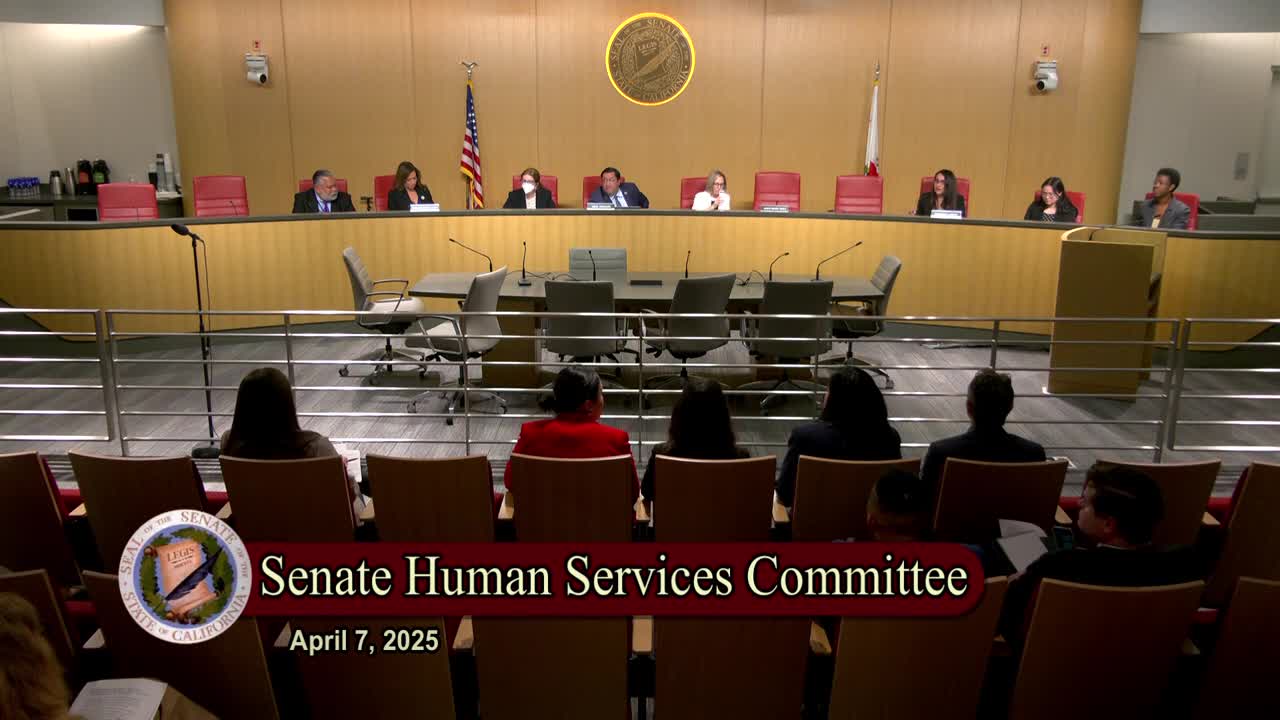 7MIN
Senate Standing Committee on Human Services
Bill Author

Bill Co-Author(s):