SB 844: Horse racing: out-of-state thoroughbred races.
- Session Year: 2025-2026
- House: Senate
- Latest Version Date: 2025-02-21
Current Status:
In Progress
(2025-06-25: June 25 set for first hearing canceled at the request of author.)
Introduced
In Committee
Awaiting First Chamber Vote
Passed First Chamber
In Committee
Awaiting Second Chamber Vote
Passed Second Chamber
Enacted
The Horse Racing Law authorizes a thoroughbred racing association or fair to distribute the audiovisual signal and accept wagers on the results of out-of-state thoroughbred races conducted in the United States during the calendar period the association or fair is conducting a race meeting, including days on which there is no live racing being conducted by the association or fair, without the consent of the organization that represents horsemen and horsewomen participating in the race meeting and without regard to the amount of purses. Existing law prohibits the total number of thoroughbred races imported by associations or fairs on a statewide basis under these provisions from exceeding 75 races per day on days when live thoroughbred or fair racing is being conducted in the state, with the exception of prescribed races.
This bill would instead prohibit the total number of thoroughbred races imported by associations or fairs on a statewide basis under these provisions from exceeding 80 races per day on days when live thoroughbred or fair racing is being conducted in the state, with the exception of prescribed races.
Existing law prohibits, when the total number of thoroughbred races imported by a thoroughbred association or fair on a statewide basis is between 51 and 75 races per day on days when live thoroughbred or fair racing is being conducted in the state, a thoroughbred association or fair from accepting wagers on the above-described out-of-state races commencing after 5 p.m., Pacific standard time, without the consent of the harness and quarter horse racing association that is then conducting a live racing meeting in the County of Orange or the County of Sacramento.
This bill would instead apply the above-described prohibition when the total number of thoroughbred races imported by a thoroughbred association or fair on a statewide basis is between 51 and 80 races per day on days when live thoroughbred or fair racing is being conducted in the state.
(a)Notwithstanding any other law and except as provided in Section 19596.4, a thoroughbred racing association or fair may distribute the audiovisual signal and accept wagers on the results of out-of-state thoroughbred races conducted in the United States during the calendar period the association or fair is conducting a race meeting, including days on which there is no live racing being conducted by the association or fair, without the consent of the organization that represents horsemen and horsewomen participating in the race meeting and without regard to the amount of purses. Further, the total number of thoroughbred races imported by associations or fairs on a statewide basis under this section shall not exceed 75 80 per day on days when live thoroughbred or fair racing is being conducted in the state. The limitation of 75 80 imported races per day does not apply to any of the following:
(1)Races imported for wagering purposes pursuant to subdivision (c).
(2)Races imported that are part of the race card of the Kentucky Derby, the Kentucky Oaks, the Preakness Stakes, the Belmont Stakes, the Jockey Club Gold Cup, the Travers Stakes, the Pegasus World Cup, the Arlington Million, the Breeders Cup World Championship, the Dubai World Cup, the Arkansas Derby, the Apple Blossom Handicap, the Blue Grass Stakes, the Whitney Stakes, or the Haskell Invitational.
(3)Races imported into the northern zone when there is no live thoroughbred or fair racing being conducted in the northern zone.
(4)Races imported into the combined central and southern zones when there is no live thoroughbred or fair racing being conducted in the combined central and southern zones.
(b)Any thoroughbred association or fair accepting wagers pursuant to subdivision (a) shall conduct the wagering in accordance with the applicable provisions of Sections 19601, 19616, 19616.1, and 19616.2.
(c)Except as provided in subdivision (d), a thoroughbred association or fair shall not accept wagers pursuant to this section on out-of-state races commencing after 7 p.m., Pacific standard time, without the consent of the harness or quarter horse racing association that is then conducting a live racing meeting in the County of Orange or the County of Sacramento.
(d)When the total number of thoroughbred races imported by associations or fairs on a statewide basis under this section is between 51 and 75 80 on a day when live thoroughbred or fair racing is being conducted in the state, a thoroughbred association or fair shall not accept wagers pursuant to this section on out-of-state races commencing after 5 p.m., Pacific standard time, without the consent of the harness and quarter horse racing association that is then conducting a live racing meeting in the County of Orange or the County of Sacramento.
|
Date
|
Status
|
|---|---|
| Jun 25, 2025 | June 25 set for first hearing canceled at the request of author. |
| Jun 5, 2025 | Referred to Com. on G.O. |
| May 28, 2025 | In Assembly. Read first time. Held at Desk. |
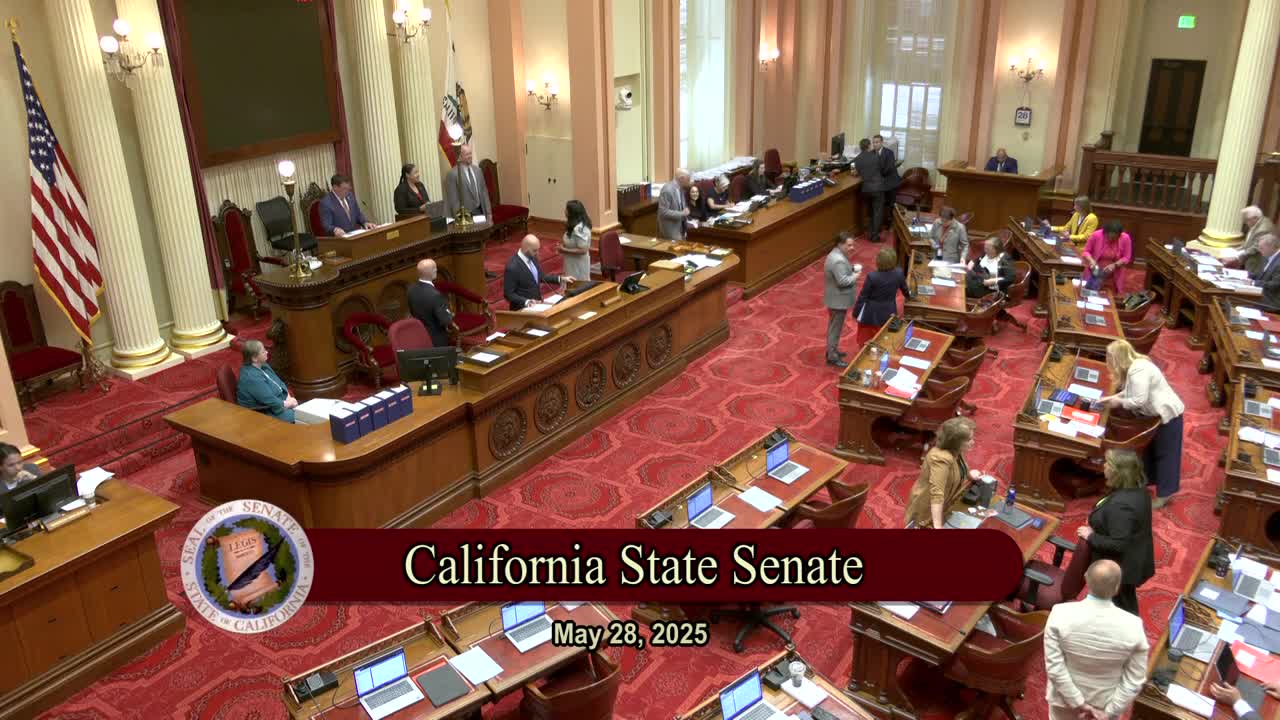
| May 28, 2025 | Read third time. Passed. (Ayes 39. Noes 0. Page 1295.) Ordered to the Assembly. |
| Apr 8, 2025 | Read second time. Ordered to third reading. |
| Apr 7, 2025 | From committee: Be ordered to second reading pursuant to Senate Rule 28.8. |
| Mar 28, 2025 | Set for hearing April 7. |
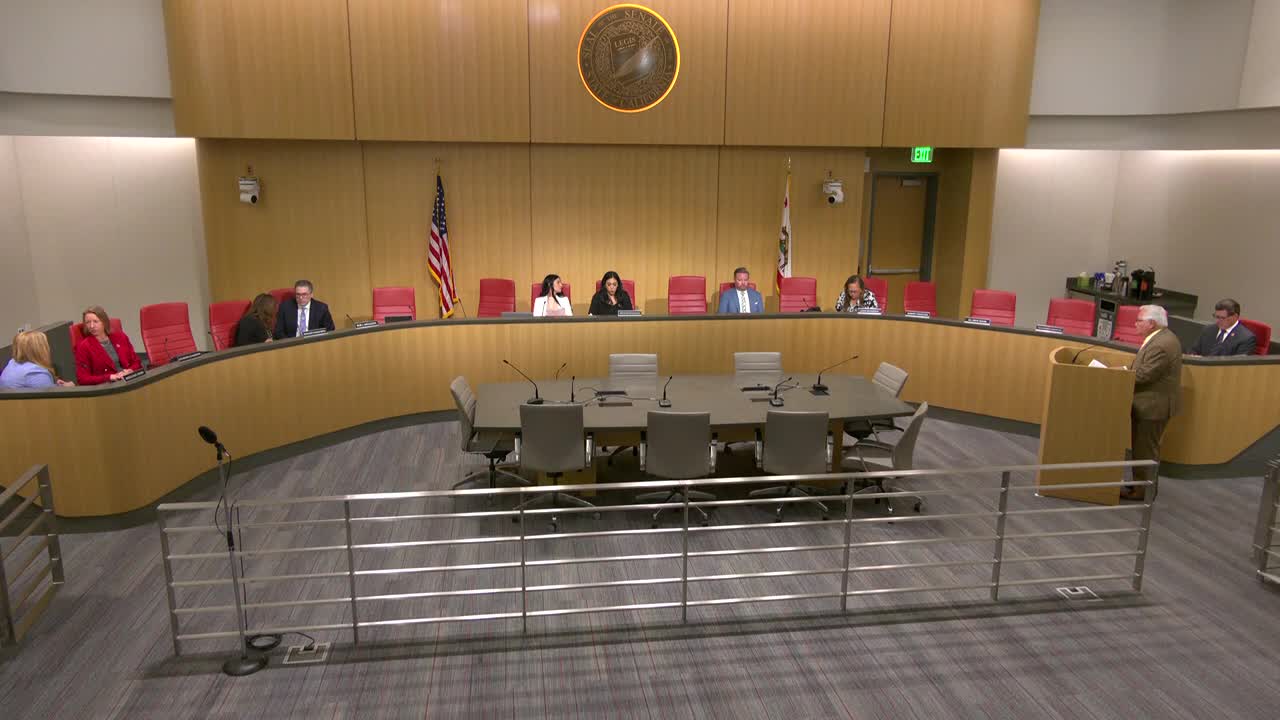
| Mar 25, 2025 | From committee: Do pass and re-refer to Com. on APPR. (Ayes 12. Noes 0. Page 531.) (March 25). Re-referred to Com. on APPR. |
| Mar 17, 2025 | Set for hearing March 25. |
| Mar 12, 2025 | Referred to Com. on G.O. |
| Feb 24, 2025 | From printer. May be acted upon on or after March 24. |
| Feb 24, 2025 | Read first time. |
| Feb 21, 2025 | Introduced. To Com. on RLS. for assignment. To print. |
|
Date
|
Description
|
Location
|
Votes
|
|
|---|---|---|---|---|
| May 28, 2025 | Senate 3rd Reading SB844 Rubio | Senate Floor |
Passed |
|
| Mar 25, 2025 | Do pass, but first be re-referred to the Committee on [Appropriations] | Senate Standing Committee on Governmental Organization |
Passed |
This list shows positions taken on this bill by organizations on the date displayed, which is linked to the original source.
Positions by individuals are not included.
SENATE RULES COMMITTEE Office of Senate Floor Analyses (916) 651-1520 Fax: (916) 327-4478 | SB 844 |
THIRD READING
Bill No: SB 844
Author: Rubio (D)
Introduced: 2/21/25
Vote: 21
SENATE GOVERNMENTAL ORG. COMMITTEE: 12-0, 3/25/25
AYES: Padilla, Valladares, Archuleta, Ashby, Blakespear, Cervantes, Hurtado, Jones, Ochoa Bogh, Richardson, Rubio, Weber Pierson
NO VOTE RECORDED: Dahle, Smallwood-Cuevas, Wahab
SUBJECT: Horse racing: out-of-state thoroughbred races
SOURCE: Author
DIGEST:
This bill increases the limit on the importation of out-of-state thoroughbred races by a California thoroughbred racing association or fair for pari-mutuel wagering from 75 to 80 races-per-day, as specified.
ANALYSIS:
Existing law:
- Authorizes, pursuant to California Horse Racing Law, a thoroughbred racing association or fair to distribute the audiovisual signal, and accept wagers on, the results of out-of-state thoroughbred races conducted in the United States during the calendar period the association or fair is conducting a race meeting, including days on which there is no live racing being conducted by the association or fair – without the consent of the organization that represents horsemen and horsewoman participating in the race meeting and without regard to the amount of purses.
- Prohibits the total number of thoroughbred races imported by associations or fairs on a statewide basis under these provisions from exceeding 75 races-per-day on days when live thoroughbred or fair racing is being conducted in the state, with the exception of prescribed races.
- Prohibits, when the total number of thoroughbred races imported by a thoroughbred association or fair on a statewide basis is between 51 and 75 races per day on days when live thoroughbred or fair racing is being conducted in the state, a thoroughbred association or fair from accepting wagers on the above-described out-of-state races commencing after 5 p.m., Pacific Standard Time (PST), without the consent of the harness and quarter horse racing association that is then conducting a live racing meeting in the County of Orange or the County of Sacramento.
This bill:
- Increases, from 75 to 80, the number of thoroughbred races that may be imported by associations or fairs on a statewide basis when live thoroughbred or fair racing is being conducted in the state, as specified.
- Prohibits, when the total number of thoroughbred races imported by a thoroughbred association or fair on a statewide basis is between 51 and 80 races-per-day, a thoroughbred association or fair from accepting wagers on the above-described out-of-state races commencing after 5 p.m., PST, without the consent of the harness and quarter horse racing association that is then conducting a live racing meeting in the County of Orange or the County of Sacramento.
Background
Author Statement. According to the author’s office, “SB 844 will support California jobs in the horse racing industry and the sport of horse racing by expanding the number of horse races exempted from the state’s limitation on the number of races allowed to be imported by associations or fairs when other races are conducted in the state. Adjusting the limitation will put associations and fairs on a better competitive footing with advanced deposit wagering businesses and give customers greater choices.”
Satellite Wagering Simulcasting. Satellite wagering via an off-track facility has been legal in California since the 1980s when California racetracks began to experience declining attendance and handle figures. The industry believed that making the product easier to access not only would expose and market horse racing to potential customers, but also would make it more convenient for the existing patrons to wager more often.
Simulcasting is the process of transmitting the audio and video signal of a live racing performance from one facility to a satellite for re-transmission to other locations or venues where pari-mutuel wagering is permitted. Simulcasting provides racetracks with the opportunity to increase revenues by exporting their live racing content to as many wagering locations as possible, such as other racetracks, fair satellite facilities, and Indian casinos. Revenues increase because simulcasting provides racetracks that export their live content with additional customers in multiple locations who would not have otherwise been able to place wagers on the live racing event.
Distribution of Out-of-State Races. Thoroughbred racing associations and fairs in California can distribute the audiovisual signal and accept wagers on the results of out-of-state thoroughbred races during their own race meetings. This is allowed even on days when no live races are being held at their venues. However, there is a limit on the number of out-of-state races that can be imported into California for betting purposes. On days when there is live thoroughbred or fair racing happening in California, the total number of races imported from out-of-state must not exceed 75 races-per-day.
There are exemptions to this limit. Races that are part of specific major events like the Kentucky Derby, Breeder’s Cup, and other specified races can be imported without falling under the 75 race-per-day limit. Additional exceptions are made for importing races into certain geographical zones of California when no local live racing is occurring. Any wagering on these out-of-state races must comply with specific provisions of California’s Horse Racing Law that govern how betting should be conducted. Wagers on out-of-state races are not allowed after 5 p.m. PST unless there is consent from the local harness or quarter horse racing associations conducting live racing in either Orange or Sacramento County.
Without the 75-race limitation, thoroughbred associations and fairs could import more races for wagering purposes (or if not all, a significantly larger number of races than are currently imported), giving each wagering customer in the state greater choices in the races they would like to wager on. The 75-day limit forces thoroughbred associations and fairs to choose just 75 races, preventing customers’ ability to wager on a race or races that did not make the selected list of 75.
There is conversation within the horse racing industry regarding the efficacy of simulcasting which may temporarily boost betting but does not solve fundamental issues like small field sizes, low purses, and lack of alternative revenue sources. It should be noted that there is no equivalent restriction on California Horse Racing Board (CHRB)-licensed advance-deposit wagering operators who accept wagers from in-state residents. These licensed businesses normally provide all out-of-state thoroughbred races to their customers.
Pari-mutuel Wagering. Horse racing has been taking place in California since the 1800s, but horse racing as we now know it – under the pari-mutuel wagering system – was not made possible until the electorate passed a constitutional amendment in 1933. The expressed intent of the Horse Racing Law is to allow pari-mutuel wagering on horse races. Pari-mutuel, from the French term for mutual betting, is a betting system in which all bets of a particular type are placed together in a pool, and payoff odds are calculated by sharing the pool among all winning bets. Pari-mutuel betting differs from fixed-odds betting in that the final payout is not determined until the pool is closed – in fixed-odds betting, the payout is agreed at the time the bet is sold.
Thoroughbred Horses. Thoroughbred horses are a breed developed primarily for long-distance racing. Bred for speed and stamina, they typically race over distances from a mile to a mile and half, though they can also compete in shorter races. The term “thoroughbred” is not just a descriptor, it denotes a purebred horse, a lineage that can be traced back to three foundational sires. The Arabian foundation stallions which were brought to Britain in the late 1600s and early 1700s were bred to domestic mares – very probably Scottish Galloways – although they may have been bred to Arabian mares, too. The foundation stallions of the thoroughbred breed and the years they arrived in England were: the Byerly Turk (1689), the Darley Arabian (1705), and the Godolphin Barb (1728).
Thoroughbred racing is generally divided into several classes based on the horse’s experience, the conditions of the race, and the purse offered. Common categories including: Maiden Races for horses that have never won a race, they are the starting point for many young horses to gain experience; Claiming Races are entered with a specified price, after the race, any owner can put in a claim and purchase the winning horse at that price; Allowance Races are set up for horses that aren’t eligible for claiming races but aren’t yet ready for stakes races; Stakes Races are higher-quality races that often feature better-trained horses and come with large purses and can be further classified into graded stakes (Grade I, II, or III), which are used to rank the quality of the competition.
The Health of Horse Racing in California. The horse racing industry in California is grappling with a multifaceted crisis that threatens its long-term viability. Over the past three to four decades, California’s horse racing industry has seen a significant decline in attendance, purses, and betting handle—a trend that mirrors shifts in consumer habits and growing competition from alternative forms of entertainment and gambling.
In its heyday, iconic tracks like Santa Anita, Del Mar, and Hollywood Park attracted tens of thousands of spectators on race days, creating a vibrant atmosphere that drove robust on-track wagering. As simulcasting emerged in the 1980s and online betting platforms took off in the early 2000s, fans increasingly chose to place their bets from home or at local simulcast facilities rather than visiting the tracks, causing live attendance to plummet.
The industry’s stability is further undermined by competition from out-of-state horse racing, alternative forms of gaming, and the aftermath of negative public reaction to a spate of horse deaths in 2019. Declining attendance at race events exacerbates the situation, as does the lure of higher returns from real estate development compared to the revenue generated from racing operations. In 2013, Hollywood Park closed and the former site of the track is now SoFi Stadium, home to the Los Angeles Rams and the Los Angeles Chargers. In 2023, it was announced by the Stronach Group (doing business as 1/ST) that the Golden Gate Fields racing track on the eastern shore of the San Francisco Bay would be closing permanently at the end of their 2024 meet and consolidating business with the group’s Southern California track, Santa Anita.
As a result, the industry faces unprecedented instability and capital flight, particularly in the north. This instability jeopardizes thousands of jobs directly linked to horse racing, including those on breeding farms and other associated businesses. The recent closure of key racetracks, such as Golden Gate Fields and the Alameda County Fairgrounds, highlight the precarious state of the industry. Also at risk is a substantial amount of local and state revenue generated directly and indirectly by the industry. Fewer races, smaller fields, and reduced purses challenge the long-term sustainability of a sport that once dominated California’s entertainment and cultural landscape.
Currently only Santa Anita, Del Mar, and Los Alamitos have been allocated dates for thoroughbred race meetings by the CHRB. Los Alamitos has additionally been allocated dates in December of this year to conduct a quarter horse race meet. The Los Angeles County Fair at Los Alamitos has been granted a fair meeting from mid-June to early-July this summer. Cal-Expo in Sacramento has been allocated dates to conduct harness race meetings later this year.
Related/Prior Legislation
AB 1389 (Rubio, 2025) of the current legislative session would exempt from the 75 imported race per day limitation, races imported that are part of the race card of the New York Stakes. (Pending on the Assembly Floor)
AB 1768 (Committee on Governmental Organization, Chapter 354, Statutes of 2024) among other things, modified various aspects of the California Horse Racing Law, including service of civil procedures, licensing periods, and the designation of certain staff as peace officers, as specified.
AB 1946 (Alanis, Chapter 366, Statutes of 2024) added the Whitney Stakes to the group of races which are exempt from the 75-race per day limit on imported races.
AB 3261 (M. Fong, Chapter 439, Statutes of 2024) increased the cap on the importation of out-of-state thoroughbred races by a thoroughbred association or fair, on days when live thoroughbred or fair racing is being conducted in the state from 50 to 75 races-per-day, as specified.
AB 1074 (Alanis, Chapter 275, Statutes of 2023) provided if the CHRB does not license a thoroughbred race meet at (Golden Gate Fields), and no live horse racing is being conducted in the northern zone, the bill deems a thoroughbred racing association or racing fair in the southern or central zone, to be operating in the northern zone for the purpose of conducting all permissible forms of wagering in the northern zone and making and receiving distributions from those wagers.
FISCAL EFFECT: Appropriation: No Fiscal Com.: Yes Local: No
Senate Rule 28.8.
SUPPORT: (Verified 4/7/25)
None received
OPPOSITION: (Verified 4/7/25)
Prepared by: Brian Duke / G.O. / (916) 651-1530
4/9/25 15:50:17
SENATE COMMITTEE ON GOVERNMENTAL ORGANIZATION
Senator Steve Padilla
Chair
2025 - 2026 Regular
Bill No: SB Hearing Date: 3/25/2025
Author: | Rubio | ||
Version: | Introduced | ||
Urgency: | Fiscal: | ||
Consultant: | |||
SUBJECT:
DIGEST: This bill increases the limit on the importation of out-of-state thoroughbred races by a California thoroughbred racing association or fair for pari-mutuel wagering from 75 to 80 races-per-day, as specified.
ANALYSIS:
Existing law:
- The California Horse Racing Law authorizes a thoroughbred racing association or fair to distribute the audiovisual signal and accept wagers on the results of out-of-state thoroughbred races conducted in the United States during the calendar period the association or fair is conducting a race meeting, including days on which there is no live racing being conducted by the association or fair, without the consent of the organization that represents horsemen and horsewoman participating in the race meeting and without regard to the amount of purses.
- Prohibits the total number of thoroughbred races imported by associations or fairs on a statewide basis under these provisions from exceeding 75 races per day on days when live thoroughbred or fair racing is being conducted in the state, with the exception of prescribed races.
- Prohibits, when the total number of thoroughbred races imported by a thoroughbred association or fair on a statewide basis is between 51 and 75 races per day on days when live thoroughbred or fair racing is being conducted in the state, a thoroughbred association or fair from accepting wagers on the above-described out-of-state races commencing after 5 p.m., Pacific Standard Time (PST), without the consent of the harness and quarter horse racing association that is then conducting a live racing meeting in the County of Orange or the County of Sacramento.
This bill:
- Increases, from 75 to 80, the number of thoroughbred races that may be imported by associations or fairs on a statewide basis when live thoroughbred or fair racing is being conducted in the state, as specified.
- Prohibits, when the total number of thoroughbred races imported by a thoroughbred association or fair on a statewide basis is between 51 and 80 races-per-day, a thoroughbred association or fair from accepting wagers on the above-described out-of-state races commencing after 5 p.m., PST, without the consent of the harness and quarter horse racing association that is then conducting a live racing meeting in the County of Orange or the County of Sacramento.
Background
Author Statement. According to the author’s office, “SB 844 will support California jobs in the horse racing industry and the sport of horse racing by expanding the number of horse races exempted from the state’s limitation on the number of races allowed to be imported by associations or fairs when other races are conducted in the state. Adjusting the limitation will put associations and fairs on a better competitive footing with advanced deposit wagering businesses and give customers greater choices.”
Satellite Wagering Simulcasting. Satellite wagering via an off-track facility has been legal in California since the 1980s when California racetracks began to experience declining attendance and handle figures. The industry believed that making the product easier to access not only would expose and market horse racing to potential customers, but also would make it more convenient for the existing patrons to wager more often.
Simulcasting is the process of transmitting the audio and video signal of a live racing performance from one facility to a satellite for re-transmission to other locations or venues where pari-mutuel wagering is permitted. Simulcasting provides racetracks with the opportunity to increase revenues by exporting their live racing content to as many wagering locations as possible, such as other racetracks, fair satellite facilities, and Indian casinos. Revenues increase because simulcasting provides racetracks that export their live content with additional customers in multiple locations who would not have otherwise been able to place wagers on the live racing event.
Distribution of Out-of-State Races. Thoroughbred racing associations and fairs in California can distribute the audiovisual signal and accept wagers on the results of out-of-state thoroughbred races during their own race meetings. This is allowed even on days when no live races are being held at their venues. However, there is a limit on the number of out-of-state races that can be imported into California for betting purposes. On days when there is live thoroughbred or fair racing happening in California, the total number of races imported from out-of-state must not exceed 75 races-per-day.
There are exemptions to this limit. Races that are part of specific major events like the Kentucky Derby, Breeder’s Cup, and other specified races can be imported without falling under the 75 race-per-day limit. Additional exceptions are made for importing races into certain geographical zones of California when no local live racing is occurring. Any wagering on these out-of-state races must comply with specific provisions of California’s Horse Racing Law that govern how betting should be conducted. Wagers on out-of-state races are not allowed after 5 p.m. PST unless there is consent from the local harness or quarter horse racing associations conducting live racing in either Orange or Sacramento County.
Without the 75-race limitation, thoroughbred associations and fairs could import more races for wagering purposes (or if not all, a significantly larger number of races than are currently imported), giving each wagering customer in the state greater choices in the races they would like to wager on. The 75-day limit forces thoroughbred associations and fairs to choose just 75 races, preventing customers’ ability to wager on a race or races that did not make the selected list of 75.
There is conversation within the horse racing industry regarding the efficacy of simulcasting which may temporarily boost betting but does not solve fundamental issues like small field sizes, low purses, and lack of alternative revenue sources. It should be noted that there is no equivalent restriction on CHRB-licensed ADW operators who accept wagers from in-state residents. These licensed businesses normally provide all out-of-state Thoroughbred races to their customers.
Horse Racing in California. The horse racing industry in California is grappling with a multifaceted crisis that threatens its long-term viability. Over the past three to four decades, California’s horse racing industry has seen a significant decline in attendance, purses, and betting handle—a trend that mirrors shifts in consumer habits and growing competition from alternative forms of entertainment and gambling. In its heyday, iconic tracks like Santa Anita, Del Mar, and Hollywood Park attracted tens of thousands of spectators on race days, creating a vibrant atmosphere that drove robust on-track wagering. As simulcasting emerged in the 1980s and online betting platforms took off in the early 2000s, fans increasingly chose to place their bets from home or at local simulcast facilities rather than visiting the tracks, causing live attendance to plummet.
The industry’s stability is further undermined by competition from out-of-state horse racing, alternative forms of gaming, and the aftermath of negative public reaction to a spate of horse deaths in 2019. Declining attendance at race events exacerbates the situation, as does the lure of higher returns from real estate development compared to the revenue generated from racing operations. Hollywood Park closed in 2013 and is now the location of SoFi Stadium, home to the Los Angeles Rams and the Los Angeles Chargers. In 2023, it was announced that the Golden Gate Fields racing track on the eastern shore of the San Francisco Bay would be closing permanently at the end of their 2024 meet.
In early 2025, the California Authority of Racing Fairs (CARF) announced that it would abandon plans to organize horse racing in Northern California this year throughout several county fairs. At the time of last summer’s racing meet, there were roughly 900 horses stalled in Pleasanton at the Alameda County fairgrounds, however with the closure of Golden Gate Fields and increasing financial distress, there were somewhere between 450 and 500 at the time of CARF’s announcement.
The Alameda County Fair Board voted in January of this year to shut down their racing operations, citing an outdated water drainage system and an inability to sustain so many horses. Again, the larger issue continues to be the increasing unprofitability of the industry. According to a recent article by NBC Bay Area News titled “Race horses forced out of Alameda County Fairgrounds leaving owners, trainers scrambling,” Alameda County Fairgrounds CEO Jerome Hoban said, “[i]t’s no secret that horse racing has been economically moving in the wrong direction for a long time,” and that “[t]he Alameda County Fair has lost over $2 million in just the fall race meet.”
As a result, the industry faces unprecedented instability and capital flight. This instability jeopardizes thousands of jobs directly linked to horse racing, including those on breeding farms and other associated businesses. The closure of key racetracks, including Golden Gate Fields and the Alameda County Fairgrounds, highlights the precarious state of the industry. Also at risk is a substantial amount of local and state revenue generated directly and indirectly by the industry. Fewer races, smaller fields, and reduced purses challenge the long-term sustainability of a sport that once dominated California’s entertainment and cultural landscape.
Prior/Related Legislation
AB 1389 (Rubio, 2025) would exempt from the 75 imported race per day limitation, races imported that are part of the race card of the New York Stakes. (Pending in the Assembly Governmental Organization Committee)
AB 1768 (Committee on Governmental Organization, Chapter, Statutes of 2024) among other things, modified various aspects of the California Horse Racing Law, including service of civil procedures, licensing periods, and the designation of certain staff as peace officers, as specified.
AB 1946 (Alanis, Chapter 366, Statutes of 2024) added the Whitney Stakes to the group of races which are exempt from the 75-race per day limit on imported races in California.
AB 3261 (M. Fong, Chapter 439, Statutes of 2024) increased the cap on the importation of out-of-state thoroughbred races by a thoroughbred association or fair, on days when live thoroughbred or fair racing is being conducted in the state from 50 to 75 races-per-day, as specified.
AB 1074 (Alanis, Chapter 275, Statutes of 2023) provided if the CHRB does not license a thoroughbred race meet at a racetrack (Golden Gate Fields) located in the cities of Berkeley and Albany after July 1, 2024, and no live horse racing is being conducted in the northern zone, this bill deems a thoroughbred racing association or racing fair in the southern or central zone, as specified, to be operating in the northern zone for the purpose of conducting all permissible forms of wagering in the northern zone and making and receiving required distributions from those wagers.
FISCAL EFFECT: Appropriation: No Fiscal Com.: Yes Local: No
SUPPORT:
None received
OPPOSITION:
None received
Discussed in Hearing
 2MIN
Senate Floor
 4MIN
Senate Standing Committee on Governmental Organization
Bill Author

Bill Co-Author(s):