SR 128
- Session Year: 2025-2026
- House: Senate
- Latest Version Date: 2026-08-14
Current Status:
In Progress
(2026-08-13: Read. Adopted. (Ayes 36. Noes 0.))
Introduced
In Committee
Awaiting First Chamber Vote
Passed First Chamber
In Committee
Awaiting Second Chamber Vote
Passed Second Chamber
Enacted
WHEREAS, Neuroblastoma is the most common cancer in infants and the most common extracranial solid tumor in childhood; and
WHEREAS, There are approximately 600 to 800 new cases of neuroblastoma diagnosed each year in the United States; and
WHEREAS, Neuroblastoma accounts for about 8 to 10 percent of all childhood cancers and approximately 15 percent of childhood cancer deaths; and
WHEREAS, Approximately 90 percent of neuroblastoma cases are diagnosed before five years of age, with many cases occurring during infancy; and
WHEREAS, Symptoms are often nonspecific, which can delay diagnosis and treatment; and
WHEREAS, Neuroblastoma accounts for a disproportionate share of pediatric cancer deaths relative to its incidence; and
WHEREAS, High-risk neuroblastoma remains one of the most difficult pediatric cancers to treat successfully; and
WHEREAS, The estimated five-year survival rate for children with high-risk neuroblastoma is approximately 63 percent; and
WHEREAS, Treatment for high-risk neuroblastoma typically requires intensive multimodal therapy, including chemotherapy, surgery, radiation therapy, stem cell transplant, and immunotherapy; and
WHEREAS, Survivors may experience significant lifelong health complications, including hearing loss, organ failure, and subsequent malignancies; and
WHEREAS, Children with neuroblastoma often require prolonged treatment and repeated hospitalizations; and
WHEREAS, Anti-GD2 immunotherapy has improved outcomes for children with high-risk neuroblastoma; and
WHEREAS, Emerging therapies, including CAR-T cell treatments targeting tumor antigens such as B7-H3, are under active investigation for relapsed disease; and
WHEREAS, California is home to leading pediatric oncology centers and plays a major role in advancing pediatric cancer research and clinical care, including for neuroblastoma; and
WHEREAS, Childhood cancers, including neuroblastoma, historically receive significantly less research funding compared to adulthood cancers; and
WHEREAS, Children with high-risk or relapsed neuroblastoma continue to face limited effective treatment options and a high risk of relapse, highlighting the need for continued research and therapeutic development; and
WHEREAS, Increased awareness can support earlier diagnosis, improve outcomes, and help drive investment in research and treatment advancements for pediatric cancers; and
WHEREAS, September is recognized as Childhood Cancer Awareness Month in the United States; now, therefore, be it
Resolved by the Senate of the State of California, That the Senate designates September 3, 2026, as California Neuroblastoma Awareness Day to provide a dedicated opportunity to recognize the extraordinary resilience and courage of children and families fighting this disease and support the incredible effort of clinicians and researchers working to address this disease; and be it further
Resolved, That the Secretary of the Senate transmit copies of this resolution to the author for appropriate distribution.
|
Date
|
Status
|
|---|---|
| Aug 13, 2026 | Read. Adopted. (Ayes 36. Noes 0.) |
| Aug 13, 2026 | Read. Adopted. (Ayes 37. Noes 0. Page 5350.) |
| Aug 12, 2026 | From committee: Ordered to third reading. |
| Aug 3, 2026 | Introduced. Referred to Com. on RLS. |
|
Date
|
Description
|
Location
|
Votes
|
|
|---|---|---|---|---|
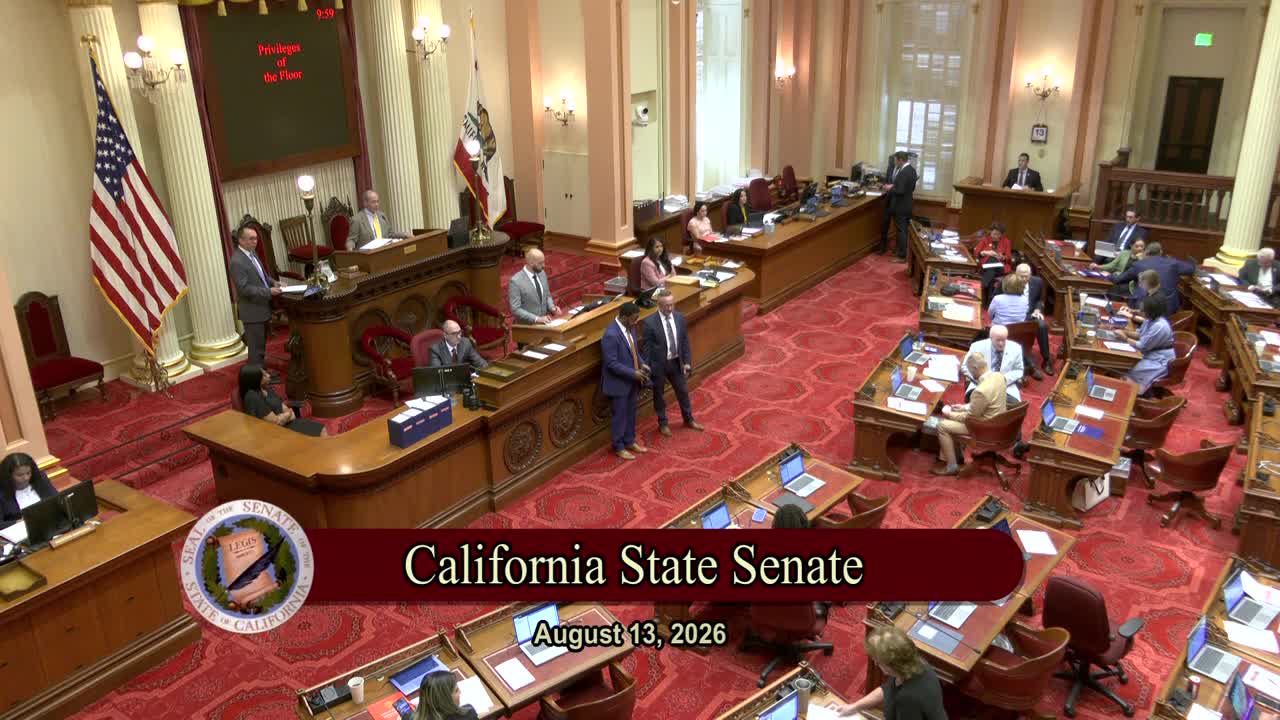
| Aug 13, 2026 | Senate 3rd Reading SR128 Pérez et al. | Senate Floor |
Passed |
This list shows positions taken on this bill by organizations on the date displayed, which is linked to the original source.
Positions by individuals are not included.
SENATE RULES COMMITTEE Office of Senate Floor Analyses (916) 651-4171 | SR 128 |
THIRD READING
Bill No: SR 128
Author: Pérez (D), et al.
Introduced: 8/3/26
Vote: Majority
SUBJECT: California Neuroblastoma Awareness Day
SOURCE: Author
DIGEST:
This resolution recognizes September as Childhood Cancer Awareness Month.
ANALYSIS: This resolution makes the following legislative findings:
- Neuroblastoma accounts for about 8 to 10% of all childhood cancers and approximately 15% of childhood cancer deaths. Approximately 90% of neuroblastoma cases are diagnosed before five years of age, with many cases occurring during infancy.
- The estimated five-year survival rate for children with high-risk neuroblastoma is approximately 63%. Treatment for high-risk neuroblastoma typically requires intensive multimodal therapy, including chemotherapy, surgery, radiation therapy, stem cell transplant, and immunotherapy.
- Survivors may experience significant lifelong health complications, including hearing loss, organ failure, and subsequent malignancies. Children with high-risk or relapsed neuroblastoma continue to face limited effective treatment options and a high risk of relapse, highlighting the need for continued research and therapeutic development.
- Increased awareness can support earlier diagnosis, improve outcomes, and help drive investment in research and treatment advancements for pediatric cancers.
This resolution recognizes September as Childhood Cancer Awareness Month.
FISCAL EFFECT: Appropriation: No Fiscal Com.: No Local: No
SUPPORT: (Verified 8/11/26)
None received
OPPOSITION: (Verified 8/11/26)
None received
Prepared by: Aizenia Randhawa / SFA / (916) 651-4171
8/12/26 14:04:04
**** END ****
Bill Author