SR 37
- Session Year: 2025-2026
- House: Senate
- Latest Version Date: 2025-04-25
Current Status:
In Progress
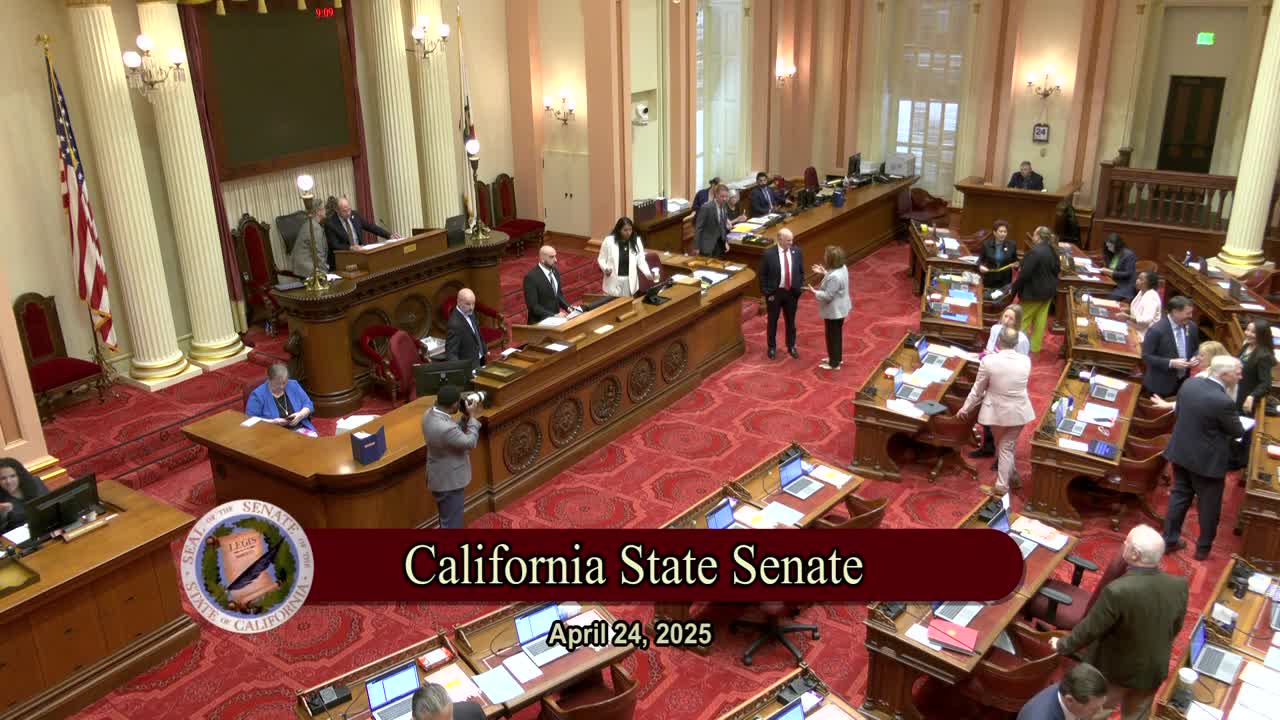
(2025-04-24: Read. Adopted. (Ayes 38. Noes 0. Page 876.))
Introduced
In Committee
Awaiting First Chamber Vote
Passed First Chamber
In Committee
Awaiting Second Chamber Vote
Passed Second Chamber
Enacted
What does this bill do?
This resolution declares April 17–23, 2025, as Cambodian Genocide Memorial Week in California and asks all Californians to take part in observances. It honors survivors and descendants, remembers those who died under the Khmer Rouge, and recognizes the resilience and contributions of Cambodian Americans.
The summary is provided by generative AI which can make mistakes. For original language, please view the details in the table below.
WHEREAS, The Cambodian people have a long and rich cultural heritage symbolized by the capitol city temple of Angkor Wat, which existed during the Khmer Empire from the 9th to the 15th century and is considered one of the Wonders of the Ancient World, that stands as a living icon of the endurance and genius of all Cambodians throughout the world; and
WHEREAS, Early connections between the United States and Cambodia began in the 1950s, when Cambodia sent bright and talented college students to universities, including California State Universities in Long Beach and Los Angeles, to study technical trades, engineering, and agriculture with the assistance of the United States Agency for International Development (USAID); and
WHEREAS, The relationship between the United States and Cambodia had been forged through educational and professional exchange, and therefore in 1975, with the impending overthrow of the government by the totalitarian Khmer Rouge regime, the United States accepted over 4,000 Cambodian evacuees to ensure their safety; and
WHEREAS, April 17, 2025, will mark the 50th anniversary of the Khmer Rouge regime, led by Pol Pot. The Khmer Rouge seized power, which led to the Cambodian Genocide; and
WHEREAS, Between April 17, 1975, and January 7, 1979, the Khmer Rouge of Democratic Kampuchea, led by Pol Pot, General Secretary of the Communist Party of Kampuchea, and other members of the Standing Committee of the Central Committee of the Communist Party of Kampuchea and their agents, committed acts of genocide and other crimes against humanity; and
WHEREAS, The genocide and other crimes against humanity committed against the people of Cambodia, including various religious groups and ethnic minorities, during the Khmer Rouge regime led to the deaths of over 1,700,000 Cambodians, which was 21 percent of the nations population; and
WHEREAS, The Khmer Rouge regime also sought to eliminate all aspects of Cambodian culture by systematically killing those with education, separating families, and destroying institutions such as Buddhist temples, schools, libraries, dance, and music; and
WHEREAS, Countless victims have since come forward to tell their stories of imprisonment, starvation, slavery, rape, and systematic forced marriage; and
WHEREAS, After the overthrow of the Khmer Rouge regime in 1979, over 140,000 Cambodians came to the United States as refugees, a group of special humanitarian and foreign policy concern to the United States because of the well-founded fear of persecution for reasons of race, religion, nationality, membership in a particular social group, or political opinion and thus in need of protection in accordance with the United Nations 1951 Convention Relating to the Status of Refugees; and
WHEREAS, The State of California has the largest population of Cambodians, and the City of Long Beach is known around the world as home to the largest Cambodian community outside of Southeast Asia; and
WHEREAS, The Cambodian people have drawn from their cultural history to rebuild their lives and communities through participation in American politics on the local and national levels, by establishing local and international businesses, by developing new art forms and community organizations, and by raising a new generation of Americans who promise to contribute to the future of the State of California and the nation; and
WHEREAS, The Cambodian Genocide was a human tragedy and must be remembered for the scale of violence and devastation perpetrated against the people of Cambodia so that it does not happen again, there or in any other country; and
WHEREAS, In 1994, the United States Congress passed the Cambodian Genocide Justice Act, committing the American government to the pursuit of justice for the victims of the genocide and affirming the policy of the United States to bring members of the Khmer Rouge to justice for their crimes against humanity; and
WHEREAS, The genocide and other crimes against humanity did not succeed in destroying the Cambodian people or their culture. In fact the culture and heritage of the Cambodian people continues to this day through the accomplishments of Cambodians and their descendants; and
WHEREAS, The suffering and loss of the Cambodian people and their accomplishments and perseverance in reestablishing families, communities, and enhancing the cultural and historical diversity of our state and nation should be recognized and honored; and
WHEREAS, The Cambodian Genocide Memorial Week will honor the survivors and their descendants for their courage and contributions to our state and country. This week will serve as a way to remember those who lost their lives in Cambodia and in genocides around the world; now, therefore, be it
Resolved by the Senate of the State of California, That the Senate hereby recognizes the week of April 17 to April 23, 2025, inclusive, as Cambodian Genocide Memorial Week, and calls upon all Californians to observe the week by participating in appropriate activities and programs; and be it further
Resolved, That the Secretary of the Senate transmit copies of this resolution to the author for appropriate distribution.
|
Date
|
Status
|
|---|---|
| Apr 24, 2025 | Read. Adopted. (Ayes 38. Noes 0. Page 876.) |
| Apr 23, 2025 | From committee: Ordered to third reading. |
| Apr 3, 2025 | Introduced. Referred to Com. on RLS. |
|
Date
|
Description
|
Location
|
Votes
|
|
|---|---|---|---|---|
| Apr 24, 2025 | Senate 3rd Reading SR37 Gonzalez et al. | Senate Floor |
Passed |
This list shows positions taken on this bill by organizations on the date displayed, which is linked to the original source.
Positions by individuals are not included.
SENATE RULES COMMITTEE Office of Senate Floor Analyses (916) 651-1520 Fax: (916) 327-4478 | SR 37 |
THIRD READING
Bill No: SR 37
Author: Gonzalez (D), et al.
Introduced: 4/3/25
Vote: Majority
SUBJECT: Cambodian Genocide Remembrance Week
SOURCE: Author
DIGEST:
This resolution recognizes the week of April 17 to April 23, 2025, inclusive, as Cambodian Genocide Memorial Week, and calls upon all Californians to observe the week by participating in appropriate activities and programs.
ANALYSIS: This resolution makes the following legislative findings:
- Between April 17, 1975, and January 7, 1979, the Khmer Rouge of Democratic Kampuchea, led by Pol Pot, General Secretary of the Communist Party of Kampuchea, and other members of the Standing Committee of the Central Committee of the Communist Party of Kampuchea and their agents, committed acts of genocide and other crimes against humanity.
- The genocide and other crimes against humanity committed against the people of Cambodia, including various religious groups and ethnic minorities, during the Khmer Rouge regime led to the deaths of over 1.7 million Cambodians, which was 21% of the nation’s population.
- After the overthrow of the Khmer Rouge regime in 1979, over 140,000 Cambodians came to the United States as refugees, a group of special humanitarian and foreign policy concern to the United States because of the well-founded fear of persecution for reasons of race, religion, nationality, membership in a particular social group, or political opinion and thus in need of protection in accordance with the United Nations 1951 Convention Relating to the Status of Refugees.
- The State of California has the largest population of Cambodians, and the City of Long Beach is known around the world as home to the largest Cambodian community outside of Southeast Asia.
- The Cambodian Genocide was a human tragedy and must be remembered for the scale of violence and devastation perpetrated against the people of Cambodia so that it does not happen again, there or in any other country. In 1994, the United States Congress passed the Cambodian Genocide Justice Act, committing the American government to the pursuit of justice for the victims of the genocide and affirming the policy of the United States to bring members of the Khmer Rouge to justice for their crimes against humanity.
This resolution recognizes the week of April 17 to April 23, 2025, inclusive, as Cambodian Genocide Memorial Week, and calls upon all Californians to observe the week by participating in appropriate activities and programs.
FISCAL EFFECT: Appropriation: No Fiscal Com.: No Local: No
SUPPORT: (Verified 4/23/25)
None received
OPPOSITION: (Verified 4/23/25)
None received
Prepared by: Hunter Flynn / SFA / (916) 651-1520
4/23/25 16:30:36
**** END ****
Bill Author